Biodiversity Heritage Library - Program news and collection highlights from BHL
  • Home
  • News
  • Featured Books
    • All Featured Books
    • Book of the Month Series
    • BHL at 20
  • User Stories
  • Campaigns
    • Fossil Stories
    • Garden Stories
    • Monsters Are Real
    • Page Frights
    • Her Natural History
    • Earth Optimism 2020
  • Tech Blog
  • Visit BHL
Home
News
Featured Books
    All Featured Books
    Book of the Month Series
    BHL at 20
User Stories
Campaigns
    Fossil Stories
    Garden Stories
    Monsters Are Real
    Page Frights
    Her Natural History
    Earth Optimism 2020
Tech Blog
Visit BHL
  • Home
  • News
  • Featured Books
    • All Featured Books
    • Book of the Month Series
    • BHL at 20
  • User Stories
  • Campaigns
    • Fossil Stories
    • Garden Stories
    • Monsters Are Real
    • Page Frights
    • Her Natural History
    • Earth Optimism 2020
  • Tech Blog
  • Visit BHL
Biodiversity Heritage Library - Program news and collection highlights from BHL
Blog Reel, Campaigns, Featured Books

World Oceans Day: Ernst Haeckel and Art Forms in Nature

This post is the fifth in our series leading up to the celebration of World Oceans Day on June 8. This series explores publications that represent important milestones in the progress of marine bioscience research and ocean exploration. This post is an abbreviated version of a longer feature published on the Smithsonian Ocean Portal. View the entire article here.

From recent articles published via premier scientific journals to monumental volumes marking the beginning of our study of the natural world, the Biodiversity Heritage Library‘s collections include information about species from every corner of the globe and ecological niche. They also include works authored by some of the most influential men and women scientists in history.

One such individual is German zoologist Ernst Haeckel.

Born in 1834 in Potsdam, Germany (then Prussia), Ernst Haeckel served as a professor of comparative anatomy and director of the Zoological Institute at the University of Jena, named and described several thousand new species of marine invertebrates, and was a member of more than 90 learned societies during his lifetime. He studied an array of zoological topics but is widely remembered for his work on many invertebrate groups, including marine organisms like radiolarians, poriferans (sponges), and cnidarians (jellyfish, anemones, and corals). He had a deep personal interest in evolution, becoming the preeminent proponent of Darwinism in Germany (though some of his evolutionary ideas did diverge from Darwin’s theories) and helping to popularize this theory throughout Europe. He also served as a consultant on the Challenger expedition – the first non-commercial exploration of the deep-sea environment – that revolutionized the field of oceanography. The author of over 40 works and thousands of drawings, one of Haeckel’s most iconic publications is Kunstformen der Natur.
View Full Size Image
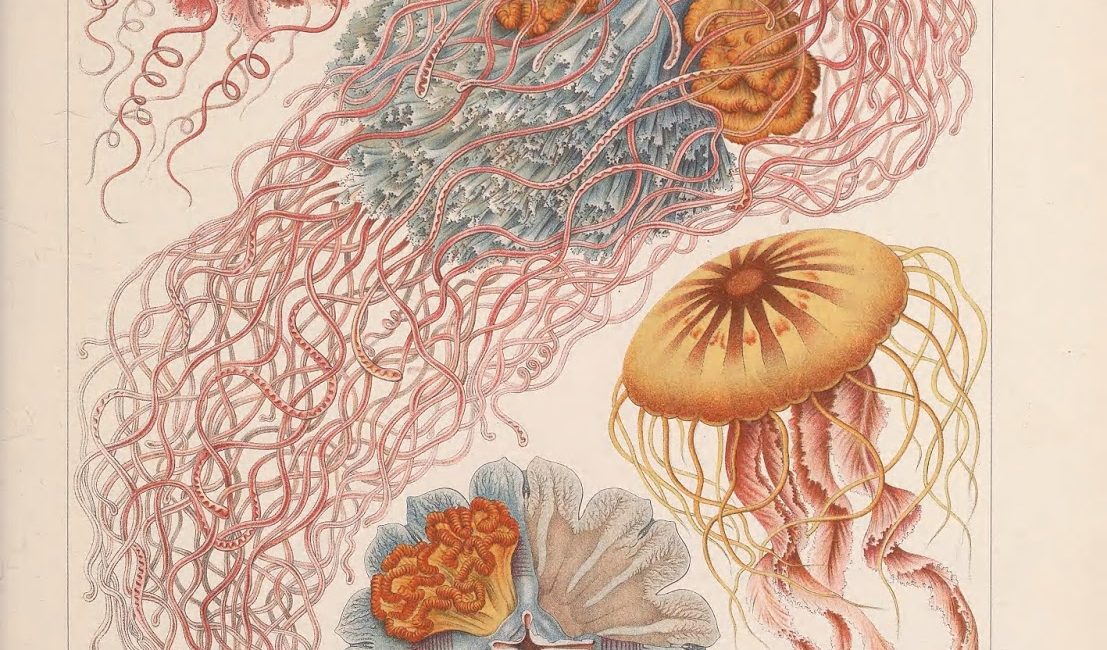
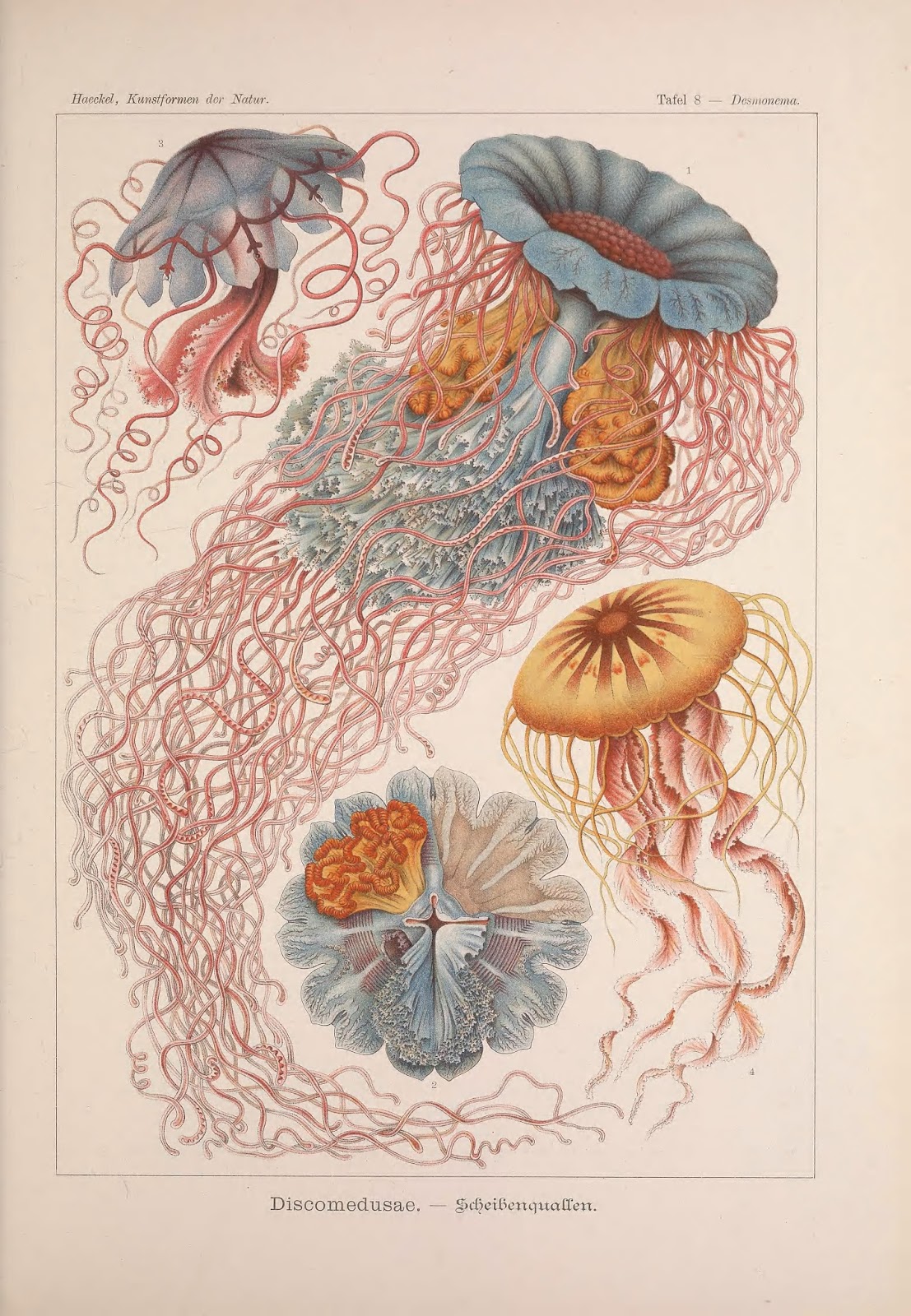
Semaeostomeae Jellyfish: Desmonema Annasethe. Named after Haeckel’s first wife, Anna Sethe. Haeckel, Ernst. Kunstformen der Natur (1904). http://biodiversitylibrary.org/page/47387998.
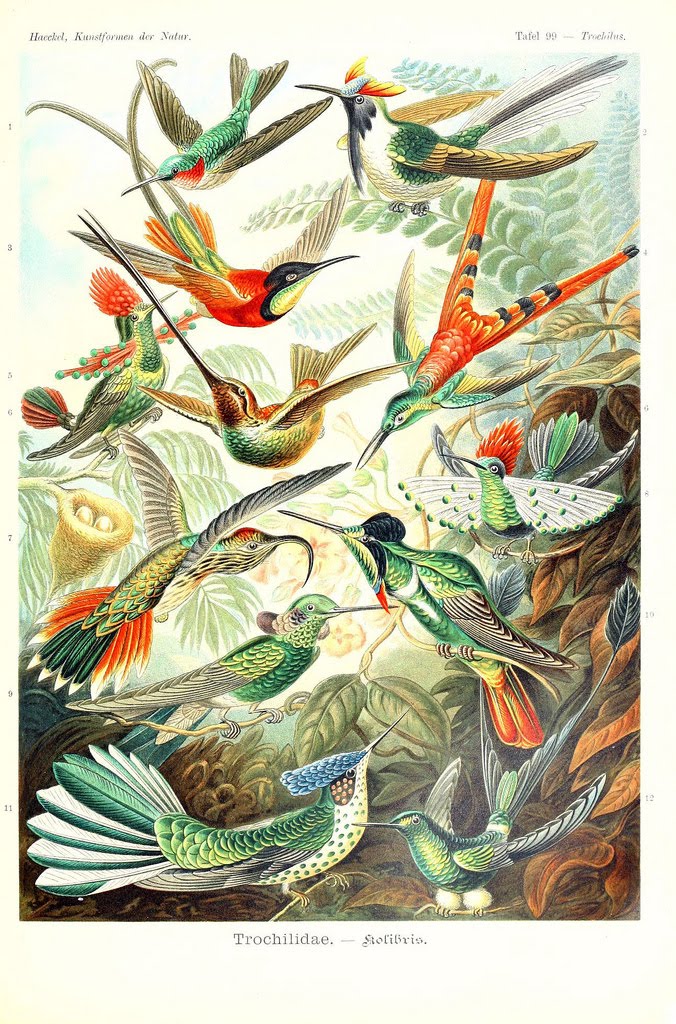
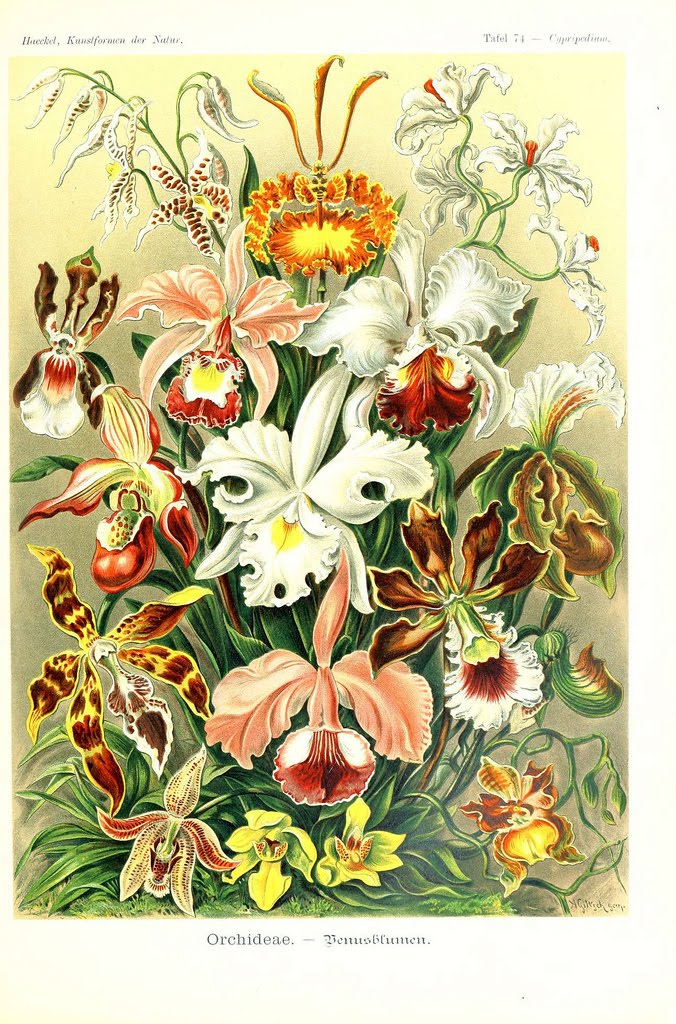
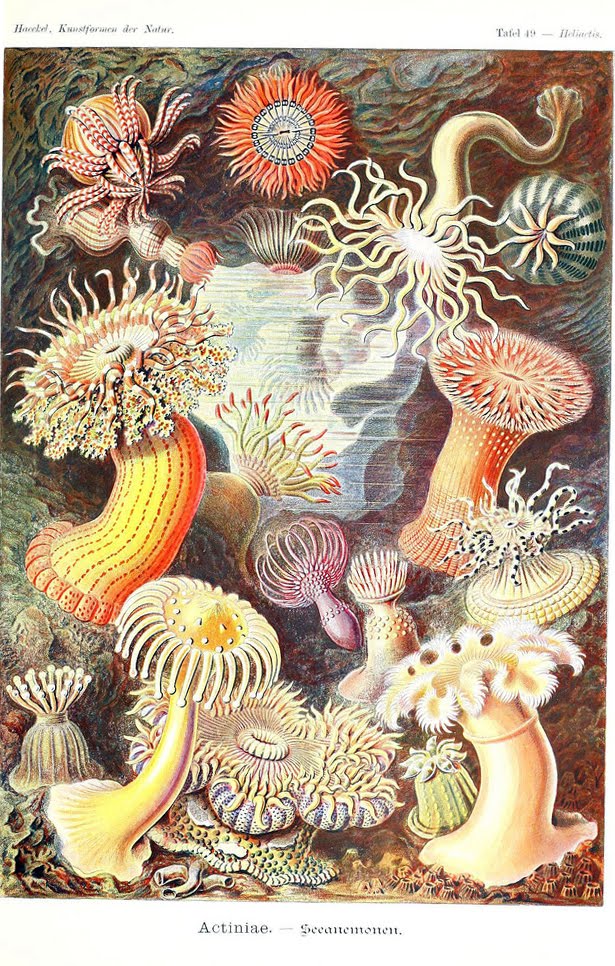
Kunstformen der Natur, translated into English as Art Forms in Nature, is a landmark publication in the field of naturalist illustration. Published in sets of ten from 1899-1904 and together in two volumes in 1904, the work contains 100 lithographic prints produced by Adolf Giltsch from Haeckel’s original sketches and watercolors.

While much of it is stylized for artistic effect, the exquisitely drawn, detailed plates exhibiting Art Nouveau techniques alongside commentary accessible to even the general public made Kunstformen der Natur an instant success and helped popularize science and many little-known marine organisms. Indeed, while Kunstformen der Natur covers a wide range of biological diversity, a majority of the illustrations depict marine life.

The timelessness and accuracy of Haeckel’s illustrations are evident even today. Just last year, an Atlas of the larval stages of all crustaceans worldwide, co-written by Joel W. Martin, Curator of Crustaceans at the Natural History Museum of Los Angeles County (a BHL Affiliate), featured one of Haeckel’s exquisite illustrations on the cover.

Learn more about Ernst Haeckel and Kunstformen der Natur in this online exhibit from The MBLWHOI Library. View the book in its entirety for free on the Biodiversity Heritage Library, digitized by Smithsonian Libraries, and browse all of the amazing illustrations in Flickr.

Radiolarians 
 
View Full Size Image
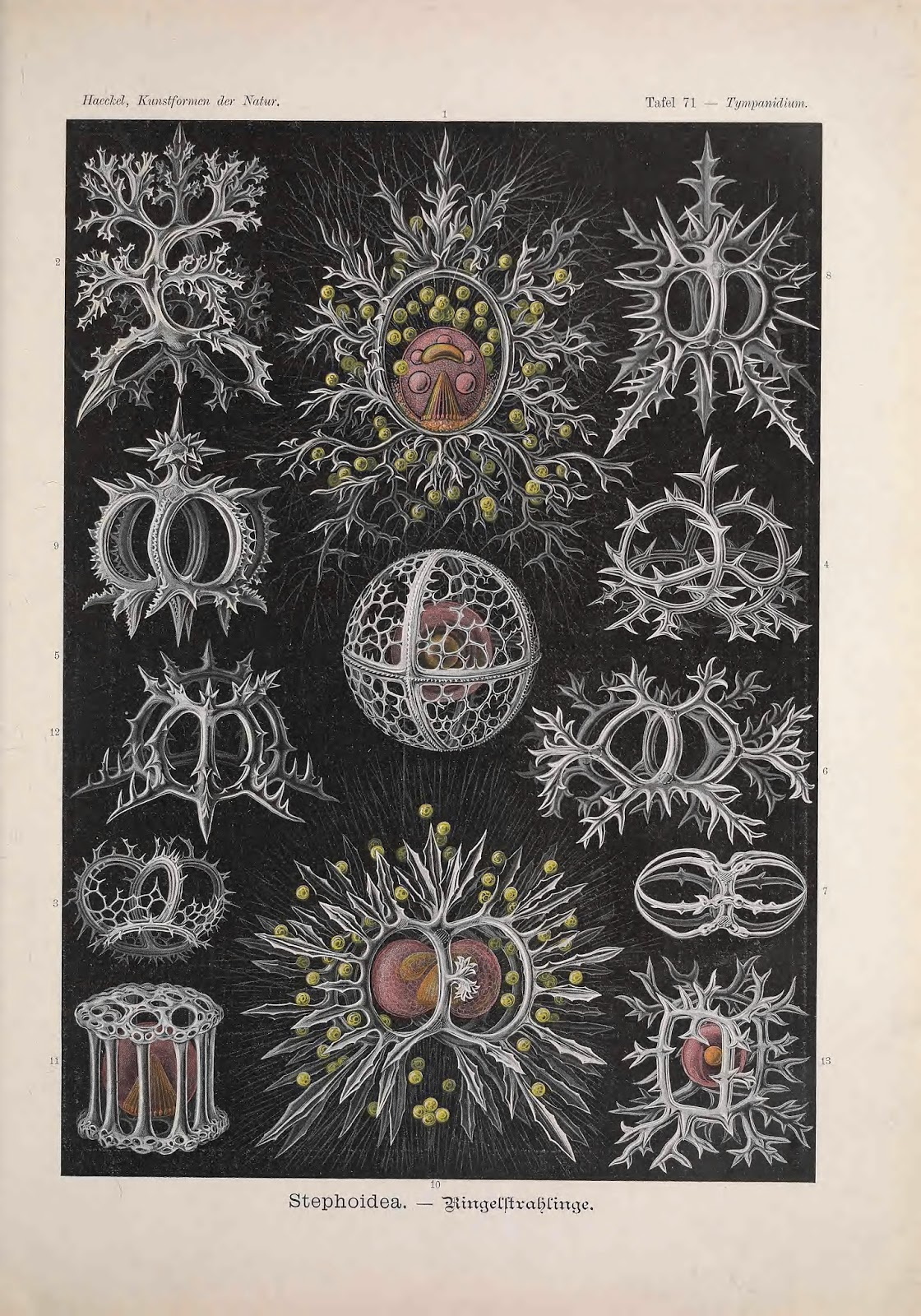
Radiolarians. Haeckel, Ernst. Kunstformen der Natur (1904). http://biodiversitylibrary.org/page/47388339.
Of all of the species Haeckel described, he is arguably most famous for the radiolarians. Planktonic, unicellular marine eukaryotes, radiolarians are found in all of the world’s oceans and represent a staple component of marine ecosystems. The multiple body compartments of radiolarians are surrounded by and elaborate mineral skeletons called the test, which exhibits the exquisite designs that so captivated Haeckel. Haeckel first encountered these beauties while at Messina in Sicily, and it was this experience that prompted him to pursue doctorate studies in zoology. Haeckel helped popularize these animals with the public through his 1862 monograph Die Radiolarien, his 1887 report as part of the H.M.S. Challenger expedition, and his illustrations in Kunstformen der Natur.


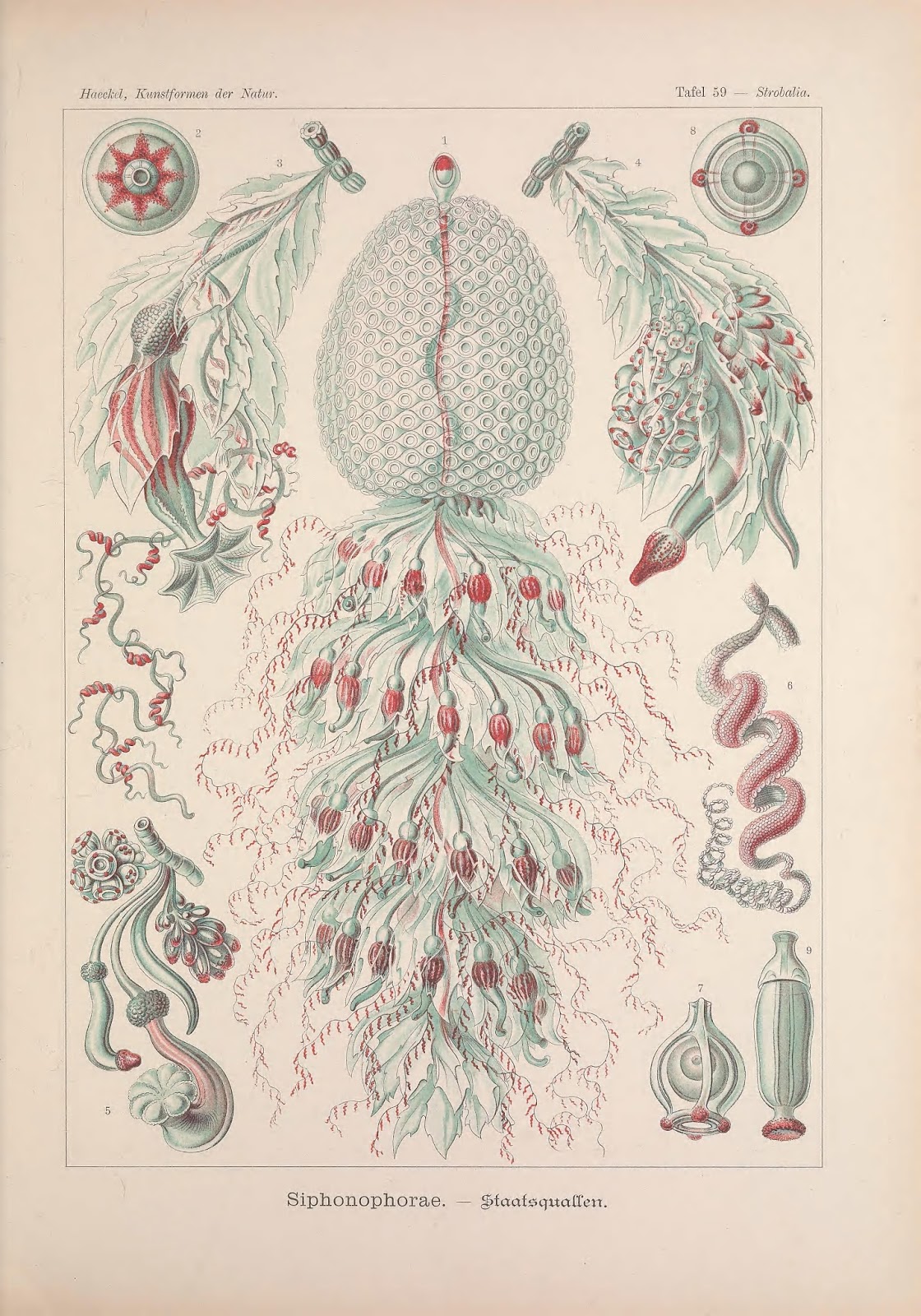
Siphonophorae

View Full Size Image
Siphonophorae. Haeckel, Ernst. Kunstformen der Natur (1904). http://biodiversitylibrary.org/page/47388273.

Siphonophorae is an order of marine animals in the phylum Cnidaria (the same phylum containing jellyfish). Although they superficially resemble jellyfish, each siphonophore specimen is actually a colony of many genetically-identical individuals, called zooids. Each zooid is specialized to serve a particular function within the colony, so much so that most cannot survive alone. The infamous and venomous Portuguese man o’ war is a member of this order. Certain siphonophore species can emit light. A species in the Erenna genus found off of the coast of Monterey, California has stinging cells that glow red, probably to attract the small fish upon which it preys. This species is only the second life form known to produce a red light, the first being the scaleless dragonfish Chirostomias pliopterus.

Rhizostomae Jellyfish
View Full Size Image
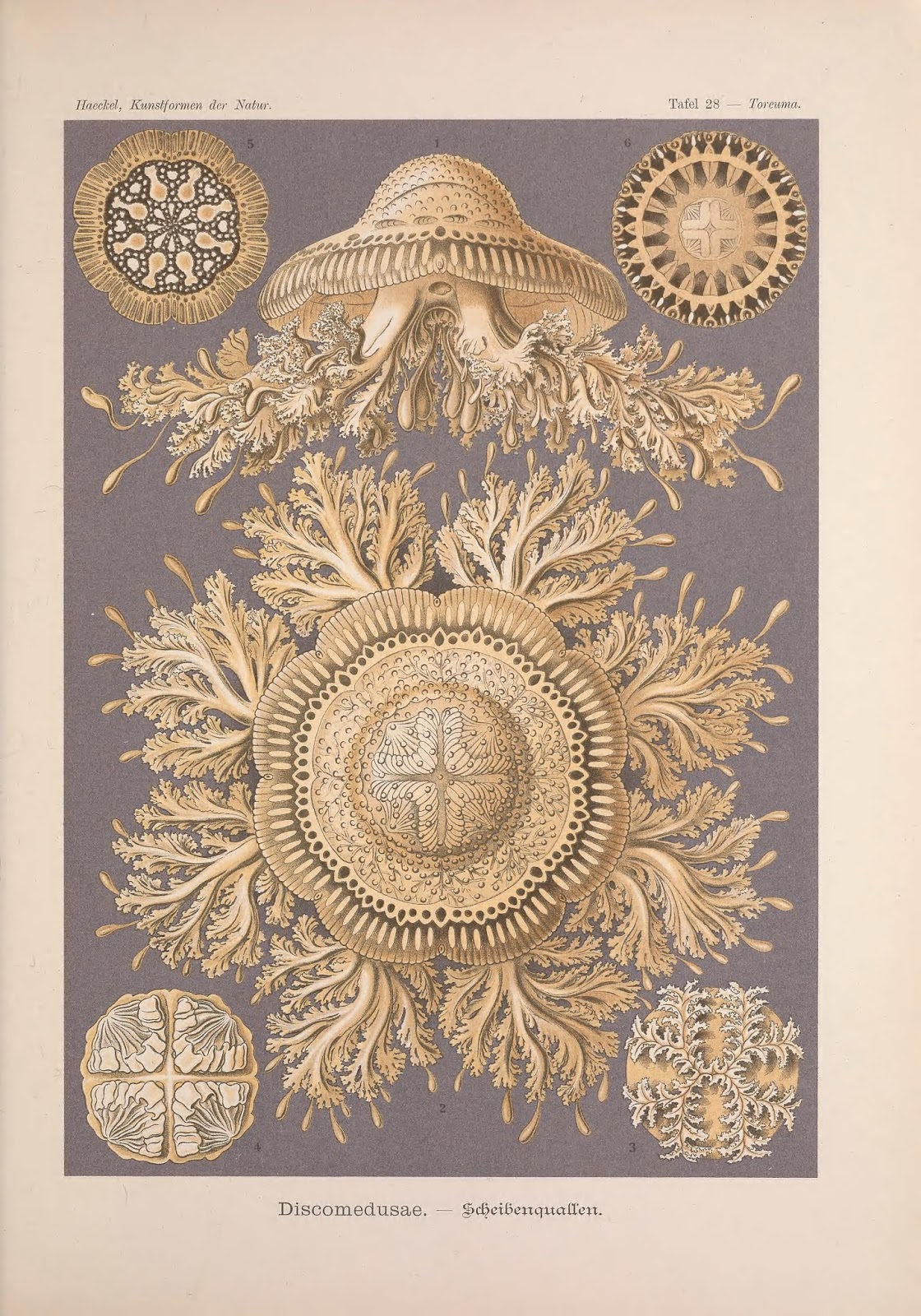
Rhizostomae Jellyfish. Haeckel, Ernst. Kunstformen der Natur (1904). http://biodiversitylibrary.org/page/47388103.

Haeckel was inspired by nature to create not just stunning illustrations but decorative pieces for home interiors as well. Haeckel discovered a species of rhizostomae jellyfish in Bellagemma, Ceylon, in December 1881. He was so impressed with the form that he used it as a model for ceiling decorations in his Villa Medusa home in Jena. Today, all jellyfish species fished on a commercial basis for human consumption are from the rhizostomae order, which are typically dried and/or salted before eating. China is the first documented country to eat jellyfish, with the practice dating back to at least 300 CE.

Nudibranchs
View Full Size Image
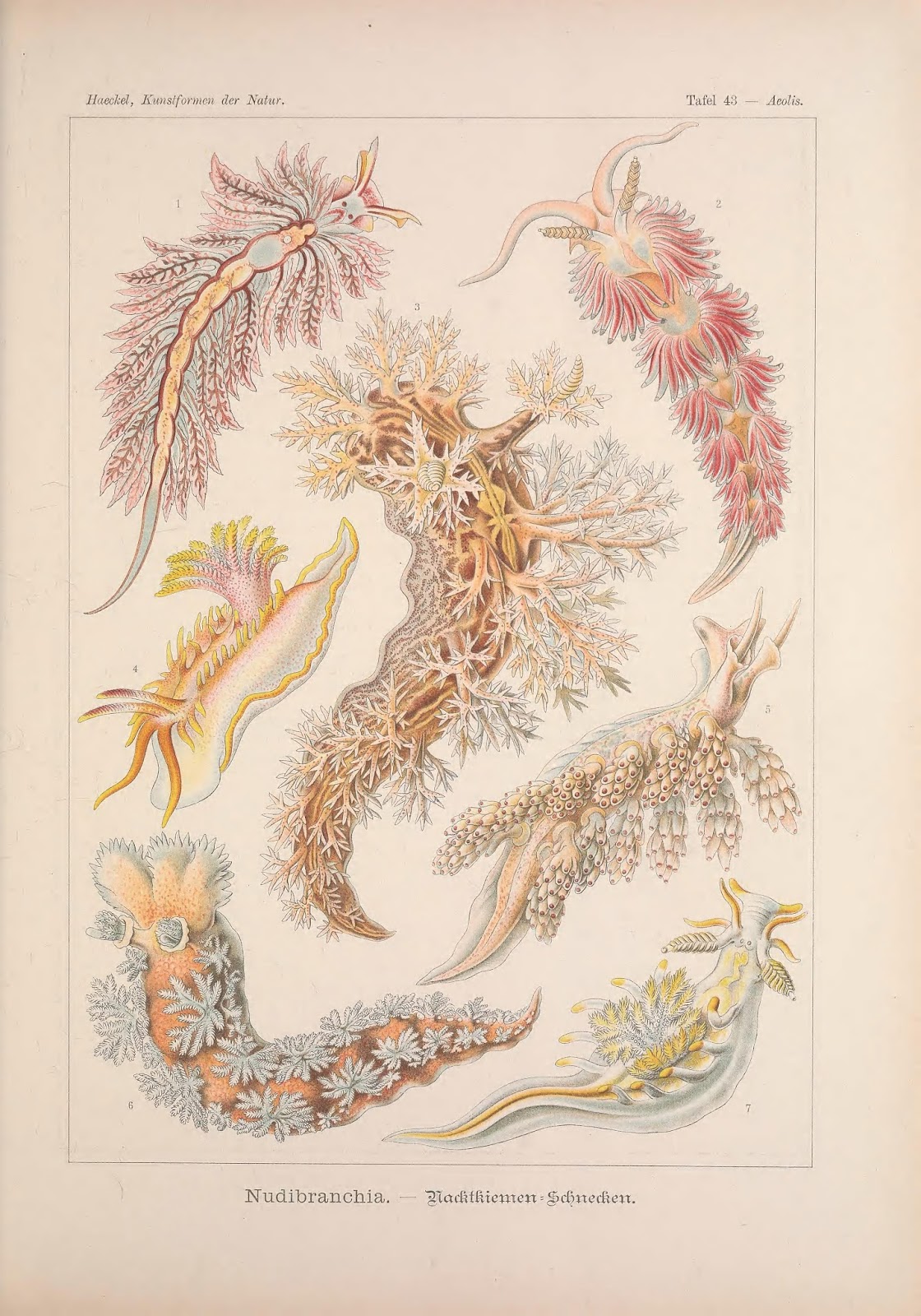
Nudibranchs. Haeckel, Ernst. Kunstformen der Natur (1904). http://biodiversitylibrary.org/page/47388185.

Nudibranchs (often casually called sea slugs) are soft-bodied, marine snails that have lost all trace of an external shell. The name “nudibranch” translates from the Latin as “naked gills.” Consisting of about 3,000 species, some have developed impressive defensives, including the ability to synthesize toxic compounds (such as sulfuric acid) or the ability to “hijack” and repurpose the stinging cells of the cnidarians (jellyfish, anemones, and, corals) that some of them eat.

Learn more about marine organisms and Haeckel’s amazing illustrations in the full article on 
Smithsonian Ocean Portal!

More World Oceans Day Resources

  • Follow us on Twitter, Facebook, and this blog all this week as we explore marine biodiversity and awesome related publications in BHL.
  • Check out some monumental publications in historic and present-day marine bioscience research in our BHL collection.
  • Browse a selection of marine biodiversity illustrations in Flickr and Pinterst
June 5, 2015by michelle.underhill
BHL News, Blog Reel

Natural Histories: Exploring Rare Books and Scientific Illustration

View Full Size Image
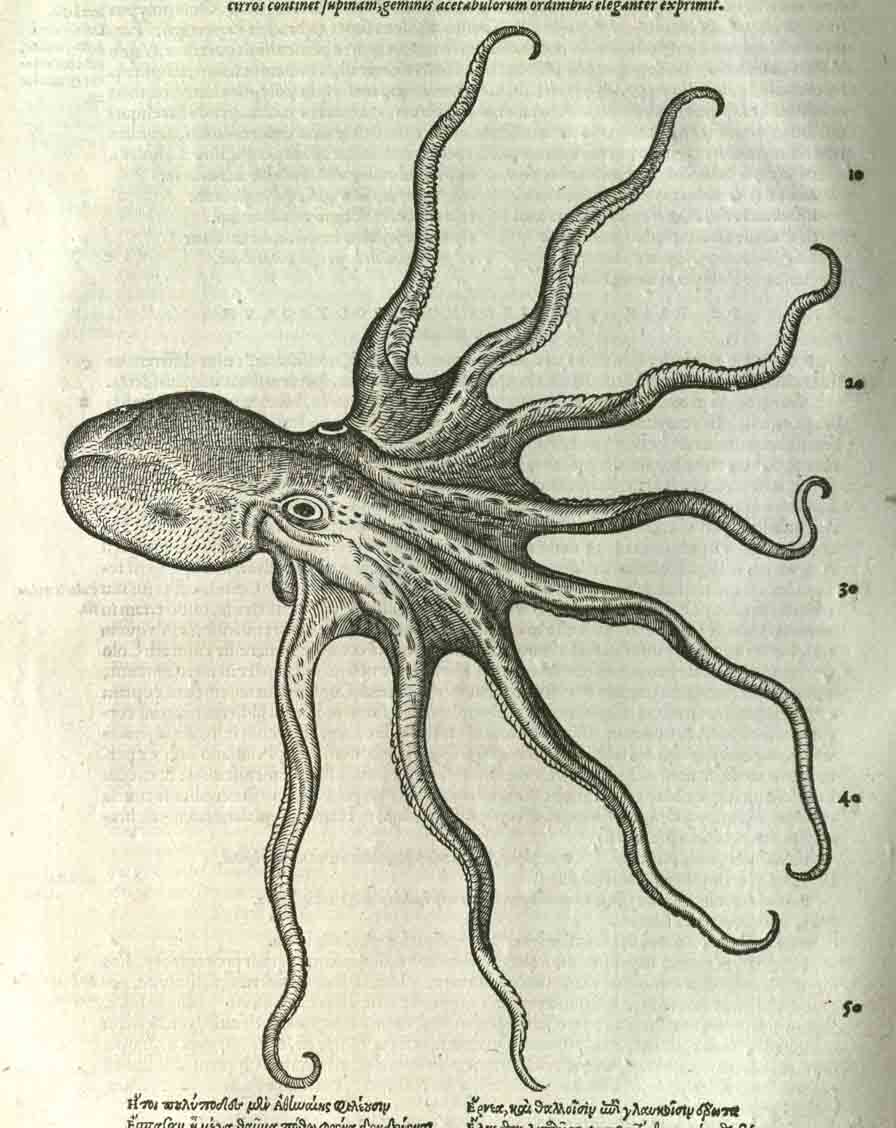
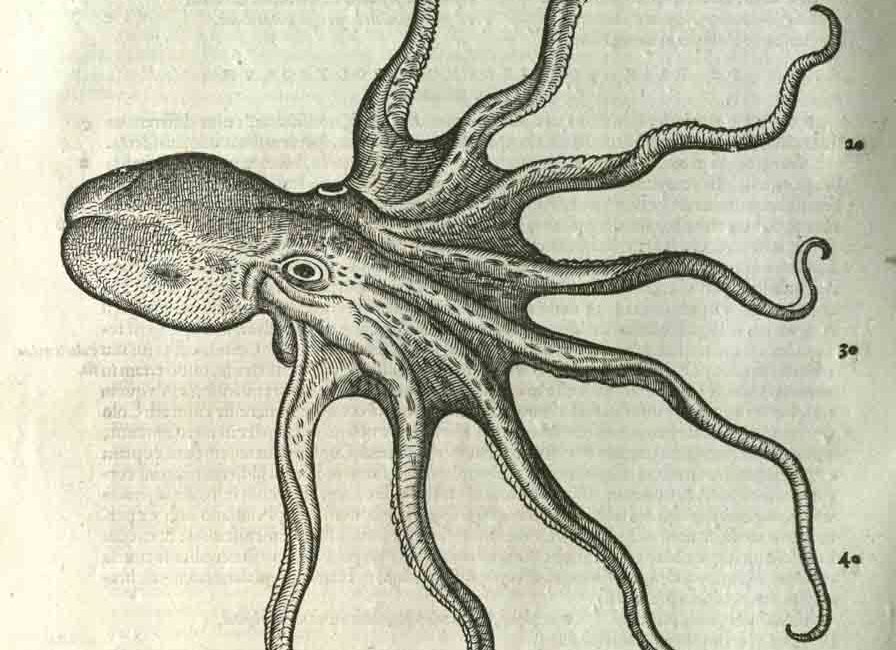
Gessner’s Octopus

Have you ever wanted to browse the stacks of a rare book library? To explore the pages of Gessner’s sixteenth century masterpiece Historiae Animalium and ask an expert why a walrus is illustrated with wing-like appendages? Or study Alexander Wilson’s passenger pigeon illustration and learn from a rare book authority the scientific implications of the depictions of now-extinct species?

Of course, you can examine the digital surrogates of many incredible rare books on BHL, but where can you go to get expert knowledge of the importance of these titles, or even understand what these authors of long-ago wrote in the first place if you can’t read Latin?

The American Museum of Natural History can help you get answers to some of your burning rare book questions. A new book, Natural Histories: Extraordinary Rare Book Selections from the American Museum of Natural History, provides insight into a selection of spectacularly illustrated volumes from the AMNH’s rare book library. The work, edited by Tom Baione, the Harold Boeschenstein Director of Library Services at AMNH and BHL Institutional Council member, features 40 essays from museum curators, scientists, librarians, and other experts discussing each rare book’s unique qualities and scientific contributions. Furthermore, Natural Histories includes 40 “suitable-for-framing” prints selected from the illustrations found within the rare tomes discussed.

View Full Size Image
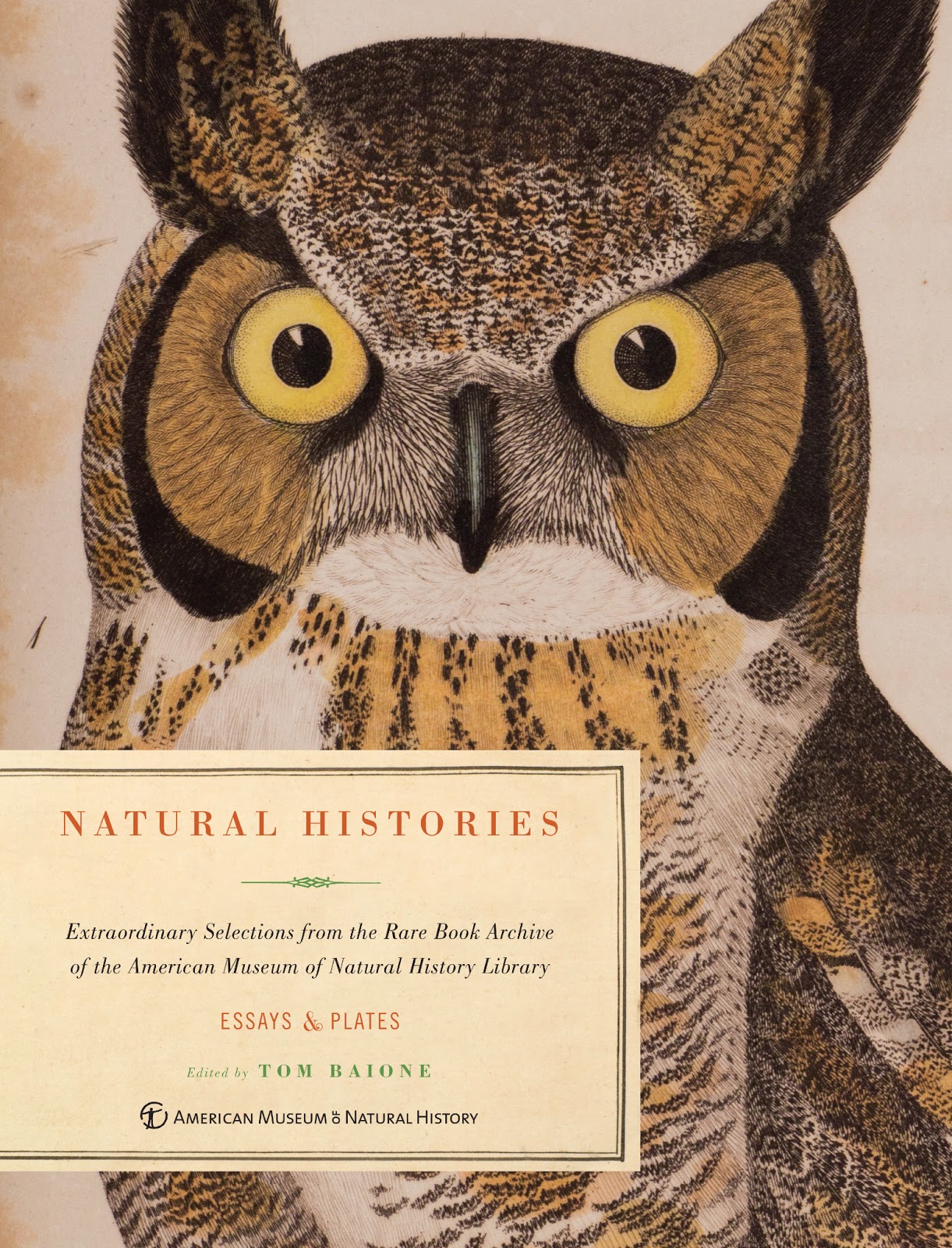
Cover of Natural Histories. Image: “Great Horned Owl” from Alexander Wilson’s American Ornithology.

The books highlighted in Natural Histories span from the 16th century to the early 20thcentury and include such critical works as Gessner’s Historiae Animalium, Robert Hooke’s Micrographia, Alexander Wilson’s American Ornithology, Ernst Haeckel’s Kunstformen der Natur, and John James Audubon’s The viviparous quadrupeds of North America. According to Baione,

Natural Histories came about because we wanted to let people know about our rich rare book collection, which contains more than 14,000 volumes and is used by researchers from around the world and includes many unique and hard-to-find volumes.

View Full Size Image
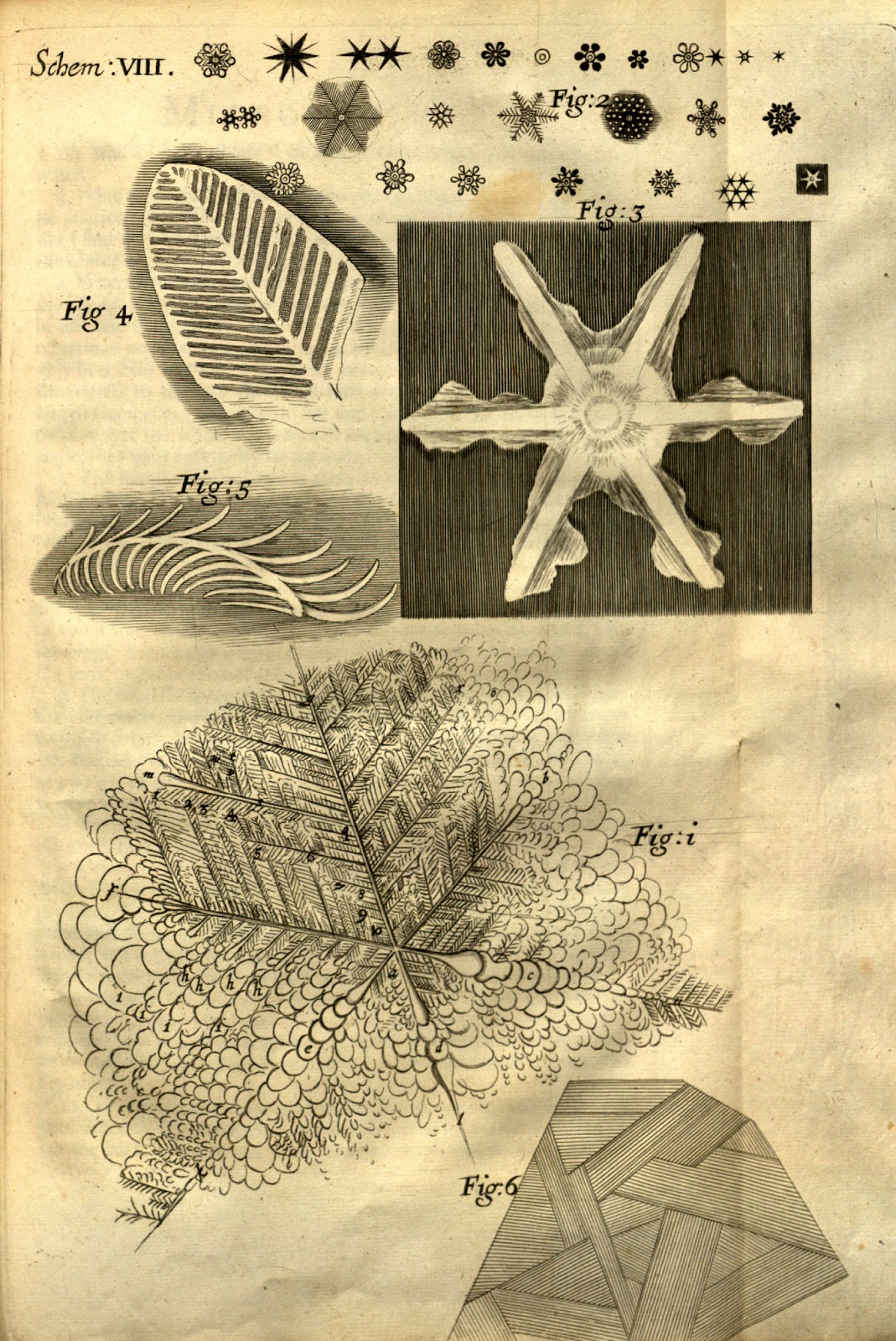
Microscopic view of snow and frozen water. Micrographia.

Natural Historiesfocuses in particular on the importance of the scientific illustrations found within each rare book discussed. As Baione articulates,

In the days before photography and printing, original art was the only way to capture the likeness of organisms, people, and places, and therefore was the only way to share this information with others. Printed reproductions of natural history art enabled many who’d never seen an elephant, for instance, to try to begin to understand what an elephant looked like and how its unusual features might function…I hope this collection of essays and plates will give readers a better understanding of the science behind these works and an appreciation of the art illuminating their pages.
The best part is, you can own your own copy of Natural Histories today. Dazzle your friends with the knowledge you’ll glean from the book’s essays and spruce up your décor by framing the 40 extraordinary prints included within it! Once you get your copy, read it with the Internet at your fingertips, so that you can not only learn about these books, but also explore many of them page-by-digital-page in BHL.  It’s the next-best thing to viewing the works in person.
Learn more about Natural Histories in an interview with the book’s editor, Tom Baione, below. And, if you find yourself at the American Museum of Natural History this summer, be sure to check out the Natural Histories exhibit, which will open in June.
January 29, 2013by Grace Costantino
Blog Reel, Featured Books

Book of the Week: Bridging the Gap Between Science & Art

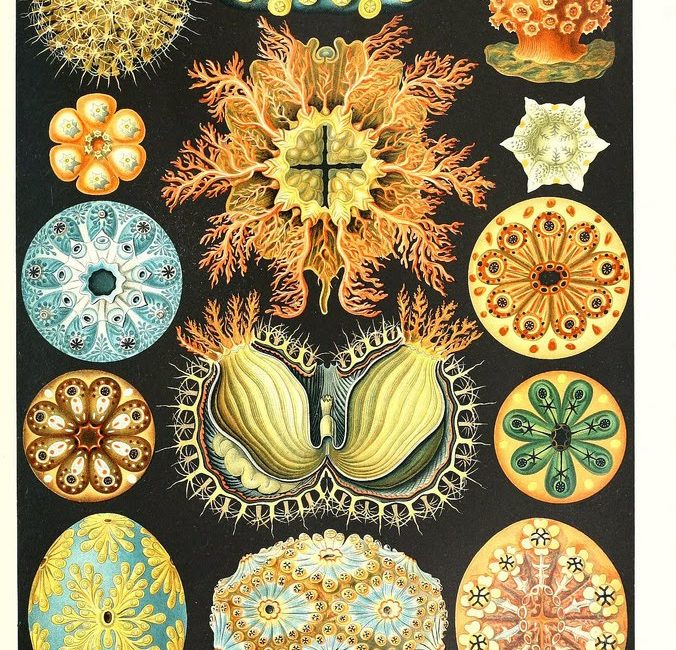
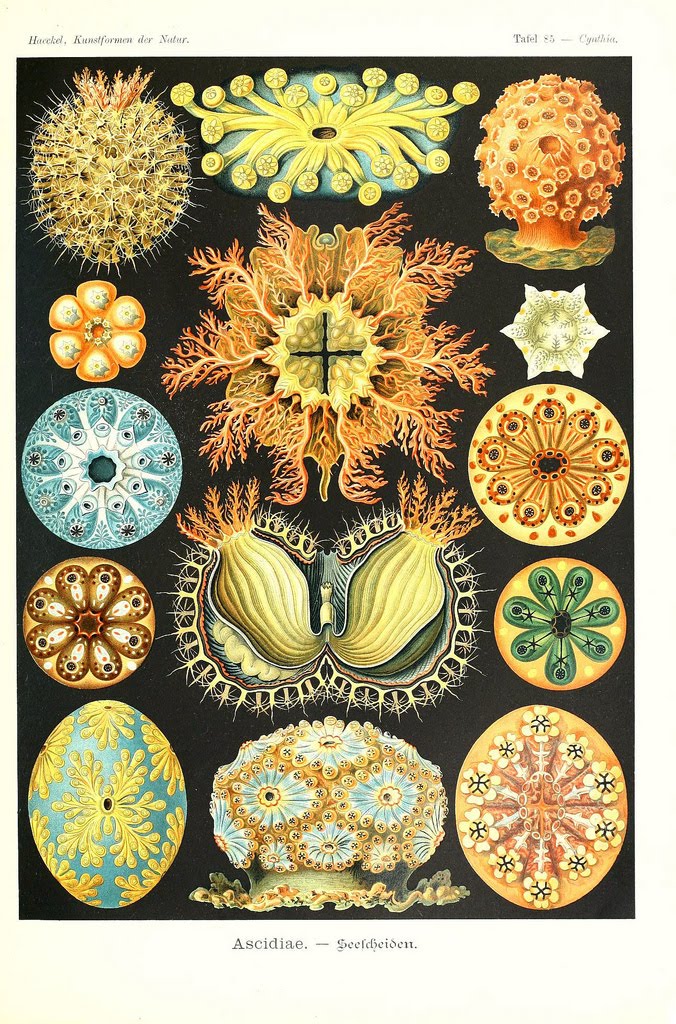
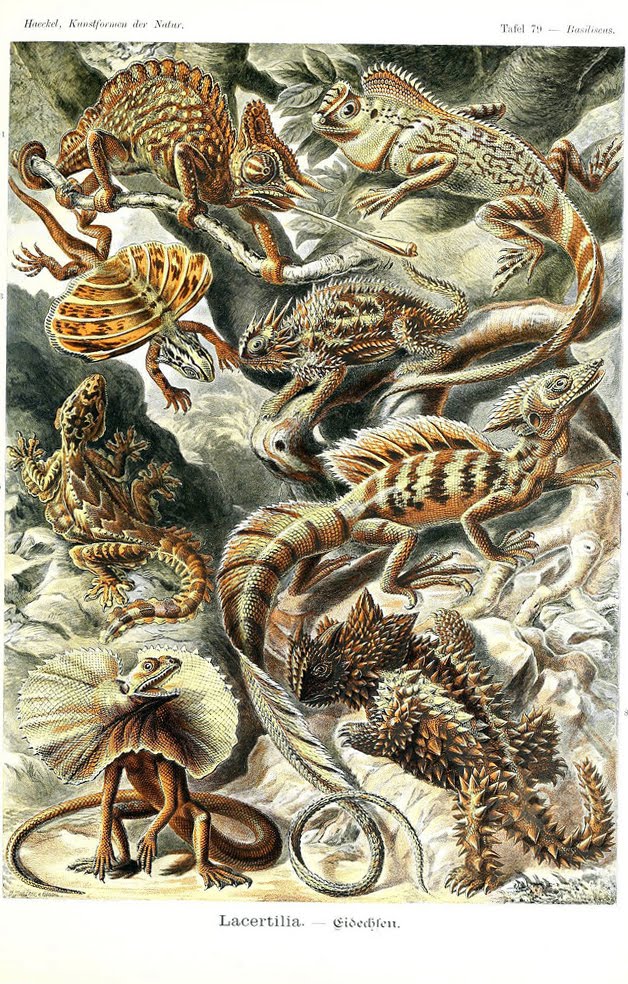
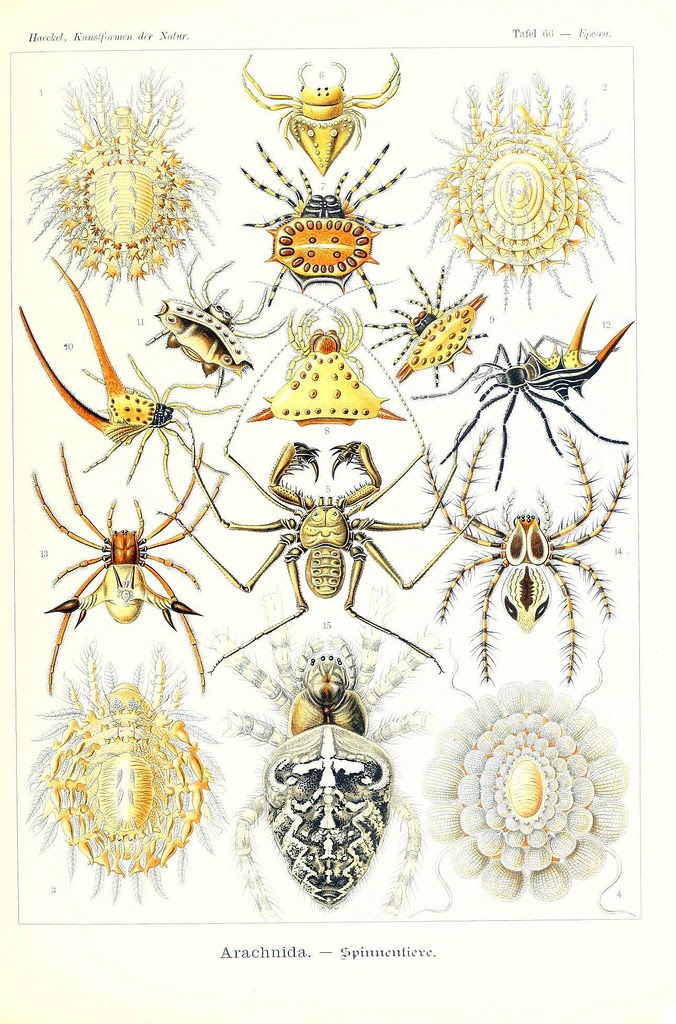
View Full Size ImageBy this point, if you’ve been following our “Books of the Week” regularly, you know that 18th, 19th, and 20th century taxonomic works weren’t just about the nomenclature they presented, but also the stunning illustrations accompanying these species descriptions. Those books with the most colorful, the most visually dynamic, images are those that we tend to gravitate towards for our posts. So, when we came across a book that has been described as “bridging the gap between science and art,” we simply had to feature it. That book, perhaps one of the most visually-compelling that we’ve yet featured, is Kunstformen der Natur (1904), by Ernst Haeckel.

View Full Size ImageOver the course of his career, Haeckel, a German biologist, described and named thousands of new species, popularized the work of Charles Darwin in Germany, mapped a genealogical tree relating all life forms, and produced dozens of glorious illustrations. In his lifetime alone, over 1000 prints were made of Haeckel’s sketches, 100 of which are found within Kunstformen der Natur. These 100 prints were translated from sketch to lithograph by artist Adolf Giltsch.

Cnidaria, which include sea anemones, jellyfish, and coral, as well as Radiolarians, which are protozoan zooplankton, are some of the most abundant species illustrated within this work. The book was originally published as ten sets from 1899-1904, and was then re-published as a complete work in 1904. Haeckel scholar Olaf Breidbach eloquently wrote that this title is “not just a book of illustrations but also the summation of [Haeckel’s] view of the world.”

View Full Size ImageWhat was to us perhaps the most impressive aspect of the images in Kunstformen der Natur was not simply the radiant colors and depth of realism within the creatures depicted, but the way in which each plate was composed, symmetrically balancing each inch of space and arranging each organism artistically beside or around the others so as to not only catch the viewer’s eye, but dynamically draw him in and keep him constantly engaged. Never before or since has plankton been portrayed with such charm and beauty.

While we cannot feature all 100 of the illustrations within this work in this post, we can at least highlight some of our favorites. And, thanks to the BHL Flickr account, which now has over 13,000 images, you can see all of the remaining illustrations displayed for you on one convenient canvas. We hope that you’ll find this title as richly rewarding as we did.

View Full Size Image
View Full Size ImageView Full Size Image

October 6, 2011by ulib-libraryjobs

Help Support BHL

BHL's existence depends on the financial support of its patrons. Help us keep this free resource alive!

search

About BHL

The Biodiversity Heritage Library (BHL) is the world’s largest open access digital library for biodiversity literature and archives. BHL operates as a worldwide consortium of natural history, botanical, research, and national libraries working together to digitize the natural history literature held in their collections and make it freely available for open access as part of a global “biodiversity community.”

Join Our Mailing List

Sign up to receive the latest news, content highlights, and promotions.

Subscribe Now

Subscribe to Blog via Email

Enter your email address to subscribe to this blog and receive notifications of new posts by email.

Join 319 other subscribers

Subscribe to Blog Via RSS

Subscribe to the blog RSS feed to stay up-to-date on all the latest BHL posts.

Access RSS Feed

Inspiring Discovery through Free Access to Biodiversity Knowledge.

The Biodiversity Heritage Library makes it easier than ever for you to access the information you need to study and explore life on Earth…for free, anytime, anywhere.


64+ Million Pages of
Biodiversity Literature Online.

EXPLORE

Tools and Services
to Transform Research.

EXPLORE

300,000+
Illustrations on Flickr.

EXPLORE

ABOUT | HARMFUL CONTENT | PRIVACY | SITE MAP | TERMS OF USE