Biodiversity Heritage Library - Program news and collection highlights from BHL
  • Home
  • News
  • Featured Books
    • All Featured Books
    • Book of the Month Series
    • BHL at 20
  • User Stories
  • Campaigns
    • Fossil Stories
    • Garden Stories
    • Monsters Are Real
    • Page Frights
    • Her Natural History
    • Earth Optimism 2020
  • Tech Blog
  • Visit BHL
Home
News
Featured Books
    All Featured Books
    Book of the Month Series
    BHL at 20
User Stories
Campaigns
    Fossil Stories
    Garden Stories
    Monsters Are Real
    Page Frights
    Her Natural History
    Earth Optimism 2020
Tech Blog
Visit BHL
  • Home
  • News
  • Featured Books
    • All Featured Books
    • Book of the Month Series
    • BHL at 20
  • User Stories
  • Campaigns
    • Fossil Stories
    • Garden Stories
    • Monsters Are Real
    • Page Frights
    • Her Natural History
    • Earth Optimism 2020
  • Tech Blog
  • Visit BHL
Biodiversity Heritage Library - Program news and collection highlights from BHL
Blog Reel, Featured Books

Flora, Fauna, and Photography: Five Years of Digitising Content for BHL in Aotearoa

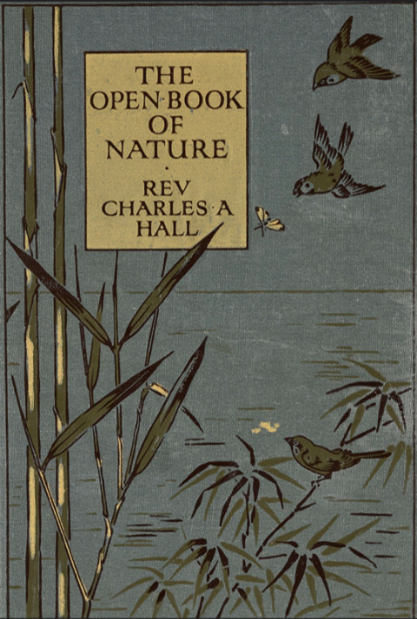
Cover of a book with bamboo, song birds, and insects, titled The Open Book of Nature by Rev Charles A Hall.

Auckland Museum joined the Biodiversity Heritage Library (BHL) in 2018 and currently remains the only organisation in Aotearoa New Zealand contributing to the consortium. During my four years working as a technician and coordinator on the project, and with the help of a volunteer, Brianna Vincent, we have added over 25,000 pages, increasing our library of contributions from three to over 100 biodiversity literature items. These items span from 1790 to 2004, covering over 200 years of biological knowledge, and range from field notebooks and sketches to identification guides, records and proceedings, educational textbooks, plant material, cyanotypes (blueprints), and hand-painted illustrations.

Cover of a book with gray background and sea shell image in the center, titled Sea Shells of New Zealand by C. E. R. Bucknill

Cover. Sea Shells of New Zealand. C. E. R. Bucknill. 1924. Contributed in BHL from Auckland War Memorial Museum Tāmaki Paenga Hira.

Cover of a book with bamboo, song birds, and insects, titled The Open Book of Nature by Rev Charles A Hall.

Cover. The Open Book of Nature. Hall, Charles A. 1911. Contributed in BHL from Auckland War Memorial Museum Tāmaki Paenga Hira.

Cover of a book with multiple moth specimens and decorative flower motif border, titled Common British Moths: peeps at nature

Cover. Common British Moths. Stewart, Alexander Morrison. 1918. Contributed in BHL from Auckland War Memorial Museum Tāmaki Paenga Hira.

Hand drawn plate of the tea tree manuka - small white flowers with pinkish-orange centers

Manuka – Tea Tree. P. 71. Neil, James F. The New Zealand family herb doctor. 1891. Contributed in BHL from Auckland War Memorial Museum Tāmaki Paenga Hira.

Hand drawn plate of pohutukawa - Christmas tree. Elongated leaves and bushy orange flowers

Pōhutukawa – Christmas Tree. P. 494. Neil, James F. The New Zealand family herb doctor. 1891. Contributed in BHL from Auckland War Memorial Museum Tāmaki Paenga Hira.

Digitising contributing literature is an intensive undertaking; each page is individually photographed, exported, cropped, reordered, and then sequenced — resulting in a digital replica that accurately represents the physical copy in our collection. Literature items are selected through a criterion of subject matter, copyright, and relevance to the existing BHL collection. This selection process requires collaboration with our photography team, rights management team, museum collection managers, curators, our natural sciences department, cataloguing staff, librarians, and increasingly, external copyright holders. By the time our content appears on the webpages of BHL, a rigorous, inter-department effort has taken place – one with many moving parts and diverse areas of expertise.

Auckland Museum adheres to strict copyright compliance guidelines in determining whether an item qualifies for addition to BHL: either the item must be out of copyright (published prior to 1928, following U.S. copyright requirements) or the item’s copyright is held (or has been licensed) by Auckland Museum. The result of this selection process is a collection of unique, high-resolution, openly licensed, and public-domain material able to be freely distributed, adapted, and utilised for a myriad of creative, scientific, and other research-oriented purposes by the public. In our contributions to BHL, Auckland Museum has significantly increased the amount of copyrighted material through the collaboration and permission of New Zealand external rights holders by openly licensing copyrighted content under a Creative Commons license.

As part of the rights permissions process, items are reviewed for cultural permissions to preserve the dignity of Māori and Pasifika cultural representation within our archival holdings. This aspect of our reviewing process is an important way to respect the mana, the spiritual life force and power, in our objects and in the cultural groups depicted in them.

On a wider level, BHL acknowledges that the literature on BHL may contain harmful content in the form of historic colonial material. For Tāmaki Paenga Hira, this reflection is vital in our conceptualism as a GLAM (Galleries, Libraries, Archives, and Museums) institution. Museums have been inextricably rooted in a history of colonisation, and it is our responsibility to take care not to further perpetuate racial stereotypes, distribute destructive accounts of culture, or allow any opportunities for the misappropriation of meaningful objects and imagery.

Our own Records of the Auckland Institute and Museum contains multidisciplinary research including botany, zoology, entomology, and ethnology from both current and former curatorial staff. These records include images of taonga, something treasured, that may not be suitable to be published online for public-domain reuse. These images are redacted following our own internal guidelines and the BHL page redaction policy. More information about BHL’s acknowledgment of harmful content notice can be found here.

Page of the Record of the Auckland Museum and Institute with a black box redacting a piece of the text

A photograph of Tangonge, one of Aoteroa‘s oldest known carvings and a highly significant taonga has been redacted. P. 281. Records of the Auckland Institute and Museum. V. 5. 1958. Contributed in BHL from Auckland War Memorial Museum Tāmaki Paenga Hira.

Auckland Museum’s collection within BHL has a reciprocal relationship of enrichment with other digital partnerships and platforms. Recently Auckland Museum launched a BHL New Zealand Flickr account featuring a curated collection of images from natural history books digitised over the course of the BHL project. Publishing these images on such a popular online photo management and sharing application opened doors for Wikipedia editors to enrich existing articles with cover photos, for the Wikimedia repository to be supplied with a rich collection of imagery for future use, and even for text to be available for reading on Wikisource – an innovative platform allowing the crowd-sourcing of language translation and audio narration recording of literature to ultimately improve accessibility globally and to users with disabilities.

The biodiversity data available within the digitised works on BHL is of interest to many parties; it can be exported to large aggregators such as the Global Biodiversity Information Facility (GBIF) and Bionomia, complementing ongoing scientific research and aiding scientists to find gaps in collective biological knowledge. Articles and images from BHL such as the Records of Auckland Institute and Museum are shared on Wikipedia and Wikidata, and Cite Q citations for articles allow for scholarly Wikipedia usership in the access of this data via the Wikipedia platform.

Wikipeida page for Banksia prolata

Banksia prolata wikipedia page showing a plate from an item digitised by Auckland Museum and added to BHL. Plate 3. Flora Australasica. Sweet, Robert. 1828.

The catalogue records for titles added to BHL are updated in our own system after an item has been added, enabling us to embed and share the digital copy on our website. If another BHL partner has digitised a book that we hold a copy of, we can also add this BHL link to our collection record, giving the Museum’s users instant access to this material digitally.

What was once confined to our archives to only be viewed on request, in person with supervision, can suddenly be proliferated across the world wide web. With data rapidly moving from one place to another – exports, imports, open-access downloads, and the real-time ingest across linked open data platforms – BHL acts both as a global access point and a launching pad of sorts, allowing these rare and unique objects to be viewed everywhere and all at once. The opportunities for GLAM institutions to collaborate and support one another in the boom of the information era are diverse and far-reaching, and BHL is an essential piece of this puzzle for Auckland Museum.

Woman with glasses holds open a book on a cart in preparation for digitization

Kelly Hall, BHL Coordinator at Auckland Museum

Auckland Museum would like to thank Lottery Grants Board NZ, The C & L Gregory Trust, and The Tennyson Charitable trust for enabling this work.

October 10, 2023by [email protected]
BHL News, Blog Reel

Acknowledging Harm, Rethinking Collections

BHL Acknowledgment of Harmful Content

The Biodiversity Heritage Library has released an Acknowledgment of Harmful Content to recognize deep prejudices within some of the pages of its collection. As a digital library of natural science publications and archival materials, BHL is a free and open access online resource that primarily reflects the print collections of its contributors. Some of the content in BHL is harmful because it reflects ableist, classist, colonialist, eurocentrist, racist, sexist, xenophobic, and other biased views, especially in descriptions of peoples, lands, and species. The long and, at times, painful history of the scientific record has privileged hegemonic perspectives with the right to print while stifling the voices of the powerless.

Acknowledgment of Harmful Content

The Biodiversity Heritage Library acknowledges the existence of harmful content in many biodiversity science publications and original materials included in its collection. We are reckoning with the, at times, painful heritage of our collection and seeking to address its impact on science and culture today. As a curated digital collection aggregating content from hundreds of providers into a single platform, BHL is a reflection of the historical collection development decisions of those providers as well as the publishing practices and historical colonial processes that have shaped the scholarly record of biodiversity science. Scientific understanding evolves over time, through critical analysis of new information and scrutiny of its mistakes. We recognize that as a free and open access digital library, we simultaneously increase and promote access to materials, some of which espouse deep prejudices that are counterproductive to the advancement of scientific knowledge and overshadow the contributions of marginalized peoples across the globe. At best these views are outdated; at worst, the legacy of natural sciences is unjust and inhumane. The harmful content in BHL’s collection goes against the values of the Biodiversity Heritage Library. It is provided for access as part of the historical record.

BHL joins recent global outcries against racial and environmental injustice. We are assessing our role as a digital library and the responsibility we have to question our neutrality and address harm without reducing access. We are deeply concerned about the continuing crisis of global species loss and the inequitable divisions within our own species. Reflecting on ourselves, we see an organization grappling with inclusion and the acute consequences that these harmful views have on the world and its people today.

Heritage institutions such as the AfricaMuseum, Digital Public Library of America, Royal Botanic Gardens Kew, Trove, and others are also addressing these issues. In general the museum and cultural heritage community is reckoning with our organizations’ past and present, as well as the ways in which our collections, publications, public exhibitions and strategic goals impact society.

Over the course of 2020, BHL rethought the implementation of our strategic plan with the goal to challenge ourselves towards more equitable collection management, technical development, outreach, partnership development, and mission enabling practices. With regard to our collection management objectives going forward, we will be:

  • publishing a collaborative research bibliography to inform new collection management strategies that focus on global challenges including biodiversity loss, systematic racism, and the effects of a worldwide pandemic on scholarly research,
  • identifying and filling gaps in the collection to achieve more complete and inclusive representation of the available knowledge of and perspectives on biodiversity, e.g. including indigenous knowledge,
  • and conducting a comprehensive review and revision of our collection development policy.

If “knowing the past is critical to reforming the present” as Dr. David Silverman suggests [1] then publicly acknowledging the biases in our collection is a first step towards making our collection more inclusive. As a global consortium with a variety of social, cultural, epistemological, and political factors at play, we are unified in our commitment to advancing equity in the global biodiversity community while also maintaining access to the historical record.

Sincere thanks to the Biodiversity Heritage Library Collections Committee for participating in many challenging discussions and writing BHL’s Acknowledgment. In addition, we would like to thank BHL’s Executive Committee, Secretariat, as well as BHL Staff and Partners for their careful consideration and feedback. The Acknowledgment would not have been possible without the thoughtful input of our reviewers including: Lidia Ponce de la Vega, Smithsonian Libraries and Archives Diversity Equity Accessibility and Inclusion (DEAI) Committee, as well as colleagues within our professional networks especially Cornell University Library, MBLWHOI Library and the Woods Hole Diversity Advisory Committee, Muséum national d’Histoire naturelle, and Royal Botanic Gardens Kew.

[1] Silverman, D. (2019, November 18). [This Land Is Their Land] | C-SPAN.org. https://www.c-span.org/video/?466094-1/this-land-land

October 13, 2021by SheilaC7108

Help Support BHL

BHL's existence depends on the financial support of its patrons. Help us keep this free resource alive!

search

About BHL

The Biodiversity Heritage Library (BHL) is the world’s largest open access digital library for biodiversity literature and archives. BHL operates as a worldwide consortium of natural history, botanical, research, and national libraries working together to digitize the natural history literature held in their collections and make it freely available for open access as part of a global “biodiversity community.”

Follow BHL

  • Bluesky logo
  • Instagram logo
  • Facebook logo
  • Flickr logo
  • Twitter logo

Join Our Mailing List

Sign up to receive the latest news, content highlights, and promotions.

Subscribe Now

Subscribe to Blog via Email

Enter your email address to subscribe to this blog and receive notifications of new posts by email.

Join 319 other subscribers

Subscribe to Blog Via RSS

Subscribe to the blog RSS feed to stay up-to-date on all the latest BHL posts.

Access RSS Feed


64+ Million Pages of
Biodiversity Literature Online.

EXPLORE

Tools and Services
to Transform Research.

EXPLORE

300,000+
Illustrations on Flickr.

EXPLORE

ABOUT | HARMFUL CONTENT | PRIVACY | SITE MAP | TERMS OF USE