Biodiversity Heritage Library - Program news and collection highlights from BHL
  • Home
  • News
  • Featured Books
    • All Featured Books
    • Book of the Month Series
    • BHL at 20
  • User Stories
  • Campaigns
    • Fossil Stories
    • Garden Stories
    • Monsters Are Real
    • Page Frights
    • Her Natural History
    • Earth Optimism 2020
  • Tech Blog
  • Visit BHL
Home
News
Featured Books
    All Featured Books
    Book of the Month Series
    BHL at 20
User Stories
Campaigns
    Fossil Stories
    Garden Stories
    Monsters Are Real
    Page Frights
    Her Natural History
    Earth Optimism 2020
Tech Blog
Visit BHL
  • Home
  • News
  • Featured Books
    • All Featured Books
    • Book of the Month Series
    • BHL at 20
  • User Stories
  • Campaigns
    • Fossil Stories
    • Garden Stories
    • Monsters Are Real
    • Page Frights
    • Her Natural History
    • Earth Optimism 2020
  • Tech Blog
  • Visit BHL
Biodiversity Heritage Library - Program news and collection highlights from BHL
BHL News, Blog Reel, Featured Books

Nine Smithsonian Field Books Now in BHL!

The Biodiversity Heritage Library is pleased to announce that nine of the Smithsonian field books that were cataloged and imaged as part of the Field Book Project are now available through the BHL portal!

With over 43 million pages of the published biodiversity literature, BHL has greatly improved the efficiency of access to the published literature–much of which was previously available in limited physical copies in but a few select libraries in the developed world.  As unique primary source documents, field books present similar challenges and we are very pleased to provide another layer of access to these important materials.

Scientists’ field notes are, in many ways, the precursors to the published literature.  Journals (the unpublished kind), diaries, collecting lists, photo albums, and other primary source documentation of collecting events can enhance not only the scientific understanding of what has already been published but can also provide insights into the historical, sometimes even personal, context behind the research.

The Field Book Project has cataloged over 7,000 Smithsonian field books and imaged over 400 of those which are available through the Smithsonian Collection Search Center along with additional contextual information in the form of collection records and authority files.  The nine field books chosen as the first testbed set for ingest into BHL include item records and page scans for seven diaries created by David Crockett Graham and two photo albums from the Harriman Alaska Expedition (1899) from the collections of the Smithsonian Institution Archives.  Each item not only tells its own fascinating story of exploration but also provides information and insights that complement materials already in BHL.

In addition to making these available alongside the related literature in BHL, we are especially pleased to see these notes joining the 62 other field notes that are already in BHL thanks to the Connecting Content project.  The original vision for the Field Book Project was to create one online location for field books, regardless of physical location. Now you can view the Smithsonian field notes alongside those from the California Academy of Science, Missouri Botanical Garden, New York Botanical Garden, Harvard Botany Libraries and Museum of Comparative Zoology.  And with the crowdsourcing transcription efforts underway both at the Smithsonian Transcription Center and kicking off with BHL’s Purposeful Gaming project earlier this month, we’re looking forward to seeing more great things come out of our continued partnership with the Field Book Project!

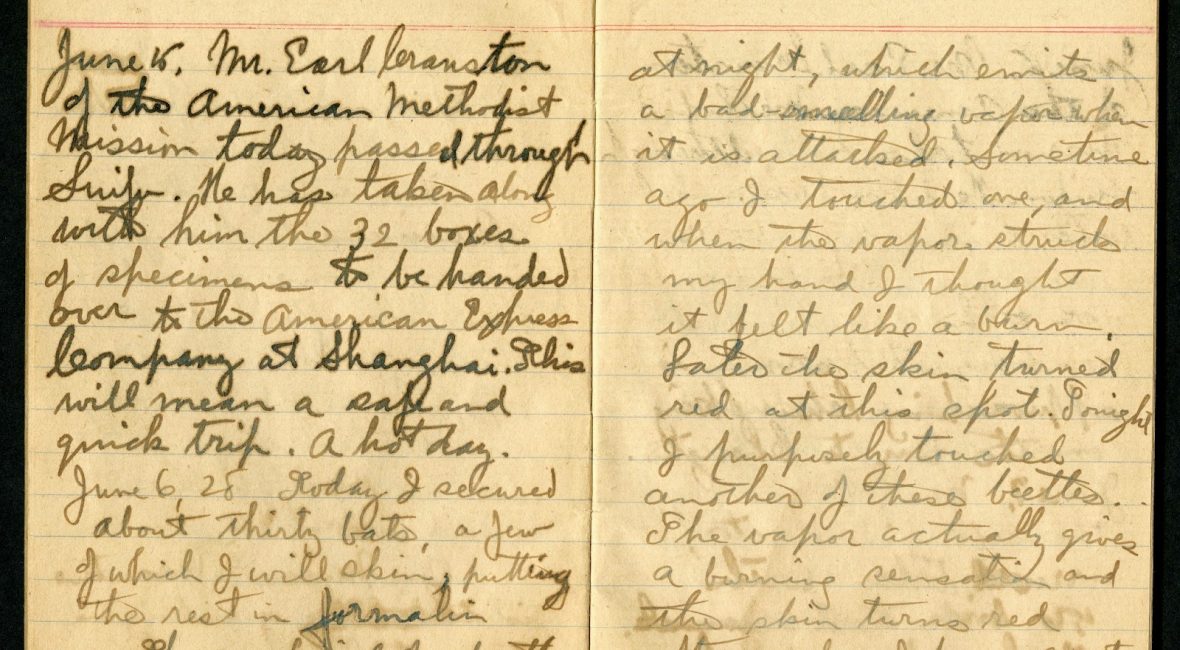
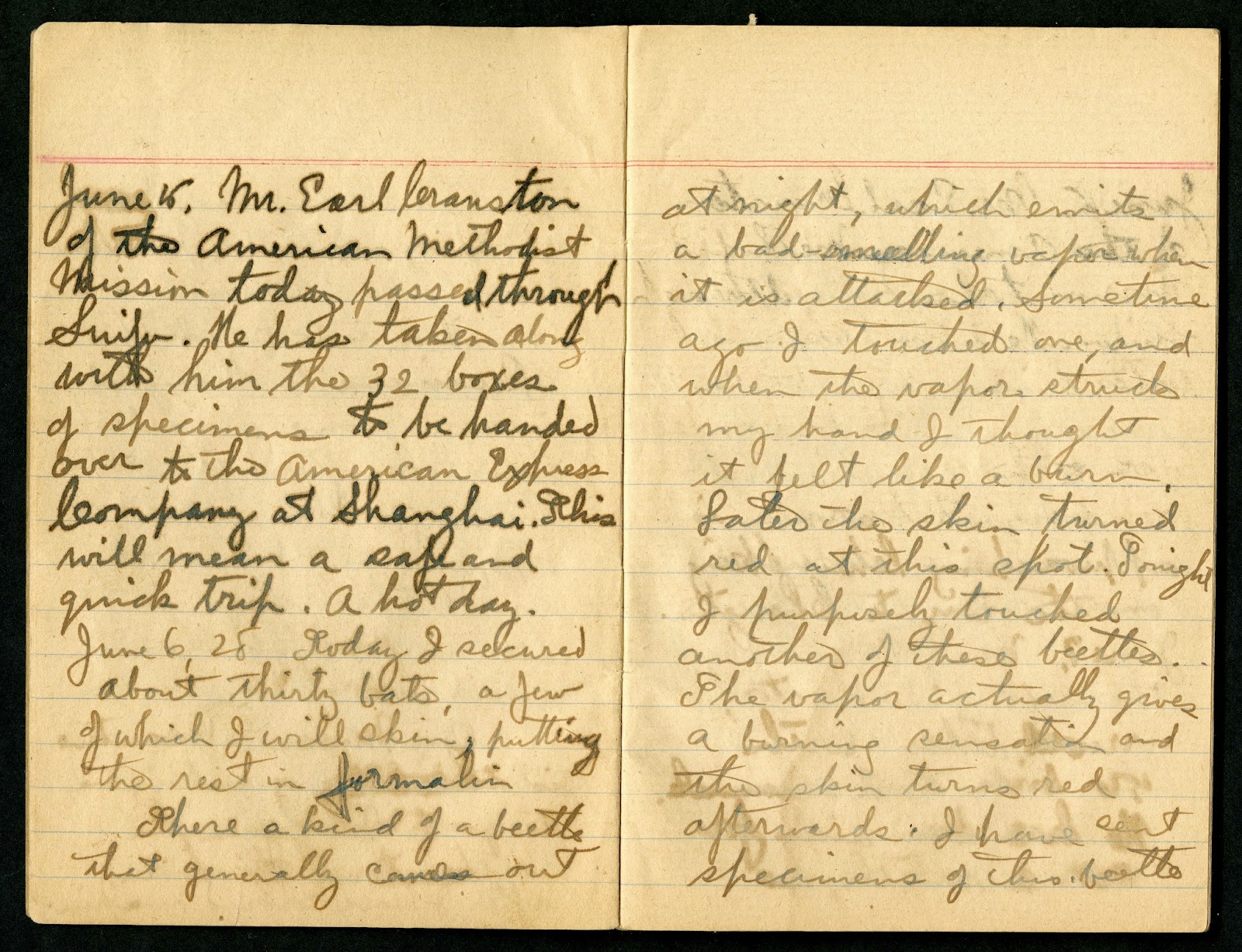
David Crockett Graham (1884-1961) was an American missionary and collector working in China over the period of 1911-1948.  In the U.S., Graham had studied theology, anthropology, and ethonology.  As part of the Proceedings of the United States National Museum (v.80, 1932), BHL has made available an article authored, detailing the architectural structures, carvings and artifacts he observed in the artificial caves in Szechuan Province.  But his work was not limited to cultural and anthropological inquiry.  Graham also spent summers collecting biological specimens for the U.S. National Museum (now the National Museum of Natural History), receiving the honorary title of Collaborator in Biology in 1932. His diaries from those summers provide a fascinating perspective onto his experiences while collecting, from the logistical aspects of organizing a collecting team and their supplies to the impact of heavy rains and extreme heat on their travels.  His natural curiosity is evident as he pesters a stinky beetle (June 6, 1928) and marvels at how, after discovering a large number of moths in a nearby bush, they do not come to his lantern at night (June 14, 1928).
View Full Size Image
Entry from June 6, 1928 of David Crockett Graham’s
Diary no. III., May 27, 1928 – October 12, 1928

The Harriman Alaska Expedition (1899) is the fascinating–and true–story of a railroad tycoon’s family vacation and scientific expedition rolled into one.  After his physician recommended a vacation to combat exhaustion, Edward Henry Harriman, President of the Union Pacific Railroad, began planning a big game hunt for his family.  Exhausted as he may have been, though, he remained ambitious even in rest.  By the time they set sail for Alaska on May 31, 1899, the family vacation transformed into a full-scale exploring expedition.  The list of participants reads like a roll call of renowned scientists, naturalists, and artists of the time, many of whom whose names are still well-known today: Clinton Hart Merriam, Frederick Vernon Coville, Thomas Kearney, William Healey Dall, Robert Ridgway, and over a hundred others.
View Full Size Image
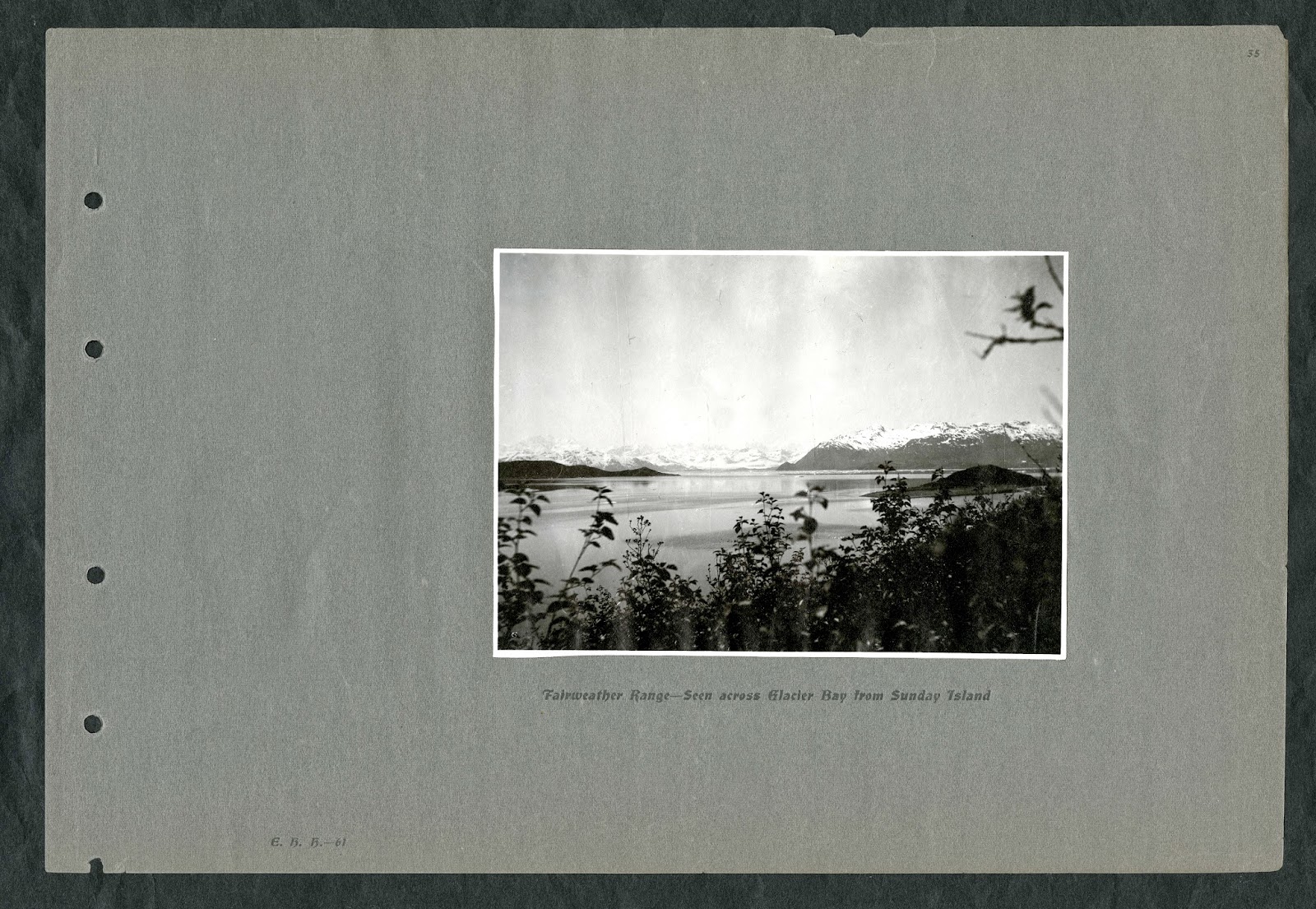
Fairweather Range –Seen across Glacier Bay from Sunday Island
Souvenir of the Harriman Alaska Expedition, May-August, 1899,
volume 1, New York to Cook Inlet

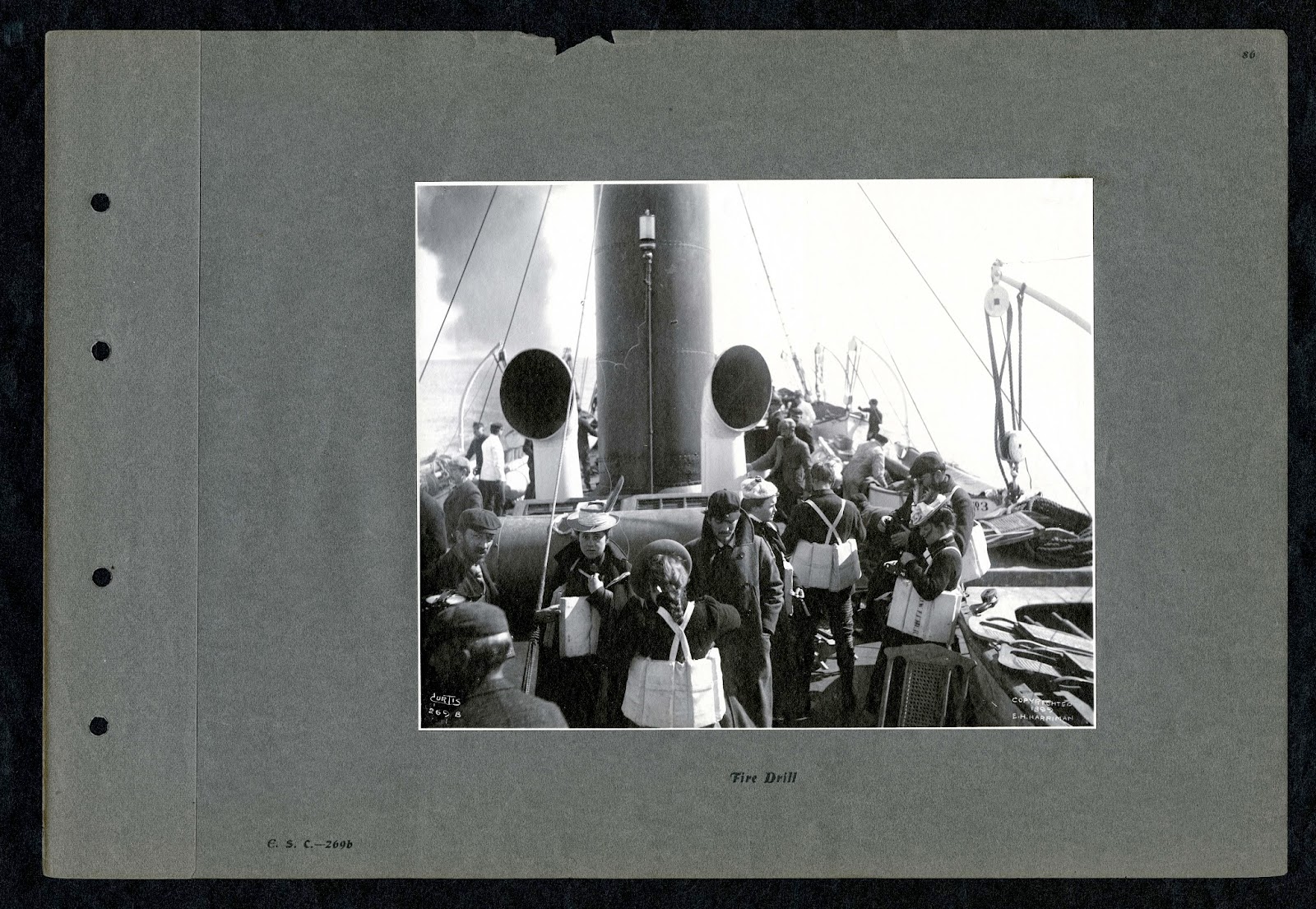
Not surprisingly, the expedition resulted in several publications, including the Harriman Alaska Series a multi-volume report on Alaska’s geography and biodiversity, including insects, crustaceans, and invertebrates.  The two photo albums were assembled as souvenirs for expedition participants and include hundreds of photographs, the bulk of which show Alaskan landscapes and glaciers as they appeared in 1899. While some photographs from the expedition were also included in the reports and other publications, as a whole, these albums help to fill in our contextual understanding of the place and time in which Alaska’s biodiversity was being recorded by the Harriman Expedition.  They also offer a glimpse into the human experience of the expedition, from a family outing on Lowe Inlet to a fire drill aboard the George W. Elder.
View Full Size Image
Fire Drill
Souvenir of the Harriman Alaska Expedition, May-August, 1899,
volume 1, New York to Cook Inlet

We hope you enjoy taking a look through the first of the Smithsonian field notes to be added to BHL. Let us know what you discover by leaving us a comment!
June 12, 2014by sayeedmd
Blog Reel, Featured Books

Book of the Week: Serendipity, Twitter, and Louis Agassiz Fuertes

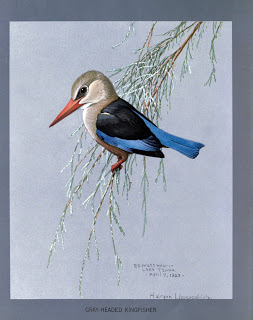
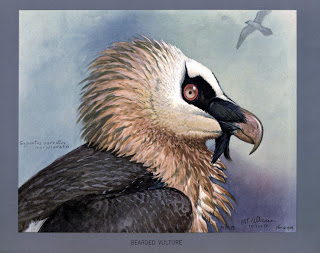
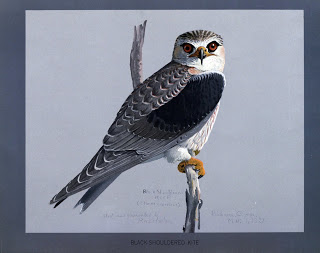
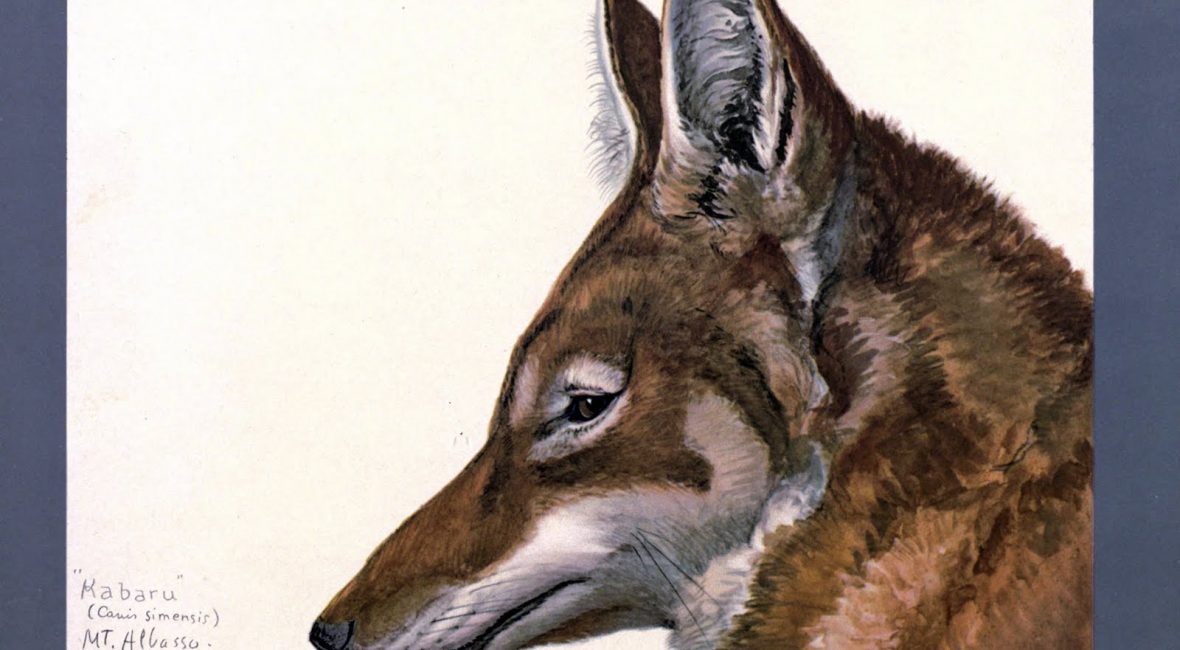
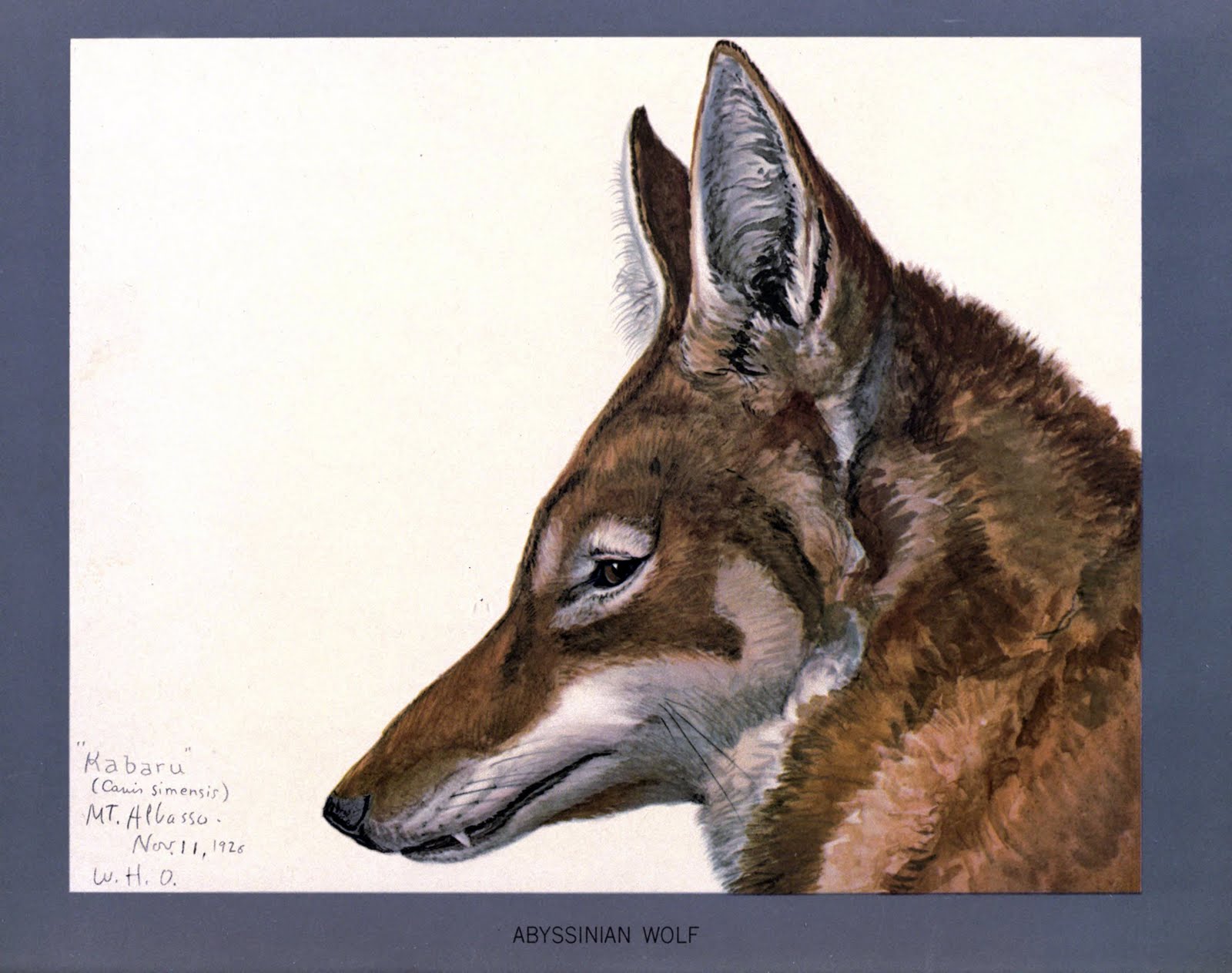
View Full Size ImageEarlier this week we did a Species of the Day tweet on Twitter (@BioDivLibrary) about the Abyssinian or Ethiopian Wolf – the most endangered canine in the world. For the tweet, we linked to a lovely portrait of the animal in Album of Abyssinian Birds and Mammals (1930), illustrated by Louis Agassiz Fuertes. Little did we know what a fascinating work this actually is. One of our followers on Twitter, John Pittman, known to the Twitter universe as@drhypercube, responded to our tweet with a link to his blog. Made aware of this book on BHL by our tweet & subsequent posting of the illustration to our Flickr account, John’s post highlights the genius of this ornithologist and painter – a genius that we had only partially appreciated when we did the original tweet. As John writes,

“This is the peanut butter cup of Biodiversity Heritage Library serendipity – two wonderful things that are even better in combination. Via the BioDivLibrary Flickrstream, the Album of Abyssinian Birds and Mammals from Paintings by Louis Aggasiz Fuertes.

Fuertes, for those who don’t know him or his work, was an ornithologist and painter. I’ve loved his art since I first encountered it (I was maybe 10 years old?) in a coffee table book that was, at that point, way out of my price range. His National Geographic article, Falconry, the Sport of Kings is still a favorite…”

View Full Size Image

Intrigued by John’s post, we decided to feature this work as our book of the week. We started by contacting John to get a little more information about Louis Agassiz Fuertes. He obliged by telling us that, not only was Fuertes an accomplished ornithologist and painter, but he was actually one of the members on the 1899 Harriman Alaskan trip, an expedition that spent two months voyaging from Seattle, along the Alaskan coast to Siberia, and back to Seattle. The accomplishment included discovering approximately 600 new species, 38 of which were new fossil species, charting the geographic distribution of Arctic species, discovering an unmapped fiord, and naming several glaciers. There were also important studies and documentation done of the indigenous people of the region, including a recording of a Tlingit song on a graphophonic recording machine brought along by Harriman.

This expedition was not the only one that Fuertes took part in. Indeed, our book of the week was the result of Fuertes’ involvement in a Field Museum expedition to Ethiopia, for which he not only painted, but personally collected, prepared, labeled and packed “no less than one thousand bird skins” for the Museum. Known as the Field Museum – Chicago Daily News Abyssinian Expedition (1926-27), the participants “traversed a large part of Abyssinia (Ethiopia), making collections which cover a wide range of conditions.” Wilfred H. Osgood, a curator of zoology at the Field Museum who wrote the introduction of our book of the week, said of Fuertes,

View Full Size Image

“The opportunity [the expedition] gave Fuertes for life studies of African birds was varied and unusual. Theretofore engaged solely in painting American birds, he found tremendous enthusiasm in a new field and plunged into it with joyous abandon and tireless energy…The painting was in almost all cases done in the tent, the artist sitting on his sleeping cot and his materials and specimens scattered about him.”

Fuertes produced 108 painting and sketches for the expedition. After his death, Mr. C. Suydam Cutting purchased these works and gave them to the Field Museum. As Osgood wrote,

“The great popularity and the prominence of Mr. Fuertes as the leading American painter of birds, together with the opinion freely expressed that these final studies represented the height of his power, brought a demand for their reproduction in some form that would make them available to a wide circle.”

View Full Size Image

Thus came our book of the week, which presents 32 of these paintings “reproduced by offset lithography.” We’ve featured only a few of these in our post today. We invite you to take some time to look at the rest, and visit John Pittman’s blog for more illustrations and information. We send out a special thanks to Mr. Pittman for inspiring this book of the week and providing us with such valuable additional information. There’s no limit to the things you can learn via social media conversations!

June 30, 2011by michelle.underhill

Help Support BHL

BHL's existence depends on the financial support of its patrons. Help us keep this free resource alive!

search

About BHL

The Biodiversity Heritage Library (BHL) is the world’s largest open access digital library for biodiversity literature and archives. BHL operates as a worldwide consortium of natural history, botanical, research, and national libraries working together to digitize the natural history literature held in their collections and make it freely available for open access as part of a global “biodiversity community.”

Join Our Mailing List

Sign up to receive the latest news, content highlights, and promotions.

Subscribe Now

Subscribe to Blog via Email

Enter your email address to subscribe to this blog and receive notifications of new posts by email.

Join 319 other subscribers

Subscribe to Blog Via RSS

Subscribe to the blog RSS feed to stay up-to-date on all the latest BHL posts.

Access RSS Feed

Inspiring Discovery through Free Access to Biodiversity Knowledge.

The Biodiversity Heritage Library makes it easier than ever for you to access the information you need to study and explore life on Earth…for free, anytime, anywhere.


64+ Million Pages of
Biodiversity Literature Online.

EXPLORE

Tools and Services
to Transform Research.

EXPLORE

300,000+
Illustrations on Flickr.

EXPLORE

ABOUT | HARMFUL CONTENT | PRIVACY | SITE MAP | TERMS OF USE