Biodiversity Heritage Library - Program news and collection highlights from BHL
  • Home
  • News
  • Featured Books
    • All Featured Books
    • Book of the Month Series
    • BHL at 20
  • User Stories
  • Campaigns
    • Fossil Stories
    • Garden Stories
    • Monsters Are Real
    • Page Frights
    • Her Natural History
    • Earth Optimism 2020
  • Tech Blog
  • Visit BHL
Home
News
Featured Books
    All Featured Books
    Book of the Month Series
    BHL at 20
User Stories
Campaigns
    Fossil Stories
    Garden Stories
    Monsters Are Real
    Page Frights
    Her Natural History
    Earth Optimism 2020
Tech Blog
Visit BHL
  • Home
  • News
  • Featured Books
    • All Featured Books
    • Book of the Month Series
    • BHL at 20
  • User Stories
  • Campaigns
    • Fossil Stories
    • Garden Stories
    • Monsters Are Real
    • Page Frights
    • Her Natural History
    • Earth Optimism 2020
  • Tech Blog
  • Visit BHL
Biodiversity Heritage Library - Program news and collection highlights from BHL
BHL News, Blog Reel

BHL adds members in Philadelphia and San Francicso

Portrait version of the Biodiversity Heritage Library logo.

In May 2009, two new members were accepted into the Biodiversity Heritage Library:

  • The Academy of Natural Sciences of Philadelphia
  • The California Academy of Sciences (San Francisco)

These two important institutions will greatly contribute to the strength of the BHL. Below is a little bit of information about our newest members. Look forward to more detailed profiles of these two libraries as well as in depth overviews of the original ten members.

View Full Size ImageFor nearly 200 years, The Academy of Natural Sciences of Philadelphia has built one of the finest natural history libraries in the world. The Library has grown from five books and two maps in 1812 to its present size of over 68,000 printed titles (numbering over 200,000 volumes) and over 250,000 manuscripts and related pictorial materials. The manuscript collections include the Academy’s archives as well as correspondence, photographs, journals, field notes, and original illustrations by and about American scientists from the first half of the eighteenth century to the present. It is the library of record for early accounts of American scientific expeditions.

The Academy Library, the Ewell Sale Stewart Library, is notable in the Americas for its holdings of historical works in every discipline of the natural sciences; the collection has particular strength in the history of science, evolution, early ecology, systematics, marine and freshwater biology, and geology. It was an early adopter of digitization as a method to make its holdings widely accessible. It began to scan digital images from books and archival materials and publish them on the web in 1999. Two early projects were funded by the IMLS in the form of a Leadership Grant, and one by the Getty Grant Program.

  • Danianne Mizzy, Library Director, Ewell Sale Stewart Library, The Academy of Natural Sciences

View Full Size ImageEstablished in 1853, the California Academy of Sciences is the third oldest institution of its kind in the U.S. and the only one in the nation with a major research center, aquarium, planetarium, and natural history museum under one roof. All programs and exhibits at the Academy embrace its mission to explore, explain, and protect the natural world, focusing on the evolution of life, its diversity, and its sustainability. Scientific research is a key part of the Academy’s mission and this work is supported by a collection of 20 million specimens, 60 research scientists, and a library with more than 230,000 volumes and 1200 current serial titles. Examples of current biodiversity research include the work being done by Brian Fisher on the ants of Madagascar, Jack Dumbacher on the birds of Papua New Guinea, Peter Roopnarine on the evolution of communities through the fossil record, and Healy Hamilton on the effects of climate change on species distributions and conservation planning efforts. Academy Library website.

  • Lawrence Currie, Academy Librarian, California Academy of Sciences
June 23, 2009by joelrichard
BHL News, Blog Reel

BHL: 2 Years: 13 million pages: 12 million names: Chrismania!

Portrait version of the Biodiversity Heritage Library logo.

View Full Size ImageTwo years ago, on May 9th, Jonathan Fanton of the MacArthur Foundation officially launched the Encyclopedia of Life and it’s key literature component, the Biodiversity Heritage Library.

Though the member libraries of the BHL had been working together in various ways since 2005, the official launch at the National Academy of Sciences in Washington, D.C. can be marked as the jump start to the project.

At the time of the launch, there were just over a million pages available online. Though the BHL portal soon hit 2 million pages by September 2007, the ensuing months, through today, saw an amazing explosion of scanning that result in today’s (actually May 8, 2009) numbers:

  • 12,162 titles
  • 32,780 volumes
  • 13,158,954 pages

But the numbers alone don’t reveal the dedication of all the staff at the member libraries and our partner, the Internet Archive, that have made this happen. Staff at the ten BHL member libraries in North America and the United Kingdom have worked on standards, protocols, and technical details to create the BHL you see today.

Scanning centers operated by the Internet Archive in Washington, D.C., New Jersey, Boston, London, and at the University of Illinois, Urbana-Champaign, have proven that affordable, open access mass scanning is a reality.

The BHL portal development team, based at the Missouri Botanical Garden has done amazing work along with our partners in the taxonomic community to create a cutting edge 21st century tool that will help people around the world better understand our planet.

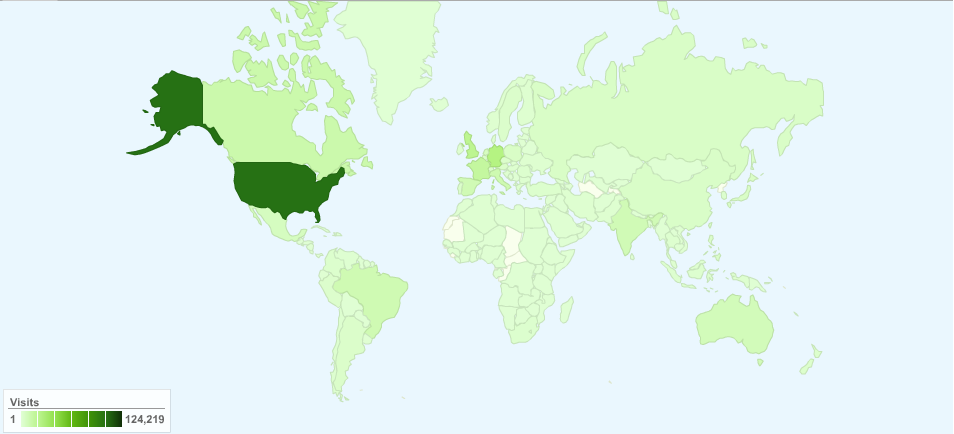
And speaking of our users, in the past two years, we’ve seen nearly 400,000 visitors to our portal, from 224 countries and territories (see the map above).

In the coming years, we look forward to the expansion of BHL into Europe – with the kickoff of BHL-Europe just days away – and further partnerships around the world.

And because BHL is about life, I can’t end without a link to some of the interesting things you can find in BHL. In the 13 million pages of BHL, there are 12,95,651 unique species names! I picked a random genus, Chrismania, a genus of moths of the Crambidae family. Take a look at what you kind of things you’ll find in BHL!

The BHL development team will shortly launch even better tools to mine the historic taxonomic literature. I think we can safely say that, well, you ain’t seen nothing yet!

May 9, 2009by
BHL News, Blog Reel

Return of the Dodo?! BHL joins the larger scientific community in expressing shock, excitement!

Portrait version of the Biodiversity Heritage Library logo.

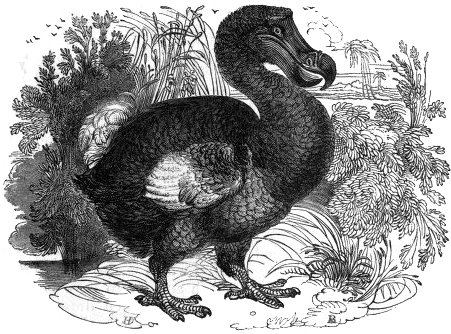
View Full Size ImageWhat appears to be a male Dodo bird (Raphus cucullatus) approximately 2 and a half feet tall has been discovered today, April 1, nesting among the bushes in the butterfly garden of the Smithsonian’s National Museum of Natural History. How the creature, that hasn’t been seen since the 17th century, has come to reside Washington, DC remains a mystery. Smithsonian Security was alerted to the presence of the bird by an alert tourist who heard the loud syncopated calls of the once thought extinct bird. Nicknamed “Lazarus,” the Dodo exhibits a friendly curiosity about humans, clearly enjoying the excitement and attention its presence is generating.

Orthinologists and evolutionary biologists from around the world are currently pouring into Washington to investigate.


The Biodiversity Heritage Library contains a number of references to the Dodo’s current taxonomic name (Raphus cucullatus), as well as over two hundred references to the earlier scientific synonym (Didus ineptus). You can also find references to the taxonomic family (Raphidae) and 400 plus references to Didus, the synonym for the genus.

The description, by Linnaeus, can be found in the 1766 edition of Systeme naturae.

A few of illustrations of the Dodo from the BHL can be found here:

  • 1829. Illustration from John V. Thompson’s article (above)
  • 1889. Facsimile of Piso’s figure of the Dodo
  • 1900. Fig. 66.— Dodo, Didus ineptus. (After Savery’s Vienna picture.)

Of particular interest is this short article by John V. Thompson. “Art. IV. Contributions towards the Natural History of the Dodo (Didus ineptus Lin.), (Fig. 107.) a Bird which appears to have become extinct towards the End of the Seventeenth or Beginning of the Eighteenth Century” in Magazine of natural history and journal of zoology, botany, mineralogy, geology and meteorology (volume 2, 1829), pp.442-48. At the time the article was written, there was still debate on the topic of extinction and if species known to contemporary humans could cease to exist. Thompson’s article also includes an overview summary of the then known history of the Dodo.

Learn more about life at the Biodiversity Heritage Library!

Reported by Erin Thomas, Smithsonian Institution Libraries

April 1, 2009by [email protected]
Blog Reel, Featured Books

Happy Birthday Mr. Darwin!

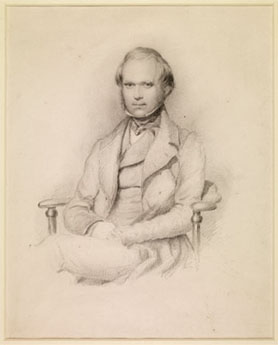
View Full Size ImageCharles Darwin
Originally uploaded by Smithsonian Libraries

“The cultivation of natural science cannot be efficiently carried on without reference to an extensive library.” (1)
– Charles Darwin, et al (1847)

Today, February 12, 2008, we celebrate the 199th anniversary of the birth of Charles Darwin. Last year we honored the 300th anniversary of the birth of Carl Linné and next year will be the double celebrations for Darwin’s bicentenary and the sesquicentennial (mark your calenders now for November 24th!) of the publication of On the Origin of Species. 2008 is thus a good year for those of us involved with the Biodiversity Heritage Library (BHL) to pause for a moment between these landmark anniversary years of 2007 and 2009.

Those working in systematics and taxonomy are heavily dependent on the historic literature – to a greater extent than perhaps most of the sciences. This importance of the literature, as well as the ongoing importance of publication (and library deposit) to validate taxonomic concepts, contribute to the mission and continue to inform the day to day development of the BHL.

Darwin himself acknowledged the importance of library materials to the study of natural history in the passage quoted above (in a document signed by Darwin and over 30 other notables including Charles Lyell, W.J. Hooker, and Richard Owen) which was part of an appeal for support of natural history research at the British Museum.

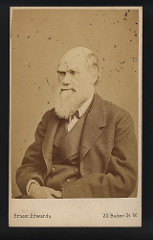
Portrait of Charles Darwin by Ernest Edwards
From Scientific Identity: Portraits from the Dibner Library of the History of Science and Technology. Smithsonian Institution Libraries

(1) Darwin, C. R. et al. 1847. Copy of Memorial to the First Lord of the Treasury [Lord John Russell], respecting the Management of the British Museum. Parliamentary Papers, Accounts and Papers 1847, paper number (268), volume XXXIV.253 (13 April): 1-3. [Complete Works of Charles Darwin Online]

February 12, 2008by joelrichard
BHL News, Blog Reel

Three Hundred Years of Linnaean Taxonomy

Portrait version of the Biodiversity Heritage Library logo.

The Smithsonian’s National Museum of Natural History hosted a day long symposium to celebrate 300 years of Linnaean taxonomy. In addition to the symposium, the museum featured an exhibition of a 1st Edition of Linnaeus’ Systema Naturae. The exhibition, “A Tribute to Carl Linnaeus, 1707-1778” (November 13-14) features the author’s own copy of Systema Naturae (courtesy of the Swedish Embassy), with illustrations by Georg Dionysius Ehret. At the evening reception, the Biodiversity Heritage Library displayed the online version of the 1758 edition of Systema (from the Missouri Botanical Garden Library) and there was also an appearance by Linnaeus [as envisioned by Hans Odöö].

The Linnaean Systema was previously on display at the LuEsther T. Mertz Library of the New York Botanical Garden (November 8-10).

November 13, 2007by
Page 2 of 2«12

Help Support BHL

BHL's existence depends on the financial support of its patrons. Help us keep this free resource alive!

search

About BHL

The Biodiversity Heritage Library (BHL) is the world’s largest open access digital library for biodiversity literature and archives. BHL operates as a worldwide consortium of natural history, botanical, research, and national libraries working together to digitize the natural history literature held in their collections and make it freely available for open access as part of a global “biodiversity community.”

Join Our Mailing List

Sign up to receive the latest news, content highlights, and promotions.

Subscribe Now

Subscribe to Blog via Email

Enter your email address to subscribe to this blog and receive notifications of new posts by email.

Join 319 other subscribers

Subscribe to Blog Via RSS

Subscribe to the blog RSS feed to stay up-to-date on all the latest BHL posts.

Access RSS Feed

Inspiring Discovery through Free Access to Biodiversity Knowledge.

The Biodiversity Heritage Library makes it easier than ever for you to access the information you need to study and explore life on Earth…for free, anytime, anywhere.


64+ Million Pages of
Biodiversity Literature Online.

EXPLORE

Tools and Services
to Transform Research.

EXPLORE

300,000+
Illustrations on Flickr.

EXPLORE

ABOUT | HARMFUL CONTENT | PRIVACY | SITE MAP | TERMS OF USE