

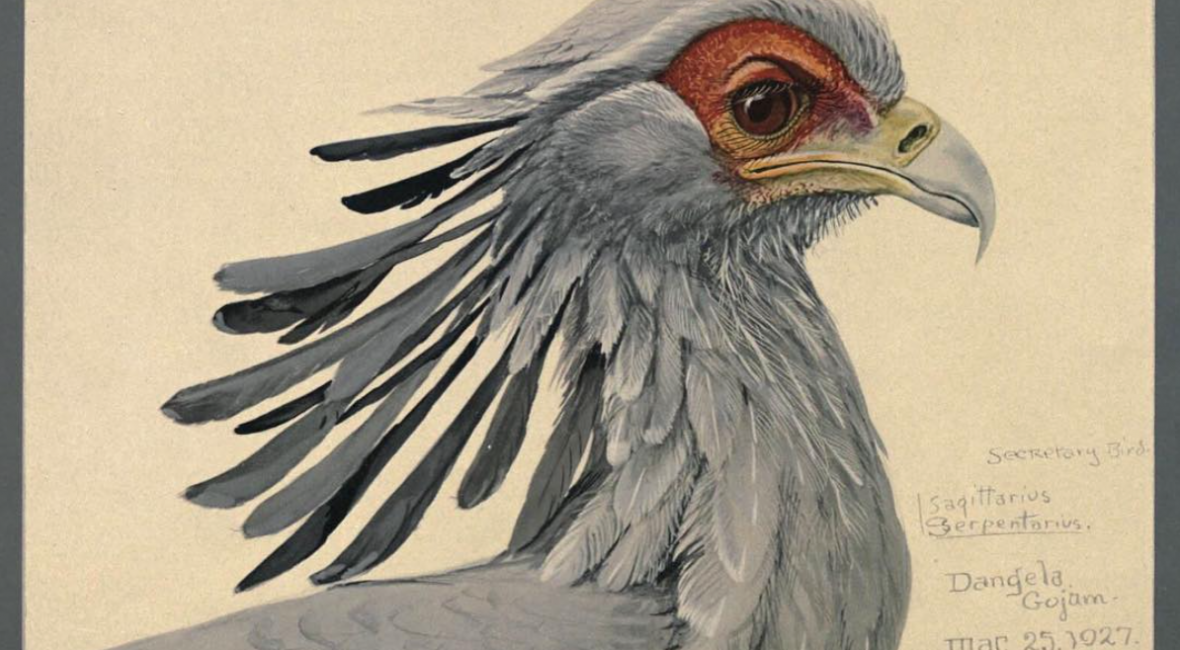
Embracing the visually-driven nature of Instagram, our feed focuses on sharing the stunning historic illustrations in BHL’s collection. From birds of paradise to boxing kangaroos, charming bookplates, and artworks by some of history’s most renowned illustrators, there’s a wealth of visual delight waiting for you on our Instagram.
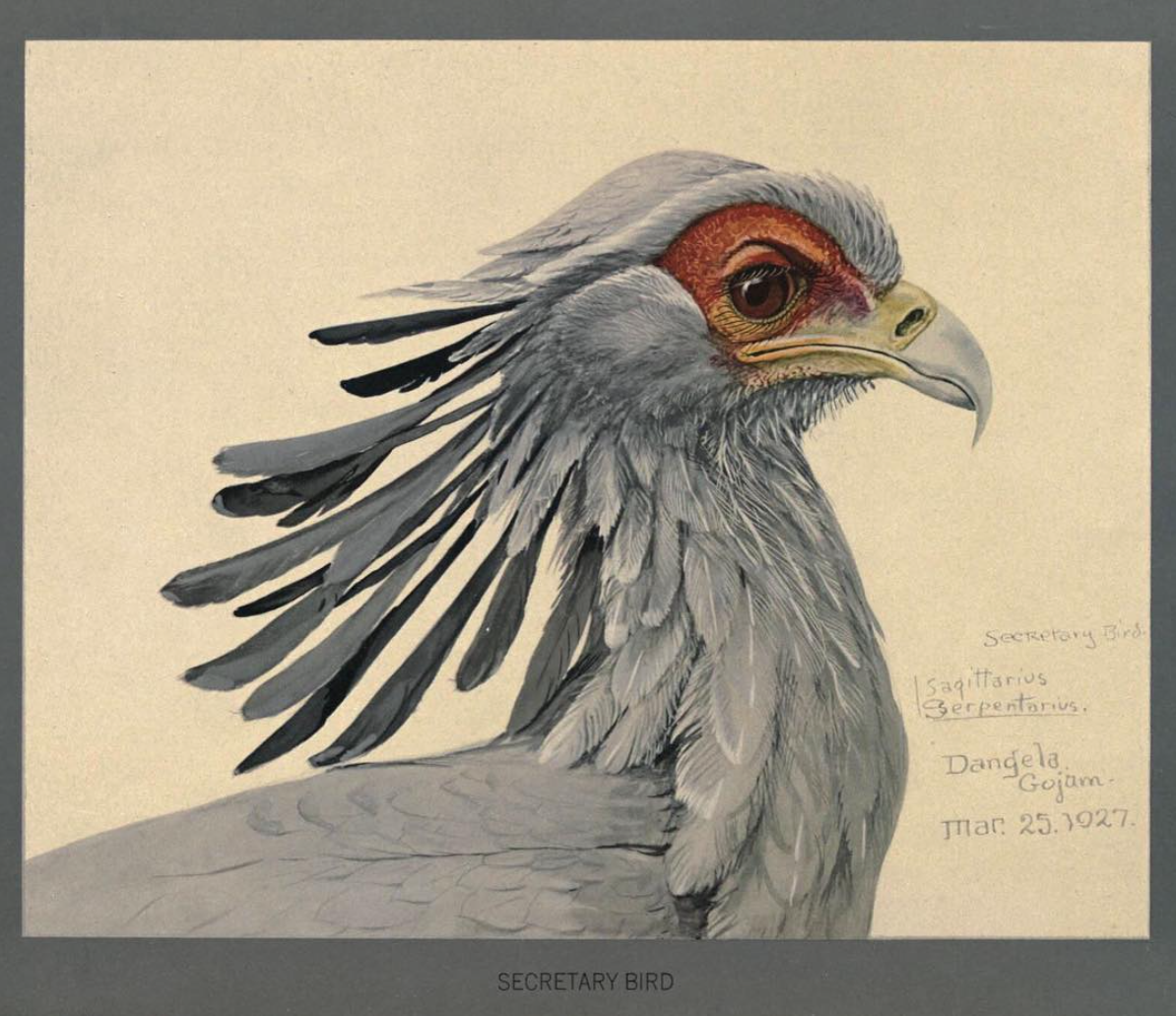 |
| Secretarybird (Sagittarius serpentarius) is a nomadic bird of prey found in the grasslands of sub-Saharan Africa. #SciArt by Louis Agassiz Fuertes in the Album of Abyssinian Birds and Mammals (1930). Contributed by University Library, University of Illinois Urbana-Champaign. http://ow.ly/V5SQ3035ED9. Posted to Instagram by Michelle Marshall. |
Plus, thanks to citizen science taxon tagging activities for BHL’s Flickr, the species in each illustration have been conveniently identified in the post description. Translation: you’ll always be able to identify what species you’re looking at, even if you’ve never seen it before.
And Flickr taxon tagging isn’t the only way that citizen science has benefited our Instagram. The feed itself is curated by BHL citizen scientist Michelle Marshall.
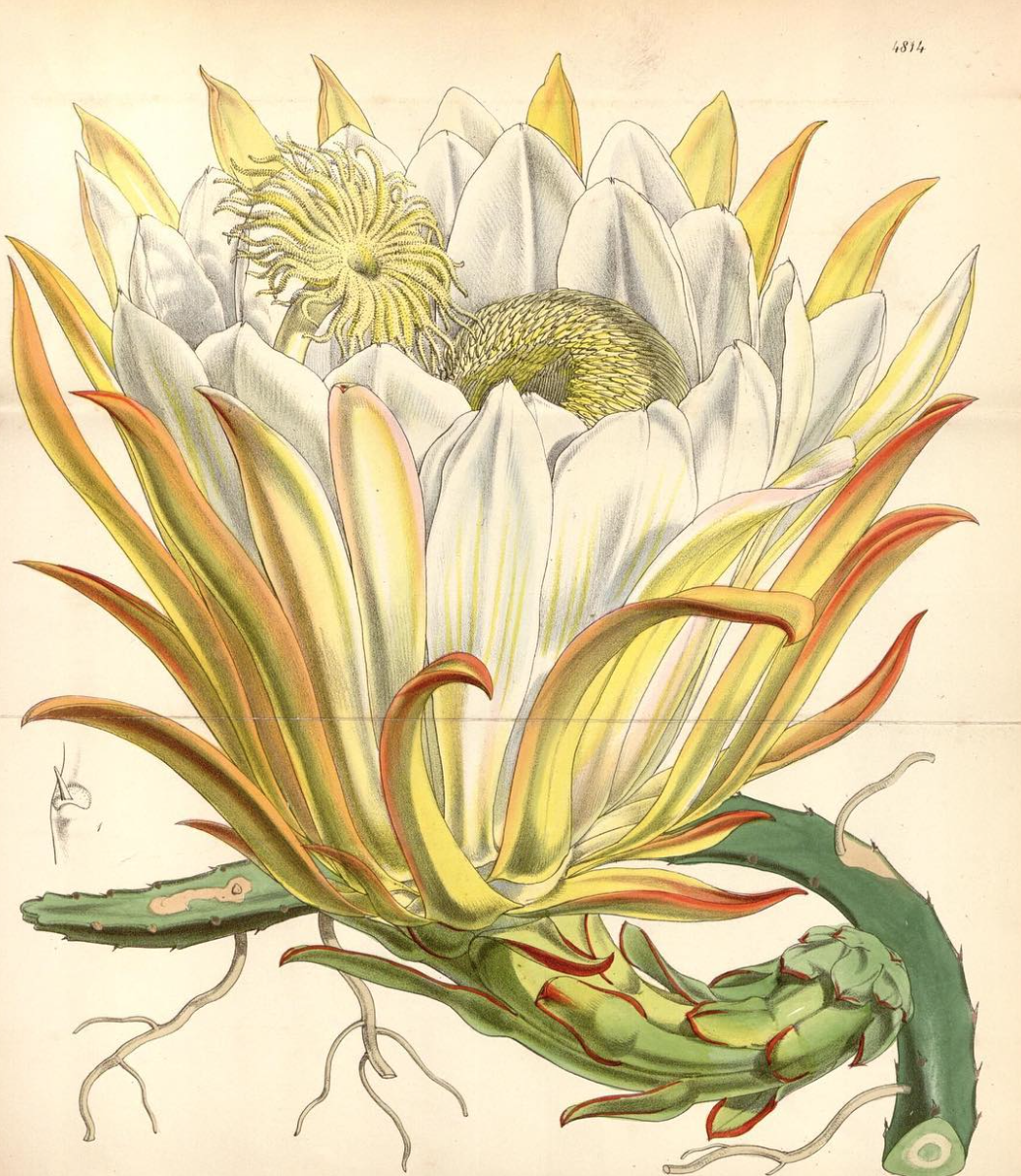 |
| Night-blooming cactus (Hylocereus lemairei). By Walter Hood Fitch. Curtis’s Botanical Magazine, Vol. 54 (1827). Contributed by Missouri Botanical Garden. http://biodiversitylibrary.org/page/488560. Posted to Instagram by Michelle Marshall. |
Michelle first became involved in citizen science through the Smithsonian Transcription Center, which she discovered while looking for ways to volunteer in her free time during her STEM studies. Through those activities, Michelle discovered BHL and our Flickr tagging opportunities. She now focuses on researching taxonomy to add to our images – an activity that she finds deeply rewarding.
“My favorite thing about volunteering for BHL is that I am always learning through research,” says Michelle. “I am able to connect with scientists and libraries to learn more, and I know more about biodiversity, geography, and even scientific art than I have ever learned in formal study. Just browsing the images on Flickr leads to new discoveries that I am excited to learn about and share with others on social media.”
Michelle first began sharing her finds through her own Twitter account. The posts were so well-received that she decided to create @HistSciArt, devoted specifically to sharing BHL illustrations and her related taxonomic research.
“I knew that BHL has been working on making the images more accessible for everyone, in particular the scientific community, so I thought that creating an account devoted specifically to sharing these images on Twitter would help with that effort,” explains Michelle. “Most of the images that I tweet I have researched the taxonomy for, and I try to share more information than just the illustration.”
We were so impressed by Michelle’s account and the quality of her research and posts that, when she expressed interest in expanding her efforts to Instagram, we invited her to do so by curating an account for BHL.
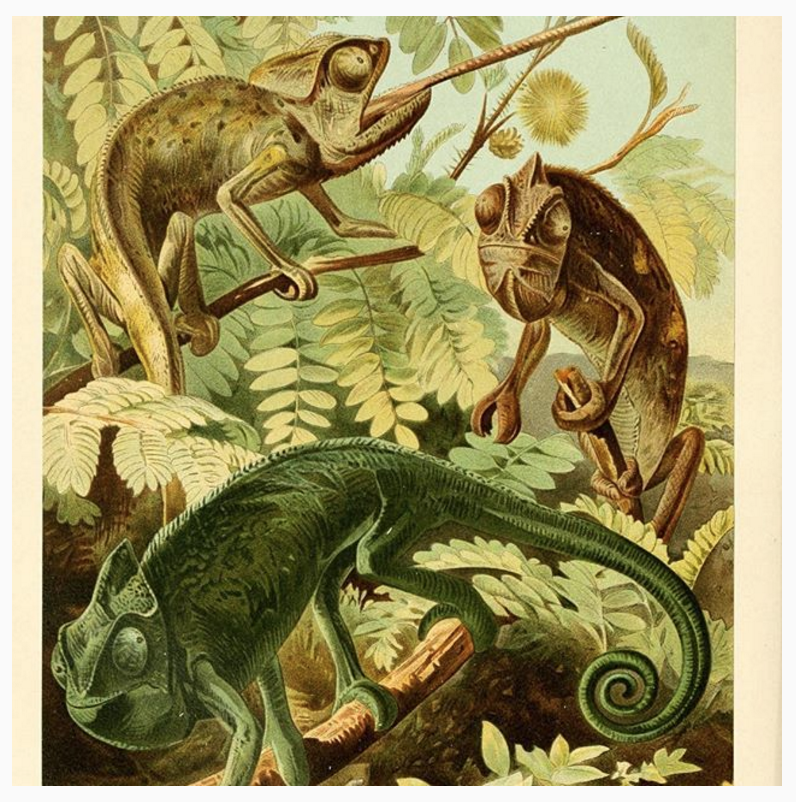 |
| African Chameleon (Chamaeleo africanus) for #WorldLizardDay. Alfred Edmund Brehm, Brehm’s Tierleben, Bd. 2 (1913). Contributed by Ernst Mayr Library, Museum of Comparative Zoology at Harvard University. http://ow.ly/eX9W303e4bF. Posted to Instagram by Michelle Marshall. |
“Instagram is an enormously popular social media platform, so I was truly honored when I was asked to curate BHL’s Instagram account,” says Michelle. “Because I believe in the great work that BHL is doing to support science and research, I felt that this would be another way that I could help share the wealth of knowledge in BHL’s collection. The great thing about sharing BHL’s collections on Instagram is that I am able to provide more information about the book and image as well as to connect with more people and institutions. Because I share different content on Instagram, any followers of HistSciArt and BHL on Twitter will have more great works to view and explore.”
And it seems people do indeed love exploring BHL illustrations on Instagram (we’re not surprised!). BHL’s Instagram has grown to over 400 followers in just over two weeks. This success is due not only to the quality of BHL’s collections, but also to the caliber of Michelle’s research and posts, which not only provide taxonomic and bibliographic information, but also identify the contributing libraries and include timely and engaging hashtags. We’ve also started posting one of each day’s Instagram posts to BHL’s Facebook as #BHLDailySciArt.
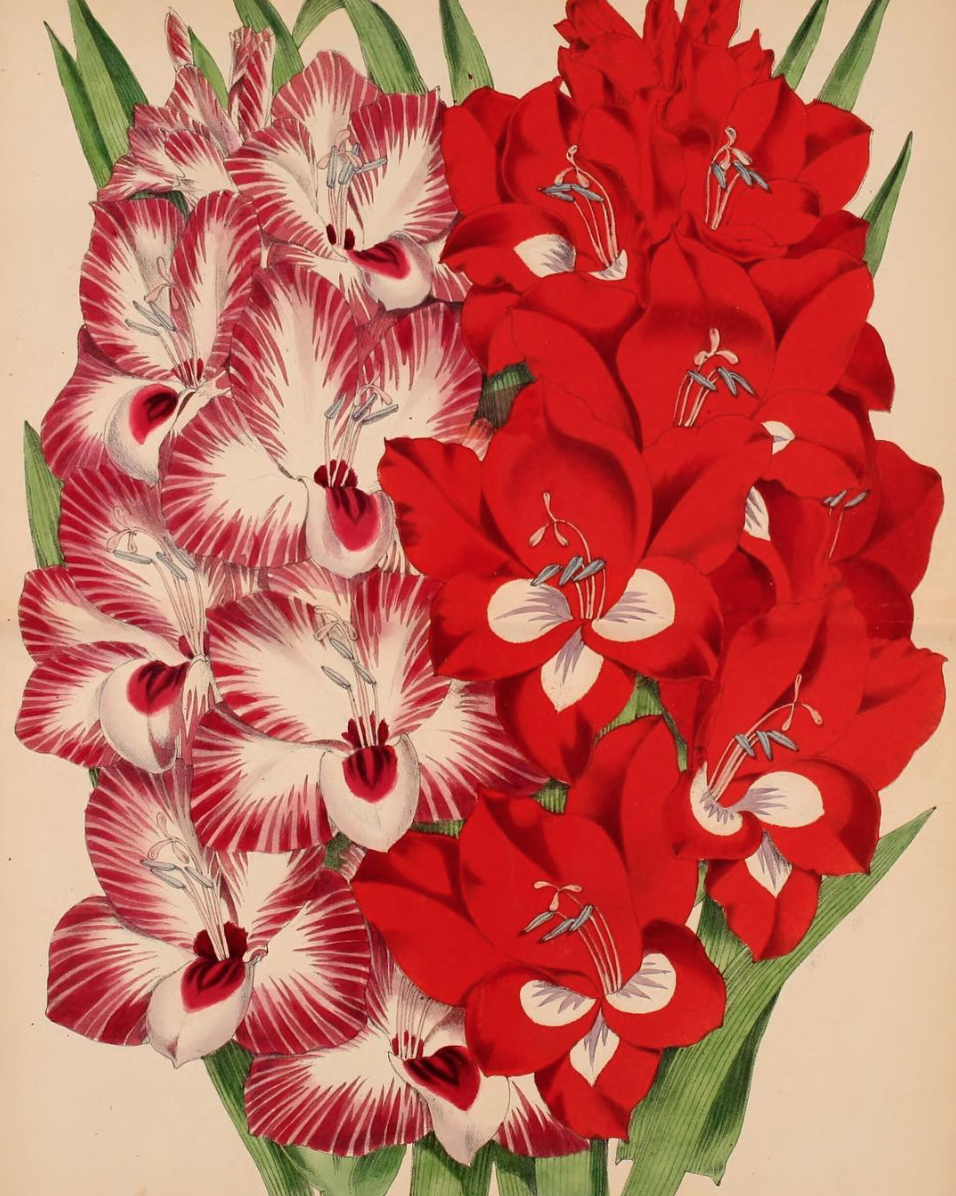 |
| Gladiolus orphée and Gladiolus horace. Botanical #SciArt by Worthington George Smith. The Floral Magazine, Vol. 9 (1870). Contributed by the LuEsther T. Mertz Library of The New York Botanical Garden. biodiversitylibrary.org/page/50241074. Posted to Instagram by Michelle Marshall. |
We’re so grateful to Michelle for all of her contributions to help increase awareness of and access to BHL’s collections. We believe this partnership is a testament to the power and benefits of citizen science, and with that we also extend a huge thanks to each and every volunteer that dedicates their time and resources to improving BHL collections. You can learn more about all of our citizen science opportunities here.
So, you might be wondering (as we were!), for someone who’s explored as many books and researched as many illustrations as Michelle has, which title would she pick as her favorite? It turned out to be an easy question for her to answer.
“When I discovered Catesby’s The natural history of Carolina, Florida and the Bahama Islands, I think I literally leapt out of my chair!” exclaims Michelle. “I grew up in Florida and South Carolina, and here was a spectacular natural history work all about the native flora and fauna of my area. Catesby spent lots of time in the Southern Colonies during the 1720s, which is the same time that part of my family came to what was then called Carolina. I like to think that what he saw and experienced was the same as what my ancestors knew. I am so pleased to have access to all three editions of his work through BHL and to have taxon tagged all of them!”
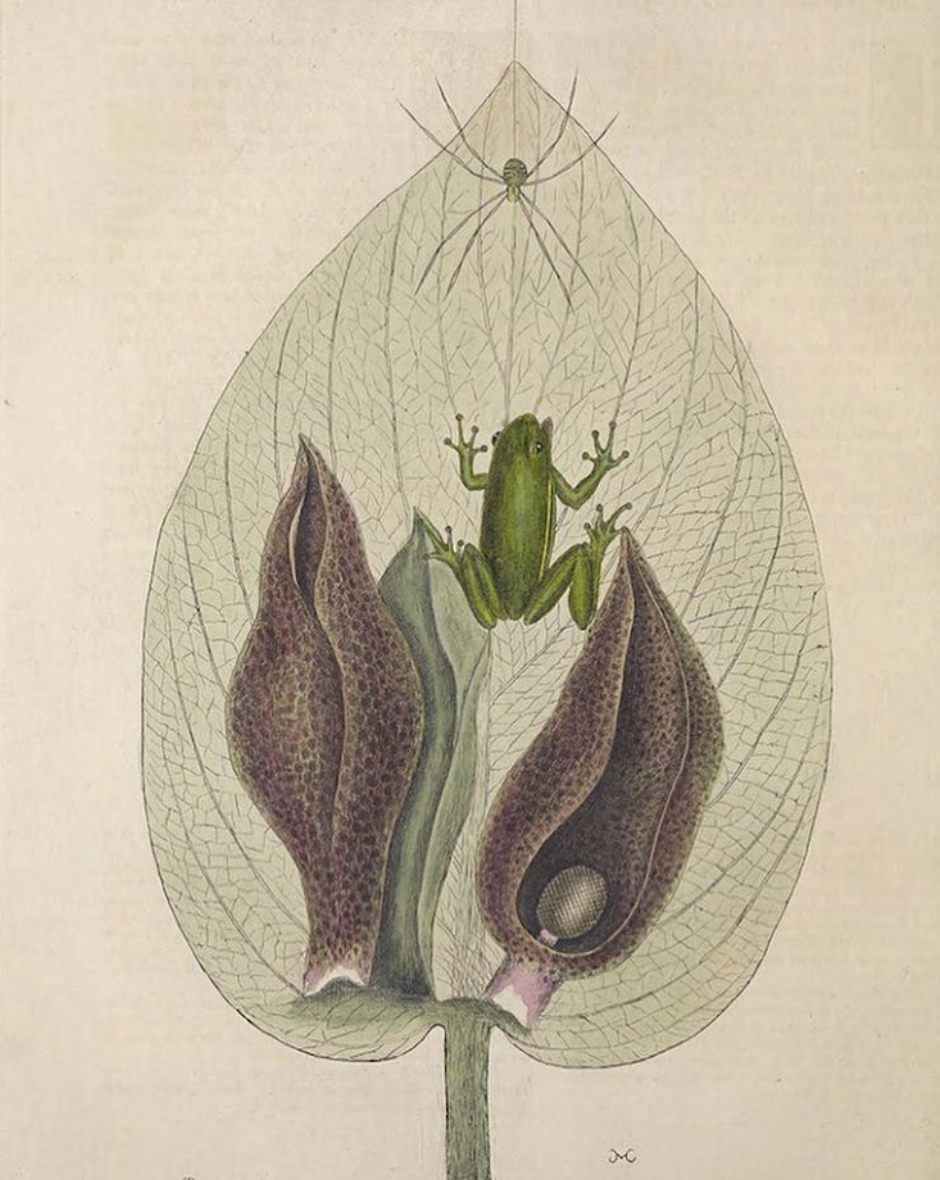 |
| Green tree frog (Hyla cinerea) about to snack on a Green lynx spider (Peucetia viridans) while hanging onto Skunk cabbage (Symplocarpus foetidus). Mark Catesby, The Natural History of Carolina, Florida and the Bahama Islands, Vol.2, 1st Ed. (1743). Contributed by Smithsonian Libraries. http://biodiversitylibrary.org/page/40680311. Posted to Instagram by Michelle Marshall. |
You can explore the illustrations from all three editions of Catesby’s monumental work (it’s the first major illustrated publication on the flora and fauna of North America and was chosen by Smithsonian Libraries as their BHL@10 Notable Book Contribution) in Flickr, all of which have been taxon tagged by Michelle.
Be sure to check out more of the beautiful illustrations in our collection by following us on Instagram. A world of art and science (made possible thanks to citizen science) awaits you!
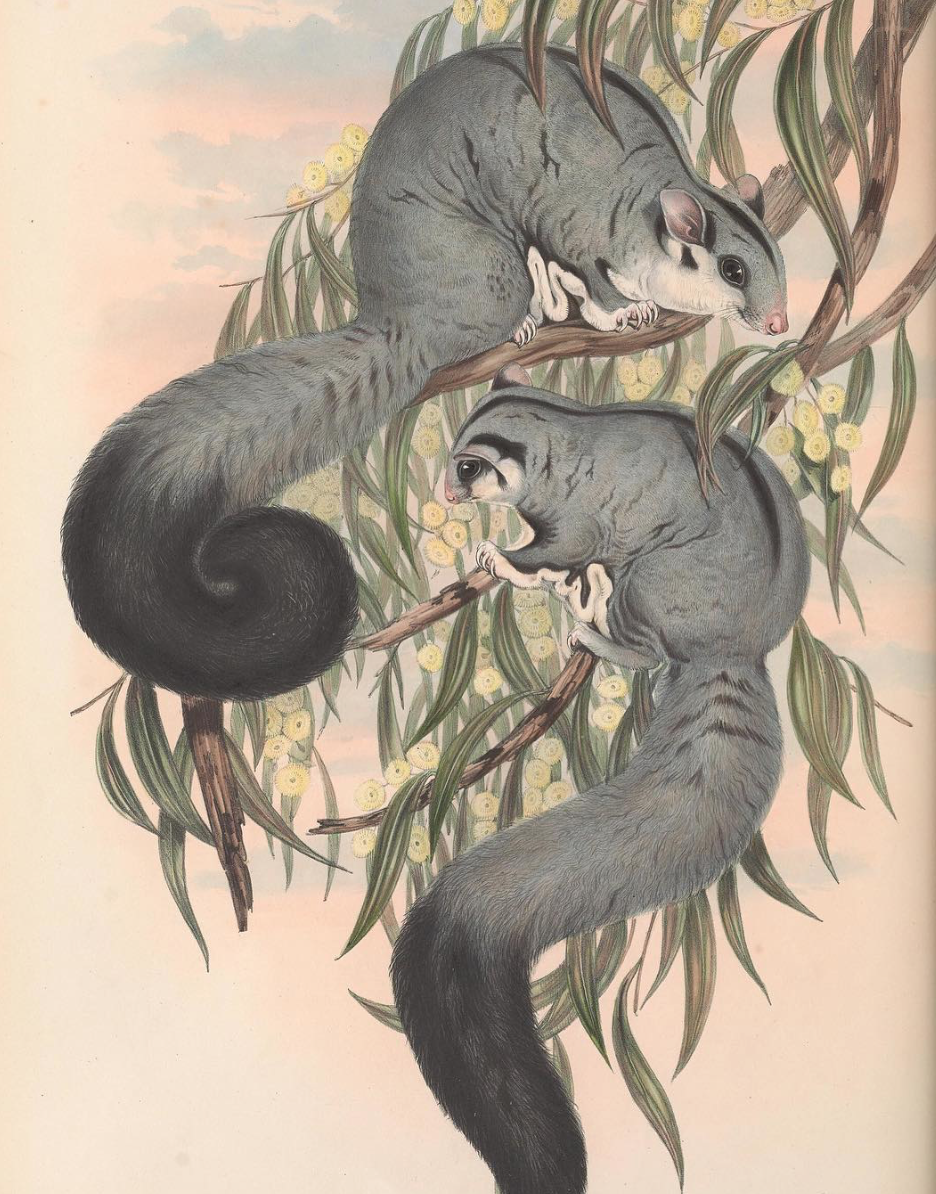 |
| Squirrel Glider (Petaurus norfolcensis). Although it resembles a squirrel, this mammal is a marsupial native to Australia. #SciArt by Henry Constantine Richter and John Gould for Gould’s Mammals of Australia, Vol. 1 (1863). Contributed by Smithsonian Libraries. http://ow.ly/e5zj303j4nr. Posted to Instagram by Michelle Marshall. |
