Biodiversity Heritage Library - Program news and collection highlights from BHL
  • Home
  • News
  • Featured Books
    • All Featured Books
    • Book of the Month Series
    • BHL at 20
  • User Stories
  • Campaigns
    • Fossil Stories
    • Garden Stories
    • Monsters Are Real
    • Page Frights
    • Her Natural History
    • Earth Optimism 2020
  • Tech Blog
  • Visit BHL
Home
News
Featured Books
    All Featured Books
    Book of the Month Series
    BHL at 20
User Stories
Campaigns
    Fossil Stories
    Garden Stories
    Monsters Are Real
    Page Frights
    Her Natural History
    Earth Optimism 2020
Tech Blog
Visit BHL
  • Home
  • News
  • Featured Books
    • All Featured Books
    • Book of the Month Series
    • BHL at 20
  • User Stories
  • Campaigns
    • Fossil Stories
    • Garden Stories
    • Monsters Are Real
    • Page Frights
    • Her Natural History
    • Earth Optimism 2020
  • Tech Blog
  • Visit BHL
Biodiversity Heritage Library - Program news and collection highlights from BHL
BHL News, Blog Reel

Language of Flowers Virtual Symposium on 30 April 2021

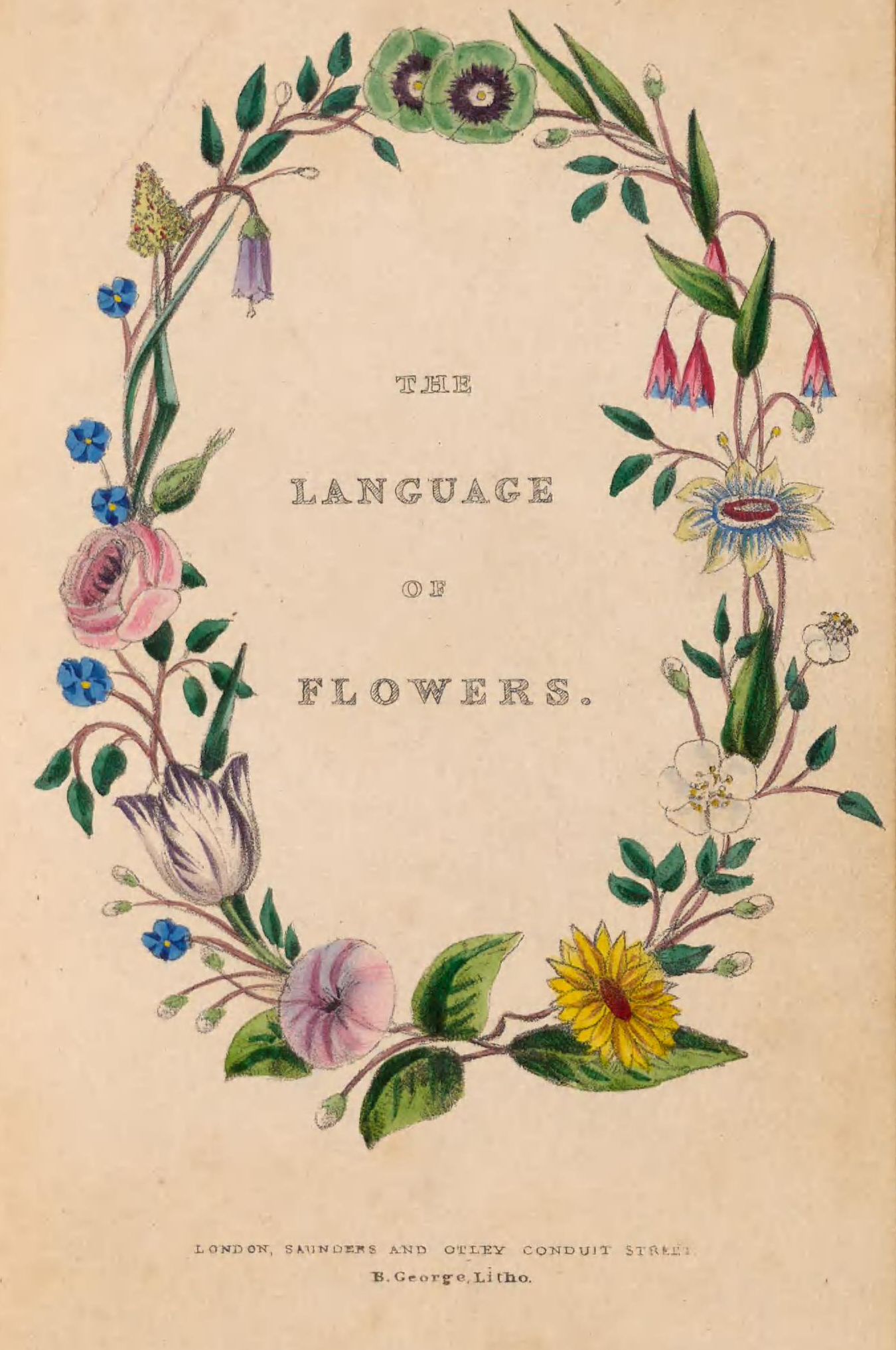
Book title page with title" The Language of Flowers" encircled in a wreath of flowers.

Title page. The language of flowers, with illustrative poetry. (1841). Contributed in BHL from Chicago Botanic Garden, Lenhardt Library. Digitization sponsored by the National Endowment for the Humanities (NEH).

On 30 April 2021, join the Chicago Botanic Garden’s Lenhardt Library and the Caxton Club for a free, virtual symposium celebrating the Language of Flowers—a popular literary trend in the 19th century that presented the world of botany through dictionaries of flowers and associated meanings, floral poetry and prose, offering a sentimental view of natural history.

Language of Flowers Virtual Symposium
When? Friday, 30 April 2021, 10am-2pm CT
Where? Online (via Zoom webinar)

Learn more and register for the event.

The Chicago Botanic Garden’s Lenhardt Library, a BHL Affiliate, presents this symposium in collaboration with the Caxton Club as the capstone event for a grant awarded by the National Endowment for the Humanities to conserve and digitize language of flower genre editions. Over the three-year grant period, 62 rare and unique language of flowers volumes published in the 19th century are being conserved and digitized by expert staff at the Northeast Document Conservation Center, with the volumes being made available in the Biodiversity Heritage Library (BHL).

You can explore volumes digitized as part of this grant as well as other titles from the genre in the Language of Flowers collection in BHL.

April 8, 2021by michelle.underhill
Blog Reel, Featured Books

Frances Sargent Osgood and the Language of Flowers: A 19th Century Literary Genre of Floriography and Floral Poetry

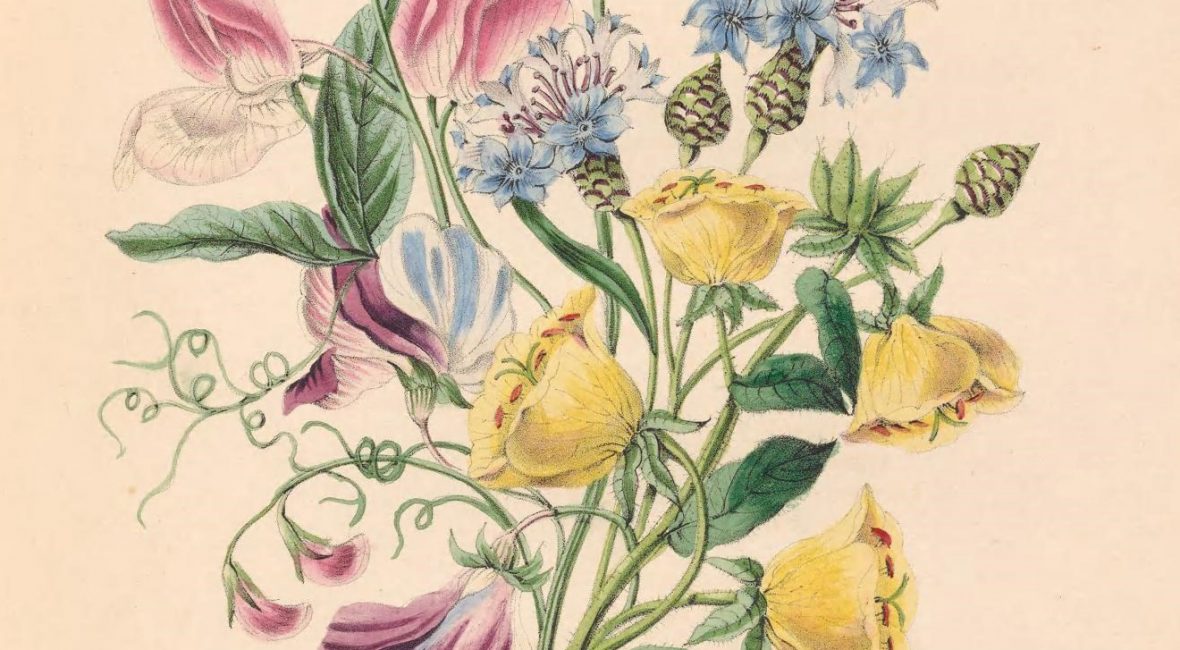
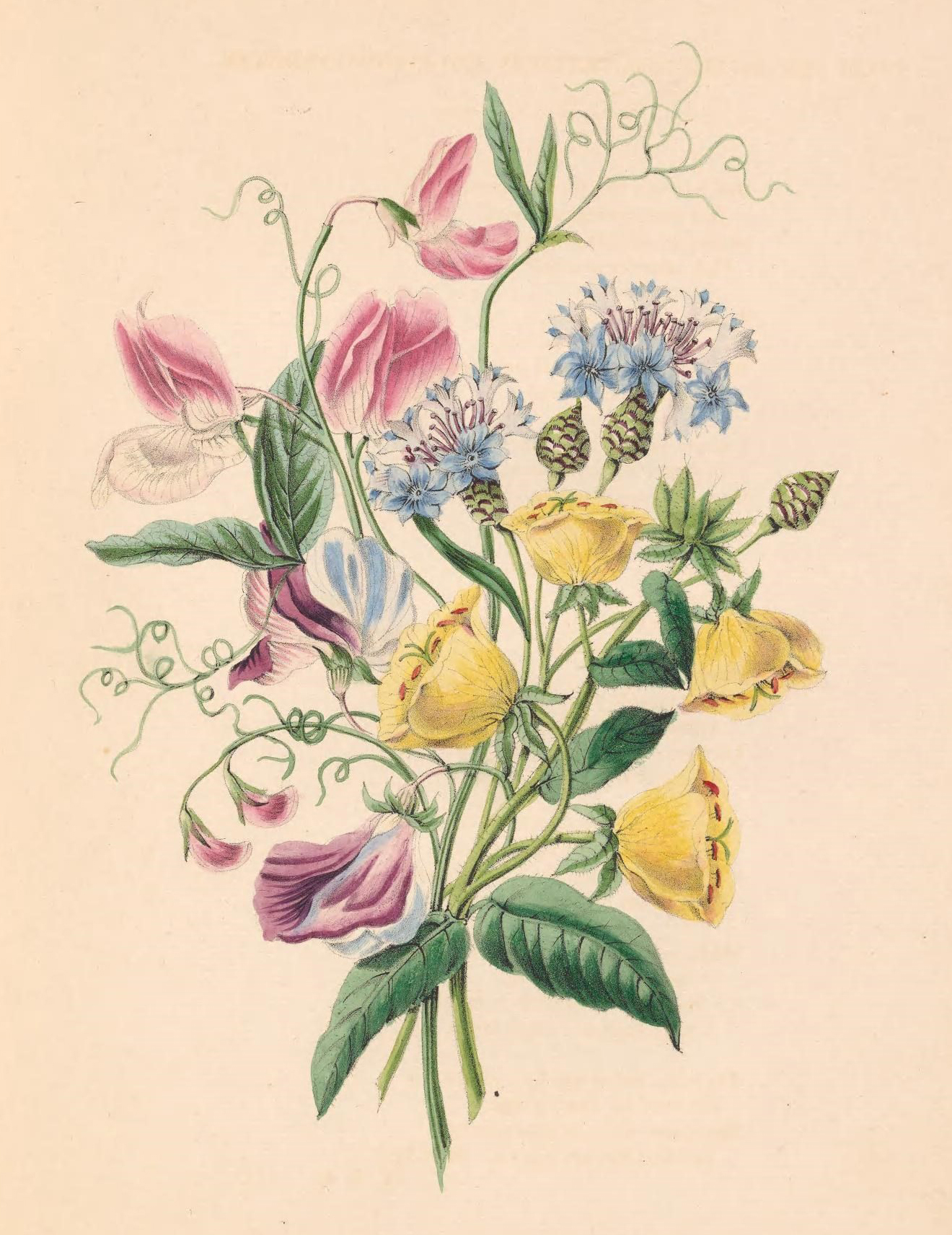
Sweet Pea, Bluebottle Centaury, and Evening Primrose.
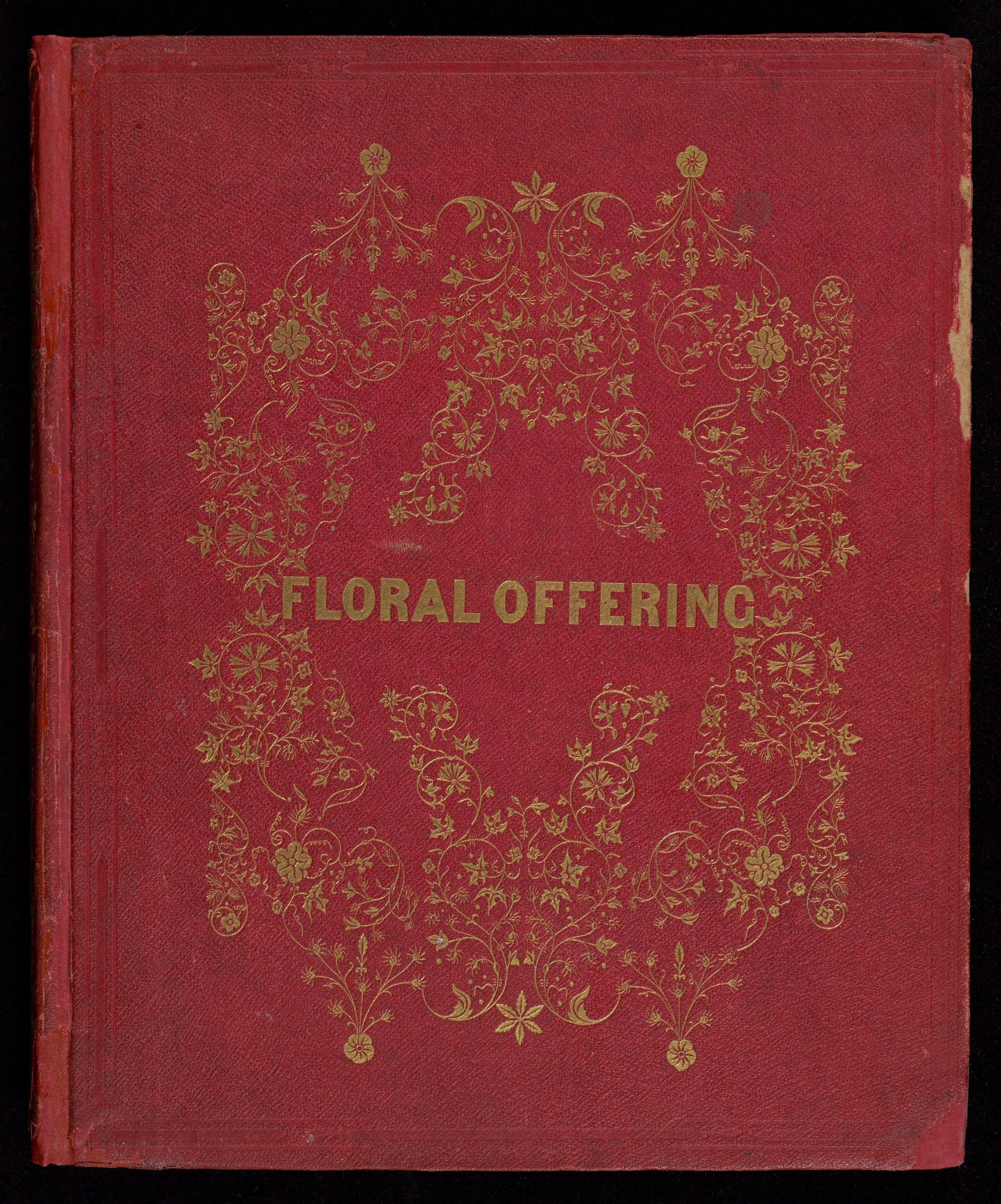
Cover of the book "The Floral Offering"

Cover. Osgood, Frances Sargent (editor). The Floral Offering, A Token of Friendship (1847). Contributed in BHL from Chicago Botanic Garden, Lenhardt Library. Digitization sponsored by the National Endowment for the Humanities (NEH).

The Language of Flowers genre is at the intersection of botany, horticulture, natural history, art, poetry, and women’s studies. This popular literary trend in the 19th century presented the world of botany through dictionaries of flowers and associated meanings, floral poetry, and prose, offering a sentimental view of natural history. A properly arranged bouquet was said to convey a “secret message” for the recipient. The “social media” of its day, this Victorian fad led to many editions of works published, with multiple titles by successful authors.

Frances Sargent Osgood edited two works in this genre: Poetry of Flowers and Flowers of Poetry and The Floral Offering.

Her description of floriography from her introductory poem in the Floral Offering follows:

INTRODUCTORY.

THY EMBLEM FLOWER.

Round every flower there gleams a glory

Bequeathed by antique song or story;

To each, old legends give a name

And its peculiar charm proclaims;

O’er smiling lawn – through shaded grove,

Our dreaming poets pensive rove,

And strive to read their language rare,

And learn the lesson latent there-

Then ‘mid them all, so fair to see,

What flower shall thy fit emblem be?

The Floral Offering, a Token of Friendship was edited by Frances S. Osgood and illustrated by J. Ackerman “with ten beautiful bouquets of flowers, elegantly colored after nature.” The work was published in Philadelphia, PA by Carey and Hart publishers in 1847. It contains poems by Osgood and others, plates with flowers assembled in bouquets, and a floral dictionary at the back containing her definitions of flowers. For example, basil means “I hate you” and olive means “peace be with you.” Osgood uses these definitions to ascribe secret messages. The list of illustrations for the plates provides the “secret message” that each illustrated arrangement is meant to convey.

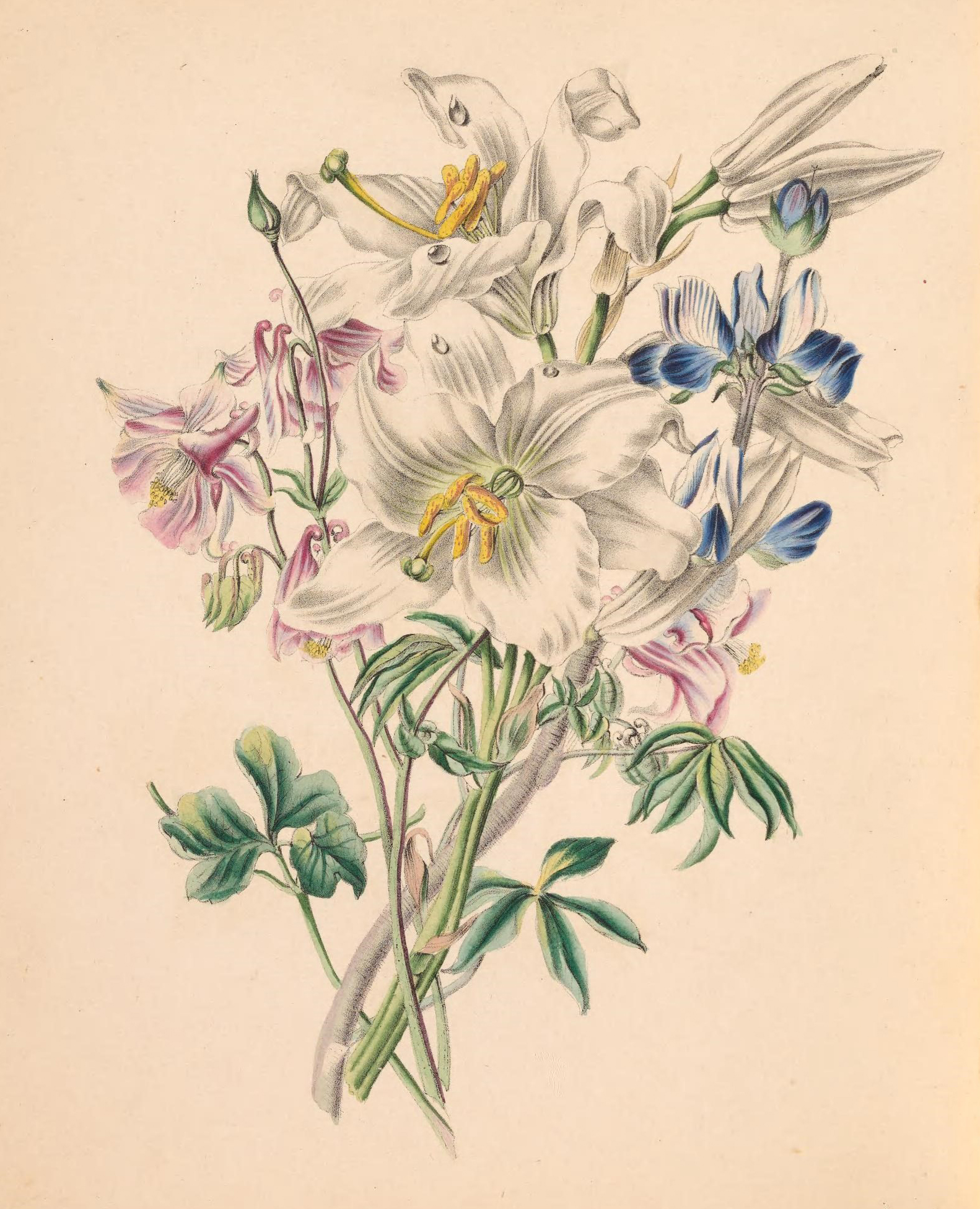
Columbine, White Lily and Lupine.

Columbine, White Lily and Lupine. Secret message: It was a dream of folly, from which I woke to weep. Osgood, Frances Sargent (editor). The Floral Offering, A Token of Friendship (1847). Art by J. Ackerman. Contributed in BHL from Chicago Botanic Garden, Lenhardt Library. Digitization sponsored by the National Endowment for the Humanities (NEH).

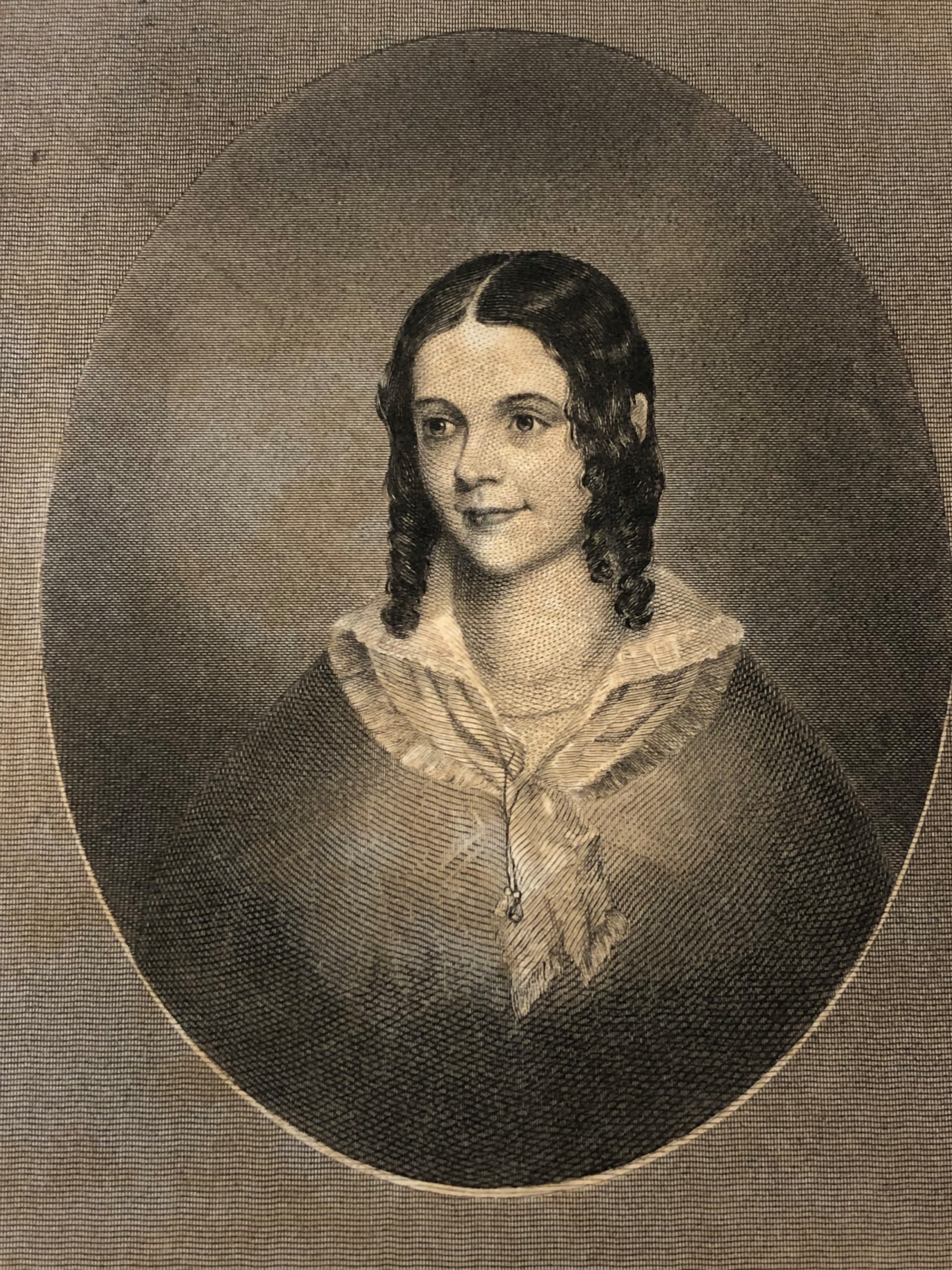
Frances Sargent Osgood (1811 – 1850) was one of the most influential American women poets of her time. She was born in Boston to a family of poets together with her brother, sister, and step-sister. Early on, her parents recognized her talent and encouraged her pursuits. Her first poem was published when she was a young teenager. She was a prolific writer and published numerous works in magazines for women and children and also authored and edited several books.

Osgood married a painter, Samuel Stillman Osgood, in 1835. He had previously studied at the Royal Academy, and they moved back to London where he had a successful career painting portraits. During the four years that they lived abroad, Osgood remained active in her craft and in 1839 published a compilation of all her work in a volume entitled Wreath of Wild Flowers from New England. With the unexpected death of her father, the Osgoods returned to the States, first to her family home in Boston and then settling in New York in 1840. While in New York, Osgood published two volumes in the language of flowers genre in 1841 and 1847.

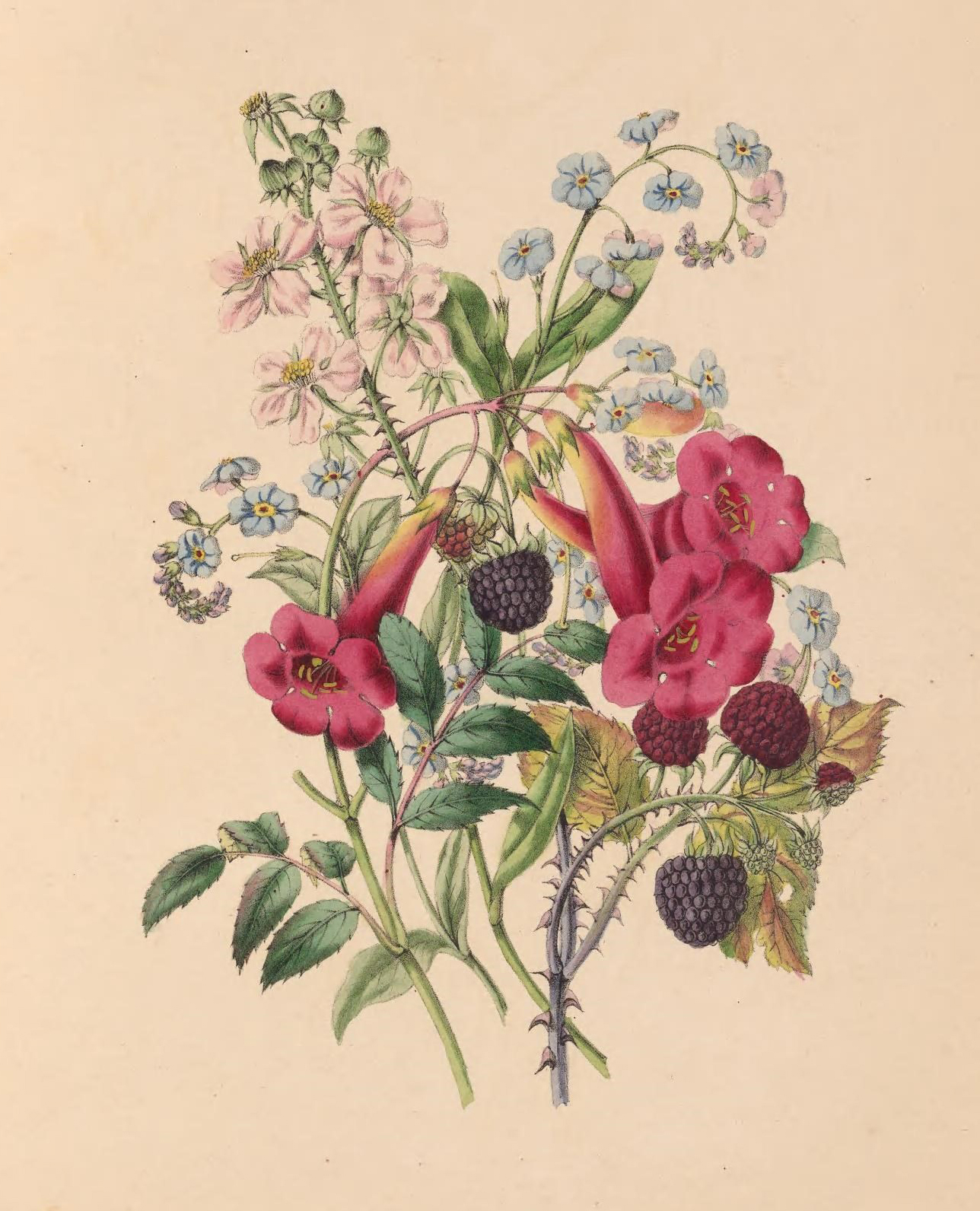
Trumpet.-flower, Forget-Me-Not, and Raspberry.

Trumpet.-flower, Forget-Me-Not, and Raspberry. Secret message: Farewell, be true to thyself, yet sometimes think of me. Osgood, Frances Sargent (editor). The Floral Offering, A Token of Friendship (1847). Art by J. Ackerman. Contributed in BHL from Chicago Botanic Garden, Lenhardt Library. Digitization sponsored by the National Endowment for the Humanities (NEH).

Osgood was very well known during her life-time, such that her biography appears in The American Female Poets; with Biographical and Critical Notices (1848), by Caroline May, and in The Female Poets of America (1849), edited by Rufus Griswold. Her notoriety and embracement of the language of flowers genre may have influenced and encouraged other women to write in the field of horticulture, botany, and natural history.

An interesting side note to her time in New York is Osgood’s association with Edgar Allen Poe. He published her poems and thought highly of her work. Their friendship is rumored to have developed into a love affair.

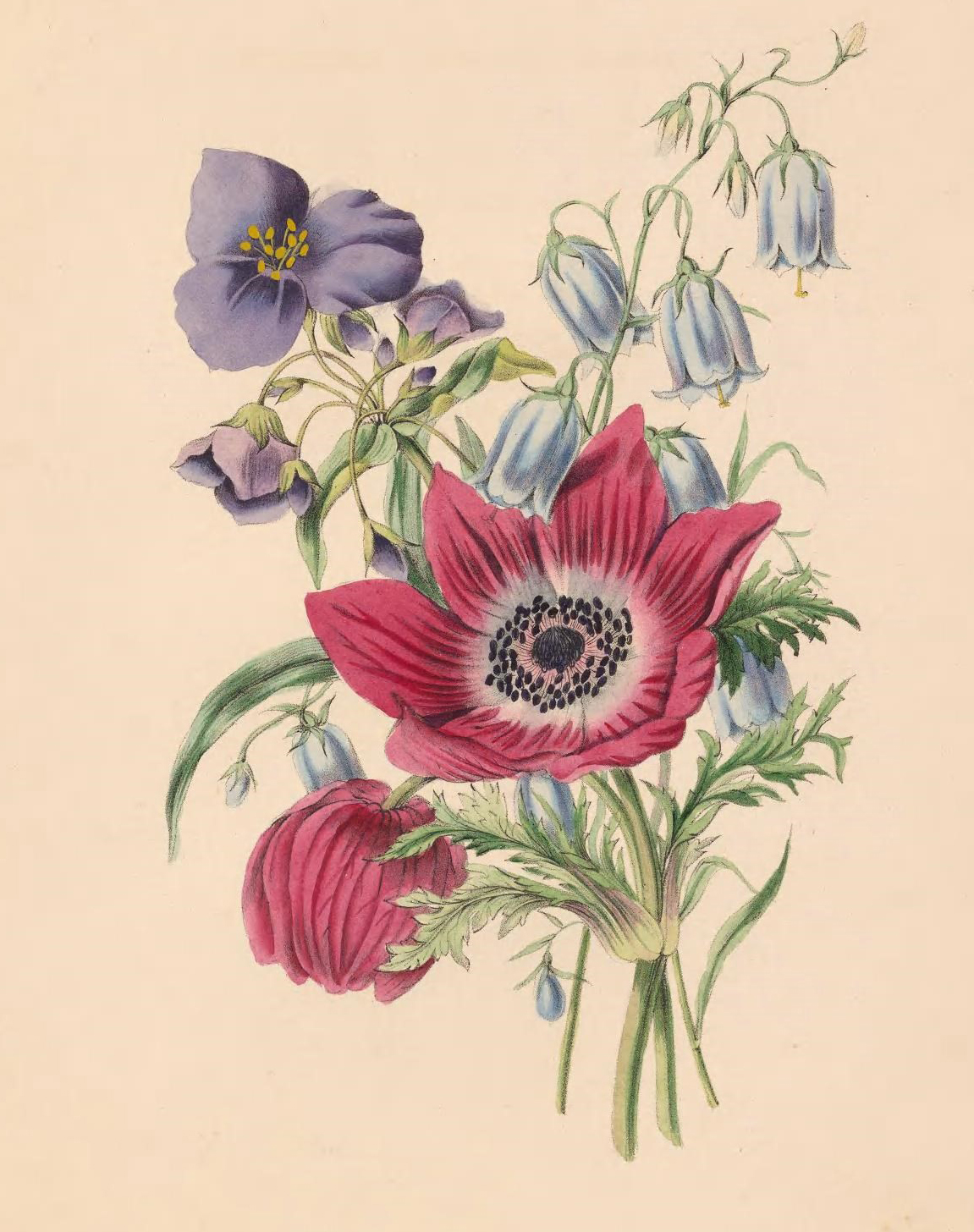
Anemone, Harebell, and Spiderwort.

Anemone, Harebell, and Spiderwort. Secret message: Thou art false, and I resign myself to my fate. Osgood, Frances Sargent (editor). The Floral Offering, A Token of Friendship (1847). Art by J. Ackerman. Contributed in BHL from Chicago Botanic Garden, Lenhardt Library. Digitization sponsored by the National Endowment for the Humanities (NEH).

Frances Sargent Osgood died from tuberculosis in 1850 at 38 years old. She was buried in Mount Auburn Cemetery near Boston with her daughter that preceded her in death. Her other two daughters died just after her in 1851.

The Memorial (1851) by “Friends of the Late Mrs. Osgood” and edited by Mary E. Hewitt was a tribute to her life. Its 346 pages contain numerous pieces by different authors; it is truly an acknowledgement of her importance to her family, friends, and literary colleagues.

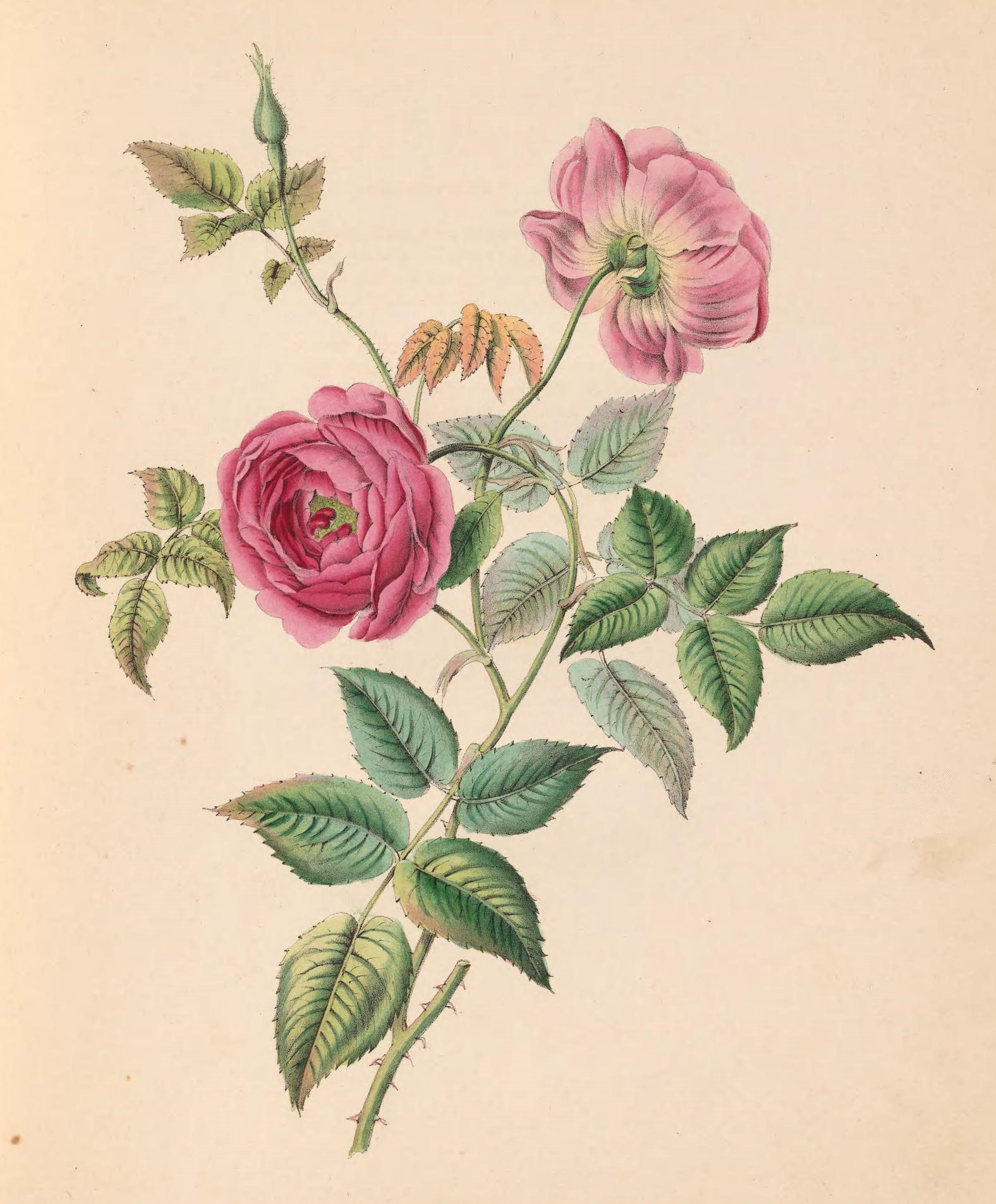
Two roses.

The Rose. Secret message: Beauty and love. Osgood, Frances Sargent (editor). The Floral Offering, A Token of Friendship (1847). Art by J. Ackerman. Contributed in BHL from Chicago Botanic Garden, Lenhardt Library. Digitization sponsored by the National Endowment for the Humanities (NEH).

The Lenhardt Library of the Chicago Botanic Garden is digitizing 62 rare and unique language of flowers volumes published in the 19th century as part of a grant from the National Endowment for the Humanities (NEH) awarded to the Chicago Horticultural Society. Over three-years, the volumes are being conserved and digitized by expert staff at the Northeast Document Conservation Center. The Floral Offering is from the second set of volumes. You can explore volumes from sets one and two as well as other titles in the Language of Flowers collection in BHL. Learn more about other language of flowers volumes digitized as part of this grant in this past blog post.

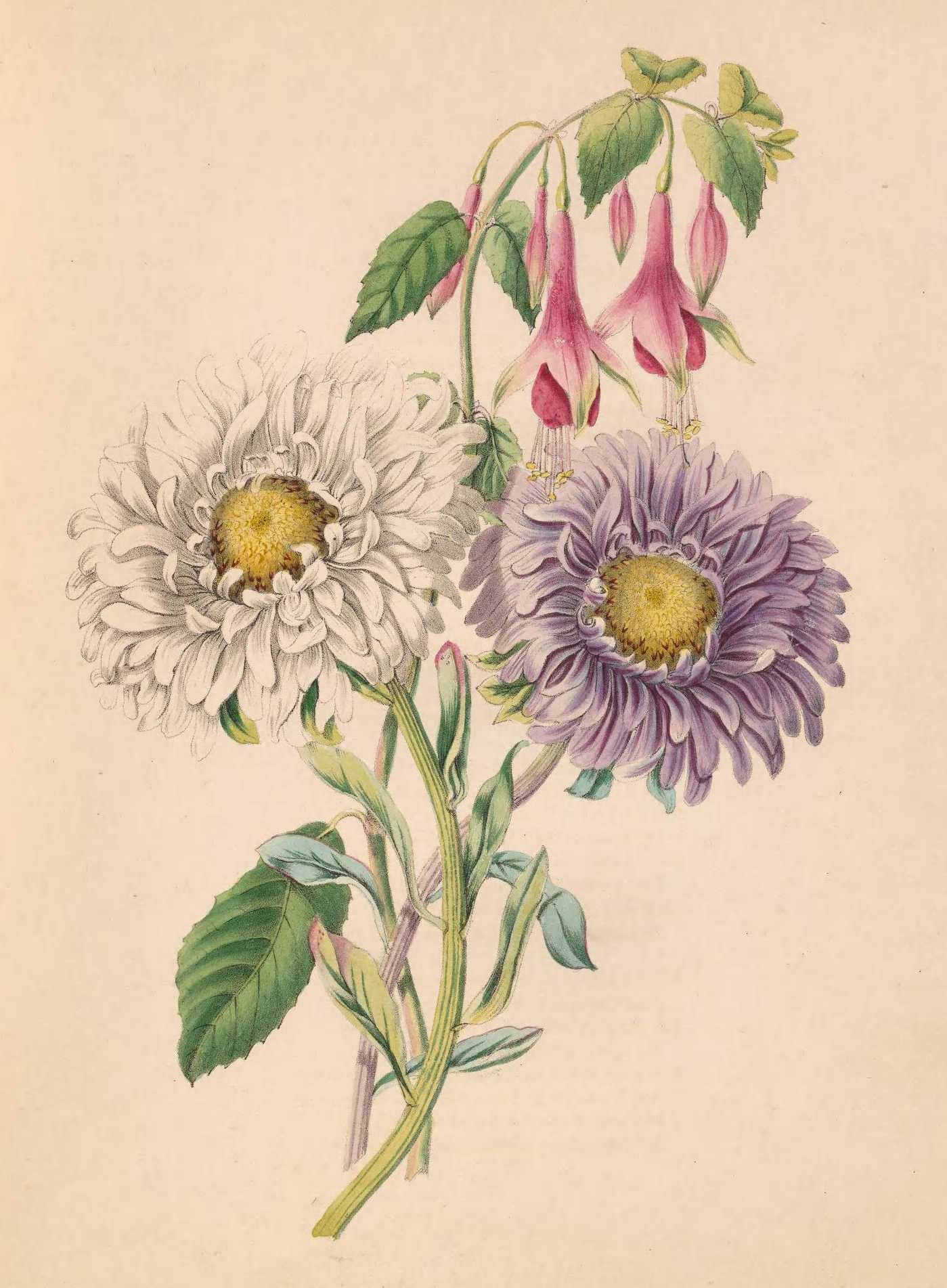
China-Aster and Fuchsia.

China-Aster and Fuchsia. Secret message: Caprice is a woman’s privilege. Osgood, Frances Sargent (editor). The Floral Offering, A Token of Friendship (1847). Art by J. Ackerman. Contributed in BHL from Chicago Botanic Garden, Lenhardt Library. Digitization sponsored by the National Endowment for the Humanities (NEH).

Sweet Pea, Bluebottle Centaury, and Evening Primrose.

Sweet Pea, Bluebottle Centaury, and Evening Primrose. Secret message: Goodbye! Our love was too lovely to last. Osgood, Frances Sargent (editor). The Floral Offering, A Token of Friendship (1847). Art by J. Ackerman. Contributed in BHL from Chicago Botanic Garden, Lenhardt Library. Digitization sponsored by the National Endowment for the Humanities (NEH).

References

Griswold, Rufus W. The Female Poets of America. Philadelphia: Carey and Hart, 1849. Internet resource.

Hewitt, Mary E. M, and Frances S. Osgood. The Memorial. New York: G.P. Putnam, 1851. Internet resource.

May, Caroline. The American Female Poets: With Biographical and Critical Notices. Philadelphia: Lindsay & Blakiston, 1848. Internet resource.

November 19, 2020by michelle.underhill
Blog Reel, Campaigns, Her Natural History

Language of Flowers: 19th Century Literary Genre Offered Opportunities for Women Writers of Natural History

“Language of Flowers”, a popular literary trend in the 19th century, presented the world of botany through dictionaries of flowers and associated meanings, floral poetry and prose, offering a sentimental view of natural history.  These charming books with colorful illustrations of flowers and bouquets are at the intersection of botany, horticulture, natural history, art, poetry, and women’s studies.  This Victorian fad saw many editions of works published, with multiple titles by successful authors.  The following provides a glimpse into the work of four women authors of this genre.

Sarah Carter Edgarton Mayo (1819-1848) from Selections From the Writings of Mrs. Sarah C. Edgarton Mayo: With a Memoir

Sarah Carter Edgarton Mayo (1819-1848) was an American writer.

Born in Shirley, Massachusetts, she was the tenth of fifteen children, and her mother was her father’s second wife.  The household offered many intellectual opportunities, and Sarah was home-schooled.  Her gift for language launched her writing career, which began when she was 16 years old.  Sarah’s early works were crafted for the Universalist church, her family’s faith.  She wrote poems and short stories for The Universalist and Ladies’ Repository and later served as the associate editor from 1839-1842.

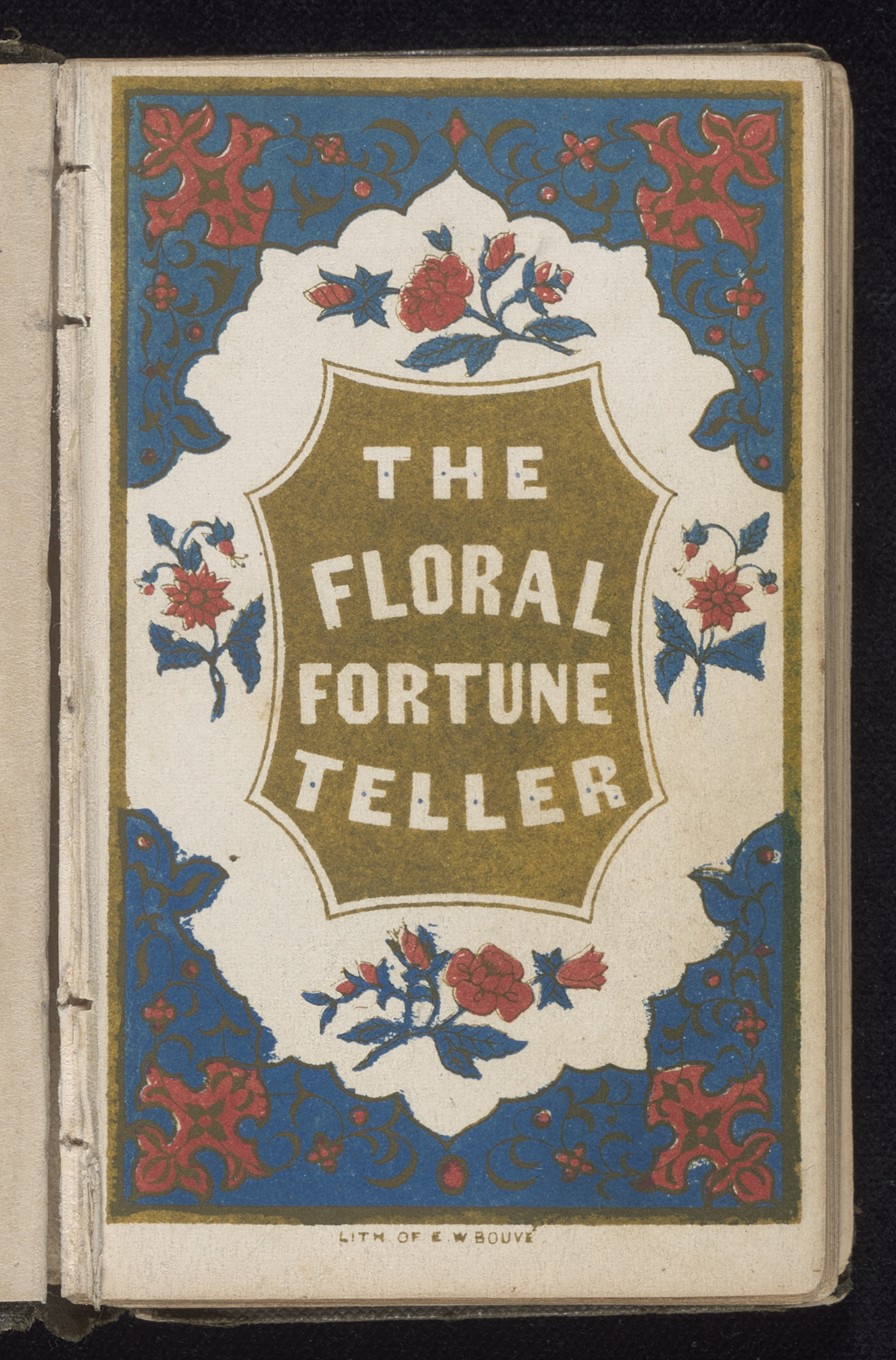
With her deep interest in botany, combined with her love of poetry, she wrote three language of flower genre books. The Flower Vase, The Fables of Flora, and Floral Fortune-Teller.

Floral Fortune-Teller, by Miss S. C. Edgarton, 1847. Contributed in BHL from the Lenhardt Library of the Chicago Botanic Garden.

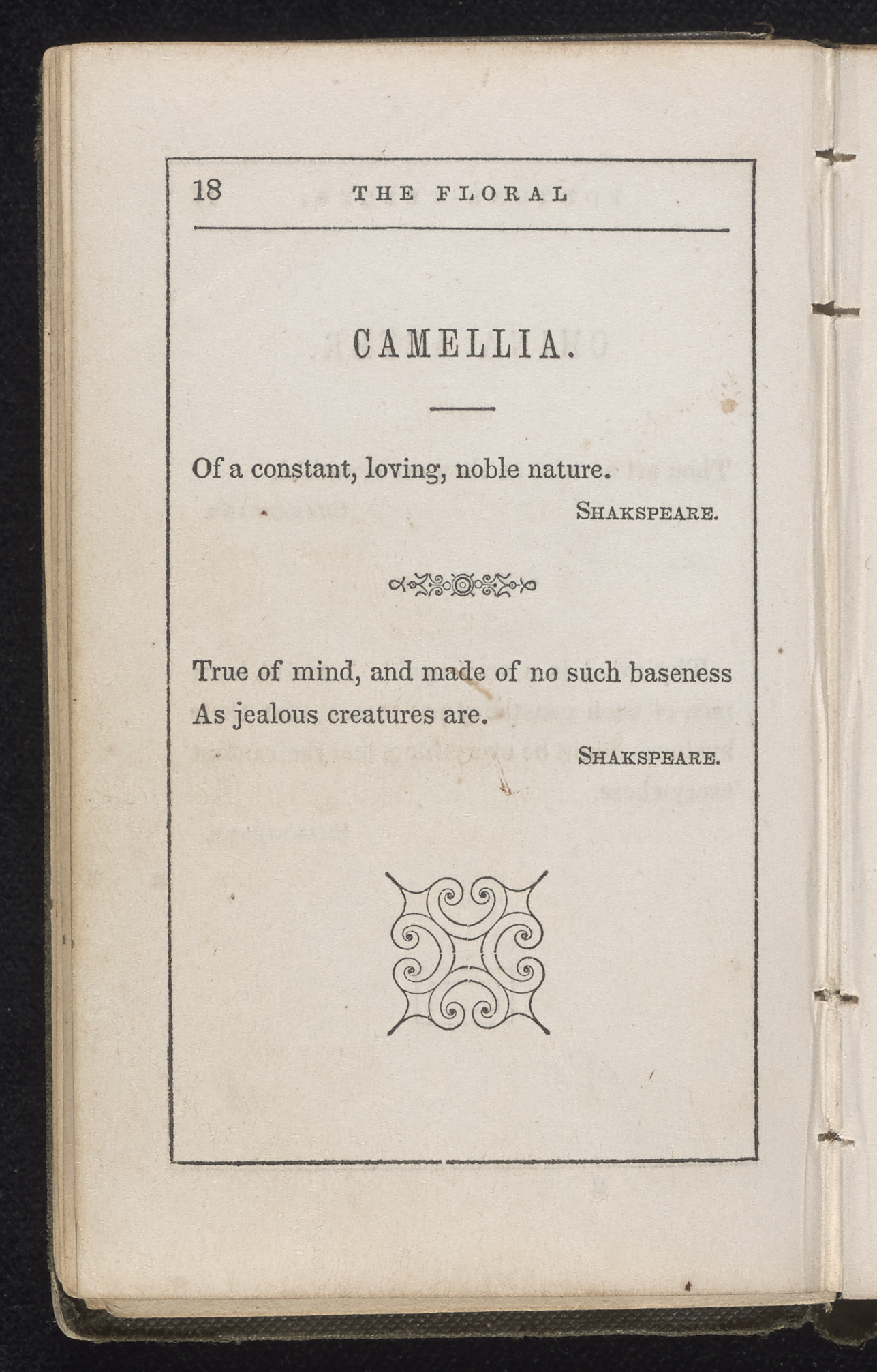
Floral Fortune-Teller:  A Game for all Seasons is an imaginative book assembled with poems and phrases of well-known English and German writers, each assigned to a particular flower, in alphabetical order, in five parts.  Readers are instructed to assemble a bouquet of five different color flowers, one each of white, blue, purple, yellow, and red. Each part reveals one’s fortune based on the flower.

Page featuring Camellia from Floral Fortune-Teller, by Miss S. C. Edgarton, 1847. Contributed in BHL from the Lenhardt Library of the Chicago Botanic Garden.

Sarah married Amory Dwight Mayo in July 1846, and they had one daughter who was born in September 1847. Sarah died nine months later at the young age of 29 years. Following her death, her husband honored her memory by publishing a memoir entitled Selections From the Writings of Mrs. Sarah C. Edgarton Mayo: With a Memoir.  The work contains many of her poems and prose. She had a deep connection and love of natural history, which is felt through her writings.

In Selections… her husband describes her as such:

“Geography and the natural sciences were her favorite studies, and among these she was most interested by astronomy and botany. She also read poetry with great taste and feeling. As she grew up, a love for nature grew with her. She had a passionate fondness for flowers and animals of all kinds, and the earliest verses I have seen of hers were addressed to a favorite dog. She was a part of nature, rather than an admirer of it…” [page 14.]

Other Language of Flower women authors were prolific writers.

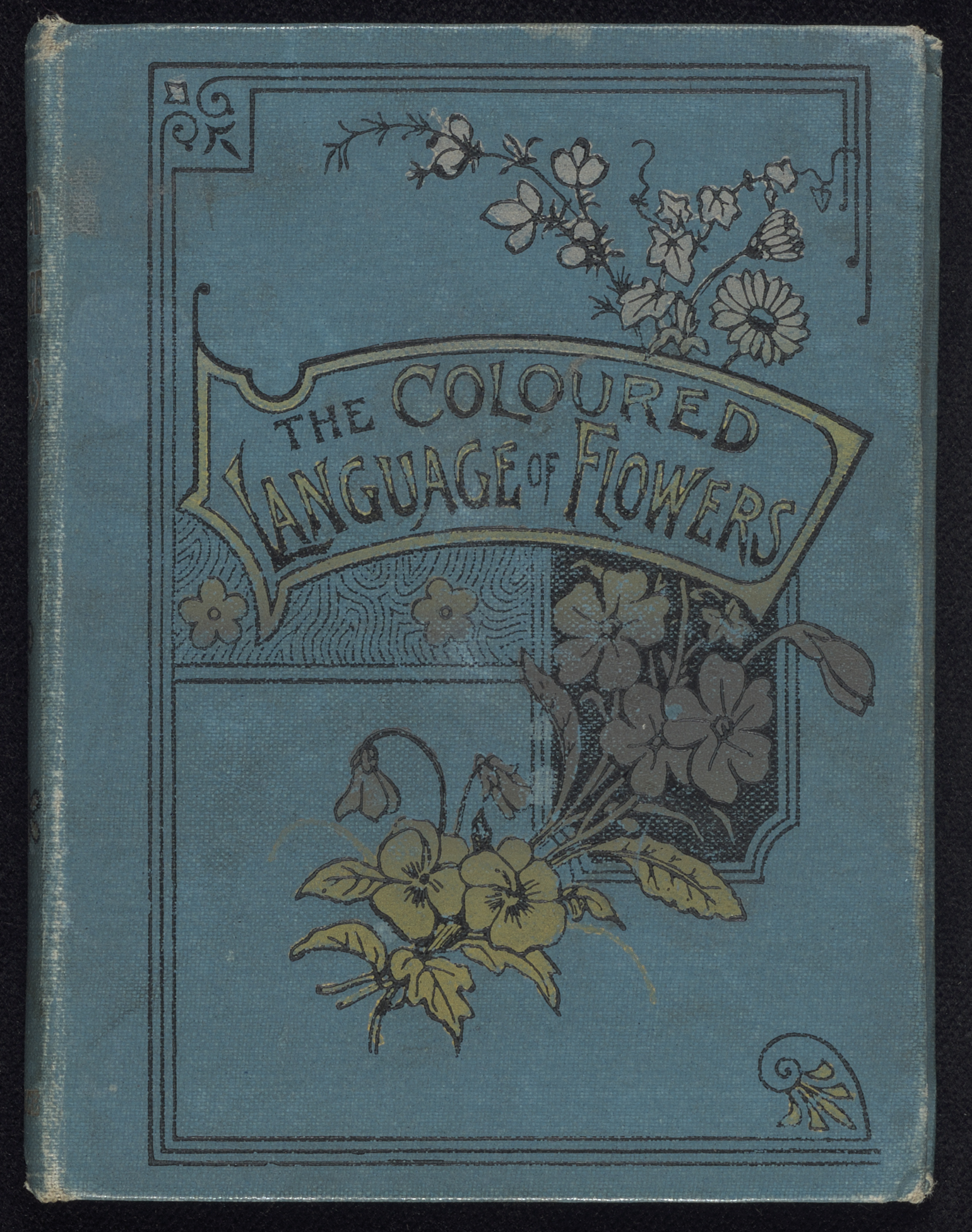
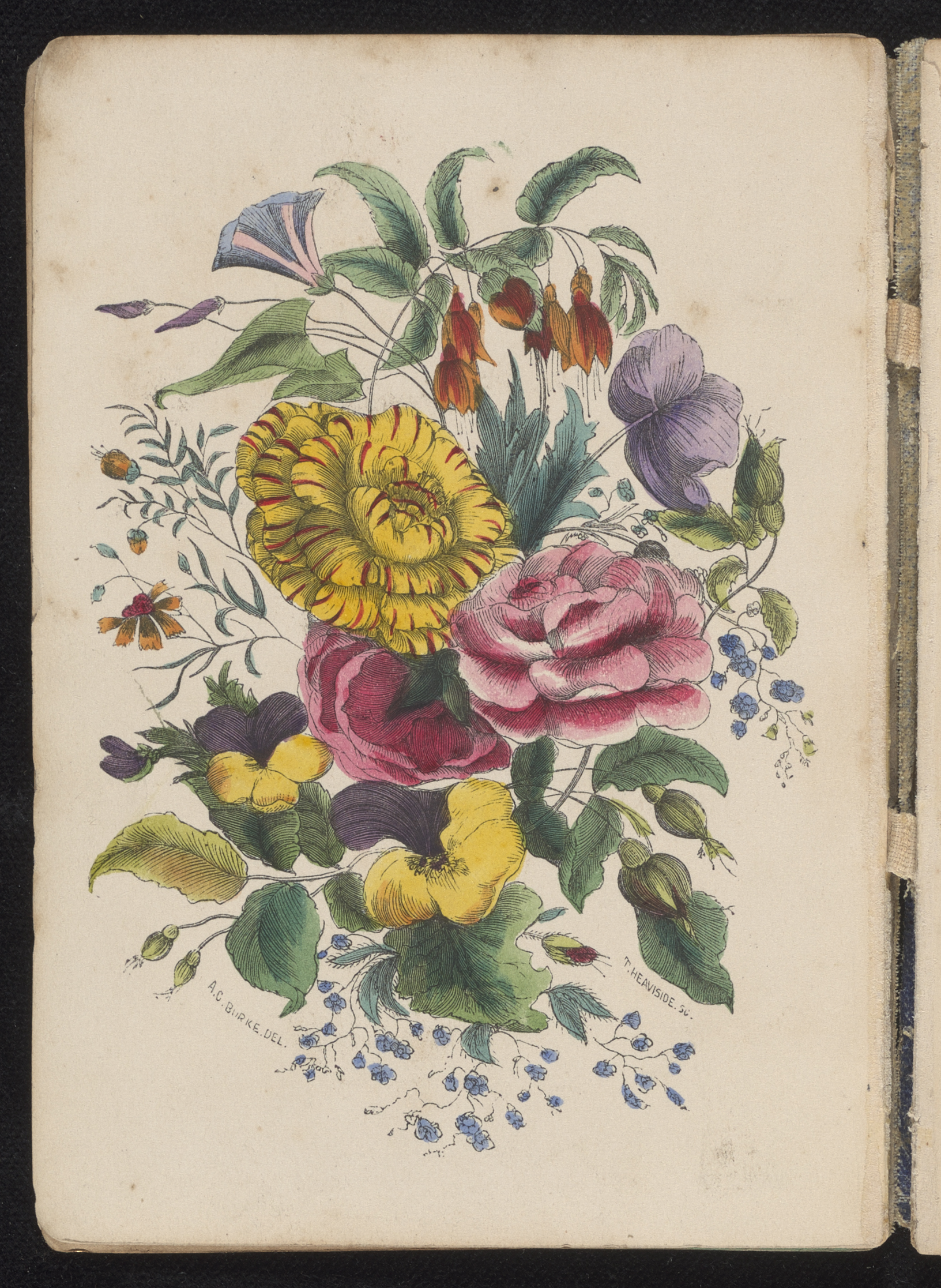
Mrs. Anna Christian Burke (Mrs. L. Burke) wrote several books in the genre including The Coloured Language of Flowers (1886), The Illustrated Language of Flowers (1858), and The Miniature Language of Flowers (1865). Each work contains floral poetry, lists of flowers with their meanings, and sketches of flowers, all in a similar style.

Coloured Language of Flowers.

The Illustrated Language of Flowers, contributed in BHL from the Lenhardt Library of the Chicago Botanic Garden.

Miniature Language of Flowers.

Lesser known women authors are Estelle Davenport Adams and Mary Keble Grant.

Estelle Davenport Adams is referenced in the 1904 Edition of Who’s Who, but under her husband’s entry, William Davenport Adams. She is however, listed in Allibone’s Supplement, under her own name and entry.

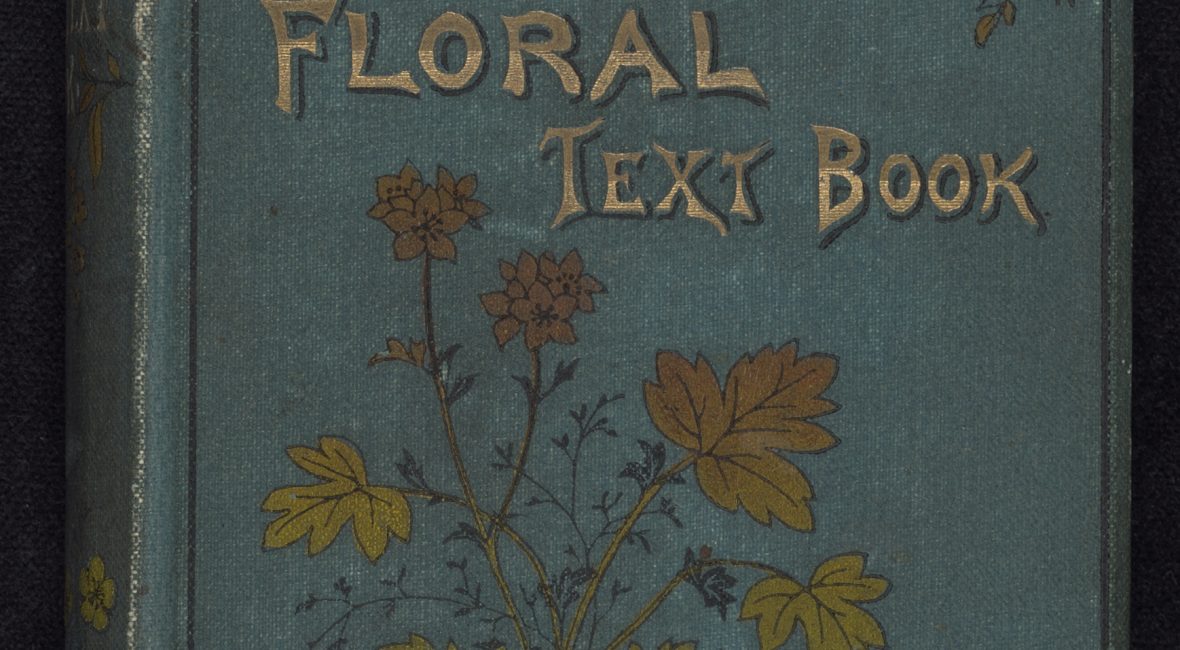
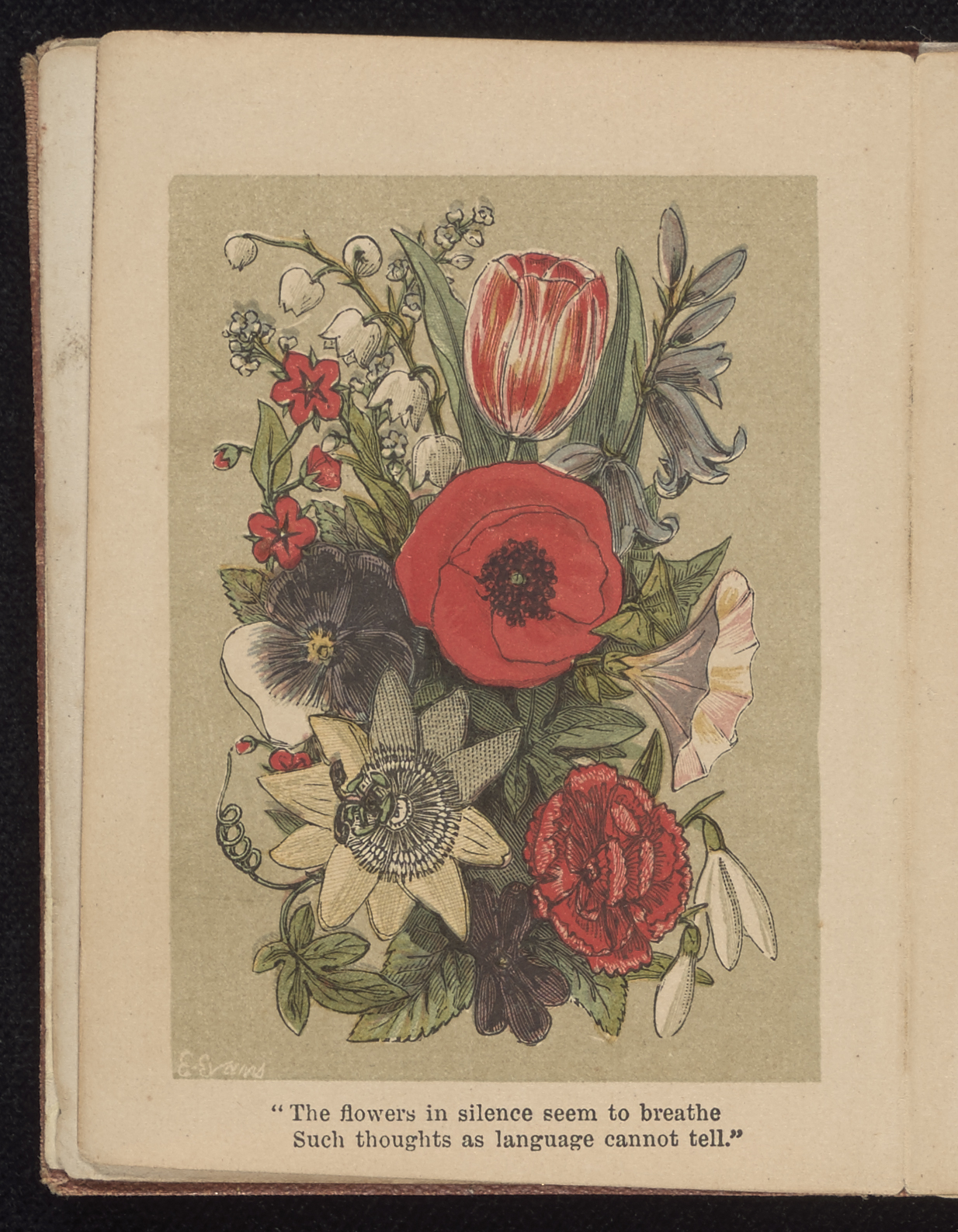
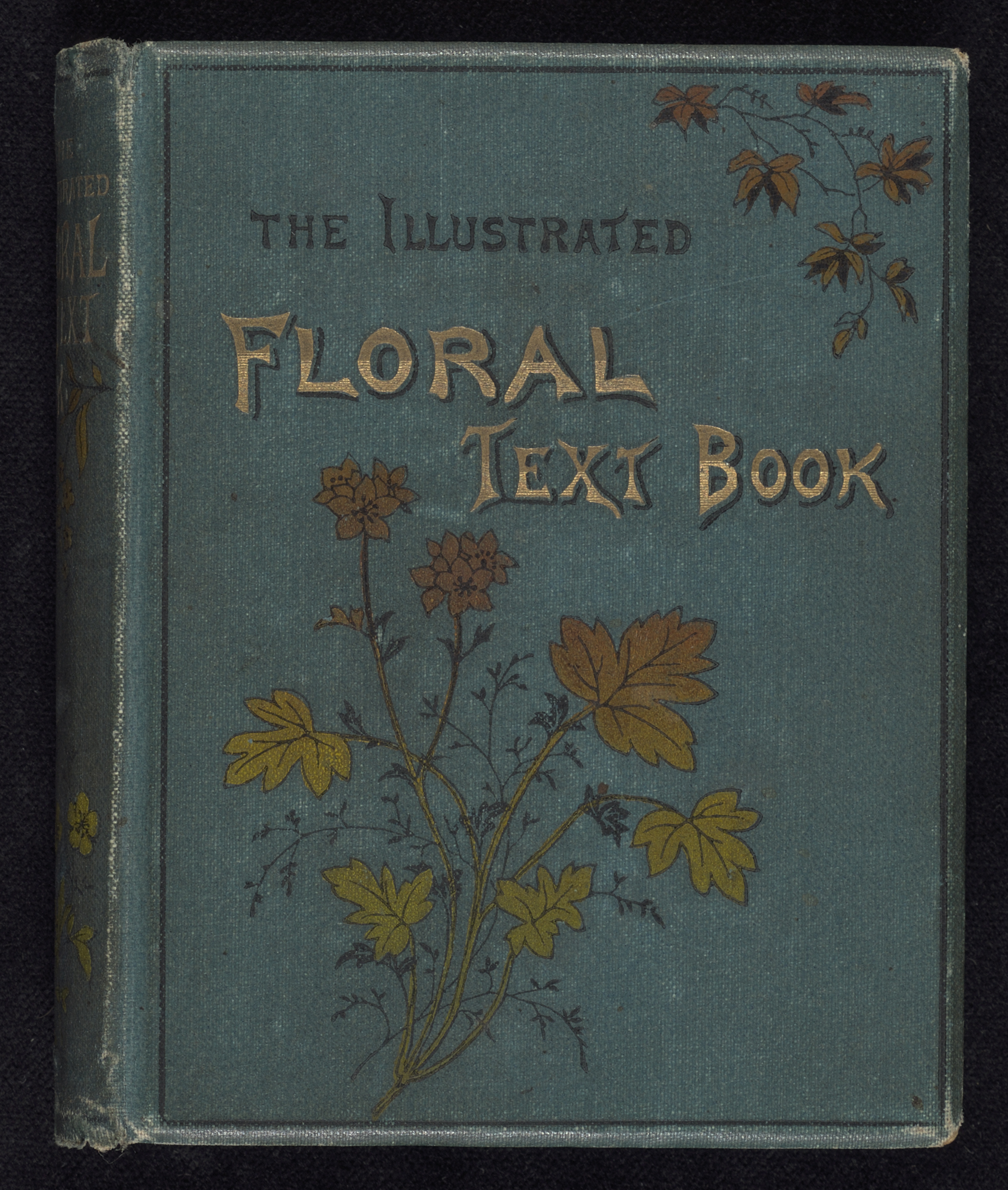
Mrs. Adams’ language of flower work, The Illustrated Floral Text Book: Being a Birthday Book of Flowers and their Language With Selections from the Poets, was published in 1885. She authored additional works on other subjects including Sea Song and River Rhyme from Chaucer to Tennyson.

The Illustrated Floral Text Book, by Estelle Davenport Adams, 1885. Contributed in BHL from the Lenhardt Library of the Chicago Botanic Garden.

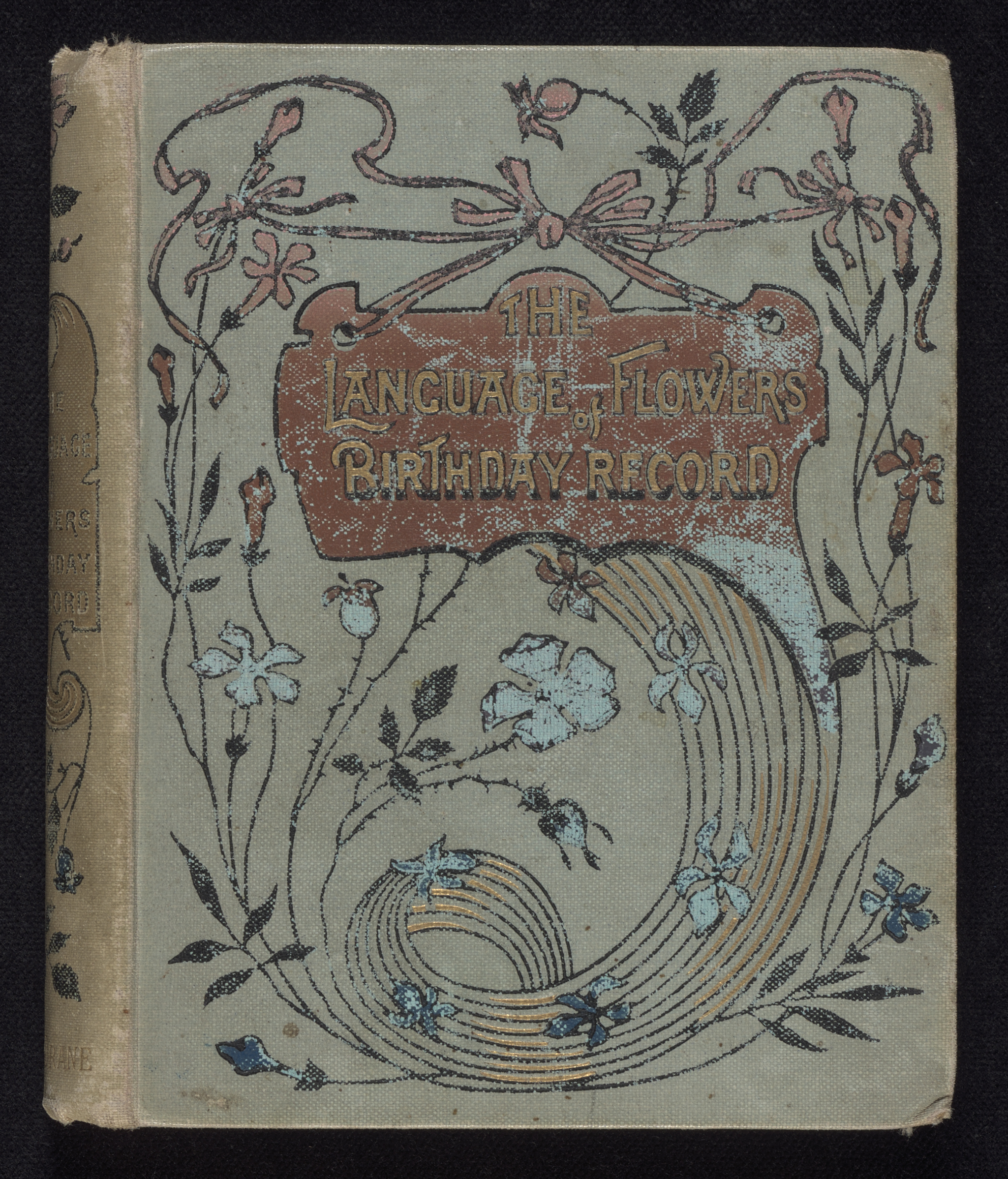
Mary Keble Grant’s The Language of Flowers Birthday Book from 1895 is a charming work.  Flip through it to find your birth date and its associated flower, poem and sentiment!

Mary Keble Grant’s The Language of Flowers Birthday Book. Contributed in BHL from the Lenhardt Library of the Chicago Botanic Garden.

The four women featured here are among many other women and men who wrote language of flower works. The 19th century fascination with natural history and floriography offered numerous opportunities for writers and compilers to produce titles and editions in this genre.

The Lenhardt Library of the Chicago Botanic Garden is digitizing 62 rare and unique “language of flower” books published in the 19th century as part of a grant from a National Endowment for the Humanities (NEH) awarded to the Chicago Horticultural Society. Over the three-year project period, the volumes are being conserved and digitized by expert staff at the Northeast Document Conservation Center. The volumes highlighted in this post are the first of those digitized for the project. You can explore these and other titles as they are digitized within the Language of Flowers collection on BHL.

References

American Council of Learned Societies. Dictionary of American Biography. New York: Charles Scribner’s Sons, 1995.  Volume 6, pages 463-464.  Accessed online.

Benbow-Pfalzgraf, Taryn. American Women Writers: A Critical Reference Guide, from Colonial Times to the Present. Detroit: St. James Press, 2000.  Volume 3, p.100-101. Accessed online.

Biography and Genealogy Master Index. Detroit MI: Gale, 2016.  Accessed online.

Kirk, John Foster, and S. Austin Allibone. A Supplement to Allibone’s Critical Dictionary of English Literature and British and American Authors… Philadelphia: J.B. Lippincott Company, 1892. Volume 1, p. 9, 251. Accessed online.

Low, Sampson. The English Catalogue of Books. Volume 5, 1898.   Accessed online.

Mayo, Sarah C. Edgarton, and A. D. Mayo. Selections from the Writings of Mrs. Sarah C. Edgarton Mayo: With a Memoir, by Her Husband. Boston: A. Tomkins, 1855.

Who’s Who 1904: An Annual Biographical Dictionary. Fifty-Sixth Year of Issue. London: Adam and Charles Black; New York: Macmillan Company, 1904. p. 15-16.  Accessed Online.

March 30, 2019by Joel Richard
Blog Reel, Featured Books

Myrtle: The Provenance and Meaning of a Plant

Provenance can be defined as the chain of ownership of any type of object from its creation to the present day. The Smithsonian’s Material Culture Forum recently held a lively session of presentations and discussions on this topic, with speakers from across the Institution: the National Zoo; Natural History Museum scientists and researchers in anthropology and paleobiology; archivists of World War II-era material; and curators from the National Museum of American History, the National Air & Space Museum, and the National Museum of African American History and Culture. There were many other subject specialists (such as a horticulturist) who could have participated, given time and world enough, as ownership history is a crucial matter and a commonality in the work of Smithsonian staff. Issues and questions about the history of a collection, transfer of possession, and unlawful appropriation can be applied to a living object (for example, the golden lion tamarin) as well as works of art or rare books.

The provenance of a botanical specimen was recently presented to a world-wide audience, even if they did not quite realize it. One detail of the Royal wedding of Prince Harry and Meghan Markle had commentators confidently offering up the history of the sprig of myrtle used in the bride’s bouquet. This was commonly reported to be from the plant nurtured from the flower used in the marriage ceremony of Queen Victoria and Prince Albert. Every bride in Royal nuptials after Victoria carried on the ritual. If not quite true, it made for a nice, simplified story line.
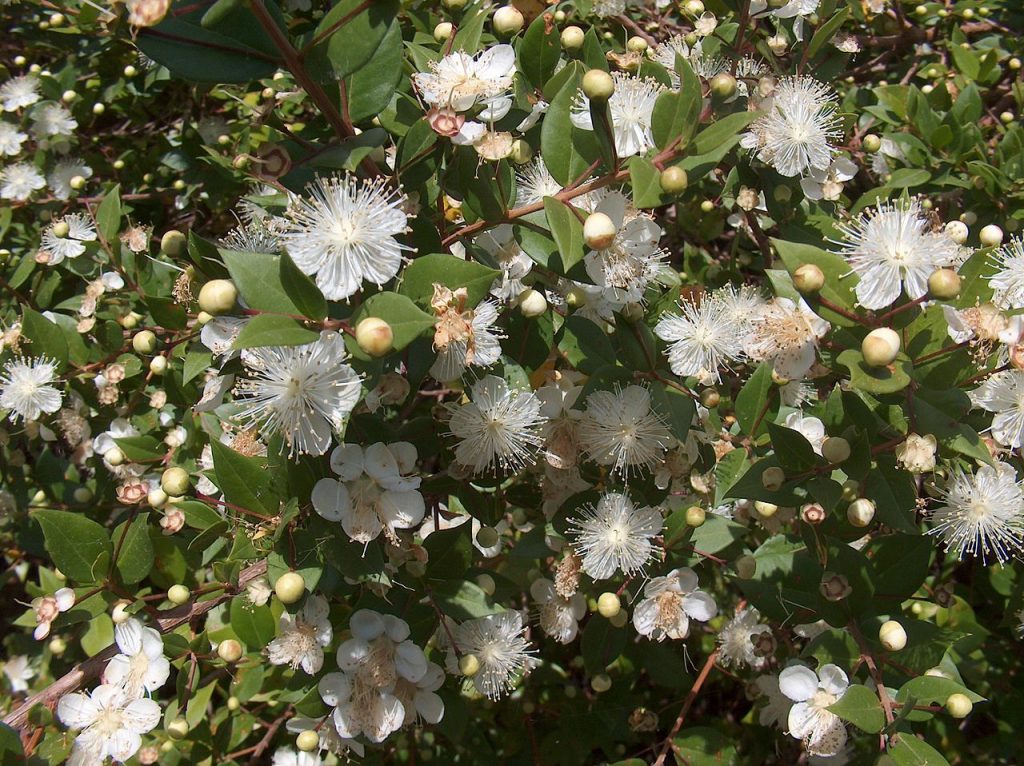
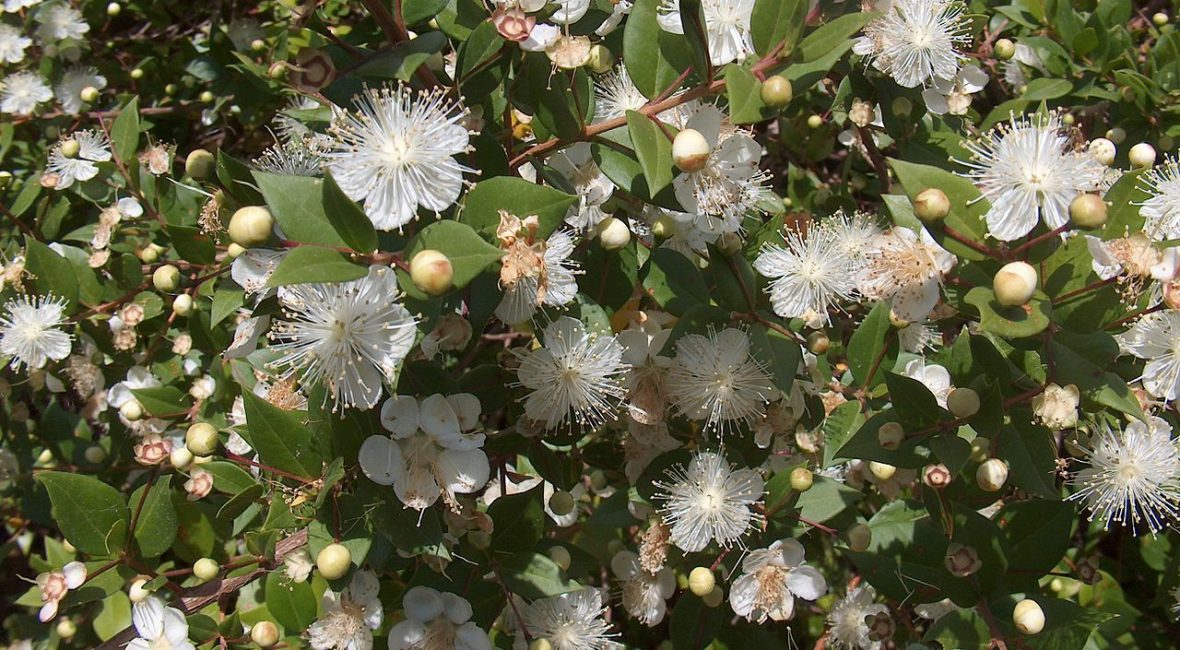
Myrtle growing in Sardinia, Villacidro (photo supplied from Wikimedia Commons)

The tidbit no doubt had some wondering just what myrtle is. In this present age, it is not a common wedding flower nor used much for culinary or medicinal purposes. Some may know myrtle as potted topiary, from its many references in poetry, or as the name of a character in literature—The Great Gatsby or Harry Potter, for instance.

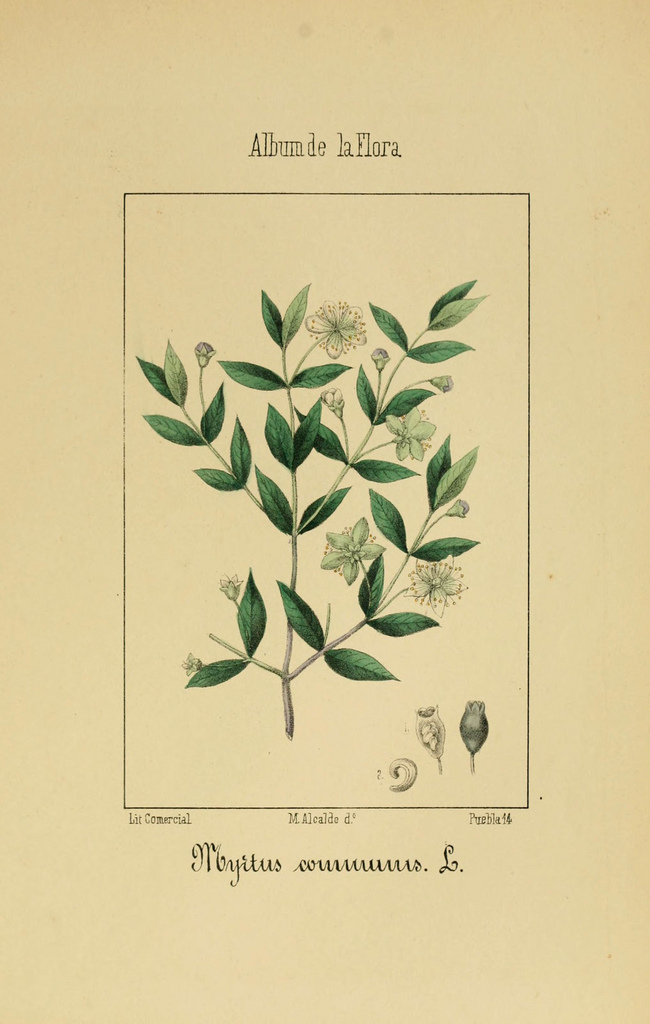
Myrtus communis (true myrtle), of the family Myrtaceae, is a fragrant, evergreen shrub with small, glossy green leaves and white, star-shaped flowers with long stamens, and, after their blooming, purple-black berries. It is native to Mediterranean Europe, North Africa, the Middle East, and Turkey. In these temperate climates it is sometimes clipped as a hedge. As a container plant of topiary, it is often trimmed to look like a fuzzy bowling ball balancing on top of a long stem or a pyramid, and is brought inside in cooler weather.

Myrtus communis (true myrtle). Album de la Flora Médico-Farmacéutica é Industrial, Indígena y Exótica (Madrid, 1862-1864), New York Botanical Garden, LuEsther T. Mertz Library copy

Queen Victoria and Prince Albert of Saxe-Coburg and Gotha were married in 1840. The only flowers adorning her during the ceremony were orange blossoms. In 1843, Princess Augusta of Cambridge (cousin to Victoria), in her wedding to Prince Frederick, Grand Duke of Mecklenburgh-Strelitz, was decorated all over with myrtle: on her dress, train, head-dress, and bouquet. The Court Circular for this ceremony reported that myrtle was “the emblematic flower of Germany.” And a nosegay of myrtle was presented to the Queen in 1845 in Gotha, Germany by her husband’s grandmother. The British Royal tradition of brides carrying myrtle was firmly established when the Queen’s eldest daughter (also named Victoria) married in 1858. The Princess Royal was decked out with so many flounces of myrtle and orange blossoms on her gown that she appeared to be a tiered wedding cake. Queen Victoria commanded that every bride of the Royal family should have myrtle planted at her Osborne House to commemorate each wedding.
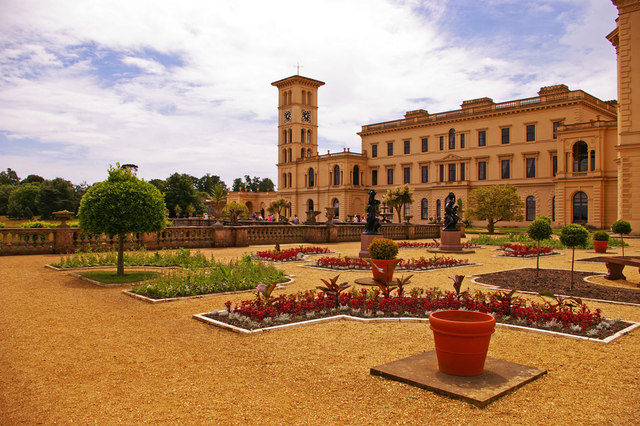
Osborne House (photo source geograph.org.uk Wikimedia Commons)

Myrtle thrived at Osborne House, Victoria and Albert’s beloved country retreat on the Isle of Wight. Long abandoned as a Royal residence (Victoria’s many offspring were not so enamored by the place) and subsequently used as a nursing home and naval college, the home and its 170-year old gardens have been recently restored by English Heritage. There is myrtle growing there today, from descendants of Victoria’s planting.

Myrtle roots easily, and there are probably others of prominent lineage growing in many of the Royal gardens, greenhouses, and orangeries. Apparently, the sprigs in the most recent Royal bouquet either came from the myrtle planted for Queen Elizabeth II in 1947 or the “original” at Osborne House. The myrtle in Camilla Parker Bowles’s wedding bouquet came from Cornwall (Charles, Prince of Wales, is the Duke of Cornwall and Camilla is now Duchess).

What was not as frequently reported about the tradition of the wedding bouquet in the lead-up to the Royal wedding in May, was the ancient history and symbolism of myrtle. Queen Victoria was well-versed in the language of flowers; the interest in floriography was at its peak in England during her reign. Blooms of various flowers were arranged in bouquets, nosegays, and tussie-mussies, a way of conveying a message, sometimes discreetly if need be. Queen Victoria’s presentation to her daughter, the Princess Royal, and, later, to her several other daughters, daughters-in-law, and granddaughters on their wedding days was not incidental. Victoria was both continuing and transforming the long traditions associated with myrtle.

There are many references to myrtle in ancient mythology and the Bible. The Greeks and Romans knew the plant as Myrtos and Myrtus and it was closely associated with the goddesses Demeter and Aphrodite. Venus is described by Ovid as emerging from the sea on her half-shell holding a sprig of myrtle. The wonderfully scented plant was considered an aphrodisiac, known to appear in wedding crowns for either the bride or the groom. In the Greco-Roman world, myrtle in laurels or crowns were sometimes presented to poets and woven into garlands of honor for athletic prizes, and was also worn to sacrifices and banquets. As opposed to laurel wreaths, myrtle signified victory from a bloodless battle. Myrtle wreaths made of gold have been excavated around the ancient world, particularly in Macedonia. Neat of appearance and amendable to clipping, myrtle was a common feature of gardens.

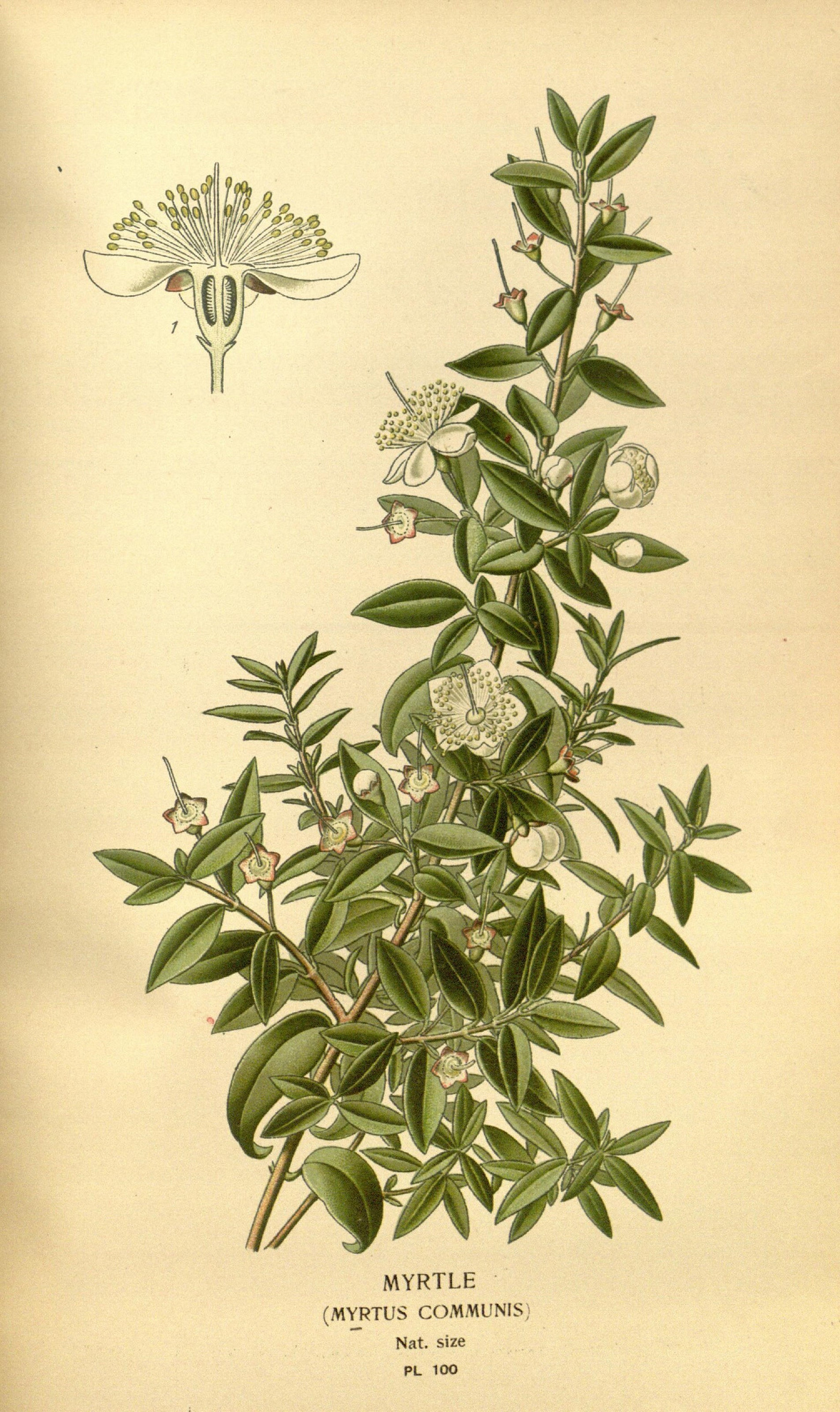
illustration of myrtle (Myrtus communis)

Myrtle (Myrtus communis). Favourite flowers of garden and greenhouse. (v. 2, 1897). Missouri Botanical Garden copy.

The ancient plant had a great ceremonial role in other civilizations. In Judaism, myrtle is known as Hadassah, as one of four sacred plants in the Feast of the Tabernacles, or, Sukkat, in 445 B.C. The Targum Sheni to Esther (2.7) states that “she was called Hadassah (Myrtle) because the righteous are compared to myrtle … As the myrtle spreads fragrance in the world, so did she spread good works.” Myrtle represents the community, thought of as a symbol of peace and of Eden and of marriage. In Christianity, losing its Greco-Roman association with female sexuality, myrtle came to be an emblematic symbol of the purity of the Virgin Mary.

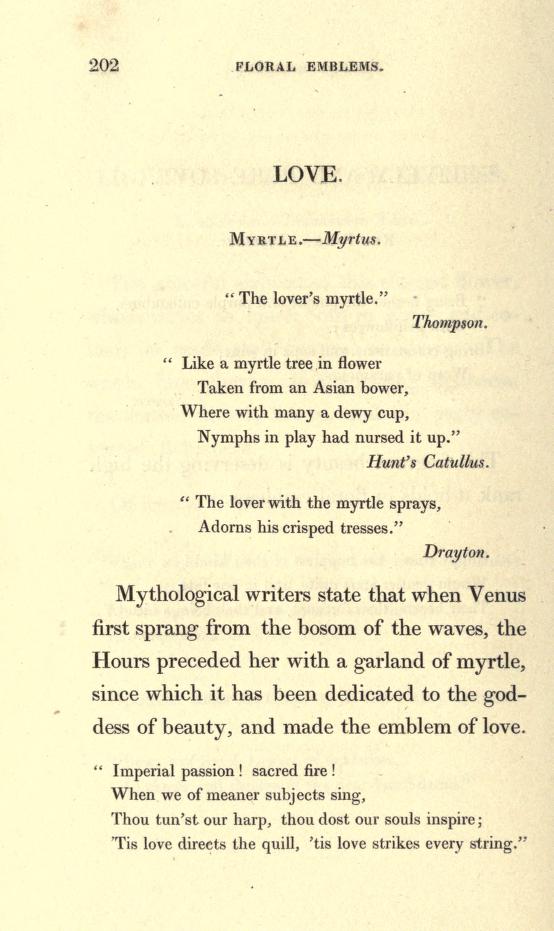
As an ornament for brides, this tradition eventually made its way to Germany, an old custom that Queen Victoria adopted as her own. Publications of her era or earlier, such as Henry Philips’ Floral Emblems (1825), Charlotte de La Tour and Frederic Shoberl’s The Language of Flowers, with Illustrative Poetry (1839), Flora Symbolica, or, the Language and Sentiment of Flowers (1866), and Richard Folkard’s Plant Lore, Legends, and Lyrics (1884), well describe the significance of myrtle. The plant has many, layered meanings—youth, virginity (before marriage), fertility, innocence, immortality, fidelity—but, above all, love.

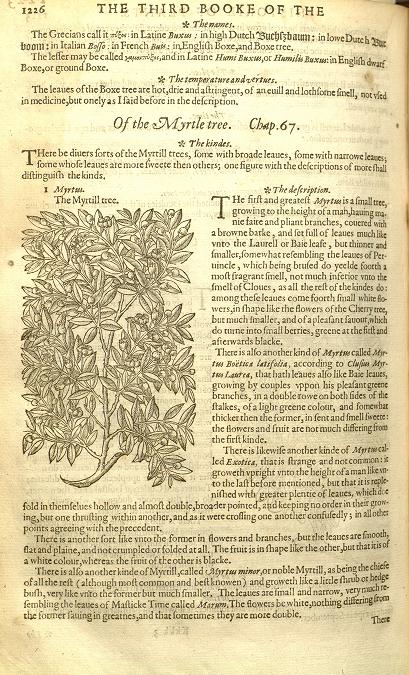
Queen Victoria did not introduce the myrtle plant to England from her visit to Germany. Tradition has Sir Walter Raleigh bringing it back from Spain in 1585, but it may well have been imported earlier. The Islamic gardens of the Iberian Peninsula featured myrtle since the Middle Ages. Unlike the Isle of Wight myrtle, the Alhambra and its Generalife Palace in Granada, Spain still have specimens that are hundreds of years old. John Gerard in his herbal of 1597 identifies six varieties grown in southern England. In the 17th and 18th centuries myrtle was a fashionable potted plant of the aristocracy, brought into the orangery when not adorning a garden. John Parkinson, in his Paradisi in Sole Paradisus Terrestris, or, A Garden of All Sorts of Pleasant Flowers wrote of “mirtle”: “Wee nourse [nourish] them with great care for the beautifull aspect, sweete sent and raritie, as delights and ornaments for a garden of pleasure, wherein nothing should be wanting that art, care and cost might produce and preserve.”
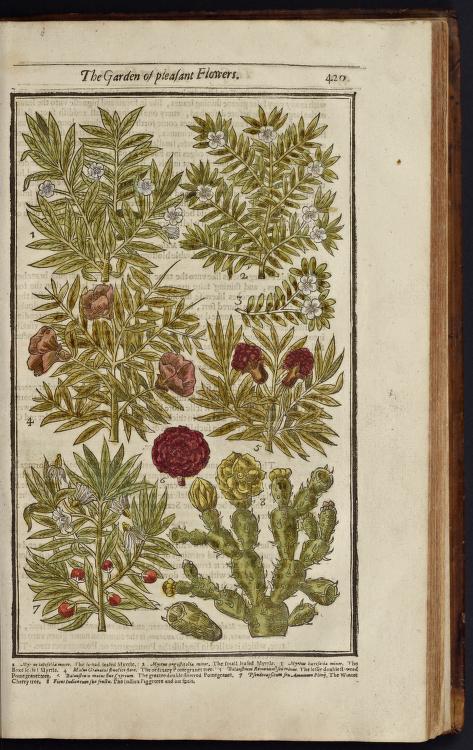
Illustration with myrtle (at top) form Parkinson’s Paradisi in Sole from the copy in the Library of the Getty Research Institute

Myrtle has thrived on a sheltered terrace of Osborne House on the Isle of Wight in the English Channel, overlooking the Solent, a seaside view that reminded Prince Albert of the Bay of Naples. Here, he was free to prove his gardening, architectural design, and landscaping abilities by supervising the building of an Italian-style palazzo and its grounds. On 17 September 1846 Victoria wrote in her journal, “… Albert supervised the transplanting of all the … myrtles … which is a tremendous job; one myrtle required 15 men to move it!” The home was their own creation and a retreat from the stiffness and oppressiveness of the court.

Victoria’s family spent July and August on the Isle of Wight when the myrtle was in bloom. The sprigs planted from successive bridal bouquets signal a continuity that many find reassuring, as attested by news reports to this day. A separate structure at Osborne House, Swiss Cottage, provided the Royal children an area where they were encouraged to learn gardening. For her granddaughter’s wedding, 18 February 1878, Victoria recorded that she “Walked … to the Swiss Cottage & planted a myrtle bush in honour of the day … grown from a sprig of myrtle in Vicky’s wedding bouquet, 20 years ago, of which I have sent a piece for Charlotte’s wedding nosegay.”

Queen Victoria was to see many more plantings of myrtle. She died at Osborne House on 22 January 1901. The provenance and significance of myrtle continues on into the 21st century, at least for British Royalty, as we saw with the bouquet that Meghan Markle carried.

John Gerard, The Herball, or, Generall Historie of Plantes (1597), from the scanned copy in the Missouri Botanical Garden, Peter H. Raven Library


Notes

Page from Henry Philips’ Floral Emblems (1825). Page from copy of the University of California Libraries

For more on bouquets and the language of flowers (link); from Smithsonian Gardens.

Connors, Catherine. “Scents and Sensibility in Plautus’ Casina,” The Classical Quarterly, volume 47, number 1 (1997), pages 305-309.

Lachs, Samuel T. “Hadassah that is Esther,” Journal for the Study of Judaism in the Persian, Hellenistic, and Roman Period, volume 10, number 2 (1979), pages 219-220.

Nelson, E. Charles. “Victorian Royal Wedding Flowers: Orange, Myrtle, and the Apotheosis of White Heather,” Garden History, volume 37, number 2 (Winter 2009), pages 231-236. The author thoroughly examined Court Circulars in The Times for mentions of wedding flowers, dispelling many, persistent myths.
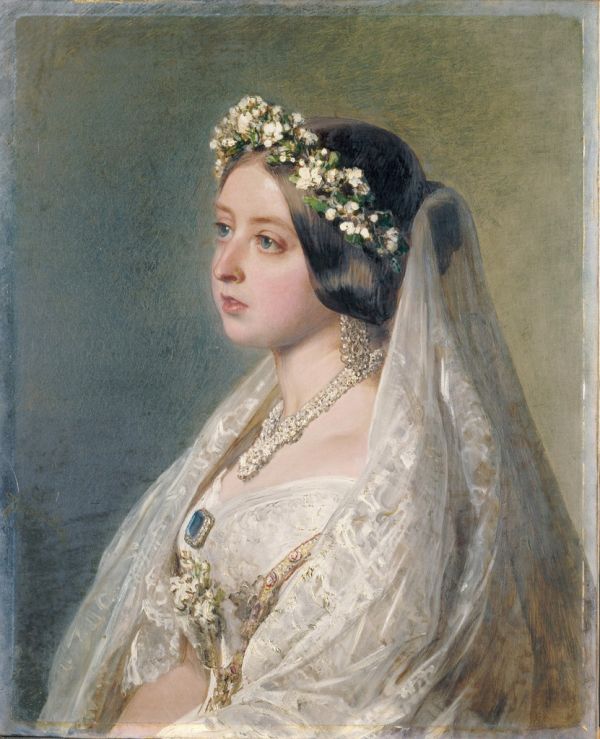
Queen Victoria, in her wedding dress, veil and what appears to be a tiara of myrtle. This charming painting by Franz Xaver Winterhalter, in the Royal Collections, was an anniversary gift to Prince Albert, seven years into their marriage.

 

June 14, 2018by mckenzie.87

Help Support BHL

BHL's existence depends on the financial support of its patrons. Help us keep this free resource alive!

search

About BHL

The Biodiversity Heritage Library (BHL) is the world’s largest open access digital library for biodiversity literature and archives. BHL operates as a worldwide consortium of natural history, botanical, research, and national libraries working together to digitize the natural history literature held in their collections and make it freely available for open access as part of a global “biodiversity community.”

Join Our Mailing List

Sign up to receive the latest news, content highlights, and promotions.

Subscribe Now

Subscribe to Blog via Email

Enter your email address to subscribe to this blog and receive notifications of new posts by email.

Join 319 other subscribers

Subscribe to Blog Via RSS

Subscribe to the blog RSS feed to stay up-to-date on all the latest BHL posts.

Access RSS Feed

Inspiring Discovery through Free Access to Biodiversity Knowledge.

The Biodiversity Heritage Library makes it easier than ever for you to access the information you need to study and explore life on Earth…for free, anytime, anywhere.


64+ Million Pages of
Biodiversity Literature Online.

EXPLORE

Tools and Services
to Transform Research.

EXPLORE

300,000+
Illustrations on Flickr.

EXPLORE

ABOUT | HARMFUL CONTENT | PRIVACY | SITE MAP | TERMS OF USE