
Biodiversity Heritage Library - Program news and collection highlights from BHL
  • Home
  • News
  • Featured Books
    • All Featured Books
    • Book of the Month Series
    • BHL at 20
  • User Stories
  • Campaigns
    • Fossil Stories
    • Garden Stories
    • Monsters Are Real
    • Page Frights
    • Her Natural History
    • Earth Optimism 2020
  • Tech Blog
  • Visit BHL
Home
News
Featured Books
    All Featured Books
    Book of the Month Series
    BHL at 20
User Stories
Campaigns
    Fossil Stories
    Garden Stories
    Monsters Are Real
    Page Frights
    Her Natural History
    Earth Optimism 2020
Tech Blog
Visit BHL
  • Home
  • News
  • Featured Books
    • All Featured Books
    • Book of the Month Series
    • BHL at 20
  • User Stories
  • Campaigns
    • Fossil Stories
    • Garden Stories
    • Monsters Are Real
    • Page Frights
    • Her Natural History
    • Earth Optimism 2020
  • Tech Blog
  • Visit BHL
Biodiversity Heritage Library - Program news and collection highlights from BHL
BHL News, Blog Reel

Empowering Access to Biodiversity Information in Africa

View Full Size Image

Almost two years ago, BHL Africa officially launched during a three-day workshop hosted by the South African National Biodiversity Institute (SANBI) at the Pretoria National Botanical Garden in Pretoria, South Africa. In the subsequent two years, BHLA has begun digitization at some participating institutions and has drafted a governance framework for the node. Recent developments, including a grant from the JRS Biodiversity Foundation and a new status within the global BHL community, have brought our colleagues significantly closer to achieving their vision of global access to biodiversity resources in sub-Saharan African institutions.

On January 30, 2015, the JRS Biodiversity Foundation, which is committed to enhancing the understanding of biological diversity for the benefit and sustainability of life on earth, announced an award of $150,000 to facilitate the growth of BHL Africa. JRS’ support of BHL Africa began in 2011 with a sponsorship for African attendance at the BHL Life and Literature Conference in Chicago, IL, followed by additional support for the launch ceremony and corresponding workshop in April, 2013.
View Full Size Image
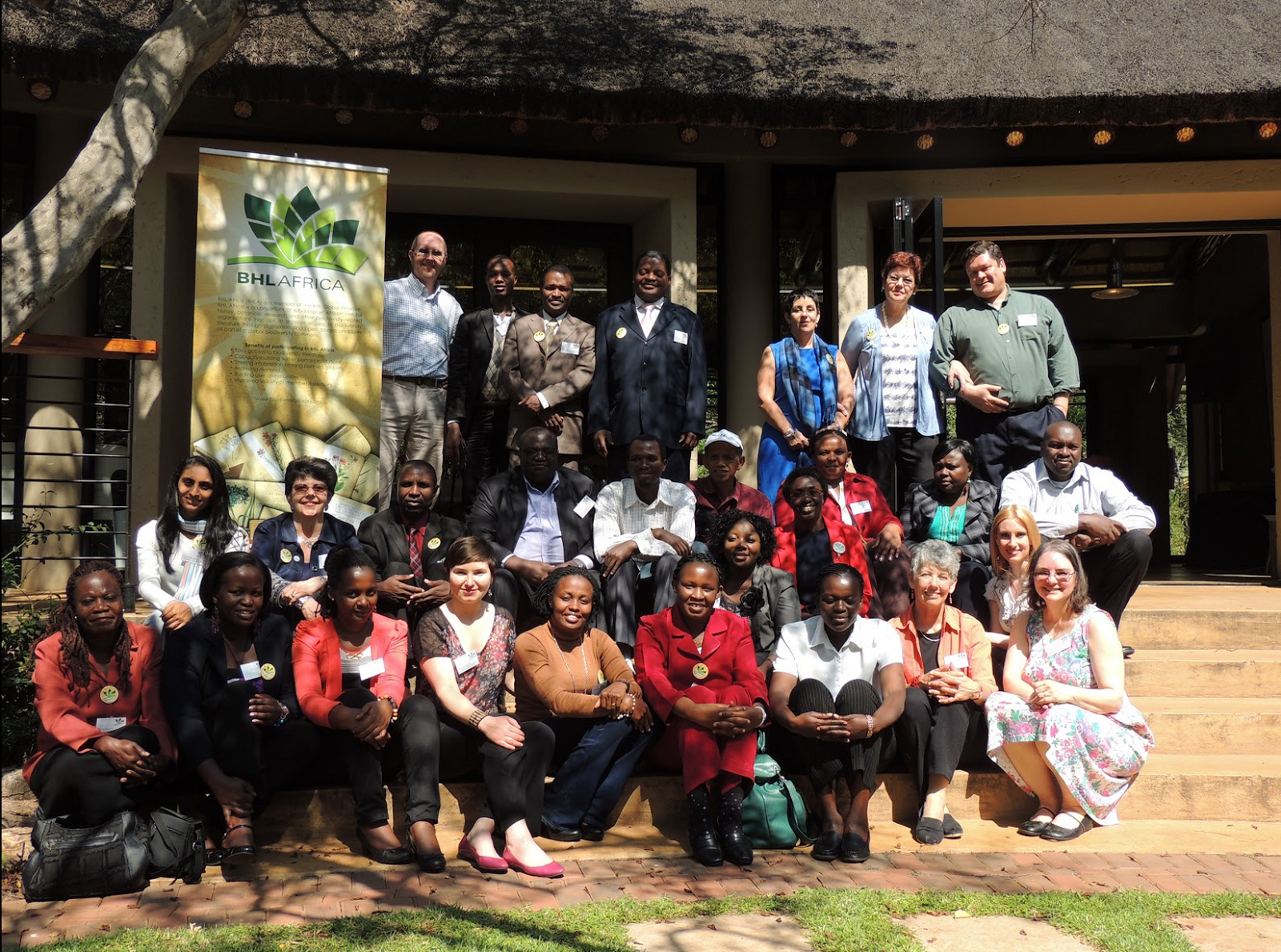
Group photo at the BHL Africa launch ceremony. Pretoria, South Africa. April, 2013.

Awarded to SANBI, this new grant will grow BHLA through assessment, collaboration, and digitization, resulting in a wealth of collections unique to African institutions being added to BHL. This new JRS support will allow BHLA to:

  • Conduct outreach to expand active BHLA participation through engagement with current members and recruitment of new participants
  • Improve communications and host workshops and trainings for 13 BHLA member institutions
  • Analyze the existing capacity for participation and content aggregation
  • Stabilize the governance of the organization and infrastructure through sustainability planning

In order to accomplish these objectives, Anne-Lise Fourie, Assistant Director of SANBI Libraries, Chair of BHLA and PI on the JRS Africa project, plans to survey current members and potential partners and conduct site visits to Kenya and Uganda to establish capacities and collection profiles. This information will help inform future trainings regarding identification of unique content for inclusion in BHL and the selection of digitization service providers.

Learn more about the project, planned outputs, and project staff on the BHL Africa web page on the JRS website.

We are also pleased to announce that BHL Africa has joined BHL as an Affiliate, following the example of BHL Singapore and BHL Mexico, which participate in BHL both as autonomous regional nodes and Members of the BHL. As an Affiliate, BHLA may participate in BHL committees, task forces, and working groups and will collaborate more extensively within the global BHL community. See a list of current BHL Members and Affiliates here.

We are thrilled at BHL Africa’s progress and look forward to witnessing the continued growth of the project.

Contributions from BHL Africa
 

View Full Size Image
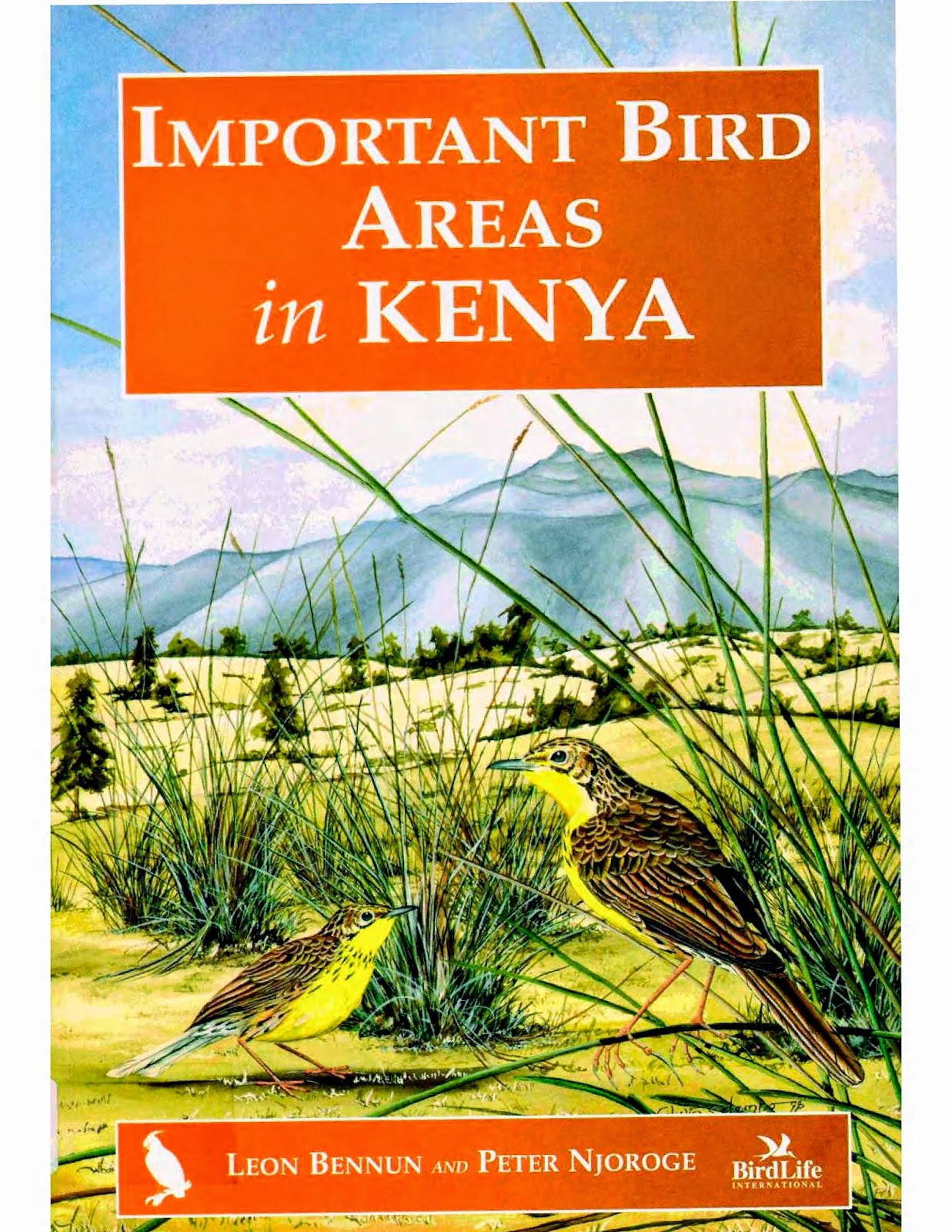
Important Birds Areas in Kenya. Contributed by Nature Kenya, East Africa Natural History Society for BHL Africa. http://biodiversitylibrary.org/bibliography/87589.

Current BHL Africa partner contributions to the BHL Collection include:

  • Publications from the South African National Biodiversity Institute
  • Articles and Publications from Nature Kenya, East Africa Natural History Society
  • The South African Institute for Aquatic Biodiversity’s “Ichthyological Papers of J.L.B. Smith 1931-1943”

February 11, 2015by ulib-libraryjobs
BHL News, Blog Reel

Building a BHL Africa

Portrait version of the Biodiversity Heritage Library logo.
View Full Size Image
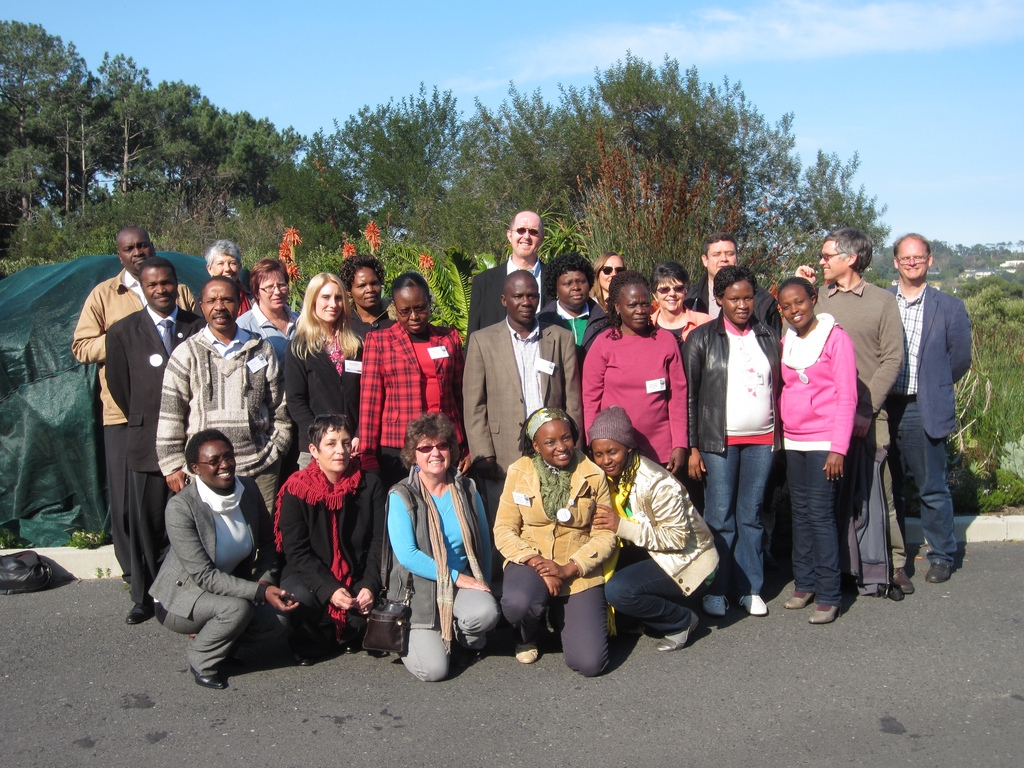
Participants at the BHL-Africa Meeting, June 14-15, 2012, Cape Town, South Africa.

The mission of the Biodiversity Heritage Library is to build an open access digital library of biodiversity literature for the world. For the past several years, the BHL has been building upon its global network of partners, and on June 14-15, 2012, over 25 librarians, scientists and information technology managers came together at Kirstenbosch National Botanical Garden to discuss the possibilities for developing a BHL node in Africa. This organization and planning meeting was generously funded by the JRS Biodiversity Foundation and was a direct follow up to the initial JRS funded meetings hosted by the Biodiversity Synthesis Center/Field Museum of Natural History in Chicago in November, 2011.

Six representatives from the BHL U.S./U.K. node were present to provide an introduction to the BHL, report on the current global environment and  lead important breakout discussions regarding various administrative and technical aspects of the BHL. As always, BHL staff actively promoted the project and generated the enthusiasm required to engage the participants. BHL Technical Director Chris Freeland (who unfortunately could not attend the meetings) created this excellent video to rally the meeting participants.

View Full Size Image
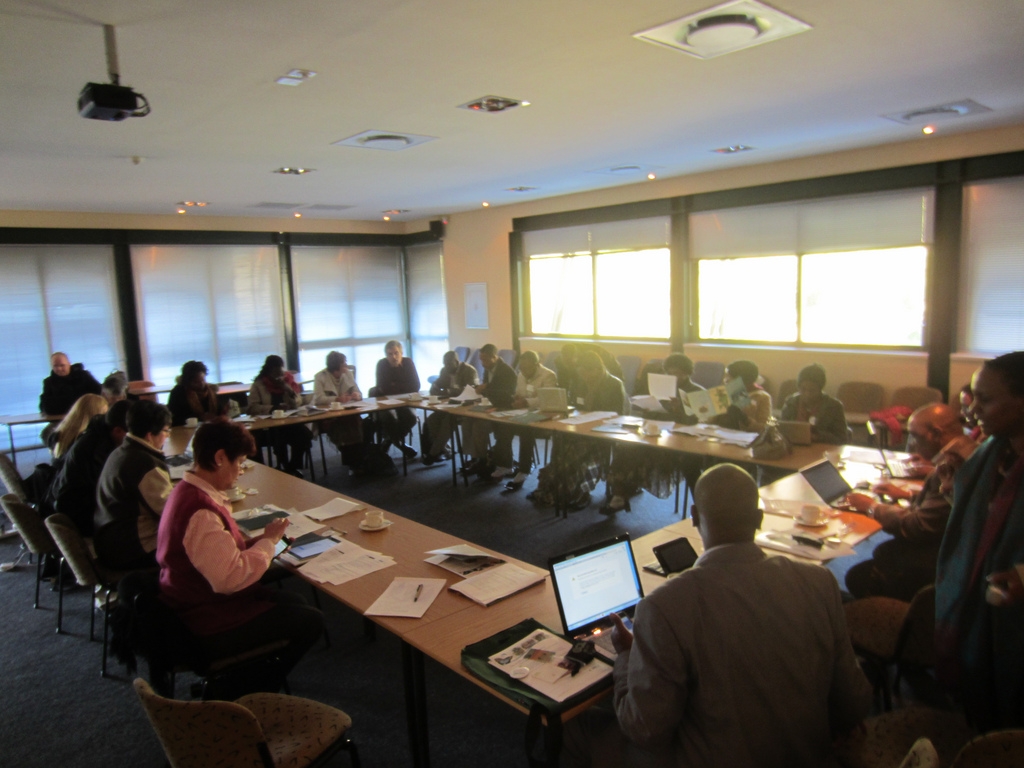
A working day at the BHL-Africa meeting.

The objectives for the two days of discussion included: the identification of the scope and magnitude of African biodiversity literature collections, the creation of a project plan for coordinated digitization, as well as identifying the local digitization capacity among the attendees’ institutions. The first day of discussion was focused upon learning more about the attendees’ backgrounds, the current digitization activities in their institutions and how the creation of a BHL Africa would impact their work or the work of others in their institutions. Grace Costantino, BHL Program Manager, Smithsonian Institution Libraries, and Christine Giannoni, Museum Librarian from the Field Museum, conducted several video interviews that you can view here.

View Full Size Image
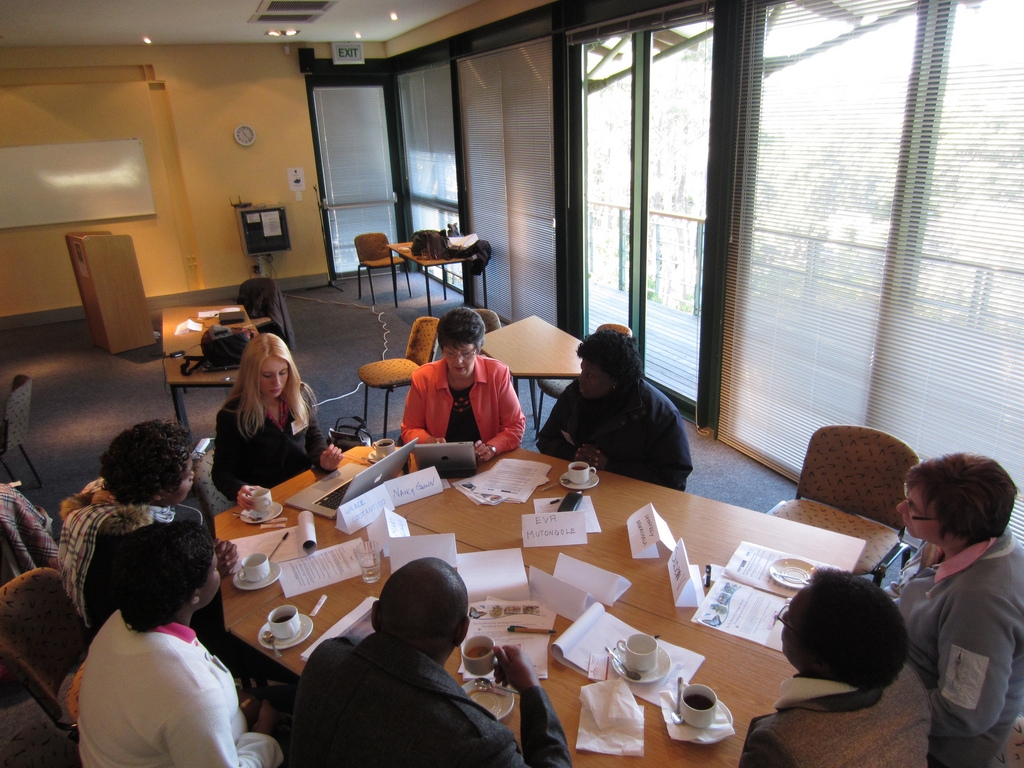
Nancy Gwinn leading the Governance Breakout Group.

The second day of discussion was divided into the following four breakout groups: Governance, led by Nancy Gwinn, Director, Smithsonian Institution Libraries; Infrastructure, led by William Ulate, Global BHL Project Manager, Missouri Botanical Garden; Scanning, led by Martin Kalfatovic, BHL Program Director, Smithsonian Institution Libraries; and Collaboration, led by Anne-Lise Fourie, Assistant Director, SANBI Libraries. These sessions really got down to “brass tacks” and identified the needs, strengths and opportunities among the various institutions. While the need for stable technological infrastructure was a common concern, it was noted that this was on a positive trajectory in several countries. Participants felt that their institutions hold a tremendous amount of materials that have not been digitized, including: gray literature, materials published in Africa with low distribution, as well as unpublished literature.

Several key themes emerged from the two days of discussion:

  • the desire for open access to scientific literature.
  • with people across the continent embracing mobile technology, these digitized resources must be adapted for mobile technology.
  • the “BHL in a Box” concept was highly desired. This would entail creating interactive CDs of BHL content for distribution in areas where internet access is unreliable or unavailable.

The meetings concluded with a high level of excitement and several tasks for moving BHL Africa forward. The ultimate long-term goal is to provide open access biodiversity literature to African researchers as well as to establish a BHL Africa project organized by Africans and operated in Africa. A “Concept Document” created by the Governance breakout group is being used as a basis for a Memorandum of Understanding (MOU). Participants hope to regroup at Stellenbosch University (in conjunction with Berlin 10) in fall 2012 to finalize an MOU and officially launch BHL-Africa.

Pictures courtesy Martin Kalfatovic

July 16, 2012by ulib-libraryjobs
BHL News, Blog Reel, User Stories

Life and Literature Conference Attendee Interviews: Part 5

Portrait version of the Biodiversity Heritage Library logo.

Today we feature the last 4 of 17 conference attendee interviews from the Life and Literature conference. We hope you’ve enjoyed this opportunity to see what those present at the conference had to say about it and BHL. You can see these and all other interviews on the Life and Literature website.

Don’t forget to share your thoughts about Life and Literature via our Titan Pad discussion pages, and also take a look at conference notes and speaker presentations on the website.

We would like to extend a special thanks to Jennifer Rubin, Matthew Regan, and Bianca Crowley for conducting these interviews, and to all those who participated and shared their valuable thoughts with us.

Karen Baker:

Matthew Person:

Vladimir Blagoderov:

Mary Ochs:

December 2, 2011by michelle.underhill
BHL News, Blog Reel, User Stories

Life and Literature Conference Attendee Interviews: Part 4

Portrait version of the Biodiversity Heritage Library logo.

Continuing with our theme, here are the next 4 of 17 conference attendee interviews from the Life and Literature conference. The first three feature recipients of the JRS African digitization scholarship, which funded the expenses of nine visitors from Africa to both attend the conference and an additional meeting on Wednesday (Nov. 16th) with the express purpose of discussing biodiversity literature digitization in Africa (expect more information on this meeting in a future post). The fourth interview is that of Dr. Jinzhong Cui, the director of BHL-China. All interviews are available on the Life and Literature website.

Don’t forget to share your thoughts about Life and Literature via our Titan Pad discussion pages, and also take a look at conference notes and speaker presentations on the website.

We would like to extend a special thanks to Jennifer Rubin, Matthew Regan, and Bianca Crowley for conducting these interviews, and to all those who participated and shared their valuable thoughts with us.

Dorothy Wanja Nyingi:

Ashah Owano:

Willem Coetzer:

Dr. Jinzhong Cui:

December 1, 2011by ulib-libraryjobs
BHL News, Blog Reel, User Stories

Life and Literature Conference Attendee Interviews: Part 3

Portrait version of the Biodiversity Heritage Library logo.

Now we present the next 3 of 17 conference attendee interviews from the Life and Literature conference. All of these interviews are available on the Life and Literature website.

Don’t forget to share your thoughts about Life and Literature via our Titan Pad discussion pages, and also take a look at conference notes and speaker presentations on the website. If you attended the Life and Literature conference, be sure to take the survey, which will be closing November 30th.

We would like to extend a special thanks to Jennifer Rubin, Matthew Regan, and Bianca Crowley for conducting these interviews, and to all those who participated and shared their valuable thoughts with us.

Natalia Zamora:

Alex Asase:

Marty Schlabach:

November 30, 2011by michelle.underhill
BHL News, Blog Reel, User Stories

Life and Literature Conference Attendee Interviews: Part 2

Portrait version of the Biodiversity Heritage Library logo.

Continuing with our posting of the Life and Literature conference attendee interviews, below you will find the next 3 out of the 17 interviews, all of which are available on the Life and Literature website.

Don’t forget to share your thoughts about Life and Literature via our Titan Pad discussion pages, and also take a look at conference notes and speaker presentations on the website. If you attended the Life and Literature conference, be sure to take the survey, which will be closing November 30th.

We would like to extend a special thanks to Jennifer Rubin, Matthew Regan, and Bianca Crowley for conducting these interviews, and to all those who participated and shared their valuable thoughts with us.

Ely Wallis:

Sue Ann Gardner:

Chris Wildrick:

November 29, 2011by michelle.underhill
BHL News, Blog Reel

Post Life & Literature: Themes and Outcomes

View Full Size ImageIf you happened to be living under a rock for the past two weeks and missed our blog posts, tweets, and posts on Facebook, you might have missed the fact that last week was the Life and Literature Conference, an event hosted by BHL with the express purpose of generating conversations about the priorities for biodiversity literature digitization, particularly as it pertains to BHL, for the next 4-5 years. The conference, which took place November 14-15, 2011, in Chicago, IL, brought together interested parties in a variety of disciplines, including science, education, informatics, and the humanities. Lively discussions and insightful presentations ensued both days, with dozens of live tweets (hashtag #lifelit) constantly streaming for those who could not participate in person.

The conference was divided into four panel discussions, followed on the second day by break-out sessions that allowed attendees to delve deeply into the various topics discussed during panel sessions, ultimately leading to an outline of the various areas deemed most important for BHL to focus on in the next 4-5 years. The four panel sessions included “Research, Informatics, and the Published Record;” “Publishers, Aggregators, and Authors – New Models and Access;” “Learning and Education;” and “Building Collaborative Networks for Science and the Humanities through Scientific Literature.” A synopsis of the four panels can be found on the Life and Literature site, as well as a list of each of the presenters and their biographies. Session presentations are being loaded to the BHL wiki and can be accessed on the Presentations page. Notes from the sessions can be found on the Life and Literature website. You can also view interviews of conference attendees on the website.

View Full Size ImageIn order to facilitate a discussion with the audience during panel and breakout sessions, BHL staff used an application called Titan Pad, which provides a collaborative environment that allows anyone to access a document to view, edit, or make comments in real time. There were Titan Pad pages for each of the panels and breakouts, and live notes, as well as live discussion, occurred via those avenues. These pages remain live, and we encourage anyone interested to continue the discussion in the weeks to come!

While many ideas and themes resulted from the discussion generated at the conference, perhaps the most recurring topic involved the connection between science and the humanities. Presentations by speakers at the Humanities panel highlighted some of the possible intersections between art and science, and each breakout session touched upon the various ways that BHL could partner with the humanities and make the biodiversity illustrations already in BHL more accessible. The BHL Flickr site, which currently houses more than 20,000 images, was a huge success, and attendees discussed additional ideas about how BHL could further promote its illustrations and engage the arts and humanities communities. Such ideas as specific image searching interfaces, image-specific collections, and collaborations with artist communities were discussed, and BHL staff outlined some art-related grant projects currently in the works.

The winner of the Life and Literature Code Challenge was also presented at the conference. The Code Challenge asked users to create applications that would use, disseminate, or display BHL data in new and meaningful ways. The winner? Ryan Schenk, with his application Synynyms. Synynyms works as a taxonomic name aggregator, finding all of the different names given to a species over the years and displaying the frequency of each name variety throughout history. The names are provided by the Encyclopedia of Life, and the publications come from, you guessed it, BHL! Congratulations to Ryan, and thanks for sharing such an awesome tool with us!

View Full Size ImageLast, but certainly not least, two new members of the BHL family were announced, Cornell University Library and the United States Geological Survey (USGS) Libraries. With these new members joining the fold the BHL consortium is now 14 members strong! Stay tuned for more information about BHL’s newest members to come in future posts.

The Life and Literature conference was also surrounded by a variety of other important BHL meetings, including a BHL Global Meeting (see previous post on the event), a BHL Staff meeting, and a meeting devoted to a discussion on the digitization of biodiversity literature in Africa. Watch for posts on the latter two meetings in the days to come.

As we think about the outcomes of the conference, we are excited to explore the possibilities for the future and inform our development through user feedback. For BHL to serve its purpose, it must meet the needs of its user community, and events like Life and Literature allow us to gather and assess those needs. However, if you couldn’t make it to Life and Literature, or if you did but still have more thoughts on BHL’s future, you can still share them! Contribute your ideas through our Titan Pad discussions, by submitting feedback to our website, or posting your ideas via twitter (@biodivlibrary) and Facebook! We’re waiting to hear from you, and thanks to everyone who made Life and Literature such an exciting and successful venture!

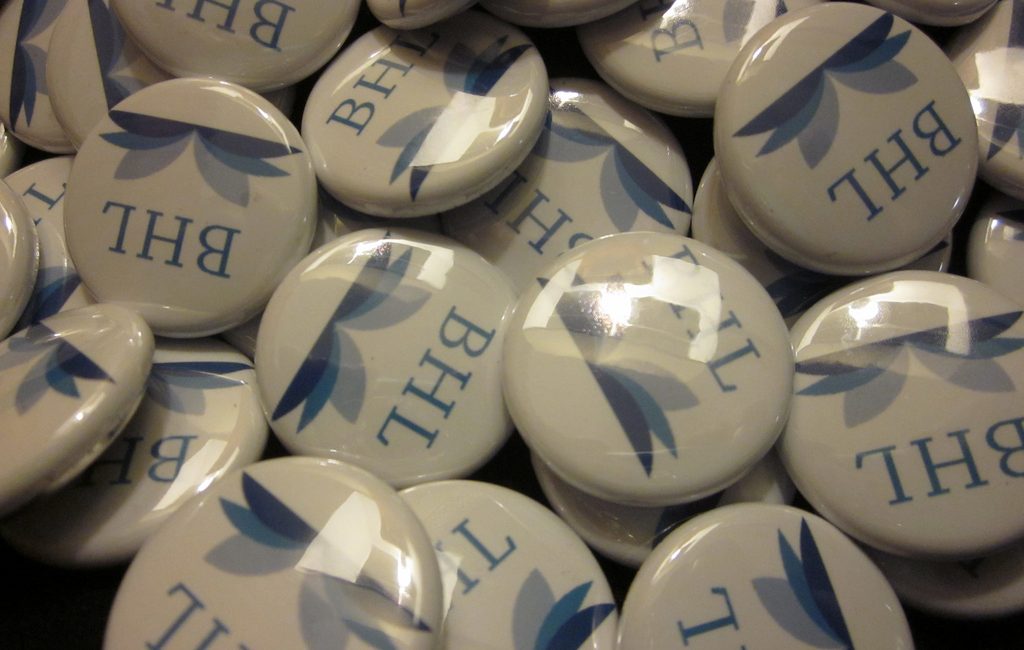
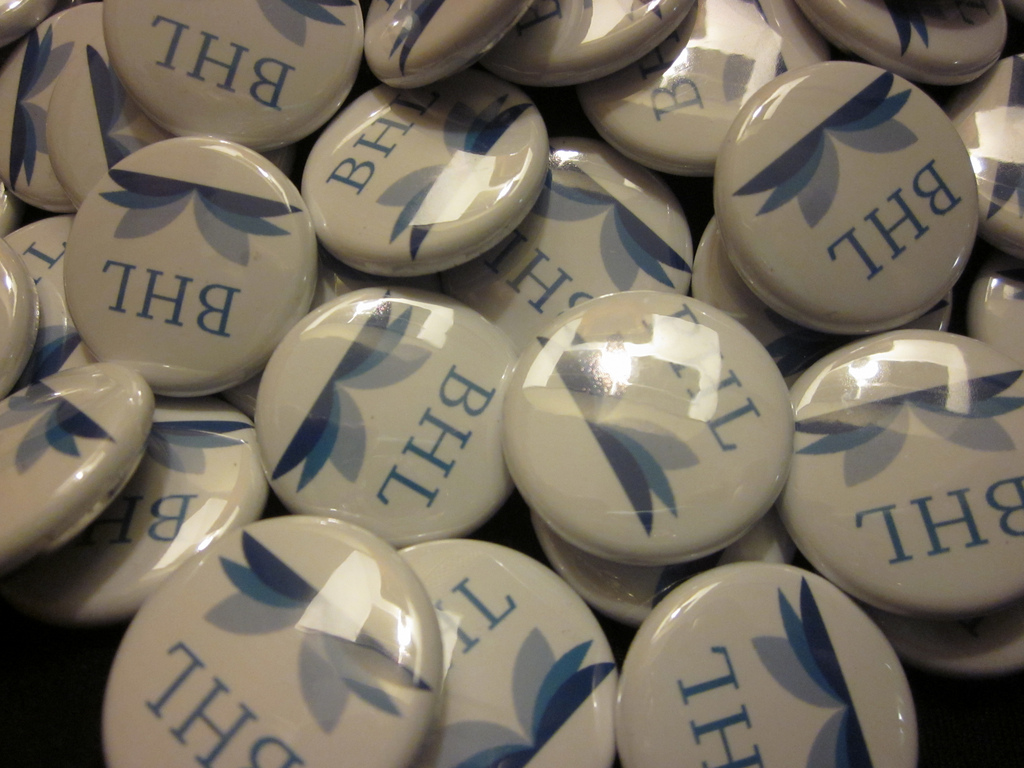
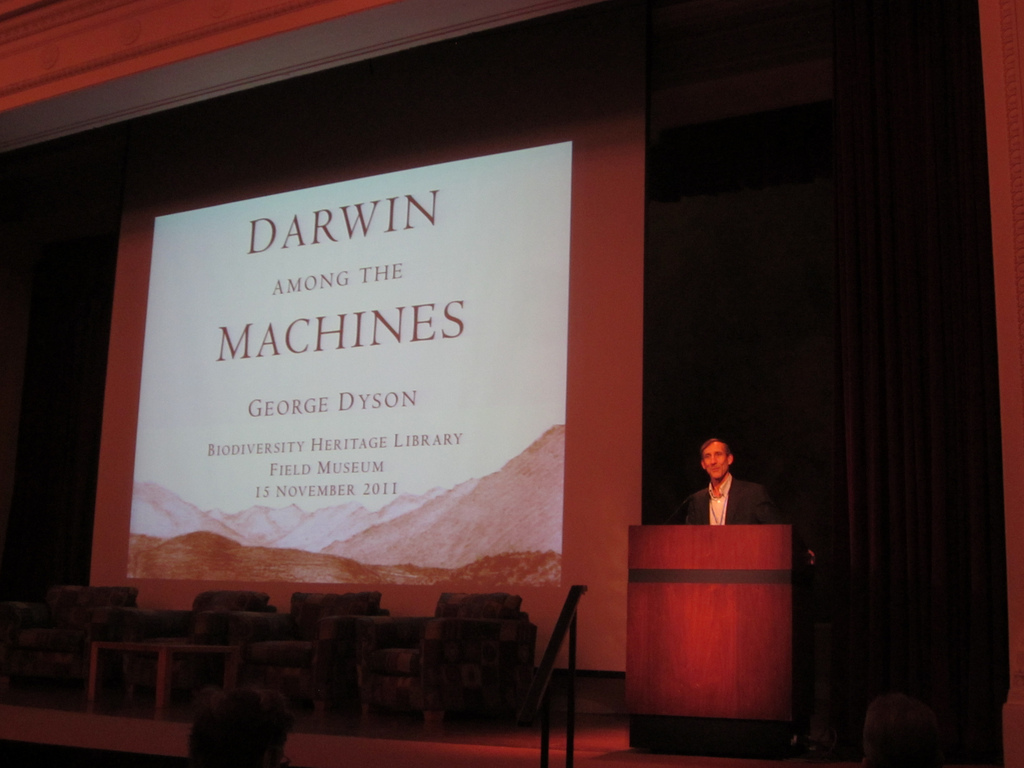
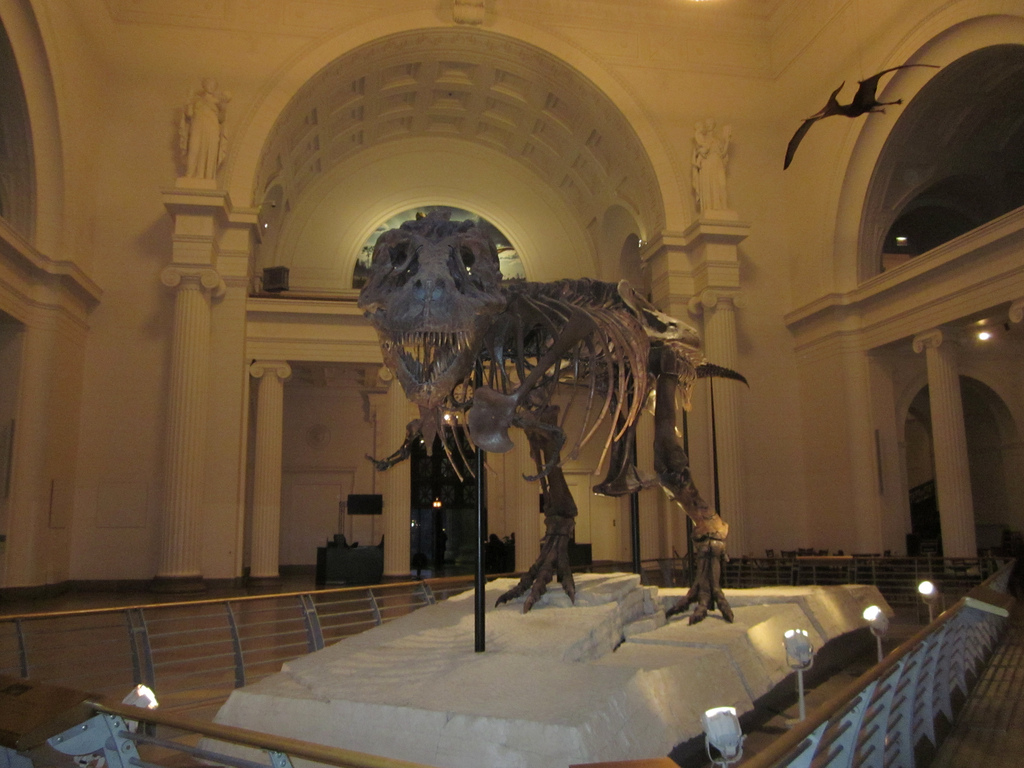
(Images: All images courtesy Martin Kalfatovic. Top: BHL Buttons presented at the Life and Literature Conference; Middle: George Dyson delivering the second plenary speech at Life and Literature; Bottom: SUE – the largest, most complete T-Rex skeleton ever discovered, on display at the Field Museum, the Life and Literature Conference venue)

November 22, 2011by Grace Costantino
Page 1 of 212»

Help Support BHL

BHL's existence depends on the financial support of its patrons. Help us keep this free resource alive!

search

About BHL

The Biodiversity Heritage Library (BHL) is the world’s largest open access digital library for biodiversity literature and archives. BHL operates as a worldwide consortium of natural history, botanical, research, and national libraries working together to digitize the natural history literature held in their collections and make it freely available for open access as part of a global “biodiversity community.”

Join Our Mailing List

Sign up to receive the latest news, content highlights, and promotions.

Subscribe Now

Subscribe to Blog via Email

Enter your email address to subscribe to this blog and receive notifications of new posts by email.

Join 319 other subscribers

Subscribe to Blog Via RSS

Subscribe to the blog RSS feed to stay up-to-date on all the latest BHL posts.

Access RSS Feed

Inspiring Discovery through Free Access to Biodiversity Knowledge.

The Biodiversity Heritage Library makes it easier than ever for you to access the information you need to study and explore life on Earth…for free, anytime, anywhere.


64+ Million Pages of
Biodiversity Literature Online.

EXPLORE

Tools and Services
to Transform Research.

EXPLORE

300,000+
Illustrations on Flickr.

EXPLORE

ABOUT | HARMFUL CONTENT | PRIVACY | SITE MAP | TERMS OF USE