 |
| Renard, Louis. Poissons, ecrevisses et crabes. 1754. Digitized by the Ernst Mayr Library, Museum of Comparative Zoology, Harvard University. http://biodiversitylibrary.org/page/50095135. |
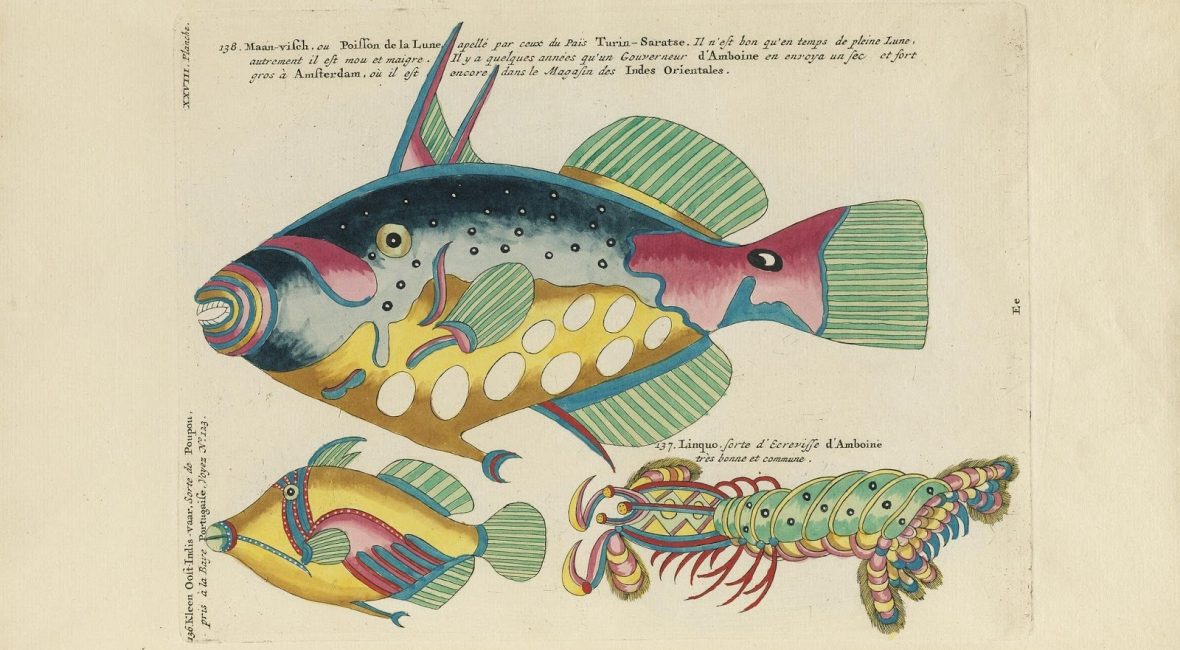
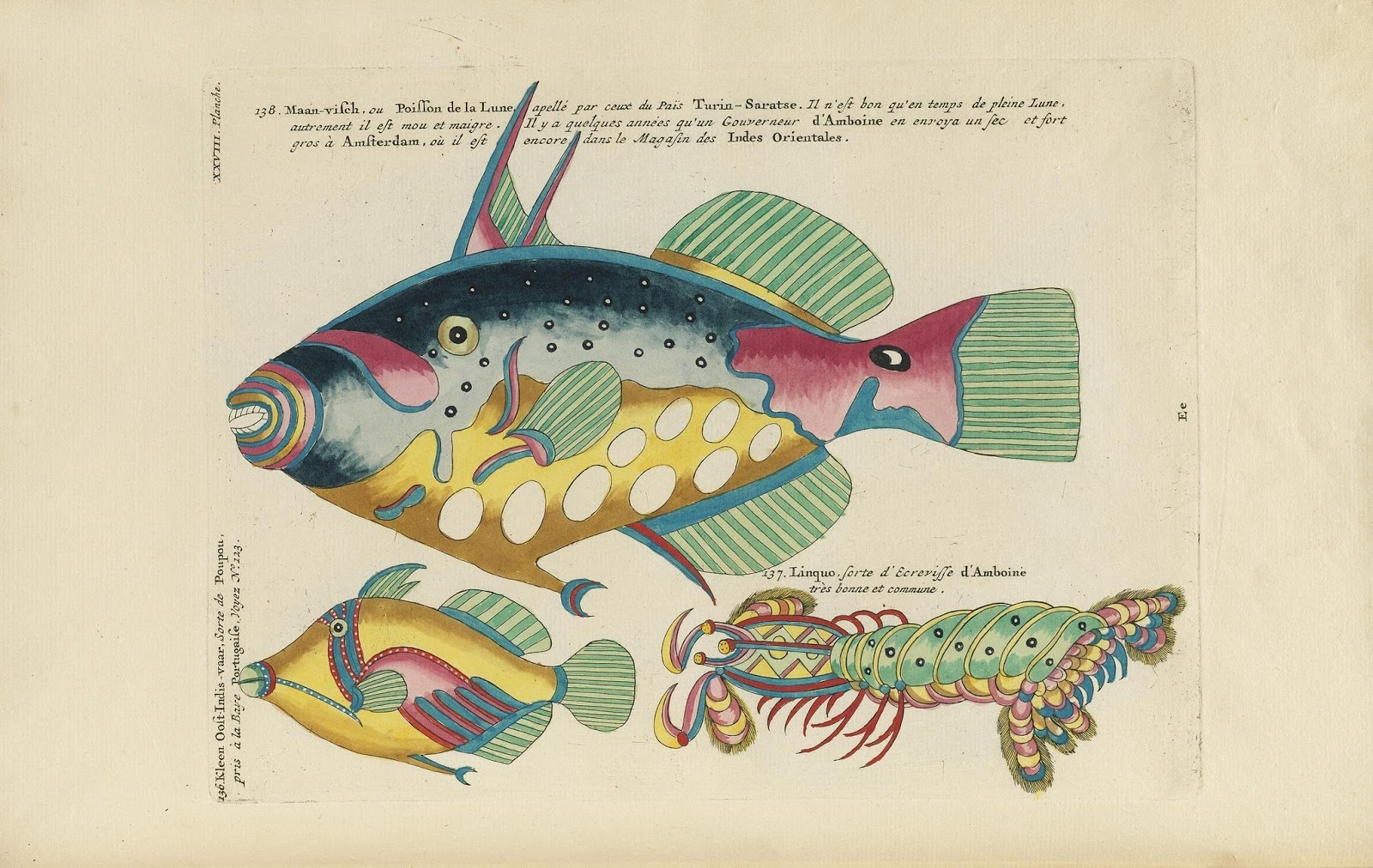
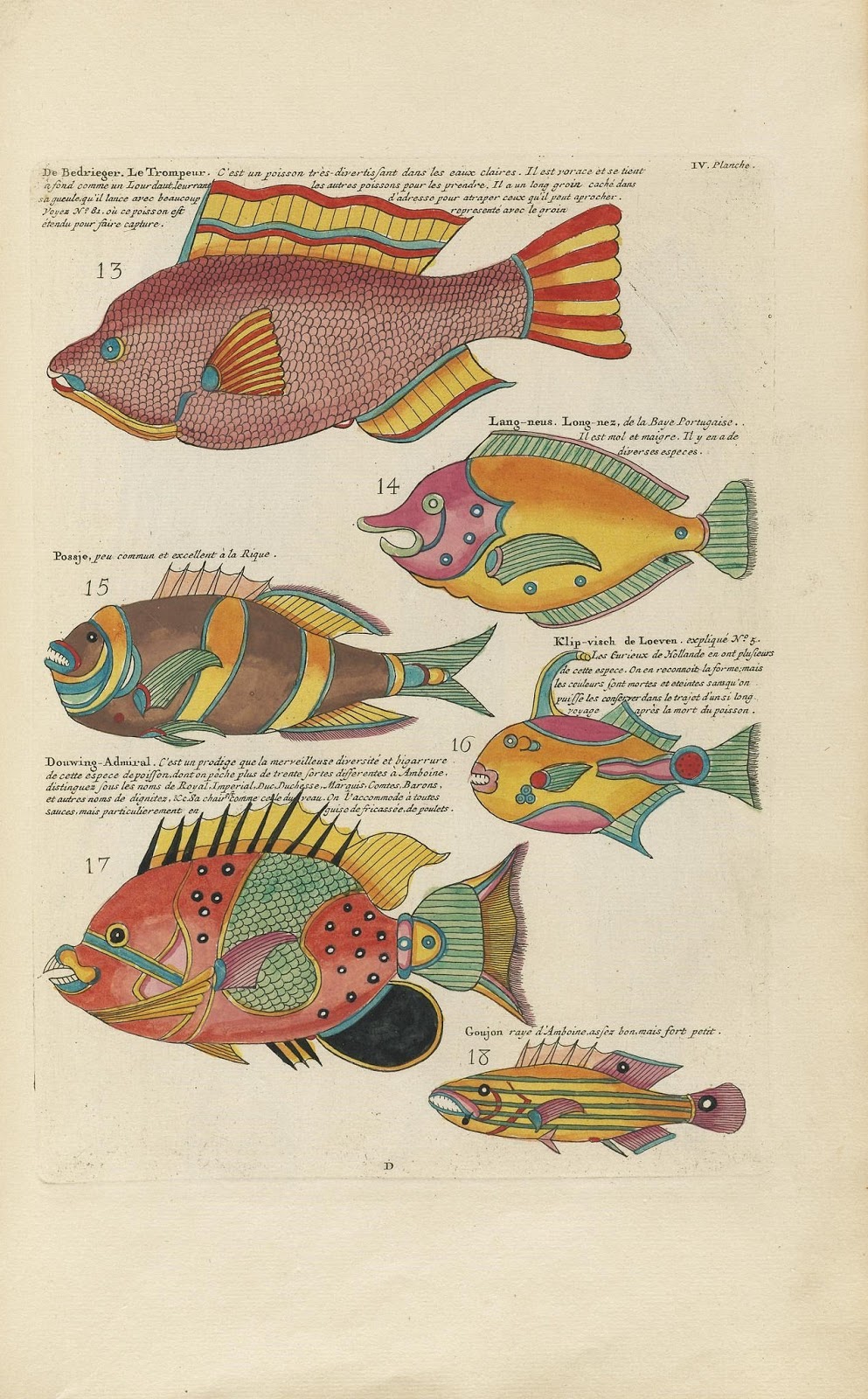
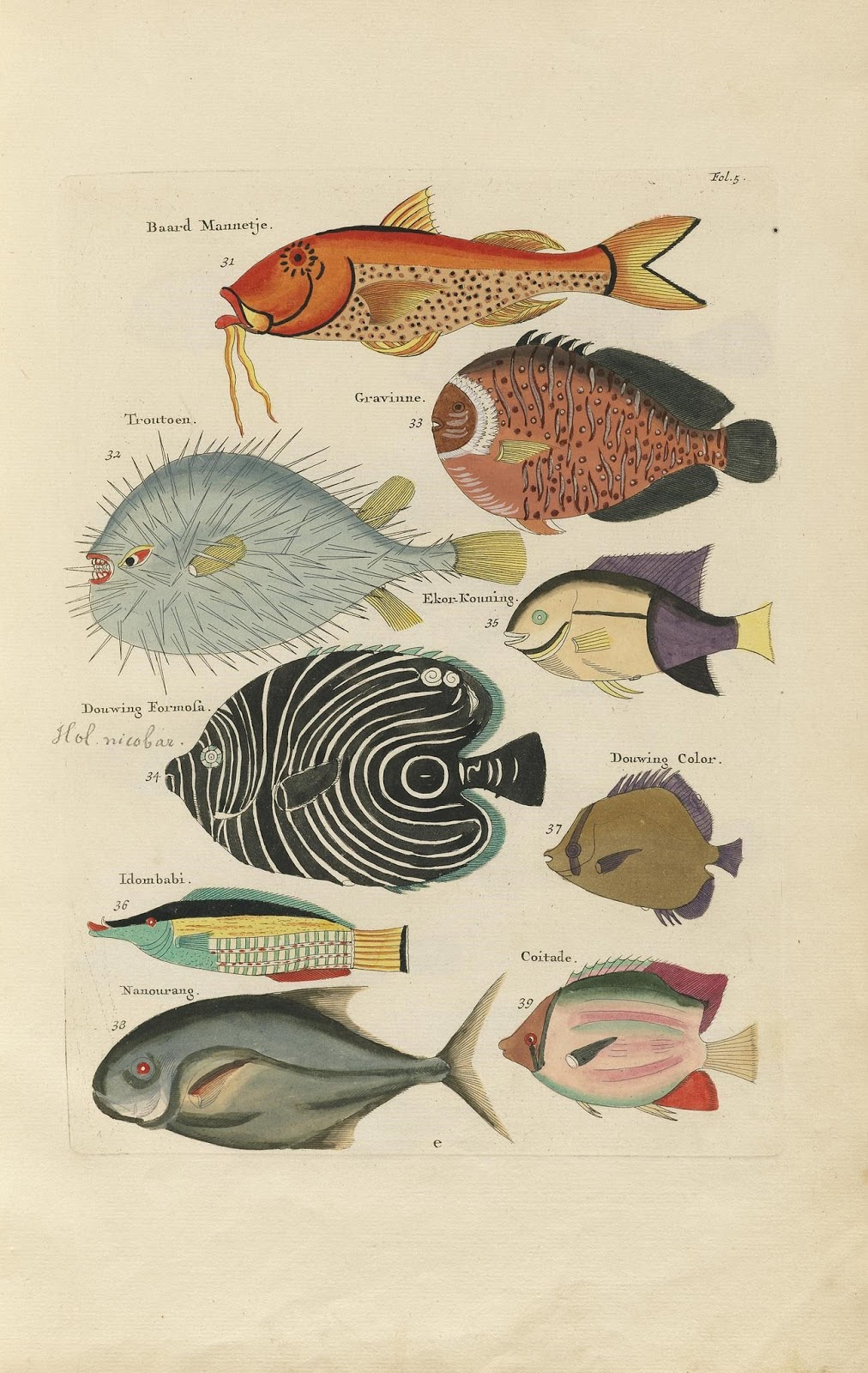
You may not recognize all (or even many) of the East Indian marine species portrayed in the first known book on fish to be published in color. Don’t worry. It’s not a lack of ichthyological proficiency on your part. Rather, it’s because all of the species depicted in Louis Renard’s Poissons, ecrevisses et crabes received some level of artistic embellishment – and approximately 9% are completely fantastical.
If that’s not strange enough, the work is produced by a man who identified himself as a “secret agent on behalf of the British Crown” and contains a portrait of a mermaid.
 |
| Renard, Louis. Poissons, ecrevisses et crabes. 1754. Digitized by the Ernst Mayr Library, Museum of Comparative Zoology, Harvard University. http://biodiversitylibrary.org/page/50095087. |
These facts might lead you to conclude that Poissons, ecrevisses et crabes, de diverses couleurs et figures extraordinaires, que l’on trouve autour des isles Moluques et sur les côtes des terres Australes has little scientific value. But in that assumption, you’d be wrong.
Besides being the first published book in color about fish, in a 2012 article published in Natural Histories, Mai Reitmeyer, Research Services Librarian at the American Museum of Natural History, writes that this work is “an important part of the scientific literature of the eighteenth century, the new Age of Enlightenment” (Reitmeyer, 33).
According to Theodore W. Pietsch, an ichthyologist who conducted an examination of the title in the late twentieth century and whom Reitmeyer quotes in her article, Renard’s publication “gives us an intriguing glimpse of what science was like in the late seventeenth and early eighteenth centuries” and thus “to cast the work off as being without scientific merit is to greatly underestimate its value” (Reitmeyer, 34). What’s more, since the waters surrounding Ambon Island in Indonesia, where many of the depicted species were found, is now a heavily polluted ecosystem, it’s likely that the biodiversity in the area has changed since Renard’s publication. Thus, the fauna depicted in Poissons, ecrevisses et crabes, around 90% of which, according to Pietsch, can be identified down to the species, genus, or family level, can offer an important historical perspective on marine diversity in the region (Barley, 2010).
 |
| Renard, Louis. Poissons, ecrevisses et crabes. 1754. Digitized by the Ernst Mayr Library, Museum of Comparative Zoology, Harvard University. http://biodiversitylibrary.org/page/50095031. |
As Reitmeyer recounts in her article, Renard was born in France sometime around 1678 but, to escape religious persecution, immigrated to the Netherlands with his family around the turn of the century and eventually became a citizen of Amsterdam. Encouraged by his father-in-law, Renard became a book dealer and publisher and, in 1718 or 1719, produced the first volume of the first edition of his most famous work, Poissons, ecrevisses et crabes, the full title of which translates to “Fishes, crayfishes and crabs, of diverse colors and extraordinary forms, which are found around the islands of the Moluccan and on the coasts of southern lands.”
While the work may depict over 450 fish and crustacean species from the East Indies, Renard published the work without ever leaving the Netherlands. Instead, he copied drawings by other artists to create the 100 plates, representing 460 hand-colored copper engravings, for his publication.
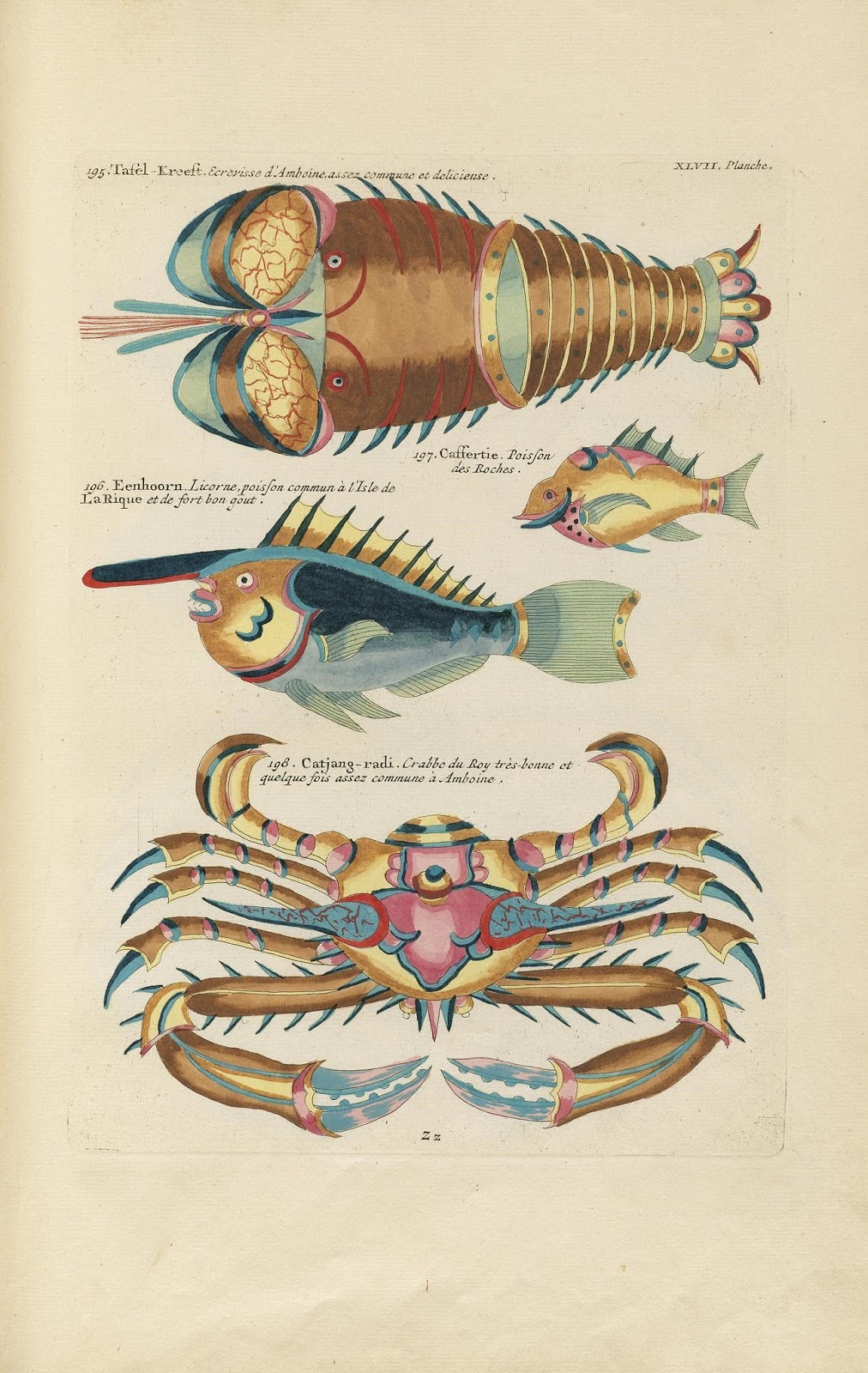 |
| Renard, Louis. Poissons, ecrevisses et crabes. 1754. Digitized by the Ernst Mayr Library, Museum of Comparative Zoology, Harvard University. http://biodiversitylibrary.org/page/50095173. |
Dutch artist Samuel Fallours, a soldier stationed in Ambon with the Dutch East India Company, painted a great many of the drawings that Renard copied for this work. During his time in Ambon, Fallours created many drawings of East Indian marine life that later appeared in several eighteenth century publications, including Renard’s.
According to Pietsch, Fallours likely included elements of the fantastical in his drawings in order to attract the European collectors who purchased his works (Barley, 2010). These embellishments ranged from artificially bright and randomly applied colors to total fabrications, including a portrait of a mermaid, which also appeared amongst an arrangement of exotic East Indian biodiversity published in Francois Valentijn’s Oud en Nieuw Oost-Indien (1724−1726).
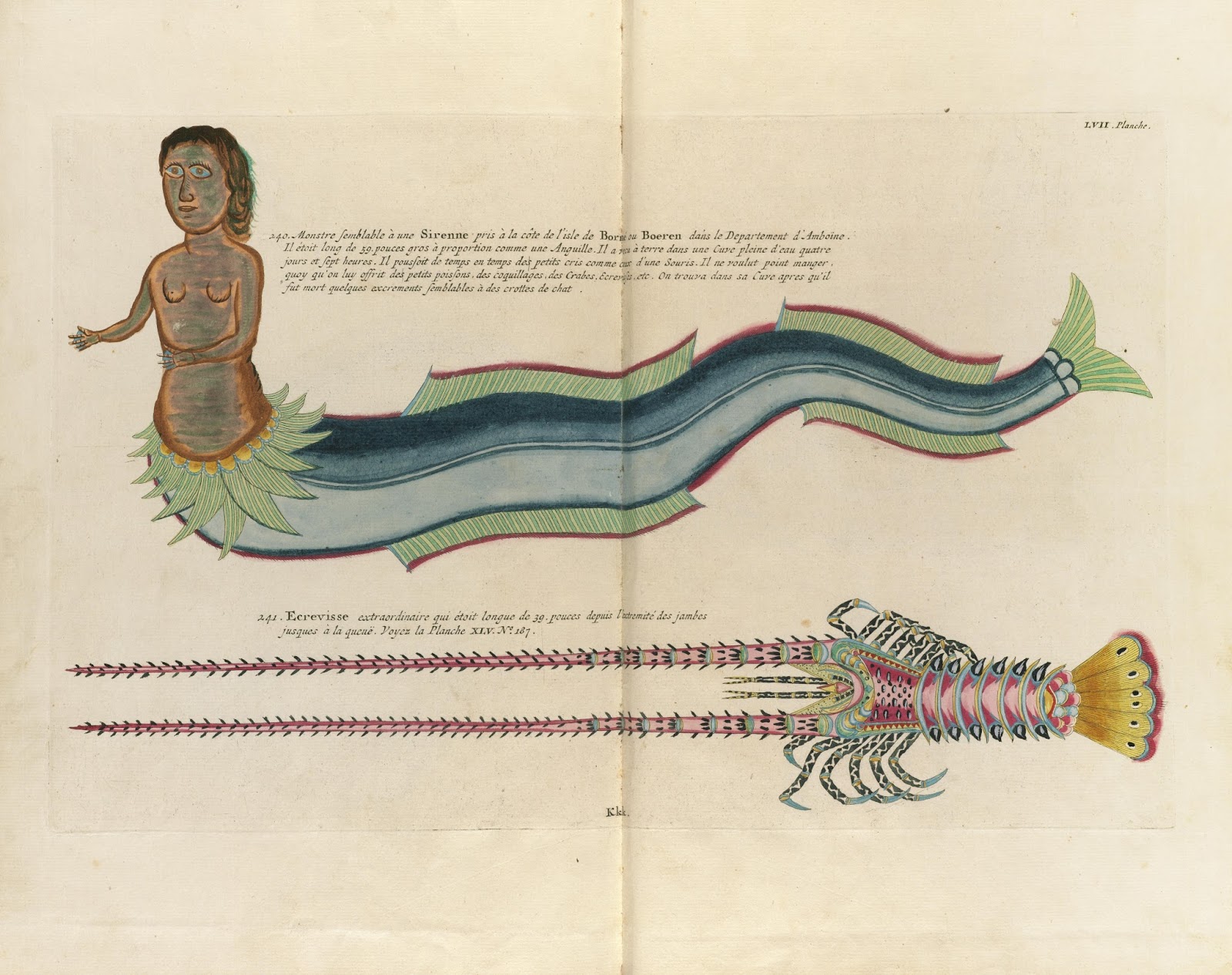 |
| Portrait of a mermaid by Samuel Fallours. Renard, Louis. Poissons, ecrevisses et crabes. 1754. Digitized by the Ernst Mayr Library, Museum of Comparative Zoology, Harvard University. http://biodiversitylibrary.org/page/50095192. |
Poissons, ecrevisses et crabes was published in three different editions. Only sixteen copies of the first, published in 1718 or 1719, are known to exist. Thirty-four copies are known of the second edition, published in 1754. The rarest edition, with only six known copies, is the third, published in 1782 but never completed (Reitmeyer, 33).
Thanks to Ernst Mayr Library of the Museum of Comparative Zoology at Harvard University, you can view the second edition of Renard’s work for free in BHL. And if this article hasn’t piqued your curiosity quite enough to click on the link, let’s not forget the “secret agent” aspect mentioned earlier!
In what was likely a marketing ploy to boost sales, the dedication statement within Poissons, ecrevisses et crabes identifies Renard as a “secret agent on behalf of the British Crown.” What’s the story behind this claim? According to Reitmeyer, Renard was employed by George I and George II to search “ships leaving Amsterdam to prevent arms from reaching James Stuart, the Roman Catholic ‘Old Pretender’ to the British throne” (Reitmeyer, 33).
Fantasy, intrigue, and science. What’s not to love about Poissons, ecrevisses et crabes?
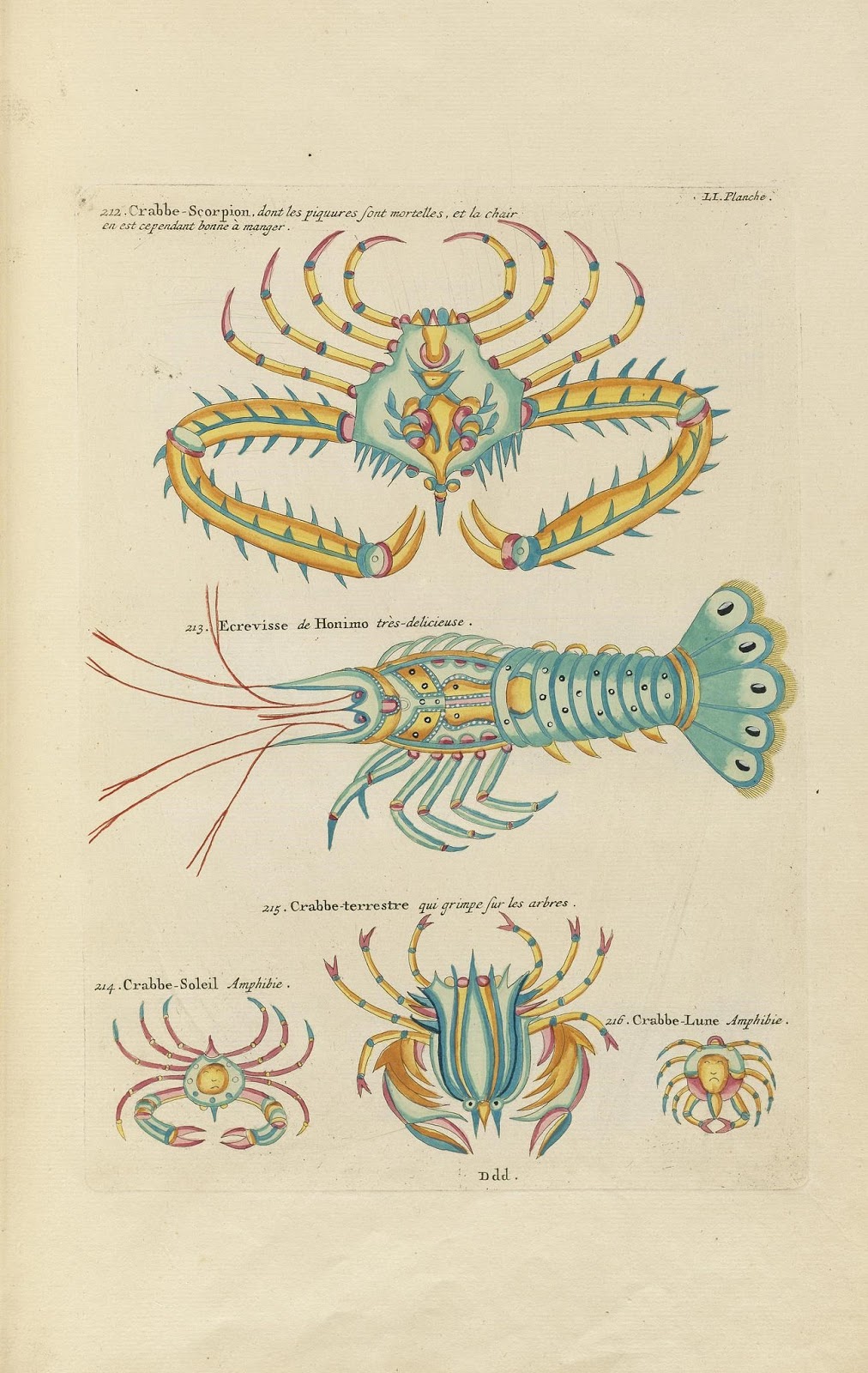 |
| Renard, Louis. Poissons, ecrevisses et crabes. 1754. Digitized by the Ernst Mayr Library, Museum of Comparative Zoology, Harvard University. http://biodiversitylibrary.org/page/50095181. |
You can view the images from this work in Flickr. You can also find products featuring images from this title in our CafePress store. 100% of the proceeds will be used to digitize more books for BHL. Start shopping today!
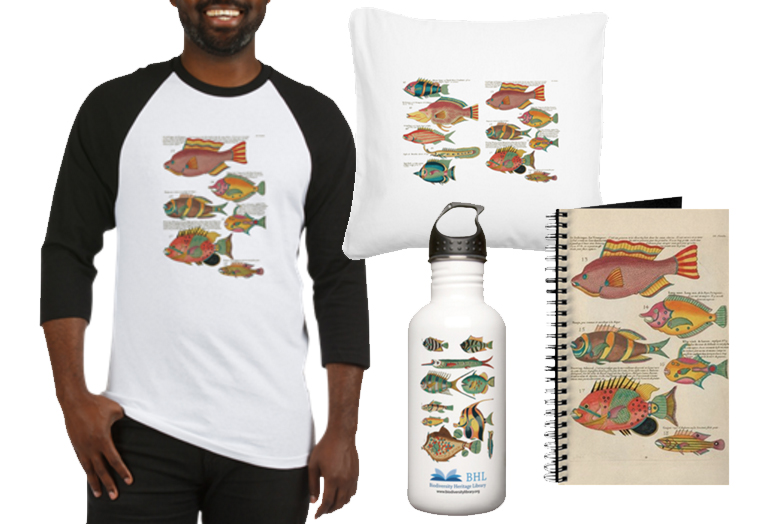 |
| Selection of products in the BHL CafePress featuring images from Renard’s Poissons, ecrevisses et crabes. 100% of proceeds will be used to digitize more books for BHL. |
REFERENCES
- Reitmeyer, Mai Qaraman (2012). Louis Renard and His Book of Extraordinary Creatures. Natural Histories: Extraordinary Rare Book Selections from the American Museum of Natural History Library (pp. 33-34). New York: Sterling Publishing.
- Barley, Shanta (2010). Samuel Fallours and His Fantasy Fish. New Scientist: Culture Lab. https://www.newscientist.com/blogs/culturelab/2010/06/samuel-fallours-and-his-fantasy-fish.html. Accessed 29 July 2016.