Biodiversity Heritage Library - Program news and collection highlights from BHL
  • Home
  • News
  • Featured Books
    • All Featured Books
    • Book of the Month Series
    • BHL at 20
  • User Stories
  • Campaigns
    • Fossil Stories
    • Garden Stories
    • Monsters Are Real
    • Page Frights
    • Her Natural History
    • Earth Optimism 2020
  • Tech Blog
  • Visit BHL
Home
News
Featured Books
    All Featured Books
    Book of the Month Series
    BHL at 20
User Stories
Campaigns
    Fossil Stories
    Garden Stories
    Monsters Are Real
    Page Frights
    Her Natural History
    Earth Optimism 2020
Tech Blog
Visit BHL
  • Home
  • News
  • Featured Books
    • All Featured Books
    • Book of the Month Series
    • BHL at 20
  • User Stories
  • Campaigns
    • Fossil Stories
    • Garden Stories
    • Monsters Are Real
    • Page Frights
    • Her Natural History
    • Earth Optimism 2020
  • Tech Blog
  • Visit BHL
Biodiversity Heritage Library - Program news and collection highlights from BHL
BHL News, Blog Reel

Q: How many BHL’s can you fit into a single meeting?

A: 3

cbhlgroup.jpg

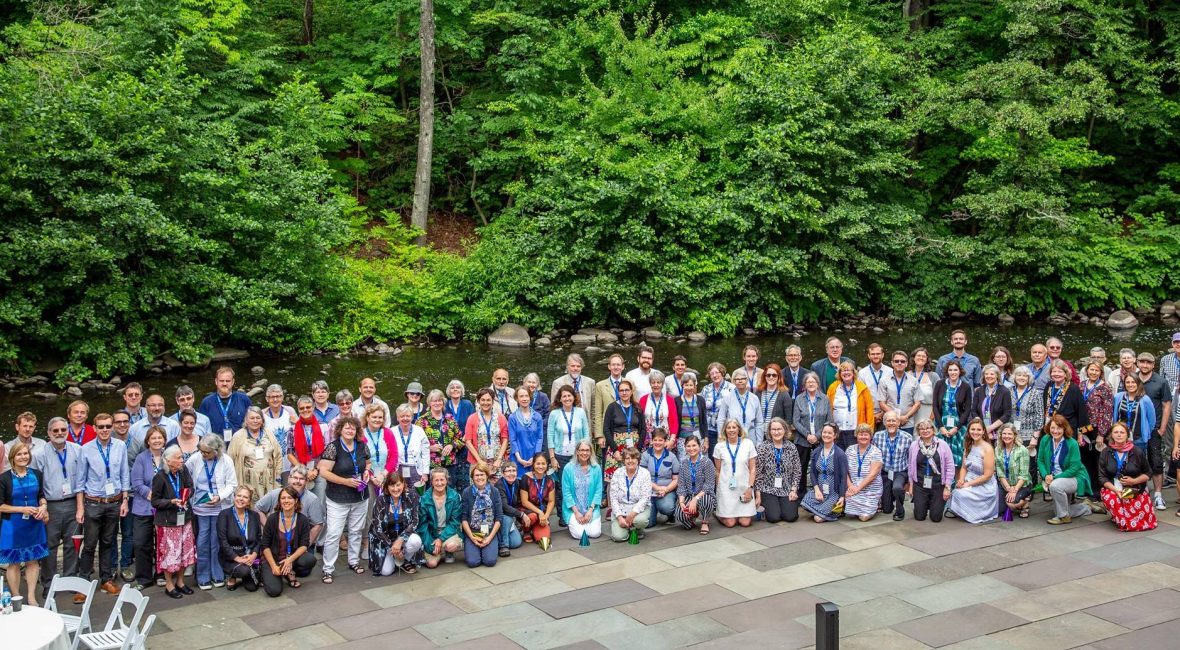
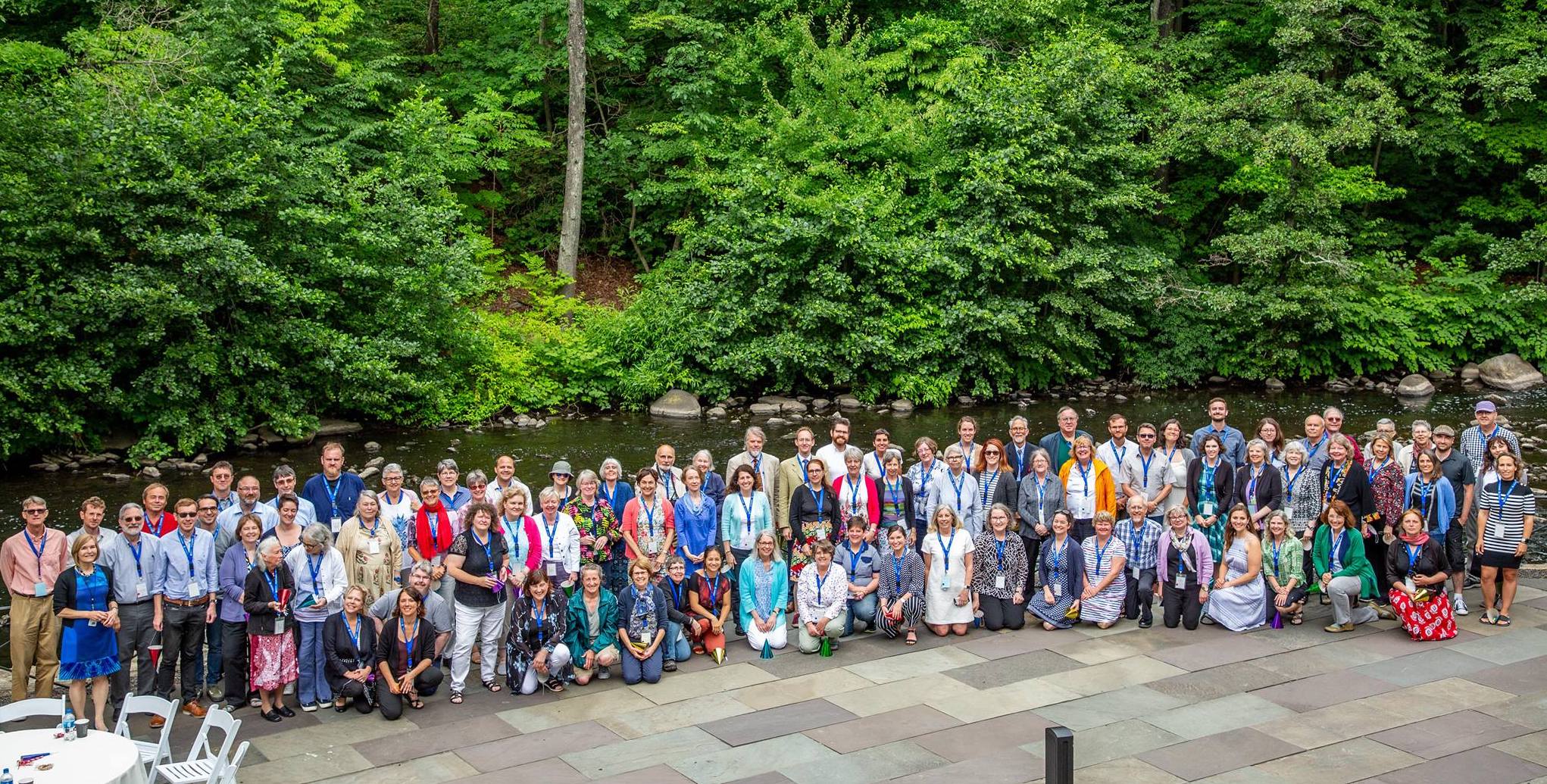
Group photo of CBHL, EBHL, and Linnaeus Link Annual Meeting attendees

As in CBHL (host) + EBHL (host) + BHL (attendees) but there’s always room for more…especially if they are like this group of Brilliant Happy Librarians!

Back in June I attended the 50th Annual Meeting of The Council on Botanical and Horticultural Libraries (CBHL) which was also host to the 25th anniversary meeting of the European Botanical and Horticultural Libraries Group (EBHL) as well as the 22nd annual meeting of Linnaeus Link partners. The theme of the meeting was “Botanical and Horticultural Libraries in the Modern Era: Training and Vision for the Future” and it encouraged its attendees to “[discuss] how technology has united us and what the future holds in store for us as we enter the new millennium.” The joint meeting was held between the New York Botanical Garden and the Brooklyn Botanic Garden. Presentations centered around new or revamped digitization projects, implementing electronic access to materials as well as initiatives to better integrate library and archival materials into research discovery systems.

The meeting showcased a variety of digital collections that were new to me such as the Linnean Society’s Online Collections of specimens, manuscripts, correspondence, paintings, and books, many of which were collected, annotated, or written by Linneaus himself! The Royal Horticultural Society’s Lindley Library also gave a presentation about the digitization of its special collections and Fiona Ainsworth of Royal Botanic Gardens Kew shared about the latest projects in her library to digitize rare Chinese illustrations and catalog the Miscellaneous Reports collection in their archives. I was particularly excited to learn about upcoming plans to update the Real Jardín Botánico de Madrid’s Biblioteca Digital for the future.

There were also fascinating presentations on various research projects that made intensive use of the very collections CBHL and EBHL have represented within their organizations. Maura Flannery‘s talk Plants in the Library: The Johannes Harder Herbarium detailed her study of Harder’s 16th century, multi-volume compendium known as a Herbarium vivum. This rare work on botanical collection from German localities was composed by pressing plant specimens directly into the book and illustrating those parts which would not press well such as bulky seeds or stalks. While Maura had the unique chance to see one of these works in person, the rest of us are fortunate enough to have access to this digital copy thanks to the Bayerische StaatsBibliothek. Inspired by the vasculum left to her by her grandmother, Régine Fabri presented on the history of the botanical collecting object. And Eric Sanderson set the perfect backdrop to the meeting by opening it with a discussion of his work on The Welikia Project to detail New York City’s rich ecological history compared with its present urban environment block by block!

This year CBHL honored the work of Susan Fraser, Director of The LuEsther T. Mertz Library of the New York Botanical Garden, with the Charles Robert Long Award of Extraordinary Merit. Knowing Susan for my nearly 10 years with BHL it was no surprise to see her receive this award for her exemplary leadership and dedication to improving the global, digital and scholarly impact of the profession. Congratulations Susan!

Besides the fact that CBHL organization draws on my roots working in the U.S. National Herbarium along with my love of librarianship, a critical purpose of attending this year’s meeting was to network with BHL colleagues from 11 (yes, 11!) of our partner organizations. I had the opportunity to get some face time with colleagues from Botany Libraries/Harvard University, Chicago Botanic Garden, Los Angeles County Arboretum and Botanic Garden, Missouri Botanical Garden, Museum national d’Histoire naturelle, National Agricultural Library, New York Botanical Garden, and Royal Botanic Gardens Kew, as well as our newest Affiliate partners from the Lloyd Library and Museum, Oak Spring Garden Foundation, and University Library Johann Christian Senckenberg. Indeed CBHL, EBHL, and BHL share much more in common than just our acronyms.

The CBHL-EBHL-Linnaeus Link Annual Meeting reminded me of the importance of nurturing a community of like-minded professionals around shared values and interests. Through these communal experiences, botany and horticulture librarians and researchers enrich their ability to support and disseminate relevant resources, including best practices and digital collections. Working almost exclusively in the virtual digital library world, I forget that sometimes the quickest way to exchange information is face to face as it is a deeper impression of knowledge understood and more likely remembered, than the ephemeral information received via electronic exchange. It is truly an enjoyable group that I hope to be able to meet again at future annual meetings.
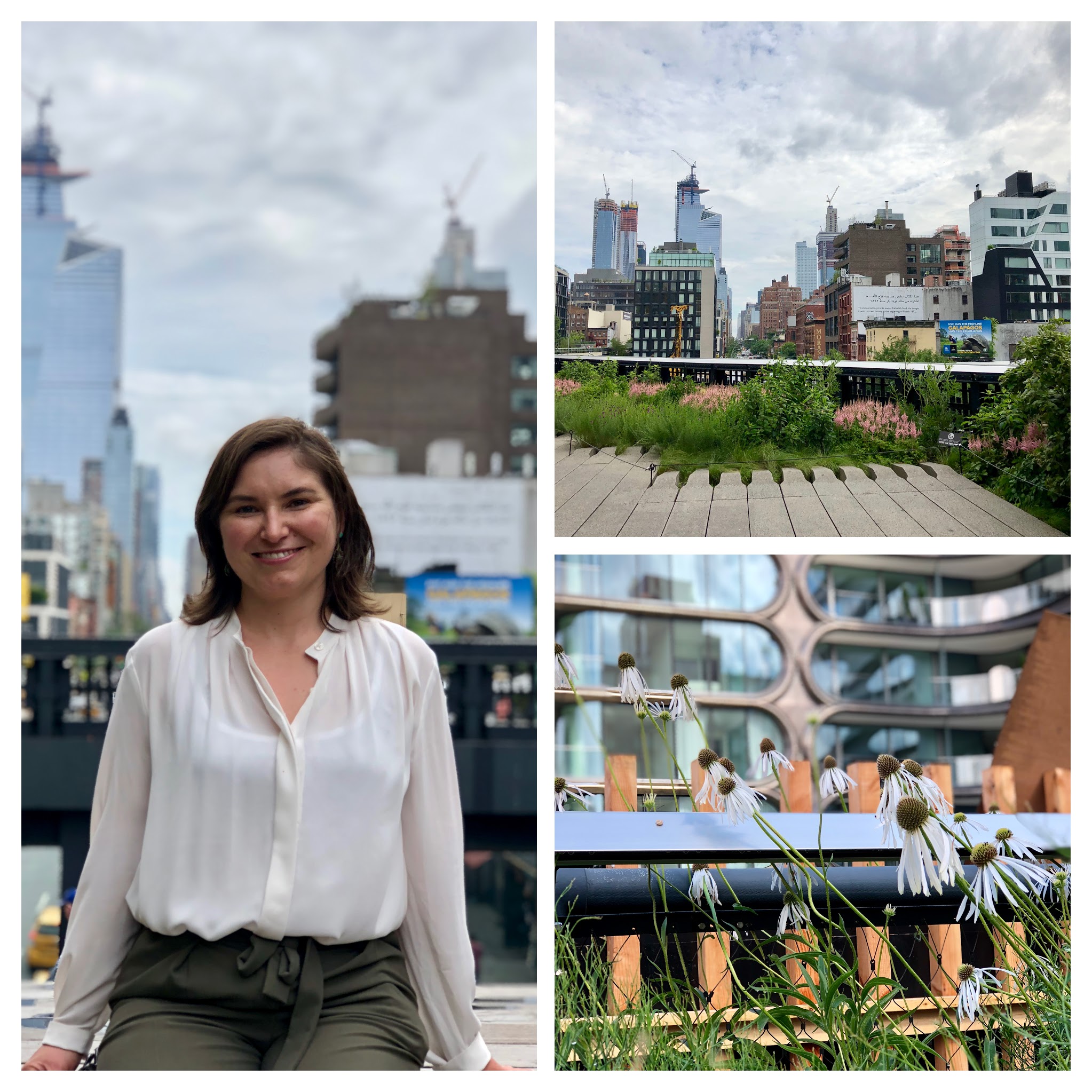
IMG_6756-COLLAGE.jpg

Bianca Crowley on the Annual Meeting field trip to tour the High Line in New York City

Reflecting back on my experience I am left with one nagging thought about the continued ubiquity of library information silos and the difficulty of practically executing linked open information systems. CBHL and EBHL partners shared information about many digitization projects, many of which contain digital books living separately in their own web spaces. I can’t help but wonder if it would be useful to aggregate these materials under a common access point so that researchers and librarians outside the CBHL/EBHL community could more easily discover them. Could BHL help integrate some of these disparate book collections together? If our shared acronyms are any indicator, this may be an idea worth exploring in the form of deeper collaboration for the future.
August 30, 2018by SheilaC7108
BHL News, Blog Reel

2014 Annual BHL meeting held in New York City, March 10-11, 2014

View Full Size Image

BHL member and affiliates met in New York City for the 2014 Annual Meeting (10-11 March 2014). The annual meeting is a chance for the leaders of BHL members and affiliates to learn what is happening around BHL and to give updates from their own institutions.

This year, the meeting was held jointly by the New York Botanical Garden and the American Museum of Natural History. The first day of meetings was hosted by Susan Fraser, Director of the LuEsther T. Mertz Library of the New York Botanical Garden. The morning session of the meeting included the 2014 BHL Program Director’s Report by Martin R. Kalfatovic; an update on user engagement from Carolyn Sheffield (BHL Program Manager); an overview of BHL technical activities from William Ulate (BHL Technical Director); and a report on the recent Global BHL meetings and membership committee report by Vice-Chair Connie Rinaldo. Bob Corrigan, Director of Operations for the Encyclopedia of Life (EOL), also joined the meeting to give an update on EOL activities. Gregory Long, President and CEO of the New York Botanical Garden, welcomed the BHL members.

Attending the meeting were representatives from fifteen of the sixteen BHL members, including the three most recent members, Washington University of St. Louis, The National Library Board, Singapore (BHL Singapore), and the University of Illinois, Urbana-Champaign. Our newest affiliate, the Natural History Museum, Los Angeles County, also attended.

The business portion of the meeting took place the following day at the American Museum of Natural History, hosted by Tom Baione, the Harold Boeschenstein Director of the AMNH Research Library. Tom also gave the group a tour of Natural Histories: Exploring Rare Books and Scientific Illustration exhibition, based on his book of the same title.

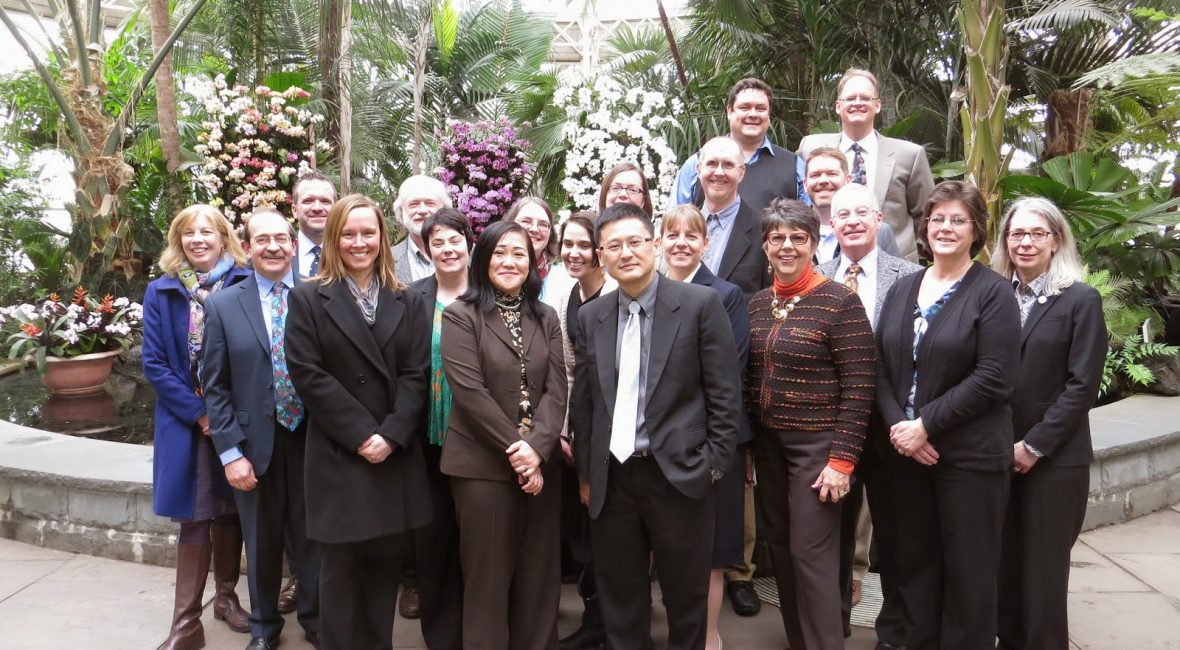
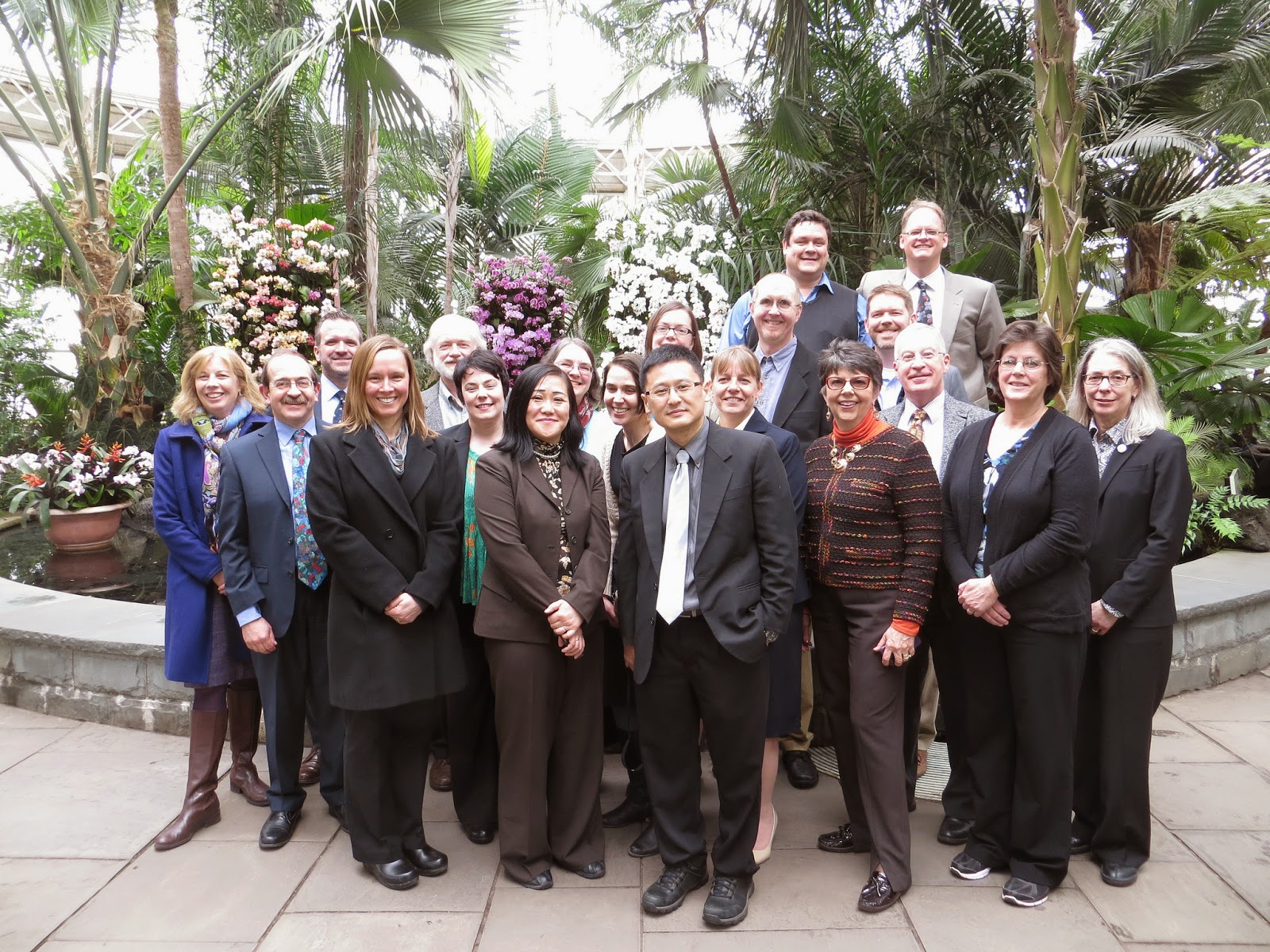
Pictured above are the meeting attendees:

Front Row, left to right: Susan Fraser (NYBG), Chris Mills (Kew), Christine Giannoni (Field Museum), Tomoko Steen (Library of Congress), Eric Chin (BHL Singapore), Nancy Gwinn (Smithsonian Libraries), Cathy Buckwalter (ANSP), Judy Warnement (Harvard Botany Libraries).

Second Row, left to right: Tom Baione (AMNH), Marty Schlabach (Cornell), Connie Rinaldo (Harvard/Museum of Comparative Zoology), Carolyn Sheffield (BHL Program Manager), Diane Reilinger (MBL/WHOI), Richad Hulser (NHMLAC).

Third Row, left to right: Kelli Trei (UIUC), Doug Holland (Missouri Botanical Garden), Chris Freeland (Washington University).

Back Row, left to right: William Ulate (BHL Technical Director), Martin R. Kalfatovic (BHL Program Director).

NOT PICTURED: Jane Smith (Natural History Museum, London). Photograph taken at the Enid A. Haupt Conservatory, New York Botanical Garden.


March 18, 2014by joelrichard
Blog Reel

Happy Birthday to John Torrey!

It’s hard to imagine how the wild, western terrain of the United States looked just 200 years ago—try to replace the suburban communities, bright lights, interconnected highways, and towering buildings with the uninhibited growth of native plants in considerable number and variety occupying undeveloped and spacious lands. The pioneers that ventured beyond the Mississippi into this vast unknown were exalted as executors of manifest destiny, responsible for territorial expansion of the fledgling county. But for John Torrey, he saw this point in history not as an opportunity to advance American boundaries, but as the precise moment to advance scientific progress.
View Full Size Image
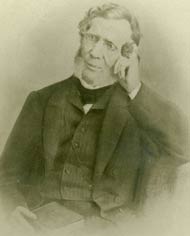
A portrait of the birthday boy, John Torrey.
From the New York Botanical Garden’s
John Torrey Papers collection.

Torrey was a different kind of pioneer, not an explorer, preferring instead the excitement of discoveries made under the microscope, to which he dedicated his life and his passions. So, this week we take a break from the regular Book of the Week posts to recognize Torrey on his 217th birthday for the significant contributions he made to botany, chemistry, and our understanding of North American flora.

Torrey was born August 15, 1796, in New York City to an established New England family, Captain William Torrey and Margaret Nichols. As a young man, Torrey showed great curiosity and interest in many subjects, but especially mechanics, thinking he might become a machinist. But when his father was appointed as Fiscal Agent of the State Prison in Greenwich, Torrey had a chance encounter with prisoner, and botanist in his own right, Amos Eaton. Eaton provided rudimentary instruction to Torrey, but, most significantly, awakened a zeal for the subject that remained with him throughout his life.

At first Torrey sought to cultivate this passion primarily as a leisure activity and pursued a medical degree, graduating and starting a moderately successful practice. But during his studies, Torrey made time to cofound the Lyceum of Natural History, now the New York Academy of Science; began documenting the plants in his vicinity; and published his first tome, “A Catalogue of Plants Growing Spontaneously Within Thirty Miles of the City of New York.”

His numerous correspondences with prominent scientists of the day can be viewed in the BHL and reflect the reach he had in contemporary academia, including contributions to the Smithsonian Institution, the American Philosophical Society, the New York Botanical Gardens, and the National Academy of Sciences at Washington, D.C.

Torrey was drawn to botany, but definitely not to fieldwork. He enjoyed the comforts of home and “considered it a great hardship to be sent after dark in the country.” So Torrey stayed in New York during Stephen Long’s exploration of the Rocky Mountains. And he also didn’t join John Frémont’s expedition to the same range. But that didn’t stop him from using the data and samples collected during Long and Frémont’s travels to name and describe thousands of new species and varieties of plants.

 
View Full Size Image
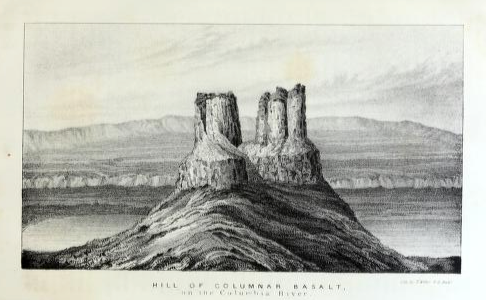
Torrey preferred his bed to landscapes like this one at the Hill of Columnar Basalt, 
illustrated during the 1842 Frémont expedition. 
 

Some of the most notable works he authored include “Flora of the Northern and Middle Sections of the United States,” his extensive two-volume “Flora of the State of New York,” and the joint piece he wrote with Asa Gray “Flora of North America,” which was considered one of the most authoritative works on North American plants up to that time.

Torrey was known as a professor, botanist, chemist, and mineralogist and remembered for identifying, describing, and classifying much of what inhabited the rugged frontier. He was a pioneer for the American scientific community with the fundamental contributions he made to botanical knowledge and institutions. The last line in Torrey’s obituary by friend, co-author, and protégée Asa Gray perfectly encapsulates this lasting legacy:
“Thirty or forty years ago, a new and remarkable evergreen tree was discovered in our own Southern States, which it was at once determined should bear Dr. Torrey’s name. More recently a congener was found in the noble forests of California. Another species had already been recognized in Japan, and lately a fourth in the mountains of Northern China. All four of them have been introduced and are greatly prized as ornamental trees in Europe. So that, all round the world, Torreya taxifolia, Torreya Californica, Torreya nucifera, and Torreya grandis—as well as his own important contributions to botany, of which they are a memorial—should keep our associate’s memory as green as their own perpetual verdure.”
Couldn’t say it better than that. Happy birthday, John Torrey!


View Full Size Image
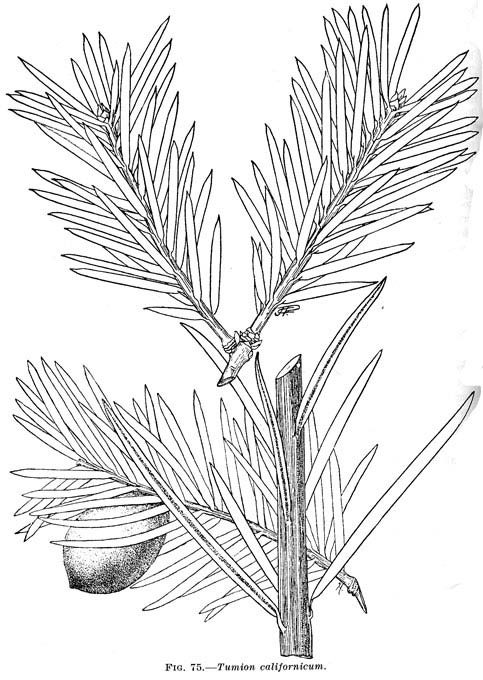
Torreya Californica, one of the legacy trees named in honor of Torrey, 
from trees.stanford.edu.

References:

  •  John Torrey. (2013). In Encyclopædia Britannica. Retrieved from http://www.britannica.com/EBchecked/topic/600140/John-Torrey
  • Polunin, Nicholas. (1944). John Torrey: American Botanist. Nature, 154(3905), p. 294-295.
  • Gray, Asa. (1873, April). Memoir or John Torrey 1797-1873. Speech read before the National Academy.


August 15, 2013by scstanley
BHL News, Blog Reel

Spreading Holiday Cheer

How does BHL celebrate the holidays?

As a project, we work to raise awareness about the plight facing the Earth’s biodiversity today and provide ways to help preserve scientific knowledge, support research, and conserve species. As a consortium, our BHL member institutions spread some fantastic holiday cheer by featuring some exciting seasonal exhibits.

We decided to celebrate the holidays this year by taking you through a virtual tour of the seasonal exhibitions at some of our member institutions and, as an added bonus, showcase this year’s BHL “superstars” for each member. What’s a BHL “superstar,” you ask? Well, today, it’s each member’s most popular book in BHL this year. Some of them just might surprise you!


American Museum of Natural History

Did you know that a group of jellyfish is called a smack? Or that a group of kangaroos is called a mob? A group of wise owls? It’s called a parliament.

View Full Size Image
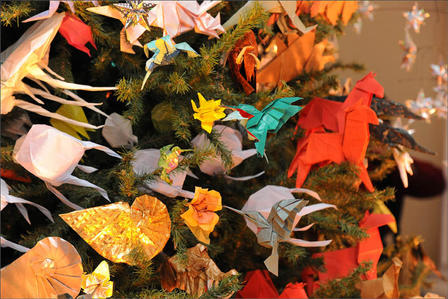
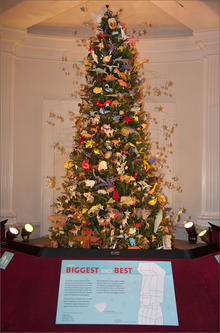
“Smack” of jellyfish (far left). Origami Art on the AMNH Holiday Tree. © AMNH/R. Mickens


View Full Size Image
© AMNH

The American Museum of Natural History has decorated its annual 13-foot tall holiday tree with origami “groups” of animals, inspired by the museum’s collections. These “groups” highlight the fact that even solitary animals spend at least some time with others of their species. The 500 delightful origami ornaments took volunteers from OrigamiUSA approximately 5 months to construct, and include groups of zebras, giraffes, and even bacteria!

The origami tree has been a hallmark of the museum’s holiday celebrations for more than 30 years and will be on display through January 6. Don’t miss your chance to experience biodiversity through paper art! How about using the over 50,000 images in the BHL Flickr to inspire your own origami art?!


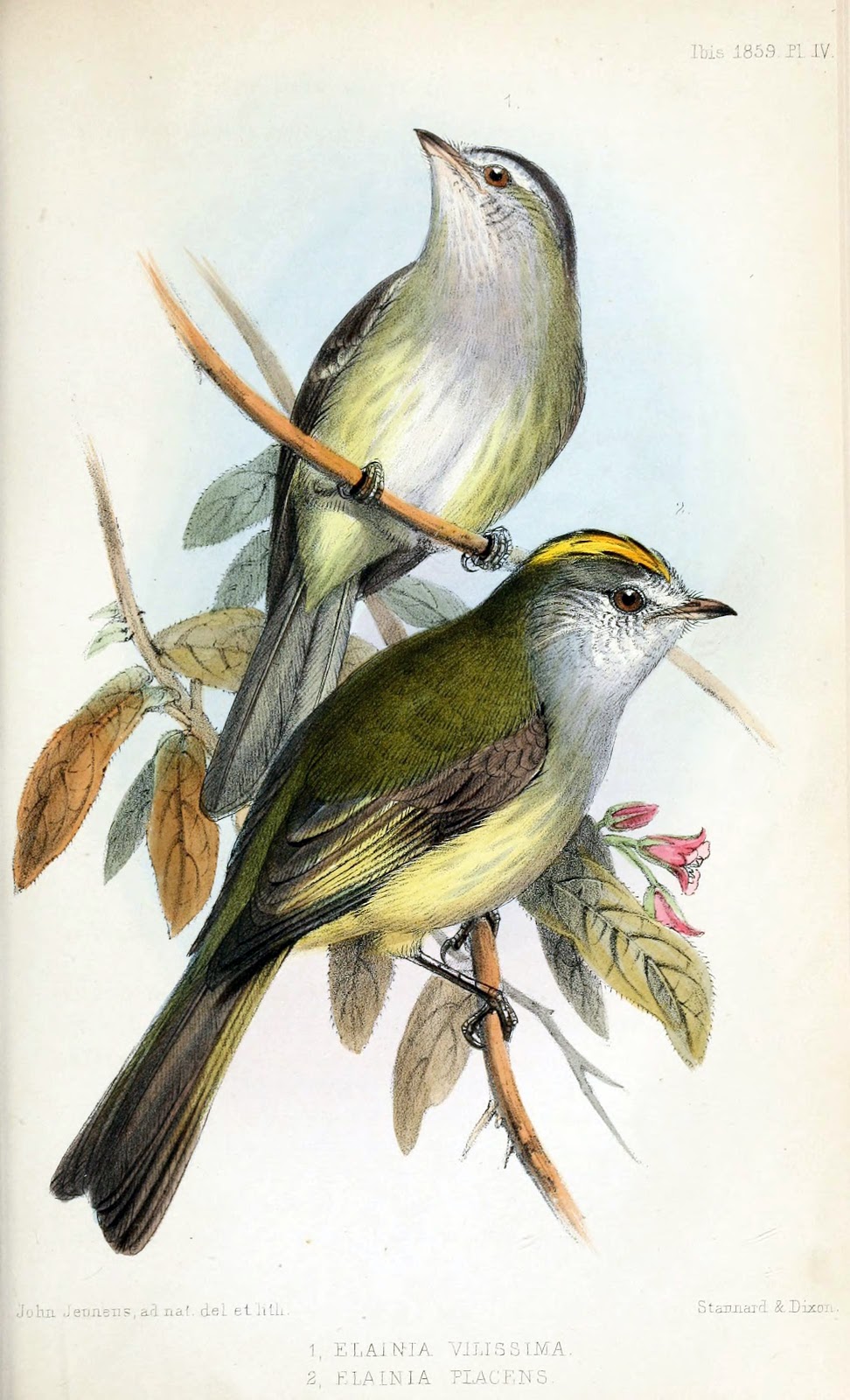
The winner of the AMNH 2012 Most Popular Book? Ibis (1859), v. 1. 

View Full Size Image
Two Tyrannulets, from the Zimmerius genus. Plate 4 from v. 1, Ibis (1859)

The American Museum of Natural History has an extremely strong ornithology collection. Therefore, it’s no surprise that the most popular book contributed by this library would be one of the cornerstones of ornithological literature. Frederick Godman and Osbert Salvin, the authors of Biologia Centrali Americana – arguably the most authoritative work on Mexican and Central American biodiversity – were two of twenty ornithology enthusiasts to establish this journal, which is still published today, in 1859. Explore the illustrations of the Ibis in our past blog post.


California Academy of Sciences

View Full Size Image
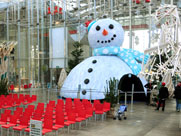
Snowman Dome at CAS. © CAS

Think you won’t find much snow this Holiday Season in California? Think again! The ‘Tis the Season for Science event at the California Academy of Sciences features live reindeer, research specimens illustrating how various species cope with cold temperatures, a snowman-shaped digital dome featuring programming about the science of the seasons, and, yes, snow in the piazza every 30 minutes!

View Full Size Image
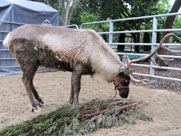
Live reindeer at CAS! © CAS

Some interesting tidbits from CAS: Did you know that the reindeer is the only deer species in which both males and females exhibit antlers? Did you know that species deal with harsh winters, generally, by adopting 1 of 2 strategies: heading south or hibernating? Perplexed by the bi-hourly snow falling at CAS? It’s temperature-resistant and biodegradable!

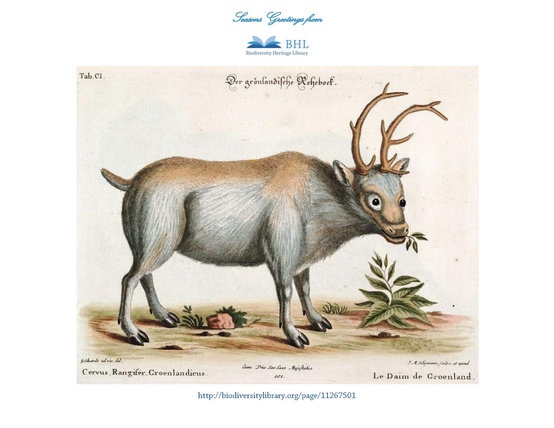
The CAS Holiday Exhibit ‘Tis the Season for Science will be open through January 6. Don’t miss your chance to experience polar bears, geese, reindeer, and snow in California! In honor of the CAS caribou attraction, enjoy this Reindeer Holiday Greeting Card from BHL!

View Full Size Image
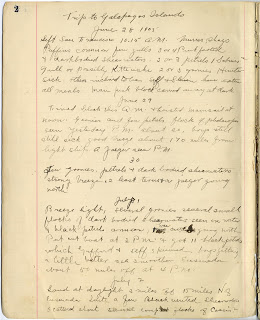
Excerpt from the Rollo Beck Galapagos expedition journal.

The most popular book from the California Academy of Sciences this year? The Rollo Beck Galapagos Expedition Journal!

The Rollo Beck Journal was the first field notebook to be ingested into BHL. As part of the IMLS Connecting Content project, CAS is digitizing field notebooks (essentially the scientific journals kept by researchers while on expeditions and/or performing field work) in its collection. This journal gives a broad overview of the 1905-06 expedition to the Galapagos, led by Rollo H. Beck. An interesting highlight from this journal? It includes a passage relating the first news Beck received of the 1906 fire that destroyed nearly all of CAS’s collections. Learn more about the journal and the Connecting Content grant in this past blog post.


Missouri Botanical Garden


View Full Size Image
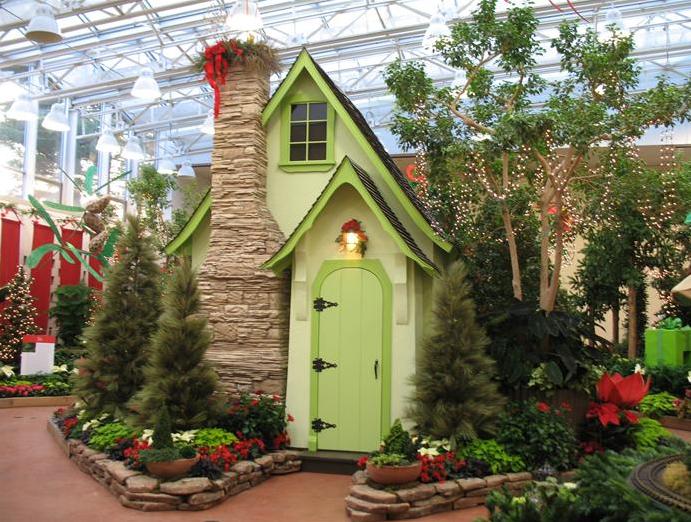
Fairy Tale Cottage at MOBOT’s Gardenland Express. © MOBOT

It’s a holiday wonderland in St. Louis this year with the Gardenland Express! Staff and volunteers have transformed the Garden’s Orthwein Floral Display Hall into a whimsical fantasy complete with a fairy tale cottage, 900 feet of miniature train tracks, and a stunning array of traditional holiday plants. The exhibit, celebrating “Merry Botanical Traditions,” took years to plan and even features silk poinsettia, holly, and Christmas Cactus constructed by artisans from the Garden’s previous Lantern Festival.

Find out what it takes to transform a barren room into a holiday treat in the video below. If you’re in St. Louis anytime before January 1, don’t miss your chance to experience the wonder for yourself! Maybe you can use our botanical illustrations to identify some of the plants featured in the exhibit!

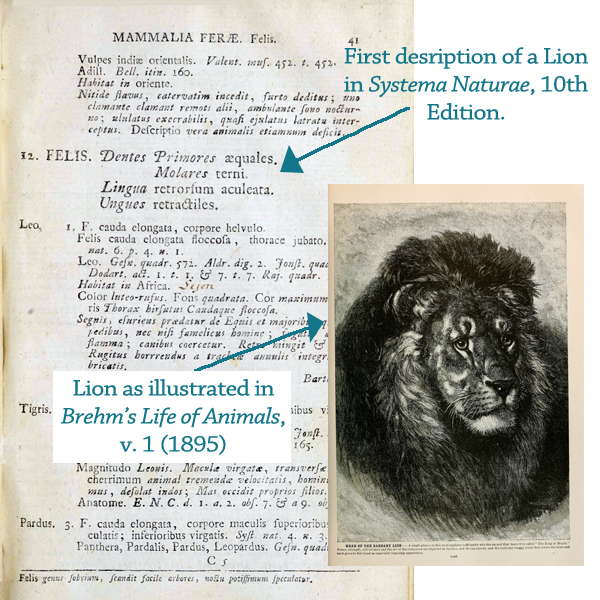
This year, the MOBOT “Superstar” award goes to…..Systema Naturae (1758), v. 1, 10th Ed., by Carl Linnaeus.

View Full Size Image
The first description of a lion in the 10th Ed. of Systema Naturae, with an illustration of a lion in Brehm’s Life of Animals.

It’s probably not very surprising that the publication that marked the beginning of zoological nomenclature is the 2012 most popular book contributed by the Missouri Botanical Garden. But did you know that, though Linnaeus’ first edition of Species Plantarum and this tenth edition of Systema Naturae are heralded as the starting points of binomial nomenclature for botany and zoology, respectively, the concept for the system was partially developed by Gaspard and Johann Bauhin in the late 1500s? Learn more about Linnaeus, Species Plantarum and Systema Naturae in our previous blog post.

New York Botanical Garden

It’s all about the trains this year for BHL’s botanical partners! Celebrating the season with the Holiday Train Show, the New York Botanical Garden has laid a quarter of a mile of miniature train tracks throughout a lush botanical backdrop populated by reconstructions of 140 of New York’s famous landmarks. The best part? These reconstructions, the products of Applied Imagination, are crafted using natural materials like bark, twigs, fruit, seeds, and stems!

What delightful icons will visitors to the seasonally-converted Enid A. Haupt Conservatory at NYBG encounter? To name just a few: Yankee Stadium, New York Public Library, the Brooklyn Bridge, and, new this year, the Macy’s location made famous by “A Miracle on 34th Street.” The Artists’ Studio, part of the exhibit, gives visitors a behind-the-scenes view of how these marvelous buildings are constructed, as well as a chance to experience some international icons, including the Sphinx and Parthenon.

Have kids? Then NYBG’s Gingerbread Adventures, which gives children a chance to play inside a life-size gingerbread house and decorate gingersnaps, is right up your alley!

The Holiday Train Show runs through January 13. Don’t miss your chance to experience New York with botanical eyes!

The most popular book this year contributed by NYBG? Again in the spirit of BHL botanical institutions, it’s v.1, pt.1 of the 11th edition of Systema Naturae (1760). The next twelfth edition, the last published under Linnaeus’ authorship, was comprised of 2,400 pages, expanded from the original eleven pages of the first edition (published in 1735).

Smithsonian’s National Zoo


View Full Size Image
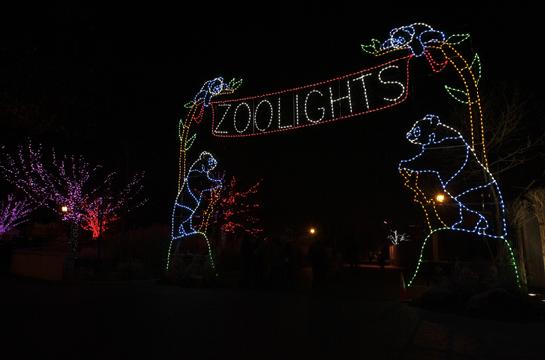
ZooLights Entrance. See more ZooLights Images. © SI.

Every year, the Smithsonian’s National Zoo lights up the dark winter nights with thousands of Christmas lights strung together to form animal silhouettes. This year is no exception, with more than 500,000 environmentally-friendly LED lights depicting dozens of dazzling species. Free to the public, the ZooLights event runs until January 1 on select days. Don’t miss this opportunity to see a mamma and baby panda, brown kiwi, elephants, a python, a lion, and even a cow like you’ve never seen them before!

And not to spoil the train theme, the National Zoo is also featuring a farm-themed miniature train at the Visitor Center.

View Full Size Image
Farm-Themed Train at National Zoo Visitor Center. © SI.

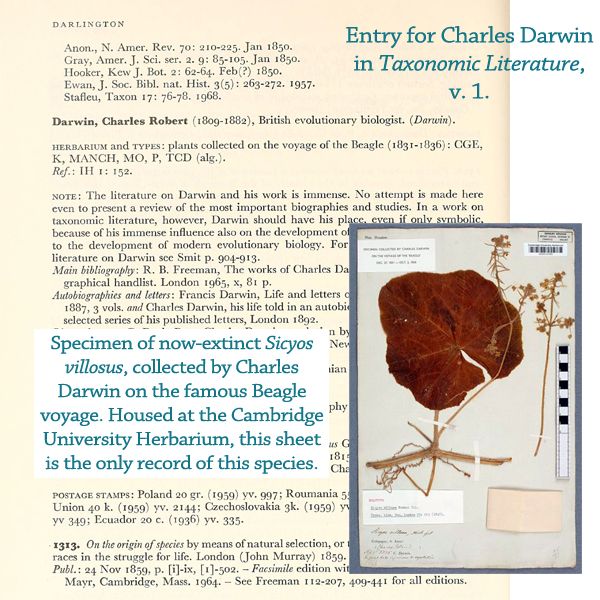
The most popular book contributed to BHL by the Smithsonian Libraries also happens to be the most popular item in BHL. What is it? Taxonomic Literature (1976), v. 1.

View Full Size Image
Charles Darwin in TL2. Specimen from Cambridge University Herbarium collected by Darwin on Beagle Voyage.

More commonly known as TL2, Taxonomic Literature: a selective guide to botanical publications and collections with dates, commentaries and types “provides the most comprehensive biographical and bibliographical analysis for systematic botany literature published between 1753 and 1940.” In all, TL2 is comprised of 15 volumes, organized by author name. The volumes represent an extensive list of botanists who have published botanical literature between 1753 and 1940. Each entry provides a short biography of the author, the location of any specimens they may have collected, a list of publications that author has published, and, based on analysis of more than 100 library collections, information about which libraries may hold a copy of each publication.

The Smithsonian Libraries’ online TL2 project indexes corrected OCR for the TL2 volumes scanned for BHL to provide additional search and analysis functionality, including author, author name abbreviation, and title abbreviation search support.

______________________________

We hope you get a chance to visit one of the exceptional Holiday Exhibits at our BHL member institutions.  From all of us here at BHL, we wish you very Happy Holidays!

View Full Size Image
Happy Holidays from BHL! Find this and other Holiday Greeting Cards on Pinterest.


December 14, 2012by ulib-libraryjobs

Help Support BHL

BHL's existence depends on the financial support of its patrons. Help us keep this free resource alive!

search

About BHL

The Biodiversity Heritage Library (BHL) is the world’s largest open access digital library for biodiversity literature and archives. BHL operates as a worldwide consortium of natural history, botanical, research, and national libraries working together to digitize the natural history literature held in their collections and make it freely available for open access as part of a global “biodiversity community.”

Join Our Mailing List

Sign up to receive the latest news, content highlights, and promotions.

Subscribe Now

Subscribe to Blog via Email

Enter your email address to subscribe to this blog and receive notifications of new posts by email.

Join 319 other subscribers

Subscribe to Blog Via RSS

Subscribe to the blog RSS feed to stay up-to-date on all the latest BHL posts.

Access RSS Feed

Inspiring Discovery through Free Access to Biodiversity Knowledge.

The Biodiversity Heritage Library makes it easier than ever for you to access the information you need to study and explore life on Earth…for free, anytime, anywhere.


64+ Million Pages of
Biodiversity Literature Online.

EXPLORE

Tools and Services
to Transform Research.

EXPLORE

300,000+
Illustrations on Flickr.

EXPLORE

ABOUT | HARMFUL CONTENT | PRIVACY | SITE MAP | TERMS OF USE