Biodiversity Heritage Library - Program news and collection highlights from BHL
  • Home
  • News
  • Featured Books
    • All Featured Books
    • Book of the Month Series
    • BHL at 20
  • User Stories
  • Campaigns
    • Fossil Stories
    • Garden Stories
    • Monsters Are Real
    • Page Frights
    • Her Natural History
    • Earth Optimism 2020
  • Tech Blog
  • Visit BHL
Home
News
Featured Books
    All Featured Books
    Book of the Month Series
    BHL at 20
User Stories
Campaigns
    Fossil Stories
    Garden Stories
    Monsters Are Real
    Page Frights
    Her Natural History
    Earth Optimism 2020
Tech Blog
Visit BHL
  • Home
  • News
  • Featured Books
    • All Featured Books
    • Book of the Month Series
    • BHL at 20
  • User Stories
  • Campaigns
    • Fossil Stories
    • Garden Stories
    • Monsters Are Real
    • Page Frights
    • Her Natural History
    • Earth Optimism 2020
  • Tech Blog
  • Visit BHL
Biodiversity Heritage Library - Program news and collection highlights from BHL
Blog Reel, Featured Books

Flora, Fauna, and Photography: Five Years of Digitising Content for BHL in Aotearoa

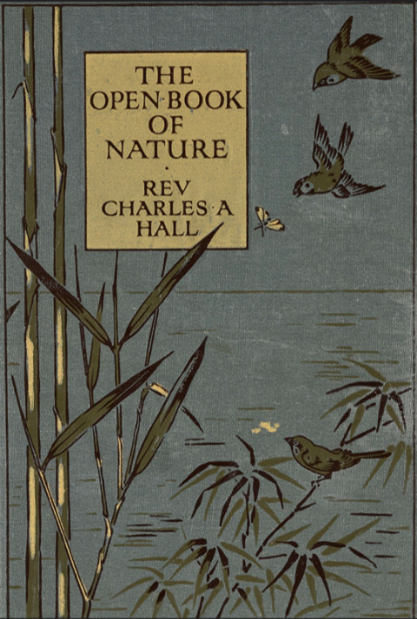
Cover of a book with bamboo, song birds, and insects, titled The Open Book of Nature by Rev Charles A Hall.

Auckland Museum joined the Biodiversity Heritage Library (BHL) in 2018 and currently remains the only organisation in Aotearoa New Zealand contributing to the consortium. During my four years working as a technician and coordinator on the project, and with the help of a volunteer, Brianna Vincent, we have added over 25,000 pages, increasing our library of contributions from three to over 100 biodiversity literature items. These items span from 1790 to 2004, covering over 200 years of biological knowledge, and range from field notebooks and sketches to identification guides, records and proceedings, educational textbooks, plant material, cyanotypes (blueprints), and hand-painted illustrations.
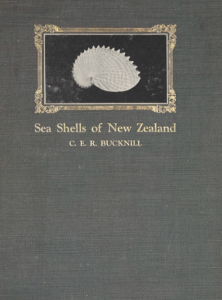
Cover of a book with gray background and sea shell image in the center, titled Sea Shells of New Zealand by C. E. R. Bucknill

Cover. Sea Shells of New Zealand. C. E. R. Bucknill. 1924. Contributed in BHL from Auckland War Memorial Museum Tāmaki Paenga Hira.
Cover of a book with bamboo, song birds, and insects, titled The Open Book of Nature by Rev Charles A Hall.

Cover. The Open Book of Nature. Hall, Charles A. 1911. Contributed in BHL from Auckland War Memorial Museum Tāmaki Paenga Hira.
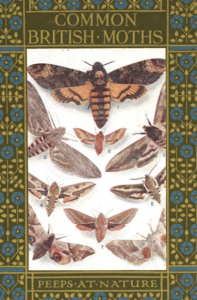
Cover of a book with multiple moth specimens and decorative flower motif border, titled Common British Moths: peeps at nature

Cover. Common British Moths. Stewart, Alexander Morrison. 1918. Contributed in BHL from Auckland War Memorial Museum Tāmaki Paenga Hira.
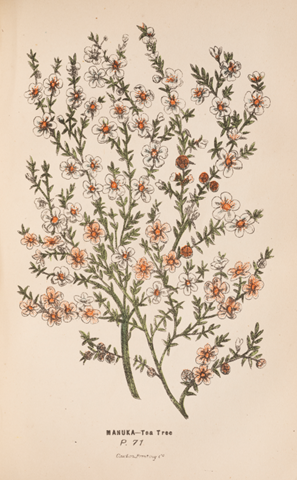
Hand drawn plate of the tea tree manuka - small white flowers with pinkish-orange centers

Manuka – Tea Tree. P. 71. Neil, James F. The New Zealand family herb doctor. 1891. Contributed in BHL from Auckland War Memorial Museum Tāmaki Paenga Hira.
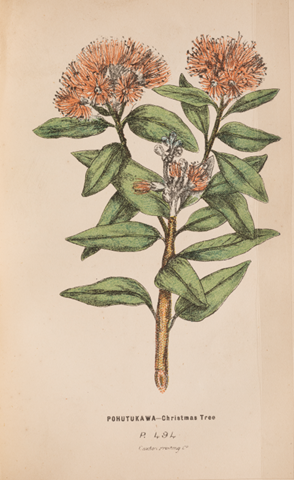
Hand drawn plate of pohutukawa - Christmas tree. Elongated leaves and bushy orange flowers

Pōhutukawa – Christmas Tree. P. 494. Neil, James F. The New Zealand family herb doctor. 1891. Contributed in BHL from Auckland War Memorial Museum Tāmaki Paenga Hira.

Digitising contributing literature is an intensive undertaking; each page is individually photographed, exported, cropped, reordered, and then sequenced — resulting in a digital replica that accurately represents the physical copy in our collection. Literature items are selected through a criterion of subject matter, copyright, and relevance to the existing BHL collection. This selection process requires collaboration with our photography team, rights management team, museum collection managers, curators, our natural sciences department, cataloguing staff, librarians, and increasingly, external copyright holders. By the time our content appears on the webpages of BHL, a rigorous, inter-department effort has taken place – one with many moving parts and diverse areas of expertise.

Auckland Museum adheres to strict copyright compliance guidelines in determining whether an item qualifies for addition to BHL: either the item must be out of copyright (published prior to 1928, following U.S. copyright requirements) or the item’s copyright is held (or has been licensed) by Auckland Museum. The result of this selection process is a collection of unique, high-resolution, openly licensed, and public-domain material able to be freely distributed, adapted, and utilised for a myriad of creative, scientific, and other research-oriented purposes by the public. In our contributions to BHL, Auckland Museum has significantly increased the amount of copyrighted material through the collaboration and permission of New Zealand external rights holders by openly licensing copyrighted content under a Creative Commons license.

As part of the rights permissions process, items are reviewed for cultural permissions to preserve the dignity of Māori and Pasifika cultural representation within our archival holdings. This aspect of our reviewing process is an important way to respect the mana, the spiritual life force and power, in our objects and in the cultural groups depicted in them.

On a wider level, BHL acknowledges that the literature on BHL may contain harmful content in the form of historic colonial material. For Tāmaki Paenga Hira, this reflection is vital in our conceptualism as a GLAM (Galleries, Libraries, Archives, and Museums) institution. Museums have been inextricably rooted in a history of colonisation, and it is our responsibility to take care not to further perpetuate racial stereotypes, distribute destructive accounts of culture, or allow any opportunities for the misappropriation of meaningful objects and imagery.

Our own Records of the Auckland Institute and Museum contains multidisciplinary research including botany, zoology, entomology, and ethnology from both current and former curatorial staff. These records include images of taonga, something treasured, that may not be suitable to be published online for public-domain reuse. These images are redacted following our own internal guidelines and the BHL page redaction policy. More information about BHL’s acknowledgment of harmful content notice can be found here.
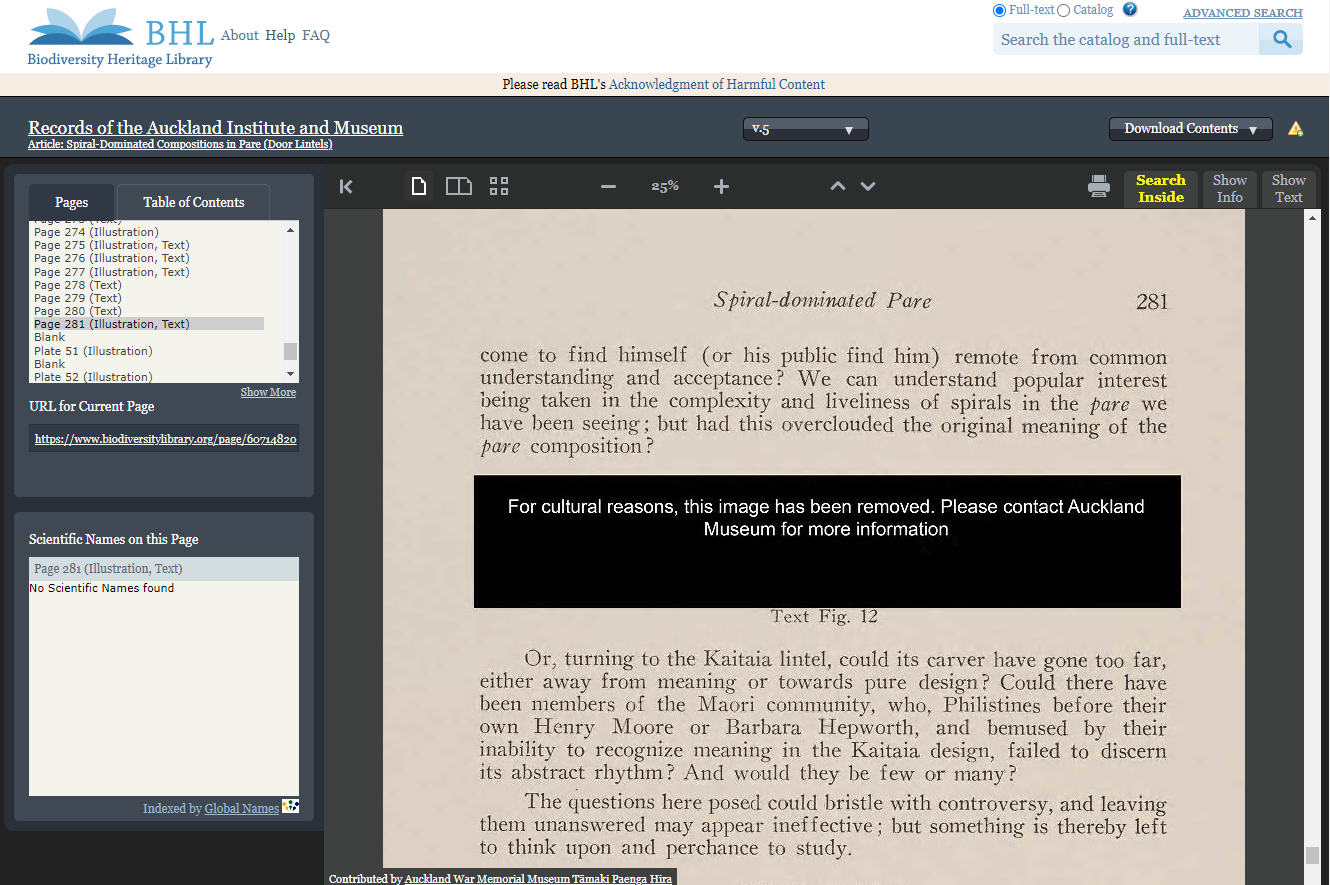
Page of the Record of the Auckland Museum and Institute with a black box redacting a piece of the text

A photograph of Tangonge, one of Aoteroa‘s oldest known carvings and a highly significant taonga has been redacted. P. 281. Records of the Auckland Institute and Museum. V. 5. 1958. Contributed in BHL from Auckland War Memorial Museum Tāmaki Paenga Hira.

Auckland Museum’s collection within BHL has a reciprocal relationship of enrichment with other digital partnerships and platforms. Recently Auckland Museum launched a BHL New Zealand Flickr account featuring a curated collection of images from natural history books digitised over the course of the BHL project. Publishing these images on such a popular online photo management and sharing application opened doors for Wikipedia editors to enrich existing articles with cover photos, for the Wikimedia repository to be supplied with a rich collection of imagery for future use, and even for text to be available for reading on Wikisource – an innovative platform allowing the crowd-sourcing of language translation and audio narration recording of literature to ultimately improve accessibility globally and to users with disabilities.

The biodiversity data available within the digitised works on BHL is of interest to many parties; it can be exported to large aggregators such as the Global Biodiversity Information Facility (GBIF) and Bionomia, complementing ongoing scientific research and aiding scientists to find gaps in collective biological knowledge. Articles and images from BHL such as the Records of Auckland Institute and Museum are shared on Wikipedia and Wikidata, and Cite Q citations for articles allow for scholarly Wikipedia usership in the access of this data via the Wikipedia platform.
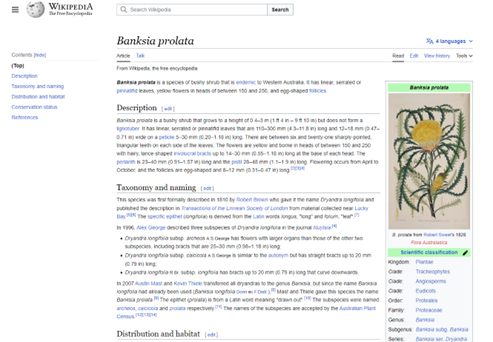
Wikipeida page for Banksia prolata

Banksia prolata wikipedia page showing a plate from an item digitised by Auckland Museum and added to BHL. Plate 3. Flora Australasica. Sweet, Robert. 1828.

The catalogue records for titles added to BHL are updated in our own system after an item has been added, enabling us to embed and share the digital copy on our website. If another BHL partner has digitised a book that we hold a copy of, we can also add this BHL link to our collection record, giving the Museum’s users instant access to this material digitally.

What was once confined to our archives to only be viewed on request, in person with supervision, can suddenly be proliferated across the world wide web. With data rapidly moving from one place to another – exports, imports, open-access downloads, and the real-time ingest across linked open data platforms – BHL acts both as a global access point and a launching pad of sorts, allowing these rare and unique objects to be viewed everywhere and all at once. The opportunities for GLAM institutions to collaborate and support one another in the boom of the information era are diverse and far-reaching, and BHL is an essential piece of this puzzle for Auckland Museum.
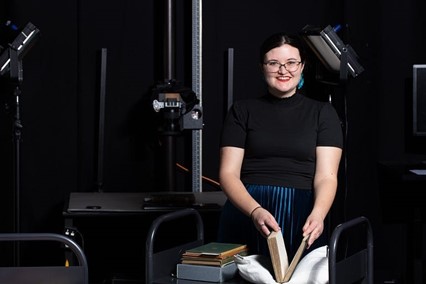
Woman with glasses holds open a book on a cart in preparation for digitization

Kelly Hall, BHL Coordinator at Auckland Museum

Auckland Museum would like to thank Lottery Grants Board NZ, The C & L Gregory Trust, and The Tennyson Charitable trust for enabling this work.

October 10, 2023by [email protected]
BHL News, Blog Reel

BHL Welcomes the Auckland War Memorial Museum Tāmaki Paenga Hira

Auckland Museum Logo

The Biodiversity Heritage Library is pleased to welcome the Auckland War Memorial Museum Tāmaki Paenga Hira as a new Affiliate. Auckland Museum is BHL’s first partner in Aotearoa New Zealand.

Tracing its roots back to 1852, Auckland Museum was one of New Zealand’s first museums and is regarded as one of the finest in the Southern Hemisphere. Renowned for its collection of Māori and Pacific treasures along with significant natural history resources, the Museum tells the story of New Zealand, its place in the Pacific and its people. It is also a war memorial for the province of Auckland.

The Museum is home to one of New Zealand’s finest heritage research libraries. Serving the Museum since 1867, the Library’s key focus is caring for and providing access to the Museum’s Documentary Heritage collections, including manuscripts, photographs and artwork, ephemera, oral histories, rare books, and serials. The Library’s collections have an overarching focus on the Auckland province and te ao Māori (the Māori world), and its natural history collection strengths include botany, and academic and general-interest works related to the natural sciences.

“Auckland Museum’s long natural history specialism has resulted in a world-class collection of New Zealand specimens of flora and fauna. Coupled with published research and a wealth of untapped curatorial correspondence, our holdings will be a valuable addition to the BHL community,” affirmed Adam Moriarty, Head of Information, Library and Enquiry Services at the Auckland Museum. “As the first New Zealand-based institution to join the BHL, we can dramatically increase what the world knows about Aotearoa’s unique natural environment.”

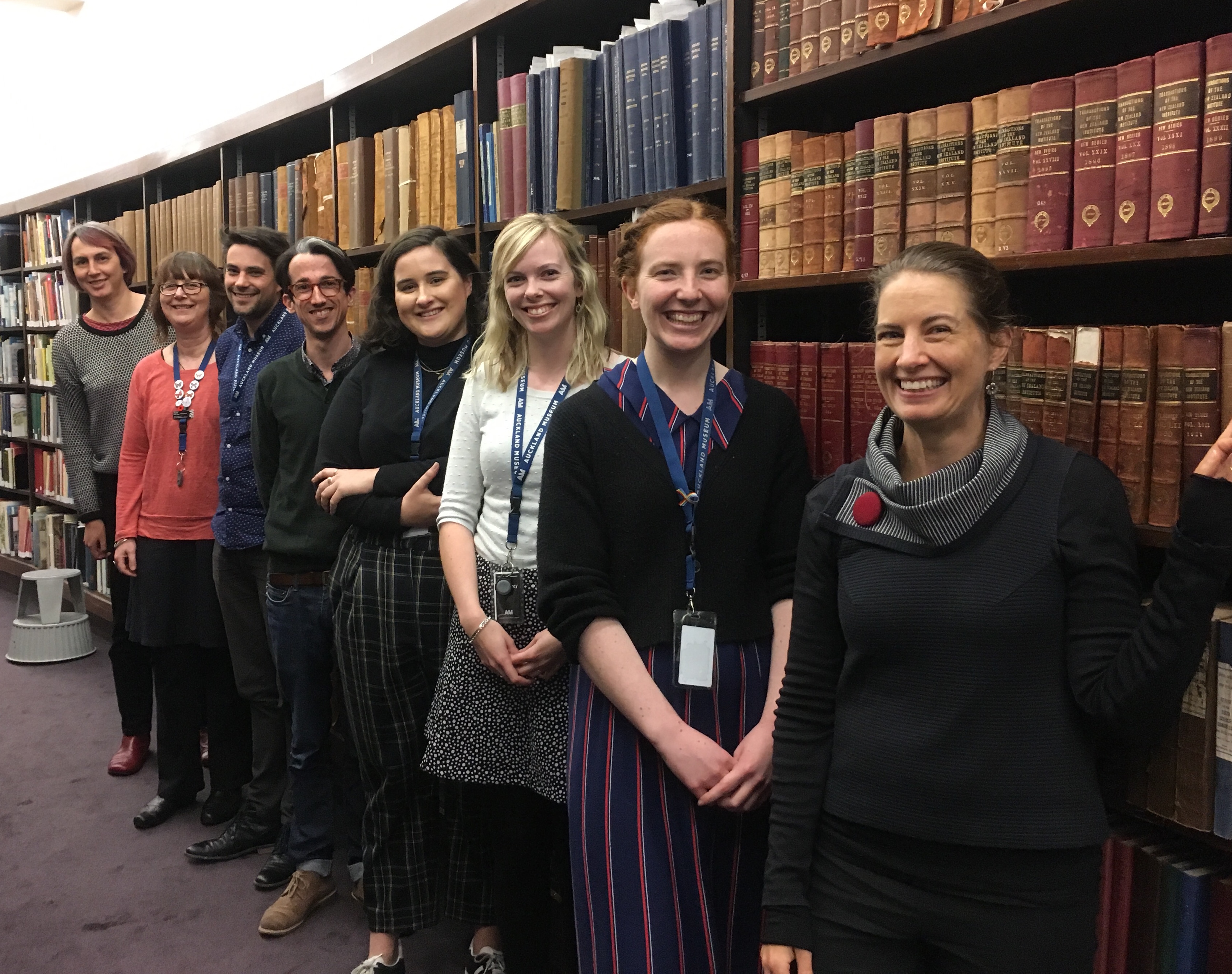
BHL representatives Constance Rinaldo (Ernst Mayr Library, Harvard and Chair of the BHL Members’ Council) and Dr. Elycia Wallis and Nicole Kearney (BHL Australia) traveled to the Museum in early September to welcome the Library and provide an orientation to the BHL program. In late October, Kearney, manager of the BHL Australia program, and Cerise Howard, digitization coordinator for BHL Australia, returned to provide an intensive three-day training workshop to Library staff covering a broad range of topics from metadata requirements to digitization workflow processes.

people standing in front of a bookshelf

Nicole Kearney (front) and Cerise Howard (back), BHL Australia, with colleagues from Auckland Museum during the three-day workshop at the Library in Auckland.

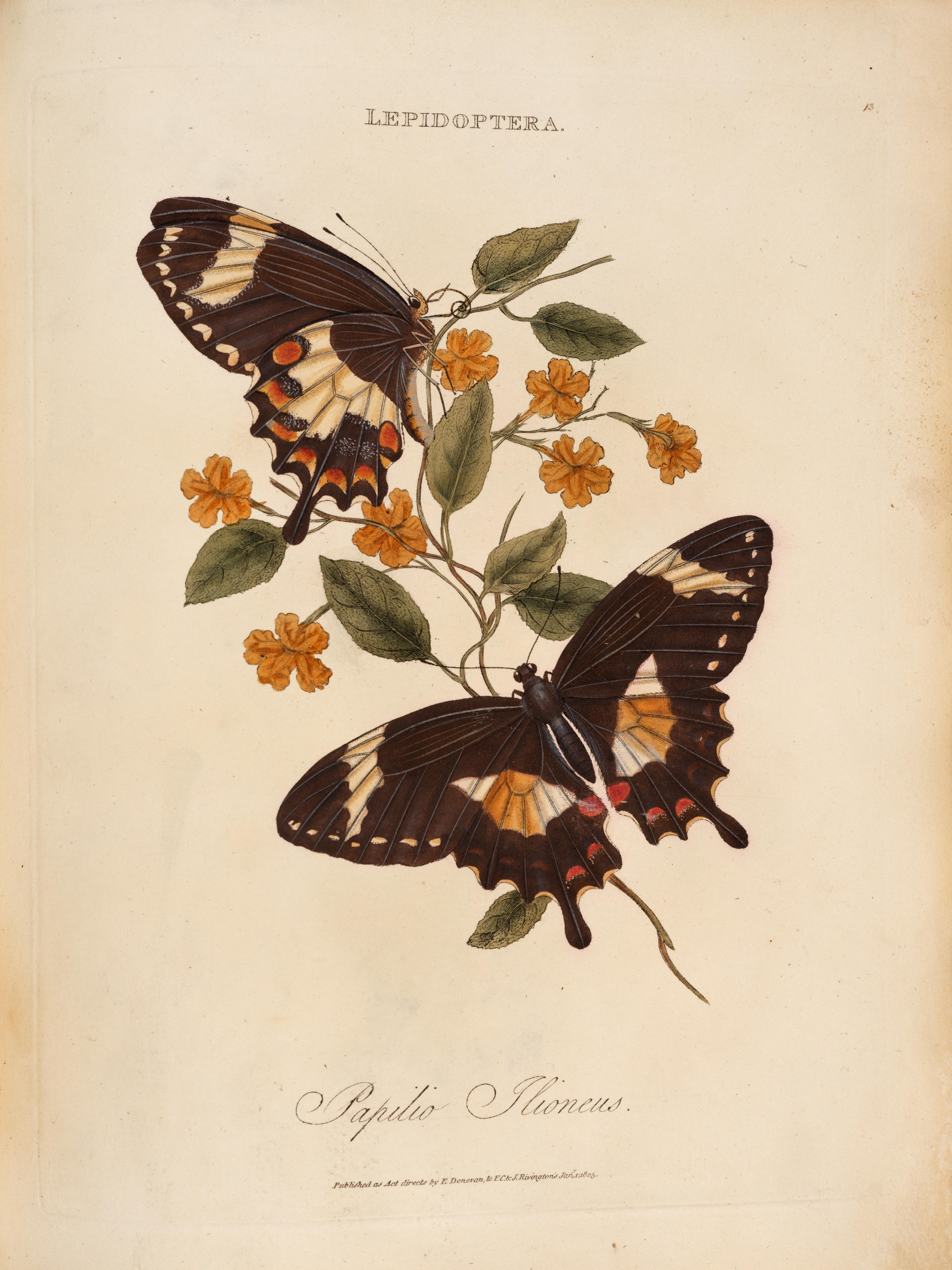
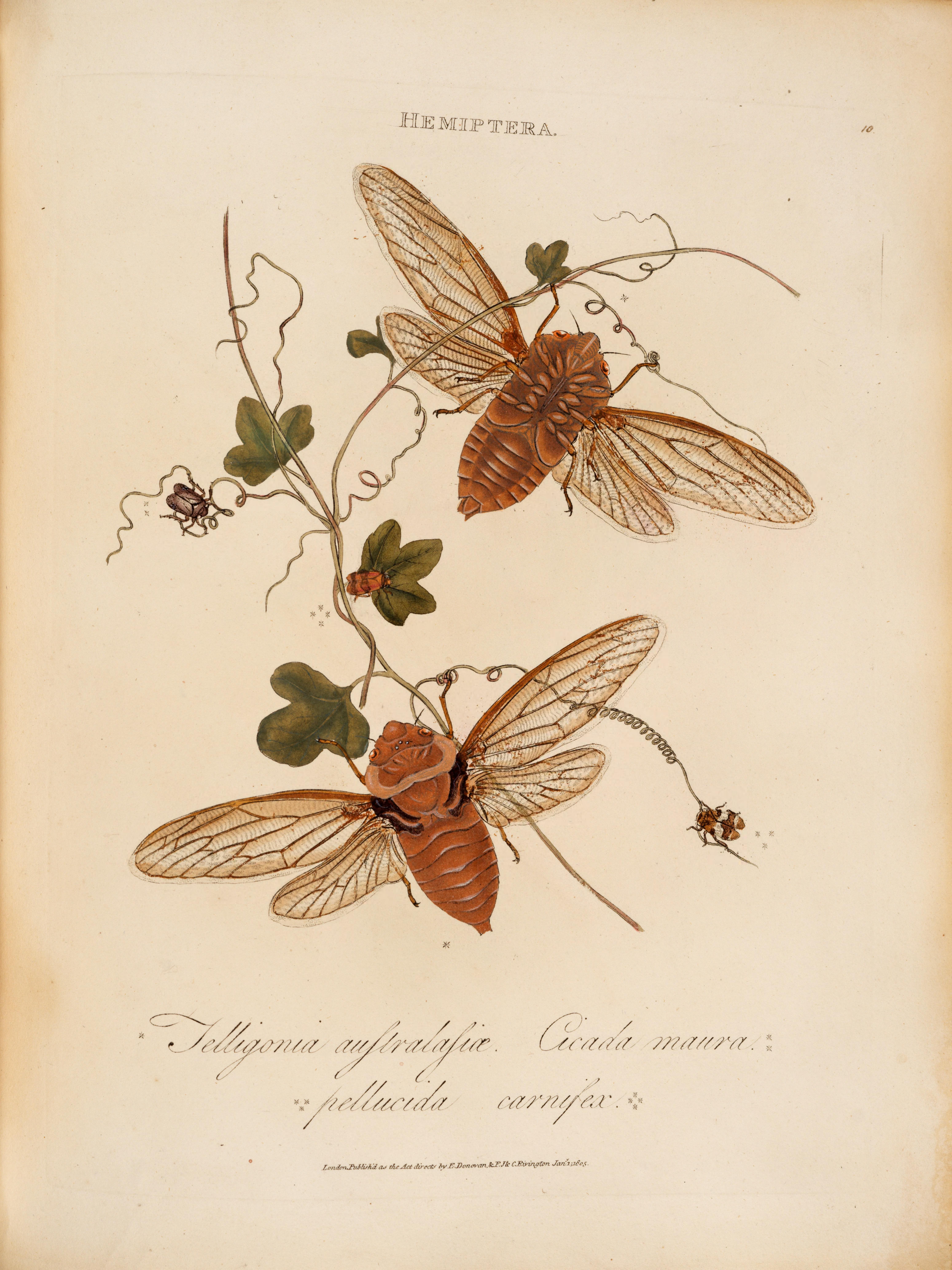
Following the workshop, staff digitized the Library’s first contribution to BHL: An epitome of the natural history of the insects of New Holland, New Zealand, New Guinea, Otaheite, and other islands in the Indian, Southern, and Pacific oceans (1805) by Edward Donovan. This rare work includes hand-colored drawings and descriptions of over 100 species from Australia, New Zealand, and neighboring islands. The title is the first of many currently being digitized for BHL from the Library’s collection.

Illustration of butterflies

Plate 13. Donovan, Edward. An epitome of the natural history of the insects of New Holland, New Zealand, New Guinea, Otaheite, and other islands in the Indian, Southern, and Pacific oceans. 1805. Illustration by Donovan. Contributed in BHL from Auckland War Memorial Museum Tāmaki Paenga Hira.

We are delighted to see our partnerships in Australasia expand to New Zealand through the Auckland Museum and look forward to seeing many more fascinating contributions to the BHL collection in the future. We also extend our thanks to our BHL Australia colleagues for providing training and support to our newest Affiliate.

Illustration of insects

Plate 10. Donovan, Edward. An epitome of the natural history of the insects of New Holland, New Zealand, New Guinea, Otaheite, and other islands in the Indian, Southern, and Pacific oceans. 1805. Illustration by Donovan. Contributed in BHL from Auckland War Memorial Museum Tāmaki Paenga Hira.

“We are thrilled to welcome the Auckland Museum as our first partner in New Zealand,” affirmed Martin R. Kalfatovic, Program Director for the Biodiversity Heritage Library. “We have long desired to establish a partnership in the country, and we look forward to working with our colleagues in Auckland to share their collections with global audiences and foster new relationships with other institutions across the New Zealand.”

The BHL Consortium now includes 20 Members, 22 Affiliates, and over 80 partners globally. Learn more.

November 26, 2018by michelle.underhill
BHL News, Blog Reel

BHL at the Joint Society for the Preservation of Natural History Collections (SPNHC) and Biodiversity Information Standards (TDWG) Conference in Dunedin, New Zealand

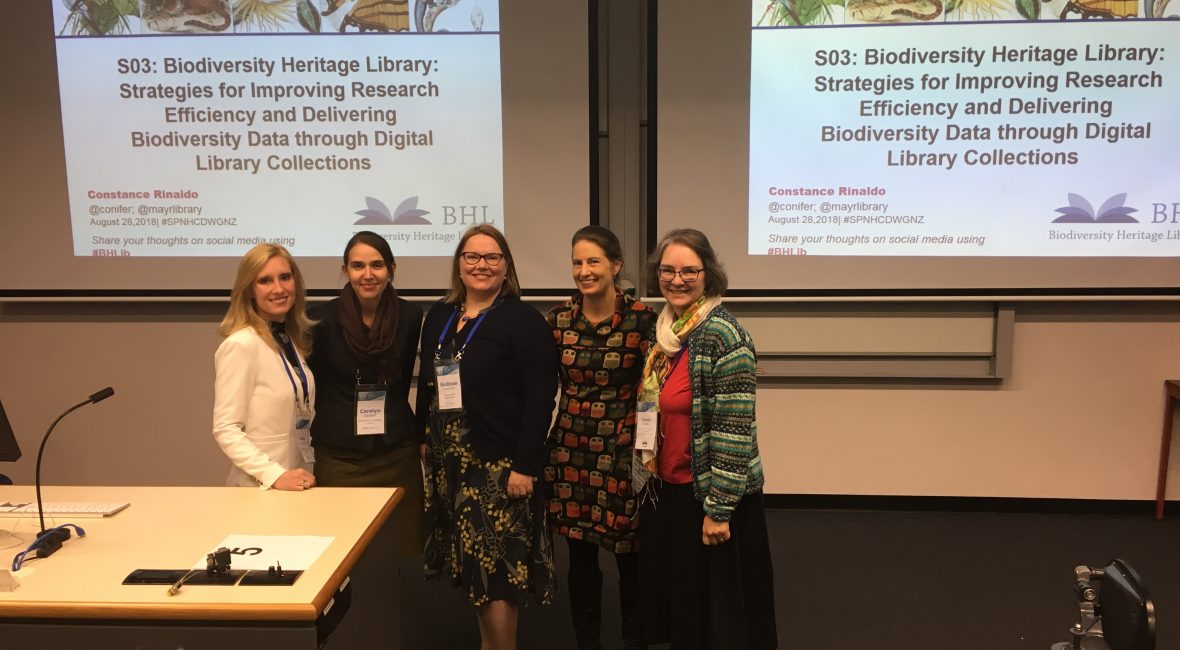
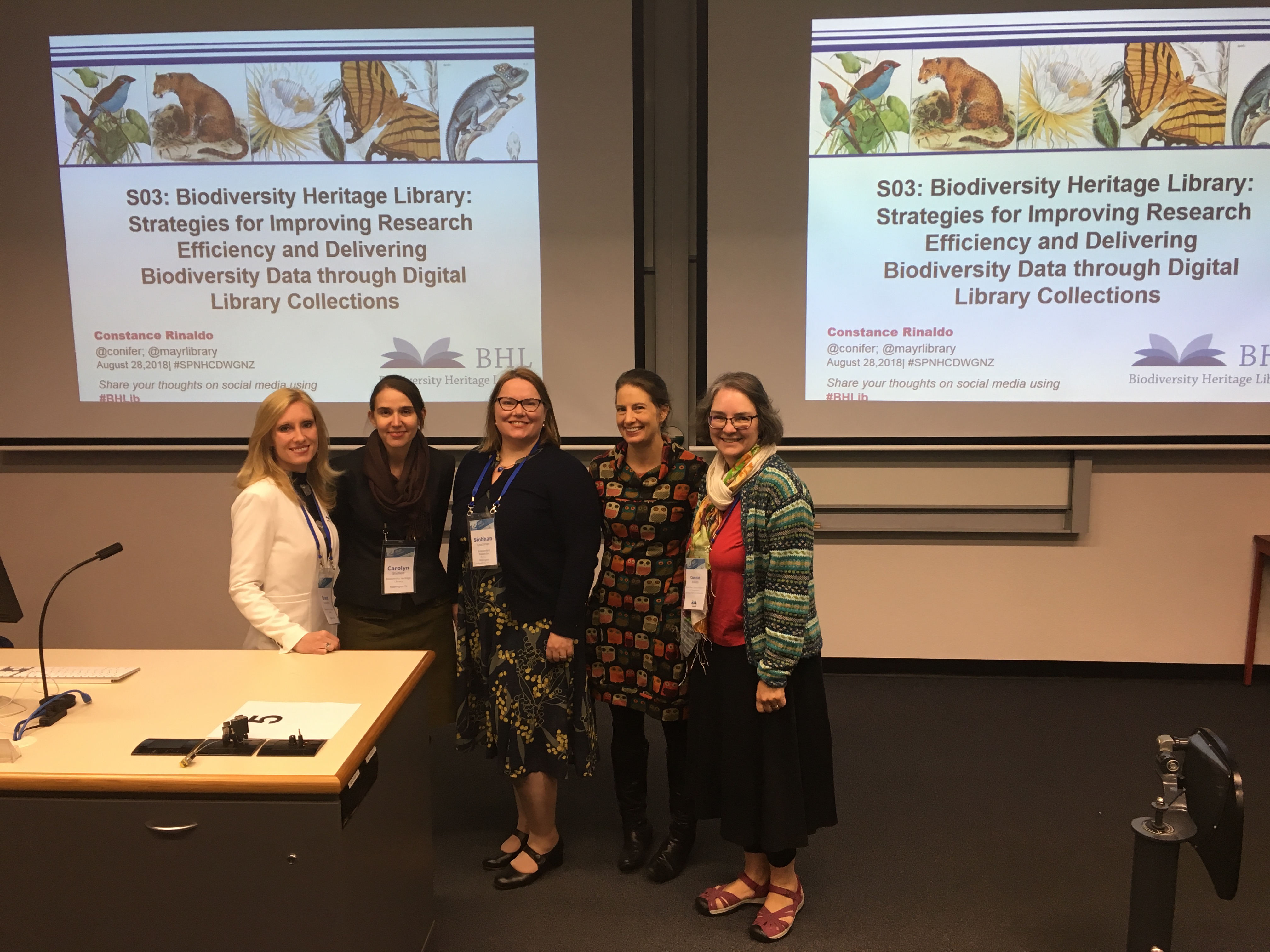
BHL representatives preparing to deliver talks as part of the BHL Symposium. Left to right: Grace Costantino, Carolyn Sheffield, Siobhan Leachman, Nicole Kearney, Constance Rinaldo.

logo for the joint TDWG/SPNHC conference

On 25 August – 1 September 2018, BHL representatives from around the world traveled to Dunedin, New Zealand to attend the joint Society for the Preservation of Natural History Collections (SPNHC) and Biodiversity Information Standards (TDWG) conference. Hosted by the Otago Museum and the University of Otago, the conference represented several firsts, including the first joint meeting of these two organizations plus the first SPNHC meeting in the Southern Hemisphere.

With the theme “Collections and Data in an Uncertain World”, the conference was an opportunity for bioinformatics and natural science collections professionals to exchange ideas and expertise as they explored the myriad intersections between collections and the data generated from them. BHL, an institutional member of TDWG, was proud to be a conference partner for this important event.

Explore the full conference program.

Keynotes

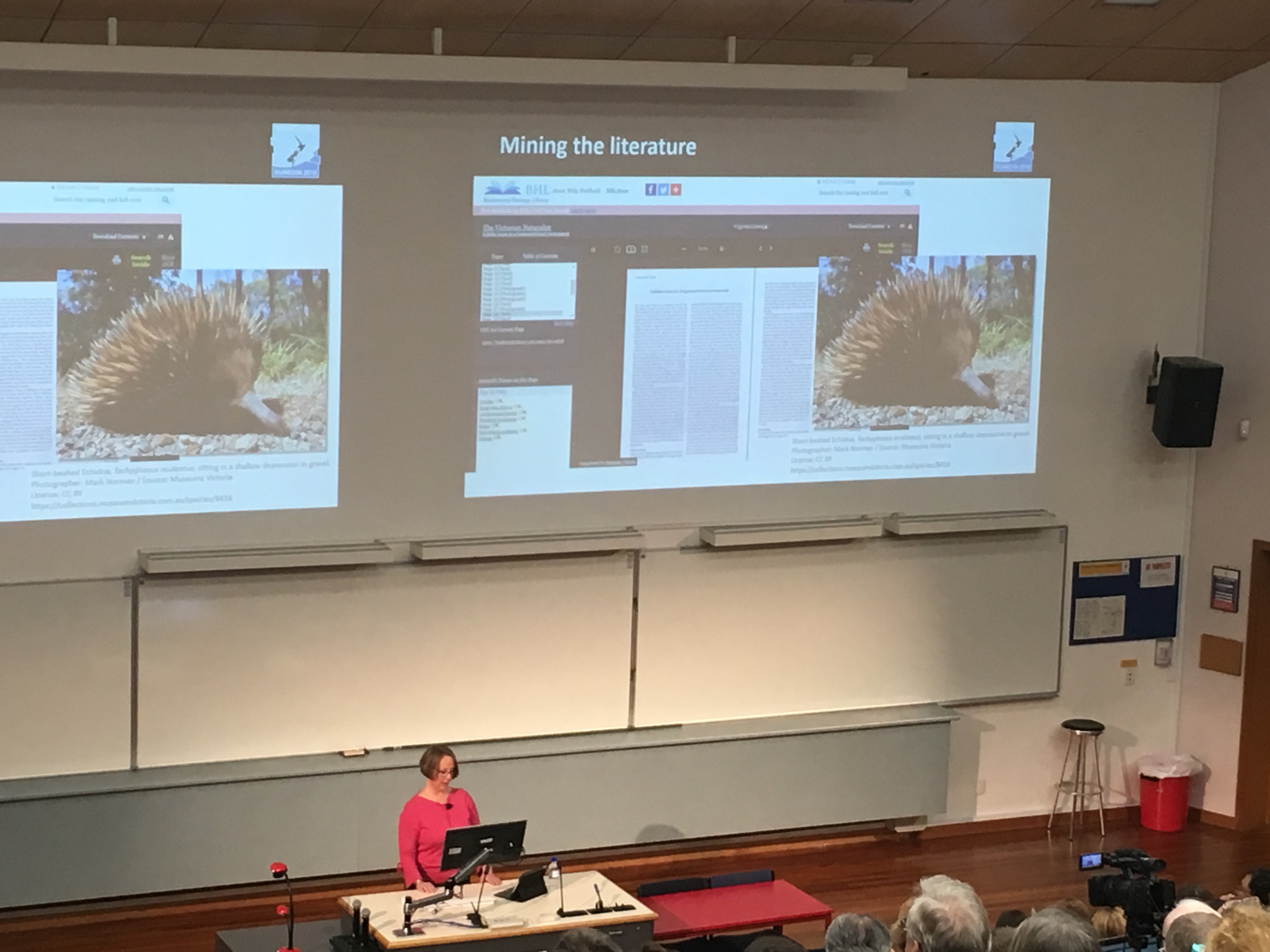
Dr. Elycia Wallis delivering a keynote address (with a highlight of BHL!) as part of the joint SPNHC/TDWG Conference.

Dr. Elycia Wallis delivering a keynote address (with a highlight of BHL!) as part of the joint SPNHC/TDWG Conference. Photo credit: Grace Costantino

In addition to over seventy sessions featuring multiple speakers in several concurrent tracks, the conference also included many fascinating keynote addresses (including one from Dr. Elycia Wallis, Member representative for BHL Australia).

Explore the abstracts for each keynote address below:

  • Building, Growing and Sustaining Global Collaborative Communities (Jonah Duckles, Director of Membership and Technology at The Carpentries)
  • The Change Imperative: Accelerating the pace of Biodiversity Discovery and Documentation (Dr. Elycia Wallis, Collections Community Engagement Manager for Atlas of Living Australia and project leader for the Australian Biodiversity Heritage Library project; Lee Belbin, geoscience graduate and IT postgraduate)
  • Promoting Public Engagement of Natural History Collections Through Science Communication (Dr. Bryan Lessard, entomologist at CSIRO’s Australian National Insect Collection)
  • Collections in an Uncertain World: The Impact of Earthquakes on Canterbury Museum (Anthony Wright, Director of Canterbury Museum)
  • If Only They Could Speak (Dr. Priscilla Wehi, conservation biologist and Rutherford Discovery Fellow at Manaaki Whenua Landcare Research in Dunedin)

BHL Symposium

BHL representatives preparing to deliver talks as part of the BHL Symposium. Left to right: Grace Costantino, Carolyn Sheffield, Siobhan Leachman, Nicole Kearney, Constance Rinaldo.

BHL representatives preparing to deliver talks as part of the BHL Symposium. Left to right: Grace Costantino, Carolyn Sheffield, Siobhan Leachman, Nicole Kearney, Constance Rinaldo.

BHL hosted a symposium at the conference, “Strategies for Improving Research Efficiency and Delivering Biodiversity Data through Digital Library Collections”, organized by Carolyn Sheffield (BHL Program Manager, Smithsonian Libraries) and moderated by Constance Rinaldo (Librarian of the Ernst Mayr Library, Harvard and Chair of the BHL Executive Committee).

The Symposium consisted of four talks, covering topics including citizen science, linking specimen records to literature, DOIs, and recent efforts to improve search efficiencies in BHL, from full text search to extracting georeference data. Explore the abstracts for each talk in the links below:

  • Outreach Strategies to Engage Citizen Scientists: Insights from the Biodiversity Heritage Library – Grace Costantino (BHL Secretariat, Smithsonian Libraries)
    • See slides
  • How A Citizen Scientist Can Reuse & Link Biodiversity Heritage Library Data – Siobhan Leachman (BHL Citizen Scientist)
    • See slides
  • What are we DOIng about the Missing Links? Connecting Taxonomic Names to the Linked Network of Scholarly Research – Nicole Kearney (BHL Australia, Museums Victoria)
    • See slides
  • Improving Search Efficiency in the Biodiversity Heritage Library Corpus – Carolyn A. Sheffield (BHL Secretariat, Smithsonian Libraries)
    • See slides

The Symposium was attended by about 100 people and was well-received. The session stimulated lively discussion regarding the lack of regulations around assigning DOIs to legacy literature, the ethics of publishers assigning DOIs to versions of out-of-copyright publications locked behind paywalls, and the need for museums to release collections-related data and images openly so that they may be reused for citizen science or on such platforms as Wikipedia (a point eloquently emphasized by Siobhan Leachman as part of a memorable Q&A exchange that was heralded and much-discussed throughout the remainder of the conference).

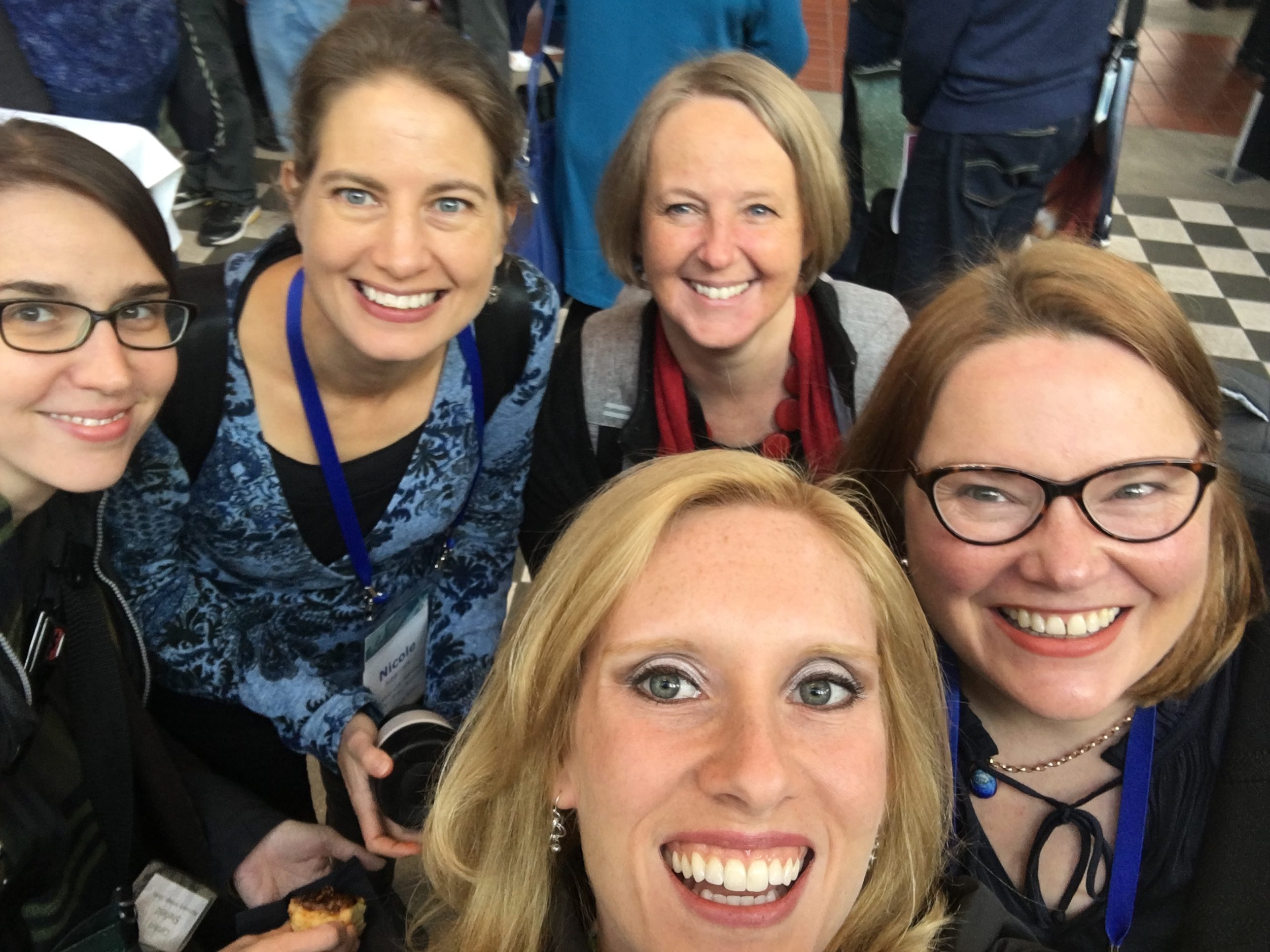
A group selfie with some of the excited BHL representatives! Left to right background: Carolyn Sheffield, Nicole Kearney, Elycia Wallis, Siobhan Leachman. Foreground: Grace Costantino

A group selfie with some of the excited BHL representatives! Left to right background: Carolyn Sheffield, Nicole Kearney, Elycia Wallis, Siobhan Leachman. Foreground: Grace Costantino. Photo credit: Grace Costantino

Conference Impact for BHL

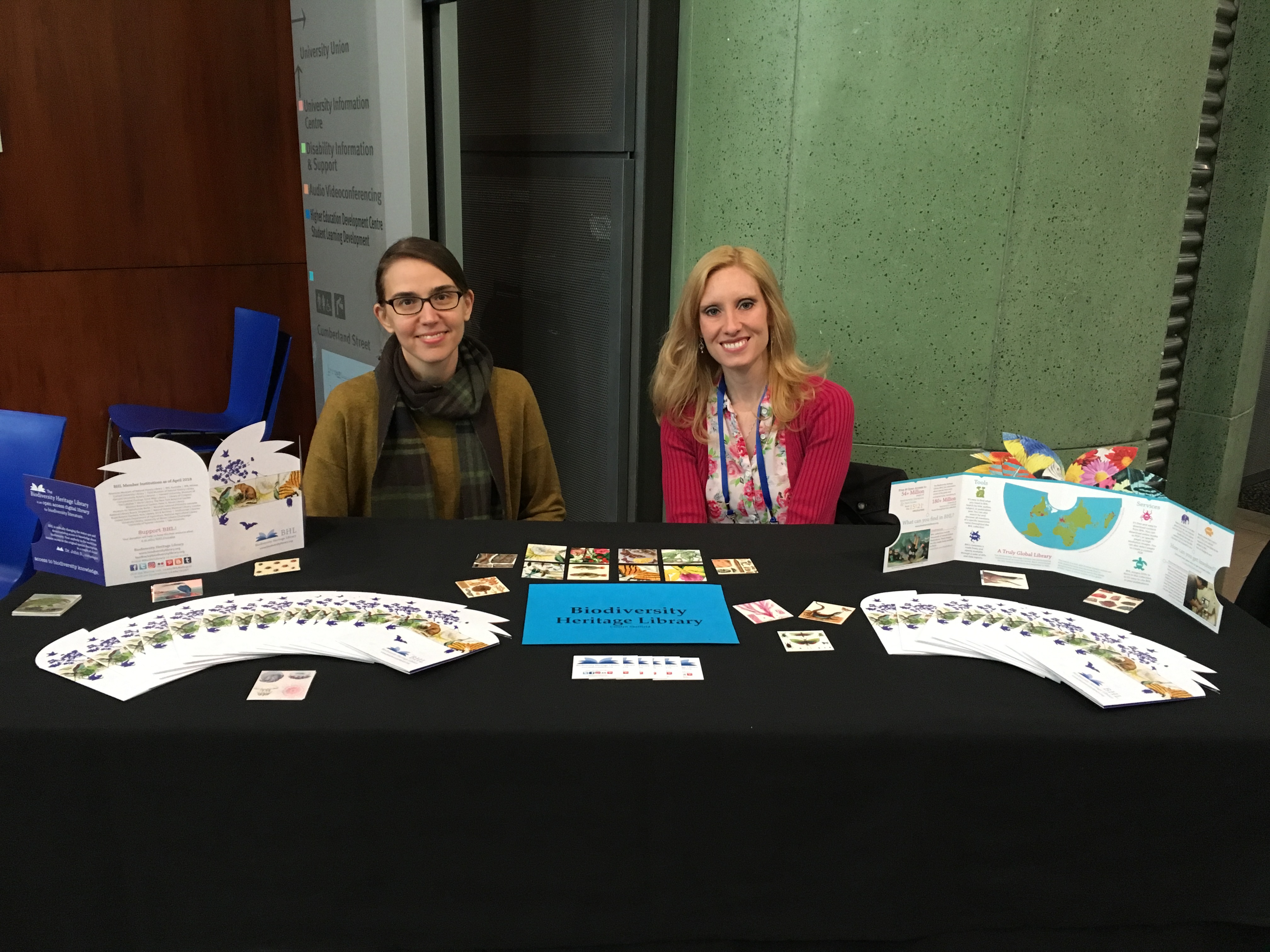
Carolyn Sheffield (left) and Grace Costantino (right) at the BHL table.

Carolyn Sheffield (left) and Grace Costantino (right) at the BHL table.

As a conference partner, BHL hosted a table during the event, which provided a valuable opportunity for representatives to talk with attendees. While most had already heard of BHL, the library was still new to some. The BHL brochure and cards were also very popular, with all supplies of each (including over 250 cards) being distributed by the end of the conference.

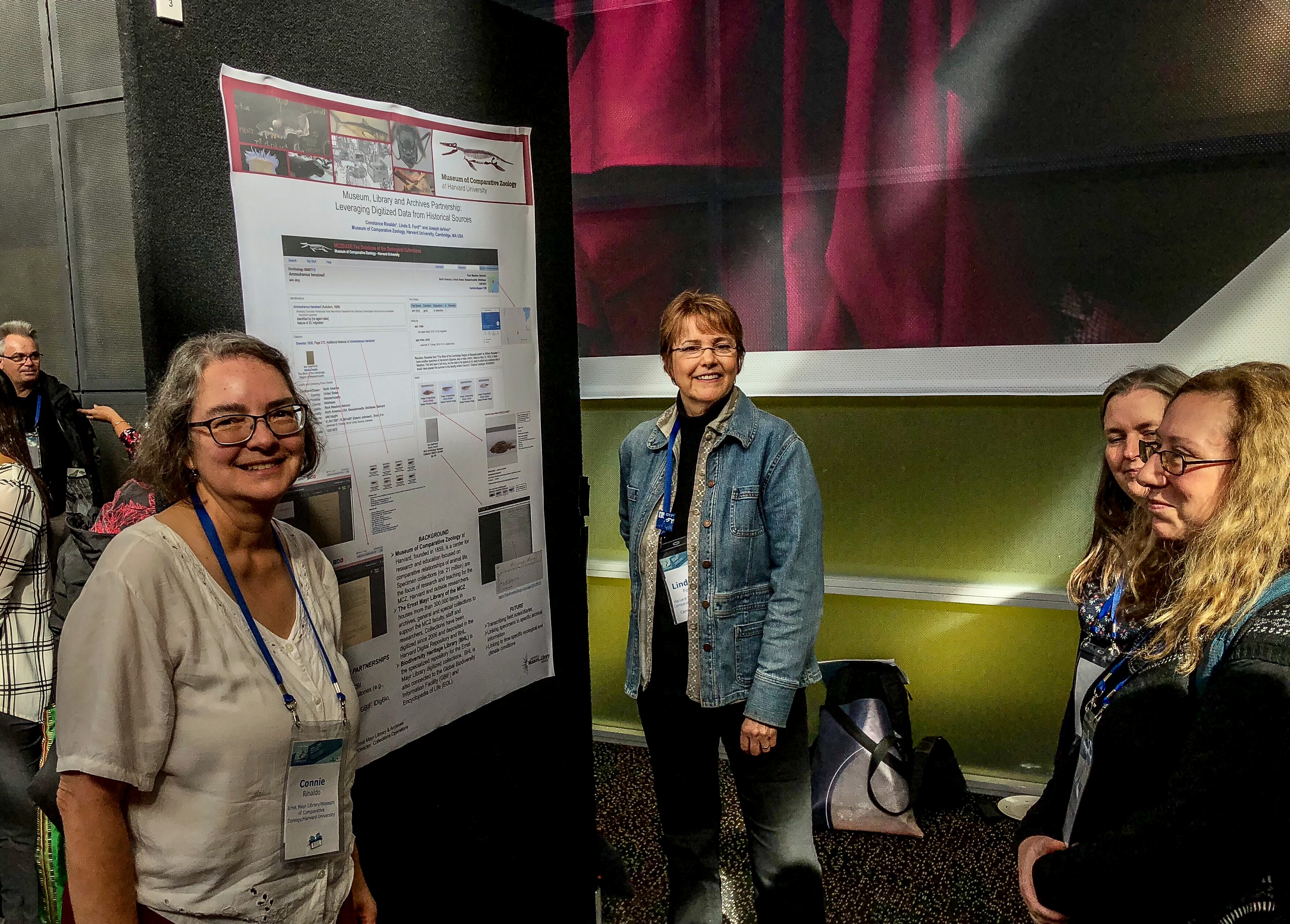
Rinaldo also presented a poster, “Museum, Library and Archives Partnership: Leveraging Digitized Data from Historical Sources”, with co-authors Linda S. Ford (Museum of Comparative Zoology, Harvard) and Joseph deVeer (Ernst Mayr Library, MCZ, Harvard) discussing projects to digitize specimen ledger pages/cards and field books and link them to relevant specimen records in order to enhance discoverability of hidden data and promote cross-discipline research with interrelated historical resources. In particular, the poster highlighted work to digitize ornithologist William Brewster’s notebooks and correspondence, make these available via BHL, and ultimately cross-link the data with the related specimen records. You can see the poster via Dropbox.

Constance Rinaldo (left) with Linda S. Ford (right) presenting their poster: “Museum, Library and Archives Partnership: Leveraging Digitized Data from Historical Sources”.

Constance Rinaldo (left) with Linda S. Ford (right) presenting their poster: “Museum, Library and Archives Partnership: Leveraging Digitized Data from Historical Sources”. Photo credit: Jeremiah Trimble.

The conference also enabled representatives to learn more about BHL’s impact on research. Many attendees shared examples of how BHL has empowered their own research, with several agreeing to share their experience as part of the BHL User series (so be sure to follow the series to learn more!).

Several attendees were also inspired to explore ways that they could contribute to BHL, such as by uploading field notes from their institution, working with the API to add literature links to collections databases, or encouraging their institutions to join BHL.

Excursions

BHL representatives had a chance to enjoy New Zealand’s amazing landscapes, culture, and wildlife through a variety of excursions.

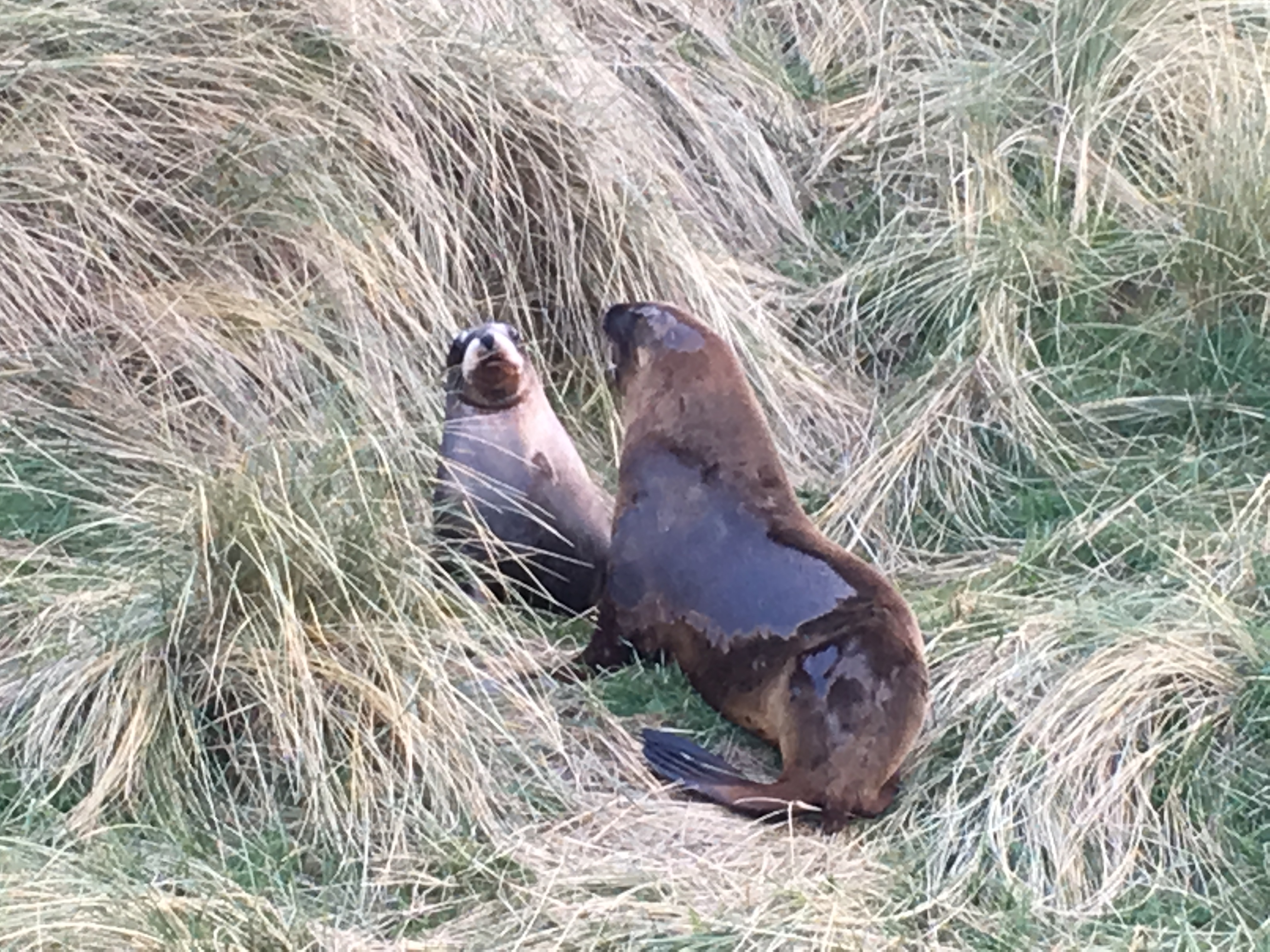
Costantino enjoyed a tour of the Otago Peninsula, where she saw New Zealand sea lions (Phocarctos hookeri), believed to be the world’s rarest sea lion, and yellow-eyed penguins (Megadyptes antipodes), an endangered species endemic to New Zealand.

Yellow-eyed penguin (Megadyptes antipodes).

Yellow-eyed penguin (Megadyptes antipodes). Photo credit: Grace Costantino

New Zealand sea lions (Phocarctos hookeri).

New Zealand sea lions (Phocarctos hookeri). Photo credit: Grace Costantino

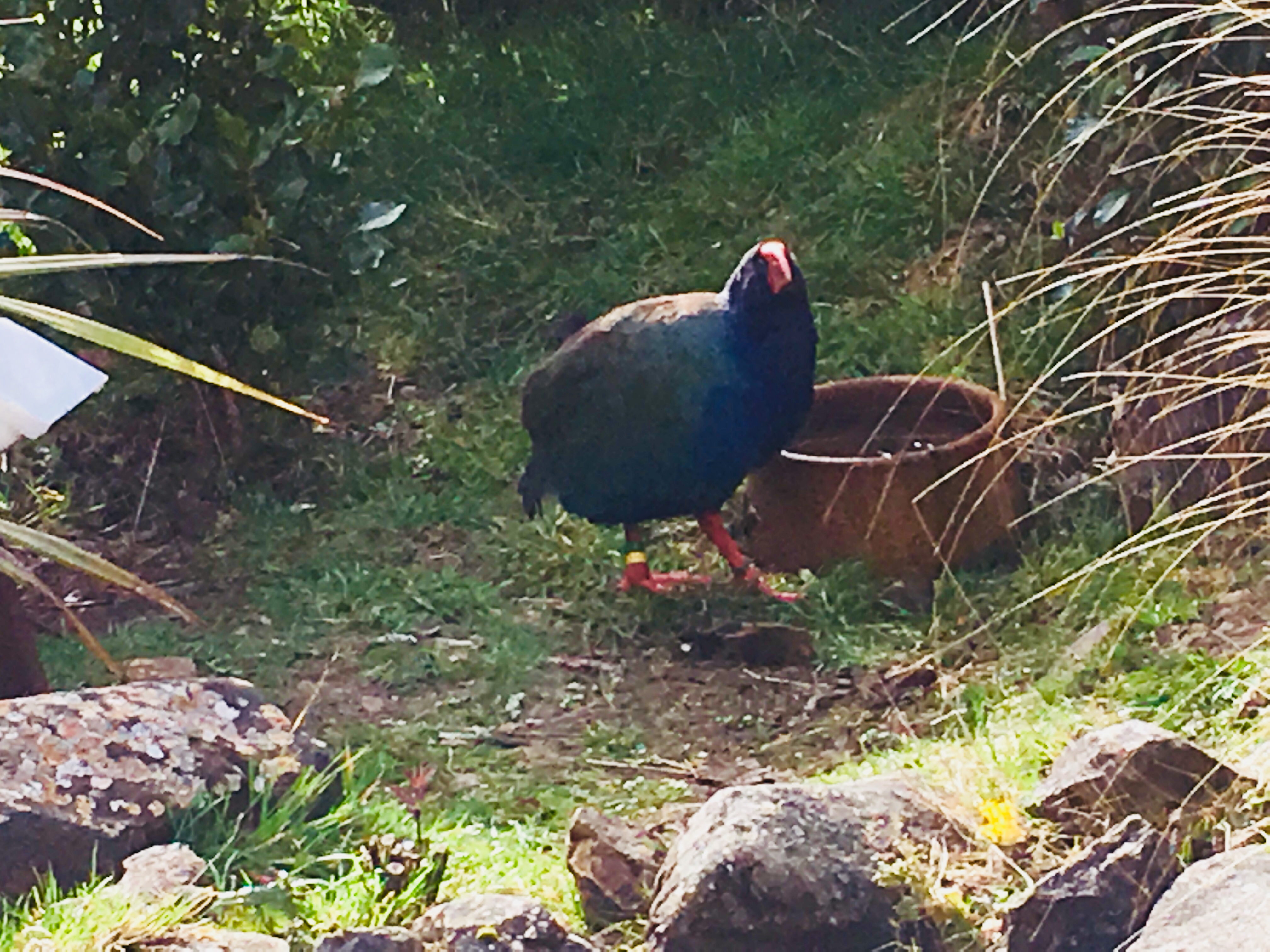
Several BHL representatives also enjoyed a visit to the Orokonui Ecosanctuary, which is home to a wide variety of New Zealand flora and fauna, including kiwis, jewelled geckos, fungi like stinkhorns, New Zealand pigeons (kererūs), kākās, tuataras, and takahēs.

Takahē (Porphyrio hochstetteri) observed at the Orokonui Ecosanctuary.

Takahē (Porphyrio hochstetteri) observed at the Orokonui Ecosanctuary. Photo credit: Constance Rinaldo.

About TDWG

Biodiversity Information Standards, also known as the Taxonomic Databases Working Group, is a not-for-profit scientific and educational association that is affiliated with the International Union of Biological Sciences. TDWG was formed to establish international collaboration among biological database projects. TDWG promoted the wider and more effective dissemination of information about the Earth’s heritage of biological organisms for the benefit of the world at large. Biodiversity Information Standards (TDWG) now focus on the development of standards for the exchange of biological/biodiversity data.

About SPNHC

The Society for the Preservation of Natural History Collections (SPNHC) is an international society whose mission is to improve the preservation, conservation and management of natural history collections to ensure their continuing value to society.

Post with contributions from Carolyn Sheffield, Constance Rinaldo, Siobhan Leachman, and Nicole Kearney.

September 20, 2018by michelle.underhill
BHL News, Blog Reel

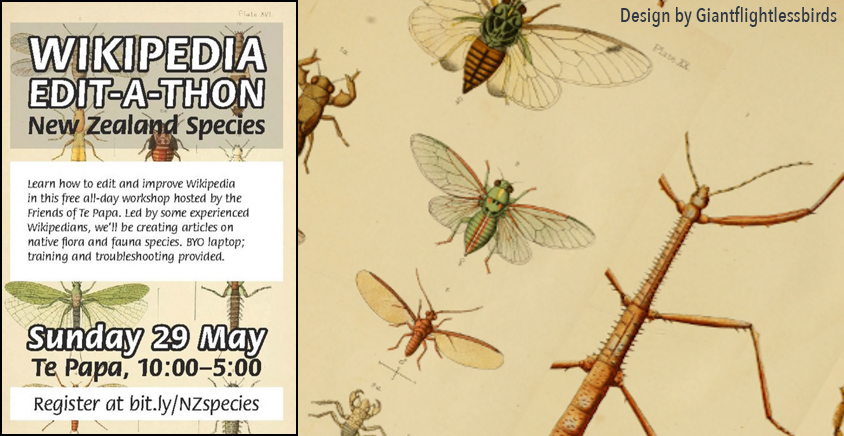
Wikipedia Edit-a-thon for New Zealand Species, 29 May 2016!

View Full Size Image

Help improve Wikipedia articles about New Zealand species!

On Sunday, 29 May 2016, the Friends of Te Papa will be hosting a Wikipedia edit-a-thon focused on adding New Zealand plant and animal species to Wikipedia. The edit-a-thon will occur from 10:00-17:00 NZST at the Museum of New Zealand Te Papa Tongarewa in Wellington, New Zealand. You can sign up here to attend in person. You can find more information about the event here.

Participants from all over the world are also encouraged to join in remotely! Follow #NZspecies on Twitter to get updates from the event as it happens as well as to ask questions while you edit Wikipedia pages. Just be sure to add the hashtag #NZspecies to the edit summary for any content you create in Wikipedia prior to saving so that your contributions can be recorded. If you’d like to participate remotely, you can add your Wikipedia username to the “Attending remotely” section at the bottom of the Wikipedia Edit-a-thon page.

BHL has lots of great resources that you can use to do research on New Zealand species and enhance Wikipedia pages. These include:

  • Images of New Zealand species. Here’s a collection of over 650 of them in Flickr. View these instructions to see how to add images to Wikicommons.
  • BHL has a wealth of publications about New Zealand.
  • Finally, need to find information about a specific species? Search for it in BHL using our taxonomic name finding tool and discover all of the publications in BHL that mention that species.

One of the edit-a-thon organizers, Siobhan Leachman (whom we’ve interviewed on our blog before in relation to her extensive citizen science activities) also recommends the following resources in BHL:

  • Illustrations of the New Zealand Flora, Vols 1 and 2 by T. F. Cheeseman. Siobhan has created a spreadsheet providing taxonomic information for the species in these images, as well as identifying which ones are needed for Wikicommons and which species are absent from Wikipedia.
  • Anything written by George Vernon Hudson but especially his classic An elementary manual of New Zealand entomology. As Siobhan says, “New Zealand endemic beetles and moths are crying out for more articles.”
  • The Ross Expedition described many New Zealand species for the first time so the publication about the expedition, Zoology of the voyage of the H.M.S Erebus and Terror, is also very useful.
  • Transactions and Proceedings of the New Zealand Institute, which, Siobhan says, “is just full of material that can be cited in Wikipedia articles.”
We’re excited to see how this event helps improve access to information about New Zealand species and how BHL’s free resources can contribute to that process and knowledge. We’d like to extend a huge shout-out to the organizers, Siobhan Leachman and Mike Dickison, for putting together this wonderful opportunity, and we hope you’ll join the fun during the New Zealand species edit-a-thon!
May 23, 2016by michelle.underhill
BHL News, Blog Reel

From Scarborough to Svjatoj Nos: BHL’s latest in-copyright additions

Portrait version of the Biodiversity Heritage Library logo.

What do the Scarborough District, tigers, Socieded Cientifica Argentina, Auckland Institute and Museum, birds and the Svjatoj Nos wetlands have in common?

Actually not much…

…except that they are the newest in-copyright additions to the BHL collection!

If you still think that BHL is strictly about legacy literature, think again. Although still a very small portion of our collection, in-copyright titles now total over 400 from 170 licensors. Please see our Permissions page to learn more about the in-copyright content in our collection.

Where possible, BHL acquires permission in the form of a signed license agreement from copyright holders to digitize post-1922 publications. These publications are available for open access under a Creative Commons Attribution-NonCommercial-ShareAlike 4.0 (CC BY-NC-SA 4.0) license. Users are welcome to reuse the in-copyright content in BHL so long as they adhere to the terms of the CC license, meaning:

  • you attribute the content to the copyright holder,
  • use the content for non-commercial purposes such as educational or personal use
  • share the content under the same license (CC-BY-NC-SA 4.0)

Our latest (bio)diverse mix of titles hails from all over the world:

The Natural History of the Scarborough District
Since 1889, the Scarborough Field Naturalists’ Society has encouraged the organization of “amateur naturalists’ with interests throughout the spectrum of natural history.” BHL is pleased to include this publication in our collection as we feel we are the perfect place for these types of smaller scholarly society publications.

Tracking tigers : a review of the status of tiger, Asian elephant, gaur, and banteng in Vietnam, Lao, Cambodia, and Yunnan (China), with recommendations for future conservation action by Will Duckworth and Simon Hedges (1998)
In 1998 the World Wildlife Fund (WWF) Indochina programme commissioned a report on the status of large mammals. “It was an incredible piece of work and represents an expertly pieced together compilation of data and information from every source possible” explains Michael Baltzer, Director of the WWF Tigers Alive Initiative. As the first in-copyright WWF publication to become a part of the BHL collection, we hope this is a good sign for additional WWF publications to come.

Anales de la Sociedad Cientifica Argentina
A pioneering institution for scientific study in Argentina since 1872, the Sociedad Cientifica Argentina has published its Anales for over 130 years. BHL is thrilled to be able to provide this complete publication through the present day. Digitization of the Anales is underway and should be available shortly.

Bulletin of the Auckland Institute and Museum and Poirieria
The Auckland Museum Institute dates back to 1867 when it assumed the management of the Auckland Museum and became the regional representative of the Royal Society of New Zealand. Its Bulletin covers a spectrum of topics related to natural and human history. The Auckland Shell Club was formed in 1931 as a section of the Auckland Museum Institute, dedicated to “all things molluscan, ie: shell collecting (recent and fossil), conchology and malacology (study of shells and shellfish), and molluscan ecology and conservation.” These publications will be available in BHL soon.

Ornithological Society of Turkey Bird reports and Ornithological Society of Turkey Bulletins 
In 1978, the Ornithological Society of the Middle East (OSME) formed as a successor to the Ornithological Society of Turkey. Its purpose is to promote research and address conservation issues for birds in the region between, “between Europe, China and the Horn of Africa on two major migration flyways crossing Central Asia’s wind-swept steppes, the Caucasus’s towering mountains, Arabia’s wide arid deserts and the tropical seas of the Indian Ocean.” Previously, the OSME gave permission for BHL to include Sandgrouse and its Bulletin in our collection. It has now added 2 more titles, published under its former name. Please stay tuned for digital copies of the Bird reports and Bulletins to appear in the coming weeks.

Ecology of the Svjatoj Nos wetlands, Lake Baikal by J. Mlíkovský & P. Stýblo (eds.)

View Full Size Image

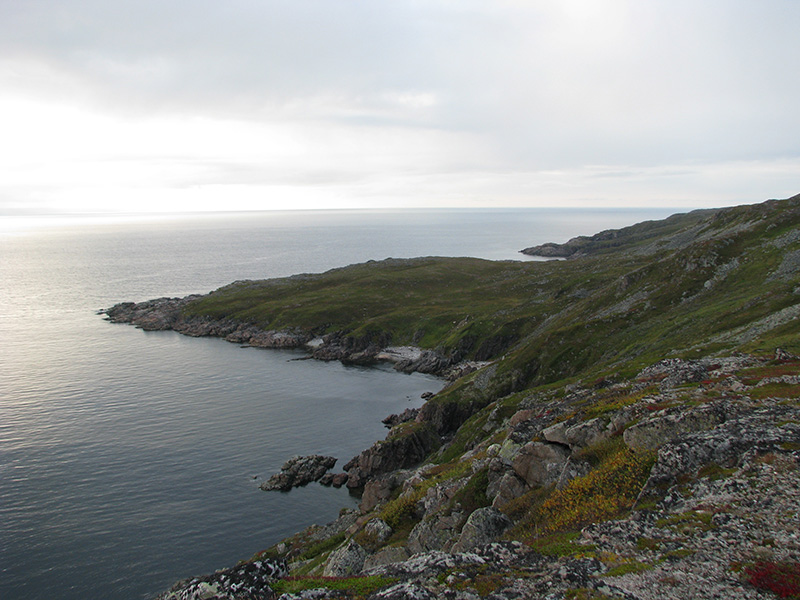
These stunning wetlands are located on the Kola Peninsula along one of the most northeastern coasts in Russia. BHL is pleased to make this work available in our collection soon.

Digitization is in progress for these titles and you can see them appearing via our recent additions list.

Want to see more in-copyright content in BHL? Let us know what you’d like to see!

October 22, 2015by [email protected]
Blog Reel, Campaigns, Featured Books

World Oceans Day through Books: The Truth about Terra Australis

This post is the second in our series leading up to the celebration of World Oceans Day on June 8. This series explores publications that represent important milestones in the progress of marine bioscience research and ocean exploration.

The Quest for Terra Australis: The Expeditions of James Cook

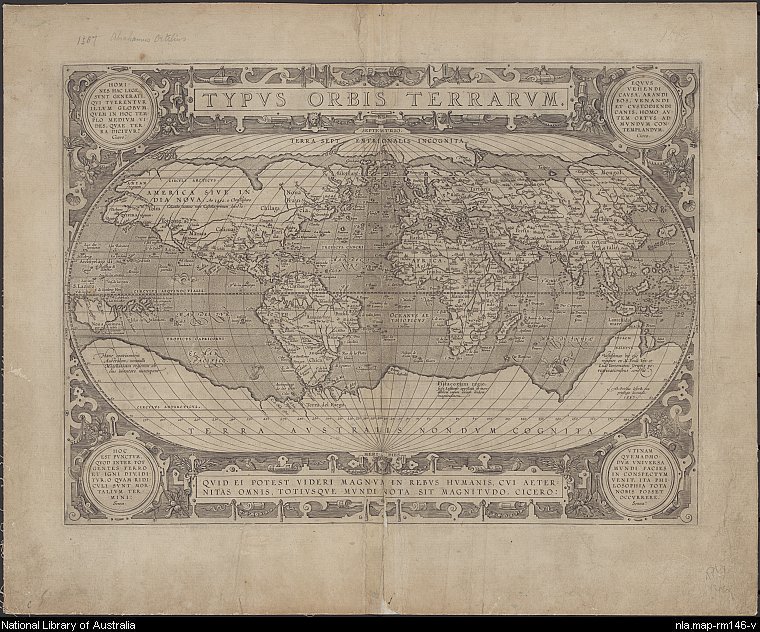
As far back as antiquity, Western scholars theorized the existence of a great southern continent that they called Terra Australis. While the continent found its way onto many early European maps, this presentation was not based on actual surveys but instead the hypothesis that landmasses in the Northern Hemisphere must be balanced by respective landmasses in the Southern. Depictions generally included a single landmass encompassing the South Pole and spreading far north to include Australia, New Zealand and, at its most extreme, even Tierra del Fuego.

View Full Size Image
Map showing imagined Terra Australis. Ortelius, Abraham, 1527-1598. Typus orbis terrarum. Quid ei potest videri magna in rebus cui alter nitas omnis, totiusque mundi nota sit mangitudo. Cicero [cartographic material] 1587. MAP RM 146. http://nla.gov.au/nla.map-rm146. National Library of Australia.

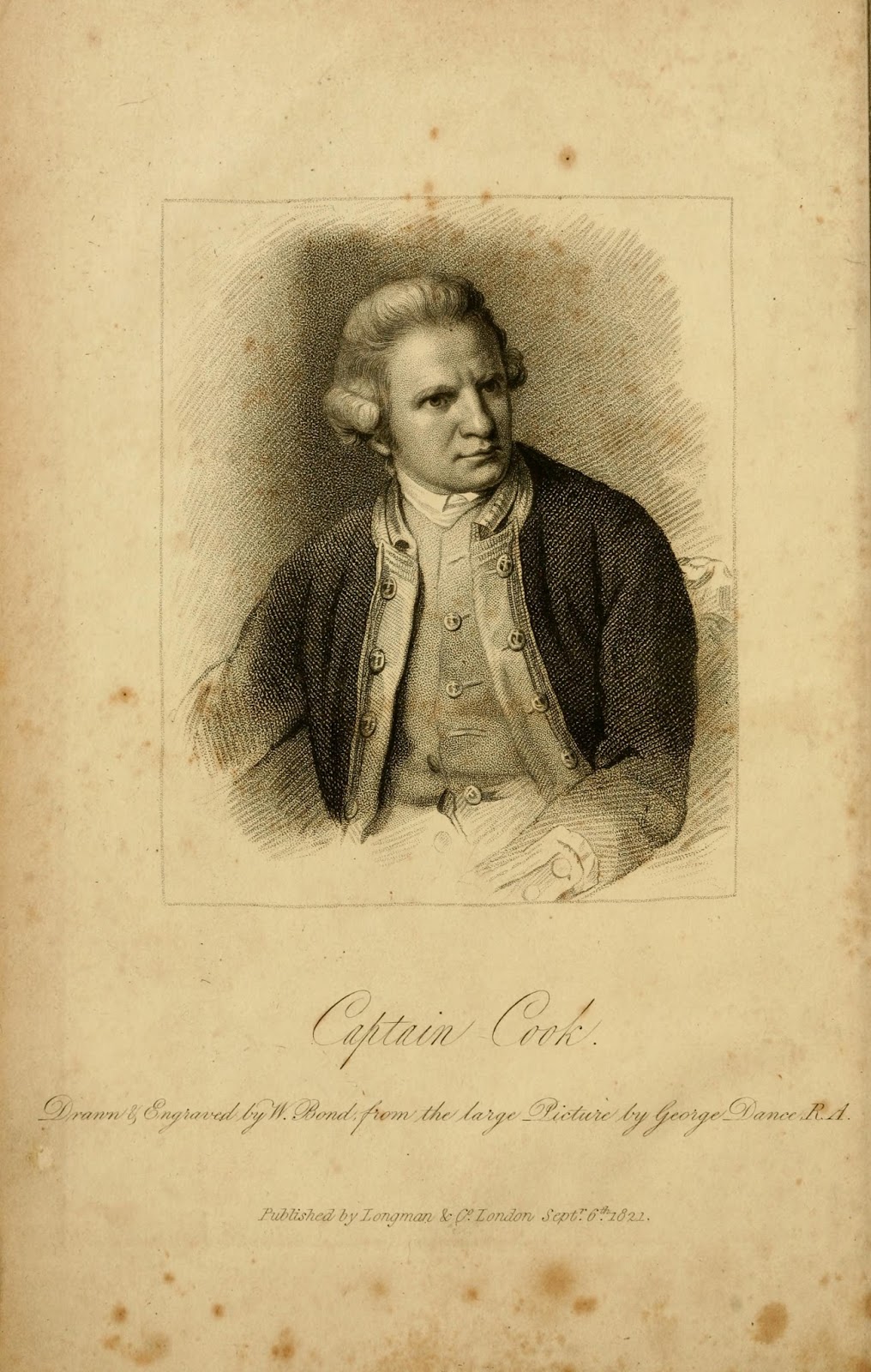
By the mid-18th century, some Europeans claimed to have seen this great southern continent, but details were scarce and verification virtually non-existent. The intrigue prompted the British Admiralty and Royal Society to direct Lieutenant James Cook, as part of a larger mission from 1768-71 to observe the transit of the planet Venus from Tahiti, to search for Terra Australis.

View Full Size Image
Portrait of James Cook. The three voyages of Captain James Cook round the world. v. 1. 1921. http://biodiversitylibrary.org/page/6227900.

In September 1769, Cook’s ship, the Endeavour, reached New Zealand, after which Cook spent six months circumnavigating the island to ultimately establish that it was not, as was commonly believed, part of the “southern continent.” From New Zealand, Cook and his crew sailed towards Australia, becoming the first recorded Europeans to reach the Australian east coast in April 1770. Sailing north, Cook charted over 5,000 miles of coastline and further demonstrated that Australia and New Guinea were not connected.

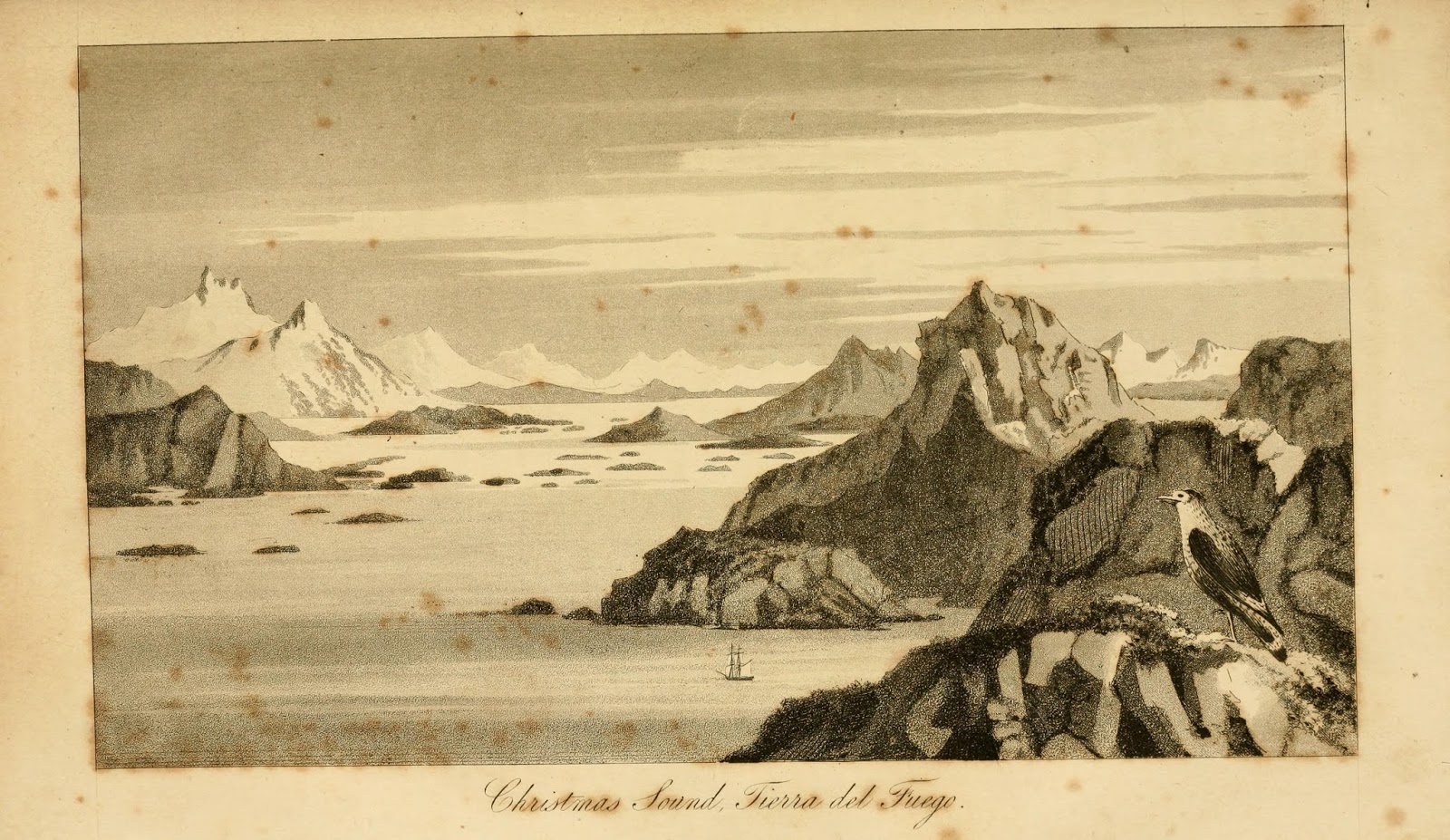
Cook went on to command two additional expeditions, the second of which (1772-75) brought Cook closer to the South Pole than any recorded previous navigator, finally disproved the existence of a large southern continent as expansive as the envisioned Terra Australis, demonstrated that chronometers were a practical means of determining longitude at sea, and laid the foundations for a modern map of the South Pacific, thus paving the way for future explorations in the area.

View Full Size Image
Cook, James. Christmas Sound, Tierra del Fuego. From Cook’s second voyage (1772-75). The three voyages of Captain James Cook round the world. v. 4. 1921. http://biodiversitylibrary.org/page/6258591.

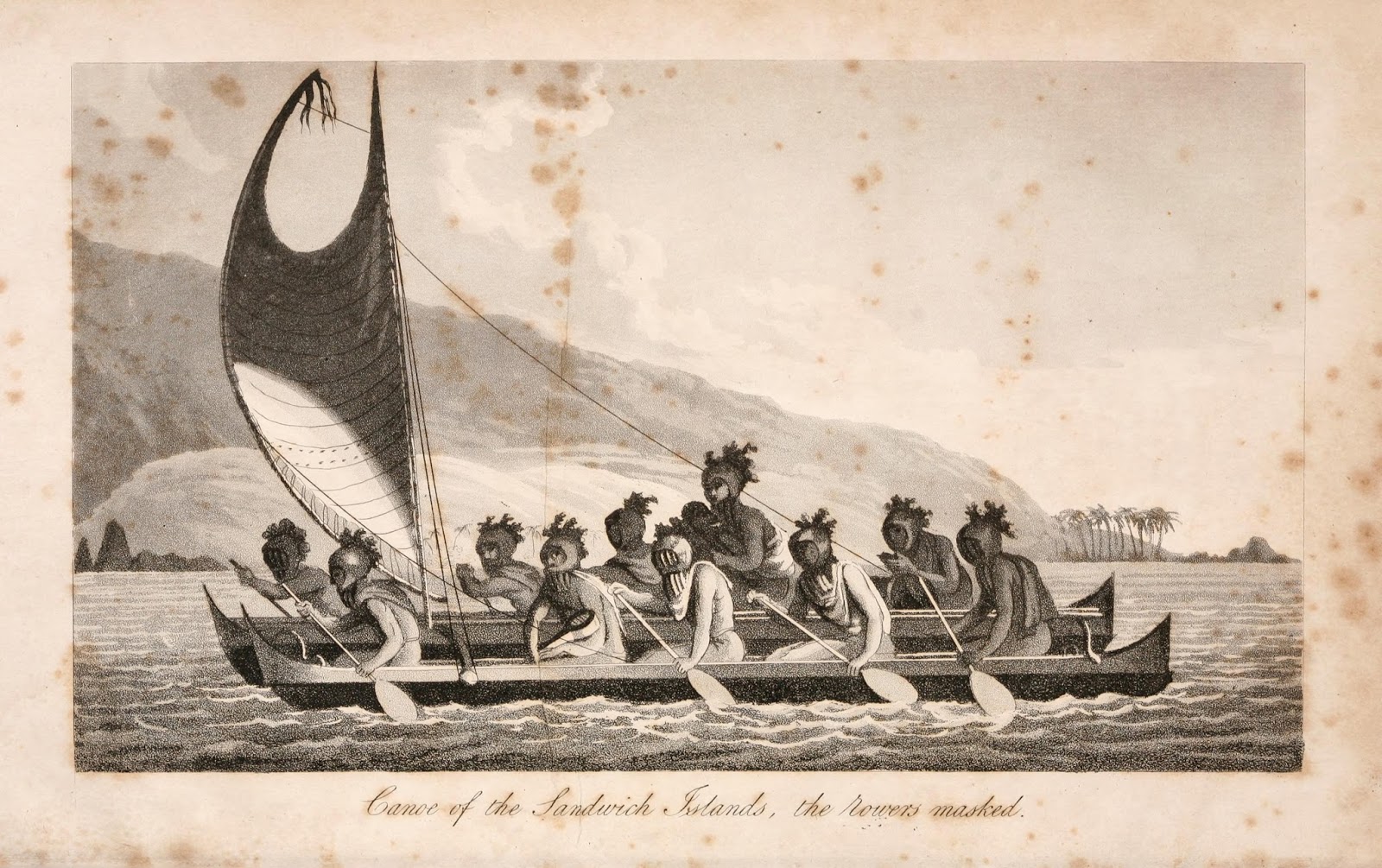
Cook’s third and final voyage (1776-80) attempted to discover the elusive northwest passage. Although he was unsuccessful, he did become the first recorded European to visit the Hawaiian Islands and charted the coast of northwest America. Tragically, Cook was killed on the return voyage during a confrontation on the Hawaiian Islands on 14 February 1779.

View Full Size Image
Canoe of the Sandwich (i.e. Hawaiian Islands). From Cook’s third voyage (1776-80). The three voyages of Captain James Cook round the world. v. 6. 1921. http://biodiversitylibrary.org/page/1803270.

Cook’s achievements did much to pave the way for future oceanic exploration, especially around Australia. He helped lift the veil of uncertainty surrounding “Terra Australis,” and helped to establish a viable method by which to more easily navigate the oceans (via a chronometer). Furthermore, by methodically enforcing cleanliness and ventilation on his ships and a balanced diet for his crew, he dramatically improved the living conditions and health of his crew and set new standards for future expeditions.

An account of Cook’s three voyages, taken in part from his journals, are available in the seven volumes of The Three Voyages of Captain James Cook around the World (1821).

Exploring Oceania: Voyage of the Astrolabe

Following Cook’s expedition, France and England vied intensely for southern possessions, resulting in many expeditions that expanded our knowledge of the oceans and marine life around Australia and New Zealand.

Early French expeditions to the region included the 1800-1804 cartographic survey of Australia’s coastline, under Nicolas Thomas Baudin, which resulted in the first published detailed chart of Australia, and the voyage of the Coquille from 1822-25, under the command of Louis Isidore Duperrey. Navigator Jules-Sébastien-César Dumont d’Urville served as second-in-command on the Coquille expedition, and just two months after its return, d’Urville requested a second voyage to the South Seas, this time with him in command.

View Full Size Image
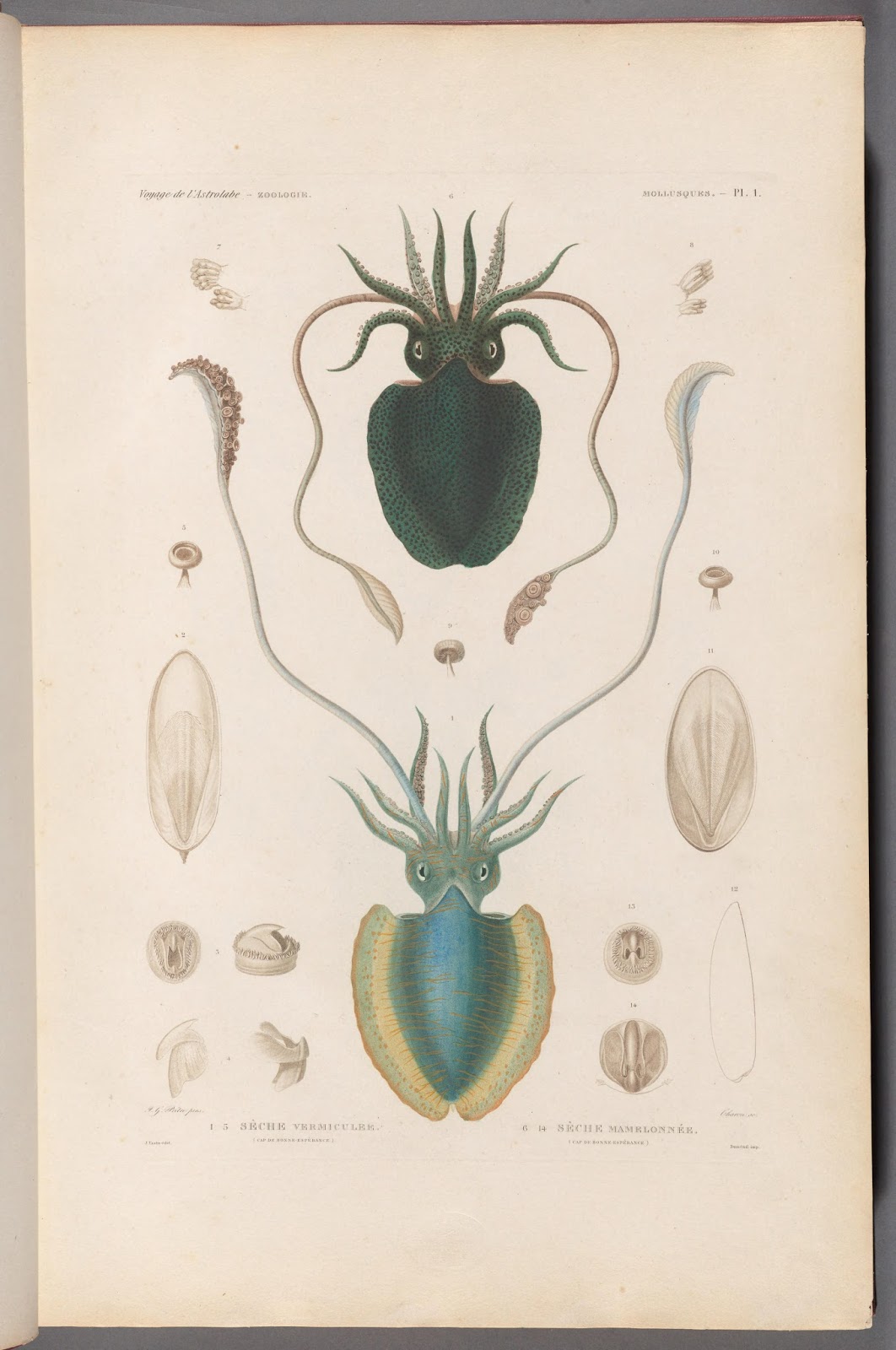
Cuttlefish. Dumont d’Urville, Jules-Sébastien-César. Voyage de la corvette l’Astrolabe : exécuté par ordre du roi, pendant les années 1826-1827-1828-1829. 1830-34. http://biodiversitylibrary.org/page/46298902.

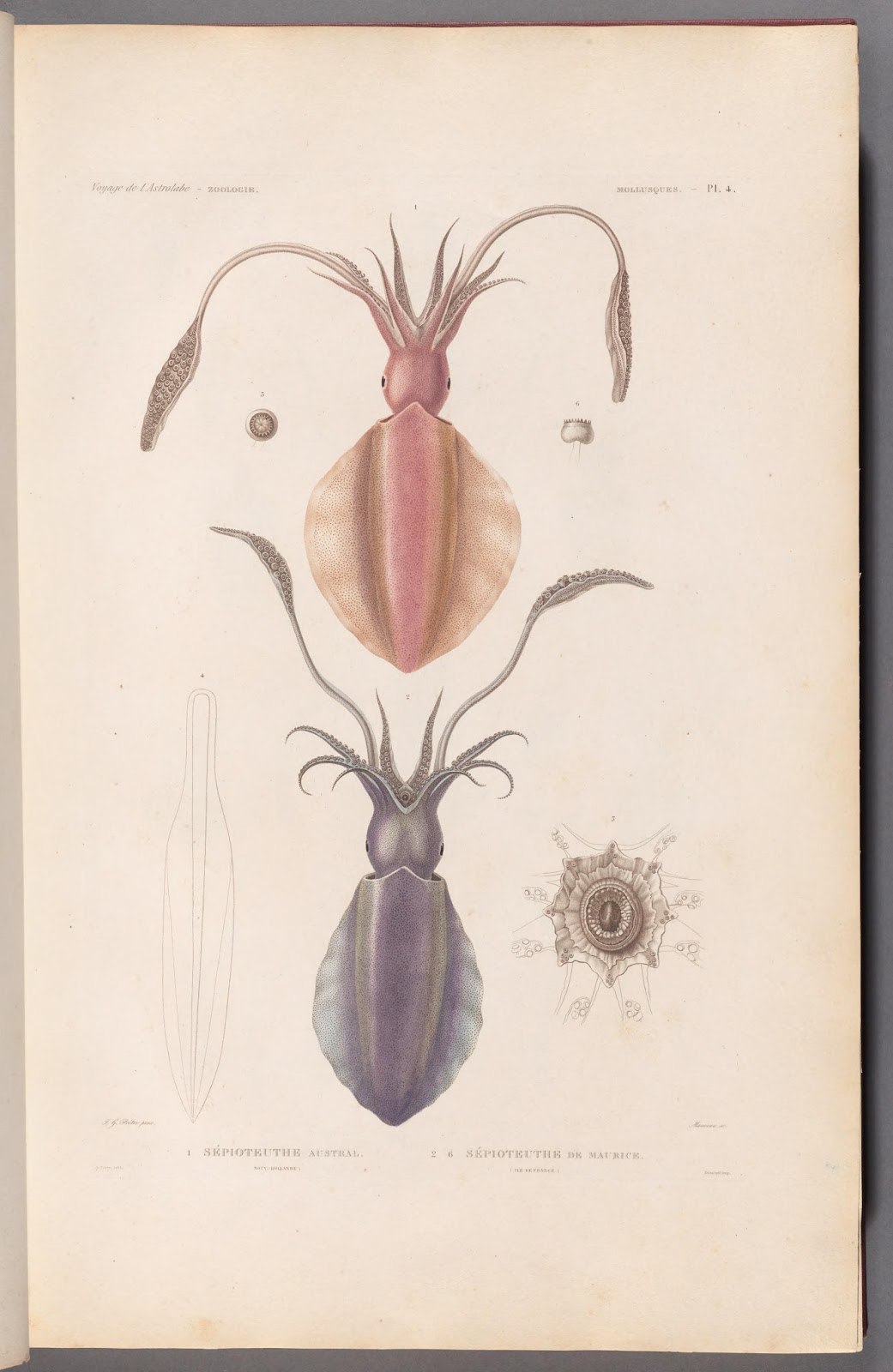
In 1826, the Coquille, renamed the Astrolabe, set sail with a mission to chart the unknown regions of Oceania. This time, the expedition also included many worthy naturalists, including Pierre Adolphe Lesson, Jean René Constant Quoy, and Joseph Paul Gaimard. The expedition resulted in the discovery of many new-to-science species in Oceania, important ethnographic studies, and “the first tentative speculations as to how coral reefs and atolls could have formed in the middle of the deep tropical oceans” (Stiassny, 51). The expedition’s findings were published in a fourteen-volume series from 1830-34, entitled Voyage de la corvette l’Astrolabe.

View Full Size Image
Reef Squids. Dumont d’Urville, Jules-Sébastien-César. Voyage de la corvette l’Astrolabe : exécuté par ordre du roi, pendant les années 1826-1827-1828-1829. 1830-34. http://biodiversitylibrary.org/page/46298896.

More World Oceans Day Resources

  • Follow us on Twitter, Facebook, and this blog all this week as we explore marine biodiversity and awesome related publications in BHL.
  • Check out some monumental publications in historic and present-day marine bioscience research in our BHL collection.
  • Browse a selection of marine biodiversity illustrations in Flickr and Pinterst
June 2, 2015by michelle.underhill
Blog Reel, User Stories

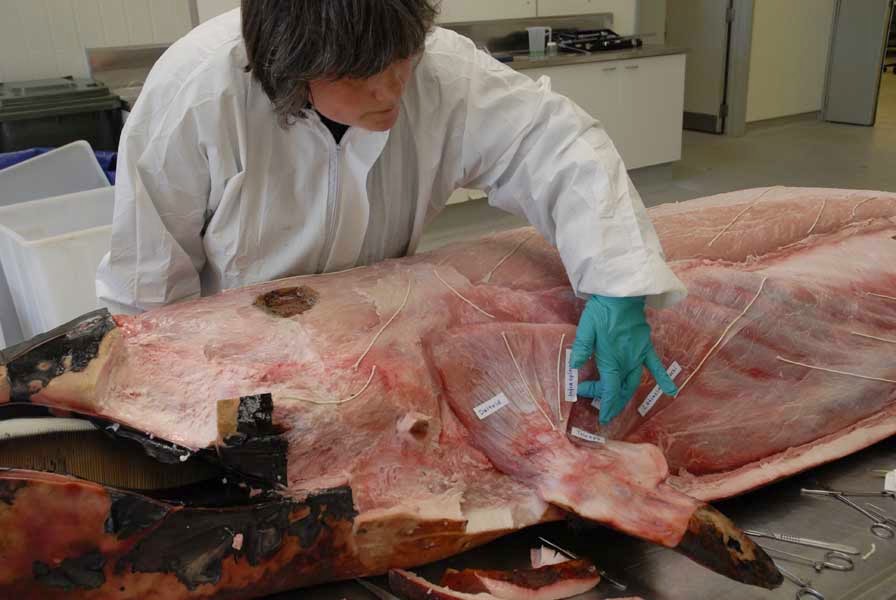
No Flippant Matter: The Re-Invention of the Flipper and Why Ceatacean Flippers Are Unique

Cetaceans are not closely related to other aquatic vertebrates and represent a unique lineage derived from hoofed land mammals that returned to an aquatic lifestyle about 50 million years ago (Thewissen, 1998). The transition from land to water, i.e. the development from weight-bearing forelimb with five hoofed toes to tissue-encased flipper not capable to support locomotion on land, is well documented by fossils (Thewissen et al., 2001, 2009) and very different from other aquatic vertebrates. Consequently many morphological characteristics that cannot be detected in fossils have remained little documented or speculative. Freed from the constraints of gravity and the developmental links to the hind legs, there is also a persistent anatomical plasticity in the flipper of modern cetaceans, showing substantial skeletal disparities sometimes even within the same population or pod (Cooper et al., 2007). Although there are a small number of morphological studies investigating the flipper in extant cetaceans, the understanding of functional morphology in this group has so far remained largely unresolved.

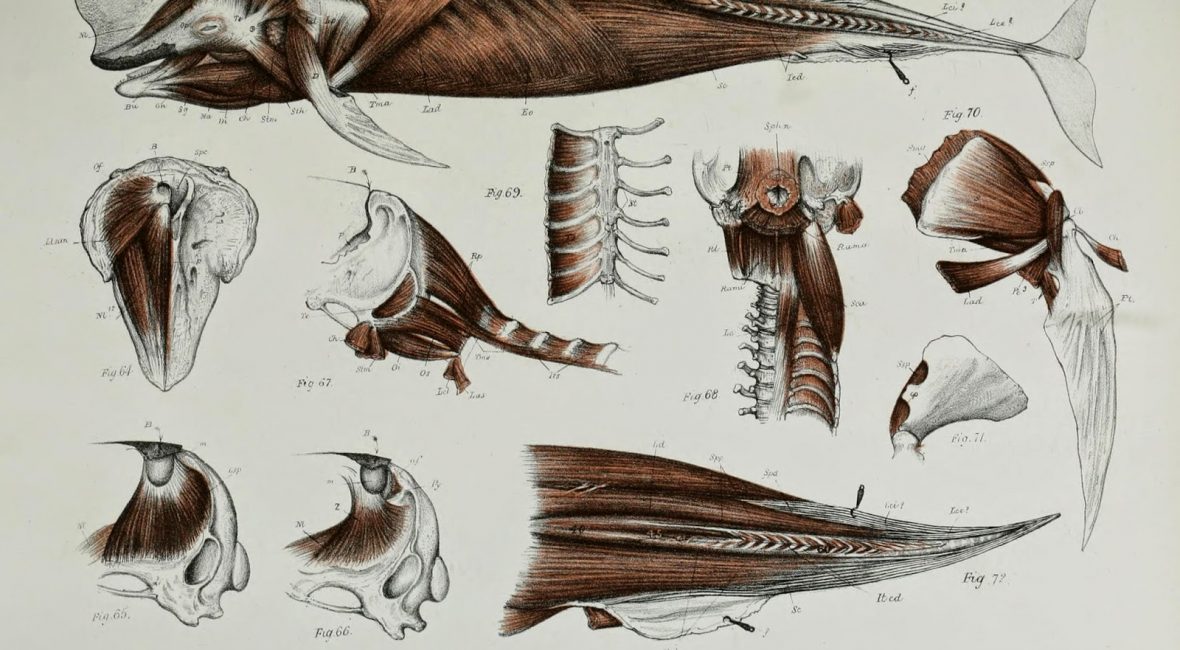
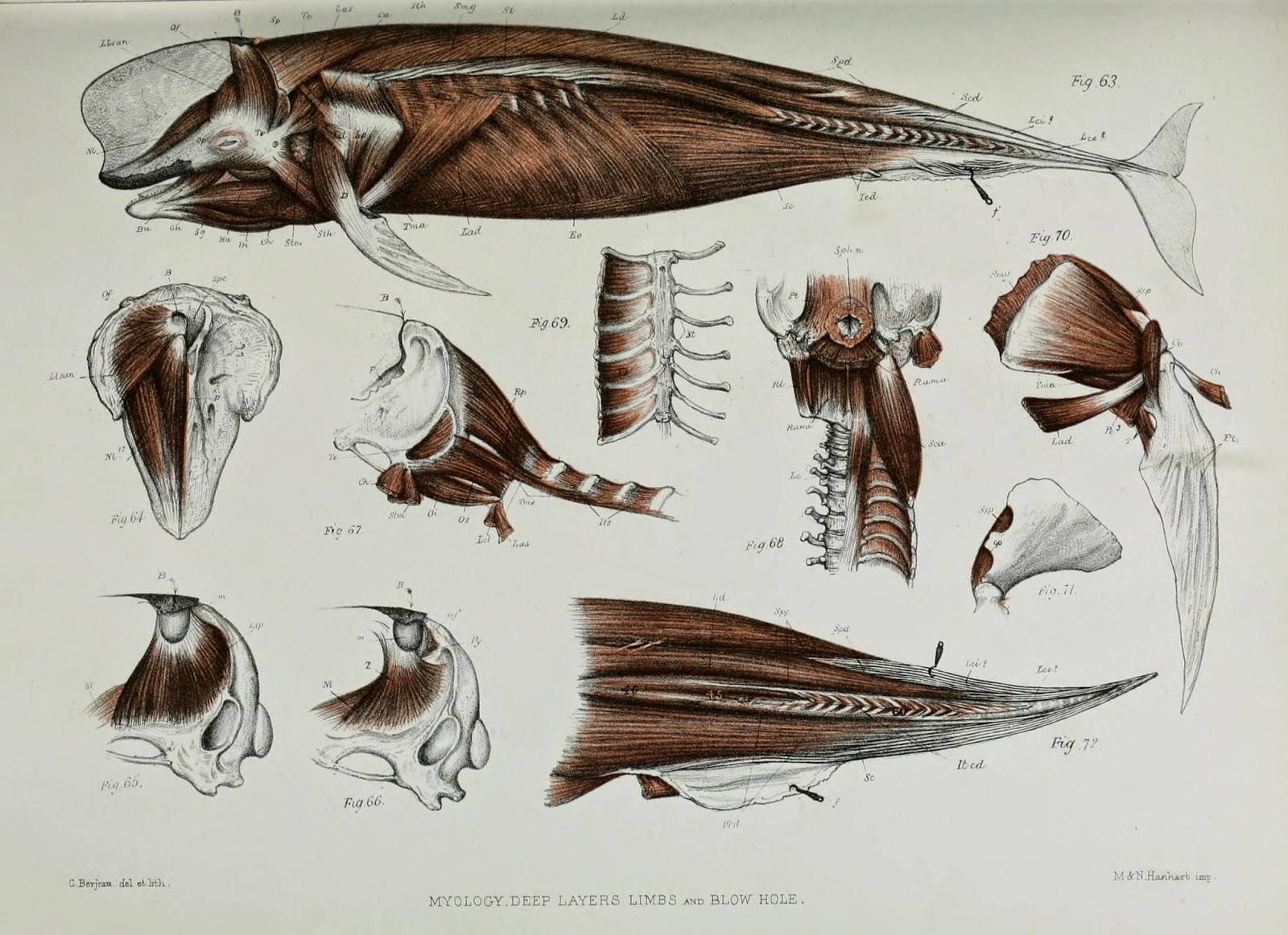
There are less than two dozend studies that include odontocete (toothed whales and dophins) forelimb myology (soft tissue studies). About half are classical works (Howell, 1927, 1930; Murie, 1870, 1873; Schulte and Smith, 1918; Stannius, 1849; Struthers, 1873), most of them available at BHL, and a few are more modern (Benke, 1993; Klima et al., 1980; Pilleri, 1976; Pilleri et al., 1976; Smith et al., 1976; Sokalov and Rodionov, 1974; Strickler, 1978).

View Full Size Image
Myology, deep layers, of limbs and blow hole in the long-finned pilot whale (Globicephala melas). Murie, James. “On the Organization of the Caaing Whale, Globiocephalus melas.” Transactions of the Zoological Society of London. v. 8 (1872). http://biodiversitylibrary.org/page/28778656.

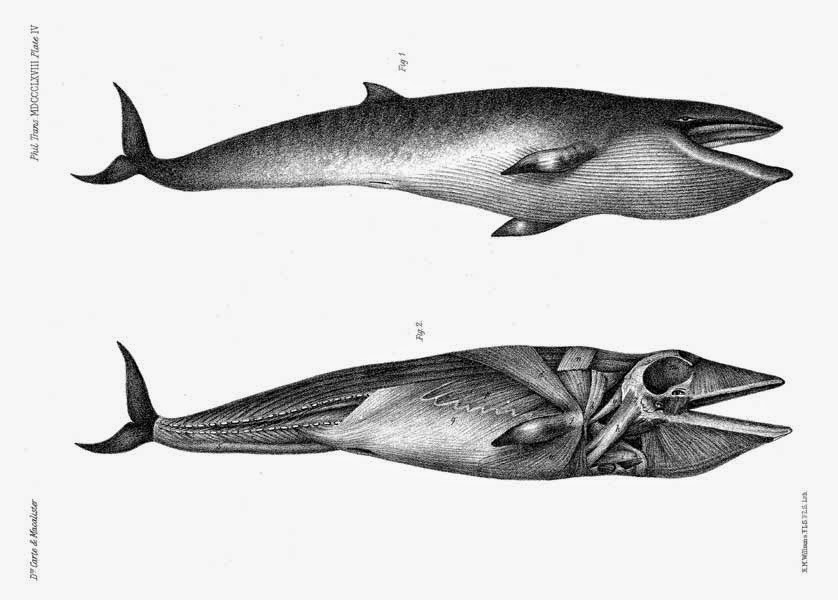
Among mysticetes (balaeen whales) the lack of data is particularly apparent. The few accounts that include soft tissue are limited to rorquals (Benke, 1993; Carte and Macalister, 1868; Kükenthal, 1921; Perrin, 1870; Schulte, 1916; Struthers, 1888, 1889) and right whales (Kükenthal, 1922; Struthers, 1878) – except Benke all are nearly or over a century old.

View Full Size Image
Drawing of and lateral view of myology of Balaenoptera rostrata. Alexander Carte and Alexander Macalister. On the Anatomy of Balaenoptera rostrata. Phil. Trans. R. Soc. Lond. January 1, 1868(158). 201-261. http://rstl.royalsocietypublishing.org/content/158/201.full.pdf+html.

The question of how cetaceans transitioned from a weight-bearing leg to a flipper is one of considerable interest to Moyna K. Müller, a PhD student at the Geology Department, University of Otago, New Zealand.

Müller has been studying cetaceans for the past four years, with particular interest not only in the transition of the weight bearing leg to flipper (evo-devo), but also comparative muscoskeletal arrangement of the shoulder and forelimb and functional analysis of the flipper. Her research requires access to historic literature that forms the basis of her comparative analysis and provides access to data from morphological studies done in the past. Gaining access to this literature used to present a challenge for Müller, until she discovered the Biodiversity Heritage Library.

View Full Size Image
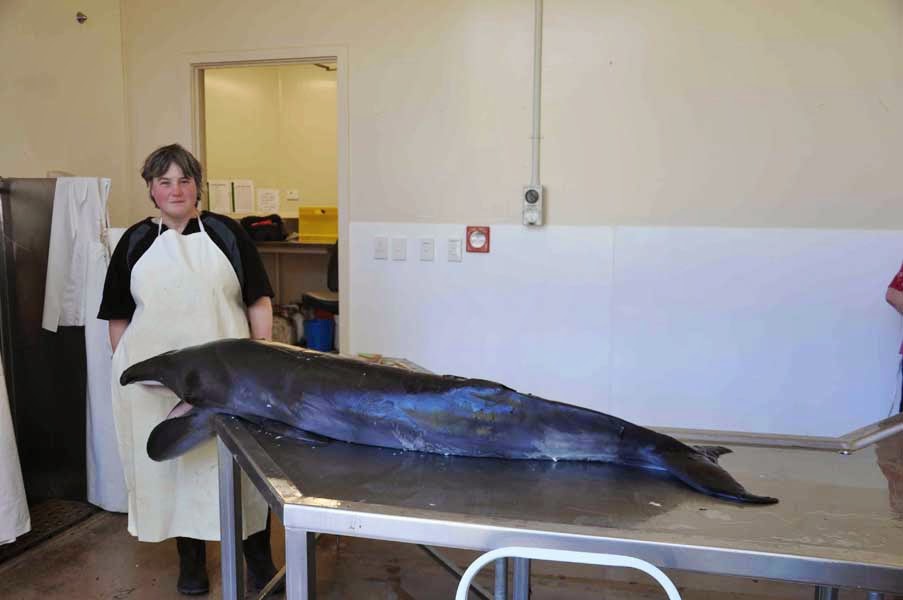
Moyna K. Müller, a PhD student at the Geology Department, Otago University, New Zealand at the Ag research centre Invermay, Mosgiel, with a neonate pygmy right whale. Photo by Cheng-Hsiu Tsai.

“[I discovered BHL] at the beginning of my studies when I couldn’t get an article and in desperation told a fellow student in our group, who then put me onto your website. Since then I felt like a kid in a lolly shop,” praises Müller. “[There are] way too many things to look at distracting me from my studies.”

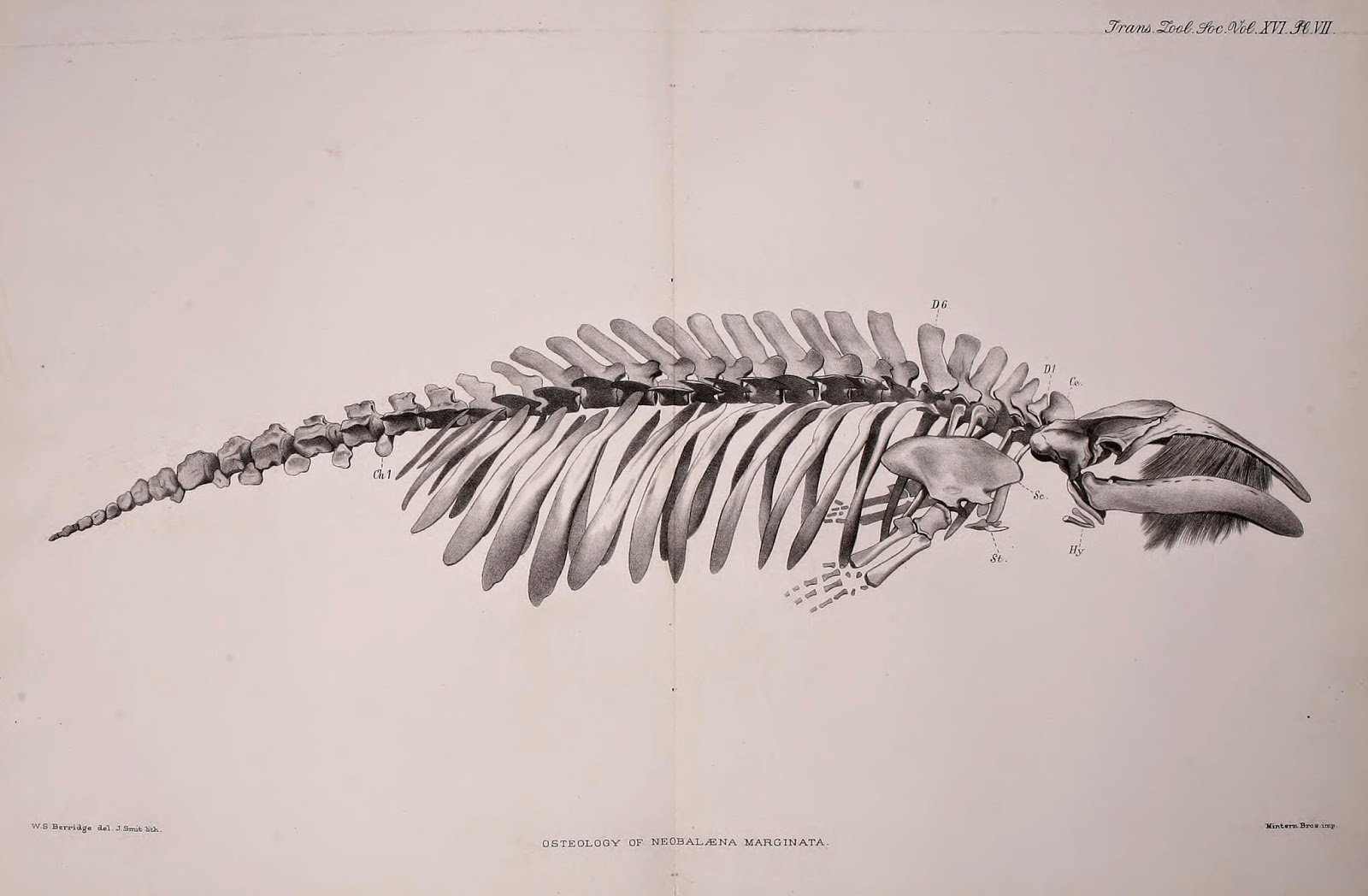
Recently those studies have included work on the pygmy right whale, Caperea marginata, the least known and most elusive of all baleen whales. This species is only known from isolated remains, infrequent solitary strandings, and few sightings, thus sharply contrast with all other baleen whales that are known from a multitude of live observations, captures and strandings (Baker, 1985). The earliest descriptions of this cryptic whale were based on beach-cast fragments associated with a convoluted taxonomy and nomenclature only applied correctly as Caperea marginata from 1930s onwards (Beddard, 1901; Gray, 1873; Rice, 1998). The divergent external appearance and skeletal disparity of the pygmy right whale warrant hereby separation from the true right whales (Balanidae) into a discrete family (Neobalaenidae Gray 1873), separating C. marginata from all other living mysticete families (Balaenidae, Eschrichtiidae and Balaenopteridae). However, only recently has C. marginata also been associated with an otherwise extinct fossil family (Cetotheriidae) (Fordyce and Marx, 2013). It is with this family that the pygmy right whale also shares some of the most striking fatures of the postcranial skeleton, namely the shoulde blade and the ribs (Bouetel and de Muizon, 2006; Gol’din et al., 2013).

View Full Size Image
Osteology of the Pygmy Right Whale Caperea marginata. Beddard, FE. “Contribution towards a knowledge of the osteology of the pigmy whale (Neobalaena marginata).” Transactions of the Zoological Society of London. v. 16 (1901). http://biodiversitylibrary.org/page/32663067.

Müller confides that, to support her work, she uses BHL “too often to count,” downloading PDFs of papers, whole articles, and high resolution images from our collection. The material is invaluable to her research.

“A lot of older literature I cannot get anywhere else, and without it I would sometimes have no basis for comparative analysis or I would not be able to confirm the validity of citations by other authors,” explains Müller. “This was particularly the case when working on the pygmy right whale (Caperea marginata). Apart from the pygmy right whale’s convoluted taxonomy, there are only three detailed descriptions of the shoulder musculature of any baleen whale – two of them (also the most detailed ones) are about a hundred years old (Carte and Macalister 1868 and Schulte 1916).”

When asked to describe her favorite BHL feature, Müller could not narrow it down to a single service (something we love to hear!). She not only finds it easy to locate the journals she needs but also, once she has found a title of interest, quickly determines what volumes are available. She also likes the visually-attractive images displayed throughout the website (even the “stunning fish” displayed on our “item not found” page), as well as the ‘news’, ‘today’s picks’ and ‘featured collections’ components. Finally, she was particularly complimentary of our feedback service (shout-out to Jackie Chapman, our BHL Collections Librarian who triages all of our feedback), describing it as “fast, friendly and very competent.”

View Full Size Image
Moyna K. Müller labelling shoulder muscles of a juvenile pygmy right whale at the Museum of New Zealand (Te Papa). Photo by R. Ewan Fordyce.

Likewise, Müller could not name a single-favorite item in BHL. As she describes:

“The problem in my field is that there is no complete work I could use as the fundament for my own work, but rather a host of different articles that cover some aspects, e.g. osteology (van Beneden, 1880, Ostéographie des Cétacés vivant et fossils), or myology (Carte, A. and A. Macalister, 1868, On the anatomy of Balaenoptera acutorostrata or Schulte, H. v. W., 1916, Anatomy of a foetus of Balaenoptera borealis), and equally important the description of little described whales and dolphins (many articles by e.g. W. H. Flower, F. J. Knox, J. Hector, J. E. Gray in various volumes of Transactions and Proceedings of the New Zealand Institute or The Annals and Magazine of Natural History).”

Thus, the ability to retrieve all of these works and more is critical to Müller’s research success. BHL makes that possible.

Finally, Müller did offer a wonderful suggestion for a way to improve BHL, particularly in relation to the many foreign works available.

“You have quite a bit of foreign literature. [It’s] no problem for me to translate e.g. German or French, but it might be worth considering creating an option to upload translations, or a summary created by researchers in that field who do speak that particular language and are familiar with the terminology in their field, since a crude translation or summary is still better than none for somebody who doesn’t speak that language at all.”

As we continue to explore more and more crowdsourcing opportunities within our BHL community, and investigate ways to allow our users to help us improve our collections and services, the ability to add translations, transcriptions, and annotations are just some of the features we’re considering for our next interation of BHL. You can stay up to date with all of our website and service changes and improvements by following us on this blog, Twitter, and Facebook or subscribing to our newsletter. If you have suggestions for ways to improve our website or collections, please send us feedback!

Thank you, Moyna, for taking the time to explain how BHL is useful to you in your daily work! Do you use BHL to support your work? Want to tell us about it? Send us a message at [email protected].

Click here to see cetacean sources cited, used, or otherwise useful, outlined by Moyna K. Müller. 

With Contributions From:
Grace Costantino
Outreach and Communication Manager, Biodiversity Heritage Library

April 9, 2015by ulib-libraryjobs
Page 1 of 212»

Help Support BHL

BHL's existence depends on the financial support of its patrons. Help us keep this free resource alive!

search

About BHL

The Biodiversity Heritage Library (BHL) is the world’s largest open access digital library for biodiversity literature and archives. BHL operates as a worldwide consortium of natural history, botanical, research, and national libraries working together to digitize the natural history literature held in their collections and make it freely available for open access as part of a global “biodiversity community.”

Join Our Mailing List

Sign up to receive the latest news, content highlights, and promotions.

Subscribe Now

Subscribe to Blog via Email

Enter your email address to subscribe to this blog and receive notifications of new posts by email.

Join 319 other subscribers

Subscribe to Blog Via RSS

Subscribe to the blog RSS feed to stay up-to-date on all the latest BHL posts.

Access RSS Feed

Inspiring Discovery through Free Access to Biodiversity Knowledge.

The Biodiversity Heritage Library makes it easier than ever for you to access the information you need to study and explore life on Earth…for free, anytime, anywhere.


64+ Million Pages of
Biodiversity Literature Online.

EXPLORE

Tools and Services
to Transform Research.

EXPLORE

300,000+
Illustrations on Flickr.

EXPLORE

ABOUT | HARMFUL CONTENT | PRIVACY | SITE MAP | TERMS OF USE