Biodiversity Heritage Library - Program news and collection highlights from BHL
  • Home
  • News
  • Featured Books
    • All Featured Books
    • Book of the Month Series
    • BHL at 20
  • User Stories
  • Campaigns
    • Fossil Stories
    • Garden Stories
    • Monsters Are Real
    • Page Frights
    • Her Natural History
    • Earth Optimism 2020
  • Tech Blog
  • Visit BHL
Home
News
Featured Books
    All Featured Books
    Book of the Month Series
    BHL at 20
User Stories
Campaigns
    Fossil Stories
    Garden Stories
    Monsters Are Real
    Page Frights
    Her Natural History
    Earth Optimism 2020
Tech Blog
Visit BHL
  • Home
  • News
  • Featured Books
    • All Featured Books
    • Book of the Month Series
    • BHL at 20
  • User Stories
  • Campaigns
    • Fossil Stories
    • Garden Stories
    • Monsters Are Real
    • Page Frights
    • Her Natural History
    • Earth Optimism 2020
  • Tech Blog
  • Visit BHL
Biodiversity Heritage Library - Program news and collection highlights from BHL
Blog Reel, Featured Books

Earth Day 2021: Exploring Earth’s Biodiversity through Books

background of yellow, white and red flowers with text "Happy Earth Day 2021"

Since its inaugural event on 22 April 1970, Earth Day has grown into an international annual celebration of the Earth and a movement to raise awareness about and support for environmental protection. This year’s theme, Restore Our Earth, emphasizes that, “As the world returns to normal, we can’t go back to business-as-usual.” As we face widespread climate change and unprecedented biodiversity declines—with one million species threatened with extinction—immediate, online access to essential literature is ever-more important, allowing scientists to conduct research more quickly and efficiently and improving our ability to respond to these crises. For fifteen years, the Biodiversity Heritage Library (BHL) has worked as a global consortium to provide this vital access, empower research, and make a real difference in our ability to improve the health of our planet for every species that calls it home.

This year, several of our global partners have selected a few titles from the BHL collection to commemorate Earth Day. From exploring Asia’s vast and unique biodiversity to inspiring conservation through a popular publication on birds, providing practical methods for conducting surveys and using the data to support conservation practices, and marveling at the extraordinary biodiversity of past ages, these titles highlight the richness of our planet’s biodiversity and remind us of the importance of protecting the wonderful, wild, and beautiful life on Earth.

Asian Biodiversity: An Essential Contributor to Our Beautiful Earth

By Zheping Xu, Xuejuan Chen, and Tian Jiang (National Science Library, Chinese Academy of Sciences)

Biodiversity is essentially everywhere, ubiquitous on Earth’s surface and in every drop of its bodies of water [1]. Biodiversity conservation makes great contributions to the restoration of the earth.

As a continent with the largest area and the most population, Asia holds vast biodiversity, from the equatorial region to the Arctic area, and from the coast of the western Pacific to the borders of Europe and Africa. Here, we introduce several books that review Asian biodiversity, from mammals and insects to some distinctive species from the continent.

Mammals of Eastern Asia (1947) is the first general work on mammals of eastern Asia [2]. The book’s carefully prepared chapters and fine original pen sketches are interesting, useful and invaluable to the amateur as well as the professional zoologist regarding the habitats, relationships, life histories and idiosyncrasies of the widely diversified faunas.
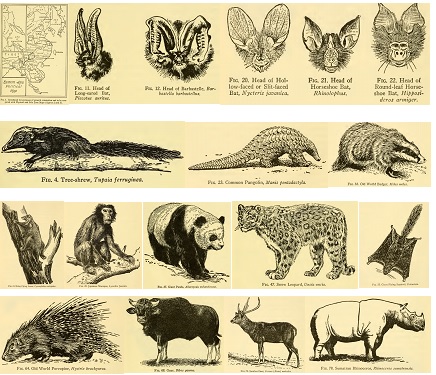
Map of Eastern Asia and pen sketches of some mammals.

Map of Eastern Asia and pen sketches of some mammals. Source: Tate, G. H. H. (George Henry Hamilton). Mammals of Eastern Asia. 1947. Contributed in BHL from MBLWHOI Library.

Cerambycidae of Northern Asia (1988) describes the morphology, geographic distribution, and biology of cerambycid beetles in Northern Asia of four sub­families (Prioninae, Disteniinae, Lepturinae, and Aseminae), comprising 124 species. Many cerambycid species are invasive pests of environmental concern, causing severe damage to forests and crops. Long-term field investigations were conducted on the composition and biology of cerambycids in different parts of northern Asia. Tens of thousands of larvae, pupae, and adult insects were raised in the laboratory for experiments. Keys to taxa of the family Cerambycidae based on different developmental stages are presented in this work for the first time. This book provides important information for informing broad theoretical principles and in resolving practical problems of pest infestation in forests.
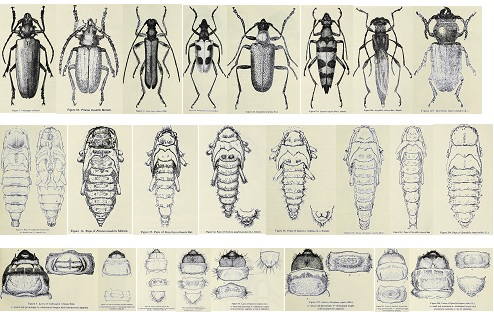
Cerambycidaes: adult insects with their larvas and pupas.

Cerambycidaes: adult insects with their larvas and pupas. Source: Cherepanov, A. I. (Aleksei Ignatevich). Cerambycidae of Northern Asia. 1988. Contributed in BHL from Smithsonian Libraries and Archives. CC-BY-NC-SA.

Asia is home to endemic and highly distinctive focal species. Tracking tigers (Published in 1998) gives a comprehensive overview of the wild status of the Tiger, Asian Elephant, Gaur and Banteng in Indochina. On this basis, it recommends future survey and management needs, and provides background discussion on issues to be addressed by national action plans. The Philippines’ fauna is characterized by large numbers of endemic and highly distinctive species. During the 1980s, the extent of rain-forest habitat destruction became apparent and underscored the need for extensive and detailed documentation of biological diversity to guide development and conservation for the benefit of both wildlife and the human population of the Philippines. The Mammals and birds of Camiguin Island, Philippines, a distinctive center of biodiversity (published in 2006) presents studies of Camiguin Island, a small island province in the Philippines and an ideal natural laboratory in which to investigate many aspects of the evolution and conservation of biological diversity.
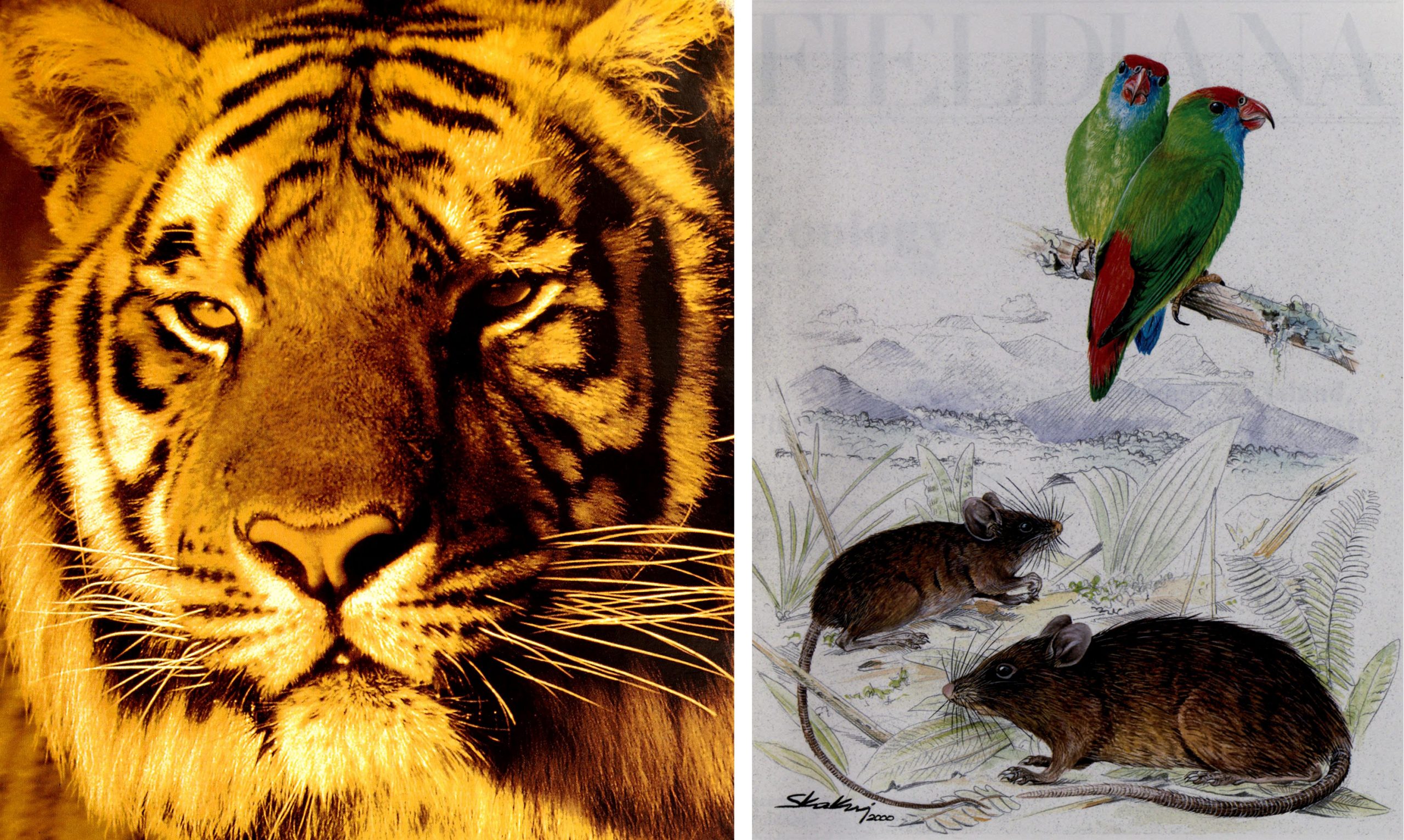
photo of a tiger and illustration of green and red birds and brown rodents

Left: The tiger in Indochina. Source: Duckworth, William and S. Hedges. Tracking tigers. 1998. Contributed in BHL from Smithsonian Libraries and Archives. CC-BY-NC. Right: “Two species of mammals and one species of bird live only on Camiguin Island: Apomys sp. ([…] center left), Bullimus gamay ([…] lower right), and Loriculus sp. ([…] upper center). The distinctive volcanic peaks of Camiguin form the background.” Source: Heaney, Lawrence R. The Mammals and birds of Camiguin Island, Philippines, a distinctive center of biodiversity. 2006. Contributed in BHL from University Library, University of Illinois Urbana Champaign. CC-BY-NC-SA.

Biological species in Asia are important components of Earth’s biodiversity. Biodiversity is closely related to human well-being, but human activities caused rapid changes in biodiversity over the past decades. To restore our Earth, we must identify and assess drivers of biodiversity loss, including habitat change, climate change, invasive alien species, overexploitation, and pollution [1].

[1] Duraiappah, A. K., Naeem, S., Agardy, T., Ash, N. J., Cooper, H. D., Diaz, S., Faith, D. P., Mace, G., McNeely, J. A., Mooney, H. A., Oteng-Yeboah, A. A., Pereira, H. M., Polasky, S., Prip, C., Reid, W. V., Samper, C., Schei, P. J., Scholes, R., Schutyser, F., & Van Jaarsveld, A. (2005). Ecosystems and human well-being: biodiversity synthesis; a report of the Millennium Ecosystem Assessment. World Resources Institute. http://www.millenniumassessment.org/documents/document.354.aspx.pdf.

[2] -S., T. Mammals of Eastern Asia. Nature 161, 188 (1948). https://doi.org/10.1038/161188e0.

Our Southern Birds and Emma Bell Miles: Inspiring Appreciation for and Protection of Birds

By Tomoko Y. Steen, Ph.D. and Alison Kelly, MLIS (Science, Technology & Business Division, Library of Congress)
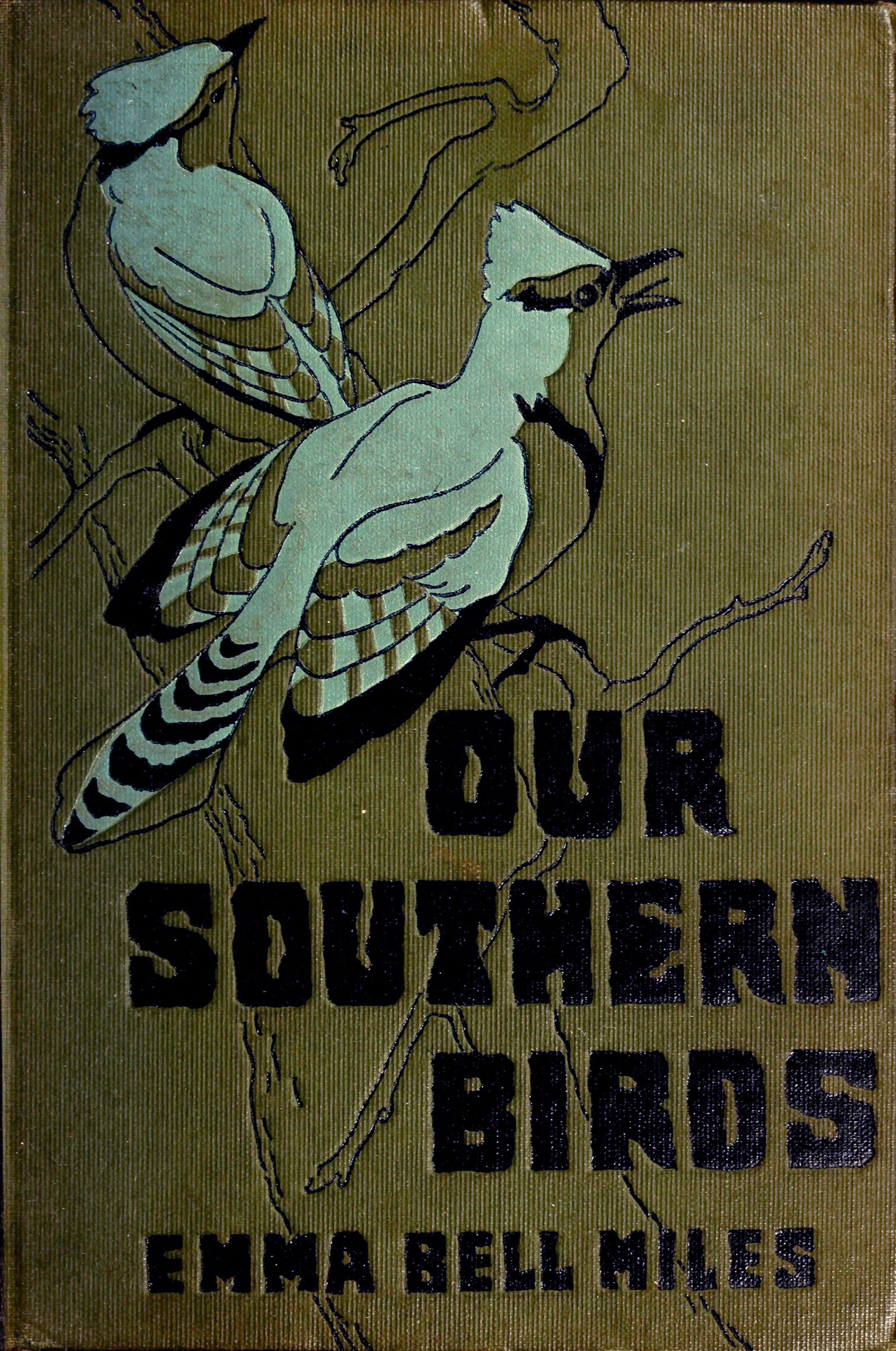
Illustrated book cover featuring two birds and title "Our Southern Birds"

Cover. Miles, Emma Bell. Our Southern Birds. Copyright 1919. Contributed in BHL from Library of Congress.

Emma Bell Miles (1879-1919) was a talented artist, writer and naturalist whose writings reflect her love of the Tennessee mountains where she spent most of her life. In Our Southern Birds, copyrighted in 1919, she recorded her detailed observations and knowledge of the birds of Appalachia, an area that had received little attention in the popular publications on birds until that time. Through this and her other works capturing the essence of natural life in the Southern mountains, Emma Bell Miles drew attention to the importance of preserving biodiversity and habitat.
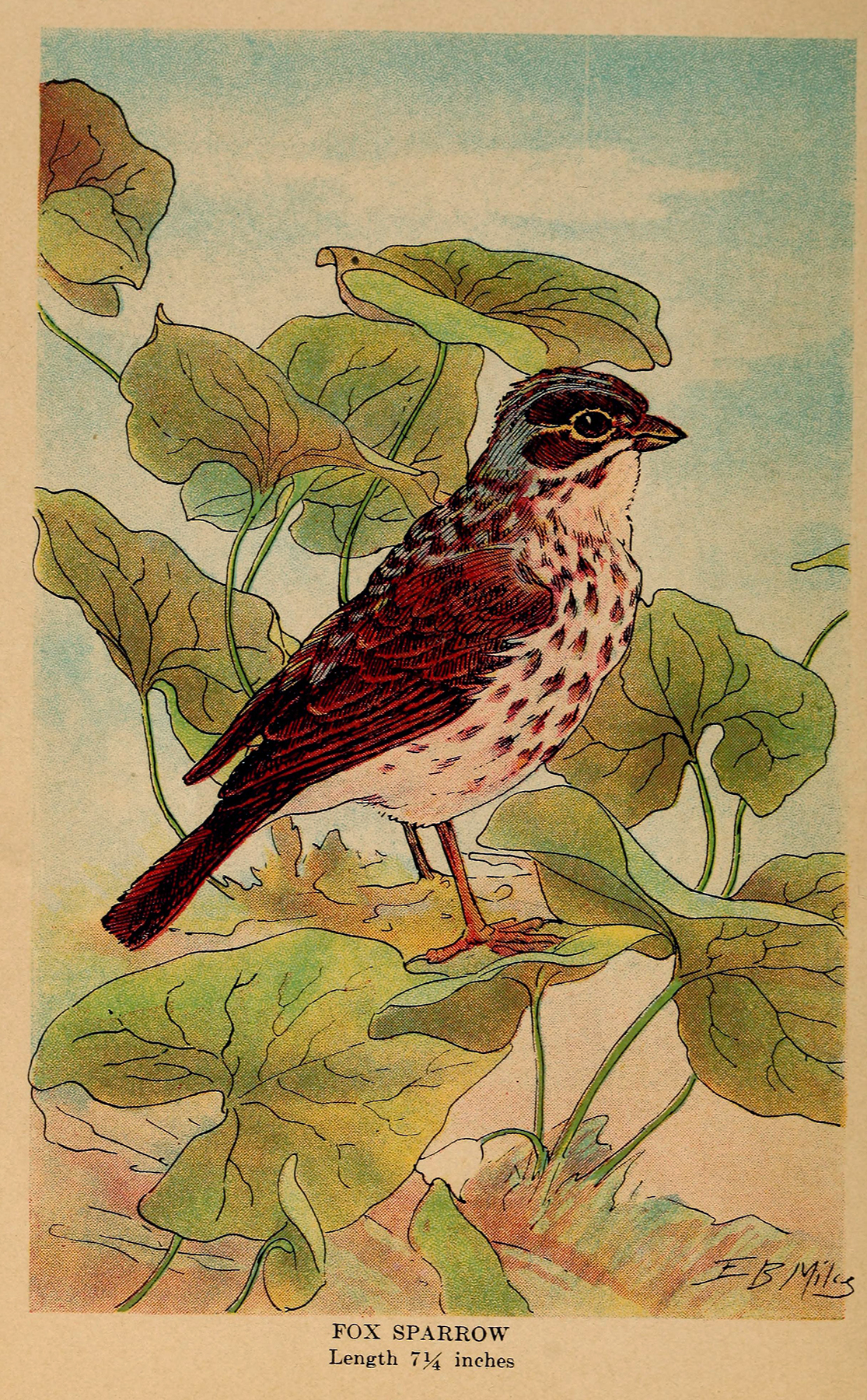
colored illustration of a bird, fox sparrow, brown with blue head and cream belly sitting on branch with green leaves

Fox sparrow. Miles, Emma Bell. Our Southern Birds. Copyright 1919. Art by Miles. Contributed in BHL from Library of Congress.

In the introduction to this, her last book, she stated:

…while the scientific study of birds is beyond most of us, yet an intimate understanding of them and their ways is within reach of everyone, and may enrich life with a new depth of interest… Go out alone in early morning, keep the sun at your back, be careful to do nothing that will startle these timid creatures, and see what you will see.

Our Southern Birds includes many beautiful illustrations by Miles, who, as a young woman, left her home in the mountains to study art in St. Louis. Plagued by homesickness for the mountains, she returned to Appalachia after two years and married a mountaineer. Their marriage was a difficult one, marked by poverty and illness, and she was often the sole supporter of the family by selling her writings, art and poetry.

Written for all levels of readers, this engaging book will appeal to anyone with an interest in birds. Part of the genius of Emma Bell Miles’ work is that she succeeds in presenting not only a careful description of over 100 birds and their habitats, but captures the individual personalities and demeanor of any given species through words and pictures. Her desire to recruit readers to active birdwatching is shown in the inclusion of blank pages for recording observations.
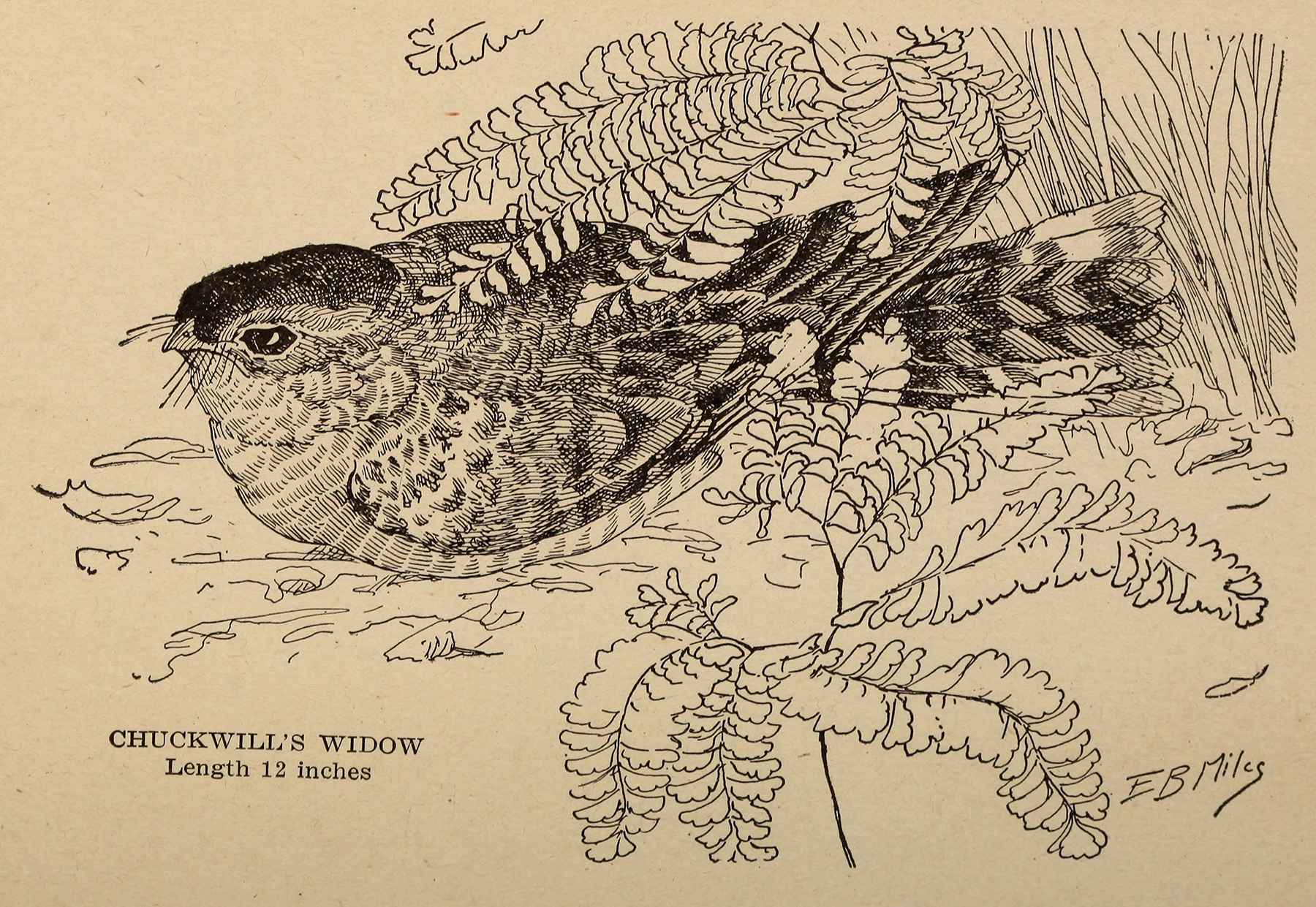
black and white illustration of a bird, chuckwill's widow, hiding within foliage

Chuckwill’s widow. Miles, Emma Bell. Our Southern Birds. Copyright 1919. Art by Miles. Contributed in BHL from Library of Congress.

“Shadows from the Past,” the final chapter of the book, mentions several species that are extinct or close to extinction. “Let the disappearance of these winged lives from their one-time haunts lead us to set a higher value on those that remain,” she writes. In poetic language she goes on to describe the tragic extinction of the passenger pigeon, concluding with an appeal that we can learn from the past: “…it is not too late to learn from the mistakes of our fathers, and though we have lost some valuable species, we may yet save others that are following these to extinction”.

In celebration of Earth Day we want to shine a light on Emma Bell Miles, whose skills in observing and recording the natural world around her will inspire readers to appreciate and preserve biodiversity in their own special place on Earth.

Environmental Evaluations Using Birds and Their Habitats

By Samantha Lindgren (University Library, University of Illinois Urbana-Champaign)
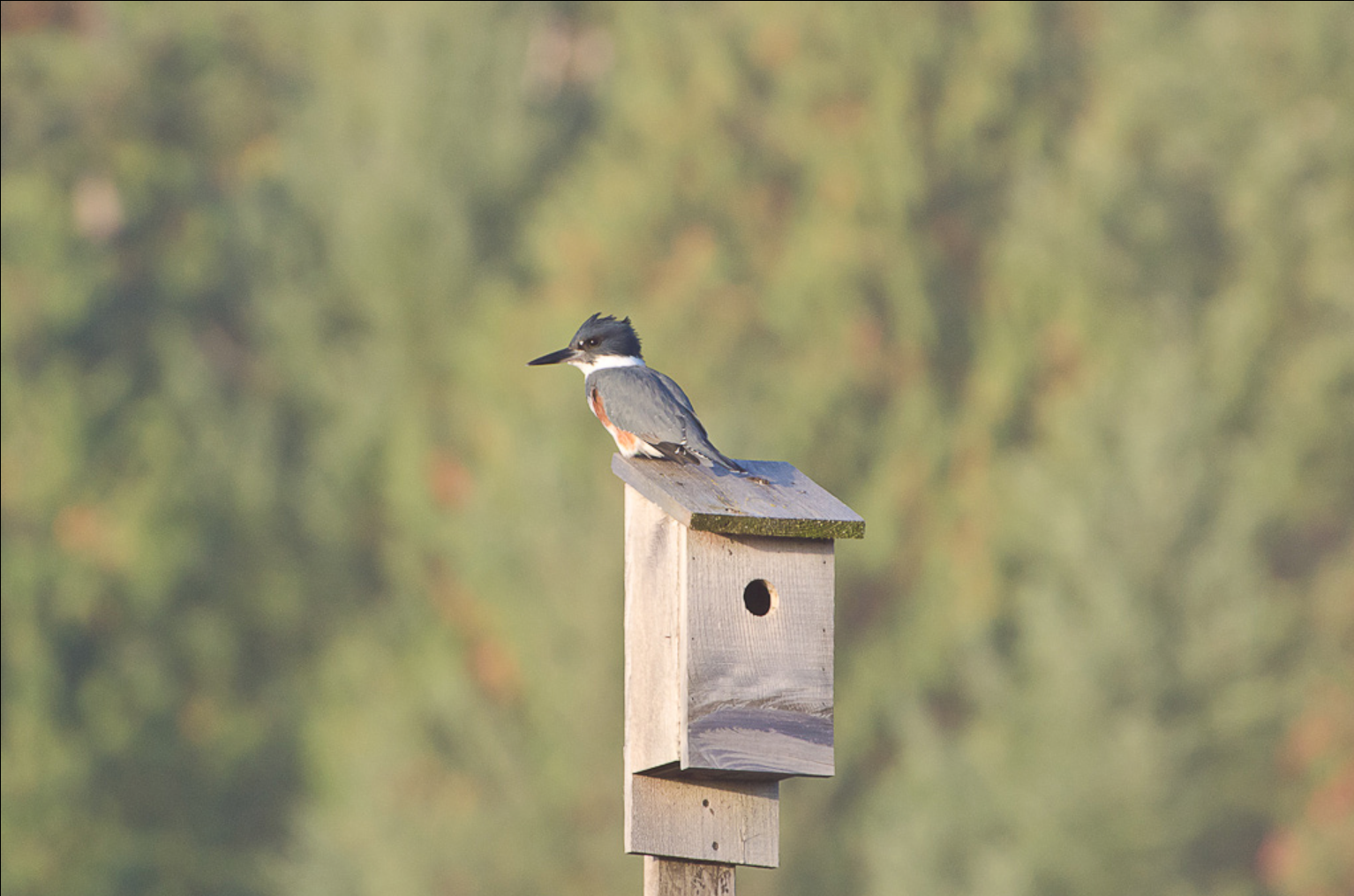
A blue and white bird sitting on a birdhouse roof with a background of trees.

A female Belted Kingfisher. Courtesy of Tyler Ingram, CC BY-NC-ND.

In their 1976 book, Environmental Evaluations Using Birds and Their Habitats, Jean and Richard Graber offer practical methods for surveying birds in Illinois with the purpose of curating data for environmental impact statements. Published as one of the Illinois Natural History Survey’s Biological Notes, the book details the data they have collected from these methods, including bird populations and habitat acreage. Throughout the book are also tables, graphs, and images supporting their methods and findings. While the book was published 45 years ago, it came at a time when concerns for environmental protection was just beginning to affect change, and it remains relevant in its advocacy for environmental conservation and restoration.

Earth Day 2021’s theme is Restore Our Earth. This theme resounds throughout the book in details of habitat surveying and restoration. As the authors posit, Illinois is a large state with diverse habitats and niches, some of which are difficult to redevelop once they are threatened. The authors discuss seven categories of gross habitats found throughout the state: forest, shrub, marsh, residential, grassland, small-grain fields, and row-crop fields. Some of these habitat types are more specific to regions of Illinois than others—such as natural marshes occurring most frequently in northeastern Illinois—however each mention comes with information on habitat replacement cost (the time required for restoration of a habitat or community), acreage data, and associated flora and fauna. Alongside this information, the authors also describe their experimental surveying methods. Through these factors, the authors garner concern for habitat conservation and restoration.
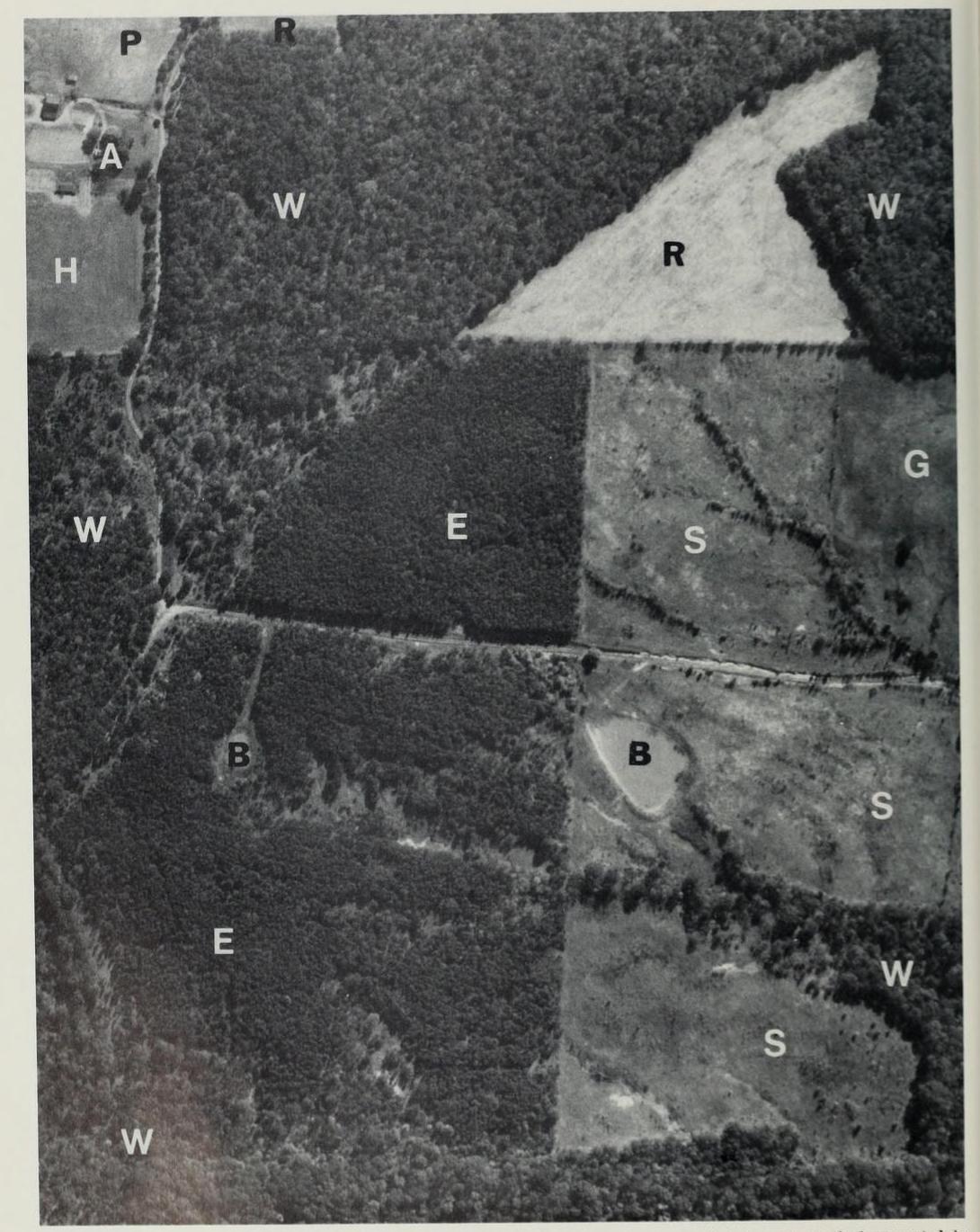
black and white aerial photo

“Fig. 8 – Aerial photograph showing a portion of the experimental impact area used to test the method presented in this paper.” Graber, Jean W. and Richard R. Environmental evaluations using birds and their habitats. 1976. Contributed in BHL from University Library, University of Illinois Urbana Champaign. CC BY-NC.

The methods discussed for collecting data on bird populations garner this concern as well. As the authors state, “…in the conservation of species we must be concerned for the welfare of all the populations that comprise the species” (11). In the context of this book, this means assigning a fair value to birds when applying an avifaunal index during surveying. However, this sentiment can be applied to Earth Day 2021 as well; in the restoration of our Earth, we must be concerned with the welfare of all aspects of Earth. Moreover, the authors supplement discussions of how and why to collect data on bird populations by speaking in-depth about the derivation of their models, and using them in practice. In this way, the authors are not only advocating for conservation and restoration, they are also providing tangible means to implement conservation and restoration practices.

Environmental Evaluations Using Birds and Their Habitats is a great representation of how to turn concern for Earth’s restoration into meaningful action, and should serve as an example that all levels of skills and fields of interest can be utilized to help Restore Our Earth.

Description of the Skeleton of an Extinct Gigantic Sloth

By Cat O’Carroll (Natural History Museum Library & Archives, London)
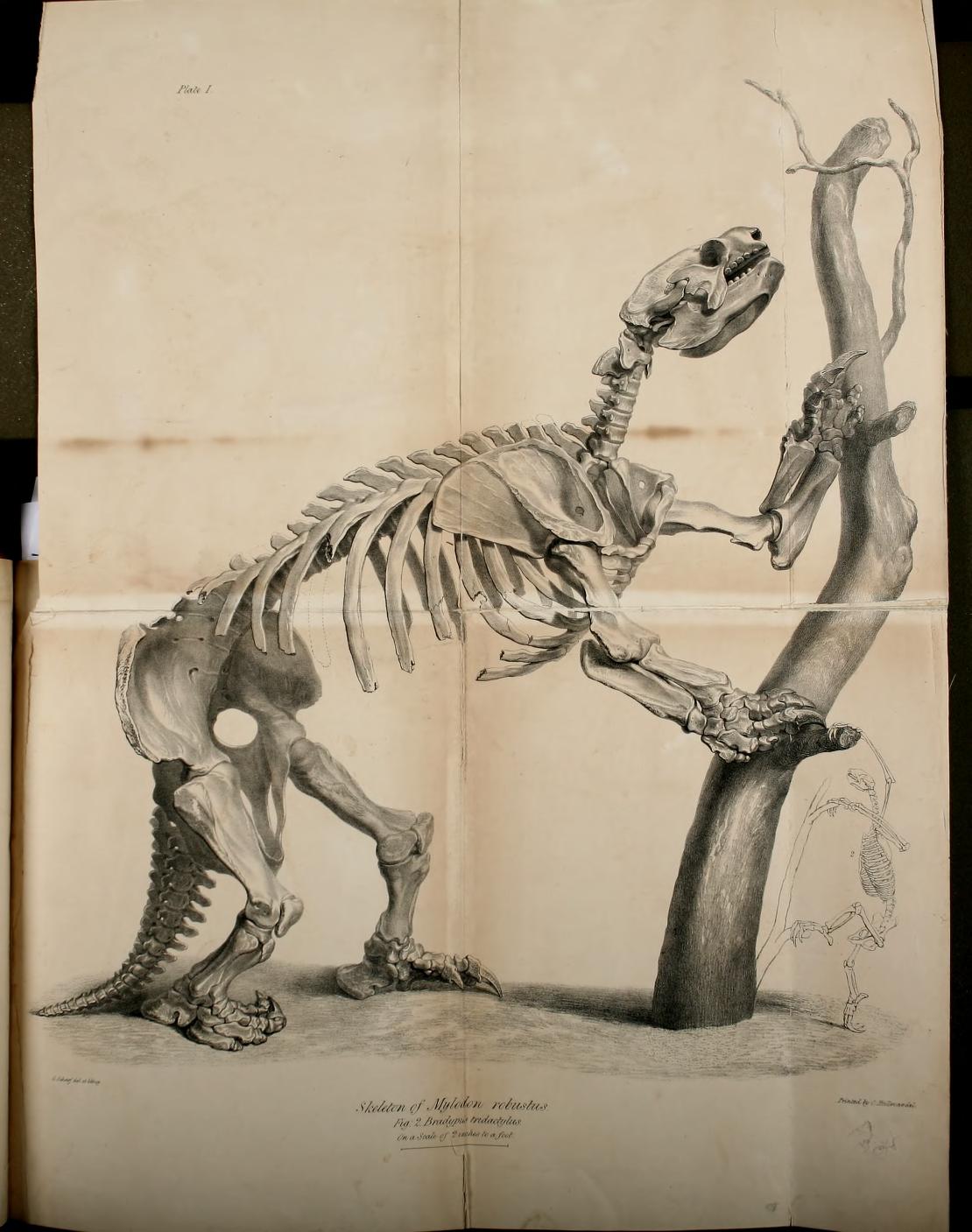
Side-view of the skeleton of the Mylodon robustus

Plate One. Side-view of the Mylodon robustus. Owen, Richard. Description of the skeleton of an extinct gigantic Sloth, Mylodon robustus, Owen, with observations on … Megatherioid quadrupeds in general. 1842. Contributed in BHL from the Natural History Museum Library & Archives.

In the year 1841, a discovery by M.Pedro de Angelis in Argentina unearthed the skeletal remains of a long extinct species……

Following on from the theme of Earth Day 2021 to Restore Our Earth, and raising issues of climate change, I’ve reflected on a title which highlighted a once extraordinary species which used to roam the earth, Description of the skeleton of an extinct gigantic Sloth, Mylodon robustus, Owen, with observations on … Megatherioid quadrupeds in general by Richard Owen (1842).

Owen, once curator at the Hunterian Museum, Royal College of Surgeons, was later in his career put in charge of the British Museum (Natural History) collections. As a result, he campaigned that a new building was needed to house the ever-expanding collections, which later built in 1881, became the Natural History Museum (NHM) in London as we know it today.

After exhuming the finds of the Mylodon robustus, it was then purchased by the Royal College of Surgeons and shipped over to London. In November 1841, it arrived in many pieces and fragile, in need of much restoring. Fossils discovered by Charles Darwin indicated several species of large quadrupeds had become extinct in South America. Owen compares descriptions of fossil remains of the Mammalia, which were collected by Charles Darwin during the voyage of the Beagle and accounted in The zoology of the voyage of H.M.S. Beagle … during the years 1832-1836.
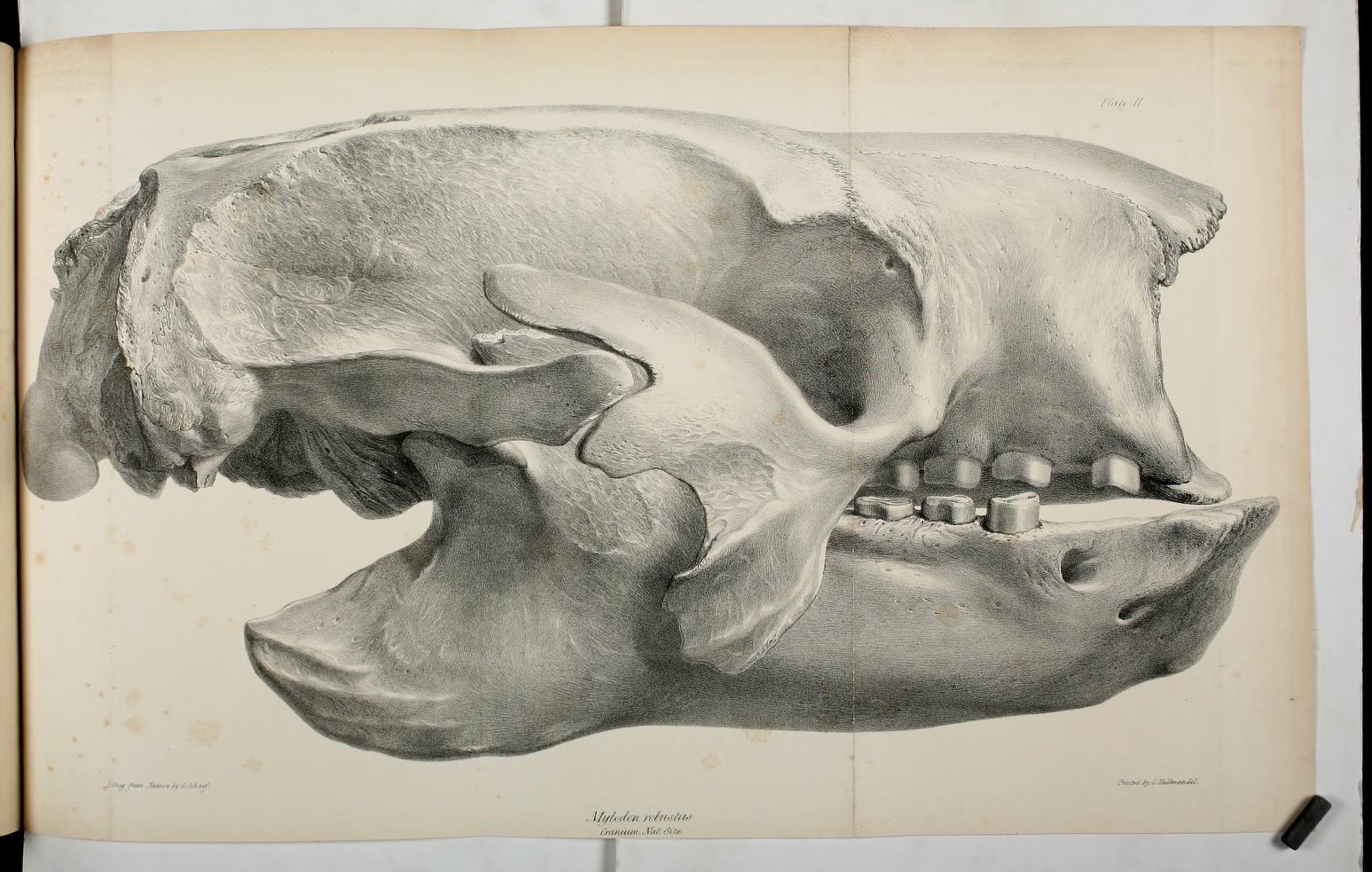
Side-view of the skull of the Mylodon robustus, natural size

Plate Two. Side-view of the skull of the Mylodon robustus, natural size. Owen, Richard. Description of the skeleton of an extinct gigantic Sloth, Mylodon robustus, Owen, with observations on … Megatherioid quadrupeds in general. 1842. Contributed in BHL from the Natural History Museum Library & Archives.

Megatherium (so named and described by Cuvier, 1795), discovered in the 18th century, was shipped to the Museo Nacional de Ciencias in Madrid. However, if you happen to walk down Fossil Way at the Natural History Museum today, you cannot miss the full Megatherium skeleton cast which stands on display. In terms of scale, Owen compares some of the bones of the Mylodon to that of Megatherium and a full-sized elephant.
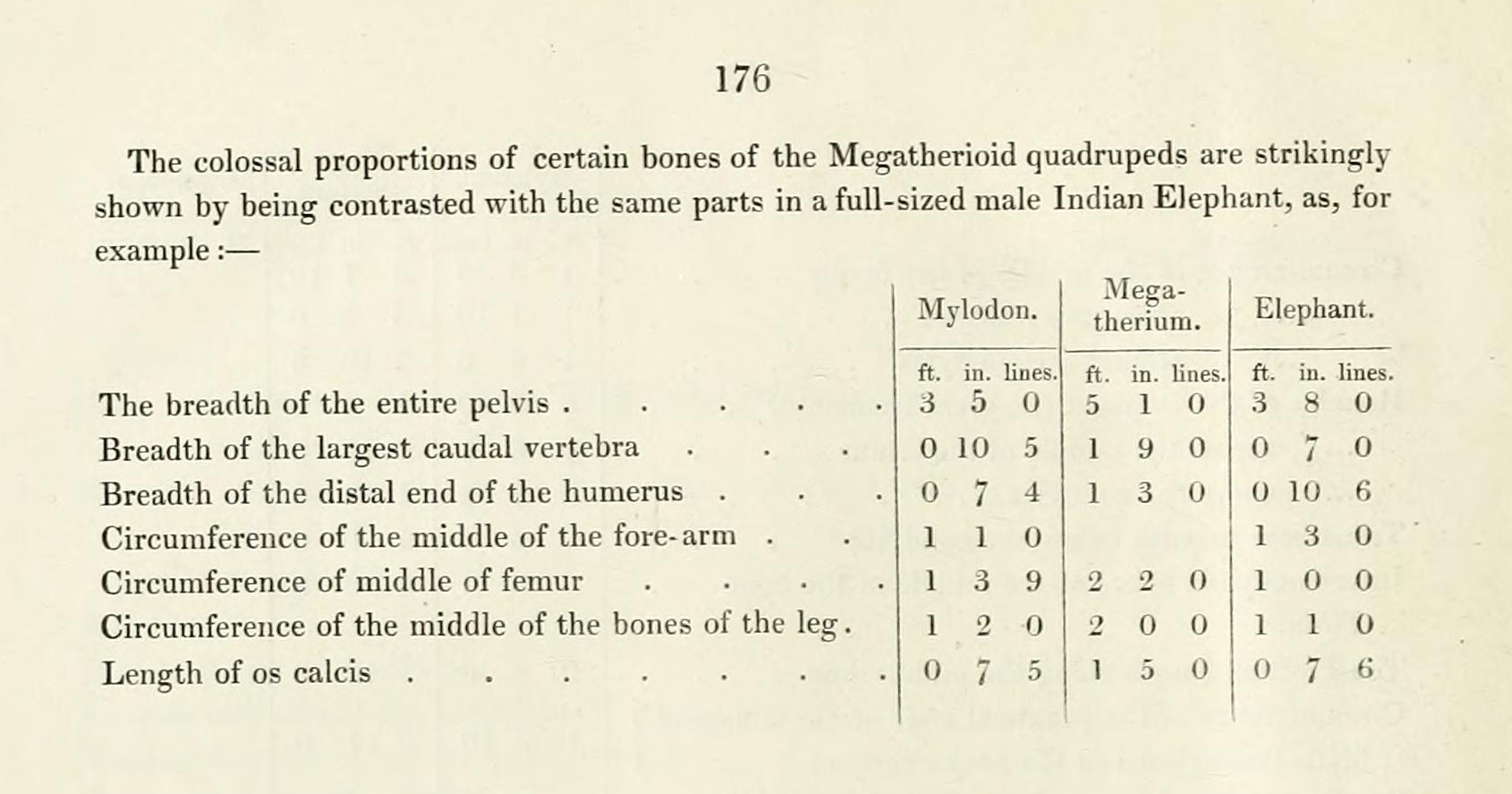
Comparison of certain bone size between Mylodon, Megatherium and an Indian Elephant

Comparison of certain bone size between Mylodon, Megatherium and an Indian Elephant, page 176. Owen, Richard. Description of the skeleton of an extinct gigantic Sloth, Mylodon robustus, Owen, with observations on … Megatherioid quadrupeds in general. 1842. Contributed in BHL from the Natural History Museum Library & Archives.

The Life of Richard Owen (1894), by his Grandson Rev. Richard Owen, summarizes how Owen was puzzled by the habits of these extinct creatures: “Their teeth showed, by their simple structure, that they lived on vegetable food, and probably on the leaves or tender twigs of trees”. It was hard to see how, like sloths today, they could possibly adapt to climbing trees given their sheer size and weight. Owen conjectured that they may have pulled the branches down from the trees instead of climbing them. Mylodon was also furnished with a “long tongue like a giraffe’s, which would help it to reach its leafy food”.
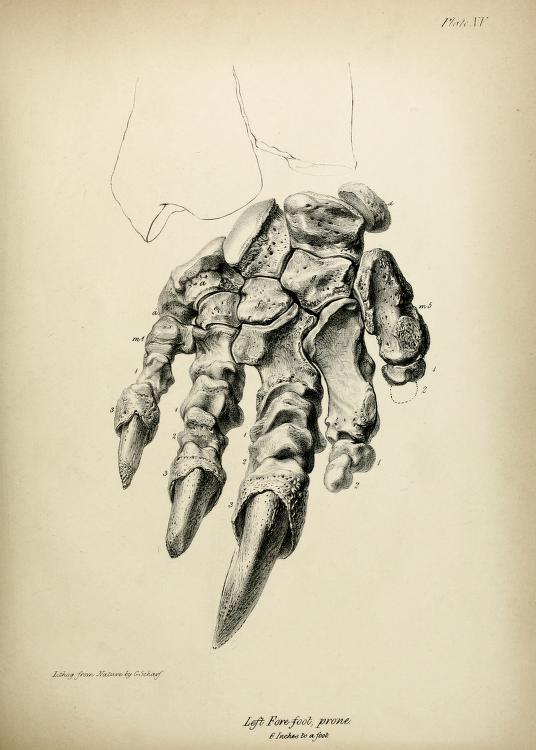
Upper, or anconal surface of the bones of the left fore-foot

Plate Fifteen. Upper, or anconal surface of the bones of the left fore-foot. Owen, Richard. Description of the skeleton of an extinct gigantic Sloth, Mylodon robustus, Owen, with observations on … Megatherioid quadrupeds in general. 1842. Contributed in BHL from the Natural History Museum Library & Archives.

The NHM Library & Archives holds a large collection of natural history drawings and original artworks amongst its collections. In November of 2019, the Images of Nature Gallery saw the installation of George Johann Scharf’s (1786-1860) watercolour drawing of a Megatherium on full display. Completed in 1842, this one drawing comprises of fourteen sheets approximately 2463 x 5745 mm which Scharf completed for Owen. A MEGA task in itself!
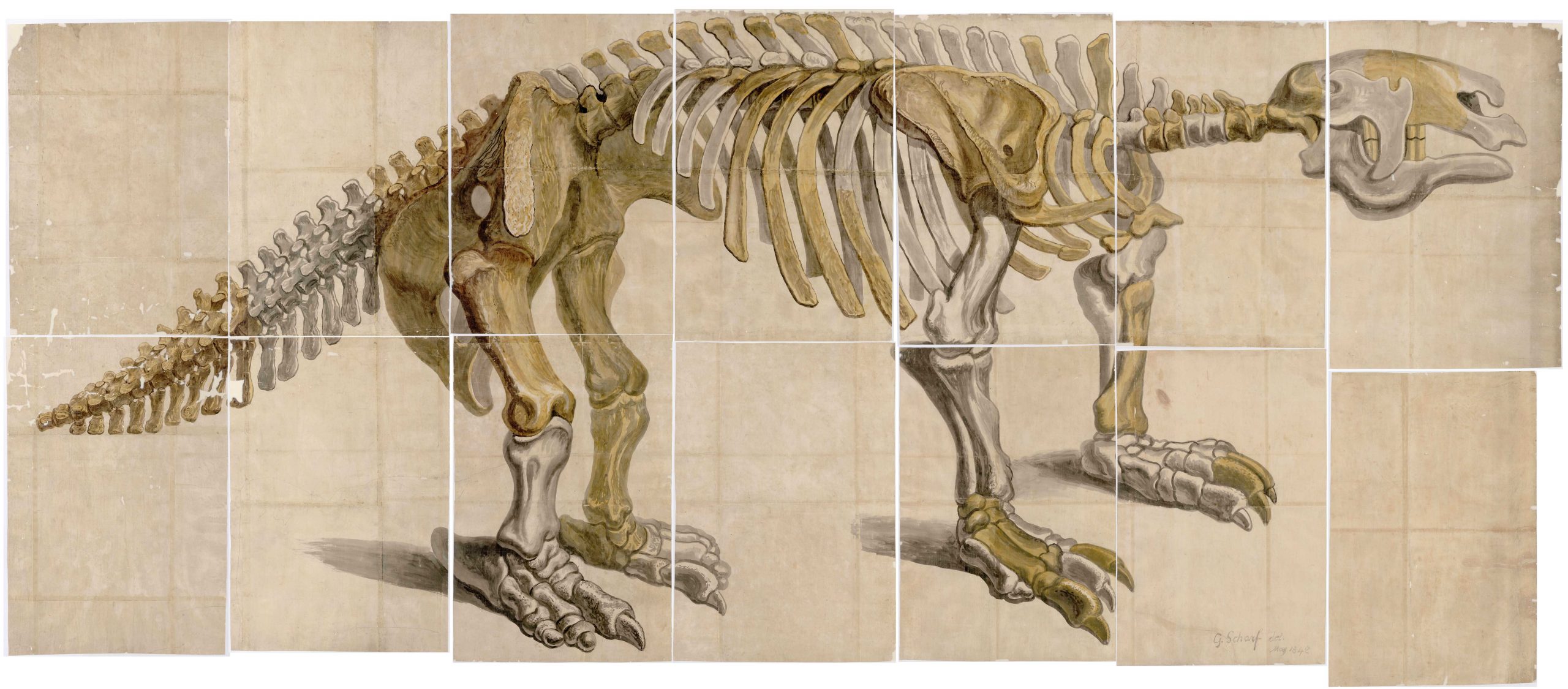
George Johann Scharf (1786-1860) Watercolour drawing of a Megatherium. N.p., 1842.

George Johann Scharf (1786-1860). Watercolour drawing of a Megatherium. N.p., 1842. Print. From the Library and Archives, Natural History Museum, London.
April 22, 2021by michelle.underhill
Blog Reel, Featured Books

Skeletons in the Stacks: Cheselden’s Spine-Tingling Osteological Atlas

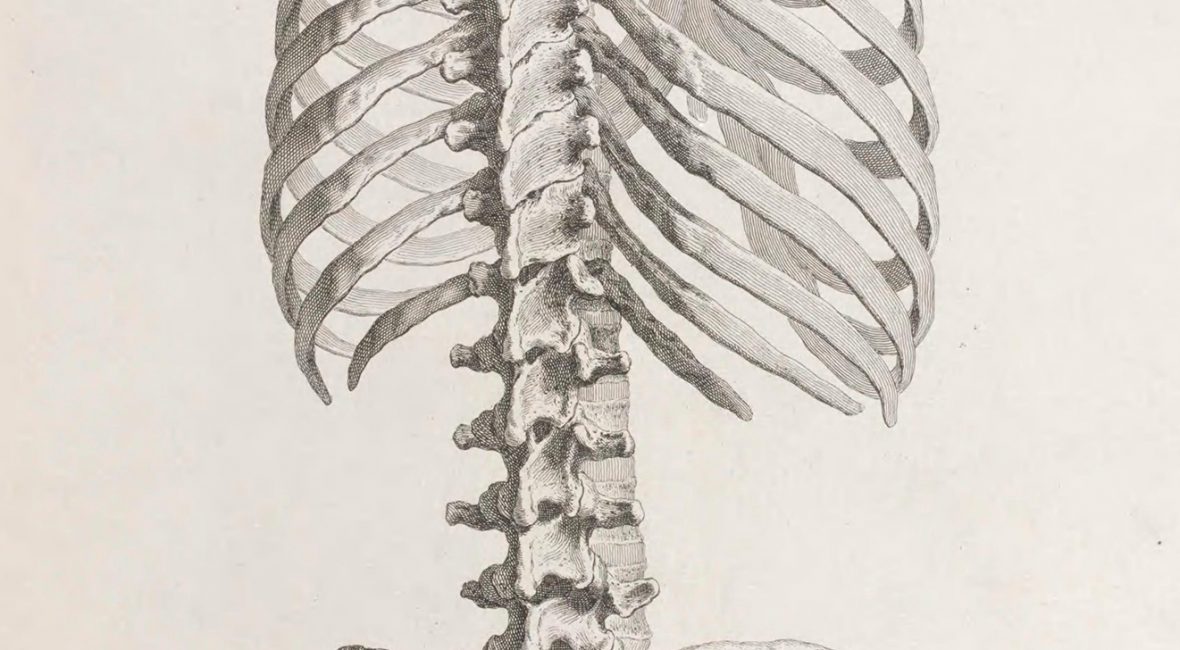
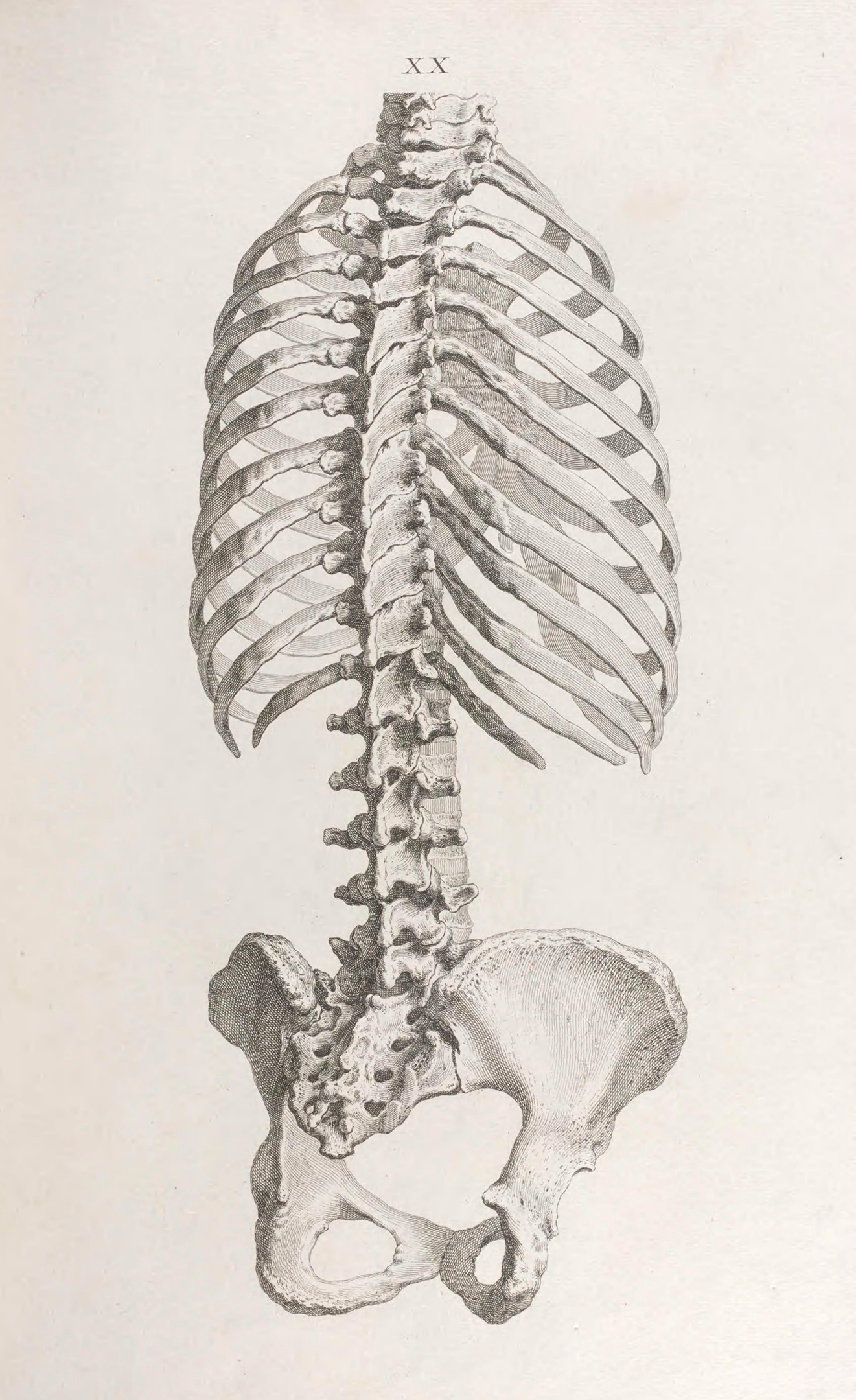
skeleton of the human torso

Plate XX. Cheselden, William. Osteographia. 1733. Contributed in BHL from the Library and Archives of the Natural History Museum, London.
Halloween is just around the corner, and the skeletons have come out of the closet. From front yards reimagined as graveyards to bone-chilling retail displays and party backdrops rattling with more than a few spare ribs, bones are on display to awaken the Halloween spirit and set a ghoulish mood to the delight of trick-or-treaters everywhere.

The modern-day Halloween is derived from the ancient Celtic festival of Samhain. With the Celtic new year celebrated on November 1, October 31 marked the end of summer and the harvest and the beginning of the cold, dark winter. Samhain, celebrated the evening of October 31, was believed to be a time when the boundary between the worlds of life and death were blurred, allowing the ghosts of the dead to return (History.com 2019).

Over time, Halloween has evolved into the costume-wearing, trick-or-treating holiday that it is today, but the season’s association with death has remained, evidenced by the proliferation of ghosts and skeletons intertwined with modern-day celebrations.

Embracing the Halloween season’s bony obsession, this month’s book of the month is one devoted to the skeleton — Osteographia (1733), which has been described as “one of the most important and beautiful books in the British anatomical tradition” (Neher 2010, 517). This work is freely available in BHL thanks to the Library and Archives of the Natural History Museum in London.

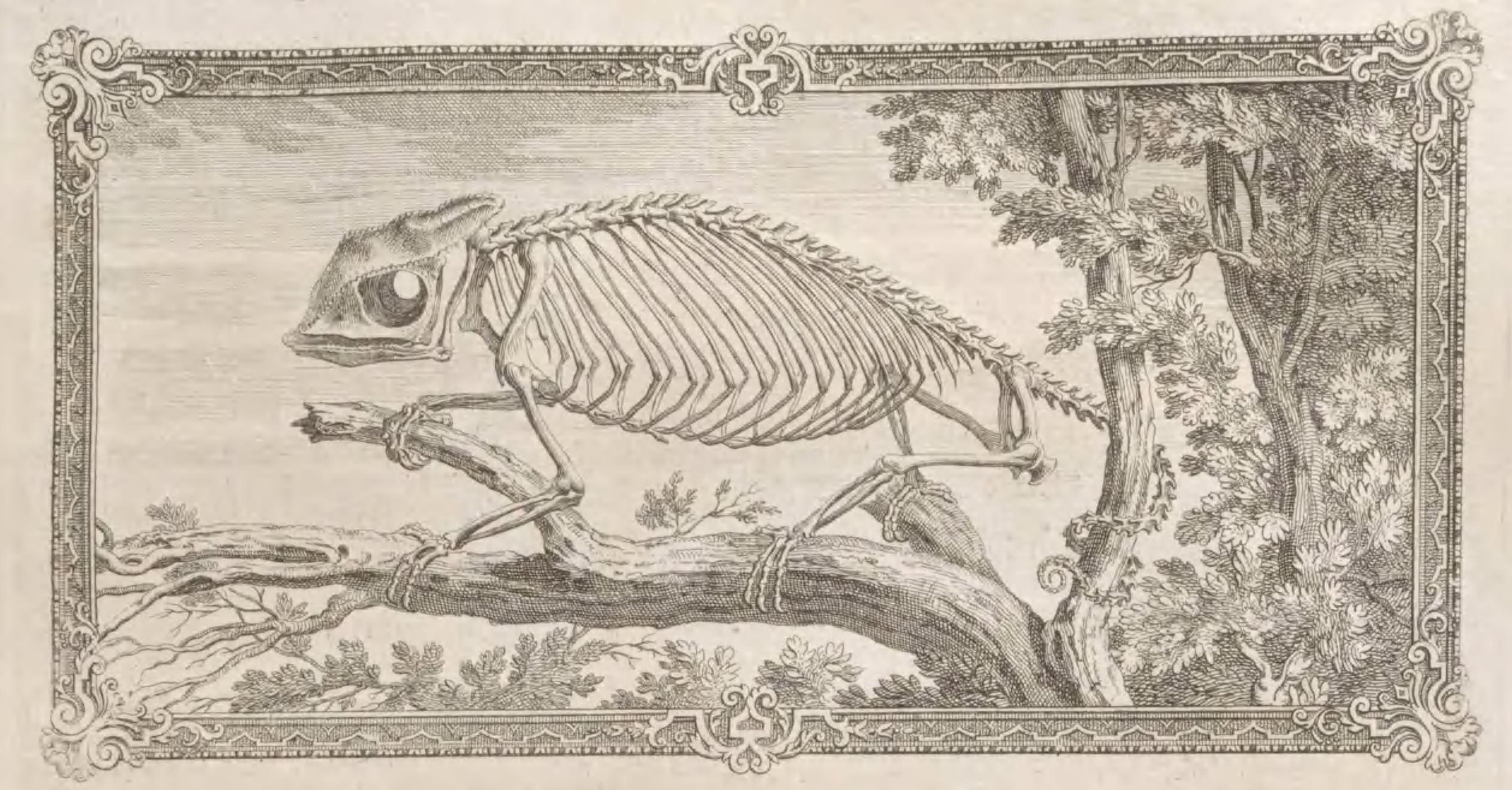
skeleton of a chameleon

Head-piece engraving for Chapter VI. Cheselden, William. Osteographia. 1733. Contributed in BHL from the Library and Archives of the Natural History Museum, London.
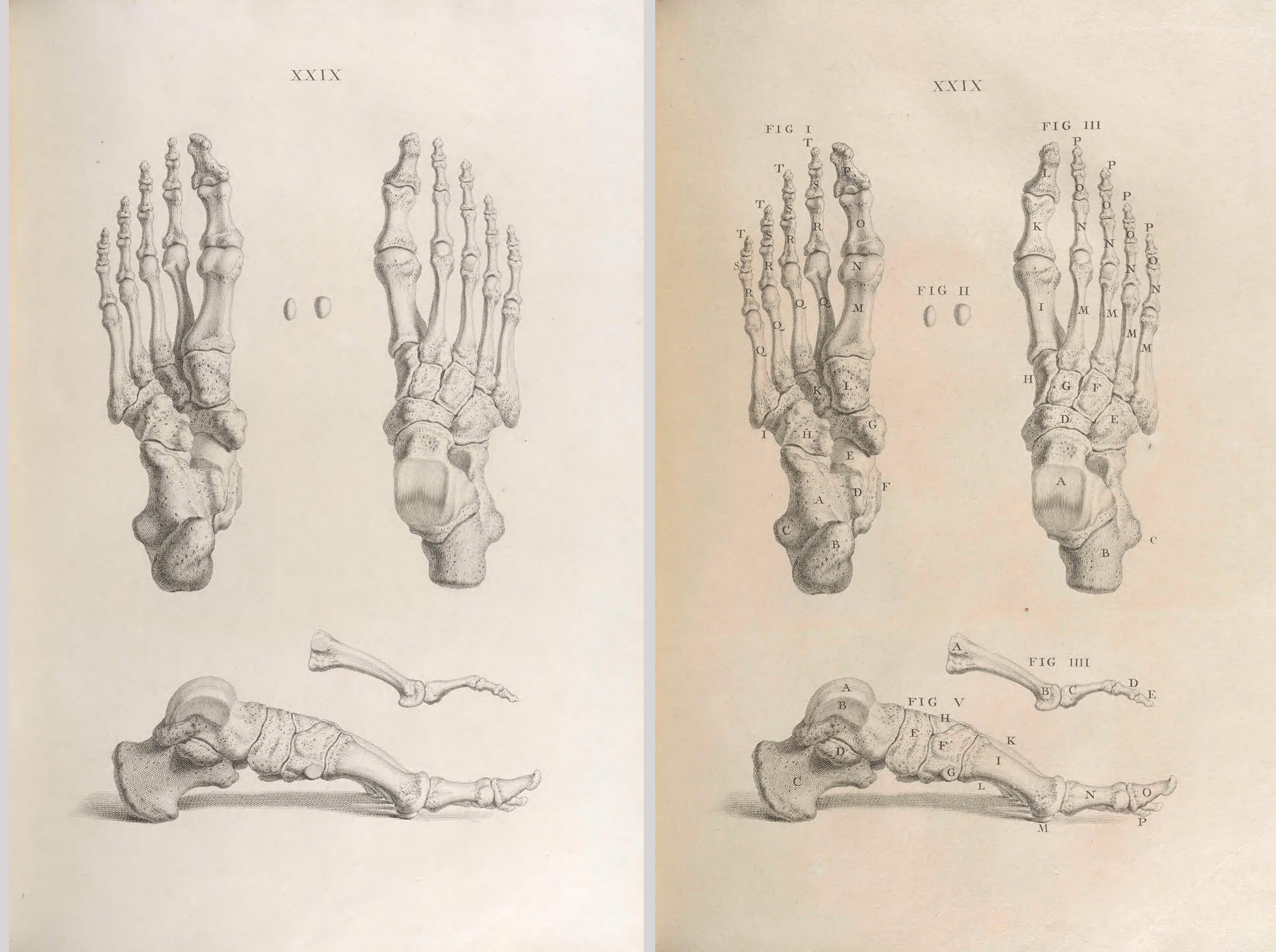
William Cheselden created his Osteographia with two goals in mind: to offer both the best osteological atlas and the most accurate study of the human skeleton yet produced. The book’s 56 massive plates, measuring 21 inches long and 15 inches wide, offer natural-size depictions of the separate human bones. Complete copies include two sets of plates — one set lettered with text on the verso providing descriptions of the figures, and one unlettered and blank on the verso “to shew them in their full Perfection”. Each chapter is also adorned with head and tail-piece engravings depicting various animal skeletons (Russell 1954, 38).

skeletons of human feet

Plate XXIX, comparison of unlettered (left) and lettered (right) plates. Complete copies include full sets of both lettered and unlettered plates. Cheselden, William. Osteographia. 1733. Contributed in BHL from the Library and Archives of the Natural History Museum, London.
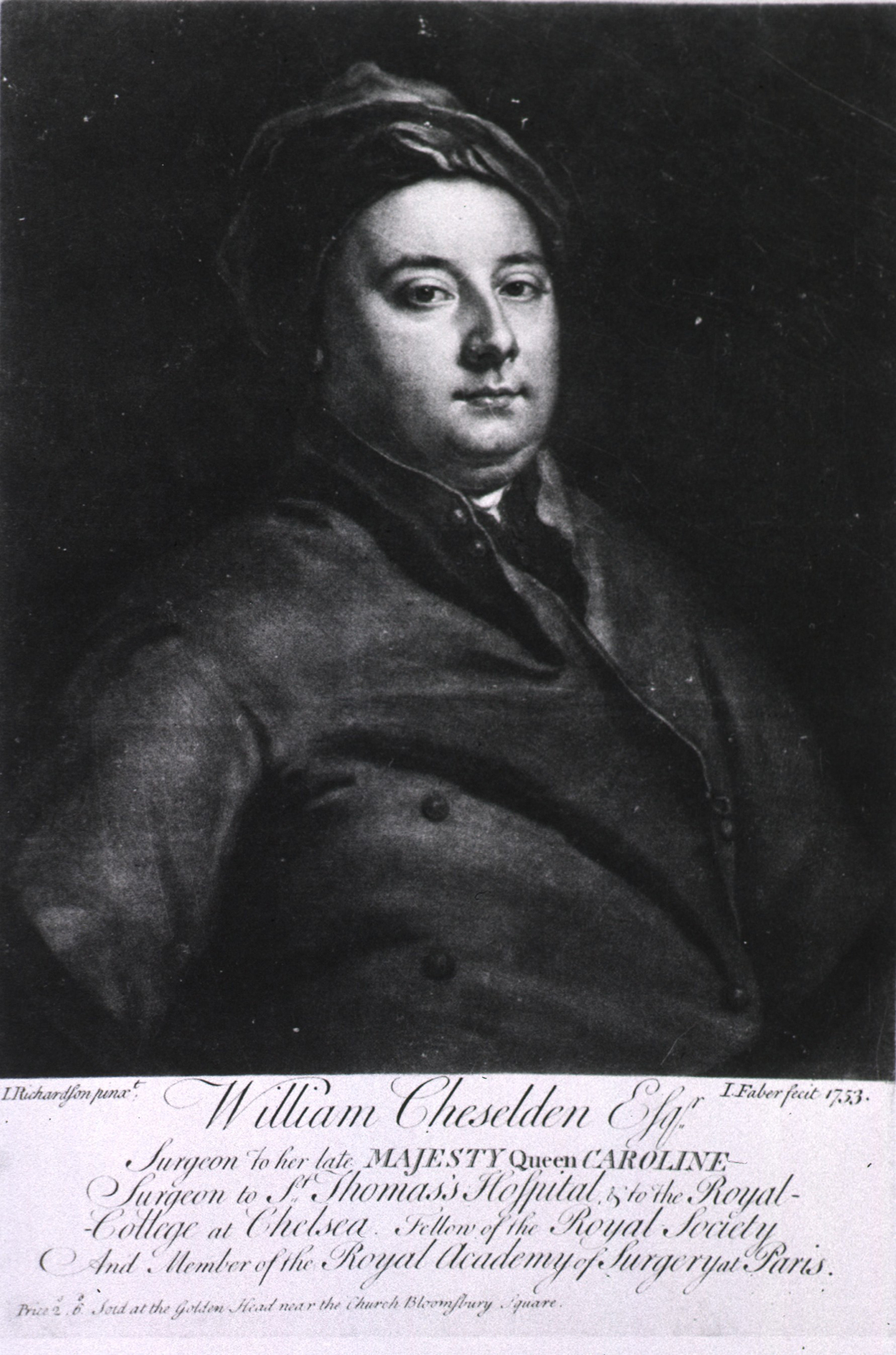
Cheselden spent years engaged in the production of Osteographia. A British surgeon and teacher of anatomy and surgery, Cheselden (1688-1752) is well-known for his Anatomy of the Human Body (1713), which was used as an anatomy textbook for nearly a century. Well-respected during his time, Cheselden was one of the principal surgeons at St. Thomas’ Hospital and was appointed the surgeon to Queen Caroline in 1727 (Tikkanen 2019).

black and white portrait of a human in a coat and hat

Portrait of William Cheselden. Engraving by J. Faber after J. Richardson. 1753. Source: U.S. National Library of Medicine.

Cheselden was also a clever marketer who used the popularity of his anatomical textbook to advertise his forthcoming osteological atlas. Within the Preface to the 1726 edition of his Anatomy, Cheselden wrote that he was “much engaged” in the production of an Osteology that would provide life-size plates of the human bones. He went so far as to include an example of some of the engravings from his atlas (specifically, the maxilla and mandible figured on Plate IX of Osteographia).

Published in 1733, Cheselden limited the English edition of Osteographia to 300 copies, plus an additional 100 prints of the plates intended for a foreign edition in either Latin or French (which was never produced) (Russell 1954, 44). Following these printings, the plates were destroyed so that “the price of the book may never sink in the possession of the subscribers” (Cheselden 1733, [3]).

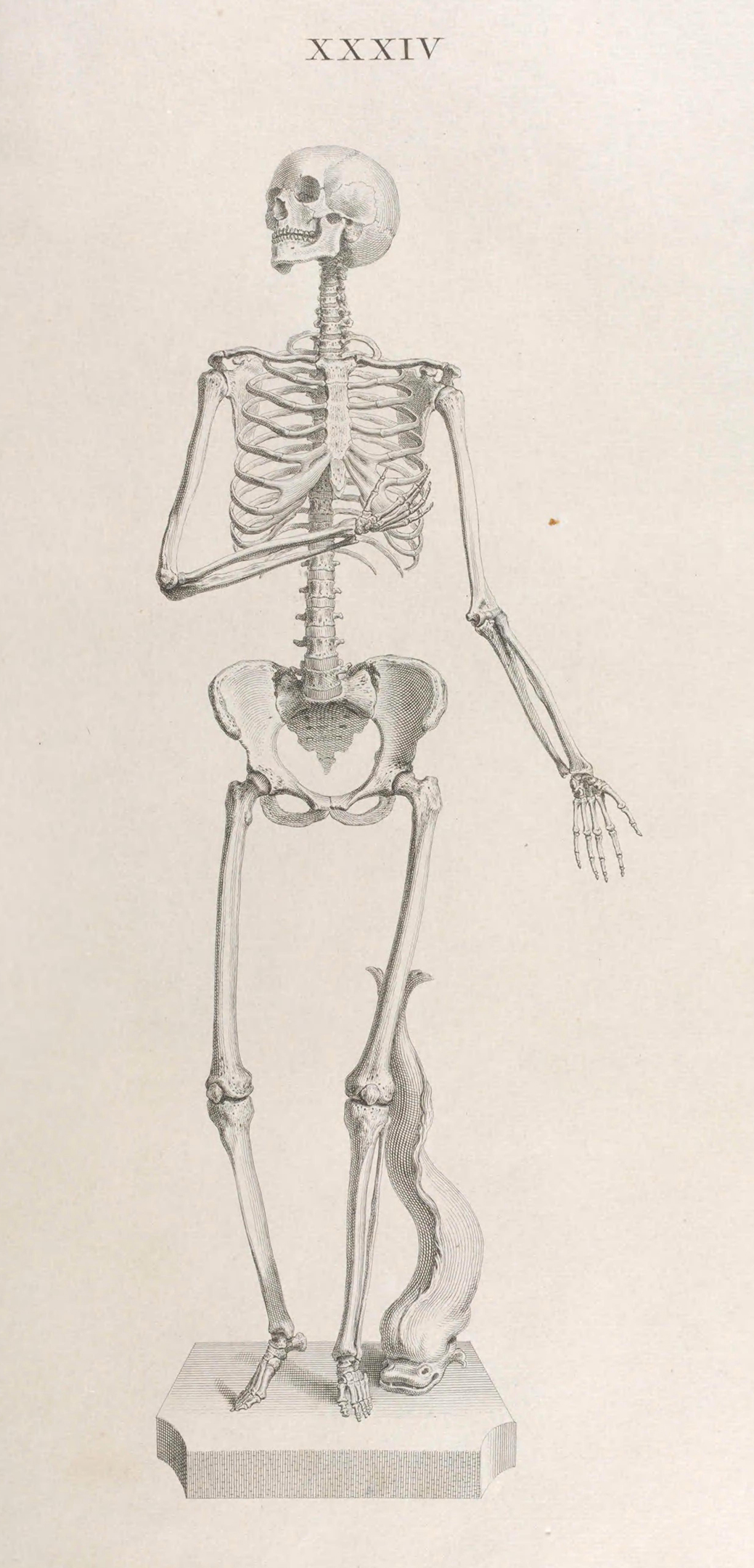
human skeleton

Plate XXXIV. Cheselden, William. Osteographia. 1733. Contributed in BHL from the Library and Archives of the Natural History Museum, London.
Cheselden’s commitment to providing the best available osteological atlas went well beyond a desire to produce an aesthetically-pleasing publication. He wanted the plates in Osteographia to serve as “working objects” for osteological studies — illustrated specimens that could be taken by the scientific community as representative. To accomplish this, accuracy of illustration was paramount (Neher 2010, 519).

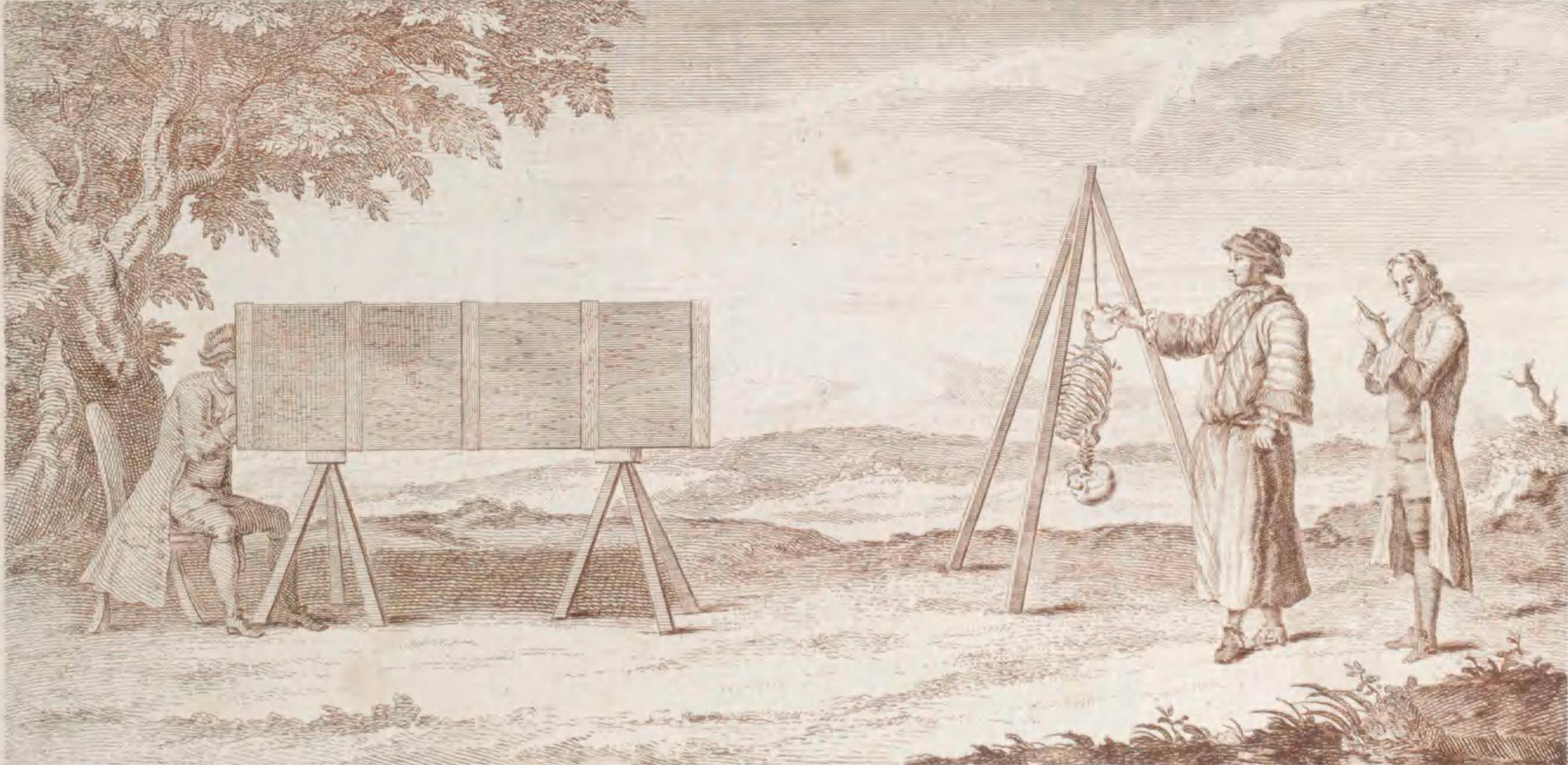
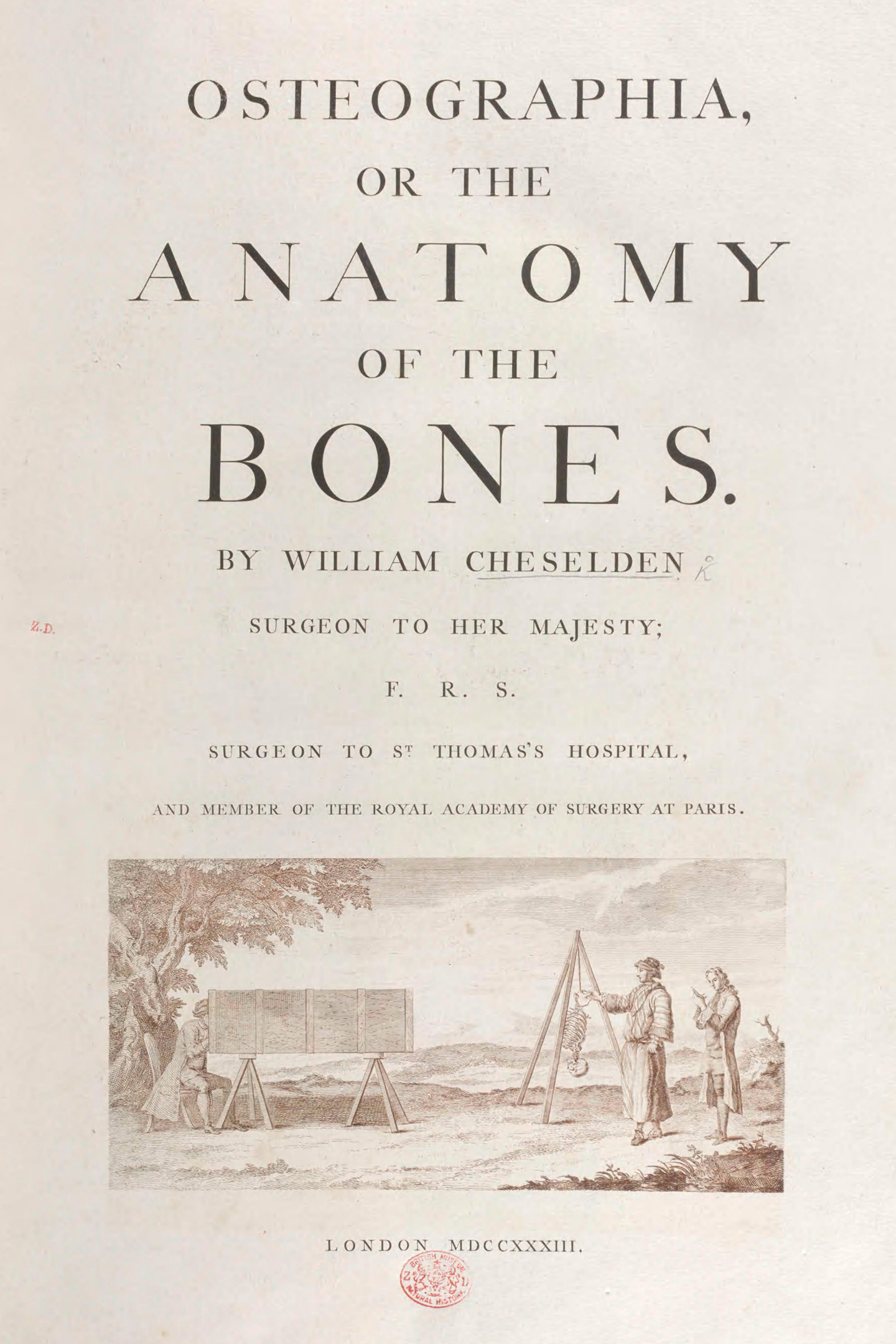
To realize this ambition, Cheselden and his artists employed a camera obscura to create the initial drawings. A camera obscura is an instrument consisting of a darkened box with a convex lens or aperture that is used to project the image of an external object onto an internal screen. Cheselden is believed to be the first to use such a device for medical imagery, and the particular camera obscura used was of Cheselden’s own invention (Neher 2010, 522).

three humans using a camera obscura to illustrate a skeleton

Camera obscura figured in the vignette on the title page. Cheselden, William. Osteographia. 1733. Contributed in BHL from the Library and Archives of the Natural History Museum, London.
The camera obscura is prominently featured in the vignette on the title page of Osteographia. The two standing figures in the vignette are Cheselden’s students, John Belchier and Samuel Sharpe. The identity of the seated figure inside the camera obscura is unknown but may represent one of the artists (Neher 2010, 522).

By displaying the camera obscura so conspicuously on the title page, Cheselden was emphasizing the legitimacy and accuracy of the illustrations within Osteographia. The reader was to understand that the plates were created from actual projections of the skeletons depicted. Cheselden further listed his qualifications on the title page, including his association with the Queen and membership in several prestigious institutions, as further evidence of the credibility of the work (Neher 2010, 519).

title page of Osteographia

Title page. Cheselden, William. Osteographia. 1733. Contributed in BHL from the Library and Archives of the Natural History Museum, London.
While Cheselden provided direction for the production of each image, intervening when necessary to provide corrections and alterations, the actual artists for Osteographia were Gerard van der Gucht (1695/6-1776) and Jacob Schijnvoet (1685-1733). Based on the drawings created by means of the camera obscura, the final plates were produced through a combination of etching and line engraving. Engraving, in which lines are cut into a metal plate with a burin, was used to produce smooth, dark exterior lines for each bone. Etching, in which an acid wash is used to etch an image drawn into a wax coating on a metal plate, was used for the other parts of the image (Neher 2010, 518).

Many varied issues of Osteographia exist today, as detailed by K.F. Russell in an article within Bulletin of the History of Medicine (vol. 28, no. 1, 1954). While the work was first officially published in 1733, there is a unique, 1728 trial issue in the Hunterian Library at the University of Glasgow which features 56 unlettered plates but no text or letterpress.

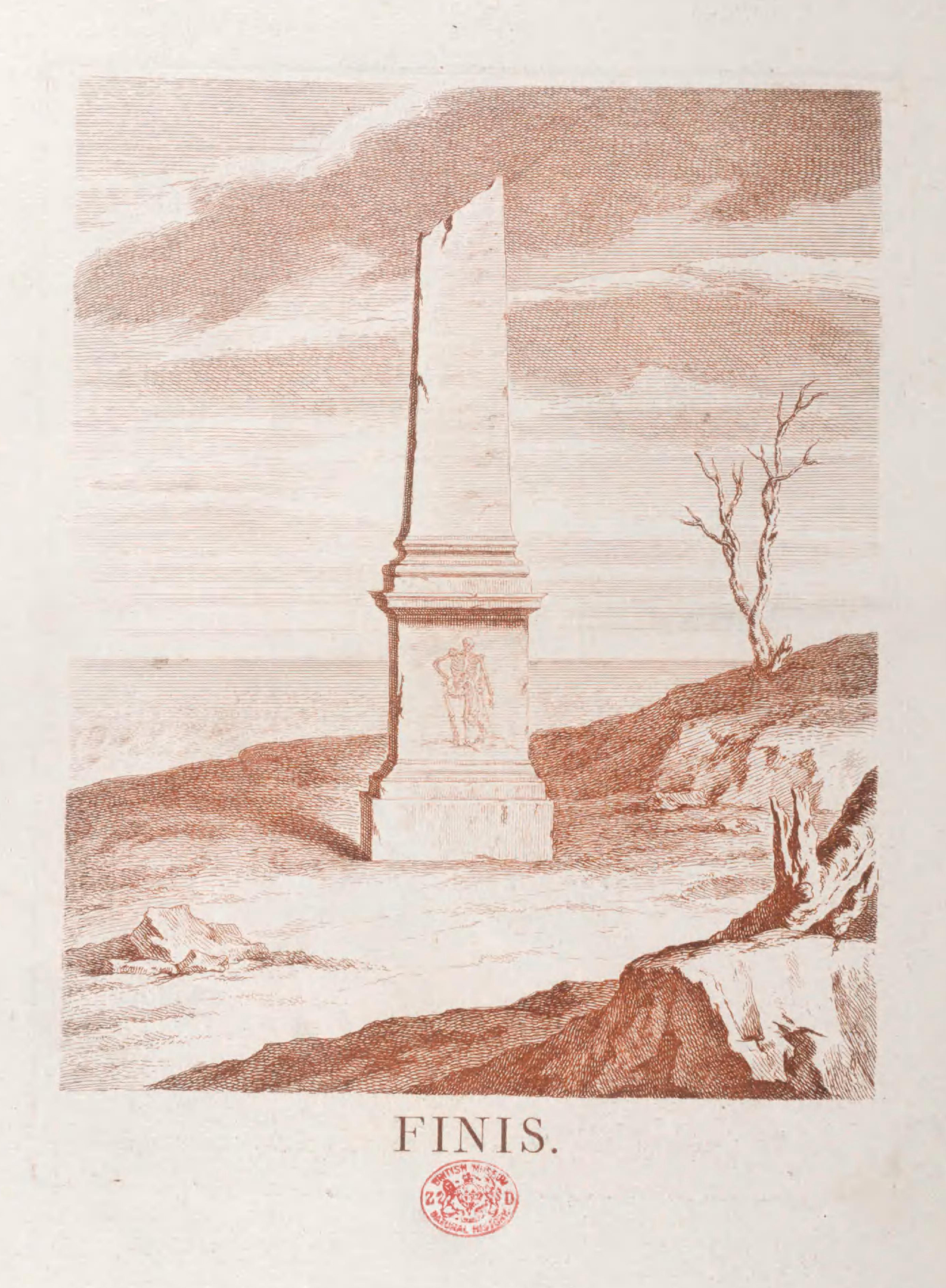
In addition to the “typical” 1733 issue, there is also a variant of the 1733 issue in which the title vignette and illustration of a broken column on the final page are printed in red. Additionally, this version presents the engraving of the Royal Arms on the verso of the title page, rather than on a separate page as in the “typical” 1733 issue. Russell postulates that this variant may represent a trial issue printed earlier than the “typical” 1733 issue. The copy of this work available in BHL from the Natural History Museum in London is this 1733 variant issue.

broken column with finis written below it

The broken column at the end of this copy is printed in red. This indicates that this copy is a 1733 variant issue. Cheselden, William. Osteographia. 1733. Contributed in BHL from the Library and Archives of the Natural History Museum, London.

Finally, there are several undated versions of the work which likely represent later editions made from sets of the unlettered plates broken up from the original whole and sold as separate, undated volumes in an effort to recoup some of the costs of publication.

Unfortunately, Cheselden did have need to recoup costs from the production of Osteographia. While widely praised, the work was not a commercial success. Of the 300 English copies printed, only 97 were sold by subscription. Of the remaining 203 copies, Cheselden disbound 83 of them, offering sets of the frontispieces and head pieces at 10 shillings each and sets of the 56 plates — which he advertised as “proper ornaments for a surgery” — for 30 shillings each (Russell 1954, 38-44).

Though it may not have been a commercial success, Osteographia was and is still celebrated for its beautiful and accurate illustrations, representing an important contribution to the history of medicine.

So make no bones about it — for those seeking a good skeleton or two this Halloween, Osteographia delivers in spine-tingling spades.

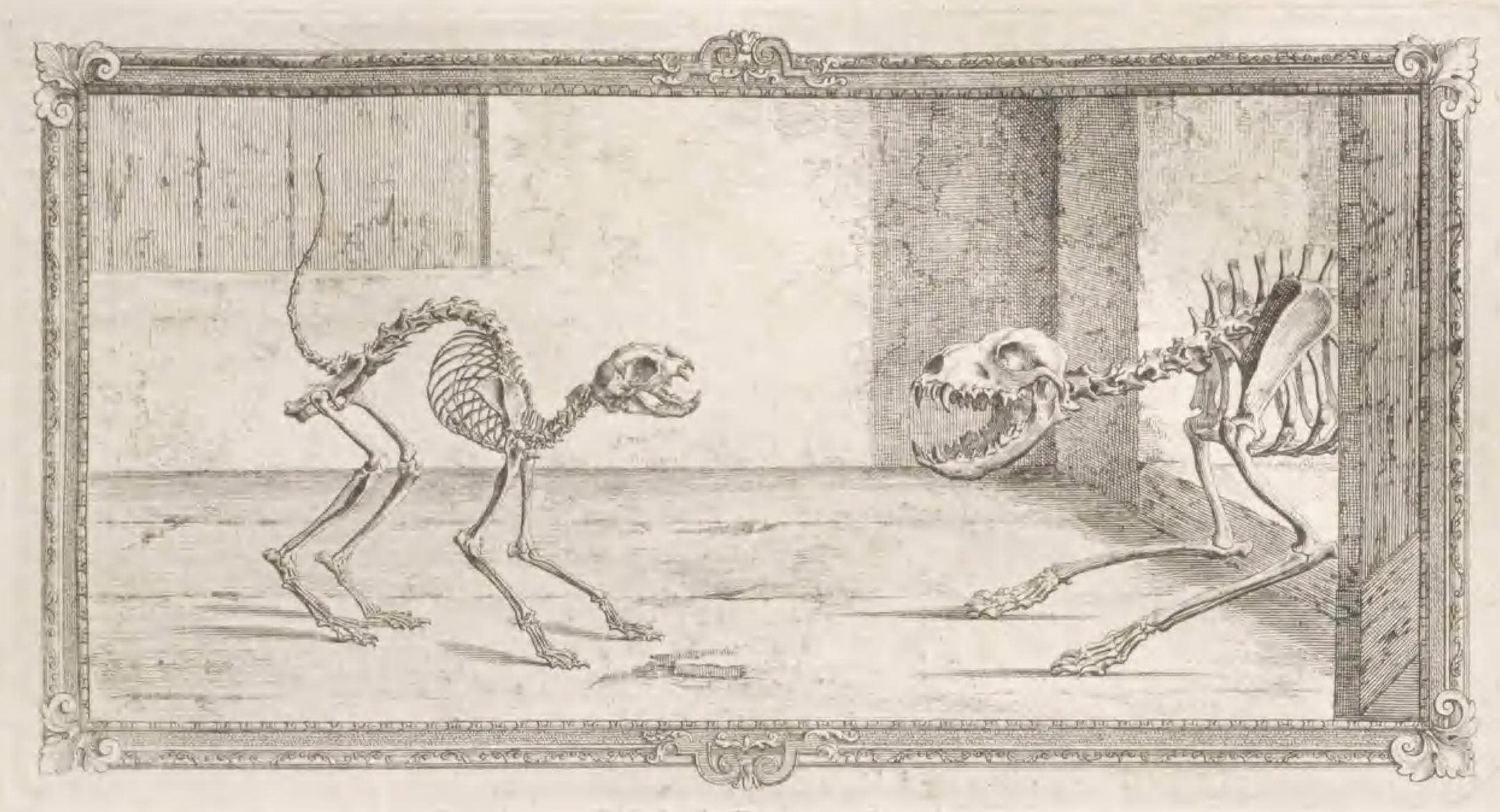
skeletons of a cat and a dog confronting each other

Head-piece engraving for Chapter II. Cheselden, William. Osteographia. 1733. Contributed in BHL from the Library and Archives of the Natural History Museum, London.

References

Cheselden, William. 1733. Osteographia. London: W Boyer.

History.com Editors. 2019. “Halloween 2019.” History.com. September 13. Accessed on October 1, 2019. https://www.history.com/topics/halloween/history-of-halloween.

Neher, Allister. 2010. “The Truth about Our Bones: William Cheselden’s Osteographia.” Medical History 54: 517-528.

Russell, K.F. 1954. “The Osteographia of William Cheselden.” Bulletin of the History of Medicine 28(1): 32-49.

Tikkanen, Amy. 2019. “William Cheselden.” Encyclopedia Britannica. April 6. Accessed on September 30, 2019. https://www.britannica.com/biography/William-Cheselden.

October 24, 2019by michelle.underhill
Blog Reel, Featured Books

The Orchidaceous Plants of Franz Bauer and John Lindley

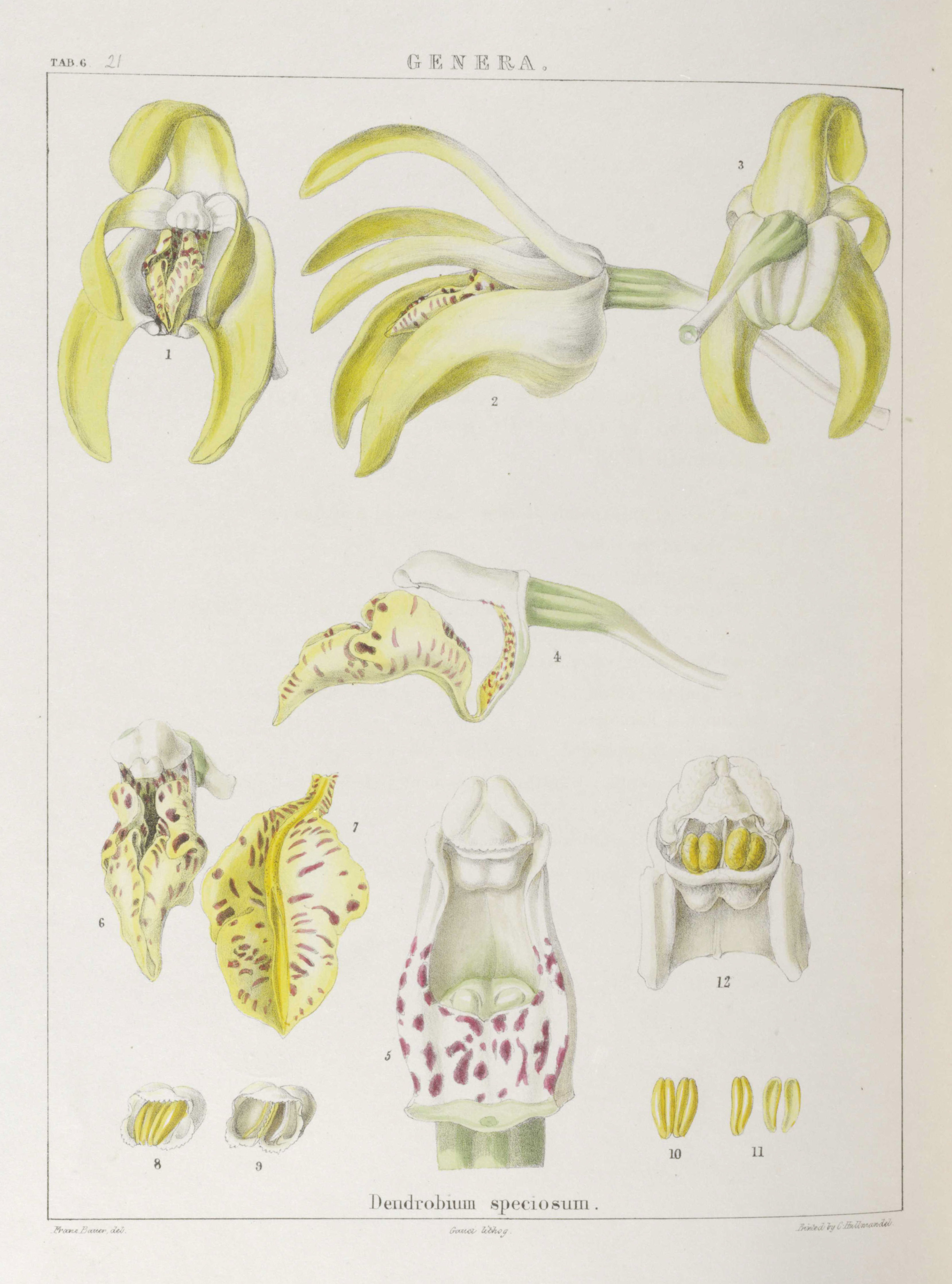
Two of the most important early contributors to our understanding of orchids were the artist Franz Bauer (1758-1840) and the English botanist and gardener John Lindley (1799-1865), who was to become known as the “father of modern orchidology”. The publication of the Illustrations of Orchidaceous Plants [from sketches prepared between 1792 and 1832] between 1830 and 1838 combined Bauer’s great skill and Lindley’s knowledge and industriousness to produce an invaluable artistic and scientific work. The Natural History Museum, London (NHM) has recently uploaded their copy of this volume to sit alongside the Missouri Botanical Gardens’ own volume.

108.jpg

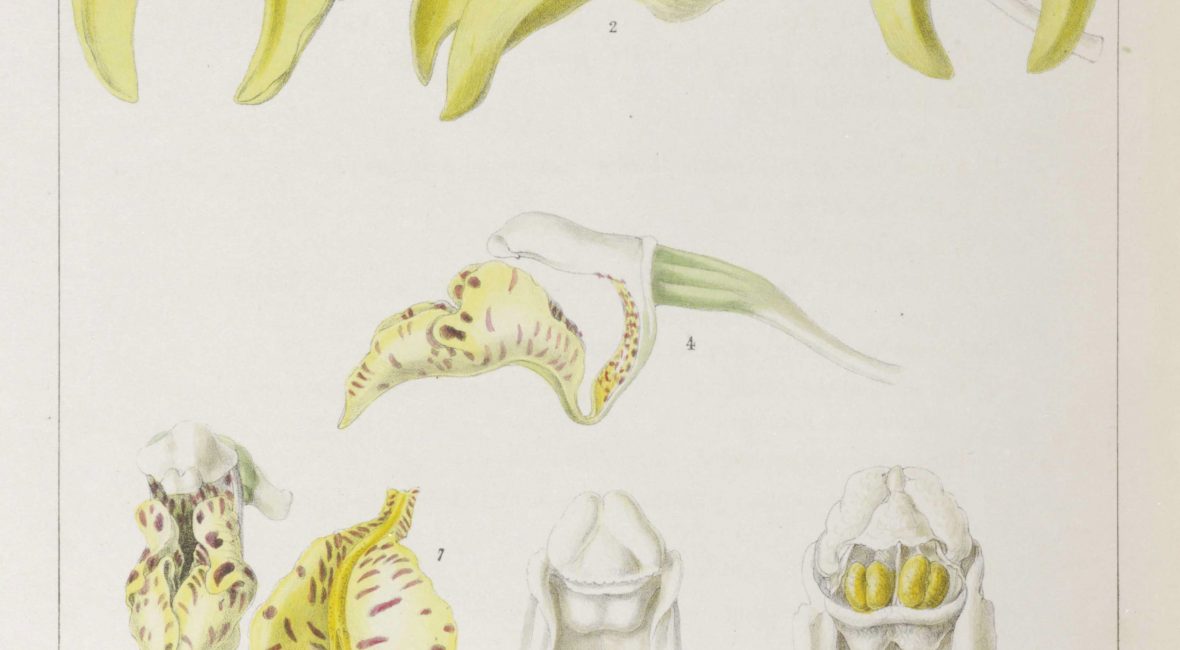
Plate 21. “The parts of fructification of Dendrobium speciosum from a sketch by Mr. Bauer in 1793”. Bauer, Franz Andreas and Lindley, John. Illustrations of Orchidaceous plants. 1830-1838. Contributed in BHL from Natural History Museum, London.

Lindley and Bauer were likely to have met in London under the patronage of Sir Joseph Banks (1743-1820). Bauer had settled in Kew by 1790 as their first artist in residence and was profiting from the technological developments in Kew’s heating of its glasshouses. The change from hot dry air and flue systems to heating by hot water circulating through cast-iron pipes enabled a better control of humidity, a prerequisite for the successful growing of tropical orchids. The following influx in orchidaceous species provided Bauer with a plethora of material to dissect and examine under a microscope and his skill in depicting scientifically accurate and aesthetically pleasing work flourished.

Lindley, on the other hand, was an assistant to Robert Brown (1773-1858) in Banks’s library and herbarium until Banks’s death in 1820. Although his life-long fascination was with orchids, he initially studied roses leading him to publish the volume A botanical history of roses, which he illustrated himself. In 1822, he was appointed by the Royal Horticultural Society as assistant secretary where he supervised their plant collections, and in 1829 he was appointed Professor of Botany at the University College, London, developing a reputation as a leading figure in orchidology and an excellent teacher. His recognition of several major groups of orchids according to the type of pollen and its arrangement on the column is still the basis of orchid classification today.

It was during this period that Lindley set about publishing Bauer’s many drawings of orchids studied under a microscope, of which Bauer had started these drawing in 1792 and continued beyond the first publication of the volume in 1832. Lindley provided the text on the organisation of Orchidaceae in his prefatory remarks, detailing many of the characteristics of orchids he had observed over his lifetime and referencing the various writings available to him at the time.

He states in his preface that “it has been found indispensable to represent Mr Bauer’s drawings by means of lithography instead of engraving on copper” and as such the final published volume contains thirty-five lithographed folio plates. Lindley was conscious of the changes he was making to Bauer’s drawings and goes on to state that he hopes “…that the defects of some of the plates as works of art will not be prejudicial to them as illustrations of science”. The plates are either un-coloured or hand-coloured with the individual components on each plate numbered with an index of what is depicted following each plate. Lindley lithographed several of Bauer’s drawings with the remaining being lithographed by Maxim Gauci (1774-1854).

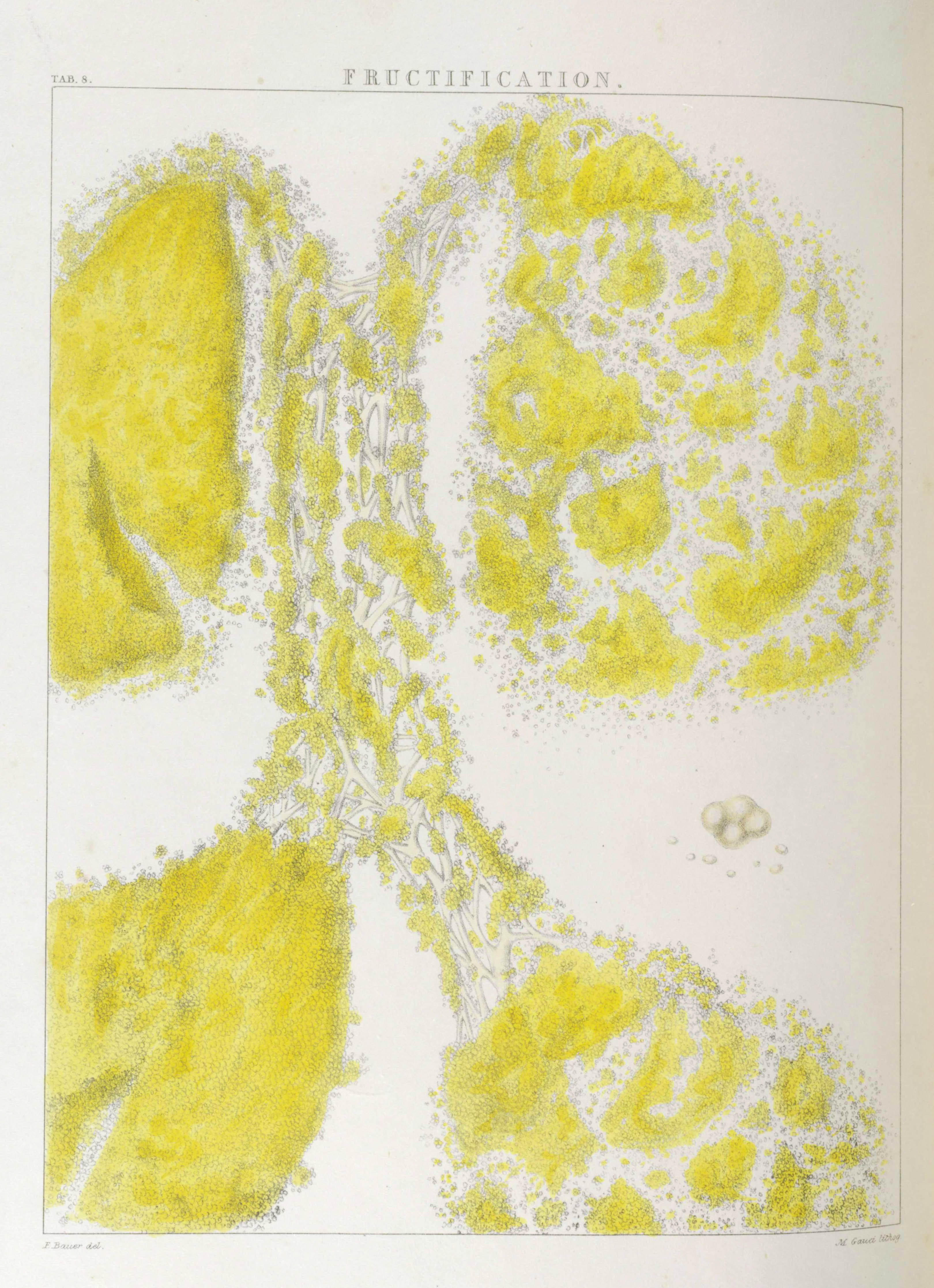
The plates are based on Bauer’s drawings and illustrate various characteristics of the orchid plants, from floral structure to seeds and pollen. The plate below shows the single anther of a Bletia flower at a magnification of 100 times and a few pollen grains at a magnification of 400 times. Bauer ultimately sketched thousands of pollen grain at various magnifications, but in this example, he was able to soak the pollinia in water and thus discover the elastic tissue that connects the pollen grains together.

56.jpg

Plate 8. “A view of the pollen-masses of Bletia verecunda dissolved in water; from a sketch by Mr. Bauer in 1801”. Bauer, Franz Andreas and Lindley, John. Illustrations of Orchidaceous plants. 1830-1838. Contributed in BHL from Natural History Museum, London.

The volume recently uploaded to BHL via the Natural History Museum contains a manuscript dedication by Mr Meyer, Bauer’s friend and executor, to Franz Bauer, attached to the front flyleaf. This letter reads:

“In memory of Francis Bauer Esq.re, FRS & FLS, & c. Botanical Painter to His Majesty George 3rd. And Resident Draughtsman for fifty years to the Royal Botanic Garden at Kew, where he devoted himself to the advancement of natural science under the magnificent patronage of Sir Joseph Banks, Bart. the President of the Royal Society. In the delineation of plants he united the accuracy of the profound naturalist with the skill of the accomplished artist to a degree which has been only equaled by his brother Ferdinand and in microscopical drawing he was altogether unrivaled. In this branch of his most useful labours, the world will ever contemplate with admiration his elaborate illustrations of animal and vegetable structures, especially those which are preserved in the British Museum, and in the University of Göttingen. He was born 4th of October 1758 at Feldsperg in Austria, and came to England from Vienna with the Baron Joseph Jacquin in 1788. He settled at Kew in 1790, where he continued to live in the enjoyment of an exalted reputation, and in the affection and respect of all to whom his generous character, his unassuming manner, and his deep religious feelings were known until 11 December 1840 when he died at the age of 82. While the works of Francis Bauer are his imperishable monument friendship inscribes this record on his honored tomb. [From Mr Bauer’s friend and executor Mr Meyer, 38 Sackville Street, Piccadilly, February 26 1846, at Stanhope Cottage. Wm. Clift (Mr Meyer, Mrs Haverfield’s, Kew Green. March 3, 1846)”

Further reading:

Stewart, Joyce and Stearn, William T. (1993) The orchid paints of Franz Bauer, The Herbert Press

Cooper, Paul M. (2015) The Bauer brothers, Natural History Museum, London

December 19, 2018by Joel Richard

Help Support BHL

BHL's existence depends on the financial support of its patrons. Help us keep this free resource alive!

search

About BHL

The Biodiversity Heritage Library (BHL) is the world’s largest open access digital library for biodiversity literature and archives. BHL operates as a worldwide consortium of natural history, botanical, research, and national libraries working together to digitize the natural history literature held in their collections and make it freely available for open access as part of a global “biodiversity community.”

Join Our Mailing List

Sign up to receive the latest news, content highlights, and promotions.

Subscribe Now

Subscribe to Blog via Email

Enter your email address to subscribe to this blog and receive notifications of new posts by email.

Join 319 other subscribers

Subscribe to Blog Via RSS

Subscribe to the blog RSS feed to stay up-to-date on all the latest BHL posts.

Access RSS Feed

Inspiring Discovery through Free Access to Biodiversity Knowledge.

The Biodiversity Heritage Library makes it easier than ever for you to access the information you need to study and explore life on Earth…for free, anytime, anywhere.


64+ Million Pages of
Biodiversity Literature Online.

EXPLORE

Tools and Services
to Transform Research.

EXPLORE

300,000+
Illustrations on Flickr.

EXPLORE

ABOUT | HARMFUL CONTENT | PRIVACY | SITE MAP | TERMS OF USE