 |
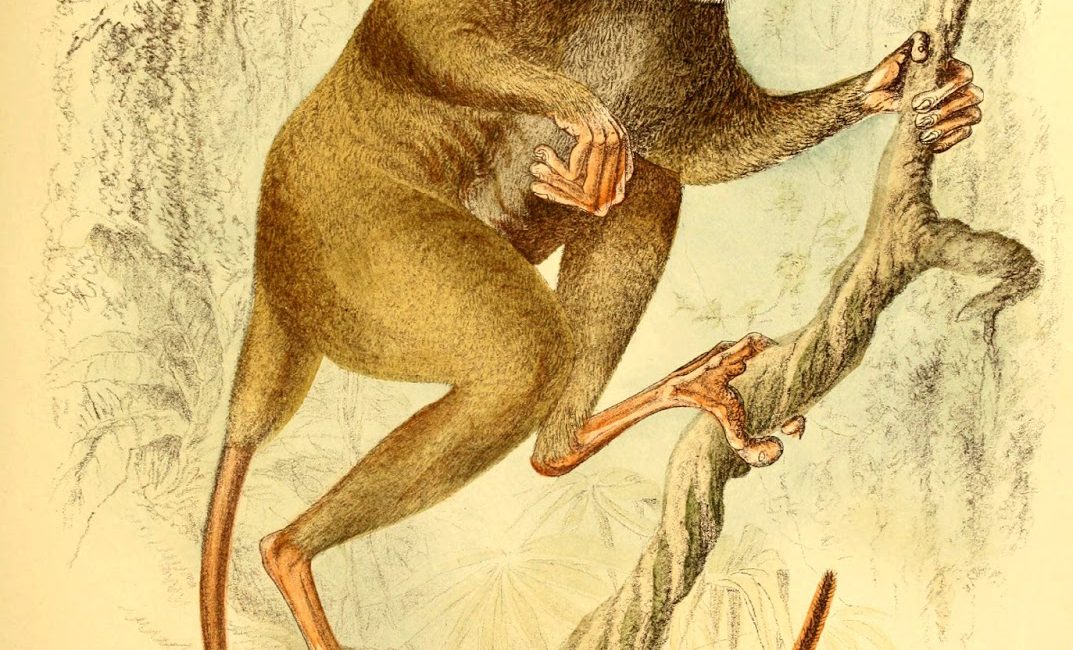
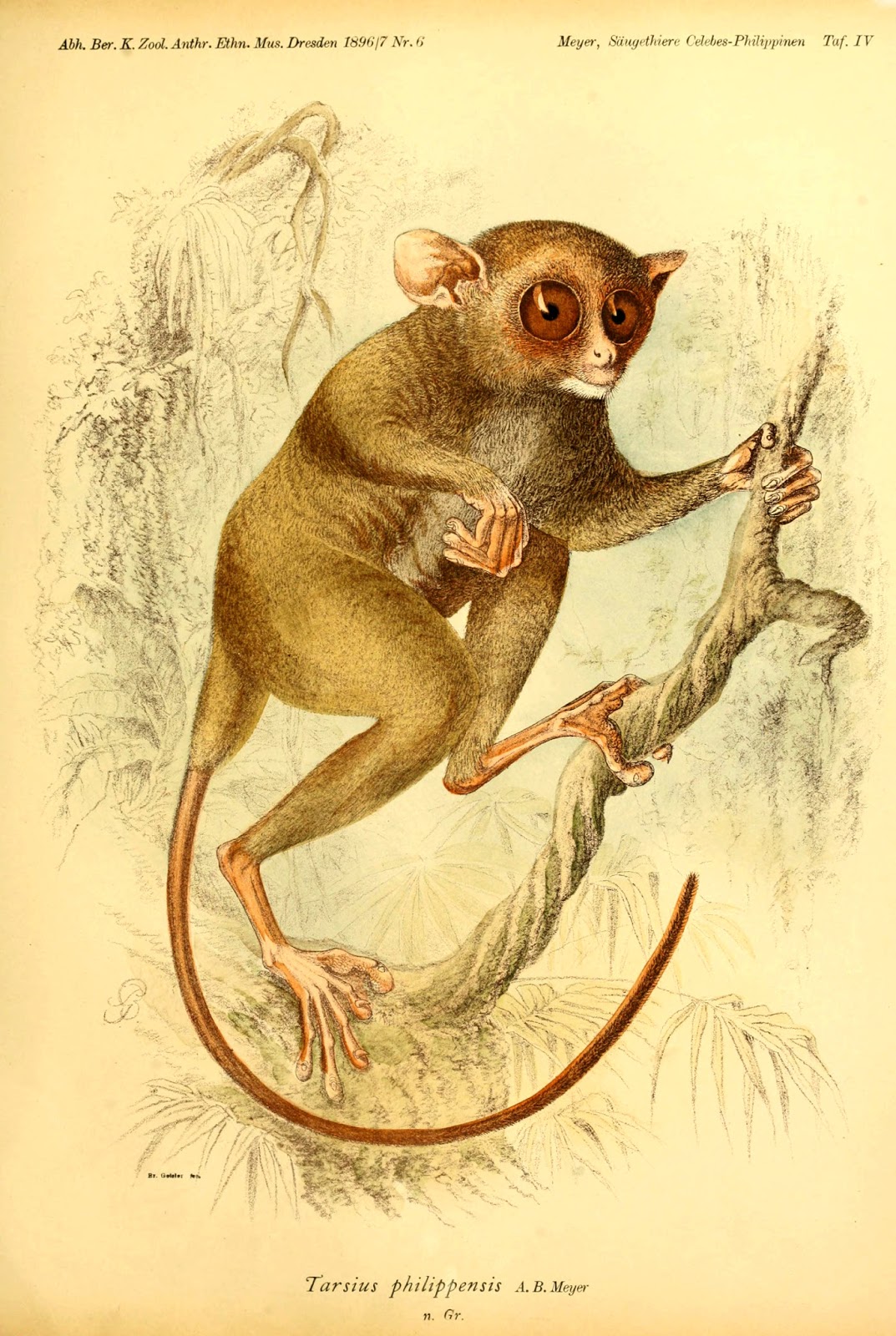
| Philippine Tarsier. Säugethiere vom Celebes- und Philippinen-Archipel (1896). |
Tarsiers are a family of small primates that today are found only in the islands of Southeast Asia. Among the species in the family is one of the world’s smallest primates – the Philippine Tarsier – weighing between 3.9-5.4 ounces (the world’s smallest primate is the Berthe’s Mouse Lemur). Tarsiers are perhaps most recognized for their enormous eyeballs, which are approximately as large as their entire brain.
Frieda Benun Sutton has a soft spot for these remarkable primates. For her thesis project at CUNY Macaulay Honors College at Brooklyn College (from which she graduated in December, 2012, with a Bachelor of Science degree in Biology), Frieda wanted to compare scientific literature on the classification of tarsiers before and after the cladistics revolution. BHL played a crucial role in helping her do so.
“I was looking for a very specific and somewhat obscure symposium from 1919 to use as my pre-cladistics platform, and miraculously, I was able to find it online! Through the BHL, I was able to download pdf files and text of the pages I wanted from the symposium (Proceedings of the Zoological Society of London, 1919) and search through the pages with ease. Often, I would be looking for just a key word to link me to an idea or person and I could easily find it with just a quick search of the documents downloaded from the database.”
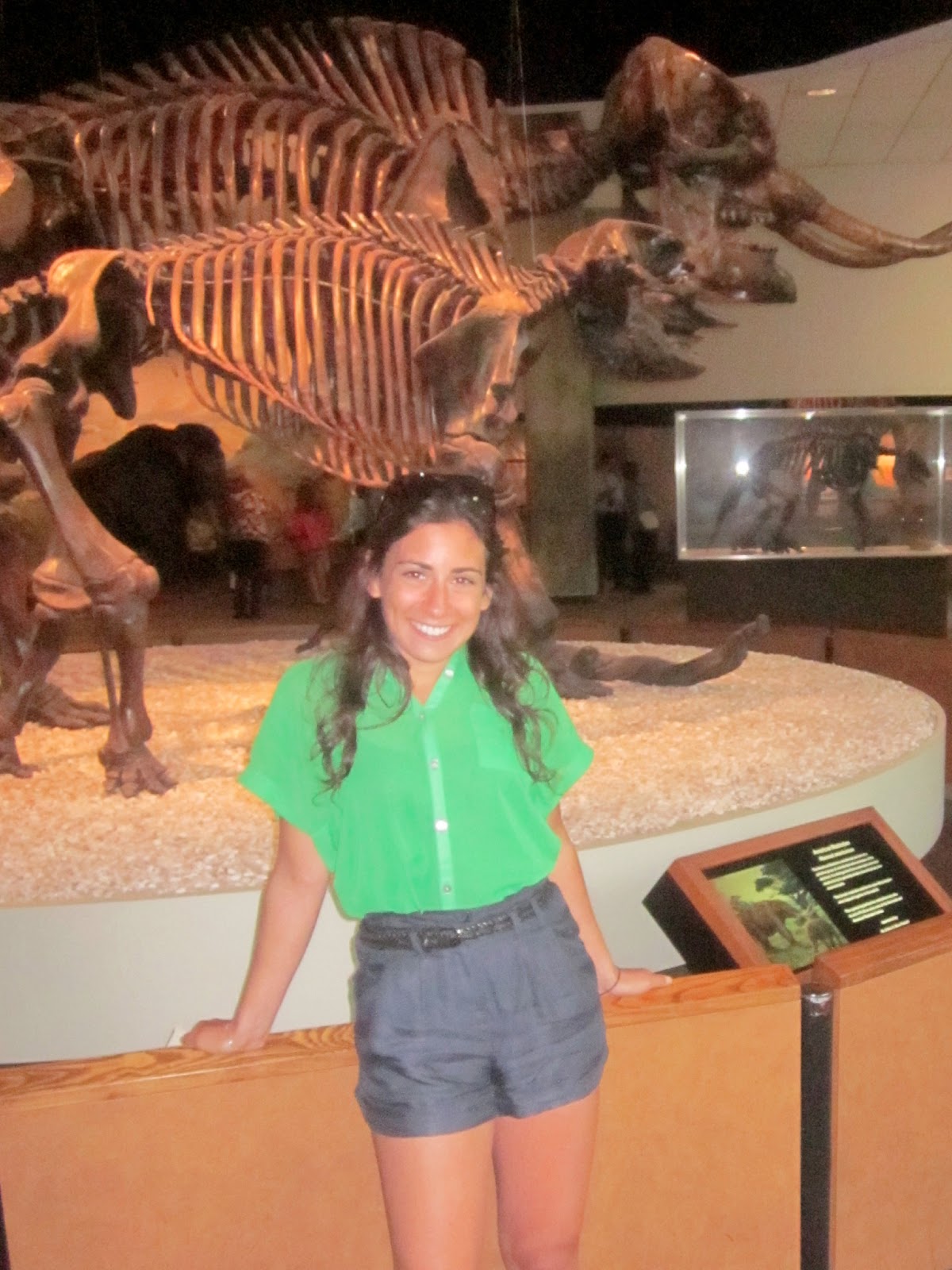 |
| Frieda Benun Sutton |
Frieda discovered BHL through a Google search, while she was looking for that 1919 Proceedings symposium (“Discussion on The Zoological Position and Affinities of Tarsius“), which is not surprising, considering that nearly half of all BHL traffic originates from Google searches.
With plans to begin a PhD program in Evolutionary Biology in the Fall, 2013, Frieda currently teaches after-school classes and camps on evolution at the American Museum of Natural History (AMNH). A recent meeting with one of our own BHL affiliates, Tom Baione (Director of the Library at AMNH and BHL Steering Committee member) gave her the perfect opportunity to express just how much BHL has meant to her work.
“I am greatly indebted to BHL. I honestly do not know if my thesis project would have been possible without it. At the very least, it made my research significantly easier. I’m happy to know that there are resources and people out there that are committed to digitizing and making available scientific literature, old and new.”
Frieda met Tom during an interview with the Richard Gilder Graduate School (RGGS) at AMNH – one of the programs she is considering for her PhD work. With a plan to concentrate her research on primate evolution, Frieda’s relationship with BHL has clearly just begun. With that in mind, we asked her what improvements she would like to see in BHL. Her response?
“I have no complaints. I would only like to see more scientific publications digitized and made available free of charge!”
We hear you loud and clear, Frieda! We’re adding more content to our 40 million+ pages each week! We’re also working to secure permission to digitize in-copyright (publish post-1923) titles, with over 250 title permissions obtained thus far. You can help us curate our collection by suggesting titles for scanning. While we will digitize the requested works free-of-charge, financial donations from our users allow us to scan even more content and help protect our open access model.
So, whether you’re interested in tiny primates with big eyes, deciduous vines that smell like rotting meat, extra-long insects, or anything in between, BHL has something for you! Search our newly-improved BHL website today and explore more of our collection in Flickr and Pinterest. Follow all the latest project developments and learn more about Earth’s awesome biodiversity on Facebook and Twitter.
Have an awesome story like Frieda’s? Tell us about it! We’d love to feature you on our blog. Leave a comment on this post, write to [email protected], or send us a message!