Biodiversity Heritage Library - Program news and collection highlights from BHL
  • Home
  • News
  • Featured Books
    • All Featured Books
    • Book of the Month Series
    • BHL at 20
  • User Stories
  • Campaigns
    • Fossil Stories
    • Garden Stories
    • Monsters Are Real
    • Page Frights
    • Her Natural History
    • Earth Optimism 2020
  • Tech Blog
  • Visit BHL
Home
News
Featured Books
    All Featured Books
    Book of the Month Series
    BHL at 20
User Stories
Campaigns
    Fossil Stories
    Garden Stories
    Monsters Are Real
    Page Frights
    Her Natural History
    Earth Optimism 2020
Tech Blog
Visit BHL
  • Home
  • News
  • Featured Books
    • All Featured Books
    • Book of the Month Series
    • BHL at 20
  • User Stories
  • Campaigns
    • Fossil Stories
    • Garden Stories
    • Monsters Are Real
    • Page Frights
    • Her Natural History
    • Earth Optimism 2020
  • Tech Blog
  • Visit BHL
Biodiversity Heritage Library - Program news and collection highlights from BHL
Blog Reel, Featured Books

Digitized Field Notes Yield Rapid Reference Response!

The Harvard Botany Libraries have been fortunate to benefit from several field notes digitization projects in recent years. Materials have been selected based on condition, demand, and/or the theme of the funded project. The current CLIR-funded BHL Field Notes Project has enabled us to nearly complete the capture of field notes and plant lists associated with the herbaria collections. The most interesting and immediate benefit of the project is our ability to point users to the files that are available both in the Biodiversity Heritage Library and HOLLIS, Harvard’s online catalog.

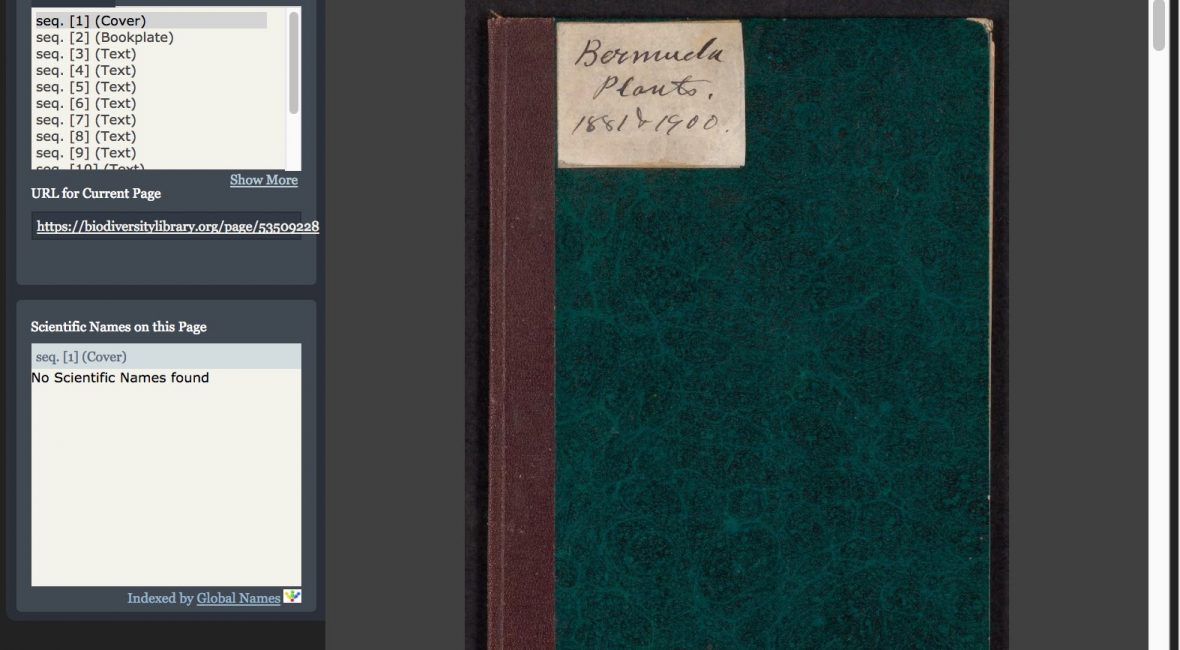
Recent reference questions that have arrived in my inbox that would have once required searching finding aids or files, and having researchers come to review materials, can now be answered by sending links. A former curatorial staff member wrote in the fall to say that he was on his way to Bermuda to collect specimens. He asked if I could send him copies of the field notes compiled by Harvard mycologist William G. Farlow during his trips there in 1881 and 1900. The notes were already available in the BHL Field Notes collection so I dashed off an email with those links and received a big “thank you” only minutes later!
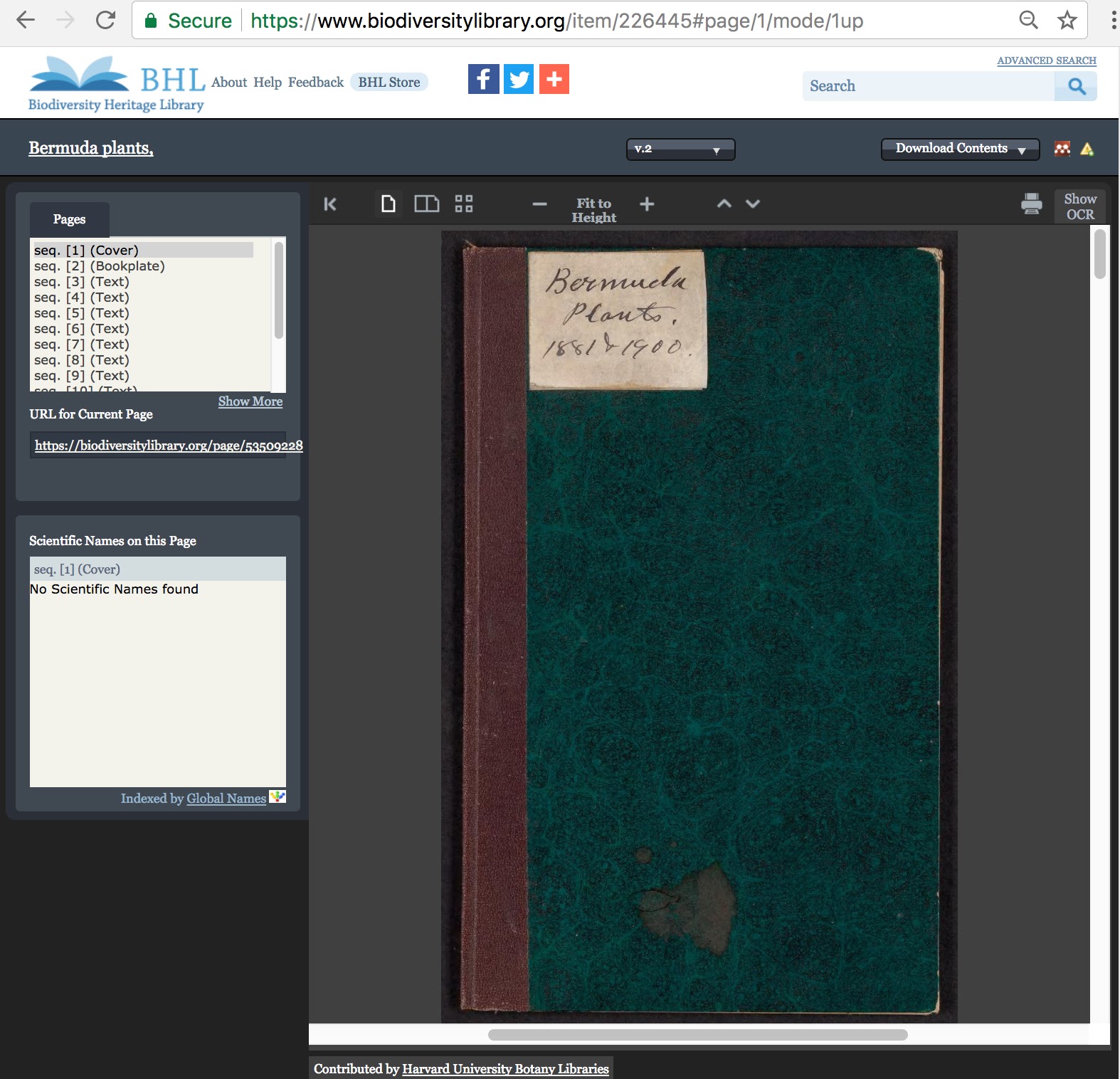
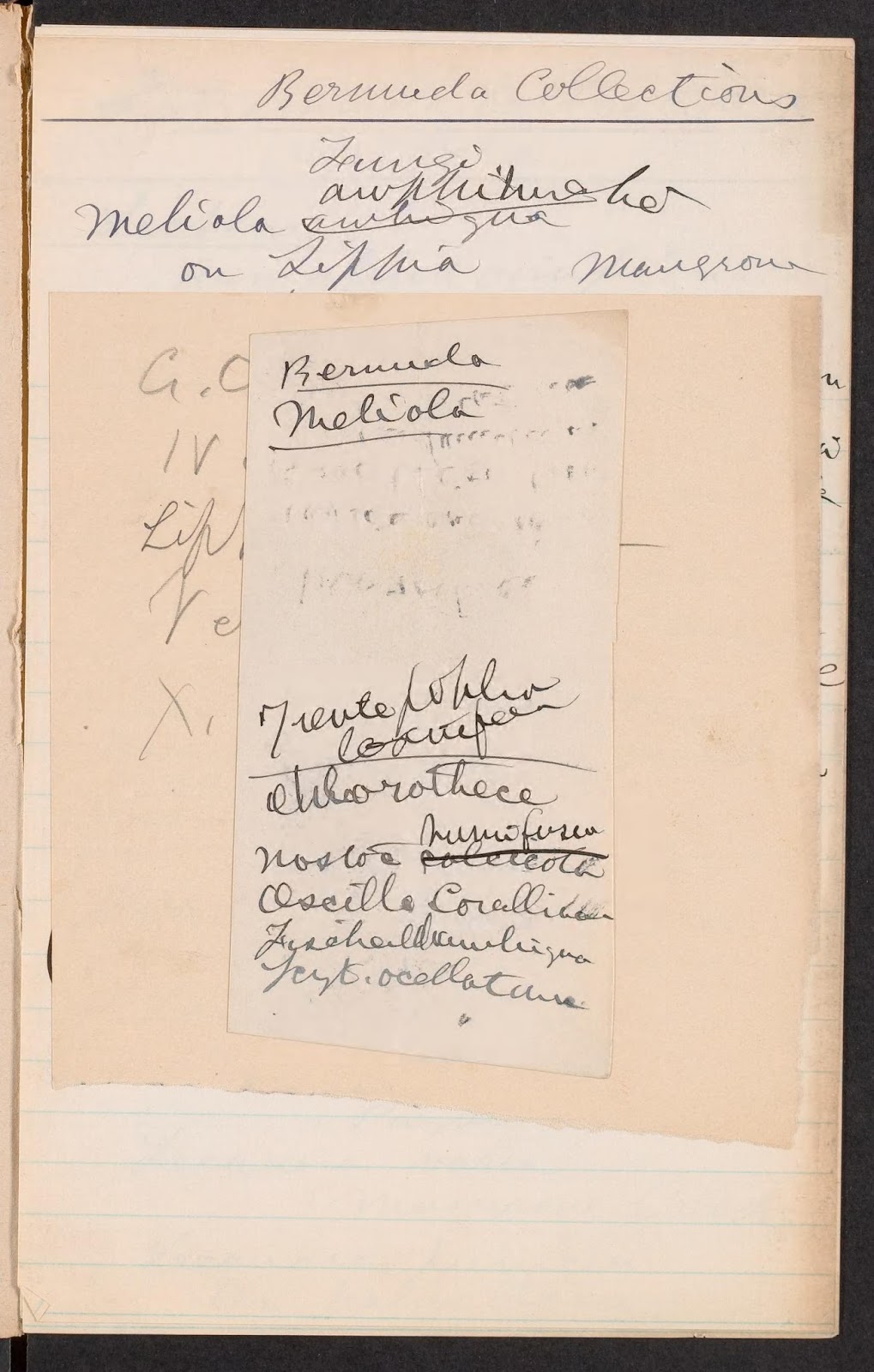
Bermuda plants, approximately 1881-1900. v.2 (1881)
https://biodiversitylibrary.org/page/53509230. Digitized by Harvard University Botany Libraries.

Another recent request came from a botanist stationed at the Horticulture Center, South China Botanical Garden, in Guangzhou, China. He was interested in anything in the archives related to Chun WoonYoung [Chen Huanyong] who collaborated with Arnold Arboretum botanists in the 1920s. While most of those materials reside in the archives at the Arnold Arboretum, I was fairly sure that we had his collecting records. Digital Projects Librarian Diane Rielinger supplied the BHL link so I forwarded it to the botanist in Guangzhou.

The most recent and surprising use of the field notes came as a referral from a colleague at the Botanical Research Institute in Fort Worth Texas. He is working with curators at the Amon Carter Art Museum of American Art on an exhibit planned for 2020. The museum has commissioned an artist to retrace the routes of 19th century naturalists throughout the Dallas/Fort Worth area and reimagine their experiences. They are particularly interested in Charles Wright so we sent links to his correspondence and field notes and the curators visited the Botany Libraries in December to see the material and to view collecting tools and artifacts in the archives. They plan to return with the artist next year to continue their research. Visits from artists are not unusual, but applying field notes to an art project is a first for us. The Wright field notes, digitized as part of a previous project, will also be deposited in BHL in the near future.

Keiko Nishimoto, the Botany Libraries’ former Collection Services Archivist, prepared a small exhibit on the CLIR field notes project to promote the project to herbaria staff and visitors. The first case explained the importance of field notes, showed examples of the records in the archives, and explained why they were being digitized. The second case featured the works of women botanists Mary Strong Clemens (1873-1968), who collected in New Guinea, northern Borneo, and Sulawesi, and Rae Baldwin Kennedy (1879-1952) who worked in Bermuda.
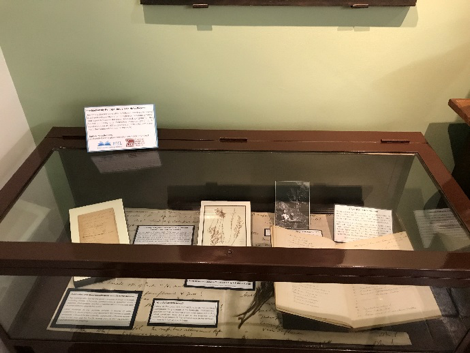
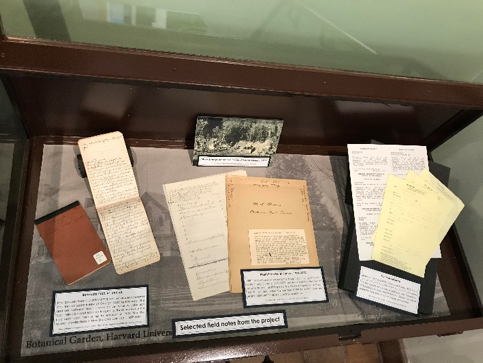
Earlier grants allowed us to target particular collectors and expeditions, but the CLIR funds gave us the opportunity to open the document boxes and scan the bulk of the collection. Cataloging and access have been enhanced as has our knowledge of the entire collection. We look forward to sharing these resources virtually and to hosting users with both traditional and reimagined ways of using them.

The BHL Field Notes Project is funded by the Council on Library and Information Resources (CLIR).

January 4, 2018by lmyrick
BHL News, Blog Reel, User Stories

From BHL User to Virtual Reference Intern

View Full Size Image
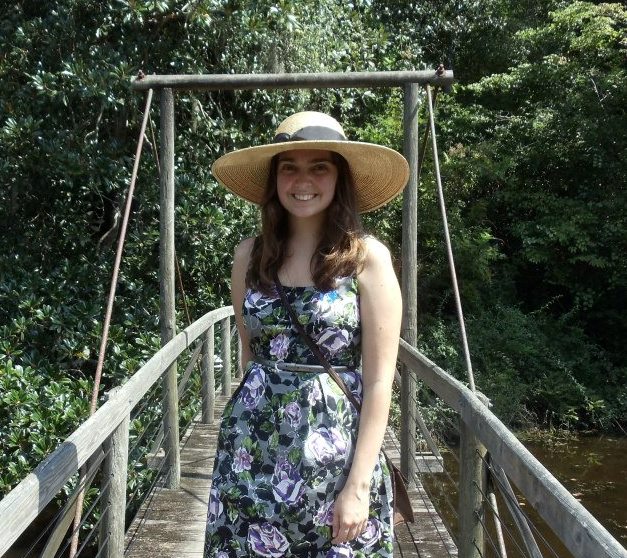
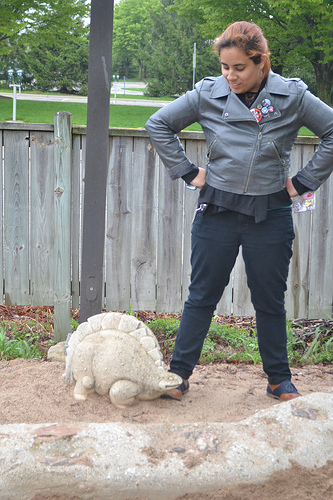
Me and a new friend at the 2013 CBHL Meeting,
MSU Children’s Garden. Photo by Bill Musser.
Like most people who go for a library science degree, I was a kid who loved libraries and books, often checking out more than I could get through in three weeks. (Admittedly, this still happens today. So many books, so little time.) Surprisingly instead of wanting to be a librarian, I figured I’d become a writer. As things tend to happen, the plan wasn’t as straight forward as I’d expected. In a few years I went from wanting to write a darling hipster novel to interning at a paleoecology lab to finally applying for grad school to pursue a master’s degree in library science.
After finishing my undergraduate degree at Emerson College, I moved back to Maryland to jump into the MLS program at the University of Maryland iSchool. With so many libraries in the area, it was an easy decision to make. I completed my field study as a bibliographic data intern at the National Oceanic and Atmospheric Administration Central Library earlier this year. It was my first exposure to real-world use of MARC holdings records and OCLC standards. Around the same time I also started my internship at the Smithsonian Botany-Horticulture library. There I’ve been working on a collection management project in addition to some reference work. I even do some shelving every once in a while to get a better idea of what the library holds — not to mention there is something calming about shelving material.
 A few weeks into my Botany-Horticulture library internship I met Bianca Crowley and Jackie Chapman of the Biodiversity Heritage Library. As I had been helping fulfill BHL requests for items in the Botany library, it was suggested that I get more involved. Over the next few months I helped with scanning requests, a preview of the internship that was to be. However, that wasn’t my first experience with the BHL.
My relationship with the Biodiversity Heritage Library started years before I had the opportunity to intern here. During my senior year of college, I did some research at the Harvard University Botany Libraries — a BHL institution I interned for the previous summer — in hopes of finding a great image for a tattoo of Ulmus americana, commonly known as the American or white elm. I came across a citation for a white elm plate in Francois Andre Michaux’s North American Sylva. Unfortunately, Harvard’s copy was unavailable at the time so it was suggested I look in the BHL. Lo and behold, there it was ingested from the Internet Archive. Ever since, the BHL has been my go-to resource for natural history images.
View Full Size Image
Ulmus americana. Perfect tattoo inspiration.
Needless to say, officially starting as the BHL virtual reference intern was a great way to go from user to provider. Over the past few months I worked on the back-log of user requests submitted through the feedback form. The general process of going through a request would start by confirming the citation provided by the user. Sometimes the user is working with a partial citation so this can take some time. Thankfully, verifying citations is something I really like to do. From there I double-check that the title isn’t already available through the portal. Finally, if it’s indeed unavailable, I determine if a BHL member has it in its collection, and assign the scanning task accordingly.
One of the benefits of this internship is interacting with librarians from so many of the BHL institutions, be it through the Gemini interface, a staff call, or here at the Museum of Natural History. It’s great getting a chance to experience how every member does his or her part to make the BHL such a great resource.
My internship ends this month, but I will be sticking around the Smithsonian Libraries as a volunteer. Also (because I can’t get enough of these DC libraries) I will be volunteering at the Library of Congress to work with their mini-comics collection.
It’s been incredible interning for the BHL and Smithsonian Libraries. I’ve met some wonderful people I’m happy to call colleagues and mentors. Seeing the work they do is an inspiring reminder of why I chose to be a librarian. Plus, it’s been wicked cool working a short walk away from the Hall of Bones!
Connect with me via LinkedIn. To read about my internship with the Botany-Horticulture Library, check out my post on Unbound, the Smithsonian Libraries blog. 
September 3, 2013by lmyrick
Blog Reel

My Life as a BHL Staffer: Jacqueline Chapman

Have you ever spotted an error in the BHL? Have you ever experienced technical difficulties with downloading digital files from our website? Have you ever looked for an article, journal, or title in our collections and been disappointed to find that it wasn’t in BHL’s collections? Have you ever wanted to thank BHL staff for a particular article, feature, or service? Have you ever had an idea for how the BHL could improve?
If you have, I hope you have taken advantage of our Feedback system and sent your corrections, suggestions, and questions on to us!  And if you have done so recently, you may have heard from me.
View Full Size Image
My name is Jacqueline Chapman, and I have had the pleasure of responding to hundreds of messages from BHL users over the past few months as I’ve taken on the role of BHL’s virtual reference librarian. I work on the BHL as part of my duties as a Digital Collections Librarian at the Smithsonian Institution, where I participate in digital initiatives and coordinate with various staff members to digitize the collections of Smithsonian Libraries.
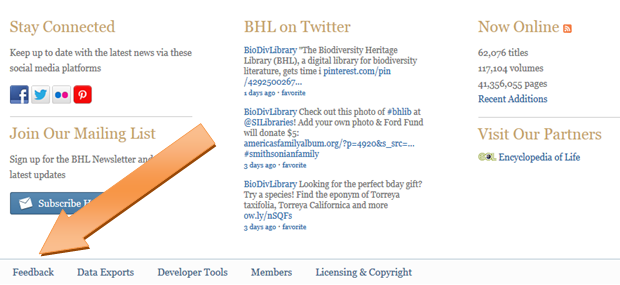
To submit feedback to the Biodiversity Heritage Library, simply scroll down to the bottom of our home page and click on Feedback.
View Full Size Image
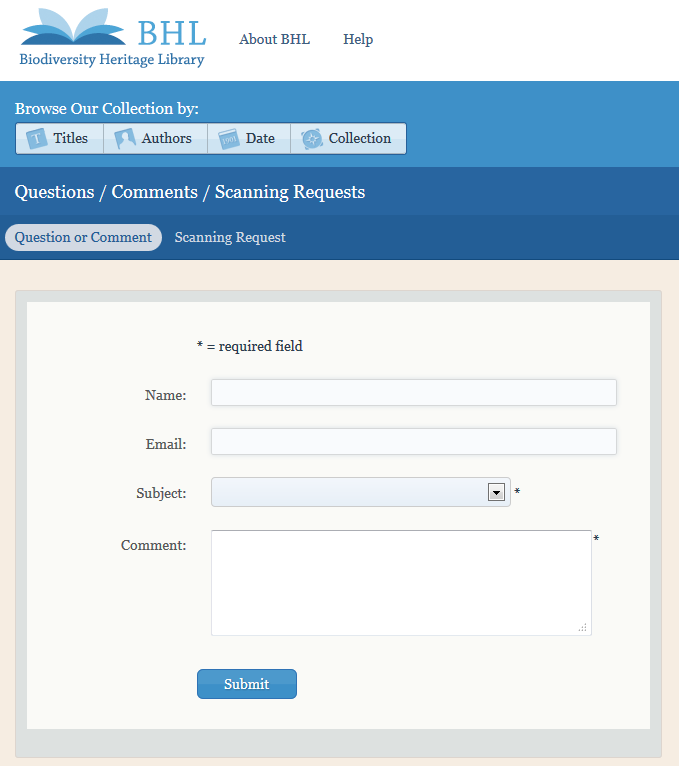
You will have the option to provide general feedback or to place a scanning request.  All submissions enter the same queue, in our back-end user feedback management system.  That’s where my work begins!
 
Questions and Comments
This section is a catch-all for user feedback that does not contain a scan request.  These may include image reuse requests, suggestions, error reporting, or technical questions.  Part of my job is to sort these submissions and determine what action is needed.
View Full Size Image
Through such user queries, I help with technical questions, investigate and fix quality issues, and answer more traditional reference questions.  I get to indulge in my enjoyment of detail-oriented intellectual tasks by merging rogue scans into their main entries, correcting metadata errors, re-sequencing volumes, merging duplicate author names, and delving into complex bibliographic mysteries. I especially enjoy sharing praise with the rest of the BHL staff!
 
Scan Requests
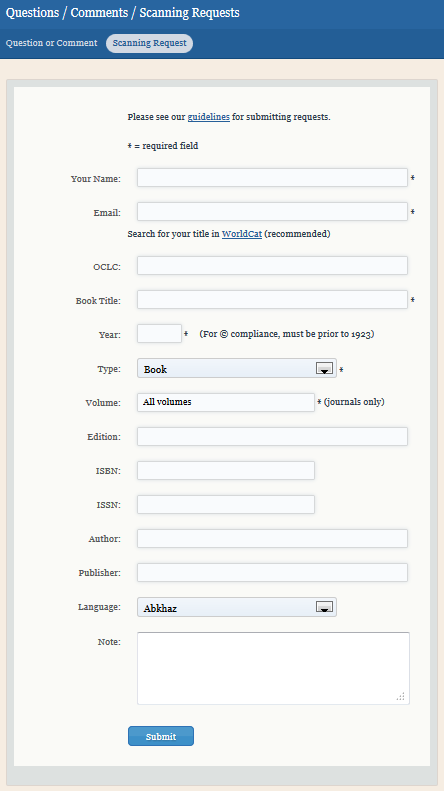
Members of the BHL user community are constantly helping our staff improve the quality of the BHL by requesting titles for inclusion and pointing out gaps in serials. A large portion of my duties consists of investigating these user submitted scan requests.
View Full Size Image
I begin by confirming that the requested item isn’t in BHL already.  Sometimes scan requests lead to the discovery of a mislabeled scan or to duplicate entries containing different volumes of the same title.  It’s great when I can satisfy a user request immediately by locating a difficult-to-find item in the BHL, and then make some changes so that it is more easily discovered by the next person.
If an item isn’t in the BHL, I check our queue to see if the item is already in progress.  We have over 1,000 issues open at any given moment, so it is not unusual for me to find that we are already hard at work on a particular scan request.
If the item is not already in progress, I will check to see if any of BHL’s member libraries holds the requested material and assign the scan accordingly.  An issue may be reassigned a number of times as institutions discover that their items are unable to be scanned, or that they lack specific volumes.  It is wonderful to see BHL collaboration in action as many partner libraries bring their collections together, digitally, in order to complete a series.
 
Submit Feedback!
I encourage you to take advantage of our feedback system. Our users make it possible for the Biodiversity Heritage Library to continually improve its offerings.  Our partners’ scanning priorities, our website’s design, the data export options that we offer, the goals we set for our project, and the social media platforms we embrace are all influenced though input from our users. We love to hear about how the BHL has aided the research of people around the world, and enjoy sharing some of the stories we hear in our BHL and Our Users feature.
Be part of the conversation!
August 21, 2013by Kathryn Stine
BHL News, Blog Reel

Internship Opportunity: Paid BHL Virtual Reference Internship

View Full Size Image
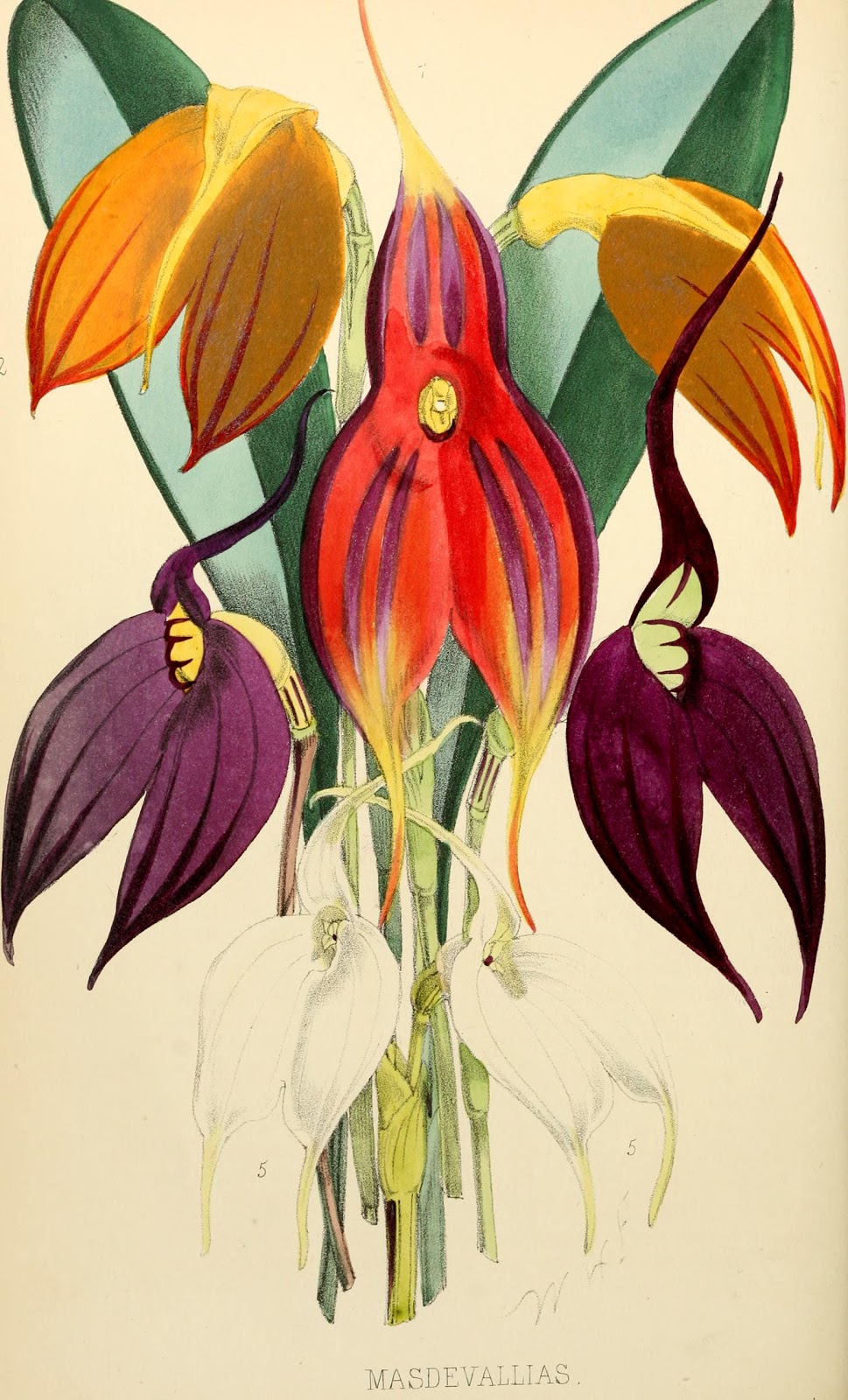
Masdevallia veitchiana

Here at BHL, we have partners all over the world, and we try to coordinate our scanning efforts with our partner libraries to ensure that critical content is scanned with maximum efficiency and minimal duplication. This coordination includes collaborating to scan the nearly 2,000 scanning requests we’ve received since 2010. We have a variety of tools and established workflows to help us do this.

Are you a student pursuing your Library Science or Information Management Masters degree or a recent graduate? Do you have a passion for reference work and digital libraries? Do you want to learn how the largest digital library for biodiversity science manages digitization efforts on a global scale? Do you want to help us grow our collection of over 40 million digitized pages of open access biodiversity literature? Do you want to gain real-world library experience that can help prepare you for a lifetime of library work? 

Then the paid BHL Virtual Reference Internship, hosted through the Smithsonian Libraries, is just for you! View the full internship description and learn how you can apply today by scrolling to the bottom of this webpage: http://library.si.edu/internships/2013-professional-development.

Due Date for Applications: March 11, 2013

Internship Description:

Biodiversity Heritage Library Virtual Reference Intern

  • Location of internship: National Museum of Natural History (Washington, DC); virtual work options also available.
  • Desired knowledge/skill sets (include education level): Students pursuing a Masters in Library & Information Science or recent graduates of an accredited MLIS program. Knowledge of LC Subject Headings and Name Authorities, XML exports and metadata cross-walking, MARC21 Fields and standard cataloging practices are highly desirable, but not required. Students with an eagerness to learn more about digital librarianship, virtual reference work and/or cataloging are strongly encouraged to apply.
  • Brief description of project: The Biodiversity Heritage Library is the world’s largest open access digital library of natural history literature (http://biodiversitylibrary.org/). BHL Virtual Reference Interns will work closely with the BHL collections team to process scanning requests received from users and issue digitization assignments to the appropriate library within the BHL’s 14-member international library consortium. Interns will utilize an issue tracking system to manage the scanning request workflow. Routine activities will include the need to research literature citations provided by users, investigate BHL member consortium library holdings to determine the best scanning candidate, monitor requests as they are processed by BHL staff, and correspond with users. Interns will also work in the collection’s back-end database to correct bibliographic metadata for BHL titles and volumes as needed.

Questions or comments? Send us feedback or write to [email protected].

February 11, 2013by Grace Costantino

Help Support BHL

BHL's existence depends on the financial support of its patrons. Help us keep this free resource alive!

search

About BHL

The Biodiversity Heritage Library (BHL) is the world’s largest open access digital library for biodiversity literature and archives. BHL operates as a worldwide consortium of natural history, botanical, research, and national libraries working together to digitize the natural history literature held in their collections and make it freely available for open access as part of a global “biodiversity community.”

Join Our Mailing List

Sign up to receive the latest news, content highlights, and promotions.

Subscribe Now

Subscribe to Blog via Email

Enter your email address to subscribe to this blog and receive notifications of new posts by email.

Join 319 other subscribers

Subscribe to Blog Via RSS

Subscribe to the blog RSS feed to stay up-to-date on all the latest BHL posts.

Access RSS Feed

Inspiring Discovery through Free Access to Biodiversity Knowledge.

The Biodiversity Heritage Library makes it easier than ever for you to access the information you need to study and explore life on Earth…for free, anytime, anywhere.


64+ Million Pages of
Biodiversity Literature Online.

EXPLORE

Tools and Services
to Transform Research.

EXPLORE

300,000+
Illustrations on Flickr.

EXPLORE

ABOUT | HARMFUL CONTENT | PRIVACY | SITE MAP | TERMS OF USE