Biodiversity Heritage Library - Program news and collection highlights from BHL
  • Home
  • News
  • Featured Books
    • All Featured Books
    • Book of the Month Series
    • BHL at 20
  • User Stories
  • Campaigns
    • Fossil Stories
    • Garden Stories
    • Monsters Are Real
    • Page Frights
    • Her Natural History
    • Earth Optimism 2020
  • Tech Blog
  • Visit BHL
Home
News
Featured Books
    All Featured Books
    Book of the Month Series
    BHL at 20
User Stories
Campaigns
    Fossil Stories
    Garden Stories
    Monsters Are Real
    Page Frights
    Her Natural History
    Earth Optimism 2020
Tech Blog
Visit BHL
  • Home
  • News
  • Featured Books
    • All Featured Books
    • Book of the Month Series
    • BHL at 20
  • User Stories
  • Campaigns
    • Fossil Stories
    • Garden Stories
    • Monsters Are Real
    • Page Frights
    • Her Natural History
    • Earth Optimism 2020
  • Tech Blog
  • Visit BHL
Biodiversity Heritage Library - Program news and collection highlights from BHL
Blog Reel, Featured Books

Happy Holidays from BHL and Rangifer tarandus!

As part of BHL’s Winter Appeal, we’re highlighting some of the amazing species that are especially well-adapted to cold, wintery climes as well as those that often come to mind as we celebrate the winter holidays.  Last week we featured Ursus maritimus, the magnificent apex predator of the Arctic commonly known as the polar bear.  This week, we turn our eyes again to the North Pole to shine the spotlight on a well-known celebrity of  the giving season!
View Full Size Image
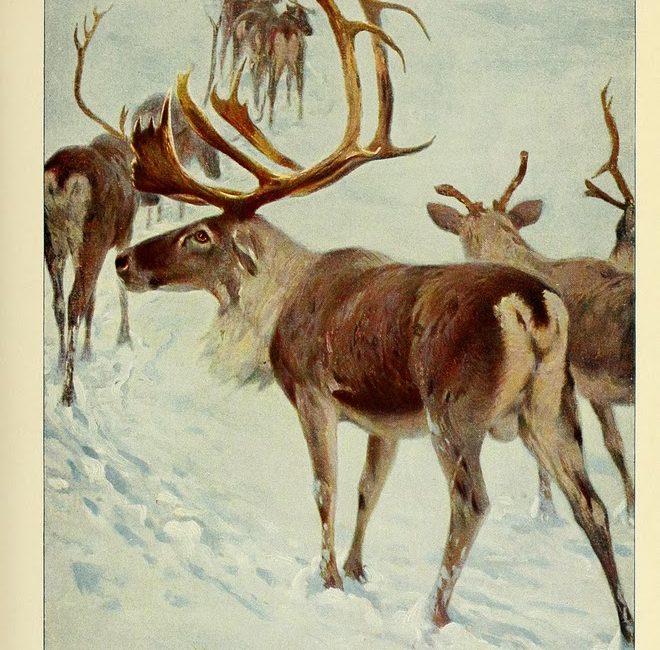
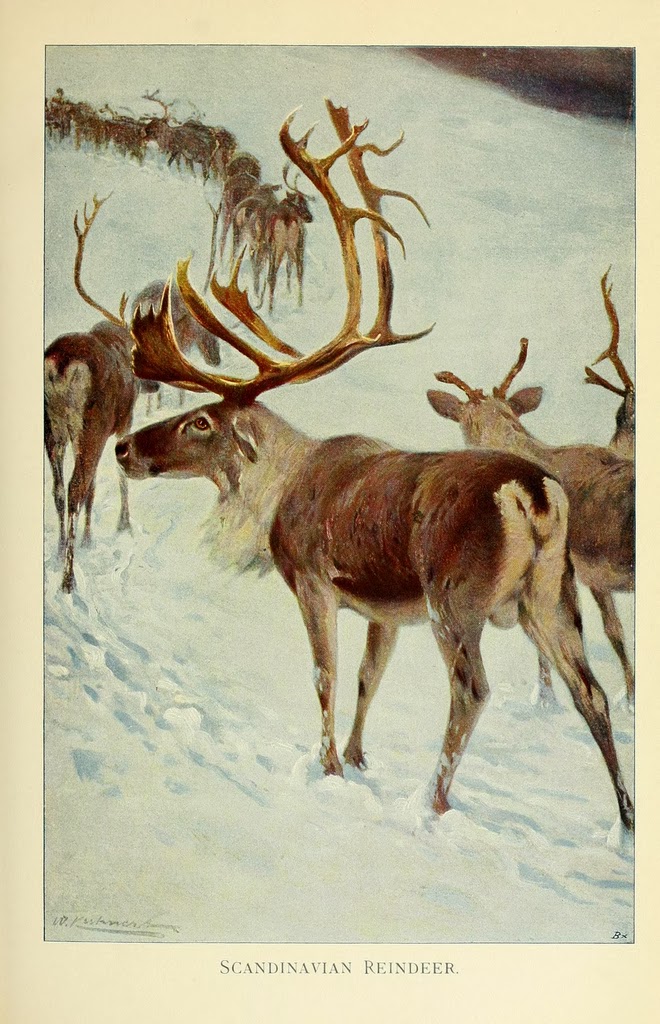
Wild Life of the World: A Descriptive Survey
of the Geographical Distribution of Animals.
London, F Warne and Co, 1916.
http://biodiversitylibrary.org/page/21738521
#page/455/mode/1up


Rangifer tarandus
As the holiday season goes into full swing, the festive days of late December bring a dazzling array of familiar images–shiny packages with ribbons and bows, snowy rooftops and fir trees, and of course the ubiquitous Rangifer tarandus.  Whether pulling sleighs or playing games, these antlered animals  feature prominently in decorations throughout the holiday season.  If you’ve ever watched the holiday cartoons broadcast at this time of year, you could be forgiven for thinking that reindeer are an especially uniform species, intolerant of differences.  But what of reality?  As it turns out, in real life reindeer exhibit a remarkable range of diversity.

Distinguishing them from other deer, reindeer are the only species in which both the male and female grow antlers. Within the species, reindeer display notable variations in size, shape and color.  According to The Animals of World: Brehm’s Life of Animals (1895) a comparison of tame and wild reindeer would reveal such differences just in the size and shape of the hooves that one could easily see how they might be considered belonging to separate species.  Antler size and fur coloration are also known to vary in the different regions of the reindeer’s circumpolar habitat.  Even within individuals, coloration changes with the seasons, bringing on a more greyish-white hue for the snowy winter months.
View Full Size Image
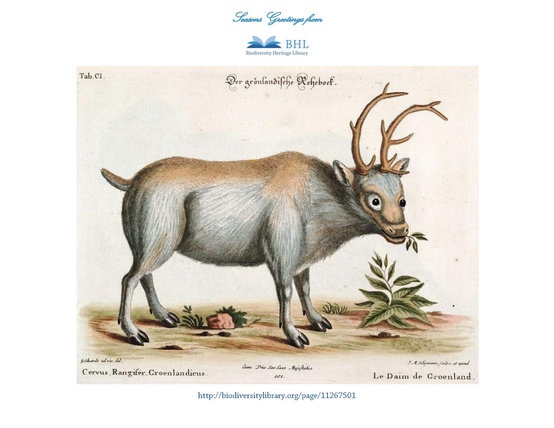
Verzameling van uilandsche en zeldzaame vogelen.
Amsterdam, J.C. Sepp, 1772-1781.
http://biodiversitylibrary.org/page/11267501#page/199/mode/1up

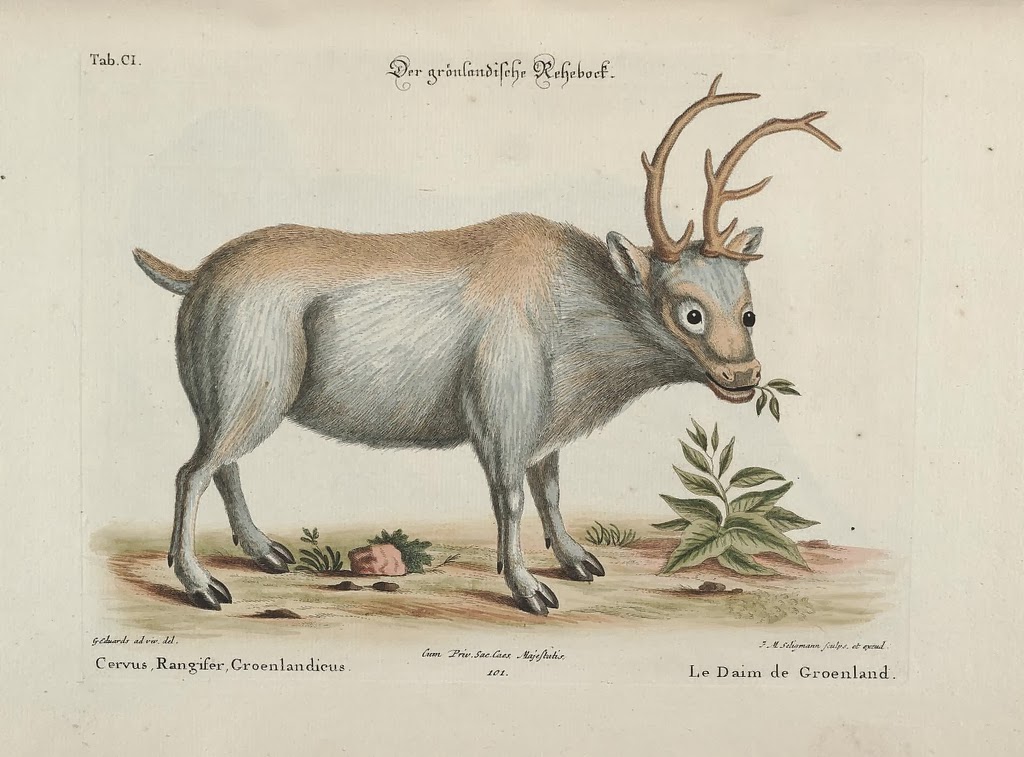
But sometimes the differences are significant enough to denote a classifiable distinction and today taxonomists recognize several subspecies of reindeer.  For example, Rangifer tarandus groenlandicus, shown above, occurs primarily in Greenland.  Even for those of us not well-versed in scientific names, this shouldn’t be surprising with the obvious phonetic similarity between groenlandicus and Greenland.  What many of us will find surprising, though, is that the common name of this subspecies is the “barren-ground caribou” meaning that, yes, caribou are subspecies of reindeer!  Who knew? (Well, undoubtedly some of you did but for those of us more familiar with the animated variety, let us not be ashamed to admit we are duly surprised!)

Other subspecies include the Dawson’s caribou (Rangifer tarandus dawsoni) which once roamed the Queen Charlotte Islands of British Columbia and is now presumed extinct.  While some information can still be derived from the DNA extracted from bones, fur and other remains of Dawson’s caribou and other extinct species, the vast majority of scientific knowledge on their appearance and behavior is locked in rare or hard to find literature.
View Full Size Image
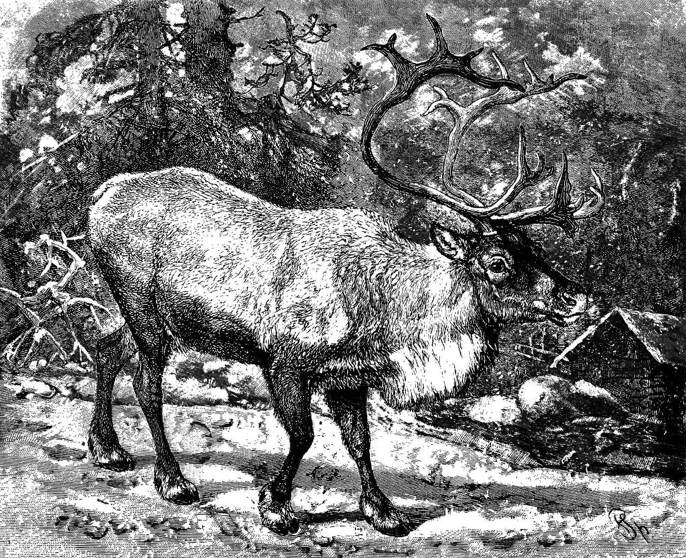
The animals of the world. Brehm’s life of animals.
Chicago, A. N. Marquis, 1895.
http://www.biodiversitylibrary.org/page/37569440

#page/540/mode/1up

Habitat destruction, hunting and predators continue to present threats to wild caribou and reindeer.  In 1983, the US Fish and Wildlife Service listed the subspecies Rangifer tarandus caribou as endangered and advocated to protect its habitat.  Even at the turn of the century, reports of diminishing populations of one of the largest subspecies, Rangifer tarandus fennicus or Finland reindeer, were common.  In one of several such reports, cited in Extinct and vanishing mammals of the Old World (1945), the author laments, “The Finland reindeer is thus very nearly exterminated in the greatest part of its former habitat and it looks almost as a bitter irony of fate that it should not be recognized and discerned as a separate race before it was in so imminent danger of becoming entirely extinct…”

While we can’t bring the species and subspecies that have gone extinct, we can preserve our knowledge of them to help avoid future extinctions. By making this knowledge widely available, we can become better stewards to those species that are still here and especially to those recovering from diminished populations.

The BHL currently provides access to over 42 million pages and over 87,000 images and is changing the face of research methodology.  Scientists around the world are using BHL to identify and classify species, facilitate further scientific research, and support conservation efforts to help prevent future extinctions.  The ongoing growth of BHL is supported in part by our dedicated patrons whose gifts support the digitization of additional literature, technical development of the program, and improvement of data curation.  We hope you’ll take a moment to review how your donation can be put to work and will consider supporting BHL this holiday season!
View Full Size Image
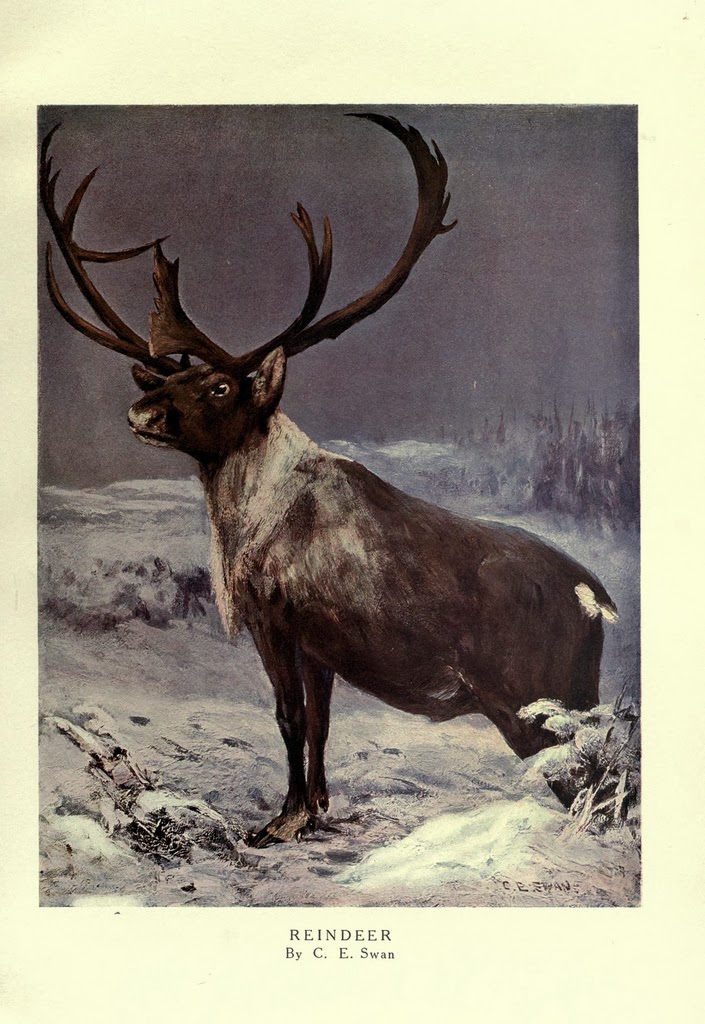
The wild beasts of the world.
London, T.C & E.C. Jack, 1909
http://biodiversitylibrary.org/page/19080406#page/157/mode/1up

Thank you and Happy Holidays!
 

December 23, 2013by sayeedmd
BHL News, Blog Reel

Spreading Holiday Cheer

How does BHL celebrate the holidays?

As a project, we work to raise awareness about the plight facing the Earth’s biodiversity today and provide ways to help preserve scientific knowledge, support research, and conserve species. As a consortium, our BHL member institutions spread some fantastic holiday cheer by featuring some exciting seasonal exhibits.

We decided to celebrate the holidays this year by taking you through a virtual tour of the seasonal exhibitions at some of our member institutions and, as an added bonus, showcase this year’s BHL “superstars” for each member. What’s a BHL “superstar,” you ask? Well, today, it’s each member’s most popular book in BHL this year. Some of them just might surprise you!


American Museum of Natural History

Did you know that a group of jellyfish is called a smack? Or that a group of kangaroos is called a mob? A group of wise owls? It’s called a parliament.

View Full Size Image
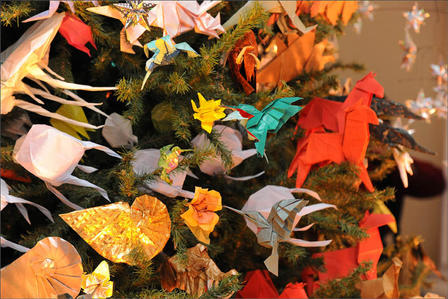
“Smack” of jellyfish (far left). Origami Art on the AMNH Holiday Tree. © AMNH/R. Mickens


View Full Size Image
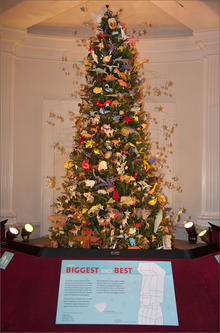
© AMNH

The American Museum of Natural History has decorated its annual 13-foot tall holiday tree with origami “groups” of animals, inspired by the museum’s collections. These “groups” highlight the fact that even solitary animals spend at least some time with others of their species. The 500 delightful origami ornaments took volunteers from OrigamiUSA approximately 5 months to construct, and include groups of zebras, giraffes, and even bacteria!

The origami tree has been a hallmark of the museum’s holiday celebrations for more than 30 years and will be on display through January 6. Don’t miss your chance to experience biodiversity through paper art! How about using the over 50,000 images in the BHL Flickr to inspire your own origami art?!


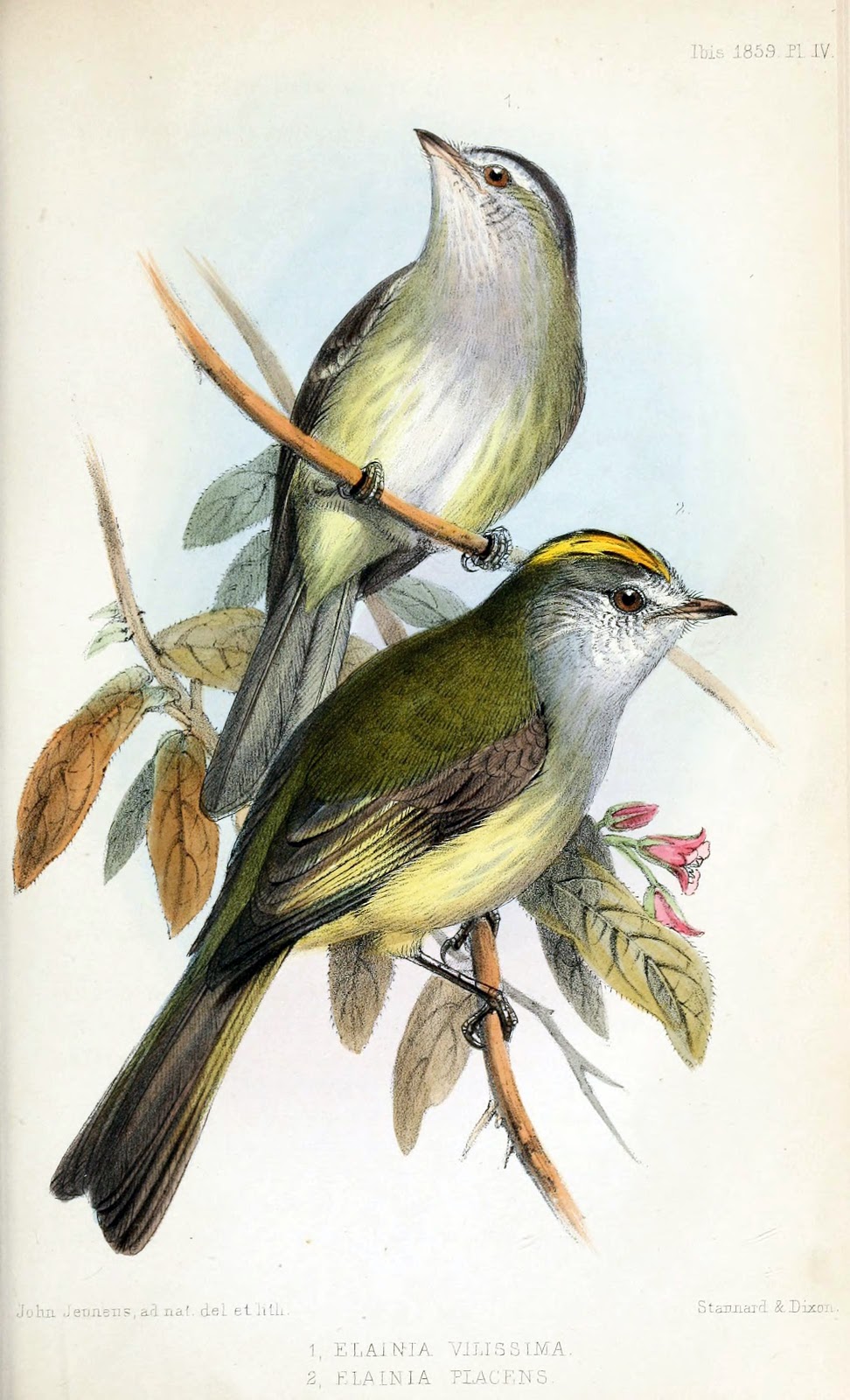
The winner of the AMNH 2012 Most Popular Book? Ibis (1859), v. 1. 

View Full Size Image
Two Tyrannulets, from the Zimmerius genus. Plate 4 from v. 1, Ibis (1859)

The American Museum of Natural History has an extremely strong ornithology collection. Therefore, it’s no surprise that the most popular book contributed by this library would be one of the cornerstones of ornithological literature. Frederick Godman and Osbert Salvin, the authors of Biologia Centrali Americana – arguably the most authoritative work on Mexican and Central American biodiversity – were two of twenty ornithology enthusiasts to establish this journal, which is still published today, in 1859. Explore the illustrations of the Ibis in our past blog post.


California Academy of Sciences

View Full Size Image
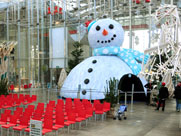
Snowman Dome at CAS. © CAS

Think you won’t find much snow this Holiday Season in California? Think again! The ‘Tis the Season for Science event at the California Academy of Sciences features live reindeer, research specimens illustrating how various species cope with cold temperatures, a snowman-shaped digital dome featuring programming about the science of the seasons, and, yes, snow in the piazza every 30 minutes!

View Full Size Image
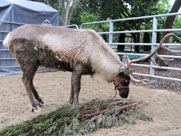
Live reindeer at CAS! © CAS

Some interesting tidbits from CAS: Did you know that the reindeer is the only deer species in which both males and females exhibit antlers? Did you know that species deal with harsh winters, generally, by adopting 1 of 2 strategies: heading south or hibernating? Perplexed by the bi-hourly snow falling at CAS? It’s temperature-resistant and biodegradable!

The CAS Holiday Exhibit ‘Tis the Season for Science will be open through January 6. Don’t miss your chance to experience polar bears, geese, reindeer, and snow in California! In honor of the CAS caribou attraction, enjoy this Reindeer Holiday Greeting Card from BHL!

View Full Size Image
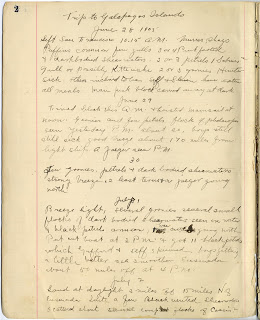
Excerpt from the Rollo Beck Galapagos expedition journal.

The most popular book from the California Academy of Sciences this year? The Rollo Beck Galapagos Expedition Journal!

The Rollo Beck Journal was the first field notebook to be ingested into BHL. As part of the IMLS Connecting Content project, CAS is digitizing field notebooks (essentially the scientific journals kept by researchers while on expeditions and/or performing field work) in its collection. This journal gives a broad overview of the 1905-06 expedition to the Galapagos, led by Rollo H. Beck. An interesting highlight from this journal? It includes a passage relating the first news Beck received of the 1906 fire that destroyed nearly all of CAS’s collections. Learn more about the journal and the Connecting Content grant in this past blog post.


Missouri Botanical Garden


View Full Size Image
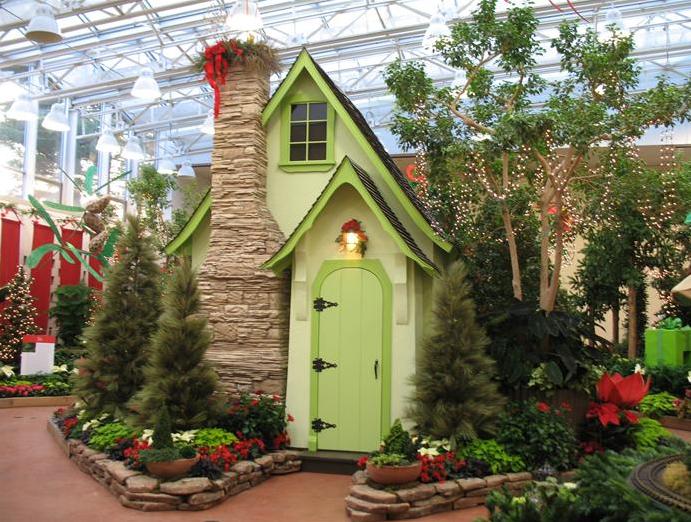
Fairy Tale Cottage at MOBOT’s Gardenland Express. © MOBOT

It’s a holiday wonderland in St. Louis this year with the Gardenland Express! Staff and volunteers have transformed the Garden’s Orthwein Floral Display Hall into a whimsical fantasy complete with a fairy tale cottage, 900 feet of miniature train tracks, and a stunning array of traditional holiday plants. The exhibit, celebrating “Merry Botanical Traditions,” took years to plan and even features silk poinsettia, holly, and Christmas Cactus constructed by artisans from the Garden’s previous Lantern Festival.

Find out what it takes to transform a barren room into a holiday treat in the video below. If you’re in St. Louis anytime before January 1, don’t miss your chance to experience the wonder for yourself! Maybe you can use our botanical illustrations to identify some of the plants featured in the exhibit!

This year, the MOBOT “Superstar” award goes to…..Systema Naturae (1758), v. 1, 10th Ed., by Carl Linnaeus.

View Full Size Image
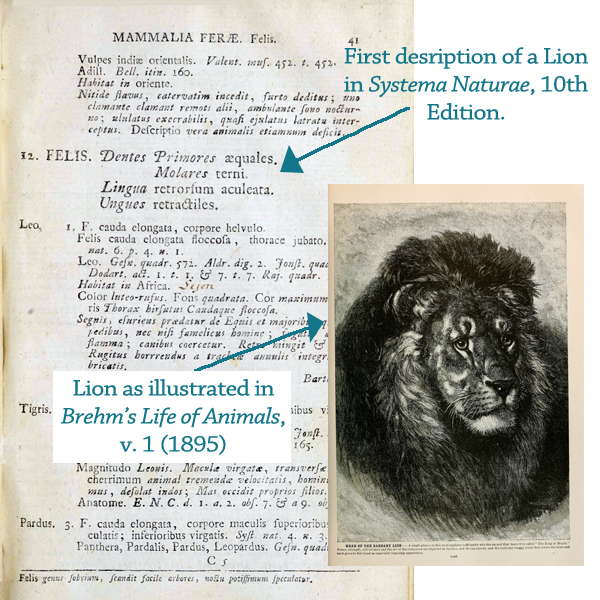
The first description of a lion in the 10th Ed. of Systema Naturae, with an illustration of a lion in Brehm’s Life of Animals.

It’s probably not very surprising that the publication that marked the beginning of zoological nomenclature is the 2012 most popular book contributed by the Missouri Botanical Garden. But did you know that, though Linnaeus’ first edition of Species Plantarum and this tenth edition of Systema Naturae are heralded as the starting points of binomial nomenclature for botany and zoology, respectively, the concept for the system was partially developed by Gaspard and Johann Bauhin in the late 1500s? Learn more about Linnaeus, Species Plantarum and Systema Naturae in our previous blog post.

New York Botanical Garden

It’s all about the trains this year for BHL’s botanical partners! Celebrating the season with the Holiday Train Show, the New York Botanical Garden has laid a quarter of a mile of miniature train tracks throughout a lush botanical backdrop populated by reconstructions of 140 of New York’s famous landmarks. The best part? These reconstructions, the products of Applied Imagination, are crafted using natural materials like bark, twigs, fruit, seeds, and stems!

What delightful icons will visitors to the seasonally-converted Enid A. Haupt Conservatory at NYBG encounter? To name just a few: Yankee Stadium, New York Public Library, the Brooklyn Bridge, and, new this year, the Macy’s location made famous by “A Miracle on 34th Street.” The Artists’ Studio, part of the exhibit, gives visitors a behind-the-scenes view of how these marvelous buildings are constructed, as well as a chance to experience some international icons, including the Sphinx and Parthenon.

Have kids? Then NYBG’s Gingerbread Adventures, which gives children a chance to play inside a life-size gingerbread house and decorate gingersnaps, is right up your alley!

The Holiday Train Show runs through January 13. Don’t miss your chance to experience New York with botanical eyes!

The most popular book this year contributed by NYBG? Again in the spirit of BHL botanical institutions, it’s v.1, pt.1 of the 11th edition of Systema Naturae (1760). The next twelfth edition, the last published under Linnaeus’ authorship, was comprised of 2,400 pages, expanded from the original eleven pages of the first edition (published in 1735).

Smithsonian’s National Zoo


View Full Size Image
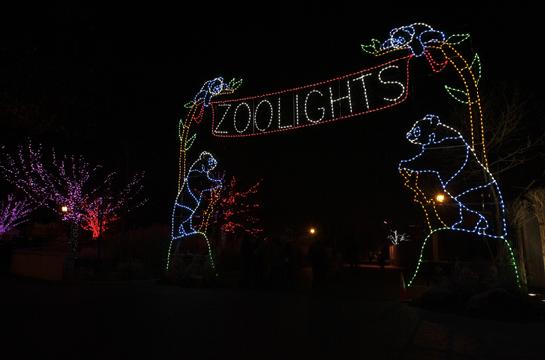
ZooLights Entrance. See more ZooLights Images. © SI.

Every year, the Smithsonian’s National Zoo lights up the dark winter nights with thousands of Christmas lights strung together to form animal silhouettes. This year is no exception, with more than 500,000 environmentally-friendly LED lights depicting dozens of dazzling species. Free to the public, the ZooLights event runs until January 1 on select days. Don’t miss this opportunity to see a mamma and baby panda, brown kiwi, elephants, a python, a lion, and even a cow like you’ve never seen them before!

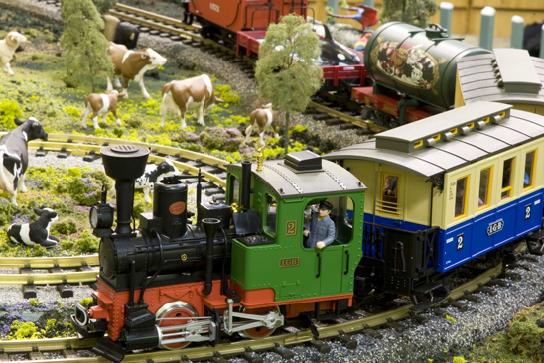
And not to spoil the train theme, the National Zoo is also featuring a farm-themed miniature train at the Visitor Center.

View Full Size Image
Farm-Themed Train at National Zoo Visitor Center. © SI.

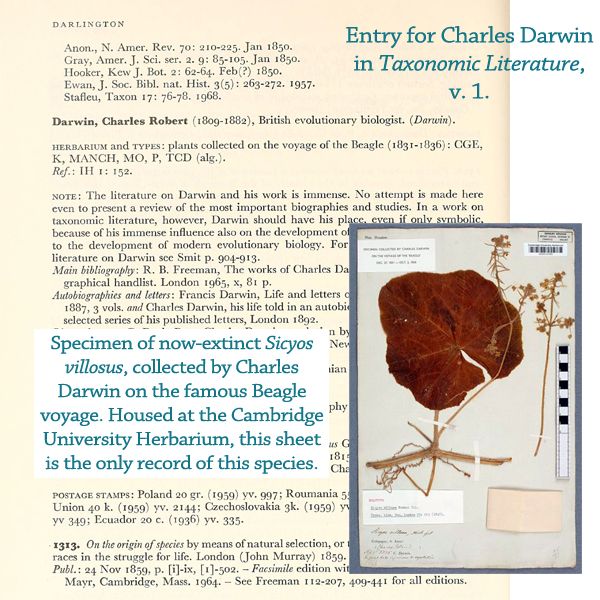
The most popular book contributed to BHL by the Smithsonian Libraries also happens to be the most popular item in BHL. What is it? Taxonomic Literature (1976), v. 1.

View Full Size Image
Charles Darwin in TL2. Specimen from Cambridge University Herbarium collected by Darwin on Beagle Voyage.

More commonly known as TL2, Taxonomic Literature: a selective guide to botanical publications and collections with dates, commentaries and types “provides the most comprehensive biographical and bibliographical analysis for systematic botany literature published between 1753 and 1940.” In all, TL2 is comprised of 15 volumes, organized by author name. The volumes represent an extensive list of botanists who have published botanical literature between 1753 and 1940. Each entry provides a short biography of the author, the location of any specimens they may have collected, a list of publications that author has published, and, based on analysis of more than 100 library collections, information about which libraries may hold a copy of each publication.

The Smithsonian Libraries’ online TL2 project indexes corrected OCR for the TL2 volumes scanned for BHL to provide additional search and analysis functionality, including author, author name abbreviation, and title abbreviation search support.

______________________________

We hope you get a chance to visit one of the exceptional Holiday Exhibits at our BHL member institutions.  From all of us here at BHL, we wish you very Happy Holidays!

View Full Size Image
Happy Holidays from BHL! Find this and other Holiday Greeting Cards on Pinterest.


December 14, 2012by ulib-libraryjobs

Help Support BHL

BHL's existence depends on the financial support of its patrons. Help us keep this free resource alive!

search

About BHL

The Biodiversity Heritage Library (BHL) is the world’s largest open access digital library for biodiversity literature and archives. BHL operates as a worldwide consortium of natural history, botanical, research, and national libraries working together to digitize the natural history literature held in their collections and make it freely available for open access as part of a global “biodiversity community.”

Join Our Mailing List

Sign up to receive the latest news, content highlights, and promotions.

Subscribe Now

Subscribe to Blog via Email

Enter your email address to subscribe to this blog and receive notifications of new posts by email.

Join 319 other subscribers

Subscribe to Blog Via RSS

Subscribe to the blog RSS feed to stay up-to-date on all the latest BHL posts.

Access RSS Feed

Inspiring Discovery through Free Access to Biodiversity Knowledge.

The Biodiversity Heritage Library makes it easier than ever for you to access the information you need to study and explore life on Earth…for free, anytime, anywhere.


64+ Million Pages of
Biodiversity Literature Online.

EXPLORE

Tools and Services
to Transform Research.

EXPLORE

300,000+
Illustrations on Flickr.

EXPLORE

ABOUT | HARMFUL CONTENT | PRIVACY | SITE MAP | TERMS OF USE