Biodiversity Heritage Library - Program news and collection highlights from BHL
  • Home
  • News
  • Featured Books
    • All Featured Books
    • Book of the Month Series
    • BHL at 20
  • User Stories
  • Campaigns
    • Fossil Stories
    • Garden Stories
    • Monsters Are Real
    • Page Frights
    • Her Natural History
    • Earth Optimism 2020
  • Tech Blog
  • Visit BHL
Home
News
Featured Books
    All Featured Books
    Book of the Month Series
    BHL at 20
User Stories
Campaigns
    Fossil Stories
    Garden Stories
    Monsters Are Real
    Page Frights
    Her Natural History
    Earth Optimism 2020
Tech Blog
Visit BHL
  • Home
  • News
  • Featured Books
    • All Featured Books
    • Book of the Month Series
    • BHL at 20
  • User Stories
  • Campaigns
    • Fossil Stories
    • Garden Stories
    • Monsters Are Real
    • Page Frights
    • Her Natural History
    • Earth Optimism 2020
  • Tech Blog
  • Visit BHL
Biodiversity Heritage Library - Program news and collection highlights from BHL
Blog Reel, Campaigns, Featured Books, Garden Stories

“’Tis A Gift To Be Simple” But to Have a Splendid Garden Buy Shaker Seeds

View Full Size Image
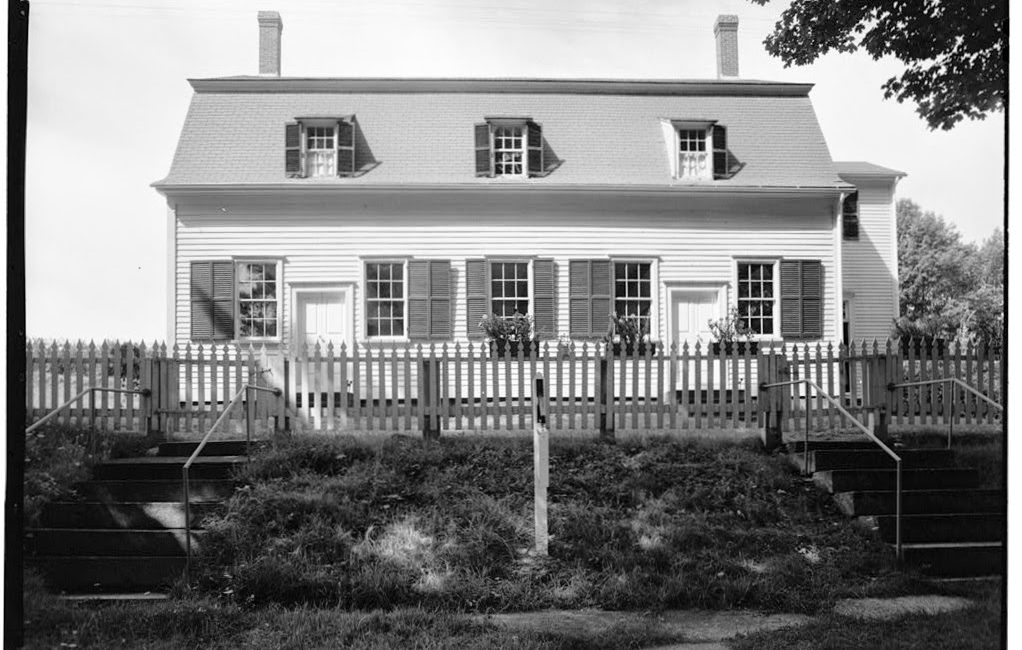
Sabbathday Lake Shaker Community Meetinghouse  (photo by Gerda Peterich for the Historic American Buildings Survey, Library of Congress Prints and Photographs Division; HAB SME,3-SAB,1—1)

The United Society of Believers in Christ’s Second Appearing, a religious sect commonly referred to as the Shakers, was founded in 18th-century England from a branch of the Quakers. Along with other newly formed devotional groups, they soon immigrated to colonial America. There they established as their economic foundation a variety of cottage industries that thrived throughout the 19th and into the early 20th centuries. Now known mostly for wonderfully simple architecture, austere but beautifully designed furniture and such functional objects as nesting oval boxes and baskets, members of the Shaker communities also once had booming garden and seed businesses. Their labor-intensive methods of working inevitably came to be overwhelmed by competition from industrial manufacturing as well as the problem of ever-shrinking membership, celibacy being one of their central tenets.

View Full Size Image
Shaker Carrier (by Sharon Dugan; Smithsonian American Art Museum, Gift of Martha G. Ware and Steven R. Cole; no. 2011.47.11)
The first fully organized Shaker community was New Lebanon in New York; by 1789, two years after its formation, the members cultivated seeds as a cash crop. This was the second earliest “company” to sell seeds in America. David Landreth & Son of Philadelphia was the first, in 1784, and that business traded back and forth with the Shakers. Another early dealer was Grant Thorburn in Philadelphia who wrote about the difficulty of obtaining seeds of good quality.
Other Shaker settlements, or “families,” soon followed in the seed-production business, including Watervvliet, New York; Hancock, Massachusetts; Enfield, Connecticut; Canterbury, New Hampshire; Alfred, Maine; and South Union, Kentucky, among several others. All were known for the excellence of their products and integrity of their business dealings. Devotion to God was expressed through their work ethic, hand labor and craftsmanship. The selling of goods was meant to raise funds only for needs the Shakers could not supply for themselves.

It is uncertain whether the Shakers were the first to put their seed products in small paper envelopes or packets, but they were the first to popularize their use. The Shaker Brothers printed millions of them on their presses, while the Sisters performed the labor of cutting, folding and pasting the papers. While believing in partnership in work and equality of the sexes, occupations tended to fall along traditional gender lines. The Brothers tilled the fields while the Sisters picked, sorted and packaged the seeds and herbs.

View Full Size Image
Seed Room, Shakertown, Kentucky (LC Prints & Photographs Division; HABS,84-SHAKT,2-33)

The Shakers were also early adopters of incorporating gardening manuals in their catalogs. Charles Crossman wrote ones in 1835 and 1836 for Mount Lebanon, Pittsfield and Watervilet, directing the wholesaler or the individual purchaser how best to plant the offered seeds. Instructions for storing and cooking bounties from the gardens were also sometimes given. Vegetables dominated the products but herbs and flowers as well as grass also appear in the lists. Crossman later left the Shakers and established his own company in Rochester, New York, which was just beginning to become the thriving horticultural center in the country.

View Full Size Image
Wholesale price list of seeds by the Shaker Seed Company. New Lebanon, New York, 1888 (Henry G. Gilbert Nursery and Seed Trade Catalog Collection, National Agriculture Library; image from the Biodiversity Heritage Library)

As the Shaker seed business in the United States grew from 1840, printing firms outside of the communities were employed to keep up with demand. Correspondingly, advertisements and the design of the packets, begun first plain with simple chunky block type, were transformed to include the use of color papers and borders and eventually vivid chromolithography.

Following the Civil War, increased competition resulted in the Shakers’ using the word “genuine” in their advertising, as products from the communities were considered to be of the highest quality, their best selling point. They also used various and effective marketing techniques, including seed boxes meant to be displayed on the counters of country stores. The containers had compartments for assorted Shaker vegetable and flower seed packages, with a hinged lid to be propped open to display a broadside detailing the contents within, and a chromolithographic image of a bountiful harvest, promising the purchaser a similar reward.

View Full Size Image
Seed Room with display containers, Shaker Centre Family Dwelling House, Shakertown, Mercer County, Kentucky (Library of Congress Prints and Photographs Division; HABS KY,84-SHAKT,2—34)

Other surviving ephemera record the once-thriving industry of seed, herbal, food, and medicinal products from the Shakers. Along with seed catalogs and the packets, mailing tags and envelopes, broadsides, receipts, invoices, billheads, and labels, give testament to their industry. Product labels include currant, grape, wild cherry, and blackberry wines. Far from being abstinent (except in the matter of sex), the Shakers made at least fourteen varieties of wine as well as distilled spirits. The religious group in their various communities was also at the forefront of selling medicinal herbs in the United States.

View Full Size Image
Shaker Digestive Cordial (A.J. White, New York, New York; National Museum of American History, no. 246707)

The changing world and market forces caused the Shaker seed industry to gradually peter out at the beginning of the 20th century. Increasing industrialization, growth of urban centers with ease of shipping and mailing to formally isolated villages, and overwhelming production from big companies, particularly in Philadelphia and Rochester, eliminated the communities’ wagon and sleigh seed routes for trading. With their firm spiritual beliefs and practices, the Shakers were not very competitive against aggressive business tactics.

View Full Size Image
Postcard of the Shaker Village of Sabbathday Lake, Maine (ca. 1920; Wikimedia Commons)

At their peak in the mid-19th century there were about 6,000 “Shaking Quakers” so named because of their ecstatic behavior during worship services. Today, Sabbathday Lake Shaker Community, founded in 1783 in Maine, is the sole active survivor of the religion. A tree farm, an apple orchard and vegetable gardens are maintained, and hand-set printing is still practiced. The library there holds ephemera such as account records, recipes, catalogs and 1,380 labels printed by Shakers for their own products. They are living testament to the Shakers’ influence on the American seed and nursery industry and their permanent place in horticultural history—the early development of the new business, innovative techniques in marketing and education as well as the propagation and introduction of new varieties. The Sabbathday Shakers still sell herbs, and their catalog is online.

View Full Size Image
The Library of Sabbathday Village in New Gloucester, Maine (Wikimedia Commons, August 2010)
View Full Size Image
Wholesale price list of seeds by the Shaker Seed Company, Mount Lebanon, New York, 1888 (Henry G. Gilbert Nursery and Seed Trade Catalog Collection, National Agriculture Library)

More Garden Stories Fun

  • Follow our blog and #BHLinbloom on Twitter and Facebook (or go directly to BHL’s Twitter and Facebook) this week as we explore the fascinating world of gardening, from its history to plant factoids and practical gardening tips.
  • Browse over 14,000 seed and nursery catalogs in our collection.
  • Browse over 2,500 seed and nursery catalog images in our Flickr collection.
  • Explore select seed catalog art, and stunning bookmarks and postcards developed by Cornell Library, on Pinterest.
  • See historic gardening come to life on the Smithsonian Libraries’ Tumblr.
  • Purchase your very own Garden Stories T-Shirt through T-Fund. All proceeds will go to help us digitize more pages for BHL. Our goal is to sell enough shirts to digitized 5,000 pages. Can you help us get there?
  • Help us improve access to seed and nursery catalogs by transcribing some today as part of our the Institute of Museum and Library Services (IMLS)-funded Purposeful Gaming project!
  • Find great online gardening resources, tips, and help on the BHL Gardening Resources Page.
March 27, 2015by mckenzie.87
Blog Reel, Campaigns, Featured Books, Garden Stories

Leading Ladies in the World of Seeds: Part One

A Garden Stories celebration for Women’s History Month

A Feminine Touch in the Gardening Industry

Recent reports indicate that the number of women-owned businesses have increased by 54% in the last fifteen years. But while we may be seeing a rise in the number and cultural acceptance of women-owned businesses today, this was not always the case. In fact, up through the nineteenth century, women-owned businesses were largely limited to taverns and alehouses, millinery and retail shops, and hotels and brothels, and were operated amidst the prevailing opinion that business was an unsuitable venture for the “gentle sex.”

By the late 1800s, however, women were beginning to make a decided mark on a growing American industry: gardening.

View Full Size Image
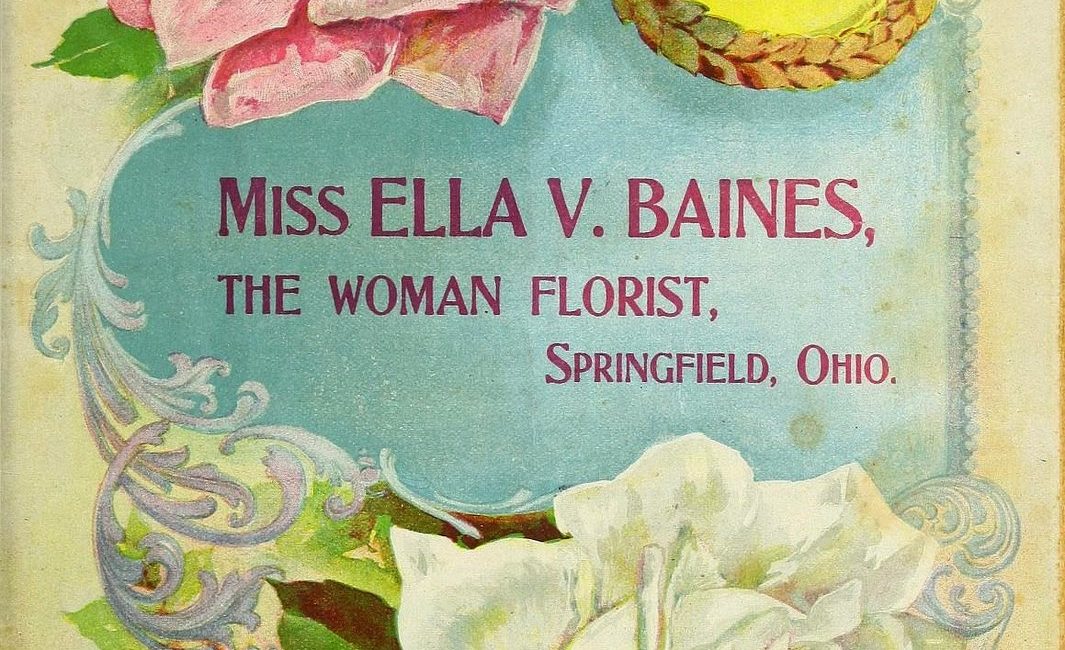
Miss Ella V. Baines. The Woman Florist. 1900. http://biodiversitylibrary.org/page/41878815.

Unlike other businesses such as banking or manufacturing, the flower and seed industry, with a strong connection to the home, was considered a more suitable occupation for women in the nineteenth century. Miss Ella V. Baines, who started her floral business in Springfield, OH, in 1896 and offered roses, plants, bulbs, and seeds for sale via her catalogs, asserted:

“When I started in the floral business two years ago, I confess it was with fear and trembling. It was a new field in the commercial world for woman to enter. Every one said ” don’t; ” but I did, and I am happy to say that my business success has been assured from the very start. I reasoned in this way: that this business is one eminently suited to a woman in every respect, and of all occupations it is the most pleasant and refining. Wherever there is a home in which happiness reigns, flowers are grown…For this reason floriculture appeals to the hearts of women the world over.”

Furthermore, as Miss Baines’ remarks suggest, women were a predominant customer base for the amateur gardening industry, meaning that a feminine touch and advertising tailored by women, for women, offered a distinct business advantage.

View Full Size Image
Miss Ella V. Baines. The Woman Florist. 1930. http://biodiversitylibrary.org/page/41932328.

Perhaps the best example of the woman-owned business advantage in the flower seed industry at the turn of the twentieth century was the self-proclaimed “Pioneer Seedswoman of America,” Carrie H. Lippincott, and the “Three Minneapolis Seedswomen.”

Three Minneapolis Seedswomen

Carrie H. Lippincott was born in Burlington, NJ, in September 1863. After the death of her father, Carrie, her sister and her sister’s husband, Henry B. Kent, and their widowed mother, moved to Minneapolis. In 1886, at the suggestion of her brother-in-law, Sam Y. Haines, and with a need to increase the family income, Carrie started a business offering a variety of flower seeds for sale. Initially run from the family home, success soon compelled Miss Lippincott to move the business into the two-story brick store next to their house. It was the first seed company in the U.S. to be founded and managed by a woman.

View Full Size Image
Portrait of Miss Lippincott and the two-story brick storefront next to the family home. Flower Seeds. 1900. http://biodiversitylibrary.org/page/43807529.

The business blossomed, and in 1891, the Lippincott Flower Seed House entered the mail order gardening world by producing its first catalog – an impressive 5×7 inch lithographed delight offering seeds for sale via post. By 1896, the business claimed to have received more than 150,000 orders, and the catalog for the year reportedly enjoyed a 200,000 print run and was offered, free of charge, to anyone interested. The 1896 catalog also made the bold claim that the Lippincott company was the largest exclusively flower seed house in the world. In 1898, a quarter of a million copies of the year’s catalog were shipped, translating to 1 in 60 households in the U.S. receiving a copy.

The Lippincott catalogs are a study in marketing genius. Revolutionary for their time, they reflected a “feminine touch” that appealed to women and directly contributed to Carrie’s success. Her catalog art featured colorful, idealized women and children amidst exotic or elaborate floral displays, resembling chromolithographed greeting cards of the day rather than the typical manilla paper, black-ink printed catalogs of many competitors. The catalog introductions were also personal and conversational, providing updates on the life events of the Lippincott family. Following this theme, Carrie branded her early catalogs as annual “Greetings.” Carrie knew her audience. As the reputed first seed seller to target women buyers, the Lippincott catalogs were artistically tailored to feminine tastes.

View Full Size Image
Miss C.H. Lippincott Flower Seeds. 1898. http://biodiversitylibrary.org/page/43809093.

The Lippincott business was pioneering in other ways. It employed a staff of twenty-five female clerks and engaged housewives to grow seed stock on their farms and backyard gardens. In 1894, Carrie’s became the first business to list the number of seeds contained in each packet, allowing buyers to better plan their garden layouts each year. Her contemporaries took notice of her originality, with an 1896 article in Printer’s Ink asserting, “She is the original pioneer seedswoman – a real woman, arranging all the details of a large business herself.”

View Full Size Image
Miss C.H. Lippincott Flower Seeds. 1900. http://biodiversitylibrary.org/page/43807531.

Miss Lippincott’s fans were not the only ones to take notice of her success; her Minneapolis competitors also took note of the advantages of marketing a seed company as a woman-owned business catering to other women, and followed suit.

In 1895, the catalog “Flower Seeds” appeared under the name of Jessie R. Prior, Seedswoman. Jessie’s husband was listed as the owner of the seed business for five years before a seed catalog featuring Jessie’s name appeared.

View Full Size Image
Jessie R. Prior. Seedswoman. Flower Seeds. 1902. http://umedia.lib.umn.edu/node/466200.

The next year, in 1896, the E. Nagel and Co. flower seed business in Minneapolis announced that it had transferred ownership to Miss Emma V. White, who became known as the “Northstar Seedswoman.” The company subsequently produced catalogs strikingly similar in format to that of the Lippincott phenomena. Miss White was a boarder at the home of Alanson W. Latham, Secretary of the Minnesota State Horticultural Society, whom she married in 1922.

View Full Size Image
Choice Flower Seeds. Miss Emma V. White. 1908. http://biodiversitylibrary.org/page/46685973.

The association of these women with prominent men in the seed industry led many to question whether the new women-owned companies were in fact only fronted by women but run by men. Carrie Lippincott believed this to be true, writing:

“…a number of seedsmen (shall I call them men ?) have assumed women’s names in order to sell seeds. It is a peculiar thing in this day and age, that a man should want to masquerade in woman’s clothing.”

Miss White responded to the accusation, proclaiming, “I am a real live woman and I give personal attention to my business.” In an 1896 catalog, Emma even asserted (as a jab at Miss Lippincott?):

“While it is true that the buyers of flower seeds are almost always women, yet I ask your patronage NOT BECAUSE I AM A WOMAN, but solely because by my methods I merit it.”

View Full Size Image
Choice Flower Seeds. Miss Emma V. White. 1914. http://biodiversitylibrary.org/page/46685859.

Miss Prior’s company remained silent on the gender accusations.

Were the White and Prior companies truly owned and operated by women, or were they, as Miss Lippincott believed, the brainchildren of men hoping to mimic Carrie’s success? Research suggests that the latter was more likely true with Miss Prior’s business than with Miss White’s, but whatever the truth, the fact that being a woman in the flower seed industry was recognized as an asset represents a remarkable shift in prevailing 19th century attitudes about women in business.

Explore other remarkable Leading Ladies of the Seed Industry represented in BHL 
  • Theodosia Shepherd. Her catalogs in BHL.
  • Miss Martha Hiser. Her catalogs in BHL.
  • Miss Mary E. Martin. Her catalogs in BHL.
  • Mrs. Francis King. Her books in BHL.


Leading Ladies in the World of Seeds Resources

  • Flickr Images from C.H. Lippincott Catalogs
  • Flickr Images from Miss Emma V. White Catalogs
  • See cover-to-cover, searchable scans of the Three Minneapolis Seedswomen catalogs from the University of Minnesota.
  • Minneapolis Seedswomen Exhibit, University of Minnesota
  • Lippincott Company Catalogs from The New York Botanical Garden
  • Cornell University Library Ethel Z. Bailey Catalog Collection
  • Cornell University Library Ethel Z. Bailey Biography

More Garden Stories Fun

  • Follow our blog and #BHLinbloom on Twitter and Facebook (or go directly to BHL’s Twitter and Facebook) this week as we explore the fascinating world of gardening, from its history to plant factoids and practical gardening tips.
  • Browse over 14,000 seed and nursery catalogs in our collection.
  • Browse over 2,500 seed and nursery catalog images in our Flickr collection.
  • Explore select seed catalog art, and stunning bookmarks and postcards developed by Cornell Library, on Pinterest.
  • See historic gardening come to life on the Smithsonian Libraries’ Tumblr.
  • Purchase your very own Garden Stories T-Shirt through T-Fund. All proceeds will go to help us digitize more pages for BHL. Our goal is to sell enough shirts to digitized 5,000 pages. Can you help us get there?
  • Help us improve access to seed and nursery catalogs by transcribing some today as part of our the Institute of Museum and Library Services (IMLS)-funded Purposeful Gaming project!
  • Find great online gardening resources, tips, and help on the BHL Gardening Resources Page.
March 25, 2015by michelle.underhill
BHL News, Blog Reel, Campaigns, Featured Books, Garden Stories

Garden Stories: A Celebration of Gardening

Friday, March 20, 2015, we celebrated the March equinox (and, incidentally, a total solar eclipse!), when the sun appears to cross the celestial equator heading northward. In the northern hemisphere, this is also known as the vernal equinox. For those in the southern hemisphere, it means that autumn is upon them, and cold days are ahead. But for those of us in the northern hemisphere, it means that Spring is officially here!

The coming of spring is therapeutic for many – a time for new life, a break from the grayness of winter, and a signal to get the trowels, shovels, and gardening gloves out. Many hopeful gardeners have poured over their fall and winter seed catalogs for months, fantasizing about the colorful Edens they will nurture come springtime.

But did you ever wonder about the history of the home garden, or even agriculture for that matter, and just when and how those beloved seed catalogs came about? What did gardens 100 years ago look like? What tools, fertilizer, and seed and plant varieties were available in the nineteenth, eighteenth, or even seventeenth centuries? When did recreational gardening come into its own, and who were the men and women who helped make it happen?

A Walk Down the Gardening Memory Lane

Though speculative due to lack of written records, many researchers believe that Neolithic agriculture began several thousand years ago with attempts by hunter-gatherers to manage nature for their benefit, eventually resulting in the “Domestication Revolution” with the emergence of propagation, whereby ancient civilizations began distributing, dividing, and planting seeds and tubers [1].

For many millennia, most agriculture was undertaken strictly as a means to produce food to feed families and local populations or grow herbs for medicinal purposes. The flames of change began to ignite in Europe in the seventeenth century, however, with the Enlightenment and the Scientific Revolution, which resulted in an increased desire to understand the natural world and apply scientific methods to study it. Scientific advances in turn nurtured an agricultural revolution in the eighteenth and nineteenth centuries, whereby farmers applied new techniques to produce more crops across increased land areas, resulting in more food security and leisure time[1].

View Full Size Image
Flowers in the Willibaldsburg fortress castle garden in Eichstatt, Germany. The book Hortus Eystettensis, commissioned by Prince-Bishop Johann Conrad von Gemmingen, illustrates the plants gathered together in the castle gardens. The garden and this book represent the first time in Western history that plants were being collected and celebrated not for their use but for their beauty and inherent interest. Hortus Eystettensis (1613). Volume One and Volume Two digitized by Biblioteca Digital del Real Jardin Botanico de Madrid.

The rise of capitalism and growing populations fueled the development of commercial agriculture, and farmers (especially gentry farmers) started sharing and publishing their knowledge and botanical gardens began cataloging their seeds and producing seed lists (which included many plant species new to science), articulating the seeds housed at the garden available for international exchange with other institutions. As a result, agriculture not only became more prominent, but citizens (particularly those in urban environments) began nurturing home gardens as leisure activities.

As commercialism increased and imperial expansion enabled the introduction of new plant species from expanded locales, a bustling seed trade developed, first in Europe and Western Asia in the seventeenth and eighteenth centuries but quickly strengthening in America following the Revolution. American nurseries emerged as early as the seventeenth century, and David Landreth founded the first seed house in America in 1784 in Philadelphia.

View Full Size Image
David Landreth founded the oldest seed house in the U.S. in 1784 in Philadelphia. Landreth’s Seed Catalog: 1903. http://biodiversitylibrary.org/page/46368234. Digitized by the USDA National Agricultural Library.

Rise of the Seed and Nursery Catalog

One of the most important innovations in the seed industry was the seed catalog, which offered a list of seeds and bulbs, and later garden tools and supplies like fertilizer and insecticides, for sale from the issuing company.

In the late 1500s, kings and wealthy aristocrats began having their exotic plant collections cataloged within elaborately-illustrated books called florilegia. Emanuel Sweerts‘ 1612 Florilegium, rather than being simply a catalog of his collection, presented a list of plants he could offer for sale, making it the oldest-surviving European plant catalog [2].

View Full Size Image
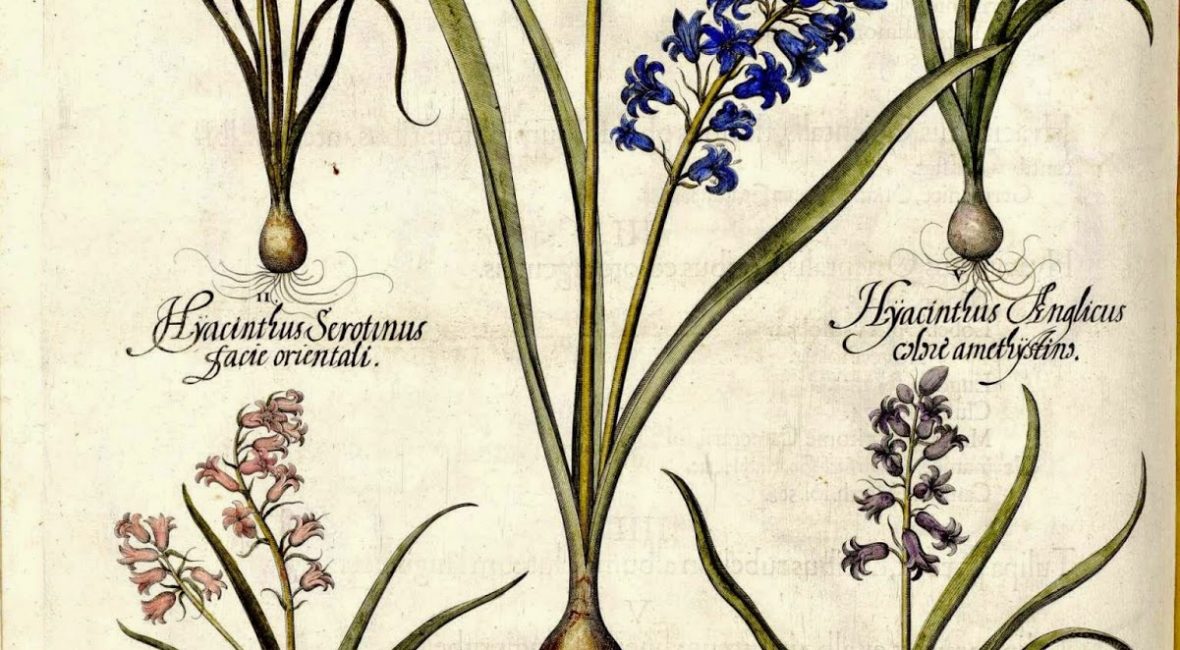
Fritillaria imperialis in Sweerts’ 1647 Florilegium amplissimum et selectissimum. http://biodiversitylibrary.org/bibliography/75687. Digitized by Biblioteca Digital del Real Jardin Botanico de Madrid.

In 1688, the first nursery catalog was published in Europe [3]. Early catalogs were simply listings of seeds or plants for sale, often articulated by Latin names and frequently in broadside form, lacking ornamentation, illustrations, or even prices. One of America’s first nursery catalogs was a broadside published in 1783 by John Bartram Jr [4]. Early nineteenth century seed advertising also consisted of short notices of seeds and tools for sale in gardening publications, very much in the newspaper “classifieds” style [5].

View Full Size Image
Tree and shrubs seeds offered for sale in the first American seed catalog in booklet form. M’Mahon, Bernard. A Catalog of American Seeds. 1804. http://biodiversitylibrary.org/page/44425432. Digitized by the USDA National Agricultural Library.

In 1804, the first American seed catalog in booklet form was published by Bernard M’Mahon, and by the 1820s in America, simple illustrations appeared in select catalogs [6]. Throughout the nineteenth century, horticultural manuals became increasingly popular, with growing instructions expanding to inclusion in catalogs as the industry bloomed, with the Shakers being early adopters of such practices  (incidentally, the Shakers were also the first to popularize the use of seed packets) [7]. The seed catalog became an increasingly important component of the seed business in the middle of the nineteenth century. Nurseries began publishing regular annual catalogs in the 1840s, which were mailed, often at great expense, to various segments of a merchant’s customer base. Expanding transportation networks, the growth of the US Postal Service, and a new Post Office classification system in 1863 assigning low rates to instructive periodicals and seeds, allowed the seed industry to flourish at an unprecedented scale through the mail order phenomenon. The mail order gardening business first centered on fruits and vegetables but grew to include flowers and especially ornamentals towards the last quarter of the nineteenth century [8].

View Full Size Image
The Fruits of America (1848-56) by Charles Hovey is the first major American book with exclusively chromolithographed plates. http://biodiversitylibrary.org/page/20359525.

Printing innovations in the mid-nineteenth century transformed seed catalogs into beautiful marketing tools that stimulated customer appetites with visual representations of an advertised-seed’s potential. The multi-colored printing process of chromolithography was patented by Franco-German lithographer Gottfried Engelmann in 1837 [9] and introduced to the U.S. by William Sharp in 1841. By 1851, the first major American book with exclusively chromolithographed plates, The Fruits of America by nurseryman Charles Hovey, was published [10]. By the 1860s, chromolithography appeared in seed catalogs, thanks in large part to innovative nurseryman James Vick. Benjamin K. Bliss, however, is credited by horticultural historian Ulysses P. Hedrick as the first to introduce color to the catalog in the US in 1853. According to Elizabeth S. Eustis in “The Horticultural Enterprise: Markets, Mail, and Media in Nineteenth Century America,” Bliss’ 1867 “autumn catalog featured the earliest example so far discovered of chromolithography as the color process in a horticultural catalog” [11]. By 1890, commercial use of photographs in magazines and newspapers began, with, according to Ernest Morrison in J. Horace McFarland: A Thorn for Beauty, J. Horace McFarland being the first to use halftone images in horticultural publications [12].

View Full Size Image
B.K.Bliss is credited as the first to introduce color to the seed catalog in 1853. B.K. Bliss and Son’s illustrated spring catalogue and amateur’s guide to the flower and kitchen garden. 1870. http://biodiversitylibrary.org/page/44492905. Digitized by the USDA National Agricultural Library.

Increased competition and growing costumer demands for novelties led to the popularity of hybrids (offspring produced by breeding two genetically distinct plants) in the nineteenth century, with certain varieties offered only through certain companies and beautifully portrayed in seed catalogs [13]. By the end of the nineteenth century, women had also entered the seed and flower business, including Carrie H. Lippincott, who established the first seed company in the U.S. to be founded and managed by a woman [14].

View Full Size Image
Hybrid Lilac, The Klager Lilac. Cooley’s Gardens. 1931 fall catalogue of new hybrid lilacs and Japanese irises. http://biodiversitylibrary.org/page/44394461. Digitized by the USDA National Agricultural Library.

Seed Catalogs: More than Horticultural Novelties

While they stimulate our gardening imagination, help us trace the development of the seed industry, and offer insight into the plant varieties offered to consumers throughout the centuries, seed catalogs are also important reflections of social and cultural values over time, changing agricultural and printing technologies, evolution of garden fashion and landscape design, and the development of botanical science. For instance:

  • Seed catalogs show changes in gardening technology and tools over time. This 1906 catalog lists 29 tools for sale. By the 1860s, catalogs listed dozens of specialty tools for specific tasks, like grass shears, wooding shears, ladies shears, and hedge shears. This 1900 catalog proudly displays “Iron Age” garden and farm implements. The lawnmower, first invented by Edwin Budding in England in 1830, began being popularly manufactured starting in the 1860s, and in 1902 Ransomes produced the first gasoline-powered lawnmower. By 1900 various models were selling for between $6-$100 retail.
View Full Size Image
Various lawnmower models for sale in 1900. Farm and garden supplies : Griffith and Turner Co. http://biodiversitylibrary.org/page/43837949. Digitized by the USDA National Agricultural Library.
  • Pest control is a major business today. Seed catalogs help us trace the development and introduction of pesticides and fungicides. Compare the offerings from 1881, 1893, 1907, and 1934, for example.
  • Seed catalogs help us trace changes in garden plant popularity and landscape design over time. For instance, from 1865-1900, “bedding out,” which involved laying out patterns on the ground and filling them in with colorful plants, was all the rage. After the turn of the 20th century, bedding out was replaced by cottage gardening, which uses informal design and traditional materials. Check out the awesome tulip bed patterns in this 1900 catalog.
View Full Size Image
“Bedding Out” Garden Style. Peter Henderson and Co. Autumn bulbs catalogue : 1900. http://biodiversitylibrary.org/page/43899723. Digitized by the USDA National Agricultural Library.

Garden Stories: A Week Long Event for Garden Lovers

All this week, we’ll be exploring the fascinating world of gardening, including garden history topics such as the development of hybrids, heirloom gardening, women in the seed industry, revolutions in garden marketing through art, and the vital role the Shakers played in the American seed industry. Follow our blog for more great stories! We’ll also be sharing great gardening tips and plant factoids with help from our BHL members and affiliates. And we’ll be using the over 14,000 seed and nursery catalogs in BHL to help tell these stories. Join in all the gardening fun by:

  • Following our blog and #BHLinbloom on Twitter and Facebook (or go directly to BHL’s Twitter and Facebook) this week.
  • Browsing over 2,500 seed and nursery catalog images in our Flickr collection.
  • Exploring select seed catalog art, and stunning bookmarks and postcards developed by Cornell Library, on Pinterest.
  • Seeing garden history come to life on the Smithsonian Libraries’ Tumblr.
  • Purchasing your very own Garden Stories T-Shirt through T-Fund. All proceeds will go to help us digitize more pages for BHL. Our goal is to sell enough shirts to digitized 5,000 pages. Can you help us get there?
View Full Size Image
Garden Stories T-Shirt available through TFund.

More Great Gardening Resources from our Partners

Can’t get enough gardening fun? Explore these great resources from our partners:

  • Cornell University Library Mail Order Gardens Exhibit
  • Cornell University Gardening Guide
  • Missouri Botanical Garden Help for the Home Gardener
  • Natural History Museum, Los Angeles County Nature Garden
  • The New York Botanical Garden Seed Catalog LibGuides 
  • The New York Botanical Garden Plant Information and Gardening Guide
  • Royal Botanic Gardens, Kew, Nursery Catalogs and Seed Lists
  • Smithsonian Libraries Seed and Nursery Catalogs Exhibit
  • Spring Gardening Checklist via Smithsonian Gardens
  • USDA National Agricultural Library Seed and Nursery Catalog Collection
  • USDA The People’s Garden Video and Webinar Gardening Resources
  • Find more online gardening resources, tips, and help on the BHL Gardening Resources Page.


References

  1. Kingsbury, Noel. Hybrid. Chicago: University of Chicago Press, 2009, 1-36. Print.
  2. The Seed and Nursery Catalog in Europe and the U.S. “Earliest European Seed and Nurseru Catalogs.” Oregon State University Libraries. Web. February 2015. http://scarc.library.oregonstate.edu/omeka/exhibits/show/seed/earliest/earliest-european/.
  3. Kingsbury, Noel. Hybrid. Chicago: University of Chicago Press, 2009, 75. Print.
  4. Christopher, Thomas. “Heirloom Seed Catalogs.” Horticulture. Dec.(1985): 25. Print.
  5. Kraft, Ken and Pat Kraft. “Seeds for Sale.” Country Living Gardener. 1.1(1993): 30. Print.
  6. Fraser, Susan M. and Vanessa Bezemer Sellers. Flora Illustrata. New York: New York Botanical Garden, 2014, 235. Print.
  7. Ibid., 236
  8. Ibid., 249
  9. Ferry, Kathryn. “Printing the Alhambra: Owen Jones and Chromolithography.” Architectural History. 46(2003): 175–188.
  10. Fraser, Susan M. and Vanessa Bezemer Sellers. Flora Illustrata. New York: New York Botanical Garden, 2014, 239. Print.
  11. Ibid., 251
  12. Morrison, Ernest. J. Horace McFarland: A Thorn for Beauty. Harrisburg, PA: Pennsylvania Historical and Museum Commission, 1995. Print.
  13. Kingsbury, Noel. Hybrid. Chicago: University of Chicago Press, 2009, 139. Print.
  14. American Garden History. “Who was the mysterious feminist seed dealer and marketing genius Miss Carrie H. Lippincott?” Barbara Wells Sarudy, 2010-13. Web. February 2015. http://americangardenhistory.blogspot.com/2014/07/who-was-mysterious-feminist-seed-dealer.html.
March 23, 2015by michelle.underhill

Help Support BHL

BHL's existence depends on the financial support of its patrons. Help us keep this free resource alive!

search

About BHL

The Biodiversity Heritage Library (BHL) is the world’s largest open access digital library for biodiversity literature and archives. BHL operates as a worldwide consortium of natural history, botanical, research, and national libraries working together to digitize the natural history literature held in their collections and make it freely available for open access as part of a global “biodiversity community.”

Join Our Mailing List

Sign up to receive the latest news, content highlights, and promotions.

Subscribe Now

Subscribe to Blog via Email

Enter your email address to subscribe to this blog and receive notifications of new posts by email.

Join 319 other subscribers

Subscribe to Blog Via RSS

Subscribe to the blog RSS feed to stay up-to-date on all the latest BHL posts.

Access RSS Feed

Inspiring Discovery through Free Access to Biodiversity Knowledge.

The Biodiversity Heritage Library makes it easier than ever for you to access the information you need to study and explore life on Earth…for free, anytime, anywhere.


64+ Million Pages of
Biodiversity Literature Online.

EXPLORE

Tools and Services
to Transform Research.

EXPLORE

300,000+
Illustrations on Flickr.

EXPLORE

ABOUT | HARMFUL CONTENT | PRIVACY | SITE MAP | TERMS OF USE