Biodiversity Heritage Library - Program news and collection highlights from BHL
  • Home
  • News
  • Featured Books
    • All Featured Books
    • Book of the Month Series
    • BHL at 20
  • User Stories
  • Campaigns
    • Fossil Stories
    • Garden Stories
    • Monsters Are Real
    • Page Frights
    • Her Natural History
    • Earth Optimism 2020
  • Tech Blog
  • Visit BHL
Home
News
Featured Books
    All Featured Books
    Book of the Month Series
    BHL at 20
User Stories
Campaigns
    Fossil Stories
    Garden Stories
    Monsters Are Real
    Page Frights
    Her Natural History
    Earth Optimism 2020
Tech Blog
Visit BHL
  • Home
  • News
  • Featured Books
    • All Featured Books
    • Book of the Month Series
    • BHL at 20
  • User Stories
  • Campaigns
    • Fossil Stories
    • Garden Stories
    • Monsters Are Real
    • Page Frights
    • Her Natural History
    • Earth Optimism 2020
  • Tech Blog
  • Visit BHL
Biodiversity Heritage Library - Program news and collection highlights from BHL
BHL News, Blog Reel, Tech Updates

BHL Servers are Moving!

An old map of the northeast United States with an arching arrow from Washington DC and Chicago

The big day is here! BHL’s Tech Team is starting the three-week process of moving BHL’s technical infrastructure from the Smithsonian data center just outside of Washington, DC, to the Field Museum in Chicago, Illinois.

First, though, we are deeply grateful to the Field Museum for welcoming BHL’s technology and helping ensure that biodiversity knowledge remains available to the global community. The support from their administration and technical team is invaluable.

We’ve been testing and configuring the network at the Field Museum and BHL is already quietly running on their network, so we are confident the process will go smoothly when we ship and install the production database and full-text-search servers.

“How will this affect BHL?”, you say. Great question! As much as possible, the BHL website will remain online and we do not expect any time where BHL is unavailable. The shipments to Chicago will take place in two parts to ensure BHL is always available, with some limitations. The first shipment on 11 June 2026 will have no impact on the regular functions of the site.

The second shipment on 25 June 2026 will cause the usual full-text search function to be temporarily unavailable while the full-text-search server is in transit. This means users will still be able to search titles, authors, subjects, and other catalog metadata, but users will not be able to search the full text of books and articles. This will last for 5-6 days over a weekend.

The 11th of June is a warm up, but the big day is the 25th of June when we officially begin serving BHL from the Field Museum.

We’ve set up an informational page with more details and will update it as things progress. We’ve also provided a map to illustrate where BHL’s servers are during transit.

An old map of the northeast united states with a winding dashed line between DC and Chicago.

A map of the route the servers will take to get to Chicago.
Please note that the path is neither accurate nor to scale. (Map Source)

But will the BHL servers feel at home in Chicago? To help them acclimate, we looked to historical maps of rainfall, soils, and vegetation to compare BHL’s former and future environments.


Vintage map showing rainfall in the northeastern part of the United States.

From: Atlas of American agriculture, no.5 (Source)

In Chicago, BHL will be receiving slightly less rainfall (30-35 ” or 75-88 cm per year) than on the U.S. East Coast (35-40″ or 85-100 cm). This, however, is mitigated by its proximity to Lake Michigan, which is one of the largest freshwater lakes in the world.

This looks like sufficient water for BHL, but these are historical values and may not reflect the effect of global climate change. In fact, it’s reported that the north-central part of the United States is in a moderate drought.


Vintage map showing soil types in the northeastern part of the United States.

From: Atlas of American agriculture, no.8 (Source)

What about soil type? BHL is leaving an area of Gray-Brown Podzolic soils to the much less prodigious Soils of the Northern Prairie. Looking closely at this map, we can see that BHL’s familiar soils are in close proximity to its new soil environment in Chicago, so we hope that this will help BHL rapidly make the transition to its new home.


Vintage map showing types of vegetation in the northeastern part of the United States.

From: Atlas of American agriculture, no.6 (Source)

Lastly, we look at vegetation. Historically the eastern seaboard of the United States is abundant in Oak-Pine and Chestnut-Oak-Yellow Poplar forests. The move to Chicago brings a potentially dramatic change as BHL moves from forests to the Tall Grasses of the Prairie Grasslands. Much like the new soil type, we see that BHL is still in close proximity to Oak-Hickory forests and we hope that the presence of the familiar Oaks will also help make the transition.


With familiar oaks nearby, sufficient water, and a welcoming new home at the Field Museum, we think BHL is well positioned to put down roots in Chicago.


June 9, 2026by Joel Richard
Blog Reel, Featured Books

Field Note-Worthy: Thousands of Field Notes Now Available in BHL Thanks to the Field Notes Project!

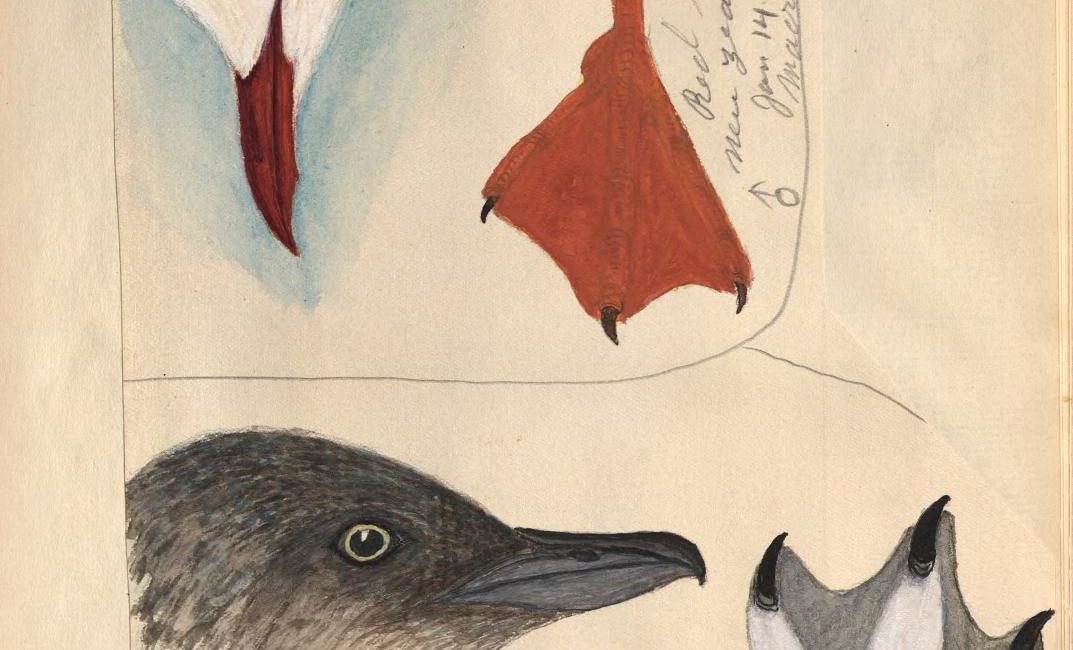
In February 2016, the Biodiversity Heritage Library set out to digitize over 450,000 pages of field notes. While the BHL had already added some archival material to its collection before this project, the Field Notes Project is BHL’s largest undertaking of digitizing field notes to date.

drawingsfungi00tayl_0013.jpg

Taylor, Thomas. Drawings of Fungi. Contributed by Harvard University Botany Libraries.

Funded by the Council on Library and Information Resources (CLIR) Digitizing Hidden Special Collections initiative, this was a collaborative project with eleven partners:

  • American Museum of Natural History
  • The Field Museum of Natural History Library
  • Harvard University Botany Libraries
  • Harvard University, Museum of Comparative Zoology, Ernst Mayr Library
  • Internet Archive
  • The New York Botanical Garden, LuEsther T. Mertz Library
  • Missouri Botanical Garden, Peter H. Raven Library
  • Smithsonian Institution Archives
  • Smithsonian Libraries
  • University of California, Berkeley, Museum of Vertebrate Zoology
  • Yale Peabody Museum of Natural History
fieldnotebookma00schu_0031.jpg

Schuchert, Charles. Field Notebook: Maine, Massachusetts, New Hampshire, New York, Ohio, Rhode Island, Ontario 1916, 1917, 1920. Contributed by Yale Peabody Museum of Natural History Archives.

The importance of field notes is well known to curators, researchers and historians. Diaries, correspondence, journals and photographs serve as records of the flora and fauna of a particular time and place, providing reference points when observing how a habitat has changed. They also offer insight on expeditions, the origins of a museum collections, and contextualize the work through the eyes of the scientists and narratives about how they interacted with the people, land and cultures they studied.

beekeepingarchiv00ches_0064.jpg

Blacow, Chester E. Bee keeping activities and field catalog of birds collected in Hawaii, v4273. Contributed by University of California, Museum of Vertebrate Zoology.

If you have ever used historic field notes for your own research, you may understand why this wouldn’t be a cut-and-dry project. Field notes can pose a number of challenges, and our partners certainly had to manage many of them. Conservation concerns are always at the top of the list, ensuring that field notes are in the proper condition for digitization. Through digitization, we can also reduce the need to refer to the physical object and further protect these unique items. Other concerns stemmed from how researchers took notes, including writing right into the gutter of a notebook or frugal researchers who would start a new notebook by simply flipping a used one and writing in the other direction. Together, the project team was able to overcome these challenges to provide open access to their field notes collections.

timothyplowmanb00plow_0086.jpg

Plowman, Timothy. Timothy Plowman botanical collecting notebook : 1900-2286 : 1968-1969. Contributed by The Field Museum of Natural History Library.

We finished work on the project May 31, 2018 and are pleased to report that the project team digitized over 517,000 pages of field notes! 

Those who follow the blog closely will have read posts from the BHL Field Notes Project series where project partners highlighted their collections and digitization process. With several expeditions, disciplines and institutions represented, we are excited to see what our users discover, and see how they use field notes in their own work. Take a look and delve into field notes digitized for this project in BHL and Internet Archive.

whitneysouthsea2corr_0241.jpg

Correia, José G. Whitney South Sea Expedition of the American Museum of Natural History. Letters and journal of José G. Correia. Volume 2. Contributed by American Museum of Natural History.

The project team and BHL would like to thank the Council on Library and Information Resources for generously funding the BHL Field Notes Project.

June 28, 2018by mkahn
Blog Reel, Featured Books

A “Botanist’s Botanist” : The Field Books of Timothy Plowman

The Field Museum Library has recently digitized and added to the Biodiversity Heritage Library Timothy Plowman’s entire field book collection, which spans his career from 1969, when he worked for the botanical museum at Harvard, through his years as a curator of botany at the Field Museum from 1976-1987. Timothy Plowman was an ethnobotanist and the world authority on the taxon Erythroxylum (coca). This genus of tropical trees and shrubs is best known for the species Erythroxylum coca L., a sacred leaf of the Andes, and also the source from which commercial cocaine is derived.

In his short lifetime—Plowman died at the age of 45—he collected materials in some of the most remote regions of the Andes and the rain forests of the Amazon, spending more than five years of his life in these harsh landscapes. As a result of Plowman’s work, the Field Museum is the most important repository in the world of research collections and literature pertaining to the classification of Erythroxylum. Plowman collected over 700 specimens of the genus from South America, and the Field Museum collection contains over 5,000 specimens collected worldwide as well as massive data resources. Plowman’s position as world authority on this genus also provided him a platform in which to speak on behalf of the indigenous peoples of the region and their traditional use of coca.

View Full Size Image
© The Field Museum, GN83861c.
Dr. Timothy Plowman, Botany, collecting coca plant specimens near Leticia, Peru.

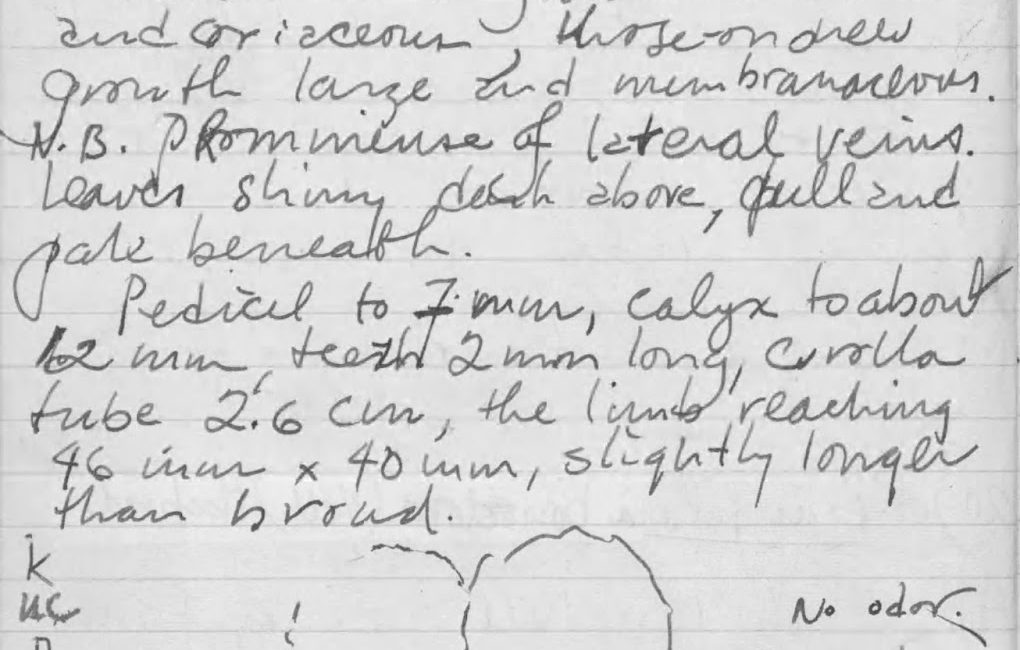
While Plowman’s Ph.D. research at Harvard University mainly concentrated on Erythroxylum, he also had a special interest in Brunfelsia (nightshade family), and a fascinating chapter in Plowman’s research of Brunfelsia is highlighted in his collecting notebook from 1968-1969 in Venezuela and Colombia. After reaching Santa Rosa on the Río Guamués in Colombia, Plowman was introduced to an old shaman who produced the species Brunfelsia grandiflora, which had been discovered and described by Plowman’s mentor, Richard Evan Schultes. The plant was well known for its hallucinogenic properties, and is further described below.

View Full Size Image
Plowman, Timothy. Timothy Plowman Botanical Collecting Notebook: 1900-2286: 1968-1969.  Text and illustration by Timothy Plowman. Digitized by the Field Museum library.  http://s.si.edu/2eNl3aw

The shaman also brought from the forest a related plant that Plowman immediately identified as a new-to-science species, which he later named Brunfelsia chiricaspi, described on the following page. Wishing to confirm that this new plant also had similar properties as a drug, he asked the shaman to prepare it. At first the shaman refused his request, describing the plant as a “dangerous messenger of the forest,” but eventually relented. Plowman describes his experience from the drug, the effects of which he began to feel within ten minutes, within these pages of his field book.

View Full Size Image
Plowman, Timothy. Timothy Plowman Botanical Collecting Notebook:1900-2286: 1968-1969. Text by Timothy Plowman. Digitized by the Field Museum library. http://s.si.edu/2gJkF9P.

View Full Size Image View Full Size Image

In the foreword to A revision of the South American species of Brunfelsia (Solanaceae), which was published posthumously as part of the Fieldiana Botany series, Plowman was described by colleagues as a man who “approached botanical research with the intensity and rigor of a scientist, the courage of his mentor, and the flair of a poet.” Making Plowman’s field books freely available online for the first time through the Biodiversity Heritage Library furthers the availability of the valuable scientific documentation about specimens, study sites, collecting details, and ecology, that were carried out by Timothy Plowman with such energy, enthusiasm, and grace.

Sources:
http://emuweb.fieldmuseum.org/botany/plowman_bio.html

Plowman, Timothy, Sandra Knapp, and J. R. Press. 1998. A revision of the South American species of Brunfelsia (Solanaceae). [Chicago, Ill.]: Field Museum of Natural History.

The BHL Field Notes Project is funded by the Council on Library and Information Resources (CLIR).

September 7, 2017by lmyrick
Blog Reel, Featured Books

Spring Migration Notes…By a Murderer

On November 5, 1950, The Field Museum [the Chicago Museum of Natural History at the time] Curator of Mammalogy Colin Sanborn received an extraordinary letter, which began as follows:

Dear Colin,

I should like to make a rather unusual request of you. Some twenty-five years ago I gave the then Field Museum several specimens from my bird collection. Included among them was a habitat group of Kirtland’s Warblers, consisting of the two adults and four nestlings in the nest, mounted by Ashley Hine…I know that the Museum used to have souvenir photograph postcards of many of its mounted groups on sale to the public. Could you find out for me whether such a photo was ever made of this Kirtland’s Warbler group, and if so, let me know how I can get one?

It wasn’t the request itself that was so unusual: individuals (or their descendants) frequently inquired about a specimen donated to the museum. It was the letter’s author, in this case, that made it stand out: Nathan Leopold, Jr. Prior to becoming part of the infamous duo Leopold and Loeb, convicted for kidnapping and murdering Bobby Franks, a 14-year-old neighbor, Leopold had been a birder and ornithologist. Writing from prison in Joliet, Illinois, he hoped to receive a photograph of a group of specimens he’d donated as a very young man.

In addition to specimens from Leopold–The Field Museum also has a Cooper’s hawk and a Praying Mantis–the Library owns one of only a couple of known extant copies of a booklet called Spring Migration Notes of the Chicago Area that Leopold helped compile. He was just 15-years-old at the time the booklet was published.

View Full Size Image
Watson, James D, George Porter Lewis, and Nathan Freudenthal Leopold. 1920. Spring migration notes of the Chicago area. [Chicago]: [G.W. Lewis Pub. Co.]. http://www.biodiversitylibrary.org/page/47497174. Digitized by the Field Museum of Natural History Library.

Joshua Engel, a research assistant in the Field Museum’s Integrative Research Center writes, “This little booklet has so much history, it’s hard to know even where to begin. Let’s start with the fact that the first author, James D. Watson, is the father of one of the most famous scientists of the 20th century, also named James D. Watson, who along with Francis Crick is credited with the discovery of the structure of DNA. But that’s the least of it. The third author is even more intriguing. A budding young ornithologist, Nathan Leopold would spend the bulk of his adult life in prison for the murder of Bobby Franks, one of the most famous crimes of the 20th century.”

James D. Watson the younger describes how his father met Leopold, “It was in Jackson Park in 1919 that Dad had met the extraordinarily talented but socially awkward sixteen-year-old University of Chicago student Nathan Leopold, who was equally obsessive about spotting rare birds. In June 1923, Leopold’s wealthy father financed a birding expedition so Nathan and my dad could go to the jack pine barrens above Flint, Michigan, in search of the Kirtland warbler. In their pursuit of this rarest of all warblers, they were accompanied by their fellow Chicago ornithologists George Porter Lewis and Sidney Stein, and in addition by Nathan’s boyhood friend Richard Loeb, whose family helped form the growing Sears, Roebuck store empire.”

The Field Museum’s copy of Spring Migration Notes of The Chicago Area, published in 1920, is now stored in the Mary W. Runnells Rare Book Room. Because of its historical value, it was added to the Biodiversity Heritage Library, including the type-written, hand-signed letter on page four from young Nathan Leopold to Ruthven Deane, a leading ornithologist of his time and a resident of Chicago, who eventually donated part of his collection of specimens to The Field Museum (as Leopold did when he went to jail). The cover of this copy even says “Compliments of the authors,” presumably written by Leopold.

View Full Size Image
Watson, James D, George Porter Lewis, and Nathan Freudenthal Leopold. 1920. Spring migration notes of the Chicago area. [Chicago]: [G.W. Lewis Pub. Co.]. http://www.biodiversitylibrary.org/page/47497172. Digitized by the Field Museum of Natural History Library.

Aside from the fascinating backstory, there’s the actual information that the booklet contains, a priceless indication of what the birdlife of Chicago was like in the early part of the 20th century. At the time, many wetland birds that are now rare or altogether gone as breeding birds were still common, an indication of the destruction of wetlands in the Chicago area over the last century.  This includes birds like Black Tern (about which the authors say “Breeds commonly”), King Rail (“Common summer resident”), and Wilson’s Phalarope (“Nests in the Calumet region”).

On the other hand, grassland birds were already declining, with many formerly common birds becoming rare. For example, Greater Prairie-Chicken was “A formerly abundant permanent resident; now rather rare,” Northern Bobwhite was “A formerly very common permanent resident, but now rather rare,” and Loggerhead Shrike, which then was known as Migrant Shrike, was a “Fairly common summer resident.” These days you have to go hundreds of miles from Chicago to find Loggerhead Shrike or a prairie-chicken.

Additionally, there are spring arrival dates for every species each year from 1913-1920.

Colin Sanborn’s reply to Leopold must have been disappointing. He writes on 20 November 1950: “Your group of Kirtland’s warblers were never photographed and in fact have never been on exhibition.” Sanborn goes on to write about his own activities in a breezy, newsy tone, e.g., birding, giving talks to a local ornithological society, etc. In other words, no mention of the fact that the letter he’s responding to is signed by infamous prisoner #9306-D.

Leopold spent 33 years in prison until his parole in 1958. Active in the Natural History Society of Puerto Rico, Leopold traveled throughout the island for birdwatching and in 1963 he published Checklist of Birds of Puerto Rico and the Virgin Islands. He died of natural causes in Puerto Rico in 1971 at the age of 66.

As for the Kirtland warblers–happily, they are making a comeback. According to Joshua Engel, “The species has made an incredible comeback, from a low of about 200 singing males in the early 1970s to over 2000 today. It’s likely to be removed from the endangered species list in the next few years.”

View Full Size Image
Kirtland Warbler specimen, Field Museum Zoology collection. Photo Courtesy of Joshua Engel.

References

  • Engel, Joshua. (May 18, 2015). “History and birds come together: ‘Spring Migration Notes’ from 1920 and its famous authors.” The Field Museum of Natural History, https://www.fieldmuseum.org/science/blog/history-and-birds-come-together-spring-migration-notes-1920-and-its-famous-authors (accessed December 16, 2016).
  • Swanson, Steven. 1997. Chicago Days: 150 Defining Moments in the Life of a Great City. Chicago: Cantigny First Division Foundation.
  • Watson. James D. 2007. Avoid Boring People: Lessons from a Life in Science. New York: Alfred A. Knopf.
  • Wikipedia contributors, “James Watson,” Wikipedia, The Free Encyclopedia, https://en.wikipedia.org/w/index.php?title=James_Watson&oldid;=755145717 (accessed December 16, 2016).
  • Wikipedia contributors, “Leopold and Loeb,” Wikipedia, The Free Encyclopedia, https://en.wikipedia.org/w/index.php?title=Leopold_and_Loeb&oldid;=754973757 (accessed December 15, 2016).
April 27, 2017by ulib-libraryjobs
Blog Reel, Featured Books

Interconnected Naturalist : Edmund Heller and the Field Notes Project

One of the great aspects of the BHL Field Notes Project is how the field notes we are digitizing – and the naturalists who created them – have connections to multiple project partners. Edmund Heller is one of these interconnected naturalists.

Heller was a naturalist active in the early twentieth century who participated in several expeditions sponsored by different institutions across the nation, including a number of BHL Field Notes Project partners. He traveled with Theodore Roosevelt for the Smithsonian African Expedition, traveled to Asia with Roy Chapman Andrews of the American Museum of Natural History (AMNH), served as a collector for the Field Museum, joined Hiram Bingham on Yale University and National Geographic Society’s Expedition in the Andes of Peru, and collected in Alaska with noted collector Annie Alexander, who proposed and helped establish the Museum of Vertebrate Zoology at the University of California, Berkeley.

View Full Size Image
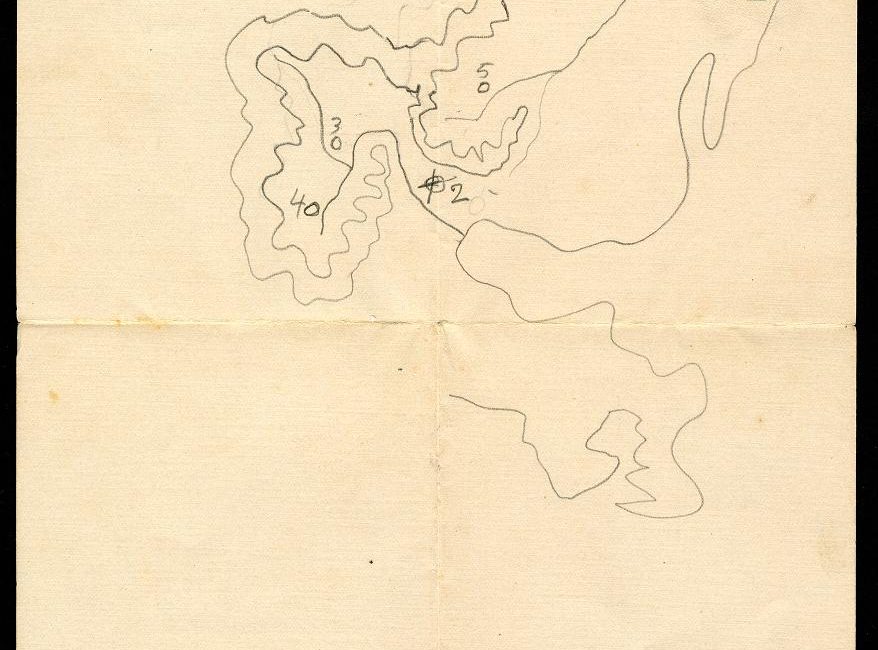
A map Heller drew while on Roy Chapman Andrews’ expedition to the Chinese province of Yunnan, Tibet, and Burma. Handwritten China journal of Edmund Heller (1 of 5). (1916). http://biodiversitylibrary.org/page/52109645.
View Full Size Image
Field notes from Heller’s time as part of Yale University and National Geographic Society’s Expedition in the Andes of Peru. List of birds collected by Heller in Peru. (1915). http://biodiversitylibrary.org/page/52088223.

Since Heller moved around from institution to institution, participating in what he referred to as an “unequaled record of expeditions,” he is a classic example of a naturalist with field notebooks all over the map. Through the Field Notes Project, we have the opportunity to bring together parts of his collection. Nine of Heller’s notebooks are currently available in the BHL, contributed by Smithsonian Institution Archives (SIA). More of his notebooks will be digitized by SIA and AMNH by project end.

In the meantime, why not explore Heller’s work in the BHL?
The BHL Field Notes Project is funded by the Council on Library and Information Resources (CLIR).

Further Reading:

Where are Heller’s Field Books? – Field Book Project Blog

Expedition Connection: National Geographic Society Yale University Peruvian Expedition, 1915 – Biodiversity Heritage Library Blog

February 2, 2017by lmyrick
BHL News, Blog Reel

National Digital Stewardship Residency (NDSR) Job Postings

Portrait version of the Biodiversity Heritage Library logo.

We’re hiring!

The vacancies for the five National Digital Stewardship Residency (NDSR) cohort positions have been posted through Harvard University. These five residents will work on projects related to the Biodiversity Heritage Library at BHL partner institutions in Cambridge, MA, Washington, DC, Chicago, IL, St. Louis , MO or Los Angeles, CA from January 2017 to December 2017. Learn more about the NDSR program, funded by the Institute of Museum and Library Services (IMLS) as part of the Laura Bush 21st Century Librarian Program.

For more information, visit the vacancies posting page here. To apply, click here.

Qualification requirements and information about each of the five projects (as provided on the Harvard University posting page above) are listed below. Residents will each be assigned one of the five available projects and corresponding host institution(s). Applicants should specify their top three choices of institutions and projects from the list below in the cover letter included in their application. Application review will begin immediately and will continue until the positions are filled.

Applications received by October 5, 2016 will be given first consideration.

WHO MAY APPLY: 

Applicants must be U. S. citizens who have graduated from an accredited degree-granting Master’s or Doctoral program between Summer 2014 and January 2017. Applicants must be US citizens or permanent residents.

QUALIFICATIONS REQUIRED: 

  • Possess a master or doctoral degree with graduation between spring 2014 and January 2017 in one of the following fields (or other discipline engaged in the stewardship of digital materials):
    • Library Science
    • Information Science
    • Archival Science
    • Records Management
    • Computer Sciences
    • Museum Studies
    • Art History
    • Engineering
    • Digital Media
    • Master of Fine Arts in New Media
  • Must be available to work on-site for the entire one-year period (relocation expenses are not offered).
  • Must be a US citizen or permanent resident.


AVAILABLE PROJECTS:

Content Analysis. 
This project will be an analysis of the quantity of literature underpinning the field of biodiversity, the amount of that literature in the public domain, the representation of each discipline (delineated by taxon group) within BHL, an exploration of methodologies to scope the collections, and areas where BHL may target development to better serve the research population. Host: BHL Chicago partners (The Field Museum of Natural History and the Chicago Botanic Garden) with mentors Library Directors Christine Giannoni and Leora Siegel.

Import of Crowdsourced Data Corrections and Enhancements. 
Building on the IMLS grant received by the Missouri Botanical Garden, Purposeful Gaming and BHL, in which BHL worked with Mary Flannagan and Tiltfactor , the mentors for this project will work with the resident to develop methodologies and propose tools for integration of crowdsourced data corrections and enhancements back into the BHL portal. Best practices will be documented for verification, trust, and multi-tier review. Host: Harvard University: MCZ, mentors Library Managers Constance Rinaldo and Joseph deVeer.

Enabling image discovery within the Biodiversity Heritage Library. 
Building on the successful NEH Art of Life grant, crowdsourced metadata around BHL images hosted on Flickr and Zooniverse would be integrated back into the BHL through user interface modifications to the BHL portal to enable image searching, browsing and display. The resident will work with the BHL technical team to propose best practices for integration of this data into BHL as well as sustainable methodologies for augmenting image tagging for BHL content. Host: Missouri Botanical Garden (MOBOT), mentors Library Director Douglas Holland and Data Projects Coordinator, Trish Rose-Sandler.

Digital Library Best Practices Analysis. 
The mentor will work with the resident to consult with BHL partners such as DPLA and Europeana to determine how BHL data works in these large scale national and pan-national digital libraries. The resident will propose analyses of other large-scale digital libraries (HathiTrust, the Internet Archive, National Digital Library of New Zealand, Trove, for example) to categorize high value tools and services that can be built into the next version of BHL or developed with existing APIs from partners. Host: Los Angeles County Natural History Museum, mentor Chief Librarian and Curator Richard Hulser. NHM Research Library.

User Needs and Usability Analysis. 
The mentor will work with the resident to identify members of the larger taxonomic and biodiversity informatics community to determine user needs and services for providing increased value to BHL content. Building on a ten year relationship with this community, BHL staff will introduce the resident to relevant initiatives hosted at the Smithsonian, such as Consortium for the Barcode of Life (CBoL) and Encyclopedia of Life (EOL) and to partners such as Global Biodiversity Information Facility (GBIF). The resident will analyze input gathered to define recommendations and requirements for expanding the BHL digital library functionality. Host: BHL Secretariat/Smithsonian Libraries, mentor Carolyn Sheffield, BHL Program Manager.

August 3, 2016by ulib-libraryjobs
Blog Reel, Featured Books

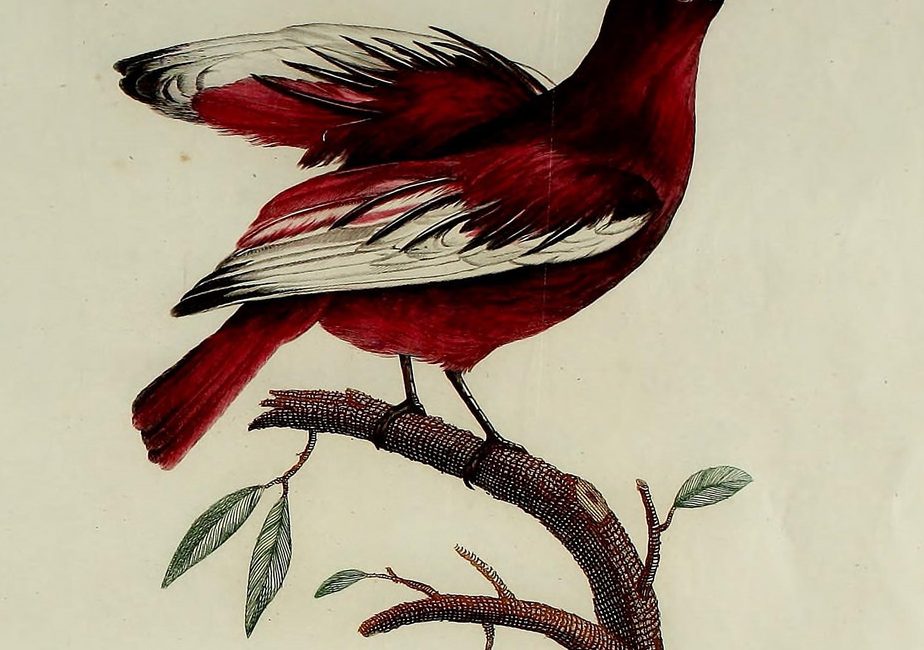
Celebrating the Birds of South America

View Full Size Image
Plate 31: Le Cotinga pacapaca, male. Le Vaillant, François. Histoire naturelle d’une partie d’oiseaux nouveaux et rares de l’Amerique et des Indes. 1801. Digitized by The Field Museum of Natural History Library. http://biodiversitylibrary.org/page/47511750. Description on pages 66-69.

In honor of the first Olympics to take place in Brazil, we are highlighting a book contributed by The Field Museum featuring birds of South America, Le Vaillant’s Histoire naturelle d’une partie d’oiseaux nouveaux et rares de l’Amerique et des Indes (1801). Among several titles chosen for digitization from the Field Museum Library’s impressive Edward E. Ayer Ornithological Library, housed in the collections of the Mary W. Runnells Rare Book Room, the entry for the volume in Catalogue of the Edward E. Ayer Ornithological Library characterizes it as “a work intended to supplement his Hist. Nat. des Oiseaux d’Afrique (q.v.) by describing and figuring birds not properly included in that work.”

Published in eight parts, Histoire naturelle d’une partie d’oiseaux nouveaux et rares de l’Amerique et des Indes was available as a folio with both colored and uncolored plates; large quarto with colored plates only; and quarto, with uncolored plates only. Originally 240 plates were proposed, but ultimately only 49 were produced of species of Bucerotidae from Malay Archipelago and Cotingidae from South America. The Field Museum’s copy is a folio with both colored and uncolored plates.

View Full Size Image
Plate 37, color: Le Continga ouette, male. Le Vaillant, François. Histoire naturelle d’une partie d’oiseaux nouveaux et rares de l’Amerique et des Indes. 1801. Digitized by The Field Museum of Natural History Library. http://biodiversitylibrary.org/page/47511812. Descriptions on pages 81-83.
View Full Size Image
Plate 38, uncolored: Le Continga ouette, male. Le Vaillant, François. Histoire naturelle d’une partie d’oiseaux nouveaux et rares de l’Amerique et des Indes. 1801. Digitized by The Field Museum of Natural History Library. http://biodiversitylibrary.org/page/47511816. Description on pages 81-83.

Born to French naturalists in Paramaribo, Dutch Guiana (Suriname), François Le Vaillant (1753-1824) began collecting bird specimens and building his own “cabinet” (or collection of specimens) before the age of ten. The family returned to France in 1763, where Le Vaillant would eventually make connections with ornithologists, collectors, and patrons who would become supporters of his work.

Le Vaillant was one of the first naturalists to independently embark on long voyages to study subjects in the wild. Previous naturalists had generally conducted such fieldwork as part of larger scientific expeditions. Not an illustrator in his own right, Le Vaillant relied on renowned artist Jacques Barraband (1768-1890) and emerging technologies of the day to produce his books. As authors Sitwell and Buchanan point out: “One interesting and sometimes confusing point is that some famous books are known by the author’s name and not the artist. Le Vaillant…whose name appears on most of the great French bird books of that same period, was a naturalist who travelled far, but never drew any of the pictures for his books…”

Barraband painted the birds that Le Vaillant secured on his voyages in watercolors, which were then assembled using an “elaborate mixture of processes – engraving, etching, colour printing and hand-finishing” (Lambourne). Le Vaillant was fortunate in that Napoléon Bonaparte had imitated a policy of Louis XIV to create a series of publications that were then “sent as presents to crowned heads, men of science, and learned bodies, in evidence of the splendours of the Empire…in this manner many glorious books came into being…The works of Le Vaillant owe their sumptuous character to the same impetus” (Sitwell and Buchanan).

Le Vaillant’s travel memoirs contributed as much to his fame in his lifetime as his illustrated bird books: due to its popularity, Travels into the interior parts of Africa : by the way of the Cape of Good Hope in the years 1780, 8l, 82, 83, 84, and 85 (contributed by Smithsonian Libraries) was translated into English and German. Feeling pressured to write a sequel, New travels into the interior parts of Africa : by the way of the Cape of Good Hope, in the years 1783, 84 and 85 (also contributed by Smithsonian Libraries), contains “an entirely fabricated account of a journey from the Orange River to the Tropic of Capricorn,” though this was not discovered until after his death (Pasquier and Farrand). Ultimately, despite any embellishments, Le Vaillant will be remembered for having produced some of the finest bird books ever created.

View Full Size Image
Map, Foldout: Map of M. Le Vaillant’s Two Journies in the Southern Part of Africa. New travels into the interior parts of Africa : by the way of the Cape of Good Hope, in the years 1783, 84 and 85. Digitized by The Smithsonian Libraries. http://biodiversitylibrary.org/page/47139301.

The images from Histoire naturelle d’une partie d’oiseaux nouveaux et rares de l’Amerique et des Indes are available in BHL’s Flickr. Nearly all of them have been taxon tagged by volunteers with the scientific name of the species depicted, allowing you to easily determine the species in the image as well as search Flickr for one of the included species and find the image. Learn more about our citizen science Flickr tagging efforts.

View Full Size Image
Example of a taxon-tagged image from La Vaillant’s Histoire naturelle d’une partie d’oiseaux nouveaux et rares de l’Amerique et des Indes in BHL’s Flickr.

References: 

  • Elphick, Jonathan. (2004). Birds. London: Scriptum Editions.
  • Lambourne, Maureen. (1990). The Art of Bird Illustration. London: Collins.
  • Martin, H. Bradley. (1989). The Library of H. Bradley Martin : Magnificent Color-Plate Ornithology. Sotheby’s Catalogue of Sale. New York, NY: Sotheby’s.
  • Pasquier, Roger F. and John Farrand. (1991). Masterpieces of Bird Art: 700 Years of Ornithological Illustration. New York: Abbeville Press.
  • Sitwell, Sacheverell, Handasyde Buchanan, and James Fisher. (1990). Fine Bird Books: 1700-1900. New York: Atlantic Monthly Press.
  • Stresemann, Erwin and G. William Cottrell. (1975). Ornithology from Aristotle to the Present. Cambridge: Harvard University Press.
July 28, 2016by ulib-libraryjobs
Page 1 of 212»

Help Support BHL

BHL's existence depends on the financial support of its patrons. Help us keep this free resource alive!

search

About BHL

The Biodiversity Heritage Library (BHL) is the world’s largest open access digital library for biodiversity literature and archives. BHL operates as a worldwide consortium of natural history, botanical, research, and national libraries working together to digitize the natural history literature held in their collections and make it freely available for open access as part of a global “biodiversity community.”

Follow BHL

  • Bluesky logo
  • Instagram logo
  • Facebook logo
  • Flickr logo
  • Twitter logo

Join Our Mailing List

Sign up to receive the latest news, content highlights, and promotions.

Subscribe Now

Subscribe to Blog via Email

Enter your email address to subscribe to this blog and receive notifications of new posts by email.

Join 319 other subscribers

Subscribe to Blog Via RSS

Subscribe to the blog RSS feed to stay up-to-date on all the latest BHL posts.

Access RSS Feed


64+ Million Pages of
Biodiversity Literature Online.

EXPLORE

Tools and Services
to Transform Research.

EXPLORE

300,000+
Illustrations on Flickr.

EXPLORE

ABOUT | HARMFUL CONTENT | PRIVACY | SITE MAP | TERMS OF USE