Biodiversity Heritage Library - Program news and collection highlights from BHL
  • Home
  • News
  • Featured Books
    • All Featured Books
    • Book of the Month Series
    • BHL at 20
  • User Stories
  • Campaigns
    • Fossil Stories
    • Garden Stories
    • Monsters Are Real
    • Page Frights
    • Her Natural History
    • Earth Optimism 2020
  • Tech Blog
  • Visit BHL
Home
News
Featured Books
    All Featured Books
    Book of the Month Series
    BHL at 20
User Stories
Campaigns
    Fossil Stories
    Garden Stories
    Monsters Are Real
    Page Frights
    Her Natural History
    Earth Optimism 2020
Tech Blog
Visit BHL
  • Home
  • News
  • Featured Books
    • All Featured Books
    • Book of the Month Series
    • BHL at 20
  • User Stories
  • Campaigns
    • Fossil Stories
    • Garden Stories
    • Monsters Are Real
    • Page Frights
    • Her Natural History
    • Earth Optimism 2020
  • Tech Blog
  • Visit BHL
Biodiversity Heritage Library - Program news and collection highlights from BHL
Blog Reel, Featured Books

Field Note-Worthy: Thousands of Field Notes Now Available in BHL Thanks to the Field Notes Project!

In February 2016, the Biodiversity Heritage Library set out to digitize over 450,000 pages of field notes. While the BHL had already added some archival material to its collection before this project, the Field Notes Project is BHL’s largest undertaking of digitizing field notes to date.
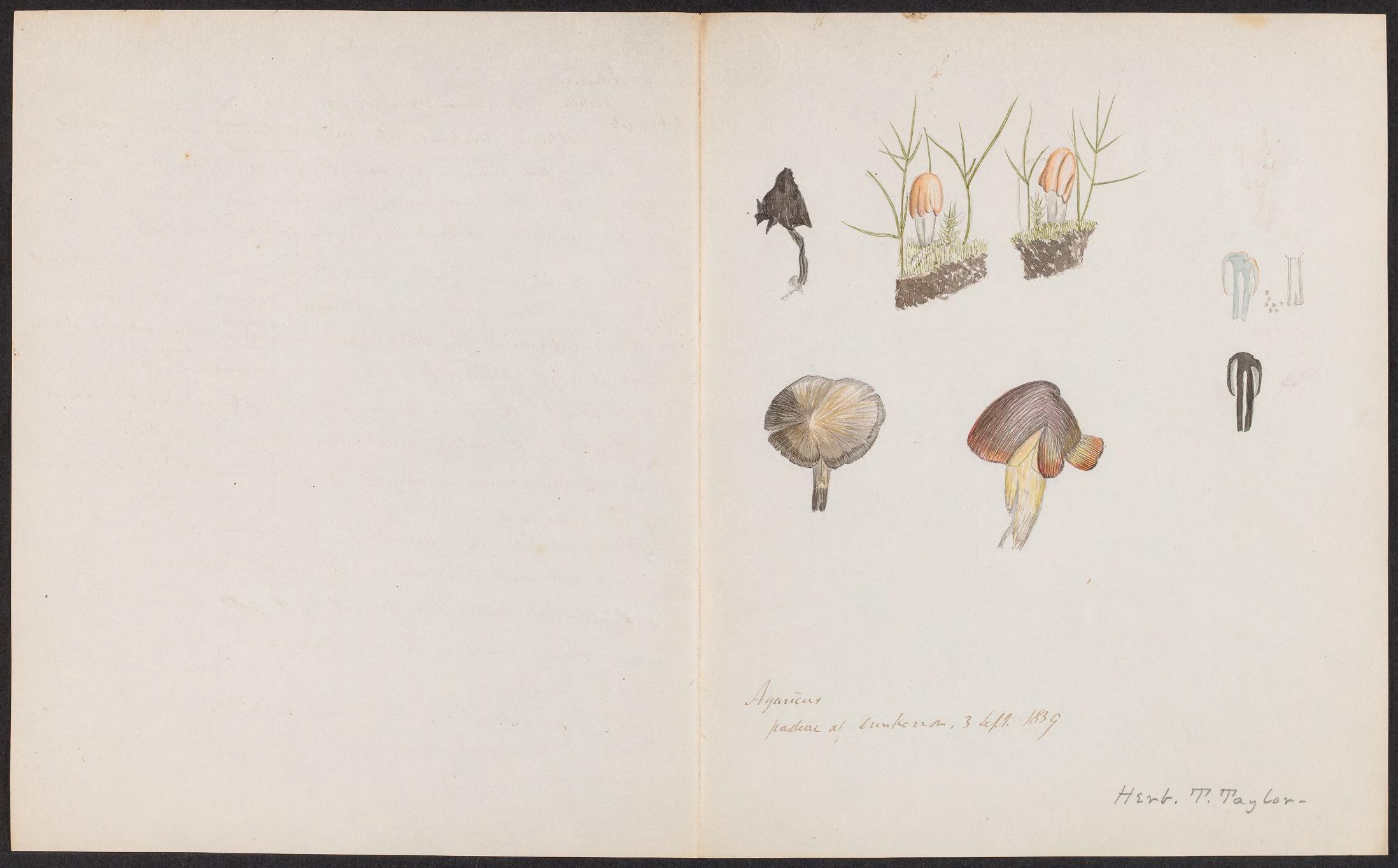
drawingsfungi00tayl_0013.jpg

Taylor, Thomas. Drawings of Fungi. Contributed by Harvard University Botany Libraries.

Funded by the Council on Library and Information Resources (CLIR) Digitizing Hidden Special Collections initiative, this was a collaborative project with eleven partners:

  • American Museum of Natural History
  • The Field Museum of Natural History Library
  • Harvard University Botany Libraries
  • Harvard University, Museum of Comparative Zoology, Ernst Mayr Library
  • Internet Archive
  • The New York Botanical Garden, LuEsther T. Mertz Library
  • Missouri Botanical Garden, Peter H. Raven Library
  • Smithsonian Institution Archives
  • Smithsonian Libraries
  • University of California, Berkeley, Museum of Vertebrate Zoology
  • Yale Peabody Museum of Natural History
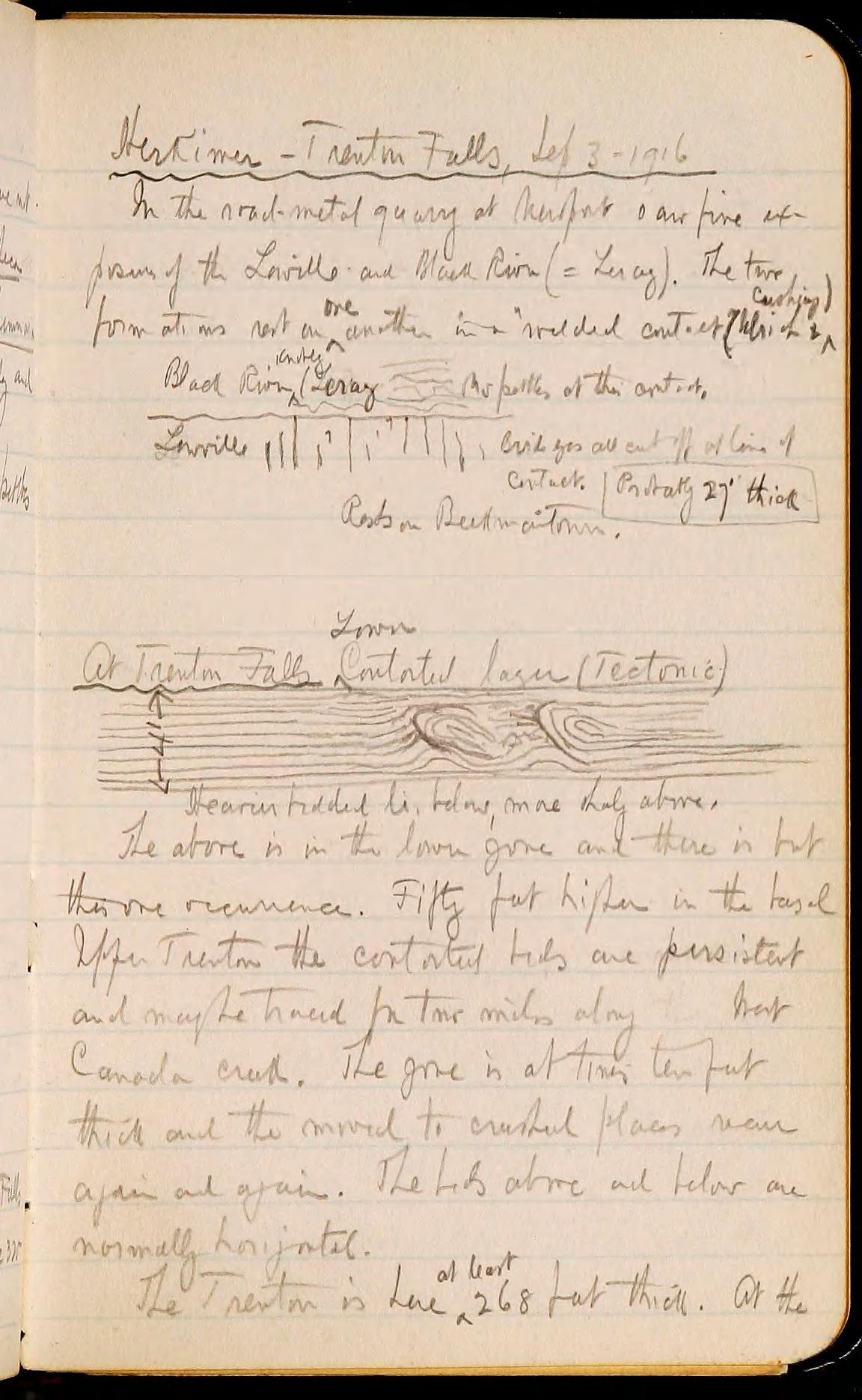
fieldnotebookma00schu_0031.jpg

Schuchert, Charles. Field Notebook: Maine, Massachusetts, New Hampshire, New York, Ohio, Rhode Island, Ontario 1916, 1917, 1920. Contributed by Yale Peabody Museum of Natural History Archives.

The importance of field notes is well known to curators, researchers and historians. Diaries, correspondence, journals and photographs serve as records of the flora and fauna of a particular time and place, providing reference points when observing how a habitat has changed. They also offer insight on expeditions, the origins of a museum collections, and contextualize the work through the eyes of the scientists and narratives about how they interacted with the people, land and cultures they studied.
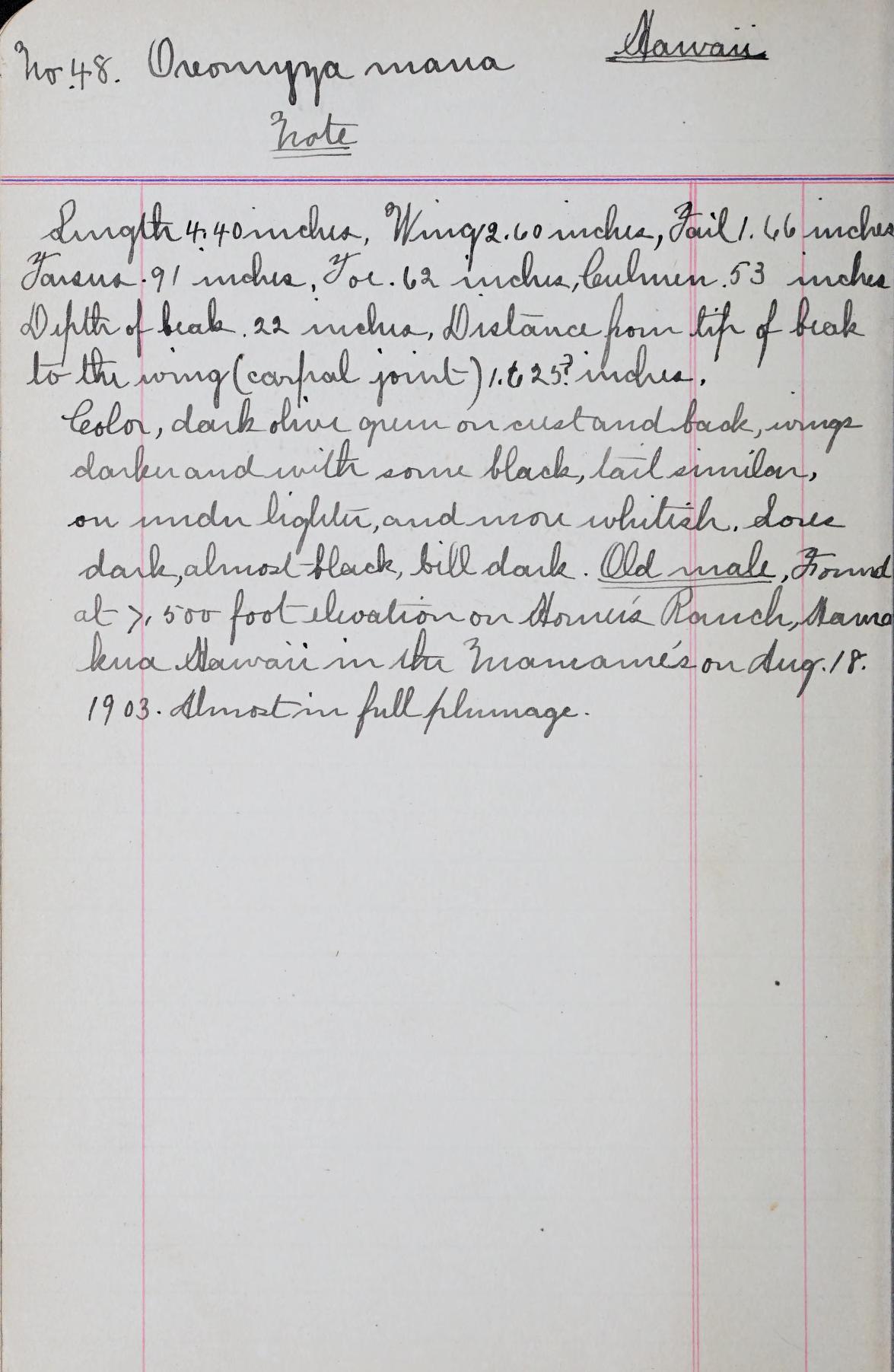
beekeepingarchiv00ches_0064.jpg

Blacow, Chester E. Bee keeping activities and field catalog of birds collected in Hawaii, v4273. Contributed by University of California, Museum of Vertebrate Zoology.

If you have ever used historic field notes for your own research, you may understand why this wouldn’t be a cut-and-dry project. Field notes can pose a number of challenges, and our partners certainly had to manage many of them. Conservation concerns are always at the top of the list, ensuring that field notes are in the proper condition for digitization. Through digitization, we can also reduce the need to refer to the physical object and further protect these unique items. Other concerns stemmed from how researchers took notes, including writing right into the gutter of a notebook or frugal researchers who would start a new notebook by simply flipping a used one and writing in the other direction. Together, the project team was able to overcome these challenges to provide open access to their field notes collections.
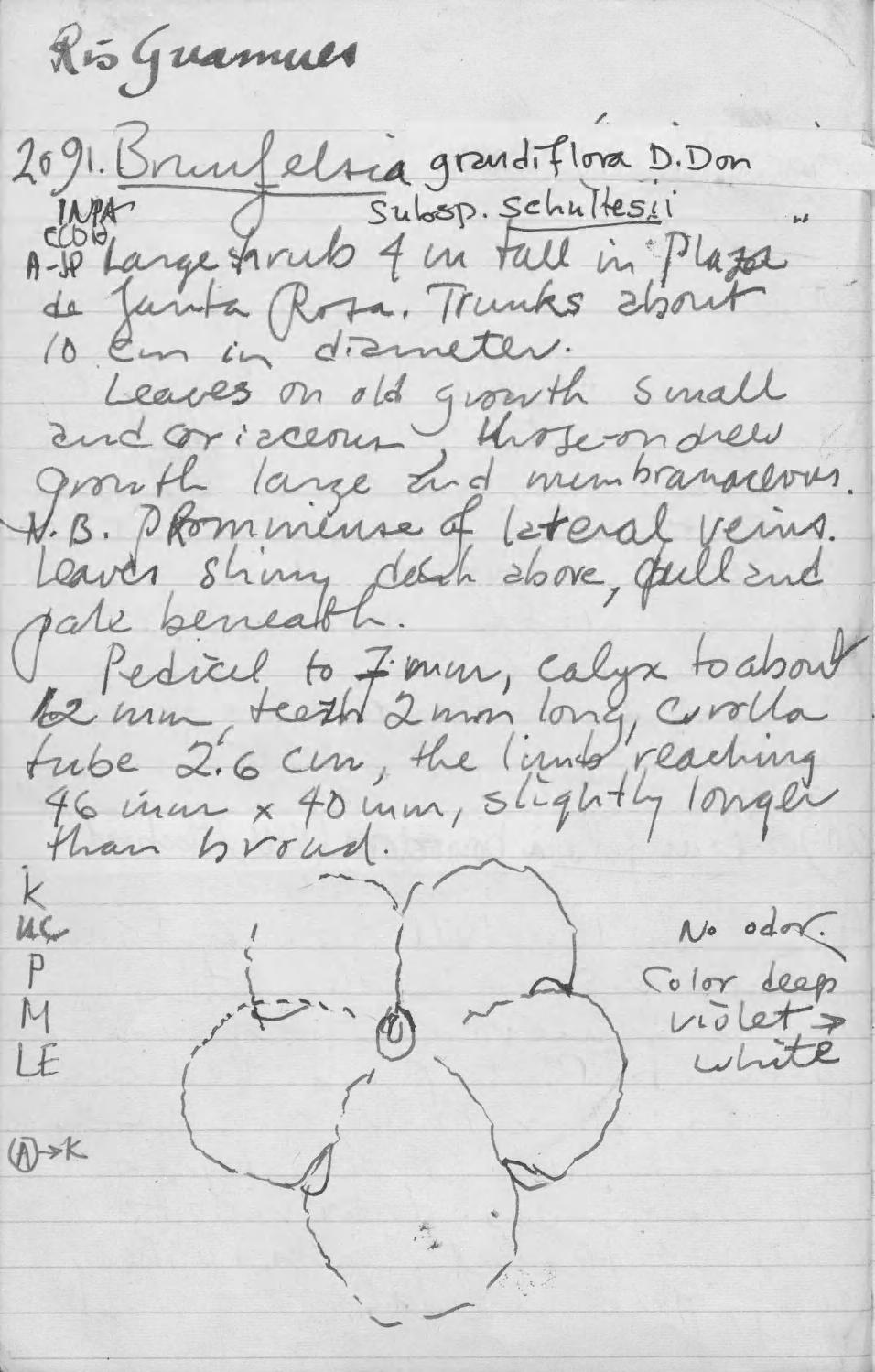
timothyplowmanb00plow_0086.jpg

Plowman, Timothy. Timothy Plowman botanical collecting notebook : 1900-2286 : 1968-1969. Contributed by The Field Museum of Natural History Library.

We finished work on the project May 31, 2018 and are pleased to report that the project team digitized over 517,000 pages of field notes! 

Those who follow the blog closely will have read posts from the BHL Field Notes Project series where project partners highlighted their collections and digitization process. With several expeditions, disciplines and institutions represented, we are excited to see what our users discover, and see how they use field notes in their own work. Take a look and delve into field notes digitized for this project in BHL and Internet Archive.
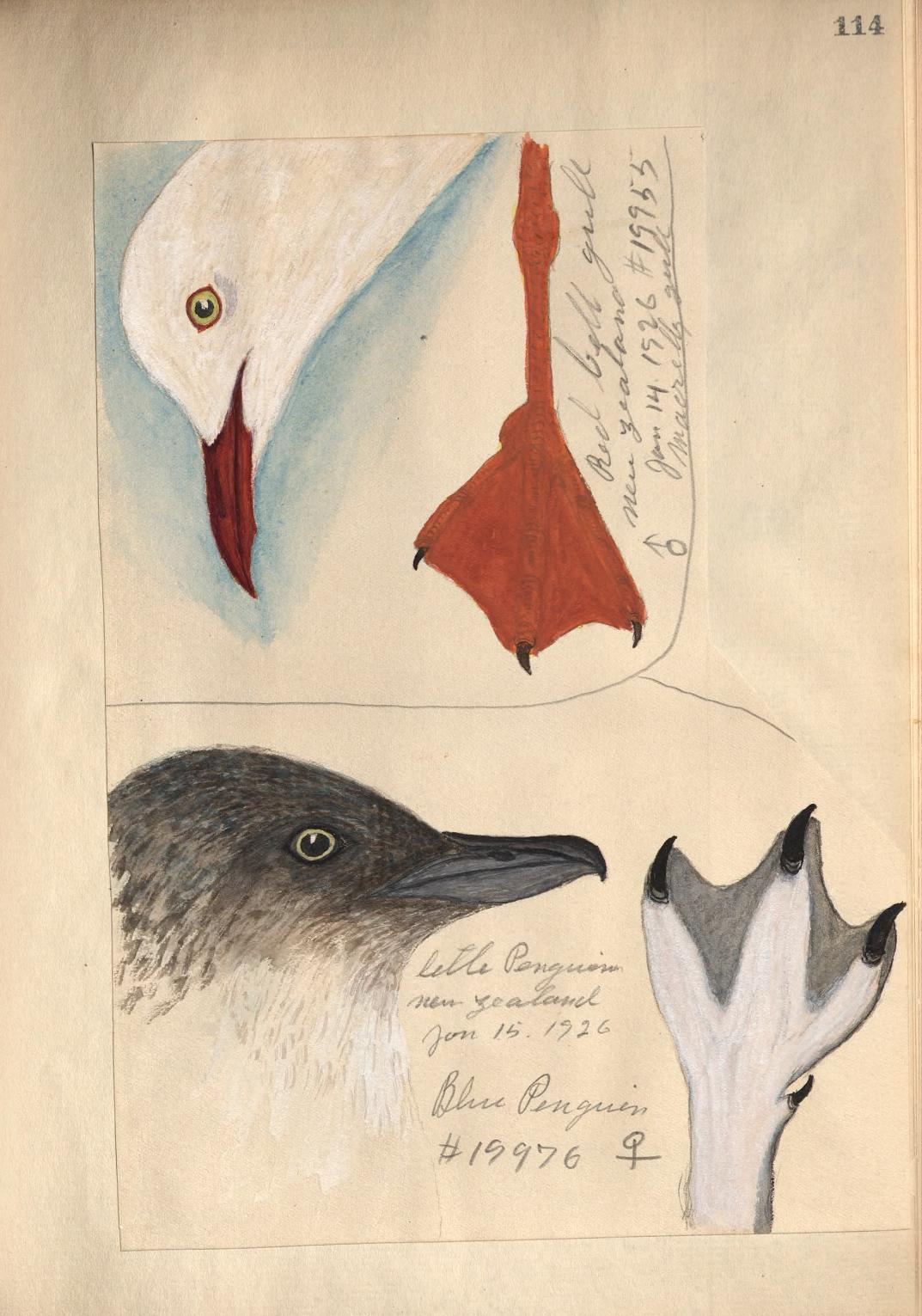
whitneysouthsea2corr_0241.jpg

Correia, José G. Whitney South Sea Expedition of the American Museum of Natural History. Letters and journal of José G. Correia. Volume 2. Contributed by American Museum of Natural History.

The project team and BHL would like to thank the Council on Library and Information Resources for generously funding the BHL Field Notes Project.
June 28, 2018by mkahn
Blog Reel, Featured Books

“Access to the original record…wherever we now work”: Highlights from the Museum of Vertebrate Zoology field notes collection

The Museum of Vertebrate Zoology (MVZ) at the University of California Berkeley is a collaborative partner in the Biodiversity Heritage Library Field Notes Project. The MVZ has committed to digitizing 1,500 of its historic field notes as part of this collaborative undertaking.

The MVZ’s storied field notebook collection was a concept developed at the founding of the museum by Joseph Grinnell, the MVZ’s founding director. From its earliest moments, Grinnell and the museum’s benefactress Annie Alexander discussed methods and curatorial best practices for the specimen collections and research. These ideas and principles around the organization of data recorded around collecting events evolved into Grinnell’s methodology for recording field notes. Early letters between Alexander and Grinnell in the later months of 1907 document their thoughtfulness, excitement, and collegial concern for establishing a research museum which would document the land fauna in the Western United States. Grinnell recognized that field notes would be the lasting primary source material that would document the biodiversity of the rapidly changing environment of the west in the early 20th century and in the future. In 1910 Grinnell famously wrote:

“At this point I wish to emphasize what I believe will ultimately prove to be the greatest value of our museum. This value will not, however, be realized until the lapse of many years, possibly a century, assuming that our material is safely preserved. And this is that the student of the future will have access to the original record of faunal conditions in California and the west, wherever we now work.” [1]

The MVZ’s digitized field note book collection is a testament to Grinnell’s enduring legacy. From Grinnell himself, to the life works of Wilbur Mayhew, it is impossible to cover all of the amazing personalities represented but the following selections highlight some of my favorite individuals and collecting efforts from the first 300 books digitized.

Arctic Research Laboratory
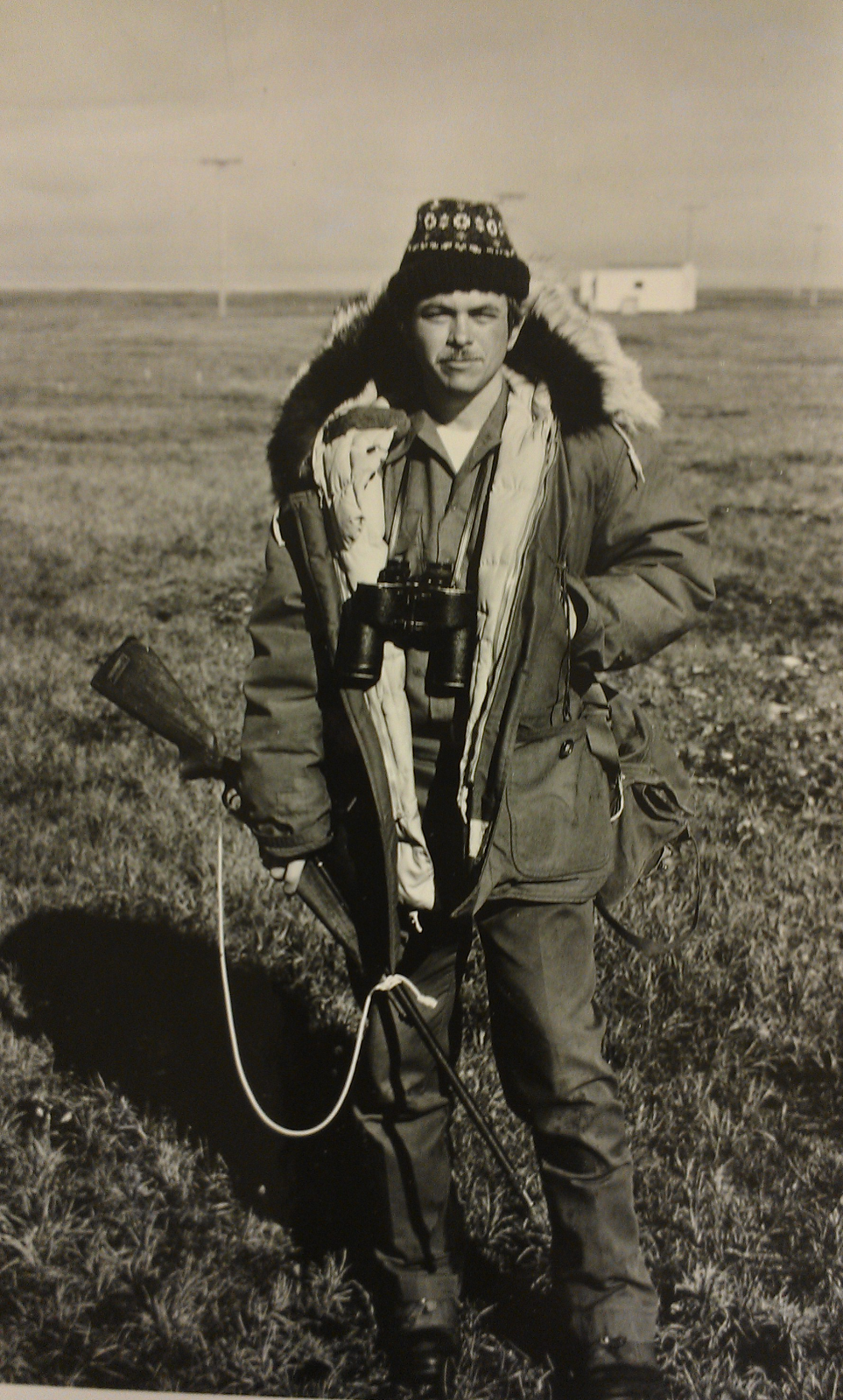
Frank A. Pitelka was a UC Berkeley Professor and MVZ Curator of Birds whose prolific career included collaborative research projects at the Arctic Research Laboratory from 1955-1973. Along with his students, Prof. Pitelka’s Barrow, Alaska field notes record distributional data, life histories and behavioral observations of shorebirds, brown lemmings, and other groups across the Alaskan North Slope Borough.

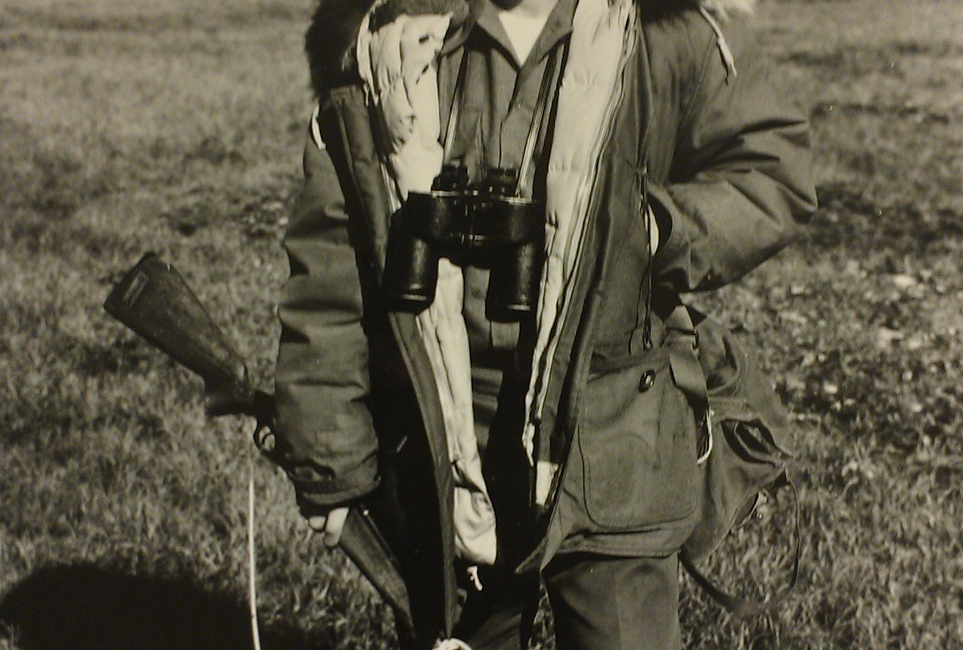
Thomas Custer, Barrow Alaska, circa 1970.

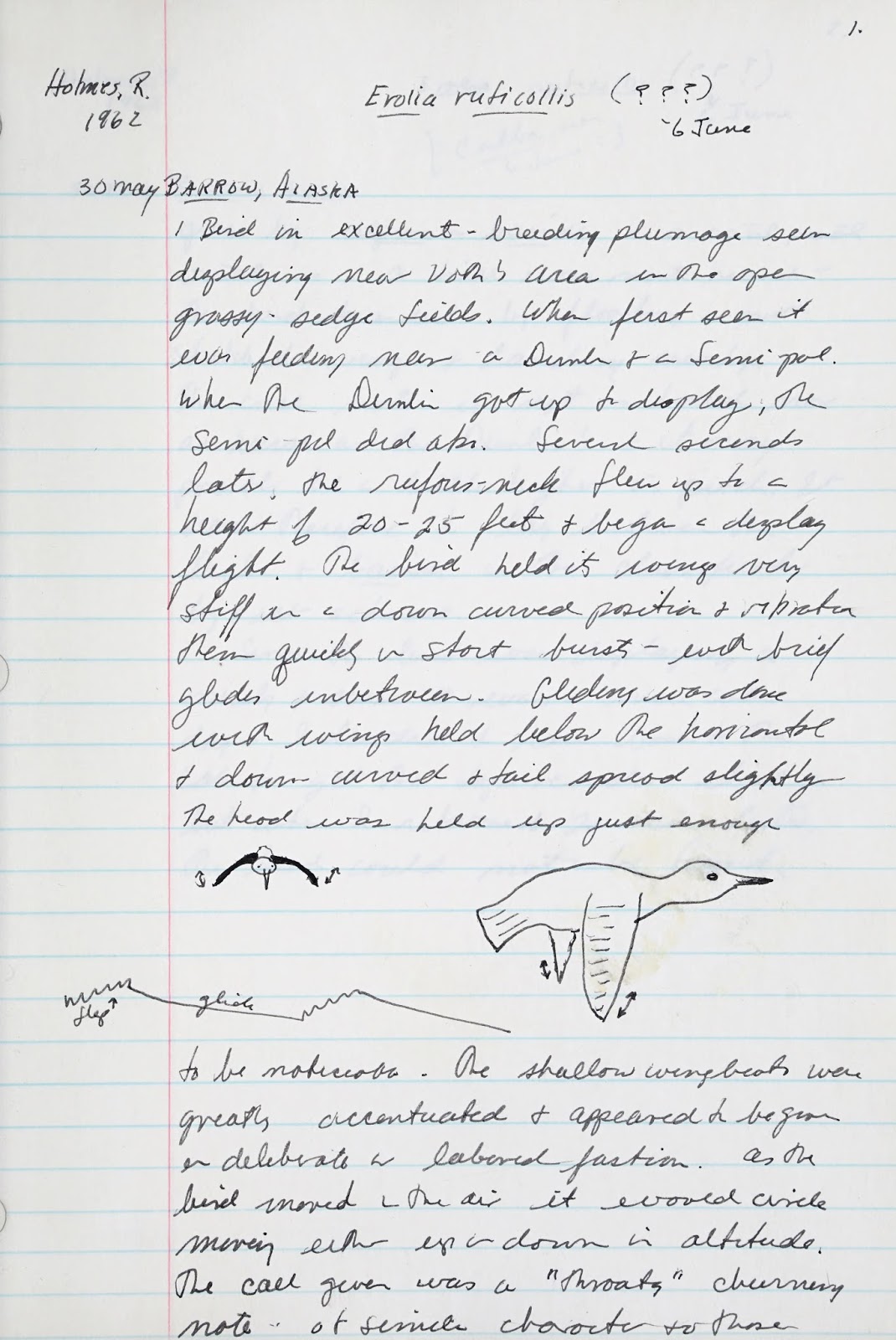
The MVZ Archives has received much interest around field notes from this area and are excited to be able to provide access to this important record of the biodiversity of the Barrow region. Resurvey efforts in Alaska will be greatly supported by the field notes of Richard T. Holmes and the other Pitelka students who participated in the Arctic Research Laboratory.

Richard T. Holmes, Alaska species accounts, part 1, v4220, 1959-1964.
Chester Barlow
Archivists read many obituaries over their careers and every once in awhile, someone’s life shines like a light emanating from the pages of their memoriams, correspondence and photos. Chester Barlow is one of those individuals. Barlow, a good friend and Stanford colleague of Joseph Grinnell, tragically died at the age of 28. Henry Reed Taylor’s published memoriam to Barlow begins with, “Words cannot tell, and the pen falters as a thing which is feeble-and futile in an effort to express all that is comprehended in the simple words, “Barlow is gone.” [2]

And when Walter E. Bryant died in 1905, Walter K. Fisher began his memoriam to Bryant by stating, “Not since the lamented Chester Barlow passed away, nearly three years ago, has the Society suffered so severe a loss as from the recent death of our esteemed honorary member, Walter E. Bryant. [3]

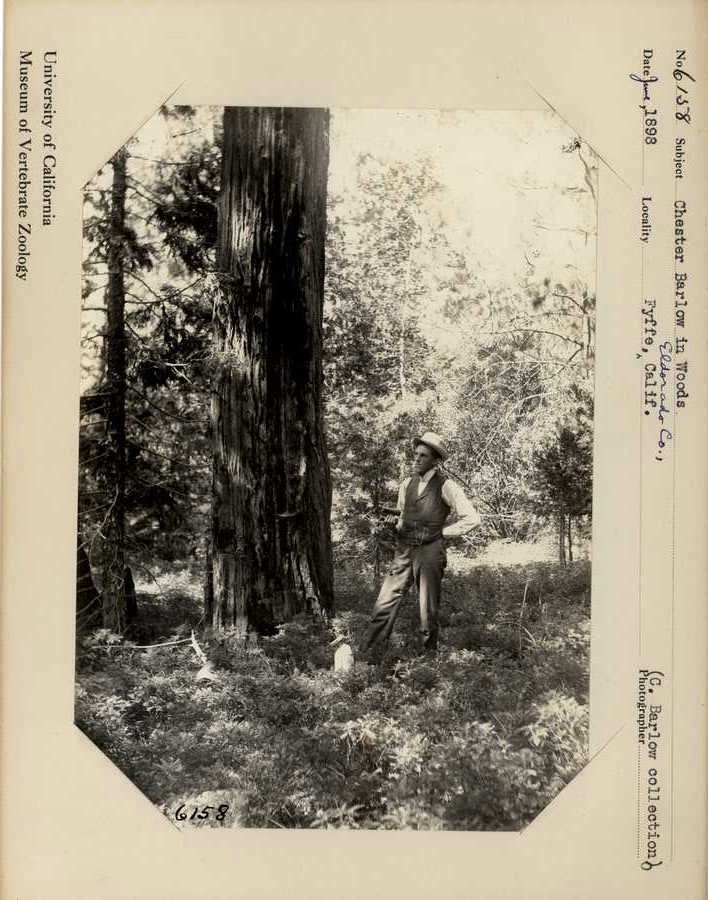
“Chester Barlow in woods.”

Barlow’s field notes and photographs are preserved in the MVZ Archives. His photos and field notes reveal a playful and eager bird enthusiast whose memory lived on in all who knew him. You can read Barlow’s entertaining Farallon Islands notebook on the Internet Archive.

Barlow, Chester. Ornithological Notebook of C. Barlow with Original Observations Only. (1892-1894).

Amelia S. Allen
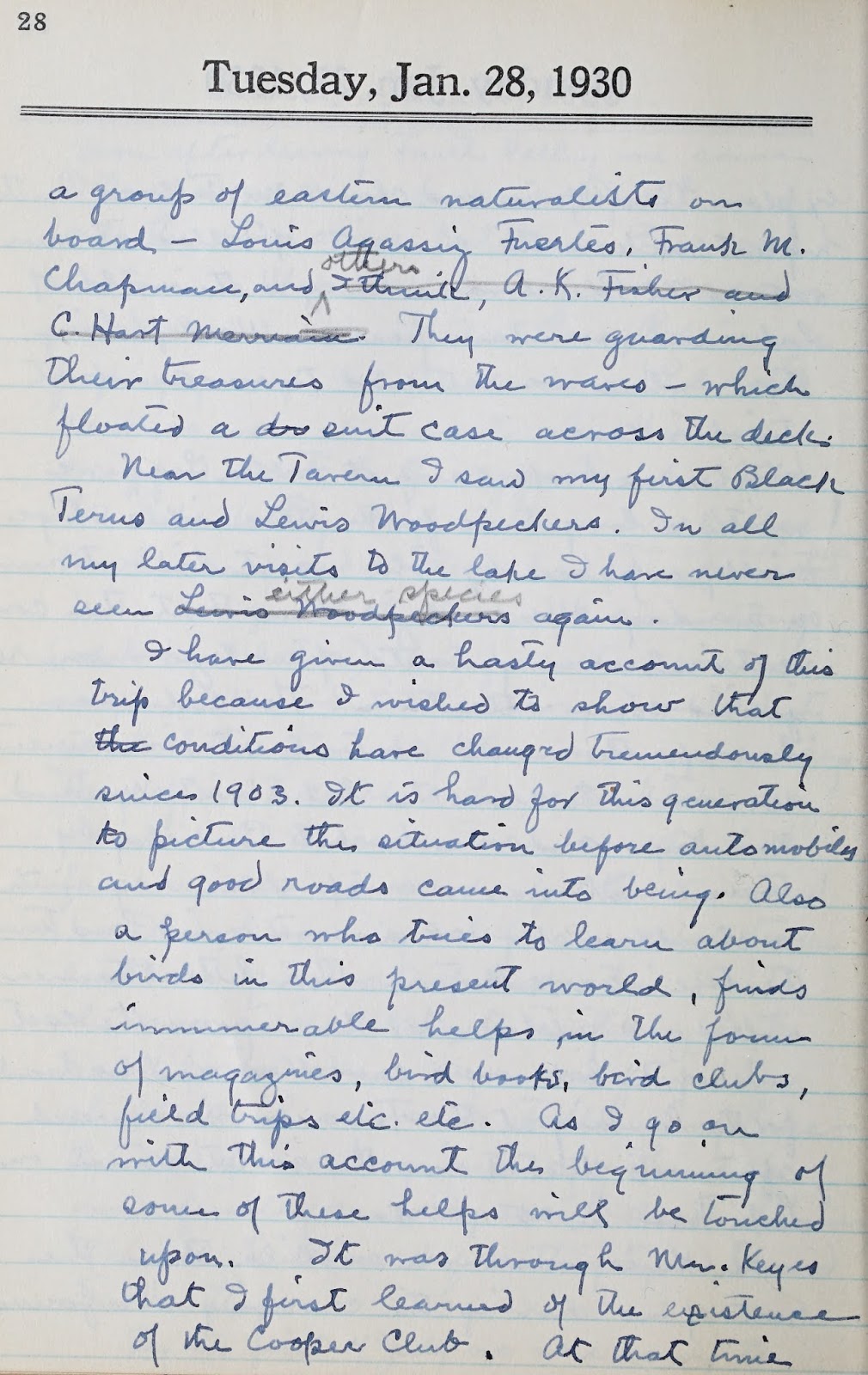
The MVZ Archives featured Amelia S. Allen in its blog four years ago. Allen was one of the earliest women elected to the membership of the Cooper Ornithological Club. She served as Secretary of the Cooper Club’s Northern Division from 1916 to 1924. She then served as the group’s Vice President in 1925 and then elected President in 1926. Her field notes document the avifauna of the Berkeley region from 1901-1944 and include memoirs of life in Berkeley and membership in the Cooper Ornithological Club.

An example of Allen’s candid reflections from her 1930-1942 Memoir and Field notes volume.


Edward W. Gifford

Edward W. Gifford was the assistant curator of Ornithology at the California Academy of Sciences and later became a curator at the University of California’s Museum of Anthropology. He kept an aviary at his Oakland home and donated his notes and birds to the MVZ throughout his life. But something very interesting caught my eye while prepping his volume for scanning. In his notes, he has a section recording his specimens that were burned in the 1906 San Francisco earthquake and fire. Gifford was participating in the California Academy of Sciences’ Galapagos Expedition when the earthquake and fire destroyed much of San Francisco, including the California Academy of Sciences. The Galapagos specimens collected by Gifford and fellow expedition members would go on to establish the new specimen collections of the newly rebuilt California Academy of Sciences.

Gifford, Edward W. Bird Notes: Aviary birds of the San Francisco Bay Region, v4289. (1904-1911).


Paul Elias

Paul Elias’s Guatemala field catalog and journal is a small and unassuming volume but it recounts an amazing journey filled with discoveries and critical data. Elias made this trip alone in the summer of 1974. He was 18 years old and an undergraduate at UC Berkeley, working at the MVZ. He collected two new genera of salamanders, later named Nyctanolis pernix and Bradytriton silus during this trip. Findings from this trip and the research of Prof. David B. Wake were published in a seminal paper in 1983. [4] It is difficult to imagine a trip like this taking place today. This is really only the beginning of Elias’s work with salamanders. Robin Moore wrote an excellent piece recounting Paul Elias and Jeremy Jackson’s return to the Guatemala’s Cuchumatane mountain range.

The BHL Field Notes Project is funded by the Council on Library and Information Resources (CLIR).

[1] Grinnell, Joseph (1910). “The Methods and Uses of a Research Museum,” Popular Science Monthly, 77, 163–169. https://www.biodiversitylibrary.org/page/1809048

[2] Taylor, Henry Reed (1903). “In Memoriam: Chester Barlow (With Portrait),” The Condor, 5(1), 3-7. https://www.biodiversitylibrary.org/page/53586237

[3] Fisher, W. (1905). “In Memoriam: Walter E. Bryant. Born 14th January, 1861. Died 21st May, 1905,” The Condor, 7(5), 129-131. https://www.biodiversitylibrary.org/page/53610508

[4] Elias, P., & Wake, D. B. (1983). Nyctanolis pernix, a new genus and species of plethodontid salamander from northwestern Guatemala and Chiapas, Mexico. In Advances in herpetology and evolutionary biology. Essays in honor of Ernest E. Williams. https://biodiversitylibrary.org/page/37028275

November 2, 2017by lmyrick
Blog Reel, Featured Books

Eye-catching photos, drawings and clippings: a few highlights from the BHL Field Notes Project

The Field Notes Project collection is now over 400 items strong! We are excited by our progress and to share these field books to the global natural history community. For our feature this month, I would like to highlight some of the unexpected or eye-catching pages our digitization teams have come across so far.

View Full Size Image
Schuchert, Charles. Field Notebook: Bermuda, New Brunswick, Quebec, Vermont 1929. (1929)
http://biodiversitylibrary.org/page/53322443. Digitized by Yale Peabody Museum of Natural History.

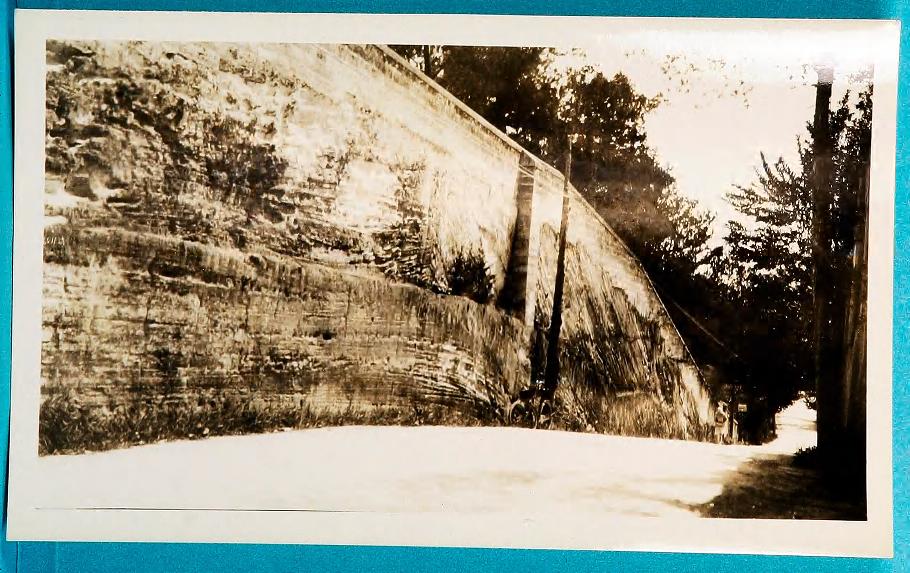
This photo of a dune structure initially caught my eye because it’s a great looking photo, but then I noticed the bike for scale and it was even more impressive than it already was! The accompanying caption notes the structure is just north of Pembroke Marsh in Bermuda.

View Full Size Image
Schuchert, Charles. Field Notebook: Florida. 1911, 1912. (1911-1912)
http://biodiversitylibrary.org/page/53475959. Digitized by Yale Peabody Museum of Natural History.

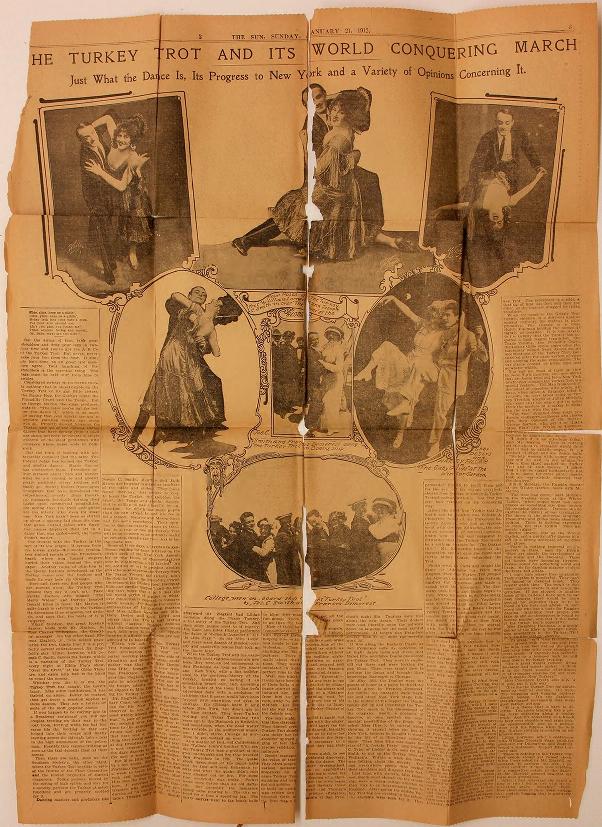
This newspaper clipping was also inserted in one of Charles Schuchert’s field books. The other side of the page has an article about the completion of the Florida East Coast Railway to Key West, but the true star is this piece on the latest New York dance craze, The Turkey Trot.

View Full Size Image
Bryan, Edwin Horace. Chronological summary and guide to Whitney Expedition journals.
http://biodiversitylibrary.org/page/53430449. Digitized by the American Museum of Natural History.

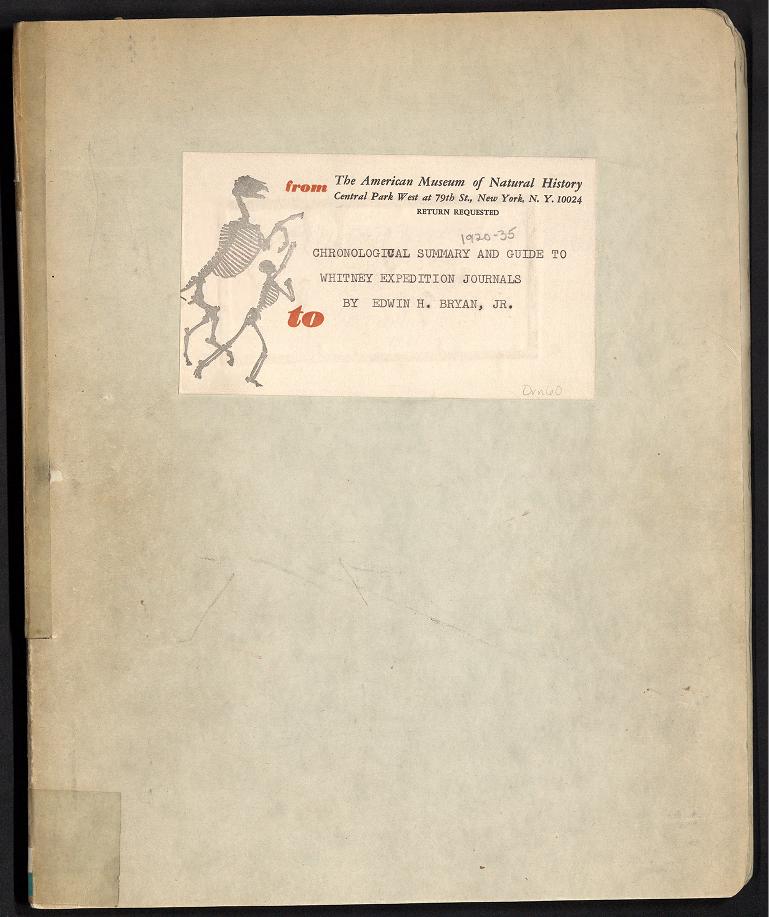
The cover of this summary takes advantage of the American Museum of Natural History’s pre-printed address labels. The illustrated horse and human look like the skeletal version of a 18th-century battle painting. That’s bit war heavy, so I’d like to think they are just really excited to collect in the field!

View Full Size Image
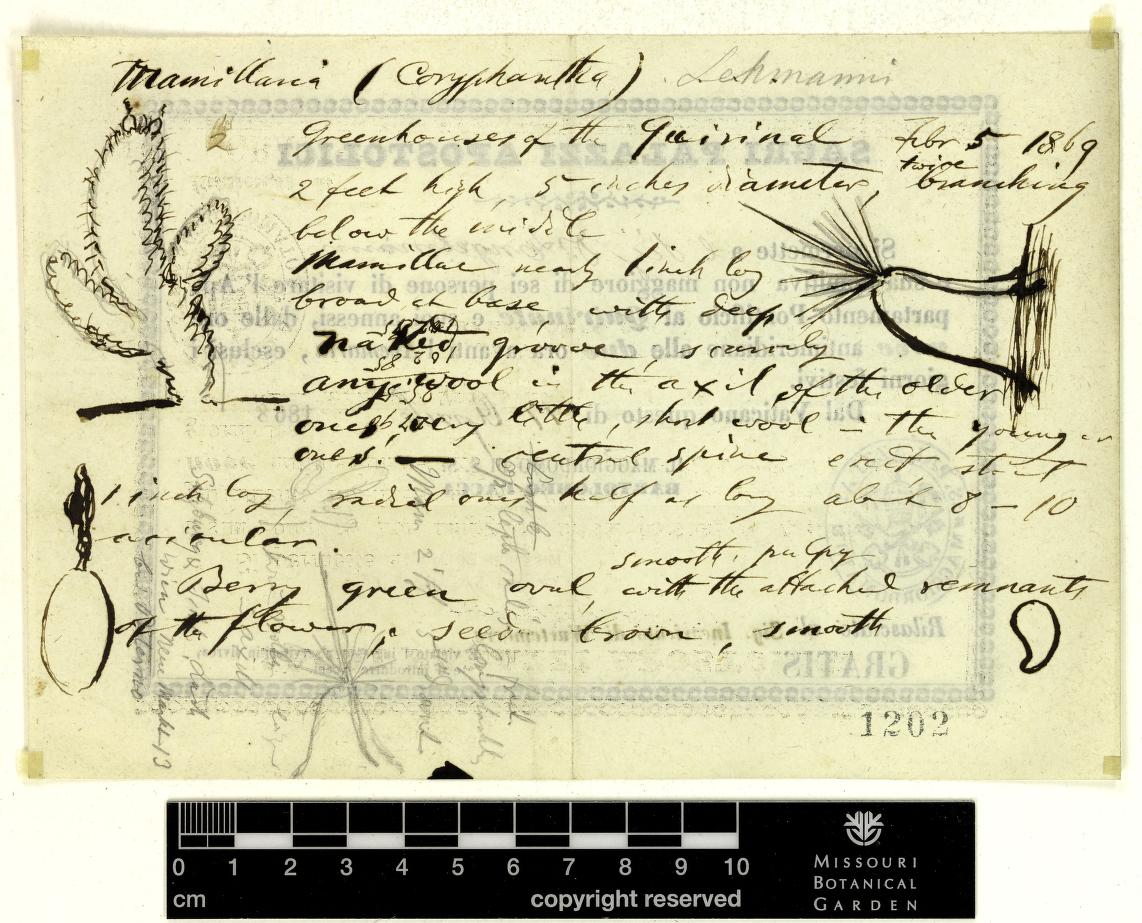
George Engelmann : botanical notebook 5 : Mammilaria, Leuchtenbergia, Discocactus, and Melocactus. Box 3: Folder 13: Cactaceae: Mammillaria: 1857-1883. (1856) http://biodiversitylibrary.org/page/52030722 Digitized by the Missouri Botanical Garden Peter H. Raven Library.

George Engelmann’s field books have a number of illustrations, but I find myself coming back to this small cactus for no other reason than it’s a cute little drawing.

View Full Size Image
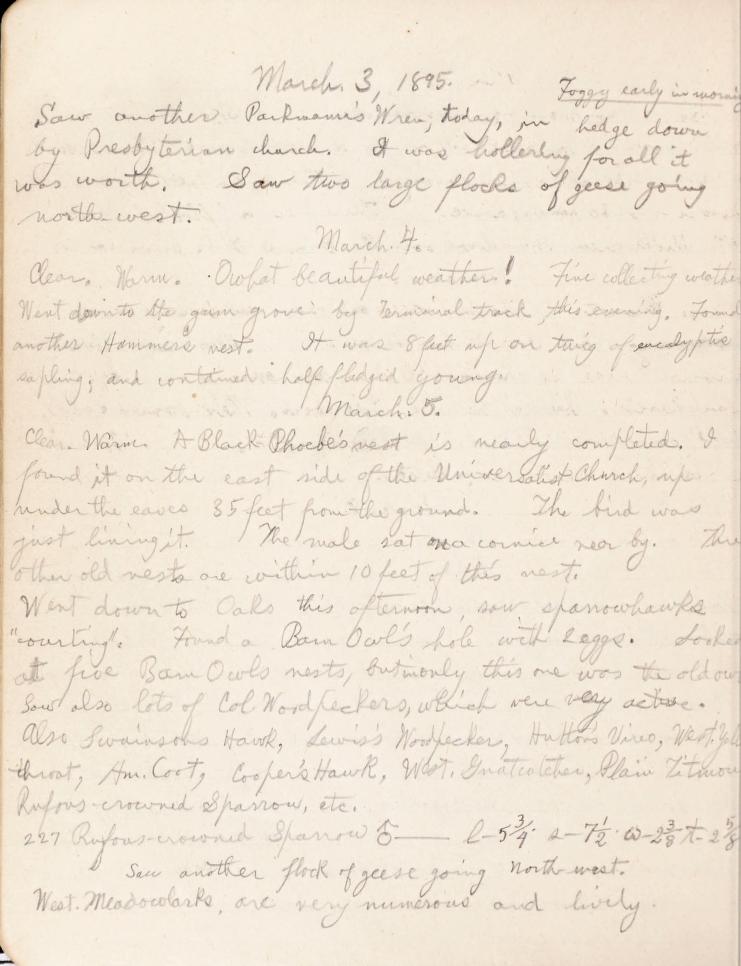
Grinnell, Joseph. Notebook #1: Los Angeles County, California, 1894-1895. (1894-1895)
Contributed by Museum of Vertebrate Zoology, University of California, Berkeley.

This notebook from Joseph Grinnell’s college years may not be initially eye catching, but considering his famed note-taking style, I knew it would be intriguing upon reading. I found he could be very expressive in style in his diary entries. In this page he notes seeing a Parkman’s wren and how it was “hollering for all it’s worth.” I wonder if the wren ever found the mate he was surely trying to attract. In the next entry he shows great pleasure in the clear, warm weather. Considering it was March in Los Angeles County, I can imagine it was “fine collecting weather” indeed.

There’s plenty more to discover in the BHL Field Notes Collection. Let us know what piques your interest!

The BHL Field Notes Project is funded by the Council on Library and Information Resources (CLIR).

June 1, 2017by lmyrick
Blog Reel, Featured Books

Interconnected Naturalist : Edmund Heller and the Field Notes Project

One of the great aspects of the BHL Field Notes Project is how the field notes we are digitizing – and the naturalists who created them – have connections to multiple project partners. Edmund Heller is one of these interconnected naturalists.

Heller was a naturalist active in the early twentieth century who participated in several expeditions sponsored by different institutions across the nation, including a number of BHL Field Notes Project partners. He traveled with Theodore Roosevelt for the Smithsonian African Expedition, traveled to Asia with Roy Chapman Andrews of the American Museum of Natural History (AMNH), served as a collector for the Field Museum, joined Hiram Bingham on Yale University and National Geographic Society’s Expedition in the Andes of Peru, and collected in Alaska with noted collector Annie Alexander, who proposed and helped establish the Museum of Vertebrate Zoology at the University of California, Berkeley.

View Full Size Image
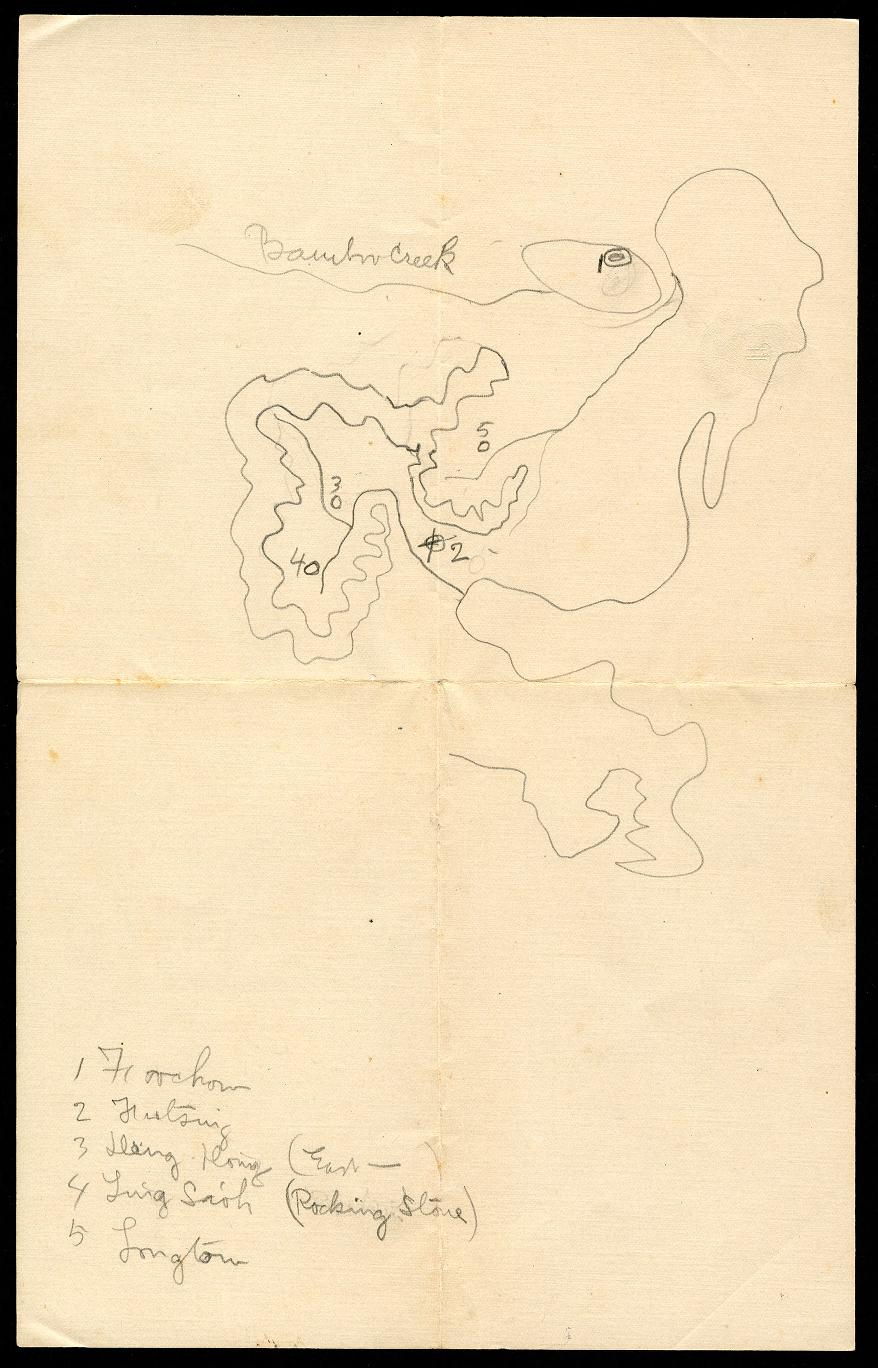
A map Heller drew while on Roy Chapman Andrews’ expedition to the Chinese province of Yunnan, Tibet, and Burma. Handwritten China journal of Edmund Heller (1 of 5). (1916). http://biodiversitylibrary.org/page/52109645.
View Full Size Image
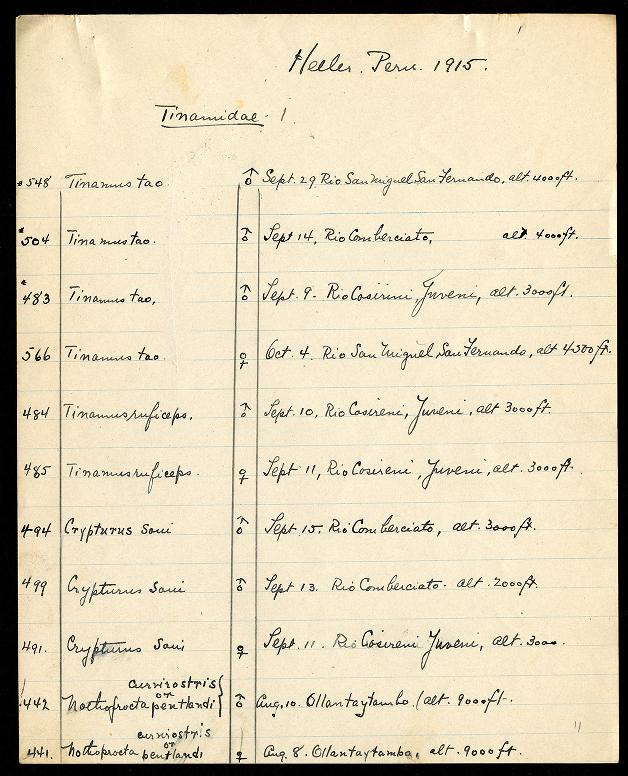
Field notes from Heller’s time as part of Yale University and National Geographic Society’s Expedition in the Andes of Peru. List of birds collected by Heller in Peru. (1915). http://biodiversitylibrary.org/page/52088223.

Since Heller moved around from institution to institution, participating in what he referred to as an “unequaled record of expeditions,” he is a classic example of a naturalist with field notebooks all over the map. Through the Field Notes Project, we have the opportunity to bring together parts of his collection. Nine of Heller’s notebooks are currently available in the BHL, contributed by Smithsonian Institution Archives (SIA). More of his notebooks will be digitized by SIA and AMNH by project end.

In the meantime, why not explore Heller’s work in the BHL?
The BHL Field Notes Project is funded by the Council on Library and Information Resources (CLIR).

Further Reading:

Where are Heller’s Field Books? – Field Book Project Blog

Expedition Connection: National Geographic Society Yale University Peruvian Expedition, 1915 – Biodiversity Heritage Library Blog

February 2, 2017by lmyrick

Help Support BHL

BHL's existence depends on the financial support of its patrons. Help us keep this free resource alive!

search

About BHL

The Biodiversity Heritage Library (BHL) is the world’s largest open access digital library for biodiversity literature and archives. BHL operates as a worldwide consortium of natural history, botanical, research, and national libraries working together to digitize the natural history literature held in their collections and make it freely available for open access as part of a global “biodiversity community.”

Join Our Mailing List

Sign up to receive the latest news, content highlights, and promotions.

Subscribe Now

Subscribe to Blog via Email

Enter your email address to subscribe to this blog and receive notifications of new posts by email.

Join 319 other subscribers

Subscribe to Blog Via RSS

Subscribe to the blog RSS feed to stay up-to-date on all the latest BHL posts.

Access RSS Feed

Inspiring Discovery through Free Access to Biodiversity Knowledge.

The Biodiversity Heritage Library makes it easier than ever for you to access the information you need to study and explore life on Earth…for free, anytime, anywhere.


64+ Million Pages of
Biodiversity Literature Online.

EXPLORE

Tools and Services
to Transform Research.

EXPLORE

300,000+
Illustrations on Flickr.

EXPLORE

ABOUT | HARMFUL CONTENT | PRIVACY | SITE MAP | TERMS OF USE