Biodiversity Heritage Library - Program news and collection highlights from BHL
  • Home
  • News
  • Featured Books
    • All Featured Books
    • Book of the Month Series
    • BHL at 20
  • User Stories
  • Campaigns
    • Fossil Stories
    • Garden Stories
    • Monsters Are Real
    • Page Frights
    • Her Natural History
    • Earth Optimism 2020
  • Tech Blog
  • Visit BHL
Home
News
Featured Books
    All Featured Books
    Book of the Month Series
    BHL at 20
User Stories
Campaigns
    Fossil Stories
    Garden Stories
    Monsters Are Real
    Page Frights
    Her Natural History
    Earth Optimism 2020
Tech Blog
Visit BHL
  • Home
  • News
  • Featured Books
    • All Featured Books
    • Book of the Month Series
    • BHL at 20
  • User Stories
  • Campaigns
    • Fossil Stories
    • Garden Stories
    • Monsters Are Real
    • Page Frights
    • Her Natural History
    • Earth Optimism 2020
  • Tech Blog
  • Visit BHL
Biodiversity Heritage Library - Program news and collection highlights from BHL
Blog Reel, Featured Books

From Jean-Baptiste Tavernier to the Smithsonian: Tracing the History of the Hope Diamond

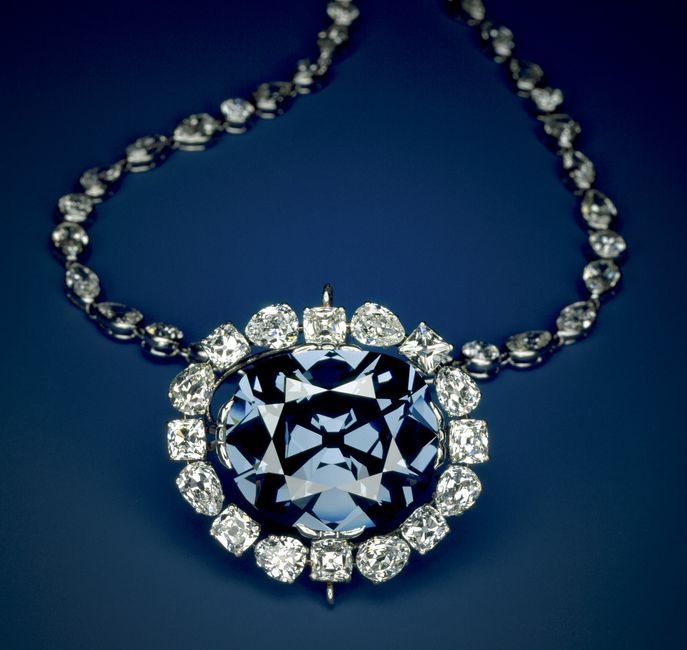
View Full Size Image
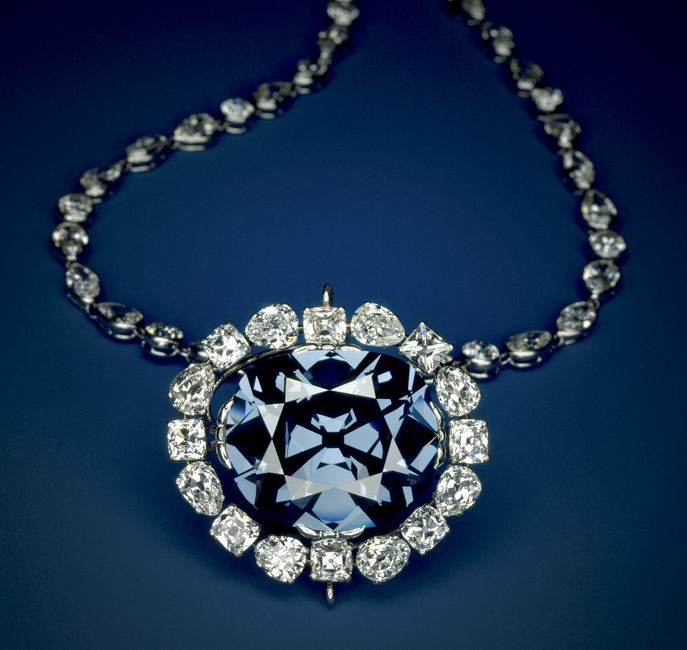
The Hope Diamond. Photo by Chip Clark, courtesy of the Smithsonian Institution. Photo ID 97-35270.

The Hope Diamond is one of the most famous gems in the world. It attracts millions of visitors to the National Museum of Natural History each year, making it one of the Smithsonian’s most popular objects.

But what is the history of this famous jewel? How did it come to be the Hope Diamond?

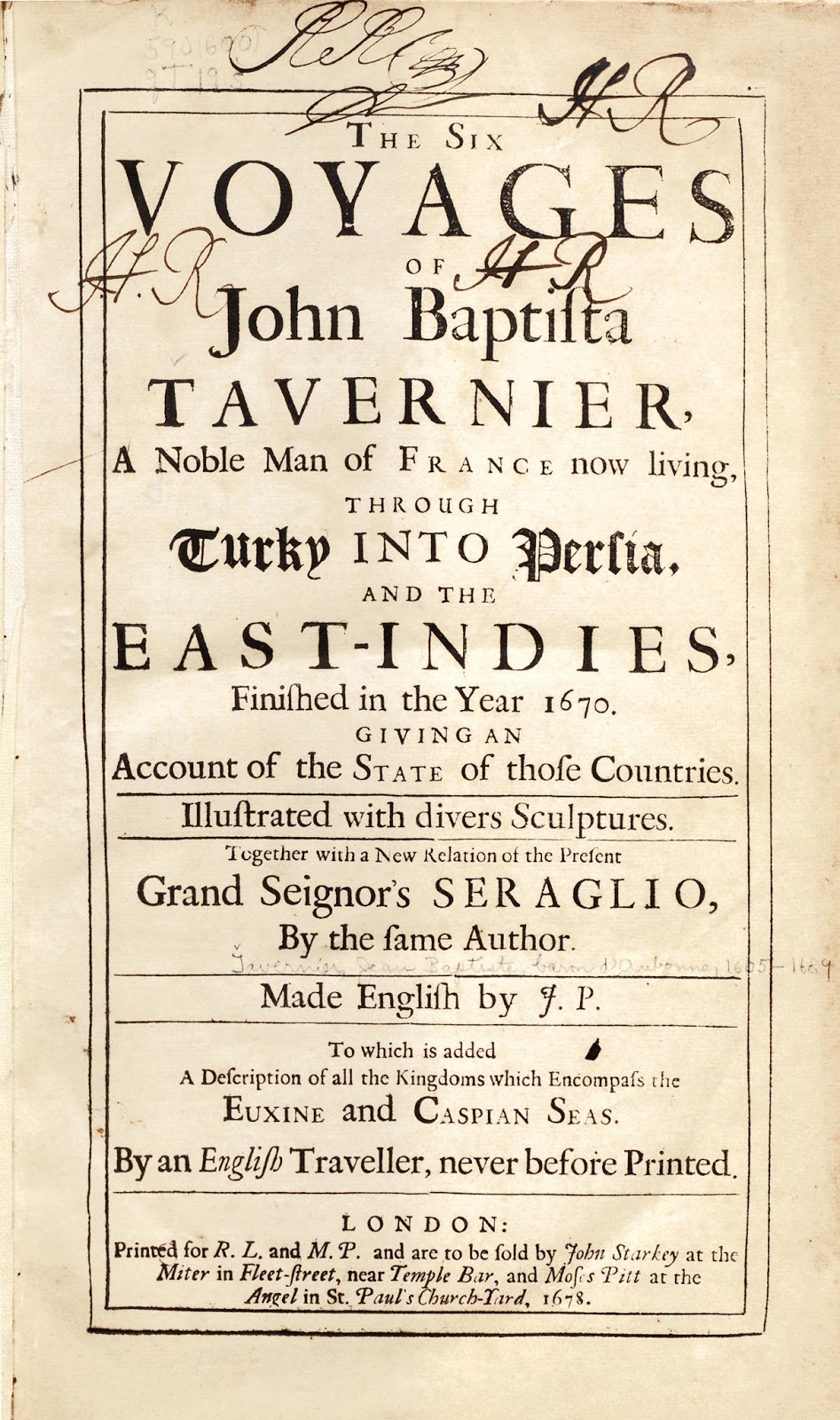
The known history of the stone begins with French gem merchant and traveler Jean-Baptiste Tavernier, whose travels through Asia in the 17th century are recorded in The Six Voyages of John Baptista Tavernier (1678), which has been digitized in BHL by the United States Geological Survey (USGS) Libraries Program.
View Full Size Image
Title Page. Tavernier, Jean-Baptiste. The six voyages of John Baptista Tavernier. 1678. Digitized by the United States Geological Survey Libraries Program. http://s.si.edu/2wq4rIQ.

Born to a cartographer in 1605, Tavernier demonstrated a love for travel as early as his teens. Over the course of nearly forty years, Tavernier embarked on six major trips, or “voyages”, to Persia and India, covering by his account 180,000 miles. He became a successful jewel merchant and, according to the Smithsonian’s Mineral Sciences Department website, “the first European to describe the diamond mines in India.” He first published an account of his journeys in 1676 with Les Six Voyages de Jean-Baptiste Tavernier, with an English translation by John Phillips appearing two years later in 1678.

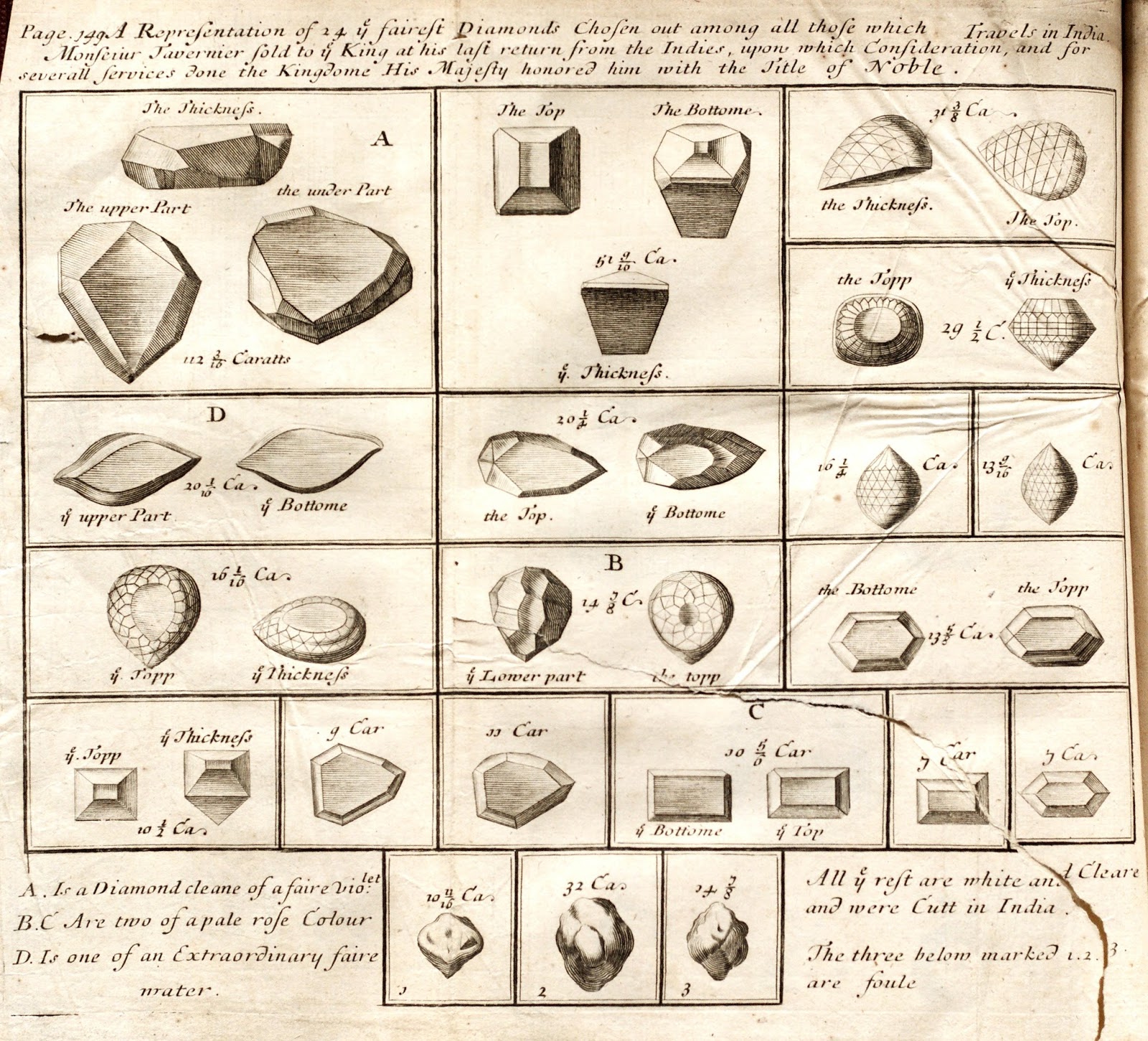
Most likely during his sixth and final voyage to India between 1664-1668, Tavernier obtained a remarkable blue diamond weighing approximately 115 modern metric carats. Dubbed the “Tavernier Blue,” the stone was certainly mined in India, but the specific mine is not known. Tavernier detailed this diamond in his Six Voyages.
View Full Size Image
Sketch of the “Tavernier Blue” (Upper Left, “A”). Tavernier, Jean-Baptiste. The six voyages of John Baptista Tavernier. 1678. Digitized by the United States Geological Survey Libraries Program. http://s.si.edu/2xkH0Vi.

In 1668 or 1669 (sources vary), Tavernier sold the diamond to Louis XIV of France for 220,000 livres. According to François Farges, curator of minerals and gems at the Muséum national d’Histoire naturelle, the stone was likely worth twice that amount.

Why would Tavernier sell the gem so cheaply?

According to Richard W. Wise, author of The French Blue, Tavernier received a patent of nobility, likely as part of the deal, which at the time could be obtained for approximately 400,000-500,000 livres. Additionally, as Wise writes, selling the jewel to the King of France was good publicity for Tavernier. Furthermore, given the economic state of many other European royals at the time, Tavernier was unlikely to receive a better offer.

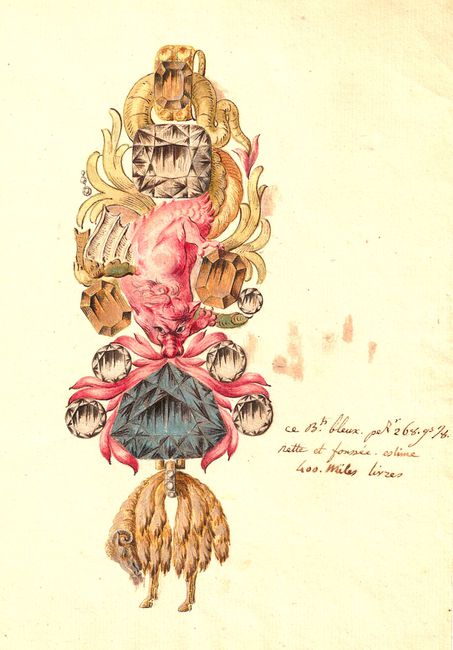
Louis XIV later ordered court jeweler Jean Pittan the Younger to recut the stone to reflect a more European style favoring symmetry and brilliance over size and weight. The resulting 69 carat heart-shaped diamond became commonly known as the “French Blue.” The diamond later became part of the Order of the Golden Fleece, a emblem of knighthood featuring many precious stones.
View Full Size Image
Color illustration of the Order of the Golden Fleece, containing the French Blue. Courtesy of the Smithsonian Institution. Creator: Pierre-André Jacqumin. https://mineralsciences.si.edu/_img/hope/GoldenFleece.jpg.

Then, in 1789, France changed. The French Revolution ignited, and in 1791, the French Crown Jewels, including the Order of the Golden Fleece containing the French Blue, were turned over to the revolutionary government and moved to the royal storehouse, Garde-Meuble. The jewels were put on public display until 1792, when the French Blue, along with many other Crown Jewels, were stolen.

And here, the French Blue is lost.

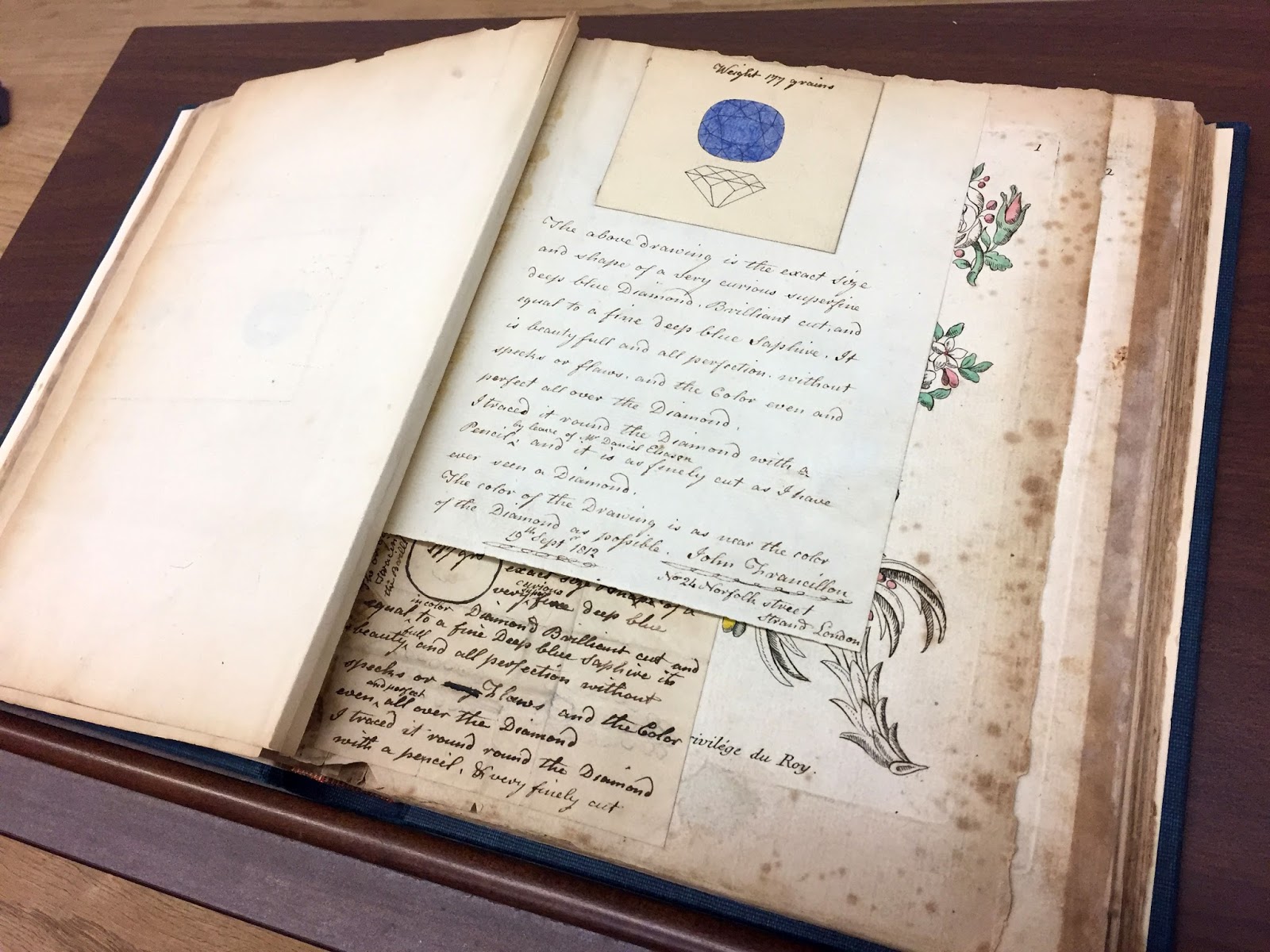
Fast forward to London, 1812. A jeweler named John Francillon makes a note and sketches of a 45.5 carat blue diamond that he examined “by leave of” London diamond merchant Daniel Eliason. Known as the “Francillon Memo”, this is the first reference to the Hope Diamond as it is known today.

It was American gemologist and former “special agent” for the USGS, George Frederick Kunz, who unearthed this important piece of the Hope’s provenance when he discovered the “Francillon Memo” inside a copy of Pouget’s Traité des pierres précieuses et de la maniere de les employer en parure (1762) whilst browsing in London’s Quartich’s bookshop.
View Full Size Image
The Francillon Memo inside a copy of Pouget’s Traité des pierres précieuses et de la maniere de les employer en parure (1762), from the USGS Libraries collection. Photo by: Kelly Haberstroh.

Today, this memorandum, as well as the Pouget book it was discovered within, are part of the George F. Kunz Collection at the USGS Libraries Program. Containing many rare books on gemology, the folklore of gemstones through history, lapidary arts and archival gem trade records, the Library acquired this significant collection in 1933 after Kunz’s death. The copy of Tavernier’s Six Voyages within BHL is a part of the USGS Kunz Collection.

Interestingly, the “Francillon Memo” was dated September 19, 1812, just two days after the expiration of the statute of limitations for crimes committed during the French Revolution. In other words, France could no longer prosecute for reclamation of the diamond, should they happen to recognize the stone for what it truly was.

Whilst the connection between the French Blue and the Hope Diamond has long been suspected, in 2005 scientists at the Smithsonian announced that archival research and computer models had allowed them to conclude that the Hope was almost certainly cut from the French Blue.

The gem was most likely recut to hide its true identity. But who directed this to happen?

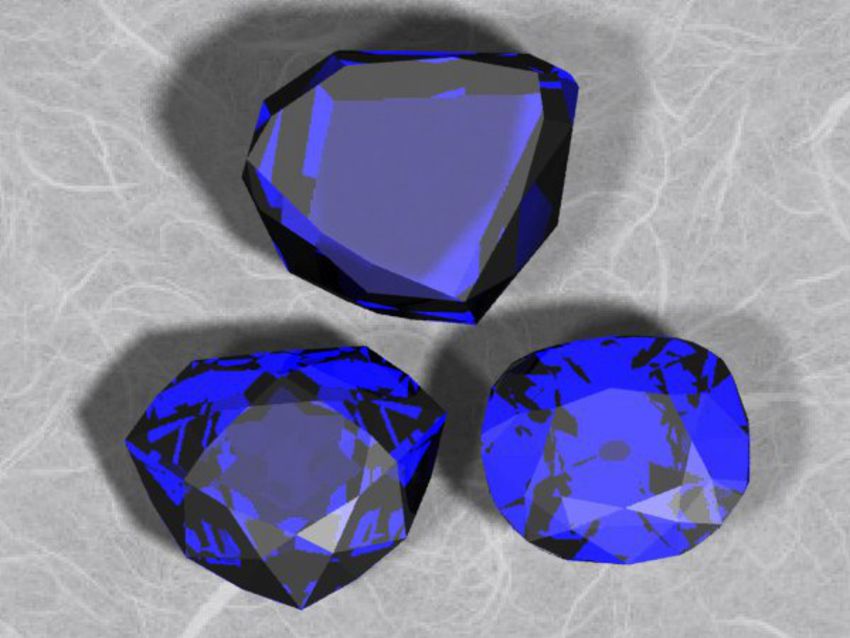
In 2009, Farges and his colleagues published research involving a lead model of the French Blue that suggests it may have been Henry Philip Hope, the diamond’s namesake, who privately acquired and directed the stone to be recut sometime between 1792-1812, after which it eventually ended up with Eliason, a client of Hope’s family firm. Hope would eventually officially acquire the diamond by 1839, after it was allegedly sold from George IV of England’s collection following his death in 1830 (George IV’s ownership of the Hope has never been officially confirmed).

In the early twentieth century, after Hope’s great-grandnephew, Lord Francis Hope (who inherited the Hope Diamond), sold the stone in the midst of financial difficulties resulting from his lavish lifestyle, the diamond passed through multiple owners before it was finally donated by jeweler Harry Winston to the Smithsonian in 1958.
View Full Size Image
Models of the Hope Diamond in its three known states: Tavernier Blue (top), French Blue (bottom left), and the Hope Diamond (bottom right). Courtesy of the Smithsonian Institution. Creator Stephen Attaway. https://mineralsciences.si.edu/_img/hope/HopeModels.jpg.

Thus stands the history of the Hope Diamond, from its appearance in Tavernier’s Six Voyages to its exhibition at the Smithsonian. Thanks to the USGS Libraries Program, a record of the stone’s earliest known history is freely available to the world through the Biodiversity Heritage Library.

You can view all of the illustrations from Tavernier’s Six Voyages in the BHL Flickr.

About the USGS Libraries Program

The USGS Libraries Program, authorized by Congress in 1879, is the world’s largest earth and natural sciences library, providing services, collections, and expertise that are essential to the U.S. Geological Survey mission. The Libraries Program is made up of four branches that provide resources, collections, and services. The library collections include over 1,500,000 volumes, 2.500,000 maps, 30,000 field records, and 500,000 historical photos. Over thirty-six percent of the materials are unique to USGS, or available at ten or fewer libraries in the world. The rare collections can support research in biodiversity, specifically with literature from paleobotany and paleoclimatology as well as some surprising gems from early biological research both in the United States and across the world.

Sources

Buncombe, Andrew. 2005. “‘Cursed’ Hope Diamond Was Cut from French Stone, Test Shows.” The Independent, February 11. Accessed September 13, 2017. https://web.archive.org/web/20090331235958/http://www.independent.co.uk/news/world/americas/cursed-hope-diamond-was-cut-from-french-stone-tests-show-482819.html.

Farges, Francois, et al. 2009. “The French Blue and the Hope: New Data from the Discovery of a Historical Lead Cast.” Gems & Gemology 45, no. 1 (Spring): 4-19. Accessed September 13, 2017. https://www.gia.edu/doc/SP09.pdf.

The Public Domain Review. 2017. “The Six Voyages of John Baptista Tavernier.” Accessed September 13, 2017. http://publicdomainreview.org/collections/the-six-voyages-of-john-baptista-tavernier-1678/.

Smithsonian National Museum of Natural History. 2017. “Timeline.” Hope Diamond, April 19. Accessed September 13, 2017. https://mineralsciences.si.edu/collections/hope/timeline/1668.htm.

Wikipedia. 2017. “John Francillon.” September 1. Accessed September 13, 2017. https://en.wikipedia.org/wiki/John_Francillon.

Wise, Richard W. 2009. “From the Sun King to the Smithsonian The Epic Journey of the Hope Diamond.” The French Blue. Accessed September 13, 2017. http://thefrenchblue.com/article1.htm.
October 20, 2017by ulib-libraryjobs
Blog Reel, Featured Books

The Collector Connection: United States Geological Survey

This is the final post of a joint blog series by the Field Book Project (FBP) and the Biodiversity Heritage Library (BHL), showcasing examples of digital connections between collectors, field book catalog records, and the resulting publications of collecting events.

In 1878 the United States Congress was investigating rivalries between four surveys (Powell, Hayden, King, and Wheeler Surveys) that had been sent west to study the nation’s resources and search for a potential route for a railroad to the west coast. The investigation made it clear to Congress that the current system was not working. So Congress turned to the National Academy of Sciences (NAS) for guidance. NAS approached experts across the country for input, including survey leaders John Wesley Powell and Clarence King. Their subsequent recommendations, sent to Congress, provided the main structure for the legislation that created the United States Geology Survey (USGS).

In 1879, the USGS was established with the mission to provide: “reliable scientific information to describe and understand the Earth; minimize loss of life and property from natural disasters; manage water, biological, energy, and mineral resources; and enhance and protect our quality of life.”

View Full Size Image
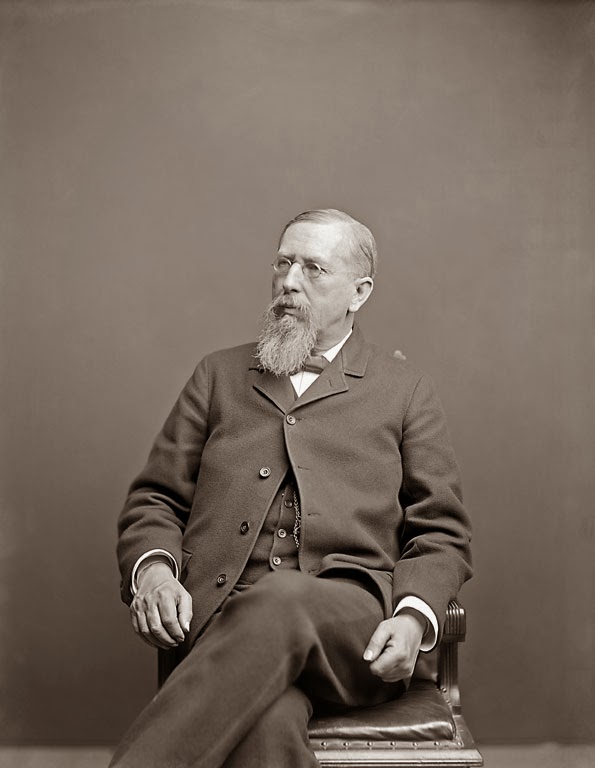
William H. Dall, c. 1910.  Smithsonian Institution Archives. RU 000095, Box 6, Folder 42.  SIA2009-4237.

The USGS had a mission, but now they needed the people with the vision to make it happen. King was named director, but left in 1881. Powell became the second director (1881-1894) and was an important force in shaping the new agency.

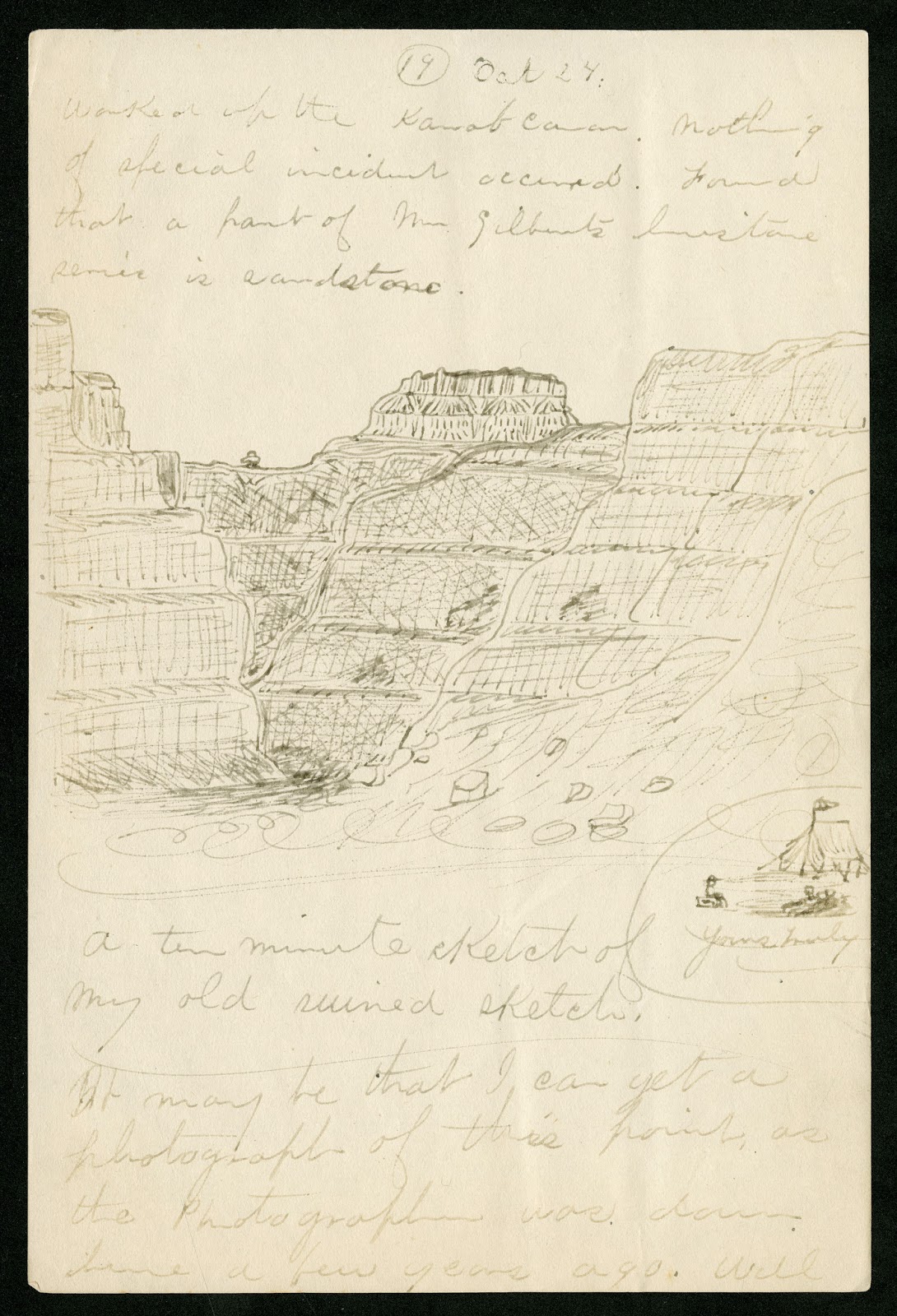
The USGS began sending staff into the field shortly after its creation. Staff surveyed and collected in national parks as well as local neighborhoods, like the DC-Maryland-Virginia environs. Their field books show a dizzying variety of collecting. The agency’s earliest field staff included individuals who would make important contributions to the fields of geology and paleontology. People like Charles Walcott, known for his discovery of the Burgess Shale, worked for the USGS 1879 – 1907 (eventually becoming its director in 1894), and conducted field work in the Grand Canyon among many other locations in the country. William Healey Dall worked for USGS 1884-1925, conducting research and spending significant time in Alaska for the Agency as well as the US Coast and Geodetic Survey; the work helped establish him as a well-respected expert in the geology of the state.

View Full Size Image
Charles Walcott’s field notes from October 15 – November 3, 1879, Page 19.  Smithsonian Institution Archives. RU 007004, Charles D. Walcott Collection, 1851-1940 and undated; Box 32, Folder 1.  SIA2012-9643.

Other staff may not be so well known, like Lester Ward (1841-1913), but their field books document important routine field work with a specificity of detail that is fascinating. Specimen location information and interviews with individuals who found them sometimes list neighborhoods or street intersections. We encourage you to take a look at and compare the field books and the publications, the field work and the conclusions drawn from them.

Field Books:

  • US Geological Survey 
  • Charles Walcott
  • William Healey Dall
  • Lester F. Ward

Publications:

  • US Geological Survey
  • Charles Walcott 
  • William Healey Dall
  • Lester Frank Ward

In November of 2011, the USGS Library joined the BHL consortium. Describing themselves as “one of the world’s largest libraries dedicated to the earth and natural sciences,” they have contributed over 15,000 pages of digital content to the BHL collection.

February 13, 2014by [email protected]
Blog Reel, Featured Books

Documenting Scientific Knowledge One Handwritten Note at a Time

Connecting Content: The Wonderful World of Field Books

The California Academy of Sciences and our partners (all of whom are also BHL member institutions) are in the midst of a 3 year IMLS National Leadership Grant titled “Connecting Content: A Collaboration to Link Field Notes to Specimens and Published Literature.” This project aims to digitize published scientific findings, their related field books and specimens, and metadata for these items, link all of these resources, and make them available for harvesting, reuse, and repurposing without cost. At this point, the bulk of the field books selected for this project have been digitized and made available through the Biodiversity Heritage Library. (*You can see the sixty-one titles digitized for this project by searching for “Connecting Content” in the BHL search box.) You can download a selection of these field book for free via the latest BHL iTunes U Collection: Connecting Content through Archival Field Notes.

Field books (or field notes) are the original documents which chronicle specimen collection and the events and observations that led to scientific discovery.  Field books are unique unto the creator and vary greatly from book to book. Here are a selection of highlights from the collection which demonstrate the wealth of information and styles found throughout the selection of field books:

William Whitman Bailey and the USGS Exploration of the 40th Parallel

View Full Size Image
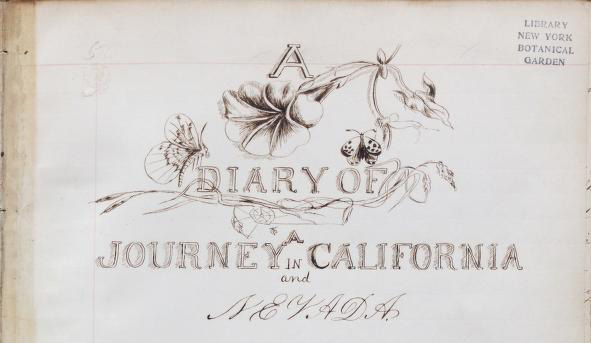
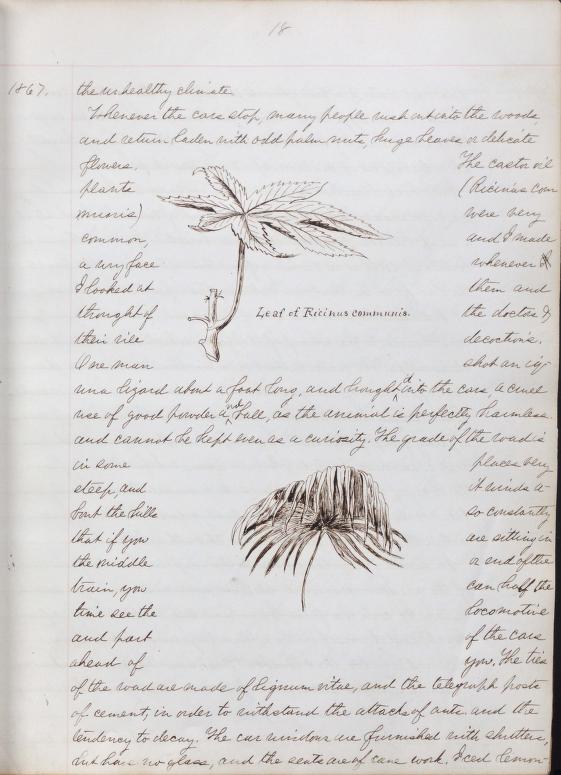
Page One. A diary of a journey in California and Nevada. William Whitman Bailey.


View Full Size Image
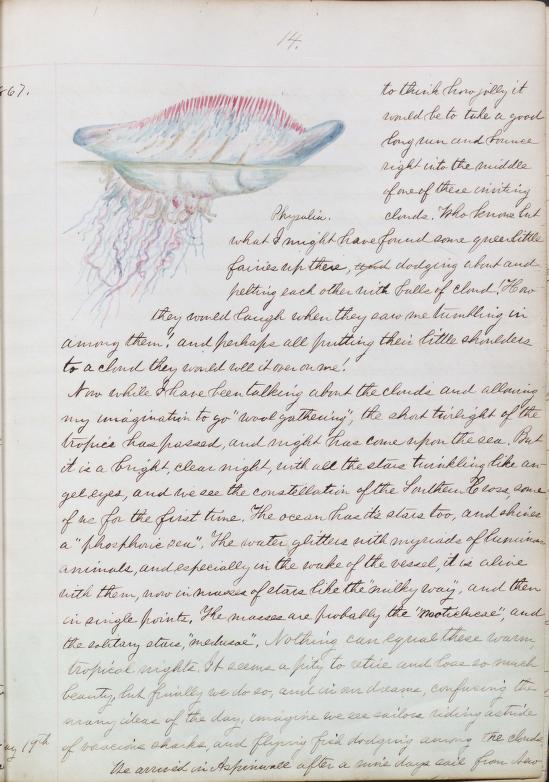
Portuguese Man of War. Bailey.
View Full Size Image
Riccinus communis. Bailey.

William Whitman Bailey’s life story reads like a blockbuster movie plot. When young William was just nine years old, he and his family took an ill fated boat trip aboard the 198 foot side-wheeler, the Henry Clay. On this fateful day, the Henry Clay was involved in a minor collision with another vessel, but pressed onwards as it seemed that the ship has sustained little damage. However, about an hour outside of its final New York destination, the ship beached itself on shore near Yonkers as a result of a fire that had been burning unnoticed since the collision. The lucky passengers on the bow of the ship were either thrown or able to jump onto land, but the Baileys were not so fortunate. Separated from land by 140 feet of water and a wall of fire, the Baileys had no choice but to jump into the water as the fire approached. William’s mother and sister succumbed to the depths and his father barely survived. William managed to grab hold of a floating wicker chair and was eventually picked up by a passing ship, but the experience would leave him with permanent health problems.

However, this tragic setback did not lessen Bailey’s enthusiasm for adventure and curiosity about the natural world. Bailey would eventually study under Dr. Asa Gray at Harvard University and at 24 years old, he became the botanist for the United States Geological Exploration of the 40th Parallel. The field book for this expedition chronicles Bailey’s journey through California and Nevada in a flowing prosaic style with beautiful illustrations and photographs of Bailey’s observations. The very first page of Bailey’s journal opens with a beautiful demonstration of his illustrative pen and ink style. Bailey’s rich descriptions are paired with exquisite drawings that seem to jump off the page whether he is waxing poetic about the Portuguese Man of War or closely observing the leaf of the Riccinus communis. Bailey’s flowing narrative style and gorgeous illustrations make this field book a charming and informative look at the exploration of the 40th parallel that will surely captivate readers.

Washington H. Ochsner and the Galapagos Islands


View Full Size Image
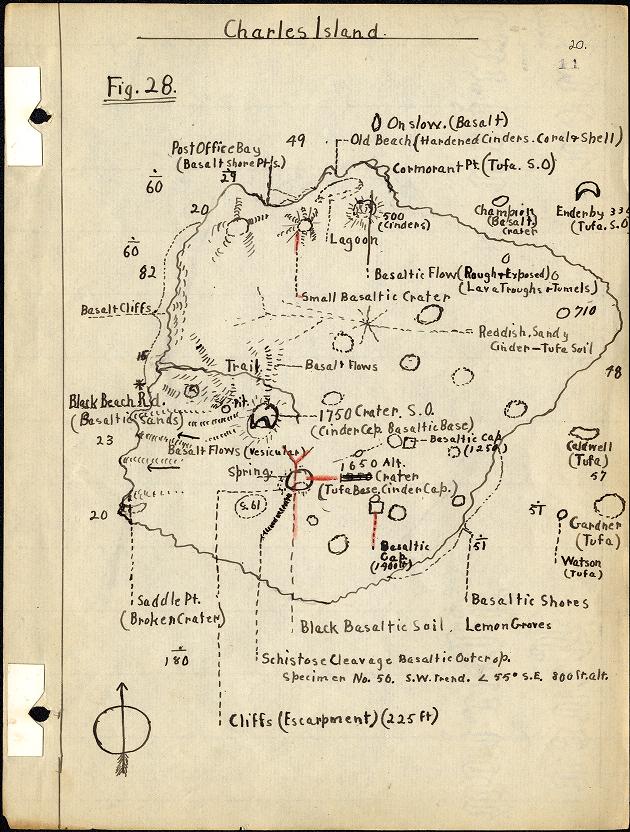
Charles Island. Ochsner.

In 1905, the California Academy of Sciences sent 11 men off for a year and a day on an eighty-five foot schooner destined for the Galapagos Islands. While the expedition was underway, the California Academy of Sciences would fall into ruin during the great San Francisco earthquake of 1906. The specimens gathered during the Galapagos expedition would come to form the crux of the new California Academy of Sciences’ collections. Of the young men on that voyage, 26 year-old Washington Henry Ochsner travelled as the expedition’s geologist. His journals are more technical than Bailey’s in what they intended to capture and often included geological survey information, as well as inferences about how the geological features were formed. Ochsner also drew detailed surveys of the island terrains like this map of Charles Island. Ochsner’s field books have a scientifically focused structure and tend to be not-so-much a diary but a close and careful record of his scientific observations.

The Diaries of William Brewster, 1865- 1919

View Full Size Image
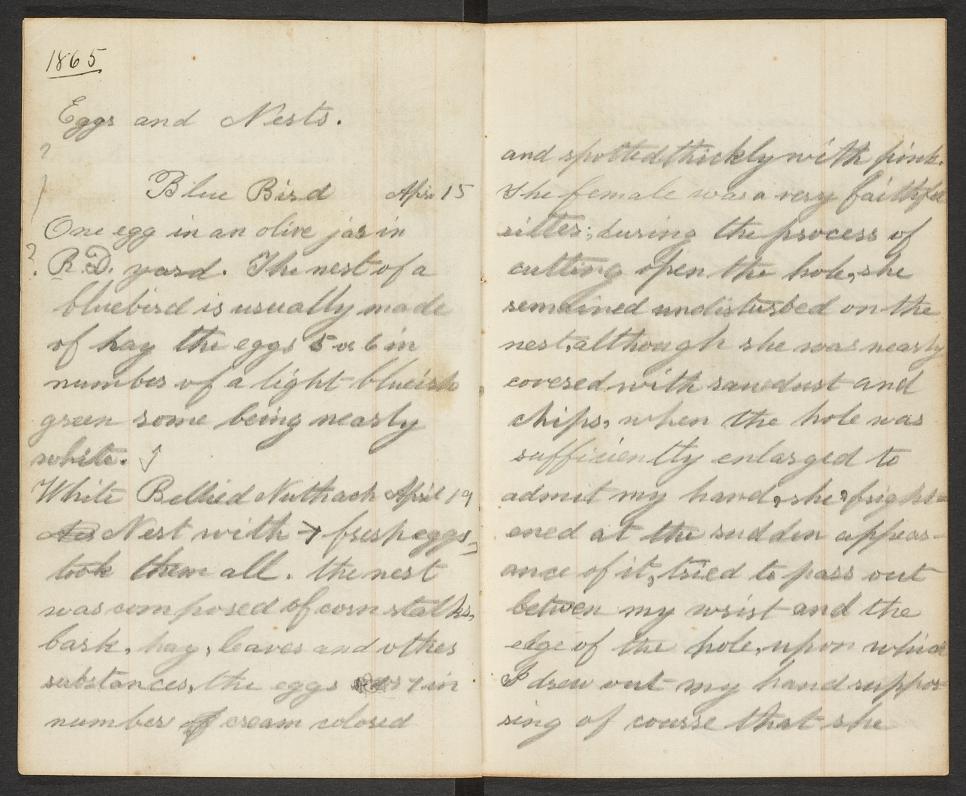
Eggs and Nests. Brewster.

Renowned ornithologist William Brewster mused over his daily observations in a personal and often humorous way. William Brewster’s love of ornithology blossomed early, and he kept careful records of the birds he observed throughout his life. These journals begin when Brewster was 14 years old, and it is interesting to see how his hand, knowledge, and confidence all develop over time.  In his later journals, Brewster takes care to write in a colloquial manner, and these notes provide unique insight into the daily life of a researcher over a 54 year span. This collection of journals also provide an enticing perspective on the detrimental changes to the environment and bird populations as a result of industrialization and the growth of urban centers.

All of the field books digitized for the Connecting Content project offer inimitable insight into how scientific data is gathered, synthesized, and extrapolated. It is the hope that by sharing these unique resources, researchers can better understand scientific findings and that the insights gained from this will promote further inquiry and the spirit of discovery.

Want more Field Book Content?

View 61 field books digitized by the Connecting Content grant in BHL

Download a selection of these books for free on iTunes U

Find out more about the link between expeditions, field books, and publications in our previous blog posts with Smithsonian’s Field Book Project: Post One | Post Two | Post Three

May 9, 2013by Kathryn Stine
BHL News, Blog Reel

The United States Geological Survey Joins BHL!

Portrait version of the Biodiversity Heritage Library logo.

In November, 2011, at the Life and Literature Conference in Chicago, IL, BHL announced the addition of its fourteenth consortium member, the United States Geological Survey Library (see a list of member libraries on our wiki). Since the announcement, BHL staff have been diligently working with USGS to fully integrate our new library member into BHL workflows and procedures, and it won’t be long before you can access new USGS material in the BHL portal. We at BHL, along with our new colleagues at USGS, are thrilled about this important development in the BHL project.

When asked what contributions USGS could make to the BHL corpus, Richard Huffine, Library Director, replied, “The USGS mission has always spanned both the physical and life sciences. From our historical work in paleontology to our current research in ecosystems, we have collections that will definitely compliment the current holdings of the BHL.” The USGS is focusing their early contributions on filling gaps in BHL and adding a collection of rare research in paleobotany. As Huffine further added, “We’re excited to be part of this historic effort and are looking forward to seeing the BHL reflect the full breadth and depth of what biodiversity means.”

Created in 1879, the U.S. Geological Survey maintains one of the world’s largest libraries dedicated to the earth and natural sciences. Scientific research is a key part of the Survey’s mission, and this work is supported by a wide array of monitoring activities and scientific collections, more than 1,000 research scientists and a library with more than 2,000,000 volumes, 1,500,000 maps and 800 current serial titles. For more information about the U.S. Geological Survey, visit http://library.usgs.gov/.

We are thrilled to add the United States Geological Survey Library to the BHL ranks. We are confident they will contribute a unique array of important biodiversity texts to the over 102,ooo volumes and 38 million pages currently available. Welcome to the team, USGS!

March 12, 2012by michelle.underhill

Help Support BHL

BHL's existence depends on the financial support of its patrons. Help us keep this free resource alive!

search

About BHL

The Biodiversity Heritage Library (BHL) is the world’s largest open access digital library for biodiversity literature and archives. BHL operates as a worldwide consortium of natural history, botanical, research, and national libraries working together to digitize the natural history literature held in their collections and make it freely available for open access as part of a global “biodiversity community.”

Join Our Mailing List

Sign up to receive the latest news, content highlights, and promotions.

Subscribe Now

Subscribe to Blog via Email

Enter your email address to subscribe to this blog and receive notifications of new posts by email.

Join 319 other subscribers

Subscribe to Blog Via RSS

Subscribe to the blog RSS feed to stay up-to-date on all the latest BHL posts.

Access RSS Feed

Inspiring Discovery through Free Access to Biodiversity Knowledge.

The Biodiversity Heritage Library makes it easier than ever for you to access the information you need to study and explore life on Earth…for free, anytime, anywhere.


64+ Million Pages of
Biodiversity Literature Online.

EXPLORE

Tools and Services
to Transform Research.

EXPLORE

300,000+
Illustrations on Flickr.

EXPLORE

ABOUT | HARMFUL CONTENT | PRIVACY | SITE MAP | TERMS OF USE