

This is the final post of a joint blog series by the Field Book Project (FBP) and the Biodiversity Heritage Library (BHL), showcasing examples of digital connections between collectors, field book catalog records, and the resulting publications of collecting events.
In 1878 the United States Congress was investigating rivalries between four surveys (Powell, Hayden, King, and Wheeler Surveys) that had been sent west to study the nation’s resources and search for a potential route for a railroad to the west coast. The investigation made it clear to Congress that the current system was not working. So Congress turned to the National Academy of Sciences (NAS) for guidance. NAS approached experts across the country for input, including survey leaders John Wesley Powell and Clarence King. Their subsequent recommendations, sent to Congress, provided the main structure for the legislation that created the United States Geology Survey (USGS).
In 1879, the USGS was established with the mission to provide: “reliable scientific information to describe and understand the Earth; minimize loss of life and property from natural disasters; manage water, biological, energy, and mineral resources; and enhance and protect our quality of life.”
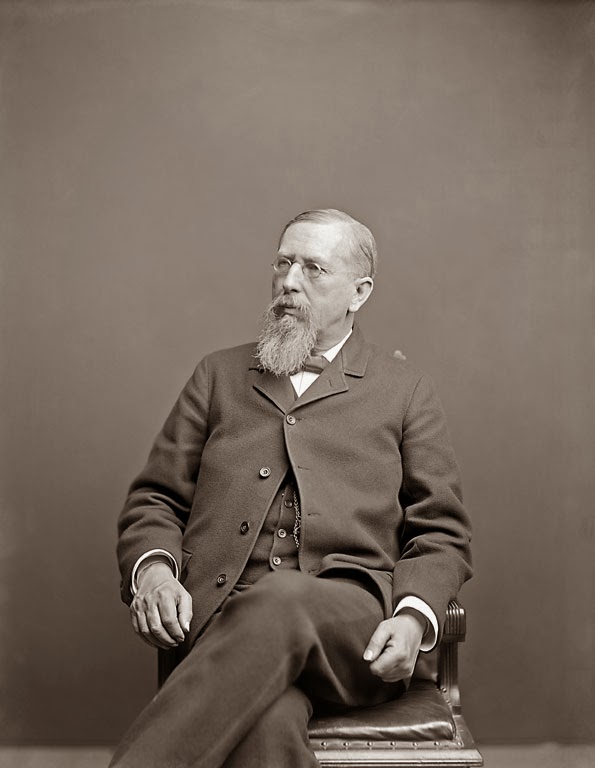 |
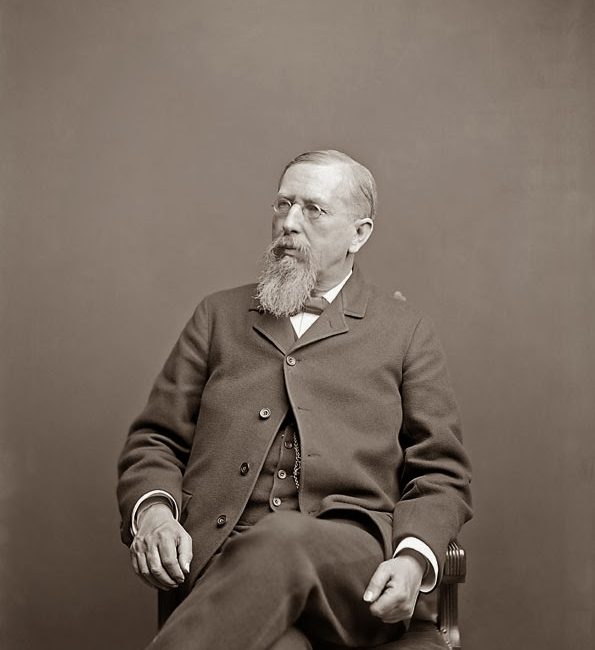
| William H. Dall, c. 1910. Smithsonian Institution Archives. RU 000095, Box 6, Folder 42. SIA2009-4237. |
The USGS had a mission, but now they needed the people with the vision to make it happen. King was named director, but left in 1881. Powell became the second director (1881-1894) and was an important force in shaping the new agency.
The USGS began sending staff into the field shortly after its creation. Staff surveyed and collected in national parks as well as local neighborhoods, like the DC-Maryland-Virginia environs. Their field books show a dizzying variety of collecting. The agency’s earliest field staff included individuals who would make important contributions to the fields of geology and paleontology. People like Charles Walcott, known for his discovery of the Burgess Shale, worked for the USGS 1879 – 1907 (eventually becoming its director in 1894), and conducted field work in the Grand Canyon among many other locations in the country. William Healey Dall worked for USGS 1884-1925, conducting research and spending significant time in Alaska for the Agency as well as the US Coast and Geodetic Survey; the work helped establish him as a well-respected expert in the geology of the state.
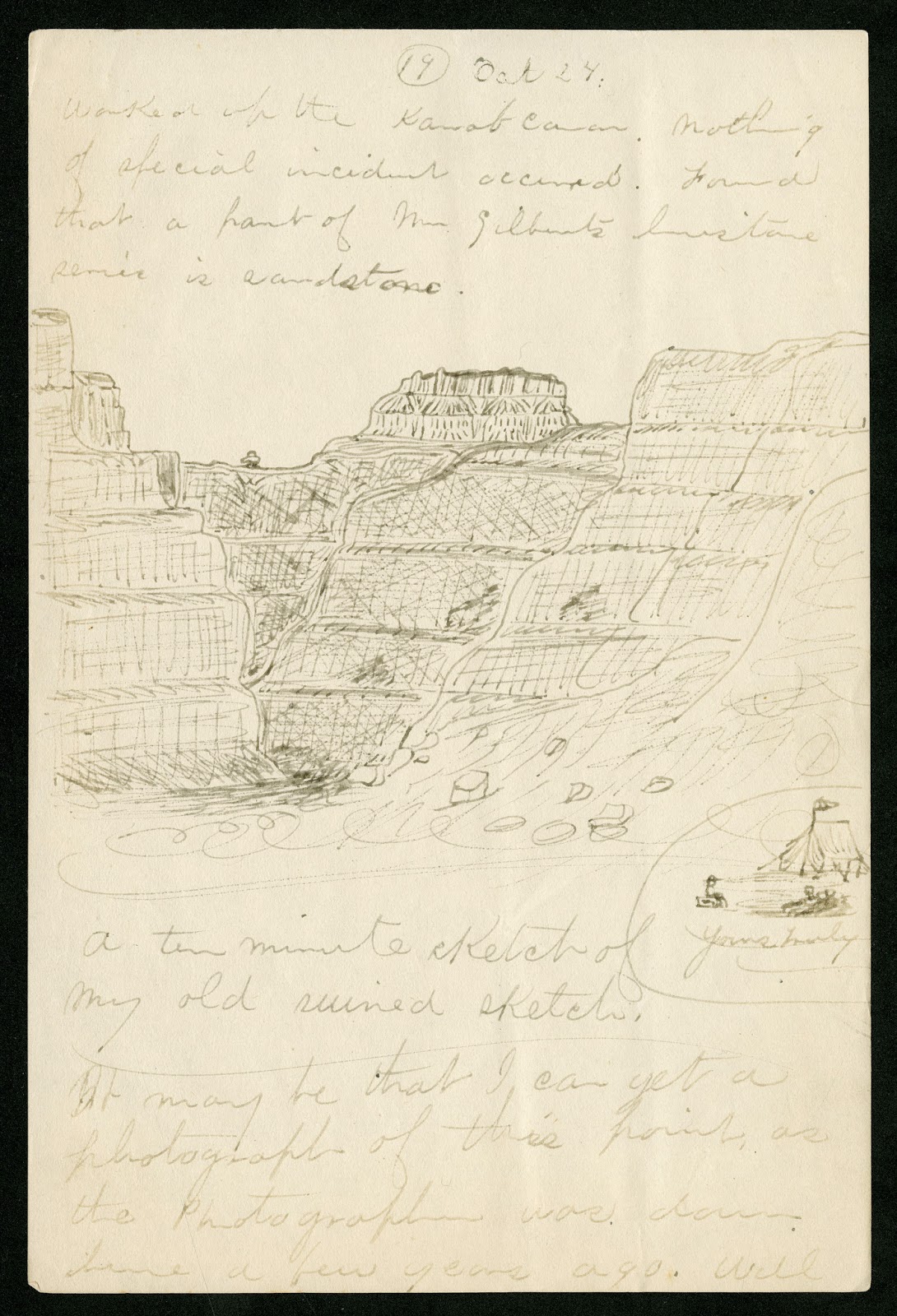 |
| Charles Walcott’s field notes from October 15 – November 3, 1879, Page 19. Smithsonian Institution Archives. RU 007004, Charles D. Walcott Collection, 1851-1940 and undated; Box 32, Folder 1. SIA2012-9643. |
Other staff may not be so well known, like Lester Ward (1841-1913), but their field books document important routine field work with a specificity of detail that is fascinating. Specimen location information and interviews with individuals who found them sometimes list neighborhoods or street intersections. We encourage you to take a look at and compare the field books and the publications, the field work and the conclusions drawn from them.
Field Books:
Publications:
In November of 2011, the USGS Library joined the BHL consortium. Describing themselves as “one of the world’s largest libraries dedicated to the earth and natural sciences,” they have contributed over 15,000 pages of digital content to the BHL collection.
