Biodiversity Heritage Library - Program news and collection highlights from BHL
  • Home
  • News
  • Featured Books
    • All Featured Books
    • Book of the Month Series
    • BHL at 20
  • User Stories
  • Campaigns
    • Fossil Stories
    • Garden Stories
    • Monsters Are Real
    • Page Frights
    • Her Natural History
    • Earth Optimism 2020
  • Tech Blog
  • Visit BHL
Home
News
Featured Books
    All Featured Books
    Book of the Month Series
    BHL at 20
User Stories
Campaigns
    Fossil Stories
    Garden Stories
    Monsters Are Real
    Page Frights
    Her Natural History
    Earth Optimism 2020
Tech Blog
Visit BHL
  • Home
  • News
  • Featured Books
    • All Featured Books
    • Book of the Month Series
    • BHL at 20
  • User Stories
  • Campaigns
    • Fossil Stories
    • Garden Stories
    • Monsters Are Real
    • Page Frights
    • Her Natural History
    • Earth Optimism 2020
  • Tech Blog
  • Visit BHL
Biodiversity Heritage Library - Program news and collection highlights from BHL
Blog Reel, Featured Books

The Final Contribution of Sir William Jardine, Scottish Ornithologist

View Full Size Image
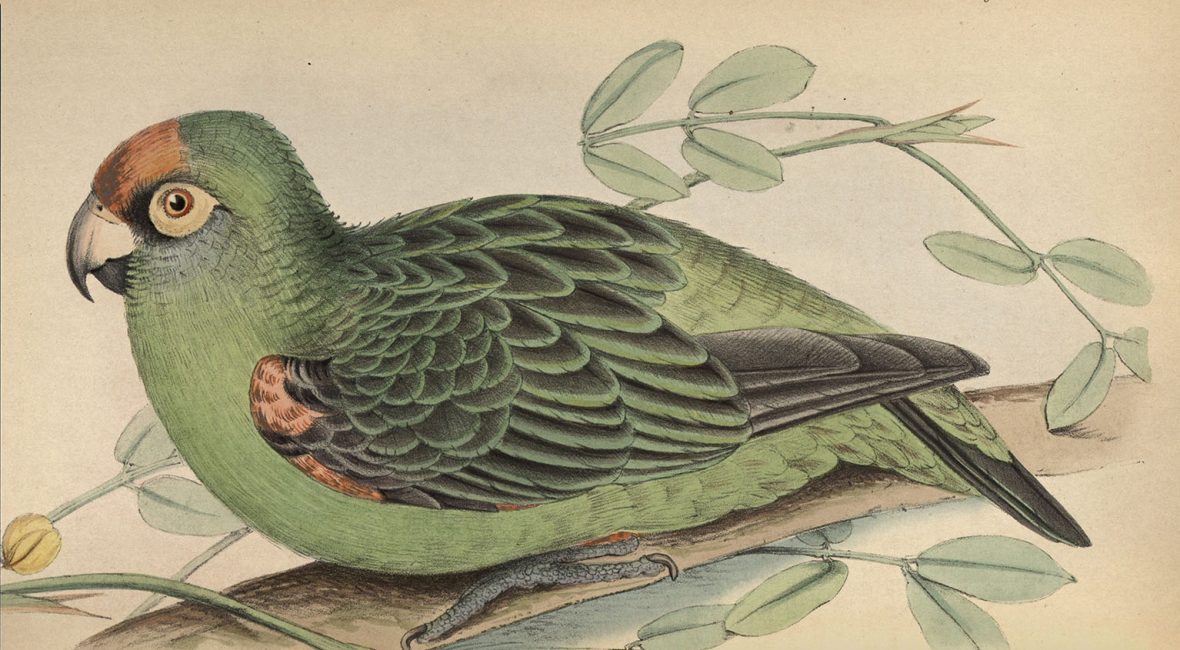
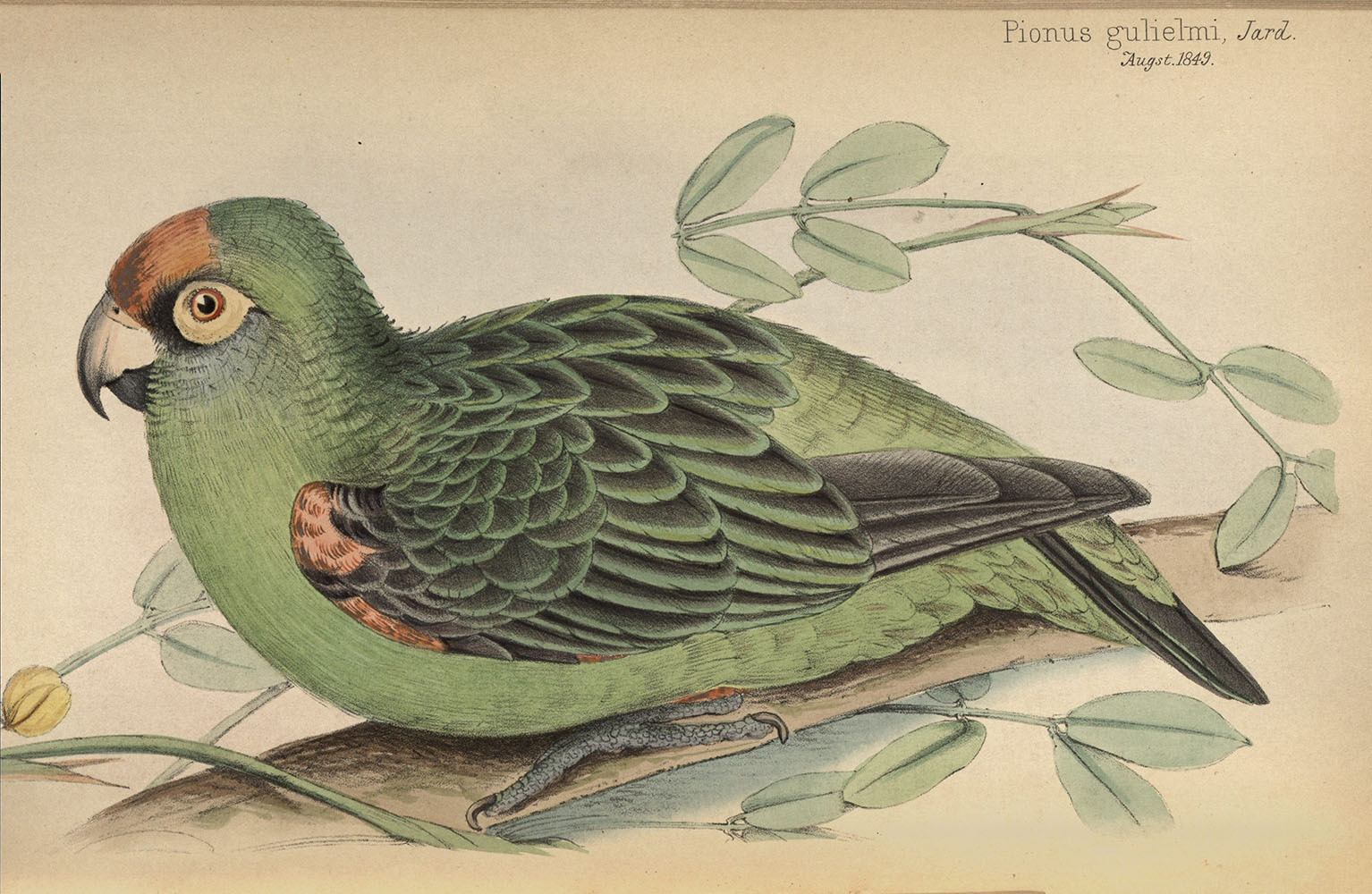
Jardine’s parrot or red-fronted parrot (Poicephalus gulielmi). Drawn from a specimen brought back from the Congo by Jardine’s son William, for whom it was named. Jardine, William. Contributions to Ornithology, Vol. 2. Edinburgh :W.H. Lizars, 1848-1853. Digitized by the Academy of Natural Sciences of Drexel University, Library and Archives. http://s.si.edu/2xpPC9Z.

As was the case for many of his contemporaries, Sir William Jardine, 7th Baronet of Applegarth, was a man of many talents. Ichthyology, botany, entomology and geology were all subjects in which Sir William was thoroughly knowledgeable, but it was ornithology that was his true passion.

It was out of this passion that Jardine produced two original works on ornithology: Illustrations of Ornithology and the annual periodical Contributions to Ornithology. Just five volumes of Contributions were produced from 1848-1852; the Academy of Natural Science’s library copy is bound in three volumes. Contributions is not only the first ornithological periodical produced in Britain, but one of Jardine’s finest natural history works…and his last.
View Full Size Image
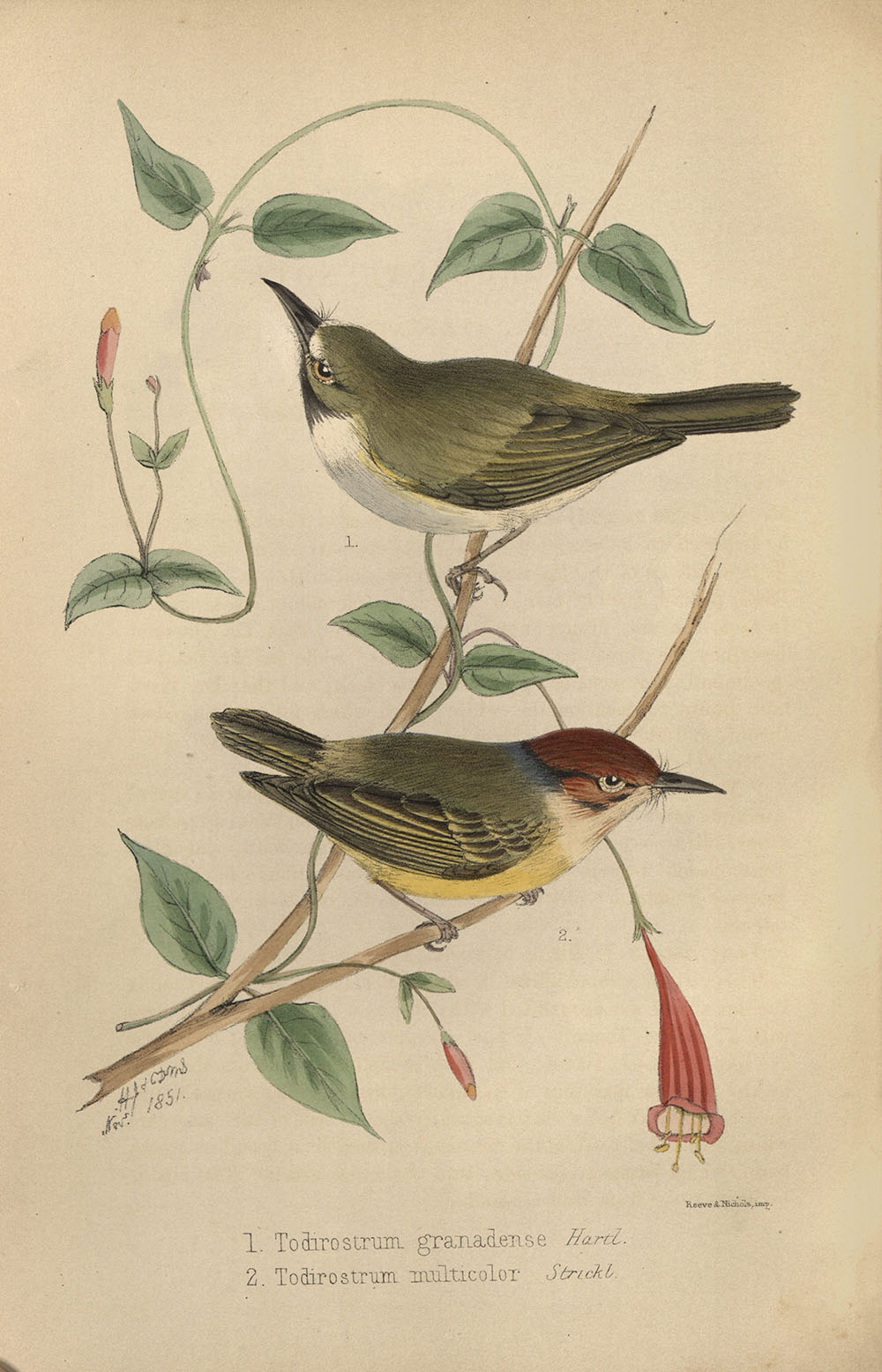
Two examples of the genus Todirostrum, drawn by Catherine Strickland. Jardine, William. Contributions to Ornithology, Vol. 5. Edinburgh :W.H. Lizars, 1848-1853. Digitized by the Academy of Natural Sciences of Drexel University, Library and Archives. http://s.si.edu/2vVN8lQ.

Born in Edinburgh on the 23rd of February, 1800 to Sir Alexander Jardine, 6th Baronet of Applegarth, and Jane Maule, Sir William Jardine grew up in a world of relative wealth and privilege. Not only was he afforded a title, but he stood to inherit Jardine Hall, a stately home located on an estate of over 5,000 acres of land along the banks of the River Annan. At the age of 18, he began medical training at Edinburgh University. Although his intended path was that of a medical doctor, his friendship with the school’s janitor and preserver of specimens for the university museum led him to his true calling of ornithology.

Upon his father’s death in 1821, Jardine not only inherited a title and an estate, but the necessary funds to purchase the ornithological specimens which would become the basis of his renowned collection, which would grow to over 12,000 skins. Despite his newfound obligations as Baronet, including overseeing over 900 parishioners and 11 farms, Jardine found ample time to produce several notable works on ornithology and other subjects.
View Full Size Image
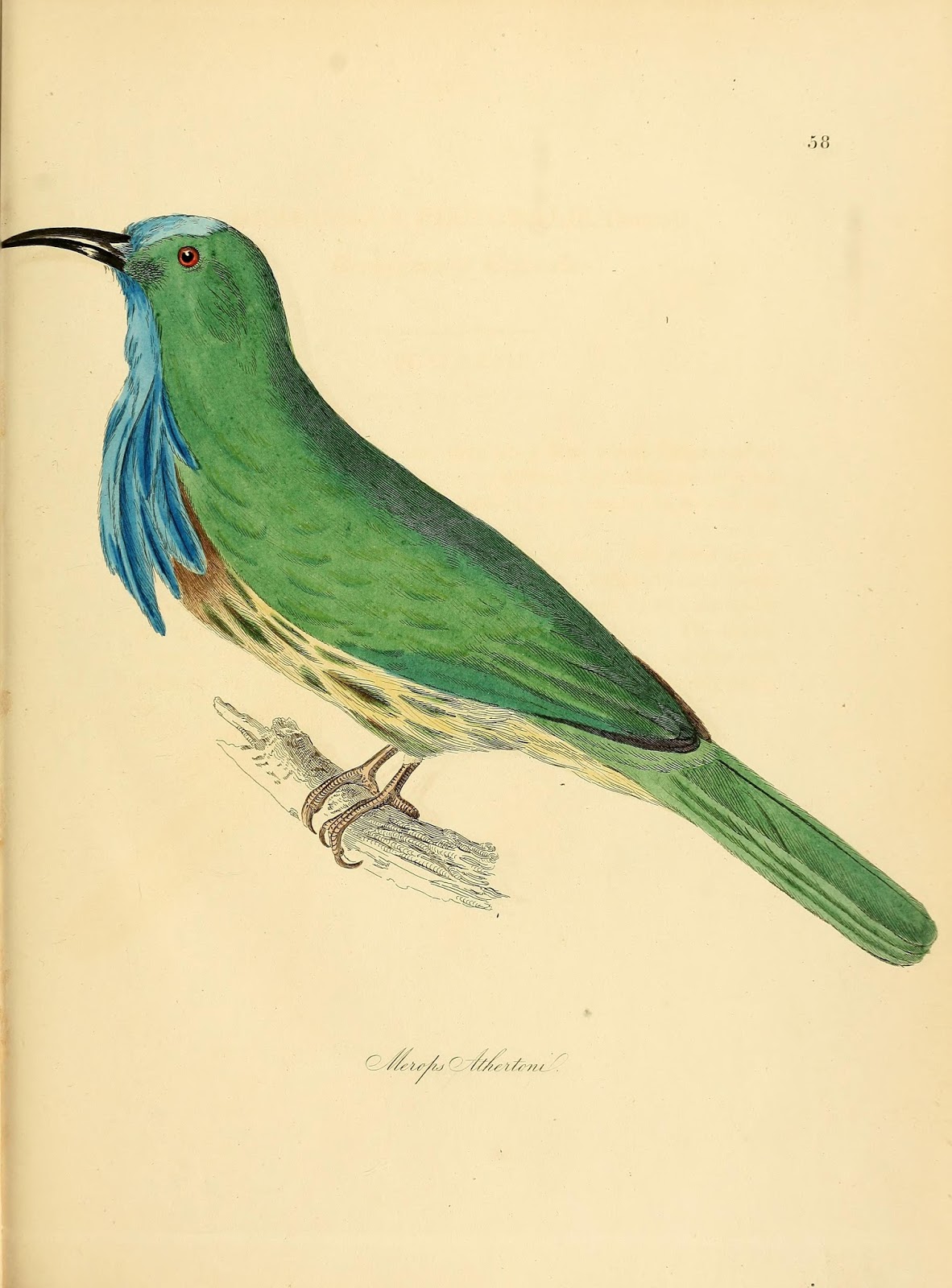
The blue-bearded bee-eater (Nyctyornis athertoni). William Jardine and Prideaux John Selby. Illustrations of ornithology, Vol. 2. Dublin :Longman, Rees, Orme, Brown, & Green, and S. Highley, [1826-1835]. Digitized by Smithsonian Libraries. http://s.si.edu/2wvltJV.

The first of these works, Illustrations of Ornithology, was a collaboration with fellow ornithologist Prideaux John Selby detailing non-British birds from around the world. Jardine and Selby saw a deficiency in previously published works on the subject, which typically only included an example from each genus. The work was organized mainly by Jardine, who also took on the Herculean task of obtaining the specimens from which the work’s illustrations would be produced. Jardine enlisted the help of 3 dealers, 12 collectors, and 4 naturalists from around the world in order to obtain the necessary specimens. The work was produced in three volumes from 1825 to 1835.

In 1848, Jardine embarked on what was to be his finest and last work, Contributions to Ornithology, an annual work which detailed recent advances in ornithology. Contributions was created from the efforts of multiple members of the Jardine clan. While Jardine was responsible for organizing the work and writing a majority of the text, he also had the assistance of his daughter Catherine’s husband, Hugh E. Strickland. Strickland helped expedite the production of the work while contributing multiple articles. It was Hugh E. Strickland himself that presented the Academy’s copy of Contributions to Ornithology.

Catherine was a keen illustrator and produced at least 42 of the 94 illustrations that appeared in Contributions. While Catherine had previously provided many illustrations for her father’s works, this was the first instance in which her initials appeared on the final printing.
View Full Size Image
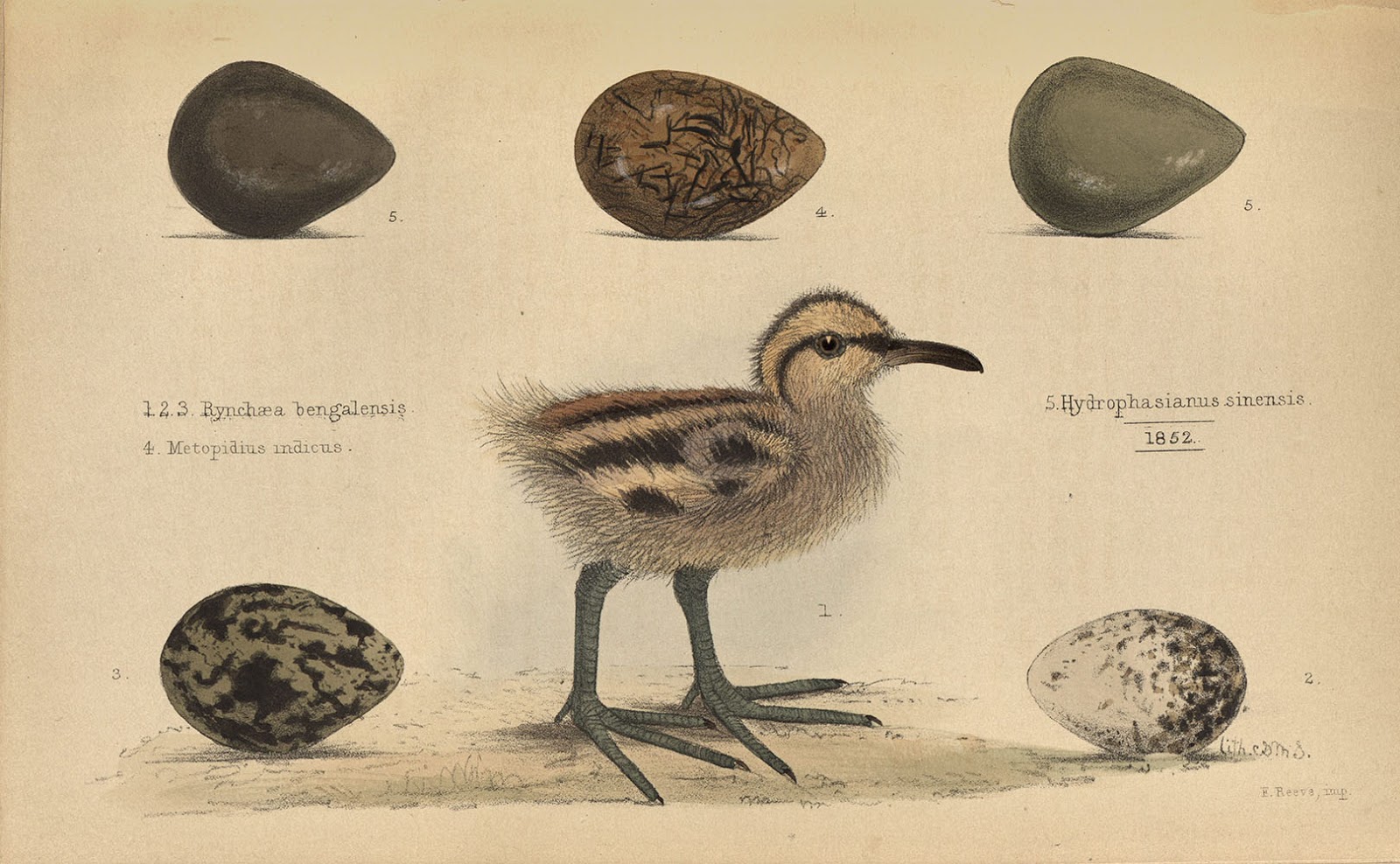
Juvenile bird and eggs, drawn by Catherine Strickland. Jardine, William. Contributions to Ornithology, Vol. 5. Edinburgh :W.H. Lizars, 1848-1853. Digitized by the Academy of Natural Sciences of Drexel University, Library and Archives. http://s.si.edu/2vVS5uL.

Jardine’s son William, a world traveler, sent his father many specimens to be included in the publication. Jardine’s brother in-law, W.H. Lizars, did the engravings.

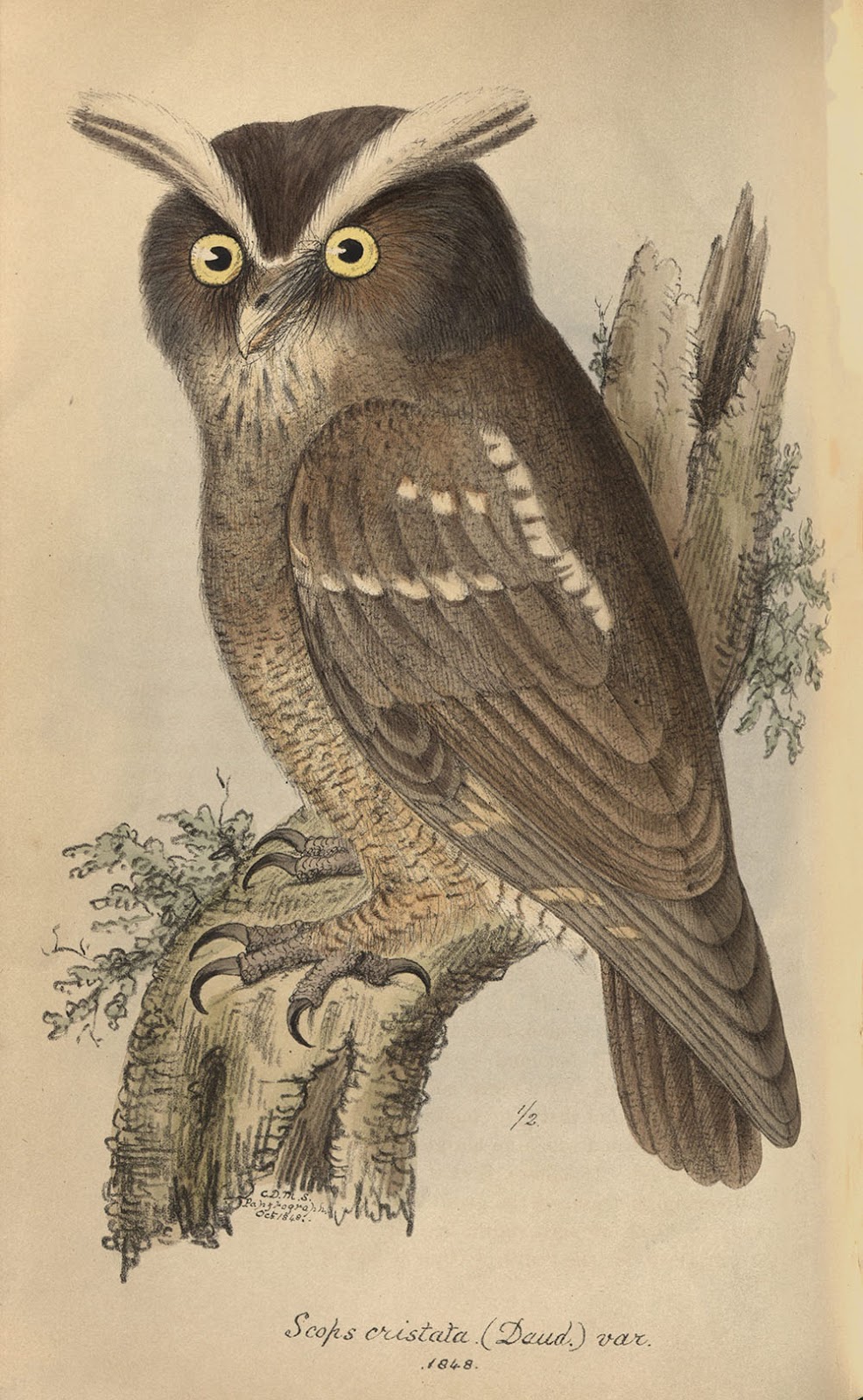
The illustrations found in Contributions were perhaps the most remarkable element of the work. In addition to Catherine’s illustrations, Jardine also was responsible for some of the plates. It is also possible that one of Jardine’s other daughters, Helen, produced some plates or backgrounds for the work. The illustrations were created by a variety of means, including etching, lithography, and the relatively new papyrography. Jardine was so taken with the new method of papyrography that the first volume of Contributions included instructions on how the layman might achieve this method.
View Full Size Image
Crested owl (Lophostrix cristata) drawn by Catherine Strickland using papyrography. Her initials can be seen near the bottom of the illustration. Jardine, William. Contributions to Ornithology, Vol. 1. Edinburgh :W.H. Lizars, 1848-1853. Digitized by the Academy of Natural Sciences of Drexel University, Library and Archives. http://s.si.edu/2wBouYm.

The first article to appear in Contributions demonstrated Jardine’s desire and need for a plethora of new foreign bird specimens. “Hints for preparing and transmitting ornithological specimens from foreign countries” provided travelers, who might have previously abstained from collecting specimens due to lack of knowledge, with instruction on the tools and skills needed to produce bird specimens. Not only were step-by-step instructions on how to preserve birds provided, but also how to retain crucial observations about the bird.

Contributions also included articles by the who’s who of ornithologists of the day. John Gould contributed multiple times, including an article on three new species of hummingbirds, a topic on which he would later dedicate an entire work to. Charles Lucien Bonaparte, nephew of Napoleon, would also contribute a text on finches.

The production of Contributions was cut short in 1852 by the untimely death of Strickland, who had been struck by a train. His death devastated the two other principal organizers of the work, Jardine and Catherine Strickland. Jardine saw in Strickland a successor, someone who had the same interest in natural history that his sons did not. Jardine was so affected by Strickland’s death that he never produced another natural history work, only Strickland’s memoirs.

References

  • Jackson, Christine E. and Peter Davis. Sir William Jardine: A Life in Natural History. New York, NY: Leicester University Press, 2001.
  • Jardine, William. Contributions to Ornithology. Edinburgh: W.H. Lizars,1848-1853.
  • The Late Sir William Jardine. (1874). Nature, 11, p. 74.
August 24, 2017by ulib-libraryjobs
Blog Reel, Featured Books

Hummingbirds and Harlequins

Beauty can be too much for words. So it is with the charm of what many consider the loveliest of the world’s birds, the hummingbirds: Overcome by the dazzling colors of those first tiny skins, early European naturalists reached to the limits of their vocabularies to describe them. The result, nearly five centuries after the first specimens were brought back from a then truly New World, is a large set of remarkably evocative names, hillstars and woodstars, helmetcrests and plumeleteers, jacobins and incas, metaltails and thornbills, emeralds and sapphires and topazes and rubies.

View Full Size Image

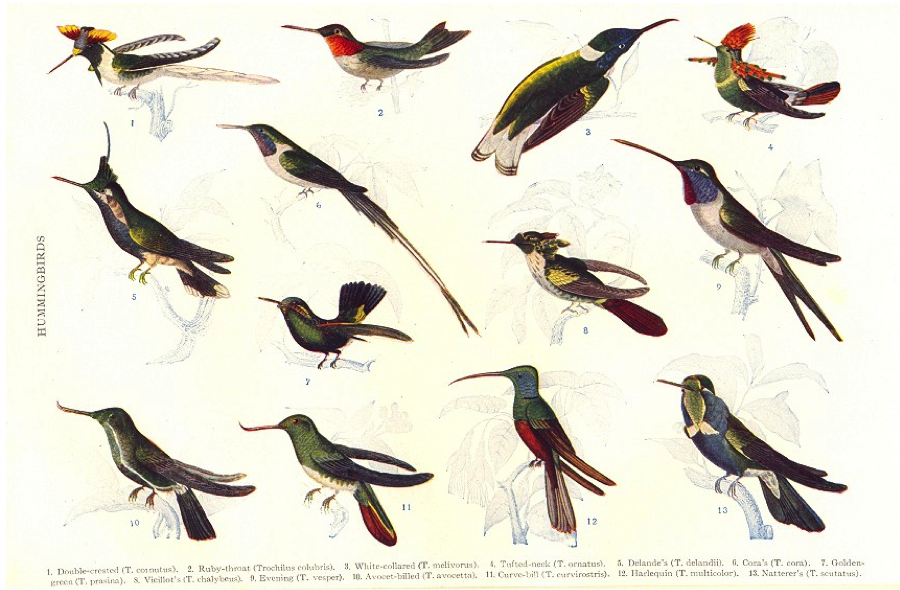
The birds, of course, are every bit as fantastic as their monikers. The 1907 edition of The Americana, the authoritative North American encyclopedia of its day, gave its readers a glimpse into the vast variety of color and adornment so typical of this large family, from the Horned Sungem to the Hyacinth Visorbearer. One of the thirteen birds shown on this appealing plate, however, is conspicuously absent from any modern list of hummingbirds: the extraordinarily colored Harlequin Hummingbird.

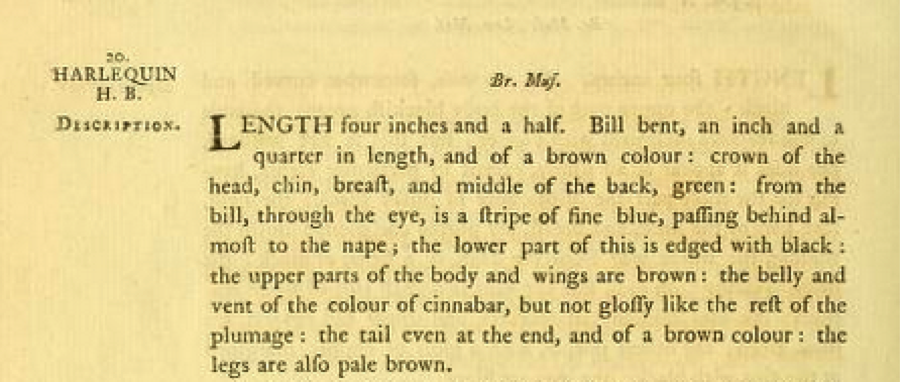
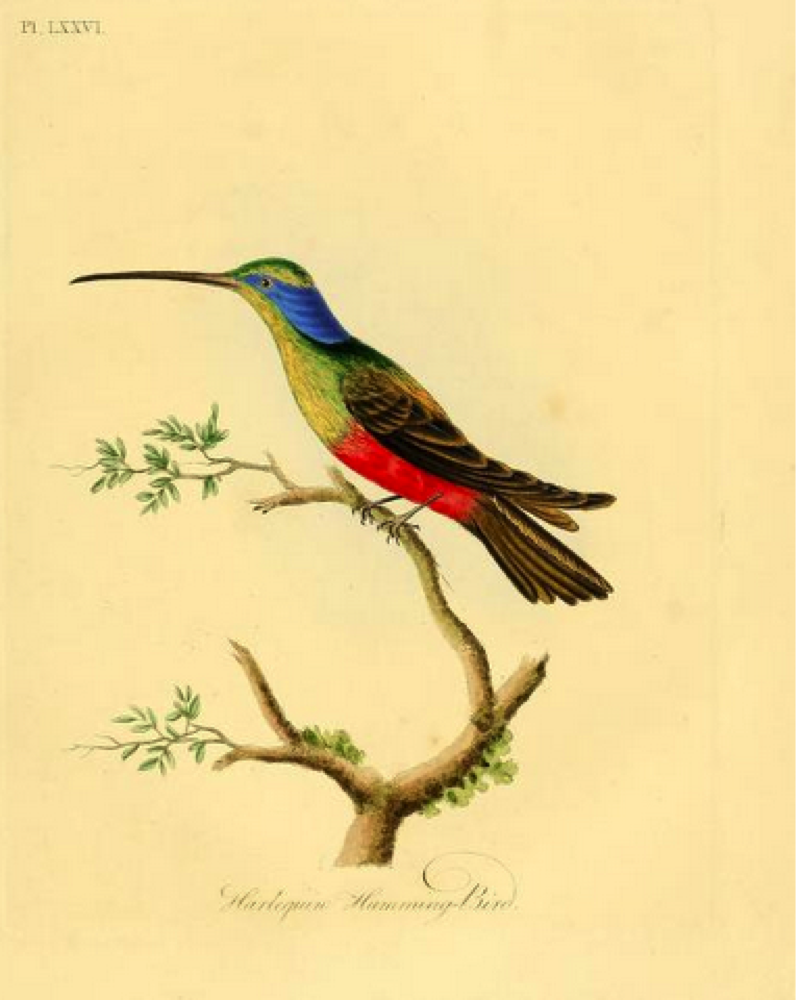
That bird was first made known to science a century and a quarter before it was depicted in The Americana. In 1782, John Latham described his new species from a specimen in the collections of the British Museum.

View Full Size Image

Unfortunately, Latham notes, that unique skin had “no history annexed to it,” and so he was unable to offer any information about the range or the habits of the species he named the Harlequin Humming-Bird.

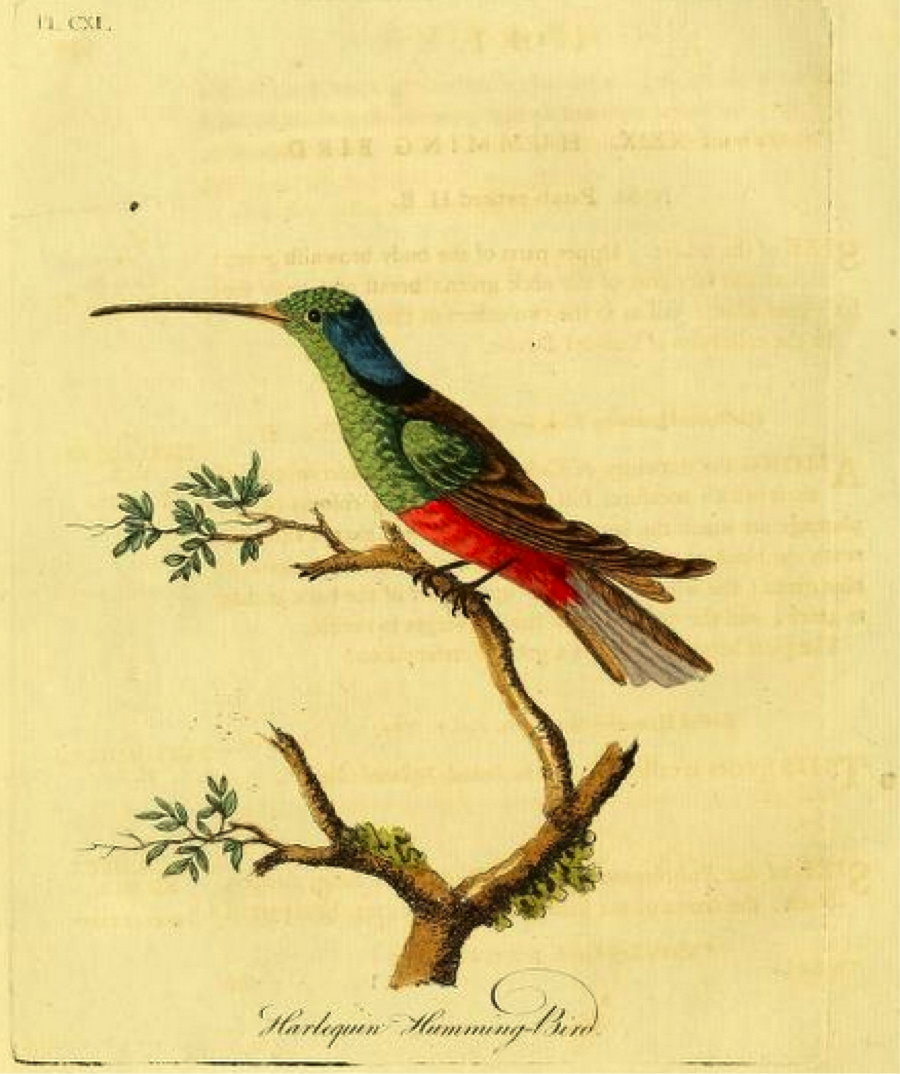
Five years later, Latham came across another source of information, a drawing by the famous watercolorist Thomas Davies, who had been in the West Indies in 1786. Davies’s rendering of the bird differs from the British Museum specimen, Latham tells us, in its greater length—five inches rather than four and a half—and in the presence of a narrow band of blue green on the back of the head, a character well shown by Latham’s plate in the Supplement to his General Synopsis of Birds.

View Full Size Image

That image and the accompanying description provided the “type” for Johann Friedrich Gmelin, who gave the species its rather bland Linnaean label in 1788, Trochilus multicolor. Latham in turn adopted that name for his 1790 Index ornithologicus, where his brief description of the bird could be read to imply that he had seen further specimens, “in some of which there is a blue-green patch below the nape.”

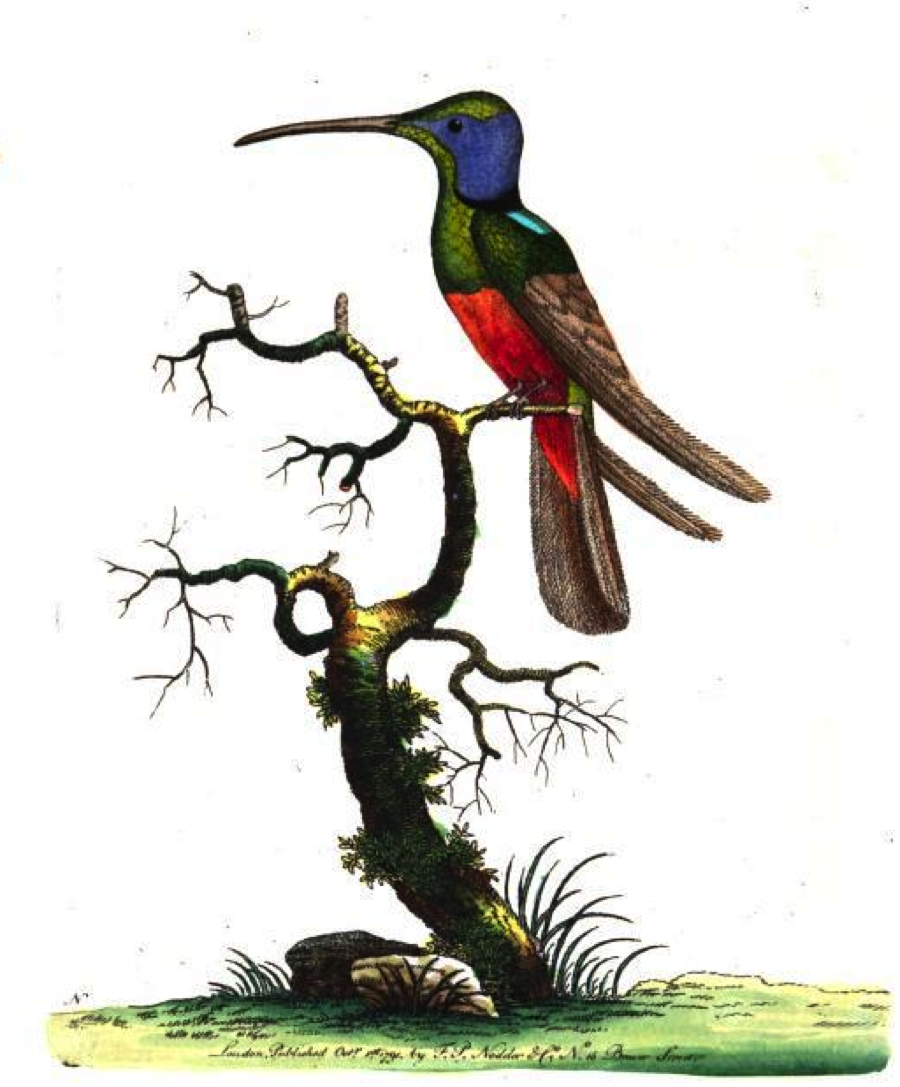
George Shaw, in his Naturalist’s Miscellany the following year, was able to narrow the range of the Harlequin, “among the rarest species of its genus,” to South America, hardly a bold conjecture in the case of a large, colorful hummingbird. Shaw’s account was accompanied by an awkwardly executed plate by Frederick Nodder, painted, Shaw claims, from the British Museum specimen; the telltale turquoise panel on the upper back, however, reveals that Nodder based his work on Davies’s—or, more likely, on Latham’s description of Davies’s sketch.

View Full Size Image

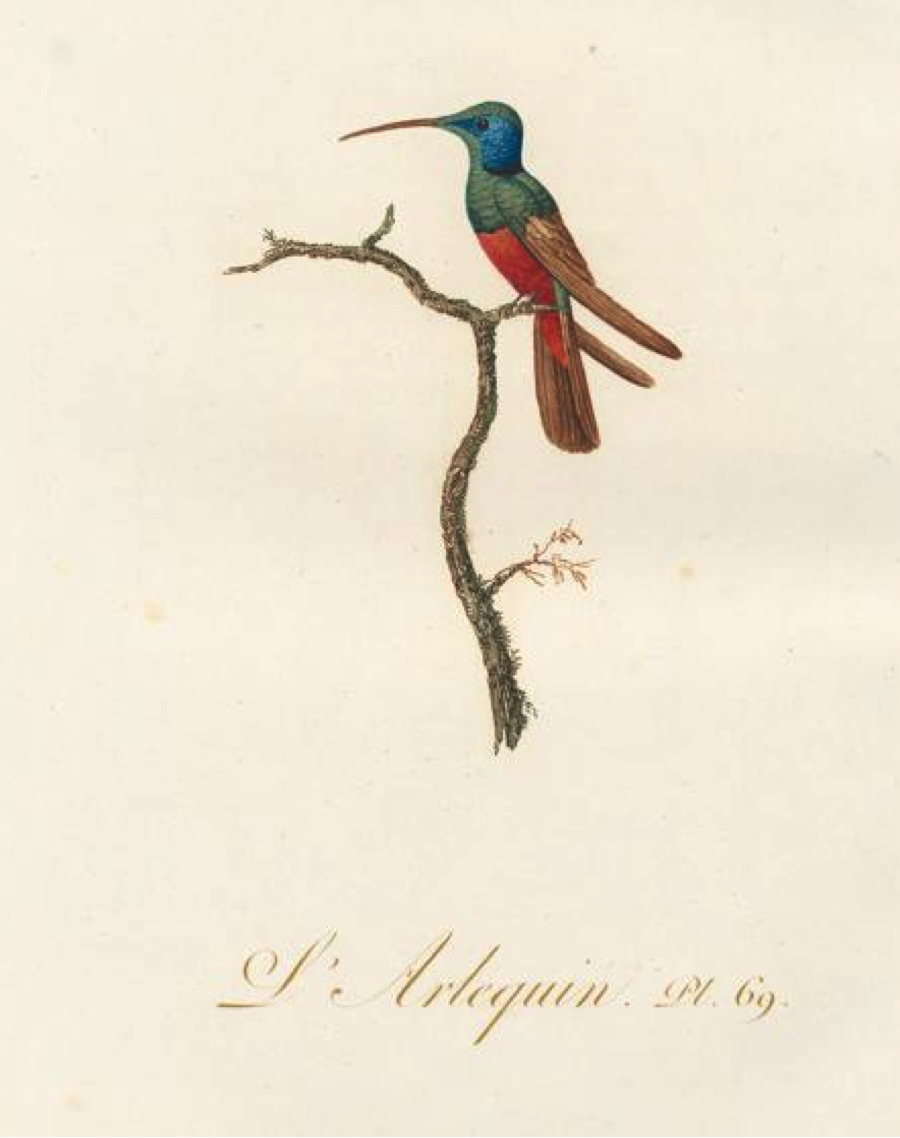
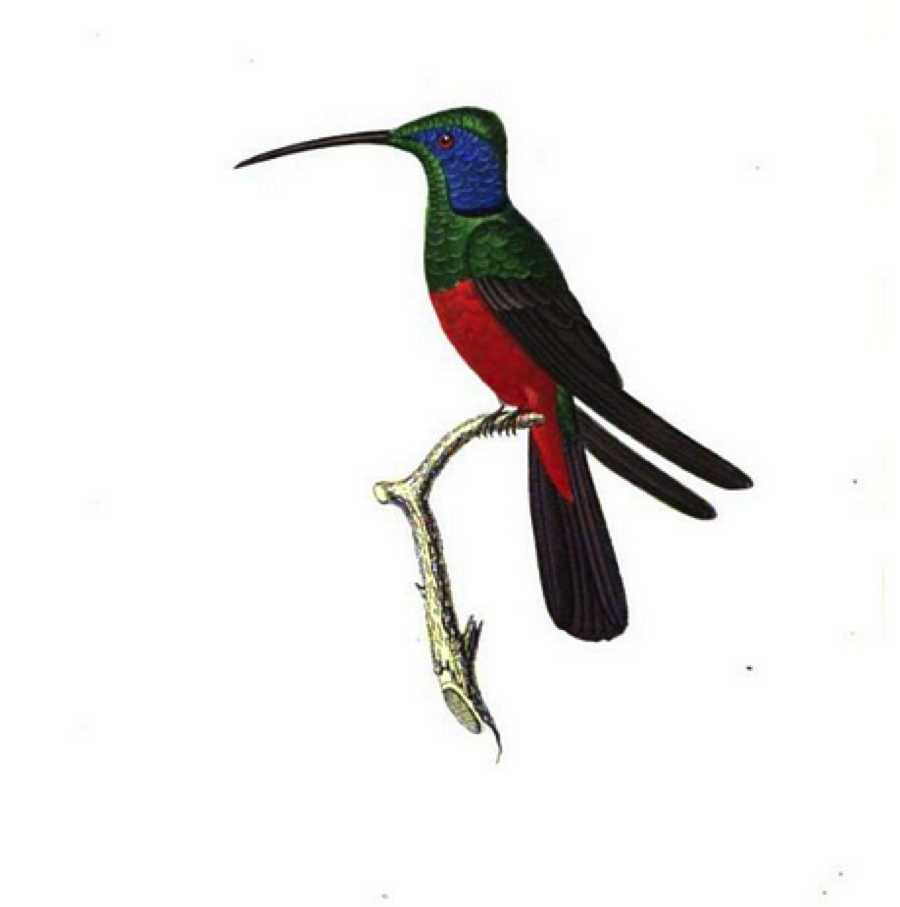
The Harlequin Hummingbird was painted again, by Sydenham Edwards, for Louis Pierre Vieillot’s 1802 continuation of the Oiseaux dorés, a lavish work begun by Vieillot and his collaborator Jean-Baptiste Audebert, who had died in December 1800. Vieillot claims that Edwards had worked directly from the skin in the British Museum; whether that was true or not, a close look suggests that Edwards was quite familiar with Nodder’s plate, too, from which it differs in omitting the nape patch Latham had noticed in the Davies drawing, a mark Vieillot says is indicative of a “variety” of the true Harlequin.

View Full Size Image

Nearly fifty years after its discovery in a museum drawer, this hummingbird was as mysterious as ever. In 1829, René Primevère Lesson wrote of the oiseau-mouche arlequin that

this bird is known only from the description and figure published by the English ornithologist Latham. That figure, drawn by Sir Edwards, was reproduced by Mr. Vieillot on Plate 69 of his Oiseaux dorés, and we have been obliged to include it in order that we omit none of the species listed on the basis of specimens preserved in collections or known from accurate portraits.
View Full Size Image

But Lesson had his doubts:

At the same time, this drawing seems to pertain rather to one of the curve-billed hummingbirds, and seems to us to be imprecise; it is only with very great reservations that the species must be admitted to the table of extant straight-billed hummingbirds. It could be, too, that it depicts nothing more than a sunbird, which we suspect even more from the fact that no hummingbird normally displays a similar distribution of solid colors in its plumage.

In 1831, Lesson had his answer. In his Trochilidées, he reported that the colibri arlequin of the British Museum had been examined by a Mr. Stokes,

who writes to us that the bird that served as the type for Latham’s description and for the figure copied by Vieillot was the product of a falsification, which one discovered on dismantling the specimen preserved in the British Museum.

It is a measure of the uncertainty that still obtained in neotropical ornithology—and, perhaps, of the antagonisms that still lingered between French and British naturalists—that William Jardine, two years after the publication of the Trochilidées, could write that

It has been hinted that the specimen in the British Museum was a specimen made up from the feathers of different birds.

Lesson’s debunking (which Jardine cites) was far more than a hint. Jardine notes, however, that Latham, who would live into the year 1837, had been aware of the rumor. In a footnote to the 1822 edition of the General History, Latham writes that

It has been suggested to me, that this is no other than a bird made up by the ingenuity of some whimsical person, who has fabricated it from the feathers of others; but which, by every attention paid to it, I cannot detect.

Jardine included the bird in his own work

with the view of attracting the attention of British naturalists…. If there is a specimen in the British Museum, and a drawing in the possession of General Davis, corresponding and evidently done from an individual of the same species, there will be no doubt of its existence.


View Full Size Image

“If.”

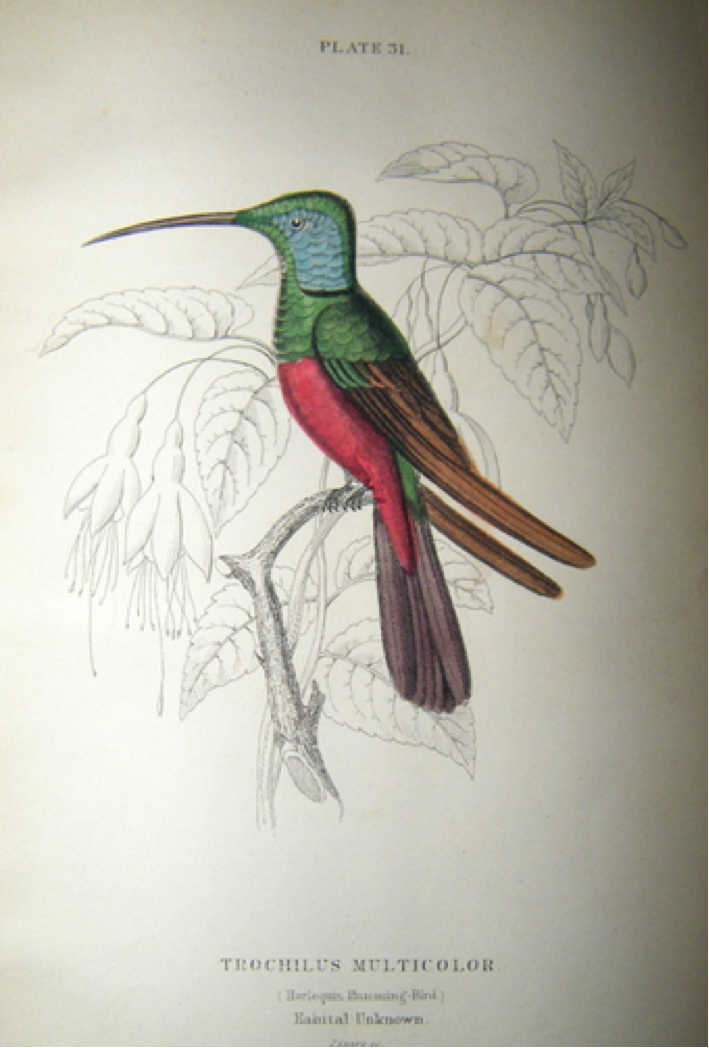
In preparing his great Monograph of the Trochilidae, John Gould was “at all times favoured … with both information and the loan of specimens” from the collections of the British Museum. Nowhere could he find a skin attesting to the existence of the Harlequin Hummingbird—Lesson’s Mr. Stokes most likely had felt no obligation to reassemble the composite hoax once it was revealed. In relying on Latham, Gould writes, Gmelin had described a new species based on

characters … taken from a plate which must have been drawn from imagination and not from any real specimen.

Indeed, of the 95 hummingbirds Latham included in the revision of his General History, Gould considered only about two-thirds “real species,” the other 30 or more, among them the Harlequin, all “so indefinitely described” as to be unassignable to any known bird.

It seems very unlikely that we will ever know who the ingenious and whimsical creator of Latham’s specimen was, or what bird was depicted in Thomas Davies’s equally mysterious drawing. What is entirely certain, though, is that this is not the only case in the history of “trochidology” where a bird turned out to be something else entirely than what its original discoverers thought or hoped.

View Full Size Image


January 6, 2014by Kathryn Stine

Help Support BHL

BHL's existence depends on the financial support of its patrons. Help us keep this free resource alive!

search

About BHL

The Biodiversity Heritage Library (BHL) is the world’s largest open access digital library for biodiversity literature and archives. BHL operates as a worldwide consortium of natural history, botanical, research, and national libraries working together to digitize the natural history literature held in their collections and make it freely available for open access as part of a global “biodiversity community.”

Join Our Mailing List

Sign up to receive the latest news, content highlights, and promotions.

Subscribe Now

Subscribe to Blog via Email

Enter your email address to subscribe to this blog and receive notifications of new posts by email.

Join 319 other subscribers

Subscribe to Blog Via RSS

Subscribe to the blog RSS feed to stay up-to-date on all the latest BHL posts.

Access RSS Feed

Inspiring Discovery through Free Access to Biodiversity Knowledge.

The Biodiversity Heritage Library makes it easier than ever for you to access the information you need to study and explore life on Earth…for free, anytime, anywhere.


64+ Million Pages of
Biodiversity Literature Online.

EXPLORE

Tools and Services
to Transform Research.

EXPLORE

300,000+
Illustrations on Flickr.

EXPLORE

ABOUT | HARMFUL CONTENT | PRIVACY | SITE MAP | TERMS OF USE