Biodiversity Heritage Library - Program news and collection highlights from BHL
  • Home
  • News
  • Featured Books
    • All Featured Books
    • Book of the Month Series
    • BHL at 20
  • User Stories
  • Campaigns
    • Fossil Stories
    • Garden Stories
    • Monsters Are Real
    • Page Frights
    • Her Natural History
    • Earth Optimism 2020
  • Tech Blog
  • Visit BHL
Home
News
Featured Books
    All Featured Books
    Book of the Month Series
    BHL at 20
User Stories
Campaigns
    Fossil Stories
    Garden Stories
    Monsters Are Real
    Page Frights
    Her Natural History
    Earth Optimism 2020
Tech Blog
Visit BHL
  • Home
  • News
  • Featured Books
    • All Featured Books
    • Book of the Month Series
    • BHL at 20
  • User Stories
  • Campaigns
    • Fossil Stories
    • Garden Stories
    • Monsters Are Real
    • Page Frights
    • Her Natural History
    • Earth Optimism 2020
  • Tech Blog
  • Visit BHL
Biodiversity Heritage Library - Program news and collection highlights from BHL
Blog Reel, Featured Books

A Day for Worms on BHL

The Biodiversity Heritage Library (BHL) is replete with publications which have had a seminal influence on their field. A highly-credentialed member of this category is John H. Day’s A Monograph on the Polychaeta of Southern Africa, published in 1967 in two volumes by the (then) British Museum (Natural History) in London. It is timely to celebrate this book now: on 25 August 2019 the author John Day would have had his 110th birthday. And, as of this month, the author’s own copy of the book has been digitised for the BHL.

Years ago, this copy was loaned to me by John Day’s son, Professor Rob Day (also a marine biologist) from the The University of Melbourne — just down the road from my office and from the Australian node of BHL, both at Museums Victoria in Melbourne.  When my librarian colleagues discovered I had the copy, annotated in pencil by the author with a 2nd edition in mind, they were keen to digitise it, even though BHL had previously digitised another copy. (A new version of Day’s monograph was later prepared but never published, perhaps due to lack of funding.)

Polychaetes are important to marine biologists due to their weight of numbers: in nearly all seafloor environments anywhere in the world, polychaetes are just about the most numerous and the most species-rich invertebrate. Therefore, many marine ecologists spend a lot of time identifying polychaetes — usually a difficult task. Which is why John Day’s monograph was so influential. For decades before, and for decades after, there was nothing like it, and so the two volume work, known to most researchers simply as Day, was indispensable.

Day was a comprehensive synthesis of descriptions, diagnoses and drawings of this rich and diverse component of the marine fauna (currently there are about 12,000 described species of polychaetes). And because most polychaete families and genera occur worldwide, and because there was no other equivalent publication anywhere, Day was a vital reference for anybody anywhere who needed to identify their local marine fauna.

Day is still a model for anyone who sets out to write such a monograph, because of the simplicity and clarity of both text and illustrations. In particular, the introductory pages provide a visual overview and key to the numerous families.
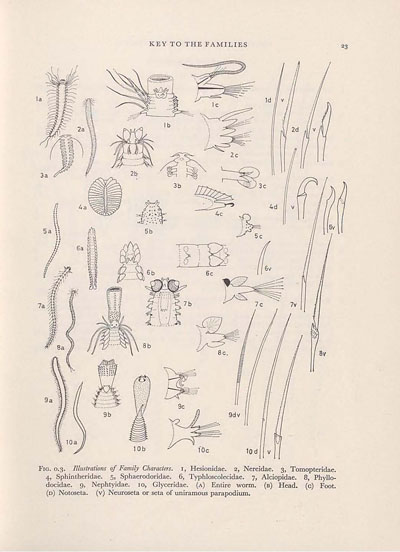
day_1967_p23_400px.jpg

Page 23. Day, John H. A Monograph on the Polychaeta of Southern Africa. Volume 1, 1967. Author-annotated copy. Digitized in BHL by Museums Victoria.

These handful of pages encapsulate what would otherwise be an overwhelming variety; even beginners can begin to think that they may one day be able to interpret the myriad forms and structures of polychaetes. Thus, although the documentation of polychaete diversity has marched on, well-thumbed 50 year old copies of Day are still in regular use in marine laboratories world-wide.

It seems to me that John Day must have honed and improved his diagrams over many years of teaching (he was Professor of Zoology at The University of Cape Town) and that he must have given a lot of thought to the layout and presentation. Day had begun annotation of his own copy with species to be added, but he didn’t touch these introductory pages, suggesting that he too was satisfied with the published version. Even today, for me and many of my colleagues, there is nothing quite like it for introducing novices to the mysterious world of polychaetes — there have been numerous revisions and name changes in intervening decades, but the worms themselves still look the same.
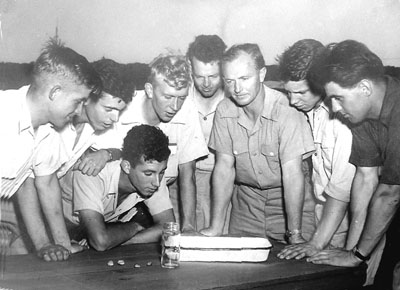
JHDay_students_Durban_Bay_1951_400px.jpg

John H. Day (third from right) showing students a tray of specimens collected from an estuary mudflat.  Durban Bay, South Africa, 1951.  Photograph supplied by Rob Day, 2019.

John Day was ahead of his time in other respects too. Our understanding of evolutionary relationships of polychaetes, and how they should be classified within the phylum Annelida, has long seemed an intractable task. Many alternative classifications having been offered up in publications both before and since the publication of Day. The author himself took a purely pragmatic approach and followed earlier workers, arranging the families in two major groups, one per volume: Errantia (mostly mobile worms with similar segments and often with jaws) and Sedentaria (mostly tube dwellers often with a crown of feeding tentacules and modified body regions).

Even though Day only ever claimed this as an arbitrary arrangement, he would have surely been pleased to know that this practical solution has a lot in common with the most recent phylogenetic analyses based on DNA sequence data, which recognise many elements of the old Errantia / Sedentaria scheme and even retain the names! Nor, I think, would he have been dismayed by another discovery confirmed by DNA data: there is no such thing as “Polychaeta”, which is now known to comprise a variety of forms which do not all belong on a single branch of the annelid phylogeny. Furthermore, several other kinds of worms previously known as separate Phyla are now known to belong within the Annelida — a possibility also canvassed by John Day in the introduction to his monograph.  (I’ll nevertheless keep using polychaetes as an informal term.)

I never met John Day, but his no-nonsense attitude was evident in other ways. He had lost a leg when hit by flak on a bombing raid while flying as a navigator for the RAF during the Second World War (he was still able to provide a course before passing out and the tail gunner saved his life by limiting loss of blood until they returned to base). There are unconfirmed stories that after the war, on trips between Cape Town and London, he would bring preserved polychaete specimens for study through customs in his prosthetic leg.

Taxonomists nowadays are wont to criticise Day, and other publications of the era, for accepting as valid many “cosmopolitan species”.
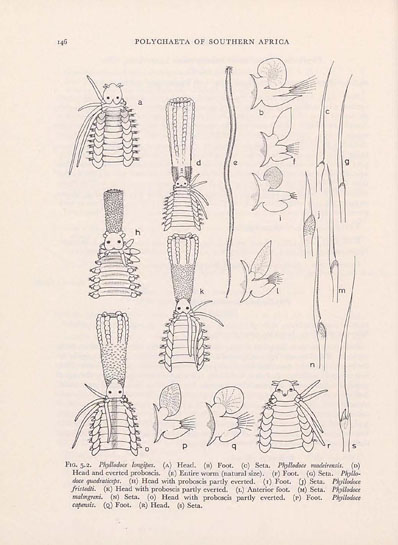
day_1967_p146_400px.jpg

Page 146. Phyllodoce malmgreni and related taxa in the family Phyllodocidae. Page 146 from Day, John H. A Monograph on the Polychaeta of Southern Africa. Volume 1, 1967. Author-annotated copy. Digitized in BHL by Museums Victoria.
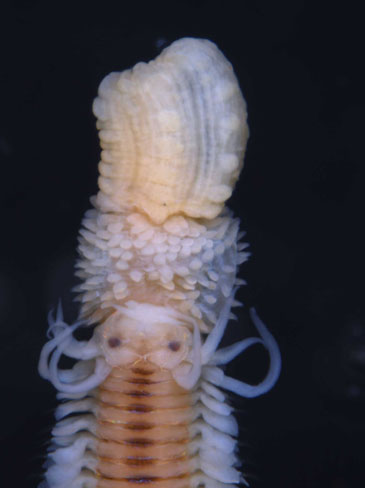
Phyllodoce_cf_malmgreni_F135127_dorsal_pharynx_400px.jpg

Phyllodoce malmgreni was described from the Red Sea, but has been much more widely recorded throughout the Indo-Pacific. This museum specimen of Phyllodoce cf. malmgreni is from Australia. Photograph Robin Wilson.

Typically, these were originally described from European localities but subsequently recorded (or rather very similar forms were found) from more widespread regions. If they could not be distinguished, specimens from widespread localities were assigned to a single species.

In recent decades, taxonomists have split many “cosmopolitan species” into a number of new species, each from a different ocean or region.  At first, this seemed an almost routine tidy up task. The advent of molecular systematics has shown that the situation is far more complex and interesting. DNA sequence data has repeatedly demonstrated that even within a region (for example northern Europe), what was thought to represent a single species is often discovered to comprise many species. Usually, these newly recognised species can barely, or not at all, be distinguished morphologically, yet they show very deep genetic divergences.  Understanding of how these taxa have evolved and dispersed (for example, is each instance a single global, monophyletic radiation?) is arguably among the most interesting questions in marine diversity studies today.

Whatever the answers turn out to be, it seems clear that many of these cryptic species will only be distinguishable through genetic analysis. Until such time as rapid genetic diagnoses become routine, ecologists and other non-taxonomists are likely to have to resort to some kind of species-complex definition to cope with messy nature. It seems that such species-complexes might look a lot like the often-maligned “cosmopolitan species” accepted by the pragmatic (and prescient?) John Day.
September 26, 2019by Joel Richard
Blog Reel, User Stories

Just a Click Away: BHL Promotes Biodiversity Research and Taxonomy

The Biodiversity Heritage Library is dedicated to providing open access to the biodiversity resources in its collection. Open access not only ensures that users the world over can freely locate the information they need online, but it also enables other biodiversity initiatives to make use of the wealth of knowledge represented in our 45 million+ pages to support research and taxonomy. We’ve highlighted several projects over the past few months that have incorporated BHL content into their own databases, including ITIS, AGRIS, Avibase, and JournalMap through BioStor.

View Full Size Image
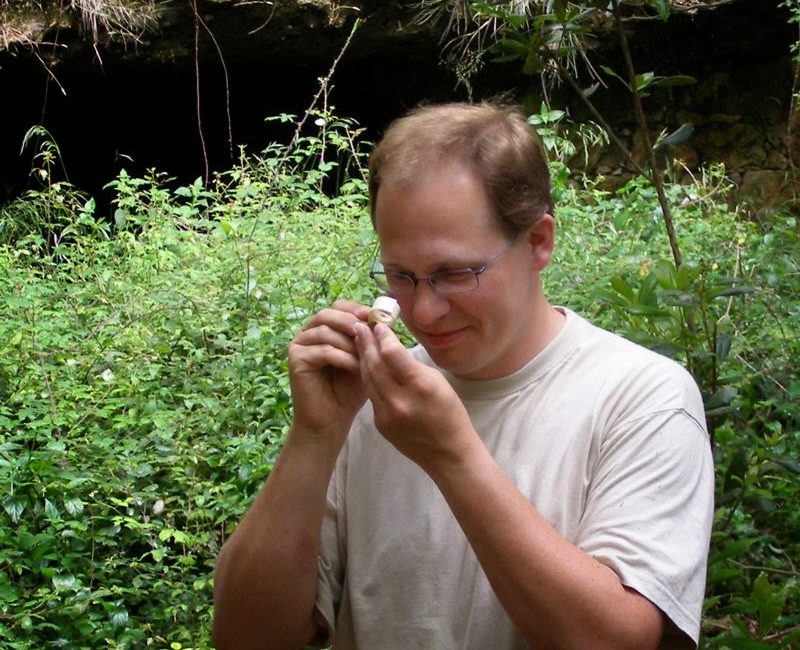
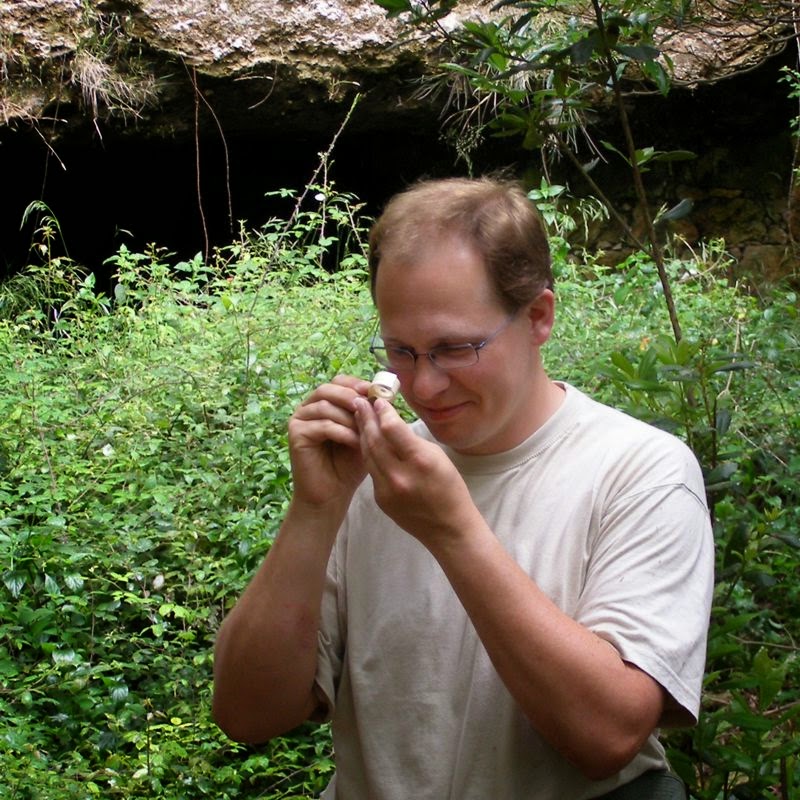
Dr. Andreas Kroh (NHM Vienna) on field work in the Azores.

Dr. Andreas Kroh, Researcher and Publisher in the Department of Geology and Paleontology at the Natural History Museum Vienna, recently shared two more examples of BHL data reuse: WoRMS, the World Register of Marine Species, and FreshGEN, a FWF-funded research project to elucidate the evolution of European Lake systems by studying their gastropod faunas.

Dr. Kroh has been studying evolution, systematics, taxonomy (particularly of fossil and extant Echinoids (Sea urchins)), and biogeography (focusing on European Neogene faunas) for sixteen years. Several years ago, he discovered BHL.

“I was searching for a specific volume of an old journal that was missing in our library, and I was excited when I found that the BHL site did provide full access to the content of that volume, saving me the time to travel more than 200 km to the next library that held the series,” recalls Dr. Kroh.

Since then, Dr. Kroh has used BHL extensively to inform his research and support his contributions to several biodiversity projects.

“BHL is an excellent research tool that has considerably sped up my work and those of many other scientists that rely on or need to refer to previously published data,” lauds Dr. Kroh. “Many of the projects I am involved in, namely my contribution to WoRMS and FreshGEN, would need much more time and effort without BHL, where many research papers are just a click of a finger away. This view is shared by many fellow editors of the WoRMS database, most of which make heavy use of BHL for rapid access to species descriptions and historical biodiversity data.”

View Full Size Image
Creation of Global Species Databases (see http://www.marinespecies.org/about.php for an overview) involves tremendous amounts of library work – BHL has considerably sped up the process.

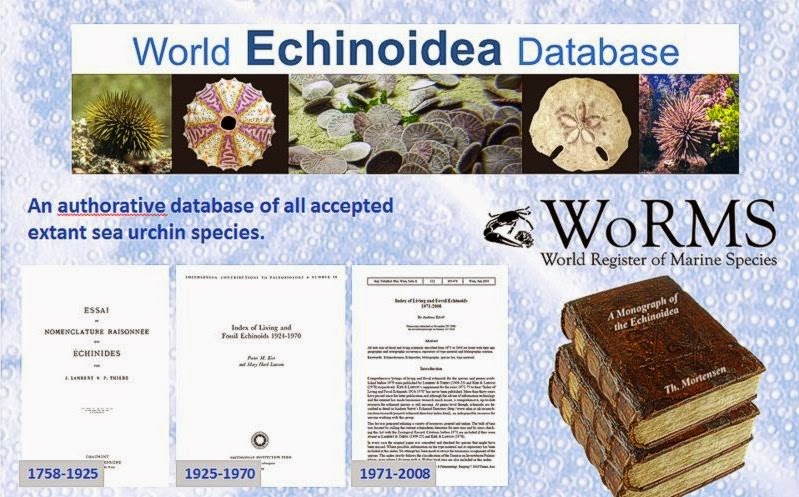
The World Register of Marine Species (WoRMS) aims to “provide an authoritative and comprehensive list of names of marine organisms, including information on synonymy.” Marinespecies.org serves as the web interface for the Flanders Marine Institute-developed “Aphia” database, which consolidates marine species registers from several projects. Information available through WoRMS, which is curated and maintained by taxonomic experts, includes valid species names, synonyms and vernacular names, higher classifications presenting scientific names within parent taxon contexts, biogeographical data, references to related external databases, and links to literature in BHL.

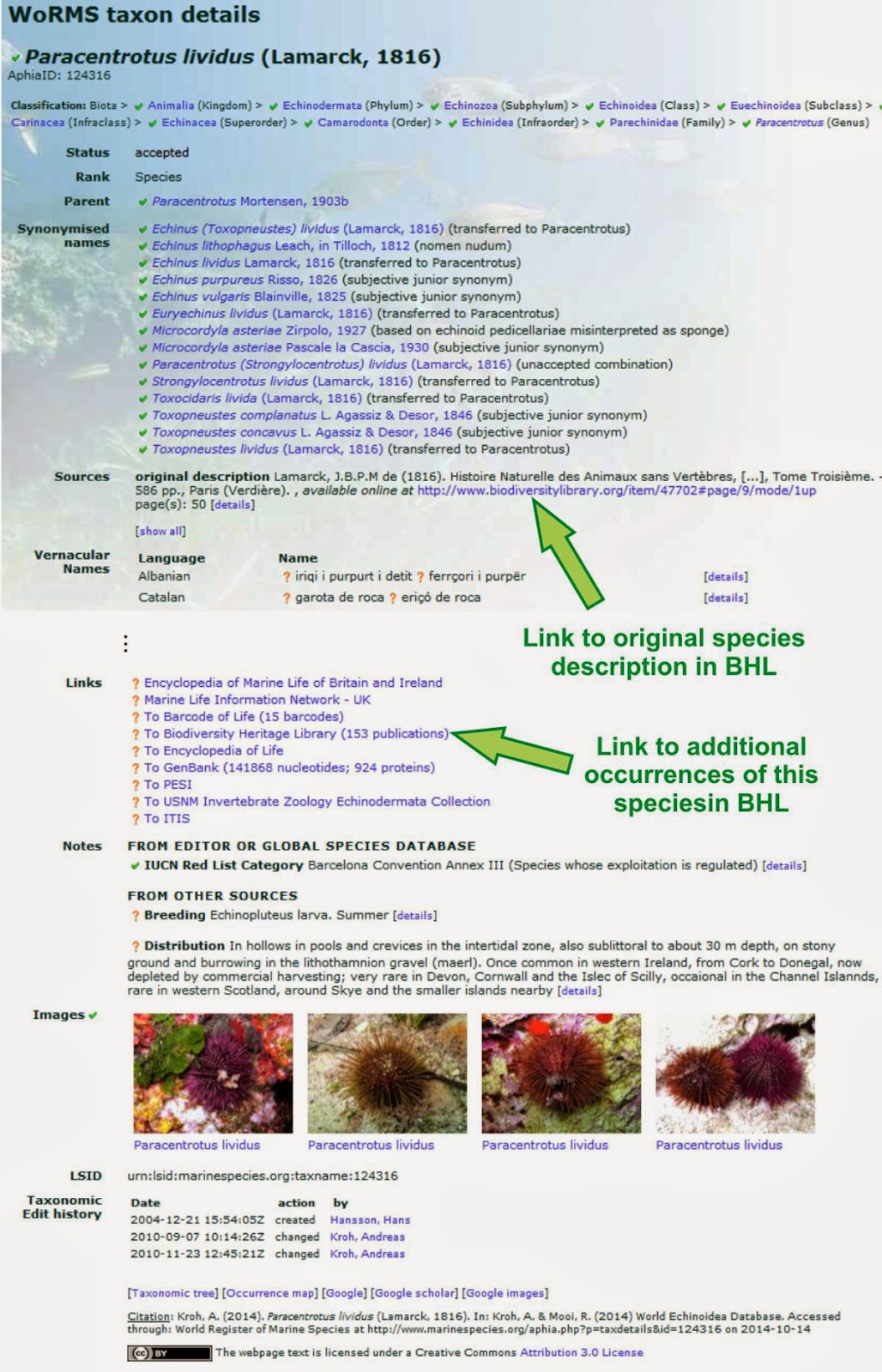
“In the World Register of Marine Species we are linking references on species pages directly to their respective title page in BHL, thereby making it easier for non-taxonomists to go back to the original sources of data, be it original descriptions, distribution data or other relevant information,” explains Dr. Kroh.

View Full Size Image
Species pages in the World Register of Marine Species (http://www.marinespecies.org) crosslink to BHL to ease access to the (often hidden) original species descriptions and additional published information.

Dr. Kroh’s other current research focus, the FreshGEN project, will “provide the first detailed assessment of the composition of European freshwater gastropods during the Neogene and Quaternary at species, genus and family levels, with emphasis on lake faunas.” By compiling and evaluating data, particularly relevant historic literature references like those at BHL, the project’s international expert team of paleontologists and limnologists will create the FreshGEN-database (Freshwater Gastropods of the European Neogene), which will allow researchers to compare diversity and inter-lake data, identify geographic gradients in species richness, define biodiversity hotspots in present and past lake systems, shed light on the origin of modern lake faunas, and “estimate the (future) anthropogenic impact on Holocene lake faunas.”

Dr. Kroh (and, he emphasizes, his colleagues) use BHL on almost a daily basis when working on these and similar taxonomic projects. For Dr. Kroh, that use is multi-faceted.

“When locating a title in BHL I mostly read the respective portion of paper that I am interested in online. Usually, however, I do also save the link to the respective title page in my literature database and download the whole volume as PDF for future reference – this has proven very useful for field work or research in museum collections which often are in the basements where web-access is not available.”

As with all of our users, Dr. Kroh has favourite services in BHL and functionality he would like to see improved.

“One of the most useful features of BHL is that it has a drop-down interface to jump to other volumes within a journal – other portals that offer scanned books often lack such a connection between volumes of a series and it can be difficult to find a particular volume, specifically if it is a journal that has many different series and changing titles.”

On the improvement side, Dr. Kroh identified missing volumes within journals runs, multiple listings of the same titles with disconnected volumes, and the compression used for whole-volume PDF downloads as areas for BHL to focus on.

BHL is actively working to identify and fill gaps in its collections (this is, in fact, a priority within our digitization efforts), and users are encouraged to notify us of missing volumes in serial runs. And while our systems try to automatically de-duplicate multiple records of the same title, varying cataloguing practices at our member institutions, who each submit their version of a title record for the volumes they scan, impedes perfect title merging. These merges are currently a manual process, and we again encourage our users to notify us of titles in need of this extra love. File size and storage limitations unfortunately necessitate PDF compression, but high resolution images can be downloaded through Internet Archive (linked from BHL) as an alternative.

View Full Size Image
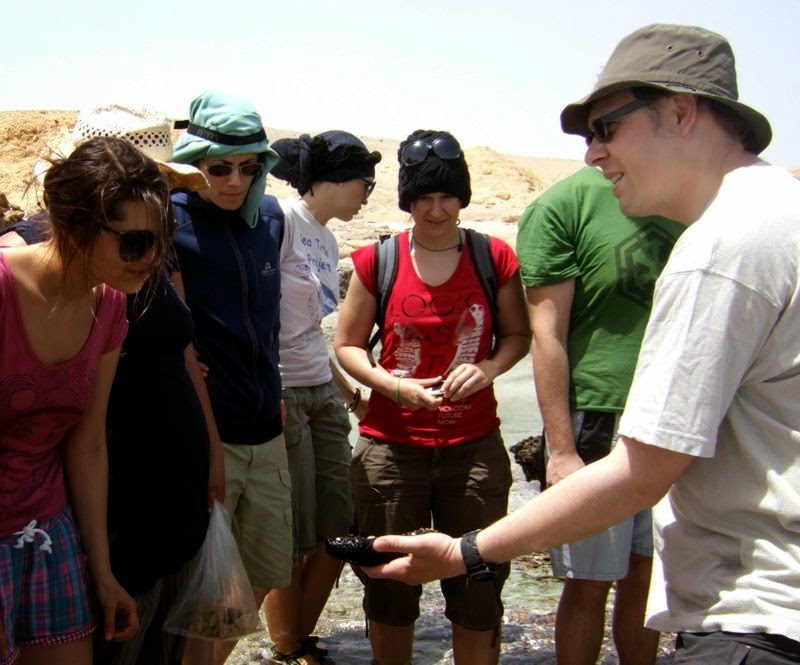
Dr. Andreas Kroh (NHM Vienna) on a field course on reef organisms, showing a sea cucumber to students.

While improvements are always possible and necessary, access to the historic biodiversity knowledge provided through BHL is critical to modern scientific work.

“It’s really the sum of observations, present ones as well as past ones, that form our knowledge of nature,” emphasizes Dr. Kroh. “In alpha-level taxonomy errors have been perpetuated in the past since few researchers had the possibility or time to go back to the original species descriptions. With BHL everybody has that possibility, regardless of her or his profession or place of living. BHL opens up scientific literature for the widest audience possible and repatriates scientific knowledge.”

We extend a special thanks to Dr. Andreas Kroh for sharing his experiences with BHL for our blog. Do you use BHL to support your work? Want to tell us about it? Send us a message at [email protected].

February 19, 2015by michelle.underhill
Blog Reel, User Stories

BHL and Our Users: Dr. Petra Sierwald

Portrait version of the Biodiversity Heritage Library logo.

View Full Size Image

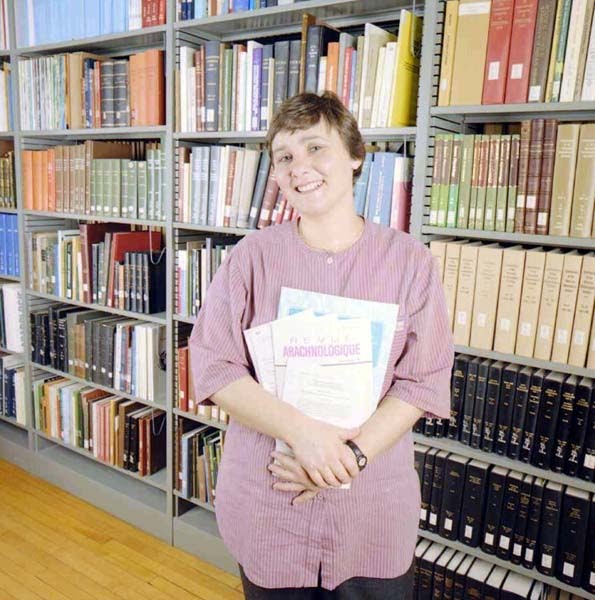
This week we feature a researcher from one of our partner institutions, the Field Museum in Chicago. So without further ado, meet Dr. Petra Sierwald, a woman with a passion for spreading biodiversity knowledge to ensure equal participation among researchers in all parts of the globe and educating the younger generation on the importance of biodiversity conservation.

Q: What is your title, institutional affiliation, and area of interest?
A: Associate Curator, Arachnida & Myriapoda, Zoology, at the Field Museum of Natural History, Chicago. Interests and Research include biodiversity and evolutionary research in spiders and millipedes. Currently, my special interests are: building scientific infrastructure. In my case (a) a global millipede species database with complete literature citations; and (b) teaching the next generation the importance of biodiversity for the health of our planet.

Q: How long have you been in your field of study?
A: Over thirty years.

Q: When did you first discover BHL?
A: At the beginning of BHL (2007) – the Field Museum library and Field Museum’s Biodiversity Synthesis Center are both closely involved with BHL.

Q: What is your opinion of BHL and how has it impacted your research?
A: Libraries are the stewards of the knowledge on which all human civilization is based. BHL is the modern virtual library we desperately need right now and must expand: by capturing the literature digitally, the original paper books can be preserved to last through the coming centuries (in case something should happen to digital storage). Making the biodiversity data, which were initially accumulated within the Western European tradition, available to the rest of the world is our duty and responsibility, as it will allow equal participation of everbody in biodiversity research and thus invite new young talented people from every corner of the world. Finally, the participation of a diverse group of new researchers will benefit all of us, as more students study the biodiversity of their region and protect habitats important for the environmental health of the planet.

Q: How often do you use BHL?
A: Currently almost daily, together with other digital online libraries. All my students (in courses and at the Museum) have to work on species pages and search for literature. BHL is one of the first sources they search in. I always check whether they properly searched in BHL.

Q: How do you usually use BHL (read the titles online/download whole PDFs/Select Pages to Download/Download High Resolution Images/etc.)
A: At the current pace I am using BHL, I read online. Since BHL is always available, I do not need to download, print or store articles and volumes electronically. I save that step. I use BHL the same way I use Field Museum’s excellent library. I find the book or volume, check what needs to be checked and put the volume back (or close the window in BHL). I know BHL rather well; I always find what I need. This saves me the work of organizing a separate library on my computer.

Q: What are your favorite features/services on BHL?
A: That I can read entire articles, cross check bibliographic information (title, publication dates), and that I can search in many articles for key words. The scanning quality is very good.

Q: If you could change one thing about BHL, what would it be, or what developmental aspect would you like the BHL team to focus on next?
A: Filling gaps in journal runs and the author list must be cleaned up. For example, Snodgrass is in BHL twice, as Snodgrass R.E. and as Snodgrass, Robert Evans. Both author entries (referring to the same person) are linked to different publications. Since I am using BHL heavily as a bibliographic reference tool, I would greatly appreciate to have clean author lists. BHL needs support and the scientific community must help in this endeavor.

Q: If you had to choose one title/item in BHL that has most impacted your research, or one item that you prefer above any other in BHL, what would it be and why?
A: My co-authors and I were able to determine that the species Euzonus zonatus does not exist, but that the name is based on a misinterpretation by Giebel. The original publication: Giebel, C.G. (1856) Die Insecten und Spinnen der Vorwelt mit Berücksichtigung der Lebenden, monograph. dargestellt. 2. Bd. Gliederthiere. 1. Abth. Insecten und Spinnen, is available in BHL.

Resulting Publication: Brewer, M.S., Sierwald, P. and Bond, J.E., 2011. A Generichomonym Concerning Chordeumatid Millipedes (Arthopoda: Diplopoda) and Opheliid Worms (Annelida: Polychaeta). Zootaxa 2744: 65-68.

Thank you all at BHL.

And thank, you Dr. Sierwald, for taking the time to share your thoughts and experiences with us. We have, per your notification, merged the duplicate author entires for Snodgrass in BHL. De-duplicating author lists is definitely of concern for BHL (and indeed for any collaborative digital library project where multiple contributors submit data in various formats), but we need the support of our users, as Dr. Sierwald points out. If you notice multiple entries for the same author in BHL, send us a message via our feedback form and we’ll take care of it. As we continue to explore options for author de-duplication en mass, we highly appreciate the eyes of our users to take care of this issue one author at a time.

For more information on Dr. Sierwald, visit the Insects page on the Field Museum’s website.

Photo Credit:© The Field Museum, Z94083_1c, Photographer John Weinstein.

April 12, 2011by ulib-libraryjobs

Help Support BHL

BHL's existence depends on the financial support of its patrons. Help us keep this free resource alive!

search

About BHL

The Biodiversity Heritage Library (BHL) is the world’s largest open access digital library for biodiversity literature and archives. BHL operates as a worldwide consortium of natural history, botanical, research, and national libraries working together to digitize the natural history literature held in their collections and make it freely available for open access as part of a global “biodiversity community.”

Join Our Mailing List

Sign up to receive the latest news, content highlights, and promotions.

Subscribe Now

Subscribe to Blog via Email

Enter your email address to subscribe to this blog and receive notifications of new posts by email.

Join 319 other subscribers

Subscribe to Blog Via RSS

Subscribe to the blog RSS feed to stay up-to-date on all the latest BHL posts.

Access RSS Feed

Inspiring Discovery through Free Access to Biodiversity Knowledge.

The Biodiversity Heritage Library makes it easier than ever for you to access the information you need to study and explore life on Earth…for free, anytime, anywhere.


64+ Million Pages of
Biodiversity Literature Online.

EXPLORE

Tools and Services
to Transform Research.

EXPLORE

300,000+
Illustrations on Flickr.

EXPLORE

ABOUT | HARMFUL CONTENT | PRIVACY | SITE MAP | TERMS OF USE