Biodiversity Heritage Library - Program news and collection highlights from BHL
  • Home
  • News
  • Featured Books
    • All Featured Books
    • Book of the Month Series
    • BHL at 20
  • User Stories
  • Campaigns
    • Fossil Stories
    • Garden Stories
    • Monsters Are Real
    • Page Frights
    • Her Natural History
    • Earth Optimism 2020
  • Tech Blog
  • Visit BHL
Home
News
Featured Books
    All Featured Books
    Book of the Month Series
    BHL at 20
User Stories
Campaigns
    Fossil Stories
    Garden Stories
    Monsters Are Real
    Page Frights
    Her Natural History
    Earth Optimism 2020
Tech Blog
Visit BHL
  • Home
  • News
  • Featured Books
    • All Featured Books
    • Book of the Month Series
    • BHL at 20
  • User Stories
  • Campaigns
    • Fossil Stories
    • Garden Stories
    • Monsters Are Real
    • Page Frights
    • Her Natural History
    • Earth Optimism 2020
  • Tech Blog
  • Visit BHL
Biodiversity Heritage Library - Program news and collection highlights from BHL
Blog Reel, Featured Books

Book of the Week: Fun with Shells

View Full Size Image
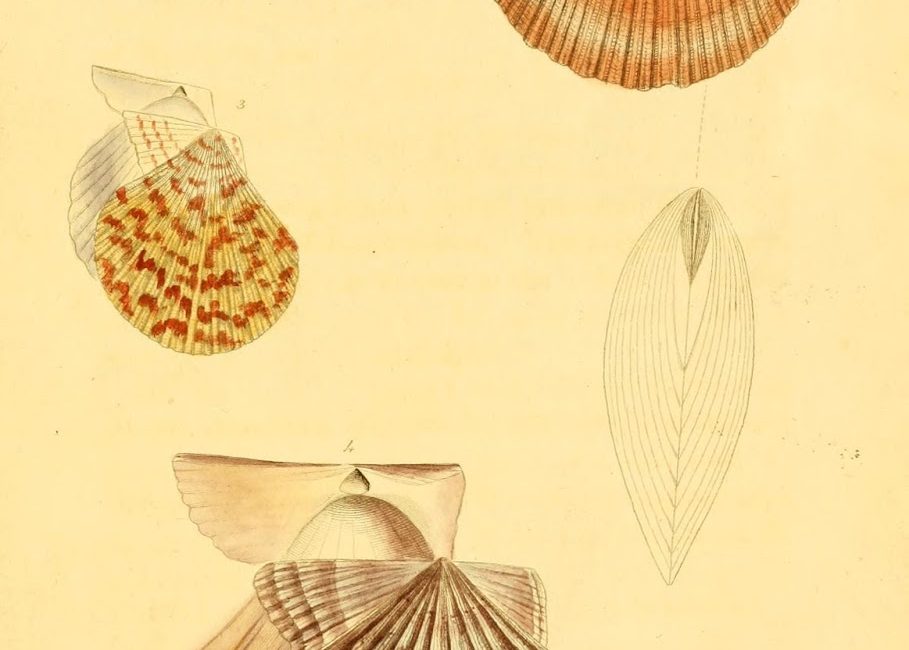
Conrad, T. A. (Timothy Abbott). American marine conchology; or Descriptions and coloured figures of the shells of the Atlantic coast of North America. 1831. Digitized by Smithsonian Libraries. http://biodiversitylibrary.org/page/11115892.

Timothy Abbott Conrad (1803-1877) enjoyed a remarkable career, and, although he is best known as an American geologist, malacologist, and carcinologist, he began his professional career as a clerk in his father’s printing and publishing house. It was not until 1831, also the year in which Conrad was elected a member of the Academy of Natural Sciences, that he published his first volume, American Marine Conchology, or Descriptions and Colored Figures of the Shells of the Atlantic Coast (several plates from which are pictured here). Intending with this volume to “supply a deficiency which [had] long been felt by the cultivators of American natural history,” this volume contains seventeen plates, all illustrated by Conrad and hand colored by his sister, that depict the abundance and variation of the shells found along America’s coastline.


Conrad died on August 9, 1877, in Trenton, New Jersey. His death, according to Popular Science Monthly (volume 47, 1895), marked the passing of “the last of the prominent group of early Philadelphia naturalists, who paved the way for the more philosophical biologists of the present day.”

To view this week’s book of the week, American Marine Conchology, or Descriptions and Colored Figures of the Shells of the Atlantic Coast (1831), by Thomas Abbott Conrad, contributed by the Smithsonian Institution, click here.

September 21, 2009by michelle.underhill
BHL News, Blog Reel, Tech Updates

OpenURL resolver available for testing

Portrait version of the Biodiversity Heritage Library logo.

BHL has released a beta version of its OpenURL Resolver API for testing. A full description of the service is available at http://www.biodiversitylibrary.org/openurlhelp.aspx.

Any repository containing citations to biodiversity literature can use this API to determine whether a given book, volume, article, and/or page is available online through BHL. The service supports both OpenURL 0.1 and OpenURL 1.0 query formats, and can return its response in JSON, XML, or HTML format, providing flexibility for data exchange.

One issue still under consideration is whether to assign an API key to each user of the service, similar to Google Maps and many other data providers. Some advantages to assigning a key include having a method by which to contact users to notify them of updates & service availability, and yes, to track usage. Some disadvantages include a perceived restriction on access to the service and concerns about privacy & data tracking, among others. In truth we are less concerned about restricting users and are more interested in finding a way to monitor use of the service and to communicate with its users.

We started a discussion of the pros and cons of the API key approach on Twitter but the text size restriction made responses laughable. We’re interested in your views as either potential consumers of the BHL OpenURL API or from your experience in managing similar services for your project. We’re also especially interested in viewpoints from those with experience deploying OpenURL, which we’ve come to learn is a fairly niche group. Please leave your comments below so that we can continue the dialogue using more than 140 characters!

September 15, 2009by oneclickorders
Blog Reel, User Stories

BHL User Profile: Kevin de Queiroz

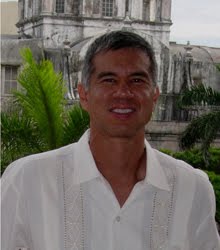
View Full Size ImageA few weeks ago, we asked you what kind of posts you’d like to see more of here on the BHL blog. The landslide victor–with 9 votes!–is more posts about how researchers are currently using the resources available through BHL. So, meet Kevin de Queiroz. He’s a Research Zoologist working in the Smithsonian’s’ Department of Vertebrate Zoology, Amphibians and Reptiles Division. His current research centers on the phylogenetic relationships of various groups of lizards. He’s also interested in the development of the theory and practice of phylogenetic nomenclature (an approach to naming based on evolutionary principles); moreover, he’s the co-originator of the somewhat controversial PhyloCode. He uses BHL extensively both towards his own research involving the PhyloCode (among other research interests) as well as while editing/reviewing works submitted by other authors that are part of other projects.

Much of Dr. de Queiroz’ research requires access to the historical use of names. BHL provides that access which would have taken countless trips to research centers in multiple locations around the globe. As Dr. de Queiroz demonstrates, universal access to the wealth of knowledge housed in BHL has greatly enhanced scientists’ and researchers’ abilities to conduct their work from anywhere on the planet (on this side of the digital divide, anyway).

Kevin de Queiroz: Publications

September 14, 2009by jwinberry
Blog Reel, Featured Books

Book of the Week: Our 150-Year Love Affair with Beachcombing

View Full Size Image
Gosse, Philip Henry. A naturalist’s rambles on the Devonshire coast. 1853. Digitized by MBLWHOI Library. http://biodiversitylibrary.org/page/3974084

Can you return from a trip to the beach without something in your pocket? Whether gathering food, collecting shells, or simply plucking a pretty rock from the surf while strolling on the sand, beachcombing seems like a universal practice, and one at least as old as bipedalism (and pockets).

As it turns out, ambling along the beach, collecting shells, and observing tidepool life are not the ageless pastimes one might assume. It was not until the mid-19th century that these practices became widespread (at least in England and the United States). This surge in popularity was largely the result of the works of Philip Henry Gosse, particularly in his 1853 work, A Naturalist’s Rambles on the Devonshire Coast.

Philip Henry Gosse was a talented naturalist and gifted illustrator. He corresponded with Charles Darwin, and was a best-selling author. As a young man, he travelled in Canada, the United States, and Jamaica, where he collected, drew, and wrote about many of the organisms he encountered, including insects, birds, amphibians, and reptiles. When he returned to his native England, he devoted himself to studying, sketching, and describing the shore-dwelling creatures he observed hear his home in South Devon. His books about the local sea stars, anemones, crustaceans, and their ilk made Gosse famous, and they made England sit up and notice the vast array of sea life crawling on her shores.

View Full Size Image
Gosse, Philip Henry. A naturalist’s rambles on the Devonshire coast. 1853. Digitized by MBLWHOI Library. http://biodiversitylibrary.org/page/3973634.

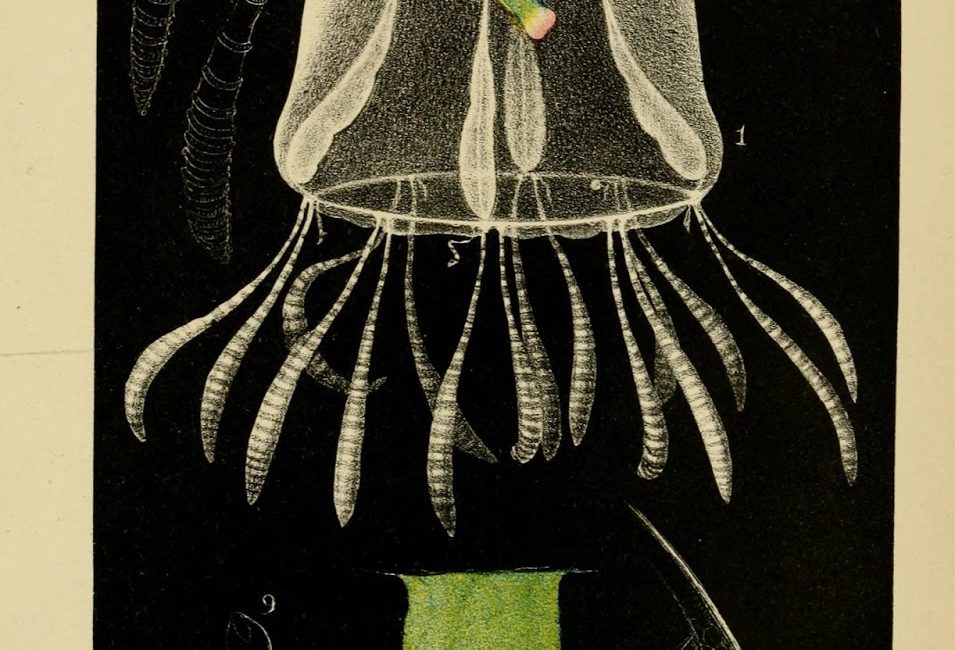
Gosse was disappointed with the quality of the lithographs in A Naturalist’s Rambles, but even so, their level of detail and realism is astounding. In the introduction, Gosse implores his readers to be more than “idle pleasure-seekers” at the beach, and to observe that “[m]ost curious and interesting animals are dwelling within a few yards of your feet.” In fact, these seashore creatures were so unknown to most people at the time that Gosse’s critics accused him of inventing them to sell more books.

A Naturalist’s Rambles is a fascinating work in that Gosse managed to skillfully combine his precise, scientific observations with engaging narratives about animals in the wild, their habits, and his practice of collecting subjects for further study in his home aquarium. He also includes prayers, poetry, and an interesting epitaph he found during his rambles. Gosse’s book was so inspiring that it prompted crazes for seashore collecting and home aquarium-keeping, which he further discussed in his book The Aquarium: An Unveiling of the Wonders of the Deep Sea.

Later in life, Gosse felt personally responsible for the destruction visited upon his nation’s beaches by unscrupulous home aquarists and shell-hunters. One need only read his books to experience the wonder and reverence he felt for his native shores and the diversity of the creatures he found there.

This week’s book of the week, A Naturalist’s Rambles on the Devonshire Coast by Philip Henry Gosse (1853), was contributed by the Marine Biological Laboratory, Woods Hole Oceanographic Institution Library.

September 8, 2009by ulib-libraryjobs

Help Support BHL

BHL's existence depends on the financial support of its patrons. Help us keep this free resource alive!

search

About BHL

The Biodiversity Heritage Library (BHL) is the world’s largest open access digital library for biodiversity literature and archives. BHL operates as a worldwide consortium of natural history, botanical, research, and national libraries working together to digitize the natural history literature held in their collections and make it freely available for open access as part of a global “biodiversity community.”

Join Our Mailing List

Sign up to receive the latest news, content highlights, and promotions.

Subscribe Now

Subscribe to Blog via Email

Enter your email address to subscribe to this blog and receive notifications of new posts by email.

Join 319 other subscribers

Subscribe to Blog Via RSS

Subscribe to the blog RSS feed to stay up-to-date on all the latest BHL posts.

Access RSS Feed

Inspiring Discovery through Free Access to Biodiversity Knowledge.

The Biodiversity Heritage Library makes it easier than ever for you to access the information you need to study and explore life on Earth…for free, anytime, anywhere.


64+ Million Pages of
Biodiversity Literature Online.

EXPLORE

Tools and Services
to Transform Research.

EXPLORE

300,000+
Illustrations on Flickr.

EXPLORE

ABOUT | HARMFUL CONTENT | PRIVACY | SITE MAP | TERMS OF USE