Biodiversity Heritage Library - Program news and collection highlights from BHL
  • Home
  • News
  • Featured Books
    • All Featured Books
    • Book of the Month Series
    • BHL at 20
  • User Stories
  • Campaigns
    • Fossil Stories
    • Garden Stories
    • Monsters Are Real
    • Page Frights
    • Her Natural History
    • Earth Optimism 2020
  • Tech Blog
  • Visit BHL
Home
News
Featured Books
    All Featured Books
    Book of the Month Series
    BHL at 20
User Stories
Campaigns
    Fossil Stories
    Garden Stories
    Monsters Are Real
    Page Frights
    Her Natural History
    Earth Optimism 2020
Tech Blog
Visit BHL
  • Home
  • News
  • Featured Books
    • All Featured Books
    • Book of the Month Series
    • BHL at 20
  • User Stories
  • Campaigns
    • Fossil Stories
    • Garden Stories
    • Monsters Are Real
    • Page Frights
    • Her Natural History
    • Earth Optimism 2020
  • Tech Blog
  • Visit BHL
Biodiversity Heritage Library - Program news and collection highlights from BHL
BHL News, Blog Reel

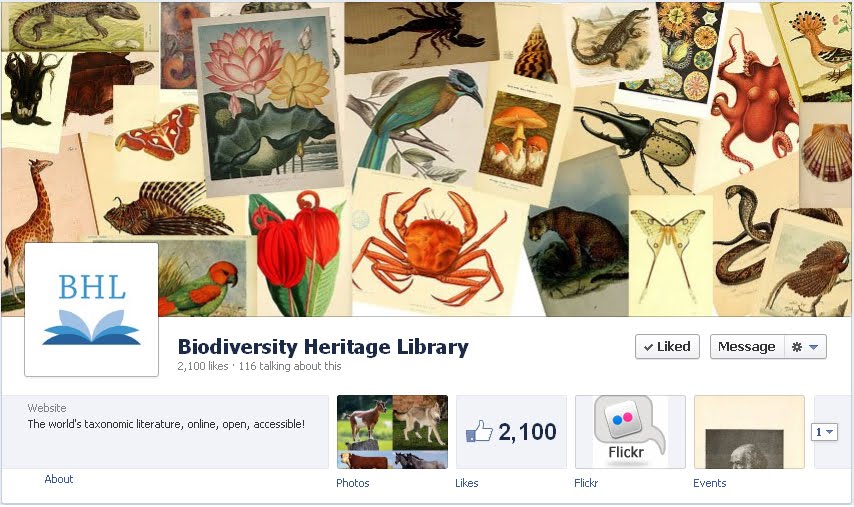
A Walk Down History Lane: Introducing the New BHL Facebook Timeline

View Full Size Image

In 1516, Conrad Gessner was born. His work Historiae Animalium is considered the beginning of modern zoology. In 1707, Carl Linnaeus, the Father of Modern Taxonomy, was born. In 1735, his monumental publication, Systema Naturae, forever changed the scientific world. In 1809, Charles Darwin, the force behind the Theory of Evolution, was born. His famous title On the Origin of Species revolutionized the way we think about the development of life when it was published in 1859.

Fastfoward to 2005. The Biodiversity Heritage Library was founded, with a website launch in 2007. Each of these events represent major milestones in the evolution of biodiversity research (if we may be so bold as to include ourselves among them). But these are just a few of the dates worth remembering, and more and more are occurring everyday as we build our scientific knowledge. How can we keep track of all these dates, we ask?

Cue the BHL Facebook Timeline!

View Full Size Image

Today, Facebook is rolling out its new timeline feature – a visual representation of the major milestones in a Facebook page owner’s life. Using the feature, page owners create entries for the noteworthy events in their lives/projects, and these entries are added in chronological order to the timeline. By scrolling further down the Facebook page, visitors are taken on a journey through the highlights of the person’s or project’s life. You can even fast-travel to a specific year by clicking on it in the bar on the right-hand side of the new page layout.

But while our page includes our important project milestones, we thought, “Why stop there?” Why not create a timeline that not only showcases our major accomplishments, but also the important achievements in scientific and taxonomic history? So that’s what we did. Scrolling through our timeline, you’ll see entries for both the birth of our project as well as the birth of people like Charles Davies Sherborn and Carl Linnaeus. Look further and you’ll discover markers for both the incorporation of new member libraries to the BHL consortium as well as the publication of ground-breaking works like Natural History of Carolina, Florida, and the Bahama Islands and Audubon’s The Birds of North America. The list goes on and on.

Our timeline is far from complete. We’ll be adding new events to the lineup regularly. Still, we think it’s a pretty cool start to the documentation of scientifically-important people and events, especially since each milestone entry also provides us with space to give a description of the event and provide links to content about it in BHL. And don’t worry; While the timeline is a cool new aspect of our page, you can still find the daily quizzes and news updates you’ve come to love.

So, take some time to explore our new Facebook page. You might be surprised at what you learn!

P.S. Got an idea for our Timeline? Tell us about it! Send us feedback, write a tweet to @BioDivLibrary, or post directly on our Facebook page!

March 30, 2012by michelle.underhill
Blog Reel, Featured Books

Celebrating Women’s History Month: Alice Eastwood

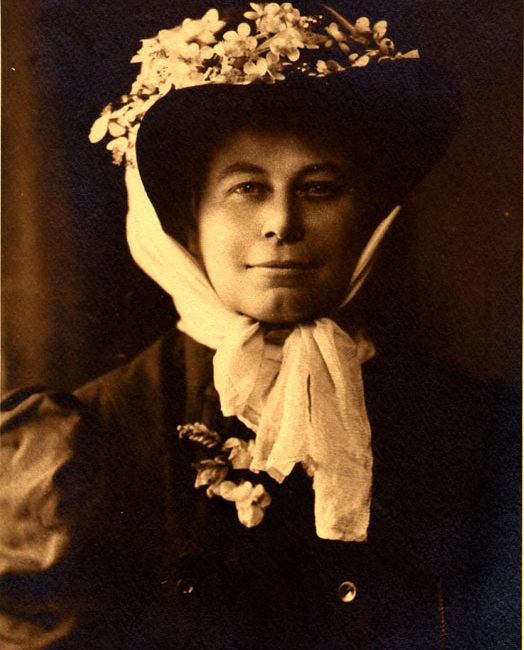
View Full Size ImageAs BHL is celebrating Women’s History Month by featuring women of science, I could not resist shining a light on Alice Eastwood, one of the California Academy of Sciences’ early female curators. Born in Toronto in 1859, Alice Eastwood spent her teenage years in Denver, Colorado. She proved to be a bright and capable student, embarking on a career as a schoolteacher, but she spent her leisure hours exploring the flora around her. She was a self-taught botanist, using the few books available to her, including Asa Gray’s Manual of the Botany of the Northern United States and John M. Coulter’s Manual of the Botany…of the Rocky Mountain Region. A visit to the California Academy of Sciences in 1891 led to a job offer, and the following year Eastwood left her teaching job in Colorado to assume a curatorship in the Academy’s Department of Botany.

The California Academy of Sciences was not yet 50 years old when Alice Eastwood began her work there, and she oversaw tremendous growth of the Herbarium. Much expansion came from her own collecting activities throughout California, Utah, and Colorado. She is remembered as an exceptional woman of her time, exploring regions of the West that made for difficult traveling, negotiating unfavorable terrain in long skirts, and even fashioning a skirt that could be buttoned in the center to make pants. One unconventional act as Curator was to segregate the botanical type specimens rather than keeping them with the rest of the collection. This proved to be a prudent decision. On April 18, 1906, a massive earthquake struck the region, followed quickly by fires that burned for three days and ravaged the city. Over 500 city blocks were consumed and over 28,000 area buildings were destroyed, including the California Academy of Sciences. Following the quake, Eastwood and a small group of Academy staff and curators convened to save whatever they could from the coming fire. Since the type specimens were housed together, separate from the rest of the Herbarium, Eastwood was able to save 1497 irreplaceable botanical types while the rest of the collections were lost. She worked tirelessly over the subsequent days, moving the specimens around the city to keep them safe, protecting them while her own home and possessions were lost in the blaze.

View Full Size ImageWhile Alice Eastwood is perhaps best known for her heroism during the earthquake and fire of 1906, that event occurred near the beginning of her long scientific career. While the Academy rebuilt in San Francisco, she visited herbaria all over the United States and abroad, and commenced collecting as soon as possible, traveling throughout the West, even collecting in Alaska. By the time of her retirement in 1949 at the age of 90, the Herbarium contained over 350,000 specimens and Eastwood had over 300 publications to her name. She also served as an editor of the journals Zoe and Erythea, and co-founded the publication Leaflets of Western Botany.

Alice Eastwood died in San Francisco in 1953 at the age of 94, and she is remembered as an inspiring scholar and tireless advocate of Western botany. California hikers may encounter Eastwood’s memory in the yellow aster (Eastwoodia elegans) as well as in many members of the phlox family (genus Aliciella), which are among the plants named in her honor. Anyone interested in learning more about Alice Eastwood is encouraged to visit her publications in BHL and the finding aid to the Alice Eastwood Papers at the California Academy of Sciences.

*All Images Courtesy California Academy of Sciences Archives

March 29, 2012by ulib-libraryjobs
BHL News, Blog Reel

BHL funded by NEH to reveal the Art of Life

View Full Size Image

The Art of Life: Data Mining and Crowdsourcing the Identification and Description of Natural History Illustrations from the Biodiversity Heritage Library

Missouri Botanical Garden has received $260,000 in funding from the National Endowment for the Humanities to identify and describe natural history illustrations from the digitized books and journals in the online Biodiversity Heritage Library. The Art of Life project will develop software tools for automated identification and description of visual resources contained within the more than 100,000 volumes and 38 million pages of core historic literature made available through BHL digitization activities.

Contained within BHL’s digitized texts are millions of visual resources (plates, illustrations, figures, maps, and other images), many of which were produced by the finest botanical and zoological illustrators in the world, including the likes of John James Audubon, Georg Dionysus Ehret, and Pierre Redouté. These images are currently minimally described at a structural page level, enabling citation resolvers and human users to navigate to illustrations by page numbers, but the images lack sufficient descriptive metadata to enable dynamic filtering and inquiry based on factors like image type, color content, subject matter, or even names of the organisms depicted in the images.

Project funding will help automate the manual processes taken by BHL staff to curate the images delivered via Flickr at http://www.flickr.com/photos/biodivlibrary/sets/. BHL technical staff at Missouri Botanical Garden will build new software tools and augment existing electronic publishing frameworks to run across the BHL corpus and identify the visual resources within, thereby ensuring these images are not only more useful to the current audience of scholars who consult BHL on a regular basis, and discoverable by new audiences, but also better interconnected with related materials across the Web, including the Encyclopedia of Life. Scholars and educators who rely heavily on visual resources in their research and teaching (e.g. biologists, art historians, curators, historians of science) will be able to find and view a wealth of illustrations of plant and animal life from which to make connections between science, art, culture, and history.

To realize the vision of a comprehensive and interactive repository for visual resources describing the world’s biota, the project team aims to achieve five primary objectives over the course of a two-year period:

Objective 1: Define an appropriate metadata schema for natural history illustrations, enabling capture of comprehensive scientific, thematic, and descriptive data;

Objective 2: Build software tools to automatically identify illustrations in the BHL corpus using various files and characteristics to determine location and placement of any type of visual resource;

Objective 3: Enhance existing tools to enable the initial sorting, viewing, and editing of these identified visual resources;

Objective 4: Integrate the Steve.museum application and Flickr APIs to enable a community of users to edit descriptive metadata for the illustrations identified through automated means;

Objective 5: Commit born-digital descriptive metadata generated by users into BHL’s preservation system, based on Fedora Commons.

A complete list of awarded projects and descriptions is available at http://www.neh.gov/files/press-release/march2012statebystatefinal.pdf.

March 22, 2012by oneclickorders
BHL News, Blog Reel

2012 Annual Institutional Council Meeting

View Full Size Image

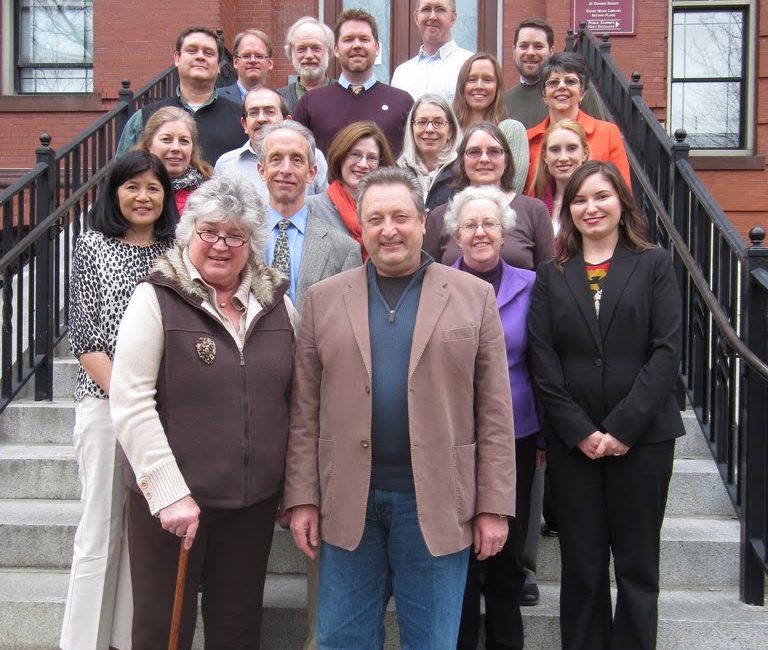
On March 15-16, 2012, the BHL Institutional Council convened at the Ernst Mayr Library of the Museum of Comparative Zoology at Harvard University for their sixth annual meeting.* The BHL Institutional Council is composed of the directors of the BHL member libraries. The annual meetings serve as an opportunity for council members to provide updates about BHL activities at their institutions, discuss governance issues, make funding decisions, and strategize about the future of BHL. It also allows BHL Administrative Staff to inform council members about BHL updates in their areas of expertise.

Not surprisingly, the meeting agenda was quite full, as there was much to discuss and only two days in which to do it. Most of meeting day one was devoted to providing BHL project updates. Common themes arising from council member updates included the need to develop strategies to incorporate existing scanned content digitized outside of traditional BHL scanning workflows and a variety of grant-funded internal projects producing deliverables of interest to BHL. A significant amount of time was also spent discussing the expansion of BHL outreach activities, including an agreement to develop an official BHL Marketing and Branding Plan. On day two of the meeting, the BHL Steering Committee engaged in initial discussions to develop a BHL spending plan for the next few years. A vital component of this plan will, of course, be an allocation for continued scanning, much of which will be driven by user requests and subject-oriented collections. Finally, the committee deliberated on policies for consortium and global growth.

Some final highlights from the meeting included the appointment of new BHL Executive Committee members and a few special titles awarded to some departing members of the BHL team. BHL Executive Committee appointments include: Nancy E. Gwinn (Smithsonian Institution Libraries), Chair; Connie Rinaldo (Ernst Mayr Library, Museum of Comparative Zoology, Harvard University), Vice-Chair; and Susan Fraser (LuEsther T. Mertz Library, New York Botanical Garden), Secretary.

This was also the final BHL meeting for three retiring core BHL members, including BHL’s Program Director, Tom Garnett. The BHL director since the project’s inception, Mr. Garnett is retiring at the end of March, 2012. His position will be filled by Martin Kalfatovic (Smithsonian Institution Libraries). In honor of Mr. Garnett’s contribution to BHL, the Institutional Council awarded him with the title of Founding Program Director, BHL. Also leaving the BHL team to enjoy retirement are Cathy Norton (MBLWHOI Library), former BHL Executive Committee Chair, and Graham Higley (Library, Natural History Museum, London), BHL Executive Committee Immediate Past Chair. The IC bestowed the title of BHL Member Emeritus on Cathy Norton and Founding Chair Emeritus on Graham Higley.

Of course, the IC Meeting wasn’t simply all work and no play. Attendees also took time to enjoy the Harvard campus. The meeting itself was held in the Agassiz room at the Museum of Comparative Zoology – a conference room dedicated to Louis Agassiz, the founder of the museum and a prominent 19th century natural historian (see works by Agassiz in BHL). Library staff gave tours of the Ernst Mayr Library, including a guided visit of the rare book room. On the night of March 15th, meeting attendees also enjoyed a catered dinner at the Harvard Faculty Club in a room decorated with prints by Alexander Wilson.

The Sixth Annual BHL Institutional Council Meeting was an excellent opportunity for the globally dispersed members of the BHL team to gather for a few short days to share the BHL successes and challenges at their institution and collaborate to develop policies and strategies that ensure the continued health and prosperity of the BHL project. We are anxious to implement the ideas and decisions reached at the meeting and look forward to the seventh annual meeting next year.

*First two BHL Institutional Council Meetings called “Directors Meetings.”

March 20, 2012by ulib-libraryjobs
Blog Reel, User Stories

BHL and Our Users: Dr. Nathalie Yonow

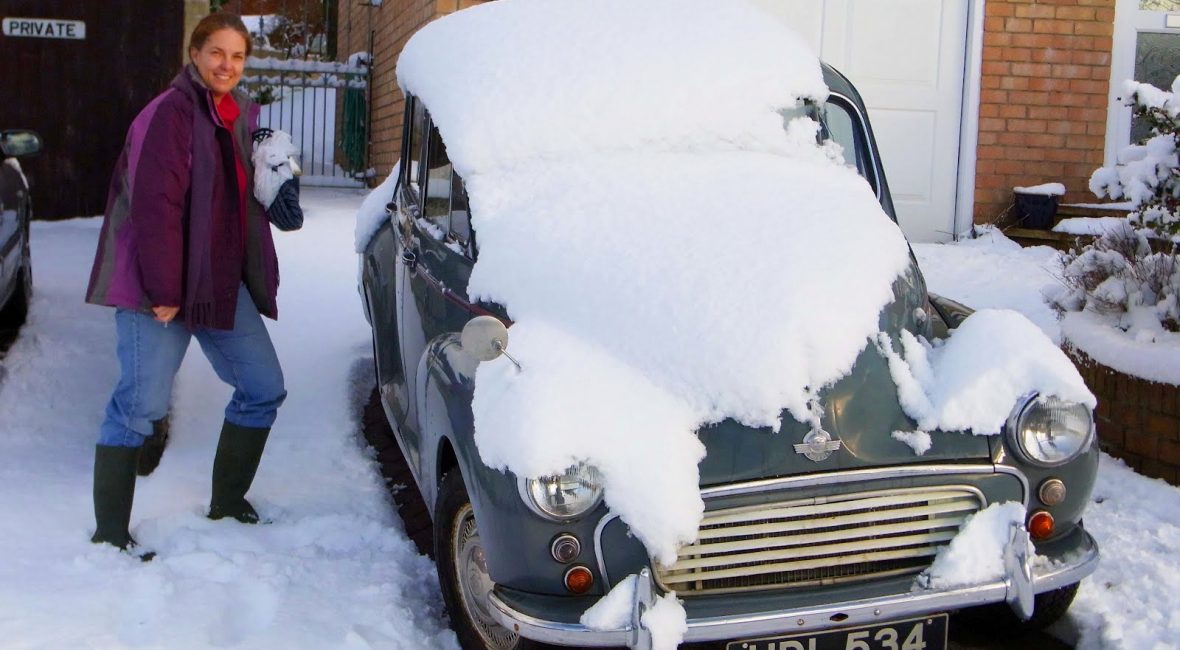
View Full Size ImageThis week we’re excited to present a brand new BHL user. Dr. Nathalie Yonow just discovered BHL this year, and she has already used it to complete research for upcoming publications – research that, prior to BHL, took her a great deal of time, energy, and assistance from colleagues with access to large libraries. We are thrilled to hear from a user who is just discovering everything BHL has to offer.

What is your title, institutional affiliation, and area of interest?

Dr Nathalie Yonow, CERTS, Biosciences, College of Science, Swansea University. My areas of interest include opisthobranch taxonomy and biogeography (Indo-West Pacific).

How long have you been in your field of study?

25 years

When did you first discover BHL?

I first discovered BHL in January of 2012. I wish I had known about it when I was researching my book (Sea Slugs of the Red Sea) as I had lots of old publications and plates to trace and it took a lot of time and a lot of help from colleagues with access to better libraries.

What is your opinion of BHL and how has it impacted your research?
I just started using BHL, but it’s great for finding old publications – much of my research is based around digging up old references to check species identification, localities, spellings, etc. I am afraid I still keep a list of my references on index cards, and I have a batch filed under a question mark that I have been unable to find for 20 years!!

How often do you use BHL?

I have used it several times already since January.

How do you usually use BHL (read the titles online/download whole PDFs/Selecting Pages to Download for a custom PDF/Downloading High Resolution Images/Generating Taxonomic Bibliographies/etc.)

I am very new to BHL and on a steep learning curve! I have checked some species descriptions on line, but I tended to panic and save a whole paper to my computer in case I couldn’t find it again. More recently I selected only the pages I needed and BHL sent me a PDF!! That was marvelous, but for some images, I couldn’t read some of the figure legends. In reading this question, I now see that I can get Hi Res images and create species bibliographies as well, so I will definitely be having a go!!

What are your favorite features/services on BHL?

I’m not sure, as I haven’t used a lot of the services yet, but I think being able to select what I need (sea slugs often form part of a much larger work) and create a PDF of only those pages, will be a favorite feature. The Hi Res option will solve the only problem I have had so far with text readability.

If you could change one thing about BHL, what would it be, or what developmental aspect would you like the BHL team to focus on next?

I am still learning, and this experience has given me more ideas. I am not good at imagining scenarios, but maybe more obvious possibilities for the various services BHL has to offer, like presenting them as tabs or options? Simply by reading this questionnaire I have learned two things I will now try!!

If you had to choose one title/item in BHL that has most impacted your research, or one item that you prefer above any other in BHL, what would it be and why?

In the short time I have been using BHL, I found a paper by Rang 1828 which I have been chasing for the last YEAR to complete a synonymy and have now submitted my paper in its final version! Hooray!! and thank you!

______________________________________________

Welcome to the BHL family, Dr. Yonow! We hope that you will continue to be enthusiastic about the features and content BHL offers. For more information about some of these services, and instructions on how to use them (including a tutorial on how to download high resolution images from BHL), see our tutorials page.

For a list of some of Dr. Yonow’s current and upcoming publications, see the bibliography below:

View Full Size ImageYonow, N. (2011) Results of the Rumphius Biohistorical Expedition to Ambon (1990) Part 15. The sub-order Doridina (Mollusca, Gastropoda, Opisthobranchia, Nudibranchia). Zoologische Mededelingen, Leiden 85: 905 -956. http://www.zoologischemededelingen.nl/85/nr04/a17

Photo Nembrotha milleri is from this paper (courtesy of Anja Blonk).

View Full Size ImageUpcoming Publication: Yonow, N. Opisthobranchs from the western Indian Ocean, with descriptions of two new species and ten new records (Mollusca: Gastropoda). ZooKeys. The journal link is http://www.pensoft.net/journals/zookeys/

Photo 21 Nembrotha guttata is from this paper (courtesy of H Voigtmann).


View Full Size ImageSea Slugs of the Red Sea
304 pages, more than 500 colour photos and illustrations
€ 75.00 (incl P&P;)
http://www.pensoft.net/book/9500/sea-slugs-of-the-red-sea

For more information on these publications or Dr. Yonow’s work, contact her at [email protected]

March 13, 2012by ulib-libraryjobs
BHL News, Blog Reel

The United States Geological Survey Joins BHL!

Portrait version of the Biodiversity Heritage Library logo.

In November, 2011, at the Life and Literature Conference in Chicago, IL, BHL announced the addition of its fourteenth consortium member, the United States Geological Survey Library (see a list of member libraries on our wiki). Since the announcement, BHL staff have been diligently working with USGS to fully integrate our new library member into BHL workflows and procedures, and it won’t be long before you can access new USGS material in the BHL portal. We at BHL, along with our new colleagues at USGS, are thrilled about this important development in the BHL project.

When asked what contributions USGS could make to the BHL corpus, Richard Huffine, Library Director, replied, “The USGS mission has always spanned both the physical and life sciences. From our historical work in paleontology to our current research in ecosystems, we have collections that will definitely compliment the current holdings of the BHL.” The USGS is focusing their early contributions on filling gaps in BHL and adding a collection of rare research in paleobotany. As Huffine further added, “We’re excited to be part of this historic effort and are looking forward to seeing the BHL reflect the full breadth and depth of what biodiversity means.”

Created in 1879, the U.S. Geological Survey maintains one of the world’s largest libraries dedicated to the earth and natural sciences. Scientific research is a key part of the Survey’s mission, and this work is supported by a wide array of monitoring activities and scientific collections, more than 1,000 research scientists and a library with more than 2,000,000 volumes, 1,500,000 maps and 800 current serial titles. For more information about the U.S. Geological Survey, visit http://library.usgs.gov/.

We are thrilled to add the United States Geological Survey Library to the BHL ranks. We are confident they will contribute a unique array of important biodiversity texts to the over 102,ooo volumes and 38 million pages currently available. Welcome to the team, USGS!

March 12, 2012by michelle.underhill
Blog Reel, Featured Books

Book of the Week: Sarah Ann Drake & Women’s History Month

View Full Size Image

If you’ve been following us on Twitter or checking in on our Facebook page, you know that this month is Women’s History Month. BHL is celebrating by highlighting women throughout history who have played in important role in the progression of biodiversity research and knowledge. Each day, we’ve been tweeting about one or two of these remarkable heroines and each week we’ve been posting Facebook trivia challenging your knowledge about these famous women. Today, we’re featuring a woman who made an incredible contribution to botanical illustration: Sarah Ann Drake.

Sarah Ann Drake was born on July 24, 1803, in Skeyton, Norfolk. During her lifetime, she created more than 1500 botanical illustrations, yet we know next to nothing about her life with the exception of a few small details about her relationship with John Lindley.

View Full Size Image

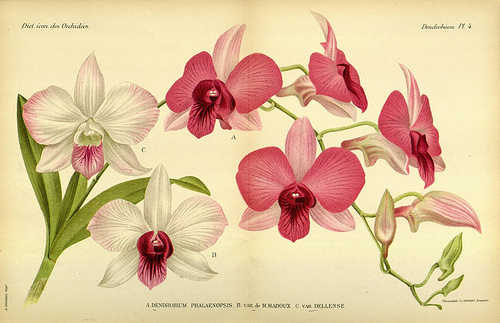
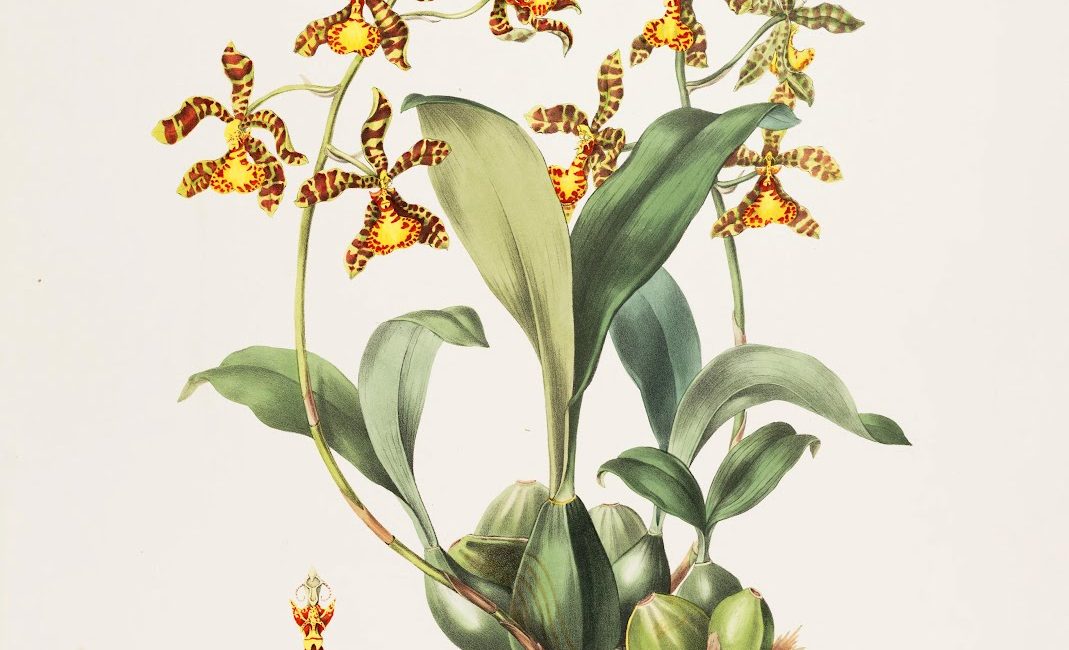
John Lindley was an English botanist who wrote a number of the important botanical works of the nineteenth century, many of which described new species and contained colored illustrations painted by his own hand. In 1830, Sarah Drake moved into the Lindley house in London and performed a variety of duties within the household, including governess to Lindley’s children. Eventually, however, her interests turned to botany and she illustrated many of the images in Lindley’s publications. Notable titles include Ladies’ Botany and Sertum Orchidaceum. Lindley even named a species in honor of Ms. Drake – The Western Australian Orchid genus Drakaea.

Sarah Drake illustrated a variety of titles for authors other than John Lindley as well, including plates from Sydenham Edwards’ The Botanical Register and our Book of the Week, Bateman’s The Orchidaceae of Mexico and Guatemala.

View Full Size Image

The Orchidaceae of Mexico and Guatemala contains forty folio plates dedicated to orchid species found in Central America. It is hailed as one of the rarest, most renowned, and most sought after orchid books ever published, with only 125 copies produced. In 2002, a copy of the work sold at Christie’s Auction House for 196,500 USD. According to W. Blunt in The Art of Botanical Illustration, this title is “probably the finest, and certainly the largest, botanical book ever produced with lithographic plates…In size and in splendour, Bateman’s giant folio eclipses the works of all who went before or came after him.” Bateman himself is also remembered as not only a pioneer in orchid culture, but also one of the first proponents of “cool” orchid cultivation.

Sarah Drake died in 1857, reportedly from diabetes, though some historians have suggested that she may have suffered from cumulative poisoning caused by her painting materials. As we honor the notable women of biodiversity history this month, we remember and applaud Sarah Ann Drake for the gorgeous artistic and scientific illustrations she contributed to botanical research.

View Full Size Image

Illustrations pictured in this post are by Sarah Ann Drake. Other illustrators for The Orchidaceae of Mexico and Guatemala include Augusta Withers, Jane Edwards and Samuel Holden.

March 8, 2012by michelle.underhill
Page 1 of 212»

Help Support BHL

BHL's existence depends on the financial support of its patrons. Help us keep this free resource alive!

search

About BHL

The Biodiversity Heritage Library (BHL) is the world’s largest open access digital library for biodiversity literature and archives. BHL operates as a worldwide consortium of natural history, botanical, research, and national libraries working together to digitize the natural history literature held in their collections and make it freely available for open access as part of a global “biodiversity community.”

Join Our Mailing List

Sign up to receive the latest news, content highlights, and promotions.

Subscribe Now

Subscribe to Blog via Email

Enter your email address to subscribe to this blog and receive notifications of new posts by email.

Join 319 other subscribers

Subscribe to Blog Via RSS

Subscribe to the blog RSS feed to stay up-to-date on all the latest BHL posts.

Access RSS Feed

Inspiring Discovery through Free Access to Biodiversity Knowledge.

The Biodiversity Heritage Library makes it easier than ever for you to access the information you need to study and explore life on Earth…for free, anytime, anywhere.


64+ Million Pages of
Biodiversity Literature Online.

EXPLORE

Tools and Services
to Transform Research.

EXPLORE

300,000+
Illustrations on Flickr.

EXPLORE

ABOUT | HARMFUL CONTENT | PRIVACY | SITE MAP | TERMS OF USE