Biodiversity Heritage Library - Program news and collection highlights from BHL
  • Home
  • News
  • Featured Books
    • All Featured Books
    • Book of the Month Series
    • BHL at 20
  • User Stories
  • Campaigns
    • Fossil Stories
    • Garden Stories
    • Monsters Are Real
    • Page Frights
    • Her Natural History
    • Earth Optimism 2020
  • Tech Blog
  • Visit BHL
Home
News
Featured Books
    All Featured Books
    Book of the Month Series
    BHL at 20
User Stories
Campaigns
    Fossil Stories
    Garden Stories
    Monsters Are Real
    Page Frights
    Her Natural History
    Earth Optimism 2020
Tech Blog
Visit BHL
  • Home
  • News
  • Featured Books
    • All Featured Books
    • Book of the Month Series
    • BHL at 20
  • User Stories
  • Campaigns
    • Fossil Stories
    • Garden Stories
    • Monsters Are Real
    • Page Frights
    • Her Natural History
    • Earth Optimism 2020
  • Tech Blog
  • Visit BHL
Biodiversity Heritage Library - Program news and collection highlights from BHL
BHL News, Blog Reel

Linking to Biodiversity Heritage Library from Wikipedia

Portrait version of the Biodiversity Heritage Library logo.

Seeding links from Wikipedia to BHL (2008 – 2012) from Chris Freeland

View more presentations from Chris Freeland.

In 2008, following a discussion with a senior staff member within the Wikimedia Foundation, I began a test to “seed” or “plant” links from Wikipedia pages into our newly launched (at that time) Biodiversity Heritage Library web site.

I describe my methodology in the presentation, but in short, I took a list of the 5,000 most frequently requested Wikipedia pages for the closest time period I could obtain. I then read through that list and extracted out any that had to do with organisms. I learned a lot about humanity reading through those requests – people search for some really, really sick stuff on Wikipedia – but I was able to determine a set of organisms in the search results. If we had scanned the book where that organism was originally described, like Lion, then I added the link to Linnaeus’ Systema Naturae, 1758, as a reference. If we didn’t have the original publication online, like Polar bear, then I linked to the Names Bibliography of that organism, showing where the name is found throughout BHL.

I was going to give this presentation at a conference, but didn’t make it for some reason…and there it sat for 4 years. We’ve recently started talking about doing more linking with Wikipedia and I remembered back to this little exercise and the documentation I had captured at the time. I’ve updated the presentation to look at trends carrying through the end of February 2012, giving a nice 3-4year time frame around which to draw some conclusions.

Have a look, post some comments if you have feedback. Glad the work is finally able to make it into users’ hands!

March 7, 2012by [email protected]
Blog Reel

My Life as a BHL Staffer: Bianca Crowley

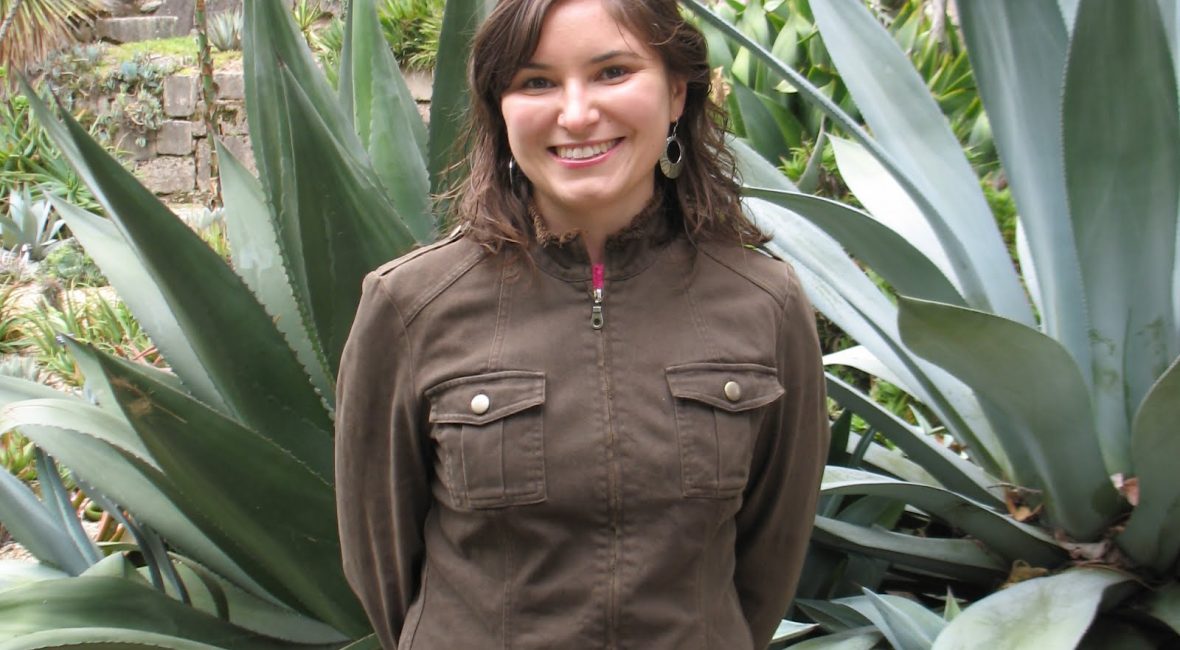
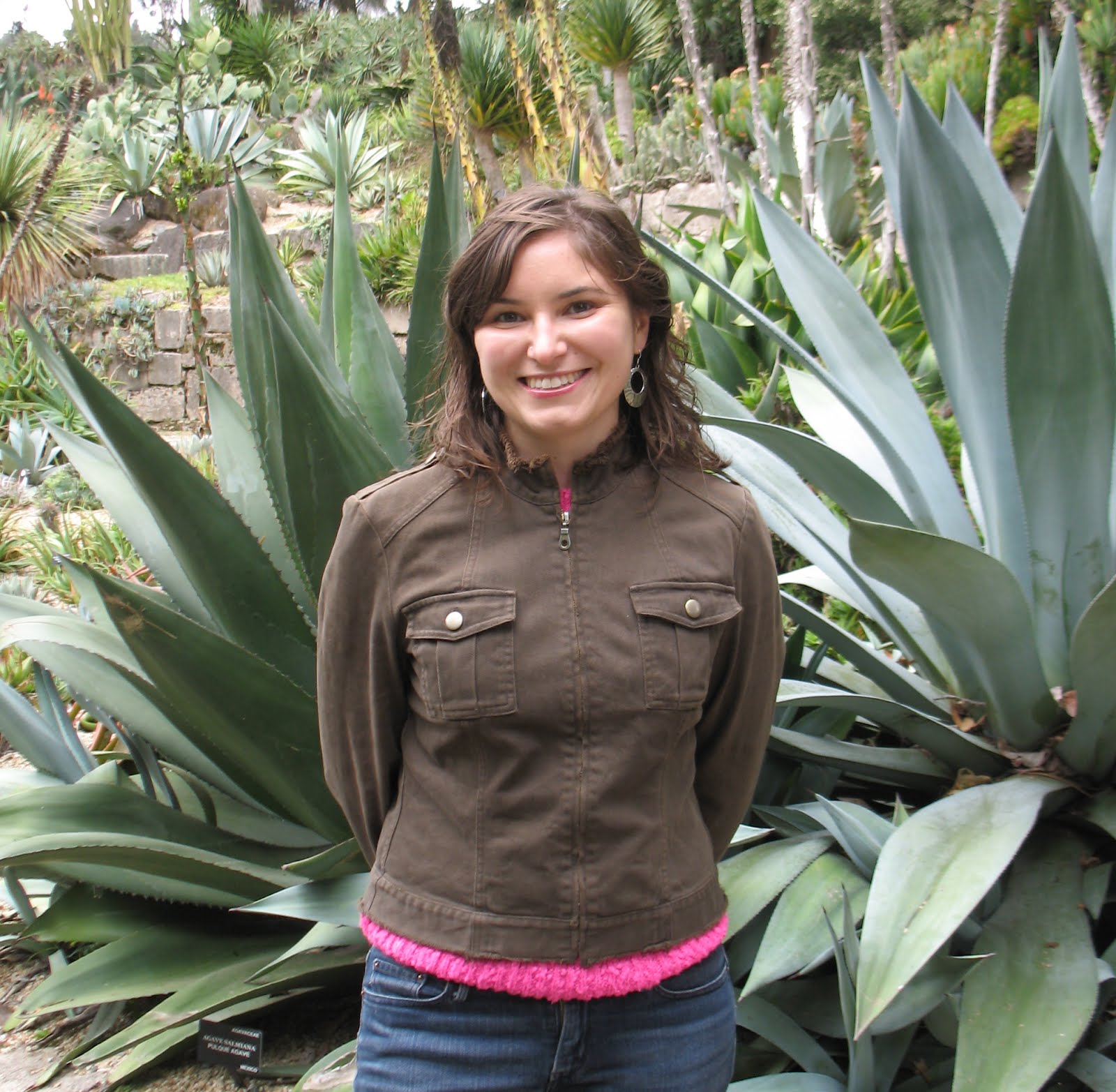
As Collections Coordinator for the Biodiversity Heritage Library, I am the point person for all things collections related. I lead and organize the work of the BHL Collections Committee, process all scanning requests, manage the acquisition of new materials and handle our permissions agreement workflow. In addition to my collections management work, I also…”coordinate”…things…namely the communications across our 14 member consortium, BHL Staff, and our Technical Development Team working out of the Missouri Botanical Garden. And then there’s also social media work, cataloging tasks, assisting the Tech Team to improve the BHL user experience, and answering the occasional reference question.
View Full Size Image
Content is King
The BHL collection holds nearly 54,000 titles, over 102,000 volumes, and continues to grow. The majority of the BHL digital corpus derives from the physical collections of the 14 member BHL consortium. In addition, we “ingest” biodiversity related materials from the corpus of texts held within the Internet Archive. In doing so, you will see content in BHL from the California Digital Library, Library of Congress, University of Toronto, North Carolina State University Libraries, and others.

The BHL Collections Committee developed the criteria for ingesting biodiversity relevant materials from the Internet Archive, and continues to tweak this criteria as new content is made available. We also put together the BHL Collection Development Policy and the BHL Deaccession Policy. It is not often that we decide to remove something from the BHL collection, but when we do it is only by unanimous vote. We meet regularly to discuss collections related decisions and tasks, such as developing new sub-collections of BHL content as well as new collections for iTunes U. If you have any suggestions for collections you would like to see in BHL or iTunes U, please let us know by submitting your comments to the BHL feedback form.

The Long and Winding Queue
Speaking of the feedback form…as you may know by now, we have a “scanning request” form that allows you to enter requests for content to be scanned. To date, nearly 1500 scanning requests have been submitted and it is my responsibility to process each one. We use an issue tracking system to manage all the requests that come through, from initial scanning assignment to availability of the title in the BHL web portal.

On average, we receive between 2-3 requests per day and approximately 25% of the requests we receive are for materials that require “special handling,” meaning that these materials are either rare, oversized, or in such a condition as to render them ineligible for scanning through our standard workflow with the Internet Archive. We take every measure to fulfill the requests that come in from our users, but requests for “special handling” materials are particularly difficult to fulfill as they are expensive, take additional time and resources to process, and may be so rare that only 1 BHL member library holds the title in their collection. Additionally, only a few BHL member libraries are equipped to digitize rare book materials.

One request at a time, books and missing volumes of a journal, aka “gap-fills,” are processed in the order they are received. At times a seemingly simple scanning request can take hours to investigate, require the work of 3 or more BHL member libraries to scan, and months may go by before the content is made available online. This is because processing scanning requests might require a good deal of bibliographic sleuthing before they can be appropriately assigned. Is the material requested already in BHL under a different title or series? Is the work available at a BHL member library for scanning? Is the book in the public domain? Is the volume requested bound with another volume or available under its monographic title? Will the bibliographic record in one library’s catalog match the record in another library’s catalog? Etc., etc., etc. I can easily find myself lost down a rabbit hole of bibliographic metadata, only to come out in a wonderland of biodiversity literature.

Pride & Permissions
I am proud to work for a digital library project that advocates for open access and open data. Not only am I living my dream of working for a digital library project at the Smithsonian Institution, but I am participating in what I see as a fundamental shift away from the library-as-information-silo to the library of the 21st Century. By putting our data out there (all the taxonomic names held within the pages of our corpus and all the bibliographic data about the books in our collection), the BHL is providing opportunities for biodiversity literature to be repurposed in new ways, ultimately connecting it back to the scholarly research cycle. Want to automatically link all the specimens in your database to the first publication of the scientific name? Be my guest. All I ask is that you let us know what cool things you’re doing with BHL data via @BioDivLibrary, BHL on Facebook, or through our feedback form.

This is why it is so important for the BHL to increase the amount of content it has in its collection beyond the United States public domain cut-off of 1922. As Collections Coordinator I manage the agreements with publishers and copyright holders who grant us permission to digitize in-copyright content. Thus far, I have not had the time to be proactive about pursuing permissions agreements but it is my goal for this year to ramp up BHL permissions activities. If you are a publisher or copyright holder that would like to see your content available via the BHL, please contact me at crowleyb[at]si.edu or visit our BHL Permissions page for more information.

Channeling the Hive Mind
I am privileged to work with an amazing team of librarians, techies, and biodiversity literature users. One of the most important aspects of my work has been to improve and uphold the free flow of communications among our BHL Staff, Technical Development Team, and our users. With staff scattered throughout the United States and United Kingdom, over 5 different time zones, with varying degrees of institutional resources, and differing digitization workflows, it is amazing to see how closely we work together. We use whatever tools we can to get things done, including but not limited to wikis, conference calls, email, video, issue tracking systems (one for scanning issues and one for tech stuff), skype, Google Docs, Twitter, quarterly reports, listservs, and our blog. As each BHL member institution works autonomously to select and scan what they can within their own digitization workflow, it is critical to maintain a balance between an institution’s independent needs as well as the collective requirements of the consortium. We do this by empowering ourselves to make decisions from the bottom-up and trusting each other to do what’s best for the project.

I received my MSLS from the Catholic University of America and a BA in Anthropology from the University of Maryland at College Park. My love of digital libraries largely grew out of my work in the Botany Department of the National Museum of Natural History as Project Manager for the Botany of the United States Exploring Expedition project. I love what I do for the Biodiversity Heritage Library. I have seen the project grow and mature in the 3 years that I have been working as Collections Coordinator and look forward to playing my part in the progress that BHL will make in the future.

March 5, 2012by SheilaC7108
Blog Reel

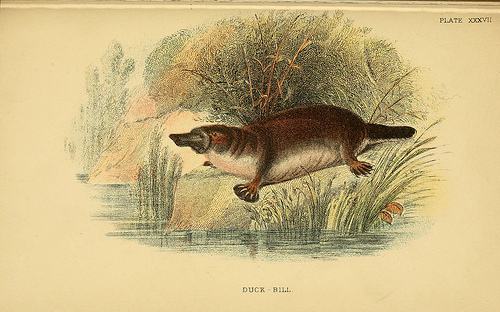
Platypus Day, Ornithorhynchus anatinus

Portrait version of the Biodiversity Heritage Library logo.
View Full Size Image
In case you didn’t know it, today, March 3rd, is Platypus Day (thanks to our friends at Phineas and Ferb). In this case, we’re celebrating the “semi-aquatic egg-laying mammal of action,” Perry the Platypus, but you might want to learn more about this amazing creature by following the links below.
Learn more about Ornithorhynchus anatinus at the
  • Biodiversity Heritage Library
  • Encylopedia of Life
  • Atlas of Living Australia
  • Wikipedia
View Full Size Image
March 3, 2012by joelrichard
Blog Reel

Flickr: BHL’s Unexpected Success Story

Portrait version of the Biodiversity Heritage Library logo.

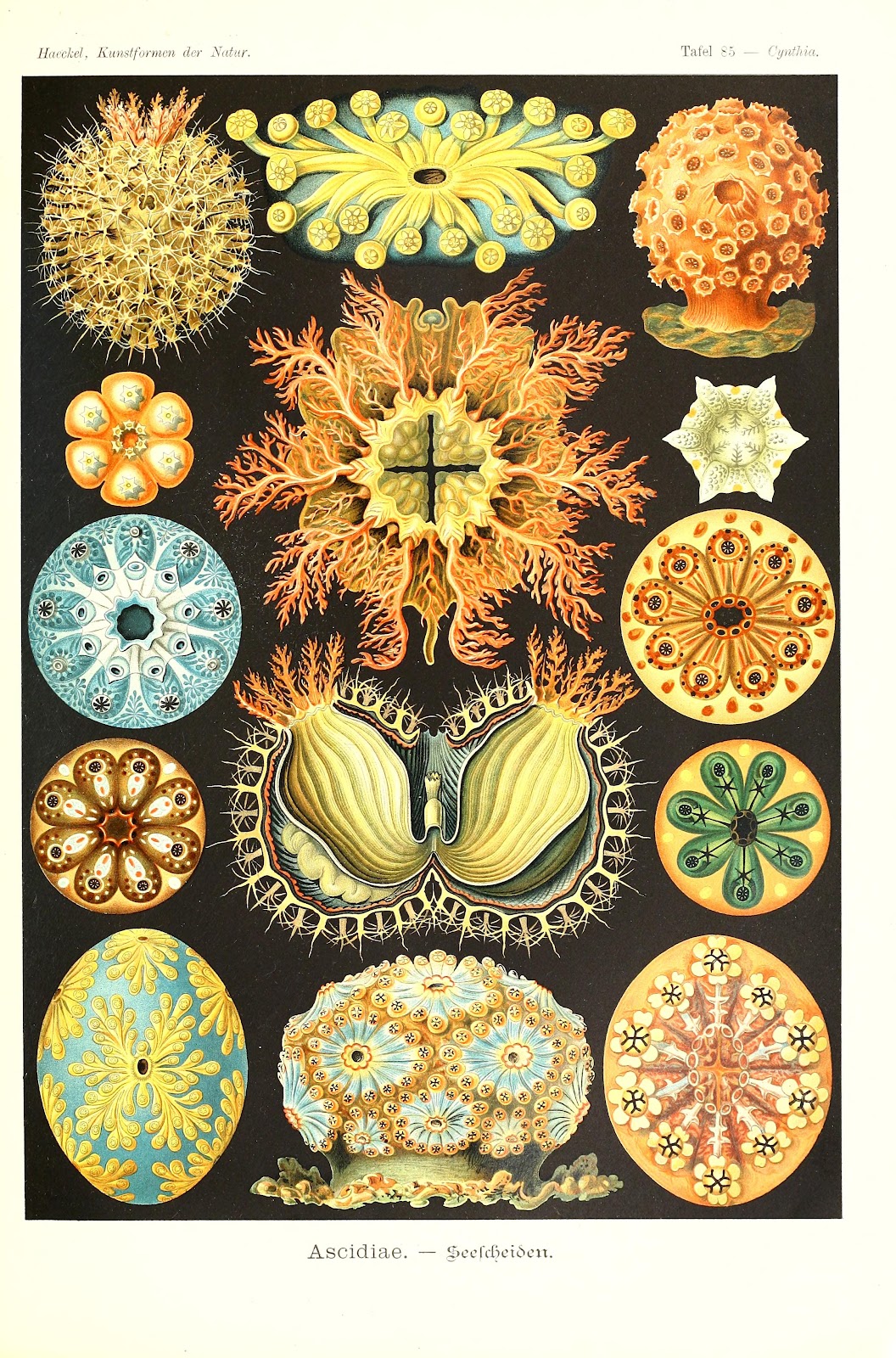
In July, 2011, several members of the BHL staff began putting illustrations from BHL books on Flickr. It started as a simple way to flag favorite staff images and document the illustrations we were using in various outreach activities, like Twitter and Facebook. Today, our Flickr presence has grown to a collection of over 24,000 images and has become one of the most user-celebrated aspects of the BHL project, prompting such statements as “I think I’m in love” and “My favorite Flickr in the whole world!” Several people have asked us to share our experiences using Flickr as a component of BHL and discuss its growth from inception to the success it is now. We couldn’t think of a better place to do this than on our blog.

What’s In It for Us? The Benefits of Flickr

View Full Size Image

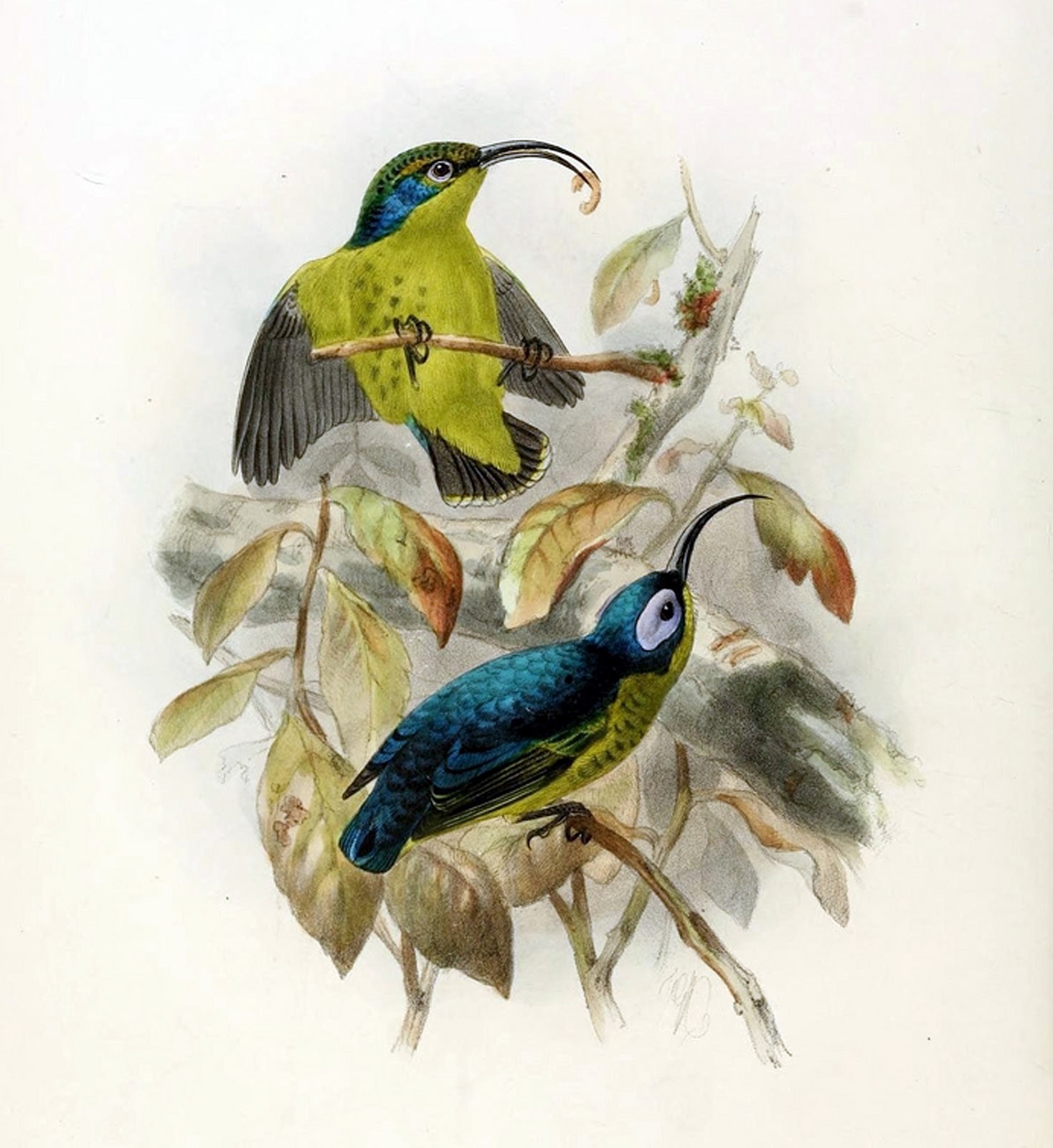
Using Flickr has generated a variety of benefits for the BHL project, many of which were unexpected. First and foremost, Flickr provides us with an easy way to showcase our amazing images – a BHL treasure that was all but hidden in our collection. Before Flickr, there was no simple way for users to access the images in BHL. Now, using Flickr sets and collections, users can go to one place and quickly browse thousands of images. And all of these images are available for free download and re-use, which is an excellent “selling” point for anyone interested in finding gorgeous natural history and botanical illustrations.*

Flickr also allows us to broaden our outreach potential, branching outside of our classic BHL interface and reaching our users on a new platform. The audience using Flickr is often quite different from our traditional user base, thus having a presence on Flickr means that we are able to reach a whole new group of people, including artists and k-12 educators.
View Full Size Image

Our Flickr group has also provided many unexpected benefits to BHL staff. Not only can users more easily find BHL images, but so can we! What started as a way to document those images we were already using in social media quickly became the source of much of this activity. Flickr images provide excellent fodder for our various social media activities, including tweets, facebook posts and trivia, and provide inspiration for many of our Book of the Week posts. Staff can now easily find illustrations to “spice up” BHL promotional materials, including brochures, business cards, banners, and merchandise, or even bring flair to events like donation campaigns. Plus, incorporating images into BHL reports transforms the otherwise boring white pages into alluring, eye-catching documents that people actually want to read.

The World of Tagging Images: Machine Tags

Through the use of machine tags, Flickr also allows us to collaborate more extensively with projects like EOL. Machine tags look like:

  • “taxonomy:binomial=Aegotheles savesi” (quotes required due to space b/w Genus & species)
  • taxonomy:family=Fabaceae
  • taxonomy:genus=Rhinoceros
  • taxonomy:common=Cardinal

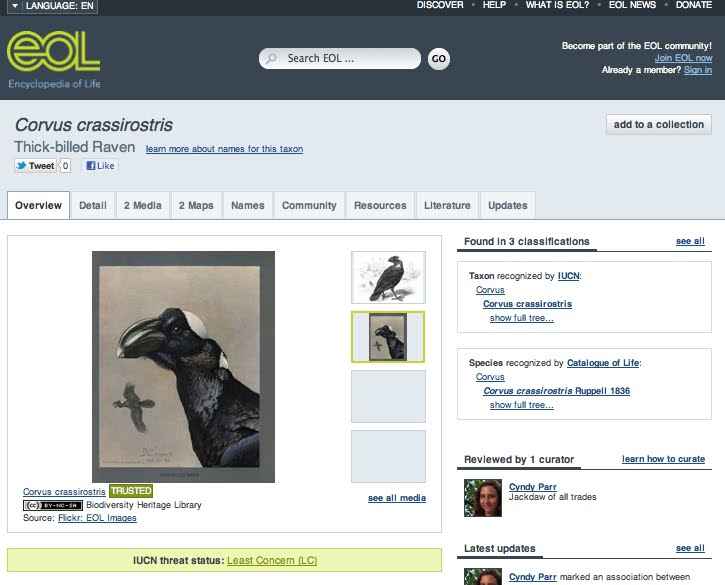
Any time an image from our Flickr photostream is machine tagged, it becomes “flagged” for inclusion into the EOL Group Pool and will thus become a part of EOL species pages. (Images are added to the EOL pool on a monthly basis).
View Full Size Image

See this example of an EOL page for Corvus crassirostris. You’ll notice that the image of the Thick-billed Raven from the BHL Flickr set Album of Abyssinian Birds and Mammals is featured on the page. How cool is that?! In addition to the links from EOL pages (under the “Literature” tab) to taxonomic name occurrences in BHL, now BHL image content can be repurposed directly onto EOL species pages.

We would absolutely love your help tagging more of our images for EOL. For more information about machine tagging, please see the instructions provided by EOL here and feel free to contact us via Flickr mail, Twitter @BioDivLibrary, or our feedback form if you have any questions.

Please note that you have to have a Flickr profile to add tags to BHL images. If you are already a Flickr member or considering becoming one, and would like to have your own images of flora and fauna harvested to EOL species pages, please see the following for more information: http://www.flickr.com/groups/encyclopedia_of_life/rules/.

Proud Parents: Watching our Flickr Mature

View Full Size Image

Since the inception of our Flickr group, there have been many project milestones, the first of which (besides actually starting the account!) was implementing a basic organizational structure. Once it was clear that BHL wanted to fully participate in the Flickr environment, staff transformed a haphazard pool of images into organized sets and collections, with sets structured around individual titles and collections around subjects and content types (like “Mammals” or “Book of the Week“). Slightly later, staff capitalized on the opportunity Flickr offered us to celebrate specific events, organizing themed collections such as Halloween or the Holiday Season.
View Full Size Image
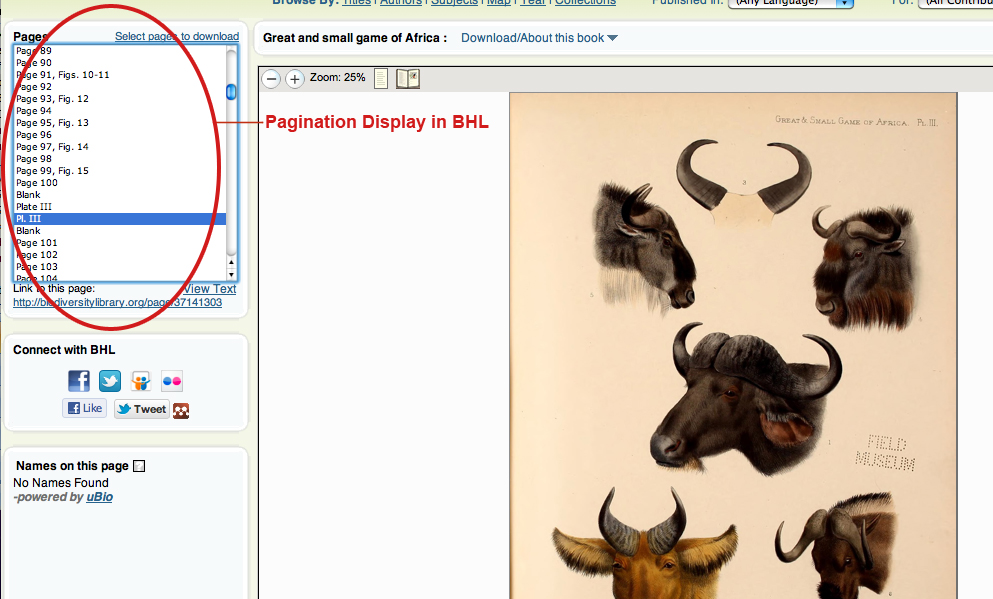
Pagination display on BHL

Eventually, staff realized that Flickr could help us target specific content in our collection for metadata improvement – specifically, pagination improvement. Pagination refers to the display of page numbering that you see on the left hand side of the BHL screen when viewing a book. Although very basic pagination is performed at the time of book scanning, BHL staff manually update this pagination with more helpful information such as identifying illustrations, designating articles, and embedding year and volume information. Learn more about BHL pagination in Gilbert Borrego’s post. Since those books featured on Flickr became some of the most popular in BHL, and since it was difficult to locate illustrations within these items without improved pagination, staff began to prioritize Flickr titles for pagination improvement. As of this week, all 450+ titles in Flickr have been manually paginated in BHL!
View Full Size Image

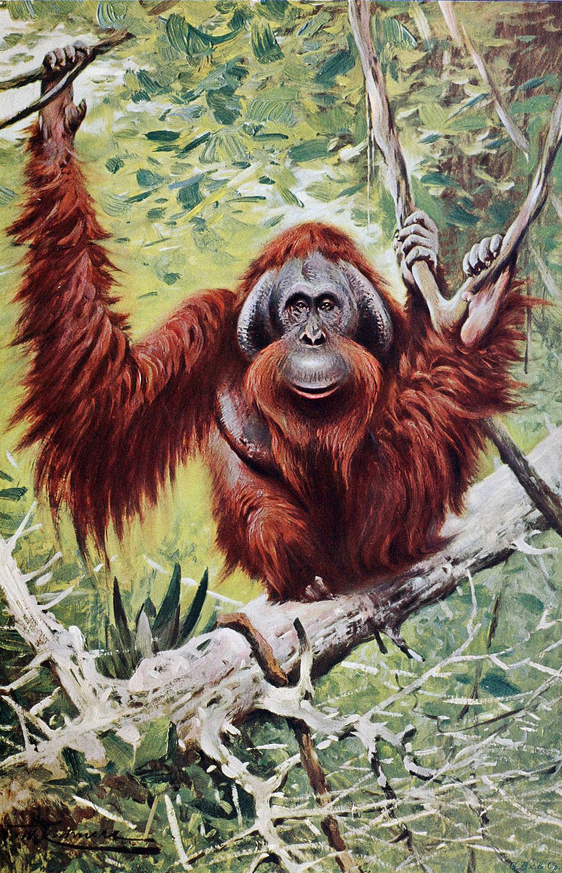
Our most recent milestone addresses one of the most common requests we’ve had regarding Flickr content. Until recently, images in Flickr only linked back to the volume level in BHL. This meant that the BHL urls associated with an image in Flickr did not link to the specific page in BHL, but instead to the “item” or book that contained the image. It was often difficult to then locate the image within the book, especially if the pagination had not yet been manually updated. Thanks to the Technical Development team at the Missouri Botanical Garden, all images in Flickr now have page-level links associated with them, allowing users to find the page within a BHL book with a single click.

This improvement came with an added benefit for BHL staff. Previously, to upload images into Flickr, staff had to first download the images from BHL, open them in Adobe Bridge to embed metadata, and then bulk upload to Flickr (more on the previous Flickr process in Gilbert Borrego’s post). Now, staff can flag illustrations directly within the BHL back-end administration portal. Software developed by the MOBOT team then automatically embeds book and page information to these images and uploads to Flickr.

For more information on the technical aspects of these improvements, see our FAQ page.

Overall, we’ve found that Flickr offers us an excellent opportunity to provide access to aspects of our content that were overlooked and under-appreciated. Reaching new audiences and demonstrating that BHL has much to offer outside the realm of taxonomy is a critical step in the growth of the project.

View Full Size Image

*All BHL images are public domain. However, Flickr does not provide a “public domain” license option. Therefore, our images are listed in Flickr as Attribution, Noncommercial, Share Alike.

March 1, 2012by ulib-libraryjobs
Page 2 of 2«12

Help Support BHL

BHL's existence depends on the financial support of its patrons. Help us keep this free resource alive!

search

About BHL

The Biodiversity Heritage Library (BHL) is the world’s largest open access digital library for biodiversity literature and archives. BHL operates as a worldwide consortium of natural history, botanical, research, and national libraries working together to digitize the natural history literature held in their collections and make it freely available for open access as part of a global “biodiversity community.”

Join Our Mailing List

Sign up to receive the latest news, content highlights, and promotions.

Subscribe Now

Subscribe to Blog via Email

Enter your email address to subscribe to this blog and receive notifications of new posts by email.

Join 319 other subscribers

Subscribe to Blog Via RSS

Subscribe to the blog RSS feed to stay up-to-date on all the latest BHL posts.

Access RSS Feed

Inspiring Discovery through Free Access to Biodiversity Knowledge.

The Biodiversity Heritage Library makes it easier than ever for you to access the information you need to study and explore life on Earth…for free, anytime, anywhere.


64+ Million Pages of
Biodiversity Literature Online.

EXPLORE

Tools and Services
to Transform Research.

EXPLORE

300,000+
Illustrations on Flickr.

EXPLORE

ABOUT | HARMFUL CONTENT | PRIVACY | SITE MAP | TERMS OF USE