Biodiversity Heritage Library - Program news and collection highlights from BHL
  • Home
  • News
  • Featured Books
    • All Featured Books
    • Book of the Month Series
    • BHL at 20
  • User Stories
  • Campaigns
    • Fossil Stories
    • Garden Stories
    • Monsters Are Real
    • Page Frights
    • Her Natural History
    • Earth Optimism 2020
  • Tech Blog
  • Visit BHL
Home
News
Featured Books
    All Featured Books
    Book of the Month Series
    BHL at 20
User Stories
Campaigns
    Fossil Stories
    Garden Stories
    Monsters Are Real
    Page Frights
    Her Natural History
    Earth Optimism 2020
Tech Blog
Visit BHL
  • Home
  • News
  • Featured Books
    • All Featured Books
    • Book of the Month Series
    • BHL at 20
  • User Stories
  • Campaigns
    • Fossil Stories
    • Garden Stories
    • Monsters Are Real
    • Page Frights
    • Her Natural History
    • Earth Optimism 2020
  • Tech Blog
  • Visit BHL
Biodiversity Heritage Library - Program news and collection highlights from BHL
Blog Reel, Campaigns, Featured Books, Page Frights

Bishops in the Sea for Halloween!

View Full Size Image
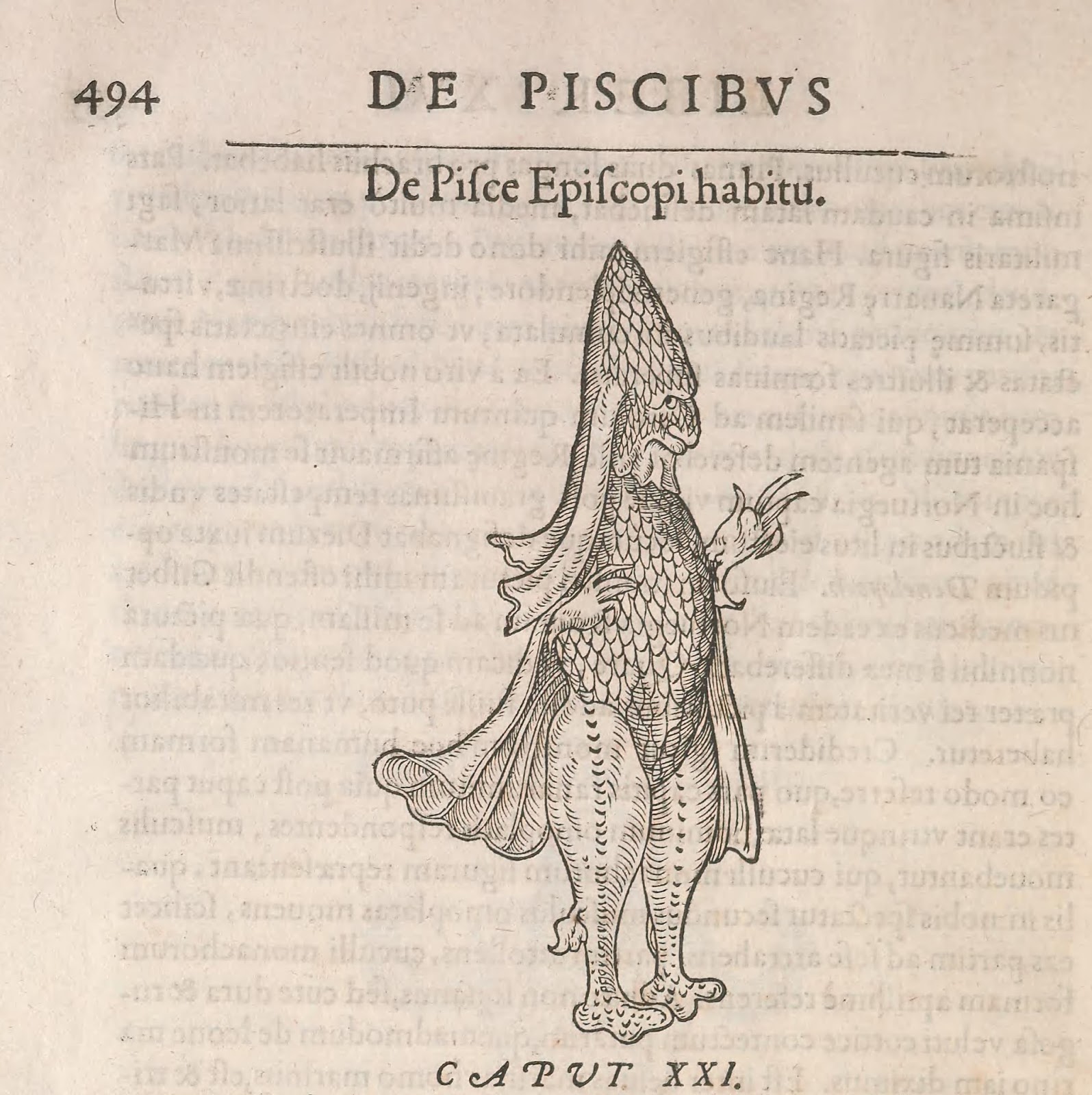
The ‘bishop fish’. Rondelet, Guillaume. Libri de Piscibus Marinis. 1554. http://biodiversitylibrary.org/page/42089973. Digitized by Smithsonian Libraries.

Apparently, clergymen in the 16th century had a lot of extra time on their hands to masquerade as sea monsters and make their marks on the annals of natural history as sea monks and bishop fish.

All this month, we’ve been exploring curious creatures in natural history as part of Page Frights. Today being Halloween, we thought we’d continue the fun by highlighting another “clergyman monster in disguise,” the bishop fish!

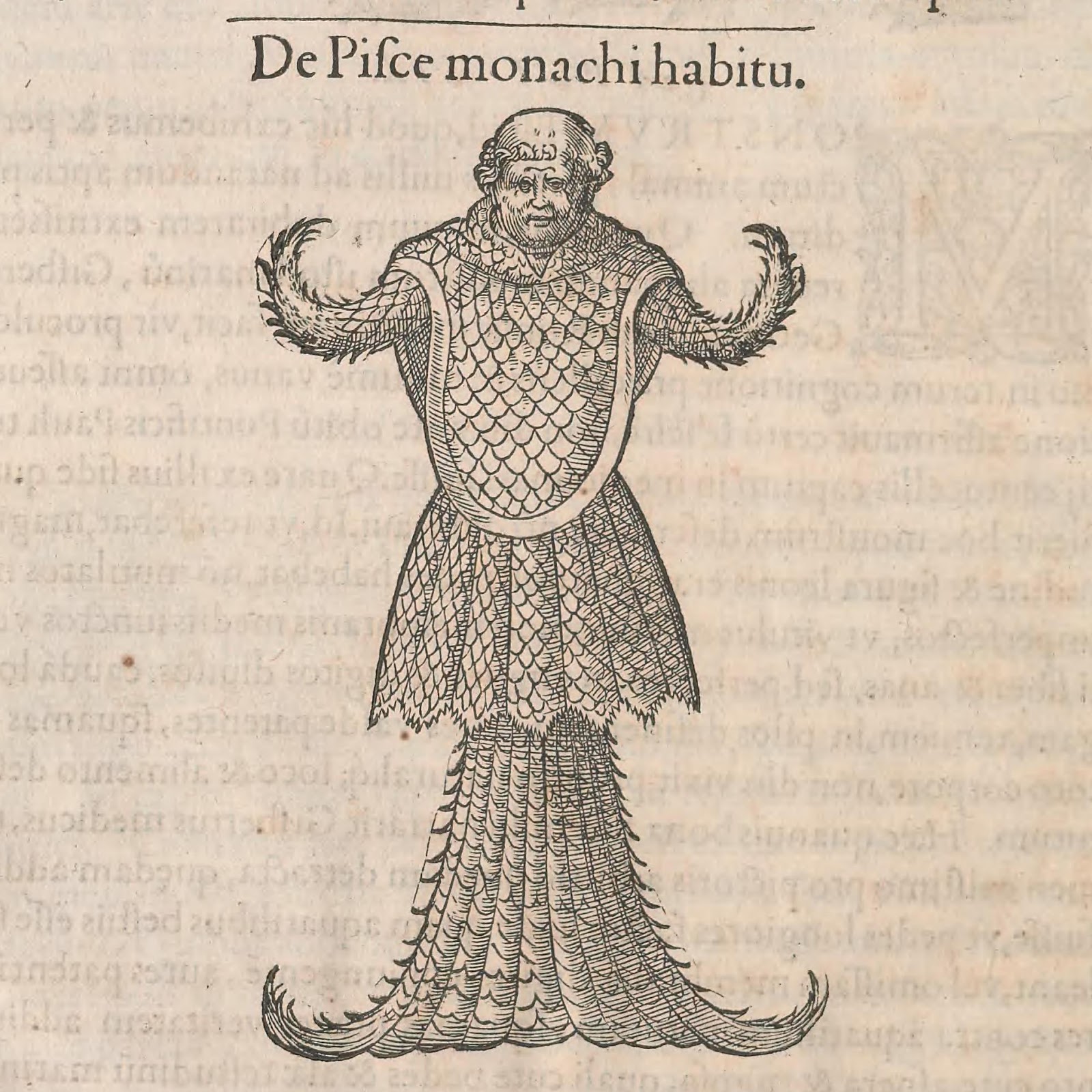
Earlier this month, we highlighted the ‘sea monk,’ or Piscis monachi habitu (“Fish with the habit of a monk”), a specimen of which was reportedly caught in the seas between Sweden and Denmark in the 1540s. The creature was said to resemble a monk, with “a human head and face, resembling in appearance the men with shorn heads.” The sea monk made its way into many natural history books of the era, including Belon’s De Aquatilibus (1553), Rondelet’s Libri de Piscibus Marinis (1554), and Gessner’s Historia Animalium (1558).
View Full Size Image
Piscis monachi habitu, “fish with the habit of a monk”. Rondelet, Guillaume. Libri de Piscibus Marinis. 1554. http://biodiversitylibrary.org/page/42089971. Digitized by Smithsonian Libraries.

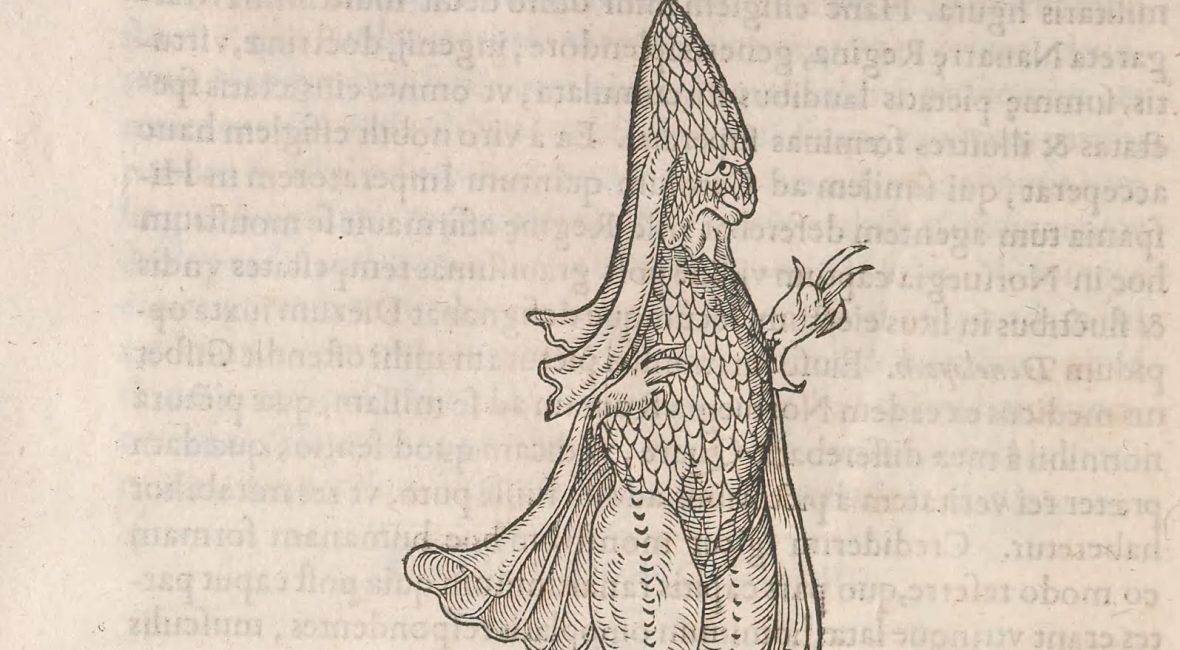
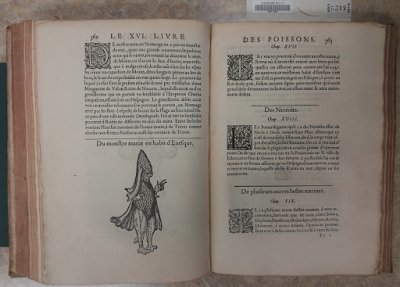
Rondelet and Gessner also depict another similar monster: the ‘bishop fish’ or “monstre marin en habit d’évêque.” The monster was said to have two projections resembling claws in place of pectoral fins, tail fins resembling legs, and a projection resembling a bishop’s miter on its head. In his Libri de Piscibus Marinis, Rondelet writes that,

“I have seen a portrait of another sea-monster at Rome, whither it had been sent with letters that affirmed for certain that in 1531 one had seen this monster in a bishop’s garb, as here portrayed, in Poland. Carried to the king of that country, it made certain signs that it had a great desire to return to the sea. Being taken thither it threw itself instantly into the water” (translation David Starr Jordan)

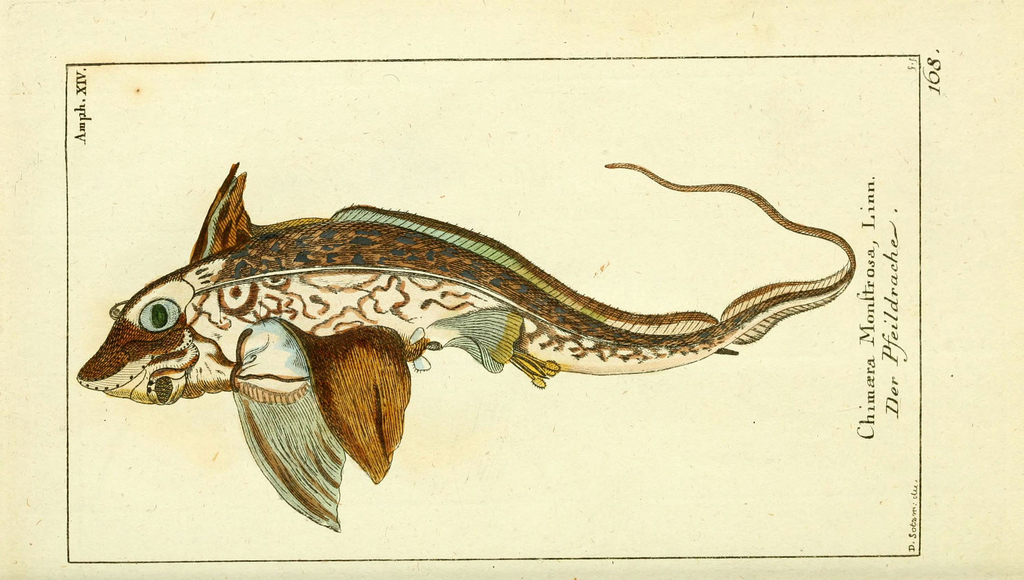
Some researchers have postulated, as with the monk fish, that legends of the bishop fish may have been inspired by giant squids. In v. 5 of his General Zoology, George Shaw suggested that the northern chimaera (Chimaera monstrosa) may have been responsible for the myth. He writes,

“I have sometimes found it not improbable that the Bishop-Fish, described and figured in the works of Rondeletius, may have taken its rise from distorted preparations of the upper part of this animal, with the addition of some other articles to form the lower part.”
View Full Size Image
Could Chimaera monstrosa have been the inspiration for the bishop fish? Borowski, Georg Heinrich. Gemeinnüzzige Naturgeschichte des Thierreichs. Bd. 4, plates (1783). http://biodiversitylibrary.org/page/28346493. Digitized by Smithsonian Libraries.

Rondelet’s Libri de Piscibus Marinis (literally “Book of Marine Fish”) described nearly 250 marine animals, including fish, whales, marine invertebrates, and seals (all of which were referred to as fish), and was the standard ichthyological reference work for over a century. Given the importance of this title, it is not surprising that the legend of the bishop fish was perpetuated throughout many future natural history publications.
View Full Size Image
Bishop fish in the Canadian Museum of Nature’s copy of the French edition (1558, Histoire Entière des Poissons) of Rondelet’s Libri de Piscibus Marinis. This copy will be digitized for BHL.

BHL’s first Canadian partner, the Canadian Museum of Nature, holds the French edition (1558) of Rondelet’s Libri de Piscibus Marinis, which will be digitized for inclusion in BHL. Roberto Lima, Acquisitions and Cataloguing Officer in the museum’s library, provides some insight on the publication and the museum’s copy.

“The exact provenance of our copy of Rondelet’s Histoire entière des poissons is as intriguing as the depicted bishop fish itself, which makes it even more relevant for Halloween! We believe we acquired it through inheritance from the Geological Survey of Canada, the country’s oldest scientific agency. The copy still shows the now dissolved National Museums of Canada Library stamp, which reflects both the item’s as well as the Canadian Museum of Nature’s history within the Government of Canada. Mysterious as it may be as far as its actual origin goes, the presence of this item in the GSC collections is no surprise if one considers the importance of this publication. This is also why this book is on our priority list for digitisation in the context of the Biodiversity Heritage Library. It is appealing to think that this 1558 French translation will rejoin its 1554-5 Latin counterpart in the BHL’s digital space, similar to what happened during the XVI century when both works saw the light of the day in the print world.”

We too look forward to comparing the different versions of these works, and the curious creatures they depict, in BHL’s digital space. You can subscribe to BHL’s RSS feed of recent additions to be notified when this and other interesting titles are added to BHL.

So, as you don your Halloween costumes today, give a thought to the mysterious clerical sea monsters of bygone centuries. Perhaps the clergymen of the era had an affinity for costumes as well…. 😉

Happy Halloween!
October 31, 2016by michelle.underhill
Blog Reel, Campaigns, Featured Books, Page Frights

Arachnophobes Beware! The Birth of Spider Nomenclature Just in Time for Halloween!

View Full Size Image
Clerck, Carl. Svenska Spindlar. 1757. Digitized by Smithsonian Libraries. http://www.biodiversitylibrary.org/page/51379398.

Arachnophobia (the fear of spiders and other arachnids) is one of the most prevalent phobias in the world, and some estimates suggest that over 30.5% of people in the United States alone have a fear of arachnids (Health Research Funding 2014).

Given the pervasiveness of this phobia, we thought it only appropriate to spend some time on the subject of spiders as part of our Page Frights celebration. Being the science-focused organization that we are, we decided to look at the topic of arachnids from a taxonomic point of view.

View Full Size Image
Clerck, Carl. Svenska Spindlar. 1757. Digitized by Smithsonian Libraries.  http://www.biodiversitylibrary.org/page/51379410.

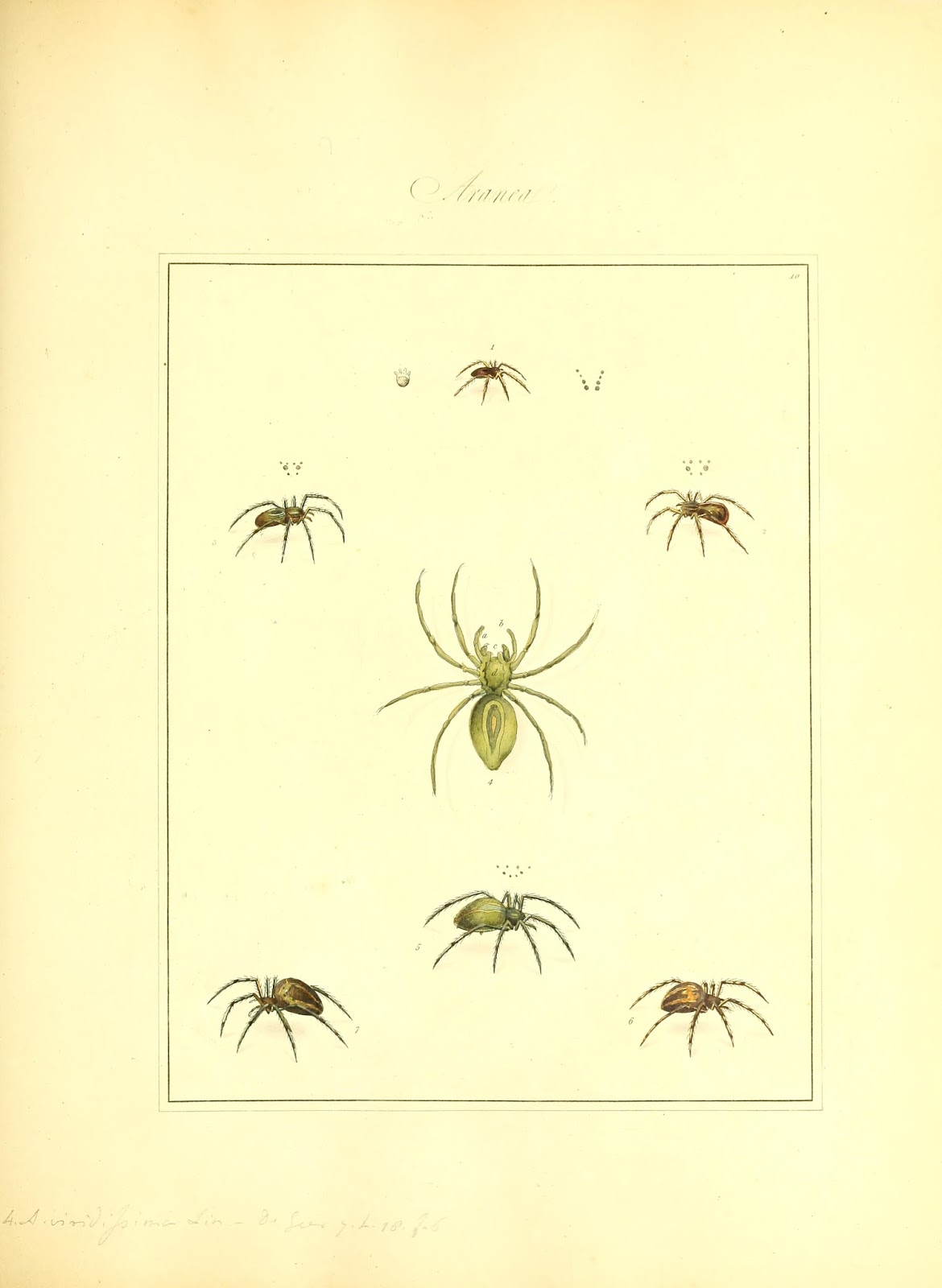
The founding text on spider nomenclature is Svenska Spindlar. It was published in 1757 by Carl Clerck, a member of the Swedish nobility. If you’re familiar with the history of taxonomy, you may notice something interesting about the date of this publication. The International Commission on Zoological Nomenclature considers Carl Linnaeus’ Systema Naturae, published in 1758, to be the starting point of zoological nomenclature. How then could a book published in 1757 be considered the starting point of spider nomenclature?

Leslie Overstreet, Curator of Natural History Rare Books at the Smithsonian Libraries (who recently digitized this title for BHL), helped shed some light on the situation.

Clerck became a friend and correspondent of Linnaeus’ after attending Uppsala University, where Linnaeus had received most of his own higher education and served as a professor beginning in 1741. In 1753, Linnaeus applied his binomial system for botanical names within Species Plantarum. When Clerck went to publish his descriptions of the large number of Swedish spiders that he had collected and studied, he did so following Linnaeus’ binomial system. As Linnaeus would not publish his own foundational text on zoological nomenclature until 1758, Clerck’s spiders became the first animals in modern zoology to receive valid scientific names according to the Linnaean system.

View Full Size Image
Clerck, Carl. Svenska Spindlar. 1757. Digitized by Smithsonian Libraries.  http://www.biodiversitylibrary.org/page/51379414.

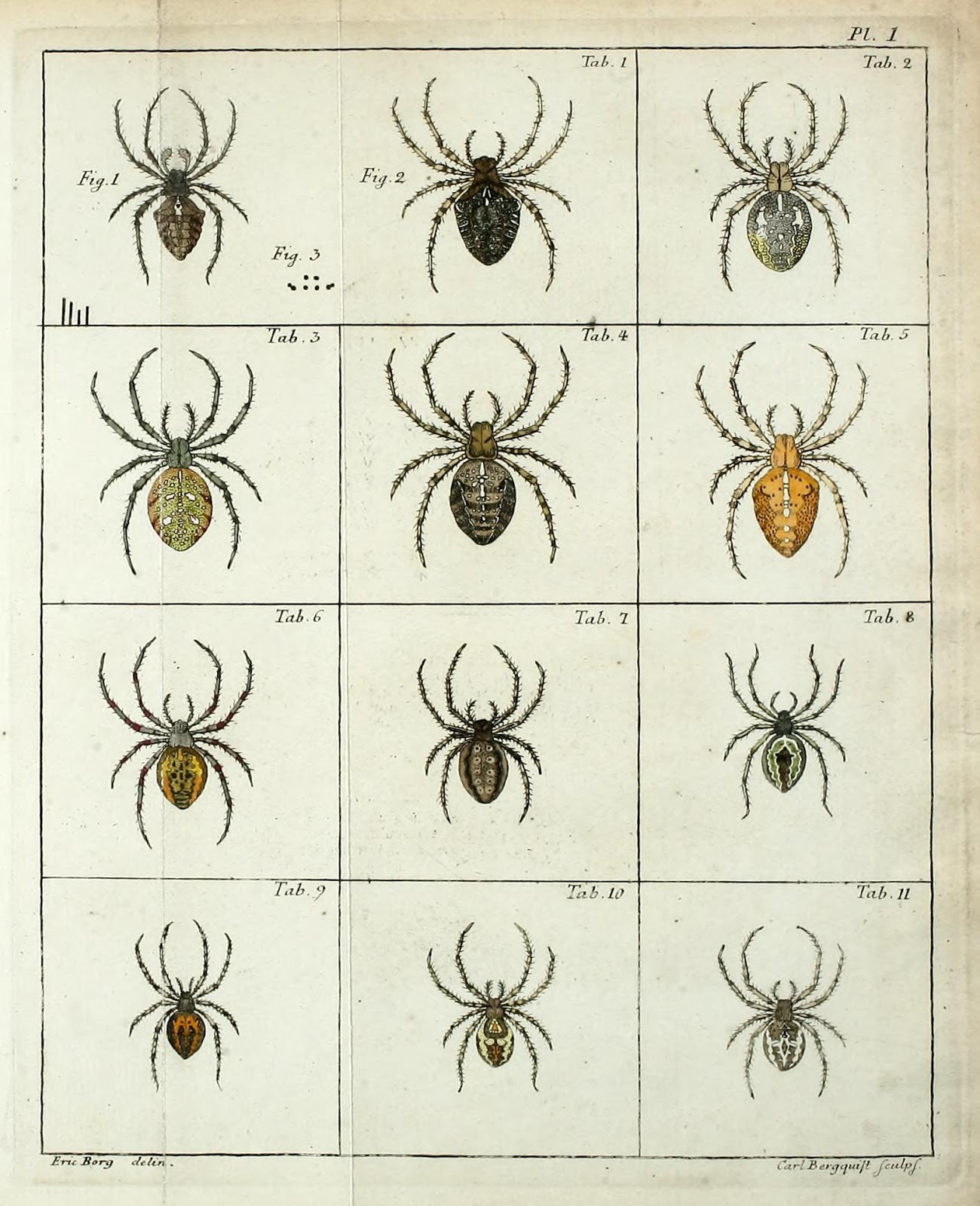
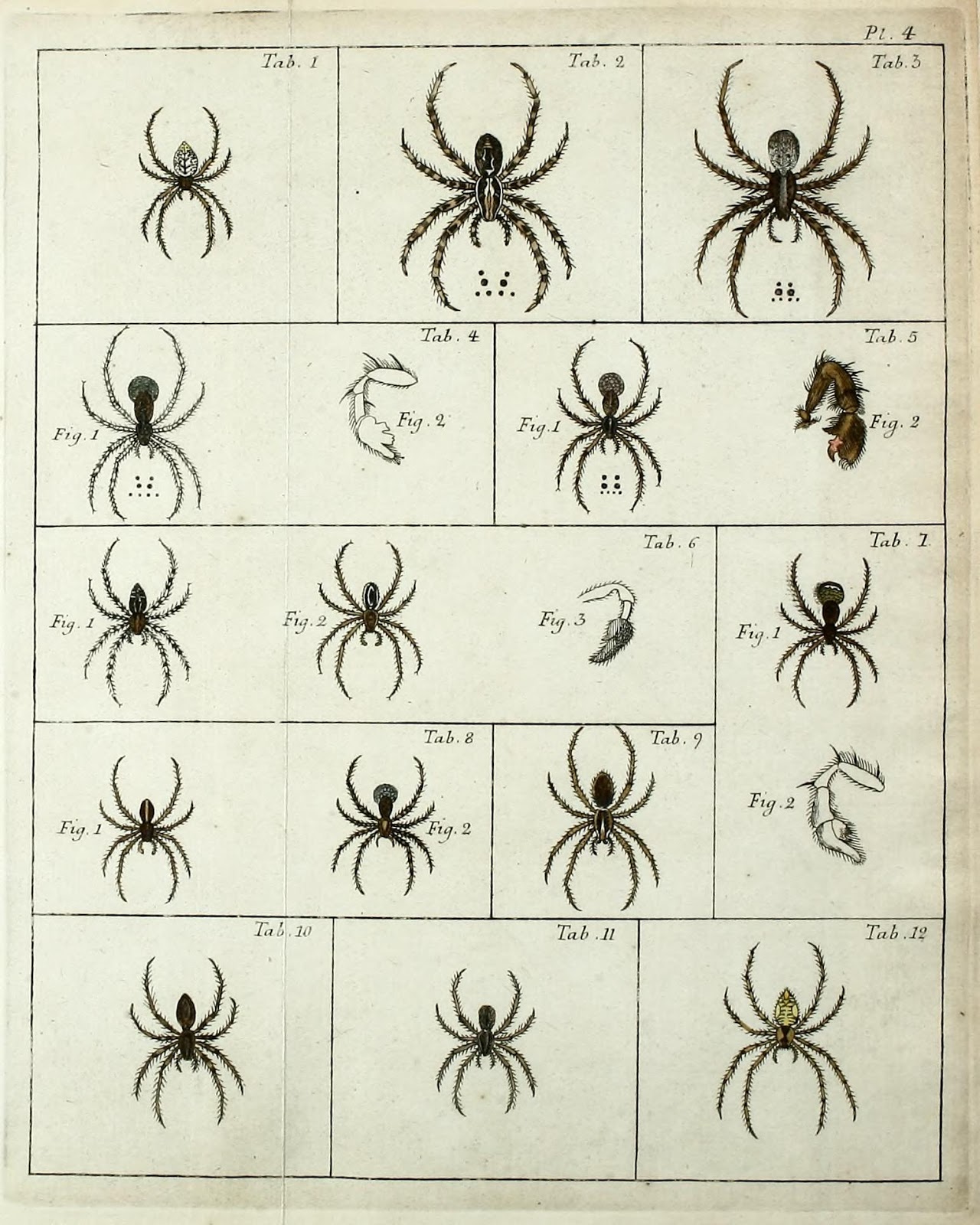
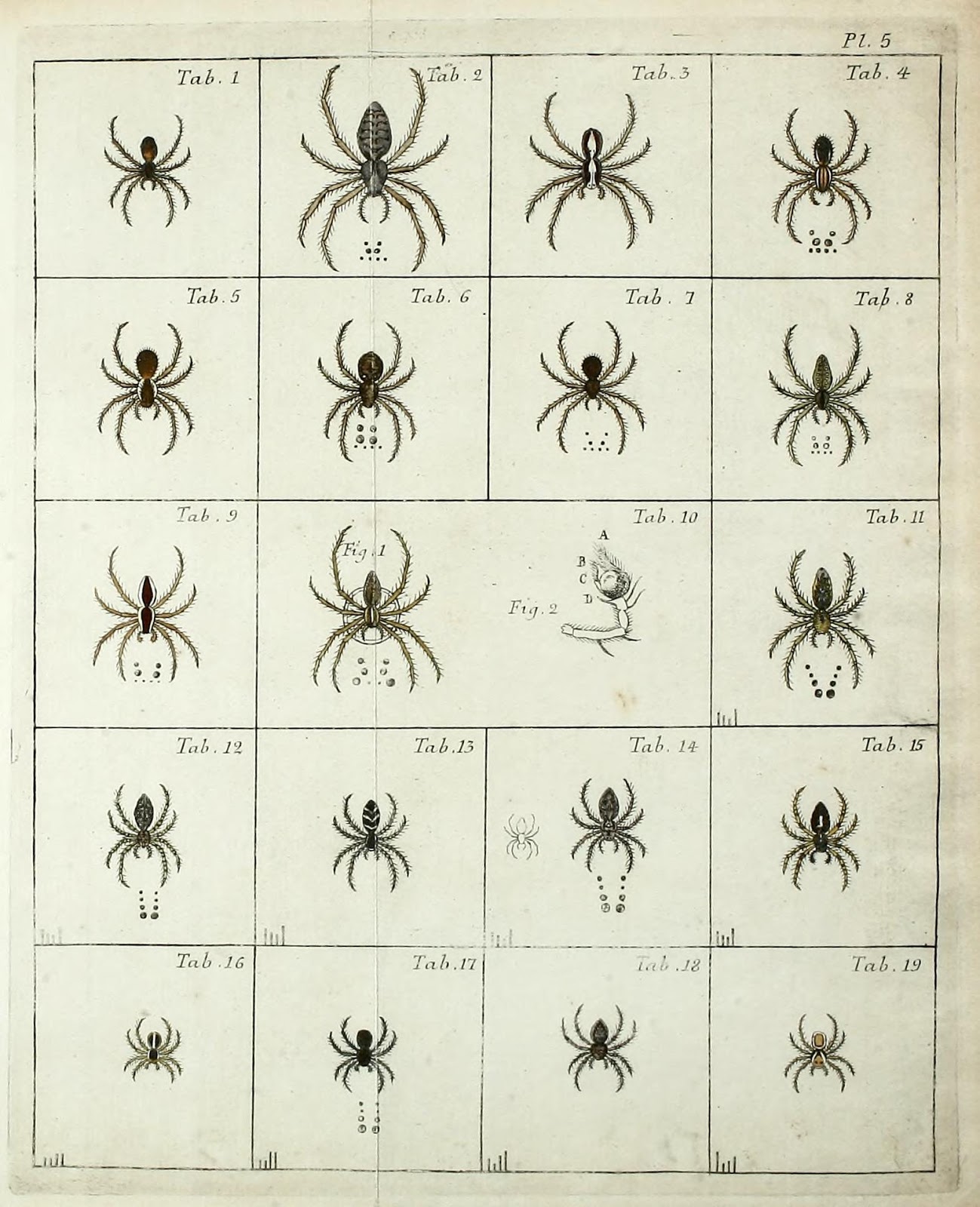
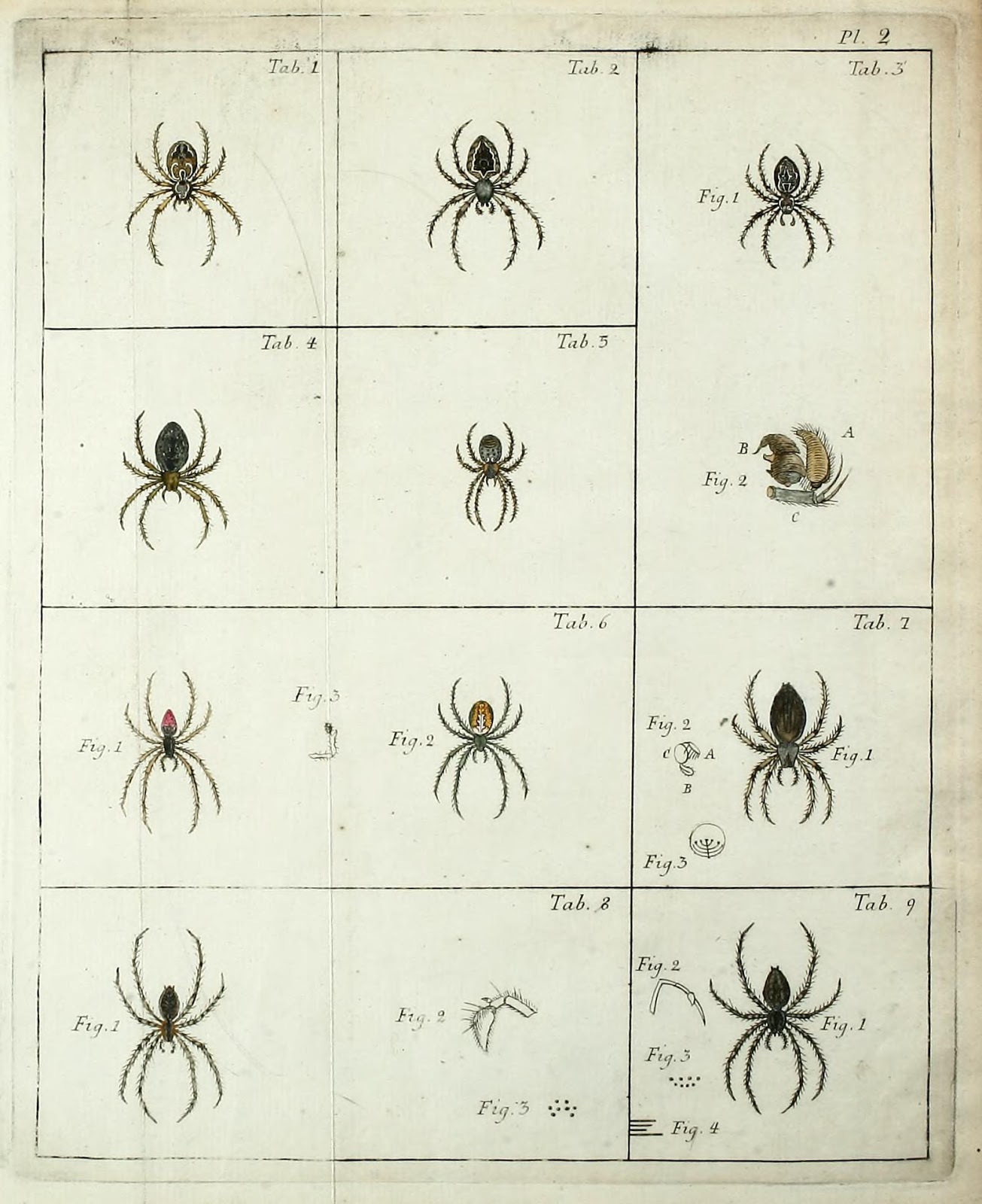
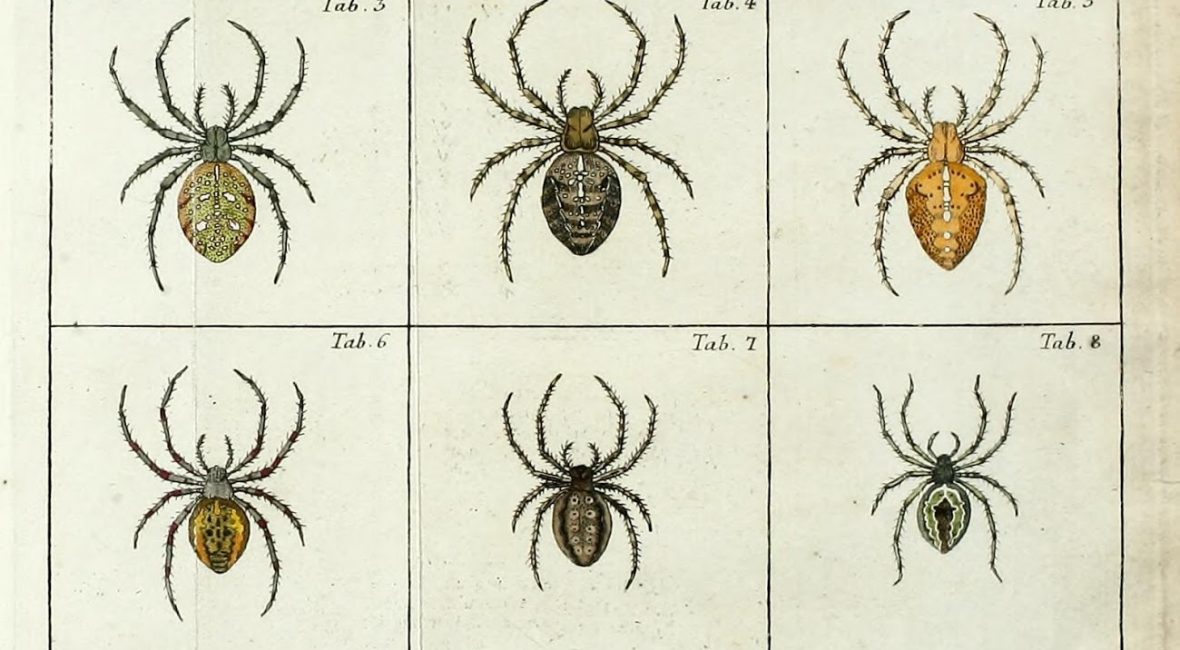
Clerck’s Svenska Spindlar describes and illustrates 70 species and includes 6 hand-colored plates containing 89 figures. Artists for the work include Eric Borg and L. Gottman, and the plates were engraved by Carl Bergquist. The text is printed in both Swedish and Latin, and for each species, Clerck uses the single generic name Araneus followed by a specific, one-word name (constituting the species name).  Clerck then provides detailed information about each species, from the dates that he collected his specimens to descriptions of anatomical features and differences between sexes.

Clerck also restricted his use of the term “spider” to those species possessing eight eyes and separated prosoma and opisthosoma. As such, he, unlike many previous authors, excluded Opiliones (harvestmen) and other arachnids from his treatment of the subject.

View Full Size Image
Clerck, Carl. Svenska Spindlar. 1757. Digitized by Smithsonian Libraries. http://www.biodiversitylibrary.org/page/51379402.

The International Commission for Zoological Nomenclature recognizes Clerck’s names as having precedence over any varieties that may have been proposed by Linnaeus, and as such the names in Svenska Spindlar have the unique distinction of being considered valid despite having been published a year before Linnaeus’ Systema Naturae. For example, while Linnaeus used the generic name Aranea, Clerck’s Araneus is considered the valid generic name.

In 1793, the first English translation of Clerck’s Svenska Spindlar appeared under the title Aranei, or, A natural history of spiders, by Thomas Martyn. Martyn supplemented the text with additional illustrations originally published in Eleazar Albin’s Natural history of spiders (1736).

View Full Size Image
Martyn, Thomas. Aranei, or, A natural history of spiders. 1793. Digitized by Smithsonian Libraries. http://www.biodiversitylibrary.org/page/51378856.

So, as you gear up for Halloween this weekend, take a moment to look through the book that started it all when it comes to spider nomenclature. If you’re one of those 30.5% of U.S. people with arachnophobia, you’re sure to consider it a true Page Frights experience!

Special thanks to Leslie Overstreet, Curator of Natural History Rare Books at Smithsonian Libraries, for providing information about this title for this post.

Reference

Health Research Funding. 2014. “7 Uncommon Arachnophobia Statistics.” September 22. Accessed October 25, 2016. http://healthresearchfunding.org/7-arachnophobia-statistics/.

October 27, 2016by michelle.underhill
Blog Reel, Featured Books

A Local Focus: The Native Plant Societies of the U.S.

All over North America, there are organizations that study, preserve, and promote local flora. Called by various names, these organizations fall under the umbrella term “native plant societies.” While they are independent from one state or province to the next, and while some may have a particular focus, such as wildflowers, they have many similarities: their membership is comprised of professional botanists and amateur enthusiasts; they conduct surveys and field research focusing on a specific geographic region; they are actively involved in conservation; and they usually publish a newsletter to keep members apprised of society activities.

View Full Size Image
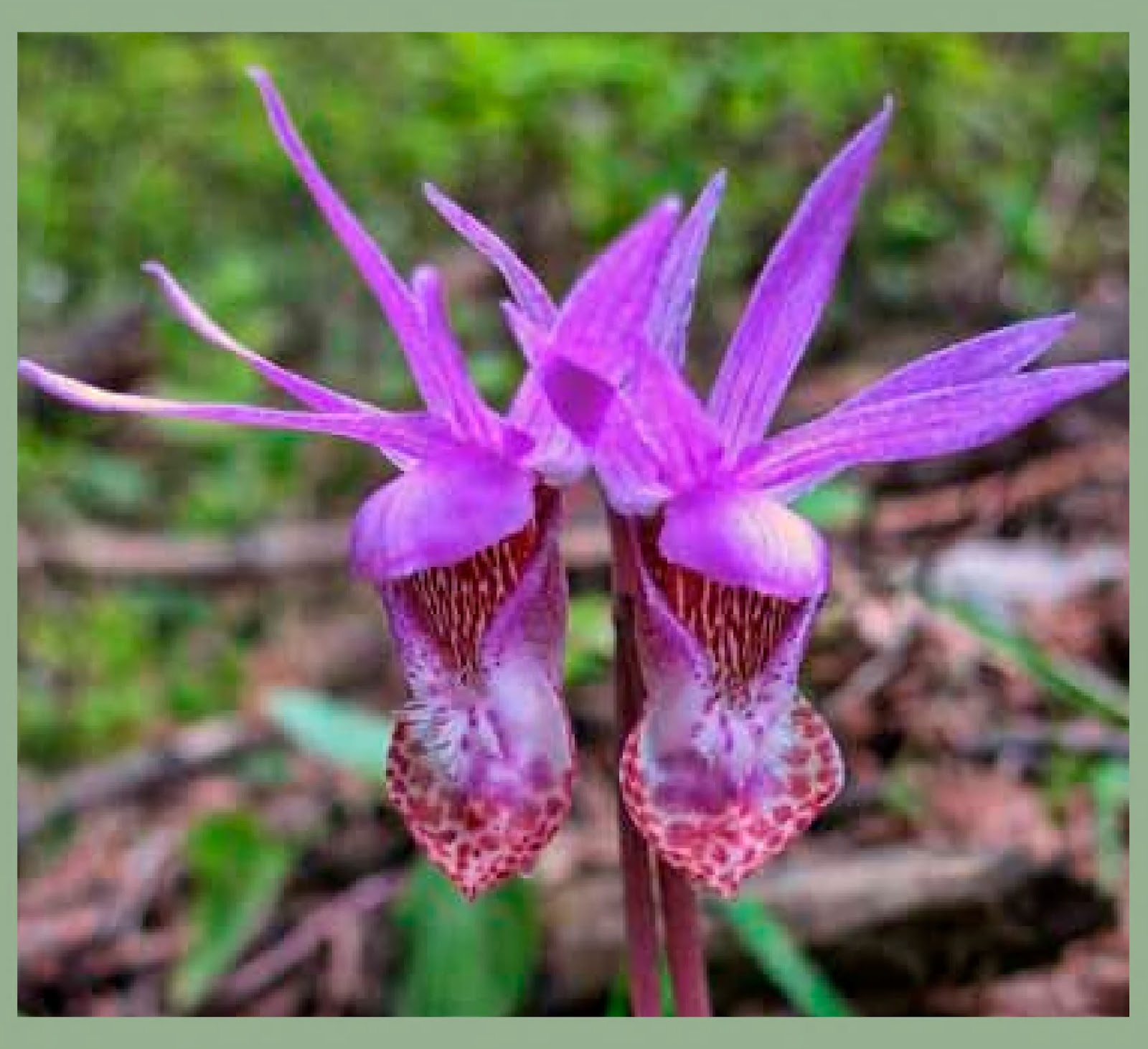
Calypso Orchid, Calypso bulbosa. Photo by Gerry Queener.
Sage Notes, v.34, no.3 (2012)

Through the Expanding Access to Biodiversity Literature project, BHL has received permission for the newsletters of several native plant societies and chapters:

  • The Arkansas Native Plant Society
    • Claytonia
  • The California Native Plant Society
    • East Bay Chapter
      • The Bay Leaf
    • Kern Chapter
      • Mimulus Memo
    • Mt. Lassen Chapter
      • The Pipevine
  • The Colorado Native Plant Society
    • Aquilegia
  • The Delaware Native Plant Society
    • The Turk’s Cap
  • The Idaho Native Plant Society
    • Sage Notes
  • The Illinois Native Plant Society
    • The Harbinger
  • The Wyoming Native Plant Society
    • Castilleja

Just as native plant societies share many similarities, so do their newsletters. They typically contain updates about society-sponsored events and meetings, brief features on a particular plant group or biodiverse area, and occasionally tips for identification and cultivation. They also contain pertinent information about conservation initiatives and the kinds of administrative information common to all organizational newsletters. But the most valuable portion of each newsletter, from a biodiversity perspective, is surely the field trip summary. Field trips are a central activity of all native plant societies.

View Full Size Image
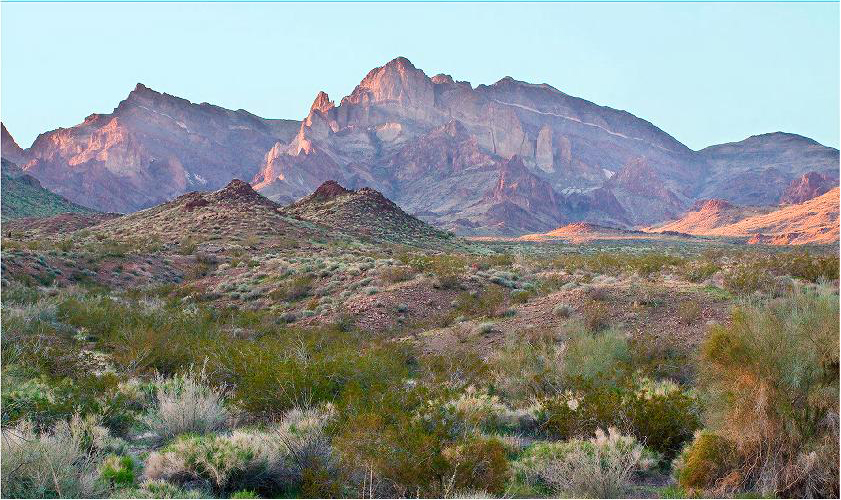
Turtle Mountains, Mojave Desert. Photo by John Game.
The Bay Leaf, January 2016

While original botanical research is typically associated with books and peer-reviewed journals (and some societies do publish their own journals), these newsletters are a goldmine of information about rare plants and the ecologically sensitive areas where they’re found; over the years, repeated field trips to these areas reveal trends in the health and abundance of plants, in the same way that Christmas bird counts document changes in avian populations.

View Full Size Image
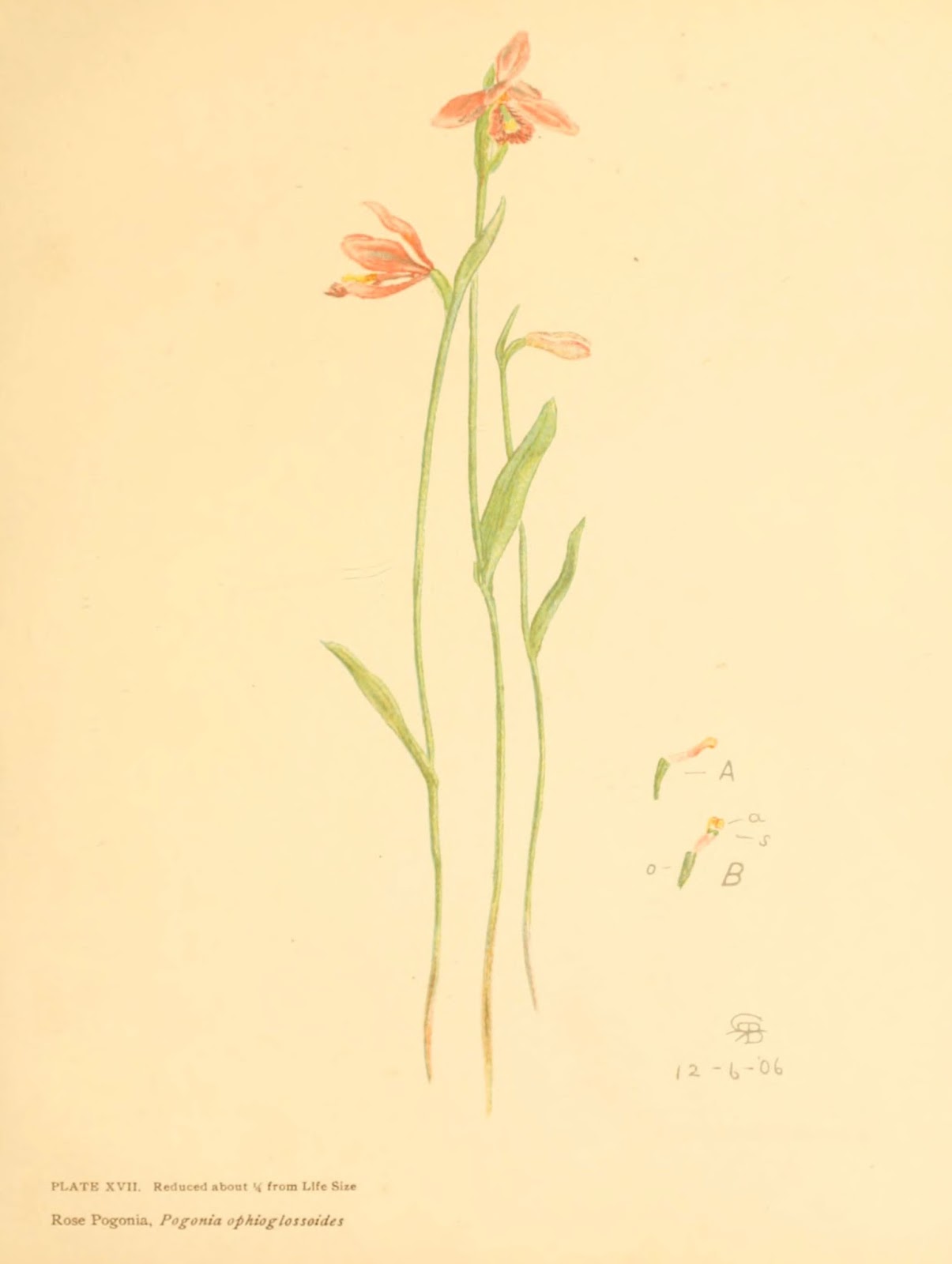
Pogonia ophioglossoides from Rosina Cox Boardman’s
Lilies and Orchids (1906), Pl. XVII

For example, the Fall 1981 issue of Claytonia documents the discovery of several rare plants that hadn’t been seen in Arkansas in over 30 years, including the Rose Pogonia orchid, Pogonia ophioglossoides.

Another example: The Harbinger v.30, no.3, contains an account of how a glacial prairie came into possession of the local township after its owner–a farmer who had used the land to graze cattle–passed away. Plans for a baseball field and parking lot were scrapped when the land was found to contain rare plants like Hill’s Thistle (Circium hillii) and Prairie Buttercup (Ranunculus rhomboideus). The article describes efforts by Illinois Native Plant Society members to preserve the land and protect the plants by removing invasives and doing hydrological restoration.

We are grateful to the native plant societies who have generously shared their local expertise by making their newsletters available to researchers through BHL. In addition to the biodiversity information they contain, these publications are a wonderful snapshot of the small, dedicated groups of people working all over the U.S. to document and preserve our native plants.

Are you interested in getting involved in a native plant society near you? If you live in the U.S. or Canada, check this list compiled by the North American Native Plant Society to locate the closest organization.

October 20, 2016by eomeara
BHL News, Blog Reel, Campaigns

Of Dragons and Interns: Meet the Woman Who’s Helping Us Add Dragons and Other Fun Products to the BHL Store!

View Full Size Image
Carolina Murcia. BHL Product Development and Marketing Intern.

BHL is excited to welcome Carolina Murcia, our new Product Development and Marketing Intern!

Over her eight-month internship through the Smithsonian Libraries in Washington, D.C., Carolina will conduct market research and create products and marketing materials for the BHL CafePress store. Coming to us from her home in Colombia, Carolina just finished her bachelor’s degree in industrial design and is excited for this opportunity to build her professional experience and contribute to projects that support the sciences, arts and cultural development.

Carolina has already put her artistic skills to excellent use designing dragon products for the BHL Page Frights CafePress store. Get your own dragon today and help support biodiversity research – 100% of the proceeds will be used to digitize more books for BHL! How does BHL and these digital books help support biodiversity research? Click here to find out!

View Full Size Image
A social media graphic created by Carolina for the BHL Page Frights CafePress store. Shop today!

When she’s not doing design projects, Carolina enjoys long walks, good coffee, home dinners, sci-fi books, spending time with her loved ones, and watching soccer – especially when Colombia’s team is playing! She is especially passionate about architectural photography and looks forward to taking advantage of the wonderful landscapes and buildings in D.C. to pursue this passion.

We’re so excited to welcome Carolina to the BHL team and look forward to seeing our product selection and marketing activities expand thanks to her contributions. Welcome to the family, Carolina!

October 19, 2016by michelle.underhill
BHL News, Blog Reel

In case you missed it: New in-copyright titles added over the summer

View Full Size Image

Adding to the second quarter’s successful haul, BHL secured permission for 52 titles in July, August and September. That brings 2016’s total to 108 in-copyright titles thus far! As in the previous two quarters, most of these were added as a result of the Expanding Access to Biodiversity Literature project, with significant contributions from the Albany Museum (Grahamstown, South Africa) and the South African National Biodiversity Institute (SANBI).

BHL thanks the many generous content providers—including 19 first-time contributors—who have shared the publications below with our user community and the world. All of the titles are available under a Creative Commons Attribution-NonCommercial-ShareAlike (CC BY-NC-SA) 4.0 license. Some are currently being digitized; check BHL’s recent additions for more in the coming weeks.

  1. Raptor Research Foundation
    1. Wingspan
    2. Raptor Research News
    3. Raptor Research
    4. Journal of Raptor Research
  2. Pennsylvania Horticultural Society
    1. A History of the Pennsylvania Horticultural Society, 1827-1927
    2. America’s Garden Legacy: A Taste for Pleasure
    3. Bulletin of the Pennsylvania Horticultural Society
    4. From Seed to Flower: Philadelphia 1681-1876
    5. Pennsylvania Gardens
    6. Philadelphia Spring Flower Show [title varies]
    7. PHS News
    8. The Green Scene
    9. Yearbook of the Pennsylvania Horticultural Society
  3. New York State Museum
    1. New York State Museum Bulletin
  4. Norfolk and Norwich Naturalists’ Society
    1. Transactions of the Norfolk and Norwich Naturalist’ Society
    2. Norfolk Bird and Mammal Report
    3. The Norfolk Natterjack of the NNNS
  5. Chesapeake Bay Foundation
    1. Annual Reports
    2. Investigative Reports
  6. Christopher Parker
    1. Weeds of Bhutan
  7. Carolina Bird Club
    1. The Chat
    2. CBC Newsletter
  8. Cleveland Museum of Natural History
    1. Kirtlandia
  9. Illinois Native Plant Society
    1. The Harbinger
  10. The African Bird Club
    1. Bulletin of the African Bird Club
  11. Michael Jennings
    1. The Phoenix
  12. Kentucky Ornithological Society
    1. The Kentucky Warbler
  13. Western Society of Malacologists
    1. Occasional Papers
  14. Western Field Ornithologists
    1. California Birds
    2. Western Birds
  15. South African National Biodiversity Institute (SANBI)
    1. Journal of South African Botany
    2. Strelitzia
    3. Memoirs of the Botanical Survey of South Africa
    4. Botanical Survey Memoir
    5. Memoir (Botanical Survey of South Africa)
    6. Annals of Kirstenbosch Botanic Gardens
    7. Flowering Plants of Africa
  16. Tower Hill Botanic Garden
    1. Transactions of the Worcester County Horticultural Society
  17. Forest & Bird
    1. New Zealand Birds
  18. Albany Museum (Grahamstown, South Africa)
    1. Records of the Albany Museum
    2. Annals of the Eastern Cape Museums
    3. Annals of the Cape Provincial Museums
    4. Annals of the Cape Provincial Museums (Natural History)
    5. Annals of the Cape Provincial Museums (Human Sciences)
    6. Southern African Field Archaeology
  19. Association of Southeastern Biologists
    1. SEB Bulletin
    2. Southeastern Biology
  20. Pacific Coast Entomological Society
    1. Memoirs of the Pacific Coast Entomological Society
    2. Proceedings of the Pacific Coast Entomological Society
    3. Pan-Pacific Entomologist
  21. Southern California Academy of Sciences
    1. Memoirs of the Southern California Academy of Sciences
  22. American Birding Association
    1. North American Birds

To learn more about how BHL handles copyright, see the Licensing and Copyright page on the BHL wiki. To see a complete list of in-copyright titles for which BHL has permission, as well as an explanation of how copyright information is displayed in BHL, see the Permissions page. And don’t forget to follow BHL on Facebook and Twitter (@BioDivLibrary) to get updates on new content!

Thanks again to the many organizations who continue to make BHL an invaluable resource by sharing their in-copyright publications.

October 18, 2016by [email protected]
Blog Reel, User Stories

The Case of the Mistaken Manakin

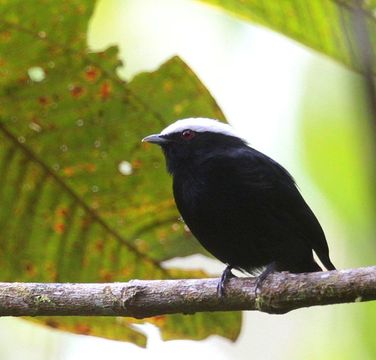
Since the end of the twentieth century, the genus name Dixiphia has been associated with the white-crowned manakin. A recent investigation, made possible in part thanks to BHL, demonstrated that Dixiphia did not refer to a manakin at all, but was in fact a junior synonym of the white-headed marsh tyrant (genus Arundinicola).

The white-crowned manakin was in need of its own, new genus-group name.

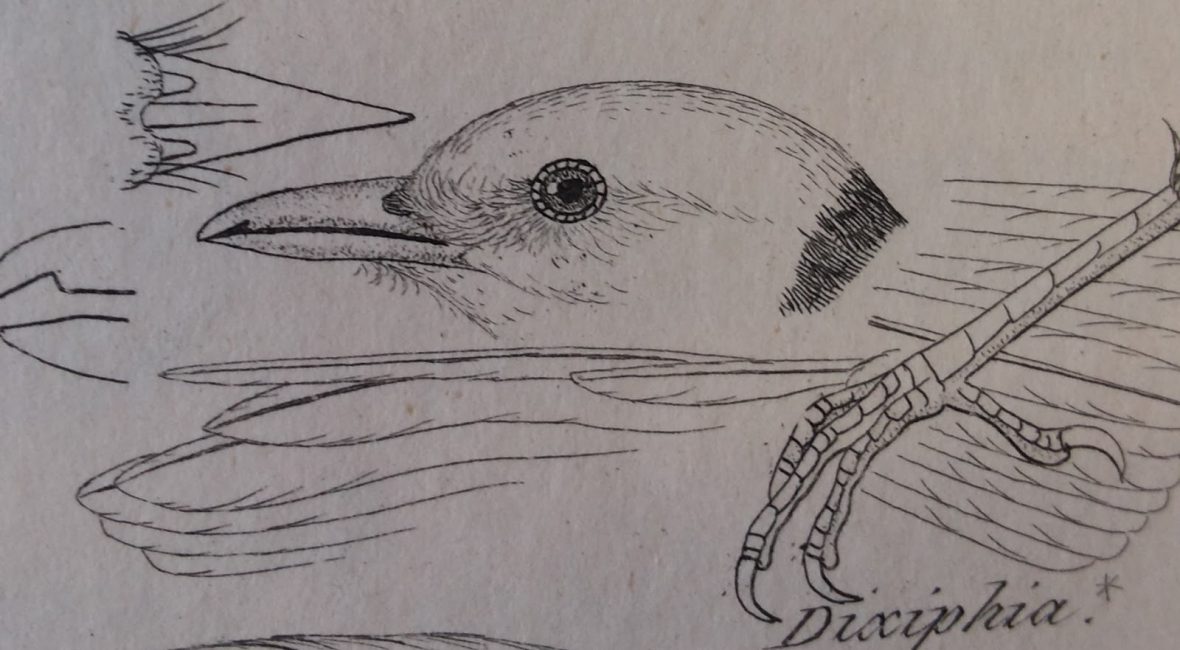
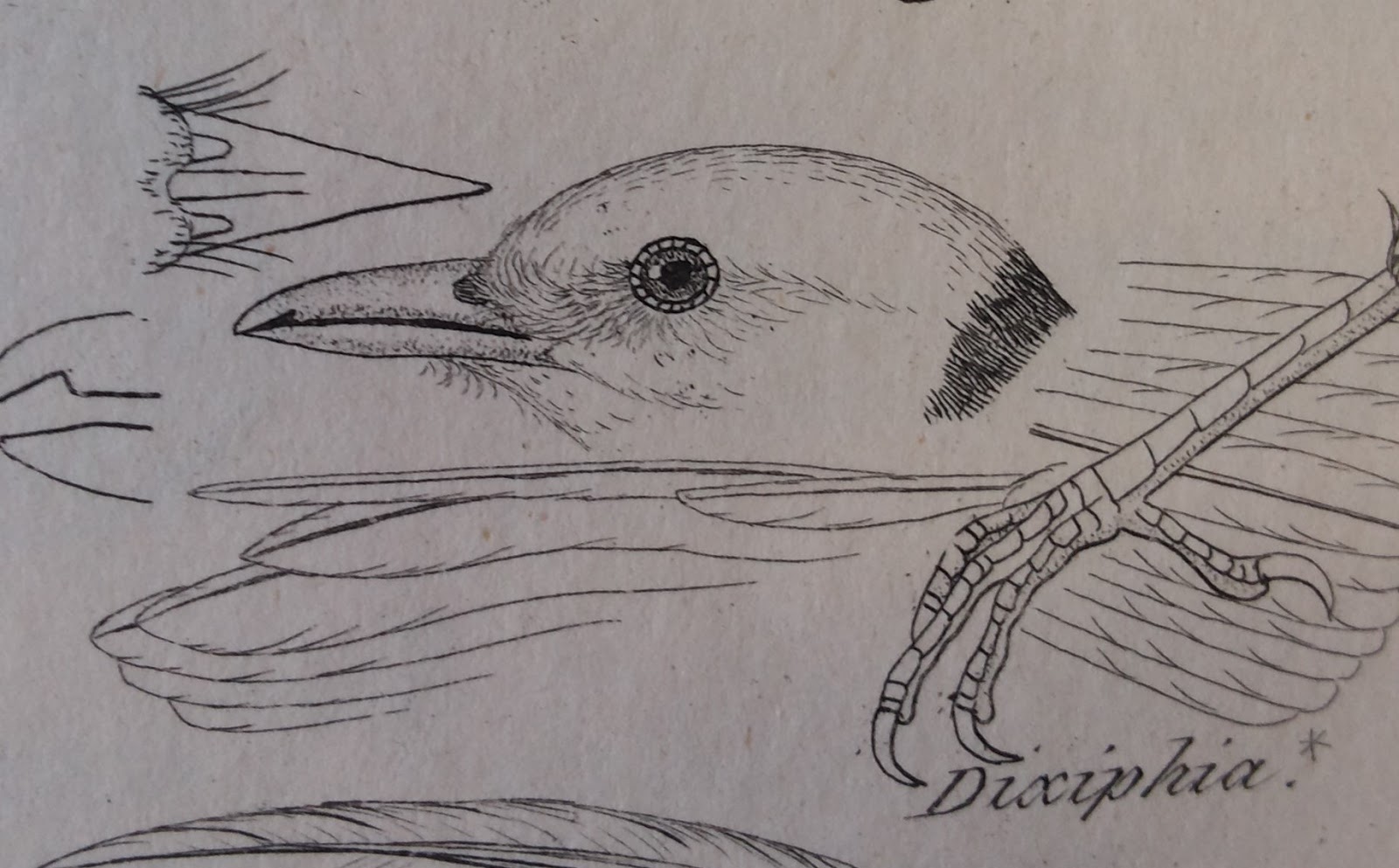
The manakin mystery was first discovered by researchers Guilherme Renzo Rocha Brito and Guy M. Kirwan. Following the publication of a book on Cotingas and Manakins, Brito and Kirwan received an inquiry from James A. Jobling about the absence of any mention in the publication of modified wing feathers in the white-crowned manakin (then called Dixiphia pipra), which were so clearly displayed in Reichenbach’s (1850) Dixiphia illustration. Brito and Kirwan were perplexed by the inquiry, because not only does Reichenbach’s illustration show a bird with an all-white head (which the white-crowned manakin does not have), but the white-crowned manakin also does not have modified wing feathers.

View Full Size Image
Detail from Plate LXIII of Reichenbach (1850) showing the bird that he named Dixiphia; all visible features are those of a male white-headed marsh tyrant Arundinicola leucocephala. Reichenbach, H. G. Ludwig (Heinrich Gottlieb Ludwig). Die vollstèandigste Naturgeschichte der Vèogel. Abt. 2, Bd. 1. (1836-62).http://biodiversitylibrary.org/page/47618489. Digitized by Smithsonian Libraries.

The genus name Dixiphia was first published by Reichenbach in 1850. In 1992, Richard O. Prum assigned the white-headed manakin to the Dixiphia genus after demonstrating that it had long been erroneously attributed to the Pipra genus.

After examining Reichenbach’s illustration following the inquiry regarding modified wing feathers, Brito and Kirwan came to the conclusion that Reichenbach’s illustration was actually that of the white-headed marsh tyrant (Arundinicola leucocephala). They examined specimens in the Museum Nacional’s ornithological collection as well as descriptions in historic publications, many made available to them thanks to the Biodiversity Heritage Library.

View Full Size Image
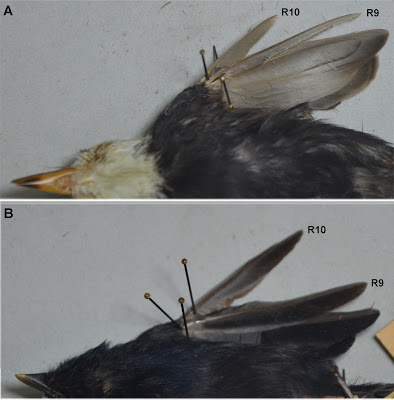
Pinned museum specimens showing the wing feathers (9th and 10th remige – R9 and R10). A – male White-headed Marsh Tyrant B – male White-crowned Manakin.

All of this research culminated in the conclusion that Reichenbach’s illustration was indeed of the white-headed march tyrant, that Dixiphia was actually a junior synonym of Arundinicola (a fact that had first been suggested over a century ago), and that a new genus-group name for the white-crowned manakin was needed.

Brito and Kirwan, along with co-authors Normand David, Steven M.S. Gregory, James A. Jobling, and Frank D. Steinheimer, summarized this research and proposed a new genus name, Pseudopipra, for the white-crowned manakin in the 2016 Zootaxa article “The mistaken manakin: a new genus-group name for Parus pipra Linnaeus, 1758(Aves: Passeriformes: Pipridae)“.

View Full Size Image
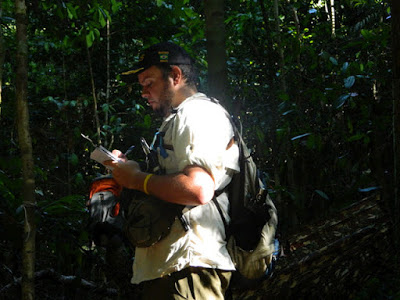
Guilherme R. R. Brito doing field work on the Brazilian Amazon.

Guilherme R.R. Brito, a substitute professor at the Universidade Federal do Rio de Janeiro, is quick to emphasize the role that BHL played in solving this taxonomic mystery – a role that is also highlighted in the acknowledgments section of the Zootaxa article.

“BHL is one of the most important databases for several [subject] areas within the biological sciences,” lauds Brito. “For historical taxonomic purposes, it’s now essential.”

Brito, who has been studying bird anatomy, natural history, taxonomy, and systematics for fifteen years, first discovered BHL shortly after the online portal launched nearly a decade ago. Since then, he has used BHL to access many important and historical publications that were previously very difficult to obtain in Brazil.

“Thanks to BHL, several very rare works are now readily available to any researcher in the world,” explains Brito. “I remember not so long ago that we researchers in Brazil had to wait for colleagues to visit museums and institutions abroad to ask them for some copies of works not available here. These were more difficult times.”

The digital open access provided by the Biodiversity Heritage Library allows scientists to easily access the information they need to study life on Earth and solve taxonomic enigmas like the Dixiphia mystery. No doubt Pseudopipra pipra is grateful to have a name to call its own.

View Full Size Image
White-crowned manakin (Pseudopipra pipra). Image by Carmelo López Abad. Licensed under a Creative Commons Attribution-NonCommercial License license: http://creativecommons.org/licenses/by-nc/4.0/. Image source: Encyclopedia of Life http://eol.org/data_objects/33609559.
______________________________________

This post may contain the personal opinions of BHL users or affiliated staff and does not necessarily represent the official Biodiversity Heritage Library (BHL) position on these matters.
October 13, 2016by michelle.underhill
Blog Reel, Campaigns, Featured Books, Page Frights

Monsters in Nature: Frightful Tales from the 19th Century

Today’s book is truly filled with Page Frights! Sea and Land: An Illustrated History of the Wonderful and Curious Things of Nature Existing Before and Since the Deluge, by James W. Buel (1849-1920), highlights some truly horrific creatures and plants, with colorful tales and an abundance of amazing illustrations.  You can read about, and see images of, giant prehistoric and contemporary land, air and sea creatures, sometimes in battle with one another and sometimes battling humans–including early man.

Some of the creatures covered and treated with illustrations read like a carnival of monstrosities: Animals not destructible by fire!  The monster sea-elephant!  The terrible water-spout!  The sea-serpent of ancient legend!  There are many gruesome tales, fables, and even ghost tales!  We will highlight a few of Buel’s tales of monsters in nature, in his own words, with accompanying illustrations.

It is important to remember that this book is a reflection of the culture of its time, and scientific inquiry has yielded much more information about these species and helped demystify many of the myths and legends that are sensationalized in the book.  Bearing that in mind, get ready for some fantastic and frightful tales and images!

The Tale of a Kraken Attacking a Ship!

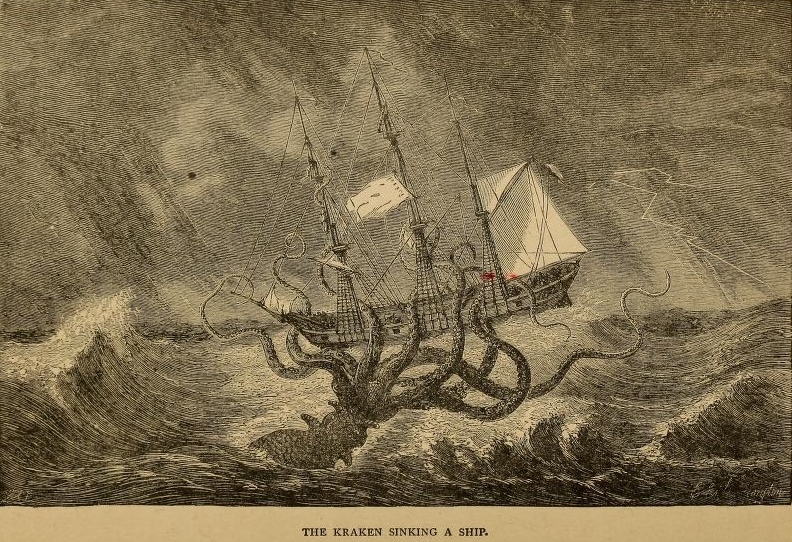
Adventures with the Frightful Squid [Kraken]. Account below from Buel’s Sea and Land:

“In olden times sailors were harassed by many groundless fears, superstitions being abundant and ignorance general.  The early Spanish poetic chroniclers, who delighted in telling the story of Columbus’ voyages, invariably disfigured their narratives with miracles and wonders.  In those days Jack, looking over the side of his vessel, was prepared to see anything, and to this willing disposition may be attributed the creation of mermaids, sea-serpents, grinning or winking monsters, and leviathans big enough to swallow a ship.  There was the squid which, as the sepia octopus, we know in these days to be an extremely large and most diabolically unpleasant beast; but in the olden times this animal was reckoned to be larger than a cathedral, in proof of which the following story is recited:

“A big ship was on the West African Coast; the men were getting the anchor, when a squid arose and wreathed its fearful snake-like limbs around the vessel’s spars.  The tips of these limbs soared quaveringly high above the mastheads, and the weight of the cuttle drove the ship down on to her beam ends.  Here now was a lively situation.  The crew plied axes and knives, but in vain, whereupon they invoked the aid of their patron saint, Thomas.  Eventually the wounded monster grew alarmed and sank, and the crew afterward, to commemorate their deliverance, marched in a body to the Church of St. Thomas, where subsequently there was hung up a painting, representing the unparalleled conflict. […]

“Pliny, the ancient, relates the history of an enormous cuttle-fish that haunted the coast of Spain and destroyed fishing ground.  He asserts that this creature was finally captured, and weighed seven hundred pounds, and that its arms were thirty feet in length.  As the cuttle-fish was esteemed by the ancients a most savory dish, the head of this formidable monster was given to Lucullas to whom it belonged rightfully by reason of his exalted rank” (Buel, 1887, pp. 75-77).

View Full Size Image
Adventures with the Frightful Squid, also called “Kraken” (see image here)

A Giant, Man-Attacking Crab!

Monster Sea-Spiders. Account below from Buel’s Sea and Land:

“From an article in a recent number of St. Nicholas, I condense the following interesting information about crabs:

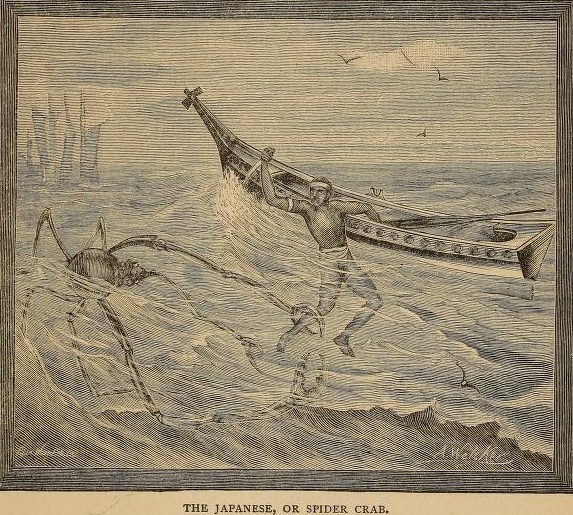
“Among the most remarkable, and the largest of crabs, is the Japanese sea-spider, highly esteemed in the Orient as an excellent article of food.  Its principal claws are each five feet in length, measuring from ten to twelve feet between the tips of the nippers, and presenting an astonishing spectacle when entangled in the nets and hauled aboard the boats.  With their slow, measured movements and the powerful weapons of defense, these crabs are the giants of the spiders of the sea.  Professor Ward, who has collected them in Japan, states that they have a remarkable habit of leaving the water at night and crawling up the banks presumably to feed, and that there they are sought by the crab-hunters.  A story is told of a party of fishermen who had camped out on a river bank, and one of whom aroused the others in the night by yells and screams.  Running to the spot they found that one of these monster crabs, in wandering over the flats, had accidentally crawled over him with his great claws, frightening him almost to death” (Buel, 1887, pp. 64-65).

View Full Size Image
Japanese Spider Crab (see image here)

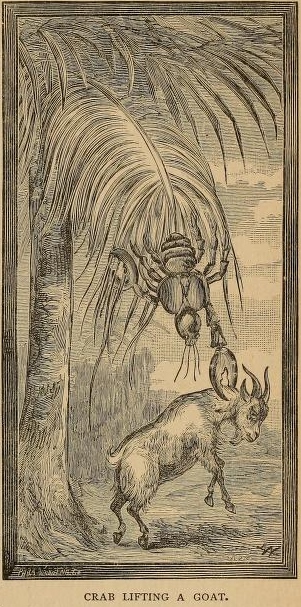
“The robber-crab, peculiar to the Samoan Islands. . .lives principally in the branches of the cocoanut tree.  It exercises no little intelligence in getting at the fruit, which it accomplishes by carrying the nut to the very top of the tree, and then dashing it down with force enough to break the shell.  A gentleman relates that upon an occasion, while he was walking in a Samoan forest, he saw a robber-brab reach down its claws from a thick palm branch and seize a goat by the ears that was passing underneath.  So powerful was the crab that it lifted the goat almost clear from the ground” (Buel, 1887, pp. 65, 67).

View Full Size Image
Robber-Crab lifting a goat off the ground (see image here)

A Horrifying Man-Eating Tree!

A Man-Eating Plant. Account below from Buel’s Sea and Land:

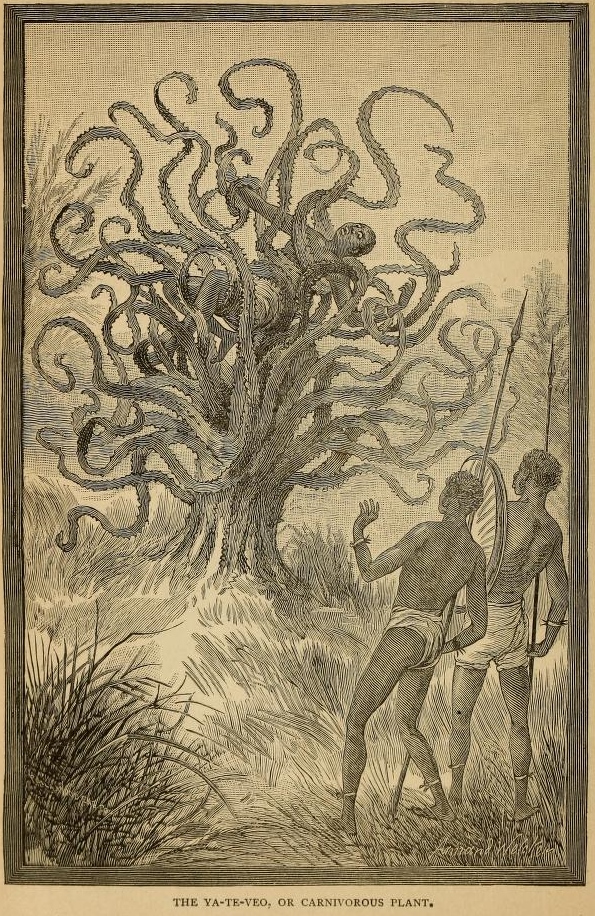
“Travelers have told us of a plant, which they assert grows in Central Africa and also in South America, that is not contented with the myriad of large insects which it catches and consumes, but its voracity extends to making even humans its prey.  This marvelous vegetable Minotauris represented as having a short, thick trunk, from the top of which radiate giant spines, narrow and flexible, but of extraordinary tenaciousness, the edges of which are armed with barbs, or dagger-like teeth.  Instead of growing upright, or at an inclined angle from the trunk, these spines lay their outer ends upon the ground, and so gracefully are they distributed that the trunk resembles an easy couch with the green drapery around it.  The unfortunate traveler, ignorant of the monstrous creation which lies in his way, and curious to examine the strange plant, or to rest himself upon its inviting stalk approaches without a suspicion of his certain doom.  The moment his feet are set within the circle of the horrid spines, they rise up, like gigantic serpents, and entwine themselves about him until he is drawn upon the stump, when they speedily drive their daggers into his body and thus complete the massacre.  The body is crushed until every drop of blood is squeezed out of it and becomes absorbed by the gore-loving plant, then the dry carcass is thrown out and the horrid trap set again.

“A gentleman of my acquaintance, who, for a long time, resided in Central America,, affirms the existence of such a plant as I have here briefly described, except that instead of the filaments, or spines, resting on the ground he says they move themselves constantly in the air, like so many huge serpents in an angry discussion, occasionally darting from side to side as if striking at an imaginary foe.  When their prey comes within reach the spines reach out with wonderful sagacity (if I may be allowed to apply the expression to a vegetable creature), and grasp it in an unyielding embrace, from whence it issues only when all the substance of its body is yielded up.  In its action of exerting pressure upon its prey, this dreadful plant resembles the instrument used in the dark ages for inflicting a torturous death.  It was made of two long iron cylinders, on the inside of which were sharp, projecting pikes.  The victim was placed inside, and the two cylinders then brought forcibly together, thus driving a hundred or more of the pointed pikes into all parts of his body and producing a frightful death.  Generally this inquisitorial instrument was made, somewhat crudely, to represent a woman, hence the name applied to it was “The Maiden,” by which it is still known.

“Dr. Antonio Jose Marquez, a distinguished gentleman of the city of Barranguilla, in the United States of Colombia, in describing this wonderful plant to the author, affirms that when excited it violently agitates its long, tentacle-like stems, the edges of which, rasping upon each other, produce a hissing noise which resembles the Spanish expression, ya-te-veo, the literal translation of which is “I see you.”  The plant is therefore known, in South America, by the name Yataveo” (Buel, 1887, pp. 475-477).

View Full Size Image
The Man-Eating Tree (see image here)

Click here to read the book, and more of its frightful tales!  Here are some wickedly monstrous illustrations to lure you to this special collection of Page Frights!

View Full Size Image
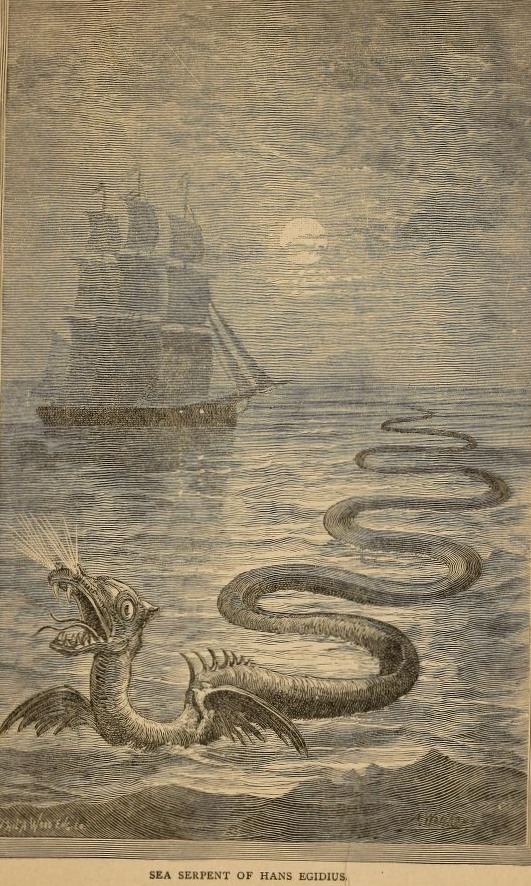
Sea Serpent (see image here)
View Full Size Image
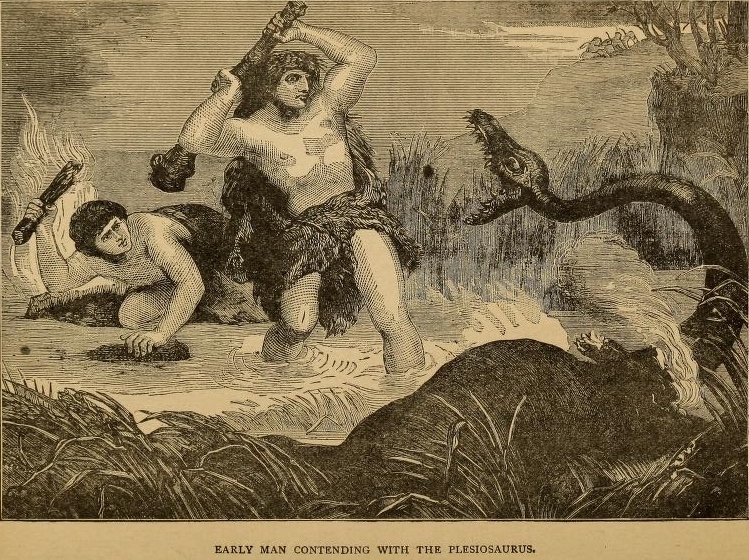
Imagined battle between early man and Plesiosaurus (see image here)
View Full Size Image
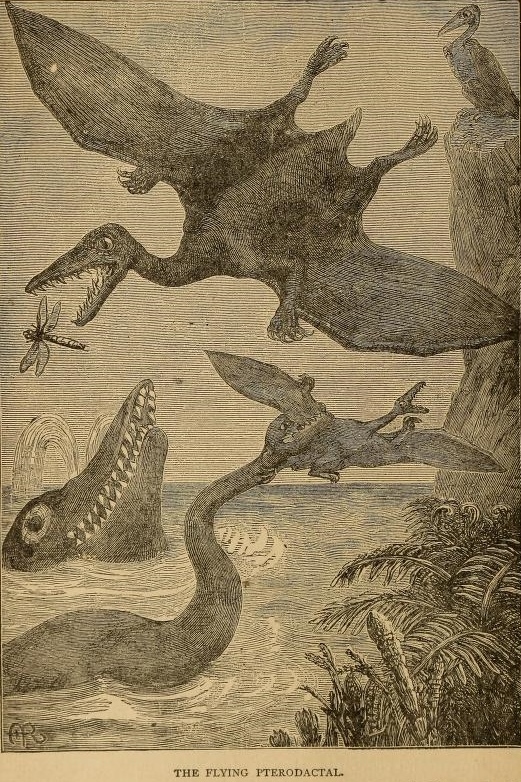
Pterodactyl and sea dinosaurs (see image here)

What is your favorite image or story from today’s #PageFrights book?

October 11, 2016by micahv
Page 1 of 212»

Help Support BHL

BHL's existence depends on the financial support of its patrons. Help us keep this free resource alive!

search

About BHL

The Biodiversity Heritage Library (BHL) is the world’s largest open access digital library for biodiversity literature and archives. BHL operates as a worldwide consortium of natural history, botanical, research, and national libraries working together to digitize the natural history literature held in their collections and make it freely available for open access as part of a global “biodiversity community.”

Join Our Mailing List

Sign up to receive the latest news, content highlights, and promotions.

Subscribe Now

Subscribe to Blog via Email

Enter your email address to subscribe to this blog and receive notifications of new posts by email.

Join 319 other subscribers

Subscribe to Blog Via RSS

Subscribe to the blog RSS feed to stay up-to-date on all the latest BHL posts.

Access RSS Feed

Inspiring Discovery through Free Access to Biodiversity Knowledge.

The Biodiversity Heritage Library makes it easier than ever for you to access the information you need to study and explore life on Earth…for free, anytime, anywhere.


64+ Million Pages of
Biodiversity Literature Online.

EXPLORE

Tools and Services
to Transform Research.

EXPLORE

300,000+
Illustrations on Flickr.

EXPLORE

ABOUT | HARMFUL CONTENT | PRIVACY | SITE MAP | TERMS OF USE