Biodiversity Heritage Library - Program news and collection highlights from BHL
  • Home
  • News
  • Featured Books
    • All Featured Books
    • Book of the Month Series
    • BHL at 20
  • User Stories
  • Campaigns
    • Fossil Stories
    • Garden Stories
    • Monsters Are Real
    • Page Frights
    • Her Natural History
    • Earth Optimism 2020
  • Tech Blog
  • Visit BHL
Home
News
Featured Books
    All Featured Books
    Book of the Month Series
    BHL at 20
User Stories
Campaigns
    Fossil Stories
    Garden Stories
    Monsters Are Real
    Page Frights
    Her Natural History
    Earth Optimism 2020
Tech Blog
Visit BHL
  • Home
  • News
  • Featured Books
    • All Featured Books
    • Book of the Month Series
    • BHL at 20
  • User Stories
  • Campaigns
    • Fossil Stories
    • Garden Stories
    • Monsters Are Real
    • Page Frights
    • Her Natural History
    • Earth Optimism 2020
  • Tech Blog
  • Visit BHL
Biodiversity Heritage Library - Program news and collection highlights from BHL
BHL News, Blog Reel

Q: How many BHL’s can you fit into a single meeting?

A: 3

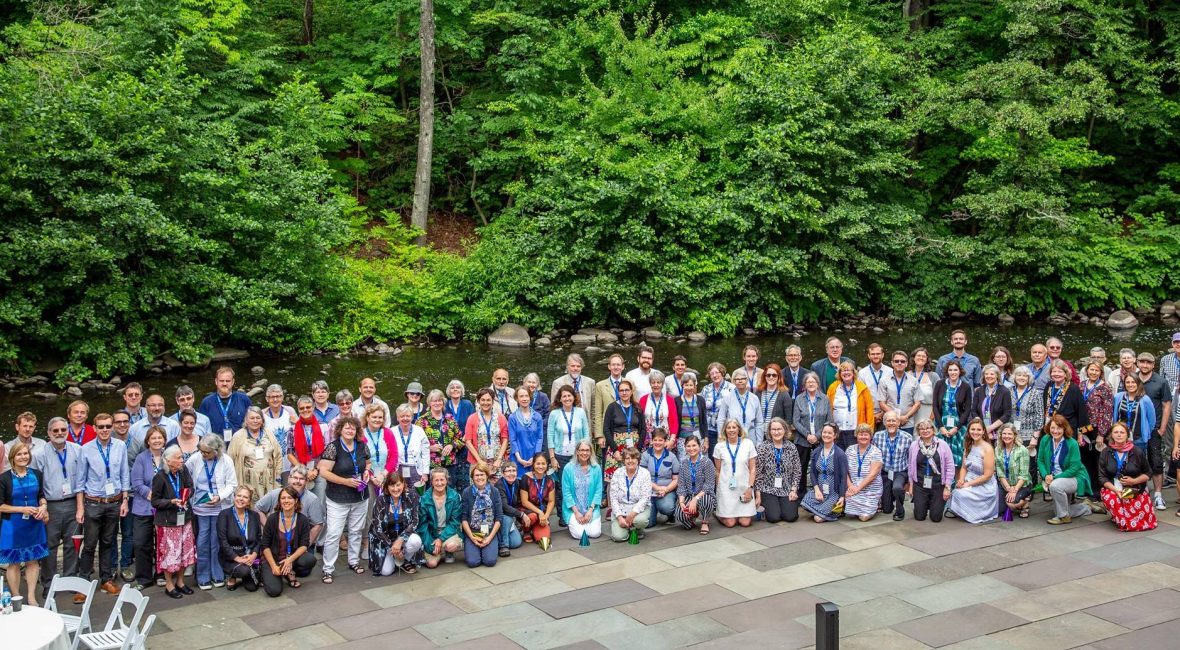
cbhlgroup.jpg

Group photo of CBHL, EBHL, and Linnaeus Link Annual Meeting attendees

As in CBHL (host) + EBHL (host) + BHL (attendees) but there’s always room for more…especially if they are like this group of Brilliant Happy Librarians!

Back in June I attended the 50th Annual Meeting of The Council on Botanical and Horticultural Libraries (CBHL) which was also host to the 25th anniversary meeting of the European Botanical and Horticultural Libraries Group (EBHL) as well as the 22nd annual meeting of Linnaeus Link partners. The theme of the meeting was “Botanical and Horticultural Libraries in the Modern Era: Training and Vision for the Future” and it encouraged its attendees to “[discuss] how technology has united us and what the future holds in store for us as we enter the new millennium.” The joint meeting was held between the New York Botanical Garden and the Brooklyn Botanic Garden. Presentations centered around new or revamped digitization projects, implementing electronic access to materials as well as initiatives to better integrate library and archival materials into research discovery systems.

The meeting showcased a variety of digital collections that were new to me such as the Linnean Society’s Online Collections of specimens, manuscripts, correspondence, paintings, and books, many of which were collected, annotated, or written by Linneaus himself! The Royal Horticultural Society’s Lindley Library also gave a presentation about the digitization of its special collections and Fiona Ainsworth of Royal Botanic Gardens Kew shared about the latest projects in her library to digitize rare Chinese illustrations and catalog the Miscellaneous Reports collection in their archives. I was particularly excited to learn about upcoming plans to update the Real Jardín Botánico de Madrid’s Biblioteca Digital for the future.

There were also fascinating presentations on various research projects that made intensive use of the very collections CBHL and EBHL have represented within their organizations. Maura Flannery‘s talk Plants in the Library: The Johannes Harder Herbarium detailed her study of Harder’s 16th century, multi-volume compendium known as a Herbarium vivum. This rare work on botanical collection from German localities was composed by pressing plant specimens directly into the book and illustrating those parts which would not press well such as bulky seeds or stalks. While Maura had the unique chance to see one of these works in person, the rest of us are fortunate enough to have access to this digital copy thanks to the Bayerische StaatsBibliothek. Inspired by the vasculum left to her by her grandmother, Régine Fabri presented on the history of the botanical collecting object. And Eric Sanderson set the perfect backdrop to the meeting by opening it with a discussion of his work on The Welikia Project to detail New York City’s rich ecological history compared with its present urban environment block by block!

This year CBHL honored the work of Susan Fraser, Director of The LuEsther T. Mertz Library of the New York Botanical Garden, with the Charles Robert Long Award of Extraordinary Merit. Knowing Susan for my nearly 10 years with BHL it was no surprise to see her receive this award for her exemplary leadership and dedication to improving the global, digital and scholarly impact of the profession. Congratulations Susan!

Besides the fact that CBHL organization draws on my roots working in the U.S. National Herbarium along with my love of librarianship, a critical purpose of attending this year’s meeting was to network with BHL colleagues from 11 (yes, 11!) of our partner organizations. I had the opportunity to get some face time with colleagues from Botany Libraries/Harvard University, Chicago Botanic Garden, Los Angeles County Arboretum and Botanic Garden, Missouri Botanical Garden, Museum national d’Histoire naturelle, National Agricultural Library, New York Botanical Garden, and Royal Botanic Gardens Kew, as well as our newest Affiliate partners from the Lloyd Library and Museum, Oak Spring Garden Foundation, and University Library Johann Christian Senckenberg. Indeed CBHL, EBHL, and BHL share much more in common than just our acronyms.

The CBHL-EBHL-Linnaeus Link Annual Meeting reminded me of the importance of nurturing a community of like-minded professionals around shared values and interests. Through these communal experiences, botany and horticulture librarians and researchers enrich their ability to support and disseminate relevant resources, including best practices and digital collections. Working almost exclusively in the virtual digital library world, I forget that sometimes the quickest way to exchange information is face to face as it is a deeper impression of knowledge understood and more likely remembered, than the ephemeral information received via electronic exchange. It is truly an enjoyable group that I hope to be able to meet again at future annual meetings.

IMG_6756-COLLAGE.jpg

Bianca Crowley on the Annual Meeting field trip to tour the High Line in New York City

Reflecting back on my experience I am left with one nagging thought about the continued ubiquity of library information silos and the difficulty of practically executing linked open information systems. CBHL and EBHL partners shared information about many digitization projects, many of which contain digital books living separately in their own web spaces. I can’t help but wonder if it would be useful to aggregate these materials under a common access point so that researchers and librarians outside the CBHL/EBHL community could more easily discover them. Could BHL help integrate some of these disparate book collections together? If our shared acronyms are any indicator, this may be an idea worth exploring in the form of deeper collaboration for the future.

August 30, 2018by SheilaC7108
Blog Reel, Featured Books

Entertaining Royalty: MBLWHOI Library uses BHL volumes, digital tools, and physical volumes in exhibit prepared for visit of His Serene Highness Prince Albert II of Monaco

One of the most interesting titles which the MBLWHOI Library has scanned into the Biodiversity Heritage Library is Résultats des campagnes scientifiques accomplies sur son yacht par Albert Ier, prince souverain de Monaco = Results of the scientific campaigns carried out on his yacht by Albert I, sovereign prince of Monaco.

rsultatsdescamv01_1899.jpg

Title page. Résultats des campagnes scientifiques accomplies sur son yacht par Albert Ier, prince souverain de Monaco. Fasc. 1 [Malacologique] (1889). Contributed in BHL from the MBLWHOI Library.

This important book series is part of the MBLWHOI Library Special Collection of the great voyages of scientific exploration. Resultats… brings together the science and data collected by the research expeditions led by Prince Albert I of Monaco (1848-1922) at the end of the 19th and the beginning of the 20th Centuries, and the title consists of 110 volumes published from 1889-1950.

The Prince, in addition to having been the head of state of the Principality of Monaco, was an important figure in the development of the ocean sciences in the decades before and after the turn of the 20th Century. HSH Prince Albert I of Monaco’s pioneering science career included the exploration of the Mediterranean, the south and north Atlantic regions, and polar regions north of Norway known as the Svalbard Archipelago. Prince Albert I of Monaco was also considered a preeminent statesman who understood the importance of the preservation and stewardship of the most fragile areas of our earth, and the importance of science as a source for the foundation of peace on earth: Science: “that force that transforms living conditions, peoples’ mentalities, and international relations.” – Prince Albert I of Monaco (1910)

One hundred and seventy years after his birth, the work of Prince Albert I is today carried on by his great-grandson, the current head of state of Monaco, HSH Prince Albert II.

On July 8th of this summer, Prince Albert II of Monaco touched down at Barnstable Airport on Cape Cod, Massachusetts to visit the laboratories and marine work environment of the scientists who work at the Marine Biological Laboratory (MBL, founded in 1888, is an affiliate institution of the University of Chicago.) Activities during the Prince’s visit included laboratory visits, an exploration of the local waters aboard the MBL research vessel Gemma, and a panel discussion held with MBL interim director Neil Shubin and scientists from MBL’s Ecosystems Center: “Adapting to a Climate-Changed World.” The Prince came to MBL also to announce his support, through the Prince Albert II of Monaco Foundation, for the development of a website, SeaBase at MBL, a new open-access infrastructure for integrated data on marine organisms, their genomes, their microbiomes, and the environmental status of their habitats. Later during his visit, HSH Prince Albert II walked down the street to visit the Woods Hole Oceanographic Institutions’ (WHOI was founded in 1930) Center for Marine Robotics “Dunkworks” facility.

Woods Hole has hosted heads of state in the past: in 1975 Emperor Hirohito of Japan, whose life long hobby/profession was as a marine biologist (known for his detailed descriptions of marine species), visited scientists at both the MBL and WHOI as well as making a visit to the collections of the MBLWHOI Library.

exhibit.jpg

Small exhibition prepared by the MBLWHOI Librarians team for the visit of Prince Albert II of Monaco on July 9, 2018. Volumes 41-44 of Résultats des campagnes scientifiques accomplies sur son yacht par Albert Ier, prince souverain de Monaco. (below, the encampment on Monaco Glacier, Spitsbergen). Photo courtesy of MBLWHOI Library.

rsultatsdescamv401912pl4.jpg

Plate 4. Résultats des campagnes scientifiques accomplies sur son yacht par Albert Ier, prince souverain de Monaco. Fasc. 40 [Exploration pt. 1] (1912). Contributed in BHL from the Smithsonian Libraries.

The MBLWHOI librarians Jen Walton (Co-director/MBL Archivist), Matt Person (Tech Services Coordinator), and Dave Sherman (WHOI Archivist) all played roles among tens of MBL and WHOI staff members who contributed to the planning of Prince Albert II’s historic visit to Woods Hole.

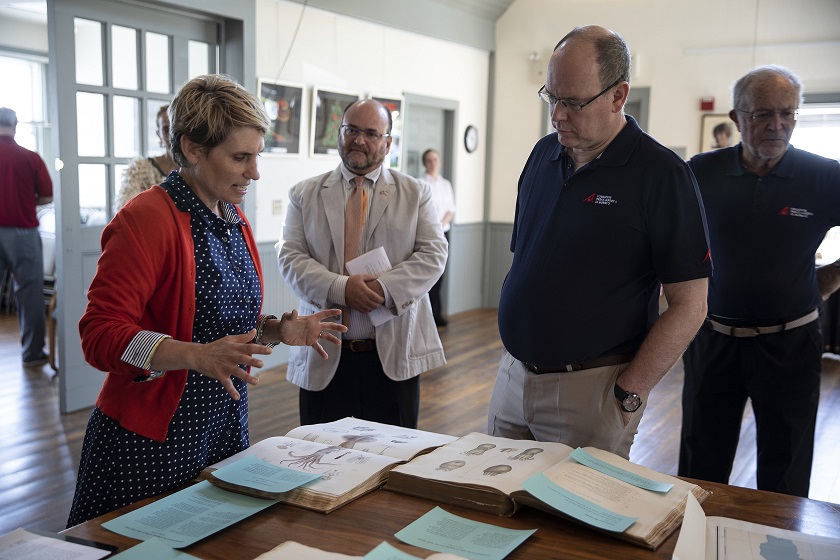
The Librarians prepared a small exhibition for a visit from the Prince on July 9th centered upon the work of Prince Albert I. Librarians Jen Walton and Matt Person researched the past and present connections between Monaco and the MBL, and they also studied specific volumes from Résultats des campagnes scientifiques accomplies sur son yacht par Albert Ier, prince souverain de Monaco (donated to the MBL by Prince Albert I) relative to current MBL environmental and biological research. While the physical volumes were used in the exhibition, the librarians consulted the digital volumes in the BHL for multiple reference purposes.

In addition to volumes from Résultats…, the exhibit included a special chair, now a part of the WHOI Archives collection, prepared for the exhibit by current WHOI Archivist Dave Sherman. In 1933, while on a marine biological station tour of Europe, WHOI marine chemist Professor Norman Rakestraw visited the Oceanographic Institute of Monaco and was given a gift of a wooden chair, which had been part of the late 19th Century oceanographic research yacht Hirondelle, owned and operated by Prince Albert I of Monaco. The Hirondelle chair was donated by Rakestraw to WHOI upon his return to the United States.

chair.JPG

Chair from research yacht Hirondelle (circa 1873) displayed on left. Photo courtesy MBLWHOI Library.

Jen Walton concentrated her research on one of the Cephalopod volumes, Volume 17 (1900), and in particular this image of a large squid which was named in honor of the family of the Princes Albert I and Albert II: Grimalditeuthis richardi.

Cephalopod plate. Résultats des campagnes scientifiques accomplies sur son yacht par Albert Ier, prince souverain de Monaco. Fasc. 17 [Cephalopodes 1] (1900). Contributed in BHL from the MBLWHOI Library.

AlbertIIandJen070918.jpg

(L-R): MBLWHOI Library Co-director Jen Walton, Matt Person, HSH Prince Albert II of Monaco. Photo © 2018 Daniel Cojanu/Undercurrent Productions.

Matt Person told highlights of the story of the four expeditions (through studying Volumes 40-44 of Resultats…) to the Svalbard Archipelago which Prince Albert I led in 1898, 1899, 1906, and 1907. Matt Person also showed Prince Albert II an 1899 bathymetric chart of the Azores Islands and explained how the use of data from multiple sources collected by Prince Albert I over time created a single complete work…and this was compared to current arctic research at the Ecosystems Center of the MBL, which has drawn data over many years from multiple polar region collection sites, to inform global studies of climate change.

Screen Shot 2018-08-22 at 10.06.29 AM.png

Librarian Matt Person shows Prince Albert II of Monaco bathymetric charts which were a result of an 1896 Azores research expedition of Prince Albert I. Photo © 2018 Daniel Cojanu/Undercurrent Productions.

While both Jen Walton and Matt Person used the physical book volumes in the research they performed to become conversant in the work of Prince Albert I , they also employed the full text search and OCR (optical character recognition) files from the Biodiversity Heritage Library and BHL Affiliate the Internet Archive, for which they used an online translation tool to convert French text into English. This translation process was essential to gain a clearer understanding of the text, which informed the illustrations and photographs and narratives of the exhibition as explained to Prince Albert II.

————————————–

The MBLWHOI Library is a Biodiversity Heritage Library founding member, currently an Affiliate, and our staff was part of the development team of the original taxonomic name server, which extracted scientific names from scanned literature. Our staff also formed part of the original “BHL worker bees”, who developed the implementation of much of the day-to-day workflows related to the operation of the online digital library. Matt Person is the Tech Services Coordinator of the MBL WHOI Library and a member of the BHL Collections Committee.

August 23, 2018by Joel Richard
Blog Reel, User Stories

Historic Literature Meets Modern Research: Discovering Octocorals in the Deep Sea of the Northeast Atlantic Ocean

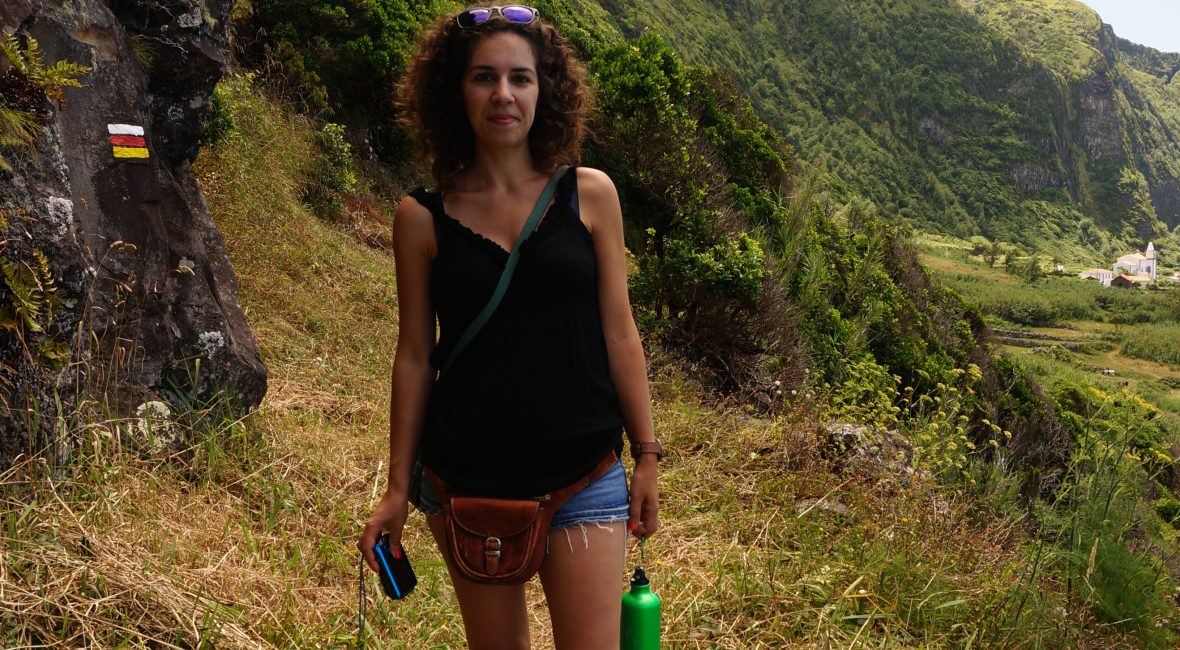
image of a woman standing next to a mountain

To say that Albert I, Prince of Monaco (1848-1922) had a passion for the sea is an understatement.

The Prince devoted much of his life to oceanography, contributing significantly to advances in the then relatively young discipline by sponsoring over two dozen oceanographic expeditions and founding the Institute Oceanographic in Monaco. The expeditions, conducted from the Azores to the Arctic, performed zoological and physics studies and resulted in the discovery of many new-to-science species [1].

Today, H.S.H. Prince Albert II of Monaco continues this passion, recently launching the Monaco Explorations campaign, a three-year transoceanic expedition to conduct scientific research in remote locations at sea [2].

The data and outcomes from the expeditions sponsored by Albert I were published in Résultats des campagnes scientifiques du prince de Monaco, which was produced in 110 issues between 1889-1950 [3].

octocorals

Primnoid octocoral caught in the Azores during the Prince Albert I of Monaco expeditions. Résultats des campagnes scientifiques du prince de Monaco. Studer, T. Fasc. 20 (1901). Contributed in BHL from MBLWHOI Library.

Among the organisms studied on the expeditions and detailed in the publications are Octocorallia, or octocorals, colonial organisms that include soft corals, blue corals, and sea pens in the orders Alcyonacea, Helioporacea, and Pennatulacea.

Íris Sampaio, a Ph.D. candidate in the Department of Oceanography and Fisheries at the University of the Azores & Senckenberg am Meer, Germany, has been studying octocoral taxonomy and ecology for eleven years. Résultats des campagnes has had a significant impact on Sampaio’s research, providing her with data on octocoral species collected in the Azores. Thanks to the Biodiversity Heritage Library, she now has easy access to the title’s public domain volumes [4].

“While my home university owns copies of these books, I lost much time scanning them at the beginning of my research,” recalls Sampaio. “Now they are available in BHL. I adore the coral drawings. They were my first contact with scientific art.”

image of a woman standing next to a mountain

Íris Sampaio in the Azores.

Sampaio first discovered BHL whilst looking for historic literature on Octocorallia species. The Library has since had a major impact on her work.

“BHL is an incredible project,” lauds Sampaio. “Historic literature is still a fundamental source for biological research. Without such a tool as BHL, it would take me much longer to access the old books, monographs and papers now available online.”

octocorals

A plate of octocorals described from the Gulf of Naples with detailed illustrations of polyps. Koch, Gottlieb von. Die gorgoniden des golfes von Neapel, und der angrenzenden meeresabschnitte. Erster theil einer monographie der Anthozoa Alcyonaria. 1887. Contributed in BHL from Smithsonian Libraries.

Sampaio regularly uses BHL to locate descriptions and images of species, often downloading original descriptions as PDFs. These descriptions are essential when describing new species today.

“When describing a species, we have to be aware of what was already described and what names are available and valid under the rules of the International Code of Zoological Nomenclature,” explains Sampaio. “For that, a literature review must be done, even when the species were described in many languages in old works.”

octocorals

Plate revealing the diversity of forms of sclerites, needle-like skeletal structures, that are one of the most important characters analyzed in the discrimination of octocoral species. Kölliker, Albert. Icones histiologicae, oder, Atlas der vergleichendern Gewebelehre. 1864-65. Contributed in BHL from Smithsonian Libraries.

A literature review was an integral part of Sampaio’s work to produce a catalogue and, more recently, a census of the species and checklist of octocorals in the Azores Archipelago [5, 6]. For the catalogue, data was compiled through an extensive review of historic literature – much of it accessed through BHL – complemented with occurrence data from recent surveys, while the census was uniquely based on historic literature.

poster on octocoral catalogue

A catalogue of octocorals, a preliminary result derived from historical literature consultation and BHL use.

“I used BHL every day while I was researching the type localities and mode of designation of types of Octocorallia species inhabiting the Azores archipelago,” shares Sampaio. “As no centralized database provides literature on Octocorallia, BHL is a vital tool for their study.”

We are thrilled to know that BHL contributed to this important research, providing essential diversity and distribution data for deep-sea corals and therefore contributing to the conservation of species in Vulnerable Marine Ecosystems. As Sampaio’s testimonial demonstrates, free and open access biodiversity literature, including publications like Résultats des campagnes scientifiques du prince de Monaco, empowers science around the world, providing researchers with the information they need to study and conserve life on Earth.

Notes and References

Íris Sampaio would like to acknowledge her supervisors and the project for which her Ph.D. contributes in Europe: Íris Sampaio, PhD Candidate to Ocean Sciences, Marine Ecology at Department of Oceanography and Fisheries (DOP), University of the Azores and Senckenberg am Meer, Wilhelmshaven supervised by Dr. Marina Carreiro-Silva, Prof. Dr. André Freiwald and Dr. Gui Menezes and funded by the project EU H2020 ATLAS No 678760 and a FCT doctoral grant SFRH/BD/101113/2014.

[1] Monaco Explorations. 2018. “Monaco’s History with Science and the Sea.” About. Accessed on July 13. https://monacoexplorations.org/about/monaco-and-the-sea/.

[2] Monaco Explorations. 2017. “HSH Prince Albert Ii of Monaco Establishes Monaco Explorations: A Three-Year Campaign of Scientific Explorations at Sea – Press Release.” News, June 7. Accessed on July 13, 2018. https://monacoexplorations.org/hsh-prince-albert-ii-monaco-scientific-explorations-press-release/.

[3] OCLC. 2018. “Résultats des campagnes scientifiques accomplies sur son yacht par Albert Ier, prince souverain de Monaco.” WorldCat. Accessed on July 13. http://www.worldcat.org/oclc/14588383.

[4] The Octocorallia are treated in the Alcyonaires volumes of Résultats des campagnes scientifiques du prince de Monaco: no 20. Alcyonaires [1] / T. Studer. (1901) and no 73. Alcyonaires [2] / J.A. Thomson. (1927). As a public domain work, Studer’s volume is available in BHL.

[5] Sampaio, Íris & Xavier, Joana & Ocaña Vicente, Oscar & Braga Henriques, Andreia & de Matos, Valentina & Porteiro, Filipe. 2012. Catalogue and Identification Guide of Deep-Sea Alcyonacea Lamouroux, 1912 of the Azores Archipelago (NE Atlantic) [poster communication at the 5th ISDSC]. https://www.researchgate.net/publication/258440356_Catalogue_and_Identification_Guide_of_Deep-Sea_Alcyonacea_Lamouroux_1912_of_the_Azores_Archipelago_NE_Atlantic_poster_communication_at_the_5th_ISDSC.

[6] Sampaio Í, Freiwald A., Porteiro F. M., Menezes G. & Carreiro-Silva M (submitted) Census of Octocorallia (Cnidaria: Anthozoa) of the Azores (NE Atlantic): a nomenclature update. Zootaxa.

August 16, 2018by michelle.underhill
BHL News, Blog Reel

Botany 2018: The Future of Digital Projects for Research & Teaching in Botany

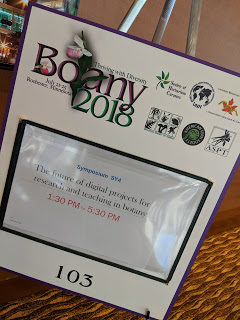
Botany Symposium 2018 Poster

BHL Program Director Martin Kalfatovic was invited to participate in a symposium, hosted by JSTOR Global Plants, at Botany 2018 in Rochester, MN entitled The Future of Digital Projects for Research & Teaching in Botany.

Jason Przybylski, Senior Licensing Editor / JSTOR. Symposium panelist.

The symposium addressed questions such as: what existing digital projects in botany have been successful and how did they become so; what areas of need should future projects explore; how do we define success for digital projects; how do digital projects directed at students differ from those aimed at the researcher; how can we use digital projects to reach new students and interested lay people; and how are new digital projects funded and supported for the long term.

The panel included speakers from a range of backgrounds — including both academics and librarians, as well as people working for organizations developing these digital initiatives—creating a conversation that brought together multiple viewpoints. Panelists included:

  • Jason Przybylski, Senior Licensing Editor / JSTOR
  • Deirdre Ryan, Director, Primary Sources & JSTOR Forum
  • Barbara Thiers, Director of Science, New York Botanical Garden
  • Martin Kalfatovic, Associate Director, Smithsonian Libraries and Program Director, The Biodiversity Heritage Library
  • Elspeth Haston, Deputy Herbarium Curator, Royal Botanic Garden Edinburgh
  • Adrian S. Wisnicki, Assistant Professor and Center for Digital Research in the Humanities Faculty Fellow, University of Nebraska-Lincoln & Director, Livingstone Online
  • Hilary Callahan, Ann Whitney Olin Professor of Biology, Barnard College

Symposium Abstract

Botany was early to recognize the potential impacts on the field of digitization and digital projects, from scanning herbarium specimens so scholars from around the world could easily access them to recovering lost archives to developing access to copious amounts of data on plant life and biodiversity more broadly. As digitization of physical materials has become more widespread and digital capabilities have increased, the expectations for digital projects in botany have similarly advanced. It is no longer enough to simply scan an item and make it available as a PDF on a website. Researchers and students now are looking for innovative digital projects that use the digital medium to present objects in new ways or bring together materials in ways that weren’t possible in an analog environment, all of which allows for new avenues to pursue in research and teaching. This symposium will bring together presenters working on digital projects in botany to examine the current state of the field and its future directions. The panel will include speakers from a range of backgrounds – including both academics and librarians, as well as people working for organizations developing these digital initiatives – creating a conversation that will bring together multiple viewpoints. The symposium will address questions such as: what existing projects have been successful and how did they become so; what areas of need should future projects explore; how do we define success for digital projects; how do digital projects directed at students differ from those aimed at the researcher; how can we use digital projects to reach new students and interested lay people; and how are new digital projects funded and supported for the long term. By the end of the symposium, we will aim to have identified trends in the field and areas that need further development, hopefully providing the necessary grounding for future digital developments.

The BHL presentation, “The Biodiversity Heritage Library: Empowering Discovery through Free Access to Biodiversity Knowledge” is available online.

From the abstract: The Biodiversity Heritage Library (BHL) has no bricks, no mortar, but rather stands as a vast online collection of biodiversity knowledge compiled from the collections of natural history and botanical libraries the world over. These collections–comprised of scientific journals, books, and archival collections–provide information critical to the study of life on our planet. Replete with species descriptions and occurrence data, ecosystem profiles, behavioral observations, and climatic records, these collections inform current research and provide historical information on species abundance, habitat alteration, and human exploration. In many cases, these publications are only physically available in one or two locations throughout the world.

Funding for the symposium was provided by the Botanical Society of America.

From the poster sessions:


Some flora and fauna:

Vanessa atalanta (Red Admiral)

Basidiomycota

August 7, 2018by
Blog Reel, Featured Books

An Illustrated Natural History of German Frogs: Rösel’s Historia Naturalis Ranarum Nostratium

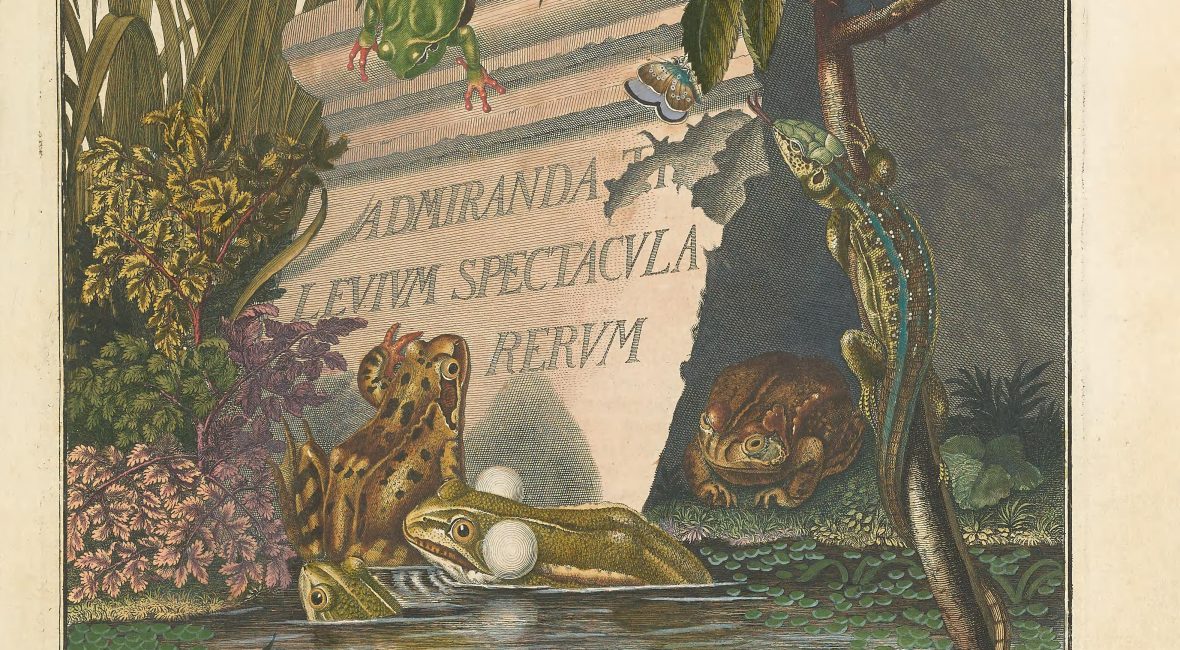
Historia naturalis ranarum nostratium frontispiece

Rösel von Rosenhof, August Johann. Historia naturalis ranarum nostratium. 1758. Contributed in BHL from Smithsonian Libraries.

Historia naturalis ranarum nostratium has been described as one of the most beautiful works devoted to frogs and amphibians.

The work of German artist and naturalist August Johann Rösel von Rosenhof, Historia naturalis ranarum nostratium describes the natural history of all then-known frogs and toads indigenous to the Nuremberg region in Germany. The title is noteworthy first for the extensive, accurate information in the text, printed in two columns in both German and Latin. As Darrel Frost, a curator in the Herpetology Department in the Division of Vertebrate Zoology at the American Museum of Natural History, wrote in his essay on the book for Natural Histories, “Rösel’s volume on German frogs represents in a very real sense the beginning of accurate life-history observation in amphibians” (Frost 2012, 38).

frog illustration

Rösel von Rosenhof, August Johann. Historia naturalis ranarum nostratium. 1758. Contributed in BHL from Smithsonian Libraries.

The work is equally (if not more) renowned for its illustrations. The twenty-four folio, hand-colored copper engravings portray habitats, anatomy, reproductive behavior, and larval development stages in intricate detail. The quality of the artwork is not surprising given Rösel’s artistic background.

Johann Rösel von Rosenhof was born in 1705 to a noble Austrian family near Arnstadt in the German principality of Arnstadt-Schwarzburg. Orphaned at a young age, Rösel was sent for training to his uncle, Wilhelm Rösel, an animal and landscape painter, after he showed artistic talent. He eventually became a painter of portraits and miniatures to the Danish Court in Copenhagen before returning to Nuremberg and earning his living as a painter.

frog illustration

Rösel von Rosenhof, August Johann. Historia naturalis ranarum nostratium. 1758. Contributed in BHL from Smithsonian Libraries.

Rösel’s passion for natural history was ignited by the work of Maria Sibylla Merian, a German-born naturalist and illustrator who is recognized as one of the most significant contributors to the field of entomology. Her Metamorphosis Insectorum Surinamensium (1705) depicted the full life cycles of many Suriname insects. Merian was able to portray this life history information because she drew her subjects from life in their natural environments. Most naturalists of the day illustrated species from dead, preserved specimens, which contributed to a lack of knowledge about the true life cycle and origin of insects. Maria also portrayed the host plant for the species she studied and even illustrated the damage the insects left on the plants.

illustration of butterflies

Rösel von Rosenhof, August Johann. Der monathlich-herausgegebenen Insecten-Belustigung. v. 4 (1761). Contributed in BHL from the Naturalis Biodiversity Center.

Merian’s work inspired Rösel to study and produce a similar work on German insects. His interest in the natural world also grew to include amphibians and reptiles, and he used his leisure time to collect insect and amphibian eggs and larvae to observe their development. The first part of his first natural history publication, Der monatlich-herausgegebenen Insecten-Belustigung, was published in 1740. Four additional parts appeared over the years, with the final one being published posthumously in 1761. Because of this publication, a copy of which has been contributed in BHL from the Naturalis Biodiversity Center, Rösel is known as one of the fathers of German entomology.

frog illustration

This illustration became the type of Bufo calamita (now Epidalea calamita). Rösel von Rosenhof, August Johann. Historia naturalis ranarum nostratium. 1758. Contributed in BHL from Smithsonian Libraries.

In 1753, Rösel published the first part of his Historia naturalis ranarum nostratium. Completed in 1758, the work is a scientific and artistic marvel, and several of the illustrated frogs, such as Bufo calamita (now Epidalea calamita) and Bufo fuscus (now Pelobates fuscus), became the types for their species. Thanks to the Smithsonian Libraries, everyone in the world can appreciate Rösel’s scientific and artistic contributions to the natural history of German frogs. The Libraries’ copy of Historia naturalis ranarum nostratium, housed in its Joseph F. Cullman 3rd Library of rare books, has recently been digitized for BHL.

As Frost outlines in his essay, Rösel intended to produce a similar work for lizards and salamanders, but sadly was not able to complete it, as he died unexpectedly on March 27, 1759.

Through his natural history publications, Rösel’s scientific legacy lives on and is accessible to everyone through the Biodiversity Heritage Library thanks to the Naturalis Biodiversity Center and Smithsonian Libraries.

frog illustration

Rösel von Rosenhof, August Johann. Historia naturalis ranarum nostratium. 1758. Contributed in BHL from Smithsonian Libraries.

Reference

The information in this post was derived from:

Frost, Darrel. 2012. “Rösel von Rosenhof and His Natural History of Frogs.” In T. Baione (Ed.), Natural Histories: Extraordinary Rare Book Selections from the American Museum of Natural History Library (pp. 37-38). New York: Sterling Publishing.

August 2, 2018by michelle.underhill

Help Support BHL

BHL's existence depends on the financial support of its patrons. Help us keep this free resource alive!

search

About BHL

The Biodiversity Heritage Library (BHL) is the world’s largest open access digital library for biodiversity literature and archives. BHL operates as a worldwide consortium of natural history, botanical, research, and national libraries working together to digitize the natural history literature held in their collections and make it freely available for open access as part of a global “biodiversity community.”

Join Our Mailing List

Sign up to receive the latest news, content highlights, and promotions.

Subscribe Now

Subscribe to Blog via Email

Enter your email address to subscribe to this blog and receive notifications of new posts by email.

Join 319 other subscribers

Subscribe to Blog Via RSS

Subscribe to the blog RSS feed to stay up-to-date on all the latest BHL posts.

Access RSS Feed

Inspiring Discovery through Free Access to Biodiversity Knowledge.

The Biodiversity Heritage Library makes it easier than ever for you to access the information you need to study and explore life on Earth…for free, anytime, anywhere.


64+ Million Pages of
Biodiversity Literature Online.

EXPLORE

Tools and Services
to Transform Research.

EXPLORE

300,000+
Illustrations on Flickr.

EXPLORE

ABOUT | HARMFUL CONTENT | PRIVACY | SITE MAP | TERMS OF USE