Biodiversity Heritage Library - Program news and collection highlights from BHL
  • Home
  • News
  • Featured Books
    • All Featured Books
    • Book of the Month Series
    • BHL at 20
  • User Stories
  • Campaigns
    • Fossil Stories
    • Garden Stories
    • Monsters Are Real
    • Page Frights
    • Her Natural History
    • Earth Optimism 2020
  • Tech Blog
  • Visit BHL
Home
News
Featured Books
    All Featured Books
    Book of the Month Series
    BHL at 20
User Stories
Campaigns
    Fossil Stories
    Garden Stories
    Monsters Are Real
    Page Frights
    Her Natural History
    Earth Optimism 2020
Tech Blog
Visit BHL
  • Home
  • News
  • Featured Books
    • All Featured Books
    • Book of the Month Series
    • BHL at 20
  • User Stories
  • Campaigns
    • Fossil Stories
    • Garden Stories
    • Monsters Are Real
    • Page Frights
    • Her Natural History
    • Earth Optimism 2020
  • Tech Blog
  • Visit BHL
Biodiversity Heritage Library - Program news and collection highlights from BHL
Blog Reel, Featured Books

Plant Trade and Medicinal Plants in Asia

Three separate black and white images of medicinal plants found in Pakistan

Plant species worldwide face an increasing barrage of threats to their survival. The deliberate collection of rare plants poses a far greater threat to wild plant species. In Wild Plants in Trade (1992), the reasons and effects of wild collection on plants for cultivation and international trade can be found. The trade of orchids, bulbs, cycads, palms and tree ferns, cacti and other succulent plants, carnivorous plants and air plants were introduced in detail in the second half of this book, as well as the attempts to control the collection of these plants by the Convention on International Trade in Endangered Species of Wild Fauna and Flora (CITES) and governments.

Eight wild plants commonly used in trade

Pictures of some wild plants in trade. Jenkins, M., & Oldfield, S. Wild Plants in Trade. 1992. Contributed in BHL from UNEP-WCMC, Cambridge. Rights Holder: TRAFFIC International

Forests are also an important source for plant trade. The dipterocarp forests of Southeast Asia are today the largest source of hardwoods in international trade, but they are likely to be logged over within a decade or two. India, Burma and Southeast Asia are rich centers of genetic variation in cultivated fruit trees. The scale of exploitation of the forests in the last few decades has led to serious forest degradation. In The Conservation Atlas of Tropical Forests: Asia and the Pacific (1991), tropical timber trade of Asia and the Pacific areas are discussed in detail, along with government policies and land-use planning. The International Tropical Timber Organization (ITTO) created in 1983 is largely concerned with improving market conditions and encouraging the development of national policies aimed at “maintain[ing] the ecological balance in the regions concerned”.

Six men measure and label large logs in a lumber yard

Men scaling or measuring logs in Kimanis, Sabah, Malaysia. Collins, M. N., Sayer, J. A., & Whitmore, T. C. (Eds.). The Conservation Atlas of Tropical Forests: Asia and the Pacific. 1991. Contributed in BHL from UNEP-WCMC, Cambridge. Rights Holder: IUCN

One of the important economic values of plants, especially herbal plants, is in medicine. Approximately 60,000 plant species are harvested mainly for medicinal usage in the world. Today, people in many Asian countries still use medicinal plants for traditional health care treatments. The World Health Organization (WHO) has also acknowledged the importance of traditional medicines.

The ethnobotany of southern Balochistan, Pakistan: with particular reference to medicinal plants (1992) collects two distinct types of ethnobotanical information: (1) plants used by nomads and village dwellers for nutritional, utilitarian, and medicinal purposes; and (2) plants prescribed and/or dispensed by herbalists or herbal doctors residing in population centers. The Latin binomial, relevant synonyms, field collection number, locality collected, local vernacular name(s), use(s), specifics of preparation(s) or treatment(s), and miscellaneous comments are provided for each species.

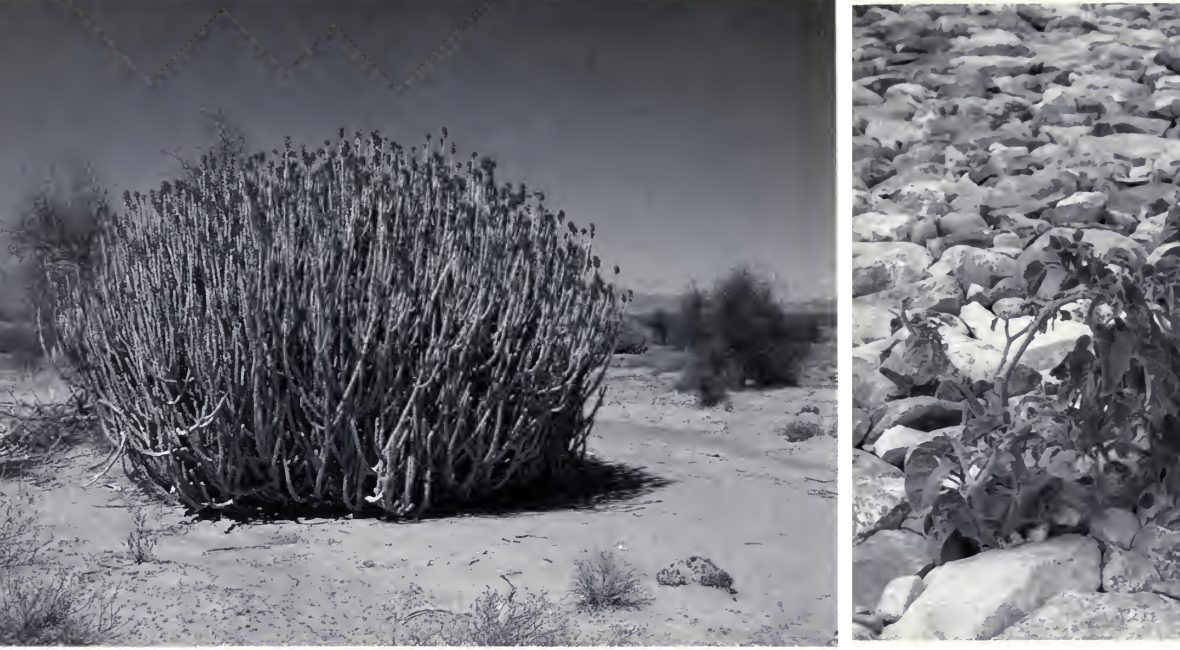
Three separate black and white images of medicinal plants found in Pakistan

Some of the plants in southern Balochistan, Pakistan (left: Nannorhops ritchiana; middle: Euphorbia caducifolia, right: Datura innoxia). Goodman, S. M., & Ghafoor, A. The ethnobotany of southern Balochistan, Pakistan: with particular reference to medicinal plants. 1992. Contributed in BHL from University Library, University of Illinois Urbana Champaign. CC BY-NC-SA 3.0. Rights Holder: Field Museum of Natural History.

The medicinal plants of the Philippines (1901) describes the Philippines’ Dicotyledonous (including Polypetalous and Gamopetalous) and Monocotyledonous plants which have medicinal properties.

Ethnobotanical Use of Medicinal Plants by Inhabitants of Al-Mafraq, Jordan (2015) records and lists all medicinal plants that have shown therapeutic effects as analgesic/stimulant by the inhabitants of Al-Mafraq in the northern parts of Jordan during March 2011 to May 2013.

Taxonomy and Conservation of Medicinal Plants in Canal-Irrigated Areas of Punjab, Pakistan (2006) presents the taxonomic position of 131 medicinal plants belonging to 112 families and 52 genera from the canal-irrigated areas of Punjab. Some of the important families are Fabaceae (21 medicinal species), Apiaceae, Asteraceae, Lamiaceae, Solanaceae (6 species each), Cucurbitaceae, Malvaceae, and Poaceae (5 species each). The life form, parts used and pharmaceutical uses of these plants are also described.

Food and medicinal plants used for childbirth among Yunnanese Chinese in northern Thailand (2003) describes the folk knowledge of medicinal foods and plants used for childbirth care by Yunnanese Chinese in northern Thailand. More than 40 species of steam bath herbs were collected and identified. This paper also makes an initial ethnobotanical comparison with steam bath herbs among other ethnic groups in northern Thailand.

In two separate images, an Asian woman kneels with a large knife to collect medicinal plants; medicinal herbs are steamed with eggs to create a steam bath

Left: Woman collecting medicinal plants along the roadside in Chiang Mai, a Yunnanese village in Fang district. Right: Steam bath herbs being steamed with eggs in a pan. Liulan, W., Nanakorn, W., & Fukui, K. Food and medicinal plants used for childbirth among Yunnanese Chinese in northern Thailand. 2003. Contributed in BHL from Missouri Botanical Garden, Peter H. Raven Library. CC BY-NC-SA 3.0. Rights Holder: Society of Ethnobiology


References

Jenkins, M., & Oldfield, S. (1992). Wild plants in trade. TRAFFIC International. https://doi.org/10.5962/bhl.title.44938

Collins, M. N., Sayer, J. A., & Whitmore, T. C. (Eds.). (1991). The Conservation Atlas of Tropical Forests: Asia and the Pacific. Macmillan Press Ltd. https://doi.org/10.5962/bhl.title.44927

Goodman, S. M., & Ghafoor, A. (1992). The ethnobotany of southern Balochistan, Pakistan: with particular reference to medicinal plants. Field Museum of Natural History. https://doi.org/10.5962/bhl.title.2542

Pardo de Tavera, T. H. (1901). The medicinal plants of the Philippines. (J. B. Thomas, Jr., Trans.). P. Blakiston’s Son & Co. https://doi.org/10.5962/bhl.title.21044

Al-Quran, S. (2014). Ethnobotanical use of medicinal plants by inhabitants of Al-Mafraq, Jordan. Arnaldoa, 21(1), 119-126. https://www.biodiversitylibrary.org/page/46625105

Akbar, K. F., & Athar, M. (2006). Taxonomy and conservation of medicinal plants in canal-irrigated areas of Punjab, Pakistan. SIDA, contributions to botany, 22(1), 593-606. https://www.biodiversitylibrary.org/page/9182015

Liulan, W., Nanakorn, W., & Fukui, K. (2003). Food and medicinal plants used for childbirth among Yunnanese Chinese in northern Thailand. Journal of Ethnobiology, 23(2), 209-226. https://www.biodiversitylibrary.org/page/32740176

July 22, 2021by [email protected]
Blog Reel, Featured Books

Farewell to Brood X (2021) — See You in 2038!

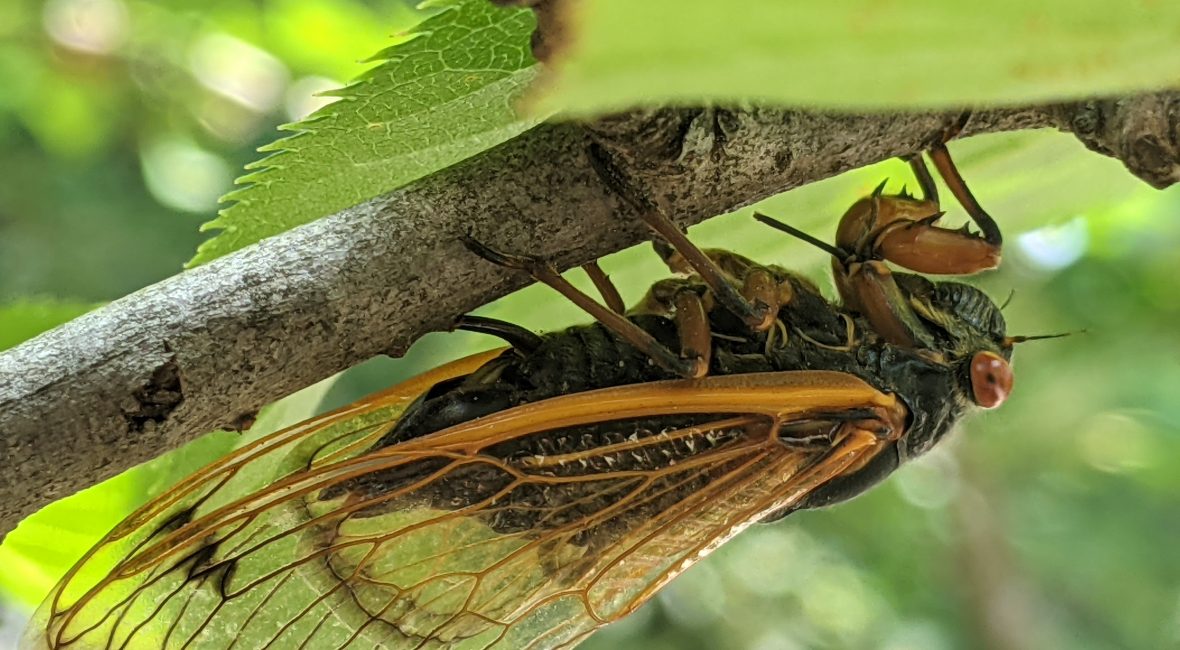
A cicada attached to the underpart of a branch with green leaves in the background.

By the time this post publishes, the vast majority of Brood X (2021) will have completed their above ground lifecycle. The vast numbers of adult Magicicada who first emerged in late April and early May will have disappeared, leaving behind their adult bodies as well as still massive numbers of exuviae (cast-off outer skins) from when they emerged as nymphs.

Preparing for the Next Generation

As the weather warmed up in the Brood X range, males began to sing and chorus, attracting females. After mating, the females could be found clinging to young branches, carefully digging into the branch and depositing eggs which will hatch in 4-6 weeks, the larvae then dropping to the ground where they will dig down, attaching themselves to the tree roots for the next 17 years.

A cicada attached to the underpart of a branch with green leaves in the background.

Egg Laying Female (M. cassinii). 5 June 2021, Arlington Virginia. Photo credit: Martin Kalfatovic.

C.L Marlatt describes the process of the female’s ovipositing:

The work of the female Cicada in inserting her eggs is an interesting subject for study, and so little does she mind the presence of an observer that the operation can be closely watched without her exhibiting any alarm. (Marlatt 1898, 78)

The grooves or channels dug by the female can clearly be seen in this illustration by L.H. Joutel from Charles Pack’s Trees as Good Citizens:

Branch with a cicada perched on it, showing Grooves cut by ovideposting female cicada. Branch is surrounded by green leaves.

Grooves cut by ovideposting female (Magicicada). Pack, Charles L. Trees as Good Citizens. 1922. Art by L.H. Joutel (1905). Contributed in BHL from the University of Toronto – Earth Sciences Library (Noranda).

Though the egg laying is generally harmless to most trees, very young trees can be damaged. “Flagging” (where portions of the twigs die off leaving brown leaves to droop down) as well as the oviposition scars are positive signs of a future new generation of Brood X. The female’s ovipositor is spear-shaped, as described by Marlatt:

The ovipositor, or twig-piercing and egg-laying organ, of the female Cicada is also a very complex instrument. It issues from a groove, or fissure, on the underside of the abdomen, and at rest is nearly concealed except at the tip by the broad overlapping sides of the eighth dorsal segment … The inclosed ovipositor is a very tough, horny instrument, spear-shaped, and serrated at the extremity, and consists of three pieces …. (Marlatt 1898, 54)

Black and white drawing of a close-up of the ovipositor of a female cicada.

Figure 25: The Ovipositor. Marlatt, C.L. The periodical cicada: an account of Cicada septendecim, its natural enemies and the means of preventing its injury: together with a summary of the distribution of the different broods. U.S. Department of Agriculture—Bulletin no. 14. 1898. Contributed in BHL from the U.S. Department of Agriculture, National Agricultural Library.

Oviposition scars in a tree trunk, made by a cicada.

Oviposition scars (Magicicada). 12 June 2021, Arlington Virginia. Photo credit: Martin Kalfatovic.

Cicada Songs and Chorusing

A continual singing or scream was kept up by the males, from sunrise till evening, and so loud that in a calm morning the sound was heard a full mile. (Hildreth 1830, 48)

As the 2021 Brood X emergence ends, those living in the range will find their world strangely quiet. The loud singing and chorusing of the male cicada, which can be as loud as 90-100 decibels, will stay for a lifetime with those who have heard it.

… the true sound apparatus consists of two small ear-like or shell-like inflated drums situated on the sides of the basal segment of the abdomen. These drums are caused to vibrate by the action of powerful muscles, and the sound is variously modified by adjacent smaller disks — the so-called “mirrors” or sounding boards — and issues as the peculiar note of the species, which once heard is never likely to be forgotten, or if heard again, mistaken for that of some other insect. (Marlatt 1898, 55-56)

Black and white drawing of the musical apparatus of a cicada.

Fig. 27: The Musical Apparatus. Marlatt, C.L. The periodical cicada: an account of Cicada septendecim, its natural enemies and the means of preventing its injury: together with a summary of the distribution of the different broods. U.S. Department of Agriculture—Bulletin no. 14. 1898. Contributed in BHL from the U.S. Department of Agriculture, National Agricultural Library.

The songs of each of the species are distinctive. In my call with Dr. Gene Kritsky, he described the M. septendecim as a high note falling in descending pitch that sounds like “phaaaaa-raoh” (hence the common name of the species, Pharaoh Cicada). Kritsky details the cicada songs in his book: A chorus of M. septendecim has been compared to the sound of 1950s sci-fi movies. M. cassinii’s song is a series of clicks followed by a buzzing sound. M. septendecula’s call is isolated buzz-clicks and then staccato buzz-clicks (Kritsky 2021, 38).

You can find recordings of the various Magicicada species on iNaturalist: M. septendecim, M. cassinii, and M. septendecula.

Figure showing Magicicada sounds.

Figure showing Magicicada sounds. Dybas, Henry. “Population explosion — 17-year locust style.” Bulletin. Field Museum of Natural History. 41.2 (February 1970). Contributed in BHL from the University Library, University of Illinois, Urbana-Champaign. CC-BY-NC-SA. Rights Holder: Chicago Field Museum.

Of course, for many, the songs and chorusing of the male cicadas is a rare treat. In 1970, during an emergence of Brood X in Princeton, NJ, Nobel-laureate Bob Dylan wrote of the cicada’s “sweet melody”:

And the locusts sang off in the distance
Yeah, the locusts sang such a sweet melody
Oh, the locusts sang off in the distance
Yeah, the locusts sang and they were singing for me (Bob Dylan, “Day of the Locusts”)

Near Threatened?

For those living in the areas where Brood X has appeared, it may seem perplexing that the three species of 17 Year Magicicada are listed as “near threatened” on the International Union for Conservation of Nature’s (IUCN) Red List of Threatened Species (see the IUCN Red List for Magicicada cassini, Magicicada septendecim, and Magicicada septendecula). The IUCN’s designation of “near threatened” is actually an improvement from its previous designation of “vulnerable.”

With multiple billions to trillions of individuals spread across a large geographic area, one may ask how these species could be at risk. However, we know from examples such as the Passenger Pigeon (Ectopistes migratorius) that species that seem vast in numbers and beyond threat can face numerous challenges from habitat loss and other human actions (see the BHL blog post, “From Billions to None: The Story of the Passenger Pigeon”).

A large patch of dirt in front of a brick building.

A former tree filled lot. June 2021, Arlington Virginia. Photo credit: Martin Kalfatovic.

Even if the majority of Brood X (or other Magicicada broods) does not disappear anytime soon, there are areas where previous emergences are not happening, or not happening in large numbers. The best example of this is on Long Island where Brood X has had, practically speaking, no Magicicada sightings. Habitat loss is a major driver (both recently and historically) in Magicicada loss. The 13 and 17 year life cycle of the species, while perhaps beneficial in reducing predation, proves fatal when trees are cut down or the locations where nymphs would appear have been paved over.

Massospora cicadina

Though the 13 and 17 year cycles of Periodical Cicadas serves to keep them safe from opportunistic predators, there is one species of fungus that infects only Periodical Cicadas: Massospora cicadina.

The underside of a cicada with white fungus.

M. septendecim infected with Massospora cicadina. 24 June 2021, Arlington Virginia. Photo credit: Martin Kalfatovic.

The M. cicadina fungus infection was first documented by Joseph Leidy in 1851:

In the spring of 1851, during the imago appearance of the seventeen-year locust, among myriads of the insect, several friends and myself found between 12 and 20 specimens, which, though living, had the posterior third of the abdominal contents converted into a dry, powdery, ochreous-yellow, compact mass of sporuloid bodies. The caudal appendages and posterior two or three abdominal rings covering the mass, were loose and easily detached, leaving the fungoid matter in the form of a cone, affixed by its base to the unaffected part of the abdomen of the insect. (Leidy 1853, 53)

In 1878, Charles Peck fully described and named the fungus, naming both the genus (Massospora) and species (Massospora cicadina):

Spore mass occupying the abdominal cavity, whitish or pale cream-color, at length exposed by the falling away of the terminal rings of the abdomen; spores subglobose or broadly elliptical, granular within, sometimes containing one to three unequal nucleoli or oil globules, .00065′ — .00085′ in diameter. (Peck 1879, 44)

Black and white drawings of Massospora cicadina fungus.

Massospora cicadina Peck. Speare, A. T. 1921. “Massospora cicadina Peck: A Fungous Parasite of the Periodical Cicada.” Mycologia. 13 (2): 72–82. Contributed in BHL from Smithsonian Libraries and Archives.

Recent research by Boyce, et al. provides an extended genetic analysis for M. cicadina and explores the chemical basis for behavioral changes caused by M. cicadina:

Several studies have reported hypersexual behaviors in Massospora-infected cicadas, where male cicadas, in addition to typical mating behavior, also attract copulation attempts from conspecific males (5,7; table S1). This “extended phenotype” of Massospora hijacks cicadas, turning them into efficient vectors for conidial transmission. (Boyce, et al., 2018, 3)

Brood X: Cicada Safari and iNaturalist

Brood X is appearing at a time of great interest by people all around the world in helping create research quality data for scientists. The Cicada Safari app logged nearly 20,000 images a day during peak observations. In a conversation with Dr. Kritsky of Mount St. Joseph University, he noted that Cicada Safari is on track to document nearly 500,000 observations of Magicida this year. As I discussed with Kritsky, the sheer bulk of this data will be invaluable to researchers for years to come.

A man with white hair and a brown shirt overlaid on a photo of cicadas on green leaves.

Dr. Gene Kritsky. Image credit: Martin Kalfatovic.

Another important citizen science project is iNaturalist. Contributors to iNaturalist are also providing invaluate data on Brood X. Contributors are asked to provide additional species information (when known) and other iNaturalist participants verify or confirm both species as well as other data points on the observations. In a conversation with Carrie Seltzer (Stakeholder Engagement Strategist for iNaturalist), she noted:

More than 4,400 people across the Eastern United States submitted over 19,000 Magicicada observations this year to iNaturalist. We look forward to learning what insights emerge from these records, and how they complement data from more targeted apps like Cicada Safari.

I spoke with a few of the top iNaturalist observers/identifiers of Magicicada for their experiences with Brood X this year.

Collage of photos of cicadas from iNaturalist.

iNaturalist Screenshot.

Roshan Vignarajah (roshan2010) is one of the top observers/identifiers in iNaturalist. This is Roshan’s first Magicicada emergence. He shared with me:

I have been interested in insects for most of my life, and I have been waiting for the emergence since the Brood X stragglers emerged in 2017. Once I learned about the 3 species, I was hooked. I love observing larger insects which makes cicadas (specifically Magicicada) the perfect subject. I also have an interest in Lepidoptera (especially moths).

Vignarajah has also spotted four of the blue-eyed Magicicada (see examples of M. cassinii and M. septendecim). He will miss many things when Brood X’s emergence fades, “especially the constant drone of the choruses and having a constant stream of cicadas to enjoy and photograph.”

Adrienne van den Beemt (mmmmbugs) is a science teacher and naturalist in the Washington, DC area. This is her third Magicicada emergence. She noted:

I have loved watching this emergence. It has been hard sometimes to teach classes outside when the cicadas are so loud, and some students have a genuine fear which makes it difficult for them. As a science teacher and naturalist, I am always interested in what’s going on in the natural world. One thing I appreciate about iNaturalist is that it provides a way for the public to interact with scientists and naturalists. I love being able to help people identify a plant or a bug- and then to be able to continue the conversation if they have further questions, or if another user suggests a different identification.

Zachary Dankowicz (zdanko) is the top observer/identifier of M. septendecula. They commented:

This is my first experience, I’d only ever heard of the emergences from older family members, and it got me quite excited! I started just photographing them and trying to get all of the species, and as I got more involved in observing them, I learned a lot through other people and outside resources like cicadamania.com about how to identify them. One thing led to another, and now I’m the top observer and identifier for Magicicada septendecula, my favorite, and the most elusive, species of the 17-year cicadas! I’ve observed over 400 M. septendecim, so that’s definitely my top observed species, but it’s somewhat of a phase. My primarily observed taxon is a mix of Dipterans and Cicadellids, as they tend to be the ones that catch my eye most often.

I’ll miss going to my favorite septendecula spot and picking up cicadas one by one to check the abdomen. One thing I found quite interesting was that in the very beginning of the emergence, there were barely any septendecula in the places that I checked. All of the sudden, one day I found 5, and the next day 4, and the day after that 4, etc.

Jessee J. Smith (weecorbie) is another top observer/identifier and manages the Brood X Cicadas: 2021 iNaturalist project page. She told me:

My first experience with Magicicada in 1987 made a deep impression. I took entomology in college in spite of the fact that I was an English/art major at the time, and it made me swap my English major for one in natural science. I began working with Magicicada in a research capacity with Brood III in 1997, and I’ve helped out with field surveys and publications ever since. It’s a good thing that I’m very fond of cicadas, because I’m married to Gene Kritsky, and it would be impossible to avoid them for that reason alone. We’ve had a lot of adventures together in the course of our cicada surveys.

Among the highlights for Smith this year were “how many cicadas I saw with aberrant coloration; I found quite a few cassini with piebald orange patches, or with entirely orange abdomens.”

When the 2021 emergence ends, Smith won’t just miss the sight of all those Magicicada:

I’ll miss the chorusing, which peaked around our house at 90 dB (and that’s really loud), but which I especially enjoy in the evening when the cicadas are winding down for the night. There’s something restful about the occasional muttering rasps of cassinii in the gloaming, combining with the steady ticking of a few septendecula here and there.

At the time of writing (1 July 2021), iNaturalist had tallied the following:

  • 21,694: Magicicada (genus)
  • 8,710: M. septendecim
  • 3,104: M. cassinii
  • 509: M. septendecula

As a final note, Seltzer commented, “There are interesting opportunities to infer absence of cicadas from areas that had other iNaturalist observations during the Brood X emergence, but no cicada observations. Although imperfect, it may help control for (or at least highlight) areas with less observer effort.”

Magicicada 2038

Over the last weeks of June and into July, the last of the adult Magicicada will complete their breeding cycle and egg laying. The eggs deposited in tree branches will hatch and the larvae will drop to the ground, burrowing down to attach themselves to the tree roots and settle down for another 17 years.

The world that Brood X (2021) emerged into changed significantly from 2004 when they dug into the ground. The information gathered this year will inform the study for when they next emerge. What our shared world will look like in 2038 is something both humans and Magicicada will find out together.

Cicada eggs on a black backdrop next to a branch.

Magicicada eggs. 28 June 2021, Arlington Virginia. Photo credit: Martin Kalfatovic.

My Observation Highlights of Brood X

  • First adult observation (likely Magicicada septendecim): 10 May 2021
  • First confirmed observation (Magicicada septendecim): 14 May 2021
  • First observation of teneral stage (Magicicada, likely M. septendecim): 15 May 2021
  • First Observation (Magicicada cassinii): 20 May 2021
  • First Observation (Massospora cicadina): 24 May 2021
  • First Observation, mating (Magicicada septendecim): 26 May 2021
  • First Observation (Magicicada septendecula): 27 May 2021
  • First Observation, ovipositing (Magicicada septendecim & Magicicada cassinii): 5 June 2021
  • Last Observation of living Magicicada (M. cassinii): 16 June 2021
Screenshot of the iNaturalist app with photos of cicadas.

Screenshot: iNaturalist.

References and Additional Suggested Reading

Boyce, Greg, et al. 24 July 2018. Discovery of psychoactive plant and mushroom alkaloids in ancient fungal cicada pathogens. bioRxiv. Preprint doi: https://doi.org/10.1101/375105

Dybas, Henry. 1970. Population explosion — 17-year locust style. Bulletin (Field Museum of Natural History) 41(1): 11-13. https://www.biodiversitylibrary.org/page/2890663

Hildreth, S.P. 1830. Notices and Observations on the American Cidada, or Locust. The American Journal of Science and Arts. 18: 47-50. https://www.biodiversitylibrary.org/page/30953560

Kritsky, Gene. 2021. Periodical Cicadas: The Brood X Edition. Ohio Biological Survey. http://www.worldcat.org/oclc/1246784386

Leidy, Joseph. 1853. Upon Pseudo-Entophyta, etc. In: Flora and Fauna within Living Animals. Smithsonian Contributions to Knowledge. 5: 50-54. https://www.biodiversitylibrary.org/page/9049946

Peck, Charles H. 1879. Report of the Botanist. Massopora, gen. nov. 31st Annual report on the New York State Museum of Natural History. 31:44. https://www.biodiversitylibrary.org/page/35614048

Speare, A. T. 1921. “Massospora cicadina Peck: A Fungous Parasite of the Periodical Cicada”. Mycologia. 13(2): 72–82. https://www.biodiversitylibrary.org/page/46097338

July 13, 2021by
Blog Reel, User Stories

Backswimmers vs. Mosquitos: BHL Informs Research on Controlling Yellow Fever Mosquito Populations

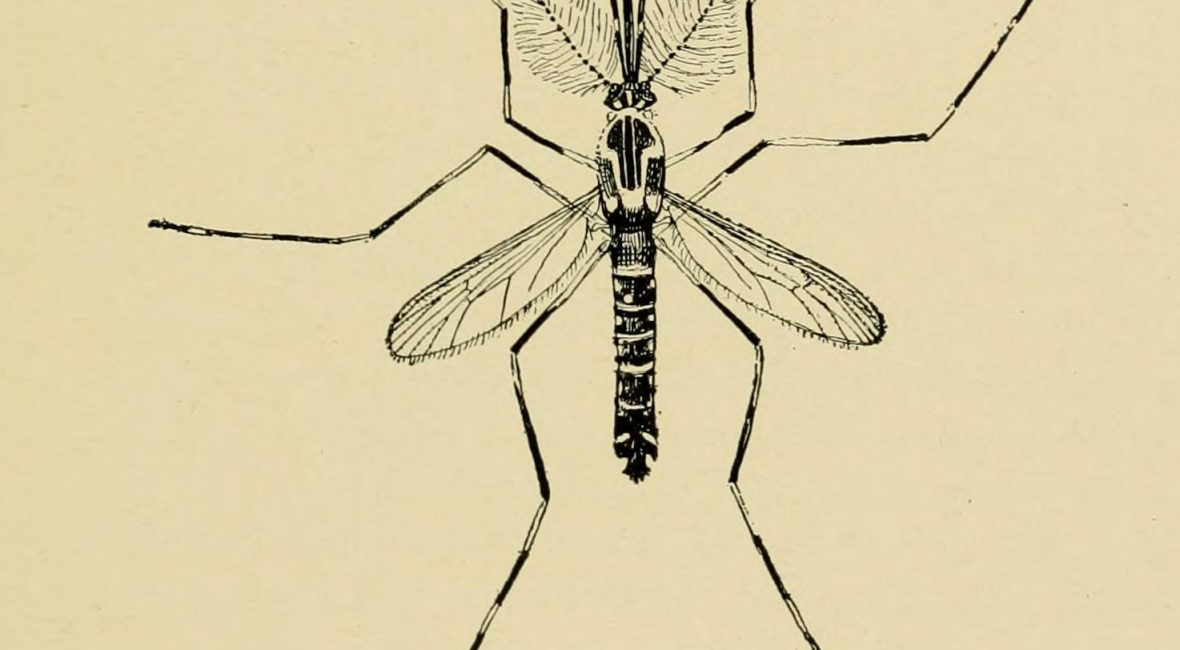
Black and White drawing of a mosquito (yellow fever mosquito (Aedes aegypti))

The yellow fever mosquito (Aedes aegypti), under the synonym Stegomyia fasciata. Source: Howard, L. O. (Leland Ossian). Mosquitoes; how they live; how they carry disease; how they are classified; how they may be destroyed. 1901. Contributed in BHL from Smithsonian Libraries and Archives.

Aedes aegypti, dubbed the yellow fever mosquito, is a globally invasive, pervasive threat to human health. As the common name suggests, the species can carry a range of diseases, including not only yellow fever but also dengue, the Zika virus, and the chikungunya virus. It is responsible for an estimated 400 million infections each year.[1]

Originating in Africa, Aedes aegypti has spread across the globe, initially transported via ships carrying enslaved people to the Americas. Soon after, trade ships bearing goods like sugar from the Americas brought the species to Europe, and from there it eventually made its way to Asia by way of the Suez Canal. Aedes aegypti’s success is secured by its ability to survive in a range of tropical, subtropical and temperate regions and its threat is exacerbated by its ability to breed in clean water supplies and propensity to bite during the day, rendering protective bed nets ineffective. The effects of climate change are expected to increase A. aegypti’s potential range significantly, escalating the urgency of implementing effective species control methods.[1,2]

A blue insect with transparent legs perched on a light brown branch.

Notonecta indica perched on a piece of wood. Photo courtesy of: Gavin Campbell.

The aquatic insect Notonecta indica—a species in the family Notonectidae, commonly called backswimmers because they swim on their backs—preys on Aedes aegypti mosquitoes in the Americas. Gavin Campbell, a PhD candidate at the University of the West Indies in Jamaica, is researching this predator / prey relationship as part of his PhD. Specifically, Campbell hopes to quantify the control of Aedes aegypti by Notonecta indica by determining how many mosquitoes each adult predator can consume daily and throughout their lifetimes.

The Biodiversity Heritage Library (BHL) has been an invaluable resource for this research.

“Thanks to the articles from BHL, I was able to substantiate my data with the foundational data to prove that other researchers have found similar things,” shares Campbell. “Before I found the BHL resources, I was only able to find a single paper from 2020 that was able to offer anything close to my research. I am very grateful for these and other documents I have come across since then.”

Black man in a red shirt and white, gray, and yellow shorts standing in a pond with birds flying in the background.

Gavin Campbell, a PhD candidate at the University of the West Indies in Jamaica, collecting water samples from a pond as egrets fly around. Photo courtesy of Gavin Campbell.

Campbell has been studying the aquatic and terrestrial phases of temporary ponds since 2017, with the life history of Notonecta indica and its impact on mosquito populations being a major component of that research. As Campbell explains on his website, “temporary waters are bodies of water which recurrently dry”, ranging from the minute—”water inside a snail shell”—to the massive—”the sizes of lakes and rivers”. As these bodies may be “freshwater, brackish, saline and even hypersaline (saltier than the sea)”, a wide variety of species are adapted to live in these diverse ecosystems.[3]

Campbell regularly uses BHL to access historic documents related to his research, typically downloading selected pages as PDF files to read offline.

“BHL has been critical in providing me with baseline information for my research as the documents in question were difficult to find,” asserts Campbell.

Various species of illustrated insects (Notonecta species)

A variety of Notonecta species, including Notonecta indica (fig. 2). Source: Hungerford, H. B. The Genus Notonecta of the World. 1933. Contributed in BHL from Harvard University, Museum of Comparative Zoology, Ernst Mayr Library.

Of all of the titles in BHL’s collection, The Genus Notonecta of the World (1933) by H. B. Hungerford has had the greatest impact on Campbell’s research. Published in The University of Kansas Science Bulletin, the work attempted to assemble all available information about the Notonecta genus, noting that more than thirty years had passed since the last comprehensive account of the genus was published. The publication represented twelve years of research, during which Hungerford consulted both the original descriptions and the types in museums throughout North America and Europe in an effort to “account for every named species”. The work was illustrated in color by Kathleen Doering.[4]

The Genus Notonecta of the World helped Campbell perform species identifications and capitalize on various behavioral aspects. For example, Hungerford notes that eggs are deposited on hard surfaces. Campbell applied this knowledge to his own work by placing a mesh within his rearing container, which facilitated easy removal of eggs each day. Hungerford also provides useful details about Notonecta behaviour in natural environments. For example, in a pond which N. indica frequents during the rainy season, a large number of branchiopods are present, which Hungerford notes are a food source for N. indica’s younger stages. This thus serves as a contributing factor in their dispersal and biology.

The illustrations in The Genus Notonecta of the World were also useful for Campbell’s research, helping him identify organs and structures within individuals and distinguish males and females for successful mating and to help determine differences in mosquito consumption between males and females.

“The BHL was key to providing access to the valuable information in this publication, as few papers at present go into such detail on the family,” affirms Campbell. “Without the BHL providing access to this foundational article, I would have been set back and hindered in my research.”

With Aedes aegypti expected to pose continued, significant threats to human health, we are proud to know that BHL is empowering important research that can help scientists better-understand the species and implement effective control methods. As Campbell shares, “With a better understanding of the role of N. indica in mosquito control, I aim to create and support more habitats for these natural predators to suppress mosquito populations, using nature-based solutions to address the extensive effects of climate change.”

As Campbell’s testimonial demonstrates, immediate, online access to biodiversity literature is ever-more important, allowing research to proceed more quickly and efficiently and improving our ability to respond to the many crises facing our planet and our species today. We look forward to continuing to provide researchers like Gavin Campbell with the essential literature they need to empower their work—anytime, anywhere.

Thank you @BioDivLibrary for this and so many other treasures pic.twitter.com/qDkfTH0kSc

— ?️‍?Gavin Campbell ?️‍? (@dragonecology) July 1, 2020

https://platform.twitter.com/widgets.js

References

[1] Sokol, Joshua. “The Worst Animal in the World.” The Atlantic. 20 August 2020. Accessed on 3 June 2021. https://www.theatlantic.com/health/archive/2020/08/how-aedes-aegypti-mosquito-took-over-world/615328/

[2] European Centre for Disease Prevention and Control. “Aedes aegypti – Factsheet for experts.” 20 December 2016. Accessed on 3 June 2021. https://www.ecdc.europa.eu/en/disease-vectors/facts/mosquito-factsheets/aedes-aegypti

[3] Campbell, Gavin. “Ph.D.” Dragon in Flight. Accessed on 3 June 2021. https://www.dragoninflight.com/phd

[4] Hungerford, H. B. “Preface.” The Genus Notonecta of the World. 1933. pp.6-9. https://www.biodiversitylibrary.org/part/38865

July 8, 2021by michelle.underhill

Help Support BHL

BHL's existence depends on the financial support of its patrons. Help us keep this free resource alive!

search

About BHL

The Biodiversity Heritage Library (BHL) is the world’s largest open access digital library for biodiversity literature and archives. BHL operates as a worldwide consortium of natural history, botanical, research, and national libraries working together to digitize the natural history literature held in their collections and make it freely available for open access as part of a global “biodiversity community.”

Join Our Mailing List

Sign up to receive the latest news, content highlights, and promotions.

Subscribe Now

Subscribe to Blog via Email

Enter your email address to subscribe to this blog and receive notifications of new posts by email.

Join 319 other subscribers

Subscribe to Blog Via RSS

Subscribe to the blog RSS feed to stay up-to-date on all the latest BHL posts.

Access RSS Feed

Inspiring Discovery through Free Access to Biodiversity Knowledge.

The Biodiversity Heritage Library makes it easier than ever for you to access the information you need to study and explore life on Earth…for free, anytime, anywhere.


64+ Million Pages of
Biodiversity Literature Online.

EXPLORE

Tools and Services
to Transform Research.

EXPLORE

300,000+
Illustrations on Flickr.

EXPLORE

ABOUT | HARMFUL CONTENT | PRIVACY | SITE MAP | TERMS OF USE