Biodiversity Heritage Library - Program news and collection highlights from BHL
  • Home
  • News
  • Featured Books
    • All Featured Books
    • Book of the Month Series
    • BHL at 20
  • User Stories
  • Campaigns
    • Fossil Stories
    • Garden Stories
    • Monsters Are Real
    • Page Frights
    • Her Natural History
    • Earth Optimism 2020
  • Tech Blog
  • Visit BHL
Home
News
Featured Books
    All Featured Books
    Book of the Month Series
    BHL at 20
User Stories
Campaigns
    Fossil Stories
    Garden Stories
    Monsters Are Real
    Page Frights
    Her Natural History
    Earth Optimism 2020
Tech Blog
Visit BHL
  • Home
  • News
  • Featured Books
    • All Featured Books
    • Book of the Month Series
    • BHL at 20
  • User Stories
  • Campaigns
    • Fossil Stories
    • Garden Stories
    • Monsters Are Real
    • Page Frights
    • Her Natural History
    • Earth Optimism 2020
  • Tech Blog
  • Visit BHL
Biodiversity Heritage Library - Program news and collection highlights from BHL

All posts from 2021

Blog Reel, User Stories

“BHL is a Game Changer for Scholars”: BHL Empowers Research on Landscape Gardening History

Read the full blog post

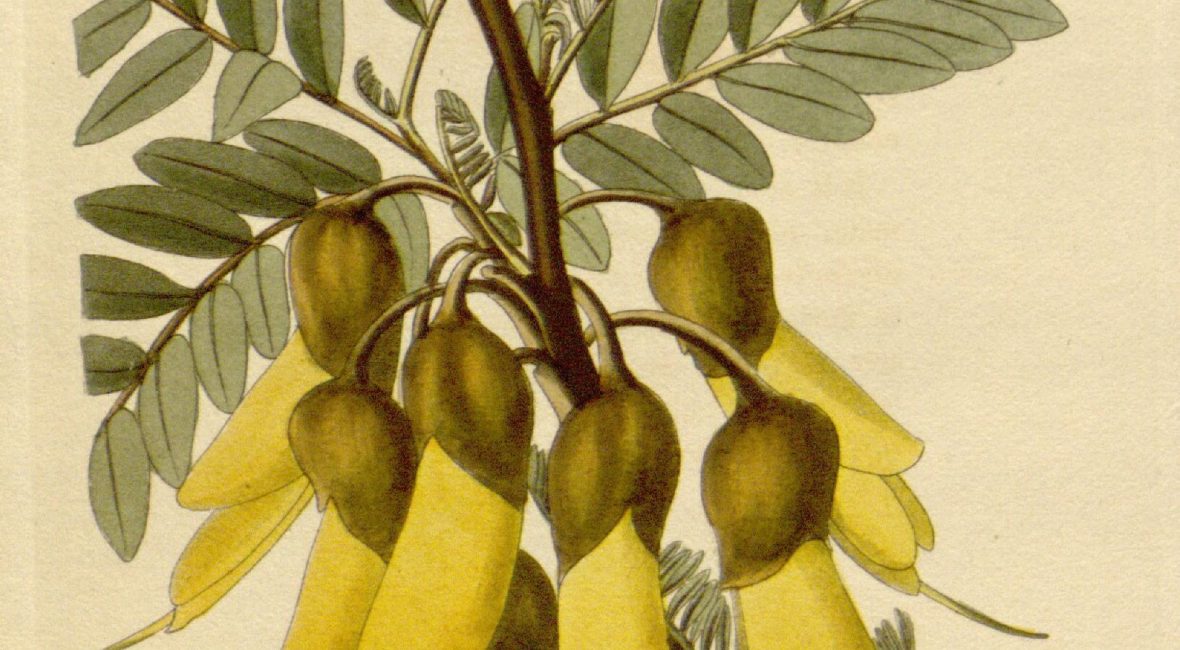
The large-leaved kōwhai (Sophora tetraptera) is native to the North Island of Aotearoa New Zealand, where it is widespread and common. While it grows naturally only in Aotearoa, it has been cultivated extensively outside of this range, including as one of a number of New Zealand plants historically introduced into English gardens.

Natural history literature provides a record of such introductions, with many authors remarking on the suitability of Sophora tetraptera—often referring to it under the synonym Edwardsia grandiflora—to the English climate. For example George Loddiges, within his The Botanical Cabinet(1826), remarked that it was “sufficiently hardy to bear our climate, planted against a wall; in very severe frost, a mat should be hung over it.” Two decades later, British writer and botanical authority Jane Wells Webb Loudon included the plant in herThe Ladies’ Flower-Garden of Ornamental Greenhouse Plants (1848), where she noted that the original plant could still be found growing in Chelsea Garden in 1848.

Loddiges’ and Loudon’s references are just two of many sources related to the history of Sophora tetraptera that Mark Laird (Professor, John H. Daniels Faculty of Architecture, Landscape, and Design, University of Toronto) identified thanks to the Biodiversity Heritage Library (BHL) whilst conducting research for a prospective book. One of the book’s chapters explores a variety of New Zealand plants introduced into English gardens from the 1770s to 1840s, in the context of both Kew’s colonial collecting and Māori heritage. BHL was an invaluable resource for this research—especially during the COVID-19 related lockdowns of 2020.
Continue reading
August 12, 2021byGrace Costantino
Blog Reel, Featured Books

Plant Trade and Medicinal Plants in Asia

Read the full blog post

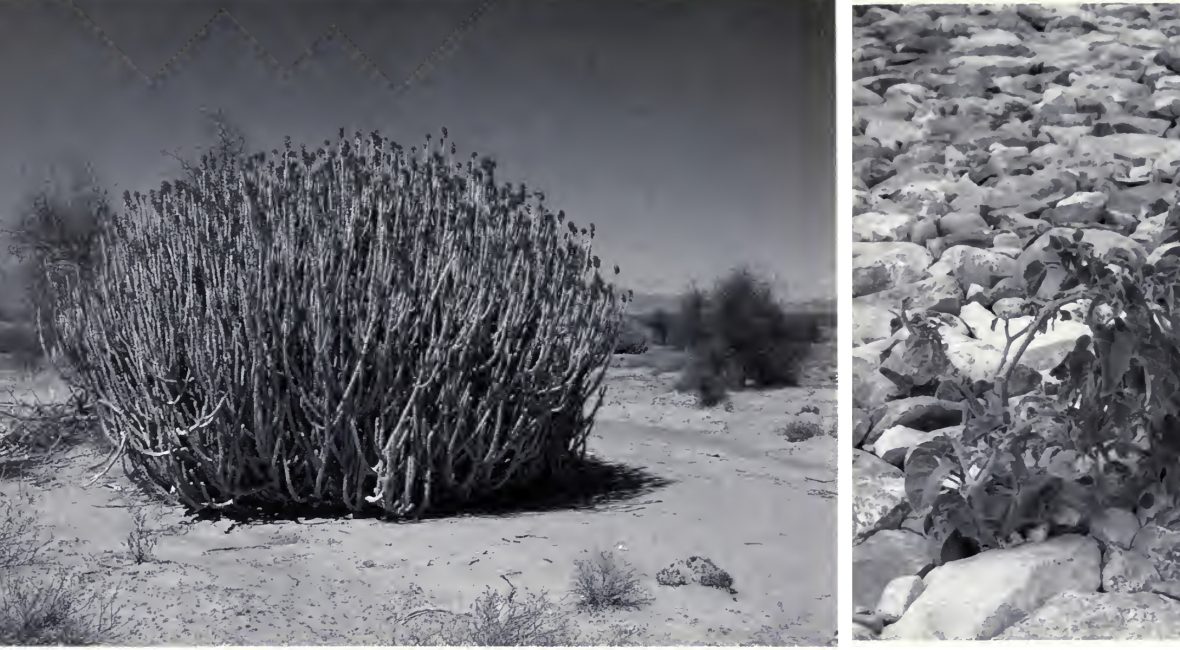
Plant species worldwide face an increasing barrage of threats to their survival. The deliberate collection of rare plants poses a far greater threat to wild plant species. In Wild Plants in Trade (1992), the reasons and effects of wild collection on plants for cultivation and international trade can be found. The trade of orchids, bulbs, cycads, palms and tree ferns, cacti and other succulent plants, carnivorous plants and air plants were introduced in detail in the second half of this book, as well as the attempts to control the collection of these plants by the Convention on International Trade in Endangered Species of Wild Fauna and Flora (CITES) and governments.

Continue reading
July 22, 2021byZheping Xu, Xuejuan Chen and Tian Jiang
Blog Reel, Featured Books

Farewell to Brood X (2021) — See You in 2038!

Read the full blog post

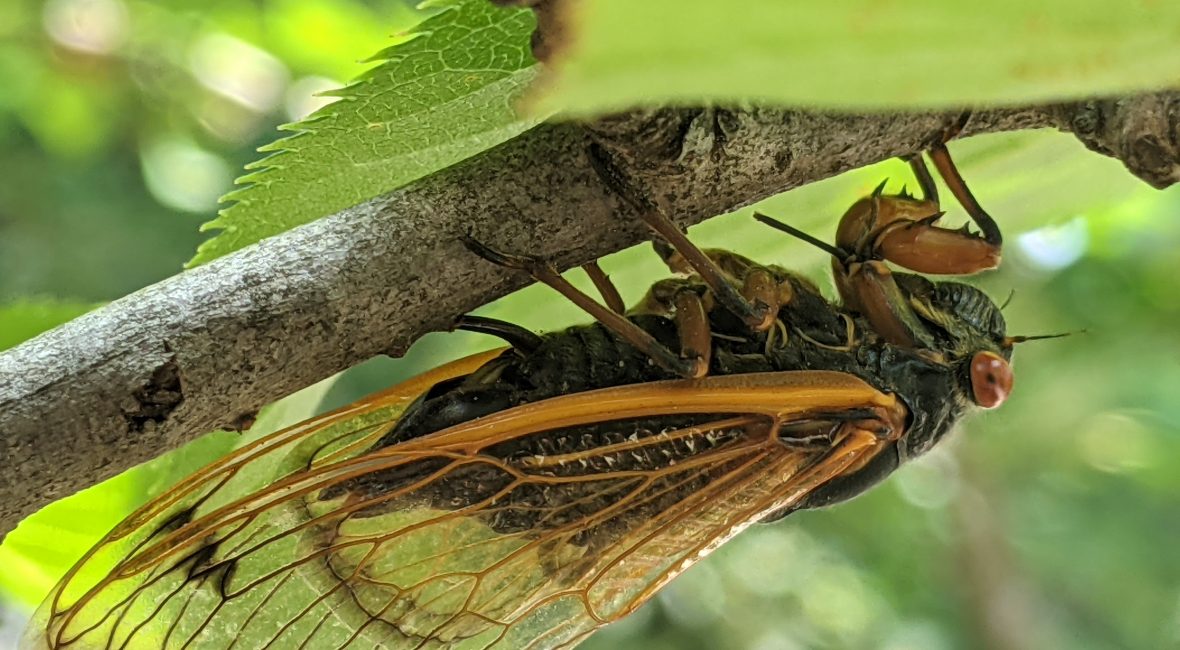
By the time this post publishes, the vast majority of Brood X (2021) will have completed their above ground lifecycle. The vast numbers of adult Magicicada who first emerged in late April and early May will have disappeared, leaving behind their adult bodies as well as still massive numbers of exuviae (cast-off outer skins) from when they emerged as nymphs.

Continue reading
July 13, 2021byMartin R. Kalfatovic
Blog Reel, User Stories

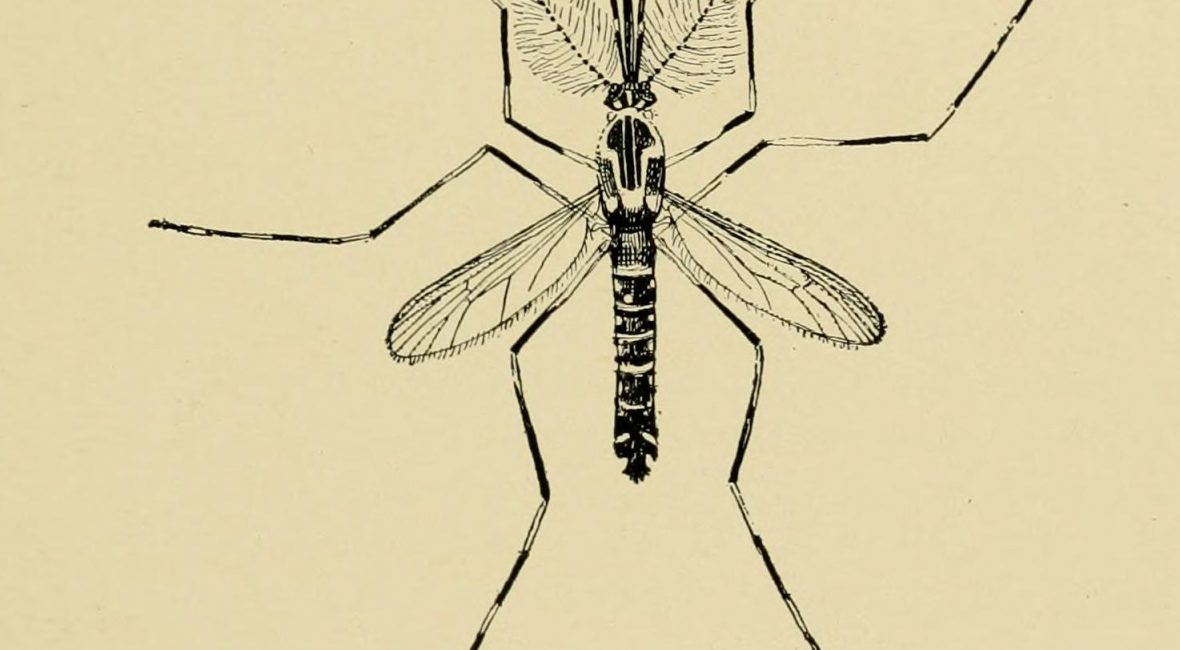
Backswimmers vs. Mosquitos: BHL Informs Research on Controlling Yellow Fever Mosquito Populations

Read the full blog post

Aedes aegypti, dubbed the yellow fever mosquito, is a globally invasive, pervasive threat to human health. As the common name suggests, the species can carry a range of diseases, including not only yellow fever but also dengue, the Zika virus, and the chikungunya virus. It is responsible for an estimated 400 million infections each year.

Continue reading
July 8, 2021byGrace Costantino
Blog Reel, User Stories

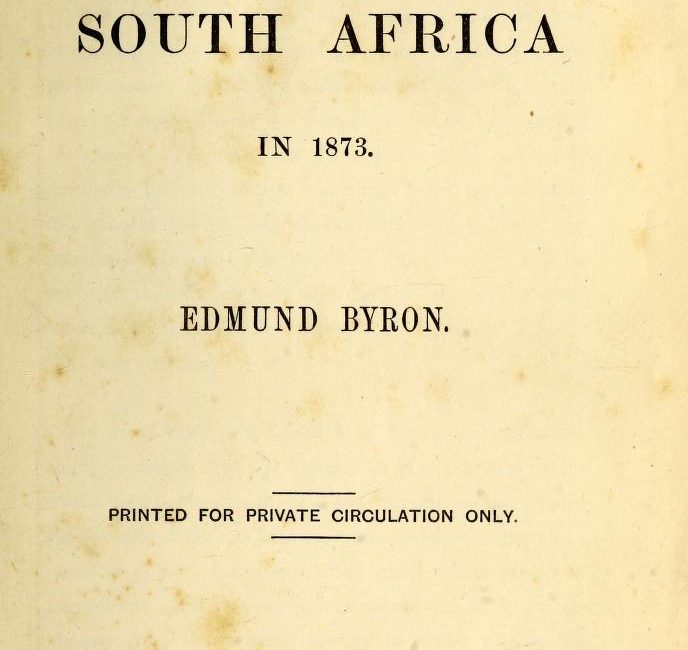
Chronicling the History of the Former Squires of Coulsdon: Rare Book Digitization Informs Research on the Byron Family

Read the full blog post

The Joseph F. Cullman 3rd Library of Natural History at the Smithsonian Libraries and Archives in Washington, D.C. is home to many rare and special books. Amongst the approximately 20,000 volumes in the library’s collection is a particularly rare item—one of only six known copies in public and institutional libraries worldwide.

The book is a privately printed journal by Edmund Byron entitled What we did in South Africa in 1873, which details Byron and his wife Charlotte’s 1873 exploratory and hunting expedition to South Africa. In 2015, at the request of a researcher, the Smithsonian digitized its copy of the journal and made it freely available online in the Biodiversity Heritage Library (BHL), where it was discovered by Dr. Nigel Elliott, who was conducting research on the Byron family.

Continue reading
June 10, 2021byGrace Costantino
Blog Reel, Campaigns, Featured Books, Her Natural History

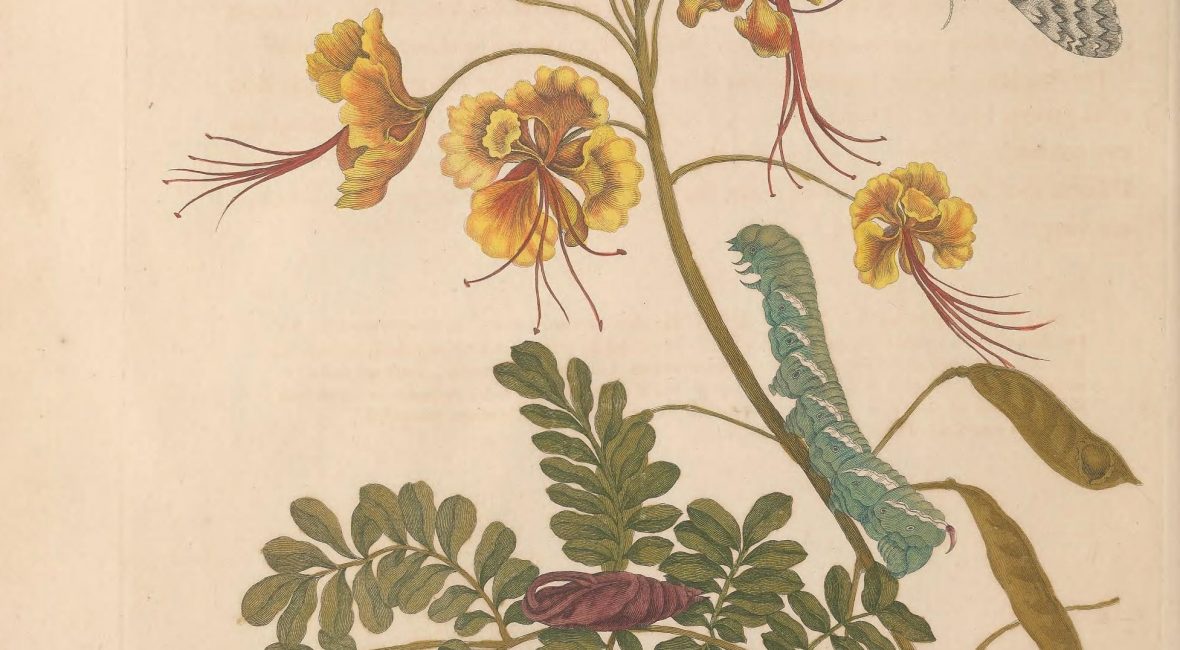
Museum für Naturkunde Explores Maria Sibylla Merian’s Legacy and Editions of Her Metamorphosis

Read the full blog post

Three hundred and seventy-four years ago on 2 April 1647, a remarkable woman was born: the artist and naturalist Maria Sibylla Merian. In the 17th and 18th century world of male-dominated science, Merian had to fight for her place in the natural sciences. Against all odds, she became a trailblazer, especially in developmental biology.

Merian’s legacy was recently explored during a 4-week student-project at the library of the Museum für Naturkunde in Berlin. The project was part of a master’s program for the University of Applied Science in Leipzig to enlarge the student’s experience in the historical holding field and give a glimpse into the planning and conducting of a project. The aim of the project itself was and is the digitization of two different editions of Merian’s work Metamorphosis insectorum Surinamensium as well as a restorative and provenance research summary about the volumes. Both editions show Merian’s talent in painting and observing insects and plants.

Continue reading
June 3, 2021byAntonia Trojok
Blog Reel, Featured Books

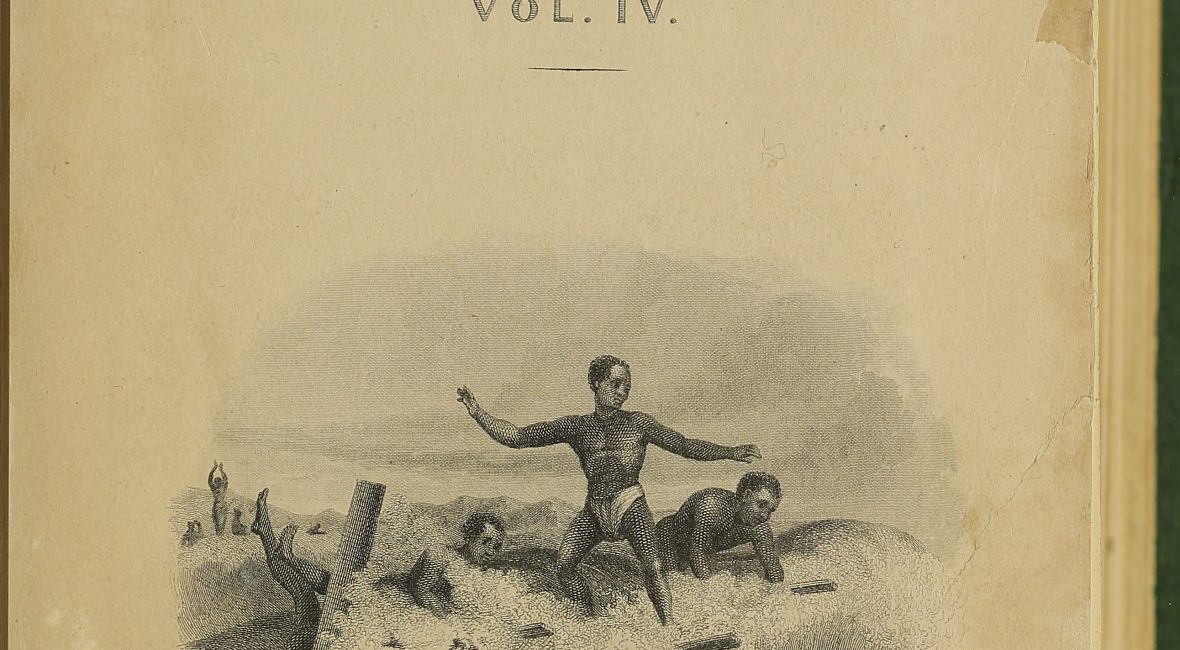
A Digitization Journey, a Knowledge Journey: Personal and Professional Insights From My Work on Polynesian Researches

Read the full blog post

In preparation for Asian American Pacific Islander Heritage Month, I chose to reflect on the intersections of my past and present work in Biodiversity Heritage Library (BHL) collections, with historical connections to my home in Hawaiʻi. Part of my primary duties as a Conservation Technician with the Smithsonian Libraries and Archives is to stabilize objects before and after digitization for BHL. When I joined the team in 2018, I was assigned the task of mending the library’s 4 volumes of the 1853 edition of William Ellis’ Polynesian Researches During a Residence of Nearly Eight Years in the Society and Sandwich Islands. The idea was to kick off my new job with a project that would inspire me on a personal level, as an introduction to the value of both the digital and physical preservation responsibilities of our institution.

Continue reading
May 27, 2021byKeala Richard
Page 2 of 6«1234»...Last »

Help Support BHL

BHL's existence depends on the financial support of its patrons. Help us keep this free resource alive!

search

About BHL

The Biodiversity Heritage Library (BHL) is the world’s largest open access digital library for biodiversity literature and archives. BHL operates as a worldwide consortium of natural history, botanical, research, and national libraries working together to digitize the natural history literature held in their collections and make it freely available for open access as part of a global “biodiversity community.”

Join Our Mailing List

Sign up to receive the latest news, content highlights, and promotions.

Subscribe Now

Subscribe to Blog via Email

Enter your email address to subscribe to this blog and receive notifications of new posts by email.

Join 287 other subscribers

Subscribe to Blog Via RSS

Subscribe to the blog RSS feed to stay up-to-date on all the latest BHL posts.

Access RSS Feed

Inspiring Discovery through Free Access to Biodiversity Knowledge.

The Biodiversity Heritage Library makes it easier than ever for you to access the information you need to study and explore life on Earth…for free, anytime, anywhere.

blue book icon

64+ Million Pages of
Biodiversity Literature Online.
EXPLORE

blue computer and tools icon

Tools and Services
to Transform Research.
EXPLORE

blue botanical page icon

300,000+
Illustrations on Flickr.
EXPLORE


ABOUT | HARMFUL CONTENT | PRIVACY | SITE MAP | TERMS OF USE