Biodiversity Heritage Library - Program news and collection highlights from BHL
  • Home
  • News
  • Featured Books
    • All Featured Books
    • Book of the Month Series
    • BHL at 20
  • User Stories
  • Campaigns
    • Fossil Stories
    • Garden Stories
    • Monsters Are Real
    • Page Frights
    • Her Natural History
    • Earth Optimism 2020
  • Tech Blog
  • Visit BHL
Home
News
Featured Books
    All Featured Books
    Book of the Month Series
    BHL at 20
User Stories
Campaigns
    Fossil Stories
    Garden Stories
    Monsters Are Real
    Page Frights
    Her Natural History
    Earth Optimism 2020
Tech Blog
Visit BHL
  • Home
  • News
  • Featured Books
    • All Featured Books
    • Book of the Month Series
    • BHL at 20
  • User Stories
  • Campaigns
    • Fossil Stories
    • Garden Stories
    • Monsters Are Real
    • Page Frights
    • Her Natural History
    • Earth Optimism 2020
  • Tech Blog
  • Visit BHL
Biodiversity Heritage Library - Program news and collection highlights from BHL
BHL News, Blog Reel, Tech Updates

Transition Update #8: The Field Museum to Host BHL’s Technical Infrastructure

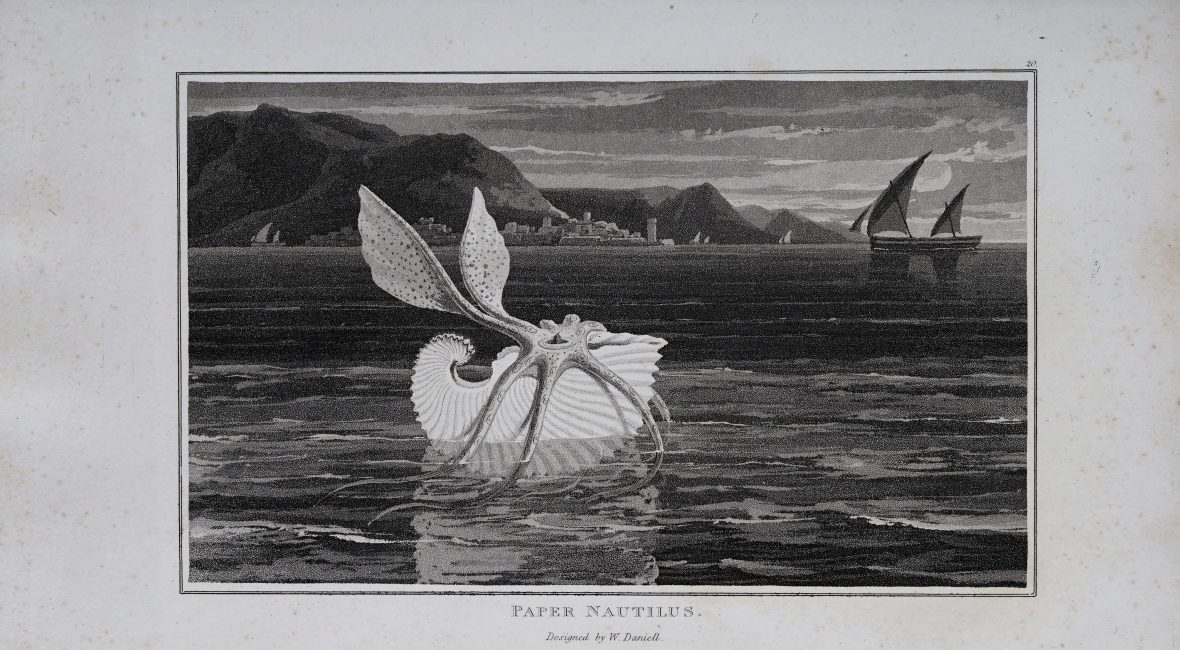
A paper nautilus floats on the open ocean. Ships and a city on a cliff are in the background

With the Biodiversity Heritage Library now officially operating in its new chapter following its transition away from the Smithsonian Institution, we are delighted to announce that the Field Museum of Natural History, one of BHL’s longest-standing and most respected partners, will host BHL’s servers and core technical infrastructure.

This hosting arrangement ensures the continued stability, security, and reliability of the BHL website and the 63+ million pages of open biodiversity knowledge it makes freely available worldwide.
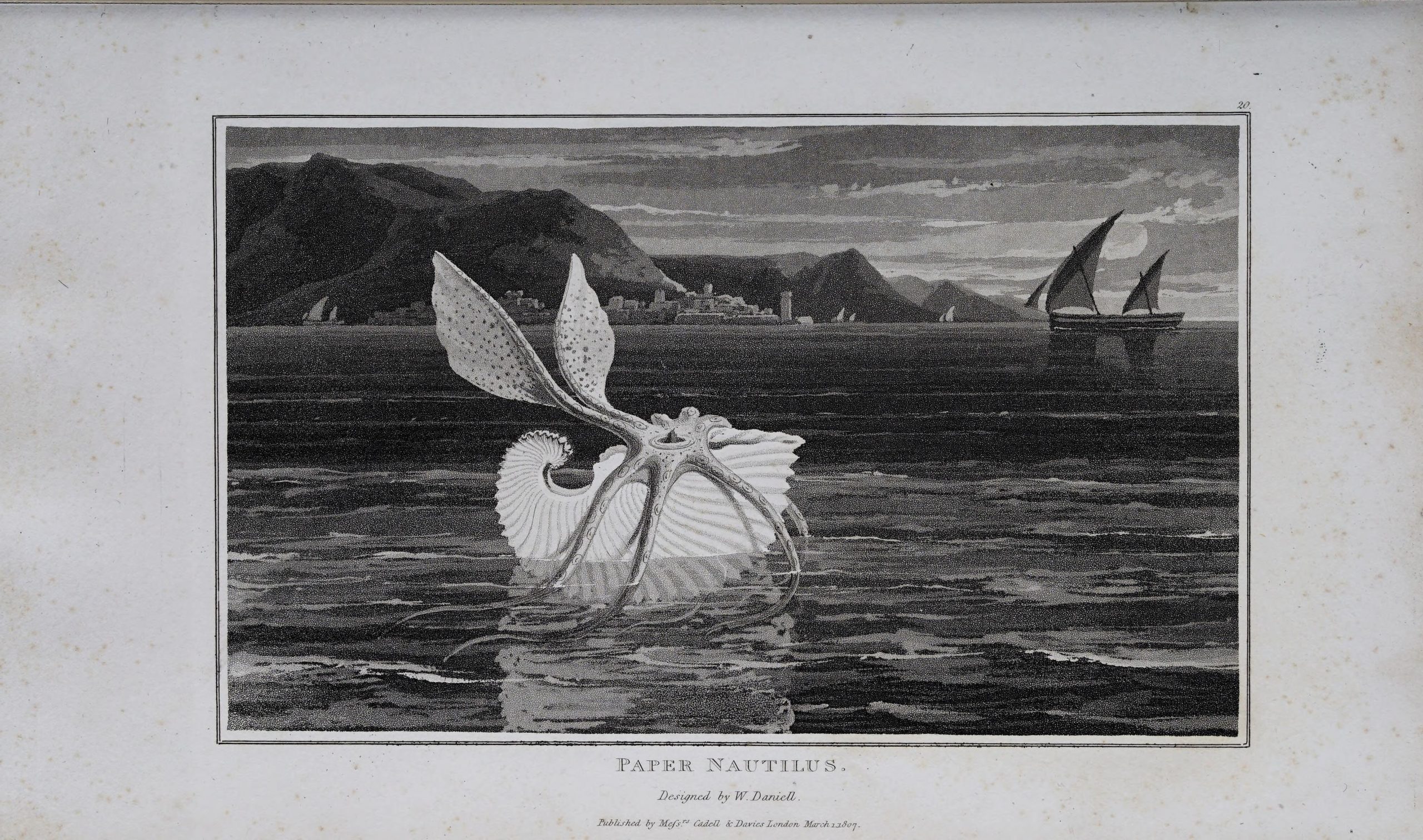
A paper nautilus floats on the open ocean. Ships and a city on a cliff are in the background

Paper Nautilus, from Zoography; or, The beauties of nature displayed. In select descriptions from the animal, and vegetable, with additions from the mineral kingdom (1807) by William Wood, illustrated by William Daniell. Contributed to BHL by the Field Museum of Natural History Library.

A founding partner supporting BHL’s next chapter

The Field Museum, based in Chicago, Illinois, is one of BHL’s ten original founding institutions and has been part of the consortium since its inception. For nearly two decades, the Field Museum has helped shape BHL’s mission to make biodiversity literature openly available to the world.

“Hosting and supporting BHL’s infrastructure reflects the power of partnership and our commitment to free and open data where appropriate. Grounded in strong technical foundations and a commitment to long-term stewardship, we are reinforcing the secure and scalable technical backbone that sustains one of the world’s most important open biodiversity resources.”
— Rob Zschernitz, Chief Technology Officer, Field Museum

As an independent museum supported by endowments and donor philanthropy, the Field Museum’s mission to connect all of us to nature and the human story aligns closely with BHL’s values and long-term goals.

What this means for BHL users

In practical terms, the Field Museum will:

  • Coordinate with BHL and the Smithsonian Institution to relocate BHL’s servers to the Field Museum’s data center
  • Provide essential services including domain hosting, systems operations, network security, and incident response
  • Serve as custodian and host of BHL’s core technical infrastructure, under the direction of BHL’s Technical Team.

Importantly, BHL will continue to retain ownership of all its data, content, software, and equipment. The Field Museum will act as a trusted custodian, looking after the behind-the-scenes technical infrastructure that keeps BHL online and accessible to millions of users worldwide.

This arrangement builds on BHL’s new operational foundation and supports long-term continuity and resilience.

A carefully managed technical transition

Detailed planning for the move of BHL’s servers is underway. While the exact dates for the physical moves are still to be determined, the teams at BHL, the Smithsonian, and the Field Museum are working closely together to plan the move carefully and responsibly.

Our goal is to minimise disruption to public access. That said, there may be short periods of downtime while systems are moved and reconfigured. Any such interruptions will be temporary, and we will communicate scheduled downtime in advance via the BHL website and social media channels.

Why this matters

Secure, professionally managed infrastructure underpins everything BHL does, enabling global access to biodiversity literature and supporting research, conservation, and education worldwide.

The Field Museum’s commitment to hosting BHL’s technical infrastructure reflects the strength of BHL’s partnerships and depth of support across the BHL consortium.

“The Field Museum has been a valued member of the BHL consortium for many years. From hosting our Life & Literature conference in 2011 to hosting our Annual Meeting in 2015 and co-hosting in 2024, the Field has consistently demonstrated its commitment to BHL and our global community. I am delighted that the Field Museum has agreed to host BHL’s technical infrastructure at this pivotal time in BHL’s history. This represents a major milestone in our transition and reflects the strength and depth of collaboration across the consortium.”
— David Iggulden, Chair, BHL Executive Committee

We are deeply grateful to the Field Museum for stepping forward in this way, and to our global community for your continued trust, engagement, and support.

Continuity, access, and governance

The transition of BHL’s technical infrastructure does not change how BHL is governed or who makes decisions about its future.

The Field Museum’s role in hosting and stewarding BHL’s technical infrastructure does not affect who owns or controls BHL’s content or data. BHL will continue to operate as a member-governed consortium, with strategic oversight provided by the BHL Members Council, in accordance with the BHL Bylaws.

BHL’s collections will remain freely and openly accessible, as they always have been.

Looking ahead: a growing network of support

This hosting transition reflects the depth of BHL’s institutional relationships, its long history of collaboration, and the commitment of trusted partners across the consortium. The Field Museum is just one of the institutions that has stepped up in response to BHL’s Call for Support.

This work is part of a broader, coordinated effort across the BHL community, with multiple organisations offering support in different ways. Stay tuned for additional announcements as details are finalised.

How you can help

You can support BHL by:

  • Staying informed: follow #BHLTransition on our website and social media channels
  • Sharing our story: help amplify BHL’s Call for Support, and the importance of open biodiversity literature
  • Support BHL directly: make a donation. Donations directly support BHL’s operations and long-term sustainability

As always, thank you for being part of the Biodiversity Heritage Library community.
February 26, 2026by [email protected]
BHL News, Blog Reel

Celebrating the Team Stewarding BHL’s Next Chapter

ecosystem depicting bee and flower species

As the Biodiversity Heritage Library enters its new chapter following the completion of its transition to a new fiscal sponsor, it is important to acknowledge that BHL’s biggest strength lies not in its platform, nor in its 63 million pages, but in its people.

For nearly two decades, a small, deeply committed team has carried the responsibility of keeping BHL online, stable, and accessible to a global community. Much of that work happens behind the scenes, often invisible to the users who rely on BHL every day. Securing that expertise and institutional knowledge has been a central goal of the BHL transition.

That goal has been achieved: this week marks the completion of staff transitions from the Smithsonian Institution to BHL’s fiscal sponsor, the Council on Library and Information Resources (CLIR). All of BHL’s existing staff positions have been secured, preserving the leadership, institutional knowledge, and operational continuity that underpin BHL’s work.

Together, the BHL staff are responsible for implementing the Consortium’s vision, mission, and strategic goals, under the direction of the Members Council and Executive Committee. As BHL moves forward, the people who know the organization best remain at its core. BHL is in excellent hands.

Meet the BHL Team

Colleen Funkhouser

Managing Director (transitioning from BHL Program Manager)

photograph of a human with glasses and brown hair standing in front of a fence outside.

Colleen Funkhouser, BHL Managing Director

Since joining BHL in 2020, Colleen Funkhouser has provided steady, strategic leadership across BHL’s programmatic, administrative, and financial operations. She brings deep expertise in library and nonprofit program management, and plays a central role in coordinating day-to-day operations across a complex, global consortium.

In her role as Program Manager, Colleen has overseen financial management, contracts, compliance, reporting, and project coordination across BHL’s global consortium. Her work has been especially critical during periods of disruption and change, including the COVID-19 pandemic, the departure of BHL’s Program Director in 2024, and BHL’s recent transition planning.

Colleen’s calm, measured leadership has been central to effective crisis response, sustainability planning, operational restructuring, and the practical work of moving BHL into a new fiscal and organizational model. As she moves into the role of BHL Managing Director under CLIR, Colleen will continue to provide strategic and operational leadership, ensuring that BHL remains stable, accountable, and well positioned for the future.

Bianca Crowley

Digital Collections Manager

Bianca Crowley

Bianca Crowley, Digital Collections Manager

Bianca Crowley has worked on almost every aspect of the BHL collection. Starting as BHL’s Collections Coordinator in 2009, she has facilitated the workflows, policies, and partnerships that make it possible for BHL to aggregate and steward biodiversity literature and archival materials from institutions around the world.

As Digital Collections Manager and Chair of BHL’s Collections Committee, Bianca works at the intersection of collections, copyright, metadata, and community practice. She supports a global network of partners by providing training and documentation, and ensuring that BHL’s collection is as accessible, discoverable, usable, and comprehensive as possible.

Bianca is an indispensable bridge between policy, technology, and practice. She led the development of BHL’s Collection Development Policy and the Acknowledgment of Harmful Content, helping BHL respond thoughtfully and responsibly to its historical collections. Her deep knowledge of BHL systems and history, along with her steady stewardship of the collection, has been essential throughout BHL’s growth and transition.

Mike Lichtenberg

Lead Software Engineer

A man with a mustache and beard, wearing a dark shirt

Mike Lichtenberg, BHL Lead Software Engineer

Mike Lichtenberg has been BHL’s Software Engineer since 2007, making him one of the longest-serving members of the BHL team. Over nearly two decades, he has designed, built, and maintained the systems that underpin BHL’s platform, transforming ambitious goals into reliable, scalable infrastructure.

With more than 30 years of experience in software engineering, Mike brings deep expertise in application architecture, database design, and system integration. His work has supported everything from large-scale digitization workflows to data extraction, analysis, and reuse, enabling BHL to serve researchers, libraries, and biodiversity infrastructures worldwide.

Mike has worked consistently across BHL’s technical and non-technical teams, translating needs into solutions across nearly 20 years of BHL’s technical evolution. Throughout the transition, his technical leadership and continuity have been critical to ensuring that BHL’s core systems remain stable and robust as the organization plans for future infrastructure development.

Joel Richard

BHL Technical Coordinator

A man with brown hair and glasses, wearing a suit and bowtie standing in front of moss covered trees

Joel Richard, BHL Technical Coordinator

Joel Richard has supported BHL’s technical operations since 2009 and continues to play a vital role as BHL Technical Coordinator. Based at the Smithsonian Libraries and Archives, where he serves as Head of Web and IT, Joel brings more than three decades of experience in software engineering, web development, and infrastructure design.

Joel is the lead developer and maintainer of Macaw, BHL’s content integration and metadata collection system, which has enabled millions of pages to flow into BHL from partners around the world. He has overseen the reliability and integration of BHL’s technical systems, providing continuity and deep institutional knowledge across a complex, long-running technical platform.

As BHL moves forward, Joel will continue to support BHL in his role as Technical Coordinator, ensuring technical stability and continuity. He remains a key part of BHL’s operational ecosystem, and his long-standing commitment to BHL, alongside his broader advocacy for open and accessible infrastructure, will continue to shape and strengthen BHL’s technical future.

Kelli Trei

BHL Transition Director

Color photograph of a woman with short brown hair and glasses

Kelli Trei, BHL Transition Director

Kelli Trei has played a central leadership role in guiding BHL through the most significant change in its history. Before taking on the temporary role of BHL Transition Director in mid-2025, Kelli served as Vice Chair of BHL’s Executive Committee, providing strategic oversight and helping guide BHL’s governance.

As Transition Director, she has helped steer BHL from its long-standing administrative home at the Smithsonian Institution to a new operational model. She has worked closely with BHL’s Secretariat, Executive Committee, and partners to ensure continuity, clarity, and stability throughout the process.

In her professional role as Biosciences Librarian at the Funk ACES Library at the University of Illinois at Urbana-Champaign, Kelli brings deep experience in supporting scientific research communities and understanding the information needs of scientists. That perspective has been invaluable during the transition, informing both strategic decision-making and the practical work of re-establishing BHL’s administrative, governance, and operational foundations.

Kelli’s long-standing commitment to BHL’s mission has been a steady guiding force throughout the transition, helping position BHL for a confident and resilient next chapter.

Nicole Kearney

BHL Communications Director

A woman with glasses, light brown hair, wearing a black and white scarf

Nicole Kearney, BHL Communications Director

As BHL’s Communications Director, Nicole Kearney is responsible for internal and external communications across the global consortium. Throughout the transition, she helped articulate complex change and maintain trust by shaping advocacy messaging, delivering regular transition updates, and leading BHL’s fundraising campaign.

Nicole also manages BHL Australia, where she oversees digitization operations, copyright clearance, contributor liaison, strategic planning, reporting, staffing, and stakeholder engagement. Under her leadership, BHL Australia has grown from four contributing organizations into a national consortium of 64.

Nicole also chairs BHL’s Persistent Identifier Working Group, which she established in 2020 to bring BHL content into the modern, linked network of scholarly research. A passionate advocate for open access and interoperable data, she works to ensure biodiversity literature remains discoverable, trackable, and connected.

Looking Ahead

The transition to CLIR secures BHL’s staff, expertise, and operational capacity. The people who understand BHL’s history, systems, and community are still doing the work. Core services continue, and BHL’s relationships across its global community remain intact.

BHL’s future depends on infrastructure, governance, and funding, but it also depends on people. It depends on long-term commitment, deep institutional knowledge, and steady leadership. This team has carried that responsibility tirelessly and consistently, through growth, change, and uncertainty.

As BHL looks ahead to the next phase of its development, we do so with confidence and gratitude. The foundations are strong, the people are in place, and BHL is well positioned to continue serving the global biodiversity community for years to come.

February 19, 2026by [email protected]

Help Support BHL

BHL's existence depends on the financial support of its patrons. Help us keep this free resource alive!

search

About BHL

The Biodiversity Heritage Library (BHL) is the world’s largest open access digital library for biodiversity literature and archives. BHL operates as a worldwide consortium of natural history, botanical, research, and national libraries working together to digitize the natural history literature held in their collections and make it freely available for open access as part of a global “biodiversity community.”

Join Our Mailing List

Sign up to receive the latest news, content highlights, and promotions.

Subscribe Now

Subscribe to Blog via Email

Enter your email address to subscribe to this blog and receive notifications of new posts by email.

Join 319 other subscribers

Subscribe to Blog Via RSS

Subscribe to the blog RSS feed to stay up-to-date on all the latest BHL posts.

Access RSS Feed

Inspiring Discovery through Free Access to Biodiversity Knowledge.

The Biodiversity Heritage Library makes it easier than ever for you to access the information you need to study and explore life on Earth…for free, anytime, anywhere.


64+ Million Pages of
Biodiversity Literature Online.

EXPLORE

Tools and Services
to Transform Research.

EXPLORE

300,000+
Illustrations on Flickr.

EXPLORE

ABOUT | HARMFUL CONTENT | PRIVACY | SITE MAP | TERMS OF USE