Biodiversity Heritage Library - Program news and collection highlights from BHL
  • Home
  • News
  • Featured Books
    • All Featured Books
    • Book of the Month Series
    • BHL at 20
  • User Stories
  • Campaigns
    • Fossil Stories
    • Garden Stories
    • Monsters Are Real
    • Page Frights
    • Her Natural History
    • Earth Optimism 2020
  • Tech Blog
  • Visit BHL
Home
News
Featured Books
    All Featured Books
    Book of the Month Series
    BHL at 20
User Stories
Campaigns
    Fossil Stories
    Garden Stories
    Monsters Are Real
    Page Frights
    Her Natural History
    Earth Optimism 2020
Tech Blog
Visit BHL
  • Home
  • News
  • Featured Books
    • All Featured Books
    • Book of the Month Series
    • BHL at 20
  • User Stories
  • Campaigns
    • Fossil Stories
    • Garden Stories
    • Monsters Are Real
    • Page Frights
    • Her Natural History
    • Earth Optimism 2020
  • Tech Blog
  • Visit BHL
Biodiversity Heritage Library - Program news and collection highlights from BHL
BHL News, Blog Reel

DPLA Reharvest of BHL Data

View Full Size Image

On April 11, 2017 the Digital Public Library of America (DPLA) reharvested all BHL data for ingest into its portal at https://dp.la/.

While BHL has served as a content hub for DPLA since its launch in 2013, our data has not been updated in their portal since that launch, primarily due to the absence of a workflow on DPLA’s end for automatically harvesting new data. Since 2013, the number of BHL records in our portal has increased significantly and changes and corrections to pre-2013 records were not reflected in the DPLA portal. This new harvest not only captures new data but also ingests updates to existing records.

View Full Size Image
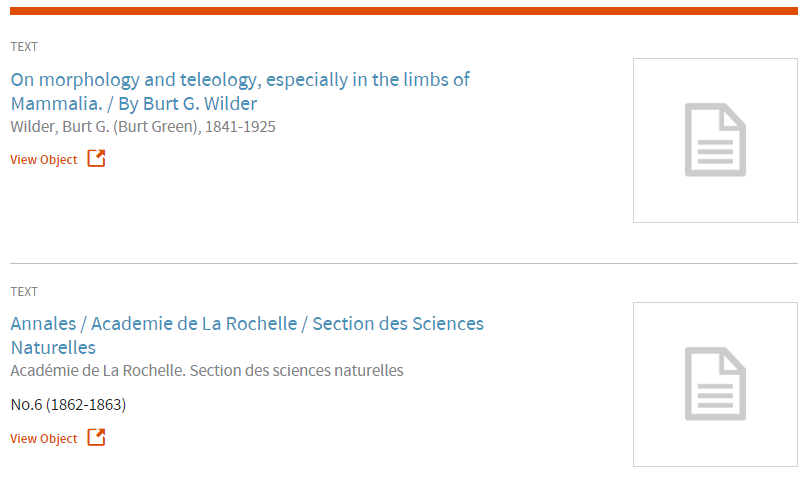
View of BHL records from DPLA’s first harvest–these lack the thumbnail


Before the harvest, BHL had 123,472 items in DPLA. After the reharvest, BHL now has over 187,000 items in DPLA. This not only represents a 52% increase in BHL records in DPLA, but more importantly, the quality of those records has improved and is now in sync with BHL.

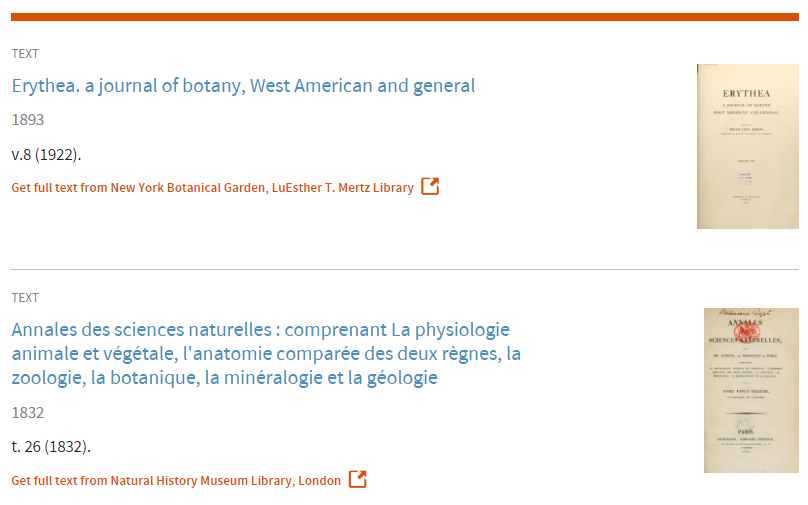
From the perspective of DPLA visitors, the most noticeable change is the addition of thumbnail images, which were lacking in DPLA prior to the reharvest. Going forward, DPLA will automatically reharvest BHL data on a bi-monthly schedule.

View Full Size Image
View of BHL records from DPLA’s recent harvest, which includes thumbnails

Why is it important for our data to be in DPLA? BHL wants its data represented in DPLA because it supports our mission to make biodiversity literature as openly available and accessible as possible. DPLA exposes BHL content to new audiences who otherwise may not be aware of our existence and emphasizes the richness of U.S. national collections, which helps underscore the value of libraries for both American and global citizens.

You can explore BHL’s collection in DPLA and many others here.

May 18, 2017by [email protected]
Blog Reel

Reflecting back on my incredible summer at Smithsonian Libraries

View Full Size Image

As the weather in Central New York is getting colder, and the winter is inevitably approaching, I can’t help but recall the humid summer of Washington, DC. Over the summer of 2016, I interned at Smithsonian Libraries. As a summer intern, I worked at the Department of Digital Programs and Initiatives on the “Cataloging across collections” project. The project was focused on metadata and cataloging. During my internship I worked on digital curation of the records in Biodiversity Heritage Library as well as cataloging field notes for the Field Book Project. Both aspects of my internship were coordinated by mentors assigned by the Smithsonian Libraries – Bianca Crowley, Digital Collections Manager of Biodiversity Heritage Library, and Lesley Parilla, Cataloging Coordinator of the Field Book Project. During my internship I met with Smithsonian Institution staff members, toured different departments, attended the staff picnic, and, most importantly, improved my understanding of the technical services in libraries.

Although working on metadata projects was quite challenging, it helped me to gain confidence as an information professional. As a librarian, I’ve always known that the information organization is important, but I didn’t realize how much properly maintained bibliographic descriptions can improve the user experience. Especially, when the audience can only interact with online assets. Biodiversity Heritage Library is a unique digital collection of the resources in Natural Sciences. My work focused on editing metadata for existing records, which included author merging, editing of volume information, title merging, and linking of the serial records. I received training in 2 internal systems, the Gemini Issue Tracker and BHL Administrative Dashboard to work on these tasks.

On the first week of my internship, I needed to link several volumes together. “Den Norske Nordhavs-expedition, 1876-1878” gives an account of the Norwegian North-Atlantic expedition in the 19th century, commanded by Carl Fredrik Wille, Captain of the Royal Navy. Since I have interest in Scandinavian languages, I enjoyed interacting with this resource. This and many other assignments throughout my internship taught me the importance of metadata standards. Seeing both librarian and user perspectives on the information-retrieval systems became an eye-opening experience for me.


View Full Size Image

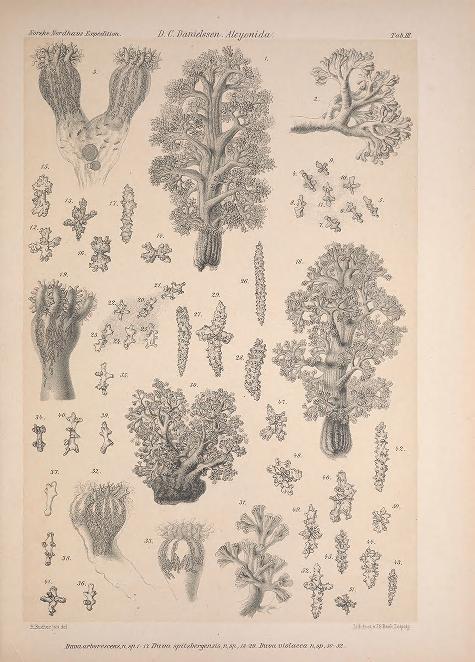
“Den Norske Nordhavs-expedition, 1876-1878”, bd. 5, pt. 17 [Alcyonida], tab. I

View Full Size Image
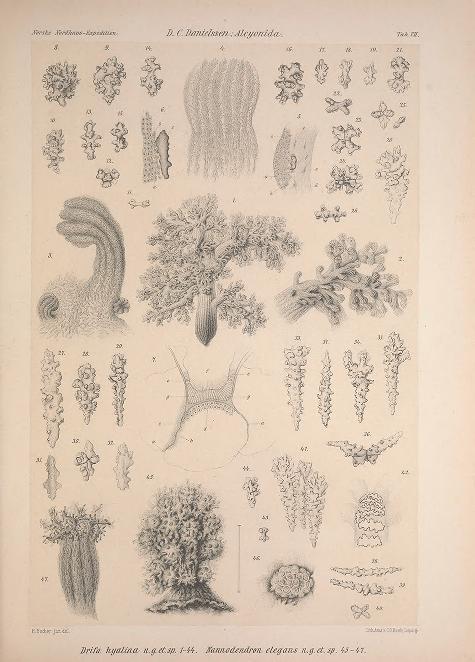
“Den Norske Nordhavs-expedition, 1876-1878”, bd. 5, pt. 17 [Alcyonida], tab.

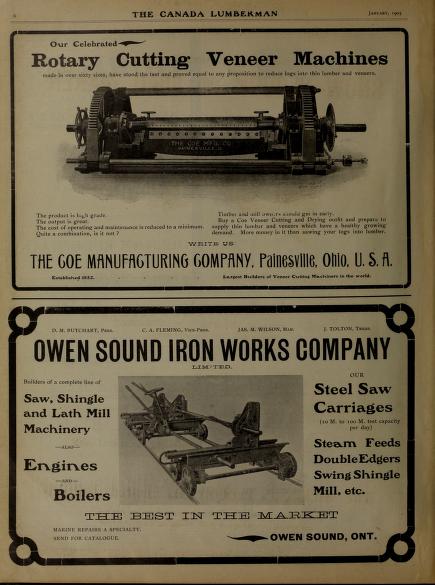
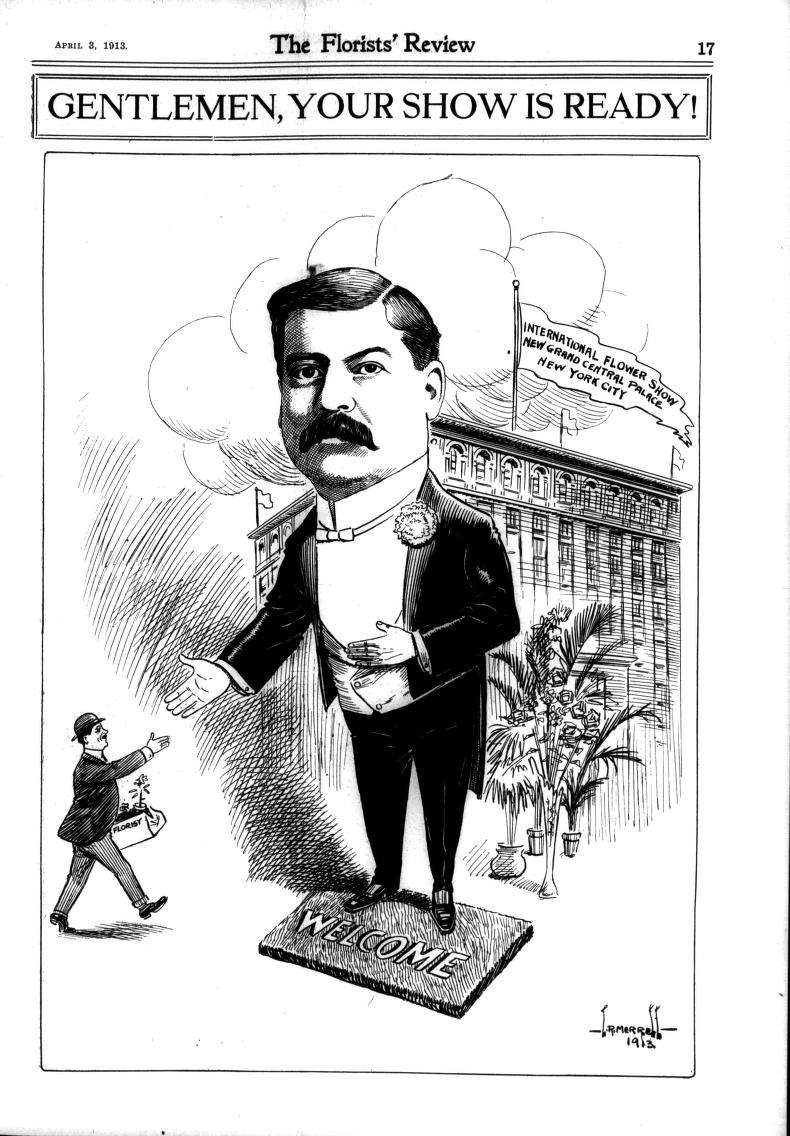
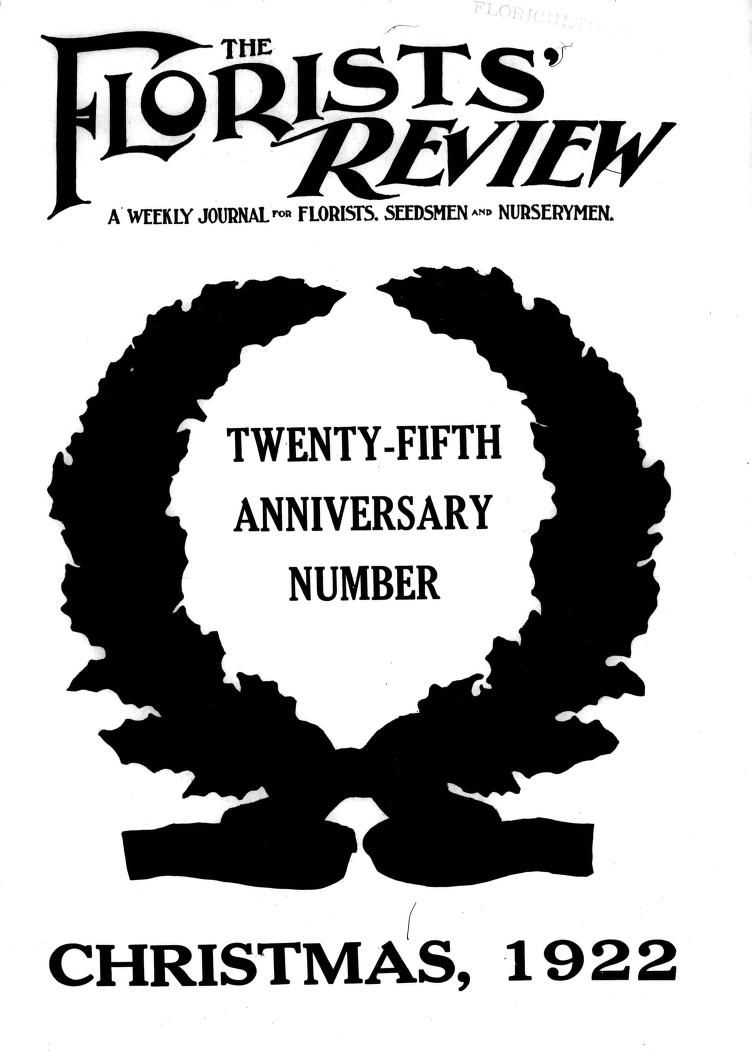
Further into my internship, I was trained to upload the scanned images into the Internet Archive, the platform that hosts the BHL assets. I used another internal system, Macaw, for this purpose. As I was uploading the new images, I assigned page-level metadata. One of the publications I was working with was Bonn Zoological Bulletin. I had so much fun working on the metadata-level description of William Mann’s scrapbook from his trip to South East Asia for the Field Book Project. One of my favorite serials was Canadian Forest Industries, a magazine that was renamed at least 6 times before its current title. While I was adding volume information and page level metadata, I encountered amazing illustrations and advertisement campaigns from Florists’ Review, that is a wonderful compilation of the marketing tools of the past.


View Full Size Image
Canadian Forest Industries, formerly known as Canadian Lumberman, Jan 1903.


View Full Size Image
Drawing from the Florists’ Review April 1913 v.31 no.797 (801) p.17


View Full Size Image
Front page of from the Florists’ Review December 1922, Christmas edition v. 51 no.1306

In addition to learning many essential skills for technical services in libraries, during my internship I worked with Camtasia software. Screen-casting was used to develop tutorials for BHL Staff about working in the BHL “Admin Dash.” I recorded one video that focused on merging author records together. During the internship I also presented at a Brown Bag presentation in front of Smithsonian Libraries staff, my mentors, and other interns.

I would like to express gratitude to my mentors – Bianca Crowley, Digital Collections Manager at Biodiversity Heritage Library, and Lesley Parilla, Cataloging Coordinator of the Field Book Project, and the entire Department of Digital Programs and Initiatives for their guidance and support. I would also like to thank LIS Program Director at Syracuse University – Jill Hurst-Wahl, and my Academic Advisor – Barbara Stripling, for their invaluable insights on the US library system. My boundless gratitude goes to Cultural Vistas and the Edmund S. Muskie Internship Program that made it possible for me to intern in Washington, D.C. during the summer of 2016. Being a part of the Smithsonian Institution was an unforgettable life experience, which I will proudly carry with me throughout my library career!

December 28, 2016by [email protected]
BHL News, Blog Reel

Internet Archive Library Leaders Forum 2016

View Full Size Image

At the end of October I attended the Internet Archive Library Leaders Forum 2016. This was the 3rd time I’ve attended this meeting since 2009 and was by far the best one yet! The Forum coincided with IA’s 20th anniversary so there was a big push from IA to showcase their latest and greatest to celebrate their platinum year.

Some of the coolest new features highlighted:

  • The ability to perform a full text search across all books and journal volumes in IA such as this full text search for “darwin.”
  • New keyword search functionality for their Wayback Machine – just look at all these web pages about “biodiversity.”
  • Additionally, Wikimedia Foundation is now using the Wayback Machine to fix over 1 million broken links in English Wikipedia! Plus Mozilla is experimenting with the Wayback Machine to develop a pilot that will eliminate the dreaded 404 pages that pop up when Internet links break. How useful!
  • See more of their newest cool innovations
View Full Size Image
New GifCities searchable gif database
View Full Size Image
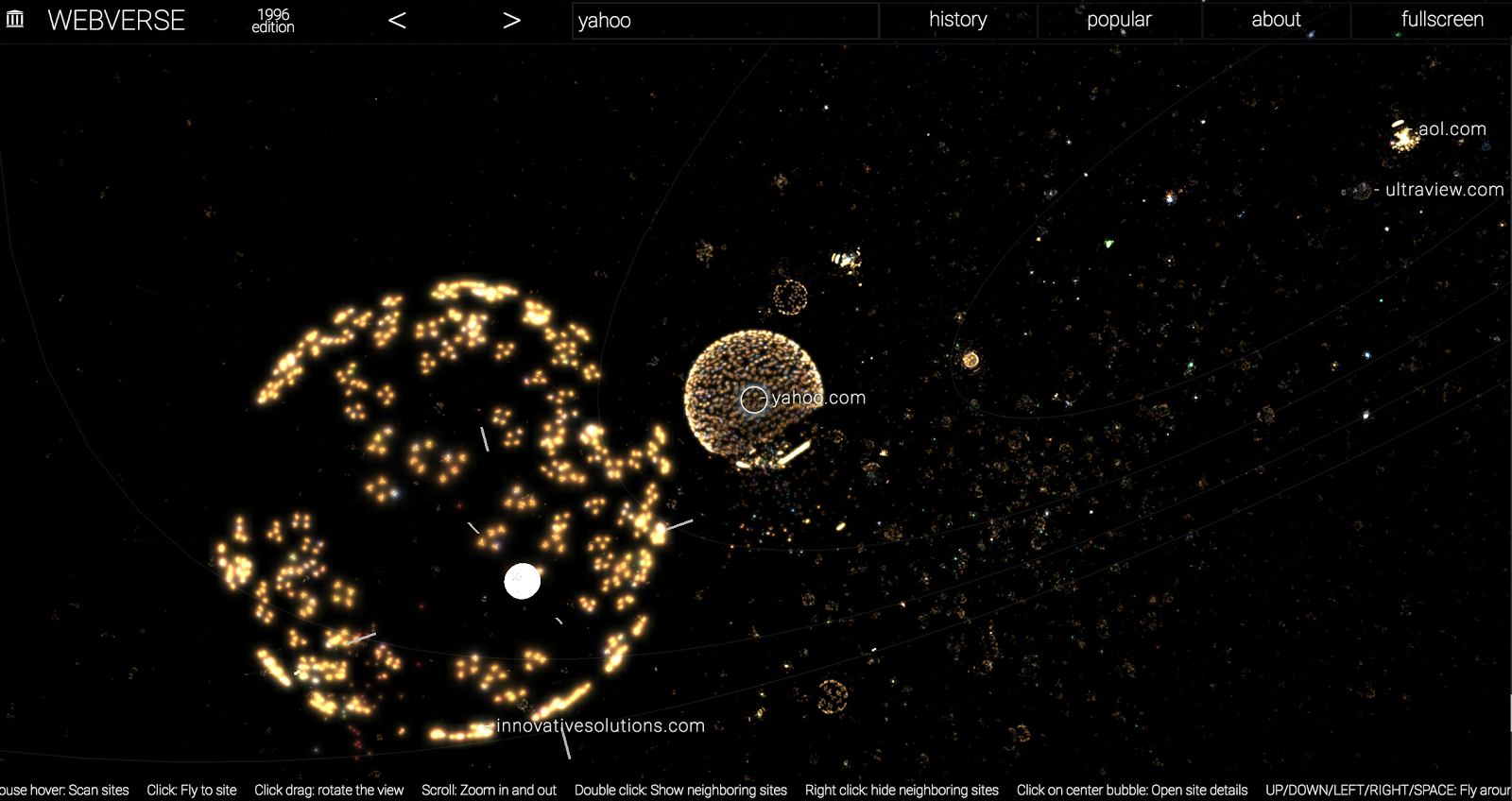
New Webverse 3D web visualization tool

The most successful aspect of the Forum was meeting with Internet Archive colleagues and partners face to face, many of which share similar digitization workflow and collection management challenges to BHL. In particular, colleagues from the Getty Research Institute, Georgetown University Law Library and HathiTrust are pursuing projects that could help inform BHL collection development for the future.

View Full Size Image
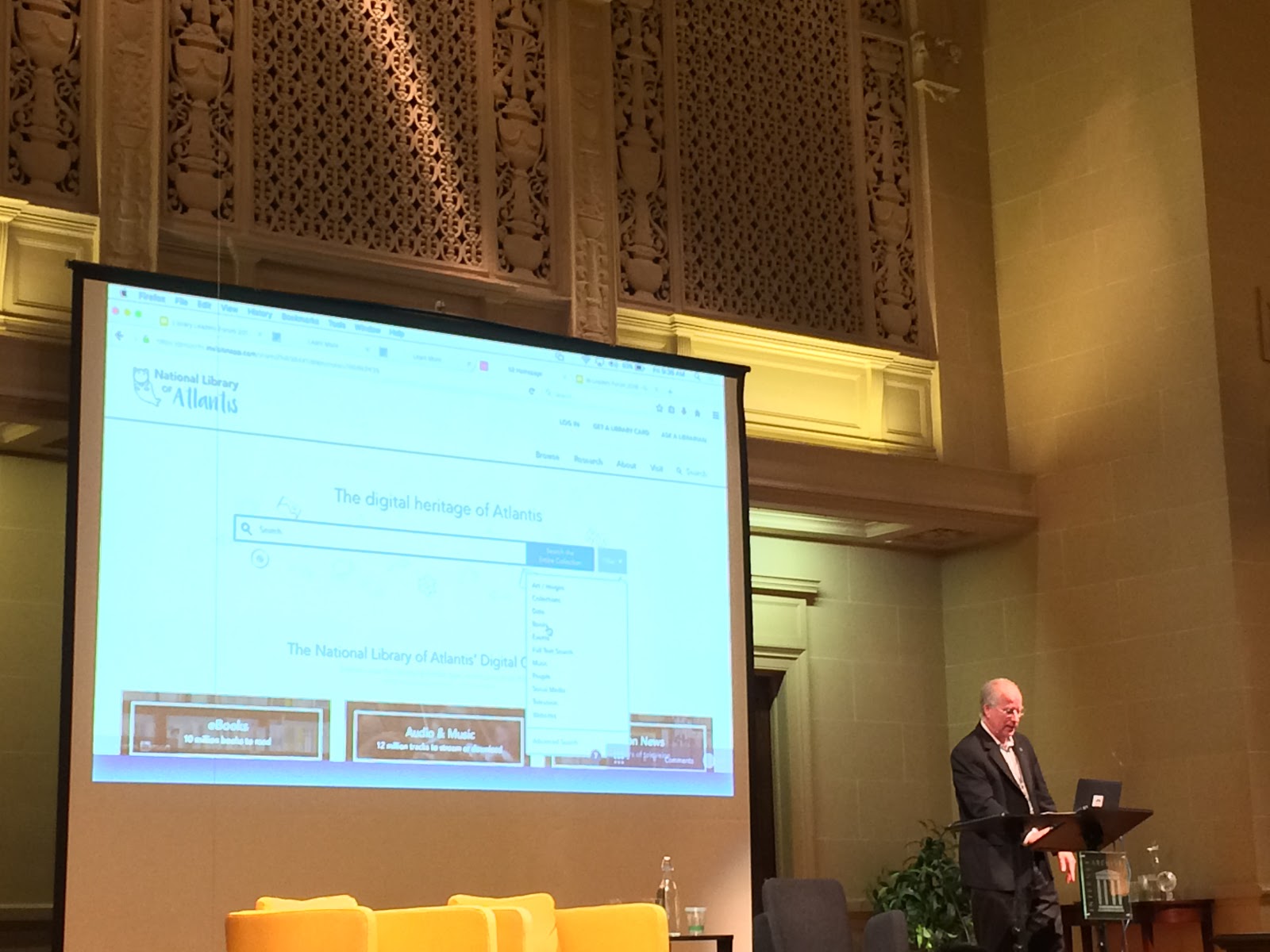
IA Founder Brewster Kahle delivers presentation

Interestingly, as the meeting attendees imagined the future of libraries over the next 10-20 years, I was pleased to hear that some of the challenges shared by both HathiTrust and IA are issues BHL has already considered and continues to explore as its collection and consortium grows:

  • In what ways can we expand the scope of our content? Should we?
  • What are the best strategies to ensure comprehensiveness of your collection?
  • How can we encourage greater curation of our collection?
  • What emphasis should be placed on the development of tools for de-duplication?

The BEST thing accomplished during the Forum was getting access to IA’s Slack tool and encouraging the formation of BHL’s very own channel. Now when questions and problems arise we have a direct line to some of IA’s key digitization management staff. As Digital Collections Manager for BHL this has already proven to be an extremely useful means to troubleshoot digitization and metadata issues.

Internet Archive staff are a positive group of motivated, creative individuals and it was a pleasure attending this productive meeting. Kudos to Wendy Hanamura for organizing a positive experience!

View Full Size Image
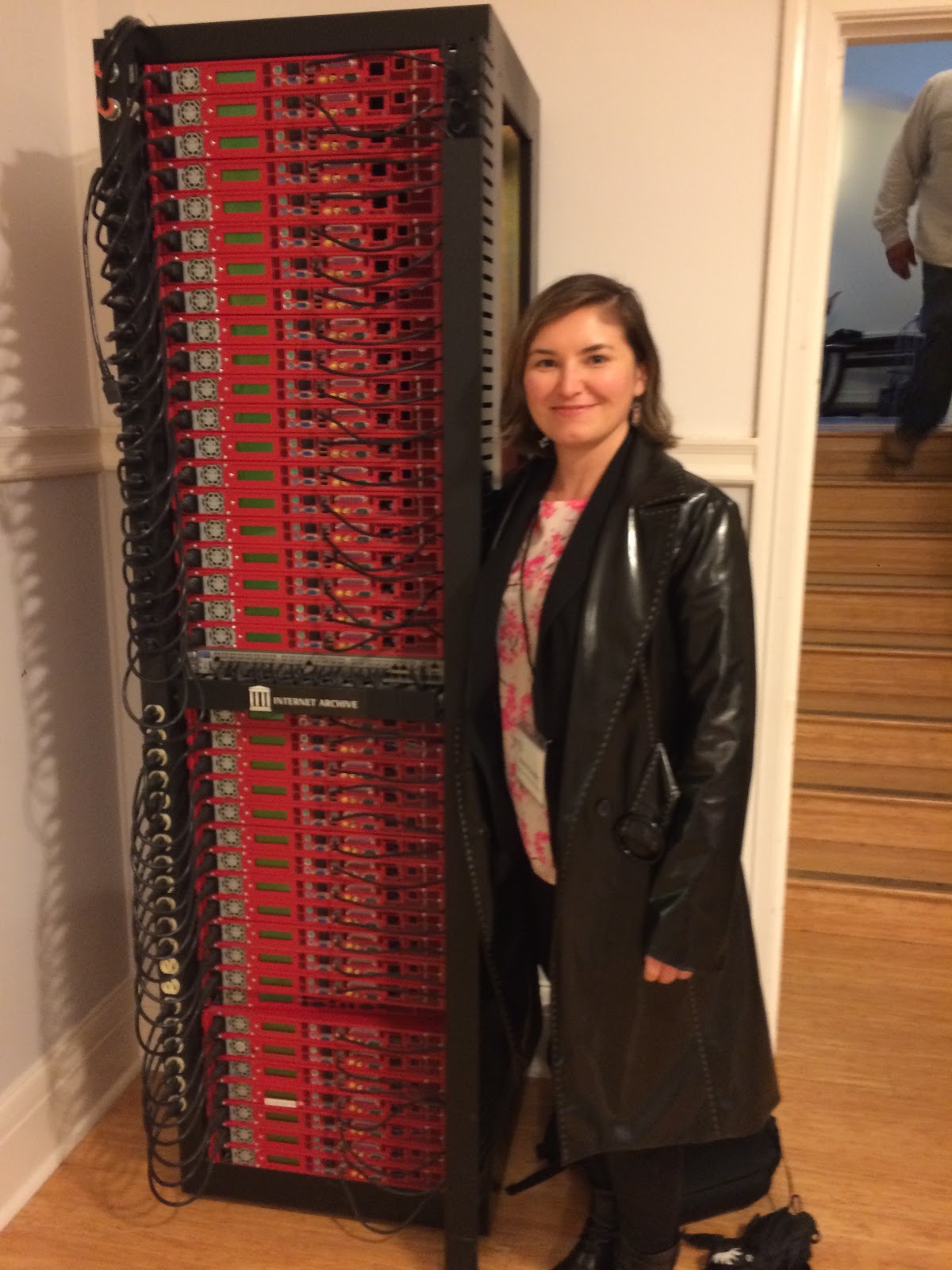
Me and an IA Petabox storage system
-Bianca Crowley, Digital Collections Manager
View Full Size Image
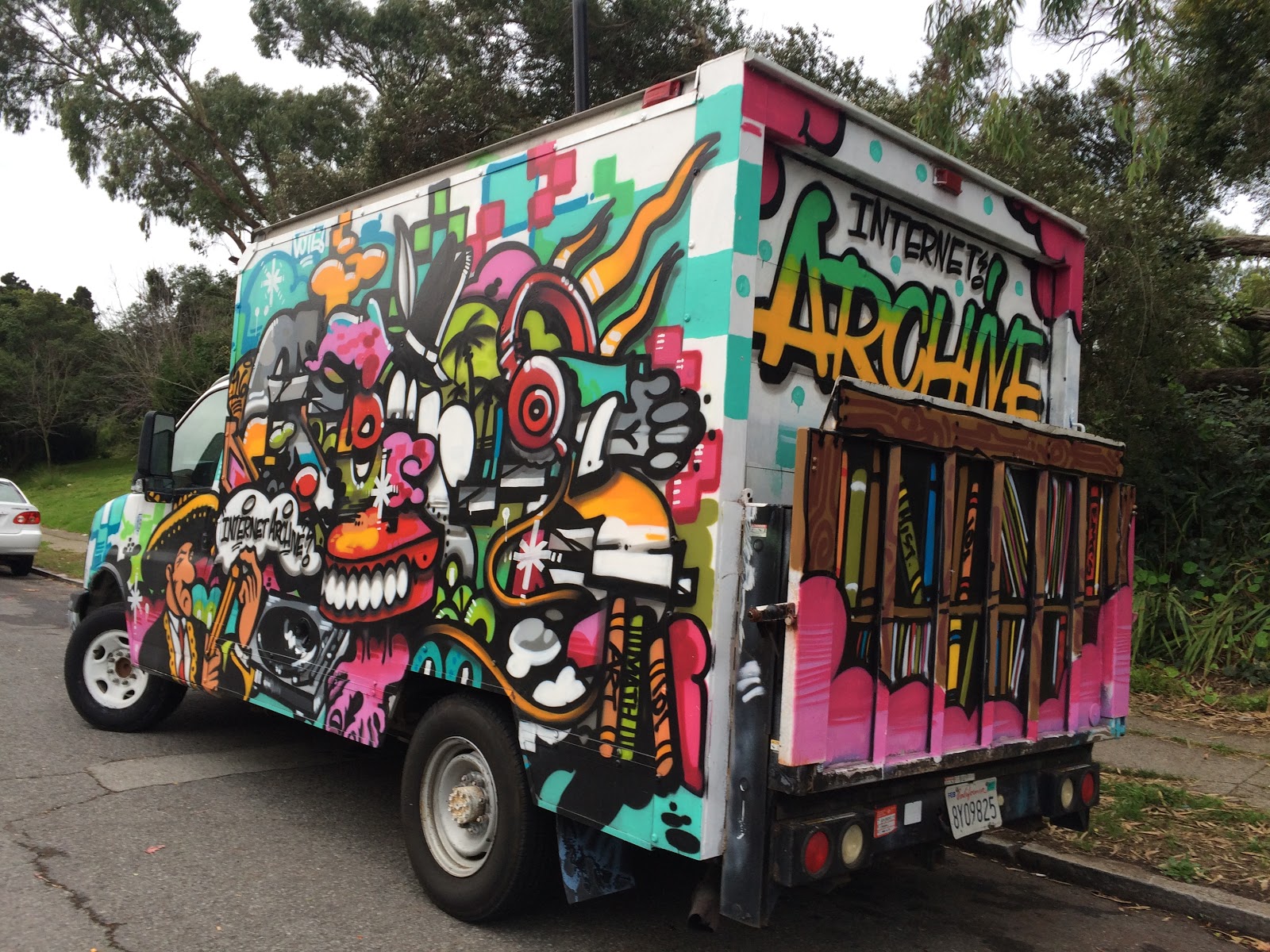
Internet Archive’s official truck
December 21, 2016by [email protected]
BHL News, Blog Reel

Expanding Access (EABL) Project Brings New In-Copyright Content to BHL

In case you missed our last post recapping the in-copyright content in BHL over 2015, we secured agreements with 23 licensors to provide 34 in-copyright titles for free and open access via our online collection.
View Full Size Image
BHL is thrilled that for the first few months of 2016, we have gotten permission to add 20 new in-copyright titles! Why such a sudden bounty? We have the work of the new IMLS-Funded Project: Expanding Access to Biodiversity Literature (EABL) to thank for securing the large majority of these agreements and for performing the work of integrating this new content into our collection. Some of the titles below are from small natural history organizations that had previously digitized their content but lacked a way to have it represented in BHL. In the coming months, as larger content providers benefit from EABL assistance, the list will grow to include unique titles never before digitized.Our latests in-copyright titles are:

  1. Arachnologische Mitteilungen from the Arachnologische Gesellschaft
  2. Sage Notes from the Idaho Native Plant Society
  3. Roosevelt Wild Life Station:
    1. Roosevelt Wild Life Annals
    2. Roosevelt Wild Life Bulletin
  4. Long Island Botanical Society Newsletter from the Long Island Botanical Society
  5. California Native Plant Society:
    1. The Bay Leaf from the East Bay Chapter
    2. Mimulus Memo from the Kern Chapter
    3. The Pipevine from the Mount Lassen Chapter
  6. “A short Flora of Berwickshire” by M E Braithwaite (2014)
  7. Golden Gate Audubon Society’s The Gull
  8. Quaestiones Entomologicae of the University of Alberta
  9. The Echinoderm Newsletter from the Smithsonian Institution
  10. Wisconsin Entomological Society
    1. Wisconsin Entomological Society Newsletter
    2. “Checklist of Wisconsin Dragonflies” (1993)
    3. “Wisconsin Millipeds” (1995)
    4. “Checklist of Wisconsin Centipedes (Chilopoda)” (1997)
    5. “Checklist of Wisconsin Butterflies” (2002)

Linnaean Society of New York

  1. Transactions of the Linnaean Society of New York
  2. Abstract of the proceedings of the Linnaean Society of New York
  3. Proceedings of the Linnaean Society of New York

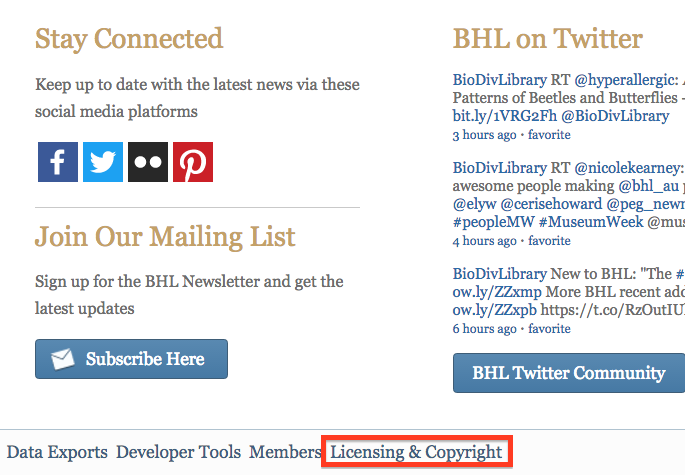
As a reminder, our in-copyright titles are availble under a Creative Commons license as specified in the volume metadata. Would you like to learn more about reusing CC licensed content? Please see our Licensing & Copyright page as linked from the footer of our website:

View Full Size Image

The future of in-copyright content in BHL is sure to surge under the leadership of the EABL project. With a goal of acquiring content from over 100 first-time contributors over 2 years, EABL will bring free and open access to invaluable content to benefit scientific research for years to come.

May 5, 2016by [email protected]
BHL News, Blog Reel

Happy New In-Copyright Materials!

Welcome to 2016 and BHL’s latest batch of in-copyright content! We have 8 new titles to add to the list since our last post.

Over the course of 2015, BHL secured the following:

View Full Size Image


Where possible, BHL acquires permission in the form of a signed license agreement from copyright holders to digitize post-1922 publications. These publications are available for open access under a Creative Commons Attribution-NonCommercial-ShareAlike 4.0 (CC BY-NC-SA 4.0) license. Users are welcome to reuse the in-copyright content in BHL so long as they adhere to the terms of the CC license, meaning:

  • you attribute the content to the copyright holder
  • use the content for non-commercial purposes such as educational or personal use
  • share the content under the same license (CC-BY-NC-SA 4.0)
 
This time around we have contributions from South Africa, United States, Scotland, Italy and England:
Special thanks to our Affiliate partners with BHL Africa from the South African National Biodiversity Institute (SANBI) who are contributing 3 new titles to the BHL collection. 
View Full Size Image

  1. Bothalia (1918 to present) – named after General Botha, South Africa’s first Union Premier and Minister of Agriculture, the journal continues to this day as a principal publication about South Africa’s flora and fauna. Most recently, it is expanding in scope to include more information about African biodiversity and conservation topics.
  2. “Atlas and red list of the reptiles of South Africa, Lesotho and Swaziland” (2014)
  3. Flora of Southern Africa (1963 to present)
View Full Size ImageSmithsonian Institution Scholarly Press has contributed “Watershed Research Perspectives” (1986) edited by David L. Correll. This publication is a collection of papers resulting from a 1985 watershed research workshop held at the Smithsonian’s Environmental Research Center.
The earliest issues of the newsletter Nemophila, published by the California Botanical Society, are now in BHL from 1919 to 1927. CBS is better known for its premier publication, Madroño which is also in BHL. We are very pleased to support the digital archives of this 103 year old society who support the scientific research initiatives and community outreach for Western American botany.

The quarterly magazine and journal for members of the Scottish Ornithologists’ Club, Scottish Bird News, will be in BHL soon. The following graphic summarizes nicely the importance of the SOC for Scotland’s bird enthusiasts and researchers alike. For now, selected back files are available via the organization’s website. 
View Full Size Image

Dating back to the 1870s, Italy’s foremost organization dedicated to malacological research, the Società Italiana di Malacologia (SIM), has generously contributed later volumes of its Bollettino Malacologico (1979 to present, with 3 yr embargo) to the BHL collection. Its earliest volumes actually preceded the formalization of the society and are available in BHL as the Bullettino malacologico italiano. Stay tuned for the later volumes to come.

Now in their 155th year, the Yorkshire Naturalists’ Union “is devoted to studying and recording Yorkshire’s flora and fauna…as an association of amateur and professional naturalists covering a wide range of aspects of natural history.” BHL will soon include later volumes of their triannual publication The Naturalist in our online collection. You can see its earliest volumes in BHL from 1864.
Digitization is in progress for these titles and you can see them appearing via our recent additions list.

Want to see more in-copyright content in BHL? Let us know what you’d like to see!

January 20, 2016by [email protected]
BHL News, Blog Reel

From Scarborough to Svjatoj Nos: BHL’s latest in-copyright additions

Portrait version of the Biodiversity Heritage Library logo.

What do the Scarborough District, tigers, Socieded Cientifica Argentina, Auckland Institute and Museum, birds and the Svjatoj Nos wetlands have in common?

Actually not much…

…except that they are the newest in-copyright additions to the BHL collection!

If you still think that BHL is strictly about legacy literature, think again. Although still a very small portion of our collection, in-copyright titles now total over 400 from 170 licensors. Please see our Permissions page to learn more about the in-copyright content in our collection.

Where possible, BHL acquires permission in the form of a signed license agreement from copyright holders to digitize post-1922 publications. These publications are available for open access under a Creative Commons Attribution-NonCommercial-ShareAlike 4.0 (CC BY-NC-SA 4.0) license. Users are welcome to reuse the in-copyright content in BHL so long as they adhere to the terms of the CC license, meaning:

  • you attribute the content to the copyright holder,
  • use the content for non-commercial purposes such as educational or personal use
  • share the content under the same license (CC-BY-NC-SA 4.0)

Our latest (bio)diverse mix of titles hails from all over the world:

The Natural History of the Scarborough District
Since 1889, the Scarborough Field Naturalists’ Society has encouraged the organization of “amateur naturalists’ with interests throughout the spectrum of natural history.” BHL is pleased to include this publication in our collection as we feel we are the perfect place for these types of smaller scholarly society publications.

Tracking tigers : a review of the status of tiger, Asian elephant, gaur, and banteng in Vietnam, Lao, Cambodia, and Yunnan (China), with recommendations for future conservation action by Will Duckworth and Simon Hedges (1998)
In 1998 the World Wildlife Fund (WWF) Indochina programme commissioned a report on the status of large mammals. “It was an incredible piece of work and represents an expertly pieced together compilation of data and information from every source possible” explains Michael Baltzer, Director of the WWF Tigers Alive Initiative. As the first in-copyright WWF publication to become a part of the BHL collection, we hope this is a good sign for additional WWF publications to come.

Anales de la Sociedad Cientifica Argentina
A pioneering institution for scientific study in Argentina since 1872, the Sociedad Cientifica Argentina has published its Anales for over 130 years. BHL is thrilled to be able to provide this complete publication through the present day. Digitization of the Anales is underway and should be available shortly.

Bulletin of the Auckland Institute and Museum and Poirieria
The Auckland Museum Institute dates back to 1867 when it assumed the management of the Auckland Museum and became the regional representative of the Royal Society of New Zealand. Its Bulletin covers a spectrum of topics related to natural and human history. The Auckland Shell Club was formed in 1931 as a section of the Auckland Museum Institute, dedicated to “all things molluscan, ie: shell collecting (recent and fossil), conchology and malacology (study of shells and shellfish), and molluscan ecology and conservation.” These publications will be available in BHL soon.

Ornithological Society of Turkey Bird reports and Ornithological Society of Turkey Bulletins 
In 1978, the Ornithological Society of the Middle East (OSME) formed as a successor to the Ornithological Society of Turkey. Its purpose is to promote research and address conservation issues for birds in the region between, “between Europe, China and the Horn of Africa on two major migration flyways crossing Central Asia’s wind-swept steppes, the Caucasus’s towering mountains, Arabia’s wide arid deserts and the tropical seas of the Indian Ocean.” Previously, the OSME gave permission for BHL to include Sandgrouse and its Bulletin in our collection. It has now added 2 more titles, published under its former name. Please stay tuned for digital copies of the Bird reports and Bulletins to appear in the coming weeks.

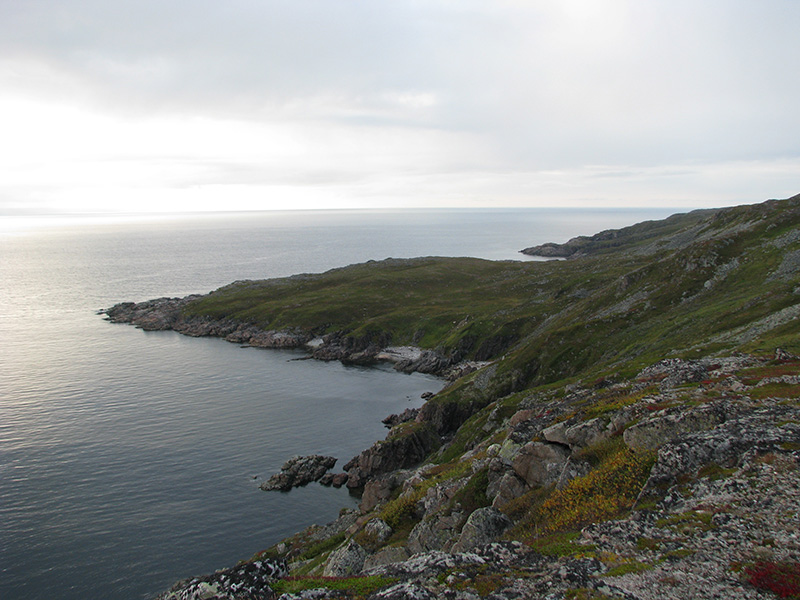
Ecology of the Svjatoj Nos wetlands, Lake Baikal by J. Mlíkovský & P. Stýblo (eds.)

View Full Size Image

These stunning wetlands are located on the Kola Peninsula along one of the most northeastern coasts in Russia. BHL is pleased to make this work available in our collection soon.

Digitization is in progress for these titles and you can see them appearing via our recent additions list.

Want to see more in-copyright content in BHL? Let us know what you’d like to see!

October 22, 2015by [email protected]
BHL News, Blog Reel

Newest In-Copyright Additions to our Collection

Did you know that there is modern literature in our collection?

We have permission with over 165 licensors to provide nearly 400 in-copyright titles for free and open access under a Creative Commons BY-NC-SA 4.0 license. In other words, we have contemporary titles in our collection that you are free to use so long as you attribute the content to the copyright holder, use the content for educational or personal use only (commercial use is NOT allowed) and share the content under the same license (CC-BY-NC-SA 4.0). You can even create derivatives of the content for reuse so long as you adhere to the terms of the license.

BHL is pleased to announce the recent acquisition of 4 new in-copyright titles that we are in the process of adding to our collection:

View Full Size Image

The San Diego Shell Club [http://www.sandiegoshellclub.com/]
Since 1961, the San Diego Shell Club has been promoting research and appreciation of Mollusca through “lectures, club meetings and field trips,” as well as through their peer-reviewed publication, The Festivus. The Club has relationships with natural history museums in southern California including the San Diego Natural History Museum, Natural History Museum of Los Angeles and the Santa Barbara Museum of Natural History.

  • BHL is looking forward to providing back-issues of The Festivus through 2013 in our collection soon. Please monitor our recent additions page to track its progress. The San Diego Shell Club offers copies of their current volume for a very affordable fee via their website.
View Full Size Image

California Botanical Society [http://calbotsoc.org/madrono/]
Dedicated to the advancement of Western American botany, the California Botanical Society has been operating since 1913. Through its peer-reviewed publication, annual banquet, research support, graduate student support and community outreach it continues to play a major role in promoting scientific study and raising awareness about this important niche area of botany.

  • Digitization of Madroño; a West American journal of botany is actively in progress with over 50 volumes and counting. The California Botanical Society agreed to provide in-copyright volumes for the BHL collection under a 3 year “moving wall” or embargo meaning that for 2015 we will complete digitization up through the 2012 volume. Every year thereafter, we will digitize one more volume such that the 2013 volume will be available in 2016 and so on.

Work in progress…and if you are wondering why the current series of volumes for this title is out of sequence, it is because we are still in the process of digitizing the title, modifying the metadata, and ensuring we have all volumes present and accounted for. Sequencing volumes in their proper order takes manual curation of the items in our collection. Thanks, in advance, for your patience. Notice other titles with volumes out of order? Please let us know and thanks! We’ll get to it when we can.

The Royal Society of Queensland [http://www.royalsocietyqld.org/index.htm] began with the publication of its first Proceedings in 1884 as a successor to the Philosophical Society of Queensland. Over 150 years later, the Society is not only the oldest scientific institution in Queensland but is still producing its Proceedings on an annual basis. Entirely run by volunteers, the Society “seeks to increase awareness of the sciences in Queensland” by promoting “original research and the application of scientific method and knowledge to policy-making and decision-making.”

  • Proceedings of the Royal Society of Queensland. BHL digitized early volumes of the Society’s publication in 2009 and is in the process of digitizing through 1955. Please stay tuned for more volumes to appear in the coming weeks.
  • The earliest volumes of the Society were published as the Transactions of the Philosophical Society of Queensland vol.1 (1859) to vol.3 (1872) and will be digitized to BHL as well. These early volumes are proving tricky to track down within our BHL consortium partner holdings but where there’s a will, there’s a way…

Would you like to contribute any in-copyright content to the BHL? If we hold the content in one of our partner libraries we would be happy to digitize it under a CC-BY-NC-SA 4.0 license and make it available via our website. Please see our Permissions page for more information and contact us [http://biodiversitylibrary.org/contact].

July 16, 2015by [email protected]
Page 1 of 41234»

Help Support BHL

BHL's existence depends on the financial support of its patrons. Help us keep this free resource alive!

search

About BHL

The Biodiversity Heritage Library (BHL) is the world’s largest open access digital library for biodiversity literature and archives. BHL operates as a worldwide consortium of natural history, botanical, research, and national libraries working together to digitize the natural history literature held in their collections and make it freely available for open access as part of a global “biodiversity community.”

Join Our Mailing List

Sign up to receive the latest news, content highlights, and promotions.

Subscribe Now

Subscribe to Blog via Email

Enter your email address to subscribe to this blog and receive notifications of new posts by email.

Join 319 other subscribers

Subscribe to Blog Via RSS

Subscribe to the blog RSS feed to stay up-to-date on all the latest BHL posts.

Access RSS Feed

Inspiring Discovery through Free Access to Biodiversity Knowledge.

The Biodiversity Heritage Library makes it easier than ever for you to access the information you need to study and explore life on Earth…for free, anytime, anywhere.


64+ Million Pages of
Biodiversity Literature Online.

EXPLORE

Tools and Services
to Transform Research.

EXPLORE

300,000+
Illustrations on Flickr.

EXPLORE

ABOUT | HARMFUL CONTENT | PRIVACY | SITE MAP | TERMS OF USE