
Biodiversity Heritage Library - Program news and collection highlights from BHL
  • Home
  • News
  • Featured Books
    • All Featured Books
    • Book of the Month Series
    • BHL at 20
  • User Stories
  • Campaigns
    • Fossil Stories
    • Garden Stories
    • Monsters Are Real
    • Page Frights
    • Her Natural History
    • Earth Optimism 2020
  • Tech Blog
  • Visit BHL
Home
News
Featured Books
    All Featured Books
    Book of the Month Series
    BHL at 20
User Stories
Campaigns
    Fossil Stories
    Garden Stories
    Monsters Are Real
    Page Frights
    Her Natural History
    Earth Optimism 2020
Tech Blog
Visit BHL
  • Home
  • News
  • Featured Books
    • All Featured Books
    • Book of the Month Series
    • BHL at 20
  • User Stories
  • Campaigns
    • Fossil Stories
    • Garden Stories
    • Monsters Are Real
    • Page Frights
    • Her Natural History
    • Earth Optimism 2020
  • Tech Blog
  • Visit BHL
Biodiversity Heritage Library - Program news and collection highlights from BHL
BHL News, Blog Reel

BHL hosts our 1st UMich Alt. Spring Break Intern: Irina Zeylikovich

View Full Size Image
Irina Zeylikovich

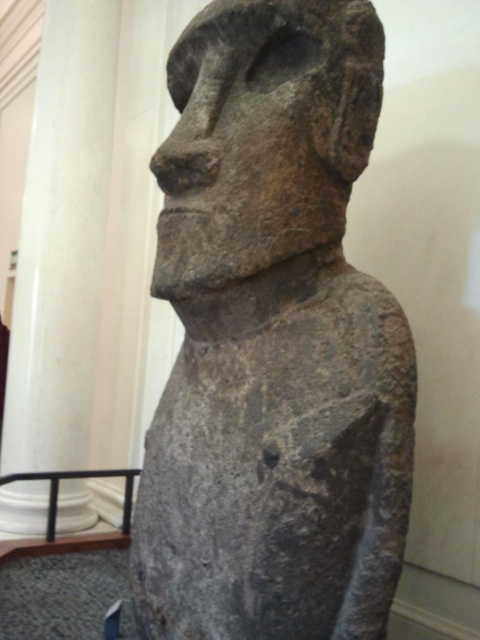
I knew I was going to have a good University of Michigan School of Information Alternative Spring Break when my project mentor, Bianca Crowley, told me to meet at the Easter Island head. But that’s just how the Biodiversity Heritage Library rolls.
View Full Size Image
Not a Dum-Dum!

Part of BHL is currently housed in the Smithsonian’s National Museum in Natural History, so on Monday March 4, I purposefully strode through it’s grand doors to begin my weeklong project on creating social media campaigns that would cast a wider net and draw more people to the amazing content that the Biodiversity Heritage Library has online.

My project involved a dual approach – I would work on both a sustainable workflow that made sense for the BHL staff to actively utilize and continue after my departure, as well as a list of topics that had the potential to pique the interest of lots of people and also had relevant content in BHL. I began with an environmental scan to understand how other peer institutions were engaging audiences on social media, as well as locating storytelling best practices and effective marketing tools for BHL’s ready reference later. Then came the bulk of the project: establishing the workflow and generating campaign ideas.

After looking at several options, my project mentors and I decided on two types of shared documents: a high-level list of campaign ideas that included additional information such as date dependencies (for example, if the campaign was tied to a commemorative month, such as the recent Women’s History Month campaign). Each of the campaigns listed in that document would also link to a much more detailed campaign file that would hold resources – factoids, links to BHL images, peer organizations, hashtags, relevant Facebook pages, etc. – to assist in creating content for the campaign itself. The remainder of my time was spent fleshing out one of the campaigns, but I won’t spoil the surprise – you’ll just have to wait to read it!

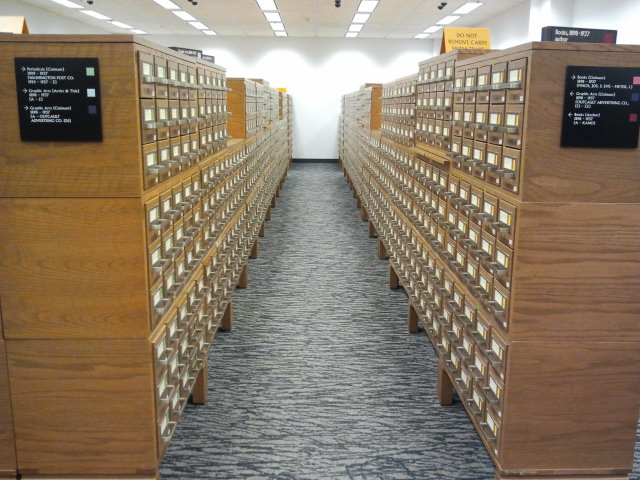
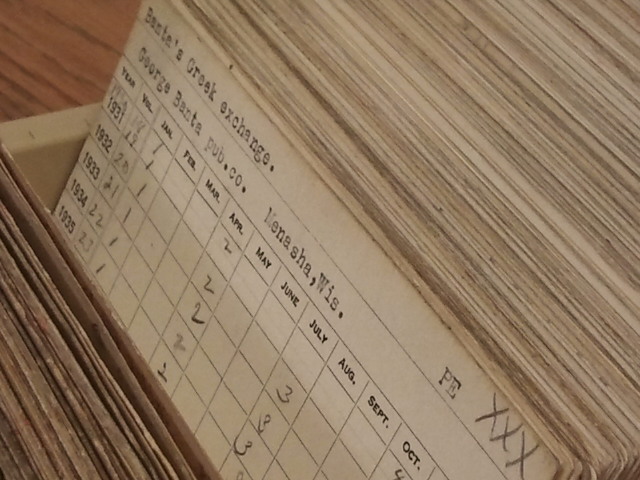
Bianca also treated me to a phenomenal last day fit for every (future) librarian: a visit to the Library of Congress for a lecture by the director of the Bibliotheca Alexandria, Ismail Serageldin – a truly gifted speaker and inspiration to all librarians (and in my opinion, all educators in general). We followed this with a visit to the US Copyright Office to doublecheck the copyright status of a work that was likely going to be digitized and added to the BHL online collection. This was truly a revelation for me since the copyright claims before 1978 have not been digitized yet, so we sought our claimants amidst rooms of card catalogs.

View Full Size Image
Inside the US (C) Office Catalog Room
View Full Size Image
Copyright register card example
View Full Size Image
“Snowquester” but where’s the snow?

I learned quite a bit in my brief (even a little briefer than normal thanks to Wednesday’s “Snowquester”) week with BHL. I manage a blog as my role at the Taubman Health Sciences Library, but am far less involved on other social media, so this was a great addition to my professional experience, and I hope that my efforts help a truly wonderful organization with incredibly dedicated staff. I know I’m in the right field when I hear colleagues discussing the amazing power of metadata and when I can witness the discovery of hidden collections. I was also able to see the amount of labor required to make this process a reality. Having so much of the content users normally interact with being born digital, I think we forget that for every page of a hand-printed/illustrated work that goes online, someone had to find the work, check its copyright status, scan it carefully page by page, tag as much with metadata (otherwise how would you have found that there is a gorgeous illustration of a lemur on that page?) as is feasible, create a platform to keep all of these pages online, and lastly get you to actually see it.

The most rewarding aspect of my time at BHL is undoubtedly seeing how people far and wide use these collections in ways the original creators could never have anticipated: in art, historical analysis, biodiversity research, and climate change tracking. If my efforts over Alternative Spring Break can lead even one additional person to BHL’s content where they may not have known about it before, that’ll make for a pretty thrilled (future) librarian.

-Irina Zeylikovich @sfobound

March 26, 2013by [email protected]
Blog Reel

A Consortium that Scans Together, Bands Together

Portrait version of the Biodiversity Heritage Library logo.

Over the years, the BHL consortium has grown from its initial core of 10 members to now 15 member institutions across the United States and the United Kingdom.

While each institution contributes its own unique set of materials to the BHL collection, many of our collections share similar materials. Thank goodness we do because we rely on each other to help fill in gaps in the BHL corpus. But this is easier said than done. Have you ever tried to amass a complete set of 90+ year old objects into one place?!

The quick and dirty explanation of our digitization process is as follows — BHL consortium libraries:

  1. Work together to select books for scanning
  2. Do our best to make sure we don’t send the same materials for scanning, i.e. “de-duplication”
  3. Send the books from our shelves for scanning to various Internet Archive locations or to our own institutional scanning centers
  4. Send the bibliographic data from our library catalogs
  5. Render derivative files, such as the OCR (optical character recognition) text files
  6. Aggregate the data files and images for every page of every book scanned into our back-end database managed by the Missouri Botanical Garden
  7. Serve it all up via our website: http://biodiversitylibrary.org

And for those of us who prefer visuals:

BHL: Disseminating Content Beyond the Silo from Bianca Crowley and Grace Costantino

Steps 1 and 2 can get complicated. Fast. Which is why we need the tools to help us coordinate who’s scanning what, when. To manage our communications we use an issue tracking system, in our case Countersoft’s Gemini system. Whenever you submit feedback via our website, a new issue, or ticket, is created in our system which we route to the appropriate BHL Staff for follow up. Send us feedback telling us something’s missing from our collection and we’ll try to find the BHL library who can send it for scanning. Sounds easy enough, right?

Wrong. Enter an old journal series which over the course of decades, centuries even, can modify its scope, alter its publication title and alter it again (and again…). Combine this with the changing practices of the printing, bookbinding, and library industries over the course of history and you have quite the task to gather the various pieces of the puzzle and arrange them into the complete picture of a publication.

View Full Size Image
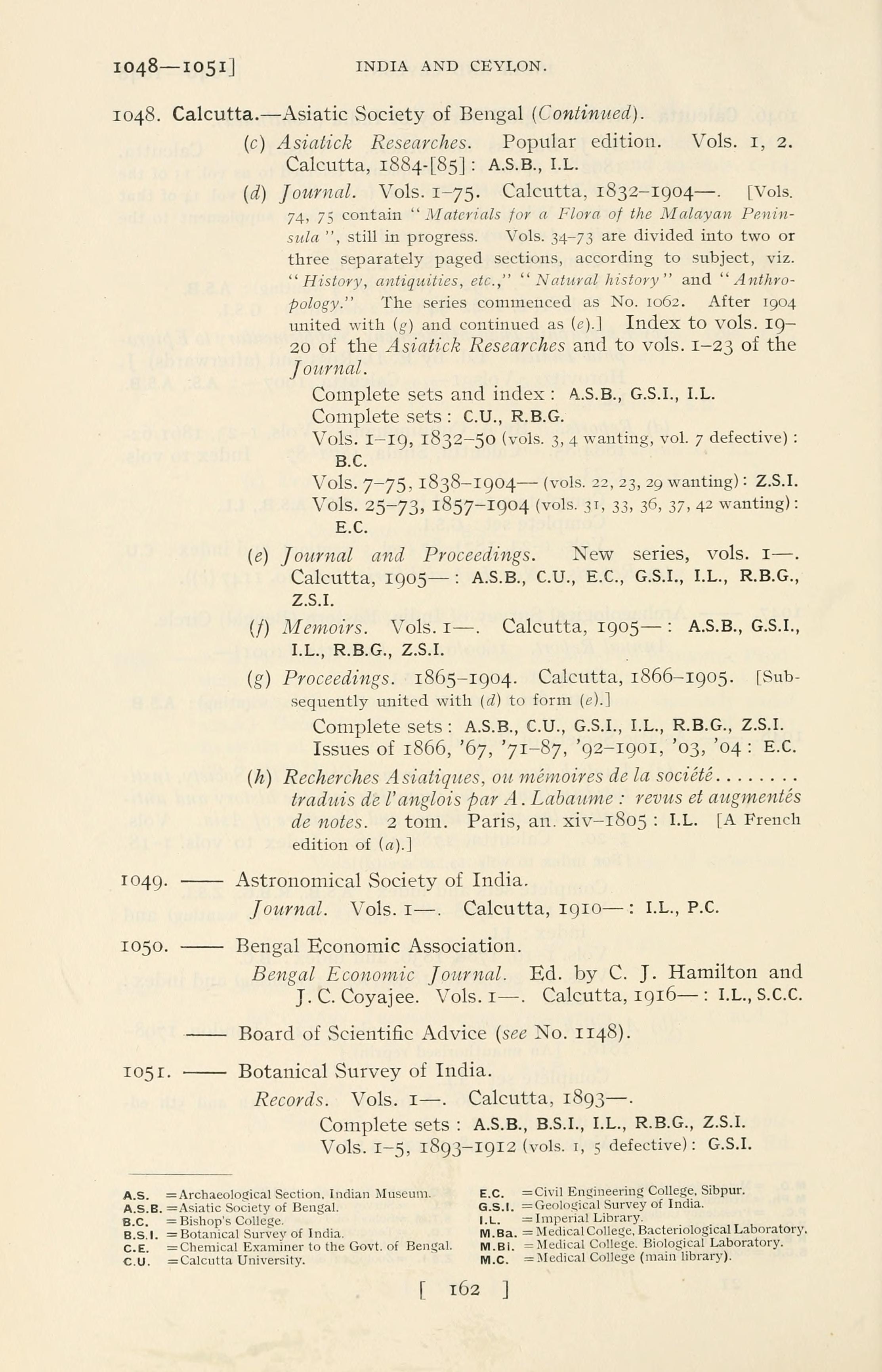
Bibliography of Asiatic Society publications,

The Journal of the Asiatic Society is one of my favorite examples of how the BHL member libraries work together to accomplish this task.  The Journal changed its title various times since the late 18th Century and we have 4 of them in the BHL starting with Asiatick Researches (1788-1849) to the Journal and the Proceedings of the Asiatic Society (1905-1934). Since we started digitizing books for the BHL in 2007, this series has called on 7 different libraries to send various volumes for scanning in an effort to complete the digital set. The work still continues today. With so many libraries involved, it is not uncommon for there to be 3 different ways the titles were cataloged and 5 different ways the volumes were bound, for example, making the work of selection and de-duplication rather tricky.

Without systems that allow us to communicate in detail about who’s scanning precisely what, when, we’d have no way to aggregate 15 different physical library collections into a single BHL collection online. Our issue tracking system is just one of many tools that we use to communicate across various aspects of our digitization workflow. However, the tools would not mean anything if it were not for the hard work and collaborative spirit of the librarians throughout our consortium.

March 15, 2013by [email protected]
Blog Reel

The Digital Specimen, Field Book, and Publication Trifecta

The Field Book Project (FBP) and the Biodiversity Heritage Library (BHL) are pleased to bring you a joint blog series showcasing some of the best examples of digital connections between museum specimens, field book catalog records, and the resulting publications for three notable expeditions. This four part series will continue over the coming months. Ever wonder what it takes to understand the full story of historical expedition science? Read on!

View Full Size Image
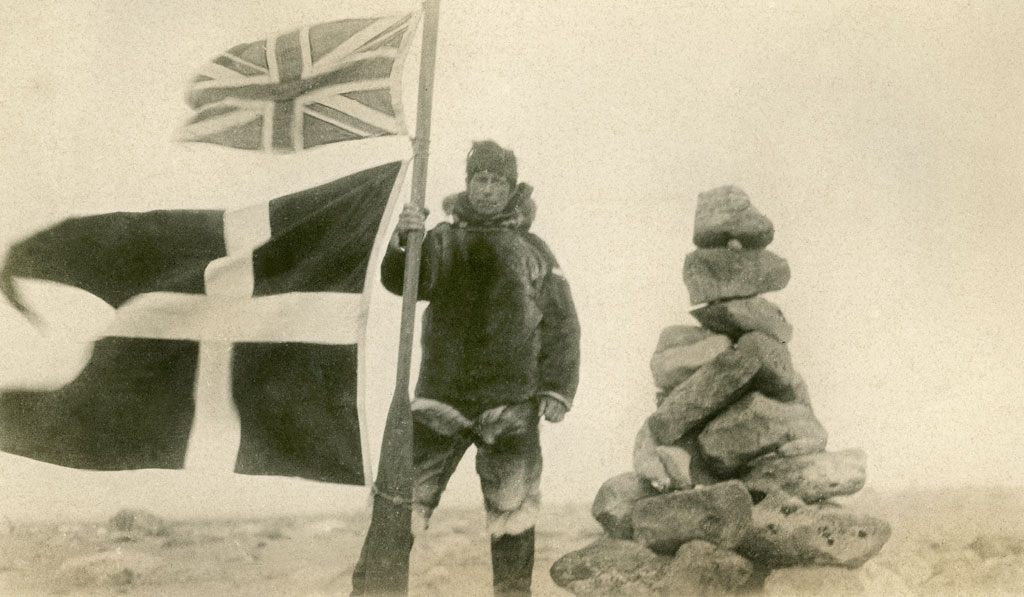
Burying Members of the Franklin Expedition at Starvation Cove, c. 1924. Smithsonian Institution Archives, Science Service Records, RU 007091, Box 409, Folder 2.  2005-8639.


It’s safe to say, everyone has an idea of what an expedition is; I hope all will agree when I say they are fascinating. Expeditions can be a thrilling story of exploration, national pride, thrill-seeking, and personal drama. They have been organized for a myriad of political or personal reasons; whatever these may have been, expeditions frequently yield natural history observations and specimens. Expeditions are also a wonderful source of information about biodiversity. Since expedition participants usually come from multiple institutions and disciplines, more collecting is often possible. This can result in a specimen collection of greater breadth and variety than a typical collecting event. With these characteristics, an expedition can prove a fascinating story and an important source of scientific documentation.

So I’ve been thinking it would be interesting to look at the Field Book Project’s expedition content. FBP was inspired by the challenges a researcher experienced tracking down specimens and field books from an expedition. Those experiences helped shape the cataloging structure FBP developed. We create catalog records for field books, their collections, and their creators (persons, organizations, and expeditions). Since we started, we have cataloged field books from 103 expeditions, some involving well-known individuals or documenting the first time an area was thoroughly studied.

View Full Size Image
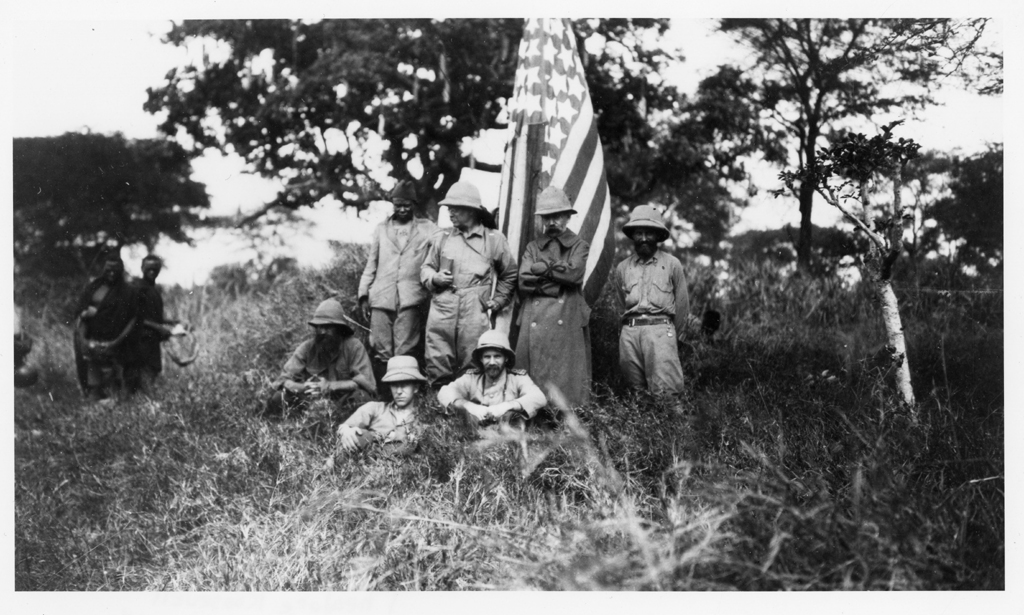
Theodore Roosevelt on African Expedition, 1909. Smithsonian Institution Archives, RU 00095, Box 56, Folder 10. SIA2009-1371.

On December 19th, FBP catalog records were made available through the Smithsonian’s Collection Search Center. This has created what I like to think of as the trifecta. What constitutes the trifecta? There are three major parts to natural history documentation that have proven important to researchers with whom we’ve worked: (1) the specimens, (2) the field books created when specimens were collected, and (3) the publications that resulted from their study. The Smithsonian Institution maintains online databases for many of their specimens. As BHL blog readers know, Smithsonian Libraries has also contributed to the Biodiversity Heritage Library to provide digitized versions of the publications for free access online. The FBP now offers online descriptions of the individual primary documents. The trifecta is growing for a number of Smithsonian sponsored expeditions and collecting events. A researcher now has a better chance of locating a specimen, its related field book, and a publication that cites it.

As a Field Book Project cataloger, I am thrilled to see the last element of the trifecta, our records, now available. While cataloging, we often verify information like location names by searching for digitized publications the creator may have written based on the field books. I find it fascinating to see how a publication can be informed by a primary document and vice versa. A researcher may be able to determine what a creator saw as significant about the collecting through the publication, and see the day-to-day work that the creator used to come to that conclusion in the field book.

Researching an Expedition

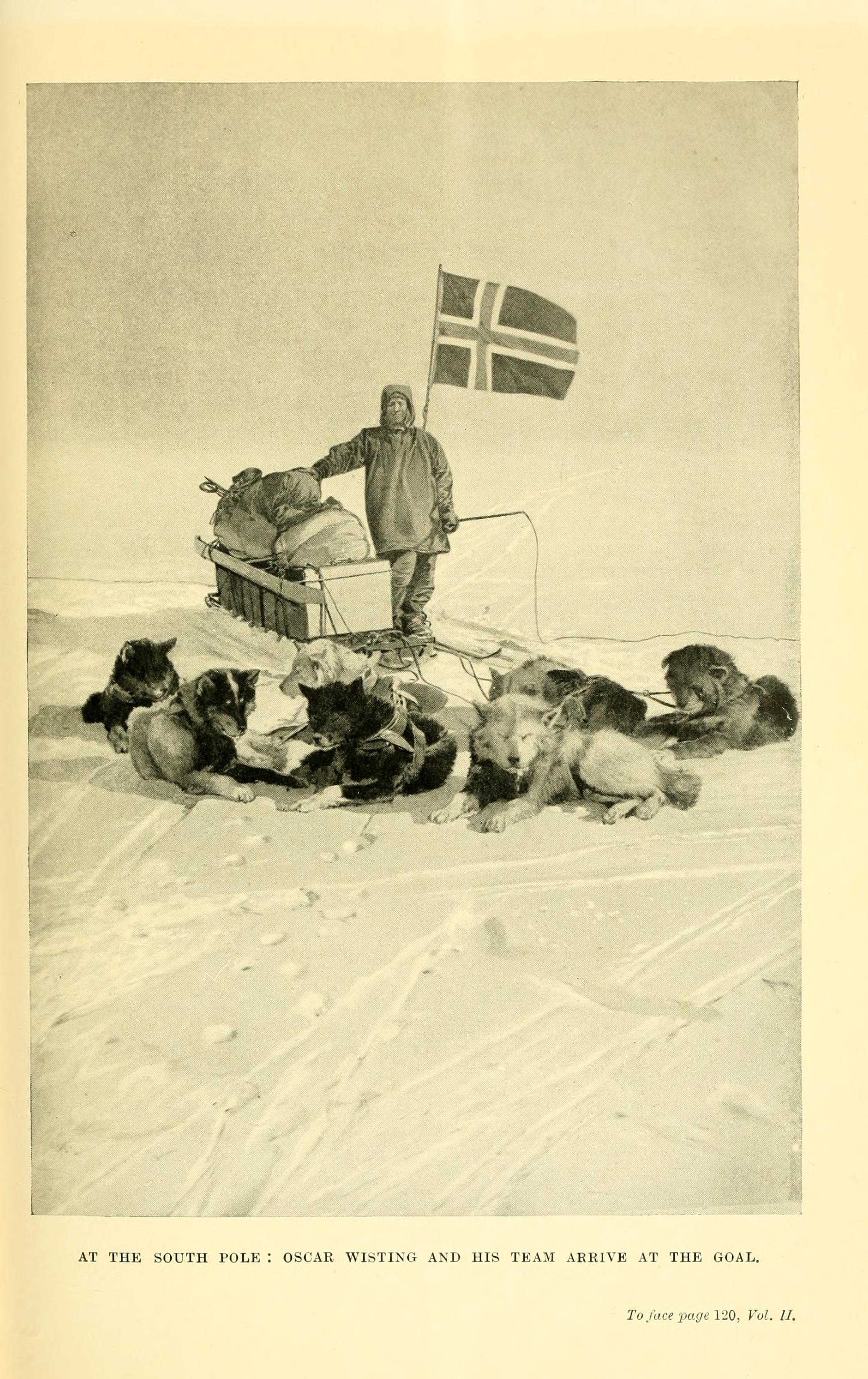
“At the South Pole: Oscar wisting and his team arrive at the goal” from The South Pole by Roald Amundsen, pg 121.  Biodiversity Heritage Library.
What is so challenging about researching specimens and documentation from a historical expedition? When an expedition ends, it can eventually fall from the public consciousness. The specimens and documentation might then be divided. At the very least, specimens go to each institution whose staff collected it. Specimens and documentation may be separated again by type and sent to different departments within an institution (e.g. mammal specimens go to mammalogy, bird specimens to ornithology). The fact that they were collected during the same expedition may not be recorded with each handoff. Each separation makes it harder to guarantee that the expedition connection is still evident.

Publications resulting from expeditions also run a high risk of losing an explicit expedition connection. Book catalog records do not always indicate that a publication documents a certain expedition. A researcher looking for resulting publications might have to search for participants as authors, looking for a period of time after the expedition was completed, then read the publication itself to verify the content is relevant. Some of these issues, like discovery of expedition related publications, may seem pretty straightforward, but this type of search assumes that the researcher knows who took part in the expedition.

How expeditions are documented

Expedition documentation varies widely. In recent years, some universities and museums have used the general appeal of expeditions to highlight some of their own collections online. These can be wonderfully informative websites, but usually only cover a few expeditions of significance to the home institution.

The Smithsonian Institution, as part of its initiative to be a provider of public history, has a detailed list of Smithsonian related expeditions available as an online guide that covers 1878 – 1917, compiled from Smithsonian Annual Reports. The Institution’s annual reports have a long tradition of discussing any major fieldwork. Smithsonian Institution Archives (SIA) also maintains more than 150 individual expedition records. These records are at varied levels of completeness, since Annual Reports sometimes only mention the name of a collecting effort if it was small.

Over the last two years, FBP has documented 103 expeditions relating to field notes. Several were not in the extensive list already kept by SIA, but deeply buried in personal or departmental papers. These can be rich resources, but a researcher would usually not know the information was there without reading the materials, despite the detailed finding aids SIA generates every year.

Researching an expedition is like untangling a very large knot. FBP, BHL, and museum divisions work to increase online documentation so researchers can find the right string to pull. This is by no means a finished process; many of us know what a gnarly tangle the search through materials can become. The digitization of the specimen, field book and publication trifecta can only serve to ease the burden of this twisted ravel of biology, personal history and published record, helping us and our researchers to find the connections.

February 28, 2013by [email protected]
Blog Reel, Featured Books

Say What?!

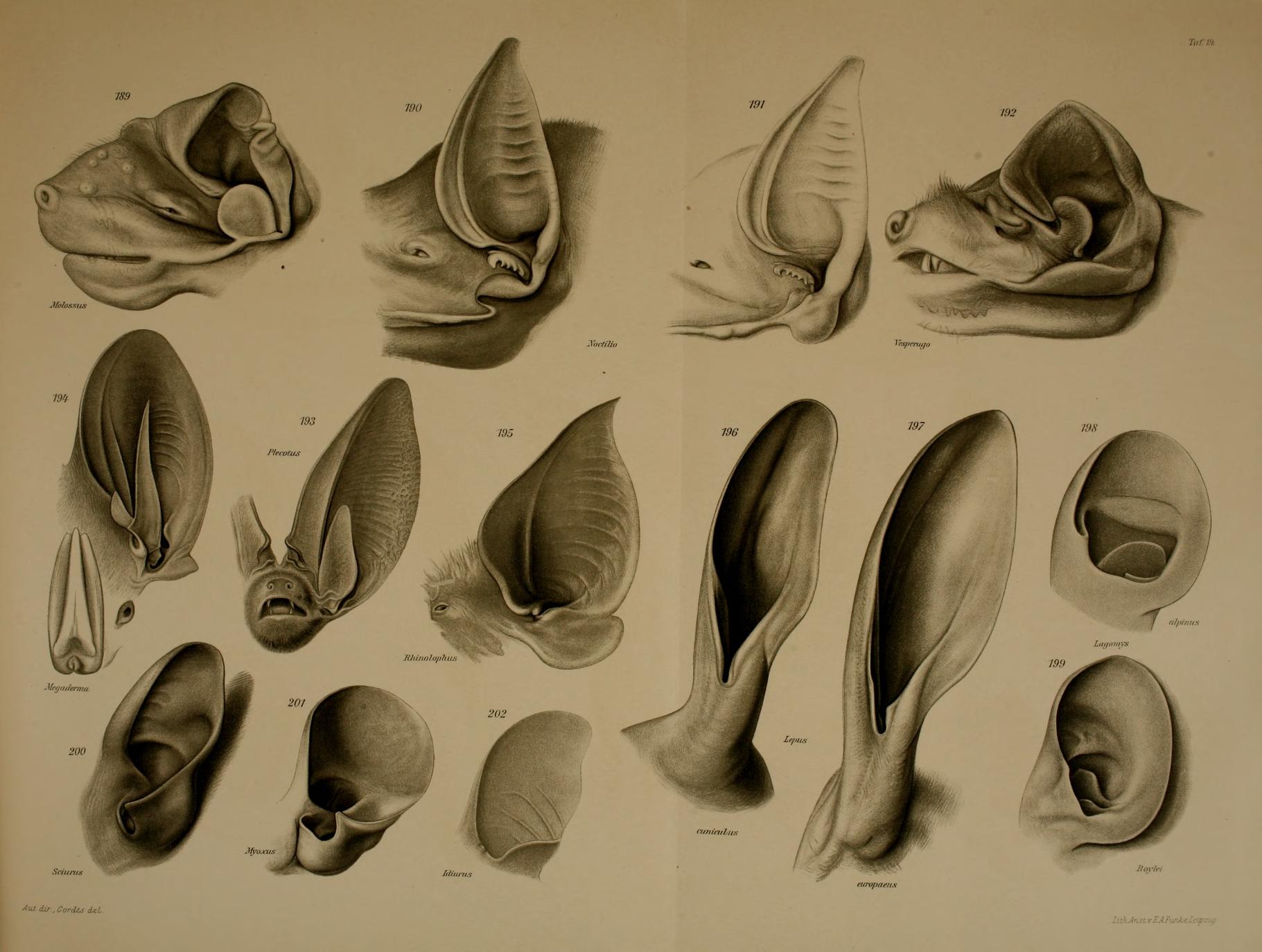
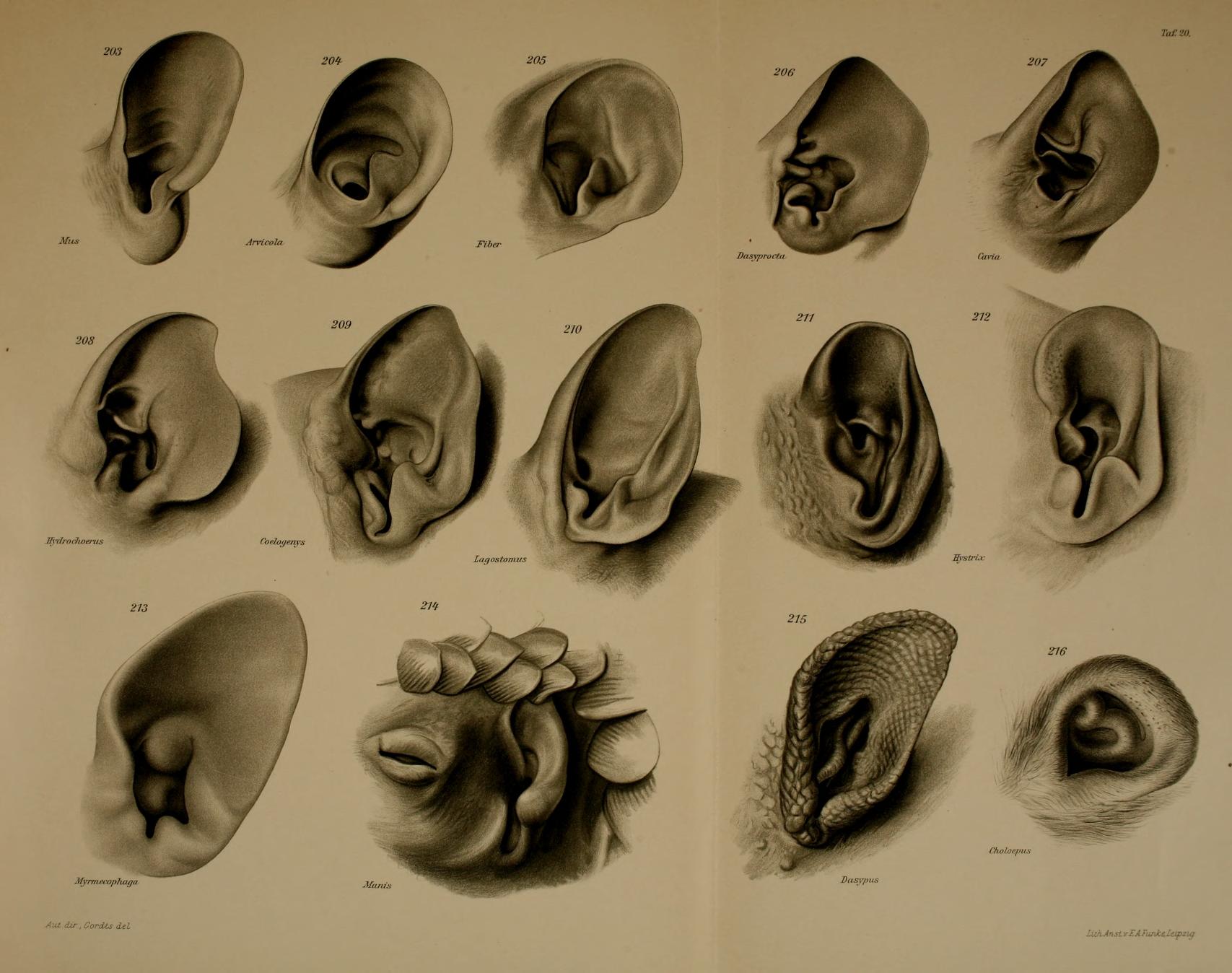
a variety of mammal ears

Sometimes I come across items in the BHL collection that elicit an immediate response. In this case it was, “Look at all those ears!”

Ears indeed. In 1912 Johan Erik Vesti Boas published his Ohrknorpel und äusseres ohr der Säugetiere; eine vergleichend-anatomische Untersuchung (Ear cartilage and outer ear of mammals, a comparative anatomical study). Beautifully illustrated, Boas’ book takes us through a host of mammal ears from rodents, to whales, kangaroos, pigs, bats, primates, and yes, even humans. There are some very nice cartilage spreads as well which we have included in our in our Flickr photostream but for now I will show some of my favorite pinnae (outer ear) pin-ups!

View Full Size Image
Find the ear of the tiny tenrec here!
View Full Size Image
Ooh, there’s a pika ear in here!
View Full Size Image
Can you spot the capybara ear?

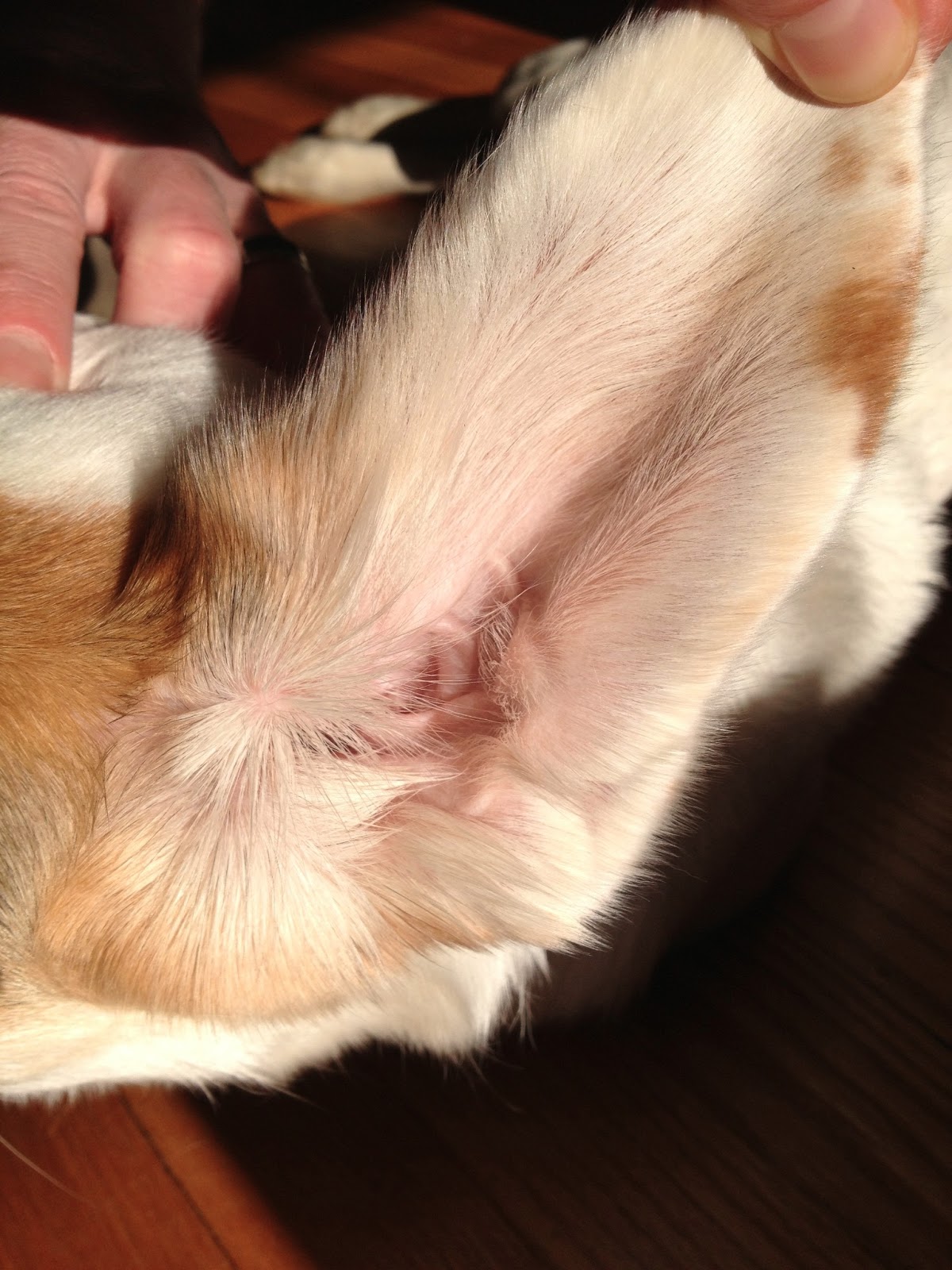
I cannot help but throw in a picture of a full color mammal pinna from my very own Canis lupus familiaris. If you look closely you can see the aperture, or the entrance of the ear canal, under all that hair.

View Full Size Image
The study of the mammalian ear is important to evolutionary biology in that is an exemplar of the concept of exaptation which describes how traits from one organismal group are co-opted to function differently in another group. In this case, the jawbones of reptiles were co-opted to form the ear bones of mammals commonly known as the hammer, anvil and stirrup. [1]
Next time you are enjoying the company of fellow mammals, human or otherwise, take a closer look at their ears and think of yourself as Dr. Boas (with a cabinet full of ear specimens!) carefully examining and comparing one of the more functional pairs of our anatomies: the ears.
References
[1] Jaws to ears in the ancestors of mammals
February 21, 2013by [email protected]
Blog Reel, Featured Books

Is it Hoppy Hour yet?

For this week’s BHL Book of the Week, I’d like to highlight a book that is all about one of my favorite plant species, Humulus lupulus, better known as hops.

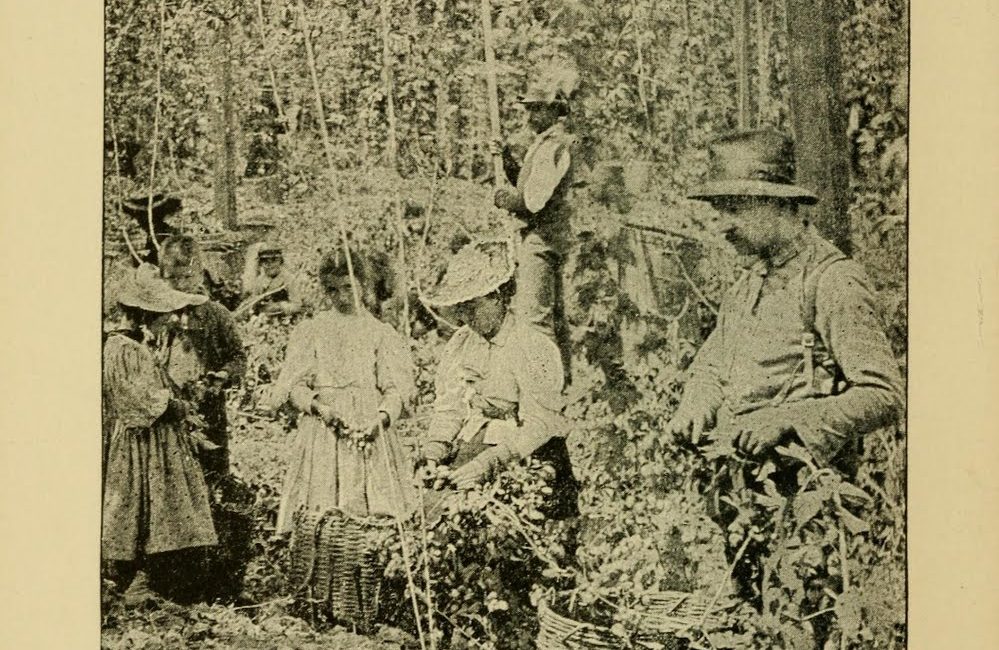
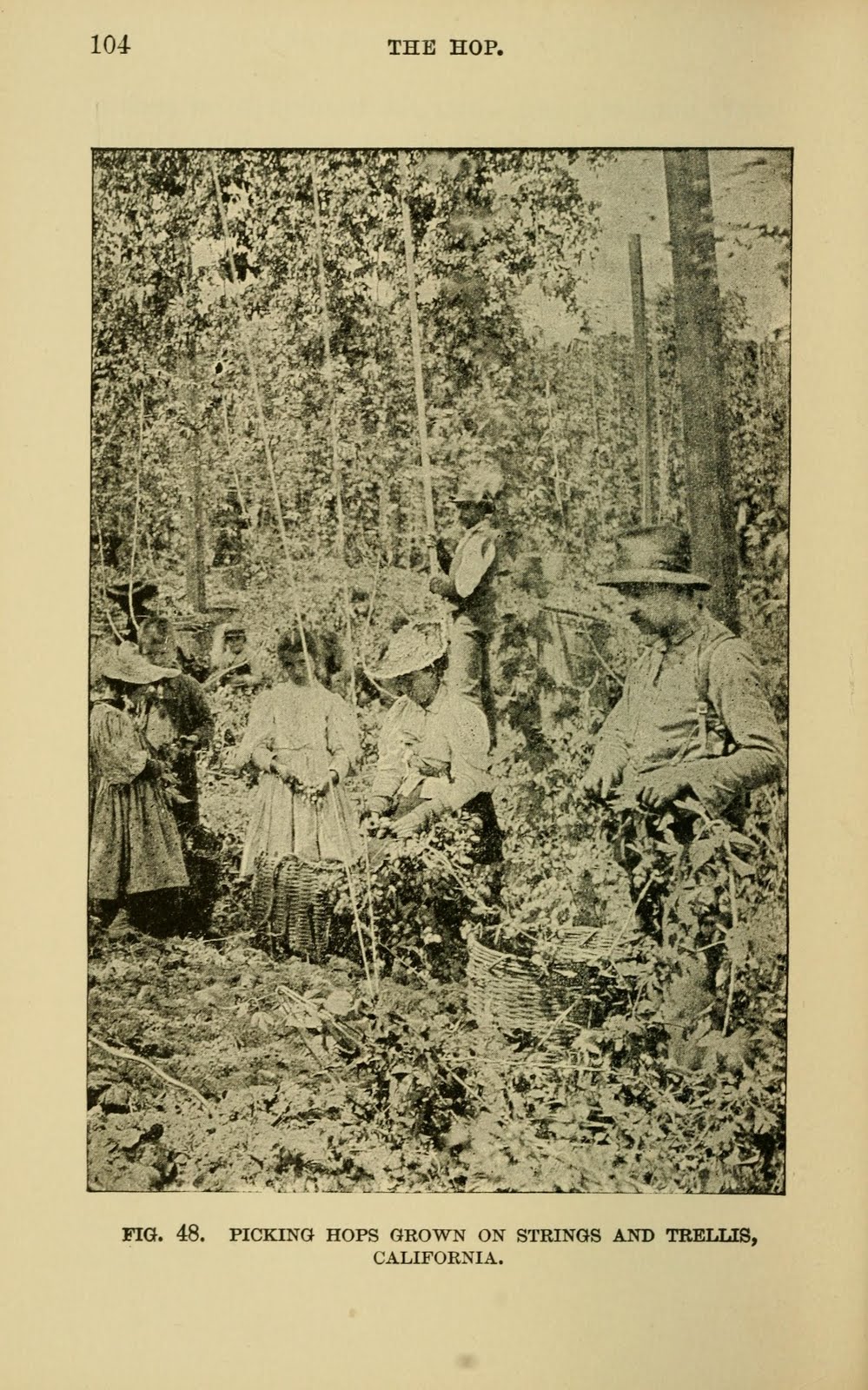
In 1909, Herbert Myrick published: The hop; its culture and cure, marketing and manufacture; a practical handbook on the most approved methods in growing, harvesting, curing and selling hops, and on the use and manufacture of hops. This treatise on hop culture provides a detailed account of the industry as it existed in the early 20th Century. In these pre-Prohibition days, the number of breweries in the United States was comparable to what it is today and the US was a significant contender in the global hops market alongside Great Britain and Germany [1]. Major hop growing states were New York, Washington, California, and Oregon. Just look at these happy hoppers pickin away in California:

View Full Size Image

And why do I love hops so much? Because I am a beer lover and an American and over the past few decades, the American craft beer revolution has carved out a beer style that is serious about its hops [2]. Even the American staple, Miller Lite, has jumped onto the hoppy band wagon touting itself as “triple hops brewed.” Please. Anyone who drinks that swill doesn’t understand the first thing about Humulus lupulus and the magical qualities of the lupulin glands which give real beer, real flavor.

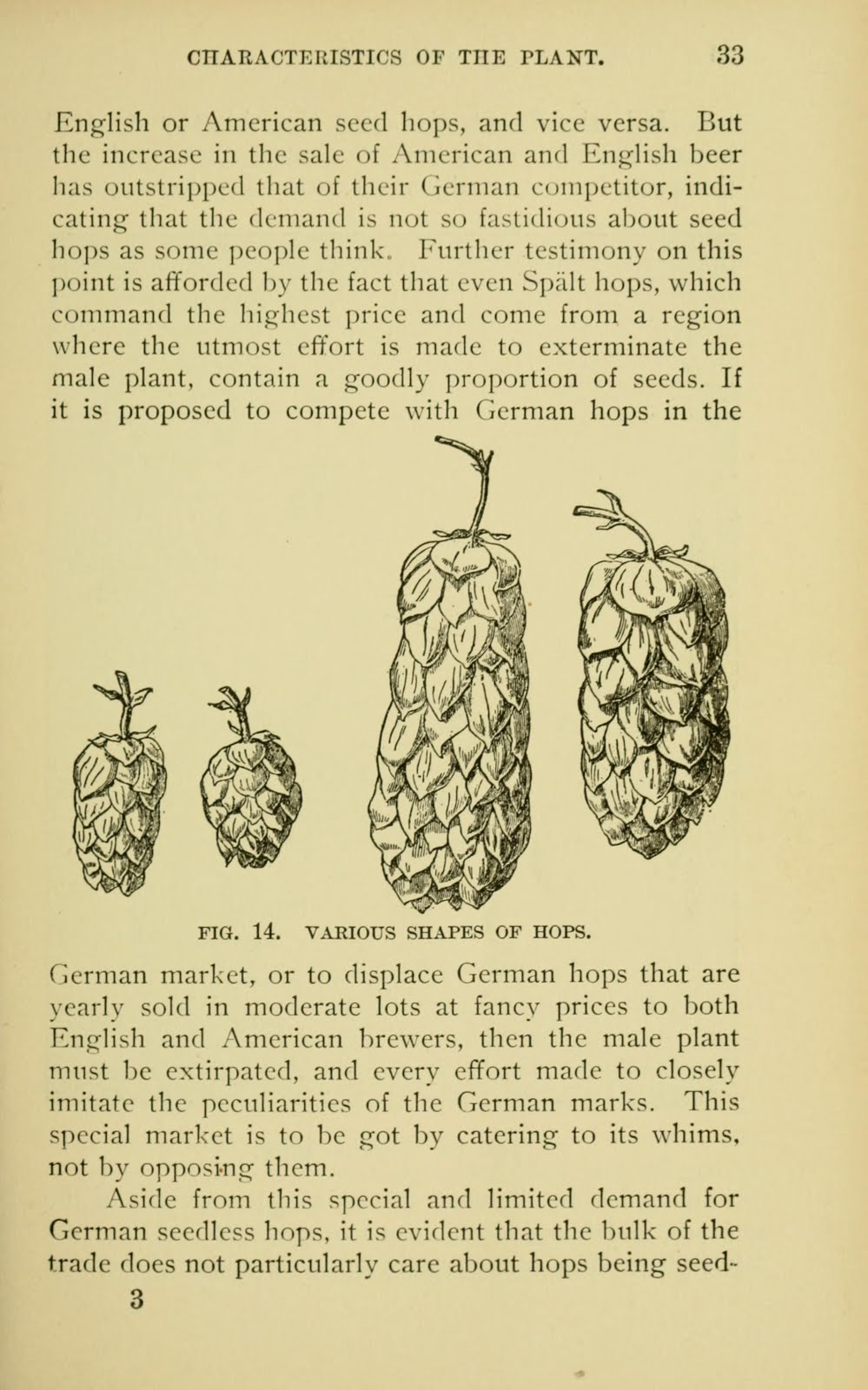
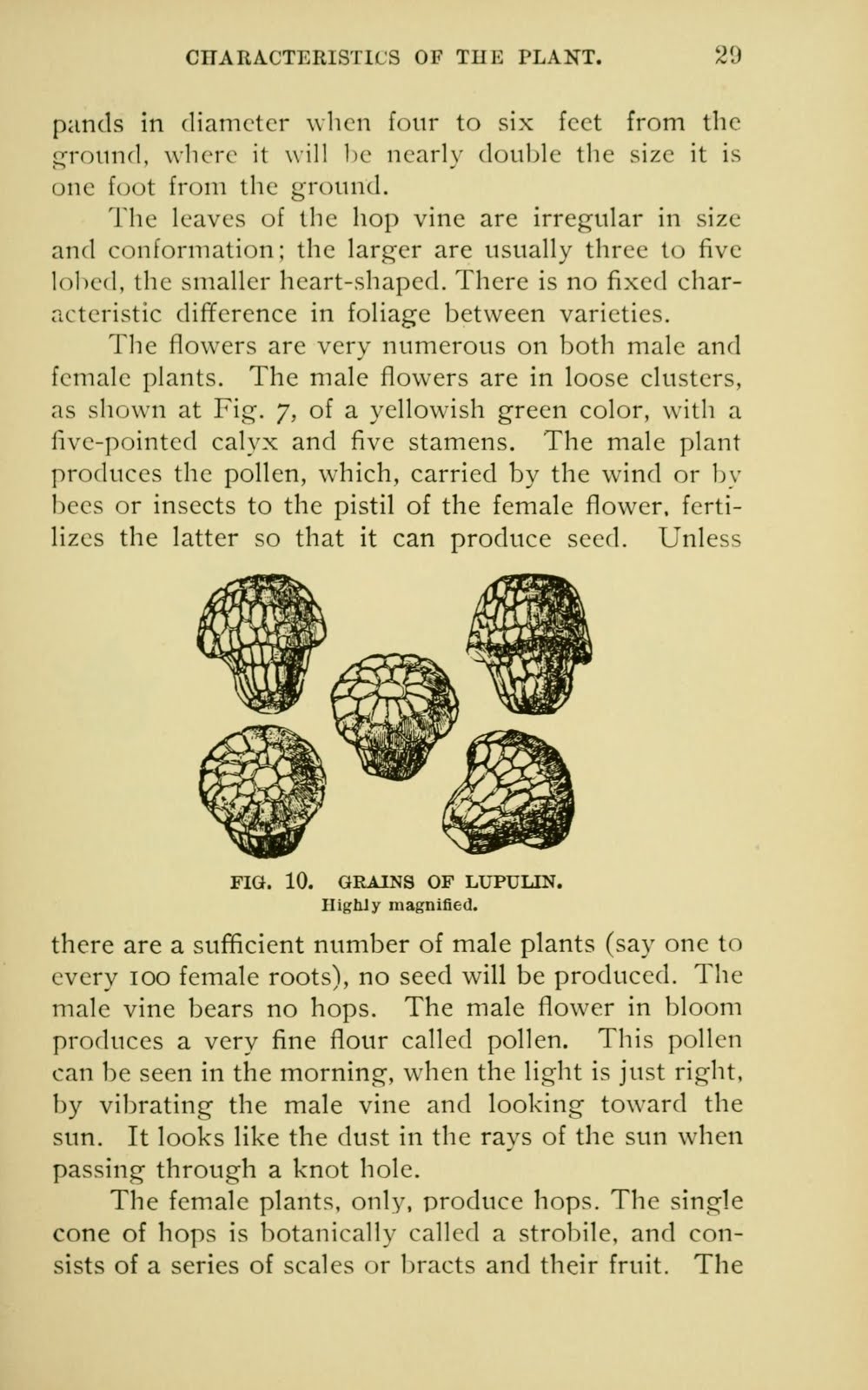
Lupulin glands contain the resins and oils which impart the distinctive flavor, aroma, and bitter qualities associated with beer. Only female plants produce the familiar cone-like hop flowers (aka catkins or strobiles) used in brewing and the lupulin glands are located at the base of the scales, or bracts, that make up the cones. The better the lupulin, the better the quality of the hop. See Myrick’s drawings of hop cone shapes and magnified lupulin “grains”:

View Full Size Image
Pg. 33 Fig. 14
View Full Size Image
Pg. 29 Fig. 10

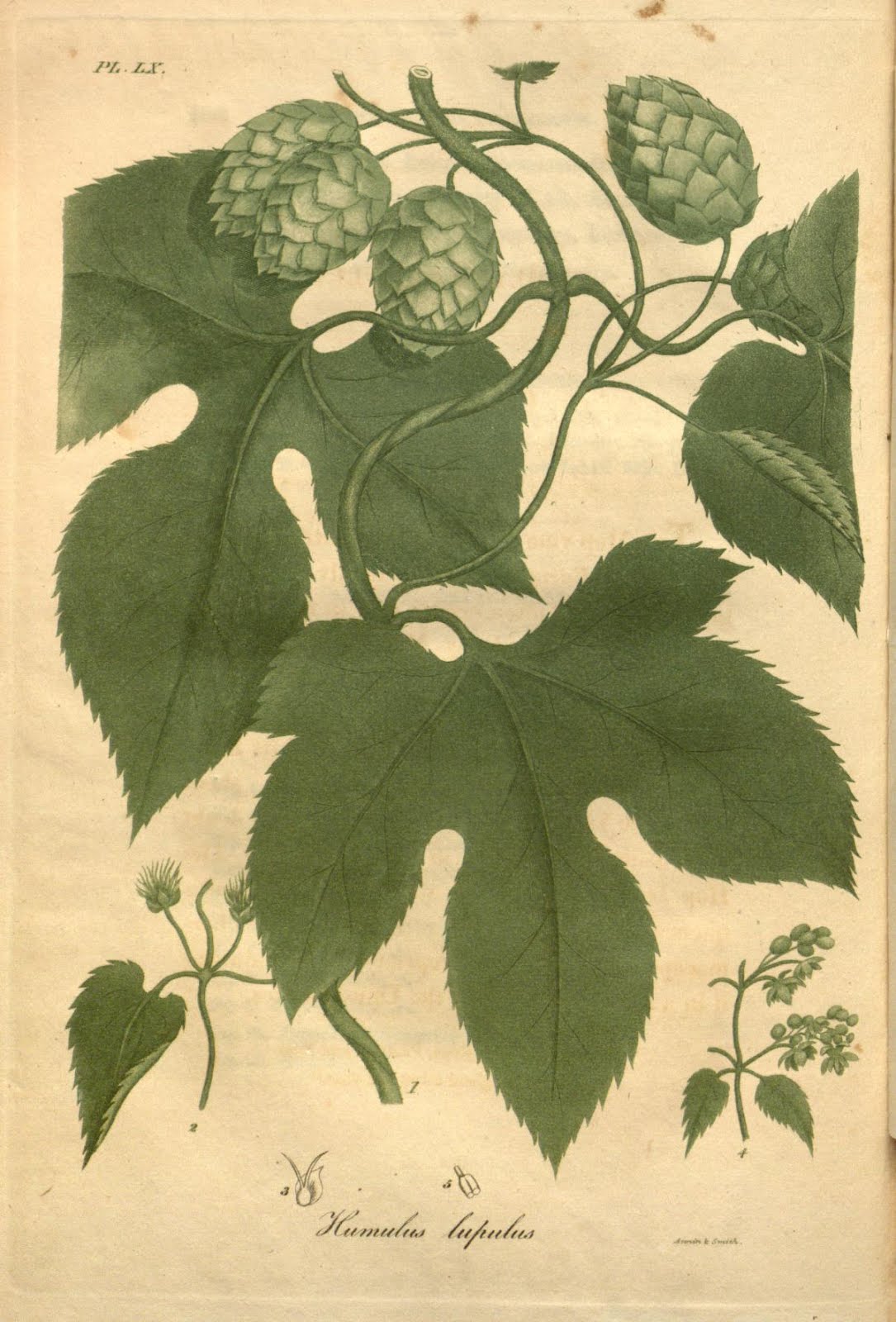
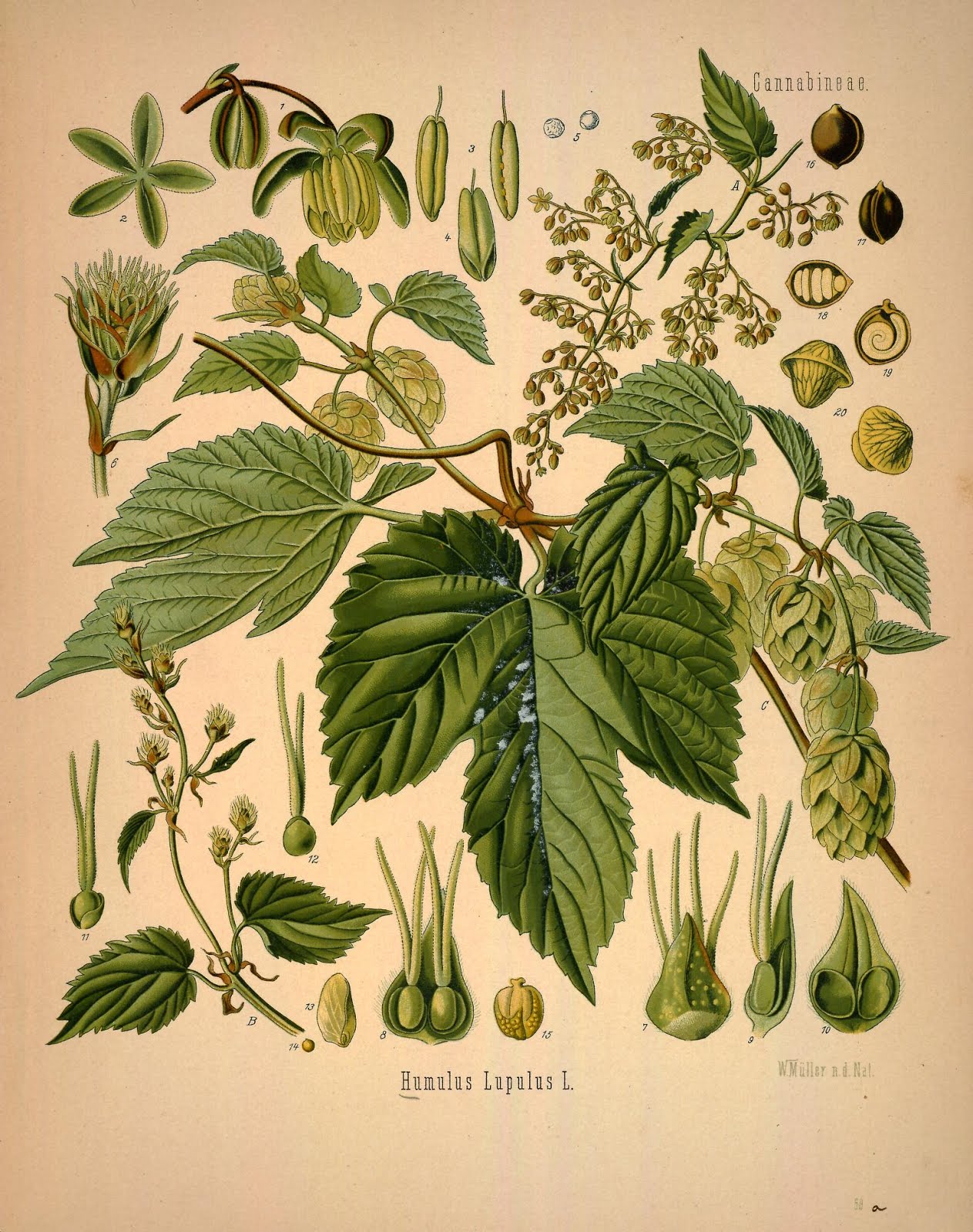
Carl Linnaeus lists Humulus lupulus in his quintessential 1753 Botany tome, Species Plantarum, vol. 2 pg. 1028. H. lupulus is a member of the Cannabaceae family best known for Cannabis sativa or marijuana plant. Unfortunately, there appears to be much debate over the speciation of the Humulus genus. According to The Plant List, H. lupulus is one of 5 species of hop plant with H. cordifolius, H. neomexicanus, H. scandens, and H. yunnanensis [3]. But the predominant species used to impart the flavor balance and antiseptic qualities civilization has come to know and love in its beer is Humulus lupulus.

View Full Size Image
H. lupulus from American Medical Botany vol. 3 (1820)
View Full Size Image
H. lupulus from Köhler’s Medizinal-Pflanzen vol. 1 (1887)

One species, but countless varieties (read cultivars, not taxonomic varieties) of tasty flowers with varying degrees of alpha acidity used for imparting flavor, aroma, and bitterness. Hops can be as mild as the delicate Saaz hops used in Pilsner Urquell at 3-5% avg. alpha acidity, all the way to the American Apollo hop packed with a walloping 16-20% avg. alpha acidity [4].

Myrick details the hop varieties on the market in the early 20th Century, pgs. 35-45. Today’s hop varieties include the old standards such as English Goldings and the German Hallertau, but also include a growing list of premium American hops clearly cultivated for a stronger bitterness character than their European counterparts. Relatively new to the hop variety show are players from Australia, New Zealand, and Japan [5].

It should be noted that hops are a more recent ingredient in beer’s long history since its first recorded evidence of being brewed back in 3500 BCE [6]. Prior to the wide use of hops, beer was flavored with a variety of herbs in an attempt to balance out the sweetness of the fermented grains. There are conflicting reports about the first use of hops in beer making but I found this rather thorough post, “A short history of hops” by Martyn Cornell with more information.

Yet hops are just one of beer’s 4 staple ingredients along with malted barley, yeast, and water. With so many varieties of hops and various impacts on the taste of a beer contributed by its other ingredients, it is impossible to truly capture the full cornucopia of beer flavor possibilities. Just as sophisticated and nuanced as fine wine, craft beer is a careful and creative expression of chemistry, biodiversity, and culture.

I recommend drinking your beer with the seasons. Enjoy yourself a roasty porter in the winter and a crisp pale ale in the summer. But no matter the weather there is always an opportunity to appreciate H. lupulus in your glass. Some of my favorite signature American hoppy brews, like Oskar Blues’ Dale’s Pale Ale and Laguanitas IPA showcase some of the best and most accessible floral citrus flavor with a refreshing pucker tinge that have come to signify American beer.

Care to help me further my “research”? It’s 5 o’clock in the world somewhere. Tell me about your favorite beers!

References

[1] http://www.craftbeer.com/beerology/history-of-beer/craft-beer-today

[2] http://www.craftbeer.com/styles/american-ales

[3] http://www.theplantlist.org/tpl/search?q=Humulus

[4] http://www.usahops.org/graphics/File/HGA%20BCI%20Reports/Variety%20Manual%207-24-12.pdf

[5] http://en.wikipedia.org/wiki/List_of_hop_varieties 

[6] http://www.craftbeer.com/beerology/history-of-beer/early-times

January 11, 2013by [email protected]
BHL News, Blog Reel

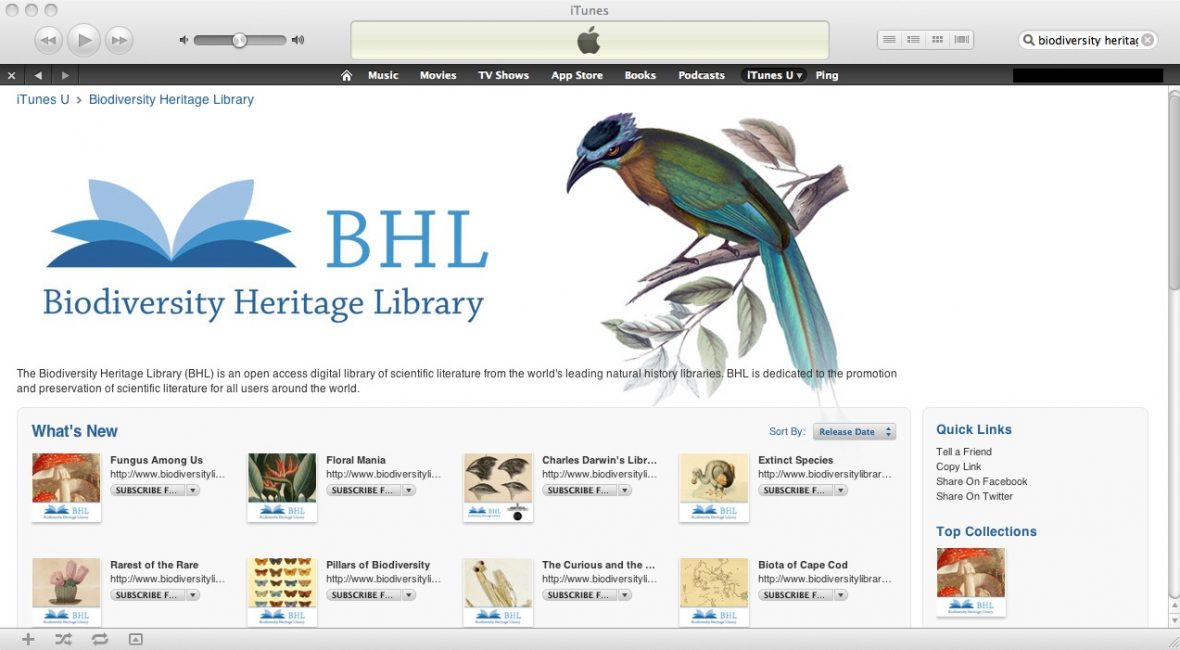
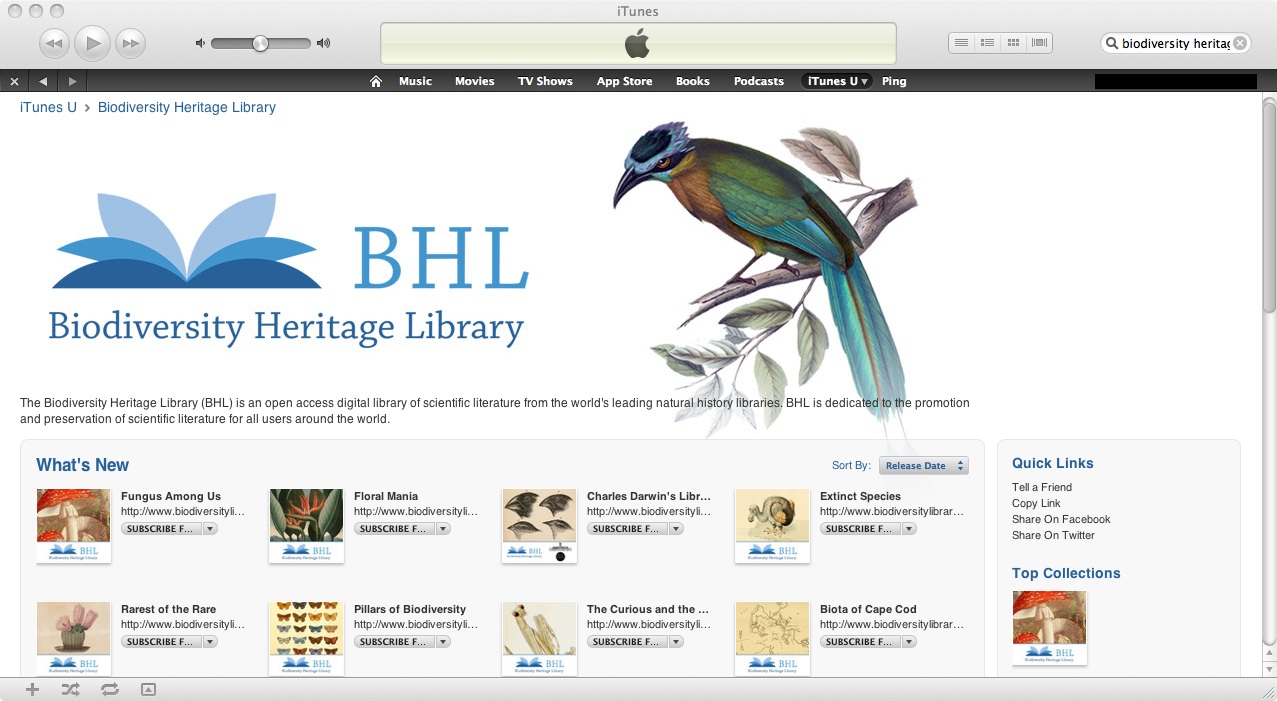
Biodiversity Heritage Library on iTunes U

We are thrilled to announce that selected collections of BHL content are now available on the new iTunes U! Visit our provider page at http://itunes.apple.com/us/institution/biodiversity-heritage-library/id467689660 to download PDFs of BHL books to your desktop, iPad, iPhone or iPod touch.

View Full Size Image

iTunes U is a dedicated area within iTunes that gives users public access to hundreds of thousands of free lectures, video books, podcasts, and courses from learning institutions all over the world. And with the new iTunes U app, users can download content directly onto their iPad, iPhone, and iPod touch. To learn more about how iTunes U works, please see this helpful video on Apple’s website.

Providing BHL content on iTunes U allows us to get our content out to folks in an exciting new way. By positioning BHL content alongside courses from major universities, there is the potential for new audiences to engage with our content in an educational context. And now it is easier than ever to take selected works from the BHL collection on the go with the new iTunes U app.

We are currently offering 8 collections of BHL materials around the following themes:

  • Fungus Among Us
  • Floral Mania
  • Charles Darwin’s Library: Selections*
  • Extinct Species
  • Rarest of the Rare
  • Pillars of Biodiversity
  • Biota of Cape Cod
  • The Curious and the Bizarre
These collections will continue to grow and new collections will be added in the future. Got an idea for a BHL collection you’d like to see in iTunes U? Please leave us a comment below.
*The Charles Darwin’s original library is held within Cambridge University Library
February 7, 2012by [email protected]
BHL News, Blog Reel, Tech Updates

New Article Download Features

We first launched our article download functionality back in January of 2009, giving users the ability to create their own PDF of selected pages from an item in BHL. Since that time, over 79,000 articles have been created by our users. That’s an average of 80 articles created each day (thanks WolframAlpha.com)! Clearly the ability to create your own PDF of selected pages, rather than download the entire book or volume, is a useful service; something we have been working on to make improvements whenever possible.

Today we are releasing new features that will make it easier for you to create your own articles:

  1. We’ve simplified the start page for the PDF Generator to make the process more efficient.
  2. We’ve added a Yes/No option, asking if users are interested in contributing the content they are creating to BHL’s citation repository, CiteBank http://www.citebank.org. CiteBank is a domain-specific repository of citations and content files about biodiversity. It evolved out of a need to access content from the BHL at a more granular level. CiteBank is a work in progress and continues to develop its collection and services. By contributing title, author and subject data to the PDF you are creating, you will allow other users to gain access to this content through CiteBank.
  3. Selecting “Yes” will allow you to enter the title, author and/or keyword data we need to index the content in our citation repository. Selecting “No” will skip over this step, eliminating any opportunity for other users to benefit from the content you’ve already taken the time to create (please say Yes!).
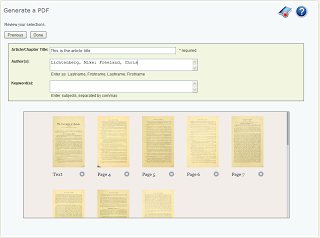
  4. Drawing from the functionality provided by our colleagues on the BHL-Australia web site, http://bhl.ala.org.au, we have added the ability for you to review your page selections before you generate your PDF. You will also have the opportunity to review the title, author and/or keyword data you’ve provided and make any necessary corrections/edits.

View Full Size Image

We surveyed some of our most active PDF creators and received positive feedback about these changes and many good ideas about changes that could be made for the future. As always, we welcome input from our users, especially regarding the changes we make in an effort to improve BHL functionality and services. If you have any questions/comments, please do not hesitate to send us your feedback or comment directly to this post.

September 29, 2011by [email protected]
Page 3 of 4«1234»

Help Support BHL

BHL's existence depends on the financial support of its patrons. Help us keep this free resource alive!

search

About BHL

The Biodiversity Heritage Library (BHL) is the world’s largest open access digital library for biodiversity literature and archives. BHL operates as a worldwide consortium of natural history, botanical, research, and national libraries working together to digitize the natural history literature held in their collections and make it freely available for open access as part of a global “biodiversity community.”

Join Our Mailing List

Sign up to receive the latest news, content highlights, and promotions.

Subscribe Now

Subscribe to Blog via Email

Enter your email address to subscribe to this blog and receive notifications of new posts by email.

Join 319 other subscribers

Subscribe to Blog Via RSS

Subscribe to the blog RSS feed to stay up-to-date on all the latest BHL posts.

Access RSS Feed

Inspiring Discovery through Free Access to Biodiversity Knowledge.

The Biodiversity Heritage Library makes it easier than ever for you to access the information you need to study and explore life on Earth…for free, anytime, anywhere.


64+ Million Pages of
Biodiversity Literature Online.

EXPLORE

Tools and Services
to Transform Research.

EXPLORE

300,000+
Illustrations on Flickr.

EXPLORE

ABOUT | HARMFUL CONTENT | PRIVACY | SITE MAP | TERMS OF USE