While there are many species of plants that flower at night, and among those are many orchids, scientists researching in New Britain just discovered the only orchid species that flowers exclusively at night.
Continue reading
While there are many species of plants that flower at night, and among those are many orchids, scientists researching in New Britain just discovered the only orchid species that flowers exclusively at night.
Today we feature the last 4 of 17 conference attendee interviews from the Life and Literature conference. We hope you’ve enjoyed this opportunity to see what those present at the conference had to say about it and BHL. You can see these and all other interviews on the Life and Literature website.
Now we present the next 3 of 17 conference attendee interviews from the Life and Literature conference. All of these interviews are available on the Life and Literature website.
Continuing with our posting of the Life and Literature conference attendee interviews, below you will find the next 3 out of the 17 interviews, all of which are available on the Life and Literature website.
This week for our book of the week, we feature a title that Charles Darwin himself called “one of the great monuments of science in the 19th century.” The book? Voyage dans l’Amérique Méridionale(1835-47), by Alcide Dessalines d’Orbigny. The work chronicles d’Orbigny’s travels to South America for the Paris Museum from 1826-1833. As a result of this voyage, d’Orbigny returned to Paris with more than 10,000 natural history specimens.
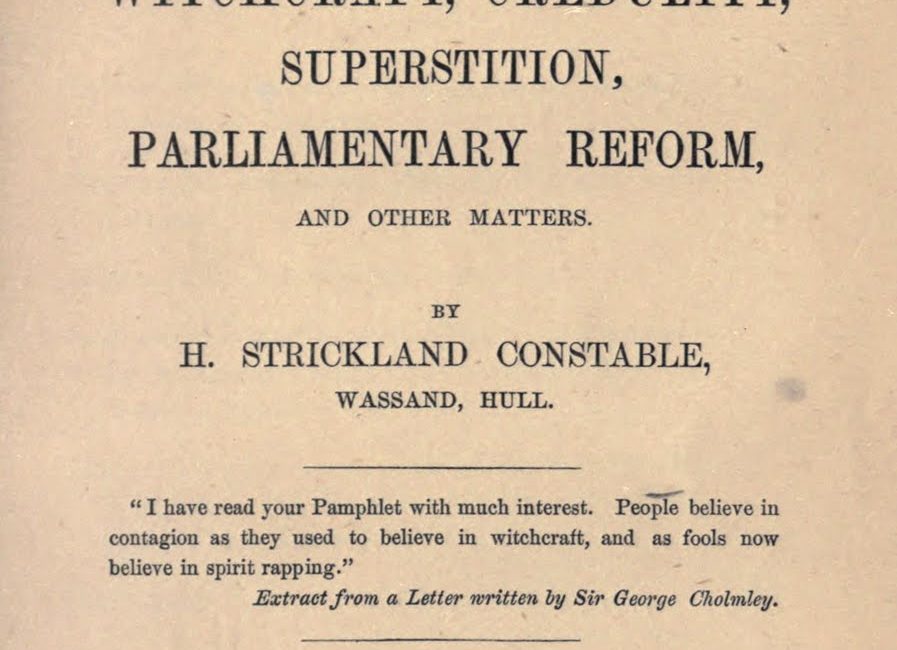
It’s almost Halloween, and to celebrate, we wanted to feature a book that properly connoted the Halloween spirit. What did we find? Observations Suggested by the Cattle Plague, About Witchcraft, Credulity, Superstition, Parliamentary Reform, and Other Matters (1866), by H. Strickland Constable. This book is a delightful, tongue-in-cheek discussion of the unconventional cures for ailments and diseases that were popularly accepted during the time period. You might be asking, why is this kind of a book in BHL? The answer: Cattle!
Several months ago, we introduced a new BHL logo, and to publicize the event, we published a blog post that detailed the various images that BHL Staff Members saw within the abstract lines of our new logo. At the end of the post, we asked our users to share their interpretations of the logo with us as well. Many of you did, and, as promised, we’re sharing those today. We send a special thanks to all of you who shared your thoughts with us, and if our logo inspires other ideas, don’t hesitate to share them by commenting on this blog, sending us a tweet (@BioDivLibrary), or posting on our Facebook wall.
The Biodiversity Heritage Library (BHL) is the world’s largest open access digital library for biodiversity literature and archives. BHL operates as a worldwide consortium of natural history, botanical, research, and national libraries working together to digitize the natural history literature held in their collections and make it freely available for open access as part of a global “biodiversity community.”
Sign up to receive the latest news, content highlights, and promotions.
Subscribe NowSubscribe to the blog RSS feed to stay up-to-date on all the latest BHL posts.
Access RSS Feed