Biodiversity Heritage Library - Program news and collection highlights from BHL
  • Home
  • News
  • Featured Books
    • All Featured Books
    • Book of the Month Series
    • BHL at 20
  • User Stories
  • Campaigns
    • Fossil Stories
    • Garden Stories
    • Monsters Are Real
    • Page Frights
    • Her Natural History
    • Earth Optimism 2020
  • Tech Blog
  • Visit BHL
Home
News
Featured Books
    All Featured Books
    Book of the Month Series
    BHL at 20
User Stories
Campaigns
    Fossil Stories
    Garden Stories
    Monsters Are Real
    Page Frights
    Her Natural History
    Earth Optimism 2020
Tech Blog
Visit BHL
  • Home
  • News
  • Featured Books
    • All Featured Books
    • Book of the Month Series
    • BHL at 20
  • User Stories
  • Campaigns
    • Fossil Stories
    • Garden Stories
    • Monsters Are Real
    • Page Frights
    • Her Natural History
    • Earth Optimism 2020
  • Tech Blog
  • Visit BHL
Biodiversity Heritage Library - Program news and collection highlights from BHL

All posts by michelle.underhill

BHL News, Blog Reel

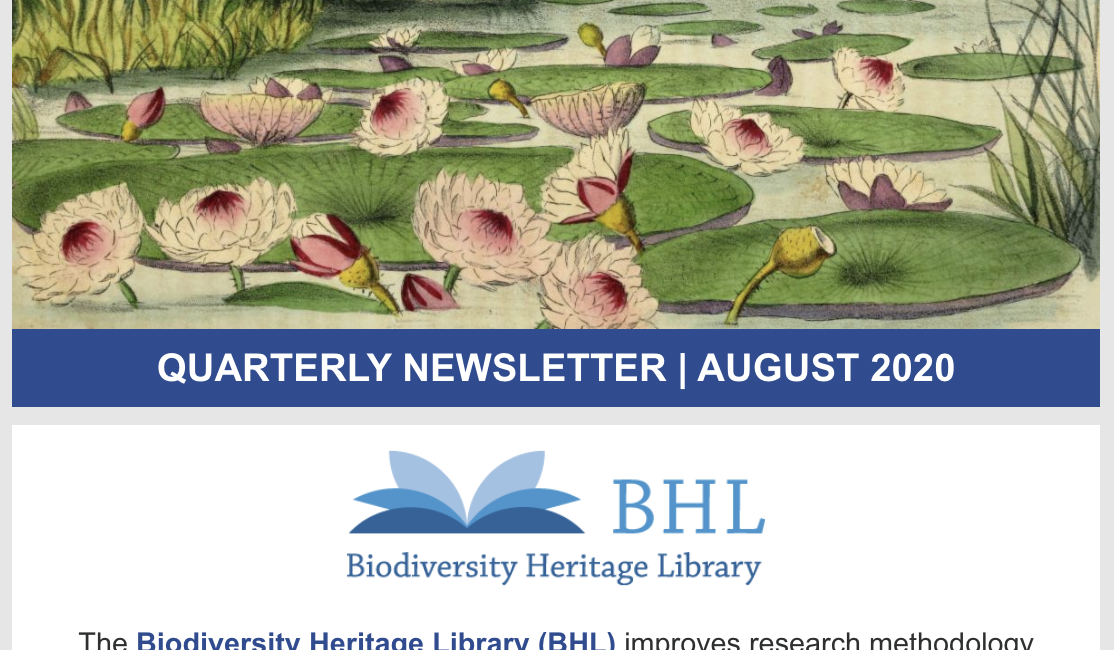
BHL Quarterly Newsletter (August 2020) Now Available!

Read the full blog post

In our latest newsletter, we share some of the ways we have been working to improve the Library over the past few months, such as deploying a new taxonomic name finding tool and making our records available in WorldCat. Additionally, with many of our partners now operating in a telework environment, we have focused on projects to improve our digital collections remotely, such as uploading born digital content, improving collection metadata, and building our image collections on Flickr.

Check out our latest quarterly newsletter to learn more.

Continue reading
August 17, 2020byGrace Costantino
Blog Reel, User Stories

Decoding Palms: Deciphering Plant Mysteries One Publication at a Time

Read the full blog post

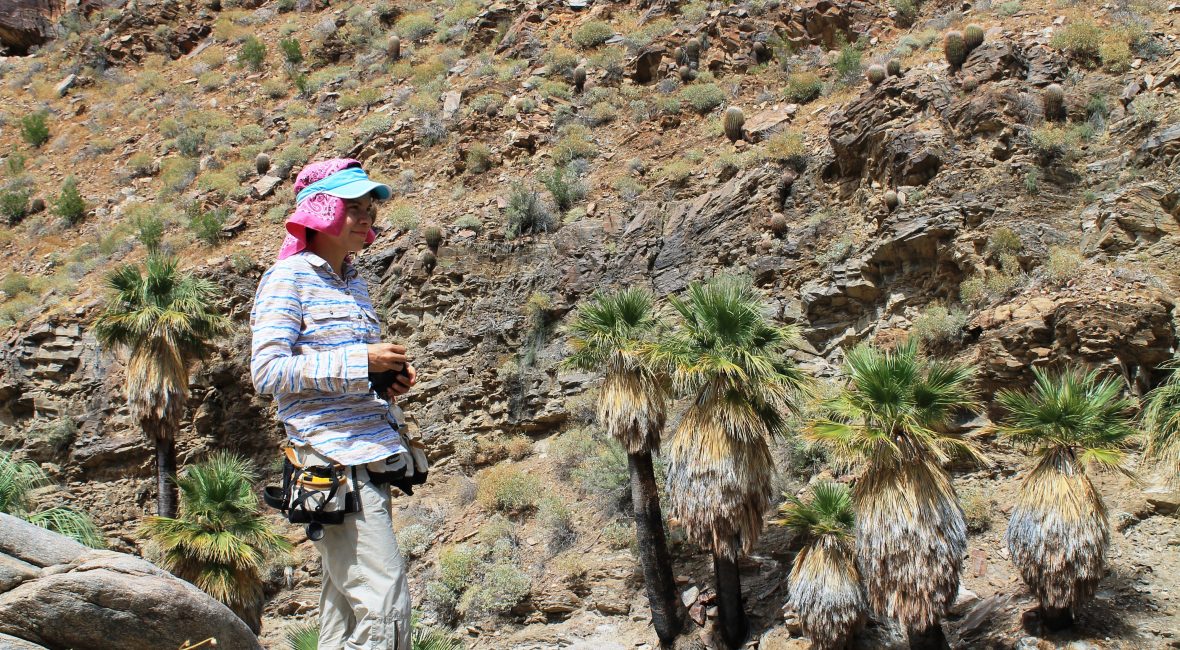
Given their strong association with the area, you might be surprised to learn that there is only one species of palm native to the entire state of California — the California fan palm (Washingtonia filifera), native to the southwestern United States and northwest Mexico. It is one of two recognized species in the genus Washingtonia, the other being the Mexican fan palm (Washingtonia robusta), native to western Sonora and Baja California Sur in northwestern Mexico. Both are among the palm tree species found in L.A., with the Mexican fan palm in particular reaching exceptional heights throughout the city.

Dr. Lorena Villanueva-Almanza, outreach coordinator at the California Botanical Society, specializes in the Washingtonia genus. As a plant taxonomist, her work focuses on understanding plant relationships and the many ways and names under which plants have been described across time — something she is currently engaged in for the Washingtonia. BHL is an invaluable resource for this work.

Continue reading
August 13, 2020byGrace Costantino
Blog Reel, Campaigns, Earth Optimism 2020

A Forest of Knowledge: Richard Evans Schultes and the Rise of Ethnobotany

Read the full blog post

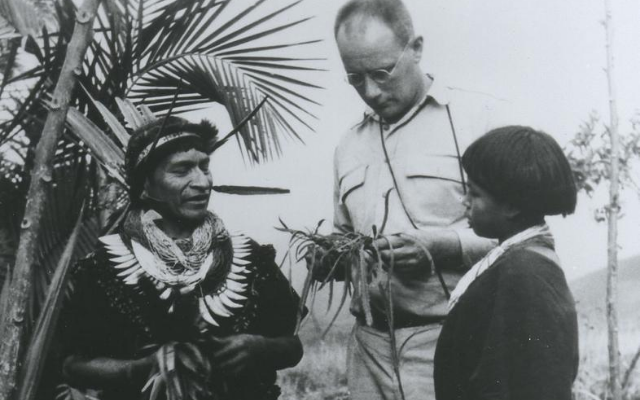
The conservation movement today encompasses more than the physical management of habitat to preserve plants and animals. Richard Evans Schultes (1915-2001) epitomized the modern conservationist by coupling his taxonomic work on plants with research on the botanical knowledge and culture of local people. Known as the “father of ethnobotany” Schultes spent almost fourteen years deep within the rainforests of the Amazon learning from multiple Indigenous tribes about their languages, medicines, and relationships to plants.

Continue reading
August 11, 2020byDiane M. Rielinger
Blog Reel, User Stories

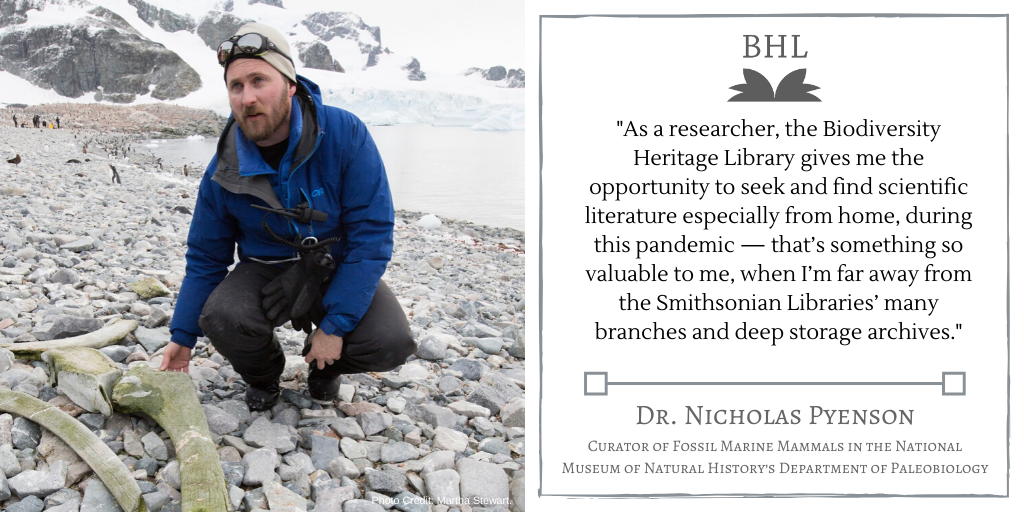
Museum Studies…At Home: BHL Empowers Distance Learning for Students at NYU

Read the full blog post

On 9 March 2020, New York University announced that it was taking classes remote, and less than two weeks later the entire campus, including our beloved Bobst Library, shut down. While I was relieved that the university was taking the pandemic seriously and acting quickly to flatten the curve, the shut-down posed serious challenges not just to teaching but to research for both me and my students.

Continue reading
July 28, 2020byDr. Elaine M Ayers
BHL News, Blog Reel, Tech Updates

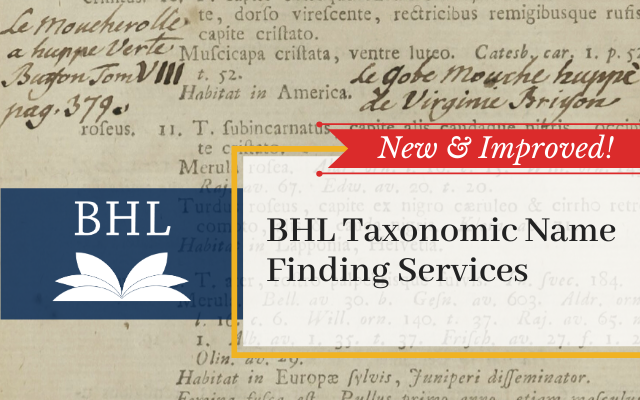
BHL Improves the Speed and Accuracy of its Taxonomic Name Finding Services with gnfinder

Read the full blog post

BHL has deployed a new taxonomic name finding tool to improve the speed and accuracy of identifying names throughout its 58+ million pages.

BHL is now usingGlobal Names Architecture’s (GNA) gnfinder tool to locate taxonomic names in the BHL corpus. Prior to this deployment, BHL’s name finding services were based on an index of scientific names created by GNA developers six years ago by parsing every page in BHL one by one. This took 45 days to accomplish, and the cost of repeating this process made updating or improving the index infeasible.

The gnfinder tool uses fast, scalable programming languages to significantly reduce computational time. Using Open Source applications in Go and Scala, the tool detects candidate scientific names and compares them to millions of scientific name-strings aggregated by GNA for verification. The new process decreases the time needed for name detection and name verification from 35 days to 5 hours and from 7 days to 12 hours, respectively. As a result, the entire BHL corpus can now be indexed in less than a day, compared to the 45 days needed for the previous index. Additionally, by significantly reducing computational time, implementing iterative improvements to the index is now achievable.

Continue reading

July 21, 2020byGrace Costantino
Blog Reel, Campaigns, Earth Optimism 2020, User Stories

Looking Back to Move Forward: How Insights From Historic Literature Can Strengthen Conservation Strategies Today

Read the full blog post

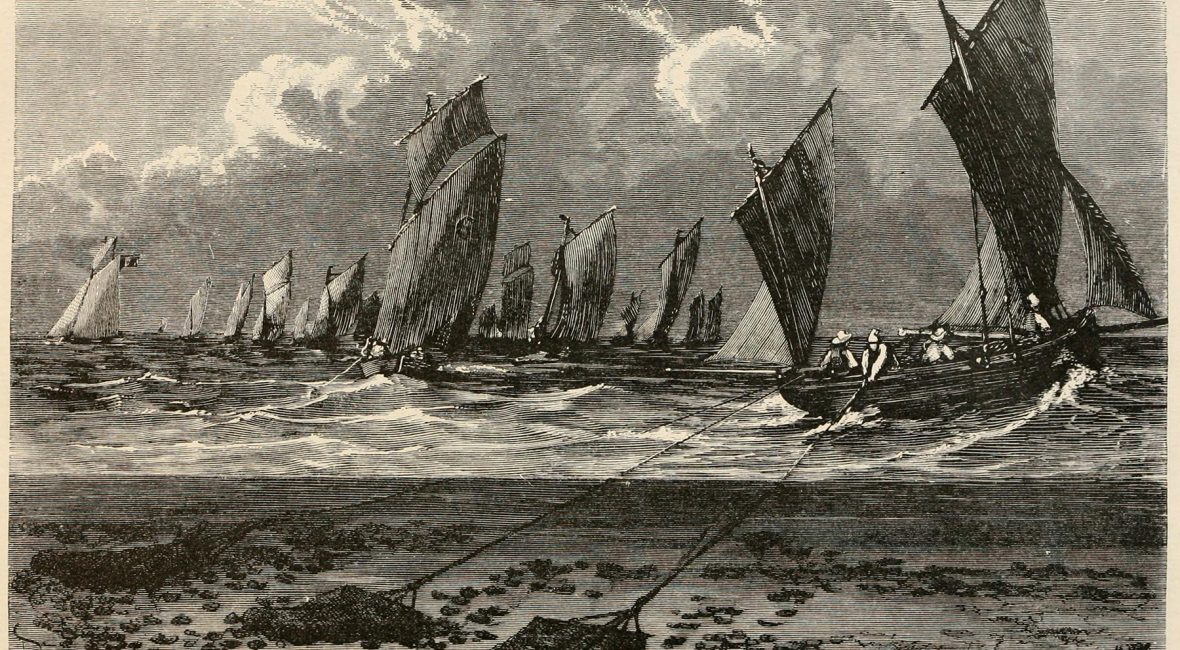
That we live in a changing world should come as no surprise, yet how we measure that change can greatly impact our ability to respond to it. I am a scientist who works in the field of historical ecology — that is the use of non-traditional records to try and understand what ecosystems looked like in the past. My students Kate Henderson and Megan Hazlett and I are based out of the State University of New York College of Environmental Science and Forestry, where we look at how the state’s waters and shores have changed in order to better craft conservation goals. While we work on a variety of ecosystems, they are united by our need to understand where we come from in order to help direct where we are going.

Continue reading
July 9, 2020byDr. Joshua Drew, Megan Hazlett and Kate Henderson
Blog Reel, User Stories

Kate Crooks and the Botanical Society of Canada: How BHL Helped Uncover the Work of a Long-lost Female Botanist

Read the full blog post

“Towards the latter end of November, 1860, a proposal was made to organize a Botanical Society. There being no such Institution in operation in Canada, it was thought that much benefit might result from its establishment.”

So begins the first volume of the Annals of the Botanical Society of Canada, published in 1861 following the Society’s founding in Kingston, Ontario in 1860.

The Society—founded by members of the Queen’s College (now Queen’s University) natural history department—welcomed men and women as equal members and met regularly in Kingston. One hundred people attended the first meeting in January 1861, despite temperatures of –20 Celsius! The following month, 200 people were in attendance, including a young woman named Catharine (Kate) Crooks. She joined the Society on that occasion, along with her brother-in-law, Alexander Logie. Crooks and Logie had travelled from Hamilton, Ontario—southwest of Toronto—and presented the Society with a flora of Hamilton.

Continue reading
May 28, 2020byGrace Costantino and Anna Soper
Page 6 of 47« First...«5678»102030...Last »

Help Support BHL

BHL’s existence depends on the financial support of its patrons. Help us keep this free resource alive!

Donate Now

search

About BHL

The Biodiversity Heritage Library (BHL) is the world’s largest open access digital library for biodiversity literature and archives. BHL operates as a worldwide consortium of natural history, botanical, research, and national libraries working together to digitize the natural history literature held in their collections and make it freely available for open access as part of a global “biodiversity community.”

Follow BHL

  • Bluesky logo
  • Facebook logo
  • Flickr logo
  • Twitter logo

Join Our Mailing List

Sign up to receive the latest news, content highlights, and promotions.

Subscribe Now

Subscribe to Blog Via RSS

Subscribe to the blog RSS feed to stay up-to-date on all the latest BHL posts.

Access RSS Feed

Inspiring Discovery through Free Access to Biodiversity Knowledge.

The Biodiversity Heritage Library makes it easier than ever for you to access the information you need to study and explore life on Earth…for free, anytime, anywhere.

63+ Million Pages of
Biodiversity Literature Online.

EXPLORE

Tools and Services
to Transform Research.

EXPLORE

300,000+
Illustrations on Flickr.

EXPLORE


ABOUT | BLOG AUTHORS | HARMFUL CONTENT | PRIVACY | SITE MAP | TERMS OF USE

Download Adobe Acrobat Reader