Biodiversity Heritage Library - Program news and collection highlights from BHL
  • Home
  • News
  • Featured Books
    • All Featured Books
    • Book of the Month Series
    • BHL at 20
  • User Stories
  • Campaigns
    • Fossil Stories
    • Garden Stories
    • Monsters Are Real
    • Page Frights
    • Her Natural History
    • Earth Optimism 2020
  • Tech Blog
  • Visit BHL
Home
News
Featured Books
    All Featured Books
    Book of the Month Series
    BHL at 20
User Stories
Campaigns
    Fossil Stories
    Garden Stories
    Monsters Are Real
    Page Frights
    Her Natural History
    Earth Optimism 2020
Tech Blog
Visit BHL
  • Home
  • News
  • Featured Books
    • All Featured Books
    • Book of the Month Series
    • BHL at 20
  • User Stories
  • Campaigns
    • Fossil Stories
    • Garden Stories
    • Monsters Are Real
    • Page Frights
    • Her Natural History
    • Earth Optimism 2020
  • Tech Blog
  • Visit BHL
Biodiversity Heritage Library - Program news and collection highlights from BHL
Blog Reel, Campaigns, Featured Books

Once There Were Billions: Carolina Parakeet

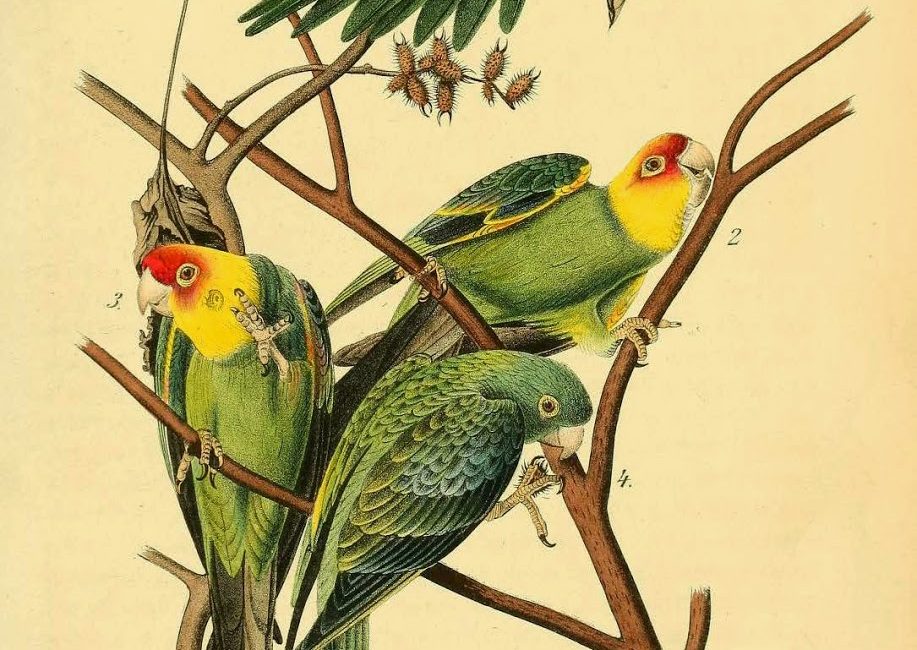
At this time of year, those of us in the U.S. often find our eyes turned skyward to admire a brilliant array of colors lighting up the night sky in celebration of America’s independence.  Up until about a hundred years ago, a colorful display of another kind filled the North American skies, and not just on the fourth of July. Jewel-colored Carolina Parakeets (Conuropsis carolinensis) traveled in huge, noisy flocks from southern New York and Wisconsin to the Gulf of Mexico, favoring old forests along rivers. Although they looked tropical, Carolina Parakeets didn’t migrate south in the winter but weathered the cold.

View Full Size Image
 

The Birds of America: From Drawings Made
in the United States and Their Territories
John James Audubon
New York: J.B. Chevalier, 1840–44

http://biodiversitylibrary.org/item/125069#page/
447/mode/1up

As their forests were cut to make space for farms, the parrots were shot for feeding on crops and orchards. Trappers captured them to sell as pets, and hunters sold them as colorful decorations. Hat makers and clothiers prized the Carolina Parakeet’s brilliant plumage, using feathers or entire birds to decorate ladies’ hair, hats, and gowns. In 1886 alone, the hat trade claimed an estimated 5 million birds of various species—victims of fashion. By 1904, they were gone in the wild. The last Carolina Parakeet died in captivity in 1918.

While we can’t bring back the species and subspecies that have gone extinct, we can preserve and share our knowledge of them to help avoid future extinctions. The plight of the Carolina Parakeet is highlighted in Once There Were Billions: Vanished Birds of North America, a new exhibit at the National Museum of Natural History (NMNH).  Co-curated by BHL, Smithsonian Libraries, and NMNH, the exhibit includes illustrations from BHL and specimens from NMNH.  Research on extinct species—and extinction itself—depends on the taxonomic literature and natural history specimen collections to understand the morphology, distribution, and behaviors of lost species. Having access to this information can help scientists understand not only how different factors led to one species’ extinction but also how those same factors may impact other species.

The BHL currently provides access to over 44 million pages and over 91,000 images and is changing the face of research methodology. Scientists around the world are using BHL to identify and classify species, facilitate further scientific research, and support conservation efforts to prevent extinctions.  The ongoing growth of BHL is supported in part by our dedicated patrons whose gifts support the digitization of additional literature, and technical development of the program, and improvement of data curation.  To learn more about how your donation supports the continued growth of BHL, please visit http://archive.constantcontact.com/fs181/1103622715135/archive/1115465985290.html.  We hope you’ll consider making a contribution today!

July 3, 2014by sayeedmd
BHL News, Blog Reel, Featured Books

Nine Smithsonian Field Books Now in BHL!

The Biodiversity Heritage Library is pleased to announce that nine of the Smithsonian field books that were cataloged and imaged as part of the Field Book Project are now available through the BHL portal!

With over 43 million pages of the published biodiversity literature, BHL has greatly improved the efficiency of access to the published literature–much of which was previously available in limited physical copies in but a few select libraries in the developed world.  As unique primary source documents, field books present similar challenges and we are very pleased to provide another layer of access to these important materials.

Scientists’ field notes are, in many ways, the precursors to the published literature.  Journals (the unpublished kind), diaries, collecting lists, photo albums, and other primary source documentation of collecting events can enhance not only the scientific understanding of what has already been published but can also provide insights into the historical, sometimes even personal, context behind the research.

The Field Book Project has cataloged over 7,000 Smithsonian field books and imaged over 400 of those which are available through the Smithsonian Collection Search Center along with additional contextual information in the form of collection records and authority files.  The nine field books chosen as the first testbed set for ingest into BHL include item records and page scans for seven diaries created by David Crockett Graham and two photo albums from the Harriman Alaska Expedition (1899) from the collections of the Smithsonian Institution Archives.  Each item not only tells its own fascinating story of exploration but also provides information and insights that complement materials already in BHL.

In addition to making these available alongside the related literature in BHL, we are especially pleased to see these notes joining the 62 other field notes that are already in BHL thanks to the Connecting Content project.  The original vision for the Field Book Project was to create one online location for field books, regardless of physical location. Now you can view the Smithsonian field notes alongside those from the California Academy of Science, Missouri Botanical Garden, New York Botanical Garden, Harvard Botany Libraries and Museum of Comparative Zoology.  And with the crowdsourcing transcription efforts underway both at the Smithsonian Transcription Center and kicking off with BHL’s Purposeful Gaming project earlier this month, we’re looking forward to seeing more great things come out of our continued partnership with the Field Book Project!

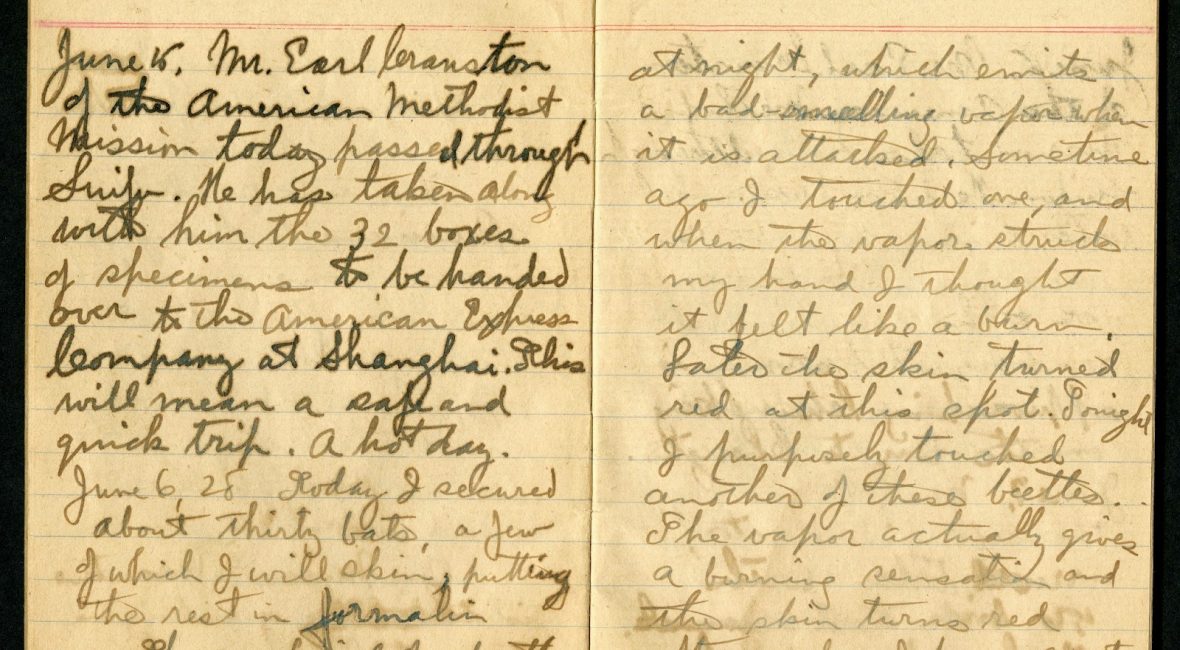
David Crockett Graham (1884-1961) was an American missionary and collector working in China over the period of 1911-1948.  In the U.S., Graham had studied theology, anthropology, and ethonology.  As part of the Proceedings of the United States National Museum (v.80, 1932), BHL has made available an article authored, detailing the architectural structures, carvings and artifacts he observed in the artificial caves in Szechuan Province.  But his work was not limited to cultural and anthropological inquiry.  Graham also spent summers collecting biological specimens for the U.S. National Museum (now the National Museum of Natural History), receiving the honorary title of Collaborator in Biology in 1932. His diaries from those summers provide a fascinating perspective onto his experiences while collecting, from the logistical aspects of organizing a collecting team and their supplies to the impact of heavy rains and extreme heat on their travels.  His natural curiosity is evident as he pesters a stinky beetle (June 6, 1928) and marvels at how, after discovering a large number of moths in a nearby bush, they do not come to his lantern at night (June 14, 1928).

View Full Size Image
Entry from June 6, 1928 of David Crockett Graham’s
Diary no. III., May 27, 1928 – October 12, 1928

The Harriman Alaska Expedition (1899) is the fascinating–and true–story of a railroad tycoon’s family vacation and scientific expedition rolled into one.  After his physician recommended a vacation to combat exhaustion, Edward Henry Harriman, President of the Union Pacific Railroad, began planning a big game hunt for his family.  Exhausted as he may have been, though, he remained ambitious even in rest.  By the time they set sail for Alaska on May 31, 1899, the family vacation transformed into a full-scale exploring expedition.  The list of participants reads like a roll call of renowned scientists, naturalists, and artists of the time, many of whom whose names are still well-known today: Clinton Hart Merriam, Frederick Vernon Coville, Thomas Kearney, William Healey Dall, Robert Ridgway, and over a hundred others.

View Full Size Image
Fairweather Range –Seen across Glacier Bay from Sunday Island
Souvenir of the Harriman Alaska Expedition, May-August, 1899,
volume 1, New York to Cook Inlet

Not surprisingly, the expedition resulted in several publications, including the Harriman Alaska Series a multi-volume report on Alaska’s geography and biodiversity, including insects, crustaceans, and invertebrates.  The two photo albums were assembled as souvenirs for expedition participants and include hundreds of photographs, the bulk of which show Alaskan landscapes and glaciers as they appeared in 1899. While some photographs from the expedition were also included in the reports and other publications, as a whole, these albums help to fill in our contextual understanding of the place and time in which Alaska’s biodiversity was being recorded by the Harriman Expedition.  They also offer a glimpse into the human experience of the expedition, from a family outing on Lowe Inlet to a fire drill aboard the George W. Elder.

View Full Size Image
Fire Drill
Souvenir of the Harriman Alaska Expedition, May-August, 1899,
volume 1, New York to Cook Inlet

We hope you enjoy taking a look through the first of the Smithsonian field notes to be added to BHL. Let us know what you discover by leaving us a comment!

June 12, 2014by sayeedmd
BHL News, Blog Reel

Biodiversity Heritage Library Adds University of Illinois at Urbana-Champaign as New Member

View Full Size Image
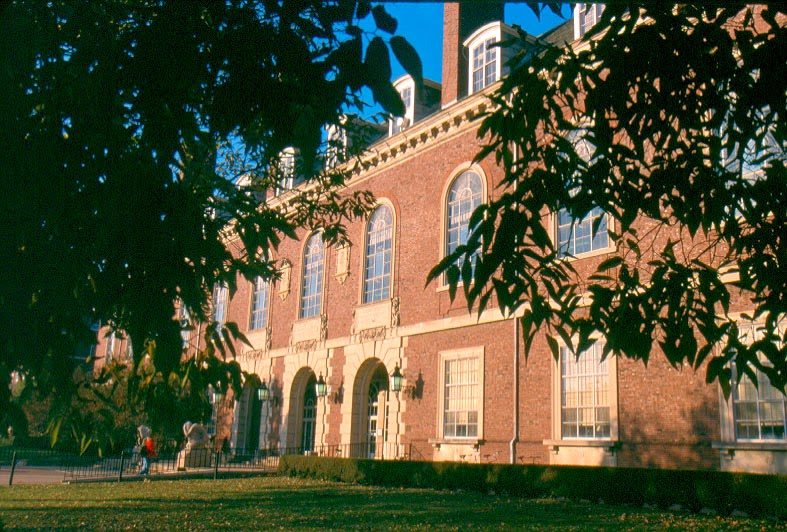
University of Illinois at Urbana-Champaign, Main Library

The Biodiversity Heritage Library, headquartered at the Smithsonian Libraries, welcomes the University of Illinois at Urbana-Champaign as a new member. The 16th member of the BHL consortium, the University of Illinois at Urbana-Champaign will help identify and digitize historical science literature from its collections and add these to the BHL’s online holdings, where all materials may be accessed free by the public.

“The Biodiversity Heritage Library is the preeminent global repository for historic science literature,” said Martin Kalfatovic, BHL program director and associate director for digital services at the Smithsonian Libraries. “The University of Illinois at Urbana-Champaign has partnered from the start with the BHL and BHL members for many years and we are excited that we can formalize our partnership by welcoming them as our 16th member.”

The University of Illinois at Urbana-Champaign Library is a campus-wide network of libraries serving programs of learning and research in many disciplines and is the largest public university research library in the country with more than 13 million volumes. The Biology Library collection alone contains over 137,000 volumes and there are many more in related departmental libraries on campus, such as the agriculture, natural history, and rare book and manuscript collections. For more information about the University Library, please visit library.illinois.edu.

The current members of the BHL include: the American Museum of Natural History (New York, N.Y.), the California Academy of Sciences (San Francisco, Calif.), Cornell University (Ithaca, N.Y.), the Botany Libraries (Harvard University), the Ernst Mayr Library at the Museum of Comparative Zoology (Cambridge, Mass.), the Library of Congress (Washington, D.C.), the Marine Biological Laboratory of Woods Hole Oceanographic Institution (Woods Hole, Mass.), the Missouri Botanical Garden (St. Louis, Mo.), the National Library Board (Singapore), the Natural History Museum (London), the Kew York Botanical Garden (Bronx, N.Y.), the Royal Botanic Gardens (Kew, United Kingdom), the Smithsonian Institution (Washington, D.C.) and the United States Geological Survey. Additionally, three institutions participate at the affiliate level: the Field Museum of Natural History (Chicago, Ill.), the American of Natural Sciences of Drexel University (Philadelphia, Pa.) and the Natural History Museum, Los Angeles County (Los Angeles, Calif.).

Beyond the English-language efforts, BHL-Europe includes 28 institutions that are working to digitize European literature. In addition, China, Australia, Egypt, Brazil and Africa have created national or regional nodes that may be accessed through the BHL portal.

June 10, 2014by sayeedmd
BHL News, Blog Reel

BHL’s Latest News!

View Full Size Image
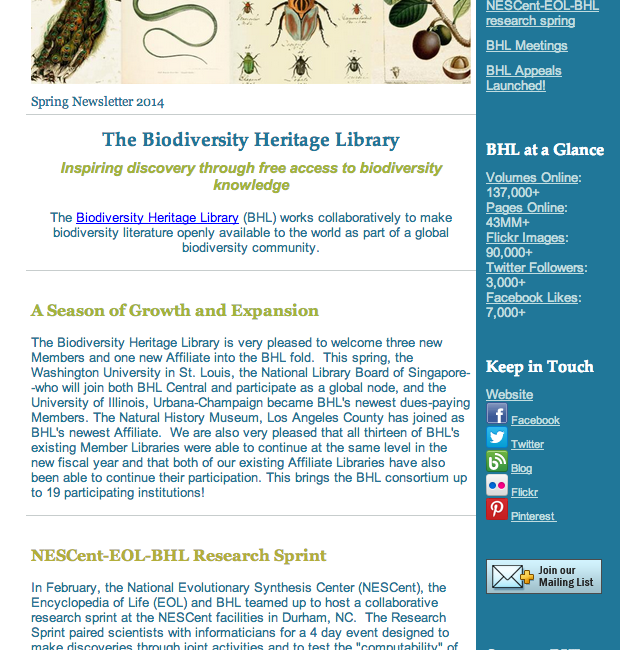
BHL Spring 2014 Newsletter

The last several months have been an intense and exciting period of growth and expansion for BHL. Not only has the steady growth of collections continued but BHL as an organization has been growing as well. In the first two quarters of fiscal year 2014, three new Members and one new Affiliate joined BHL-Central. BHL’s global presence is expanding as well with one of those new Members also participating as a global node.

To learn more about each of the new BHL Members and Affiliate and what BHL has been up to across the globe, check out BHL’s latest newsletter and quarterly report. Covering both Quarter 1 and Quarter 2 of Fiscal Year 2014, the latest report also includes updates on BHL meetings and collaborations as well as collections, usage, and financial updates.

Enjoy!


View Full Size Image
BHL Quarterly Report, Q1 and Q2, FY2014
May 15, 2014by sayeedmd
BHL News, Blog Reel

Biodiversity Heritage Library Adds Washington University as New Member

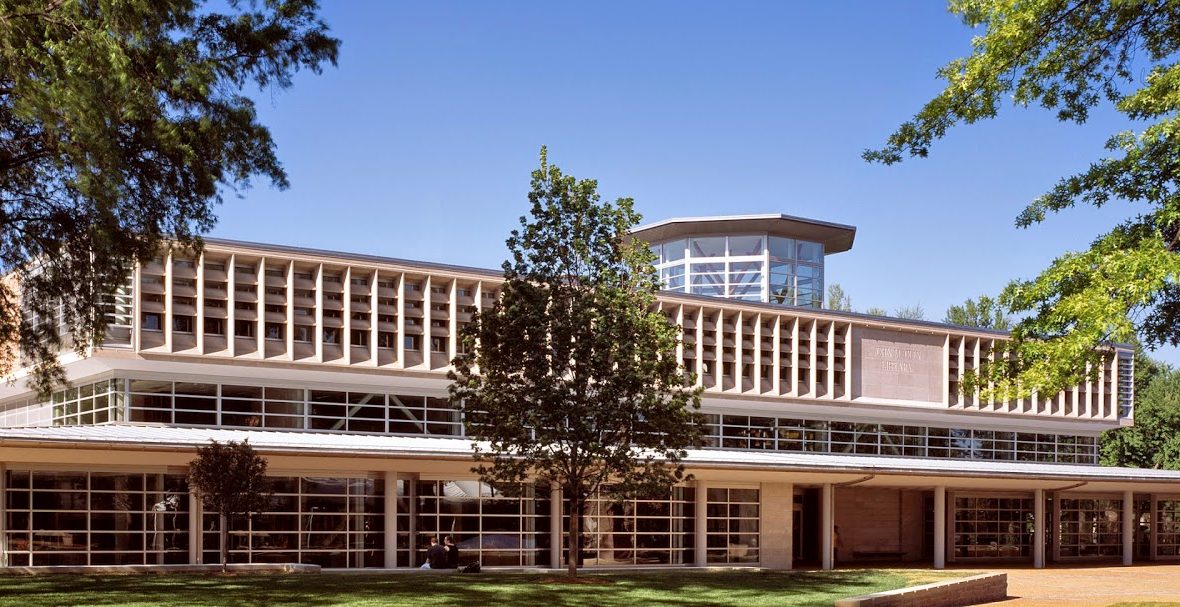
The Biodiversity Heritage Library (BHL), headquartered at the Smithsonian Libraries, welcomes Washington University Libraries (St. Louis, Missouri) as a new member. The 14th member of the BHL consortium, Washington University Libraries will help identify and digitize historical science literature from its collections and add these to the BHL’s online holdings, where all materials may be accessed free by the public.

View Full Size Image
Olin Library at Washington University in St. Louis.
Photographer and copyright holder: Robert Benson.

Founded in 1853, Washington University in St. Louis is a medium-sized independent research institution widely recognized for its teaching, research, patient care and service to society. Washington University operates seven academic divisions (art and architecture, arts and sciences, business, engineering, law, medicine, and social work and public health), served by 12 libraries whose print holdings number nearly 4.5 million, in addition to millions more books and journals available electronically. For more information about Washington University Libraries, visit www.library.wustl.edu.

“The Biodiversity Heritage Library is the preeminent global repository for historic science literature,” said Martin Kalfatovic, BHL program director and associate director for digital services at the Smithsonian Libraries. “We are excited that the Washington University Libraries are joining us in building a vast information center that provides resources to researchers, students and anyone interested in biodiversity.”

The current members of the BHL include: the American Museum of Natural History (New York, N.Y.), the California Academy of Sciences (San Francisco, Calif.), Cornell University (Ithaca, N.Y.), the Botany Libraries (Harvard University), the Ernst Mayr Library at the Museum of Comparative Zoology (Cambridge, Mass.), the Library of Congress (Washington, D.C.), the Marine Biological Laboratory of Woods Hole Oceanographic Institution (Woods Hole, Mass.), the Missouri Botanical Garden (St. Louis, Mo.), the Natural History Museum (London), the Kew York Botanical Garden (Bronx, N.Y.), the Royal Botanic Gardens (Kew, United Kingdom), the Smithsonian Institution (Washington, D.C.), and the United States Geological Survey. Additionally, the three institutions participate at the affiliate level: the Field Museum of Natural History (Chicago, Ill.), American of Natural Sciences of Drexel University (Philadelphia, Pa.) and the Natural History Museum, Los Angeles County. Beyond the English-language efforts, BHL-Europe was founded and includes 28 institutions that are working to digitize European literature. In addition, China, Australia, Brazil, and Africa have created national or regional nodes that may be accessed through the BHL portal.


April 24, 2014by sayeedmd
BHL News, Blog Reel

BHL and EOL team up for NESCent Research Sprint

View Full Size Image
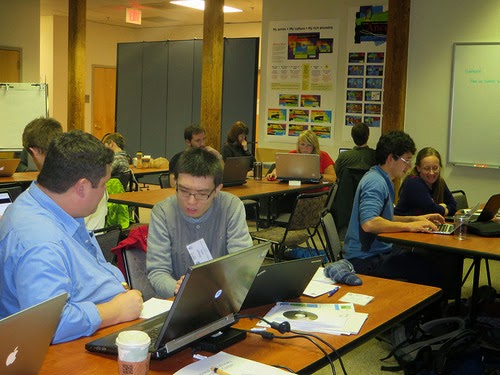
Research teams at the NESCent-EOL-BHL Research Sprint.
Photograph by Cyndy Parr.

In early February, the National Evolutionary Synthesis Center (NESCent) hosted the EOL-BHL Research Sprint. NESCent, based in Durham, NC, is a non-profit science center supporting research in the evolutionary sciences. NESCent emphasizes an interdisciplinary approach to research, and so the idea behind the Sprint was to put together teams of programmers and life scientists to expose each other to questions and ways of thinking that they might not necessarily consider in their normal work. Informaticians could bring programming and data skills to bear on questions that scientists may not have had the programming expertise to implement effectively, using BHL‘s and EOL‘s now considerable amount of freely available data. Scientists could identify questions based on the data to programmers that they might not have considered. Plus, the meeting was useful in identifying how well researchers could identify and retrieve the data they needed from the BHL text corpus. To this end, William Ulate, BHL Technical Director and John Mignault, a member of the BHL Technical Advisory Group attended the meeting.

The teams covered a wide variety of interesting topics from studying the color of butterflies based on extracting color information from images to studying changes in ontologies over time based on an analysis of the text in the BHL corpus (see http://bit.ly/1dnnhG0). Over the course of the sprint, the teams began data mining EOL and BHL for their data sets and started preliminary analyses of their data. Each day, groups met at the end of the day to share experiences and progress. By the end of the sprint, each of the teams were sharing plans for further collaboration and completing their analyses. Plans for publication and grants proposals based on sprint ideas were also discussed. In an open, collaborative spirit, members shared the materials freely via Google Drive.

We learned some interesting things about the way people approach the BHL data set. Many of the teams on the first day wanted to use the BHL application programming interface for bulk data retrieval. Several team members asked us how they could download “all of the text.” When we told them that this was impractical and would result in a great deal of unwanted data, they asked how they could retrieve data based on, for example taxa – I want to harvest all pages with names from this taxon (Chordata) or this common name (Vertebrate). Others wanted data restricted by location. We tried to assist them given their specific needs rather than their initial request for the whole data set (see http://bit.ly/1rvbut3). This raised useful questions as to how we can provide the data to researchers need in the ways they need it – should we offer ways to request bulk data downloads based on a specific set of criteria? Should we alter the API (http://www.biodiversitylibrary.org/api2/docs/docs.html) in order to make it possible to retrieve more closely focused data sets? As BHL becomes better known as a source of “Big Data” for the biodiversity community, we will need to evolve our access to that data in order to better meet the needs of our users.

We were also surprised to discover the popularity of the R statistical programming language among scientists. Many team members used R in their work, to such an extent that a short R group discussion was scheduled for one morning during the meeting. Scott Chamberlain of Simon Fraser University has created an R interface to the BHL API, available at http://bit.ly/1oAFKjI. It is always good to see BHL and its data used in new and interesting ways. Follow up further results from this Sprint at: http://blog.eol.org.

The Sprint was a valuable meeting for BHL: it exposed our valuable data to more scientists and informaticians, and it gave BHL staff useful feedback on the uses of the BHL data corpus and its value to researchers. We would like to thank EOL, NEScent and the Richard Lounsbery Foundation for the opportunity and their collaboration in making this event a success.

March 27, 2014by sayeedmd
BHL News, Blog Reel

5th Global BHL Meeting, Lorne, Australia


View Full Size Image
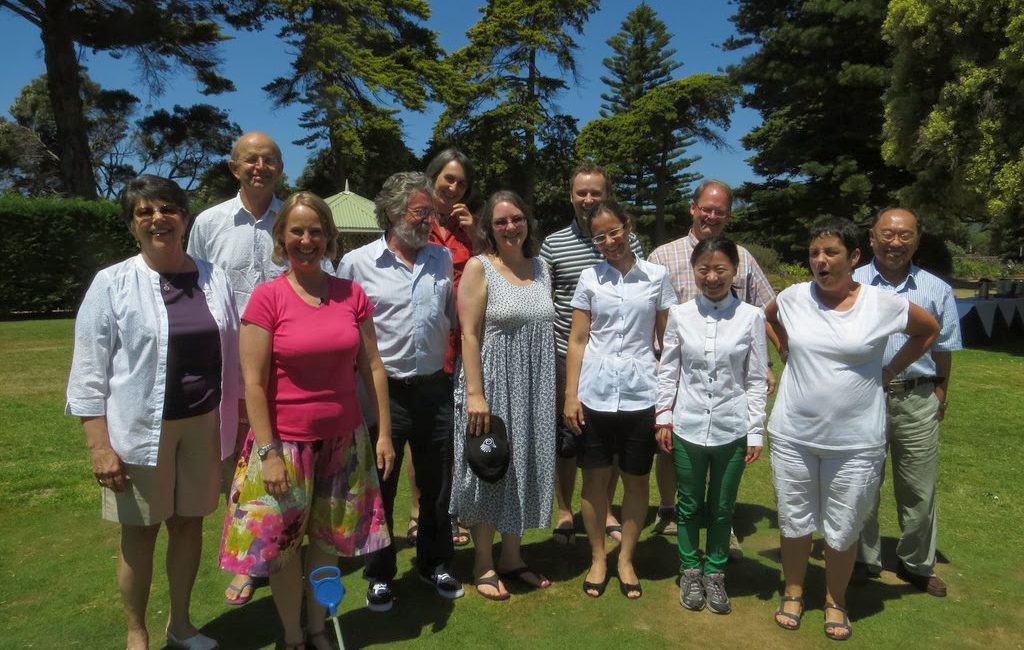
Representatives from BHL-Global nodes at the
5th Global BHL Meeting

The 5th Global Biodiversity Heritage Library Meeting was held in Lorne, Australia, February 1-2, 2014.   Representatives from each of BHL’s global nodes, with the exception of BHL Egypt, convened to discuss the status of current goals, the formation of new goals, and to work together in forming the overall direction of BHL Global.  The meeting consisted of reports from the global nodes, the election of officers, and discussion of bylaws, technical issues and goals.

The first day of the meeting consisted of presentations delivered by representatives from BHL Central and the Global Nodes.

BHL Central
Kicking off the presentations, Martin Kalfatovic, BHL Program Director, reported on BHL Central’s continued growth.  BHL Central is now comprised of 15 dues-paying member institutions, with a collection of over 42 million pages, and usage statistics that include over 3 million visitors since BHL launched in 2007.  In other news, the latest version of the Macaw software developed at the Smithsonian Libraries is now being tested at Harvard, New York Botanical Garden and the California Academy of Sciences with the University of Pretoria to also begin testing soon.  With this release, users can now upload to a cloud server, after which the files go to the Internet Archive and then the BHL portal.

BHL Africa
Anne-Lise Fourie, Principal Librarian at South African National Biodiversity Institute (SANBI), shared the good news that two more institutions in Kenya have joined BHL.  In South Africa, institutions are sending digitized content to the University of Pretoria for quality assurance.  To date, the Steering Committee has met twice with the possibility of more frequent meetings of the regional representatives to help build and maintain momentum.

Grants and Social Media 
Connie Rinaldo, Vice Chair of the BHL Executive Committee and Librarian of the Ernst Mayr Library, Harvard Museum of Comparative Zoology, reported on BHL’s grant-funded projects and on the status of BHL Central’s social media efforts.  BHL currently has four active grants, two of which are about to wrap up and two that just recently kicked off.  Connecting Content, an IMLS grant led by the California Academy of Sciences Library, is linking field notes, specimens, and published literature.  Connie demonstrated MCZ-Harvard’s contributions with the William Brewster collection.  Concurrently, the Art of Life is exploring automated ways of locating illustrations in natural history literature and providing metadata for them.  Led by the Missouri Botanical Garden, this NEH grant will broaden and engage the BHL audience by integrating tagging applications so users can edit descriptive metadata, and integrating that user-generated metadata to enhance access to illustrations.  The two new grants—Purposeful Gaming and the BHL and Digging Into Data—are both funded by IMLS and led by the Missouri Botanical Garden.  Purposeful Gaming and the BHL will develop a game to crowdsource OCR corrections for seed catalogs and transcriptions of field notes.  Digging Into Data will explore new methods for the explore integration of text mining, visualization, crowdsourcing and social media for enhancing use of BHL content.

Social media has been a strong component of the BHL outreach strategy and in 2013 over 36,000 visits to the BHL website came from social media platforms (out of a total of 1.4 million visits).  With recent staff departures, BHL’s social media presence is shifting to maintenance mode and we’ve seen a corresponding decrease in traffic.  A discussion ensued about how best to tailor outreach efforts for maximum impact with existing resources, including recent efforts in the education domain such as BHL Europe’s Historian app for teachers and BHL Africa’s push to teach younger students about the environment.

Encyclopedia of Life 
Nancy Gwinn, Chair of the BHL Executive Committee and Director, Smithsonian Libraries, presented on the recent EOL meetings in Canberra.  The meetings included demonstrations for new tool suites including the recently released Traitbank, which provides the capability to assemble similar traits from across species for comparisons.

Biodiversity Library Exhibitions 
Jiři Frank, Vice-Chair of BHL-Global, reported on the current status of the BHL-E exhibition software and the group discussed the idea of having a “Treasures of the Global BHL” online exhibition.  We’re very pleased that Connie Rinaldo and Jiři have both already graciously volunteered their time for coordination and training, respectively.

Following the presentations and going into the second day, attendees moved to setting the direction for Global BHL for the coming year.  Each of the Global BHL Officers–Ely Wallis, Jiři Frank and Nancy Gwinn–were re-elected to two year terms in the offices of Chair, Vice-Chair and Secretary, respectively.  One of the first tasks that the re-elected executive committee will be taking on is the review of the bylaws.

Action items for the global nodes were also identified and will help guide collection and technical development, outreach efforts, and overall growth for the BHL global nodes in 2014.  BHL Central will work with the global nodes on creating new collections of content for inclusion in the BHL Portal and on continued development of Macaw.  Based on their extensive experience and thanks to their existing resources, BHL Europe will develop a marketing plan for others to use as a model.  BHL Australia will coordinate the collection of input from API users to help inform new features and improvements.  Finally, all nodes have agreed to work together on recruiting new nodes to ensure representation of all continents.

All told, it was a very successful meeting with inspiring updates from all and some exciting new directions for BHL-Global.  We’re looking forward to working with our colleagues across the globe on completing the tasks we have set out to accomplish and working towards an ever-growing and adaptive BHL!

March 6, 2014by sayeedmd
Page 2 of 4«1234»

Help Support BHL

BHL's existence depends on the financial support of its patrons. Help us keep this free resource alive!

search

About BHL

The Biodiversity Heritage Library (BHL) is the world’s largest open access digital library for biodiversity literature and archives. BHL operates as a worldwide consortium of natural history, botanical, research, and national libraries working together to digitize the natural history literature held in their collections and make it freely available for open access as part of a global “biodiversity community.”

Follow BHL

  • Bluesky logo
  • Instagram logo
  • Facebook logo
  • Flickr logo
  • Twitter logo

Join Our Mailing List

Sign up to receive the latest news, content highlights, and promotions.

Subscribe Now

Subscribe to Blog via Email

Enter your email address to subscribe to this blog and receive notifications of new posts by email.

Join 319 other subscribers

Subscribe to Blog Via RSS

Subscribe to the blog RSS feed to stay up-to-date on all the latest BHL posts.

Access RSS Feed


64+ Million Pages of
Biodiversity Literature Online.

EXPLORE

Tools and Services
to Transform Research.

EXPLORE

300,000+
Illustrations on Flickr.

EXPLORE

ABOUT | HARMFUL CONTENT | PRIVACY | SITE MAP | TERMS OF USE