Biodiversity Heritage Library - Program news and collection highlights from BHL
  • Home
  • News
  • Featured Books
    • All Featured Books
    • Book of the Month Series
    • BHL at 20
  • User Stories
  • Campaigns
    • Fossil Stories
    • Garden Stories
    • Monsters Are Real
    • Page Frights
    • Her Natural History
    • Earth Optimism 2020
  • Tech Blog
  • Visit BHL
Home
News
Featured Books
    All Featured Books
    Book of the Month Series
    BHL at 20
User Stories
Campaigns
    Fossil Stories
    Garden Stories
    Monsters Are Real
    Page Frights
    Her Natural History
    Earth Optimism 2020
Tech Blog
Visit BHL
  • Home
  • News
  • Featured Books
    • All Featured Books
    • Book of the Month Series
    • BHL at 20
  • User Stories
  • Campaigns
    • Fossil Stories
    • Garden Stories
    • Monsters Are Real
    • Page Frights
    • Her Natural History
    • Earth Optimism 2020
  • Tech Blog
  • Visit BHL
Biodiversity Heritage Library - Program news and collection highlights from BHL
BHL News, Blog Reel

BHL Adds Dumbarton Oaks and Meise Botanic Garden as New Affiliates

Dumbarton Oaks logo

The Biodiversity Heritage Library is pleased to welcome two new Affiliates in 2023: Dumbarton Oaks in Washington, DC, and Meise Botanic Garden in Meise, Belgium. The BHL Consortium now includes 19 Members and 23 Affiliates.

Dumbarton Oaks logo

Founded in 1940 as a gift from Robert and Mildred Bliss, Dumbarton Oaks is a Harvard University research institute, library, museum, and garden located in Washington, DC. The Dumbarton Oaks Library and Archives include collections on botanical illustrations, plant collecting, reports from scientific expeditions, rare books, and much more.

“We have been working closely with the Biodiversity Heritage Library since 2018,” said Dumbarton Oaks executive director Yota Batsaki. “The Plant Humanities Lab, an open access digital platform we have created, utilizes the extraordinary resources of the BHL and other repositories to study and communicate how plants have shaped human cultures and our planet. The Lab demonstrates how historical collections in the BHL—such as herbarium specimens, botanical illustrations, and field notes—can be integrated into environmental and cultural narratives of urgent significance. We are delighted to strengthen this collaboration by contributing our own digitized content to this invaluable repository.”

Large white flower with broad green leaves

Plate [1]. Bardi, Pietri. Catalogo dei fiori dei giardini di Firenze e di Montui. 1787. Contributed in BHL by Dumbarton Oaks.

Staff at Dumbarton Oaks are already working to add unique items to the BHL collection, with plans to digitize more from their library and archives.

Meise Botanic Garden logo

Meise Botanic Garden, founded in 1870, holds collections that date back to its predecessor, the Royal Dutch Horticultural and Arboricultural Society, which was established in Brussels in 1826 under Dutch rule.

The library at Meise Botanic Garden holds some 250,000 volumes and 10,000 periodical titles on various subjects including botany, mycology, ethnobotany, floristics, botanical history and horticulture. It also houses significant special collections of archives, manuscripts, photo archives and original natural history illustrations.

Bouchout Castle surrounded by trees and meadow at Meise Botanic Garden

Bouchout Castle (Meise Botanic Garden)

The library aims to expand this unique collection, preserve this important scientific and cultural heritage, and make it available to researchers worldwide.

“This is why I am so pleased that the Meise Botanic Garden has the opportunity to widely share a part of this collected literature through BHL,” stated Nicole Hanquart, Head of Library, Art and Archives at Meise Botanic Garden. “Increasing access to the collections is a high institutional priority. Doing it through BHL, which is an essential tool for our researchers, is a major asset.”

Meise Botanic Garden has actively participated as a content provider in BHL Europe since 2009. As part of its new affiliation, it plans to contribute with its own publications as well as with additional titles identified from its collection that are not yet in BHL. The focus will be on botanical literature on Belgium and Central Africa.

Orchid with green bulb, elongated leaves, and white and purple flowers

Plate CC. Linden, J.J, e.a. Lindenia : Iconographie des orchidées. vol. 5(1889). Contributed in BHL by Meise Botanic Garden.

October 30, 2023by [email protected]
BHL News, Blog Reel

10 Years of BHL Growth and Transformation While Program Director

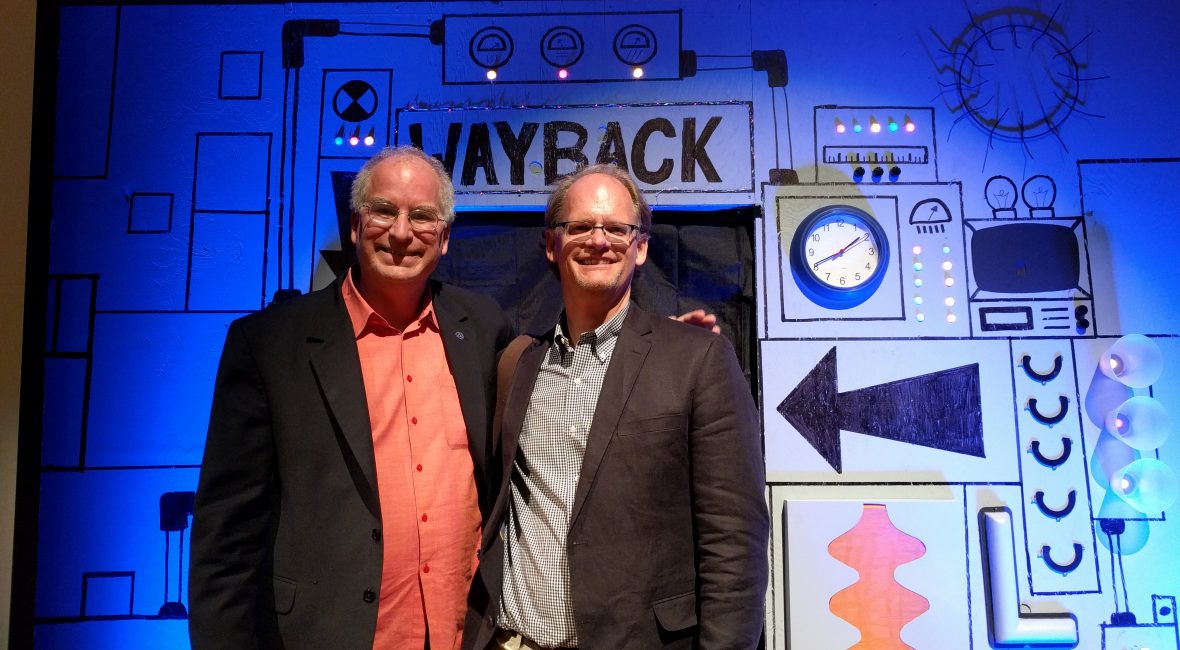
Two men in suit jackets and glasses smile and pose for a picture in front of a prop time machine

This month (April 2022) marks my tenth year as the BHL Program Director. Over the past 10 years, we’ve seen a lot of change — and a lot of growth — with the Biodiversity Heritage Library. Taking over from our first Program Director, Tom Garnett, was a daunting challenge. Tom led the initial funding of BHL through the MacArthur Foundation grant with the Encyclopedia of Life and the establishment of BHL as a global consortium.

Among my first tasks as BHL Program Director was to build on that legacy with the transition of BHL from a grant funded organization to a member-driven one. Likewise, those first months of my tenure saw the close out of the BHL Europe project (which led to our continued strong European presence) and the planning meetings (and later launch) of BHL Africa.

A man leans against a railing, posing in front of a life-sized museum display of an elephant

Martin Kalfatovic at the Museum für Naturkunde in Berlin for the 2012 BHL Europe meeting. Photo credit: Grace Costantino

An early transition for me as Program Director was the departure of BHL’s technical guidestar, Chris Freeland (Missouri Botanical Garden) and the transition of Global Coordinator, William Ulate to that role. Later, technical coordination of BHL moved to Joel Richard (Smithsonian Libraries and Archives). Even during these leadership transitions, BHL’s many technical innovations were implemented and led by BHL developer, Mike Lichtenberg.

The past 10 years have been years of growth. BHL saw the addition of 20 partners as well as the creation of the reciprocal partner affiliation. Content also grew by over 21.3 million pages. Other important markers in the past 10 years include BHL being an inaugural partner of the Digital Public Library of America (DPLA), deepening the relationship of BHL with important biodiversity initiatives such as the Global Biodiversity Information Facility (GBIF), the Catalogue of Life, and the Global Names Architecture.

During this time, BHL also initiated or closed out important grant funded initiatives done in collaboration with many different BHL partners, these included Art of Life (2012-2015); Purposeful Gaming (2013-2015); Mining Biodiversity: Enriching the Biodiversity Heritage Library with Text Mining and Social Media (2014-2016); Expanding Access to Biodiversity Literature (2015-2017); Foundations to Actions: Extending Innovations in Digital Libraries in Partnership with NDSR Learners (2016-2018); and the Field Notes Project (2016-2018).

I’ve also had the pleasure of accepting the following awards for BHL on behalf of all those who have worked on BHL: Laureate. IDG’s Computerworld Honors Program (2013); Charles Robert Long Award of Extraordinary Merit. Council on Botanical and Horticultural Libraries (2015); Internet Archive Hero Award. Global Leaders in Sharing Knowledge (2015); and Digital Library Federation (DLF) 2016 Community/Capacity Award (2016).

A man accepts an award at a podium while four colleagues look on

Internet Archive Hero Award (2015). Chris Freeland (Washington University at the time), Carolyn Sheffield (BHL), Keri Thompson (Smithsonian), Martin Kalfatovic (BHL), Wendy Hanamura (Internet Archive). Photo Credit: Brad Shirakawa.

In my role as BHL Program Director, I’ve had the support of BHL Secretariat staff past and present. Past BHL Program Managers Grace Costantino and Carolyn Sheffield did invaluable work during their tenure, work carried on by current Program Manager Colleen Funkhouser. Grace Costantino later provided a blueprint for BHL’s outreach and communication program; and our newest addition, JJ Dearborn, will take BHL into important new areas as BHL Data Manager. Bianca Crowley, BHL Collections Manager, has provided me with valuable assistance in working with BHL staff and collections around the world.

The work of the BHL Secretariat, and my work as Program Director, would not be possible without the guidance and support of the BHL Executive Committee (EC). It has been an honor to work with two EC Chairs, Nancy E. Gwinn (Smithsonian), and Constance Rinaldo (MCZ/Harvard). The other Member representatives who served as Vice-Chair and Secretary have provided crucial input.

The opportunities to work with and learn from BHL partner representatives, partner staff, and others (often in windowless conference rooms in the great museums and botanical gardens of the world!) has given me a wealth of knowledge in biodiversity, technology, and librarianship. Brewster Kahle and the amazing staff (past and present) of the Internet Archive have provided me, and BHL, with many new ideas that have advanced our work.

Two men in suit jackets and glasses smile and pose for a picture in front of a prop time machine

Brewster Kahle (Internet Archive) and Martin Kalfatovic (BHL) in 2017 with the Internet Archive Wayback Machine.

Having served as Secretary, Vice-Chair, and currently Chair, Connie Rinaldo has been the single constant in my time with BHL, both as Program Director and in previous capacities. Without her leadership, and most importantly her burning passion for BHL’s capacity to create meaningful change, my work would be harder and BHL less successful.

A woman in red shirt and sunglasses stands next to a man in a light blue shirt and glasses atop a hill overlooking a village

Constance Rinaldo and Martin Kalfatovic in Madagascar for the 2015 GBIF Governing Board Meeting.

The past two years of a global pandemic have been challenging for us all, as individuals and for our institutions. I’ve been proud to provide guidance to all my BHL colleagues as they have helped BHL navigate this time. I’m looking forward to our 2022 BHL Annual Meeting in Edinburgh where I will have the chance to talk about directions for BHL into the future!

April 27, 2022by
BHL News, Blog Reel

BHL Welcomes the Auckland War Memorial Museum Tāmaki Paenga Hira

Auckland Museum Logo

The Biodiversity Heritage Library is pleased to welcome the Auckland War Memorial Museum Tāmaki Paenga Hira as a new Affiliate. Auckland Museum is BHL’s first partner in Aotearoa New Zealand.

Tracing its roots back to 1852, Auckland Museum was one of New Zealand’s first museums and is regarded as one of the finest in the Southern Hemisphere. Renowned for its collection of Māori and Pacific treasures along with significant natural history resources, the Museum tells the story of New Zealand, its place in the Pacific and its people. It is also a war memorial for the province of Auckland.

The Museum is home to one of New Zealand’s finest heritage research libraries. Serving the Museum since 1867, the Library’s key focus is caring for and providing access to the Museum’s Documentary Heritage collections, including manuscripts, photographs and artwork, ephemera, oral histories, rare books, and serials. The Library’s collections have an overarching focus on the Auckland province and te ao Māori (the Māori world), and its natural history collection strengths include botany, and academic and general-interest works related to the natural sciences.

“Auckland Museum’s long natural history specialism has resulted in a world-class collection of New Zealand specimens of flora and fauna. Coupled with published research and a wealth of untapped curatorial correspondence, our holdings will be a valuable addition to the BHL community,” affirmed Adam Moriarty, Head of Information, Library and Enquiry Services at the Auckland Museum. “As the first New Zealand-based institution to join the BHL, we can dramatically increase what the world knows about Aotearoa’s unique natural environment.”

BHL representatives Constance Rinaldo (Ernst Mayr Library, Harvard and Chair of the BHL Members’ Council) and Dr. Elycia Wallis and Nicole Kearney (BHL Australia) traveled to the Museum in early September to welcome the Library and provide an orientation to the BHL program. In late October, Kearney, manager of the BHL Australia program, and Cerise Howard, digitization coordinator for BHL Australia, returned to provide an intensive three-day training workshop to Library staff covering a broad range of topics from metadata requirements to digitization workflow processes.

people standing in front of a bookshelf

Nicole Kearney (front) and Cerise Howard (back), BHL Australia, with colleagues from Auckland Museum during the three-day workshop at the Library in Auckland.

Following the workshop, staff digitized the Library’s first contribution to BHL: An epitome of the natural history of the insects of New Holland, New Zealand, New Guinea, Otaheite, and other islands in the Indian, Southern, and Pacific oceans (1805) by Edward Donovan. This rare work includes hand-colored drawings and descriptions of over 100 species from Australia, New Zealand, and neighboring islands. The title is the first of many currently being digitized for BHL from the Library’s collection.

Illustration of butterflies

Plate 13. Donovan, Edward. An epitome of the natural history of the insects of New Holland, New Zealand, New Guinea, Otaheite, and other islands in the Indian, Southern, and Pacific oceans. 1805. Illustration by Donovan. Contributed in BHL from Auckland War Memorial Museum Tāmaki Paenga Hira.

We are delighted to see our partnerships in Australasia expand to New Zealand through the Auckland Museum and look forward to seeing many more fascinating contributions to the BHL collection in the future. We also extend our thanks to our BHL Australia colleagues for providing training and support to our newest Affiliate.

Illustration of insects

Plate 10. Donovan, Edward. An epitome of the natural history of the insects of New Holland, New Zealand, New Guinea, Otaheite, and other islands in the Indian, Southern, and Pacific oceans. 1805. Illustration by Donovan. Contributed in BHL from Auckland War Memorial Museum Tāmaki Paenga Hira.

“We are thrilled to welcome the Auckland Museum as our first partner in New Zealand,” affirmed Martin R. Kalfatovic, Program Director for the Biodiversity Heritage Library. “We have long desired to establish a partnership in the country, and we look forward to working with our colleagues in Auckland to share their collections with global audiences and foster new relationships with other institutions across the New Zealand.”

The BHL Consortium now includes 20 Members, 22 Affiliates, and over 80 partners globally. Learn more.

November 26, 2018by michelle.underhill
BHL News, Blog Reel

BHL Welcomes the University Library Johann Christian Senckenberg

drawing and text in blue of logo for Universitätsbibliothek Johann Christian Senckenberg

drawing and text in blue of logo for Universitätsbibliothek Johann Christian Senckenberg

The Biodiversity Heritage Library (BHL) is pleased to welcome the University Library Johann Christian Senckenberg as a new Affiliate. The University Library is the first German library to join BHL as an Affiliate.

The University Library Johann Christian Senckenberg serves as the Central Library of the Goethe University of Frankfurt am Main and functions as an academic library for the City of Frankfurt, a university library with several state commitments for the Rhine-Main region and Hesse, and is a major participant in the national supply of literature.

The University Library’s Biology Collection comprises excellent holdings of historic and modern biodiversity literature, representing some 400,000 volumes on a wide range of biological subjects. The collection is constantly expanding thanks to the Library’s own acquisition efforts, co-funding by the German Research Council (DFG), and exchange activities with the Senckenberg Gesellschaft für Naturforschung. In 2007, the Virtual Library, comprised of catalog data and online resources including databases and e-journals, was launched to increase visibility of the Biology Collection.

The University Library has a long history of collection digitization and provides access to a large corpus of digitized literature through its “Digitale Sammlungen” portal, including a notable collection of German botanical journals from 1753-1914. In 2017, the Specialised Information Service Biodiversity Research project (co-funded by the German Research Council DFG) was established to enhance access to the Biology Collection. Through continued literature digitization and the development of new services including text mining tools to mobilize data within the literature, the project aims to build a bridge between historical holdings and modern biodiversity research.

As a publicly-funded organization, the University Library Johann Christian Senckenberg is committed to free and open access to research literature and the knowledge contained therein. As a BHL Affiliate, the University Library will expand BHL’s corpus by contributing content from its rich Biology Collection. By enabling free access to Central European biodiversity literature, the Library will significantly enhance discoverability of knowledge contained in a segment of literature which is not yet satisfactorily represented online.

Further Information

See the press release from Goethe-Universität Frankfurt am Main (German language).
See an English version of the press release on IDW.
Learn more about the University Library Johann Christian Senckenberg.
Learn more about the Specialised Information Service Biodiversity Research project.

April 3, 2018by michelle.underhill
BHL News, Blog Reel

BHL Welcomes Oak Spring Garden Foundation as a New Affiliate

View Full Size Image

This quarter, the Biodiversity Heritage Library welcomed the Oak Spring Garden Foundation (OSGF) as a new Affiliate. The BHL consortium now consists of 19 Members and 18 Affiliates.

With a mission to perpetuate and share the gifts of Rachel (“Bunny”) Lambert Mellon, OSGF is dedicated to inspiring and facilitating scholarship and public dialogue on the history and future of plants. The Foundation operates from Bunny Mellon’s 263-acre estate in Upperville, VA, which includes her residence, garden, and Library.

The Oak Spring Garden Library is home to Bunny Mellon’s personal collection of rare books, manuscripts, and artworks, which she acquired to support her research and design work. Consisting of approximately 19,000 objects, the collection’s strengths include garden and garden design, horticulture, botanical studies, natural history, voyages, architecture, and decorative arts.

View Full Size Image
Duhamel du Monceau, M. Traité des arbres fruitiers. v. 1 (1768). Contributed by the Oak Spring Garden Library. http://s.si.edu/2fFO3O5.

As an Affiliate, OSGF will enhance BHL’s collection by contributing rare and unique material from the Library. Providing open access to this significant collection will allow the Foundation to share Bunny Mellon’s legacy with a global community and impact research around the world.

Visit BHL to explore Traité des arbres fruitiers, the first title contributed by the Oak Spring Garden Library to BHL. This title was hand-picked by Bunny Mellon for contribution to the Biodiversity Heritage Library. Learn more.

October 3, 2017by ulib-libraryjobs
BHL News, Blog Reel

BHL Welcomes Three New Affiliates

BHL is pleased to welcome three long-time Partners as the consortium’s newest Affiliates: BHL Egypt, BHL China, and BHL SciELO.

The BHL consortium now consists of 18 Members and 18 Affiliates. Members and Affiliates contribute content, provide technical services, and participate in BHL committees, task forces, and working groups. Additionally, Members, who contribute 10,000 USD in annual dues, have governance privileges and vote on strategic directives.

BHL Egypt 

View Full Size Image


BHL Egypt, led by the Bibliotheca Alexandrina (BA), joined the Biodiversity Heritage Library in 2009. A major library and cultural center located in Alexandria, Egypt, Bibliotecha Alexandrina has long brought considerable technical expertise to the BHL consortium. The BA provides access to a subset of the BHL collection through its own Digital Assets Repository, which features an Arabic-aware (right to left) book reader. As an Affiliate, BHL Egypt will continue to provide technical support and services to facilitate BHL’s ongoing development.

BHL China 

View Full Size Image


BHL China, founded by the Institute of Botany at the Chinese Academy of Sciences, is the Biodiversity Heritage Library’s first Affiliate in China. Established in 1928, the Institute of Botany is one of the oldest comprehensive research institutions in China. Host to the largest herbarium in Asia, two botanical gardens, and several laboratories, the Institute is a national leader in the development of the country’s plant science research. Since first joining BHL as a partner in 2010, the Institute of Botany has contributed over 325,000 pages to BHL through the BHL China program.

BHL SciELO 

View Full Size Image


The BHL SciELO Network is the Biodiversity Heritage Library’s first Affiliate in South America. BHL SciELO is implemented by the Scientific Electronic Library (SciELO) Program, which encompass a network of national collections of open access journals in 15 countries. SciELO Brazil coordinates the BHL SciELO Network involving the main biodiversity libraries of Brazil with political and financial support from the São Paulo Research Foundation (FAPESP) and the Secretary of Biodiversity of the Ministry of Environment. SciELO joined BHL as a partner in 2010, and since then it has contributed over 107,000 pages to BHL’s collection.

July 3, 2017by Grace Costantino
Blog Reel, User Stories

19th Century Butterflies: Reconstructing a Collection’s History with BHL

The Naturalis Biodiversity Center, a recent BHL Affiliate, is home to one of the largest natural history collections in the world, consisting of over 37 million specimens. Additionally, Naturalis has contributed nearly 200,000 pages to the BHL collection since 2016.

Over 900,000 of the museum’s 37+ million specimens are butterflies, some dating back to the 18th century. Approximately 18,000 drawers are required to store this vast Lepidoptera collection.

The Naturalis butterfly collection is not only vast, it is also rich in type specimens, which are indexed through type catalogs combining historical and taxonomical research. Recently, researchers set about compiling such a catalog for the museum’s South East Asian Adoliadini (Lepidoptera, Nymphalidae) type specimens.

In order to create this catalog, which was published last year (Gassó Miracle, M.E. & T. Yokochi, 2016, Lepidoptera Science 67(2)), the authors needed to access and compare all existing taxonomic descriptions for the specimens, identify synonyms, contrast plates and photographs, and verify geographic distribution.

“For all of this, specialized literature is essential,” asserts Eulàlia Gassó Miracle, Curator of Butterflies at the Naturalis Biodiversity Center and co-author of the Adoliadini type catalog.

In order to sort out confusion regarding the origin, labeling, and taxonomy for the specimens, Eulàlia and her co-authors consulted more than 80 journals and books. More than half of them were available through the Biodiversity Heritage Library.

“BHL helped us to revise the taxonomy and the history of the specimens,” explains Eulàlia.

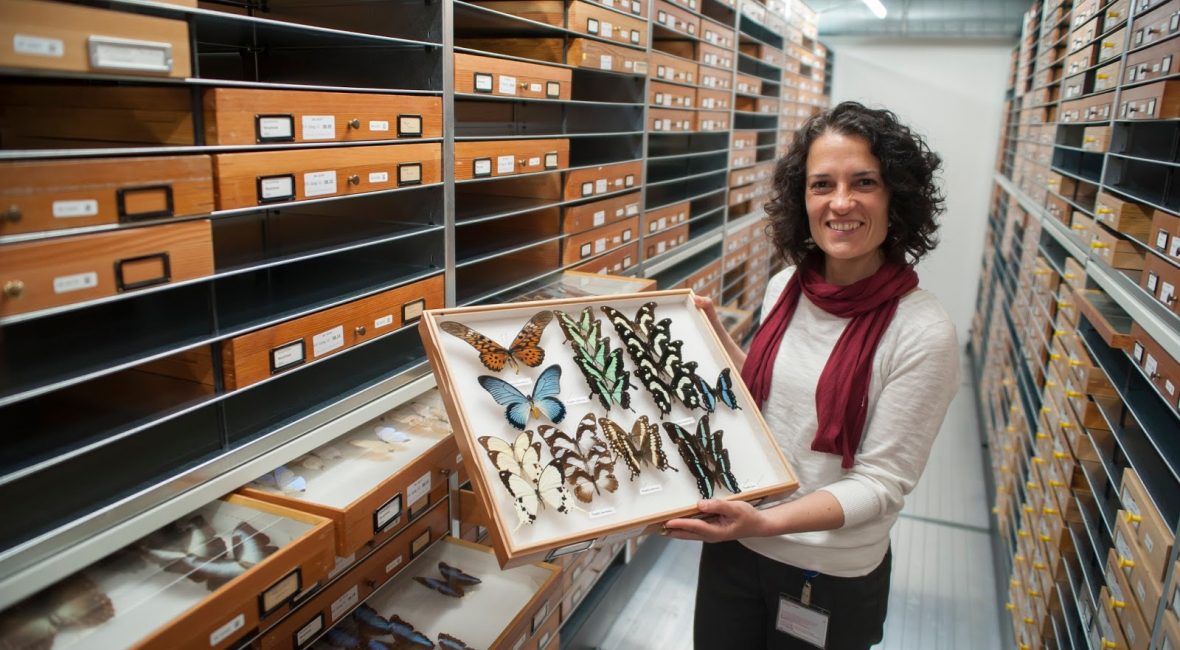
View Full Size Image
Eulàlia Gassó at the Naturalis butterfly collection. Photo by Henk Caspers.

BHL has been one of Eulàlia’s “most valued research tools” for the past decade.

“Although I have the privilege of access to most of the literature I need, either at the library of the Naturalis Biodiversity Center or the Leiden University Library, the BHL collection allows me to work in a flow from…well, anywhere,” explains Eulàlia. “BHL has also made available rare and unique publications from the 18th and 19th century, much needed for my research, that I cannot find in The Netherlands.”

Eulàlia first discovered BHL while looking for works by C.J. Temminck, zoologist and first director of the Rijksmuseum van Natuurlijke Historie (RMNH, now Naturalis Biodiversity Center). Since then, she has used it to support her work as collections manager in various departments at the museum as well as her research on the history of 19th century natural history.

View Full Size Image
Title page of Manuel d’ornithologie, ou Tableau systématique des oiseaux qui se trouvent en Europe (Vol. 1, 2nd ed., 1820), by C.J. Temminck. Digitized by University Library, University of Illinois Urbana Champaign. http://biodiversitylibrary.org/page/33457859.

“As the curator of a natural history collection that is centuries old, I am also terribly curious about its former curators and curatorial practices,” says Eulàlia. “For this, again, BHL is a constant source of information and images. I share some of my findings and musings in my personal blog, the Museum Chronicles. For my historical research on the life and work of Temminck, accessing online his works and those of his peers has uncluttered my desk, helped organize my thoughts, given me access to new works – and with them, new insights – In a word, BHL helps me progress.”

Eulàlia uses BHL daily, either reading titles online or taking advantage of the custom PDF generation feature to download content. BHL’s high resolution image download feature, which Eulàlia discovered thanks to an @BioDivLibrary tweet, helps her compare illustrations with specimens. To further facilitate her research, Eulàlia is anxious to see full text search added to the BHL website. Happily, this is a feature that is currently in development.

BHL’s collections not only serve as a daily resource for Eulàlia’s research, but they also help her start each day with a little piece of natural history beauty.

View Full Size Image
Plate 12 of Snellen van Vollenhoven’s work on Adolias butterflies. The type specimens are deposited at Naturalis Biodiversity Center. Digitized by Smithsonian Libraries. http://biodiversitylibrary.org/page/10840001.

“Recently, one of my favorite items is the article of Snellen van Vollenhoven on Adolias butterflies, one that I have read and examined repeatedly while validating the status of his type specimens,” says Eulàlia. “Plate 12 is so beautiful, it is the first thing I see when starting my computer.”

Indeed, we’re firm believers that every day is better with a little bit of #SciArt. So, whether you need to brighten your day with a little natural history eye candy or reconstruct the history of a type collection, BHL has you covered.

______________________________________

This post may contain the personal opinions of BHL users or affiliated staff and does not necessarily represent the official Biodiversity Heritage Library (BHL) position on these matters.

March 9, 2017by ulib-libraryjobs
Page 1 of 41234»

Help Support BHL

BHL's existence depends on the financial support of its patrons. Help us keep this free resource alive!

search

About BHL

The Biodiversity Heritage Library (BHL) is the world’s largest open access digital library for biodiversity literature and archives. BHL operates as a worldwide consortium of natural history, botanical, research, and national libraries working together to digitize the natural history literature held in their collections and make it freely available for open access as part of a global “biodiversity community.”

Join Our Mailing List

Sign up to receive the latest news, content highlights, and promotions.

Subscribe Now

Subscribe to Blog via Email

Enter your email address to subscribe to this blog and receive notifications of new posts by email.

Join 319 other subscribers

Subscribe to Blog Via RSS

Subscribe to the blog RSS feed to stay up-to-date on all the latest BHL posts.

Access RSS Feed

Inspiring Discovery through Free Access to Biodiversity Knowledge.

The Biodiversity Heritage Library makes it easier than ever for you to access the information you need to study and explore life on Earth…for free, anytime, anywhere.


ABOUT | HARMFUL CONTENT | PRIVACY | SITE MAP | TERMS OF USE