Biodiversity Heritage Library - Program news and collection highlights from BHL
  • Home
  • News
  • Featured Books
    • All Featured Books
    • Book of the Month Series
    • BHL at 20
  • User Stories
  • Campaigns
    • Fossil Stories
    • Garden Stories
    • Monsters Are Real
    • Page Frights
    • Her Natural History
    • Earth Optimism 2020
  • Tech Blog
  • Visit BHL
Home
News
Featured Books
    All Featured Books
    Book of the Month Series
    BHL at 20
User Stories
Campaigns
    Fossil Stories
    Garden Stories
    Monsters Are Real
    Page Frights
    Her Natural History
    Earth Optimism 2020
Tech Blog
Visit BHL
  • Home
  • News
  • Featured Books
    • All Featured Books
    • Book of the Month Series
    • BHL at 20
  • User Stories
  • Campaigns
    • Fossil Stories
    • Garden Stories
    • Monsters Are Real
    • Page Frights
    • Her Natural History
    • Earth Optimism 2020
  • Tech Blog
  • Visit BHL
Biodiversity Heritage Library - Program news and collection highlights from BHL
BHL News, Blog Reel, Tech Updates

Transition Update #8: The Field Museum to Host BHL’s Technical Infrastructure

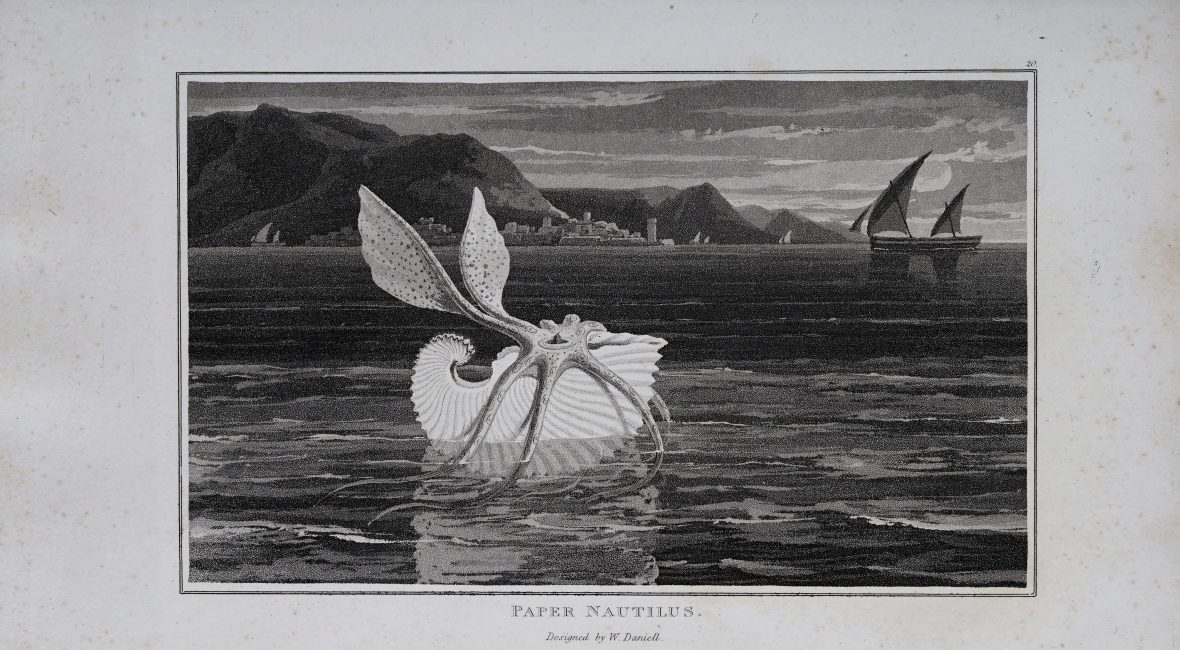
A paper nautilus floats on the open ocean. Ships and a city on a cliff are in the background

With the Biodiversity Heritage Library now officially operating in its new chapter following its transition away from the Smithsonian Institution, we are delighted to announce that the Field Museum of Natural History, one of BHL’s longest-standing and most respected partners, will host BHL’s servers and core technical infrastructure.

This hosting arrangement ensures the continued stability, security, and reliability of the BHL website and the 63+ million pages of open biodiversity knowledge it makes freely available worldwide.
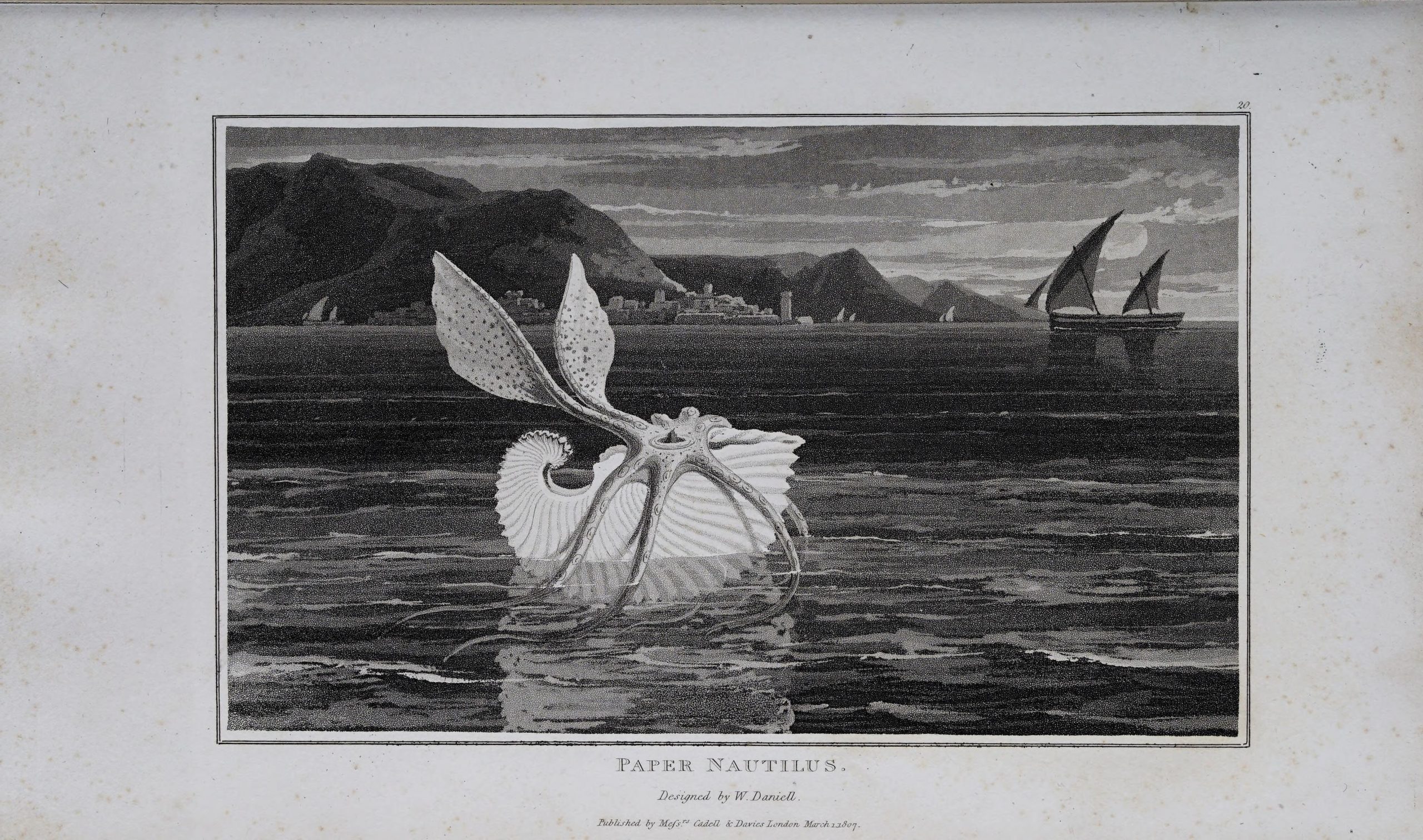
A paper nautilus floats on the open ocean. Ships and a city on a cliff are in the background

Paper Nautilus, from Zoography; or, The beauties of nature displayed. In select descriptions from the animal, and vegetable, with additions from the mineral kingdom (1807) by William Wood, illustrated by William Daniell. Contributed to BHL by the Field Museum of Natural History Library.

A founding partner supporting BHL’s next chapter

The Field Museum, based in Chicago, Illinois, is one of BHL’s ten original founding institutions and has been part of the consortium since its inception. For nearly two decades, the Field Museum has helped shape BHL’s mission to make biodiversity literature openly available to the world.

“Hosting and supporting BHL’s infrastructure reflects the power of partnership and our commitment to free and open data where appropriate. Grounded in strong technical foundations and a commitment to long-term stewardship, we are reinforcing the secure and scalable technical backbone that sustains one of the world’s most important open biodiversity resources.”
— Rob Zschernitz, Chief Technology Officer, Field Museum

As an independent museum supported by endowments and donor philanthropy, the Field Museum’s mission to connect all of us to nature and the human story aligns closely with BHL’s values and long-term goals.

What this means for BHL users

In practical terms, the Field Museum will:

  • Coordinate with BHL and the Smithsonian Institution to relocate BHL’s servers to the Field Museum’s data center
  • Provide essential services including domain hosting, systems operations, network security, and incident response
  • Serve as custodian and host of BHL’s core technical infrastructure, under the direction of BHL’s Technical Team.

Importantly, BHL will continue to retain ownership of all its data, content, software, and equipment. The Field Museum will act as a trusted custodian, looking after the behind-the-scenes technical infrastructure that keeps BHL online and accessible to millions of users worldwide.

This arrangement builds on BHL’s new operational foundation and supports long-term continuity and resilience.

A carefully managed technical transition

Detailed planning for the move of BHL’s servers is underway. While the exact dates for the physical moves are still to be determined, the teams at BHL, the Smithsonian, and the Field Museum are working closely together to plan the move carefully and responsibly.

Our goal is to minimise disruption to public access. That said, there may be short periods of downtime while systems are moved and reconfigured. Any such interruptions will be temporary, and we will communicate scheduled downtime in advance via the BHL website and social media channels.

Why this matters

Secure, professionally managed infrastructure underpins everything BHL does, enabling global access to biodiversity literature and supporting research, conservation, and education worldwide.

The Field Museum’s commitment to hosting BHL’s technical infrastructure reflects the strength of BHL’s partnerships and depth of support across the BHL consortium.

“The Field Museum has been a valued member of the BHL consortium for many years. From hosting our Life & Literature conference in 2011 to hosting our Annual Meeting in 2015 and co-hosting in 2024, the Field has consistently demonstrated its commitment to BHL and our global community. I am delighted that the Field Museum has agreed to host BHL’s technical infrastructure at this pivotal time in BHL’s history. This represents a major milestone in our transition and reflects the strength and depth of collaboration across the consortium.”
— David Iggulden, Chair, BHL Executive Committee

We are deeply grateful to the Field Museum for stepping forward in this way, and to our global community for your continued trust, engagement, and support.

Continuity, access, and governance

The transition of BHL’s technical infrastructure does not change how BHL is governed or who makes decisions about its future.

The Field Museum’s role in hosting and stewarding BHL’s technical infrastructure does not affect who owns or controls BHL’s content or data. BHL will continue to operate as a member-governed consortium, with strategic oversight provided by the BHL Members Council, in accordance with the BHL Bylaws.

BHL’s collections will remain freely and openly accessible, as they always have been.

Looking ahead: a growing network of support

This hosting transition reflects the depth of BHL’s institutional relationships, its long history of collaboration, and the commitment of trusted partners across the consortium. The Field Museum is just one of the institutions that has stepped up in response to BHL’s Call for Support.

This work is part of a broader, coordinated effort across the BHL community, with multiple organisations offering support in different ways. Stay tuned for additional announcements as details are finalised.

How you can help

You can support BHL by:

  • Staying informed: follow #BHLTransition on our website and social media channels
  • Sharing our story: help amplify BHL’s Call for Support, and the importance of open biodiversity literature
  • Support BHL directly: make a donation. Donations directly support BHL’s operations and long-term sustainability

As always, thank you for being part of the Biodiversity Heritage Library community.
February 26, 2026by [email protected]
BHL News, Blog Reel

Celebrating the Team Stewarding BHL’s Next Chapter

ecosystem depicting bee and flower species

As the Biodiversity Heritage Library enters its new chapter following the completion of its transition to a new fiscal sponsor, it is important to acknowledge that BHL’s biggest strength lies not in its platform, nor in its 63 million pages, but in its people.

For nearly two decades, a small, deeply committed team has carried the responsibility of keeping BHL online, stable, and accessible to a global community. Much of that work happens behind the scenes, often invisible to the users who rely on BHL every day. Securing that expertise and institutional knowledge has been a central goal of the BHL transition.

That goal has been achieved: this week marks the completion of staff transitions from the Smithsonian Institution to BHL’s fiscal sponsor, the Council on Library and Information Resources (CLIR). All of BHL’s existing staff positions have been secured, preserving the leadership, institutional knowledge, and operational continuity that underpin BHL’s work.

Together, the BHL staff are responsible for implementing the Consortium’s vision, mission, and strategic goals, under the direction of the Members Council and Executive Committee. As BHL moves forward, the people who know the organization best remain at its core. BHL is in excellent hands.

Meet the BHL Team

Colleen Funkhouser

Managing Director (transitioning from BHL Program Manager)

photograph of a human with glasses and brown hair standing in front of a fence outside.

Colleen Funkhouser, BHL Managing Director

Since joining BHL in 2020, Colleen Funkhouser has provided steady, strategic leadership across BHL’s programmatic, administrative, and financial operations. She brings deep expertise in library and nonprofit program management, and plays a central role in coordinating day-to-day operations across a complex, global consortium.

In her role as Program Manager, Colleen has overseen financial management, contracts, compliance, reporting, and project coordination across BHL’s global consortium. Her work has been especially critical during periods of disruption and change, including the COVID-19 pandemic, the departure of BHL’s Program Director in 2024, and BHL’s recent transition planning.

Colleen’s calm, measured leadership has been central to effective crisis response, sustainability planning, operational restructuring, and the practical work of moving BHL into a new fiscal and organizational model. As she moves into the role of BHL Managing Director under CLIR, Colleen will continue to provide strategic and operational leadership, ensuring that BHL remains stable, accountable, and well positioned for the future.

Bianca Crowley

Digital Collections Manager

Bianca Crowley

Bianca Crowley, Digital Collections Manager

Bianca Crowley has worked on almost every aspect of the BHL collection. Starting as BHL’s Collections Coordinator in 2009, she has facilitated the workflows, policies, and partnerships that make it possible for BHL to aggregate and steward biodiversity literature and archival materials from institutions around the world.

As Digital Collections Manager and Chair of BHL’s Collections Committee, Bianca works at the intersection of collections, copyright, metadata, and community practice. She supports a global network of partners by providing training and documentation, and ensuring that BHL’s collection is as accessible, discoverable, usable, and comprehensive as possible.

Bianca is an indispensable bridge between policy, technology, and practice. She led the development of BHL’s Collection Development Policy and the Acknowledgment of Harmful Content, helping BHL respond thoughtfully and responsibly to its historical collections. Her deep knowledge of BHL systems and history, along with her steady stewardship of the collection, has been essential throughout BHL’s growth and transition.

Mike Lichtenberg

Lead Software Engineer

A man with a mustache and beard, wearing a dark shirt

Mike Lichtenberg, BHL Lead Software Engineer

Mike Lichtenberg has been BHL’s Software Engineer since 2007, making him one of the longest-serving members of the BHL team. Over nearly two decades, he has designed, built, and maintained the systems that underpin BHL’s platform, transforming ambitious goals into reliable, scalable infrastructure.

With more than 30 years of experience in software engineering, Mike brings deep expertise in application architecture, database design, and system integration. His work has supported everything from large-scale digitization workflows to data extraction, analysis, and reuse, enabling BHL to serve researchers, libraries, and biodiversity infrastructures worldwide.

Mike has worked consistently across BHL’s technical and non-technical teams, translating needs into solutions across nearly 20 years of BHL’s technical evolution. Throughout the transition, his technical leadership and continuity have been critical to ensuring that BHL’s core systems remain stable and robust as the organization plans for future infrastructure development.

Joel Richard

BHL Technical Coordinator

A man with brown hair and glasses, wearing a suit and bowtie standing in front of moss covered trees

Joel Richard, BHL Technical Coordinator

Joel Richard has supported BHL’s technical operations since 2009 and continues to play a vital role as BHL Technical Coordinator. Based at the Smithsonian Libraries and Archives, where he serves as Head of Web and IT, Joel brings more than three decades of experience in software engineering, web development, and infrastructure design.

Joel is the lead developer and maintainer of Macaw, BHL’s content integration and metadata collection system, which has enabled millions of pages to flow into BHL from partners around the world. He has overseen the reliability and integration of BHL’s technical systems, providing continuity and deep institutional knowledge across a complex, long-running technical platform.

As BHL moves forward, Joel will continue to support BHL in his role as Technical Coordinator, ensuring technical stability and continuity. He remains a key part of BHL’s operational ecosystem, and his long-standing commitment to BHL, alongside his broader advocacy for open and accessible infrastructure, will continue to shape and strengthen BHL’s technical future.

Kelli Trei

BHL Transition Director

Color photograph of a woman with short brown hair and glasses

Kelli Trei, BHL Transition Director

Kelli Trei has played a central leadership role in guiding BHL through the most significant change in its history. Before taking on the temporary role of BHL Transition Director in mid-2025, Kelli served as Vice Chair of BHL’s Executive Committee, providing strategic oversight and helping guide BHL’s governance.

As Transition Director, she has helped steer BHL from its long-standing administrative home at the Smithsonian Institution to a new operational model. She has worked closely with BHL’s Secretariat, Executive Committee, and partners to ensure continuity, clarity, and stability throughout the process.

In her professional role as Biosciences Librarian at the Funk ACES Library at the University of Illinois at Urbana-Champaign, Kelli brings deep experience in supporting scientific research communities and understanding the information needs of scientists. That perspective has been invaluable during the transition, informing both strategic decision-making and the practical work of re-establishing BHL’s administrative, governance, and operational foundations.

Kelli’s long-standing commitment to BHL’s mission has been a steady guiding force throughout the transition, helping position BHL for a confident and resilient next chapter.

Nicole Kearney

BHL Communications Director

A woman with glasses, light brown hair, wearing a black and white scarf

Nicole Kearney, BHL Communications Director

As BHL’s Communications Director, Nicole Kearney is responsible for internal and external communications across the global consortium. Throughout the transition, she helped articulate complex change and maintain trust by shaping advocacy messaging, delivering regular transition updates, and leading BHL’s fundraising campaign.

Nicole also manages BHL Australia, where she oversees digitization operations, copyright clearance, contributor liaison, strategic planning, reporting, staffing, and stakeholder engagement. Under her leadership, BHL Australia has grown from four contributing organizations into a national consortium of 64.

Nicole also chairs BHL’s Persistent Identifier Working Group, which she established in 2020 to bring BHL content into the modern, linked network of scholarly research. A passionate advocate for open access and interoperable data, she works to ensure biodiversity literature remains discoverable, trackable, and connected.

Looking Ahead

The transition to CLIR secures BHL’s staff, expertise, and operational capacity. The people who understand BHL’s history, systems, and community are still doing the work. Core services continue, and BHL’s relationships across its global community remain intact.

BHL’s future depends on infrastructure, governance, and funding, but it also depends on people. It depends on long-term commitment, deep institutional knowledge, and steady leadership. This team has carried that responsibility tirelessly and consistently, through growth, change, and uncertainty.

As BHL looks ahead to the next phase of its development, we do so with confidence and gratitude. The foundations are strong, the people are in place, and BHL is well positioned to continue serving the global biodiversity community for years to come.

February 19, 2026by [email protected]
BHL News, Blog Reel

BHL Transition Update #7: The New Chapter Begins

Text: Transition Update. The New Chapter Begins. Behind the text, a Bommi Fish walks on its fins to climb up a tree root.

On 1 January 2026, the Biodiversity Heritage Library officially entered a new chapter.

Since its founding in 2006, BHL has been hosted by the Smithsonian Institution. We are profoundly grateful for the administrative, staffing, and operational support provided for nearly two decades. However, in April 2025, BHL announced that the Smithsonian would no longer host BHL beyond the end of 2025. That announcement marked the beginning of a carefully planned transition that would help define a new independent future for BHL.

Navigating the Transition

While the need to transition brought real challenges, it also created an important opportunity. It forced BHL to take a hard look at how it was structured, governed, and funded, and to confront constraints that had naturally emerged from long-term reliance on a single administrative host.

Led by the Guiding Principles for the Transition (shared with the BHL community in August), the transition focused first and foremost on:

  • stabilizing BHL’s operations and infrastructure;
  • strengthening financial sustainability and administrative autonomy;
  • securing and retaining the staff expertise that underpins BHL’s services; and
  • positioning BHL for long-term growth and global impact.

To become independent, BHL needed to identify new administrative arrangements, refine organizational and governance models, and actively broaden and diversify its funding sources. In doing so, it unlocked greater agility and shared ownership across the consortium. As a result, the transition has accelerated BHL’s evolution into a truly global, distributed consortium, with a renewed focus on sustainability, resilience, and long-term impact.

We are excited to share where BHL is now, what has already been accomplished, and what lies ahead. BHL is stable, fully operational, and in the final stages of its transition.

A Transition in Stages

BHL’s transition is being implemented in carefully planned stages, designed to maintain continuity while laying the foundations for a more sustainable, globally distributed future. Some of these stages are now complete; others are actively underway.

Completed stages include:

  • Red square logo with the letters CLIR next to brand name Council on Library and Information ResourcesEstablishing the Council on Library and Information Resources (CLIR) as BHL’s fiscal sponsor
  • Transferring BHL’s financial administration to CLIR
  • Confirming governance, oversight, and operational continuity across the consortium

Stages currently underway or upcoming include:

  • Completing the transition of existing BHL staff to CLIR
  • Planning the move of BHL’s technical infrastructure to a new host institution
  • Continuing to strengthen long-term funding, partnerships, and infrastructure resilience

Together, these stages reflect a deliberate shift toward greater administrative autonomy, operational agility, resilience, and shared responsibility across the consortium.

Institutional Confidence and Partnership Commitments

One of the most encouraging outcomes of the transition has been the response from BHL’s institutional partners and allies around the world.

Through the Call for Support, launched in June 2025, BHL received a strong and constructive response from organizations that recognize the value of BHL as shared global infrastructure. Several long-standing partners stepped forward in particularly meaningful ways, providing critical support at a pivotal moment in the transition.

Notably, the University of Illinois Urbana-Champaign Library has made significant contributions of both funding and staff time, reinforcing its long-standing commitment to BHL. In addition, the Smithsonian Institution has made formal commitments to support a smooth transition, contributing to stability and operational continuity as BHL moves into its next phase.

We extend our sincere thanks to these institutions, and to all organizations that have stepped forward during this period, for their confidence, leadership and generosity. Their support is playing a critical role in helping to stabilize BHL and in shaping a strong, resilient future for the BHL Consortium.

We will share further details of these contributions and commitments as soon as formal arrangements are finalized.

New Members Joining BHL

Transition is not only about continuity; it is also about growth. As highlighted in a recent transition update, the University of South Florida Libraries is the first of several new Members joining the BHL Consortium. These new memberships are a direct outcome of the Call for Support and represent strategic partnerships and confidence in BHL’s future direction.

Stay tuned as we announce our additional new BHL Members in the coming weeks.

Staffing Continuity and Operational Stability

Ensuring staffing continuity has been a central priority throughout BHL’s transition. We are thrilled to announce that all existing BHL staff positions have been secured, preserving the expertise, institutional knowledge, and operational capacity that underpin BHL’s services. This continuity has been enabled through new administrative arrangements and reflects careful planning to ensure stability during the transition period.

For now, the key message is clear: BHL has retained its people, its expertise, and its ability to operate effectively, even as administrative and governance structures evolve. We will share more updates as new roles and arrangements are finalized.

Donations: The Wind Beneath Our Wings

The loss of long-standing Smithsonian support means that BHL now relies more heavily on additional sources of funding to sustain its work. From now on, public fundraising will be essential to ensuring BHL’s long-term sustainability.

Flying fish "flying" out of the water with #GiveBHLWings promotionIn November, we launched our #GiveBHLWings campaign, a focused effort to support BHL’s transition by 1 January 2026. The response was overwhelming. By the time the campaign formally closed on 4 January 2026, it had raised USD 53,286.33 from 534 donations across 39 countries.

Many donors chose to include personal messages of appreciation for BHL, and a significant number of gifts were made in honour of others, including several tributes recognizing BHL staff – a powerful recognition of the community behind the infrastructure.

Importantly, the campaign also generated ongoing, recurring support, helping to strengthen BHL’s longer-term financial resilience. When combined with online donations received before and after our #GiveBHLWings campaign, BHL’s new public fundraising efforts have resulted in over USD 60,000, from more than 600 donors across 41 countries, alongside a growing base of monthly recurring contributions.

In addition to these online campaign donations, BHL has received substantial individual contributions through other giving channels, including gifts made via our Ways to Give page. We have also received commitments to future giving from individuals, including bequests, reflecting a deep level of trust in BHL’s long-term mission and impact.

We are immensely thankful to everyone who contributed, whether through a one-time donation, a recurring gift, or by helping to share BHL’s story. Your generosity and trust are directly supporting the stability, continuity, and future growth of the Biodiversity Heritage Library.

Ready for the Future

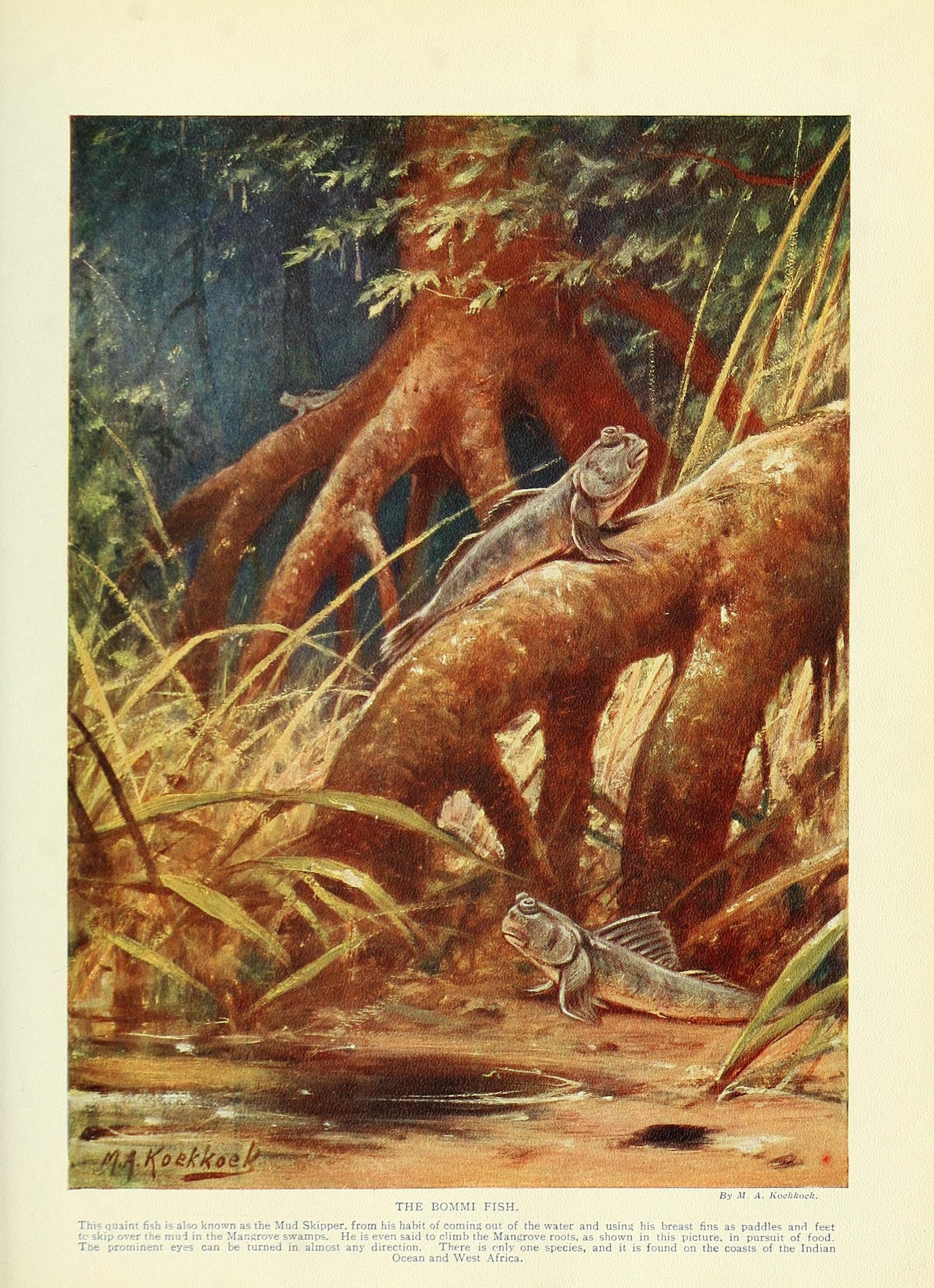
Two fish walk on their fins out of water, climbing on tree roots and mud

The Bommi Fish or Mudskipper, a species adapted to life in the transition zone between land and water. Illustration by M. A. Koekkoek. From Marvels of the universe: a popular work on the marvels of the heavens, the earth, plant life, animal life, the mighty deep, by Harry Johnston, c. 1913-1927. Contributed in BHL from Smithsonian Libraries and Archives.

Transitions of this scale are complex, but the progress to date reflects the depth of BHL’s partnerships, the strength of its governance, and the extraordinary commitment of its global community.

Importantly, this transition has not only stabilized BHL; it has positioned BHL to operate with greater agility, independence, and shared ownership than ever before. By moving beyond reliance on a single administrative host, BHL is now better equipped to respond to change, pursue new opportunities, and evolve in step with the needs of the global biodiversity community it serves.

BHL is not winding down. It is moving forward as a more distributed, resilient, and community-supported consortium, with the flexibility to grow, adapt, and innovate.

We want to acknowledge the many individuals and organizations who have contributed time, expertise, resources, and encouragement during this period. Your support has not only helped BHL through this change; it is helping to shape a stronger, more sustainable future.

Throughout this period, uninterrupted access to BHL’s collections and services has remained a core priority, and that continuity has been maintained.

Stay tuned for more updates as we work through the final stages of the transition.

Be Part of BHL’s Future

As BHL moves into this next phase, there are many ways to stay connected and support BHL’s work going forward, whether by sharing BHL with your networks, encouraging institutional participation, exploring partnership opportunities, or contributing through public giving when you are able.

🌿 Support BHL: make a donation or explore other ways to give

💚 Share the love: use #ILoveBHL on social media

💡 Share your ideas: respond to our Call for Support

📚 Stay up to date: follow #BHLTransition news on the BHL Blog

January 9, 2026by [email protected]
BHL News, Blog Reel

BHL is Growing! Announcing the First of Our New Members: University of South Florida Libraries

Green logo for the University of South Florida Libraries

A wave of support is building behind BHL. As we advance through our transition from long-term hosting by the Smithsonian Institution to a new independent governance and hosting model, one message has become increasingly clear: our global community is stepping forward to strengthen and sustain the world’s largest open-access library of biodiversity literature.

In response to BHL’s Call for Support, we have received a range of commitments from institutions in multiple countries. These include significant institutional donations, major in-kind technical support and expertise, technical hosting, and new organisations joining the BHL Member Council. Today, we are delighted to announce the first of these new Members: the University of South Florida Libraries (USF).

Green logo for the University of South Florida Libraries

Welcoming the University of South Florida Libraries

The University of South Florida Libraries has expressed strong interest in BHL for some time, and we are thrilled to welcome them as our newest BHL Member. Their decision to prioritise BHL as a key platform for sharing biodiversity-related content reflects a shared commitment to open science, global collaboration, and the long-term accessibility of biodiversity literature and data.

“The USF Libraries are delighted to join the BHL Members Council. As we continue to grow our collections in the areas of environmental and natural history, this initiative perfectly aligns with our areas of emphasis. We are committed to making these unique research materials openly accessible to ensure broader engagement and collaboration across the research community and the general public.”

— Carol Ann Borchert, Senior Associate Dean, University of South Florida

“We are thrilled to welcome University of South Florida Libraries as a new BHL Member and look forward to them further enhancing the wonderfully rich and diverse collections held within BHL. We are also very grateful for their offer of technical support, and excited by the opportunities this new partnership presents.”

— David Iggulden, Chair, BHL Executive Committee

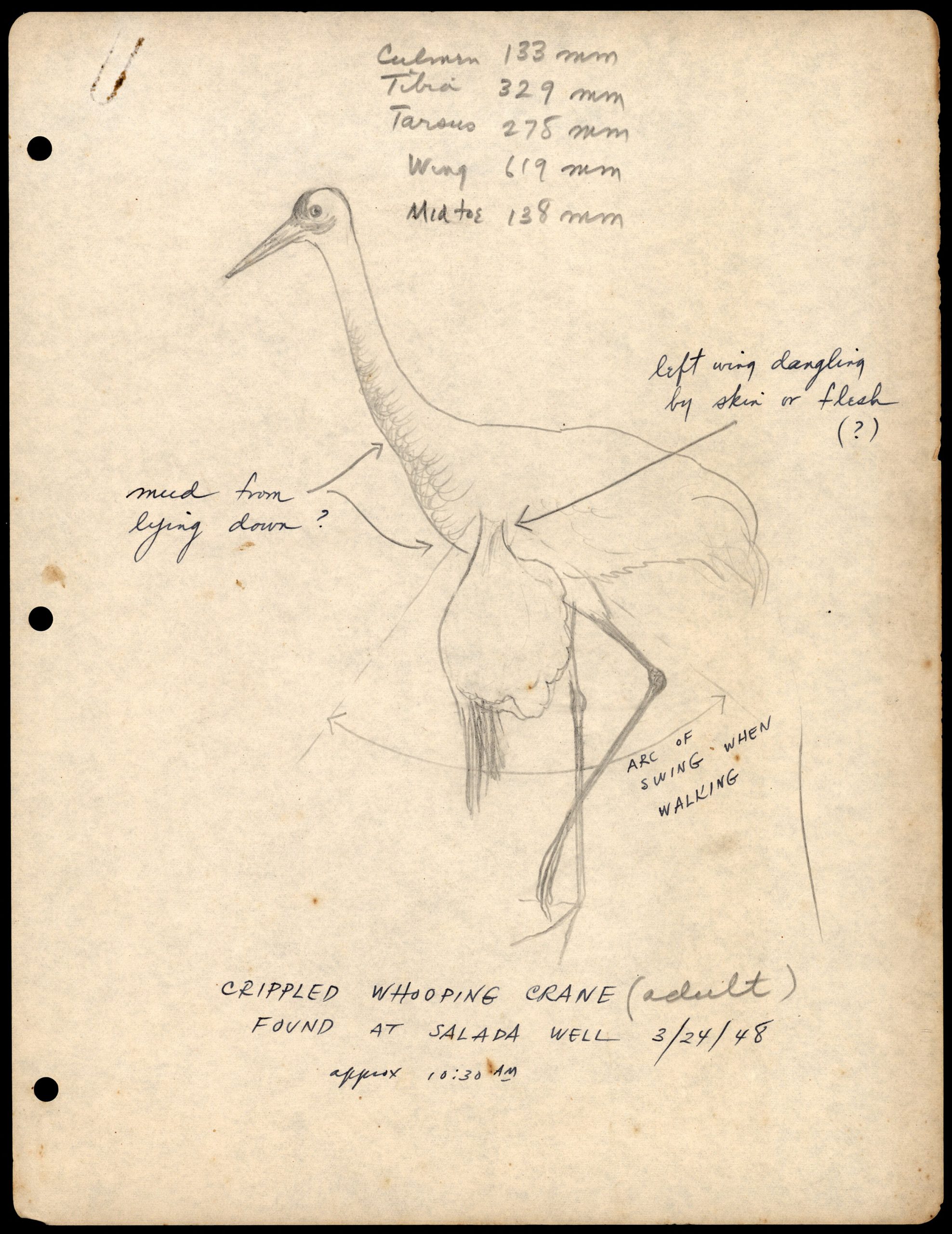
Sketch of an injured whooping crane including measurements, notes, date, and location

Allen, Robert Porter, “Diagram, Crippled Whooping Crane Sketch, March 24, 1948” (1948). Robert Porter Allen Audubon Collection – Photographs. Image 170. https://digitalcommons.usf.edu/rpa_photographs/170

Rich Collections Supporting Natural History Scholarship

USF’s growing collections will substantially enrich BHL, particularly content from across Florida, the Gulf of Mexico, and the Caribbean. Highlights include:

  • Florida Environment and Natural History Digital Collections, containing more than 40 individual collections originating from individuals, scientific societies, and community organizations across Florida. Featured exhibits are hosted on the Florida Environment and Natural History (FLENH) Portal.
  • Extensive archival materials documenting environmental history, including serving as the repository of the Florida Audubon Sanctuaries, the Florida Ornithological Society, and others. Highlights include the papers of pioneering ornithologist Robert Porter Allen.
  • Searchable Ornithological Research Archive (SORA), now hosted by USF Libraries, providing access to 45 distinct journals and more than 81,000 articles.
  • The USF Herbarium, home to more than 270,000 specimens and growing. The Herbarium samples can be viewed via theAtlas of Florida Plants.

With a major digitisation programme underway, these collections will continue to grow, bringing new biodiversity knowledge into BHL for global use.

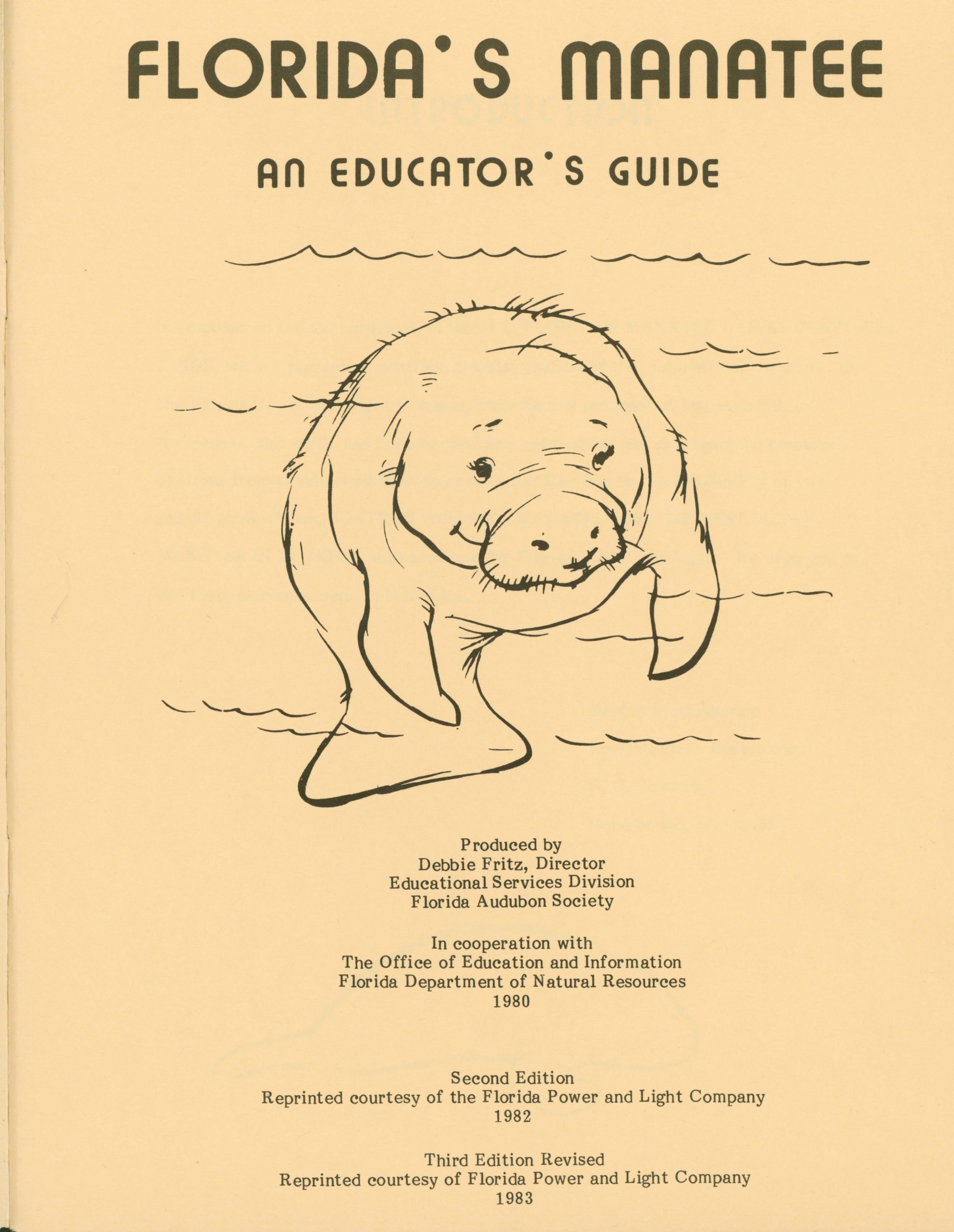
Cover of the Florida's Manatee: An Educator's Guide, including a drawing of a manatee

Fritz-Quincy, Debbie; Florida Audubon Society; and Florida. Department of Natural Resources. Bureau of Education and Information, “Florida’s Manatee, An Educator’s Guide, Third Edition, 1983” (1983). Select Environment and Natural History Publications. 21. https://digitalcommons.usf.edu/envir_publications/21

Strengthening BHL’s Technical Capacity

USF will also contribute significantly to BHL’s technical infrastructure during this crucial period of transition. Their proposed support includes significant Systems Support for MACAW (BHL’s Metadata Collection and Workflow System) for three years, enabling them to:

  • Join BHL’s Technical Team
  • Build redundancy for specialised system expertise
  • Support documentation, training, troubleshooting, and virtual content harvesting
  • Potentially undertake future development work

This contribution directly enhances BHL’s resilience, sustainability, and capacity for innovation.

A Growing Community of Support

Today’s news marks the beginning of a series of positive developments that reflect deep community confidence in BHL’s mission and future. Over the coming weeks, we will share additional announcements as our Call for Support commitments are finalised — stay tuned.

“As we move into 2026, I’m pleased to share that BHL remains fully operational and is moving into its next chapter with new partnerships and renewed momentum. In 2026 we will be operating independently under CLIR as our fiscal sponsor as we focus on long-term sustainability and growth.”

— Kelli Trei, BHL Transition Director

Global Support Through Public Fundraising

BHL’s transition has also been met with an extraordinary response from the public. To date, BHL’s Transition fundraising has raised over USD 43,000 through more than 440 donations from supporters in 38 countries, reflecting the truly global reach and impact of the Biodiversity Heritage Library.

Of this total, over USD 38,000 has been raised thus far through our #GiveBHLWings campaign, launched on 18 November 2025 to support BHL’s transition to an independent and autonomous future beyond Smithsonian hosting from 1 January 2026. This campaign alone has attracted more than 370 donations from across the globe, demonstrating strong public confidence in BHL’s ability to thrive independently and sustainably.

This outpouring of public support strengthens the institutional commitments secured through the Call for Support and means BHL’s future is being shaped by a broad, international community of partners, contributors, and supporters.

How You Can Help

BHL’s transition is underway, and community support remains essential. You can help by:

  • Sharing our story: spread the word about the #BHLTransition, our Call for Support, and the importance of open biodiversity literature.
  • Engaging your institution: if your organisation wishes to join BHL or offer support, we welcome enquiries. Please contact [email protected].
  • Donating to our #GiveBHLWings fundraising campaign: every contribution strengthens our services, infrastructure, and long-term sustainability.

Thank you for supporting the Biodiversity Heritage Library. With new members like the University of South Florida Libraries — and more announcements to follow — the future of BHL is bright and growing.

December 18, 2025by [email protected]
BHL News, Blog Reel

BHL Transition Update #5: From Call for Support to Next Steps

BHL logo with the text Transition Update. Call for Support: Next Steps. Over an image of 3 pears, 1 in cross section

On August 31, we reached the soft-close of the Biodiversity Heritage Library’s Call for Support.

First and foremost, we want to thank everyone who has reached out with offers – large and small – and to all who shared our call across their networks. We’ve received some very promising proposals, and we’ll be reviewing these in detail over the coming weeks.

As we review these offers, we want to be clear about what will guide our decisions. Over the past month, the BHL community has agreed on a set of Guiding Principles for the Transition (2025–2026). These principles reflect our shared values and priorities, and will guide our decision-making as we shape BHL’s future:

  • We are committed to open access and open infrastructure to ensure biodiversity knowledge is freely available, reusable, and sustainable.
  • We are a community-led, openly governed global consortium, building capacity that is resilient to institutional change and funding cycles.
  • We deliver inclusive collections and equitable services that advance open science, while respecting legal, cultural, and conservation considerations.
  • We are committed to modernizing our infrastructure to create a flexible, secure, and sustainable platform – prioritizing accessibility and global participation through multilingual, mobile-responsive design and equitable access.
  • We surface and structure the data in biodiversity literature, in alignment with FAIR principles, enabling its discovery, reuse, and integration across the biodiversity research ecosystem.
  • We connect past, present, and future by transforming BHL’s 63 million pages of biodiversity literature – the world’s collective knowledge about biodiversity – into an indispensable open resource for research, conservation, and education worldwide.

We are profoundly grateful to everyone who has stepped forward to help ensure that BHL remains open and accessible to all.

We are also grateful to those who reached out with tentative support and early-stage ideas, as well as to those who let us know that, while they aren’t in a position to help right now, they’re working towards being able to in the near future. Every expression of interest matters.

The door remains open: we will continue to accept offers of support in the months ahead. If you have ideas, resources, or connections that could help sustain BHL, we would love to hear from you.

Securing BHL’s Future

The commitments we’ve received so far will provide BHL with critical interim stability for the next 1-3 years. This is a vital first step, but it’s only the beginning. To truly secure BHL’s long-term future, we will need sustained investment, new partners willing to share responsibility for hosting and governance, and continued creativity in how we fund and govern BHL. Building this stable foundation will be at the heart of our transition work over the year ahead.

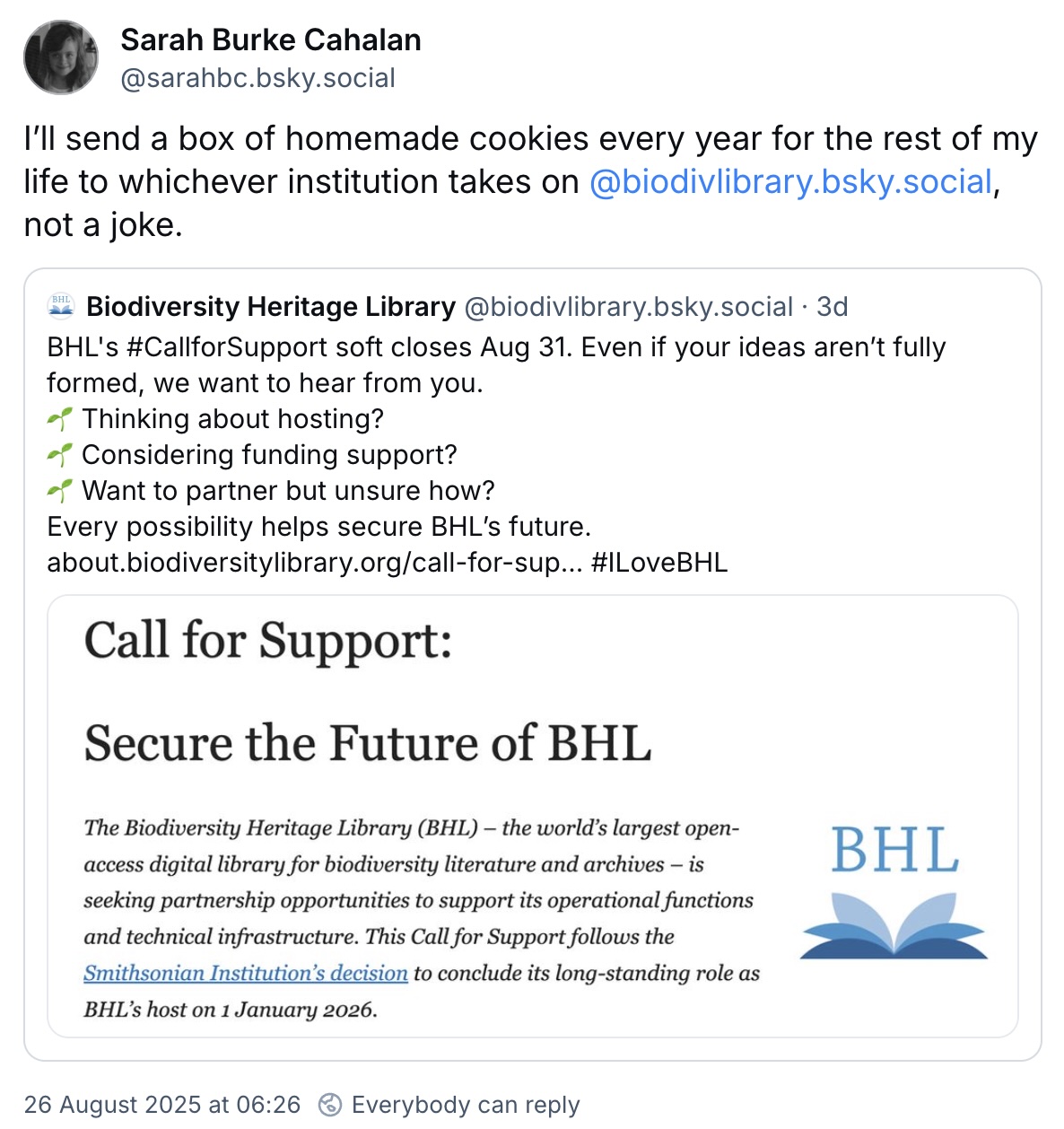
Alongside the offers of hosting and funding, we have also been showered with outpourings of love and appreciation for BHL. Our favourite came via Bluesky, from Sarah Burke Cahalan, who wrote:

From user @sarahbc.bsky.social in reply to our Call for Support: "I'll send a box of homemade cookies every year for the rest of my life to whichever institution takes on @biodivlibrary.bsky.social, not a joke."

What Comes Next

Looking ahead, the coming year will be focused on building a sustainable governance and funding model that can safeguard BHL for decades to come. Alongside this, we are actively pursuing new grant opportunities to help secure this foundation.

And finally, we are excited to share that we are in the final stages of launching our public fundraising campaign. This will be an invaluable opportunity for our global community of BHL users to directly support BHL’s future. From now on, BHL will increasingly rely on fundraising and donations, and we will be deeply grateful for your support. We’ll be sharing more details very soon – watch this space!

The Call for Support was just the beginning. BHL now has promising next steps in place, but our transition journey is far from over. With your continued support, we can ensure that the world’s largest open-access library of biodiversity knowledge remains openly accessible for everyone, everywhere.

September 4, 2025by [email protected]
BHL News, Blog Reel

BHL Transition Update #4: Welcoming CLIR as BHL’s New Fiscal Sponsor

Red square logo with the letters CLIR next to brand name Council on Library and Information Resources

We’re thrilled to share some exciting news:

Red square logo with the letters CLIR next to brand name Council on Library and Information Resources🎉 The Biodiversity Heritage Library has a new fiscal sponsor – the Council on Library and Information Resources (CLIR)!

This is a major step forward in securing a sustainable future for BHL.

As many of you know, the Smithsonian Institution will conclude its hosting role at the end of 2025. Since this announcement, BHL has been working diligently behind the scenes to establish new homes for its core functions. With CLIR now on board as our fiscal sponsor, the legal and financial infrastructure for BHL are firmly in place. Importantly, Smithsonian Libraries and Archives will continue as a valued BHL Member and active contributor to the consortium beyond the transition.

Let’s be Clear: BHL is still BHL

BHL remains a global consortium of Partners with a shared mission to collaboratively make biodiversity literature openly available to the world. We are governed by our Bylaws and Members Council, with routine operations managed by the Executive Committee, Secretariat and Technical Team. Our committees and working groups remain essential to the development of BHL’s collection and services.

BHL’s logo and branding will not change – we’ve just flown to a new (more autonomous) nest. In combination with our Call for Support, we hope to hatch anew in 2026.

So, what does fiscal sponsorship mean?

A fiscal sponsor is a nonprofit organization that provides legal and financial oversight to a project or initiative, allowing it to operate more flexibly than within a traditional institutional home. In practical terms, this means BHL now has a new administrative and financial base with CLIR, an organization equipped to manage contracts, finances, HR, and grant administration.

With CLIR as our sponsor, BHL can:

  • Hire and retain staff, with support for payroll and benefits. BHL staff will remain under BHL direction, with contracts administered by CLIR.
  • Receive and manage grants and donations directly, without going through a host institution. CLIR will also provide the tools and compliance structures we need to fundraise effectively.
  • Collaborate globally with fewer barriers, thanks to CLIR’s support for cross-border contracting and financial management.
  • Focus on mission, not paperwork, while keeping our community-led governance at the heart of everything we do.

Most importantly, this partnership is flexible: BHL retains the option to exit the arrangement in the future if we transition to an independent model. In the meantime, CLIR’s support ensures that BHL can keep moving forward, even as we continue to build long-term solutions for infrastructure and staffing.

We’re deeply grateful to the team at CLIR for helping make this possible – and to you, our community, for your continued support as we take this important step.

Meanwhile, at BHL…

While the transition planning continues in the background, BHL’s core work carries on with its usual energy and enthusiasm. Across the globe, our community of contributors continues to digitize, share, and connect biodiversity knowledge. For a great example of this, check out Catalogue of Life (CoL)’s new BHL dataset, which connects taxonomic names in CoL to their original descriptions in BHL.

In April 2025, the BHL collection surpassed 63 million pages. Between April and July alone, the BHL consortium added 603,586 new pages and 18,386 articles to our online collection, demonstrating our ongoing commitment to expanding access to biodiversity literature.

💚 Thank You for the Love 

Since launching our Call for Support on 11 June, we’ve been overwhelmed by the love and encouragement pouring in from around the world. Thank you to the many organizations and individuals who have amplified our message and shared why BHL matters.

A few recent favorites:

All of us who use BHL need to do all we can to support this vital scientific and cultural treasure, that just keeps getting better and better. It’s vital that this continue.
– @flannerm.bsky.social‬

I use BHL nearly daily. One of those rare resources vital to both scientists and historians… So many books (and articles, and species descriptions) wouldn’t be published without it.
– @wbarlowrobles.bsky.social‬

BHL’s archives serve as an indispensable record of Earth’s biodiversity and represent an invaluable part of our scientific and cultural heritage!
– Savvas Paragkamian, LinkedIn

BHL is my most used online taxonomic resource, and it needs a sustainable host for the future.
– @derekhennen.bsky.social

Call for Support: Still Open

Our official Call for Support remains open until 31 August 2025, and we continue to welcome proposals, ideas, and offers to help shape BHL’s future.

We’re especially looking for:

  • Hosting and technical support
  • Funding and in-kind contributions
  • Staffing partnerships
  • Visionary ideas for BHL’s next chapter

📧 Got an idea? Get in touch: [email protected]

💚 Love BHL? Help us spread the word and keep the momentum going using the hashtag #ILoveBHL.

We’ll keep posting regular updates as we reach new milestones and confirm future partnerships. Thank you, as always, to our incredible global community for the ideas, energy, and encouragement that are keeping this transition moving forward.

Onward!

August 11, 2025by [email protected]
BHL News, Blog Reel

Seeds for the Future: Closing Thoughts from BHL’s Wikimedian-in-Residence

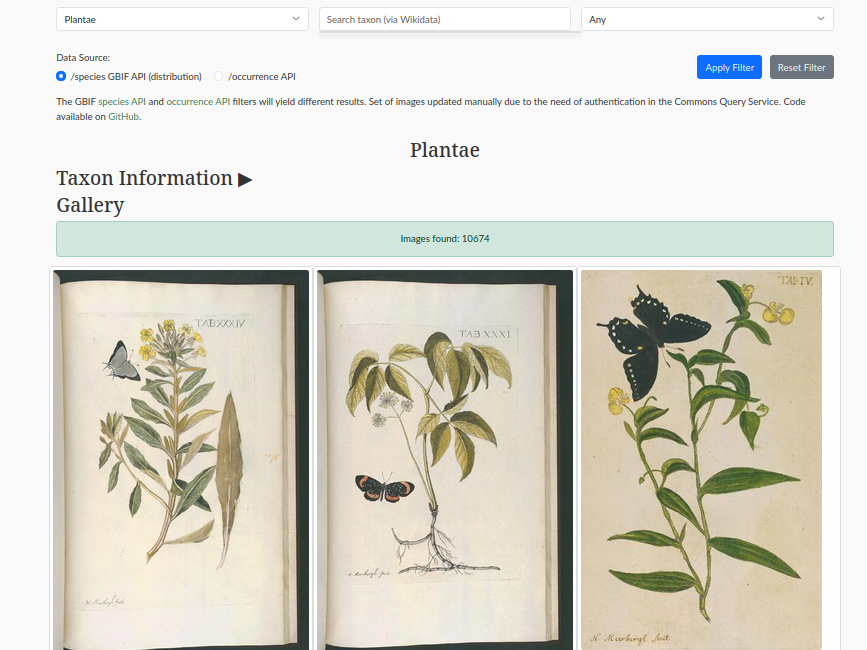
Sample search in BHL Image Explorer app showing three images in taxon Plantae, including scientific names, wikpedia links, wikimedia uses, and links to other databases

In November 2024, I embarked on a dream job as the Wikimedian-in-Residence at the Biodiversity Heritage Library (BHL), aiming to enrich Wikimedia’s platforms with BHL’s incredible biodiversity collections. This crucial role was shaped by community-driven recommendations outlined along with the dedicated efforts of the BHL-Wiki Working Group, including key figures such as JJ Dearborn, Jake Orlowitz, Giovanna Fontenelle, and Siobhan Leachman, who continuously support the integration of BHL content with the Wikimedia ecosystem.

Connecting the Dots

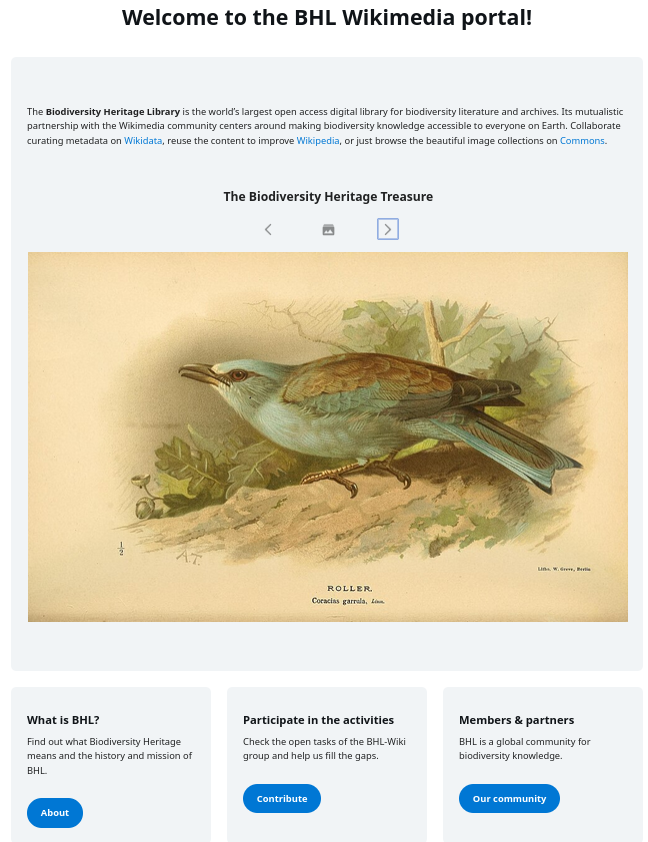
One of our first achievements was creating a comprehensive Meta-Wiki portal clearly showcasing the partnership across Wikimedia’s diverse projects and adding rich documentation on the different ways both communities are connected. Throughout the residency, we transparently documented our ongoing activities through detailed status updates, offering insights into our step-by-step progress.

Homescreen of the BHL wikimedia portal with an image of a blue and brown bird perching on a log

The BHL-Wiki Meta-Wiki portal

Tools and Impact

We developed several exciting tools, including BHL Arena, a fun interactive game highlighting BHL’s visual treasures and collecting insights about community preferences.

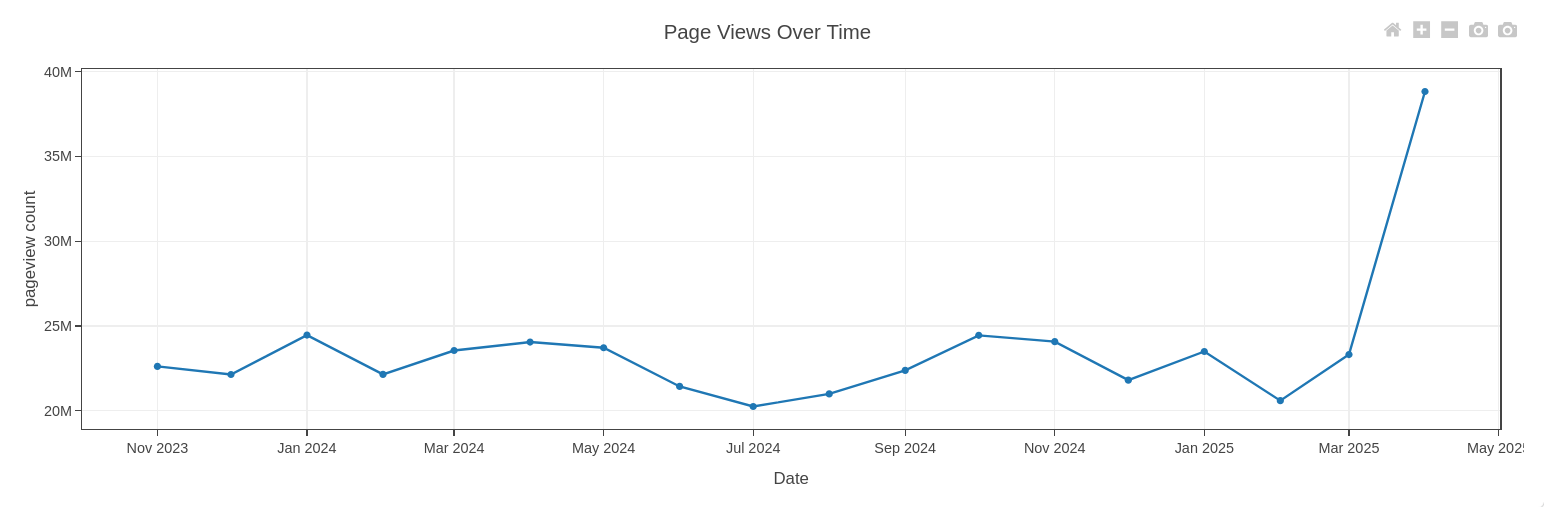
To capture and understand the broader impact, we built a dedicated dashboard leveraging Wikimedia’s Commons Impact Metrics API. Remarkably, BHL images attract around 20 million monthly views—vastly surpassing BHL’s own website traffic, which averages an already impressive 1.5 million accesses per month.

Graph demonstrating page views over time, starting in November 2023 through April 2025

Monthly views for BHL content on Wiki (with spike in April motivated by traffic to “dire wolf”)

Structuring Data for Maximum Reach

A key achievement was enhancing metadata through Structured Data on Commons (SDC). Collaboratively, we designed a comprehensive, structured metadata model, supported by detailed workflows using tools like Open Refine to efficiently add rich structured data to thousands of BHL images.

We successfully developed scripts integrating metadata from Flickr, the BHL API, GBIF, as well as Wikimedia Commons community-curated categories. With the scripts, the initial goal was to add structured data to 5000 files by the end of March. The combination of the automated approaches with the tireless work of the BHL-Wiki participants, namely User:Ambrosia10, led us to the current coverage of structured data additions for over 18,000 files!

A Tool for the Future: BHL Image Explorer

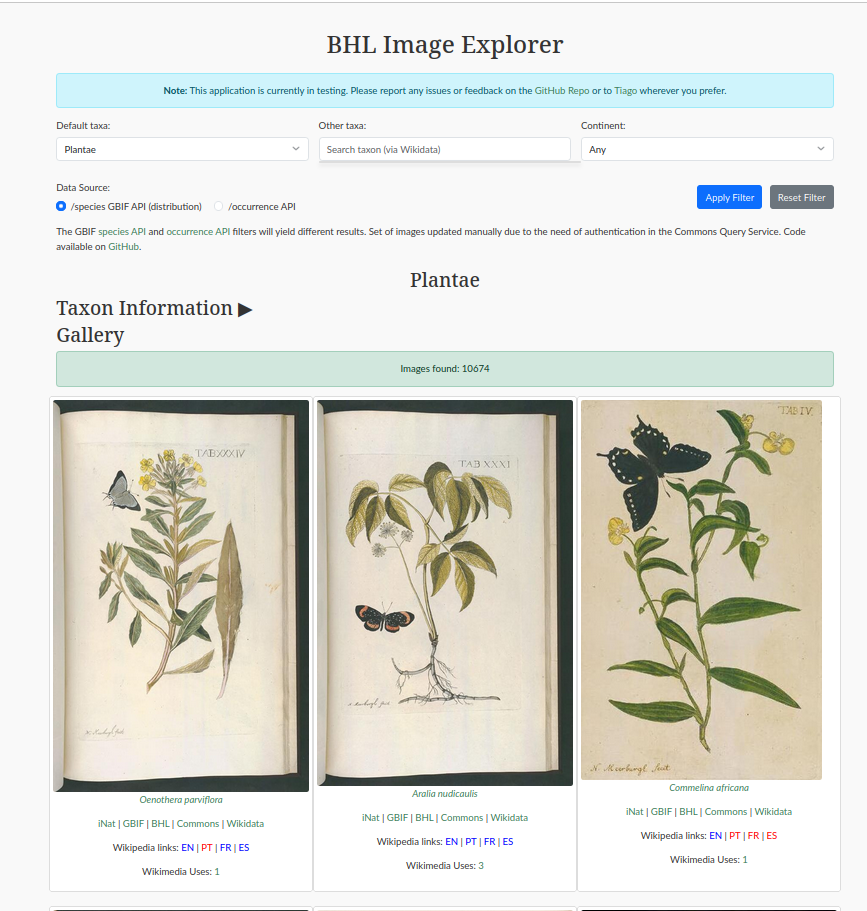
One particularly impactful creation was the BHL Image Explorer, an intuitive tool enabling easy discovery and reuse of BHL images on Wikipedia. Developed iteratively with user feedback, it offers robust taxon- and location-based searches drawing from the GBIF API, interactive navigation, and detailed Wikimedia reuse statistics. It is a demonstration of how the structured data can be leveraged to improve navigability of image collections as well as aiding Wikimedia volunteers in extending the reach of illustrations.

Sample search in BHL Image Explorer app showing three images in taxon Plantae, including scientific names, wikpedia links, wikimedia uses, and links to other databases

Search for plants in the BHL Image Explorer

Looking Ahead

Through these six months, I have grown a passion for the BHL Image collection, and I really want to see them everywhere (e.g. every time I open a new tab). In an age of cheap, AI-generated illustrations, there is something grand in seeing these human-made pieces of scientific art, tales of the biodiversity-loving nature of humankind across the centuries.

Although my formal residency has concluded and new futures for BHL are in preparation, I am confident that the outcomes of this work will continue to flourish. Some of the key contributions poised for lasting impact on the data/metadata for BHL Images include:

  1. A robust, adaptable, structured metadata model ready for future use;
  2. Efficient scripts for large-scale structured data integration from diverse APIs;
  3. Automated workflows transforming Wikimedia Commons categories into structured data; and
  4. The accessible and powerful BHL Image Explorer tool, enhancing global access to biodiversity imagery.

These advancements significantly amplify the visibility and accessibility of biodiversity heritage content, inspiring ongoing volunteer engagement and enriching global biodiversity knowledge.

I warmly invite everyone to explore the BHL Image Explorer and actively participate in ongoing efforts listed on BHL’s Meta-Wiki page. Together, we can continue bridging biodiversity’s rich past with Wikimedia’s vibrant, open-access future!

July 29, 2025by [email protected]
Page 1 of 41234»

Help Support BHL

BHL's existence depends on the financial support of its patrons. Help us keep this free resource alive!

search

About BHL

The Biodiversity Heritage Library (BHL) is the world’s largest open access digital library for biodiversity literature and archives. BHL operates as a worldwide consortium of natural history, botanical, research, and national libraries working together to digitize the natural history literature held in their collections and make it freely available for open access as part of a global “biodiversity community.”

Join Our Mailing List

Sign up to receive the latest news, content highlights, and promotions.

Subscribe Now

Subscribe to Blog via Email

Enter your email address to subscribe to this blog and receive notifications of new posts by email.

Join 319 other subscribers

Subscribe to Blog Via RSS

Subscribe to the blog RSS feed to stay up-to-date on all the latest BHL posts.

Access RSS Feed

Inspiring Discovery through Free Access to Biodiversity Knowledge.

The Biodiversity Heritage Library makes it easier than ever for you to access the information you need to study and explore life on Earth…for free, anytime, anywhere.


64+ Million Pages of
Biodiversity Literature Online.

EXPLORE

Tools and Services
to Transform Research.

EXPLORE

300,000+
Illustrations on Flickr.

EXPLORE

ABOUT | HARMFUL CONTENT | PRIVACY | SITE MAP | TERMS OF USE