

In November 2024, I embarked on a dream job as the Wikimedian-in-Residence at the Biodiversity Heritage Library (BHL), aiming to enrich Wikimedia’s platforms with BHL’s incredible biodiversity collections. This crucial role was shaped by community-driven recommendations outlined along with the dedicated efforts of the BHL-Wiki Working Group, including key figures such as JJ Dearborn, Jake Orlowitz, Giovanna Fontenelle, and Siobhan Leachman, who continuously support the integration of BHL content with the Wikimedia ecosystem.
Connecting the Dots
One of our first achievements was creating a comprehensive Meta-Wiki portal clearly showcasing the partnership across Wikimedia’s diverse projects and adding rich documentation on the different ways both communities are connected. Throughout the residency, we transparently documented our ongoing activities through detailed status updates, offering insights into our step-by-step progress.
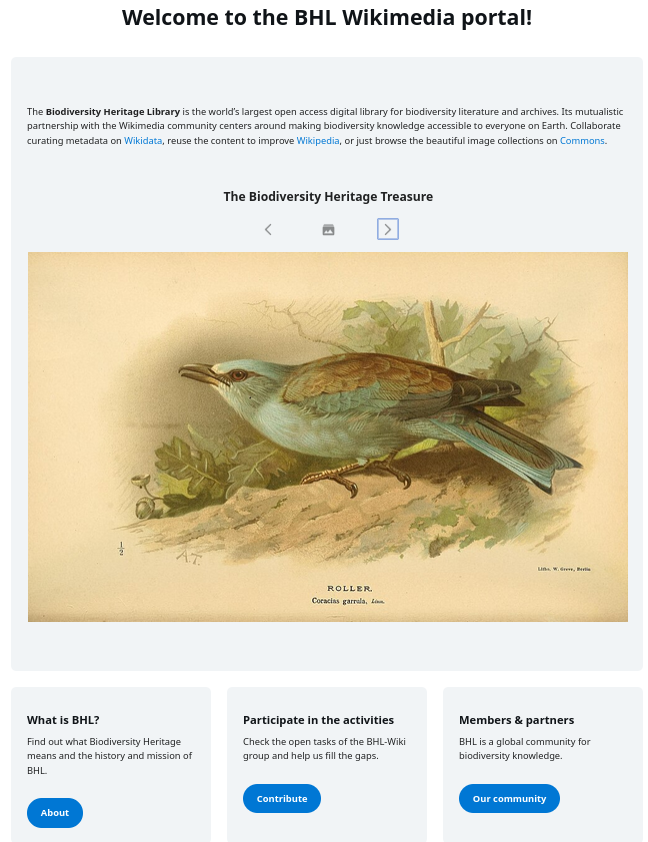
The BHL-Wiki Meta-Wiki portal
Tools and Impact
We developed several exciting tools, including BHL Arena, a fun interactive game highlighting BHL’s visual treasures and collecting insights about community preferences.
To capture and understand the broader impact, we built a dedicated dashboard leveraging Wikimedia’s Commons Impact Metrics API. Remarkably, BHL images attract around 20 million monthly views—vastly surpassing BHL’s own website traffic, which averages an already impressive 1.5 million accesses per month.
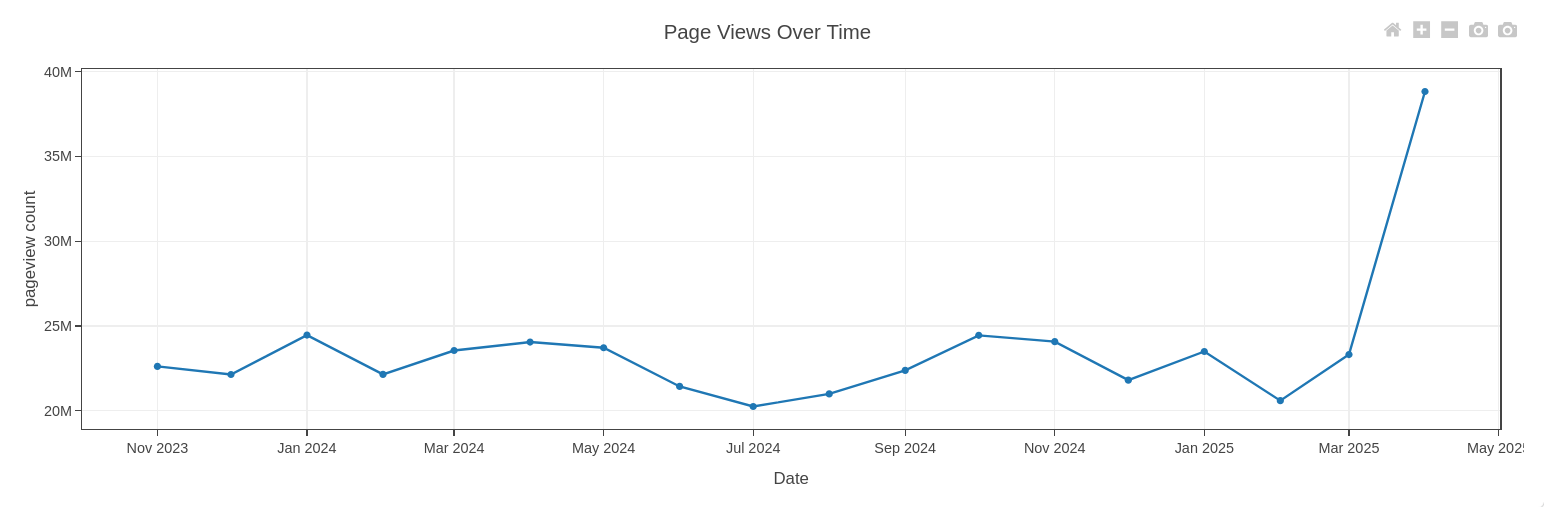
Monthly views for BHL content on Wiki (with spike in April motivated by traffic to “dire wolf”)
Structuring Data for Maximum Reach
A key achievement was enhancing metadata through Structured Data on Commons (SDC). Collaboratively, we designed a comprehensive, structured metadata model, supported by detailed workflows using tools like Open Refine to efficiently add rich structured data to thousands of BHL images.
We successfully developed scripts integrating metadata from Flickr, the BHL API, GBIF, as well as Wikimedia Commons community-curated categories. With the scripts, the initial goal was to add structured data to 5000 files by the end of March. The combination of the automated approaches with the tireless work of the BHL-Wiki participants, namely User:Ambrosia10, led us to the current coverage of structured data additions for over 18,000 files!
A Tool for the Future: BHL Image Explorer
One particularly impactful creation was the BHL Image Explorer, an intuitive tool enabling easy discovery and reuse of BHL images on Wikipedia. Developed iteratively with user feedback, it offers robust taxon- and location-based searches drawing from the GBIF API, interactive navigation, and detailed Wikimedia reuse statistics. It is a demonstration of how the structured data can be leveraged to improve navigability of image collections as well as aiding Wikimedia volunteers in extending the reach of illustrations.
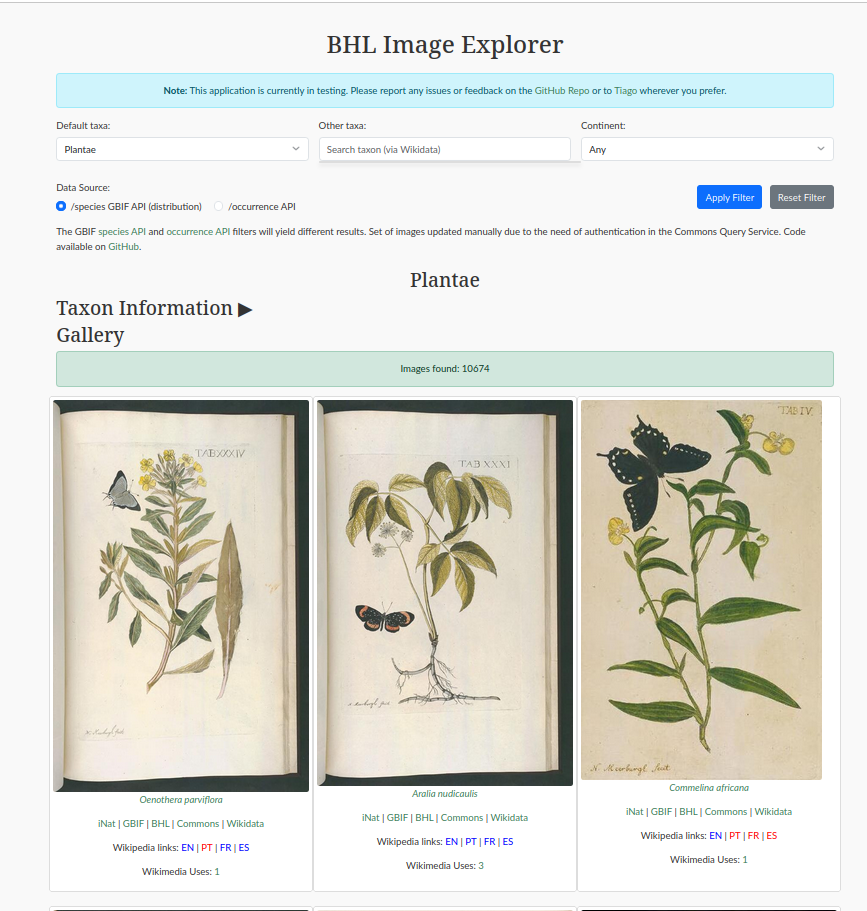
Search for plants in the BHL Image Explorer
Looking Ahead
Through these six months, I have grown a passion for the BHL Image collection, and I really want to see them everywhere (e.g. every time I open a new tab). In an age of cheap, AI-generated illustrations, there is something grand in seeing these human-made pieces of scientific art, tales of the biodiversity-loving nature of humankind across the centuries.
Although my formal residency has concluded and new futures for BHL are in preparation, I am confident that the outcomes of this work will continue to flourish. Some of the key contributions poised for lasting impact on the data/metadata for BHL Images include:
- A robust, adaptable, structured metadata model ready for future use;
- Efficient scripts for large-scale structured data integration from diverse APIs;
- Automated workflows transforming Wikimedia Commons categories into structured data; and
- The accessible and powerful BHL Image Explorer tool, enhancing global access to biodiversity imagery.
These advancements significantly amplify the visibility and accessibility of biodiversity heritage content, inspiring ongoing volunteer engagement and enriching global biodiversity knowledge.
I warmly invite everyone to explore the BHL Image Explorer and actively participate in ongoing efforts listed on BHL’s Meta-Wiki page. Together, we can continue bridging biodiversity’s rich past with Wikimedia’s vibrant, open-access future!
Discover more from Biodiversity Heritage Library
Subscribe to get the latest posts sent to your email.



Leave a Comment