Biodiversity Heritage Library - Program news and collection highlights from BHL
  • Home
  • News
  • Featured Books
    • All Featured Books
    • Book of the Month Series
    • BHL at 20
  • User Stories
  • Campaigns
    • Fossil Stories
    • Garden Stories
    • Monsters Are Real
    • Page Frights
    • Her Natural History
    • Earth Optimism 2020
  • Tech Blog
  • Visit BHL
Home
News
Featured Books
    All Featured Books
    Book of the Month Series
    BHL at 20
User Stories
Campaigns
    Fossil Stories
    Garden Stories
    Monsters Are Real
    Page Frights
    Her Natural History
    Earth Optimism 2020
Tech Blog
Visit BHL
  • Home
  • News
  • Featured Books
    • All Featured Books
    • Book of the Month Series
    • BHL at 20
  • User Stories
  • Campaigns
    • Fossil Stories
    • Garden Stories
    • Monsters Are Real
    • Page Frights
    • Her Natural History
    • Earth Optimism 2020
  • Tech Blog
  • Visit BHL
Biodiversity Heritage Library - Program news and collection highlights from BHL
Blog Reel, Featured Books

A Tribute to America’s Conservation President

“There are no words that can tell the hidden spirit of the wilderness, that can reveal its mystery, its melancholy, and its charm.” ~ Theodore Roosevelt


Theodore Roosevelt Memorial at the American Museum of Natural History

In 2012, the American Museum of Natural History (AMNH), one of BHL’s founding members, celebrated the grand reopening of the Theodore Roosevelt Memorial. For three years, the Memorial was closed to the public as part of a 37.5 million dollar renovation plan to re-imagine this permanent exhibit. Theodore Roosevelt, America’s Conservation President, was intimately tied to the museum since its founding in 1869.  This week’s book of the week selection, A Book-lover’s Holidays in the Open (1916) was written by Teddy and affords readers an intimate glimpse inside the mind of one of America’s most fascinating presidents.

View Full Size Image
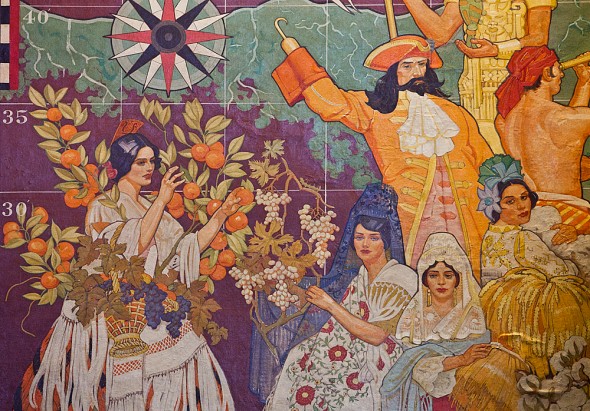
The murals depict milestones in TR’s life. (Credits: Amal Chen/The Epoch Times)

The renovation includes a new life-size bronze statue of Theodore Roosevelt and several exhibits charting Roosevelt’s journey from budding naturalist to becoming America’s conservation president. Perhaps, the most exciting for those from the art world is the 2.5 million dollar allocation that went towards the restoration of William Andrew Mackay’s murals of Roosevelt. The murals, recording key moments in the life of Roosevelt greet you at the main entrance and cover a space of over 5,200 feet.

A Book-lover’s Holidays in the Open (1916)
View Full Size Image
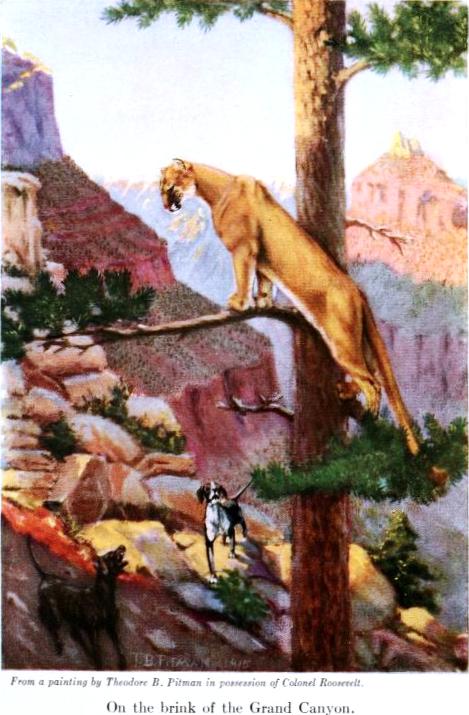
Book Frontispiece

To continue AMNH’s celebration of Roosevelt, we wanted to highlight a book that they digitized for the BHL. As the title of this week’s book suggests, Theodore Roosevelt liked to read books. Correction. This man LOVED to read books. Many in his personal circle have vouched that “Teedie” read at least one book per day, most often finishing said tome before breakfast. This seemingly ambitious reading schedule made Roosevelt the most well-read president alongside, Thomas Jefferson.

As a young boy, Roosevelt was an asthmatic bookworm often confined to his Manhattan family flat. One can almost see him wistfully longing for the outdoors as he escaped city life in  the imaginative world of books. However, it was this deprivation from the natural world that caused him to love the great outdoors all the more. He looked forward to family vacations in upstate New York where he could observe nature’s creatures in all their glory.

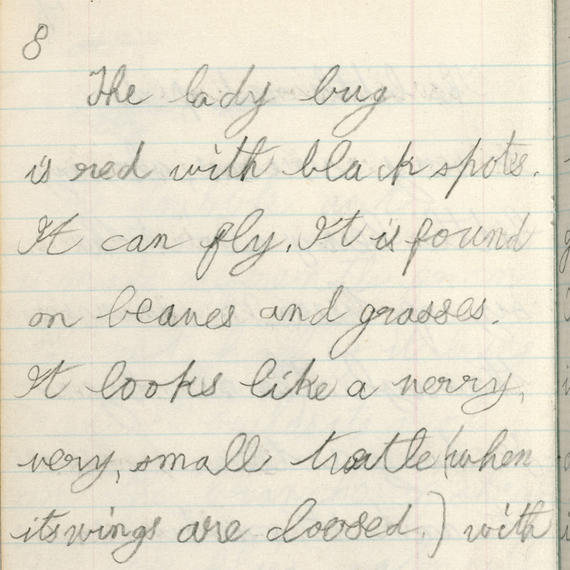
As early as age 7, Teddy began to collect specimens and wrote about them in minute detail. He even learned amateur taxidermy around age 12 and began adding specimens to a personal collection that he and his cousins dubbed “Roosevelt’s Natural History Museum.” His father fully supported young Roosevelt’s budding interest, being a nature lover himself. In fact in 1869, Theodore Roosevelt Sr. signed the American Museum of Natural History’s founding charter with other trustees in the parlor of the Roosevelt family home on East 20th Street in New York City. Moreover, the Roosevelt family is deeply connected to AMNH, having served on the Museum’s board for its entire history.
View Full Size Image
A young naturalist’s journal. Photo Credits: AMNH

With A Book-lover’s Holidays in the Open (1916), you get an eclectic mix of stories, personal anecdotes and Roosevelt’s views about conservation in America. Our favorite excerpt from this book, which defies a cursory summary and warrants a fully digested read,  illustrates Teddy’s internal transformation from a hunter that appreciated nature to a President who became, arguably history’s most influential conservation policy maker. Admittedly, this chunk of text is quite long but,  Teddy’s words are eloquent and if you are hurried at least have a look at the passages in conservation green:


“The westernmost island, we visited was outside the national reservation, and that very morning it had been visited and plundered by a party of eggers. The eggs had been completely cleared from most of the island, gulls and terns had been shot, and the survivors were in a frantic state of excitement. It was a good object-lesson in the need of having reserves, and laws protecting wildlife, and a sufficient number of efficient officers to enforce the laws and protect the reserves. Defenders of the short-sighted men who in their greed and selfishness will, if permitted, rob our country of half its charm by their reckless extermination of all useful and beautiful wild things sometimes seek to champion them by saying that “the game belongs to the people.” So it does; and not merely to the people now alive, but to the unborn people. The ”greatest good of the greatest number” applies to the number within the womb of time, compared to which those now alive form but an insignificant fraction. Our duty to the whole, including the unborn generations, bids us restrain an unprincipled present-day minority from wasting the heritage of these unborn generations. The movement for the conservation of wildlife, and the larger movement for the conservation of all our natural resources, are essentially democratic in spirit, purpose, and method.”


Teddy’s Conservation Legacy

Amen Teddy. What an incredible life you led, wearing more hats than one cares to list. Today,  we are remembering Teddy as a Book-Lover, Naturalist, “Wilderness Warrior,” Founder of the U.S National Park System and the Conservation President. He was the guy with the big stick going around speaking softly, almost lovingly into the ears of all Americans, willing them to do great things in the spirit of the common good. In his life he inspired people to embrace conservation by his actions: protecting some 230 million acres, establishing 51 Federal Bird Reservations, 4 National Game Preserves, 150 National Forests, 5 National Parks, and proclaiming 18 National Monuments.

We hope you enjoyed this post. Interested in guest-blogging for BHL? We’d love that! Natural history, biodiversity and conservation topics are especially welcomed. Email us your ideas at [email protected].
October 25, 2012by [email protected]
Blog Reel, Featured Books

Book of the Week: The Human Side of Birds

Approach Nature anew, as a child might. 

View Full Size Image

Royal Dixon, the author of this week’s book of the week, The Human Side of Birds (1917), had an eclectic background. His formal credentials included botanist at the Chicago Field Museum, ornithologist, lecturer for the NY Board of Education, science journalist and author of several books– all of which sought to put a human face on nature. He was also a dancer, thespian, political writer and founder of the First Animal Church in America.

One might ask why was this man was so intent on humanizing plants, animals, trees and birds? Dixon, it seems, was concerned with modern society and its growing inability to relate to nature. To appreciate it. To see it. And most importantly to preserve it. He saw the good in the formal sciences yet, believed in some ways that taxonomy, in particular, barred non-experts from participating in the deeply human act of naming and organizing Nature’s Kingdom. His mission was simple: bring Nature to the people. Show them how similar every creature on this planet is to us and how we are all connected to each other on the most basic and profound levels.

Besides authoring several books, Dixon’s chosen platform from which to disseminate his message was guffawed at by most in his time. He became founder and leader of the First Church for Animal Rights, which met weekly and promoted the idea that “every creature had the inalienable right to life, liberty and the pursuit of happiness.” Although the church is now defunct, or at least seems to be since there isn’t a digital whisper of such an organization to be found out in cyberspace, we here at BHL are entirely sympathetic to Dixon’s cause!  He was a man who had a formal science background yet, his efforts were wholly aimed at the general public. He realized that in order to reach people and get them to care about Nature we need to change the hearts and minds of those who believe in the stereotype that taxonomy is just a dry, stodgy, and inaccessible science concerned with mindless minutiae and doomed to endless arguments between warring factions of men who seemed partial to fabric combinations consisting only of houndstooth, tweed, or corduroy.

View Full Size Image

In his forward Dixon states his purpose simply: “to reject the limitations of unsympathetic research, and to endeavor to see beyond formal classifications, and to understand the spirit, emotions and impulses in the lives of our feathered friends of the air.” Is this not the true reason behind all this binomial naming business? Author Carol Kaesuk Yoon seems to think so in her prize winning book on taxonomy: Naming Nature. Moreover she makes the case that those of our ancestors who were not taxonomists, or folk taxonomists more precisely, did not survive. Therefore, we are all descendents of taxonomists because those who could not name, order and understand nature were unable to discern a poisonous plant from a one that was edible, or which herbal remedy could cure their sick child’s fever. They knew to avoid eating the sacred bird of the neighboring tribe lest they’d like to find their head on a stake in the morning! Our non-taxonomist ancestors were “naturally deselected.” Taxonomy is an ancient science deeply embedded into the human experience, past and present. It was and still is vital to human existence and it belongs to everyone.

So let us humor Dixon: How can he show us that birds are just like US?

Dixon’s theater background helped him understand storytelling and the human archetypes that we identify with. Therefore, his book is divided into 14 chapters; each assigned a human archetype such as the “Athlete”, the “Artist”, the “Dancer,” and it is under these human classifications that Dixon seeks to place birds:

View Full Size Image
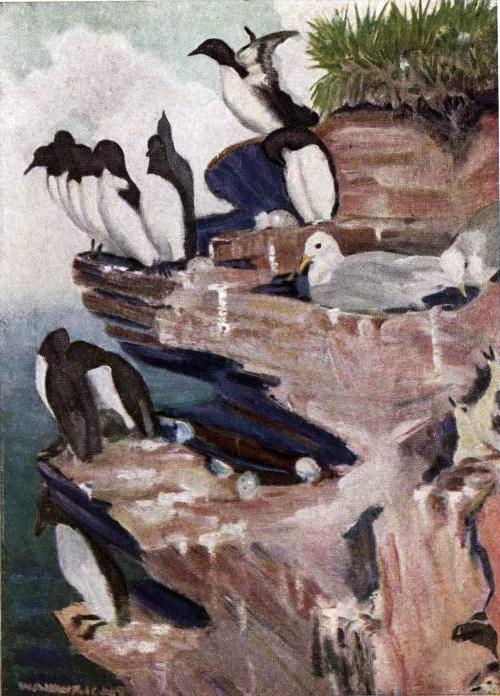
The urbane Penguin’s apartment houses are nestled in cliff cities.
View Full Size Image
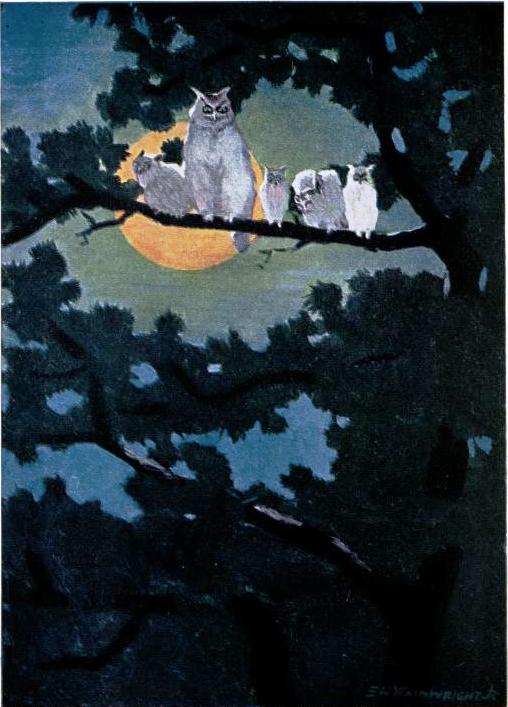
The Wise Mother: ‘Gather ’round young ones, let mother impart her wisdom with a story
View Full Size Image
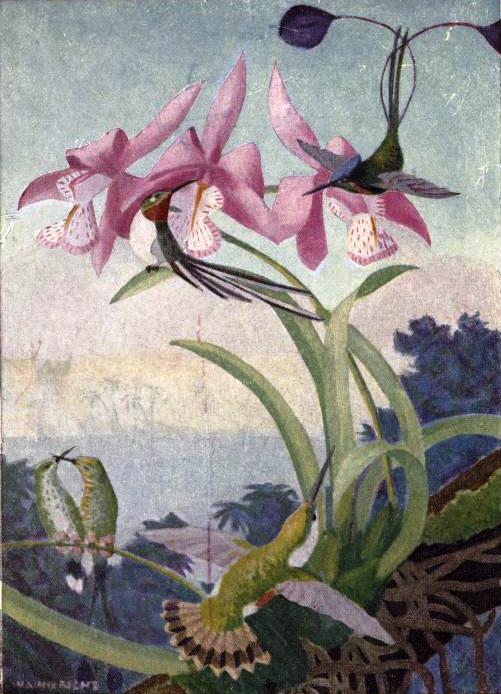
The aesthetic sense of the artistic hummingbird whose nests are wonders of delicacy and beauty
View Full Size Image
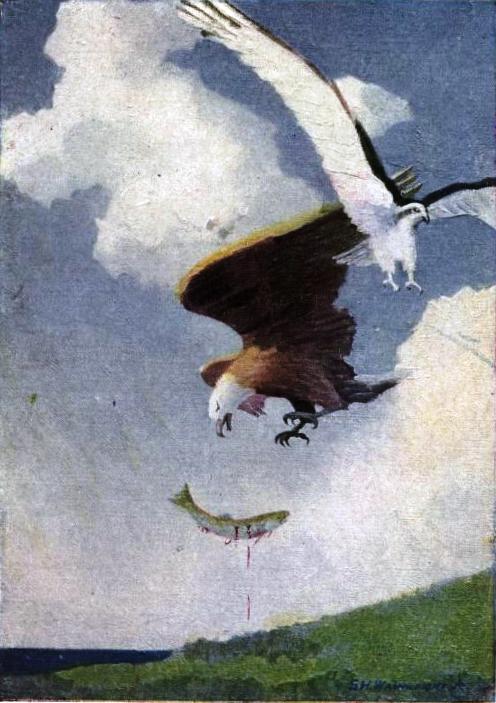
The thieving Osprey rarely fishes for himself preferring to rob others of their work. Human-like?

So today, let’s look at Nature through Dixon’s eyes: awake, appreciative, anew, as a child might. We leave you with a quote to contemplate:

“If I name every bird in my walk, describe its colour and ways, . . . give a lot of facts and details about the bird, it is doubtful if my reader is interested. But if I relate the bird in some way to human life, to my own life; show what it is to me and what it is in the landscape and season, then do I give my reader a live bird and not a labeled specimen.”

 – John Burroughs, American Naturalist and Conservationist

We would like to thank America Museum of Natural History, NY (AMNH) for digitizing this work. Incidentally, the 34 photos in Dixon’s book also come from AMNH. Bravo to the staff there for assisting in the creation and rebirth of this work. We know Dixon would be doubly pleased.

Other work’s by Dixon available on the Biodiversity Heritage Library

The Human Side of Plants (1914)
The Human Side of Trees (1917) 
The Human Side of Animals (1918)

July 19, 2012by [email protected]
Page 3 of 3«123

Help Support BHL

BHL's existence depends on the financial support of its patrons. Help us keep this free resource alive!

search

About BHL

The Biodiversity Heritage Library (BHL) is the world’s largest open access digital library for biodiversity literature and archives. BHL operates as a worldwide consortium of natural history, botanical, research, and national libraries working together to digitize the natural history literature held in their collections and make it freely available for open access as part of a global “biodiversity community.”

Join Our Mailing List

Sign up to receive the latest news, content highlights, and promotions.

Subscribe Now

Subscribe to Blog via Email

Enter your email address to subscribe to this blog and receive notifications of new posts by email.

Join 319 other subscribers

Subscribe to Blog Via RSS

Subscribe to the blog RSS feed to stay up-to-date on all the latest BHL posts.

Access RSS Feed

Inspiring Discovery through Free Access to Biodiversity Knowledge.

The Biodiversity Heritage Library makes it easier than ever for you to access the information you need to study and explore life on Earth…for free, anytime, anywhere.


64+ Million Pages of
Biodiversity Literature Online.

EXPLORE

Tools and Services
to Transform Research.

EXPLORE

300,000+
Illustrations on Flickr.

EXPLORE

ABOUT | HARMFUL CONTENT | PRIVACY | SITE MAP | TERMS OF USE