Biodiversity Heritage Library - Program news and collection highlights from BHL
  • Home
  • News
  • Featured Books
    • All Featured Books
    • Book of the Month Series
    • BHL at 20
  • User Stories
  • Campaigns
    • Fossil Stories
    • Garden Stories
    • Monsters Are Real
    • Page Frights
    • Her Natural History
    • Earth Optimism 2020
  • Tech Blog
  • Visit BHL
Home
News
Featured Books
    All Featured Books
    Book of the Month Series
    BHL at 20
User Stories
Campaigns
    Fossil Stories
    Garden Stories
    Monsters Are Real
    Page Frights
    Her Natural History
    Earth Optimism 2020
Tech Blog
Visit BHL
  • Home
  • News
  • Featured Books
    • All Featured Books
    • Book of the Month Series
    • BHL at 20
  • User Stories
  • Campaigns
    • Fossil Stories
    • Garden Stories
    • Monsters Are Real
    • Page Frights
    • Her Natural History
    • Earth Optimism 2020
  • Tech Blog
  • Visit BHL
Biodiversity Heritage Library - Program news and collection highlights from BHL
Blog Reel, Featured Books

The Untold Story of Virginia and José Correia: Scientific Explorers in Search of Rare Birds

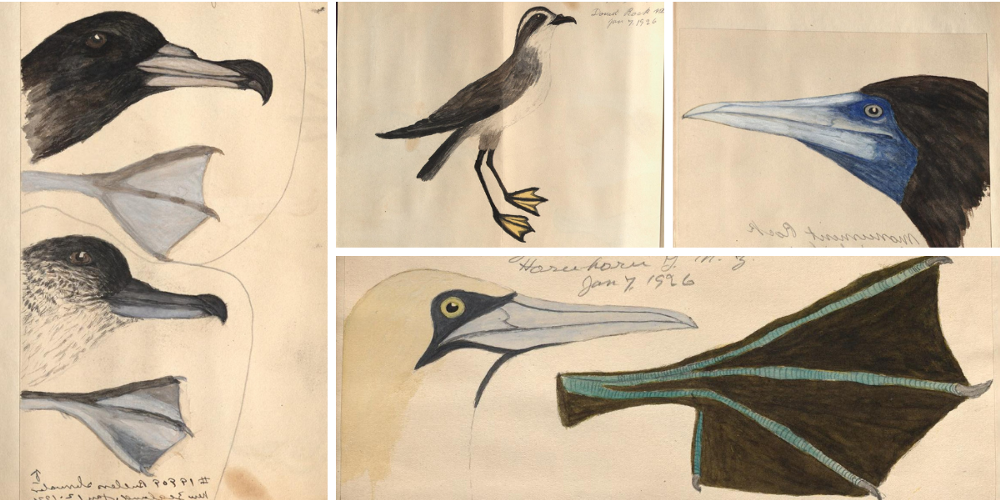
collages illustrations of various bird heads and feet

Digitization projects often shed light on stories hidden in plain sight. This is the story of a husband-and-wife team that served as field collectors for the American Museum of Natural History from 1912–1945¹. They were American immigrants who came from humble beginnings, dreamt of a new life, and found one.

•     •     •

Photo collage of the Correia’s and their travels.

Photo collage of the Correia’s and their travels. Bryan, E. H. (1924) (photographer). Journal of Edwin H. Bryan, Jr. while with the Whitney Expedition of the American Museum of Natural History on the schooner France. Contributed in BHL by the American Museum of Natural History Library. Digitization sponsored by the Council on Library and Information Resources as part of the BHL Field Notes Project.

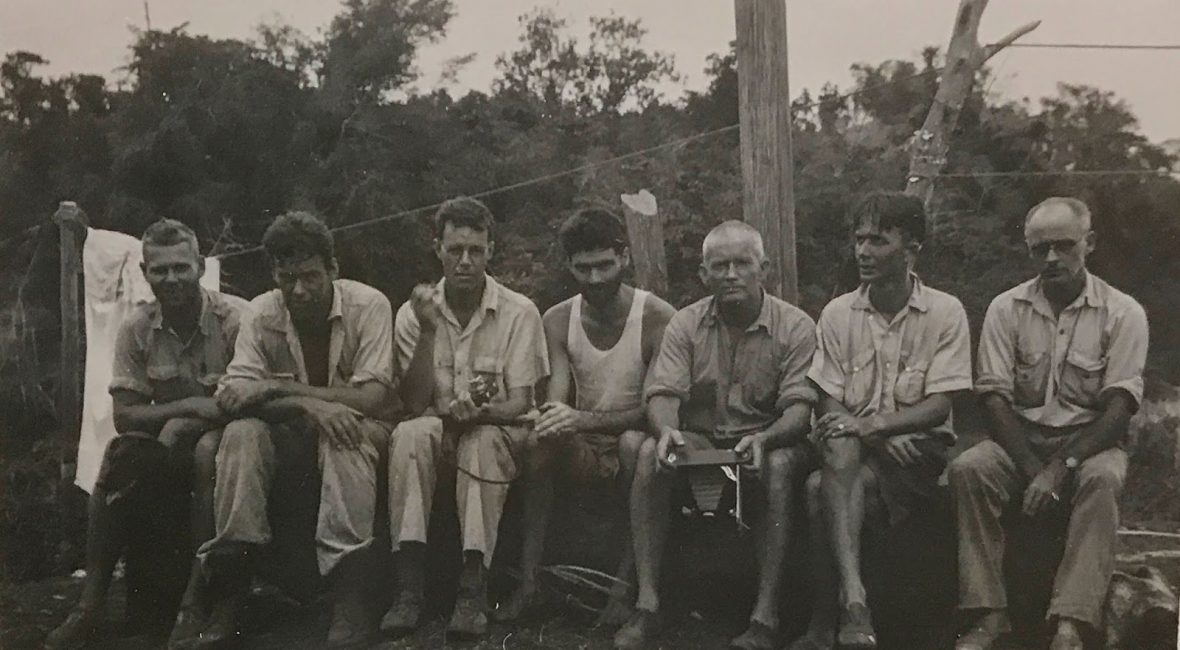
José and Virginia Correia are one of history’s most prolific bird collecting teams. For over three decades, they participated in many scientific exploring expeditions for the American Museum of Natural History, including the Whitney South Sea Expedition from 1922 to 1926.²

Although the published literature is scant regarding their scientific contributions, their story is certainly worth telling. Described by The Standard-Times (New Bedford) as a “life reading like fiction”,³  their work has emerged from obscurity with the digitization of José’s field notes from the Whitney South Sea Expedition (1920–1941) as part of the BHL Field Notes Project funded by the Council on Library and Information Resources (CLIR). Now audiences far and wide can enjoy this quintessential American story of two immigrants propelled by fate, hard work, and a sincere desire to improve one’s lot in life.
Black and white photo of a man and a women with light skin, dark hair, dressed in early 19th century clothes.

“Virginia and José Gonsalves Correia,” Unknown (photographer). Department of Ornithology Archives, AMNH, accessed September 3, 2020.

From José’s journal entries, we learn what daily life for a field collector was really like. Traveling to exotic locales, encountering Indigenous cultures, and sampling undiscovered flora and fauna might sound alluring, but José’s private notes reveal the harsh realities of turn-of-the-century collecting expeditions.

black and white photo of a schooner at sea.

Whitney South Sea Expedition schooner, the France, in the waters of Tuamotu, 1922. Beck, Rollo Howard, 1870–1950 (photographer). AMNH Research Library | Digital Special Collections, accessed November 1, 2020.

The work was hard and the days were long aboard the schooner France. Work typically commenced at dawn in the field and ended at dusk preparing specimens.⁴ Only exceptionally rugged individuals who were able to endure constant and extended deprivations — mind and body — could make such journeys.

Two people in a canoe.

Mr. and Mrs. Correia are in a canoe ready to start back to Pukapuka from Motu Koe, facing S.W., toward the S.E. bay of the lagoon. Bryan, E. H. (1924) (photographer). Journal of Edwin H. Bryan, Jr. while with the Whitney Expedition of the American Museum of Natural History on the schooner France. Contributed in BHL by the American Museum of Natural History Library. Digitization sponsored by the Council on Library and Information Resources as part of the BHL Field Notes Project.

As if these daily irritations weren’t enough, extreme weather in the form of cyclones, gale force winds, and rogue waves provided plenty of near-death experiences.

“…we ran into the center of a strong cyclone on June 2nd. Everybody in the ship thought that they were never going to see land again, but God did not forget us in the middle of the furious ocean.” June 19, 1926, J. Correia.⁴

Four years and 12,000 miles later, the Correia’s had the misfortune of contracting malaria, effectively ending their service aboard the France in 1926.⁶ But the Whitney South Sea Expedition wasn’t their first field collecting trip, nor would it be their last. They would go on to explore some of the most remote places on Earth.

Illustration of a map with several aquatic locations highlighted.

The American Museum of Natural History collecting expeditions took the Correias all over the globe.⁷ Ford, Jacqueline. (2020) Datawrapper: Create Charts and Maps [Software]. Available from https://www.datawrapper.de/.

It’s clear why the Correias continued to endure the hardships of collecting life. Not only did they believe birds held important keys to understanding the natural world, they had become a part of the scientific community who knew that time was running out. Their efforts were likely to be humanity’s only shot at cataloging, describing, and studying unknown bird species.

Black and white portrait of a man in a suit and tie.

Dr. Robert Cushman Murphy [Photograph]. (1860). Retrieved from https://ark.digitalcommonwealth.org/ark:/50959/g158bt570.

José’s fateful friend, Robert Cushman Murphy, Curator of the American Museum of Natural History’s Ornithology Department, describes the moral imperative driving the Whitney South Sea Expedition:

“That it is high time for such an expedition to obtain examples of the Polynesian life is evidenced by the decrease in the population of birds and other animals at nearly all of the inhabited isles. For many years extinction has been approaching, and it is well known that certain kinds of birds secured by 18th century naturalists, have long since been wiped out of existence.”⁸

In one of Murphy’s more personal memoirs, A Logbook for Grace, he tells of his first collecting expedition in 1911, working as a field collector on a brig named the Daisy. It’s here that we get a first glimpse of a young José who enlisted as the Antarctic voyage’s cooper — the liquid-tight barrels made under his charge were crucial to the operation, transporting whale spermaceti back to America.

A small Cooper’s Howell plane with a Stanley #3 plane blade.

A small Cooper’s Howell plane with a Stanley #3 plane blade. Note on bottom: “Made on board the New Bedford Whaling Ship, brig DAISY in 1912 during the South Georgia Trip by IS (sk), Cooper José G. Correia.” Correia, J. G. (1912). Cooper’s Howell plane [Photograph]. New Bedford Whaling Museum | Grimshaw-Gudewicz Reading Room and Archives.

Aboard the Daisy, the two men would become fast friends discussing everything from Arabian Nights to the Papacy. Murphy describes José as “profound” and a “voracious reader”⁹ and came to rely on the cooper’s help after realizing his natural drawing aptitude and skill for specimen preparation:

“One day when Dr. Murphy was preparing bird specimens Mr. Correia offered to help. His first attempt was so good that Dr. Murphy placed it in his collection and sought help again and again from the ship’s cooper.”¹⁰

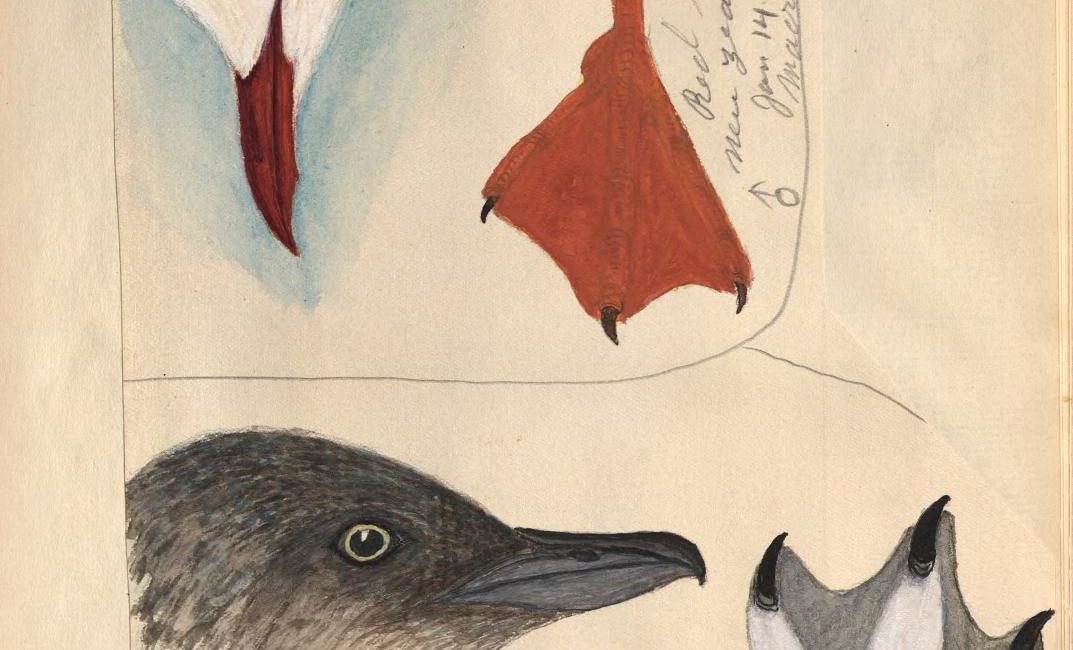
collages illustrations of various bird heads and feet

Correia’s field note illustrations, now available on the Biodiversity Heritage Library. Correia, J. [Illustration](1930–1941). Whitney South Sea Expedition of the American Museum of Natural History, v. 2. Contributed in BHL by the American Museum of Natural History Library. Digitization sponsored by the Council on Library and Information Resources as part of the BHL Field Notes Project.

In 1913, Correia was sought out by the American Museum of Natural History to work as a collector and preparateur on their next expedition after his friend, Mr. Murphy, showed officials at the American Museum Correia’s fine work.³

Black and white photo of two men working in a bird specimen preparatory setup.

“A workshop discussion: José G. Correia (left) with bird specimens aboard the France, Tuamotu [1920–1940],” Beck, Rollo Howard, 1870–1950 (photographer). AMNH Research Library | Digital Special Collections, accessed November 1, 2020. https://images.library.amnh.org/digital/index.php/items/show/60749.

From Humble Beginnings

Before embarking on scientific expeditions, José worked as a whaling cooper (where he met Murphy) and a textile worker. In fact, between stints with the American Museum of Natural History, he would unassumingly return to work as an operative at Kerr Mills of the American Thread Company in Fall River, Massachusetts. When asked by fellow workers where he had gone, he would smile and simply reply “just away.”¹⁰

black and white photo of a textile mill weave room.

“Textile mill weave room. New Bedford, 1920”. Thomas, J., Sualniers, A., White, N., McCabe, N., & Avila, J. (Eds.). (2016). A Picture History of New Bedford (Vol. 2). Spinner Publications, Inc.

Correia’s humility came from memories of a very impoverished childhood. In his writings, he remarks that shoes were a luxury, reserved to be worn only “on feast days.” He was born in 1881, in Flamengos, a rural agrarian town on Faial, one of the nine islands in the Azorean archipelago. Like many Azorean youth, he had heard stories of America’s greatness from the Baleeiros (Azorean whalers), and he dreamed of the fabled land of opportunity.¹¹

At the age of 19, he left Faial and found warm welcome in New Bedford, Massachusetts, a burgeoning port city with a booming textile industry. The only thing José brought with him to America was a new suit, a sack of clothing, and his knowledge.¹¹ From his father, he had learnt the precise art of barrel-making and was taught the value of respect, dignity, and hard-work. These characteristics would serve him well throughout his life and helped him deal with both opportunity and tragedy. When he married Virginia in 1920, he was already a widower, having lost his first wife Rosa Silva in 1906 with whom he had one daughter, Mary.¹

Black and white photo of a woman with short dark hair, wearing glasses, holding a bird.

“Virginia Correia”, Unknown (photographer). Department of Ornithology Archives, AMNH, accessed September 3, 2020.

Of Virginia Correia (née Aguiar), considerably less is known. Born in 1900 in Lajes, Terceira, Azores, she also immigrated to New Bedford at a young age.¹² Certainly she was a dedicated wife, joining her husband on difficult field expeditions and suffering all the aforementioned discomforts these journeys entailed.

Acting as her husband’s field assistant, she trained and became quite adept at the delicate art of preserving specimens. Character details can be gleaned from José’s journals, where he cites her as source of consistent strength and support. For example, during the Whitney South Sea Expedition, José and expedition lead, Rollo Beck, had seething enmity towards one another. José felt greatly disrespected by Beck and thought that the entire crew had turned against him under his influence. With a touch of sadness, he privately wrote, “The only person whom I can count on to help me is my wife. As for the others, I cannot rely on them.”

Nine years after his last expedition to South America20, a 73-year old Correia attended a party in New Bedford’s South End that would be his last. He was stricken by a heart attack and died on 26 April 1954.¹¹ Virginia would live out the rest of her life in their shared New Bedford home at 23 Harrison Street, passing in 1987.¹²

One million North Americans make up the Azorean diaspora — four times the current population of the islands.¹³ José and Virginia are representative of a distinctly intrepid sea-faring culture. In spite of ever-present danger, their adventurous spirit would take them to the farthest reaches of the globe. In that vein, the Correias would go on to build a dichotomous double-life: immigrant factory workers with intermittent scientific travels around the world in search of undocumented bird life.

black and white photo of a woman and a man standing in a garden outside of a house.

“Virginia and José posing outside their home at 23 Harrison street, New Bedford, Massachusetts”. Unknown (photographer). Department of Ornithology Archives, AMNH, accessed September 3, 2020.

Despite strong ties to their homeland, they always came back to America — the place that had given them a life that “read like a fiction.”

Preserving the Correia Legacy

Over the course of their career, the Correias collected more than 10,000 bird specimens.¹⁴ Their efforts, alongside other historic field collectors, would help the American Museum of Natural History build one of the largest ornithology collections in the world.¹⁵ While the collection of wildlife specimens is controversial today, no longer done at this scale, these historic collecting efforts have provided the scientific foundation and necessary physical records for effective description and study of a species’ biology.¹⁶

The Whitney South Sea Expedition was the most extensive bird collecting expedition ever conceived at its time.⁷,¹⁷ The expedition spanned two decades, covered roughly one-third of the planet, and brought back over 40,000 specimens to the American Museum of Natural History.¹⁸ The scientific bounty has greatly enriched our understanding of the natural biota from the Pacific region.

Notably, Ernst Mayr’s seminal argument for geography’s role in the origin of new species draws on the study of bird specimens gathered by the expedition.⁷ More than six decades later, Jared Diamond and Ernst Mayr’s book Birds of Melanesia would use the specimens gathered by the expedition to provide the most comprehensive study to-date on how speciation occurs (the process by which new and distinct species evolve).

Paul Sweet, American Museum of Natural History’s Ornithology Collection Manager, believes the number of specimens contributed by the couple could be far greater than is currently recorded due to poor labeling. Curation efforts are ongoing to improve data accuracy. One such effort is mentoring high school students to transcribe location data from crew field notes. Through these efforts, the France’s journey through the Pacific is being precisely charted, providing an interactive journey of species sightings. Explore the project here.

three people looking at an open drawer of green and red bird specimens

Regina Hashim (left) and Angelic Henry (right) inspect Blue-crowned Lorikeet specimens collected during the Whitney South Sea Expedition with AMNH ornithology collections manager Paul Sweet (center). Langas, A. (2019, June 6). A Treasure Trove of 40,000 Bird Specimens Brought to Light. Audubon. https://www.audubon.org/news/a-treasure-trove-40000-bird-specimens-brought-light.

Museum specimen collections are, in essence, great libraries of Life — still rich in discoveries waiting to be made and perhaps even holding the keys to understanding our current public health crisis.

“Museum collections contribute unique and invaluable insights to the study of pathogens, vectors of disease, and environmental contaminants. Moreover, these collections have played a crucial role in fields at the forefront of the biological sciences, including the study of biodiversity and its loss, biological invasions, and global climate change. We argue that the storage and maintenance of museum collections is inexpensive compared with the potential costs of their absence.”¹⁹

To honor the great personal sacrifices made by historic field collectors like José and Virginia Correia, the call is being made to support the ongoing maintenance and digitization of museum collections. Their enduring utility should not be forgotten in these uncertain times. Museums across the country are facing difficult decisions and budget shortfalls due to the COVID-19 pandemic, and the ongoing preservation and maintenance of these hard-won collections hangs in the balance.

•     •     •

black and white photo of a man and woman in expedition clothing standing in a jungle.

The Correias about to enter the heart of the African jungle. “New Bedford Man, Off On 4-year Expedition for Museum, Has Life Reading Like Fiction.” (1936, September 16). Standard-Times (New Bedford), p. 3.

If you would like to honor Virginia and José Correia’s life’s work, consider making a gift to BHL to ensure that the historic data contained in field notes and scientific publications are freely available to support ongoing research around the world. You can also support the ongoing maintenance of museum collections by donating to natural history institutions like the American Museum of Natural History.

Acknowledgements

This story was made possible by a CLIR Digitizing Hidden Special Collections and Archives Grant, which provided funding to the American Museum of Natural History (AMNH) and the Biodiversity Heritage Library to digitize the Whitney South Sea Expedition (1920–1941) field notes. A personal thanks to Grace Costantino, BHL’s Outreach and Communication Manager, and Erin Willigan for the opportunity to showcase this untold story. Thanks also to Paul Sweet, Thomas Trombone, and Mai Reitmeyer at AMNH for providing primary source materials, data, and most importantly, their time. To the librarians at the Peabody Essex Museum, the New Bedford Whaling Museum, and the New Bedford Free Public Library, who helped tracked down difficult to find newspaper articles and books, thank you.

References

[1] Shatzman, C. (2016, November 7). Correia, José G., 1881–1954. Retrieved October 10, 2020, from https://data.library.amnh.org/archives-authorities/id/amnhp_1000443.
[2] Correia, J. (1930–1941). Whitney South Sea Expedition of the American Museum of Natural History. The Biodiversity Heritage Library. https://www.biodiversitylibrary.org/bibliography/121444.
[3] New Bedford Man, Off On 4-year Expedition for Museum, Has Life Reading Like Fiction. (1936, September 16). Standard-Times (New Bedford), p. 3.
[4] Correia, J. (1930–1941). Whitney South Sea Expedition of the American Museum of Natural History. v. 2. The Biodiversity Heritage Library. https://www.biodiversitylibrary.org/item/214343.
[5] Mayr, E. (n.d.). Joining the Whitney expedition. Web of Stories. Retrieved October 30, 2020, from https://www.webofstories.com/play/ernst.mayr/13.
[6] Murphy, R. (1936). Oceanic birds of South America : a study of species of the related coasts and seas, including the American quadrant of Antarctica, based upon the Brewster-Sanford collection in the American Museum of Natural History. The Biodiversity Heritage Library. p. 6. https://www.biodiversitylibrary.org/page/12471284.
[7] American Museum of Natural History. (2019). American Museum of Natural History | Research Library | Authorities | Expeditions [Dataset]. https://data.library.amnh.org/archives-authorities/results/?q=recordId:*amnhc_2*.
[8] Beck, R. H. (1930–1941). Whitney South Sea Expedition of the American Museum of Natural History. The Biodiversity Heritage Library. https://www.biodiversitylibrary.org/page/52734313.
[9] Murphy, R. C. (1965). Logbook for Grace. Time, Inc.
[10] Local Mill Operative Also Is Bird Expert for Scientific Expeditions. (1941 July 6). Standard-Times (New Bedford),p. 7.
[11] Agostinho, J. (1952). Um Emigrante Acoriano Jose Goncalves Correia. Boletim Do Instituto Historico, no.10, 204–238. http://ihit.pt/codeigniter/assets/upload/pdf/e3a418659d67d6609e2e58e7210779cb.pdf.
[12] Shatzman, C. (2016, November 7). Correia, José G., Mrs, 1900–1987. Retrieved October 10, 2020, from https://data.library.amnh.org/archives-authorities/id/amnhp_1002477.
[13] Minder, R. (2015, June 4). Azorean Diaspora Can’t Resist the Powerful Pull of Home. The New York Times. https://www.nytimes.com/2015/06/05/world/europe/azores-diaspora-holy-christ-of-miracles.html.
[14] Search: Collector “Correia”. (2006). Retrieved October 10, 2020, from https://sci-web-001.amnh.org/db/emuwebamnh.
[15] Research: Ornithology | AMNH. (2020). American Museum of Natural History. https://www.amnh.org/research/vertebrate-zoology/ornithology.
[16] Newton, B. E. (2017, January 9). Is specimen collecting justified? Lateral Magazine. http://www.lateralmag.com/articles/issue-18/is-specimen-collecting-justified.
[17] American Museum of Natural History. (1923). Annual report of the American Museum of Natural History for the year. Biodiversity Heritage Library. https://www.biodiversitylibrary.org/item/137096.
[18] Giraldo, S. (2016, October 20). Mapping the historical biodiversity of the Solomon Islands with the American Museum of Natural History. CARTO Blog. https://carto.com/blog/mapping-solomon-islands/.
[19] Suarez and Tstutsi. (2004). The Value of Museum Collections for Research and Society. BioScience, 54(1), 66. https://doi.org/10.1641/0006-3568(2004)054[0066:TVOMCF]2.0.CO;2.
[20] Newell, G. (2020, January 8). Askoy Expedition (1941-1945). Retrieved 24 November, 2020, from https://data.library.amnh.org/archives-authorities/id/amnhc_2000430.

December 3, 2020by [email protected]
Blog Reel, Featured Books

Field Note-Worthy: Thousands of Field Notes Now Available in BHL Thanks to the Field Notes Project!

In February 2016, the Biodiversity Heritage Library set out to digitize over 450,000 pages of field notes. While the BHL had already added some archival material to its collection before this project, the Field Notes Project is BHL’s largest undertaking of digitizing field notes to date.

drawingsfungi00tayl_0013.jpg

Taylor, Thomas. Drawings of Fungi. Contributed by Harvard University Botany Libraries.

Funded by the Council on Library and Information Resources (CLIR) Digitizing Hidden Special Collections initiative, this was a collaborative project with eleven partners:

  • American Museum of Natural History
  • The Field Museum of Natural History Library
  • Harvard University Botany Libraries
  • Harvard University, Museum of Comparative Zoology, Ernst Mayr Library
  • Internet Archive
  • The New York Botanical Garden, LuEsther T. Mertz Library
  • Missouri Botanical Garden, Peter H. Raven Library
  • Smithsonian Institution Archives
  • Smithsonian Libraries
  • University of California, Berkeley, Museum of Vertebrate Zoology
  • Yale Peabody Museum of Natural History
fieldnotebookma00schu_0031.jpg

Schuchert, Charles. Field Notebook: Maine, Massachusetts, New Hampshire, New York, Ohio, Rhode Island, Ontario 1916, 1917, 1920. Contributed by Yale Peabody Museum of Natural History Archives.

The importance of field notes is well known to curators, researchers and historians. Diaries, correspondence, journals and photographs serve as records of the flora and fauna of a particular time and place, providing reference points when observing how a habitat has changed. They also offer insight on expeditions, the origins of a museum collections, and contextualize the work through the eyes of the scientists and narratives about how they interacted with the people, land and cultures they studied.

beekeepingarchiv00ches_0064.jpg

Blacow, Chester E. Bee keeping activities and field catalog of birds collected in Hawaii, v4273. Contributed by University of California, Museum of Vertebrate Zoology.

If you have ever used historic field notes for your own research, you may understand why this wouldn’t be a cut-and-dry project. Field notes can pose a number of challenges, and our partners certainly had to manage many of them. Conservation concerns are always at the top of the list, ensuring that field notes are in the proper condition for digitization. Through digitization, we can also reduce the need to refer to the physical object and further protect these unique items. Other concerns stemmed from how researchers took notes, including writing right into the gutter of a notebook or frugal researchers who would start a new notebook by simply flipping a used one and writing in the other direction. Together, the project team was able to overcome these challenges to provide open access to their field notes collections.

timothyplowmanb00plow_0086.jpg

Plowman, Timothy. Timothy Plowman botanical collecting notebook : 1900-2286 : 1968-1969. Contributed by The Field Museum of Natural History Library.

We finished work on the project May 31, 2018 and are pleased to report that the project team digitized over 517,000 pages of field notes! 

Those who follow the blog closely will have read posts from the BHL Field Notes Project series where project partners highlighted their collections and digitization process. With several expeditions, disciplines and institutions represented, we are excited to see what our users discover, and see how they use field notes in their own work. Take a look and delve into field notes digitized for this project in BHL and Internet Archive.

whitneysouthsea2corr_0241.jpg

Correia, José G. Whitney South Sea Expedition of the American Museum of Natural History. Letters and journal of José G. Correia. Volume 2. Contributed by American Museum of Natural History.

The project team and BHL would like to thank the Council on Library and Information Resources for generously funding the BHL Field Notes Project.

June 28, 2018by mkahn
Blog Reel, Featured Books

Using the materials at hand: Richard Archbold and the 2nd Archbold Expedition to New Guinea

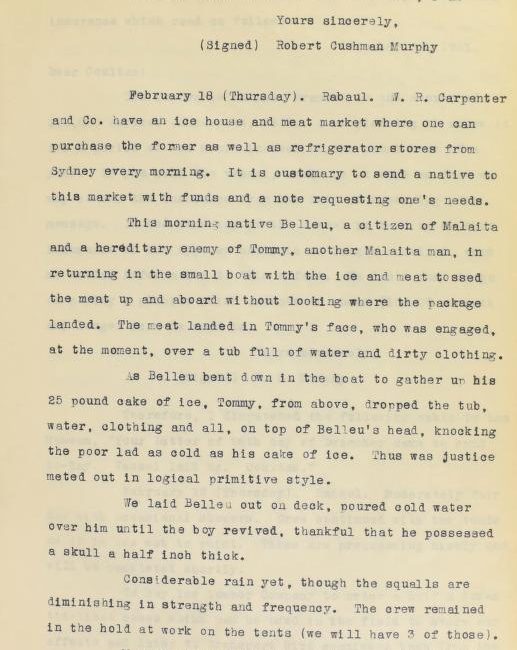
The American Museum of Natural History selected two unique sets of material to digitize for the CLIR BHL Field Notes Project: field books from the Whitney South Sea Expedition and the Archbold Expeditions. These were two long-running undertakings to systematically explore and collect the flora and fauna of Oceania. Both contributed invaluable specimens to the scientific research and exhibition collections at AMNH. We recently completed digitization of the Whitney South Sea Expedition field notes and are thrilled to have commenced work on the Archbold material. Arguably, the most rewarding aspect of participating in this project is raising awareness of some rather remarkable individuals and expeditions. One example is the 2nd Archbold Expedition to New Guinea. We recently digitized leader Richard Archbold’s journal from that journey, which helps shine a light on this particularly fascinating story.

Archbold Expeditions is a corporation originally founded and led by Richard Archbold. It funded a research collection and staff at the AMNH Department of Mammalogy and sponsored a series of scientific collecting journeys to New Guinea and northern Australia. Heir to a substantial fortune, Archbold was a collector, explorer, ecologist, photographer, mountaineer, and pilot. As a youth he developed a love of nature and technology which carried over into all his future endeavors. He was a Research Associate at AMNH since his participation as photographer and mammalogist in the Mission zoologique franco-anglo-américaine à Madagascar, an experience which would directly inspire him to continue exploration work. He led the first three of the Archbold New Guinea Expeditions himself, and in 1940 founded the Archbold Biological Station in Florida. This research station and Archbold Expeditions were associated with AMNH until the 1980s. The Archbold Biological Station is still vitally active today.

Archbold excelled at organization and planning, recognizing needs and filling them. He regularly made use of and adapted the most current technology and also sought after the best scientists and personnel for his expeditions.

View Full Size Image
Some of the 2nd Archbold Expedition participants, including scientific party Austin Rand, G. H. H. Tate and Leonard Brass. All three participated in multiple Archbold Expeditions.
“WH2; Papua, Oroville Camp; Juhlstedt, Rand, Tate, Archbold, Burke, Healy, Brass.” Archbold Expeditions Collection, Department of Mammalogy, AMNH.

This ability to recognize needs and adapt is never more evident than in the 2nd Archbold Expedition, which took place between 1936 and 1937. There were seven ‘numbered’ Archbold Expeditions to New Guinea, reaching all areas of the region. The focus for this journey was the largely uncharted area of the Western Province of Papua New Guinea from Daru up the Fly River. After the success of the first expedition to New Guinea between 1933 and 1934, Richard Archbold hoped to continue the systematic exploration of Papua New Guinea, but he recognized that one of the main challenges to exploration in this region was in the effective provision and transportation of supplies overland in this mountainous terrain. Describing it as “the biggest bugbear of former travel in New Guinea,” (1) the lack of local food availability resulted in a need for a continuously moving food relay transport system manned with native assistants.

Demonstrating the above-mentioned practical planning and technological skills, Archbold and crew proposed and designed an innovative system of communication, transportation and delivery using aircraft, radio, and parachutes to utilize in the next trek. In addition to Archbold, the scientific party included ornithologist and assistant leader Austin Rand, botanist Leonard Brass, and mammalogist G. H. H. Tate.

View Full Size Image
Archbold is walking toward the front of the craft. Note the triangular Archbold Expeditions insignia on the plane.
“90-43; Papua, W.D., Daru: Kono on ramp after return from Lake Marguerita.” Archbold Expeditions Collection, Department of Mammalogy, AMNH.

Archbold purchased a Fairchild Amphibian seaplane which he named the Kono, to be used to deliver supplies to the remote areas by parachute. The combination of air transport, along with a system of radio communications proved to be highly successful in practice. The use of the radios allowed the various divisions of the expedition (advance land party, collecting group and plane) to keep in contact and coordinate supply drops and pickups from remote areas, communication on which they were dependent.

View Full Size Image
Besides collecting mammals, Tate acted as a radio operator.
“210-18; Papua, Western Division, Fly River, 528 mi. camp: Willis, Rogers, Tate & Healy” Archbold Expeditions Collection, Department of Mammalogy, AMNH.

Besides transportation, the aircraft was also used for a series of reconnaissance flights to determine mountain camp sites and possible landing areas. In Archbold’s journal we see multiple lists of observations from these flights. They note the time, the participant making the observation, and even where they were seated, an evident effort to fully survey the viewed areas.

View Full Size Image
Reconnaissance flight observations.
Richard Archbold’s journal : Second Archbold Expedition to New Guinea, p. [19]; http://biodiversitylibrary.org/page/53611788

Initial plans called for the group to travel up to high elevations in the mountains but in July of 1936, only a few months into their endeavor, the Kono was tragically capsized in a sudden storm. Although no one was harmed, the devastation of this loss is clearly conveyed in a series of radio messages: “Our plane sunk.” In Tate’s expedition journal, which will soon be digitized for this project, he relates receiving the message, stating “What a calamity for Archbold!”(2)

View Full Size Image
Messages to Tate and Rand announcing the wreck of the Kono.
Richard Archbold’s journal : Second Archbold Expedition to New Guinea, p. [101]; http://biodiversitylibrary.org/page/53611844

Besides the obvious financial setback of this loss, the team was forced to quickly adapt their plans, arranging for alternate means to transport the collections. The scientific staff and the carriers built a flotilla of rafts to move the specimens and supplies down the Fly River. According to Rand, “Tate had his rats on his rafts, Brass his plants on his, and I had my birds on mine.” (3) Not to be deterred, they simply moved forward and continued collecting in the lowlands, a resilience I find enviable. This is not to say that the irony of the situation was lost on the participants. In an article for Natural History magazine, Rand and Archbold noted that during the expedition both the most current and the most primitive methods of transportation were used: planes, ships, homemade rafts, and foot. (4)

View Full Size Image
After having to abandon plans to continue to higher altitudes, the team crafted a series of rafts to float material down the Fly River.
“258-20; Papua, W.D., Fly R., No. 2 base: Rafts being loaded—close up. Photo by Brass” Archbold Expeditions Collection, Department of Mammalogy, AMNH.

It is important to note the very practical advantage and benefit of their radio system at this juncture. It not only allowed easy communication, remote organization and project direction across the region, but also contact with New York. A copy of a radiogram received at AMNH on July 16, 1936 from Archbold at Daru reassures the safety of all parties. “Absolutely no cause for alarm stop Rogers dropped more food advance party in Guinea Airways plane stop in constant radio communication advance party stop they advise absolutely no danger.” (5)

Archbold immediately began planning for the next expedition, even looking to purchase a replacement plane. A copy of a radio message from his mother shows her practical opposition to such an expense so soon. Archbold remained single-minded, however. “Though we had failed to reach the mountains our large collections from the Upper Fly were extremely valuable and our new methods of transport had proved so feasible that we plan to use the same system in collecting at the highest altitudes in the little known Snow Mountains of Dutch New Guinea early next year.” (6) That expedition also used the combination of seaplane delivery and radio with great success, incidentally also managing to set world aeronautic records! Amusingly, Archbold named this next plane the ‘Guba,’ which is the local dialectic term for the type of storm that downed the Kono.

View Full Size Image
A page from Archbold’s journal. Note the message from his mother.
Richard Archbold’s journal : Second Archbold Expedition to New Guinea, p. [113]; 

For context, it is interesting to place these expeditions in the overarching history of biodiversity exploration and collection in the region. In 2015, AMNH scientists participated in a collaborative Explore21 expedition to Papua New Guinea. Department of Ornithology Collections Manager Paul Sweet noted their place in the legacy of exploration in New Guinea, notably with the use of now modern technology: “Papua New Guinea is well known as a biodiversity hotspot, but it’s still not fully explored. The Museum has a long history of making expeditions to the island of New Guinea [the eastern half is part of the nation of Papua New Guinea; the western half is governed by Indonesia], so we were following in the tradition of naturalist explorers like Ernst Mayr, Richard Archbold, and E. Thomas Gilliard. And that’s really the thrust of these Explore21 expeditions. It’s a great way to continue the tradition of scientific collecting expeditions alongside cutting edge 21-century methods like genomics.” (7)

Hmm, cutting-edge technology and expeditions…sound familiar?

References:

(1) Archbold, Richard and Rand, A.L., “With plane and radio in stone age New Guinea,” Natural History 40, no. 3 (1937): 568.
(2) Tate, G. H. H., Field journal : Archbold 1936 New Guinea Exp. February 27, 1936 to July 8, 1937. AMNH Department of Mammalogy Archive.
(3) Morse, Roger A., Richard Archbold and the Archbold Biological Station. (Gainesville, FL: University Press of Florida, 2000), 18.
(4) Archbold, Richard and Rand, A.L., “With plane and radio in stone age New Guinea,” Natural History 40, no. 3 (1937)
(5) Radiogram transcript, 1936, Archbold Expeditions Collection, AMNH Department of Mammalogy Archive.
(6) Archbold and Rand, 576.
(7) AMNH, “SciCafe Goes to Papua New Guinea [blog post], (2/27/15), accessed at http://www.amnh.org/explore/news-blogs/q-as/scicafe-goes-to-papua-new-guinea

The BHL Field Notes Project is funded by the Council on Library and Information Resources (CLIR).

July 6, 2017by lmyrick
BHL News, Blog Reel

Building Digital Field Notes Collections Together

At Internet Archive, we are excited to provide digitization services for BHL Field Notes Project contributors from coast to coast. We will be digitizing our partners’ selected field notebooks at two of our eight North American regional digitization centers: San Francisco, CA and Princeton, NJ and providing remote services for the American Museum of Natural History.

View Full Size Image
A page scanned by AMNH staff on a Table Top Scribe. Whitney South Sea Expedition. Journal and letters of William F. Coultas. Volume 3. (1932). http://biodiversitylibrary.org/page/52311554

At regional centers, Internet Archive operators upload metadata from contributing partners, capture high-quality digital images using our Scribe system, then review each image for completeness and add structural metadata as appropriate. We use the term “republish” to refer to this post-capture process in which the operator de-skews pages, asserts page types, and ensures all data is captured. Once complete, operators upload the files and the automated derive process typically completes within 24 hours. The newly digitized books appear in their pre-designated collections and are then accessible to the public via our online book reader and/or downloadable access formats.

View Full Size Image

We are also participating in the Field Notes project through our Table Top Scribe system, which allows partners to capture images onsite within their libraries. Many of the field notebooks seen here were captured by American Museum of Natural History Table Top Scribe operators, and were then republished and uploaded by remotely located Internet Archive operators.

We have enjoyed working with the Field Notes librarians and project coordinators and look forward to adding more works like this to our shared collections.

The BHL Field Notes Project is funded by the Council on Library and Information Resources (CLIR).

March 2, 2017by lmyrick
Blog Reel, Featured Books

Interconnected Naturalist : Edmund Heller and the Field Notes Project

One of the great aspects of the BHL Field Notes Project is how the field notes we are digitizing – and the naturalists who created them – have connections to multiple project partners. Edmund Heller is one of these interconnected naturalists.

Heller was a naturalist active in the early twentieth century who participated in several expeditions sponsored by different institutions across the nation, including a number of BHL Field Notes Project partners. He traveled with Theodore Roosevelt for the Smithsonian African Expedition, traveled to Asia with Roy Chapman Andrews of the American Museum of Natural History (AMNH), served as a collector for the Field Museum, joined Hiram Bingham on Yale University and National Geographic Society’s Expedition in the Andes of Peru, and collected in Alaska with noted collector Annie Alexander, who proposed and helped establish the Museum of Vertebrate Zoology at the University of California, Berkeley.

View Full Size Image
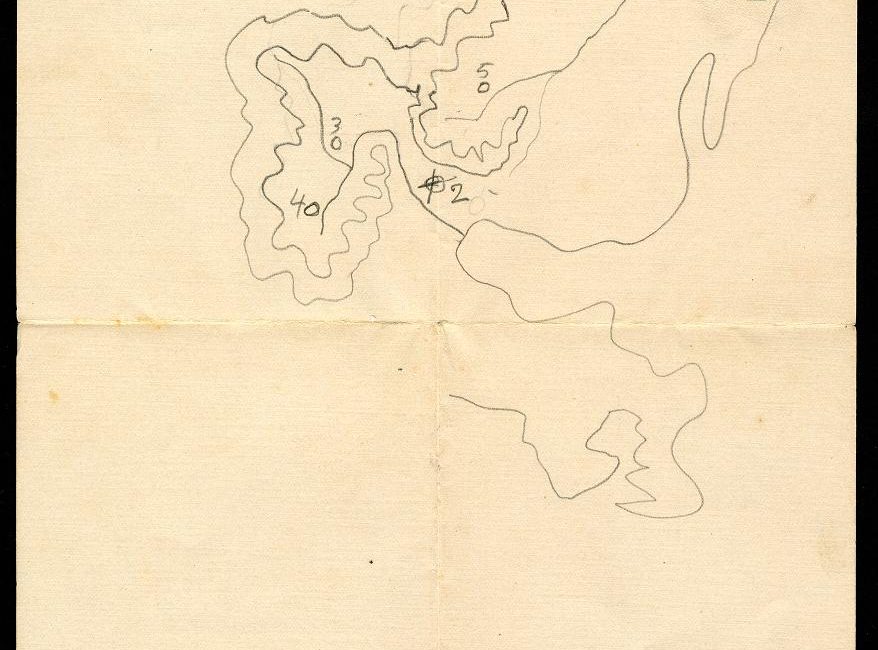
A map Heller drew while on Roy Chapman Andrews’ expedition to the Chinese province of Yunnan, Tibet, and Burma. Handwritten China journal of Edmund Heller (1 of 5). (1916). http://biodiversitylibrary.org/page/52109645.
View Full Size Image
Field notes from Heller’s time as part of Yale University and National Geographic Society’s Expedition in the Andes of Peru. List of birds collected by Heller in Peru. (1915). http://biodiversitylibrary.org/page/52088223.

Since Heller moved around from institution to institution, participating in what he referred to as an “unequaled record of expeditions,” he is a classic example of a naturalist with field notebooks all over the map. Through the Field Notes Project, we have the opportunity to bring together parts of his collection. Nine of Heller’s notebooks are currently available in the BHL, contributed by Smithsonian Institution Archives (SIA). More of his notebooks will be digitized by SIA and AMNH by project end.

In the meantime, why not explore Heller’s work in the BHL?
The BHL Field Notes Project is funded by the Council on Library and Information Resources (CLIR).

Further Reading:

Where are Heller’s Field Books? – Field Book Project Blog

Expedition Connection: National Geographic Society Yale University Peruvian Expedition, 1915 – Biodiversity Heritage Library Blog

February 2, 2017by lmyrick
Blog Reel, Featured Books

The New York Entomological Society

View Full Size Image
The New York Entomological Society (NYES), founded in 1892, is one of the oldest, continually active entomological societies in the U.S. The Brooklyn Entomological Society, which predates the NYES by 20 years, merged with it in 1968.
Through the Expanding Access to Biodiversity Literature project, the NYES recently gave BHL permission to digitize its journals—Entomologica Americana (v.1-49, 1885-1975) and the Journal of the New York Entomological Society (v.1-107, 1893-1999)—as well as the Bulletin of the Brooklyn Entomological Society (v.1-60, 1878-1965). Most of the issues have been digitized and are now available in BHL.

History of the NYES

View Full Size Image
Zethus slossonae, named after Annie Trumbull Slosson
(photo by Bob Peterson, Flickr)
On June 29th, 1892, five men gathered in the home of entomologist Charles Palm (not to be confused with the other Charles Palm, also a New York entomologist) for the first meeting of the NYES. Their first order of business was to elect three members, including Annie Trumbull Slosson (Leng, 130). Years later, she described her first meeting:
I shall never forget the sensation produced by my unexpected entrance into that scientific meeting. Through the smoke of pipes and over mugs of some beverage which foamed in the gas-light in a sudsy sort of way, I saw startled, embarrassed faces … The host himself, good Mr. Palm, seemed somewhat embarrassed. After seating me in the most comfortable chair unoccupied, he hastened away to order coffee for me as more appropriate and fitting drink for a feminine throat (Klots, 139).
Despite taking up entomology in middle age (she was previously a fiction writer) and having no formal education in it, Slosson would become one of the Society’s most accomplished members. She amassed a large specimen collection, now housed at the American Museum of Natural History (AMNH) and has a genus and over 100 species (slossonae) named after her. She also authored numerous articles in the journals of the NYES and other entomological organizations and was instrumental in moving NYES meetings to the AMNH (Seltmann).
View Full Size Image
Photo of Annie Trumbull Slosson from
Journal of the New York Entomological Society, v.34 no.4 (1926)
Though NYES membership hovered around ten individuals in the first decade of its existence, the Society began publishing the Journal of the New York Entomological Society in 1893. Slosson was its chief contributor, and the sale of her collected specimens at auction funded the journal and ensured regular publication. Another member who contributed to the journal’s early success was Louis H. Joutel, who, in addition to serving as the Society’s treasurer and secretary, was an accomplished illustrator; his drawings appear throughout early volumes of the journal (Leng, 130).
View Full Size Image
“Dominican Sphingidae”
by Louis Joutel, from
Journal of the New York Entomological Society, v.15 (1907)
Within a few years, the Society had begun to broaden its reach. In 1895 it joined the Scientific Alliance of New York, which included distinguished organizations like the New York Academy of Sciences and the Torrey Botanical Society, and strengthened its relationship with the AMNH, where it enjoyed access to the library and collections in the position of “a non-paying tenant with a generous landlord” (Klots, 146).
By all accounts, Society meetings were an occasion for the sharing of exciting specimen finds as well as good food and drink. Above all, they were informal. Elsie Klots wrote that “During the nineteen thirties and early forties speakers were so often startled by the steady click of knitting needles and the ominous waving of an ear trumpet that it became customary to explain to them, before the meeting, that the occupants of the front row were the faithful wives of some of our elder members and that they were an accepted and beloved part of our meetings” (Klots, 143-144).
In 1942, the NYES celebrated its 50th anniversary, with nearly half of its 26 former presidents in attendance. In 1949, the Society put on a public exhibit of insect photography in Roosevelt Hall, at the AMNH. It proved so popular that a second exhibit the following year was moved to the museum’s foyer. It featured photographs, paintings, drawings, publications by Society members, equipment, and insect origami. In 1964, the NYES convened for a third special meeting to honor four individuals who had been members for over 50 years. Dr. E.R.P. Janvrin, who joined in 1902, held the distinction of longest membership (Klots, 140).
From the beginning, the NYES maintained a close relationship with the Brooklyn Entomological Society, its elder neighbor. Members of each society were invited to the other’s meetings and field trips, and in 1903 the NYES began devoting two pages of its journal to publish the proceedings of the Brooklyn Society (Klots, 145). The incorporation of the Brooklyn Entomological Society into the NYES, celebrated on October 29, 1968 (the 75th anniversary of the NYES) was thus a natural union for two organizations whose activities had converged for a long time.
View Full Size Image
Drawing for a NY Eats Bugs dinner hosted
by the NYES and others in 2015 (unknown artist)
The NYES celebrated its centennial on May 20th, 1992, with a banquet at the Explorers Club in New York City. The major draw of the evening was its theme: insects as food. Guests enjoyed a variety of appetizers and desserts with insects as ingredients, as well as a talk by keynote speaker Dr. Gene DeFoliart of the University of Wisconsin, an expert on the subject (Society History). The NYES has since participated in similar “bug banquets” at the Explorers Club.
Today, the NYES continues to meet at the AMNH on the third Tuesday of every month, September through May (excluding December). Professional and amateur entomologists alike hear talks by invited speakers on topics of entomological and biological significance. The Society also continues to publish its journal, which in 2009 was renamed Entomologica Americana (also the title of the Brooklyn Entomological Society’s journal, which ceased publication in 1975.

We are grateful to the NYES for sharing its rich legacy of entomological scholarship with BHL and with researchers around the world!

Note: this post has been edited to remove the incorrect statement that the NYES is the third or fourth oldest entomological society in the U.S.

Reference

Klots, Elsie B. “The History of the New York Entomological Society.” Journal of the New York Entomological Society 76, no. 3 (1968): 138-155.
Leng, Charles W. “History of the New York Entomological Society, 1893-1918.” Journal of the New York Entomological Society 26, no. 3/4 (1918): 129-133.
Seltmann, Katja. “Collector Spotlight: Annie Trumbull Slosson.” Tri-Trophic Thematic Collection Network. Last modified September 12, 2013. http://tcn.amnh.org/updates/collectorspotlightannietrumbullslosson.
“Society History.” The New York Entomological Society, Inc. Accessed September 14, 2016. http://www.nyentsoc.org/history.
September 15, 2016by [email protected]
Blog Reel, Featured Books

John Bartram’s Journey to Onondago

John Bartram was born in Marple, Pennsylvania in 1699. Although he received limited formal education, he eventually distinguished himself as one of the leading botanists of his day. Through an early and intense interest in botany, he collected rare and useful plants and seeds throughout the colonies which he provided to the gentlemen of Europe, an opportunity which arose from his close friendship with the English botanist, Peter Collinson.

He also established one of the finest botanic gardens of the colonial period in Kingsessing (now part of the park system in south Philadelphia). He grew dozens of species of trees, shrubs, and other plants collected on his travels. He even experimented with breeding and selection of cultivars to meet a demand abroad for exotic plants. His botanical supply business was so successful that it provided the income and incentive that enabled him to travel around the colonies and to Florida in search of new specimens.

One such collecting trip occurred in July 1743, when Bartram accompanied Conrad Weiser and Lewis Evans, a skilled cartographer, on a journey to the Iroquois capital, Onondaga (modern day Syracuse). Interestingly, the primary purpose of this trip was more diplomatic than scientific. Weiser was officially Pennsylvania’s main ambassador to the Native Americans. There had been a clash between settlers in Western Virginia and an Iroquois hunting party in the fall of 1742, and rumors of a possible war in Virginia had alarmed those in Pennsylvania. The trip was meant to encourage peace between the Iroquois Confederacy and Virginia. Bartram saw this trip as an opportunity to explore the vast forests in this little known Indian territory, as yet undisturbed by European settlers.

In addition to plant material, Bartram’s English botanist friend, Peter Collinson, had requested a written account of the trip. Unfortunately, in the spring of 1744, the ship carrying Bartram’s manuscript and specimens to London was captured by the French. Bartram had to make another copy of his journal and this copy did not reach Collinson until 1750.

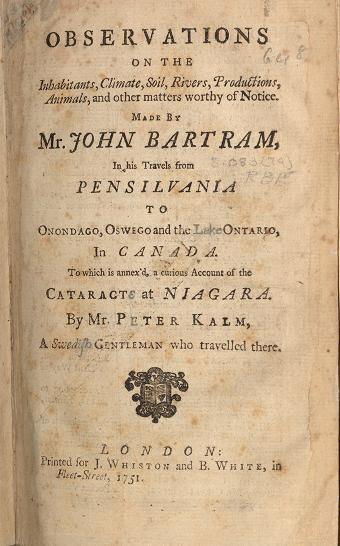
The account of Bartram’s six week journey from Pennsylvania to Upstate New York was so popular among Collinson’s circle that Collinson had the work printed in 1751 by J. Whiston and B. White in London. The published work was entitled Observations on the inhabitants, climate, soil, rivers, productions, animals, and other matters worthy of notice, made by Mr. John Bartram, in his travels from Pensilvania to Onondago, Oswego and the lake Ontario in Canada; to which is annex’d, a curious account of the cataracts at Niagara, by Mr. Peter Kalm, a Swedish gentleman who traveled there and included a brief description of Niagara Falls by the naturalist Peter Kalm.

View Full Size Image
Title Page. Bartram, John. Observations on the inhabitants, climate, soil, rivers, productions, animals, and other matters worthy of notice, made by Mr. John Bartram, in his travels from Pensilvania to Onondago, Oswego and the lake Ontario in Canada; to which is annex’d, a curious account of the cataracts at Niagara, by Mr. Peter Kalm, a Swedish gentleman who traveled there. Digitized by the American Museum of Natural History Library. http://biodiversitylibrary.org/page/49569568.

Unfortunately, at the time, this work was criticized by some for not including enough detail in the descriptions of the plants that Bartram encountered. This criticism does not account for the fact that the journal had been written as a running account for Collinson, who would already have been familiar with the plants that Bartram mentioned. Others criticized the errors in spelling and syntax found throughout the work, due to lack of editing and because the printer had trouble interpreting Bartram’s handwriting and spelling. Today, this work is viewed as an important early insight into the region’s ecology and the activities of the Native American population during the colonial period.

View Full Size Image
Engraved frontispiece of “the Town of Oswego” illustrating an Iroquois longhouse. Bartram, John. Observations on the inhabitants, climate, soil, rivers, productions, animals, and other matters worthy of notice, made by Mr. John Bartram, in his travels from Pensilvania to Onondago, Oswego and the lake Ontario in Canada; to which is annex’d, a curious account of the cataracts at Niagara, by Mr. Peter Kalm, a Swedish gentleman who traveled there. Digitized by the American Museum of Natural History Library. http://biodiversitylibrary.org/page/49569569.

The American Museum of Natural History (AMNH) Library recently digitized its copy of this work and has made the volume accessible via BHL at this link: http://dx.doi.org/10.5962/bhl.title.112297. This volume was purchased by the Library in 1941 from a local bookseller. The original owner of this copy was Frank Hayward Severance (1856-1931), a leading authority on the Buffalo /Niagara area during the early twentieth century. After graduating from Cornell University in 1879, Severance spent the early part of his career as a reporter, editor and lecturer. He later authored several books about the Niagara frontier.

References:

  • Berkeley, Edmund and Dorothy Smith Berkeley. (1981). The life and travels of John Bartram : from Lake Ontario to the River St. John. Tallahassee : University Presses of Florida.
  • Severance, Frank Hayward. (2009). In MarquisWho’sWho, Marquis who was who in America 1607-1984. New Providence, NJ: Marquis Who’s Who LLC.
March 24, 2016by ulib-libraryjobs
Page 1 of 3123»

Help Support BHL

BHL's existence depends on the financial support of its patrons. Help us keep this free resource alive!

search

About BHL

The Biodiversity Heritage Library (BHL) is the world’s largest open access digital library for biodiversity literature and archives. BHL operates as a worldwide consortium of natural history, botanical, research, and national libraries working together to digitize the natural history literature held in their collections and make it freely available for open access as part of a global “biodiversity community.”

Join Our Mailing List

Sign up to receive the latest news, content highlights, and promotions.

Subscribe Now

Subscribe to Blog via Email

Enter your email address to subscribe to this blog and receive notifications of new posts by email.

Join 319 other subscribers

Subscribe to Blog Via RSS

Subscribe to the blog RSS feed to stay up-to-date on all the latest BHL posts.

Access RSS Feed

Inspiring Discovery through Free Access to Biodiversity Knowledge.

The Biodiversity Heritage Library makes it easier than ever for you to access the information you need to study and explore life on Earth…for free, anytime, anywhere.


64+ Million Pages of
Biodiversity Literature Online.

EXPLORE

Tools and Services
to Transform Research.

EXPLORE

300,000+
Illustrations on Flickr.

EXPLORE

ABOUT | HARMFUL CONTENT | PRIVACY | SITE MAP | TERMS OF USE