Biodiversity Heritage Library - Program news and collection highlights from BHL
  • Home
  • News
  • Featured Books
    • All Featured Books
    • Book of the Month Series
    • BHL at 20
  • User Stories
  • Campaigns
    • Fossil Stories
    • Garden Stories
    • Monsters Are Real
    • Page Frights
    • Her Natural History
    • Earth Optimism 2020
  • Tech Blog
  • Visit BHL
Home
News
Featured Books
    All Featured Books
    Book of the Month Series
    BHL at 20
User Stories
Campaigns
    Fossil Stories
    Garden Stories
    Monsters Are Real
    Page Frights
    Her Natural History
    Earth Optimism 2020
Tech Blog
Visit BHL
  • Home
  • News
  • Featured Books
    • All Featured Books
    • Book of the Month Series
    • BHL at 20
  • User Stories
  • Campaigns
    • Fossil Stories
    • Garden Stories
    • Monsters Are Real
    • Page Frights
    • Her Natural History
    • Earth Optimism 2020
  • Tech Blog
  • Visit BHL
Biodiversity Heritage Library - Program news and collection highlights from BHL
Blog Reel, Featured Books

The Untold Story of Virginia and José Correia: Scientific Explorers in Search of Rare Birds

collages illustrations of various bird heads and feet

Digitization projects often shed light on stories hidden in plain sight. This is the story of a husband-and-wife team that served as field collectors for the American Museum of Natural History from 1912–1945¹. They were American immigrants who came from humble beginnings, dreamt of a new life, and found one.

•     •     •
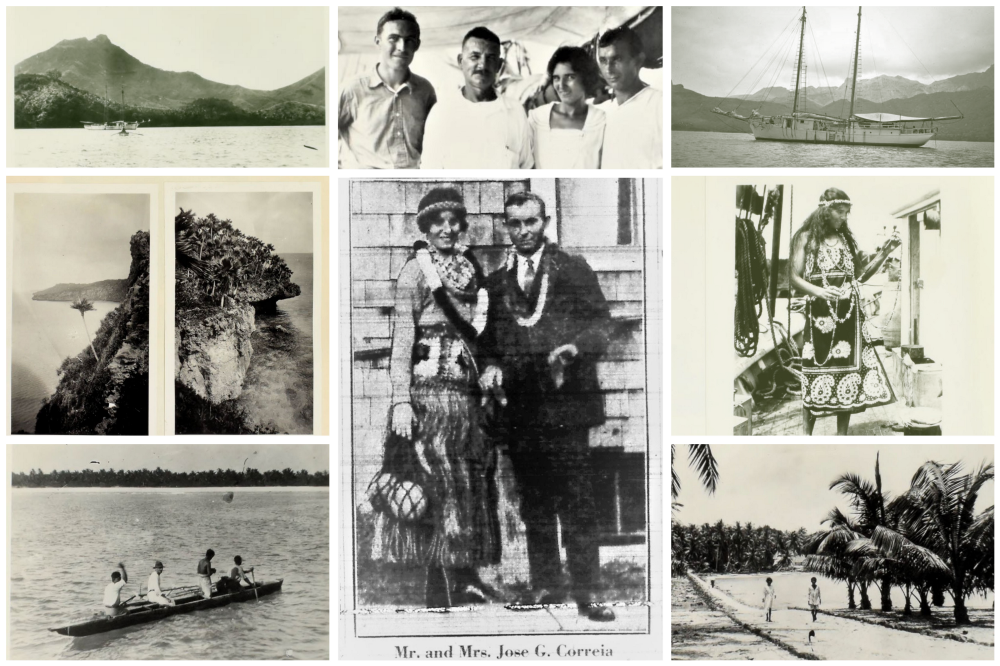
Photo collage of the Correia’s and their travels.

Photo collage of the Correia’s and their travels. Bryan, E. H. (1924) (photographer). Journal of Edwin H. Bryan, Jr. while with the Whitney Expedition of the American Museum of Natural History on the schooner France. Contributed in BHL by the American Museum of Natural History Library. Digitization sponsored by the Council on Library and Information Resources as part of the BHL Field Notes Project.

José and Virginia Correia are one of history’s most prolific bird collecting teams. For over three decades, they participated in many scientific exploring expeditions for the American Museum of Natural History, including the Whitney South Sea Expedition from 1922 to 1926.²

Although the published literature is scant regarding their scientific contributions, their story is certainly worth telling. Described by The Standard-Times (New Bedford) as a “life reading like fiction”,³  their work has emerged from obscurity with the digitization of José’s field notes from the Whitney South Sea Expedition (1920–1941) as part of the BHL Field Notes Project funded by the Council on Library and Information Resources (CLIR). Now audiences far and wide can enjoy this quintessential American story of two immigrants propelled by fate, hard work, and a sincere desire to improve one’s lot in life.
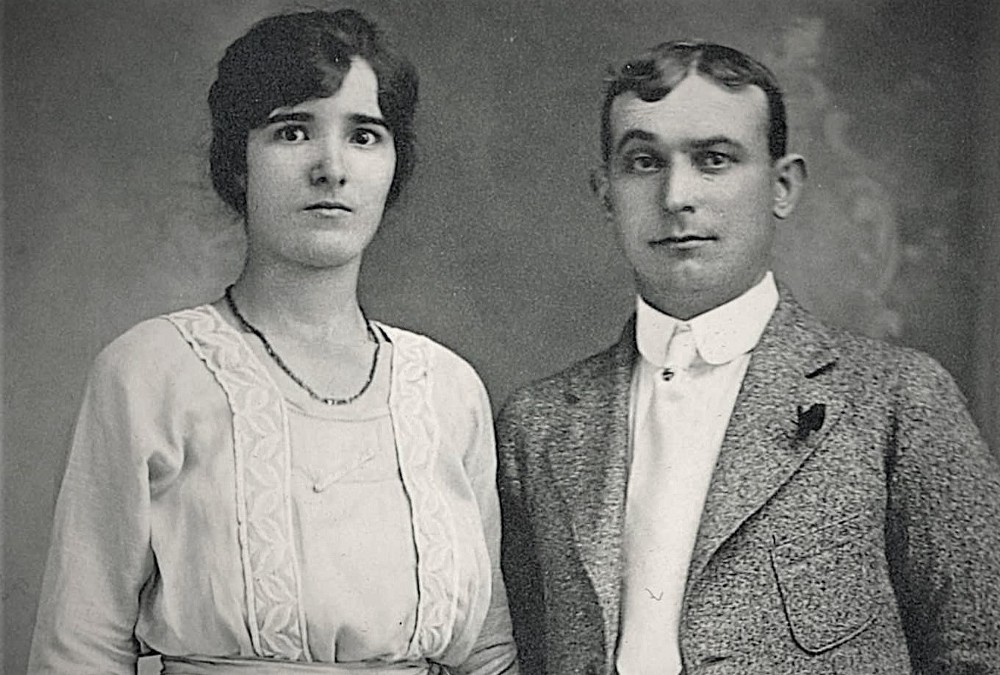
Black and white photo of a man and a women with light skin, dark hair, dressed in early 19th century clothes.

“Virginia and José Gonsalves Correia,” Unknown (photographer). Department of Ornithology Archives, AMNH, accessed September 3, 2020.

From José’s journal entries, we learn what daily life for a field collector was really like. Traveling to exotic locales, encountering Indigenous cultures, and sampling undiscovered flora and fauna might sound alluring, but José’s private notes reveal the harsh realities of turn-of-the-century collecting expeditions.
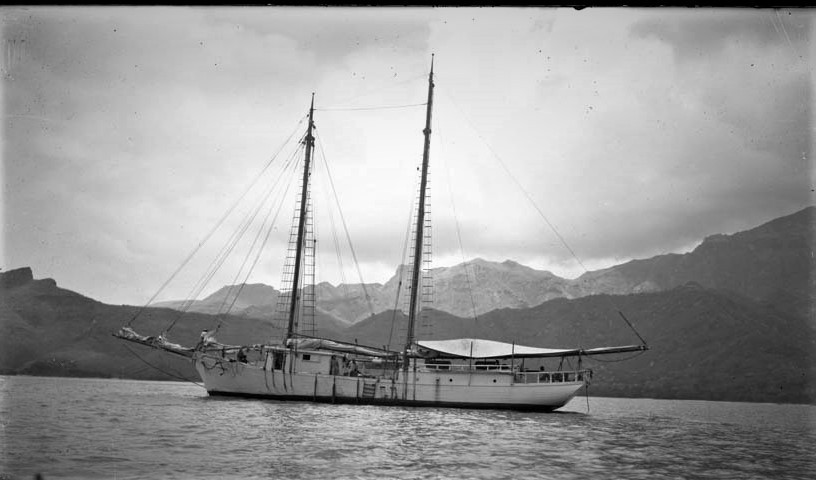
black and white photo of a schooner at sea.

Whitney South Sea Expedition schooner, the France, in the waters of Tuamotu, 1922. Beck, Rollo Howard, 1870–1950 (photographer). AMNH Research Library | Digital Special Collections, accessed November 1, 2020.

The work was hard and the days were long aboard the schooner France. Work typically commenced at dawn in the field and ended at dusk preparing specimens.⁴ Only exceptionally rugged individuals who were able to endure constant and extended deprivations — mind and body — could make such journeys.
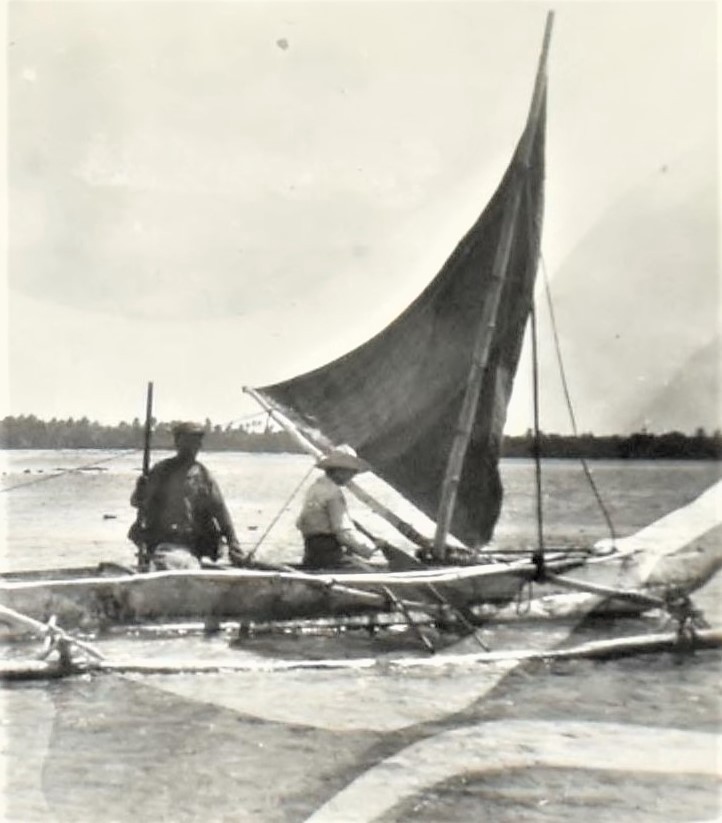
Two people in a canoe.

Mr. and Mrs. Correia are in a canoe ready to start back to Pukapuka from Motu Koe, facing S.W., toward the S.E. bay of the lagoon. Bryan, E. H. (1924) (photographer). Journal of Edwin H. Bryan, Jr. while with the Whitney Expedition of the American Museum of Natural History on the schooner France. Contributed in BHL by the American Museum of Natural History Library. Digitization sponsored by the Council on Library and Information Resources as part of the BHL Field Notes Project.

As if these daily irritations weren’t enough, extreme weather in the form of cyclones, gale force winds, and rogue waves provided plenty of near-death experiences.

“…we ran into the center of a strong cyclone on June 2nd. Everybody in the ship thought that they were never going to see land again, but God did not forget us in the middle of the furious ocean.” June 19, 1926, J. Correia.⁴

Four years and 12,000 miles later, the Correia’s had the misfortune of contracting malaria, effectively ending their service aboard the France in 1926.⁶ But the Whitney South Sea Expedition wasn’t their first field collecting trip, nor would it be their last. They would go on to explore some of the most remote places on Earth.
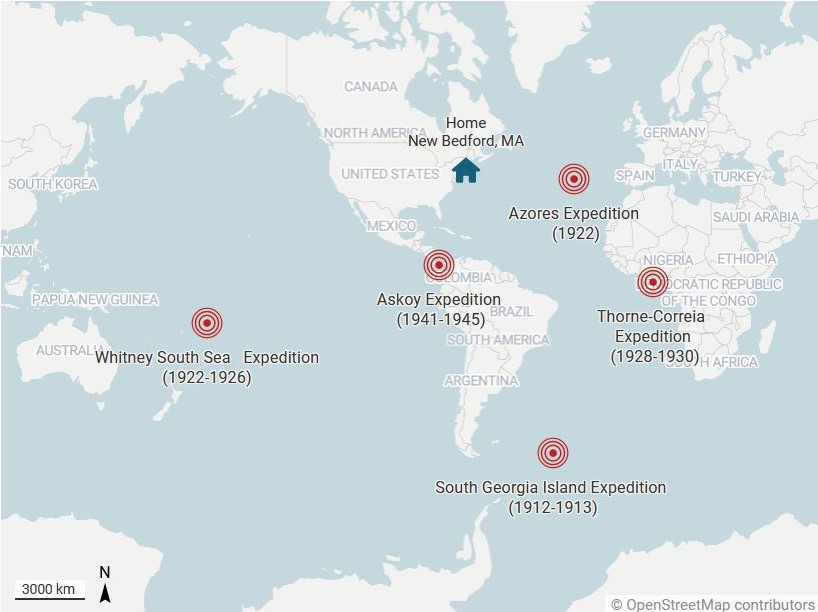
Illustration of a map with several aquatic locations highlighted.

The American Museum of Natural History collecting expeditions took the Correias all over the globe.⁷ Ford, Jacqueline. (2020) Datawrapper: Create Charts and Maps [Software]. Available from https://www.datawrapper.de/.
It’s clear why the Correias continued to endure the hardships of collecting life. Not only did they believe birds held important keys to understanding the natural world, they had become a part of the scientific community who knew that time was running out. Their efforts were likely to be humanity’s only shot at cataloging, describing, and studying unknown bird species.

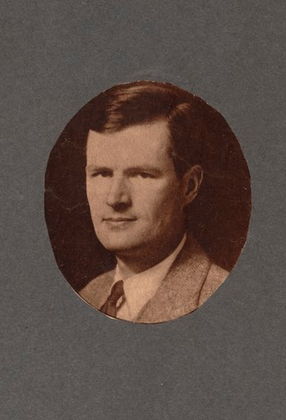
Black and white portrait of a man in a suit and tie.

Dr. Robert Cushman Murphy [Photograph]. (1860). Retrieved from https://ark.digitalcommonwealth.org/ark:/50959/g158bt570.

José’s fateful friend, Robert Cushman Murphy, Curator of the American Museum of Natural History’s Ornithology Department, describes the moral imperative driving the Whitney South Sea Expedition:

“That it is high time for such an expedition to obtain examples of the Polynesian life is evidenced by the decrease in the population of birds and other animals at nearly all of the inhabited isles. For many years extinction has been approaching, and it is well known that certain kinds of birds secured by 18th century naturalists, have long since been wiped out of existence.”⁸

In one of Murphy’s more personal memoirs, A Logbook for Grace, he tells of his first collecting expedition in 1911, working as a field collector on a brig named the Daisy. It’s here that we get a first glimpse of a young José who enlisted as the Antarctic voyage’s cooper — the liquid-tight barrels made under his charge were crucial to the operation, transporting whale spermaceti back to America.
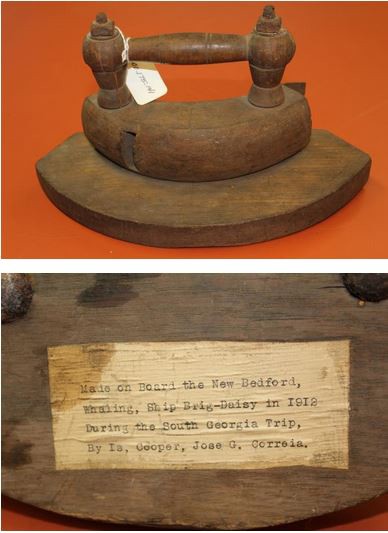
A small Cooper’s Howell plane with a Stanley #3 plane blade.

A small Cooper’s Howell plane with a Stanley #3 plane blade. Note on bottom: “Made on board the New Bedford Whaling Ship, brig DAISY in 1912 during the South Georgia Trip by IS (sk), Cooper José G. Correia.” Correia, J. G. (1912). Cooper’s Howell plane [Photograph]. New Bedford Whaling Museum | Grimshaw-Gudewicz Reading Room and Archives.

Aboard the Daisy, the two men would become fast friends discussing everything from Arabian Nights to the Papacy. Murphy describes José as “profound” and a “voracious reader”⁹ and came to rely on the cooper’s help after realizing his natural drawing aptitude and skill for specimen preparation:

“One day when Dr. Murphy was preparing bird specimens Mr. Correia offered to help. His first attempt was so good that Dr. Murphy placed it in his collection and sought help again and again from the ship’s cooper.”¹⁰
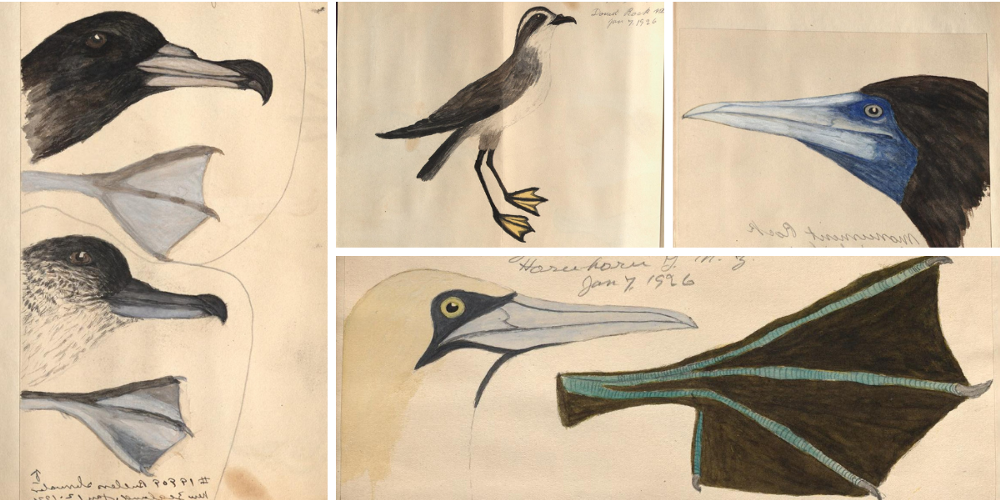
collages illustrations of various bird heads and feet

Correia’s field note illustrations, now available on the Biodiversity Heritage Library. Correia, J. [Illustration](1930–1941). Whitney South Sea Expedition of the American Museum of Natural History, v. 2. Contributed in BHL by the American Museum of Natural History Library. Digitization sponsored by the Council on Library and Information Resources as part of the BHL Field Notes Project.
In 1913, Correia was sought out by the American Museum of Natural History to work as a collector and preparateur on their next expedition after his friend, Mr. Murphy, showed officials at the American Museum Correia’s fine work.³

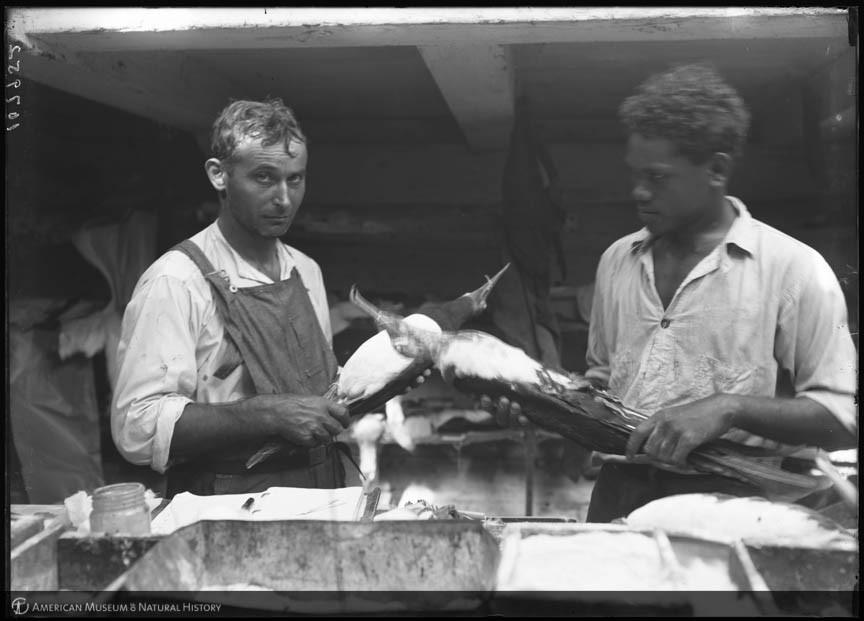
Black and white photo of two men working in a bird specimen preparatory setup.

“A workshop discussion: José G. Correia (left) with bird specimens aboard the France, Tuamotu [1920–1940],” Beck, Rollo Howard, 1870–1950 (photographer). AMNH Research Library | Digital Special Collections, accessed November 1, 2020. https://images.library.amnh.org/digital/index.php/items/show/60749.

From Humble Beginnings

Before embarking on scientific expeditions, José worked as a whaling cooper (where he met Murphy) and a textile worker. In fact, between stints with the American Museum of Natural History, he would unassumingly return to work as an operative at Kerr Mills of the American Thread Company in Fall River, Massachusetts. When asked by fellow workers where he had gone, he would smile and simply reply “just away.”¹⁰
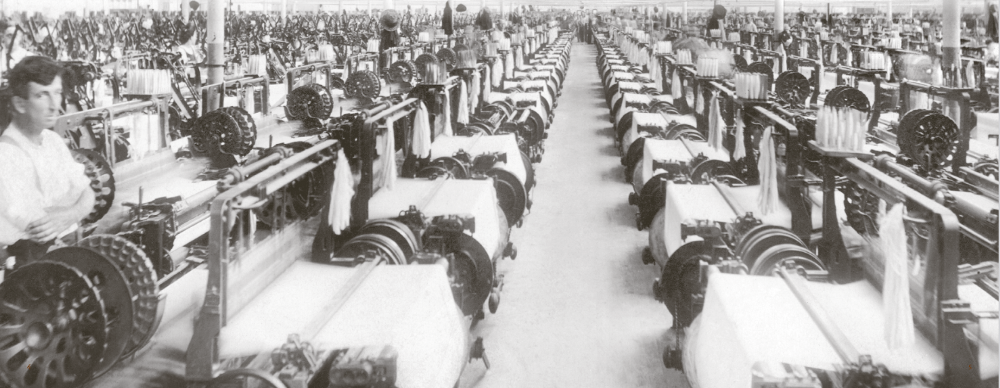
black and white photo of a textile mill weave room.

“Textile mill weave room. New Bedford, 1920”. Thomas, J., Sualniers, A., White, N., McCabe, N., & Avila, J. (Eds.). (2016). A Picture History of New Bedford (Vol. 2). Spinner Publications, Inc.

Correia’s humility came from memories of a very impoverished childhood. In his writings, he remarks that shoes were a luxury, reserved to be worn only “on feast days.” He was born in 1881, in Flamengos, a rural agrarian town on Faial, one of the nine islands in the Azorean archipelago. Like many Azorean youth, he had heard stories of America’s greatness from the Baleeiros (Azorean whalers), and he dreamed of the fabled land of opportunity.¹¹

At the age of 19, he left Faial and found warm welcome in New Bedford, Massachusetts, a burgeoning port city with a booming textile industry. The only thing José brought with him to America was a new suit, a sack of clothing, and his knowledge.¹¹ From his father, he had learnt the precise art of barrel-making and was taught the value of respect, dignity, and hard-work. These characteristics would serve him well throughout his life and helped him deal with both opportunity and tragedy. When he married Virginia in 1920, he was already a widower, having lost his first wife Rosa Silva in 1906 with whom he had one daughter, Mary.¹
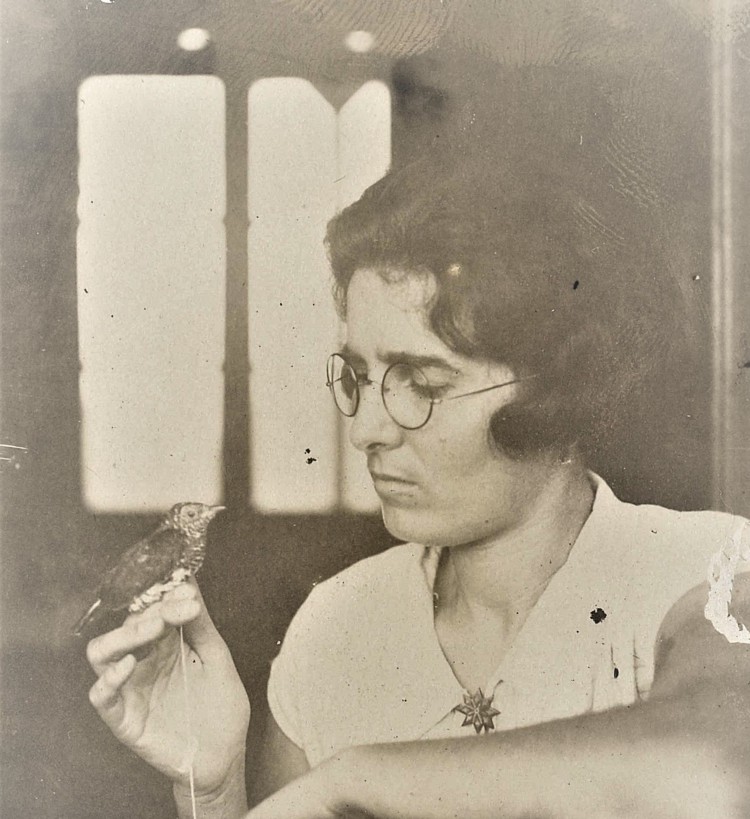
Black and white photo of a woman with short dark hair, wearing glasses, holding a bird.

“Virginia Correia”, Unknown (photographer). Department of Ornithology Archives, AMNH, accessed September 3, 2020.

Of Virginia Correia (née Aguiar), considerably less is known. Born in 1900 in Lajes, Terceira, Azores, she also immigrated to New Bedford at a young age.¹² Certainly she was a dedicated wife, joining her husband on difficult field expeditions and suffering all the aforementioned discomforts these journeys entailed.

Acting as her husband’s field assistant, she trained and became quite adept at the delicate art of preserving specimens. Character details can be gleaned from José’s journals, where he cites her as source of consistent strength and support. For example, during the Whitney South Sea Expedition, José and expedition lead, Rollo Beck, had seething enmity towards one another. José felt greatly disrespected by Beck and thought that the entire crew had turned against him under his influence. With a touch of sadness, he privately wrote, “The only person whom I can count on to help me is my wife. As for the others, I cannot rely on them.”

Nine years after his last expedition to South America20, a 73-year old Correia attended a party in New Bedford’s South End that would be his last. He was stricken by a heart attack and died on 26 April 1954.¹¹ Virginia would live out the rest of her life in their shared New Bedford home at 23 Harrison Street, passing in 1987.¹²

One million North Americans make up the Azorean diaspora — four times the current population of the islands.¹³ José and Virginia are representative of a distinctly intrepid sea-faring culture. In spite of ever-present danger, their adventurous spirit would take them to the farthest reaches of the globe. In that vein, the Correias would go on to build a dichotomous double-life: immigrant factory workers with intermittent scientific travels around the world in search of undocumented bird life.
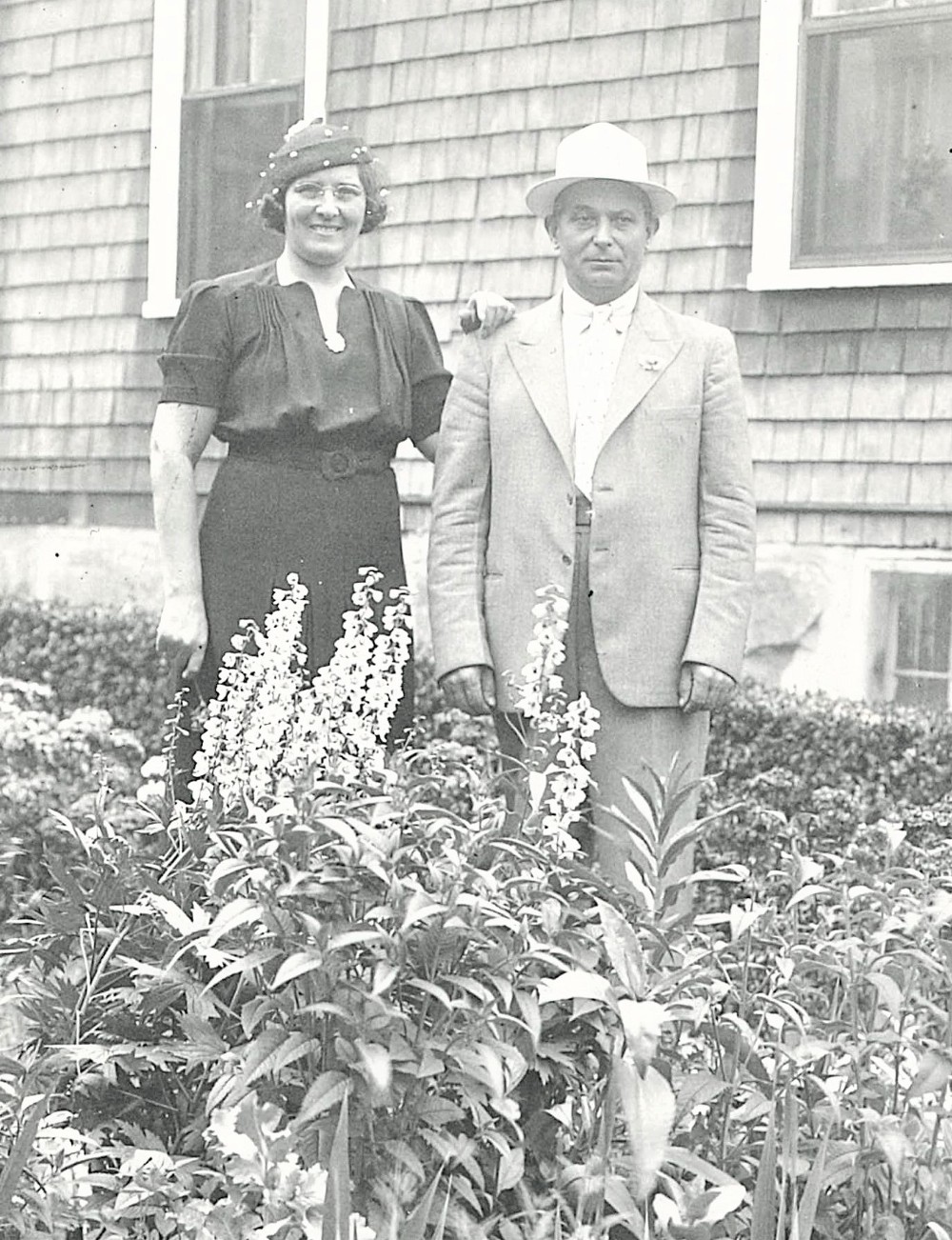
black and white photo of a woman and a man standing in a garden outside of a house.

“Virginia and José posing outside their home at 23 Harrison street, New Bedford, Massachusetts”. Unknown (photographer). Department of Ornithology Archives, AMNH, accessed September 3, 2020.

Despite strong ties to their homeland, they always came back to America — the place that had given them a life that “read like a fiction.”

Preserving the Correia Legacy

Over the course of their career, the Correias collected more than 10,000 bird specimens.¹⁴ Their efforts, alongside other historic field collectors, would help the American Museum of Natural History build one of the largest ornithology collections in the world.¹⁵ While the collection of wildlife specimens is controversial today, no longer done at this scale, these historic collecting efforts have provided the scientific foundation and necessary physical records for effective description and study of a species’ biology.¹⁶

The Whitney South Sea Expedition was the most extensive bird collecting expedition ever conceived at its time.⁷,¹⁷ The expedition spanned two decades, covered roughly one-third of the planet, and brought back over 40,000 specimens to the American Museum of Natural History.¹⁸ The scientific bounty has greatly enriched our understanding of the natural biota from the Pacific region.

Notably, Ernst Mayr’s seminal argument for geography’s role in the origin of new species draws on the study of bird specimens gathered by the expedition.⁷ More than six decades later, Jared Diamond and Ernst Mayr’s book Birds of Melanesia would use the specimens gathered by the expedition to provide the most comprehensive study to-date on how speciation occurs (the process by which new and distinct species evolve).

Paul Sweet, American Museum of Natural History’s Ornithology Collection Manager, believes the number of specimens contributed by the couple could be far greater than is currently recorded due to poor labeling. Curation efforts are ongoing to improve data accuracy. One such effort is mentoring high school students to transcribe location data from crew field notes. Through these efforts, the France’s journey through the Pacific is being precisely charted, providing an interactive journey of species sightings. Explore the project here.
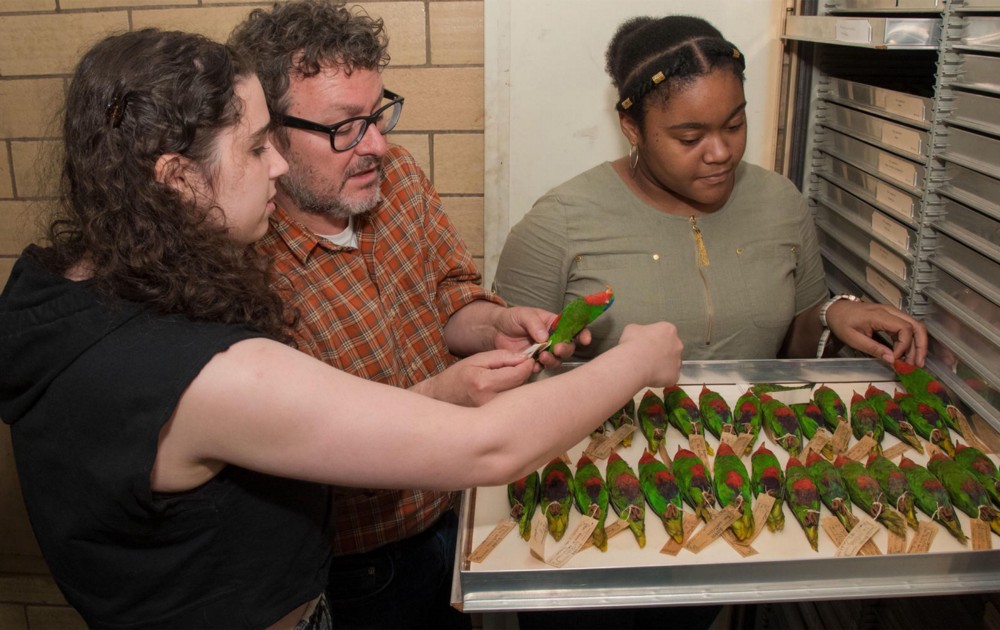
three people looking at an open drawer of green and red bird specimens

Regina Hashim (left) and Angelic Henry (right) inspect Blue-crowned Lorikeet specimens collected during the Whitney South Sea Expedition with AMNH ornithology collections manager Paul Sweet (center). Langas, A. (2019, June 6). A Treasure Trove of 40,000 Bird Specimens Brought to Light. Audubon. https://www.audubon.org/news/a-treasure-trove-40000-bird-specimens-brought-light.

Museum specimen collections are, in essence, great libraries of Life — still rich in discoveries waiting to be made and perhaps even holding the keys to understanding our current public health crisis.

“Museum collections contribute unique and invaluable insights to the study of pathogens, vectors of disease, and environmental contaminants. Moreover, these collections have played a crucial role in fields at the forefront of the biological sciences, including the study of biodiversity and its loss, biological invasions, and global climate change. We argue that the storage and maintenance of museum collections is inexpensive compared with the potential costs of their absence.”¹⁹

To honor the great personal sacrifices made by historic field collectors like José and Virginia Correia, the call is being made to support the ongoing maintenance and digitization of museum collections. Their enduring utility should not be forgotten in these uncertain times. Museums across the country are facing difficult decisions and budget shortfalls due to the COVID-19 pandemic, and the ongoing preservation and maintenance of these hard-won collections hangs in the balance.

•     •     •
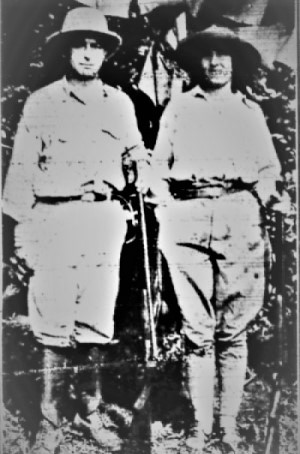
black and white photo of a man and woman in expedition clothing standing in a jungle.

The Correias about to enter the heart of the African jungle. “New Bedford Man, Off On 4-year Expedition for Museum, Has Life Reading Like Fiction.” (1936, September 16). Standard-Times (New Bedford), p. 3.

If you would like to honor Virginia and José Correia’s life’s work, consider making a gift to BHL to ensure that the historic data contained in field notes and scientific publications are freely available to support ongoing research around the world. You can also support the ongoing maintenance of museum collections by donating to natural history institutions like the American Museum of Natural History.

Acknowledgements

This story was made possible by a CLIR Digitizing Hidden Special Collections and Archives Grant, which provided funding to the American Museum of Natural History (AMNH) and the Biodiversity Heritage Library to digitize the Whitney South Sea Expedition (1920–1941) field notes. A personal thanks to Grace Costantino, BHL’s Outreach and Communication Manager, and Erin Willigan for the opportunity to showcase this untold story. Thanks also to Paul Sweet, Thomas Trombone, and Mai Reitmeyer at AMNH for providing primary source materials, data, and most importantly, their time. To the librarians at the Peabody Essex Museum, the New Bedford Whaling Museum, and the New Bedford Free Public Library, who helped tracked down difficult to find newspaper articles and books, thank you.

References

[1] Shatzman, C. (2016, November 7). Correia, José G., 1881–1954. Retrieved October 10, 2020, from https://data.library.amnh.org/archives-authorities/id/amnhp_1000443.
[2] Correia, J. (1930–1941). Whitney South Sea Expedition of the American Museum of Natural History. The Biodiversity Heritage Library. https://www.biodiversitylibrary.org/bibliography/121444.
[3] New Bedford Man, Off On 4-year Expedition for Museum, Has Life Reading Like Fiction. (1936, September 16). Standard-Times (New Bedford), p. 3.
[4] Correia, J. (1930–1941). Whitney South Sea Expedition of the American Museum of Natural History. v. 2. The Biodiversity Heritage Library. https://www.biodiversitylibrary.org/item/214343.
[5] Mayr, E. (n.d.). Joining the Whitney expedition. Web of Stories. Retrieved October 30, 2020, from https://www.webofstories.com/play/ernst.mayr/13.
[6] Murphy, R. (1936). Oceanic birds of South America : a study of species of the related coasts and seas, including the American quadrant of Antarctica, based upon the Brewster-Sanford collection in the American Museum of Natural History. The Biodiversity Heritage Library. p. 6. https://www.biodiversitylibrary.org/page/12471284.
[7] American Museum of Natural History. (2019). American Museum of Natural History | Research Library | Authorities | Expeditions [Dataset]. https://data.library.amnh.org/archives-authorities/results/?q=recordId:*amnhc_2*.
[8] Beck, R. H. (1930–1941). Whitney South Sea Expedition of the American Museum of Natural History. The Biodiversity Heritage Library. https://www.biodiversitylibrary.org/page/52734313.
[9] Murphy, R. C. (1965). Logbook for Grace. Time, Inc.
[10] Local Mill Operative Also Is Bird Expert for Scientific Expeditions. (1941 July 6). Standard-Times (New Bedford),p. 7.
[11] Agostinho, J. (1952). Um Emigrante Acoriano Jose Goncalves Correia. Boletim Do Instituto Historico, no.10, 204–238. http://ihit.pt/codeigniter/assets/upload/pdf/e3a418659d67d6609e2e58e7210779cb.pdf.
[12] Shatzman, C. (2016, November 7). Correia, José G., Mrs, 1900–1987. Retrieved October 10, 2020, from https://data.library.amnh.org/archives-authorities/id/amnhp_1002477.
[13] Minder, R. (2015, June 4). Azorean Diaspora Can’t Resist the Powerful Pull of Home. The New York Times. https://www.nytimes.com/2015/06/05/world/europe/azores-diaspora-holy-christ-of-miracles.html.
[14] Search: Collector “Correia”. (2006). Retrieved October 10, 2020, from https://sci-web-001.amnh.org/db/emuwebamnh.
[15] Research: Ornithology | AMNH. (2020). American Museum of Natural History. https://www.amnh.org/research/vertebrate-zoology/ornithology.
[16] Newton, B. E. (2017, January 9). Is specimen collecting justified? Lateral Magazine. http://www.lateralmag.com/articles/issue-18/is-specimen-collecting-justified.
[17] American Museum of Natural History. (1923). Annual report of the American Museum of Natural History for the year. Biodiversity Heritage Library. https://www.biodiversitylibrary.org/item/137096.
[18] Giraldo, S. (2016, October 20). Mapping the historical biodiversity of the Solomon Islands with the American Museum of Natural History. CARTO Blog. https://carto.com/blog/mapping-solomon-islands/.
[19] Suarez and Tstutsi. (2004). The Value of Museum Collections for Research and Society. BioScience, 54(1), 66. https://doi.org/10.1641/0006-3568(2004)054[0066:TVOMCF]2.0.CO;2.
[20] Newell, G. (2020, January 8). Askoy Expedition (1941-1945). Retrieved 24 November, 2020, from https://data.library.amnh.org/archives-authorities/id/amnhc_2000430.

December 3, 2020by [email protected]
Blog Reel, Featured Books

Documenting the Flora of the Nation’s First Urban Park System

Did you know that the city of Boston is blessed with one of the largest and the oldest urban forest reservations in America?

View Full Size Image
Photo: Charles Eliot, 1897

At the turn of the 20th century, Boston saw a rapid increase in human settlement and industrialization which quickly transformed the once pristine Commonwealth into a highly developed, unsightly, and unhealthy metropolis. The movement to preserve what was left of Greater Boston’s natural wonders was inspired by the writings by transcendental thinkers like Ralph Waldo Emerson and Henry David Thoreau, who were advocates of the idea to “keep the New World new.” Local activists for the cause included Wilson Flagg, Elizur Wright, Sylvester Baxter, and Charles Eliot. They envisioned a place where the citizens of Boston could escape the “noisy ugliness” of the overcrowded city and revitalize their spirits in the requiem of nature’s untamed beauty.

A Dream Comes to Pass 

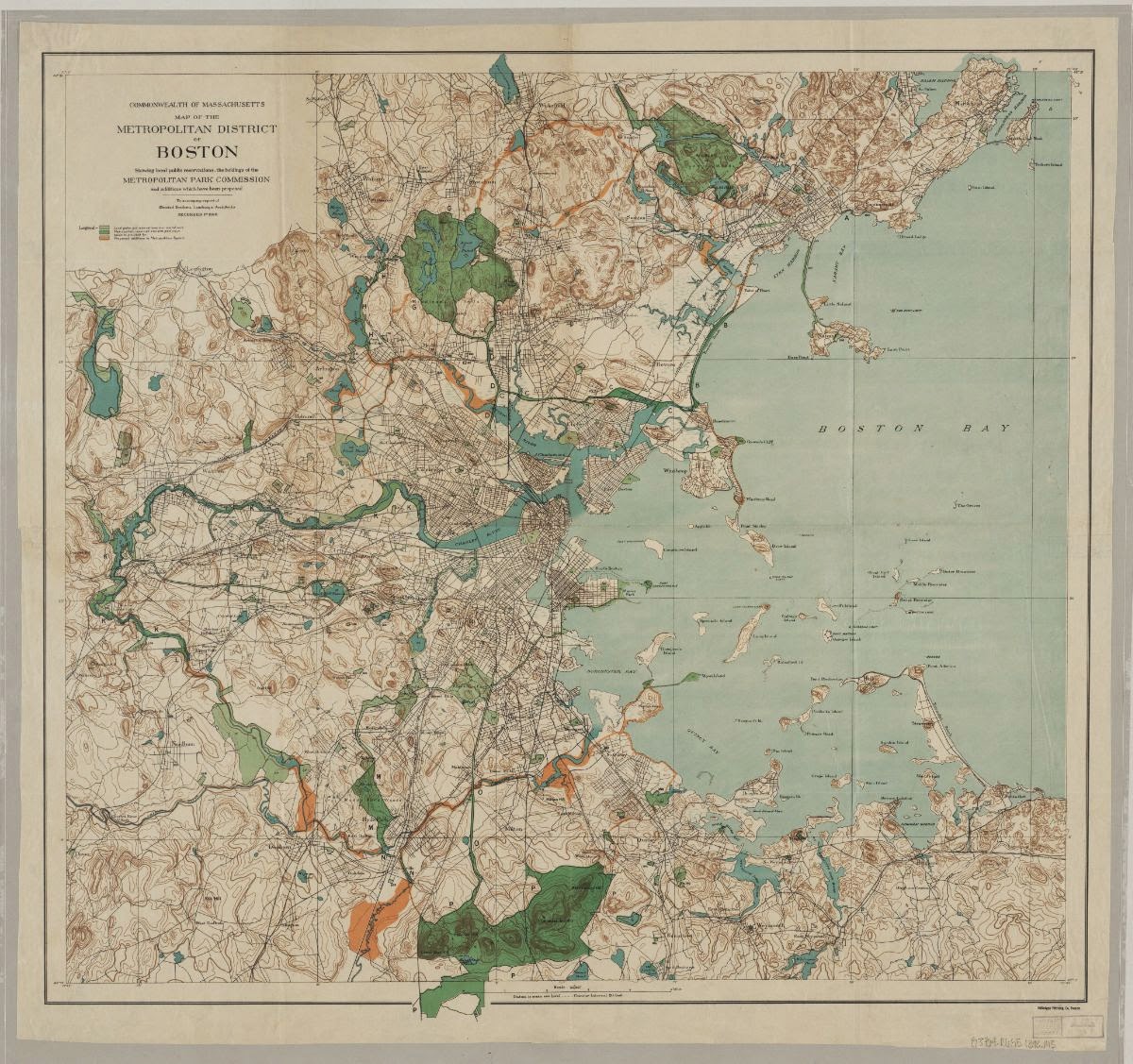
Boston’s budding conservation movement had the foresight to identify large tracts of Massachusetts wilderness for preservation in perpetuity. A four decade campaign ensued and resulted in the passage of the Acts of 1893, Chapter 407 which established the Metropolitan Park Commission. This legal entity was charged with restoring, preserving, and increasing the beauty of the undeveloped woodlands surrounding Boston and this landmark legislation would serve as a model for other American cities. The Metropolitan Park Commission’s first order of business was to hire the noted landscape architecture firm, Olmsted, Olmsted and Eliot, to survey the vegetation in the recently acquired woodland reservations, the Middlesex Fells, Beaver Brook, Stony Brook, and the Blue Hills.

View Full Size Image
Map of the original Metropolitan Park Reservations
Click here for an interactive version.

The firm appointed landscape designer Warren H. Manning who led a team of twenty volunteers to complete the fieldwork. Local botanist Walter Deane was hired to compile and edit the survey’s findings and in 1896, he published the results in this month’s book of the month, Flora of the Blue Hills, Middlesex Fells, Stony Brook and Beaver Brook Reservations, of the Metropolitan Park Commission, Massachusetts. While Deane is credited with the organization of the specimens and botanical observations for publication, the project would not have been possible without collaboration among many amateur and professional botanists. This collaboration was so successful that it led to the formation of the New England Botanical Club (NEBC), which still meets regularly and has amassed a collection of 250,000 specimens housed in the Harvard University Herbaria (HUH).

Announcing a New BHL Collection

This example of an early successful citizen-science project is highlighted in the launch of a new collection in the BHL: The Archives from the Boston Metropolitan Park. This collection is composed of approximately 8,000 pages of manuscript material documenting the progress of the survey. Readers can peruse Walter Deane’s field notes, diaries, datebooks, and correspondence. His diaries reveal fascinating insights into his work on compiling the Flora and the details of its publication, as well as how the formation of the NEBC resulted from the Metropolitan Flora survey. His diaries also give rich pictures of the botanists of his time and are highly useful to anyone writing about the history of the NEBC and its members. The collection is now freely available and opens up this fascinating slice of history to the public for the first time. As part of the Connecting Content project, the digitization of the archives and original specimens from the Metropolitan Park Reservation was made possible by an Institute of Museum and Library Services (IMLS) National Leadership Grant.

Collection Highlights

One of the most compelling aspects of the correspondence related to the Metropolitan Flora survey is learning about people and information not evident from Deane’s Flora or from the botanical specimens. One example is a letter from the tree expert Loren Dame to Manning in which he encloses a list of trees compiled by a “non-botanist”, George Perry. Perry states that “I have made it a point to crawl through the densest tangle of greenbrier and thicket… to become familiar with every rod of the section.” As a result of his efforts, his list of trees is very thorough. He also found some very rare plants not seen by other surveyors, including maidenhair fern. Unfortunately, because he wasn’t considered a reliable source, his data wasn’t included. In another letter to Manning, Dame reported three rare tree species found only in an area adjacent to the Fells, which was added to the reservation after Flora was published. All of these omissions are significant, and the knowledge revealed in these letters is highly valuable for understanding the full extent of the past flora of the area.

Surveying the Flora of Middlesex Fells: Yesterday and Today

Between 2003 and 2011 a new survey  very much like the original survey of the Fells flora was undertaken by a team of NEBC and HUH botanists. Using Deane’s Flora as a basis for comparison, the team found that most of the native species from the original survey persist, despite substantial increases in the number and frequency of non-native plants. These native species face several threats, including habitat disturbance, and loss due to construction and recreational use of the Fells, herbivory from increases in deer and insect populations, as well as environmental changes effected by climate change and afforestation. Sustaining populations of native species, some of which are rare and endangered, will require a more active management of the Fells.[1]

Urban forests purify the air that we breathe, provide a habitat for local flora and fauna, help reduce energy demands, provide recreational opportunities, reduce stress and crime rates—the list goes on. Since eighty percent of us live in urban areas most of us owe quite a bit of thanks to the astute conservationists who fought to keep the untamed wilderness close by. Now it’s our turn to preserve their legacy.

View Full Size Image

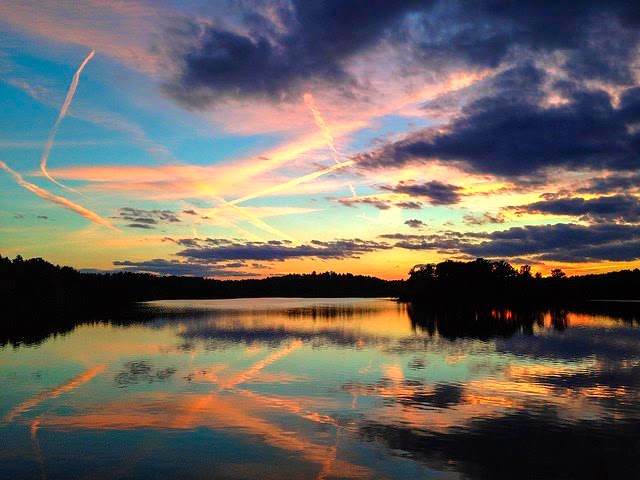
Spot Pond named by Governor John Winthrop in 1631.

Photo by Mike Ryan, Friends of the Fells

“Something like five miles northerly from Boston lies a great tract of country, all stony hills and table-lands, almost uninhabited, and of wonderful picturesqueness, and wild rugged beauty… and at its heart is that most beautiful of Boston’s suburban lakes, Spot Pond, which lies high up among the hills.” Sylvester Baxter, 1886.

Notes

[1] 2012. Hamlin, Bryan T., W. T. Kittredge, D. P. Lubin & E. B. Wright. Changes in the vascular flora of the Middlesex Fells Reservation, Middlesex County, Massachesetts, from 1895 to 2011. Rhodora 114(959): 229-308.

Learn More!

IMLS Grant Project Page
Walter Deane (1848-1930) Papers
NPS: Metropolitan Parks Commision
Friends of the Fells
Found in the Fells
The Middlesex Fells, a Flourishing Urban Forest by W. Kittredge
BHL Collection: Archives and Specimens from the Boston Metropolitan Park Flora 

February 26, 2015by [email protected]
Blog Reel, Featured Books

Albertus Seba’s Cabinet of Wonder and Awe

View Full Size Image
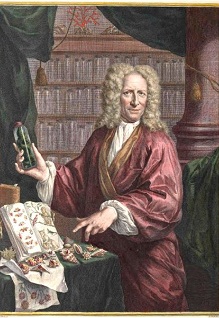
Dutch Apothecary Albertus Seba and his famous natural history collection

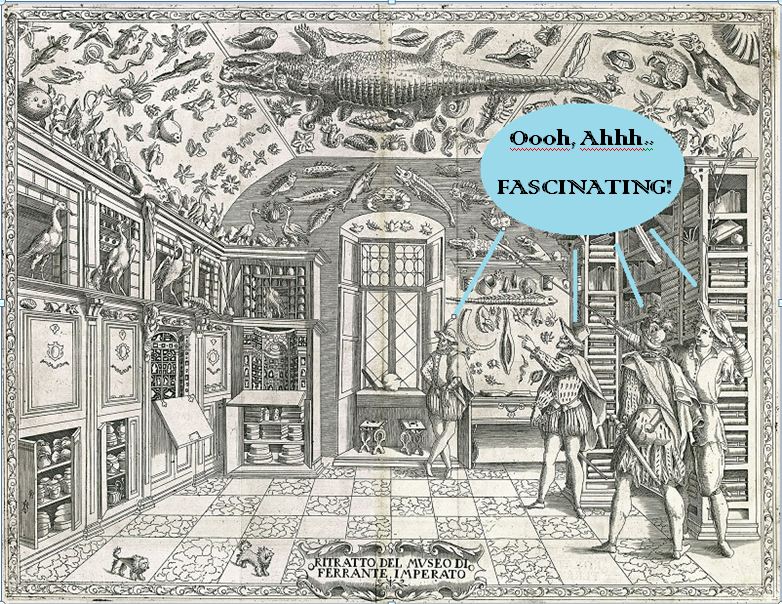
Contrary to what one might think, a curiosity cabinet is not a piece of furniture, rather it is an entire room(s) dedicated to the collection of objects that are meant to bring shock, awe, inspiration, and stimulating conversation to its viewers. During the 16th-19th centuries, the curiosity cabinet became a popular way for aristocrats and aspiring bourgeoisie to show off personal wealth and erudition. These “rooms of wonder” are considered the precursors to the modern museum. However, unlike a museum collection that is organized around a specific theme e.g. archaeology, art, natural history, and sculpture, a cabinet of curiosities celebrates its own bedlam, juxtaposing disparate objects in a jumbled mass to prompt serendipitous discoveries, new connections, and eureka! moments about the manifest world.

By the 18th century, order began to coalesce out of chaos and curiosity cabinets became a bit more focused. Such was the case with a famed apothecary from Amsterdam, Albertus Seba, and his cabinet of natural history curiosities. Today, we will examine what exactly was in Seba’s celebrated collection and see if we can still find hints of the fabulous, wondrous, exotic, and down-right strange. And how are we able to peer into this almost 300 year old room of wonder that is no longer in existence? Seba was thoughtful enough to record his collected specimens in this week’s Book of the Week: Locupletissimi rerum naturalium thesauri accurata descriptio, et iconibus artificiosissimis expressio, per universam physices historiam : opus, cui, in hoc rerum genere, nullum par exstitit.

Accurate Description of the Richest Natural Treasures

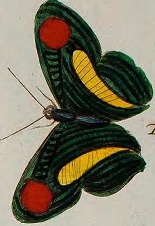
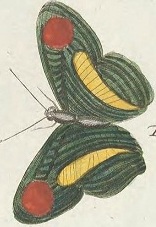
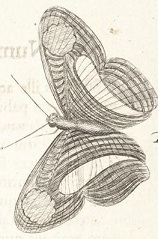
Did you know that a copy of Seba’s Thesauri was sold in 2000 at a Christie’s auction for $442,500 US dollars? The pricey memento of a time past, published between 1734 and 1765, can now be enjoyed for by you on the BHL for free. It is composed of four volumes and 446 plates: 175 of which are double-page spreads. Seba commissioned 13 artists to draw every single specimen that he owned. Plate tinting was done at the buyer’s expense therefore most of the existing copies of Seba’s Thesauri are only found in black and white. For bibliophiles interested in scientific illustration, the BHL happily provides three copies of Seba’s work in both black and white and in color> Compare a butterfly from the three copies in the BHL:

View Full Size Image
Museums Victoria
View Full Size Image
Smithsonian
View Full Size Image
MOBOT

Which is the prettiest? Which one provides you with the most information about the butterfly?

While the color copies are naturally prettier, it is widely known by the research community that black and white illustrations are better scientific resources because of their ability to convey details, texture and dimension in a way that color cannot. We’re just so glad to have access to all three. Let us all thank the Museums Victoria, the Smithsonian Libraries and the Missouri Botanical Garden for contributing their copies of this magnificent work.

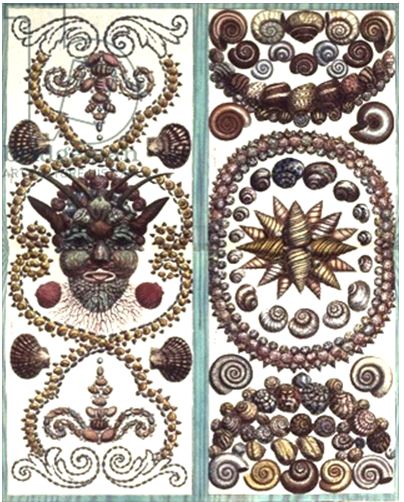
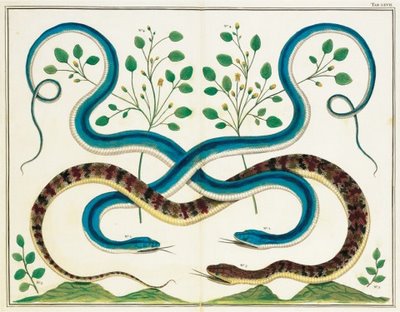
At the time, the boundary between art and science had not yet been drawn. Hence, Seba’s snakes slither fancifully across the page and his crustaceans and shells are arranged in pleasing patterns for the sole purpose of delighting the reader:

View Full Size Image
Seba’s Shocking Shells

Seba’s passion for collecting

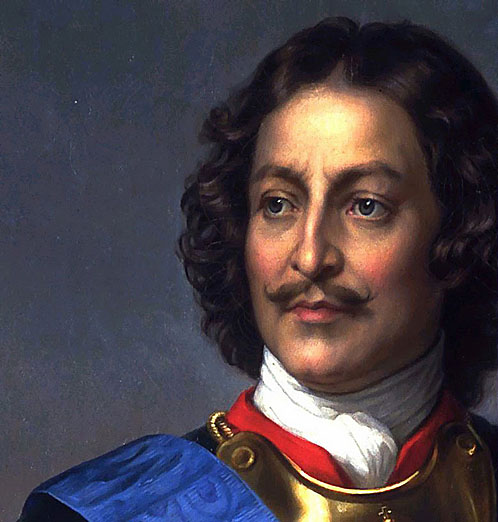
18th century Amsterdam was the center or European international maritime trade largely due in-part to the Dutch East India Trading Company. There couldn’t have been a better home-base for a man such as Albertus Seba, an apothecary with a penchant for collecting exotic specimens of animals, plants, and minerals to use in his medicinal concoctions. According to accounts, Seba eagerly greeted sailors at the city’s port, especially those who arrived ill and in need of medicine, because it meant he would get first dibs on the newly imported stock. In exchange for his services, medicine, or a bargain price, the apothecary was able to purchase the choicest specimens for his ever-growing natural history collection. Quickly, the collection’s reputation grew and began to be widely used by scholars all over Europe. In 1717, the entire collection was bought by a long-time patron, Czar Peter the Great for 15,000 guilders. Our book of the week actually represents Seba’s second endeavor to amass an even grander collection than the first– and grander it was – with 72 drawers of shells, 32 drawers of 1,000 European insects, and 400 jars of animal specimens preserved in alcohol, many of them containing Seba’s favorite specimen: snakes.

View Full Size Image
Sensational Slithering Snakes

More of Seba’s plates available for free download on Flickr.

5 reasons to explain all the hoarding

Seba like all serious collectors amassed specimens for both practical and more abstract reasons:

View Full Size Image
Peter the Great (by Paul Delaroche)

1. Showing-off: Wealthy friends and respected colleagues came from all over Europe to use Seba’s collection and marvel at his magnificent treasures. The collection was a prestige magnet. As related earlier, Peter the Great was impressed.

2. Investment: Like modern collectors, owning rare and exotic items was viewed as a sound investment: “this mermaid hand will surely go up in value.”

3. Scientific Inquiry:  Apothecaries were some of the most avid collectors in Europe at this time, often experimenting with different natural compounds and searching for new cures and medicines. The work of the apothecary is regarded as the foundation of the modern sciences of pharmacology and chemistry.

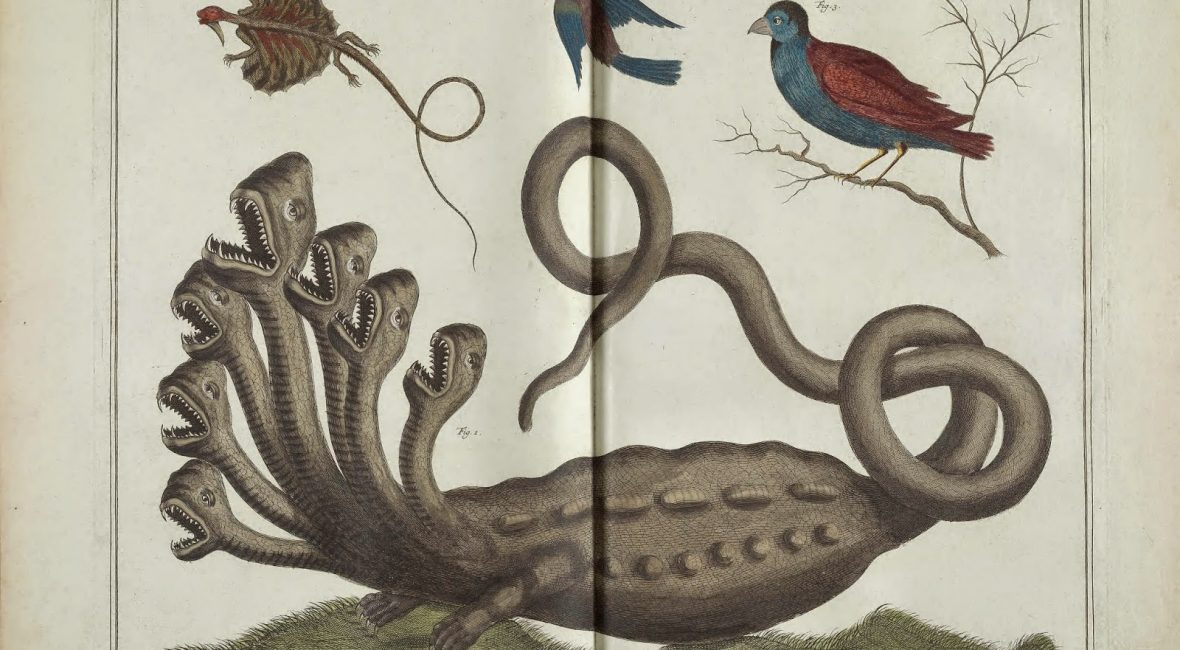
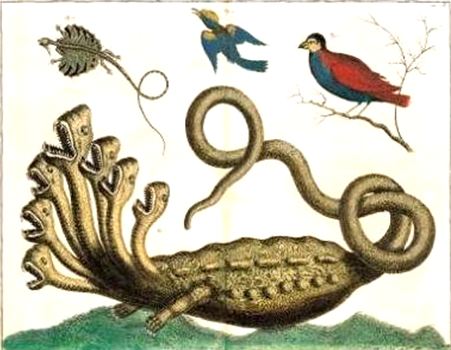
4. Validation of Sensory Experience: Unlike us, Seba didn’t have the convenience of using Google Image Search to validate phenomena occurring in the natural world. To validate the existence of a new organism one needed to see, touch, hold, and experience it — in person. This might explain why it was so difficult at that time to distinguish between the veracity of a seven-headed hydra and a narwhal tusk. Both seem equally fantastic yet, we all know that the hydra is just a myth. Collecting was a way to prove to others that you weren’t crazy or just plain making stuff-up.

View Full Size Image

Seba admits to being doubtful at first of the hydra’s existence, but  later became convinced that the specimen was true to nature based on first-hand accounts.

5. Provide a Microcosm of the Macrocosm: In Historian Michael Wintroub’s excellent paper, Taking Stock at the End of the World, he explains that the curiosity cabinet “contain(s) specimens of every category of things and help(s) to render visible the totality of the universe, which otherwise would remain hidden from human eyes,” he goes on to say that “The wonder cabinet was a response to the apparent disorder of the world; through it the collector sought not only to win prestige, but to piece the variegated and multifarious mosaic of existence into a coherent—microcosmic—whole” (405-407) Talk about a pretty philosophical and deep reason to collect!

Clearly the reasons behind collecting are multifaceted and complex but, bring obvious advantages and joy for the inquisitive.

The fate of the curiosity cabinet

Today, while curiosity cabinets still exist, much of the meaning and purpose behind them is lost. Our view of the natural world is much more complete than ever before and many scholars claim that the Internet is the ultimate ‘Cabinet of Curiosities.’ Old rooms full of weird stuff seem less relevant than ever. However, one might also argue that to digital natives, the analog experience becomes a curiosity in itself which might explain the popularity of aesthetic movements like Steampunk that celebrate anachronistic technology in a futuristic setting —  analog has become the new sexy. Whatever your view, it is important to recognize that the Curiosity Cabinet serves an important role in the history of information, science, and intellectual inquiry. It is the antecedent to the modern museum and digital curation platforms like Tumblr and Pinterest that essentially allow an individual to collect and curate objects based on personal interests. However, the nice thing about these virtual tools is that now we don’t have to stalk sailors with scurvy to add new objects to our collections.

View Full Size Image
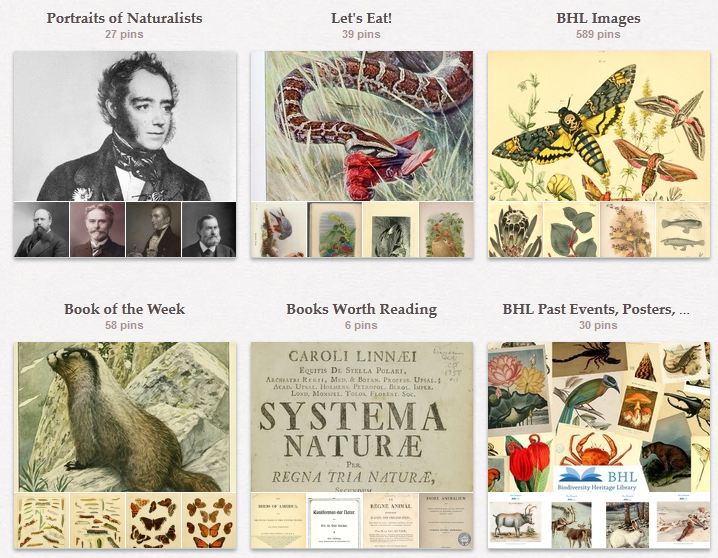
Check out the Biodiverisity Heritage Library’s Pinterest Board

Want to enjoy Seba in the comfort of your own home? Now you can. Taschen Books published a reprint of the Thesauri in 2006. You can own Seba’s Thesauri reproduction for a mere 40 dollars. For taxonomists, the very best thing about the 2006 edition is the fact that they have assigned the Linnaean binomials to all of Seba’s specimens. I can assure you that I will be adding the book to my very own cabinet of curiosities — guaranteed to prompt wonder, awe and stimulating conversation whenever things get boring.

View Full Size Image
Ferrante Imperato’s Curisotiy Cabinet depicted in Dell’Historia Naturale(1599),

Read more about this first pictorial representation of a renaissance humanist’s cabinet of curiosities in BHL Blogger and Program Manager, Grace Constantino’s piece: The Good, the Bad, and Pest Control.

We hope you enjoyed this post. Interested in guest-blogging for BHL? We’d love that! Natural history, biodiversity and conservation topics are especially welcomed. Email us your ideas at [email protected].

For the Curious

  • BibliOdyssey: Wondertooneel der Nature (2008)
  • The Guardian UK: A Wonder Room (2011)
  • ‘MOMA’s 2008 exhibition ‘Wunderkammer‘ ‘
  • Sullivan, Andrew When storage was a stage.(2012)
  • Wintroub, Michael. Taking Stock at the End of the World: Rites of Distinction and Practices of Collecting in Early Modern Europe.”
January 17, 2013by [email protected]
Blog Reel, Featured Books

It’s The End of the World as We Know It. Do You Feel Fine?

View Full Size Image
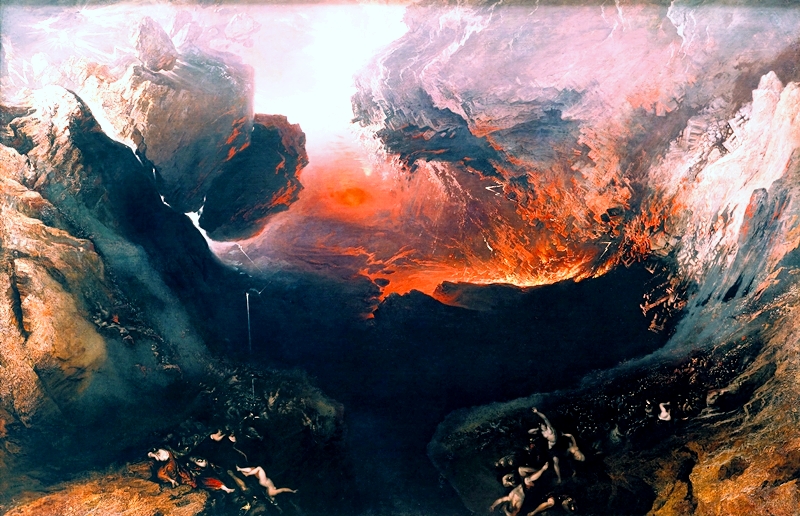
The Great Day of His Wrath (1853), Artist: John Martin

If you are reading this post then the world hasn’t ended…but, you probably already knew it wasn’t going to end.

Don’t look so disappointed. Yes, the human race regrettably has always had a collective death wish, eagerly awaiting the promise of the end of times since the beginning of times. Or have we? Ironically, it was the Maya, the ancient civilization that gave us such a precise date by which to count down to our own demise: December 21, 2012, that Mayan archeologist William Saturno explains looked for evidence that life goes on:

“We keep looking for endings. The Maya were looking for a guarantee that nothing would change. It’s an entirely different mindset.”

Mayan cosmology is more concerned about looking for assurances of continued life on earth, not death. So be comforted on this day – a day like any other – and use it to reflect on the greater value that life seems to take on in the face of our imminent death.

Besides a hopeful view of the future, the Maya had many beliefs worth adopting. Another foreign notion to our fast-paced-commerce-driven society is the worship of nature and animals as divine gods. The Mayans had a great reverence for nature which might explain why their entire religious pantheon is made up of deities that are either animals or humans with anthropomorphic features. They believed in worshiping life in its diverse manifestations.

Book of the Week

To honor this ancient civilization’s deep reverence for biodiversity we have chosen a singularly unique study undertaken by Alfred M. Tozzer and Glover M. Allen, for this week’s book of the week:

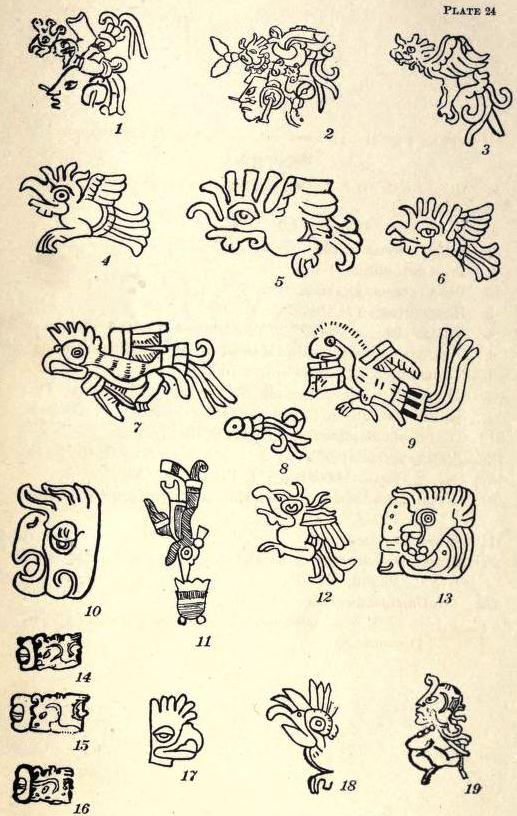
Animal Figures in the Maya Codices (1910)

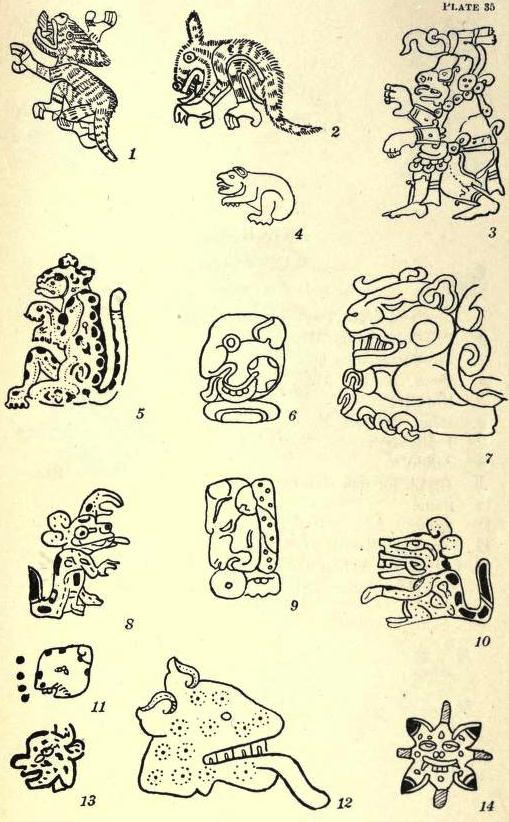
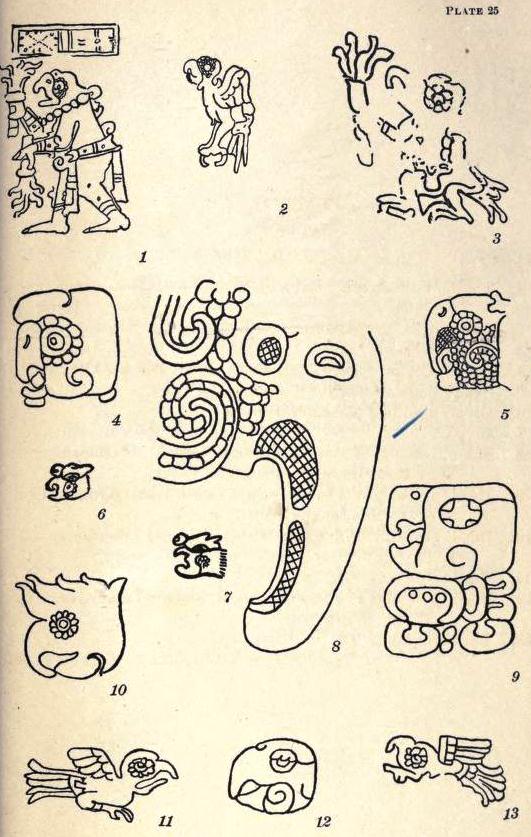
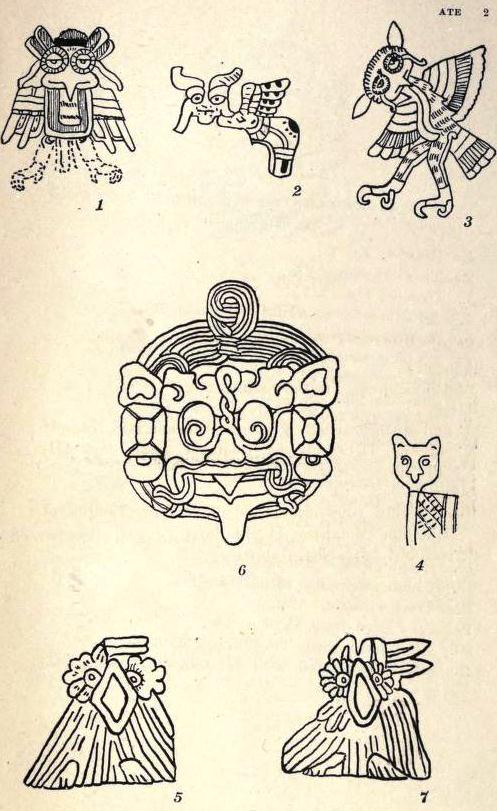
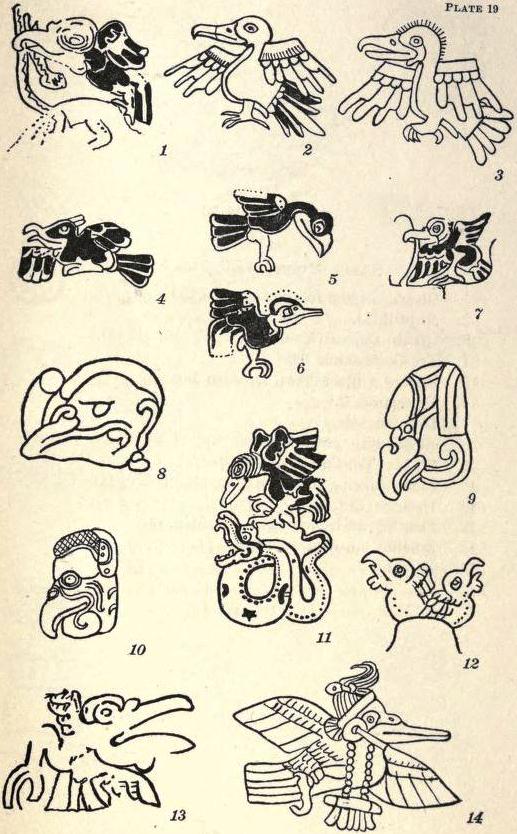
Mr. Tozzer is one of the most famous American Mayanists to date and Mr. Glover was a zoologist specializing in Mesoamerican species at the turn of the last century. Together, the duo was determined to match Mayan hieroglyphic characters, glyphs and artwork depicting Mayan gods to modern species analogues. They were fairly successful in identifying the specific species that the Maya would come in contact with and thus idealize as religious deities.

Mayan Art Inspired by Meso-American Species

Gilbert Borrego, our Flickr Guru, has scoured the BHL in search of Meso-american species and put together a 58 plate Flickr Collection dedicated to Mayan plant and animal life. We have matched these illustrations with the respective Mayan hieroglyphs present in Tozzer and Allen’s work. Your job is to examine the glyphs and see if you see any resemblance between the Mayan art and their species counterparts.

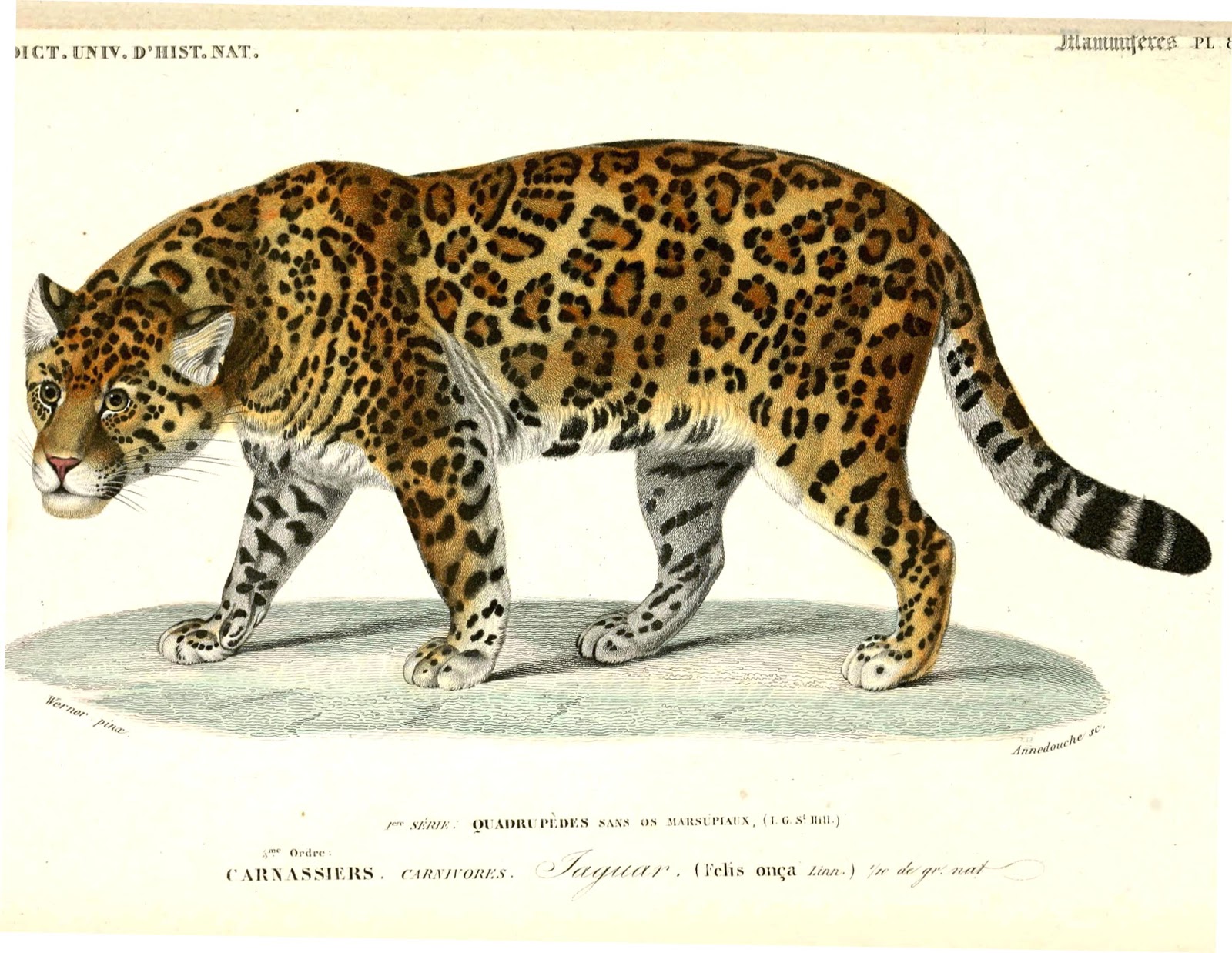
Jaguar (Panthera onca)

View Full Size ImageView Full Size Image

The jaguar a predatory animal symbolized strength, courage, associated with great Mayan warriors. Some scholars have also purported that the beautiful animal is the ruler of the Underworld.

Blue Macaw (Ara militaris)

View Full Size ImageView Full Size Image 

According to Tozzer and Glover, the  Macaw was one of the lightning beasts associated with the worship of fire and the sun. Their brilliant blue feathers were often used in ceremonial headdresses.

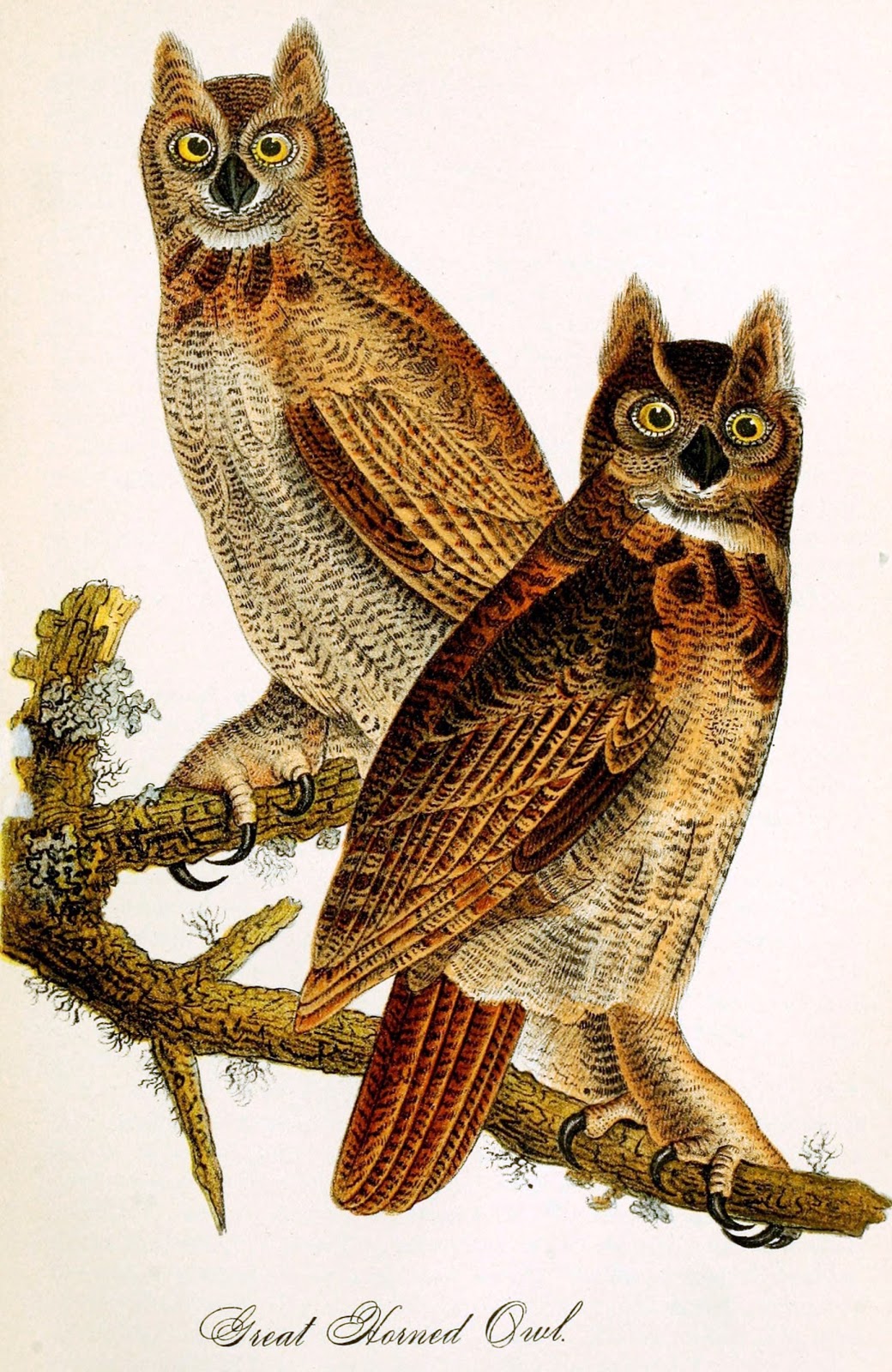
Yucatan Screech Owl or Moan-Bird (Otus choliba thompsoni)

View Full Size ImageView Full Size Image 

The owl is a symbol of death and destruction and is regarded as the Moon or Night God. The Owl resides in the  mythological “House of Drought,” unlike the serpent which occupies the “House of Rain”  therefore symbolizing life.<

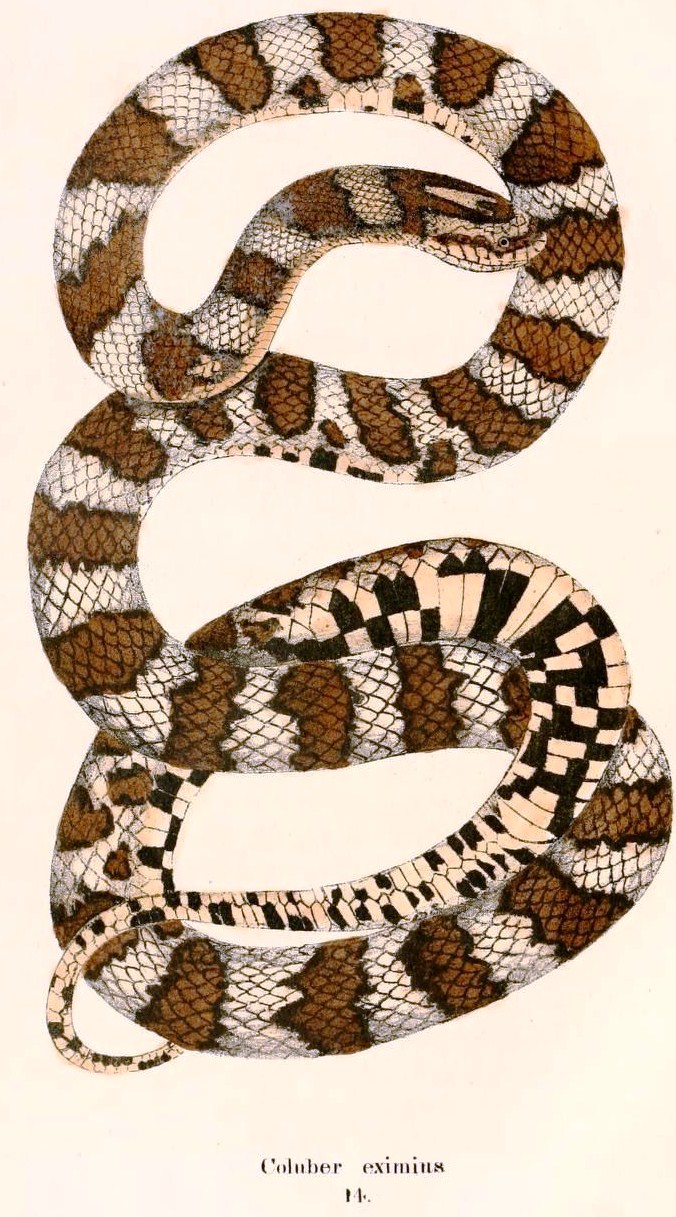
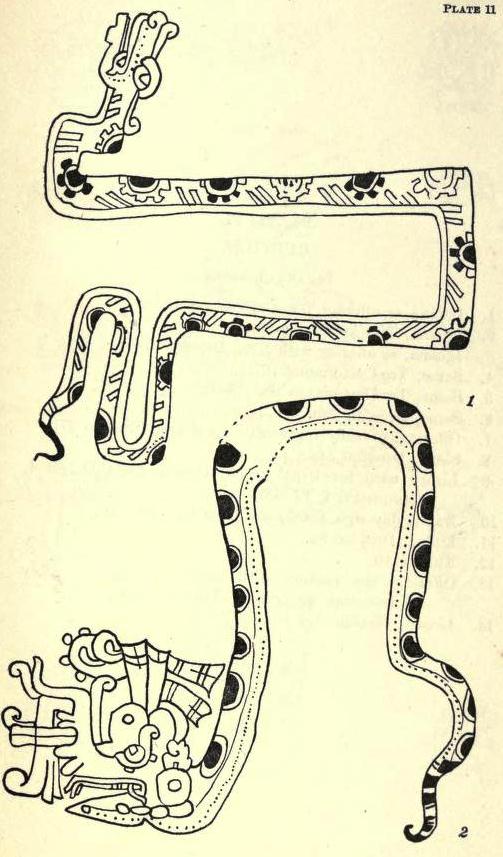
Serpent (Boidae)

View Full Size ImageView Full Size Image

The serpent was extremely important for it symbolized the live-giving force rain, and thus regulated the annual yield of  crops. It is most likely that this association was made because snakes show themselves in large numbers before and after rainfall.

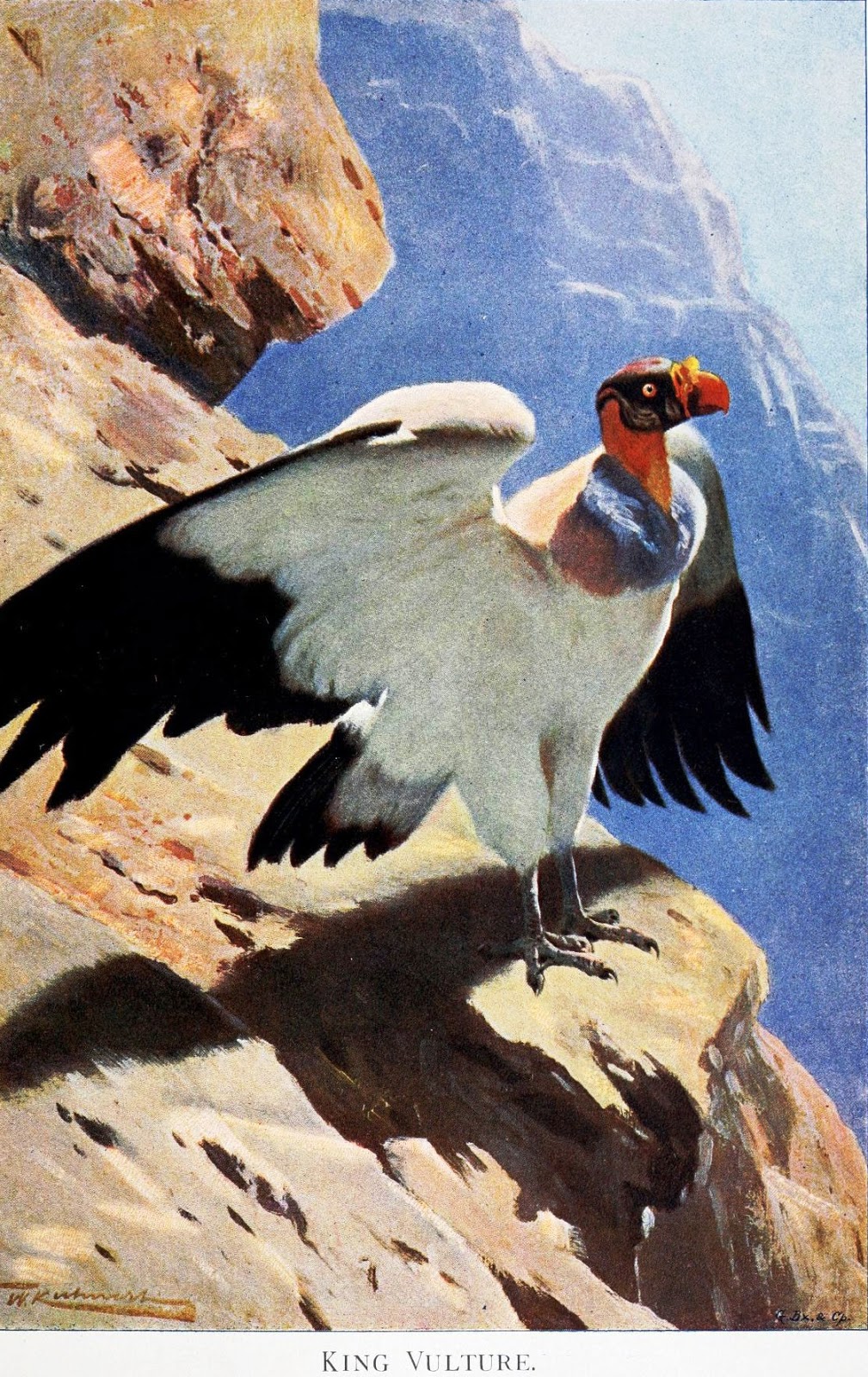
King Vulture (Sarcoramphus papa)

View Full Size ImageView Full Size Image

Scholars have speculated that the King Vulture symbolizes power as well as sacrifice. According to Mayan mythology ‘lesser’ Vultures would not eat until the King came down and plucked out the eyeballs and entrails of the dead.

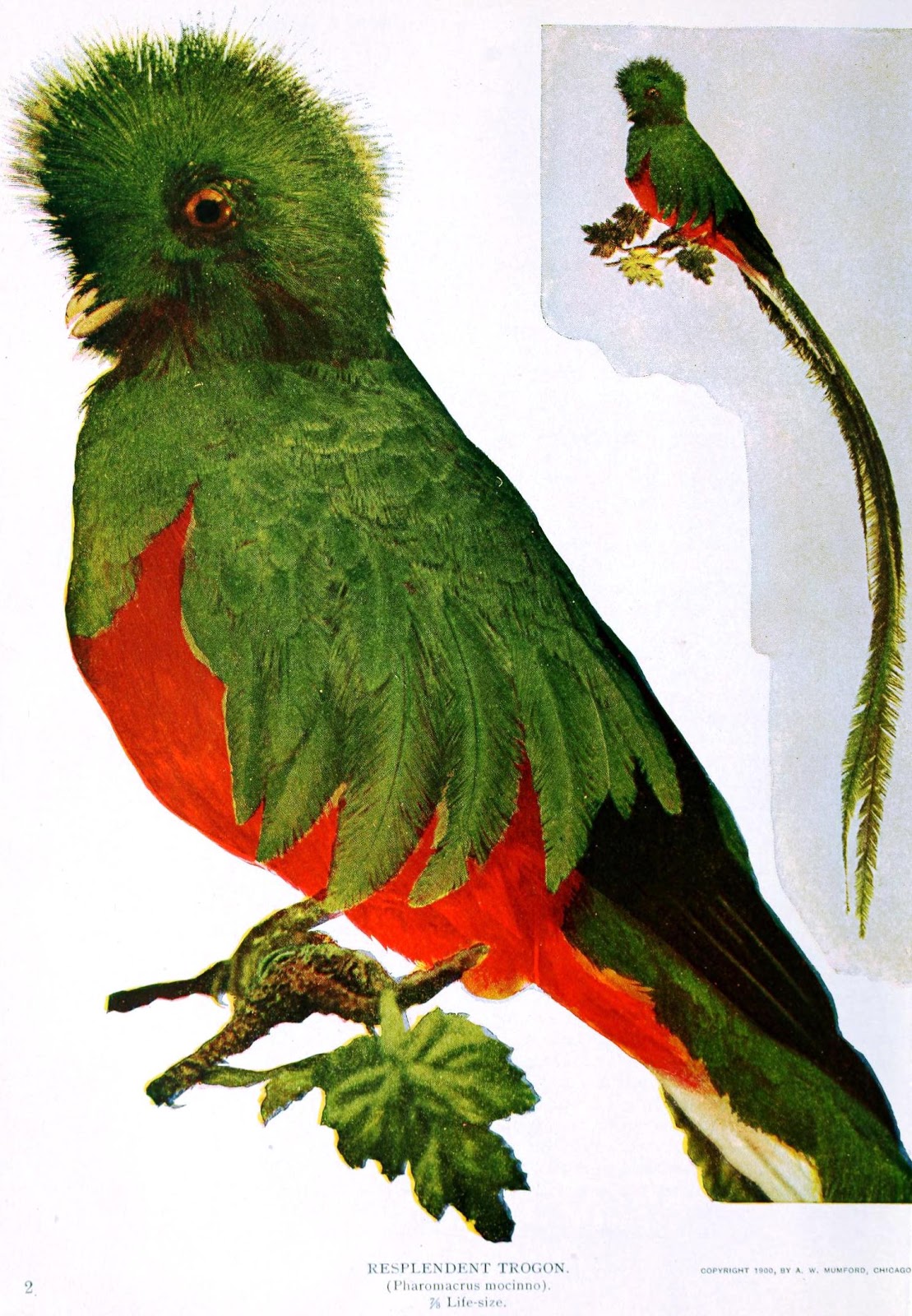
Coppery-tailed Trogon aka The Quetzal (Pharomacrus mocinno)

View Full Size ImageView Full Size Image

The Quetzal, meaning ‘large brilliant tail feather’, is a rare bird found in certain parts of Southern Mexico. Its brilliant green color and particularly long tail feathers made it a sacred bird to the Mayans that was reserved for use in headdresses of rulers. The bird is associated with the mythical hero Quetzalcoatl, the feathered serpent god, whom the Mayans mistook conquistador Hernán Cortés for. According to an account by Alexander von Humboldt, the Mayans were impatiently awaiting the return of this god because he would bring a time of great peace with him. Read more about that here.

Clearly, Mayans were more concerned with the cycle of life rather than the end of the world as we know it. In the spirit of their great culture, take the time to celebrate your continued life today. And if for some reason you were in a panic about the world ending, then calm yourself and visit NASA’s 2012 de-bunked website.You’ll surely feel better.

We hope you enjoyed this post. Interested in guest-blogging for BHL? We’d love that! Natural history, biodiversity and conservation topics are especially welcomed. Email us your ideas at [email protected]

December 21, 2012by [email protected]
Blog Reel, Featured Books

How to Grow a Turkey and Other Fun Facts

Portrait version of the Biodiversity Heritage Library logo.

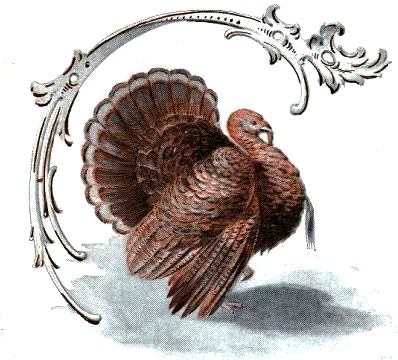
Happy Thanksgiving From Your Friends at the BHL!

View Full Size Image
Gobble Gobble Gobble

The days before Thanksgiving are often spent by moms frantically shopping around for a prize turkey at their local supermarkets which, are hopefully already de-feathered, shrink-wrapped and packaged for our convenience. However, did you know that many folks still procure their turkey Thanksgiving meal the good old-fashioned way by “growing them?” If you are scratching your head wondering how exactly one “grows” a turkey, then this week’s Book of the Week is for you. Author Herbert Myrick tells us all about Turkeys and How to Grow Them (1905).  His book is a “Treatise on the natural history and origin of the name of turkeys; the various breeds, and best methods to insure success in the business of turkey growing ” In the book we learn about the different breeds of turkey from the taxonomic genus Meleagris, the awe-inspiring and downright immodest mating tactics of male turkeys and yes how to “grow” a turkey just in time for Thanksgiving. Today for fun’s sake, we will be highlighting the antics of male turkey mating behaviors. Did you know that a male turkey can be called a “Tom”, a “Gobbler”, a “Cock” or a “Stag”? For your enjoyment this Thanksgiving holiday, we have compiled some entertaining quotes from the book about Stag mating behavior. Subsequently, these very quotes will be visualized for you with a short Youtube video that documents the mating dance of one very special Gobbler, Marco the Turkey. Quite the show, indeed. Not to be missed.

Moreover, we will provide you with three gifts this Thanksgiving and it’s not even Christmas yet:

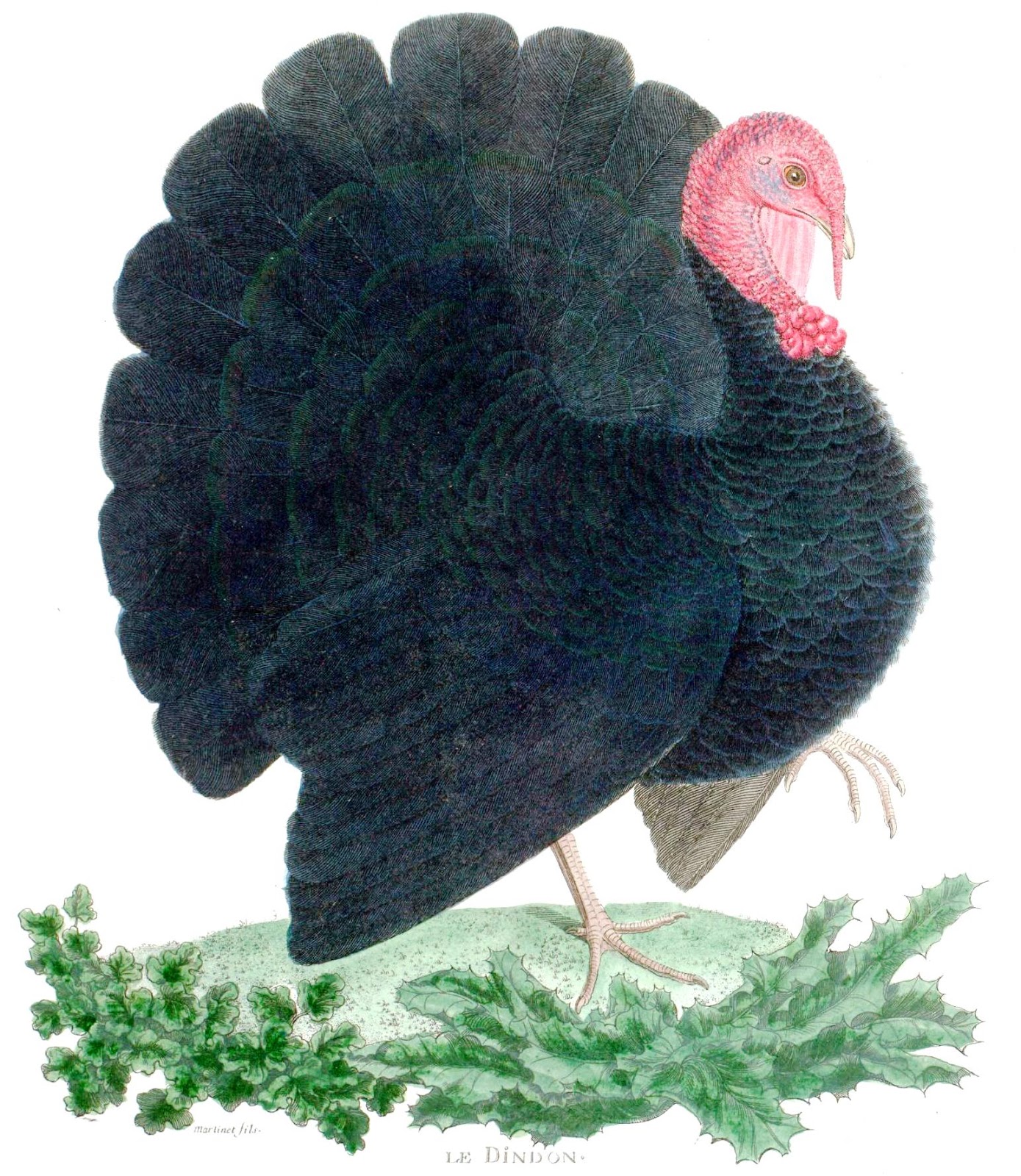
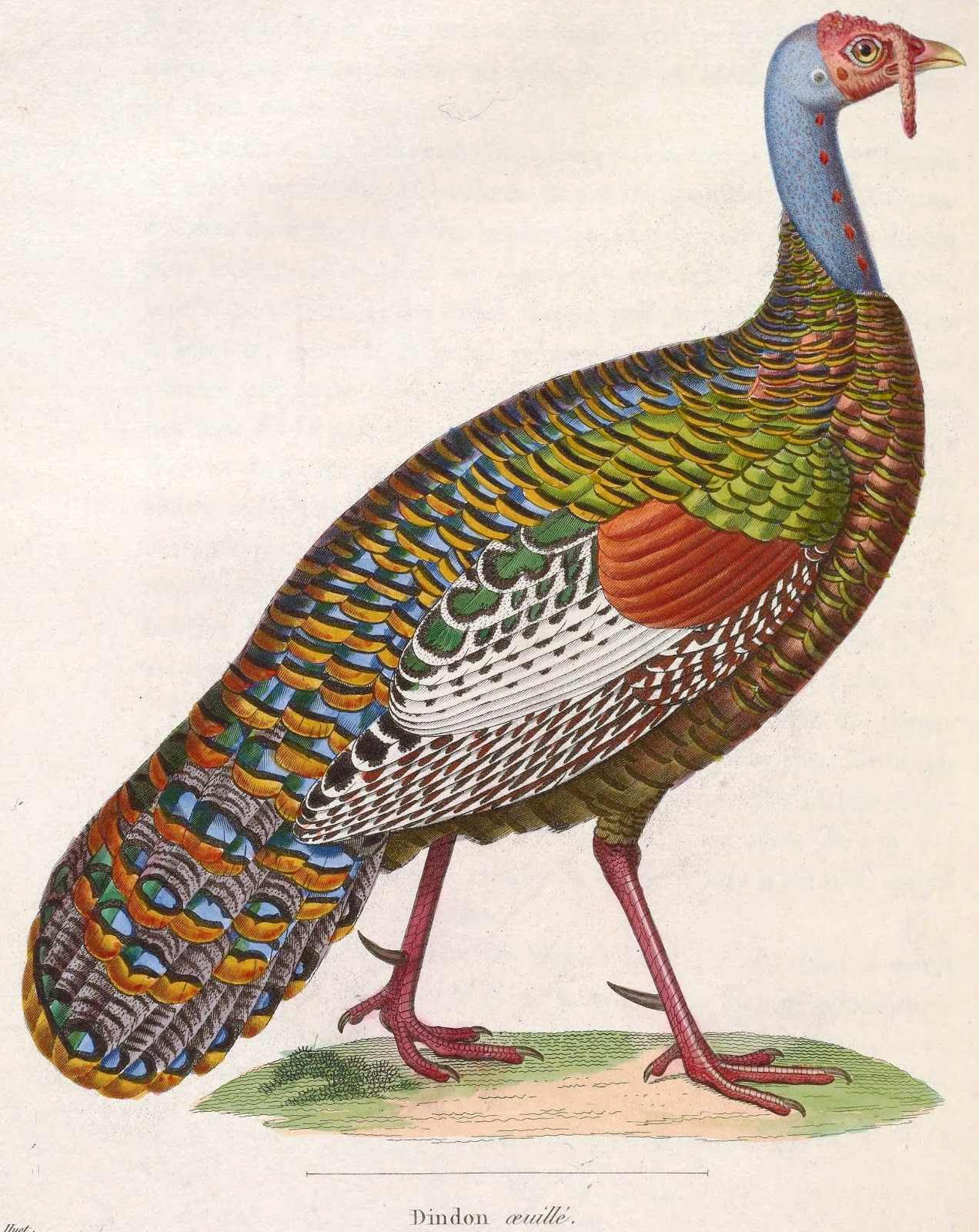
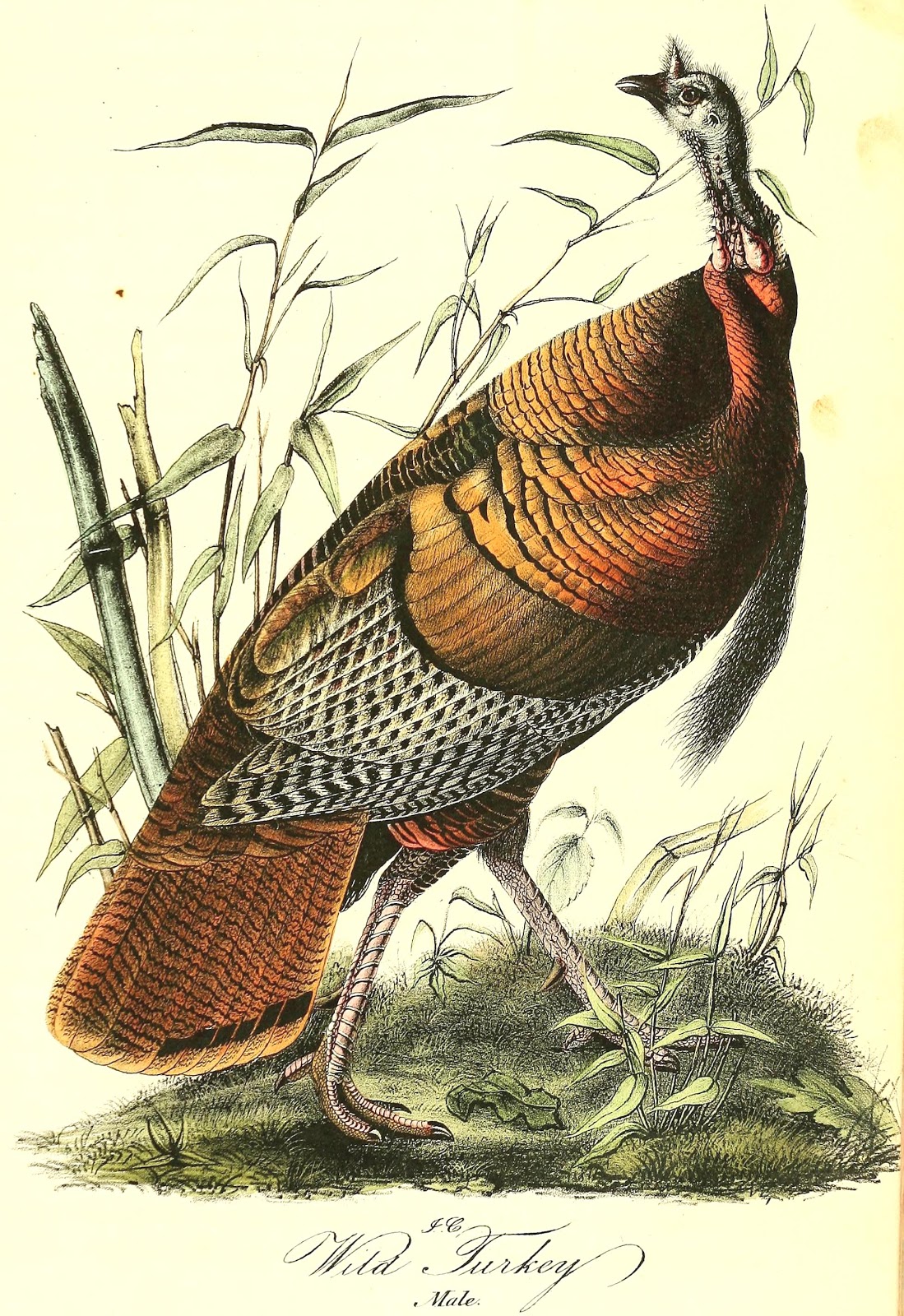
1) Stellar images of turkeys from our Flickr account including a rare Audubon print of the wild Turkey from his famed work, The Birds of America.

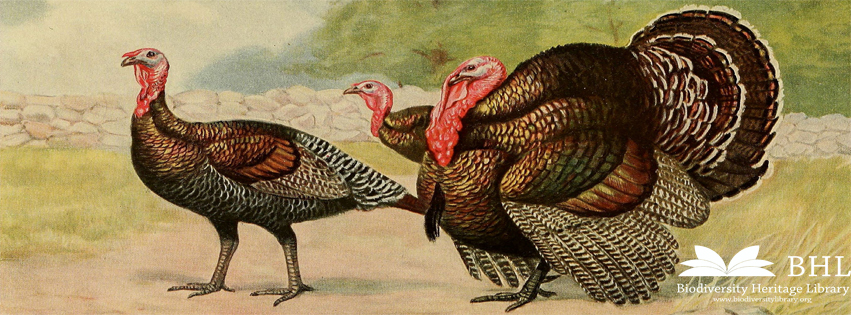
2) Turkey day cover art is now available for you to freely use with any of your social media accounts; created expressly for you by BHL’s Flickr Guru Gilbert Borrego. Thanks Gilbert!

3) A fun fact to share at the Thanksgiving table about tryptophan and how it ISN’T linked to the post-meal sleepiness that we are all too familiar with.

Surely all things to be thankful about! Enjoy!

Turkey Mating Habits

To begin our discussion of male turkey mating behaviors we would like to preface a forthcoming video of a particularly amorous Gobbler’s mating dance with a quote from the book, Turkeys and How to Grow Them:

“The males may then be heard calling to the females from every direction, until the woods ring with their loud and liquid cries, which are commenced long ere the sun appears above the horizon, and continue for hours with steadiest persistency.”

“…If the female answering the call is on the ground, the males fly to her and parade before her with all the pompous strutting that characterizes the family.”

Ready to see this in action? It seems that in the turkey world, the males are the showier sex: strutting about, dancing, crying delirious mating calls, and putting on dazzling outfits to impress their female counterparts. And what do the females do? They casually ignore the male’s pleas for the most part. Occasionally, they have been known to entertain a mating dance which you absolutely must witness for yourself:

Marco’s Mating Display

Let’s thank user Sallyatthederby on YouTube for uploading this amazing display of male prowess by Marco the Turkey. He is clearly trying to attract the female in the background while simultaneously showing off for the camera. It’s funny to watch the female turkey as she looks downright confused by Marco’s behavior and disinterestedly pecks at the fence. Poor lady seems to be searching for an escape hatch. We can’t blame Marco for trying. He knows he is a lovely site! We are sure he will find love eventually.

Gift Time!

1) Stellar Turkey Images:

View Full Size Image
Source: Ornithologie (1773-1792)
View Full Size Image
Source: Nouveau recueil de planches coloriées d’oiseaux, v. 5 (1838)
View Full Size Image
Source: Birds of America, v.5 (1840-1844)
 
2) Social Media Cover Art: use it for your Facebook or Twitter Accounts
View Full Size Image
Full-sized download available on our Pinterest Account.

3) The Trytophan Equates Sleepiness Myth Has Been Debunked

View Full Size Image

Every year at Thanksgiving, Americans gather around and eat to their heart’s content. Post-dinner they do one of three things: 1) argue with their relatives 2) hide from the crazy people 3) a good majority of us fall asleep. Turkey, the meal’s main course is popularly thought to make its imbiber quite sleepy. However, this Thanksgiving you can proclaim to all of your family members that there is conclusive evidence that is absolutely positively NOT TRUE. According to the popular show Myth Busters, Tory Belleci, Kari Byron, and Grant Imahara investigated this claim that consuming turkey/tryptophan causes drowsiness. The Myth Busters Team put together three holiday meals in which to test this theory. The variables being tested were 1) portion size and 2) the presence vs. absence of turkey in the meal. After testing each meal, and timing the resultant effects of drowsiness, they found that the amount of food eaten had a much larger effect on whether or not one felt sleepy. This flies in the face of the turkey/tryptophan explanation for post-thanksgiving meal drowsiness. The conclusion of the episode was: The Tryptophan Sleepiness Myth was “Busted.” Meal size and subsequent effects of insulin NOT turkey derived trytophan is responsible for your extreme sleepiness. So to be clear it’s the Turkey + mulled cider + all those other side dishes that just keep coming and coming = extreme sleepiness aka food coma.

Please enjoy eating, sleeping and being merry this Thanksgiving from your friends at the BHL!

We hope you enjoyed this post. Interested in guest-blogging for BHL? We’d love that! Natural history, biodiversity and conservation topics are especially welcomed. Email us your ideas at [email protected]

November 22, 2012by [email protected]
Blog Reel

Digitizing Catesby’s Magnum Opus

The Catesby Tercentennial Celebration


The blogosphere is abuzz with tributes and commendations for famed artist Mark Catesby. Why?

We are in the midst of celebrating the three hundred year anniversary of Mr. Catesby’s journey to America. Like so many well-known naturalists, Catesby was an intrepid young man with an insatiable curiosity for Nature’s Kingdom. He was particularly entranced with new, unknown, and exotic species and it was precisely for this reason that he was so determined to make his way across the Atlantic and be the very first man to observe, catalog, and illustrate the teeming plant and animal life from the New World. Though he lacked a formal scientific background, the monetary means, the artistic skill and the knowledge of engraving necessary to produce a natural history pictorial book covering the species of North America, he was not deterred from his dream to complete just such a tome. So one might easily guess what this week’s book of the week is. Our selection this week represents Mark Catesby’s life work:
The Natural History of the Carolina, Florida and Bahama Islands.

In 1747, Catesby happily finished his book. It took two trips to America and almost 20 years of effort to be completed but, Catesby died a happy and accomplished man just two years later, in 1749.

Appreciating Catesby

Like a fish out of water?

Over the course of those twenty years, with much patience and persistence, Catesby gathered the money, the skills and the scientific knowledge necessary to achieve his goal. He made use of the libraries of wealthy scientifically minded men from London’s Royal Society, studied the work of some of the best natural history artists at the time (notably

Georg Ehret, George Edwards and Maria Sibylla Merian), learned to engrave plates himself to curtail the costs of producing his publication and gathered funding from generous patrons who were interested in having specimens sent back to them from America. He was a determined do-it-yourself (DIY) kind of man. It would take Catesby the better half of his life to accomplish what he had initially set out to do but, he had a dream that he was insistent on making a reality. The fruition of his efforts was truly monumental at the time. When his work was presented to the Royal Society in London, Secretary Cromwell Mortimer remarked that it is “the most magnificent work I know since the Art of printing has been discovered.”

Not a bad review for a quiet man who was in the habit of disparaging his own talents:

“I was not bred a painter and I hope some faults in perspective and other niceties may [therefore] be more readily excused.” ~Mark Catesby.

Mr. Catesby, you are most definitely excused. The feigned modesty is not necessary. While some have said that Catesby’s flat style is less realistic, that his whimsical juxtaposition of plants and animals are environmentally inaccurate and that his illustrations are sometimes downright bizarre, we think it’s for these very reasons that we find Catesby’s work so intriguing, refreshing, and moving.

Coinciding serendipitously with Catesby’s Tercentennial celebrations has been the final completion, after months of anticipation, of the digitization of the Smithsonian’s very special first edition copy of Catesby’s The Natural History of the Carolina, Florida and Bahama Islands. This particular copy is considered a “perfect copy” and belonged to none other than Secretary Mortimer himself.

Let’s repeat that. Yes. It’s free. It’s online. It’s available. Where? On the BHL of course.

Catesby went beyond documenting and illustrating North America’s species as he sought to ignite our imagination with his peculiar and unique perception of the natural world. Today, we are re-introducing Mark Catesby’s magnum opus in digital form, so that it can be enjoyed by everyone as we think Catesby would have wanted.

8 things to look for when examining Cromwell Mortimer’s copy

Want to know what you should be looking for in this week’s book of the week? Leslie Overstreet, Curator of Natural History Rare books and Head of the Smithsonian’s Joseph F. Cullman Library, gives us expert tips on what readers should notice when examining this prized book held in the rare book vault at the National Museum of Natural History.

Cromwell’s Arms

1) Cromwell’s Coat of Arms

How do we know that this particular copy was originally owned by Secretary Cromwell Mortimer of the Royal Society? Expert on British Armorial Bindings, Philip Oldfield of the University of Toronto has verified that the covers have been stamped in gold with the
arms of Secretary Mortimer. Mortimer is listed in the book as an original subscriber of Catesby’s work.


Click to enlarge the Proposal

2) Catesby’s Proposal

It was in Catesby’s Proposal to the Royal Society of London, that he first announced his plans for his work and outlined the parts to be published and subscription costs. Subscriptions would be issued quarterly, containing twenty plates a piece. Subscribers had the option to purchase black and white plates at one guinea per part or color plates at two guineas per part.


3) The overall arrangement of the work

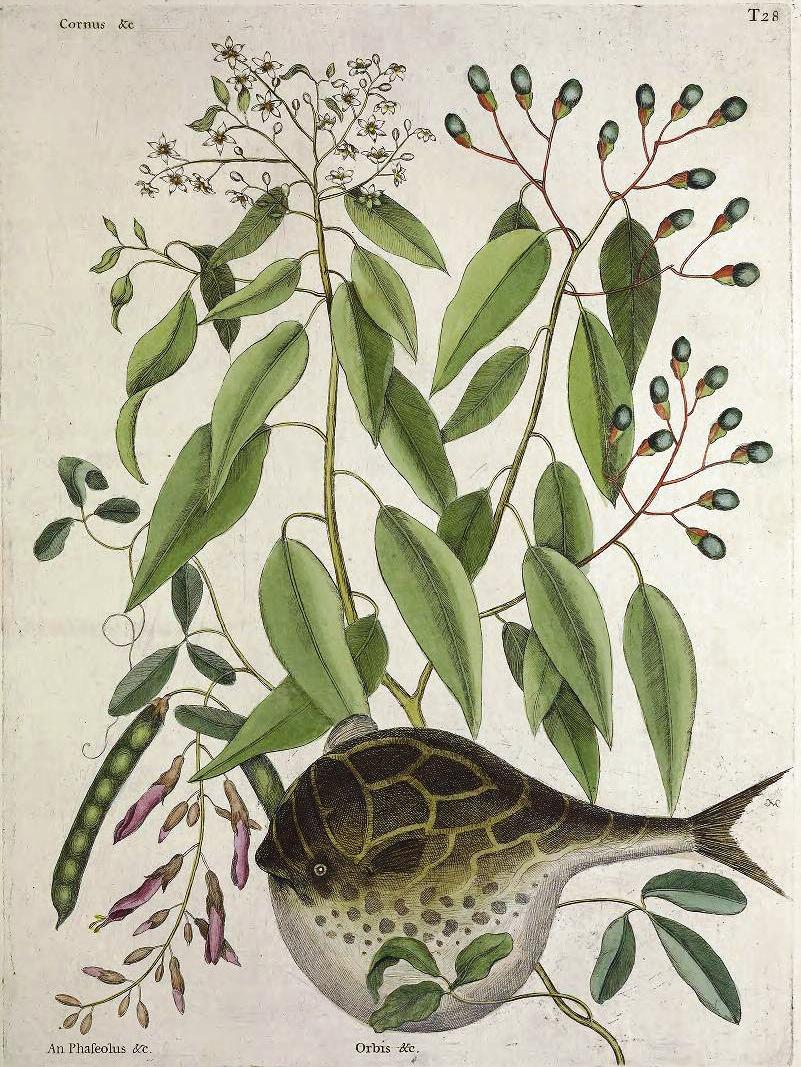
The book includes 220 plates, illustrating 109 birds, 33 amphibians and reptiles, 46 fishes, 31 insects, nine quadrupeds, and 171 plants.
The high cost of producing such a work in the 1700’s meant that Catesby would publish it in installments. Therefore, the work was originally issued in 11 parts, each including 20 plates. Volume One was issued in parts one through five, between 1729-1732; Volume Two was issued in parts six through ten, between 1734-1743; and lastly the Appendix and the final part 11 were issued in 1747.

4) The evolution of the work

Under the tutelage of talented artist Georg Ehret, Catesby learned a more three dimensional and rotund style that gave a life-like feel to his drawings. Take a close look. Do you see how Catesby’s artistic abilities evolved? Which picture do you think came later?

Flat or Rotund?

You be the judge

5) Catesby’s Binders Notes

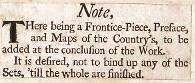
The copy held at the Smithsonian has a few added tidbits that no other copy in the world has. It includes a note from Catesby that asks his subscribers to be patient and to hold off on the binding of the entire work until all of the sets have been finished, so that it may be arranged as originally intended. The owner of this copy was patient and he followed Catesby’s advice which is why it is perfectly bound. Of the 180-200 remaining copies in the world, there are less than half a dozen that are as complete and perfectly bound as the Mortimer copy.

The note states,

“There being a Frontice-Piece, Preface, Maps of the Country’s to be added a the conclusion of the Work. It is desired, not to bind up any of the Sets, ’till the whole are finished.”

Catesby never issued a frontispiece but, the rest of the added material does appear in the book.

6) Extinct Species

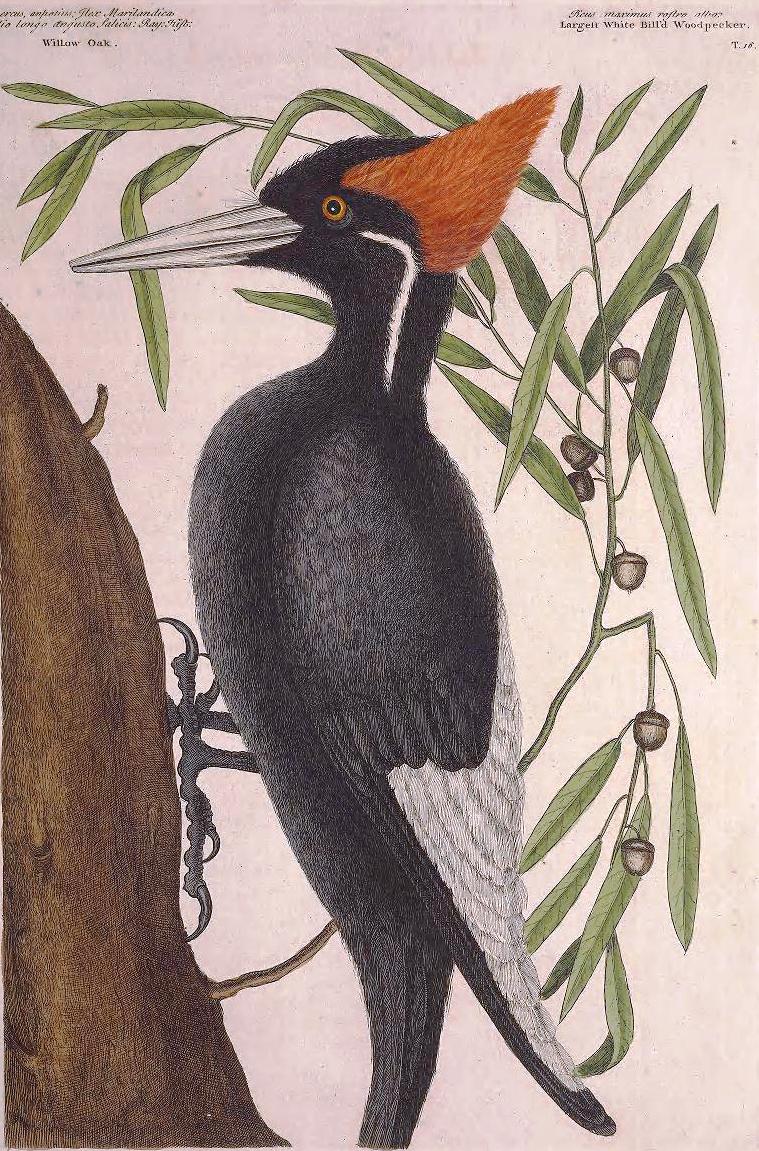
In Catesby’s work are some species that none of us will ever have the opportunity to observe in life—the now extinct Carolina Parakeet, Passenger Pigeon, and Ivory-billed Woodpecker:

The Passenger Pigeon

The Ivory-billed Woodpecker

The Carolina Parakeet

7) Linnaeus’ homage to Catesby

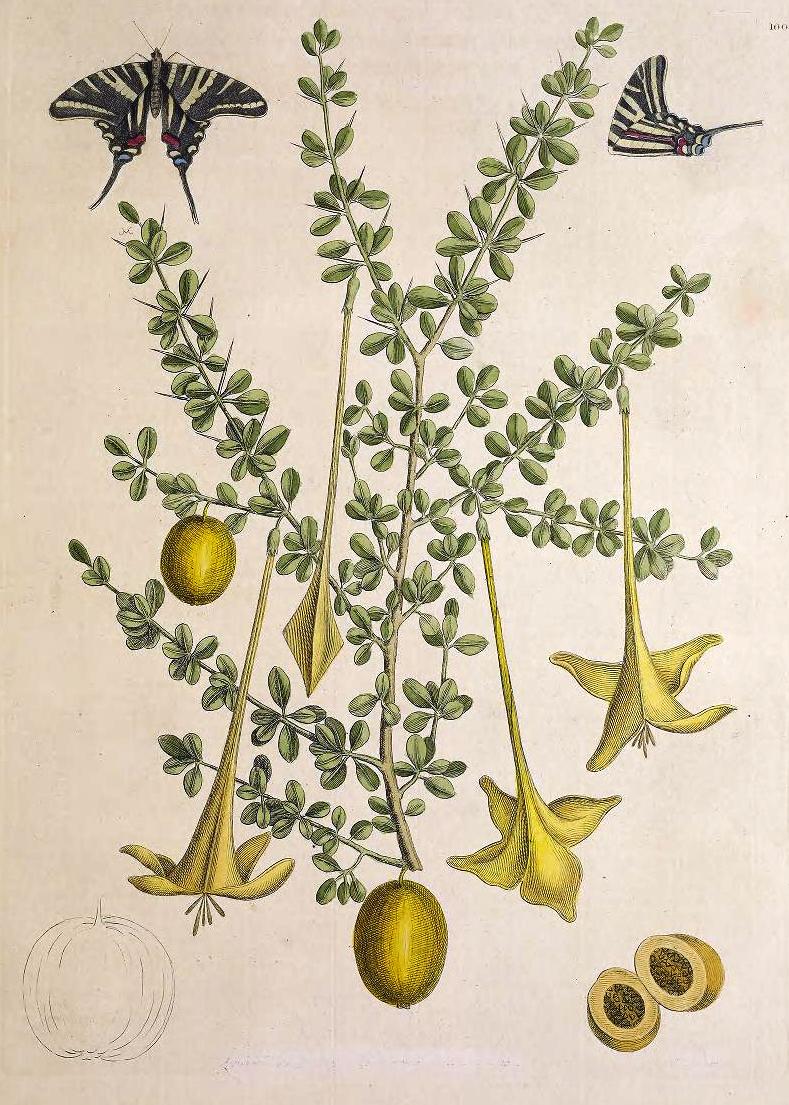
Linnaeus, father of taxonomy, was also a fan of Catesby and studied his work intently. In 1753, he named the lily-thorn Catesbaea in his “Species plantarum” (volume 1, pp 108-109). This is based on plate 100 in volume two of this week’s book of the week.


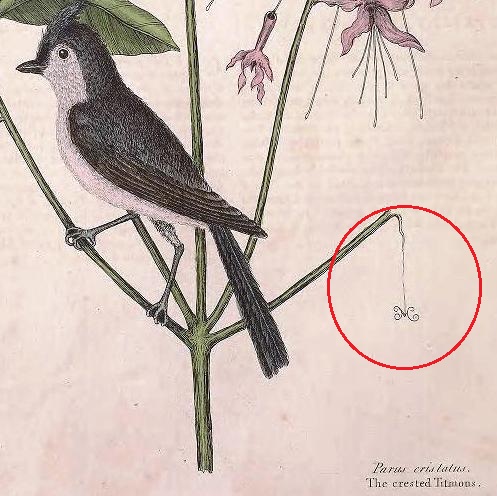
8) Catesby’s initials

If you look closely you can find Catesby’s initials in his illustrations. Sometimes he added a bit of whimsy by including them as part of the scene. To the right you can see that he has signed his work by dangling his personal mark off of a botanical as a spider might have left remnants of its web.

Where are Catesby’s original illustrations now?

In 1768, the drawings were bought by King George III for 120 pounds and have remained in Royal Collection ever since. They have been beautifully preserved and the colors are still remarkably bright. Catesby’s work will live on indefinitely; after the first iteration of his Natural History, 2nd and 3rd editions were published, followed by translations into other languages. Posthumously, in 1767, another work by Catesby was published titledHortus Europae Americanus, or A Collection of 85 Curious Trees and Shurbs. If you are interested in learning more about that work you can read the blog post here. In modern times, a film titled The Curious Mr. Catesby featuring Ms. Leslie Overstreet was made and documents the life and times of Catesby. Additionally, several publishers have revived his work by reprinting some of his engravings. If you would like to own Catesby facsimiles to enjoy in your own home check-out Catesby’s Birds of Colonial America and Henrietta McBurney Ryan’s Mark Catesby’s Natural History of America.

Nonetheless, there has never been a modern reprinting of the original work in its entirety. Luckily, you can enjoy them today on the BHL along with the Flickr sets of volume 1 and volume 2 that we have put together from the various editions of Catesby’s magnum opus.

—Jacqueline Ford, Biodiversity Heritage Librarian

We hope you enjoyed this post. Interested in guest-blogging for BHL? We’d love that! Natural history, biodiversity and conservation topics are especially welcomed. Email us your ideas at [email protected].

November 8, 2012by [email protected]
Blog Reel, Featured Books

A Tribute to America’s Conservation President

“There are no words that can tell the hidden spirit of the wilderness, that can reveal its mystery, its melancholy, and its charm.” ~ Theodore Roosevelt


Theodore Roosevelt Memorial at the American Museum of Natural History

In 2012, the American Museum of Natural History (AMNH), one of BHL’s founding members, celebrated the grand reopening of the Theodore Roosevelt Memorial. For three years, the Memorial was closed to the public as part of a 37.5 million dollar renovation plan to re-imagine this permanent exhibit. Theodore Roosevelt, America’s Conservation President, was intimately tied to the museum since its founding in 1869.  This week’s book of the week selection, A Book-lover’s Holidays in the Open (1916) was written by Teddy and affords readers an intimate glimpse inside the mind of one of America’s most fascinating presidents.

View Full Size Image
The murals depict milestones in TR’s life. (Credits: Amal Chen/The Epoch Times)

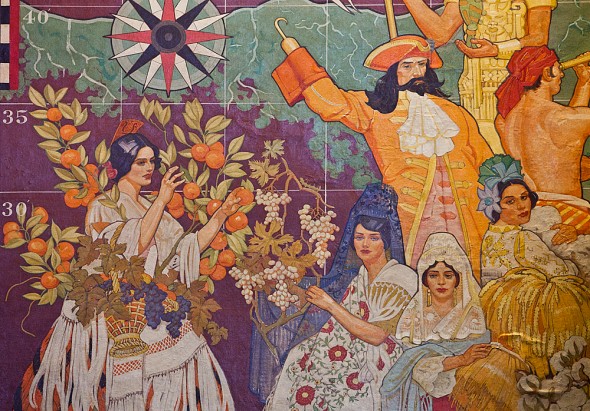
The renovation includes a new life-size bronze statue of Theodore Roosevelt and several exhibits charting Roosevelt’s journey from budding naturalist to becoming America’s conservation president. Perhaps, the most exciting for those from the art world is the 2.5 million dollar allocation that went towards the restoration of William Andrew Mackay’s murals of Roosevelt. The murals, recording key moments in the life of Roosevelt greet you at the main entrance and cover a space of over 5,200 feet.

A Book-lover’s Holidays in the Open (1916)

View Full Size Image
Book Frontispiece

To continue AMNH’s celebration of Roosevelt, we wanted to highlight a book that they digitized for the BHL. As the title of this week’s book suggests, Theodore Roosevelt liked to read books. Correction. This man LOVED to read books. Many in his personal circle have vouched that “Teedie” read at least one book per day, most often finishing said tome before breakfast. This seemingly ambitious reading schedule made Roosevelt the most well-read president alongside, Thomas Jefferson.

As a young boy, Roosevelt was an asthmatic bookworm often confined to his Manhattan family flat. One can almost see him wistfully longing for the outdoors as he escaped city life in  the imaginative world of books. However, it was this deprivation from the natural world that caused him to love the great outdoors all the more. He looked forward to family vacations in upstate New York where he could observe nature’s creatures in all their glory.

As early as age 7, Teddy began to collect specimens and wrote about them in minute detail. He even learned amateur taxidermy around age 12 and began adding specimens to a personal collection that he and his cousins dubbed “Roosevelt’s Natural History Museum.” His father fully supported young Roosevelt’s budding interest, being a nature lover himself. In fact in 1869, Theodore Roosevelt Sr. signed the American Museum of Natural History’s founding charter with other trustees in the parlor of the Roosevelt family home on East 20th Street in New York City. Moreover, the Roosevelt family is deeply connected to AMNH, having served on the Museum’s board for its entire history.

View Full Size Image
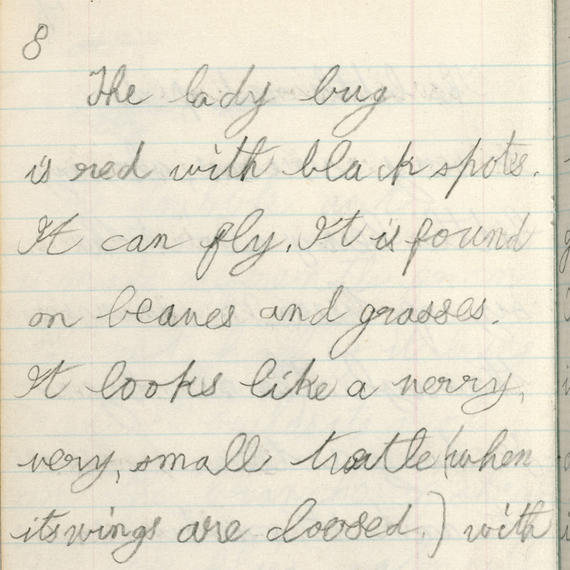
A young naturalist’s journal. Photo Credits: AMNH

With A Book-lover’s Holidays in the Open (1916), you get an eclectic mix of stories, personal anecdotes and Roosevelt’s views about conservation in America. Our favorite excerpt from this book, which defies a cursory summary and warrants a fully digested read,  illustrates Teddy’s internal transformation from a hunter that appreciated nature to a President who became, arguably history’s most influential conservation policy maker. Admittedly, this chunk of text is quite long but,  Teddy’s words are eloquent and if you are hurried at least have a look at the passages in conservation green:


“The westernmost island, we visited was outside the national reservation, and that very morning it had been visited and plundered by a party of eggers. The eggs had been completely cleared from most of the island, gulls and terns had been shot, and the survivors were in a frantic state of excitement. It was a good object-lesson in the need of having reserves, and laws protecting wildlife, and a sufficient number of efficient officers to enforce the laws and protect the reserves. Defenders of the short-sighted men who in their greed and selfishness will, if permitted, rob our country of half its charm by their reckless extermination of all useful and beautiful wild things sometimes seek to champion them by saying that “the game belongs to the people.” So it does; and not merely to the people now alive, but to the unborn people. The ”greatest good of the greatest number” applies to the number within the womb of time, compared to which those now alive form but an insignificant fraction. Our duty to the whole, including the unborn generations, bids us restrain an unprincipled present-day minority from wasting the heritage of these unborn generations. The movement for the conservation of wildlife, and the larger movement for the conservation of all our natural resources, are essentially democratic in spirit, purpose, and method.”


Teddy’s Conservation Legacy

Amen Teddy. What an incredible life you led, wearing more hats than one cares to list. Today,  we are remembering Teddy as a Book-Lover, Naturalist, “Wilderness Warrior,” Founder of the U.S National Park System and the Conservation President. He was the guy with the big stick going around speaking softly, almost lovingly into the ears of all Americans, willing them to do great things in the spirit of the common good. In his life he inspired people to embrace conservation by his actions: protecting some 230 million acres, establishing 51 Federal Bird Reservations, 4 National Game Preserves, 150 National Forests, 5 National Parks, and proclaiming 18 National Monuments.

We hope you enjoyed this post. Interested in guest-blogging for BHL? We’d love that! Natural history, biodiversity and conservation topics are especially welcomed. Email us your ideas at [email protected].

October 25, 2012by [email protected]
Page 1 of 3123»

Help Support BHL

BHL's existence depends on the financial support of its patrons. Help us keep this free resource alive!

search

About BHL

The Biodiversity Heritage Library (BHL) is the world’s largest open access digital library for biodiversity literature and archives. BHL operates as a worldwide consortium of natural history, botanical, research, and national libraries working together to digitize the natural history literature held in their collections and make it freely available for open access as part of a global “biodiversity community.”

Join Our Mailing List

Sign up to receive the latest news, content highlights, and promotions.

Subscribe Now

Subscribe to Blog via Email

Enter your email address to subscribe to this blog and receive notifications of new posts by email.

Join 319 other subscribers

Subscribe to Blog Via RSS

Subscribe to the blog RSS feed to stay up-to-date on all the latest BHL posts.

Access RSS Feed

Inspiring Discovery through Free Access to Biodiversity Knowledge.

The Biodiversity Heritage Library makes it easier than ever for you to access the information you need to study and explore life on Earth…for free, anytime, anywhere.


64+ Million Pages of
Biodiversity Literature Online.

EXPLORE

Tools and Services
to Transform Research.

EXPLORE

300,000+
Illustrations on Flickr.

EXPLORE

ABOUT | HARMFUL CONTENT | PRIVACY | SITE MAP | TERMS OF USE