Biodiversity Heritage Library - Program news and collection highlights from BHL
  • Home
  • News
  • Featured Books
    • All Featured Books
    • Book of the Month Series
    • BHL at 20
  • User Stories
  • Campaigns
    • Fossil Stories
    • Garden Stories
    • Monsters Are Real
    • Page Frights
    • Her Natural History
    • Earth Optimism 2020
  • Tech Blog
  • Visit BHL
Home
News
Featured Books
    All Featured Books
    Book of the Month Series
    BHL at 20
User Stories
Campaigns
    Fossil Stories
    Garden Stories
    Monsters Are Real
    Page Frights
    Her Natural History
    Earth Optimism 2020
Tech Blog
Visit BHL
  • Home
  • News
  • Featured Books
    • All Featured Books
    • Book of the Month Series
    • BHL at 20
  • User Stories
  • Campaigns
    • Fossil Stories
    • Garden Stories
    • Monsters Are Real
    • Page Frights
    • Her Natural History
    • Earth Optimism 2020
  • Tech Blog
  • Visit BHL
Biodiversity Heritage Library - Program news and collection highlights from BHL
Blog Reel, Featured Books

Book of the Week: The Valdivia Expedition

Deep sea dredging in the twilight zone with Teuthologist Carl Chun

View Full Size Image
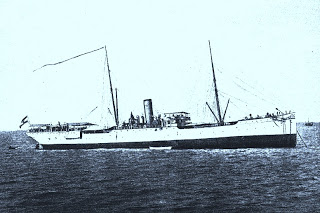
The Valdivia

Deep sea dredging, as a means of scientific discovery, was popularized after the Challenger Expedition (1872-1876) came back to port in Spithead, Hampshire in the United Kingdom. In four years, the scientifically outfitted steamboat had circumnavigated the globe, traveled a total distance of 68,890 nautical miles, and along the way had picked-up 4,700+ previously unobserved and unnamed species.

The study of these biological treasures produced about 50 tomes of scientific publications penned by the scientists on the voyage. The Challenger Expedition was the foundation of modern Oceanography. It prompted many other nationally and privately funded expeditions to begin dredging the deep-sea in the pursuit of describing new and exotic species.

The intense fascination with deep sea organisms during this time period was not very surprising, considering the fact that it controverted the widely accepted mid-19th century, Abyssal Theory which, held that life could not exist at more than 300 fathoms under the sea. (~1800 ft.) Carl Chun, famed marine biologist specializing in cephalopods, was among a growing faction of scientists who had a deep conviction that there must be life, a prolific amount of it, deep in the unexplored nether regions of the ocean.

It was this belief along with the desire to further delve into areas previously neglected by the Challenger Expedition that led him to propose the first German Deep Sea expedition, nationally funded with the good graces of Germany’s last Kaiser, Wilhelm II.

The Valdivia Expedition

With plans in place, Chun and his scientific team were granted 300,000 marks that would fund the Valdivia Expedition. The steamboat was outfitted with dredging gear, specimen jars, deep sea traps and oceanographic equipment. The Valdivia set sail on July 31, 1898; it would be a journey that would take its crew to 268 stations around the West Coast of South Africa, the Gulf of Guinea, the Antarctic Sea, and a large portion of the Indian Ocean.

They would cover over 32,000 nautical miles and come back with so many new specimens that they would continually publish their findings over the span of 4 decades. The resulting 24 volumes comprises this week’s lengthy Book of the Week:Wissenschaftliche Ergebnisse der Deutschen Tiefsee-Expedition auf dem Dampfer “Valdivia” 1898-1899″ (Scientific results of the German deep-sea expedition on the steamer “Valdivia” 1898-1899). This multi-volumed set includes Chun’s visually stunning Die Cephalopoden; the English translated version is also available on BHL.

It was on this voyage that Chun first observed and described the “Vampire Squid” or Vampyroteuthis infernalis, which means “vampire squid from hell.” (This is one of the most favorited images on Flickr, so be sure to have a look)

The main goals for the expedition were to collect as many biological samples as possible and focus on the adaptation of organisms to the extreme conditions of their environment. This resulted in many anatomical studies of light organs. One stand-out publication comes from Dr. August Brauer, a german zoologist who was among the many scientists on the Valdivia.

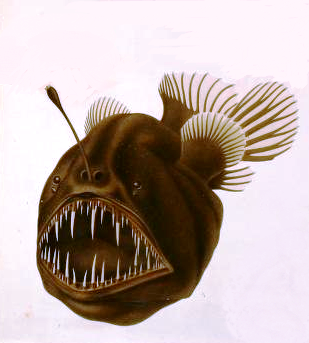
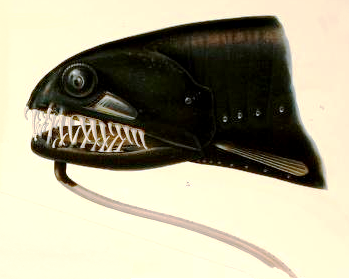
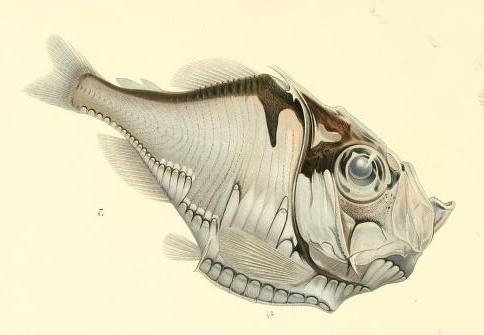
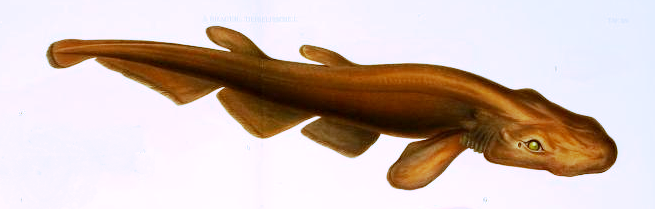
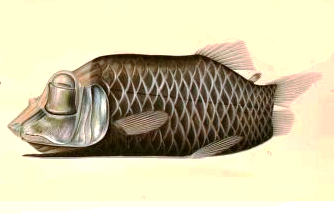
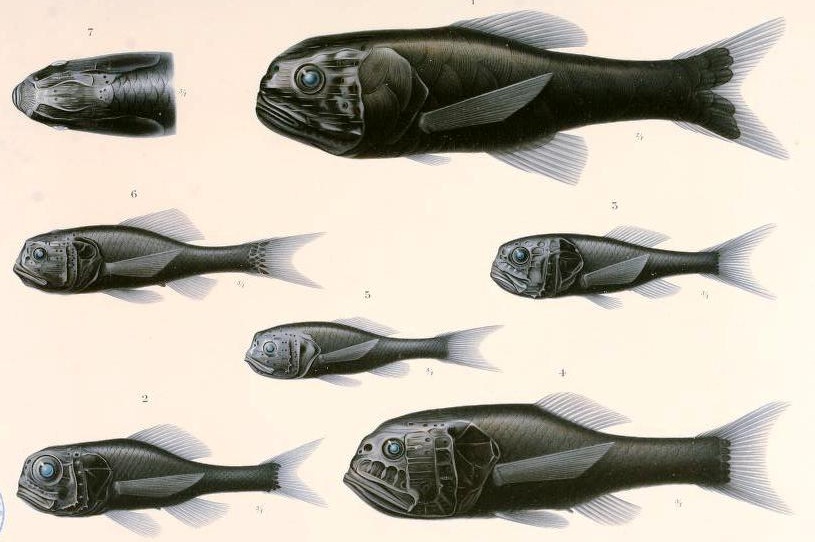
With the editorial review of Chun, Brauer producedVolume 15: Die Tiefsee-Fische which is a systematic and anatomical study of the deep sea fish specimens brought back from their journey. The illustrations were done by zoologist and expedition artist Fritz Winter. It is clear from Fritz’s drawings that deep sea fish rely heavily on senses other than vision. Many produce their own light, which has the effect of making the deep sea look like a starry night, filled with bioluminescent organisms — thus the bathypelagic (1000-4000m) and (700-1000m) abyssopelagic zones in the ocean have aptly been nicknamed the “twilight zone.”

Dr. August Brauer’s Deep Sea Fish, Illustrated by Fritz Winter
Winter was an incredibly talented man: 100+ years later these deep sea fish are still jumping off of the page.
View Full Size Image
Various (Melaphaes Genus)
View Full Size Image
Humpback anglerfish (Melanocetus johnsonii)
View Full Size Image
Valdivia Black Dragon Fish (Melanostomias valdiviae)
View Full Size Image
Spicy Hatchet Fish (Polyipnus spinosus)
View Full Size Image
Smallbelly Catshark (Apristurus indicus)
View Full Size Image
Barrel-eye (Opisthoproctus soleatus)

Fritz Winter on Flickr

Two sets of illustrations by Fritz Winter from the Valdivia Expedition are now on Flickr: Brauer’s Deep Sea Fish and Chun’s Cephalopoda. These should simply not be missed. Look out for more images from this expedition in the future!

And don’t forget that it is still National Oceans month. We should remember the spirit of these men who ventured forth in to the unknown as some of the world’s first oceanographers. They taught us that we shouldn’t overlook the deep sea. It may be invisible, inhospitable and completely foreign to humans yet, it is home to the largest habitat on the planet and still remains largely undiscovered.

Dive in to the Deep Sea: Resources for the Interested
  • The Deep: The Extraordinary Creatures of the Abyss by Claire Nouvian
  • The Silent Deep: The Discovery, Ecology and Conservation of the Deep Sea by Tony Koslow
  • BBC Nature: Deep Ocean
  • Planet Earth: Deep Ocean
  • NOAA: Ocean Explorer
  • World Ocean Census: A Global Survey of Ocean Life
June 21, 2012by [email protected]
Blog Reel, Featured Books

The Narwhal, the Ocean’s One-toothed Wonder

Queen Elizabeth I was rumored to have purchased a narwhal tusk for 10,000 pounds — in the 16th century this was roughly the price of a castle.

View Full Size ImageView more of Von Schreber’s mammals on Flickr.

The mysterious narwhal and its famed “unicorn horn” have long captured the popular imagination of man. In the middle ages, the tooth of a narwhal would fetch ten times its weight in gold because it was thought to carry magical and medicinal powers. It wasn’t until 1871, that Darwin conjectured in The Descent of Man, and Selection in relation to Sex that the tooth’s function was actually a Secondary Sexual Characteristic that determined things like social rank, mate selection and dominance in narwhal pods which, usually consist of groups of fifteen to thirty individuals.

The tusk has been the subject of much speculation over the centuries yet, we are still unraveling its mysteries. Who was right? Queen Elizabeth I and her medieval contemporaries or Darwin? I’m sure that many of you are betting on Darwin however, modern research has found that the tusk may actually have an entirely different and previously unimagined function.

View Full Size Image
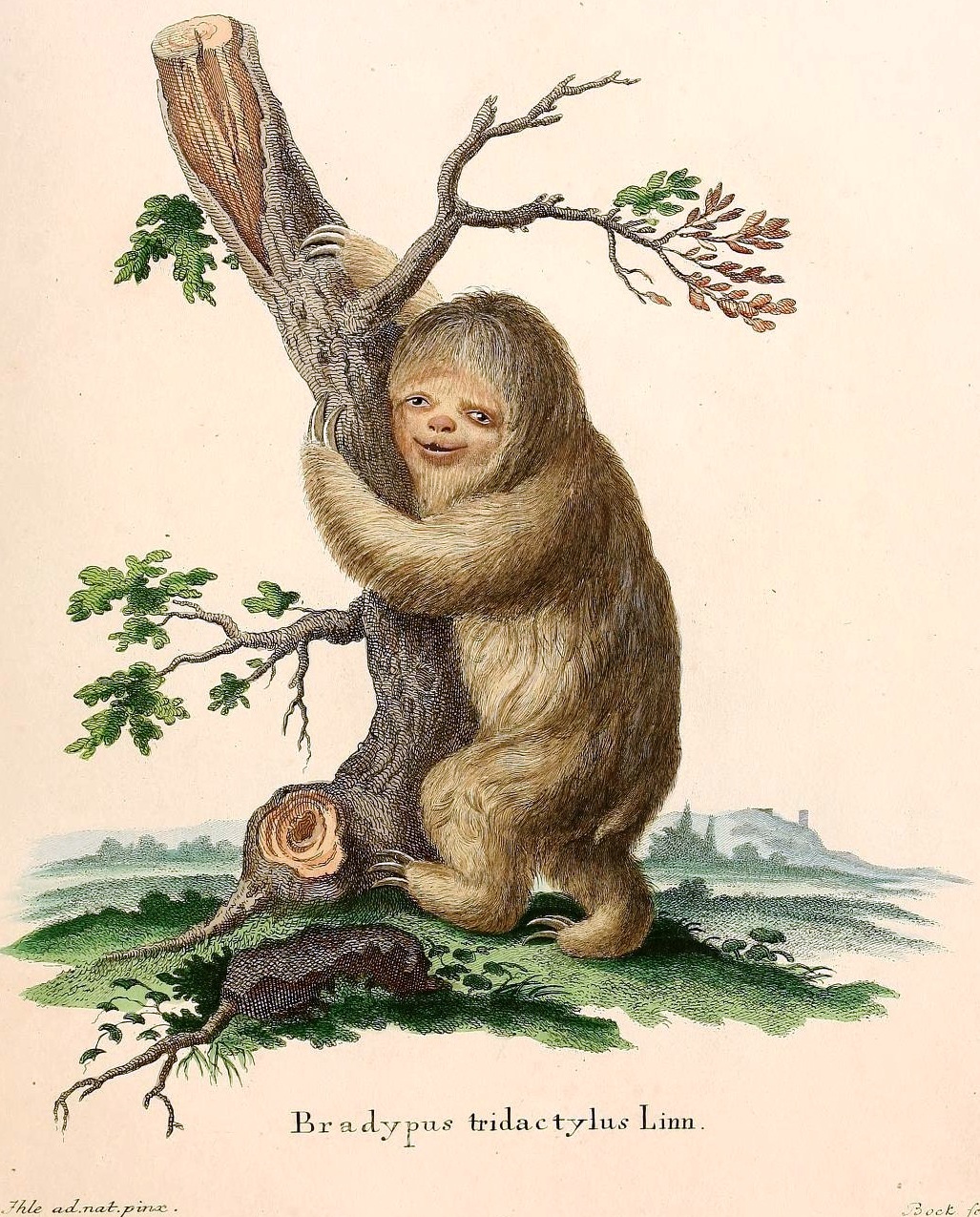
See any human-like qualities?

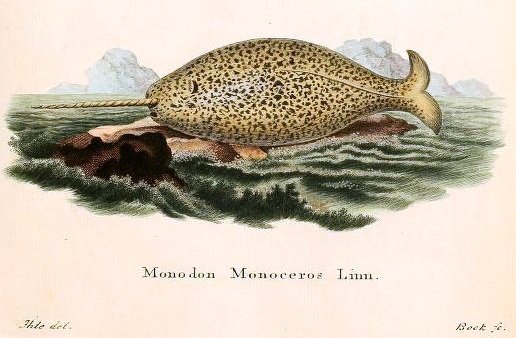
To get a better idea of what the Narwhal looks like, we reference one of our absolute favorite illustrations of the narwhal here at BHL (pictured above). This image appears in Johann Christian Daniel Von Schreber’s Mammals in Illustration from Nature auf deutsch: Die Sugthiere in Abbildungen nach der Natur (1774), also our pick for Book of the Week.

The narwhal is included in Von Schreber’s majestic collection of over 700+ mammals; he commissioned artists to create the plates from his own scientific descriptions of each species. Many of the mammals that appear in the nine volume set were named for the very first time using Linnaean binomial nomenclature.

Because all of the illustrations in the book are drawn from Von Schreber’s written descriptions rather than from observation, you will notice that there is an element of the fantastical in the expressions of the animals. The mammals have distinctly anthropomorphic features, inviting the viewer into their world and giving us the sense that we aren’t so different from each other after all. The drawings are so unique that they have garnered much attention in art circles. Reprints of various plates can be found on art merchant websites and even on Ebay selling for hundreds of dollars.

The art world has dubbed the collection of plates “Schreber’s Fantastic Beasts.” Luckily, we no longer need to spend hundreds of dollars to view these beasts. The entire beautiful set is now online, digitized from the rare book room at the Ernst Mayr Library at Harvard University.

View Full Size Image
Johann Christian Daniel Von Schreber

Von Schreber, like his beasts, was a fantastic man in his own right. It only seems natural that he would be one of Linnaeus’ many students who would go on to achieve success yet, still remain devout to his teacher for the duration of his life. The correspondence between Von Schreber and Linnaeus was voluminous and it too has been digitized and made available for free by the Linnaean Correspondence Project.

If you can read Latin, its a highly recommended resource! Von Schreber studied medicine, theology and the natural sciences at Uppsala and Halle. It was at this time that he came under the tutelage of Linnaeus. He went on to become the director of the Erlangen Botanical Garden in 1773, a member of the Royal Swedish Academy of Sciences in 1787 and in 1791, he was knighted. Not bad, Von Schreber! He also served as editor to Linnaeus’ 8th edition of Genera Plantarum. Von Schreber even has a type of feather-moss named after him, Pleurozium schreberi. But we digress, let’s get back to the narwhal.

The Narwhal: Why do we know so little, when we are so fascinated by this creature?

View Full Size Image
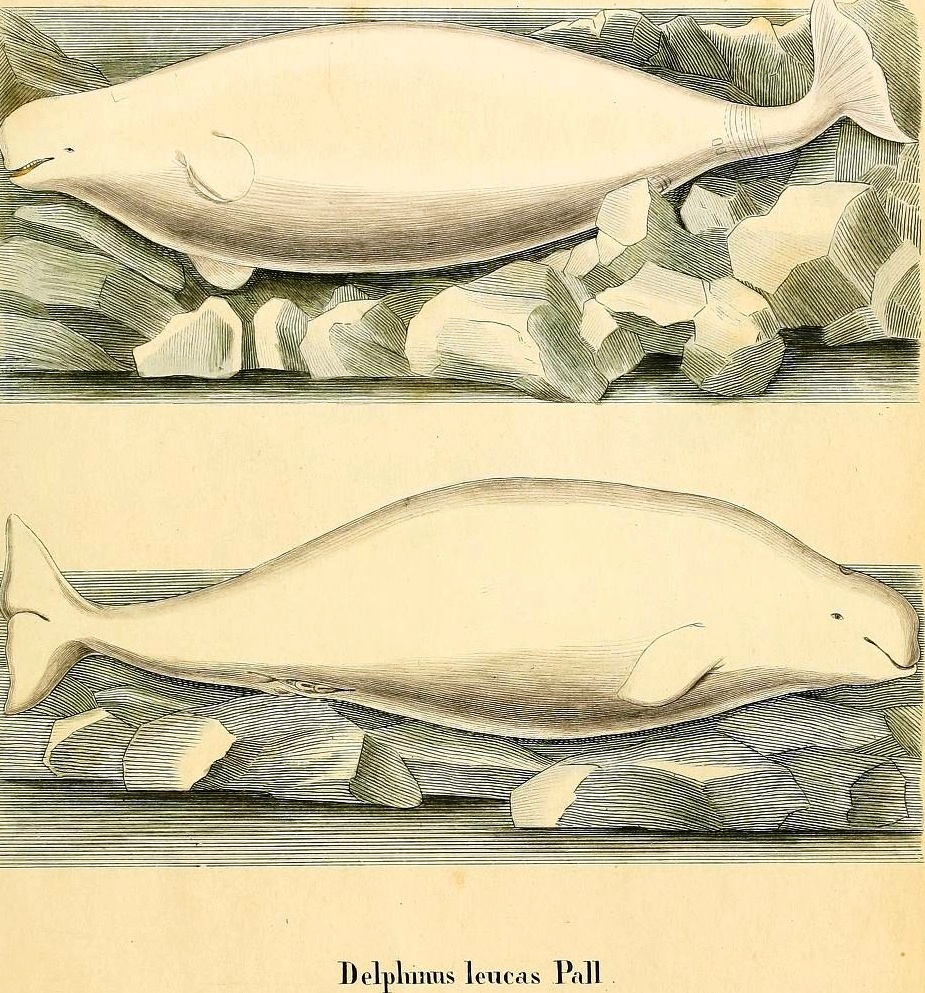
The beluga whale, the other member of Monotinidae family

All that we have left of Schreber’s thoughts about the narwhal are from the minute descriptions he makes in his text describing the Monodon monoceros yet, he must have been stewed in a culture that was still hanging on to the idea that the narwhal tusk possessed magical powers. We wonder if Von Schreber clung to any of these superstitions himself?

One-hundred years later, Darwin refuted the idea of this type of magical nonsense. However, it wouldn’t be until 2005, that Harvard researchers would begin to unravel the mystery behind this one-toothed wonder. The main reason that so little is known about the narwhal and its behavior is because most of them die in captivity, which has made it very difficult to study them.

Unlike the narwhal’s relative, the beluga whale, both being the only extent members of the Monotinidae family, the narwhal is an incredibly shy creature preferring to stay away from your local Marine World. However with a tusk fossil in-hand, dental researchers have been able to gain new insights and get to the root of this toothy mystery:

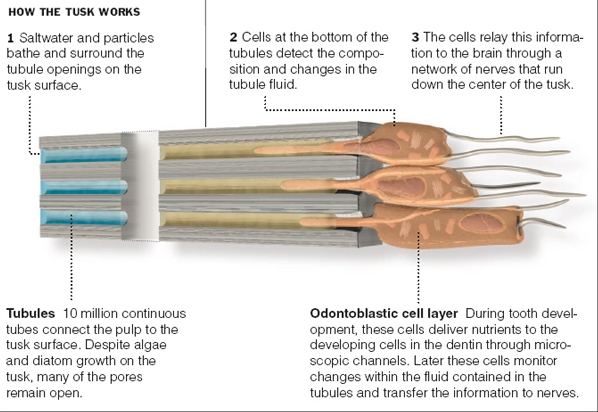
“Dental experts put the tusk under an electron microscope and found new subtleties of dental anatomy…” making a “startling discovery: the tusk, it turns out, forms a sensory organ of exceptional size and sensitivity, making the living appendage one of the planet’s most remarkable, and one that in some ways outdoes its own mythology.”–Broad, 2005, New York Times

View Full Size Image
David Constantine, Mika Gröndahl/The New York Times

It seems that Queen Elizabeth I and Darwin were both slightly off-base… the Narwhal’s tooth is an incredible appendage but, its function is neither magical nor strictly used in sexual selection. Rather, who would have guessed that the spiraling tooth would actually be a highly sophisticated sensory organ, giving its owner unique insight into the temperature, pressure and gradients of the ocean? The discovery opens up a whole host of new and unanswered questions. It is no wonder that researchers are clambering to know more.

Clinical instructor at Harvard University’s School of Dental Medicine and principal investigator of the Narwhal Tooth Expedition and Research Investigation, Martin Nweeia remarks after his first Narwhal siting:

It’s one of the few times when the reality is more incredible than the fable – I have more difficulty believing a whale has a tusk like this than I do a unicorn.”

Here, here Martin! The Narwhal truly is a “fantastic beast” and human interest in the species will only continue to grow over time.

Don’t forget that tomorrow is World Oceans Day!

Lastly, don’t forget that tomorrow pack’s a double whammy for ocean conservation efforts, celebrations and observances: not only has Obama declared that June be National Oceans Month in the United States but, June 8th also marks World Oceans Day.

Of course, these celebrations should include the beloved Narwhal, one of the most unique creatures the ocean has to offer. People all around the world are celebrating in creative ways. If you are interested in participating don’t forget to check the world event calendar and remember to respect, care for, and love the ocean. After all, we owe the air that we breathe to it and so much more!

June 7, 2012by [email protected]
Blog Reel, Featured Books

Book of the Week: Stop and Smell the…Algae?

Take a deep breath. Ahhhhhh. Now take another.

View Full Size Image
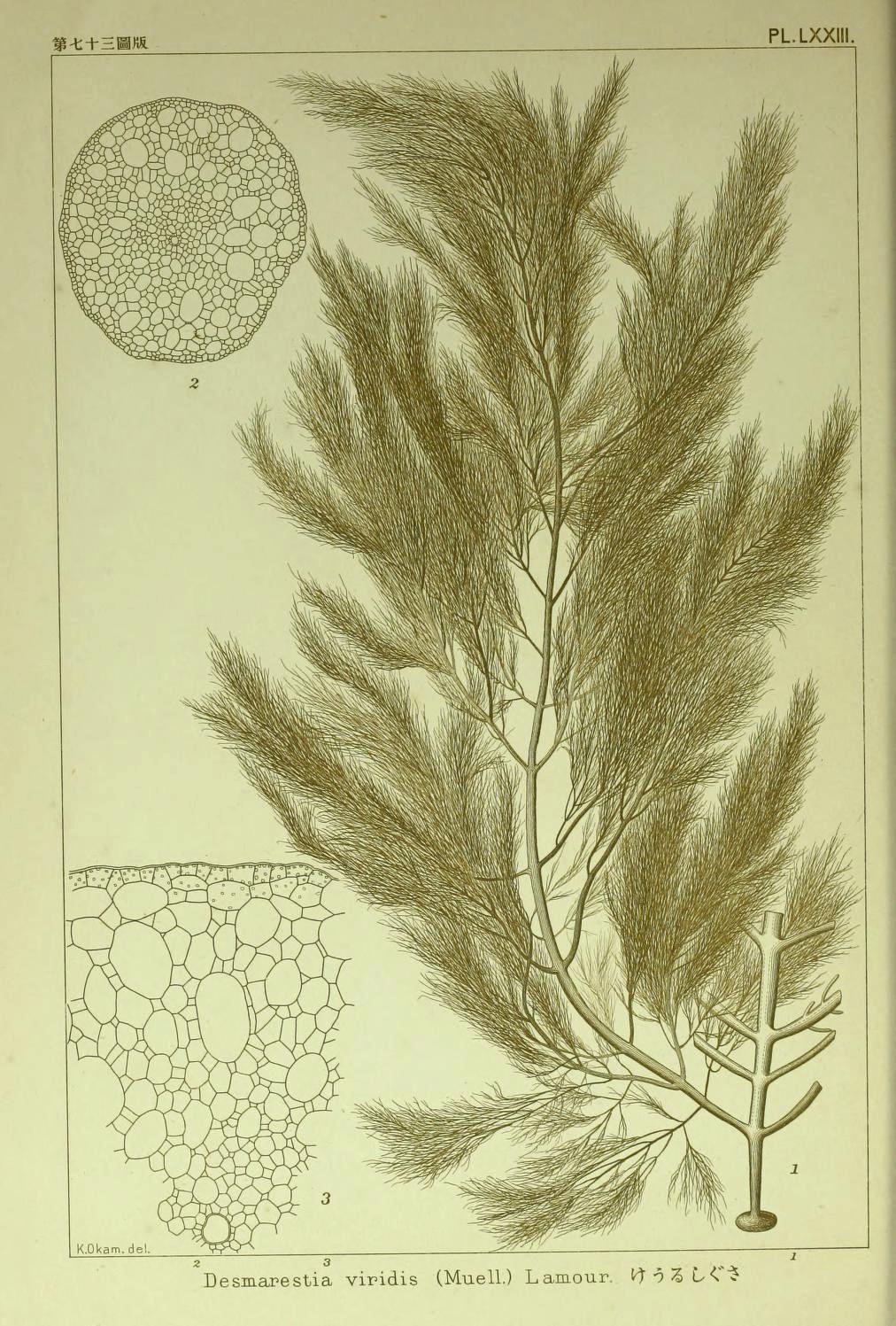
Desmarestia viridis

Did you know that every second breath you take, you owe to the ocean? Yes, it’s true: the ocean produces more than half of the planet’s oxygen supply which accounts for one out of every two human breaths. More specifically, we owe gratitude to microscopic phytoplankton. These varieties of algae are atrophic organisms, able to produce their own food via photosynthesis. Oxygen is a major by-product of this fascinating process that transforms sunlight into food therefore, algae underpins ALL earth’s ecosystems and life on earth.

Algae may be one of the most altruistic lifeforms I’ve ever heard of. Can you imagine being able to create your own food just by absorbing the sun’s rays and on top of that creating the very oxygen that sustains life? Algae why are you so good to us?

So this week, let’s pay homage to this unassuming and oft overlooked life-form and give it the proper credit it deserves. After all, without algae we wouldn’t be here today.  We are pretty sure that Kintaro Okamura (1867-1935), a famous Japanese algologist from the Meiji Era knew how critical algae organisms are to our continued existence. He was so beloved in Japan for his work on algae that the Japanese Emperor and government conferred on him the Decoration of the Third Class of the Order of the Sacred Treasure. Quite the honor.

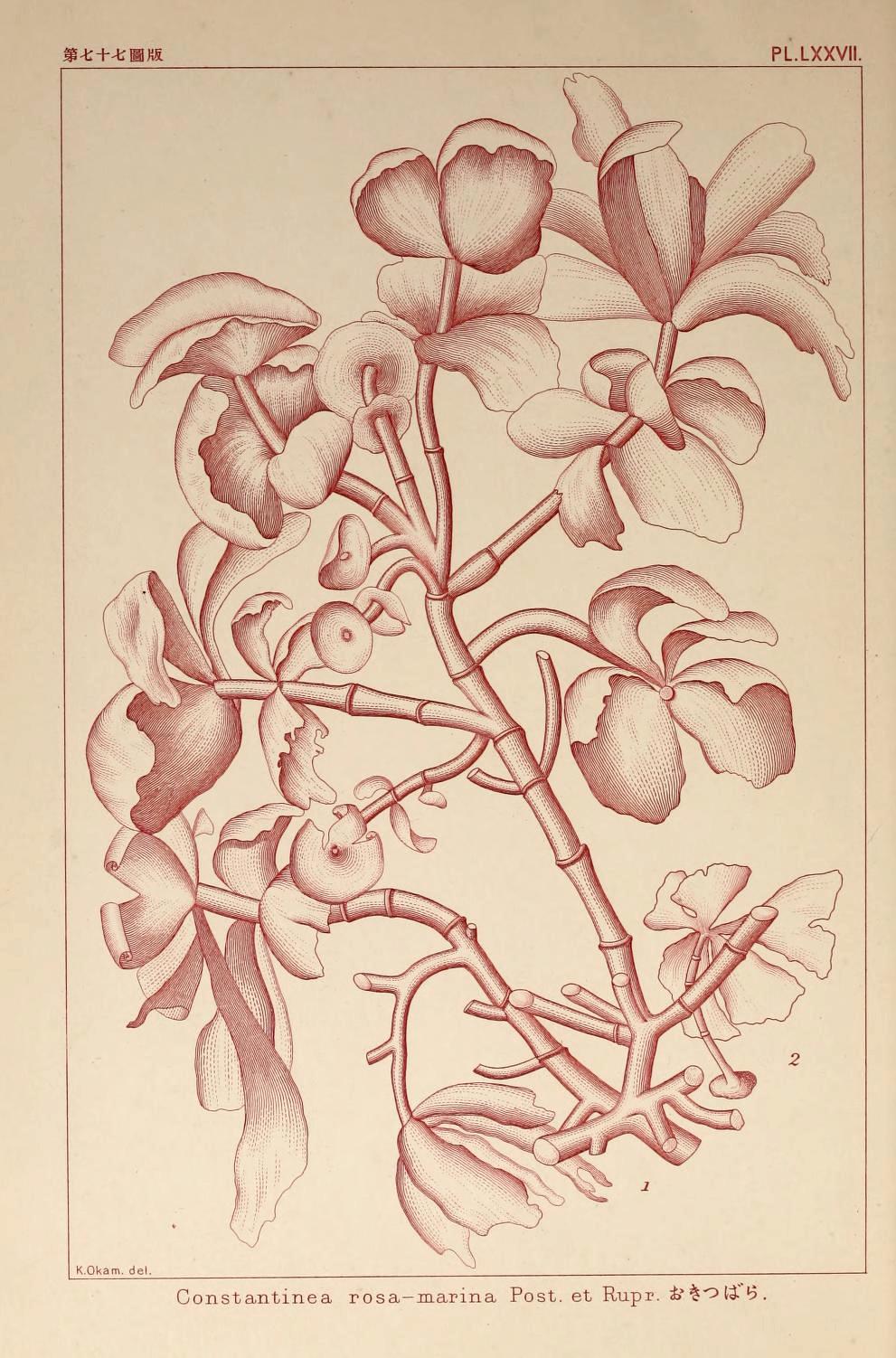
It is clear that this man had an intense love affair with algae! Over the course of his career, he self-published a series titled Nihon sorui zufu; english translation: Icones of Japanese Algae, which is this week’s book of the week. You can thank our partner institution the MBLWHOI Library at Woods Hole, Mass. for this wonderful contribution to our beloved, ever growing digital library.

And fret not, if you don’t speak Japanese because Okamura includes all of the taxonomic names and important details in Japanese as well as English. What a champ!

You can also view the illustrations from Icones of Japanese Algae v. 2 in Flickr.

If you are ravenous for more Japanese algae, check out Okamura’s seminal work, Nihon kaisozusets or Illustrations of the marinealgae of Japan, digitized by Smithsonian Libraries.

5 Fun Algae Facts

We’re pretty sure Okamura would want you to know as much about algae as possible so, that you too might come to appreciate and value its complexity, diversity, and role as a foundational building block in the planet’s food chain, i.e., its status as a Primary Producer.

View Full Size Image
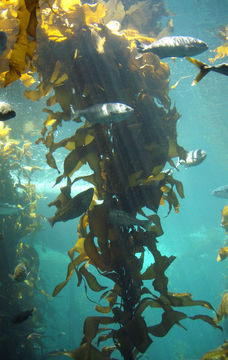
Macrocystis pyrifera*

Algae produces about 330 billion tons of oxygen each year.

2.4 billion years ago marks the Great Oxidation Event — the beginning of photosynthesis.  It took another couple hundred million years for enough oxygen to build-up in the atmosphere to support complex life.

The earth’s tallest forests are not on land but, in the ocean. Giant kelp forests, Macrocystis pyrifera, can reach 100 meters (328 feet) in height.

In the future, algae may become a major source of food and fuel. In fact the Navy is already purchasing algae biofuels.

Various types of algae are being studied and used to create anti-cancer drugs.

Why should we take care of the ocean, home of our algae friends?

If you aren’t already convinced of algae’s vital importance to humankind, last May, in the wake of thedevastation caused by the Deep Water Horizon oil spill in the Gulf of Mexico, Barack Obama decreedthat the upcoming month of June will be National Oceans Month. Obama wasn’t the first president to understand the vital role that the ocean plays for all Americans:

Among President John F. Kennedy’s many famous quotes were these:

View Full Size Image
Constantinea rosa-marina

“Knowledge of the oceans is more than a matter of curiosity. Our very survival may hinge upon it.” – John F. Kennedy, Jr., March 1961 message to Congress.

And a year later he said this…

 “All of us have in our veins the exact same percentage of salt in our blood that exists in the ocean, and, therefore, we have salt in our blood, in our sweat, in our tears. We are tied to the ocean. And when we go back to the sea — whether it is to sail or to watch it — we are going back from whence we came.”– John F. Kennedy, Jr., September 1962, Speech given at Newport

So in the spirit of JFK, ask not what the ocean can do for you – ask what you can do for the ocean and its algae citizens.

In June, look for more posts about the ocean and the wondrous life contained therein!

May 17, 2012by [email protected]
Blog Reel, Featured Books

Book of the Week: Hawaii’s Natural Treasures

Portrait version of the Biodiversity Heritage Library logo.
View Full Size Image

If you didn’t already know, we are in the midst of celebrating Asian-Pacific American Heritage month, which asks us to honor the people, culture, history and biodiversity of a broad region which encompasses the entire Asian continent and the Pacific islands of Melanesia, Micronesia and Polynesia. This region includes exciting and exotic locales such as Palau, Guam, Fiji, New Zealand, Hawaiian Islands, Tonga, and Easter Island just to name a few.

View Full Size Image

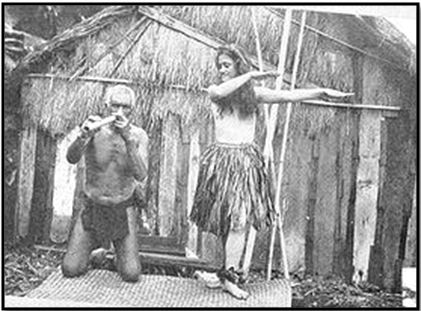
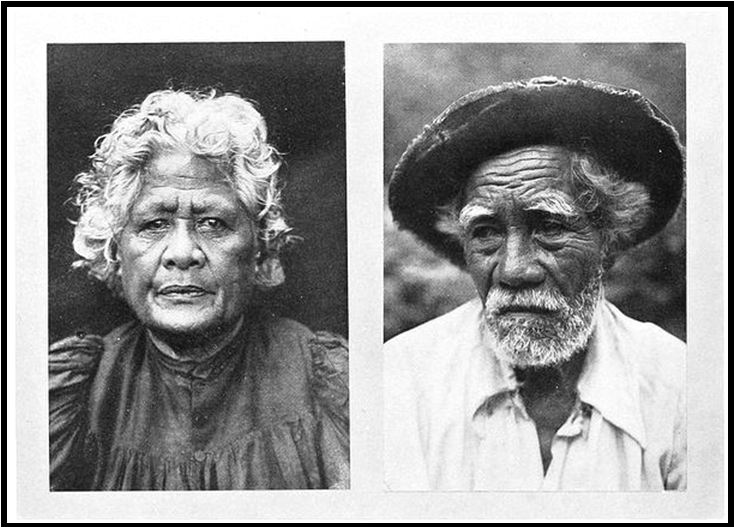
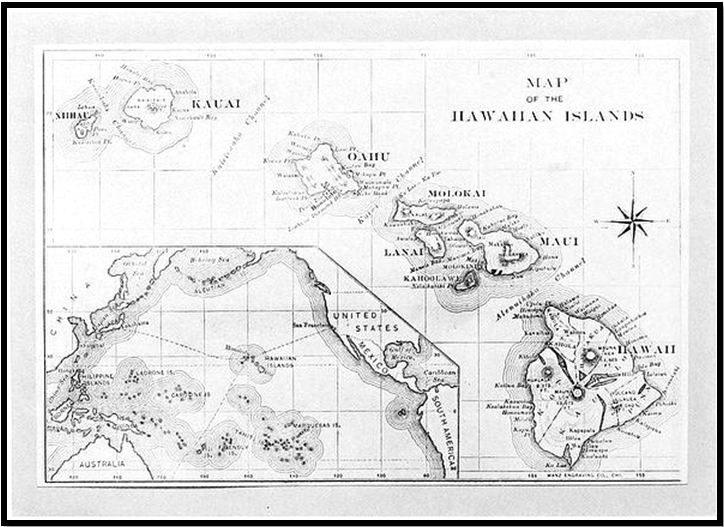
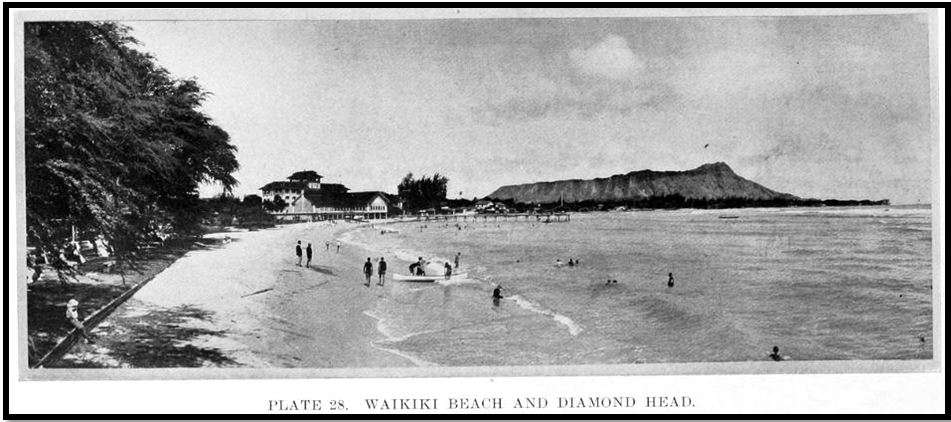
Today we are focusing our attention on our 50th state, Hawaii, a place synonymous with paradise. While many of us longingly pine for Hawaii’s beaches and temperate weather during the cruel months of midwinter, we should also take care to remember that Hawaii’s history is an intimate part of the American experience. Key moments in Hawaii’s recent history such as becoming a state in 1959, the bombing of Pearl Harbor, or even Captain Cook’s discovery of the “Sandwich Islands,” are important but, these events often overshadow Hawaii’s natural history which asks us to delve a little deeper into the past. This is a story that begins with the formation of the archipelago chain of eight major islands, followed by the myriad ways in which plants and animals came to these islands and eventually how the native people populated and lived in peace on these islands for hundreds of years prior to European contact.

View Full Size Image
The Hawaiian Island Chain

Enthusiastic naturalist, professor and curator at the Bishop Museum, William Alanson Bryan seeks to tell this story in a tome that he called his “life’s work”. Bryan’s Natural history of Hawaii, being an account of the Hawaiian people, the geology and geography of the islands, and the native and introduced plants and animals of the group is just three years shy of its 100-year publication anniversary yet, the work is still a relevant and comprehensive guide through Hawaii’s natural wonders. More importantly it painstakingly documents Hawaii’s biodiversity in a central place which provides modern conservationists with a roadmap of Hawaiian species they should be working to preserve –but more on that subject later.

View Full Size Image
Check out all 441 photos on Flickr

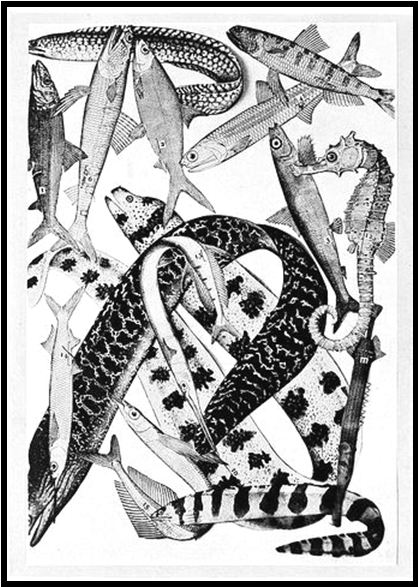
Bryan’s tome is as lengthy as the title suggests. However, the 596 page text is sprinkled with 441 photos, mostly shot by Bryan himself. The book is a visual journey. The key to navigating its contents is by consulting the extensive cross-referenced index and glossary at the back of the book which, gives the reader the common, taxonomic and Hawaiian names for various species found throughout the island chain. Furthermore, this book serves as an important access point for budding taxonomists, systematists, zoologists, and even the novice student. In fact, it is the uninterested and unenlightened person that Bryan takes special pains to reach. His book provides the reader with a holistic understanding of Hawaii’s natural treasures that is broad enough for the beginner while still providing enough taxonomic depth for specialists. For natural history lovers, particular emphasis should be paid to Part II of the book which, contains chapters on birds, fish, insects (native and invasive), mollusks, and all manner of reef-dwelling creature.

View Full Size Image

Another reason to highlight this book, beyond this month’s celebrations is for a slightly less cheerful reason. As a frequent visitor to the islands myself, I quickly noticed that many of the locals are in the habit of calling their beloved islands “the extinction capital of the United States.” Put simply: no where on earth is biodiversity loss happening at such alarming rates as it is in Hawaii. Tourism, invasive species and climate change have created steep challenges for Hawaii’s biodiversity task force. Some staggering statistics to wrap your mind around:

  •  Sea levels will rise by 2.5-6.2 feet by 2050, which will reduce Hawaii’s access to fresh water tables dramatically.
  • Overfishing, sedimentation, land-based pollution, recreational overuse and invasive species jeopardize the health of Hawaii’s reefs and have resulted in a 75% decline in near-shore reef fish populations over the past century.
  • A new pest species arrives in the islands about once every 18 days; these invasive species are decimating Hawaii’s delicate ecology and costing the state half a billion dollars annually.
  • (Statistics provided by the Nature Conservancy. More statistics here.)

Trae Menard, director of the Kauai Program for the Nature Conservancy informs us that “Hawaii is a model for the future of what is going to happen elsewhere around the globe. Who knows what we are really in for….What we learn to make our ecosystems more resilient is going to be valuable globally.” We must help Hawaii preserve its natural treasures so that the life forms that Bryan spent his life describing still maintain the right to live, grow, reproduce and be appreciated as valuable members in the chain of life. You can contribute by simply biking or walking to work (reduces greenhouse emissions, and keeps sea levels from rising), participating in global bioblitzes, or if you are feeling really ambitious volunteer with the Nature Conservancy or other local efforts in Hawaii.

View Full Size Image

Further Reading and Citations
Natural history of Hawaii, being an account of the Hawaiian people, the geology and geography of the islands, and the native and introduced plants and animals of the group
Asian-Pacific American Heritage Month
48 Kaua‘i Species Protected Under Endangered Species Act
Kilauea: Mountain of Fire, Hawaii’s Vulnerable Biodiversity
Kauai Invasive Species Committee
The Nature Conservancy: Hawaii

May 10, 2012by [email protected]
Blog Reel

My Life as a BHL Staffer: JJ Ford

View Full Size ImageGreetings from Cambridge, Mass.! My name is JJ Ford and I have been working as the BHL Project Assistant at the Ernst Mayr Library located in Harvard’s Museum of Comparative Zoology since May 2011. And although I’ve only been working as a BHL staff member for ten months, it feels like so much longer — in a good way of course! In less than a year’s time, I have learned just how much staff time, effort and brainpower it takes to build the world’s first collaborative digital library that makes legacy taxonomic literature available to users for free. The BHL staff members that I have come to know, truly are committed to the idea of making knowledge open, extensive and available to a global audience. Sometimes I have to stop and pinch myself because I feel so lucky to be contributing to such a gratifying mission.

While I may be stationed at Harvard, my role is actually quite similar to Smithsonian staff member, Gilbert Borrego, who we heard from in last month’s installment of “My Life as a BHL Staffer.” Gilbert beautifully outlined the nuts and bolts of the BHL digitization operation, which gave us an overview of how the books in each partner library’s physical collections are selected, processed and scanned. Additionally, we learned why Paginationand Flickr are such important activities. Having the correct pagination for books in BHL and allowing the fabulous plates and illustrations to be exposed in Flickr are two ways that we facilitate better user discovery of articles and images. Like Gilbert, I manage many of these very same activities for Harvard’s portion of BHL user requests. We even have our own Facebook and Flickr sites which, we use to disseminate BHL’s outreach messages locally for the students and faculty members here at Harvard. However, to keep things interesting and build on Gilbert’s last blog post, I am going to touch on two of my favorite extracurricular BHL activities : 1) the basics of book preservation and 2) my involvement with BHL’s website usability studies.

Preservation and Book Repair

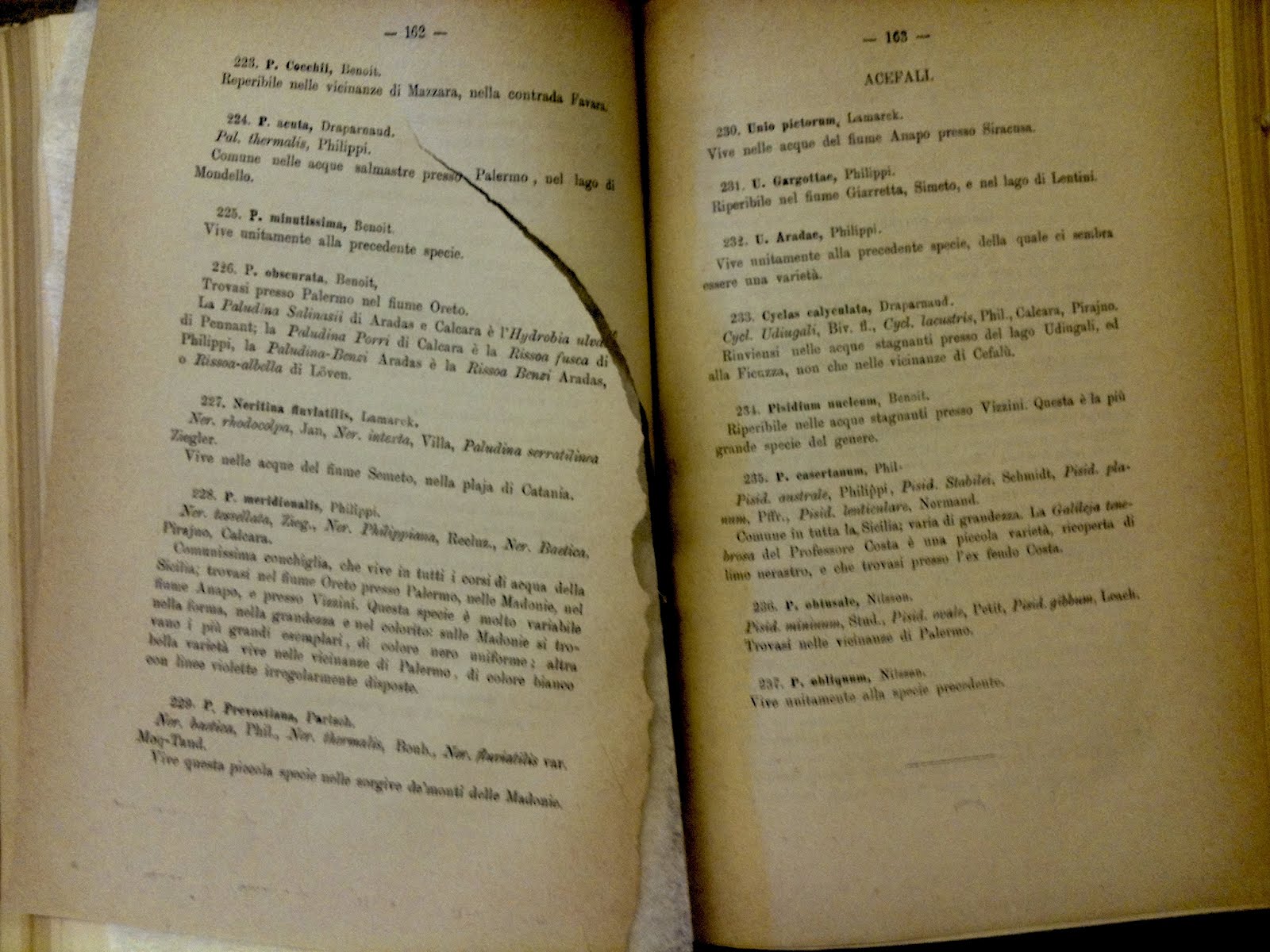
Unlike many of the other institutions, many of the book repairs at the Ernst Mayr Library are done on-site. We are lucky to have on staff a resident preservation specialist, Susan DiSanctis, a woman with one of the most interesting lives on human record. Not only has Susan lived amongst the native people of Papua New Guinea, she knows how to fix a book! While working under Susan’s instruction, I learned the basics of paper repair and contrary to what one may think, this is not a skill that is normally taught in library school. In today’s digital world, many might say that book preservation is a dying art. Nevertheless, it is still an extremely important activity because often the books that users request to be digitized are damaged and require preservation treatment prior to being sent over to the Internet Archive for scanning. It is my job to determine what our preservation strategy should be for these vulnerable books. In some unfortunate cases, there is very little that we can do for a book because the decaying process is in the advanced stages. For example, this book cannot be repaired because the paper is far too brittle:

View Full Size Image

Brittle books like these are made from wood-pulp paper. Their pages are literally “burning” from the slow fires of acid decay. The paper in this book will eventually disintegrate into a pile of dust. A very sad fate indeed.

However, there are a good number of lucky books that can be saved and subsequently scanned.

Usability Studies

In stark contrast to the hands-on work that book preservation requires, usability studies are conducted in order to measure ” the quality of a user’s experience when interacting with a product or system–whether a Web site, a software application, mobile technology, or any user-operated device.” (Usability.gov)

The results of these types of studies help web designers build more effective user-centric websites. In keeping with this principle, it has always been BHL’s goal to provide a web interface that marries both efficiency and design.

Recently, BHL staff members saw the need to conduct a usability study of our own. The emergence of a newly designed BHL-AU portal from our partners down in Australia prompted us to compare their design with the existing BHL-US website that most of you are probably already intimately acquainted with. Along with my colleagues at the other BHL partner libraries, I conducted local usability tests here at Harvard. The results of the study were illuminating and surprising and will certainly help inform future BHL web interface designs.

BHL-Australia Web Portal

View Full Size Image

BHL-US Web Portal

View Full Size Image

Same content. Different interface. Which one do you like better? Which one is easier to navigate and use? Keep reading to find out…

And what was the outcome of the usability study done here at Harvard? Our study participants found that the BHL-US portal website was easier to navigate and complete specific BHL related tasks such as finding articles, images and taxonomic species names however, most users thought that BHL-Australia was visually more appealing. The results of this study, will inform the future design of the BHL-US interface which, will be a “love-child” that merges the beauty of Australia’s BHL portal with the function of the US version of the site. Stay tuned for more details on design developments in the months to come! Additionally, if you have extra time to kill you can see the entire usability study in action via screencast.

February 6, 2012by [email protected]
Page 3 of 3«123

Help Support BHL

BHL's existence depends on the financial support of its patrons. Help us keep this free resource alive!

search

About BHL

The Biodiversity Heritage Library (BHL) is the world’s largest open access digital library for biodiversity literature and archives. BHL operates as a worldwide consortium of natural history, botanical, research, and national libraries working together to digitize the natural history literature held in their collections and make it freely available for open access as part of a global “biodiversity community.”

Join Our Mailing List

Sign up to receive the latest news, content highlights, and promotions.

Subscribe Now

Subscribe to Blog via Email

Enter your email address to subscribe to this blog and receive notifications of new posts by email.

Join 319 other subscribers

Subscribe to Blog Via RSS

Subscribe to the blog RSS feed to stay up-to-date on all the latest BHL posts.

Access RSS Feed

Inspiring Discovery through Free Access to Biodiversity Knowledge.

The Biodiversity Heritage Library makes it easier than ever for you to access the information you need to study and explore life on Earth…for free, anytime, anywhere.


64+ Million Pages of
Biodiversity Literature Online.

EXPLORE

Tools and Services
to Transform Research.

EXPLORE

300,000+
Illustrations on Flickr.

EXPLORE

ABOUT | HARMFUL CONTENT | PRIVACY | SITE MAP | TERMS OF USE