Biodiversity Heritage Library - Program news and collection highlights from BHL
  • Home
  • News
  • Featured Books
    • All Featured Books
    • Book of the Month Series
    • BHL at 20
  • User Stories
  • Campaigns
    • Fossil Stories
    • Garden Stories
    • Monsters Are Real
    • Page Frights
    • Her Natural History
    • Earth Optimism 2020
  • Tech Blog
  • Visit BHL
Home
News
Featured Books
    All Featured Books
    Book of the Month Series
    BHL at 20
User Stories
Campaigns
    Fossil Stories
    Garden Stories
    Monsters Are Real
    Page Frights
    Her Natural History
    Earth Optimism 2020
Tech Blog
Visit BHL
  • Home
  • News
  • Featured Books
    • All Featured Books
    • Book of the Month Series
    • BHL at 20
  • User Stories
  • Campaigns
    • Fossil Stories
    • Garden Stories
    • Monsters Are Real
    • Page Frights
    • Her Natural History
    • Earth Optimism 2020
  • Tech Blog
  • Visit BHL
Biodiversity Heritage Library - Program news and collection highlights from BHL
Blog Reel, Featured Books

Field Note-Worthy: Thousands of Field Notes Now Available in BHL Thanks to the Field Notes Project!

In February 2016, the Biodiversity Heritage Library set out to digitize over 450,000 pages of field notes. While the BHL had already added some archival material to its collection before this project, the Field Notes Project is BHL’s largest undertaking of digitizing field notes to date.
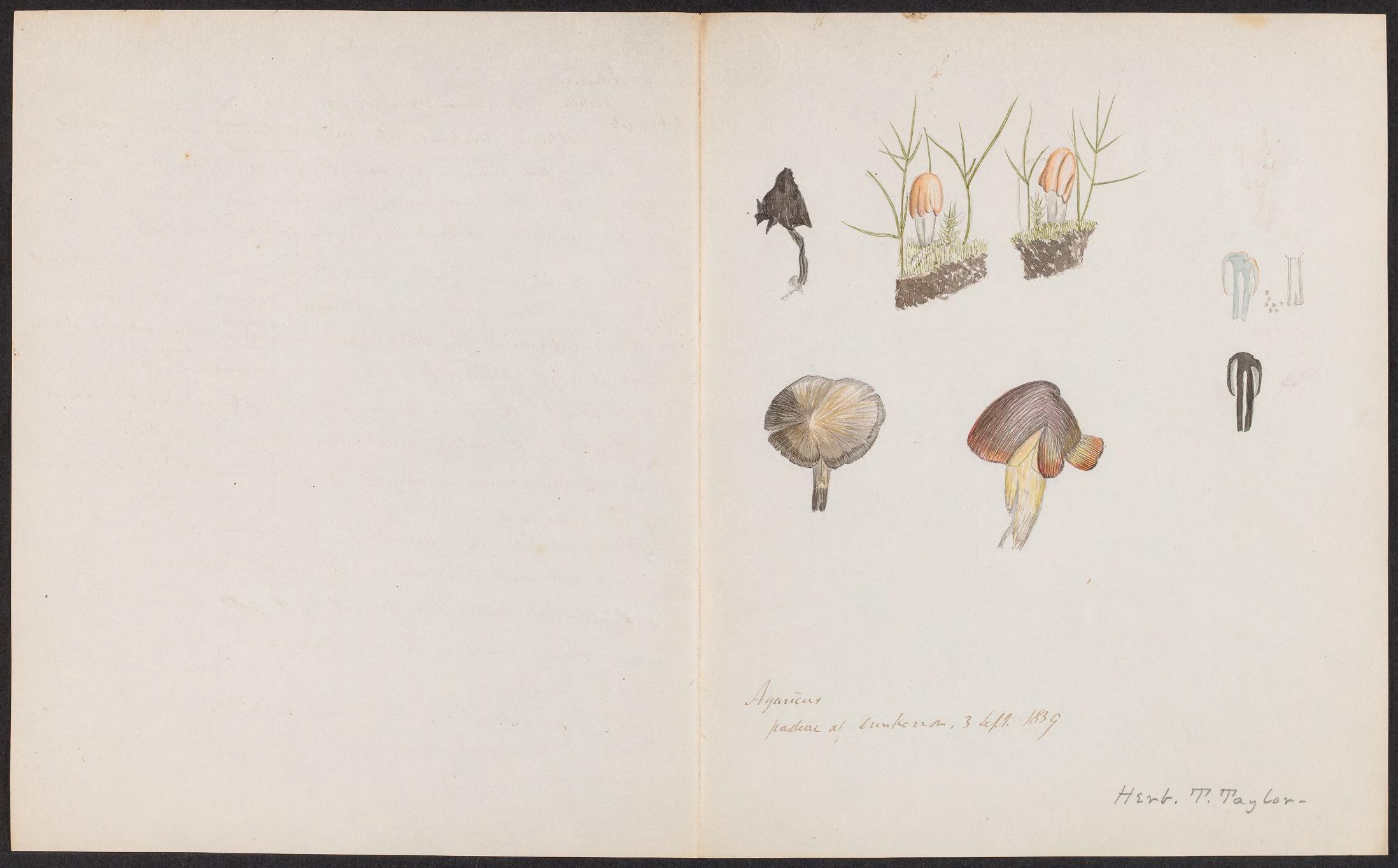
drawingsfungi00tayl_0013.jpg

Taylor, Thomas. Drawings of Fungi. Contributed by Harvard University Botany Libraries.

Funded by the Council on Library and Information Resources (CLIR) Digitizing Hidden Special Collections initiative, this was a collaborative project with eleven partners:

  • American Museum of Natural History
  • The Field Museum of Natural History Library
  • Harvard University Botany Libraries
  • Harvard University, Museum of Comparative Zoology, Ernst Mayr Library
  • Internet Archive
  • The New York Botanical Garden, LuEsther T. Mertz Library
  • Missouri Botanical Garden, Peter H. Raven Library
  • Smithsonian Institution Archives
  • Smithsonian Libraries
  • University of California, Berkeley, Museum of Vertebrate Zoology
  • Yale Peabody Museum of Natural History
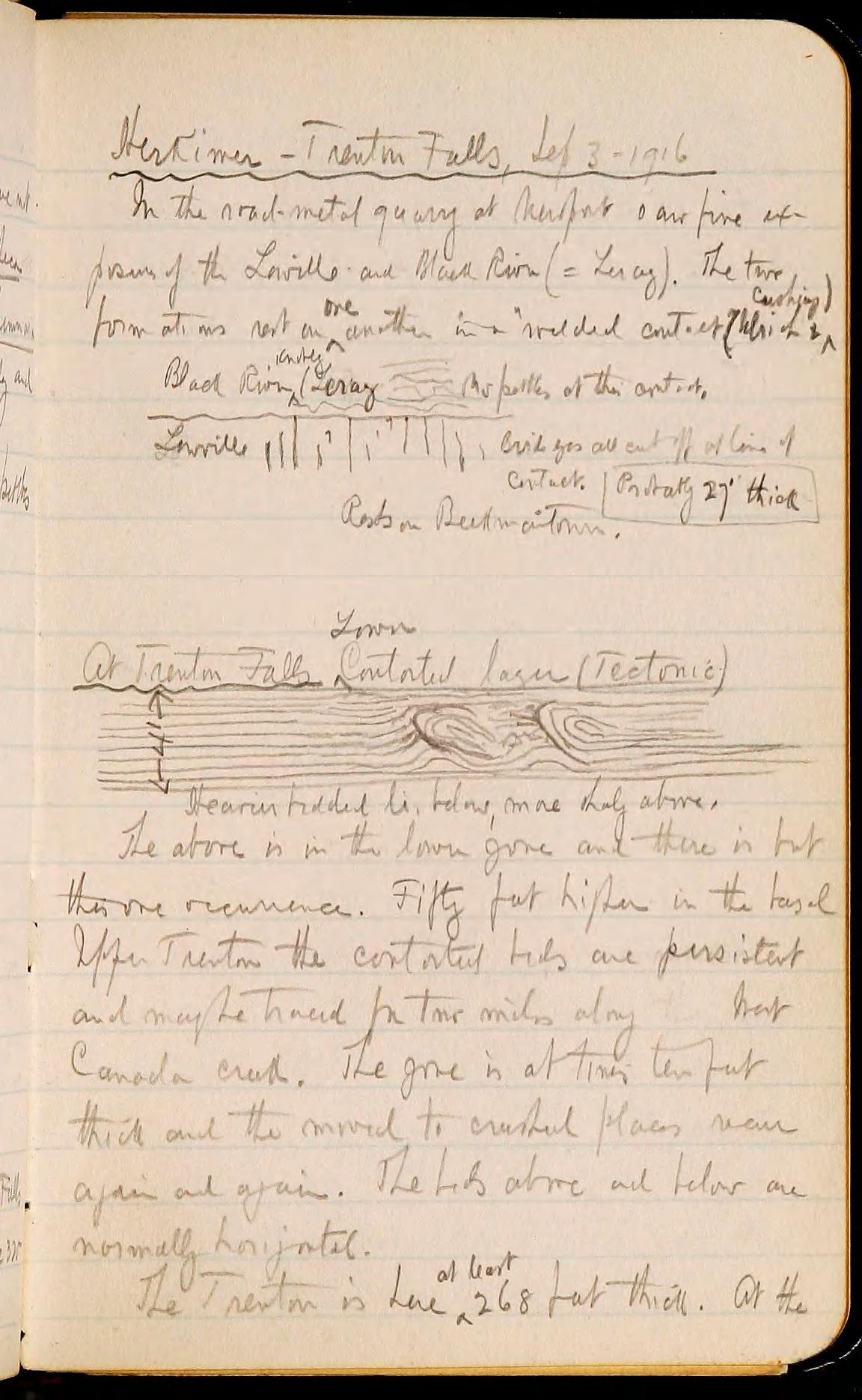
fieldnotebookma00schu_0031.jpg

Schuchert, Charles. Field Notebook: Maine, Massachusetts, New Hampshire, New York, Ohio, Rhode Island, Ontario 1916, 1917, 1920. Contributed by Yale Peabody Museum of Natural History Archives.

The importance of field notes is well known to curators, researchers and historians. Diaries, correspondence, journals and photographs serve as records of the flora and fauna of a particular time and place, providing reference points when observing how a habitat has changed. They also offer insight on expeditions, the origins of a museum collections, and contextualize the work through the eyes of the scientists and narratives about how they interacted with the people, land and cultures they studied.
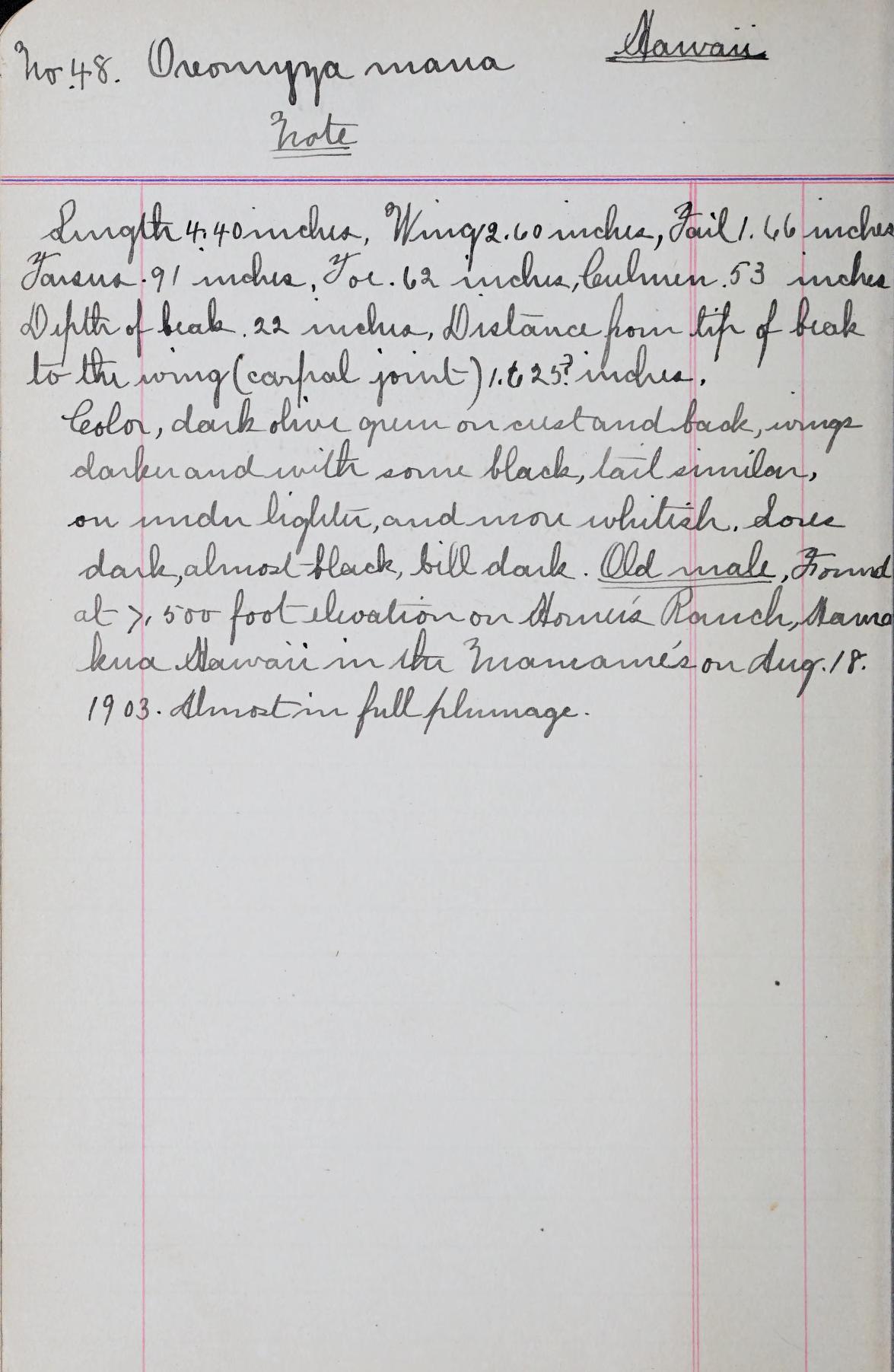
beekeepingarchiv00ches_0064.jpg

Blacow, Chester E. Bee keeping activities and field catalog of birds collected in Hawaii, v4273. Contributed by University of California, Museum of Vertebrate Zoology.

If you have ever used historic field notes for your own research, you may understand why this wouldn’t be a cut-and-dry project. Field notes can pose a number of challenges, and our partners certainly had to manage many of them. Conservation concerns are always at the top of the list, ensuring that field notes are in the proper condition for digitization. Through digitization, we can also reduce the need to refer to the physical object and further protect these unique items. Other concerns stemmed from how researchers took notes, including writing right into the gutter of a notebook or frugal researchers who would start a new notebook by simply flipping a used one and writing in the other direction. Together, the project team was able to overcome these challenges to provide open access to their field notes collections.
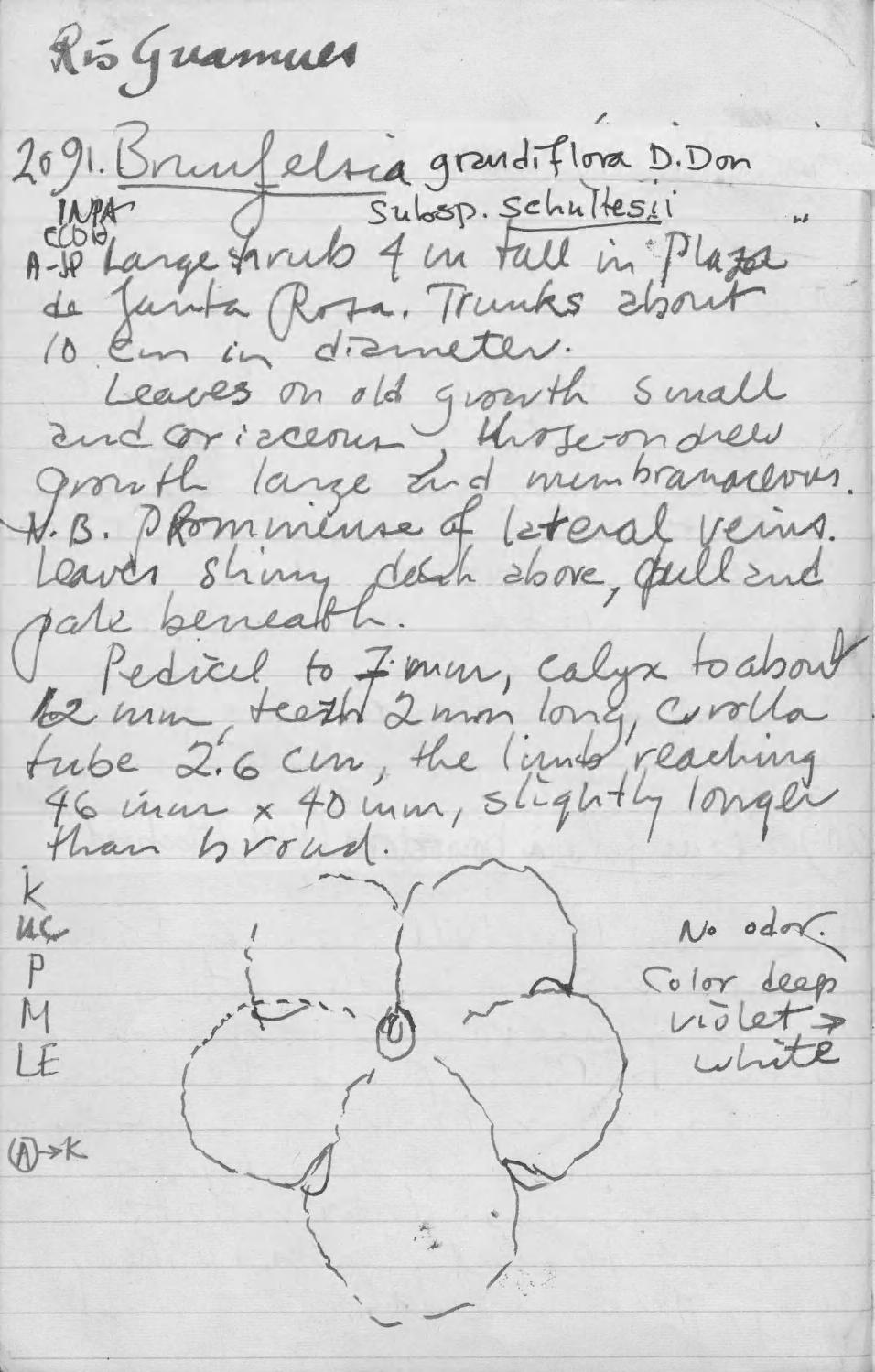
timothyplowmanb00plow_0086.jpg

Plowman, Timothy. Timothy Plowman botanical collecting notebook : 1900-2286 : 1968-1969. Contributed by The Field Museum of Natural History Library.

We finished work on the project May 31, 2018 and are pleased to report that the project team digitized over 517,000 pages of field notes! 

Those who follow the blog closely will have read posts from the BHL Field Notes Project series where project partners highlighted their collections and digitization process. With several expeditions, disciplines and institutions represented, we are excited to see what our users discover, and see how they use field notes in their own work. Take a look and delve into field notes digitized for this project in BHL and Internet Archive.
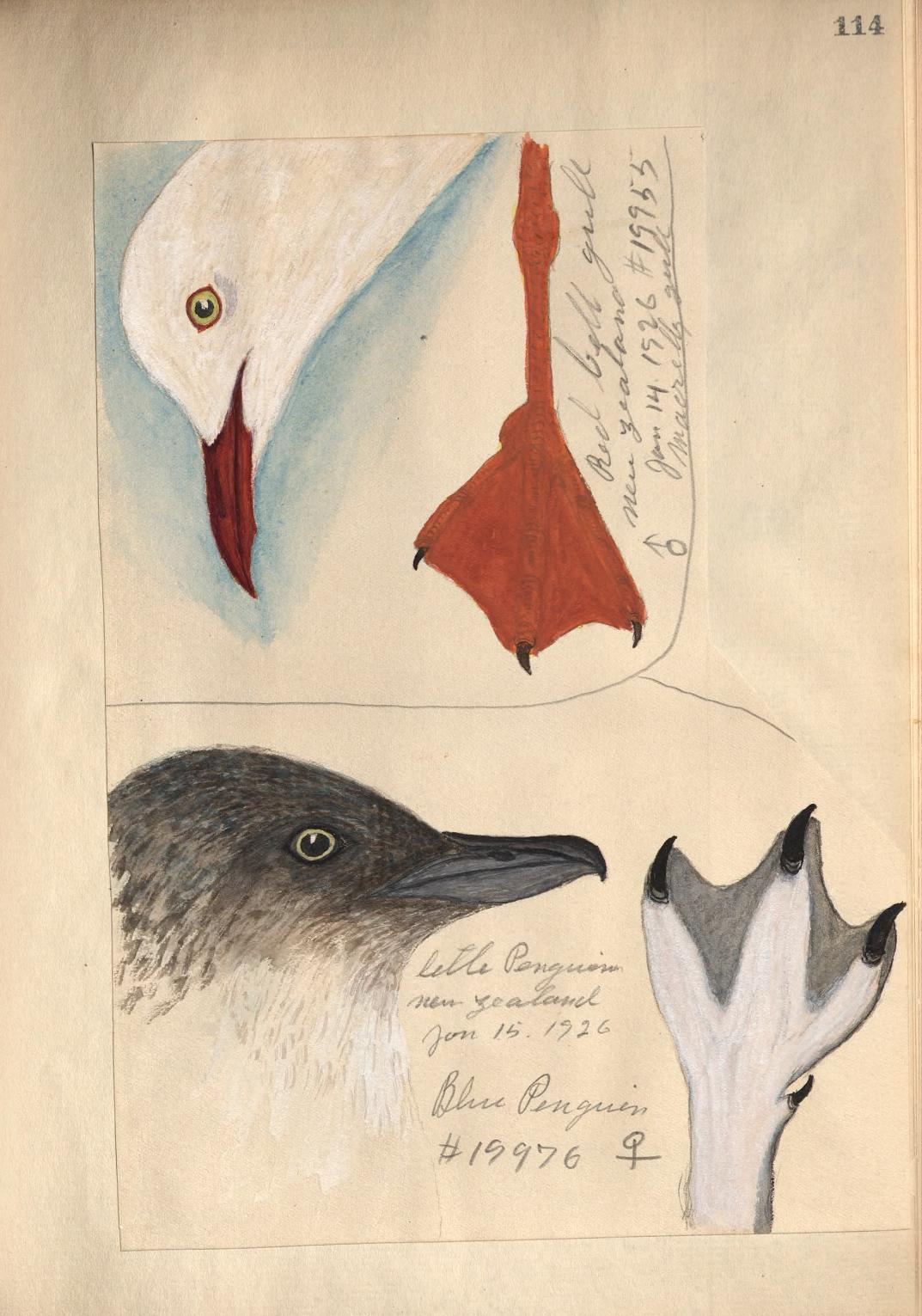
whitneysouthsea2corr_0241.jpg

Correia, José G. Whitney South Sea Expedition of the American Museum of Natural History. Letters and journal of José G. Correia. Volume 2. Contributed by American Museum of Natural History.

The project team and BHL would like to thank the Council on Library and Information Resources for generously funding the BHL Field Notes Project.
June 28, 2018by mkahn
Blog Reel, Featured Books

POBSP, how they did it : when science meets military interest

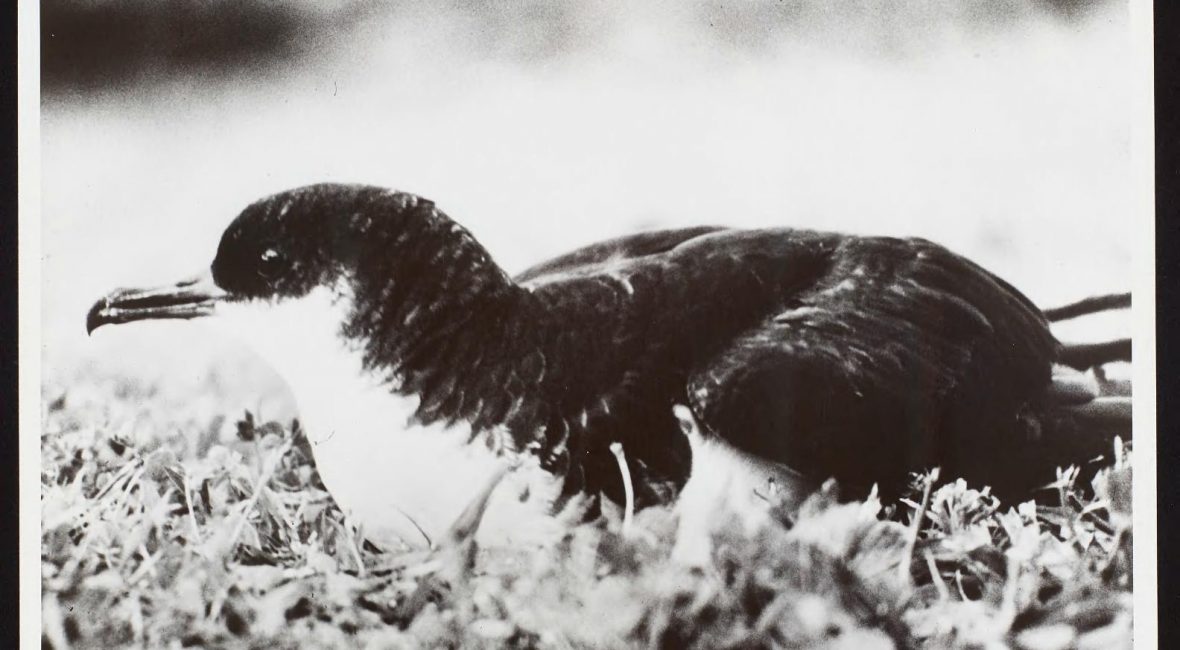
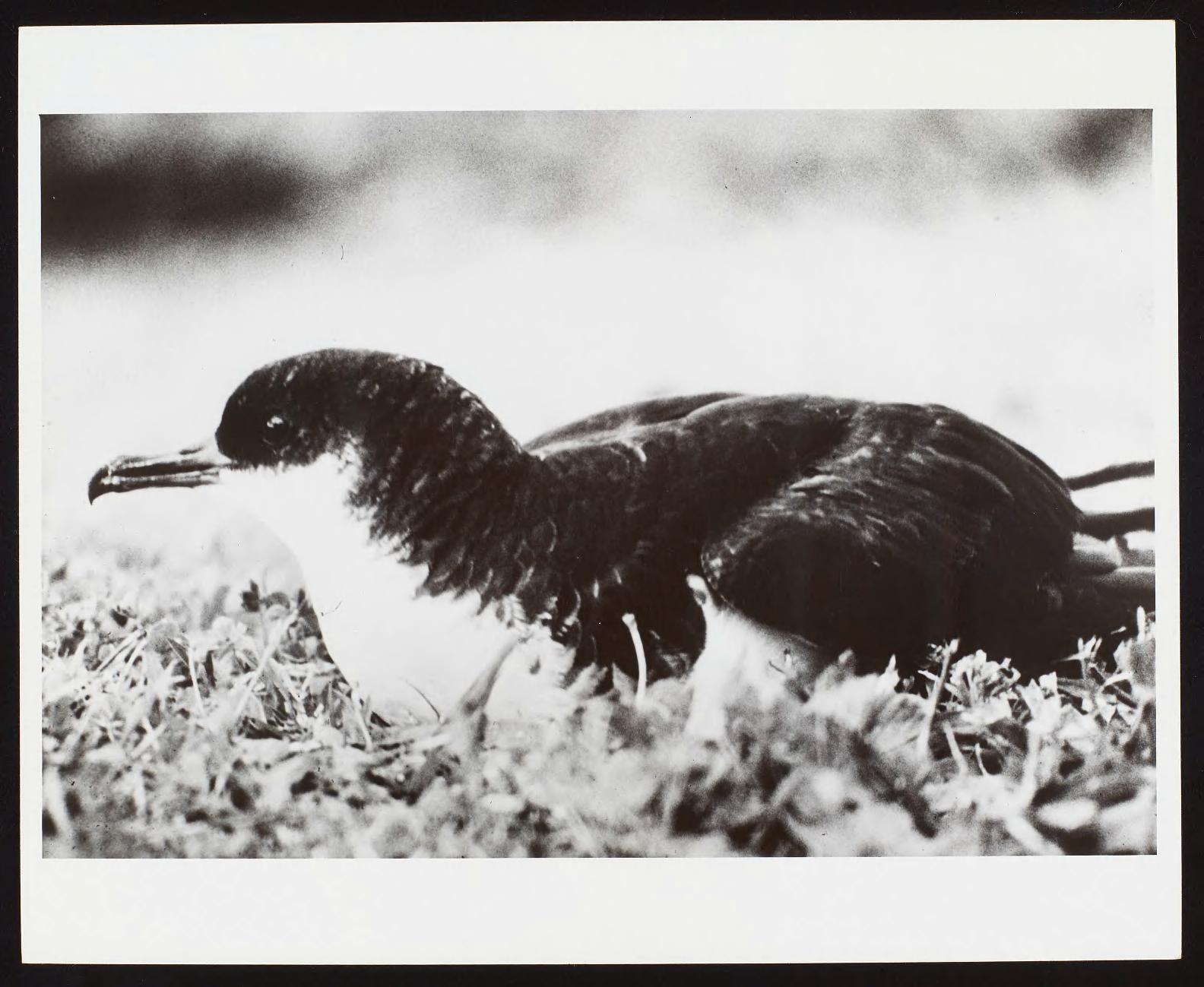
In the middle of the Cold War, the Smithsonian Institution embarked on the Pacific Ocean Biological Survey Program (POBSP) to survey U.S. territory islands and atolls dotting the central Pacific Ocean. From 1963 to 1969, researchers sought to inventory the plants and animals present on the islands, observe seasonal variations in numbers and reproduction, and the distribution of pelagic birds. Over the course of the survey, researchers observed approximately 150,000 pelagic birds at sea, banded 1,800,000 birds, and surveyed the flora and fauna of the islands, the most comprehensive study at the time. An incredible amount of data was collected during the POBSP, drastically increasing information available about the ecology of the small islands. Although it resulted in an incredible amount of data, the survey only spanned three years in part due to questions about the funder’s intentions.

Puffinus newelli (Newell’s shearwater), 1965.
https://www.biodiversitylibrary.org/item/243657

The Smithsonian received grant funds from the Department of Defense for the POBSP. In exchange, the DOD requested basic information about the movements of birds and several thousand blood samples. While the request was unorthodox, it was seen as justified since migratory birds were damaging aircrafts and communications equipment in the Pacific. Smithsonian agreed to the request and embarked on the first stretch of the POBSP in 1963.

Once the survey began, it became clear Smithsonian wasn’t completely aware of what it had signed up for. The military would complete exercises without explanation and kept the Smithsonian staff on a “need to know” basis. There is evidence that some of the researchers tried to get more information on why the military was so interested in the data but didn’t succeed. In the end, the staff accepted requests for secrecy, seeing it as a fair trade for the work they had the opportunity to complete, a task inaccessible to other groups.

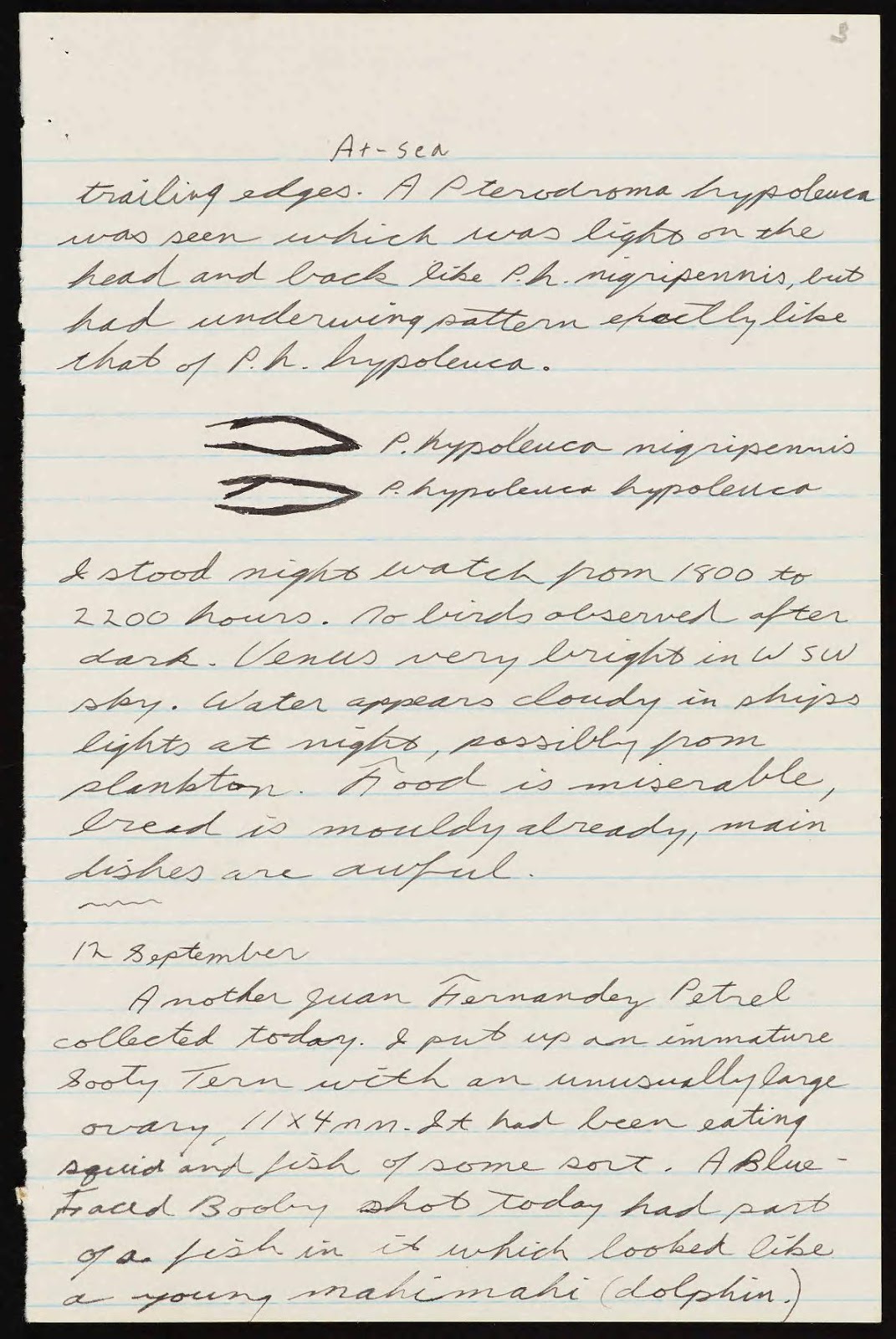
Venus was bright on this particular September night in 1965.
Tordoff, Jeffrey P. 1965. https://biodiversitylibrary.org/page/55214829

We now know that the military conducted germ warfare tests in the Pacific in the 1960s, including The Pacific Project which exposed military personnel and biologists to chemical cleansers and bacteria which have been linked to debilitating conditions. There’s no official connection between the POBSP samples and these tests, and researchers from the Survey have not reported similar health effects as military personnel who were part of the Pacific Project. But the Department of Defense’s interest in the blood samples and migration patterns sparked suspicion which ultimately ended funding for the Survey in 1969.

Considering the political climate at the time, the Smithsonian was perhaps naïve in not considering the implications of the exchange in funds and information with the Department of Defense. The Institution’s researchers were offered the opportunity to complete research in remote areas that were expensive to study and required military cooperation to even get to. The younger biologists were particularly thrilled at the chance to be out in the field for weeks at a time like the biologists before them. What they all saw was a godsend.

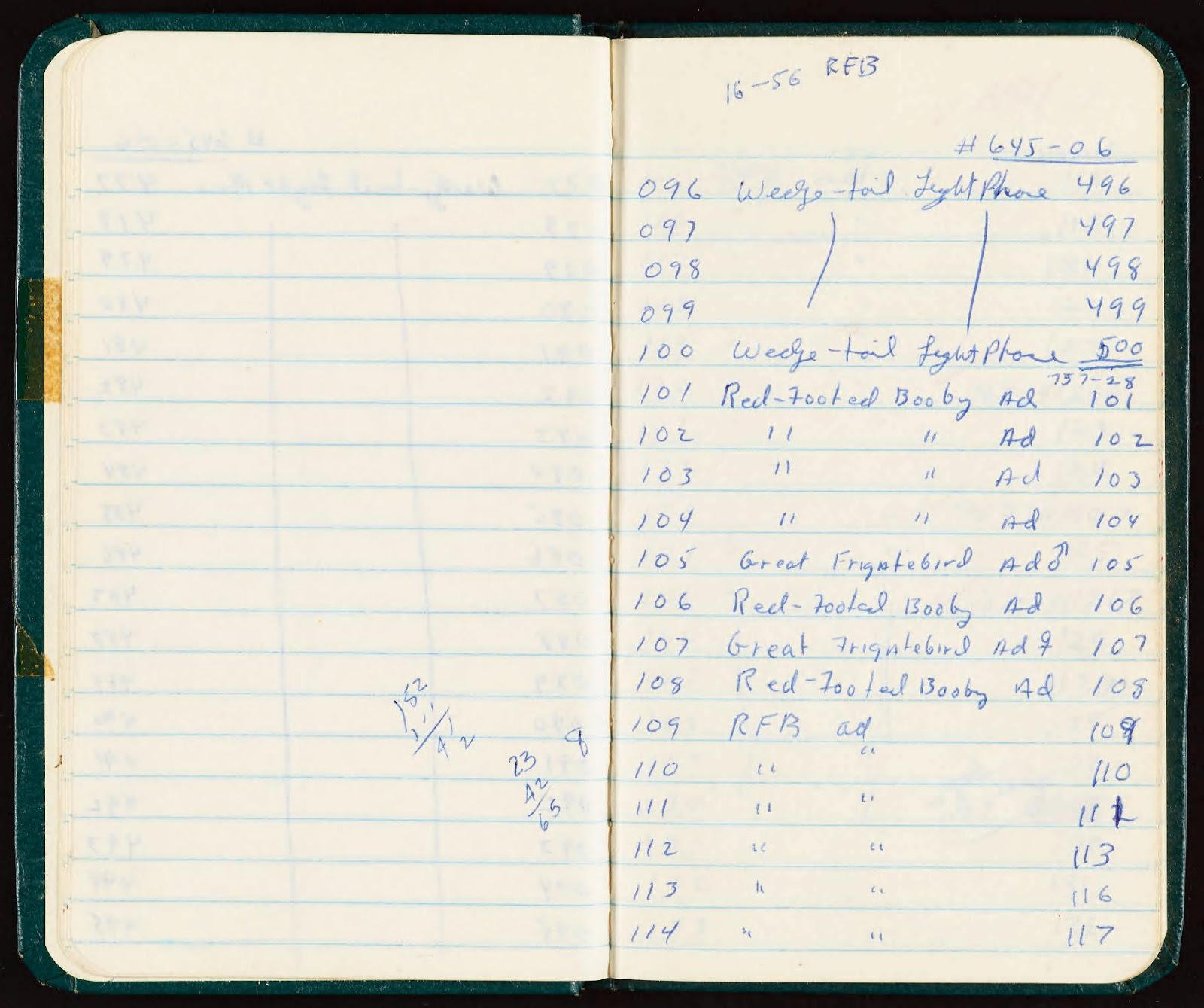
List of blood samples collected in 1966.
Laysan Island, October 1966, Blood. https://www.biodiversitylibrary.org/page/54928748

The history of the POBSP and its connection to American military interests of the 1960s is incomplete, and parts of it will likely remain unknown. Despite this dark side to the survey, it is undeniable that Smithsonian’s researchers were able to collect an impressive amount of information during their expeditions to the Pacific. As part of the BHL Field Notes Project, the Smithsonian Institution Archives has taken on the task of digitizing field notes from the POBSP. Considering the shear amount of data collected, it should be no surprise that there are over 1000 field notebooks in the collection, making this SIA’s largest undertaking for the Field Notes Project.

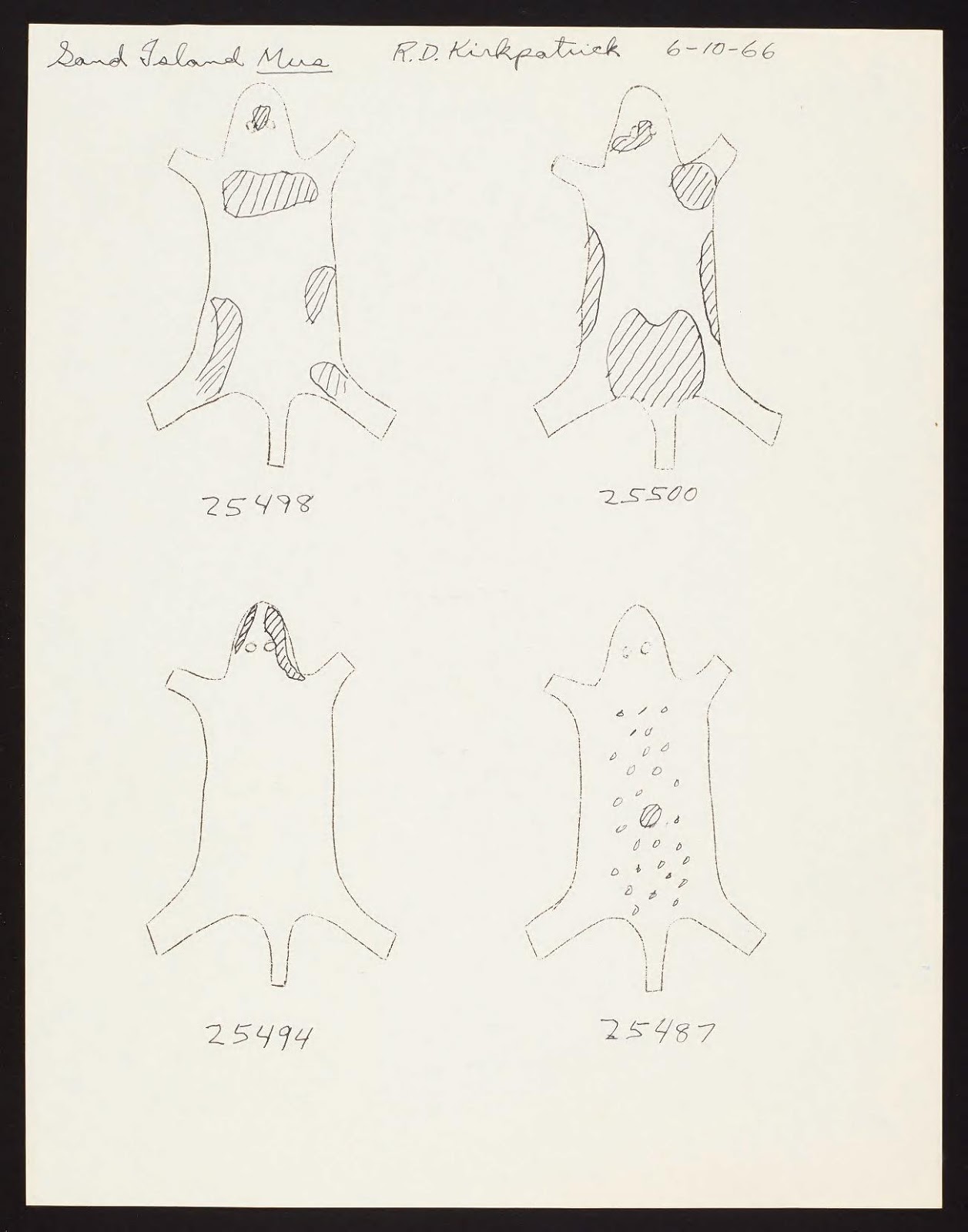
Mus autopsy data, 1966.
https://www.biodiversitylibrary.org/page/55373636

To date, nearly 300 field notes from the collection are readily available in BHL, and many more are in the final post-processing stages in preparation for BHL. Stay tuned for the complete set of notes in the upcoming months.

The BHL Field Notes Project is funded by the Council on Library and Information Resources (CLIR).

References
Finding Aid for “Record Unit 245, National Museum of Natural History, Pacific Ocean Biological Survey Program, Records, circa 1961-1973, with data from 1923”.

MacLeod, R. (2001). “Strictly for the Birds”: Science, the Military and the Smithsonian’s Pacific Ocean Biological Survey Program, 1963-1970. Journal of the History of Biology, 34(2), 315-352.

Rauzon, M J. (2006). “Live Ammo: Testing of Biochemical Agents on U.S. Sailors.” The Asia -Pacific Journal : Japan Focus, 4 (12).

Further Reading
Hunter, E. (2011). “Life in the Field: a Reflection on Cataloging Field Notes in the Pacific Ocean Biological Survey Program.” Smithsonian Field Book Project Blog.

Lamb, J. (2016).  “TheStrange Tale of the Pacific Ocean Biological Survey Program.” JSTOR Daily.

Parilla, L. (2013). “I Found It in a Field Book: Hawaiian Monk Seal Family Images.” Smithsonian Field Book Project Blog.Tennis, A. (2016). “Invasive Pests of the Pacific.” Smithsonian Field Book Project Blog.

March 1, 2018by mkahn
Blog Reel, Featured Books

From Dayton to Cambridge and Back Again: the field notes of August F. Foerste

Field notes are well known to be essential, primary material that provide details about collections and expeditions that aren’t found in published material or specimen labels. Field notes can also contain diary entries, poems, and sketches which give insight into the lives of the researchers themselves. And now, we can add the candy preferences of August F. Foerste to those insights.

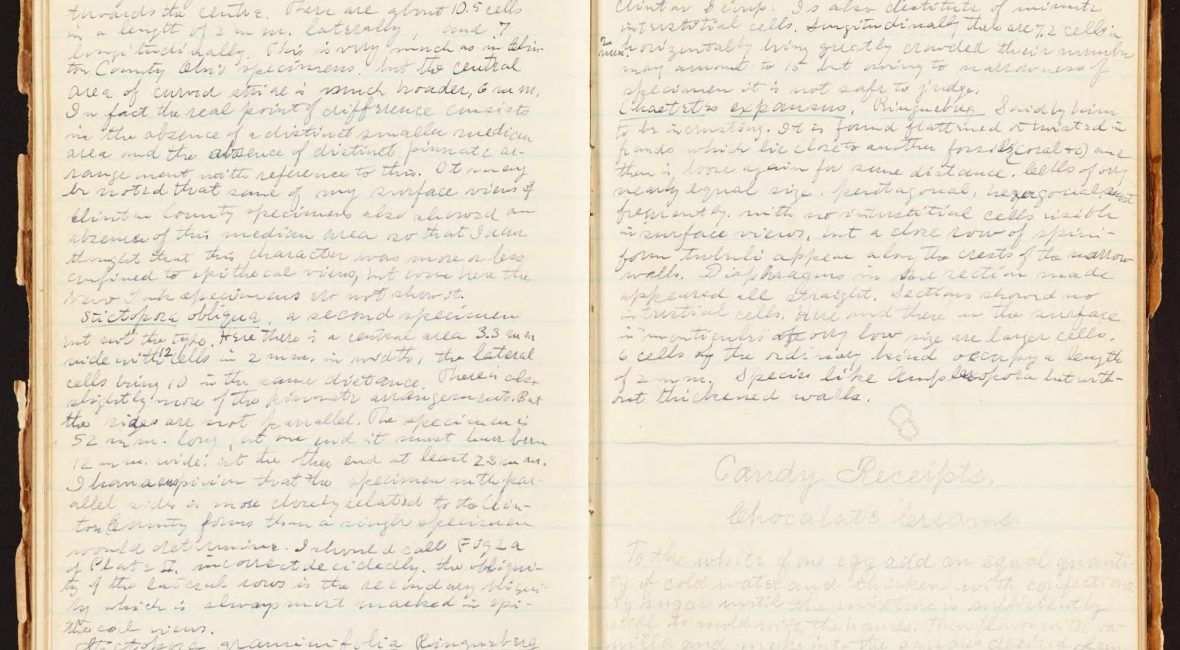
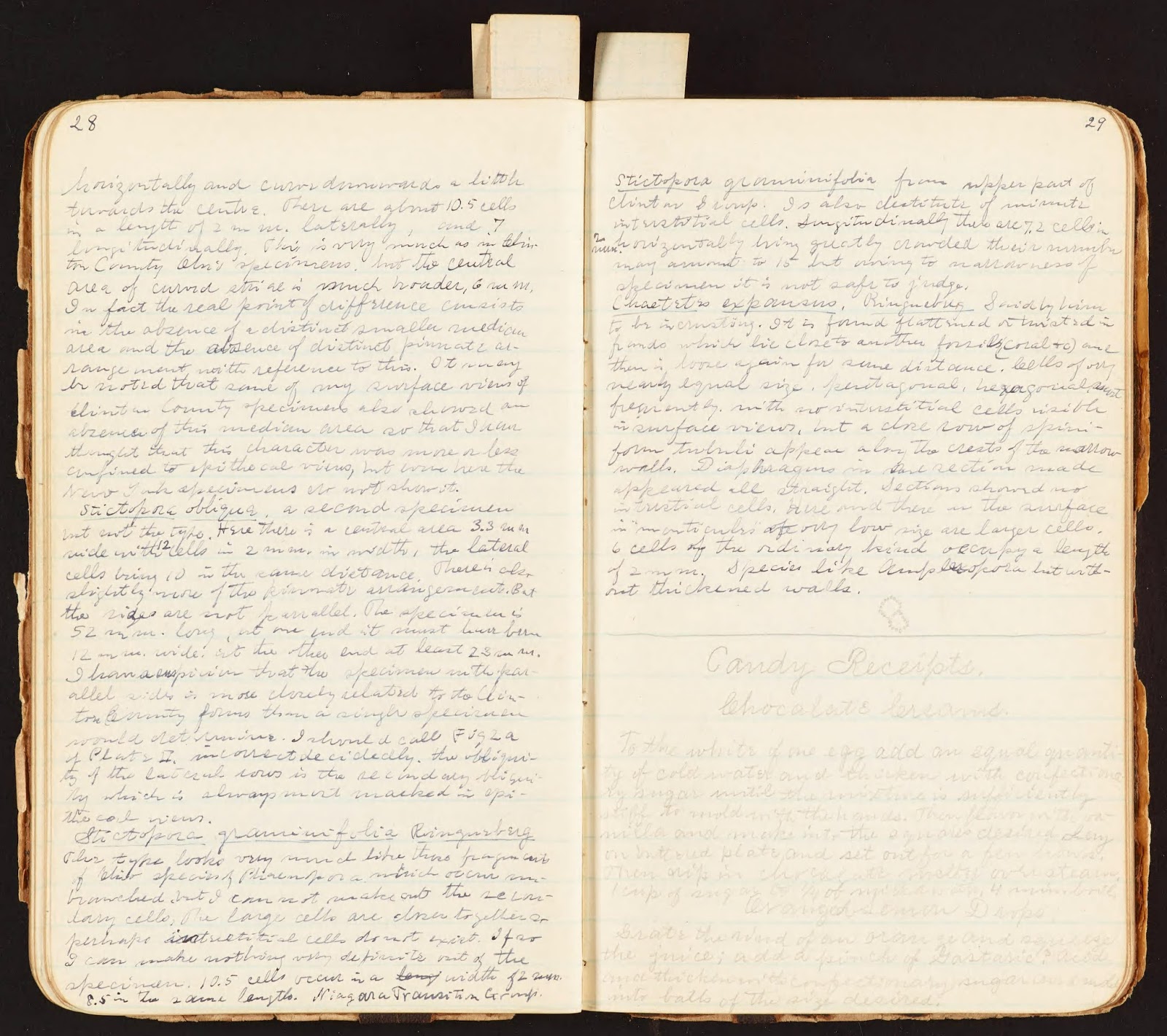
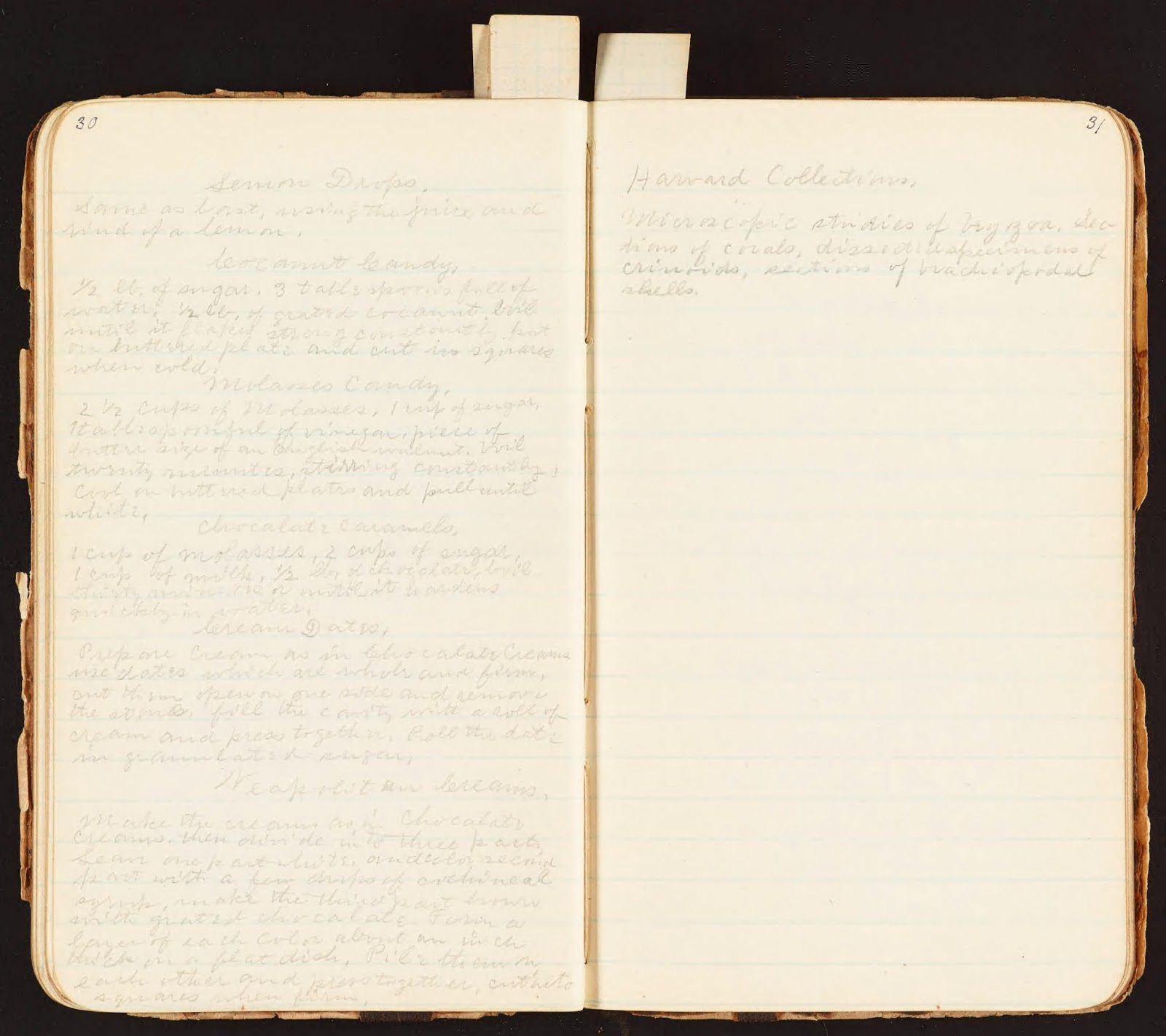
In his Specimen notebook, Ohio, 1887-1888, with no explanation, we find a list of several different candy recipes, including chocolate creams, lemon drops, and Neapolitan creams. Brings up quite a few questions. Who gave him the recipes? Was this the only paper he had available to write them down? Did he try to make them? Why is there a sugar syrup recipe at the end of the chocolate cream recipe with no explanation as to what to do with it? (This last one, admittedly, is more a personal inquiry of mine.)

Specimen notebook, Ohio, 1887-1888.
https://www.biodiversitylibrary.org/item/229964

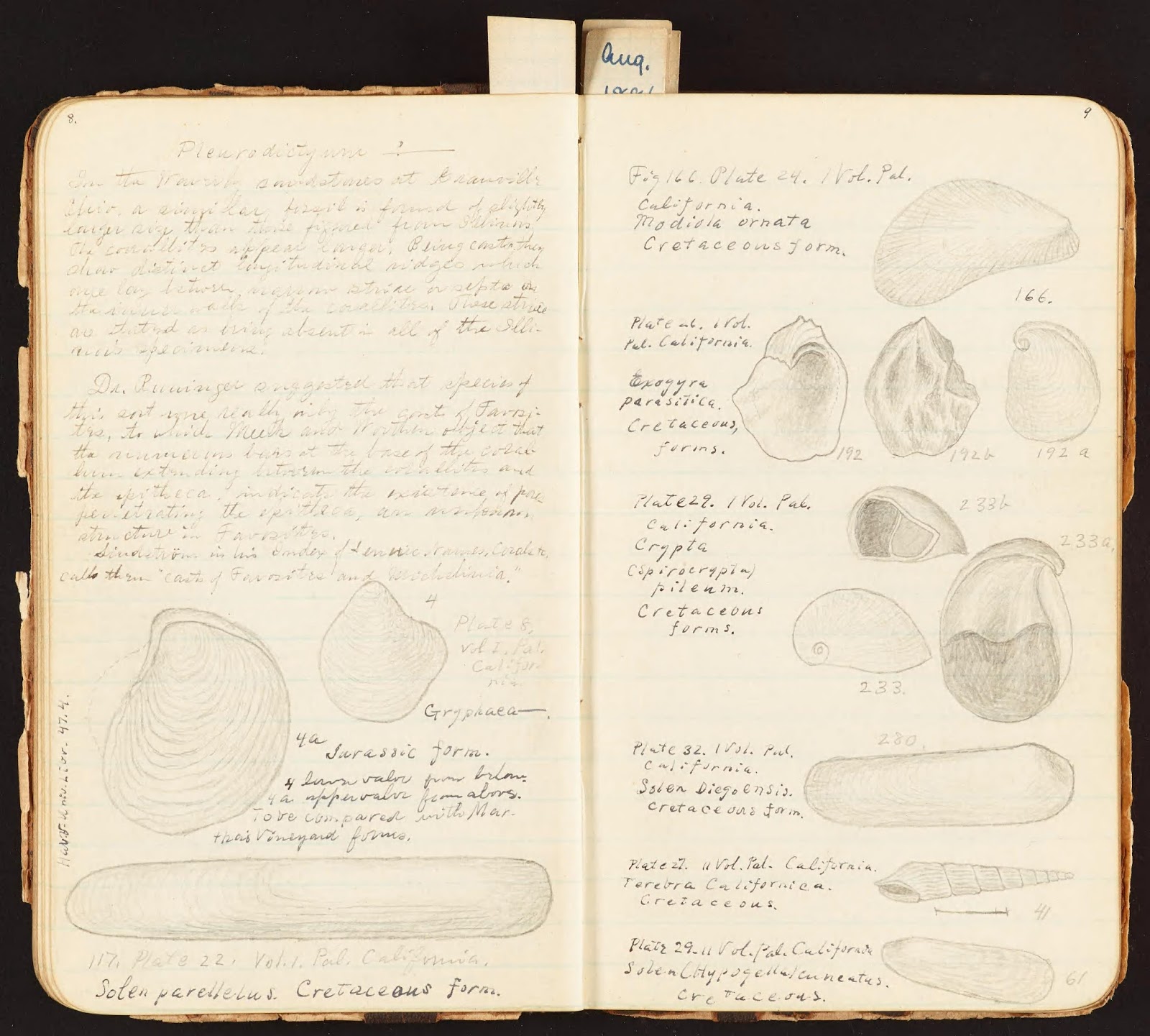
What we can determine is that they were written down in 1888 when Foerste was completing his master’s degree at Harvard University. In fact, on the facing page, pictured above, we see a note about Harvard’s collections, in particular “microscopic studies of bryozoan, sections of corals, dissected specimens of crinoids, [and] sections of brachiopoda shells.” So while he may have been briefly distracted by confection, he was still focused on his studies. In that same notebook, Foerste includes several illustrations of specimens.

Specimen notebook, Ohio, 1887-1888.
https://biodiversitylibrary.org/item/229964

Foerste was a native of Dayton, Ohio. Like many naturalists, his early interests in science came about from wandering around town and taking note of the fossils, geological formations and stratigraphy of the local area. He completed his bachelor’s degree at Denison University before continuing his studies in Cambridge, Mass. While at Harvard, Foesrte also served as part-time assistant with the United States Geological Survey. As part of the survey, he studied the stratigraphy and petrography of New England.

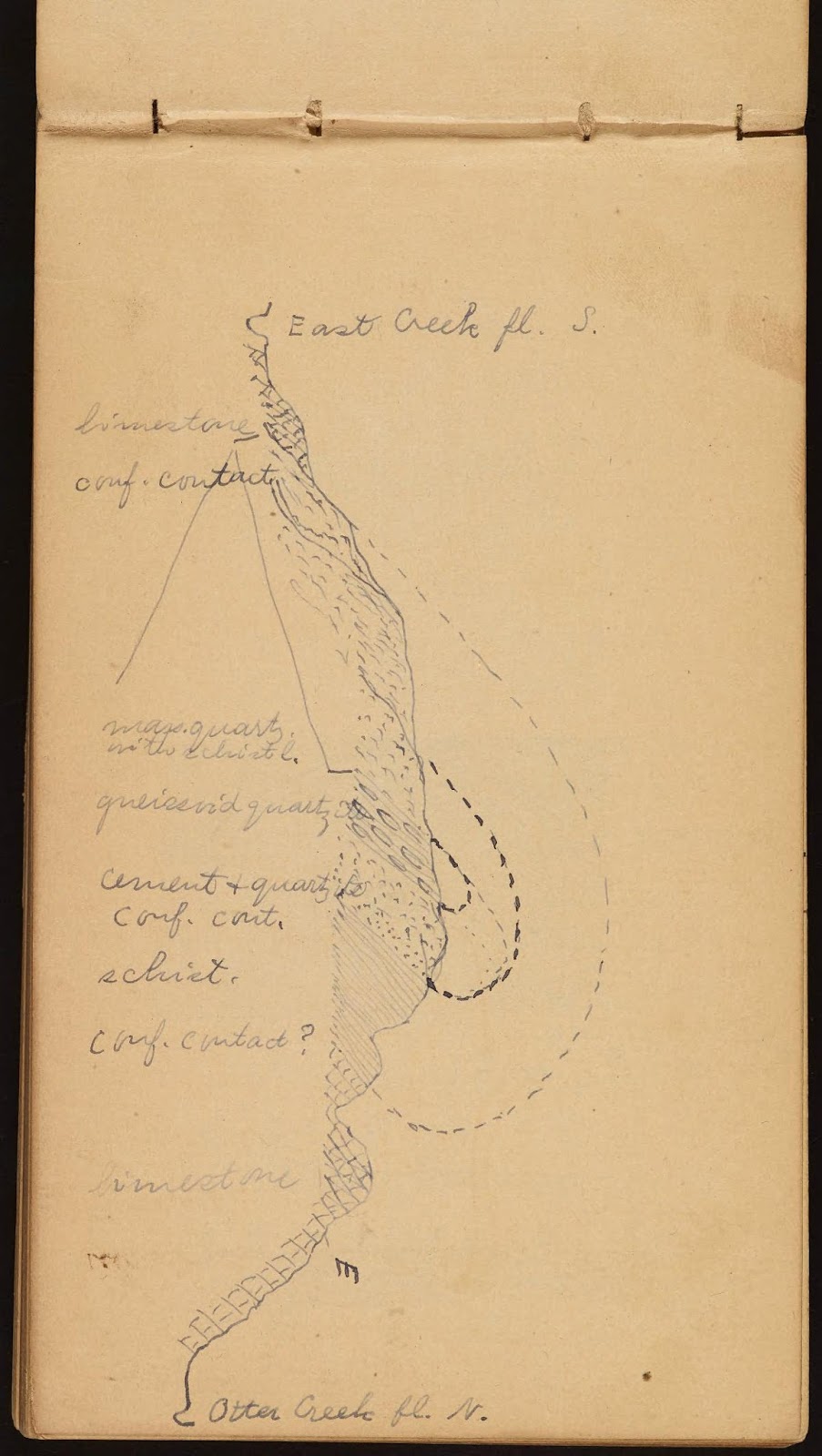
Illustration by Foerste while in Vermont for the U.S. Geological Survey. Foerste was also studying at Harvard at the time.
Field notes, New England, undated. https://www.biodiversitylibrary.org/page/54118346

After graduating with his Ph.D, Foesrte would return to his hometown, spending most of his career as a teacher at Steele High School. During the summer breaks, he would go out into the field for the U.S. Geological Survey. As part of the BHL Field Notes Project, Smithsonian Institution Archives has digitized many of these notes. In 1932, he was appointed as Associate in Paleontology for the U.S. National Museum (now the National Museum of Natural History) until his death in 1936.

We are excited to share Foerste’s field notes as part of the BHL Field Notes Project. You can view these and other notebooks by Foerste in BHL. And if anyone gives those confection recipes a try, be sure to share with us!
The BHL Field Notes Project is funded by the Council on Library and Information Resources (CLIR).

Sources:
Finding Aid for “Record Unit 7242, Foerste, Aug. F,(Aug. Frederic),1862-1936, Aug. F. (Aug. Frederic) Foerste Papers, 1887-1933 and undated”

“August F. Foerste.” Centreville-Washington History.  

For a transcribed copy of the recipes, check out the Smithsonian Field Book Project’s 2012 Holiday Card, designed by Lesley Parilla.

December 8, 2017by mkahn
Blog Reel, Featured Books

Artist Kumataro Ito Aboard the USS Albatross

This post was originally published on The Field Book Project blog on 30 June 2017.

View Full Size Image
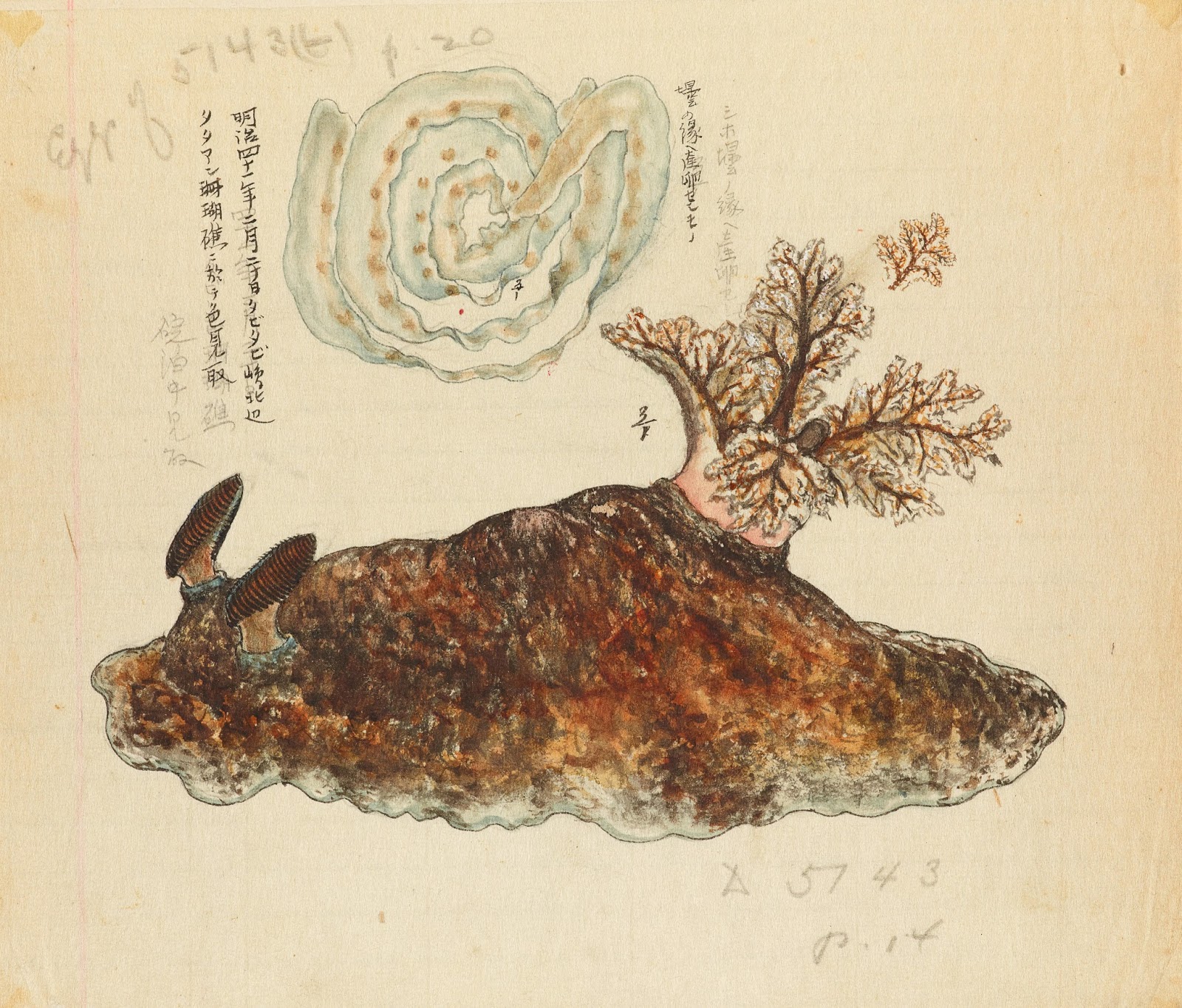
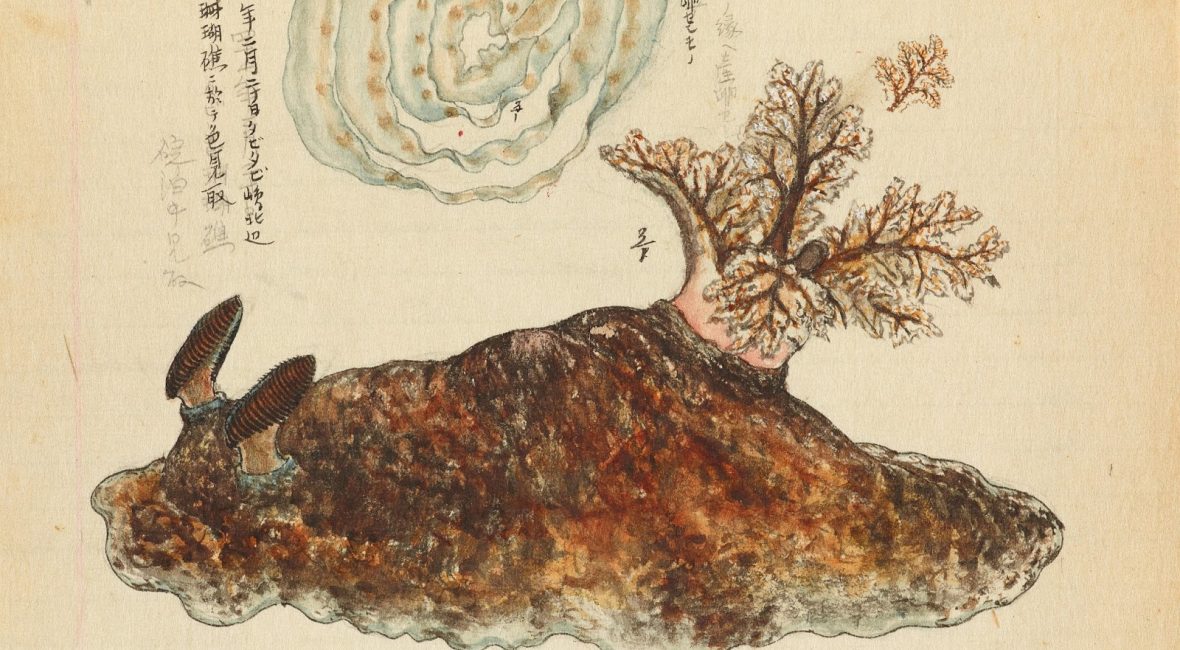
Bartsch, Paul. Notes and description of specimens collected on the Philippine Expedition of the Steamer Albatross, circa 1908. Illustration by Kumataro Ito. Digitized by Smithsonian Institution Archives. http://s.si.edu/2wm30MY.

In 1907, the U.S. Bureau of Fisheries—now known as NOAA Fisheries or the National Marine Fisheries Service—embarked on a 2 ½ year research trip to the Philippine and neighboring islands. Of the many research trips conducted on their steamer the USS Albatross, the Philippine expedition resulted in a staggering estimate of 490,000 specimens turned over to the U.S. National Museum, what is now the National Museum of Natural History. When specimens are stored in ethanol, as these were, they do not retain their original coloring. To capture this information, these trips would also include efforts to document the specimens in other ways, such as photos or illustrations.

At the time of this expedition, a portable, reliable way to create quality color photographs was still several decades away, so it wasn’t an option for researchers in the field. Having an artist on board was the only option to capture the brilliant colors of the collected marine species. For this particular outing of the Albatross, Tokyo-based artist Kumataro Ito was hired to illustrate specimens collected by researchers.

Ito studied under Gyozan Nakajima, noted illustrator of the 19th century, and had already established himself as a natural history painter at Department of Zoology of Tokyo University and working on publications such as the Fishes of Japan, an account principally on economic species.

View Full Size Image
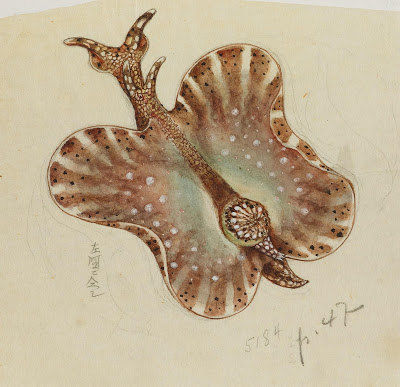
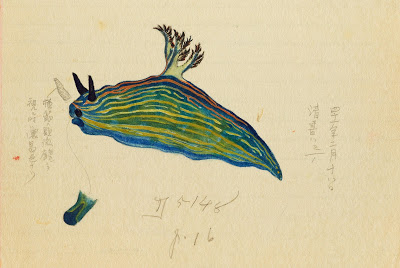
Bartsch, Paul. Notes and description of specimens collected on the Philippine Expedition of the Steamer Albatross, circa 1908. Illustration by Kumataro Ito. Digitized by Smithsonian Institution Archives. http://s.si.edu/2iFc64e.

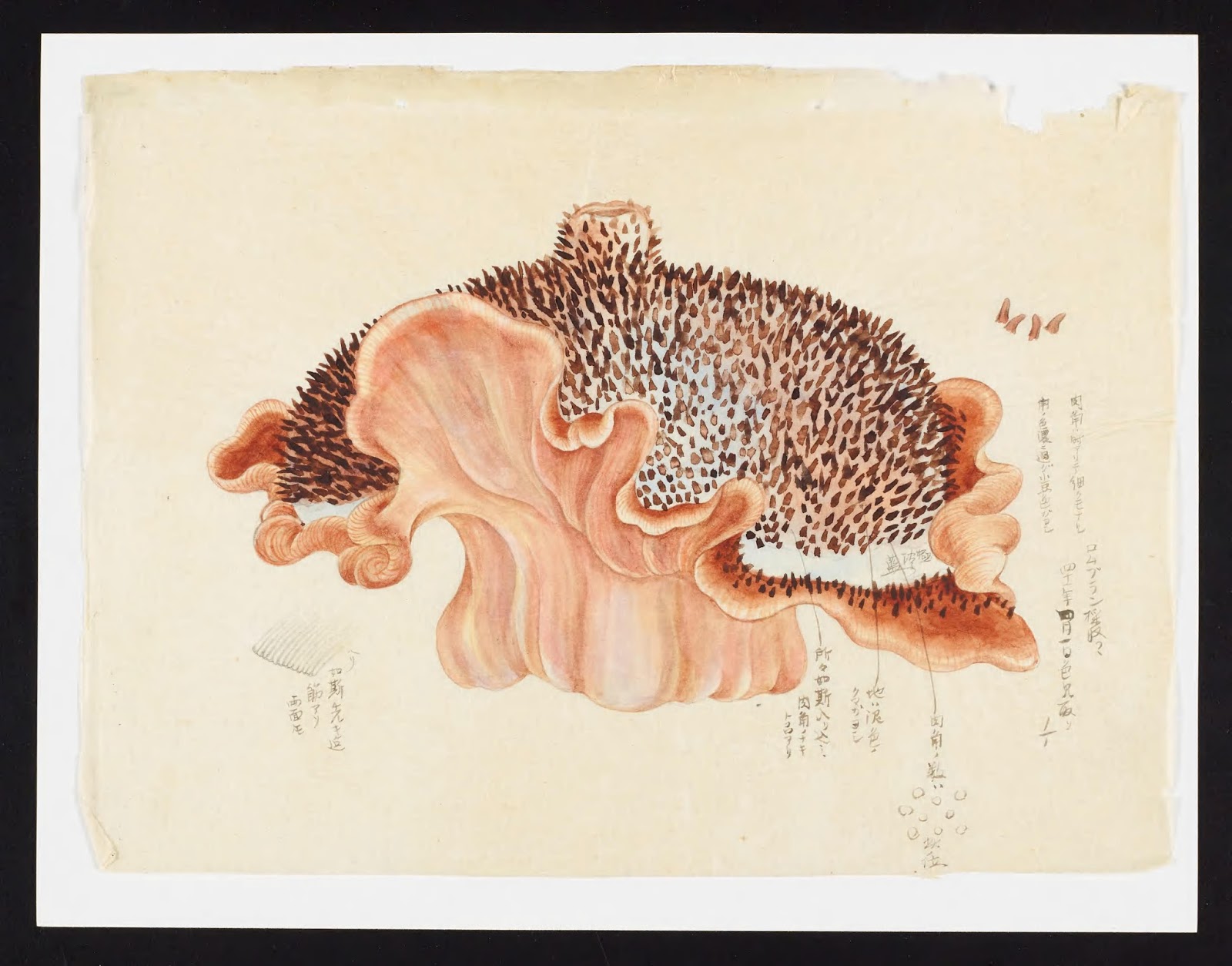
Over the course of the expedition, Ito created over 200 paintings of specimens collected by the small research crew, including mollusks collected by Smithsonian’s Paul Bartsch. Last month, our team digitized one of Bartsch’s notebooks from the expedition. The notebook caught our eye from the first time we saw it because of the beautiful full-color paintings of nudibranchs, all by Ito. Each painting includes notations in Japanese which supplement Bartsch’s notes. Based on how well the paintings have aged, it’s likely they were created on quality Japanese paper similar to what is used today for book repairs.

View Full Size Image
Bartsch, Paul. Notes and description of specimens collected on the Philippine Expedition of the Steamer Albatross, circa 1908. Illustration by Kumataro Ito. Digitized by Smithsonian Institution Archives. http://s.si.edu/2wgmjsR.

Unfortunately, Ito’s paintings often went unattributed or incorrectly credited to the researcher when later reproduced in publications. It’s a shame considering the clear talent Ito had in capturing the diversity of marine life. The nudibranch paintings in the Bartsch notebook are an incredible sight and we are pleased they are now available to view online, with proper credit to Kumataro Ito.

View Full Size Image
Bartsch, Paul. Notes and description of specimens collected on the Philippine Expedition of the Steamer Albatross, circa 1908. Illustration by Kumataro Ito. Digitized by Smithsonian Institution Archives. http://s.si.edu/2vClXJY.


Digitization of this field book was sponsored by a grant from Arcadia – a charitable fund of Peter Baldwin and Lisbet Rausing. 

Further Reading:

  • Bennett, William. “An Undersea Invertebrates Update: Treatment Progress on Bartsch’s Nudibranchs Field Book.” Smithsonian Institution Archives blog. May 18, 2017.
  • Bennett, William. “Coming Soon to the Transcription Center: Department of Invertebrate Zoology.” Smithsonian Institution Archives blog. November 15, 2016.
  • Springer, Victor G. “Kumataro Ito, Japanese Artist on Board the U.S. Bureau of Fisheries Steamer Albatross During the Philippine Expedition, 1907-1910.” Marine Fisheries Review 61, no.4 (1999): 42-57.
  • Bartsch, Paul. “Dr. Hugh M. Smith, Director of the Philippine Cruise of the “Albatross”” Copeia 1941, no. 4 (1941): 209-15.
August 31, 2017by mkahn
Blog Reel, Featured Books

Ex. Ex. Marks the Spot: bringing together primary and secondary sources on the United States South Seas Exploring Expedition of 1838-1842

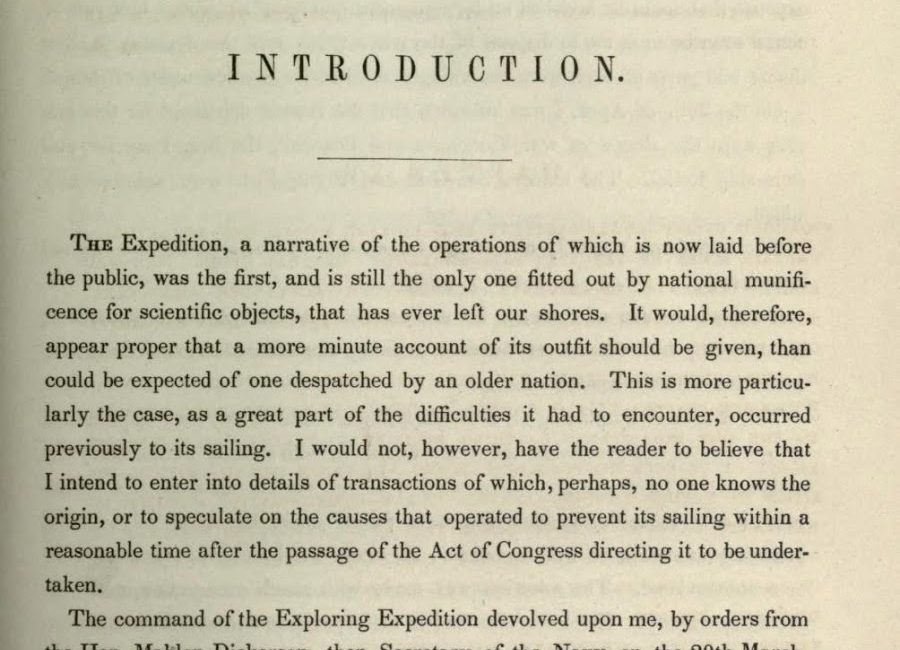
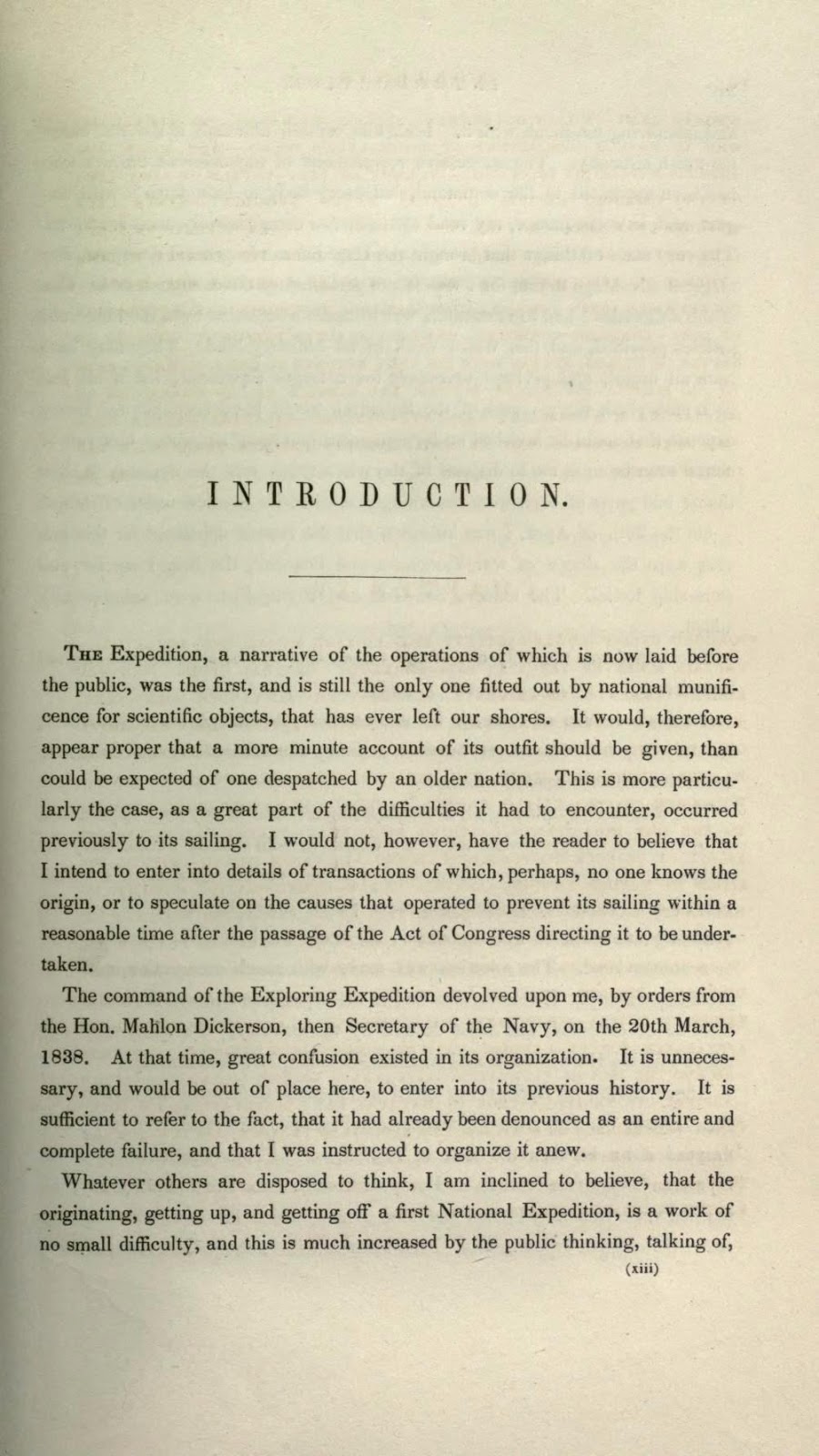
The United States South Seas Exploring Expedition of 1838-1842 was authorized by Congress in 1836 to observe the Pacific Ocean and South Seas. The four-year voyage — also referred to as the Wilkes Expedition or Ex. Ex. for shorthand — covered an expansive geographic region, including the Pacific Northwest, Fiji Islands, and South America. The expedition was under the command of Lieutenant Charles Wilkes of the Unites States Navy, and the resulting collection is thought to be one of the largest early natural history collections, weighing in at an estimated 40 tons. The collection was transferred to the Smithsonian Institution in 1857 and established what would eventually become the National Museum of Natural History. A narrative of the expedition was published in 1844, with a multi-volume publication on the results of the expedition published later.

View Full Size Image
Wilkes, Charles. United States Exploring Expedition. During the year 1838, 1839, 1840, 1841, 1842. Vol. 1 (1845). http://biodiversitylibrary.org/page/21175563.

As we have mentioned before, it was an interest in identifying the original source material for the Ex. Ex. which really became a major incentive to establish what would become the Smithsonian Field Book Project. Over the course of the project, team members cataloged the Ex. Ex. field books in Smithsonian Institution Archives’ collection. Now as the Smithsonian Field Book Project team participates in the BHL Field Notes Project, this collection of original expedition notes is being digitized and published in BHL, giving researchers a way to view related content in one place.

View Full Size Image
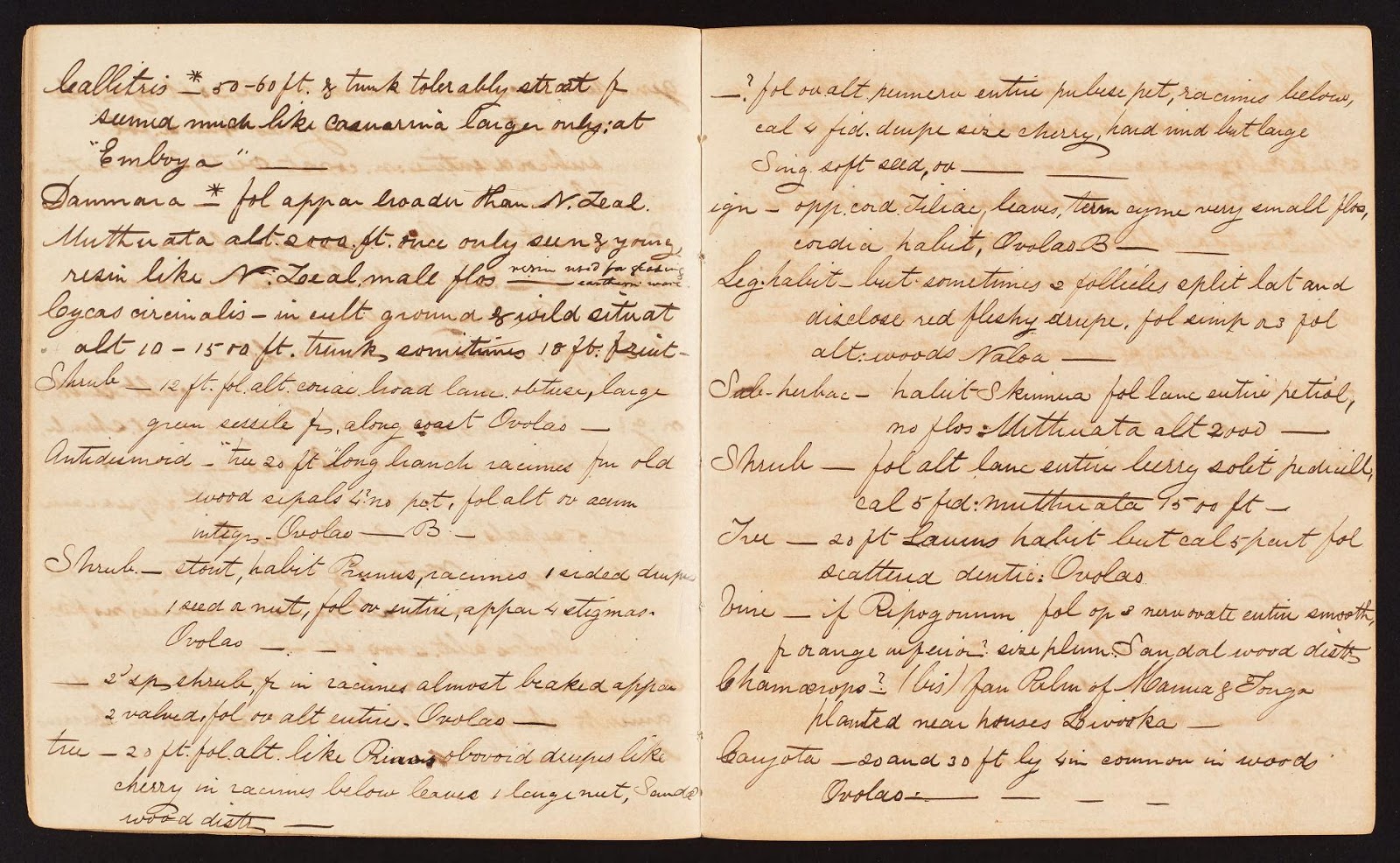
Brackenridge, William D. Original notebooks of the botanist, volumes 13 – 14, Fiji Islands group. (1838-1842) http://biodiversitylibrary.org/page/53612590.

One of the sets of material SIA has digitized as part of the BHL Field Notes Project are the notebooks of William D. Brackenridge. Brackenridge was a gardener and nurseryman from Scotland who moved to the United States in 1837. Brackenridge became part of the Ex. Ex. as a result of Asa Gray resigning as Botanist of the expedition to take an academic position at the newly established University of Michigan. With Gray’s departure, William Rich was promoted from Assistant Botanist to Botanist, and Brackenridge was brought on to fill the assistantship role.

View Full Size Image
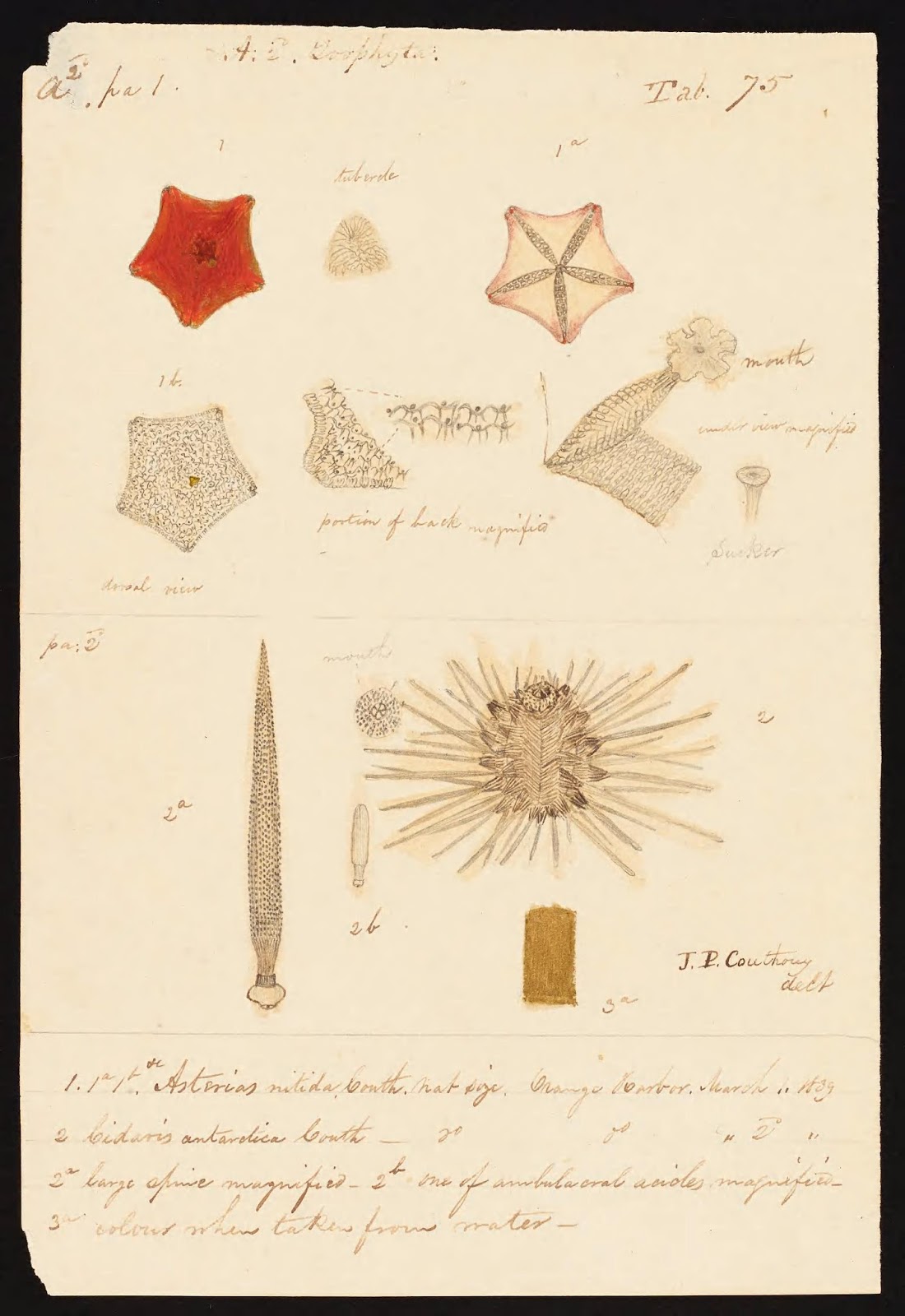
Drayton, Joseph. Botany: Echinoderms, drawings by Joseph Drayton. (1838-1839) http://biodiversitylibrary.org/page/53640152.

Also part of the expedition team were two illustrators, Joseph Drayton and Alfred T. Agate. As part of the BHL Field Notes Project, we have digitized a set of sea star and other marine drawings by Drayton. The drawings include a signature and date, and often additional notes on the location where the specimen was found. As far as we can tell, these illustrations were not used for reference in the multi-volume Expedition publication, making this set of drawings a particularly good example of how field notes can inform research in conjunction with traditionally published material.

Smithsonian Institution Archives still has several field books from the Ex. Ex. to digitize for the BHL Field Notes Project, so be sure to check back over the next few months to see our whole set.

The BHL Field Notes Project is funded by the Council on Library and Information Resources (CLIR).

References:
Finding Aid for “SIA RU007189, Brackenridge, William D (William Dunlop) 1810-1893, William Dunlop Brackenridge Papers, circa 1838-1875” 

Finding Aid for “SIA RU007186, United States Exploring Expedition (1838-1842), United States Exploring Expedition Collection, 1838-1885”

Philbrick, Nathaniel. “The Scientific Legacy of the U.S. Exploring Expedition.” The United States Exploring Expedition, 1838-1842, a Smithsonian Libraries Digital Collection. 

Walsh, Dr. Jane. “From the Ends of the Earth: The United States Exploring Expedition Collections”.” The United States Exploring Expedition, 1838-1842, a Smithsonian Libraries Digital Collection. 

August 10, 2017by mkahn
BHL News, Blog Reel

Introducing the BHL Field Notes Project

In 2015, the Council on Library and Information Resources awarded the Biodiversity Heritage Library a grant to fund the BHL Field Notes Project. Part of CLIR’s Digitizing Hidden Special Collections and Archives initiative, this project is a collaborative undertaking which will provide open access to field notes from several different institutions. By project end, BHL users will have access to over 450,000 pages of natural history field research material. This rich source of field notes includes diaries, journals, correspondence, and photographs.
View Full Size Image
p.p1 {margin: 0.0px 0.0px 0.0px 0.0px; text-align: center; font: 9.0px ‘Times New Roman’; color: #55677d} span.s1 {text-decoration: underline ; color: #0079cd}

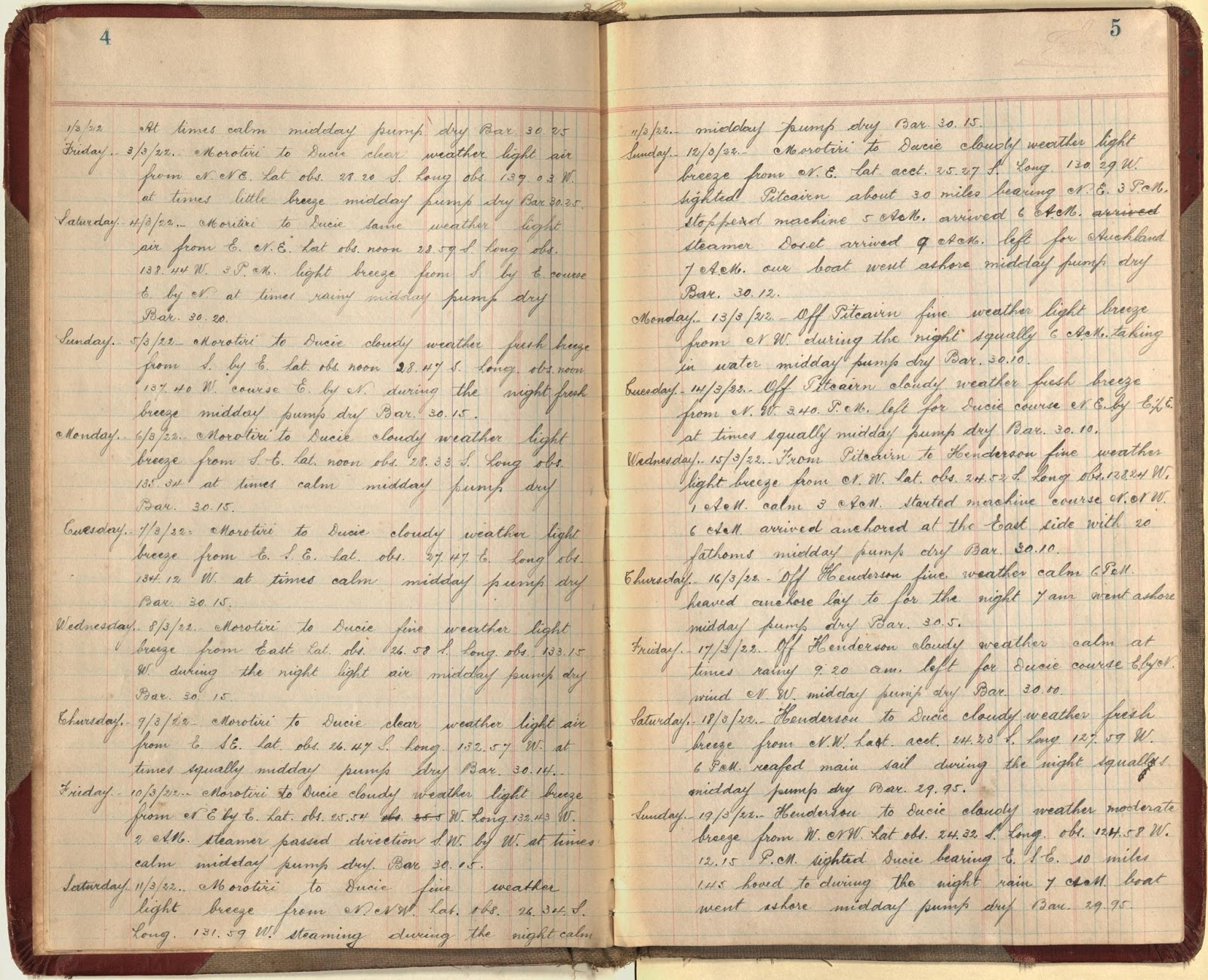
[Logbook of the yacht “France”]. v. 1 (1922-1926). Digitized by the American Museum of Natural History. http://www.biodiversitylibrary.org/page/51514493

The importance of field notes is well known to researchers. To natural scientists, field notes offer records of the flora and fauna of a location at a certain point in time. These records serve as reference points when observing how a certain habitat has changed over time. They can also offer information on expeditions, or the source of museum collection items. Field notes also present narratives that give insight into the scientists as people and their relationship with the locations and cultures they studied, making them an important resource for science historians.

View Full Size Image
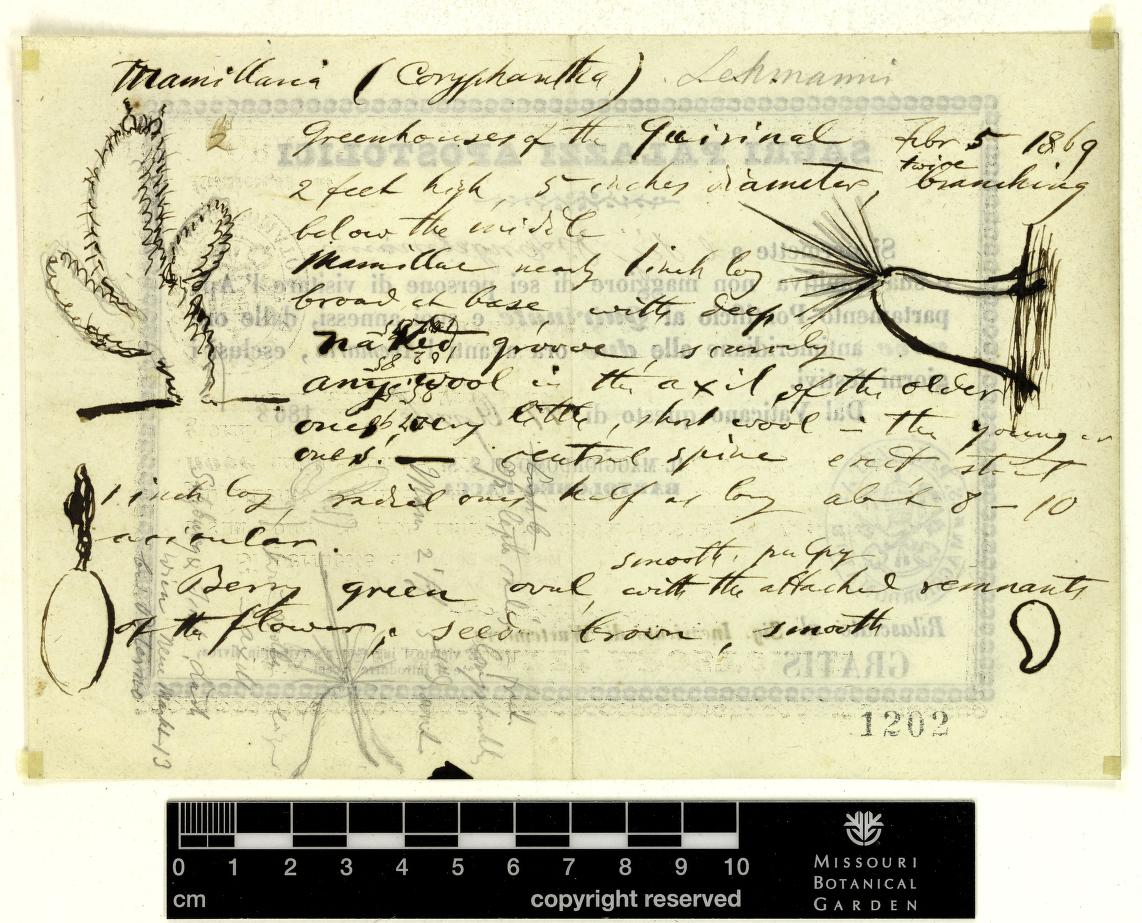
George Engelmann : botanical notebook 5 : Mammilaria, Leuchtenbergia, Discocactus, and Melocactus. Box 3: Folder 13: Cactaceae: Mammillaria: 1857-1883 (1856). http://biodiversitylibrary.org/page/52030722

The BHL has already started adding field notes to its collection, and the Field Notes Project hopes to add great value to the field notes already available. This project brings together the efforts of eleven institutions:

  • American Museum of Natural History
  • Field Museum of Natural History Library
  • Harvard University Botany Libraries
  • Harvard University, Museum of Comparative Zoology, Ernst Mayr Library
  • Internet Archive
  • LuEsther T. Mertz Library, The New York Botanical Garden
  • Missouri Botanical Garden, Peter H. Raven Library & Center for Biodiversity Informatics
  • Museum of Vertebrate Zoology, University of California, Berkeley
  • Smithsonian Institution Archives
  • Smithsonian Libraries
  • Yale Peabody Museum Archives

We are excited to be part of the effort to add more archival material to the BHL. Stay tuned for upcoming features which will highlight contributions from—and go behind-the-scenes at—some of our partners. In the meantime, explore some of the great field notes already digitized in the BHL Field Notes Project collection.

January 5, 2017by mkahn
Blog Reel, Featured Books

Hispanic Heritage Month: The Life and Work of Louis Agassiz Fuertes

View Full Size Image
Louis Agassiz Fuertes. The Osprey. v. 1 (1896-97). http://biodiversitylibrary.org/page/8767127

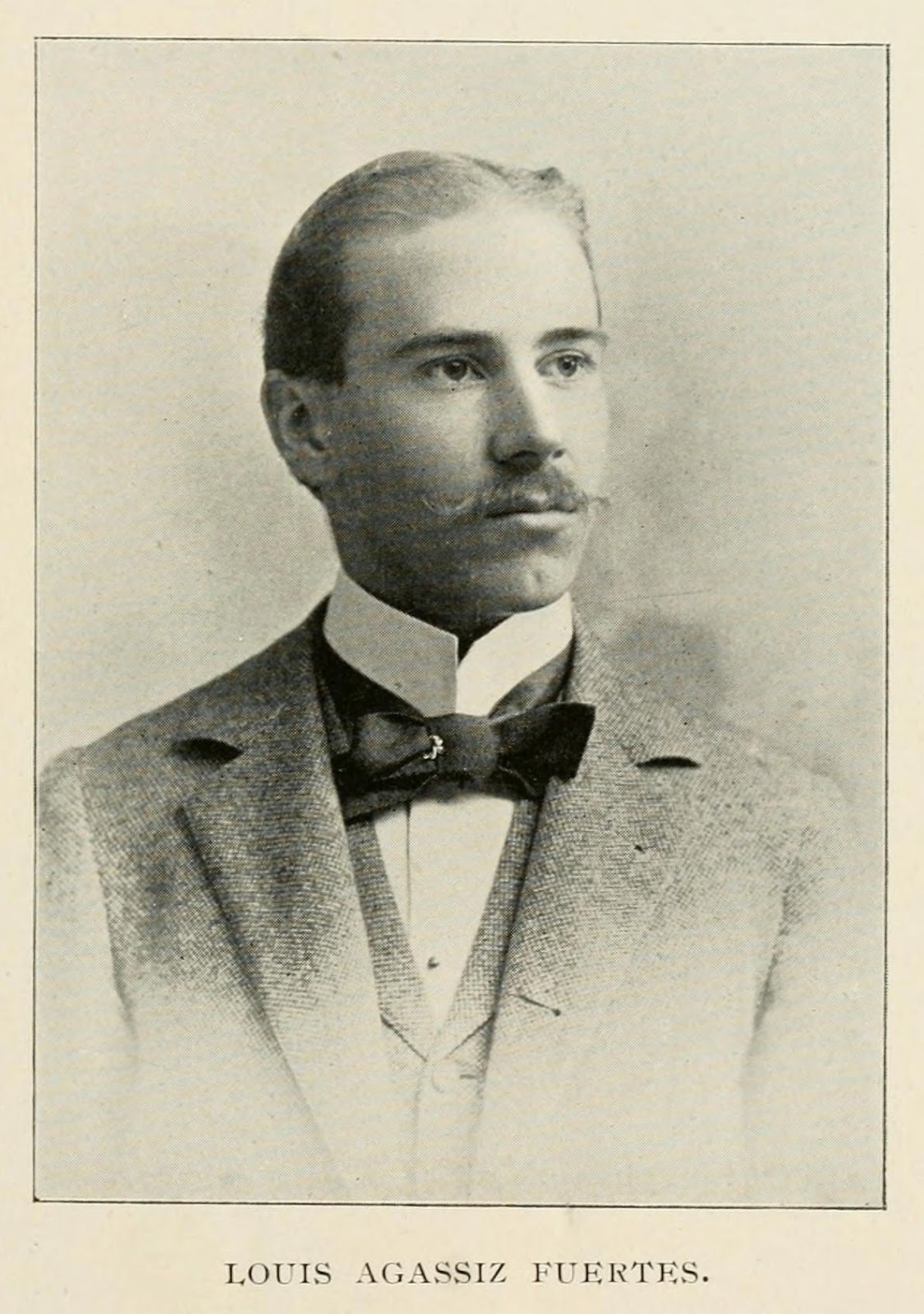
The artwork of Puerto Rican-American Louis Agassiz Fuertes has been featured a few times before on the BHL blog. His paintings are beautiful and eye-catching, and always a treat to visit. Through titles available in BHL, we can even see the evolution of Fuertes’s career— from his earliest professional work to his last.

The Ithaca-born ornithologist and artist often drew as a young child, sketching domestic animals and wild birds alike. Earliest recording of his painting birds was at the age of 14 when he was determined to capture the unusual beak of a Red Crossbill. At a young age, his work started to garner him some notoriety with professors at Cornell and the local community, even resulting in an exhibit hosted by the local Christian Association. By 17 he’d even become an Associate Member of the American Ornithologists Union.

However, when he entered Cornell University, Fuertes’s career was still in question. At the time there weren’t any courses in ornithology at Cornell, and his father (despite urgings from his peers) at first did not see how his son’s artistic leanings could provide a suitable life. As a result, Fuertes took courses in architecture.

It was a chance meeting that changed everything. On a trip to Washington, D.C. with the Cornell University Glee Club, Fuertes met with a friend’s uncle. This uncle just happened to be ornithologist Elliot Coues, a founding member of the American Ornithologists Union.

View Full Size Image
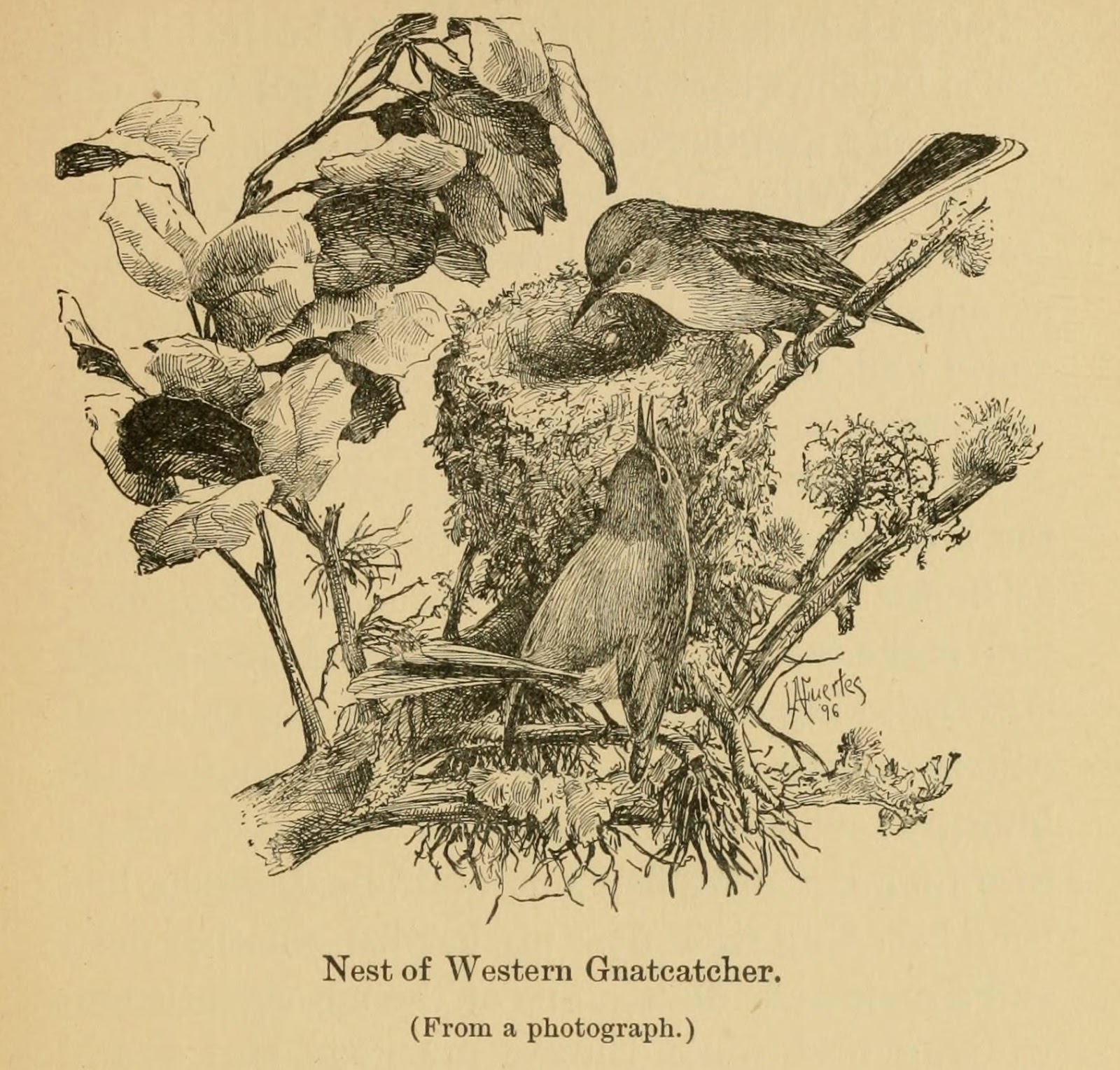
Nest of Western Gnatcatcher. A-Birding on a Bronco. (1896) http://biodiversitylibrary.org/page/12789735

Coues recognized Fuertes’s potential, and provided him with advice and material support to encourage his scientific and artistic pursuits. It was clear Fuertes was to become a professional painter of birds, and after college he studied under naturalist and artist Abbott H. Thayer. The two would become quite close, even so far as considering one another family.

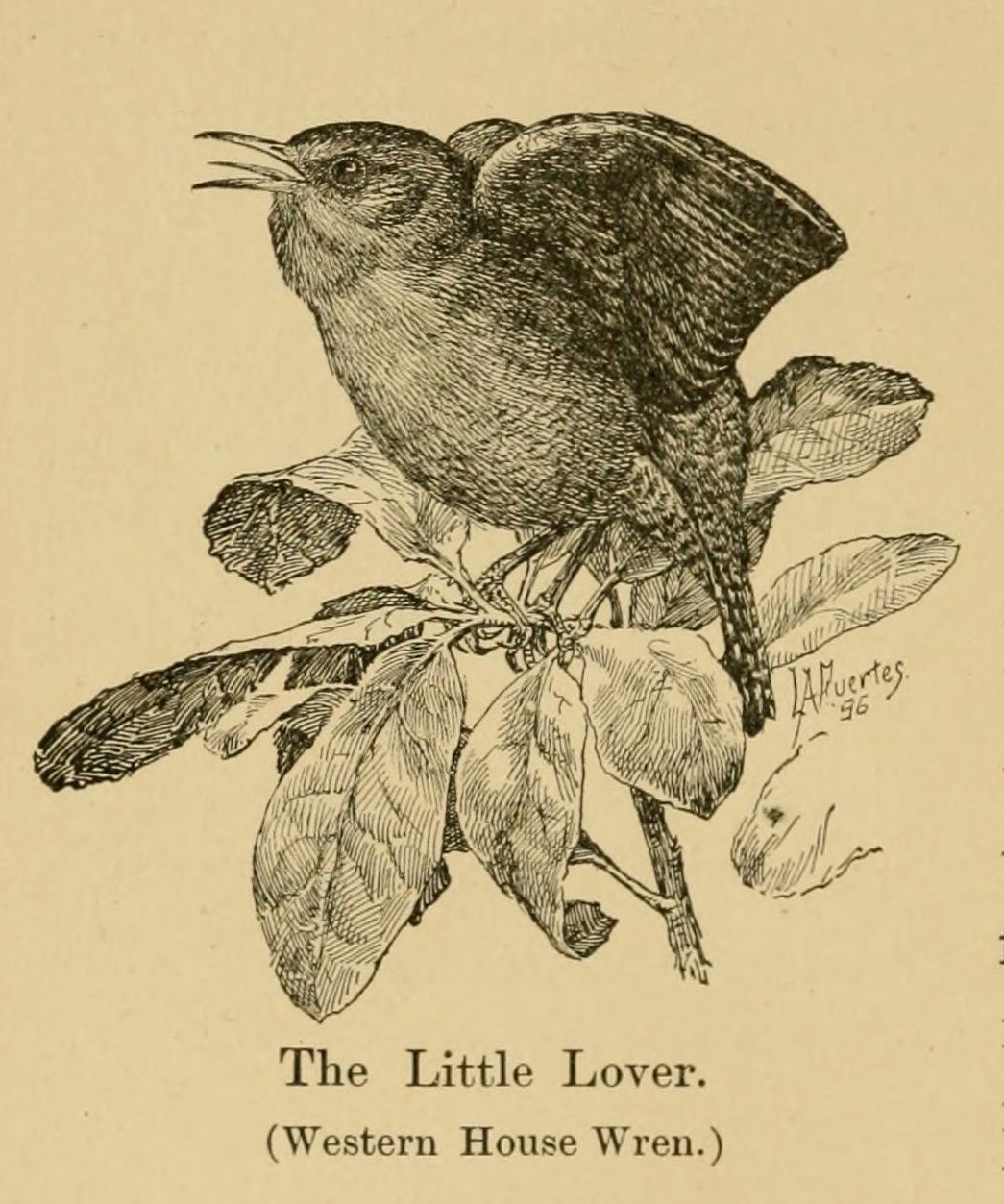
Some of Fuertes’s earliest artwork can be found in publications for Cornell University. However his first professional illustrations were printed in A-birding on a Bronco (1896) by Florence Merriam Bailey, published just one year before Fuertes graduated from Cornell. The pen-and-ink drawings mark the start of a career that would eventually have Fuertes in high demand. Although considered his early works, it is clear Fuertes’s youthful sketching had paid off, resulting in a well-developed style demonstrated in detailed images of birds, their nests, and the surrounding flora.

View Full Size Image
The Little Lover. A-Birding on a Bronco. (1896) http://biodiversitylibrary.org/page/12789693

It’s no surprise that Coues would write to The Osprey to note: “[My] examination of a great many of his designs, both in black-and-white and in natural colors, makes me think Mr. Fuertes the most promising young artist of birds now living, and one whose work already places him in the very first rank.”

It’s an interesting look at the early period of Fuertes’s thirty-year career, during which he would become, not just a prolific artist, but a well-liked and admired colleague and professor. His contemporaries would note his kind, light-hearted nature, and his lectures at Cornell would garner a full house at attention. In the tradition of 19th-century professors who considered themselves poets, Albert W. Smith would recite a memorial poem about Fuertes wherein he says, “under touches of his magic brush,/The canvass [sic] came alive.” Smith would go on to say:

All children knew at once he was their friend;
All men and women felt his lasting charm.
He loved all lovely things that love men’s hearts;
And when he found new beauty, lo, he turned
To share it with some friend.

His kind nature would extend to how he treated his specimens, one account noting how he would stroke and coo at a recently shot bird. This love of birds and sympathetic nature are often repeated in articles and obituaries written about him.

In the end Louis shared the natural beauty of the world not just with those around him, but with the general public who had a growing interest in the natural world. His final contributions were the paintings for Album of Abyssinian Birds and Mammals (1930), the originals of which managed to survive unscathed in the car accident which killed Fuertes in 1927. Many publications which feature Fuertes’s artwork remain available to the public, dozens of which are offered through the BHL.

View Full Size Image

This blog post is a preview of two upcoming Biodiversity Library Exhibitions on women naturalists, and Latino natural history. The exhibitions are sponsored by the Smithsonian Women’s Committee, and will highlight several women and Latino naturalists represented in the BHL collection.

October 2, 2014by mkahn
Page 1 of 212»

Help Support BHL

BHL's existence depends on the financial support of its patrons. Help us keep this free resource alive!

search

About BHL

The Biodiversity Heritage Library (BHL) is the world’s largest open access digital library for biodiversity literature and archives. BHL operates as a worldwide consortium of natural history, botanical, research, and national libraries working together to digitize the natural history literature held in their collections and make it freely available for open access as part of a global “biodiversity community.”

Join Our Mailing List

Sign up to receive the latest news, content highlights, and promotions.

Subscribe Now

Subscribe to Blog via Email

Enter your email address to subscribe to this blog and receive notifications of new posts by email.

Join 319 other subscribers

Subscribe to Blog Via RSS

Subscribe to the blog RSS feed to stay up-to-date on all the latest BHL posts.

Access RSS Feed

Inspiring Discovery through Free Access to Biodiversity Knowledge.

The Biodiversity Heritage Library makes it easier than ever for you to access the information you need to study and explore life on Earth…for free, anytime, anywhere.


64+ Million Pages of
Biodiversity Literature Online.

EXPLORE

Tools and Services
to Transform Research.

EXPLORE

300,000+
Illustrations on Flickr.

EXPLORE

ABOUT | HARMFUL CONTENT | PRIVACY | SITE MAP | TERMS OF USE