Biodiversity Heritage Library - Program news and collection highlights from BHL
  • Home
  • News
  • Featured Books
    • All Featured Books
    • Book of the Month Series
    • BHL at 20
  • User Stories
  • Campaigns
    • Fossil Stories
    • Garden Stories
    • Monsters Are Real
    • Page Frights
    • Her Natural History
    • Earth Optimism 2020
  • Tech Blog
  • Visit BHL
Home
News
Featured Books
    All Featured Books
    Book of the Month Series
    BHL at 20
User Stories
Campaigns
    Fossil Stories
    Garden Stories
    Monsters Are Real
    Page Frights
    Her Natural History
    Earth Optimism 2020
Tech Blog
Visit BHL
  • Home
  • News
  • Featured Books
    • All Featured Books
    • Book of the Month Series
    • BHL at 20
  • User Stories
  • Campaigns
    • Fossil Stories
    • Garden Stories
    • Monsters Are Real
    • Page Frights
    • Her Natural History
    • Earth Optimism 2020
  • Tech Blog
  • Visit BHL
Biodiversity Heritage Library - Program news and collection highlights from BHL
Blog Reel, Featured Books

An Illustrated Natural History of German Frogs: Rösel’s Historia Naturalis Ranarum Nostratium

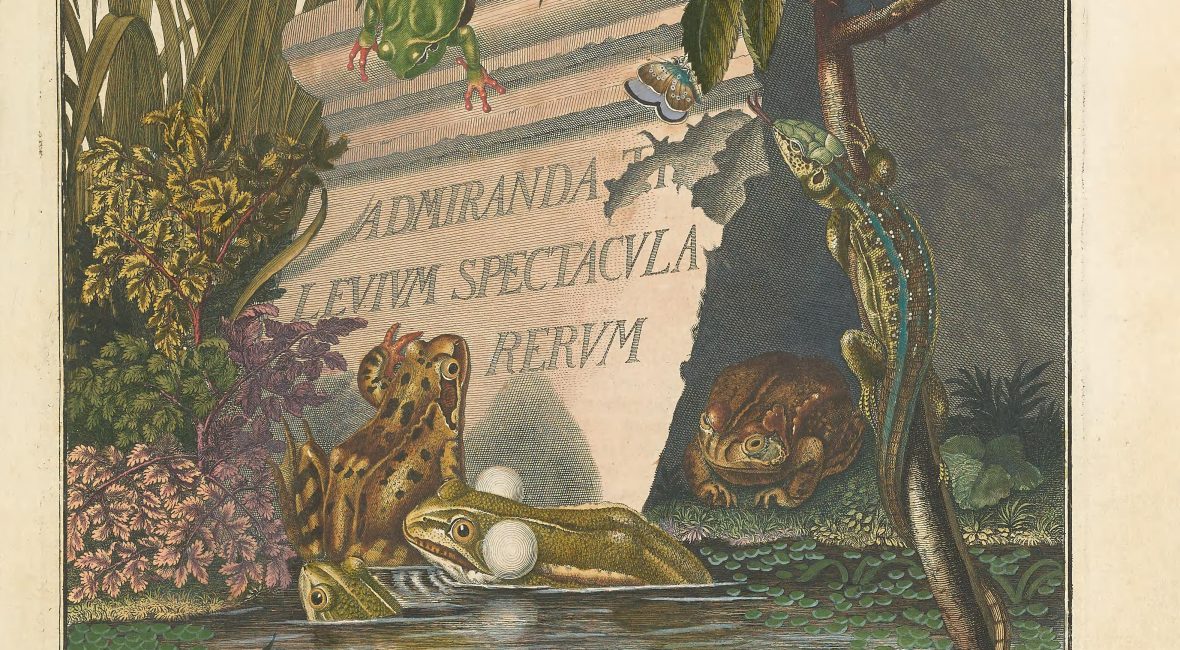
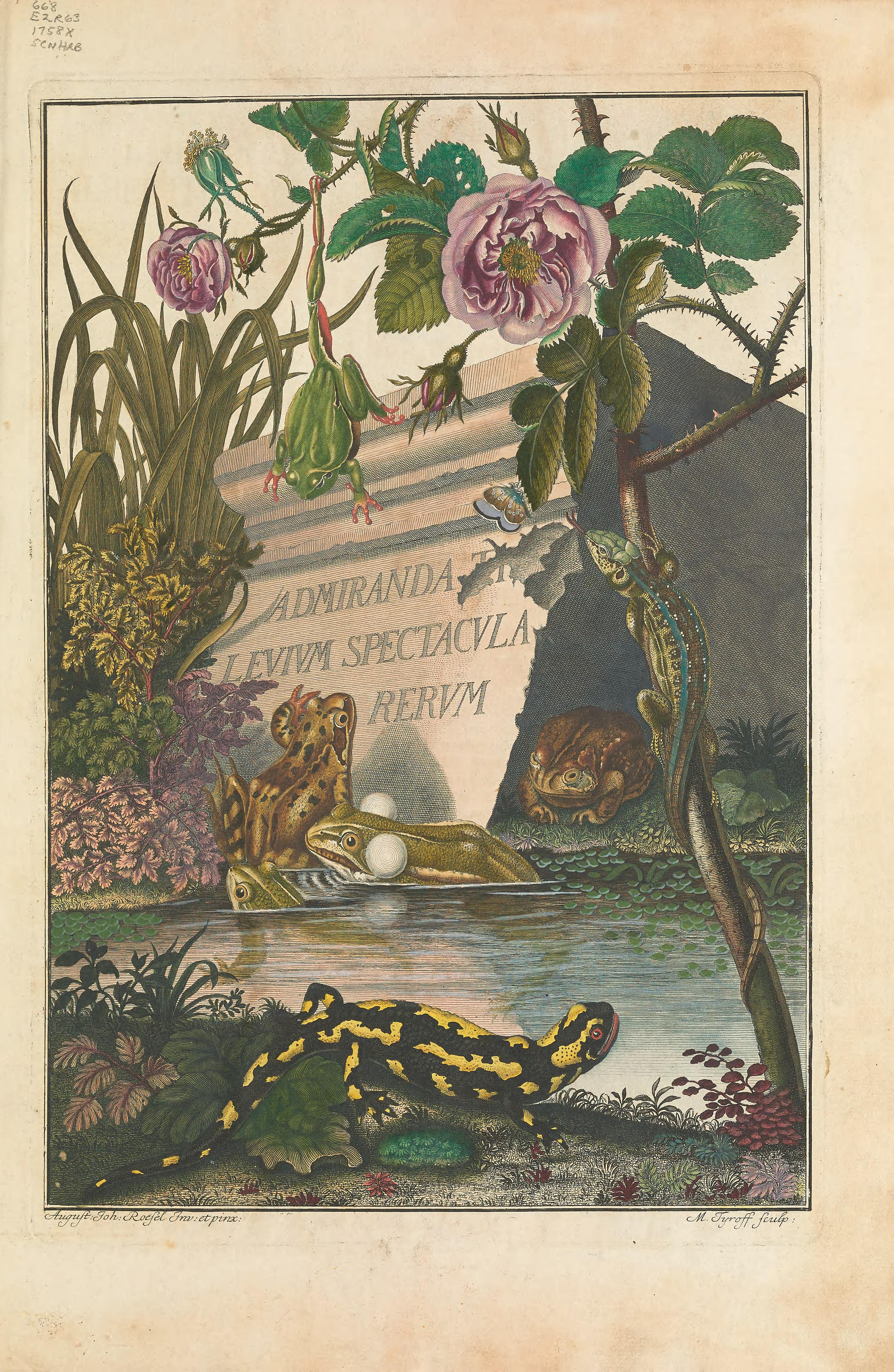
Historia naturalis ranarum nostratium frontispiece

Rösel von Rosenhof, August Johann. Historia naturalis ranarum nostratium. 1758. Contributed in BHL from Smithsonian Libraries.

Historia naturalis ranarum nostratium has been described as one of the most beautiful works devoted to frogs and amphibians.

The work of German artist and naturalist August Johann Rösel von Rosenhof, Historia naturalis ranarum nostratium describes the natural history of all then-known frogs and toads indigenous to the Nuremberg region in Germany. The title is noteworthy first for the extensive, accurate information in the text, printed in two columns in both German and Latin. As Darrel Frost, a curator in the Herpetology Department in the Division of Vertebrate Zoology at the American Museum of Natural History, wrote in his essay on the book for Natural Histories, “Rösel’s volume on German frogs represents in a very real sense the beginning of accurate life-history observation in amphibians” (Frost 2012, 38).
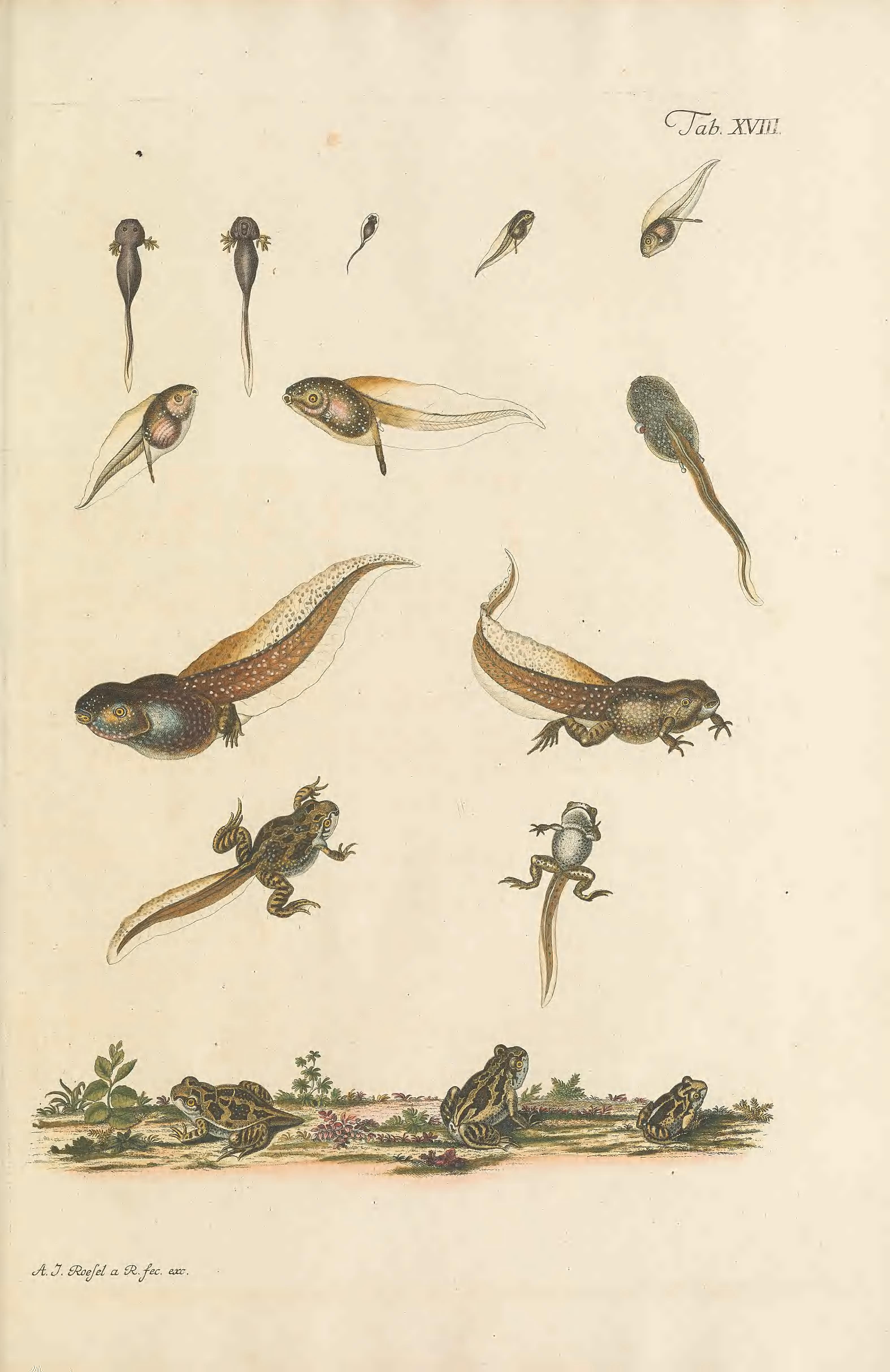
frog illustration

Rösel von Rosenhof, August Johann. Historia naturalis ranarum nostratium. 1758. Contributed in BHL from Smithsonian Libraries.

The work is equally (if not more) renowned for its illustrations. The twenty-four folio, hand-colored copper engravings portray habitats, anatomy, reproductive behavior, and larval development stages in intricate detail. The quality of the artwork is not surprising given Rösel’s artistic background.

Johann Rösel von Rosenhof was born in 1705 to a noble Austrian family near Arnstadt in the German principality of Arnstadt-Schwarzburg. Orphaned at a young age, Rösel was sent for training to his uncle, Wilhelm Rösel, an animal and landscape painter, after he showed artistic talent. He eventually became a painter of portraits and miniatures to the Danish Court in Copenhagen before returning to Nuremberg and earning his living as a painter.
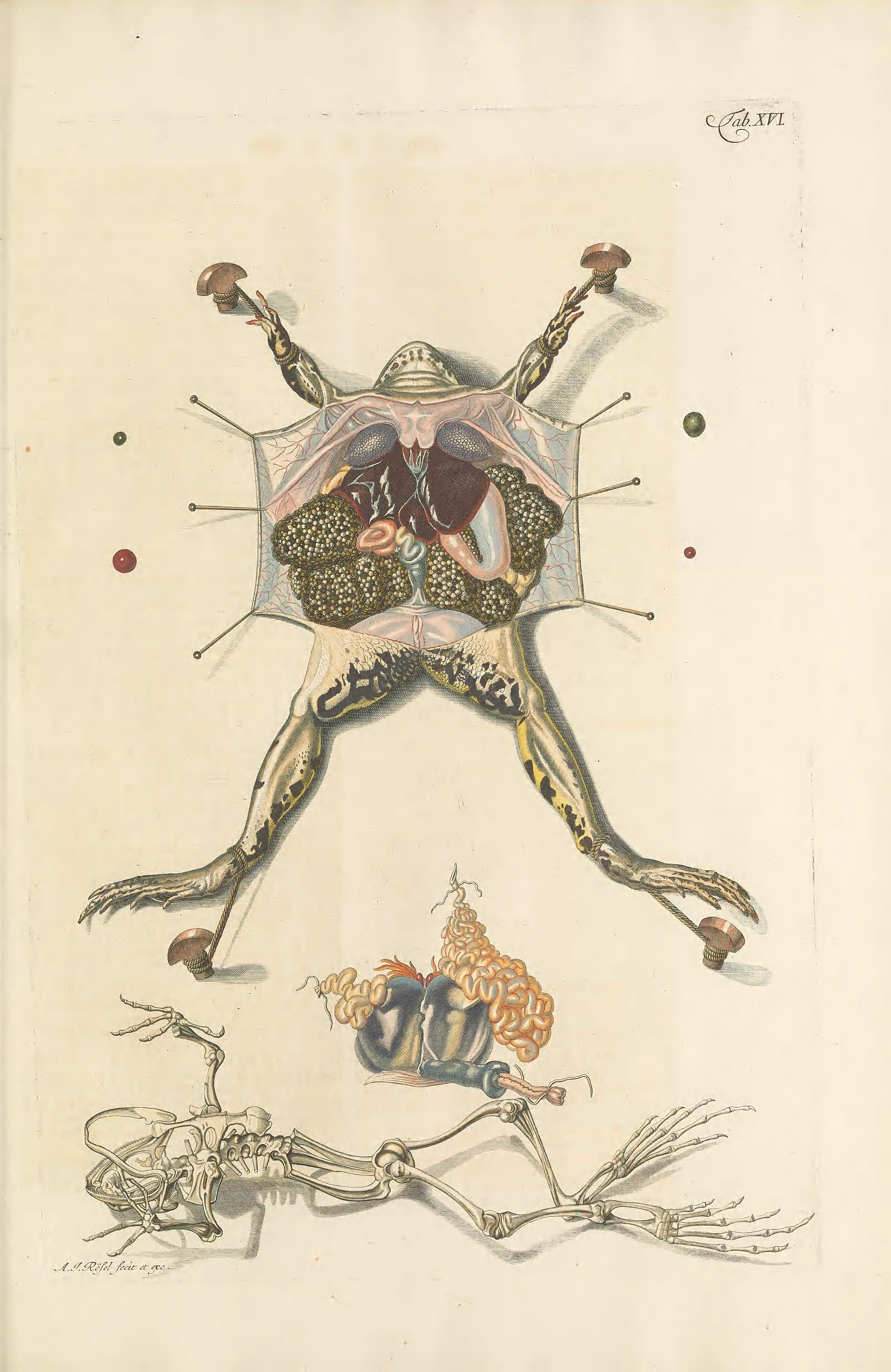
frog illustration

Rösel von Rosenhof, August Johann. Historia naturalis ranarum nostratium. 1758. Contributed in BHL from Smithsonian Libraries.

Rösel’s passion for natural history was ignited by the work of Maria Sibylla Merian, a German-born naturalist and illustrator who is recognized as one of the most significant contributors to the field of entomology. Her Metamorphosis Insectorum Surinamensium (1705) depicted the full life cycles of many Suriname insects. Merian was able to portray this life history information because she drew her subjects from life in their natural environments. Most naturalists of the day illustrated species from dead, preserved specimens, which contributed to a lack of knowledge about the true life cycle and origin of insects. Maria also portrayed the host plant for the species she studied and even illustrated the damage the insects left on the plants.
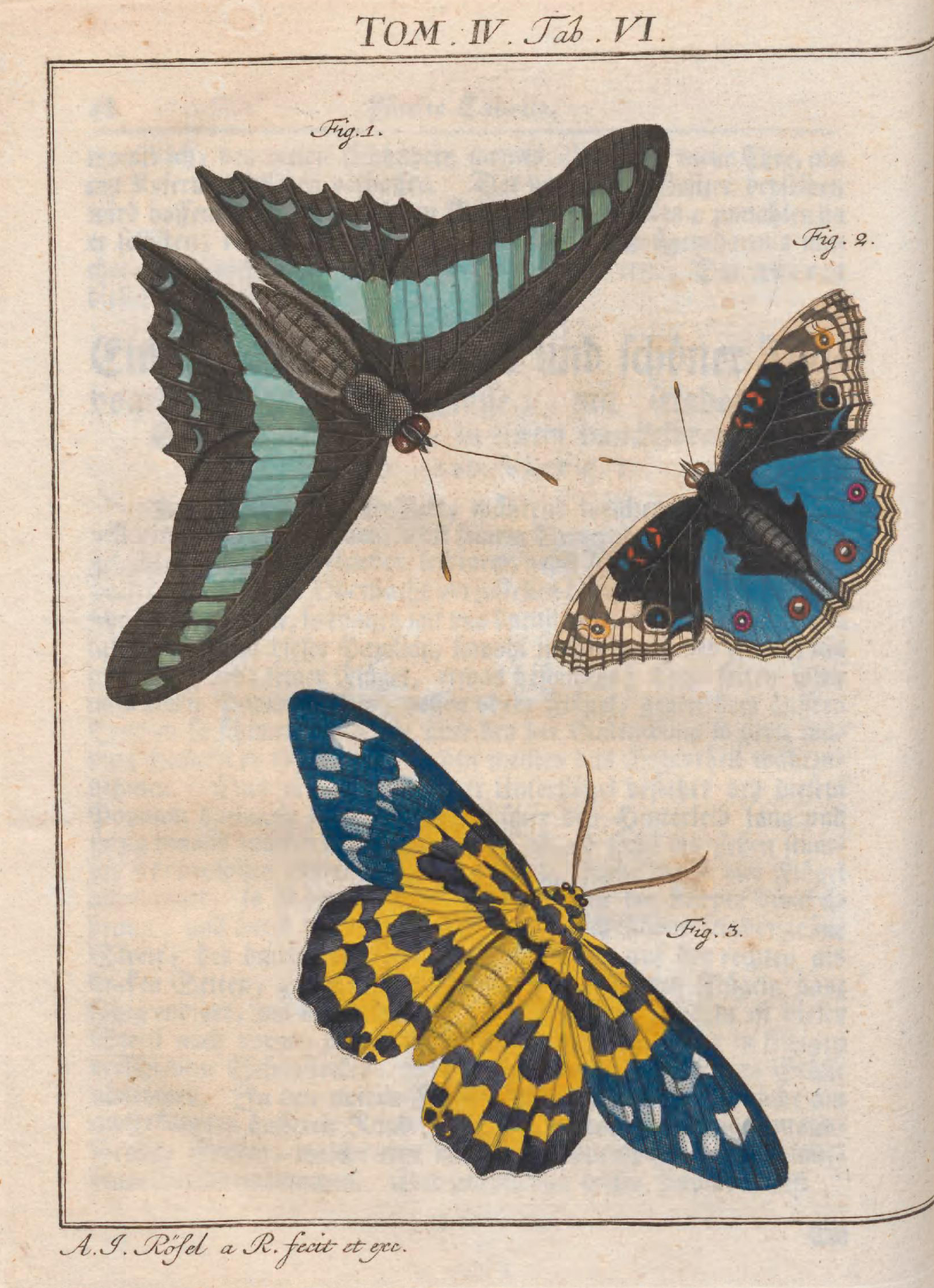
illustration of butterflies

Rösel von Rosenhof, August Johann. Der monathlich-herausgegebenen Insecten-Belustigung. v. 4 (1761). Contributed in BHL from the Naturalis Biodiversity Center.

Merian’s work inspired Rösel to study and produce a similar work on German insects. His interest in the natural world also grew to include amphibians and reptiles, and he used his leisure time to collect insect and amphibian eggs and larvae to observe their development. The first part of his first natural history publication, Der monatlich-herausgegebenen Insecten-Belustigung, was published in 1740. Four additional parts appeared over the years, with the final one being published posthumously in 1761. Because of this publication, a copy of which has been contributed in BHL from the Naturalis Biodiversity Center, Rösel is known as one of the fathers of German entomology.
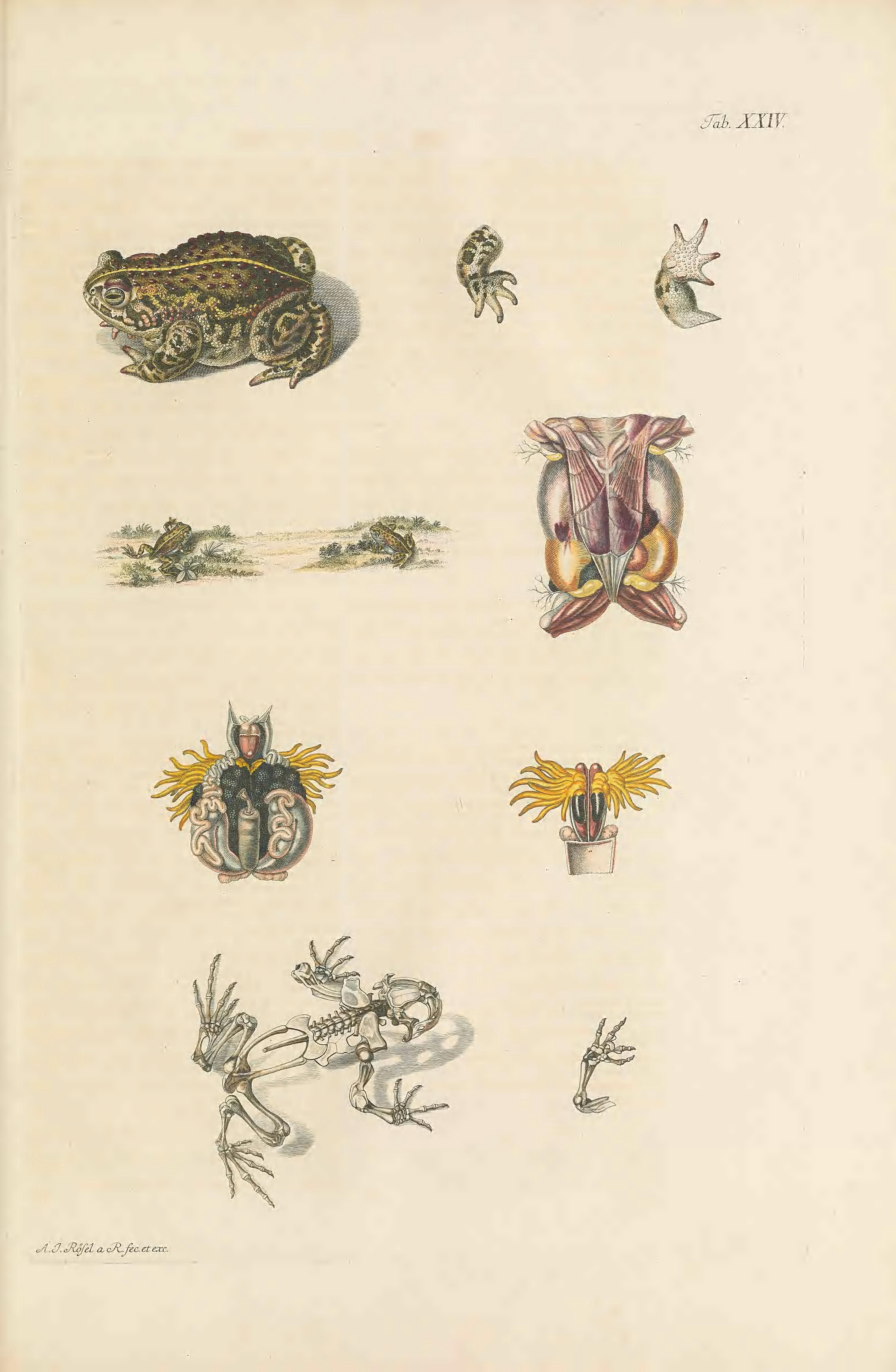
frog illustration

This illustration became the type of Bufo calamita (now Epidalea calamita). Rösel von Rosenhof, August Johann. Historia naturalis ranarum nostratium. 1758. Contributed in BHL from Smithsonian Libraries.

In 1753, Rösel published the first part of his Historia naturalis ranarum nostratium. Completed in 1758, the work is a scientific and artistic marvel, and several of the illustrated frogs, such as Bufo calamita (now Epidalea calamita) and Bufo fuscus (now Pelobates fuscus), became the types for their species. Thanks to the Smithsonian Libraries, everyone in the world can appreciate Rösel’s scientific and artistic contributions to the natural history of German frogs. The Libraries’ copy of Historia naturalis ranarum nostratium, housed in its Joseph F. Cullman 3rd Library of rare books, has recently been digitized for BHL.

As Frost outlines in his essay, Rösel intended to produce a similar work for lizards and salamanders, but sadly was not able to complete it, as he died unexpectedly on March 27, 1759.

Through his natural history publications, Rösel’s scientific legacy lives on and is accessible to everyone through the Biodiversity Heritage Library thanks to the Naturalis Biodiversity Center and Smithsonian Libraries.
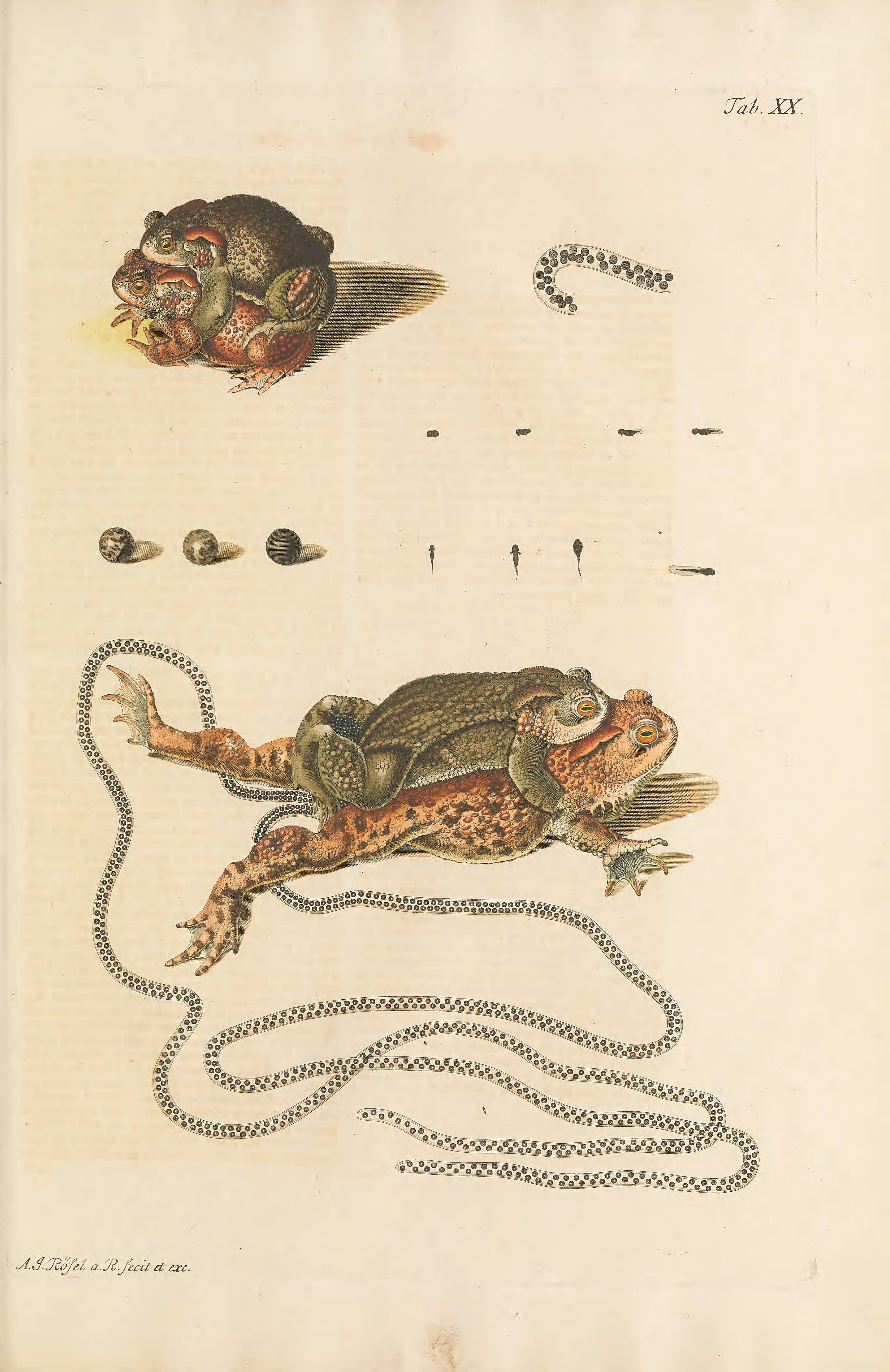
frog illustration

Rösel von Rosenhof, August Johann. Historia naturalis ranarum nostratium. 1758. Contributed in BHL from Smithsonian Libraries.

Reference

The information in this post was derived from:

Frost, Darrel. 2012. “Rösel von Rosenhof and His Natural History of Frogs.” In T. Baione (Ed.), Natural Histories: Extraordinary Rare Book Selections from the American Museum of Natural History Library (pp. 37-38). New York: Sterling Publishing.

August 2, 2018by michelle.underhill
Blog Reel, Featured Books

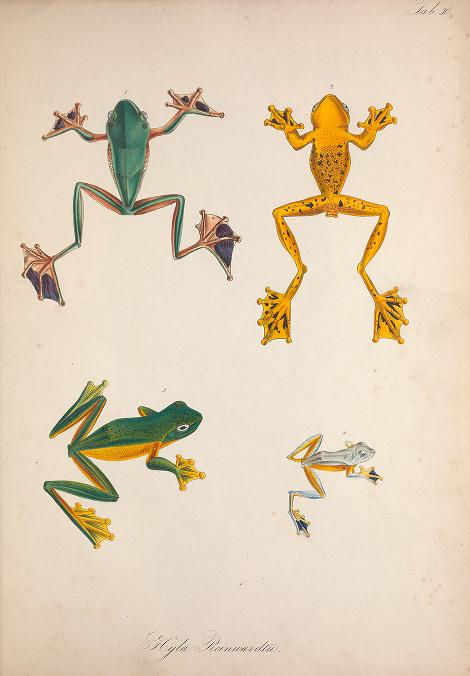
The Art of Herpetology: Schlegel’s Reptiles and Amphibians

Schlegel, H. (Hermann). Abbildungen neuer oder unvollständig bekannter Amphibien. 1837-1844. Atlas digitized by Smithsonian Libraries. http://s.si.edu/2AYBgPF.

German ornithologist and herpetologist Hermann Schlegel hoped that the publication of good illustrations would stimulate public interest in reptiles and amphibians. Thus, he produced Abbildungen neuer oder unvollständig bekannter Amphibian (1837-44).

Schlegel, H. (Hermann). Abbildungen neuer oder unvollständig bekannter Amphibien. 1837-1844. Atlas digitized by Smithsonian Libraries. http://s.si.edu/2jLkYGC.

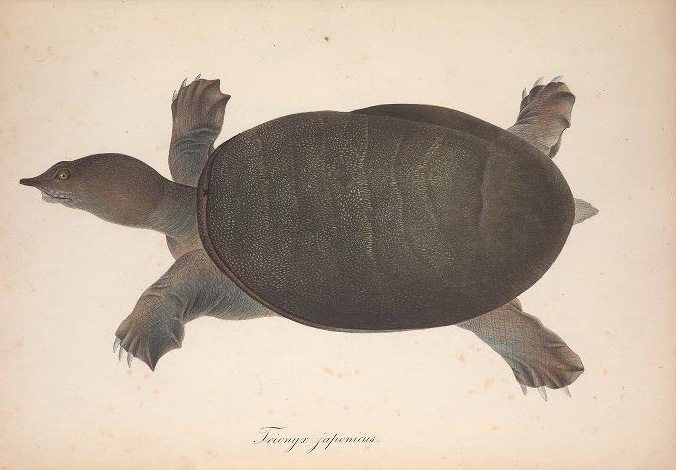
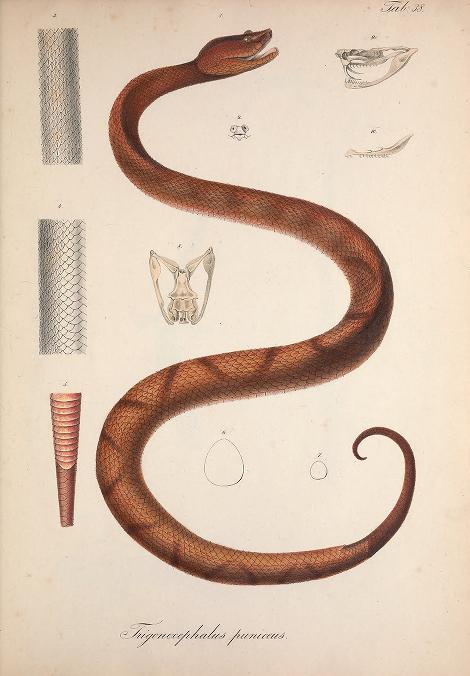
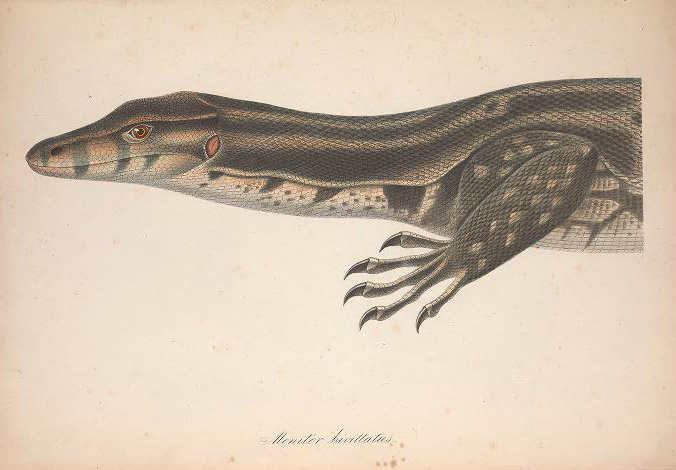
Schlegel, who eventually became director of the National Museum of Natural History in Leiden (Rijksmuseum van Natuurlijke Historie), is best-known for his research on birds, but his initial interest was in herpetology. Inspired by other beautifully-illustrated natural history books that had aroused public interest in their subjects, Schlegel compiled this work comprised of an atlas of 50 color plates and a short volume of text. Although the title mentions only amphibians, it describes and illustrates many reptile species as well.

It is unclear why the book’s title does not also mention reptiles. It has been suggested that the work’s original scope may have intended to cover only amphibians, and that the title was not adjusted after the scope broadened. This, however, is merely conjecture.

Schlegel, H. (Hermann). Abbildungen neuer oder unvollständig bekannter Amphibien. 1837-1844. Atlas digitized by Smithsonian Libraries. http://s.si.edu/2jcxafn.

Unfortunately, the names of the artists who produced the drawings upon which these plates are based are unknown. Schlegel mentioned only that he received the illustrations from painters working in India.

Schlegel, H. (Hermann). Abbildungen neuer oder unvollständig bekannter Amphibien. 1837-1844. Atlas digitized by Smithsonian Libraries. http://s.si.edu/2zaEmj2.

The text volume of this work was digitized by Ernst Mayr Library of the Museum of Comparative Zoology, Harvard University. The atlas was digitized by Smithsonian Libraries.

Schlegel, H. (Hermann). Abbildungen neuer oder unvollständig bekannter Amphibien. 1837-1844. Atlas digitized by Smithsonian Libraries. http://s.si.edu/2hQxOmb.


Schlegel, H. (Hermann). Abbildungen neuer oder unvollständig bekannter Amphibien. 1837-1844. Atlas digitized by Smithsonian Libraries. http://s.si.edu/2jcoLbU.


Reference:
Stiassny, Melanie L.J. (2014). Schlegel’s Guide to Amphibians. Natural Histories Opulent Oceans: Extraordinary Rare Book Selections from the American Museum of Natural History Library. New York: Sterling Publishing.
November 30, 2017by michelle.underhill
Blog Reel, User Stories

Resolving a 180 Year Old Taxonomic Mystery

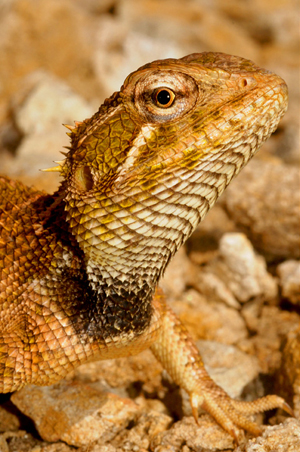
Hardwicke’s bloodsucker is an agamid lizard found in western and central India. It is a small, stocky, and pot-bellied lizard with a short tail that is currently recognized under the scientific name Brachysaura minor. This species, however, has a rather convoluted taxonomic history.

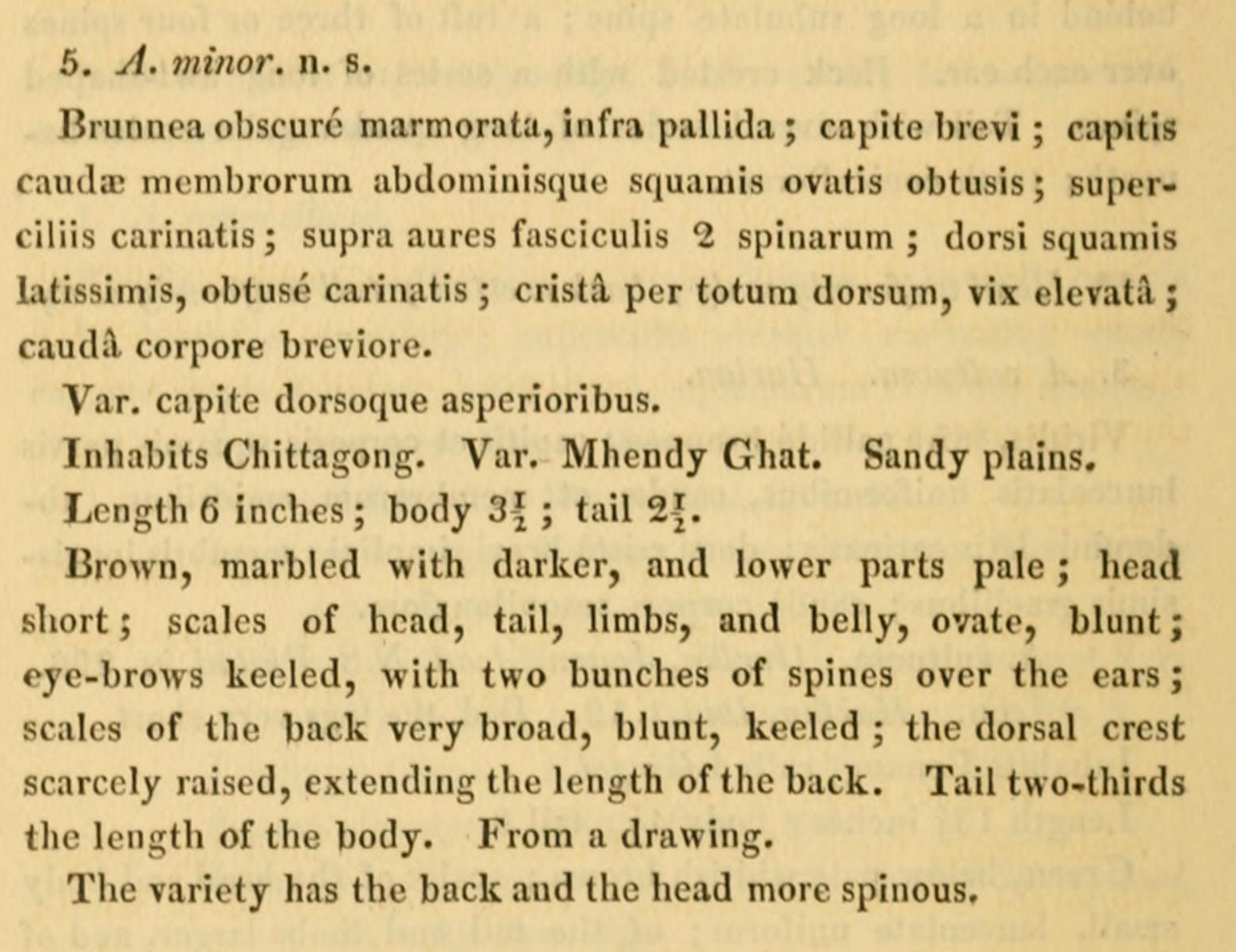
The first scientific description of the species comes from Hardwicke and Gray in 1827 and is based on a color sketch by Hardwicke which now resides in the Archives of the Natural History Museum, London.  They named the species Agama minor. Later, in 1856, Blyth provided a new name and description for what was likely the same species, calling it Brachysaura ornata. He did not refer to Hardwicke and Gray’s previous description. Over the years, the description, name and placement of the species was questioned by many, and it has subsequently been placed in the additional genera Charasia and Laudakia as well.

In 1999, Manthey and Schuster placed the species back within the genus Brachysaura, and it has since be most commonly referred to as Brachysaura minor – the only species within the Brachysaura genus.

View Full Size Image
Close up of Calotes minor, a species with a confusing taxonomic history. Photo credit: Varad Giri.

A recent study has called this placement into question. Using molecular and morphological data, V. Deepak, Raju Vyas, Varad B. Giri, and K. Praveen Karanth analyzed the identity and systematic position of Brachysaura minor. Their results, published in the paper “A Taxonomic Mystery for More than 180 Years: The Identity and Systematic Position of Brachysaura minor (Hardwicke and Gray, 1827)” (Vertebrate Zoology. 65(3): 371-381), suggest that Brachysaura is actually nested within the genus Calotes, and that the species should henceforth be referred as Calotes minor. They also note that one of the previous primary impediments to placing this species within the Calotes genus is the fact that, compared to other members of the genus, this species has a very short tail. However, the researchers note that, unlike other members of this genus, this species is ground-dwelling, and in other ground-dwelling agamids, reduced tail length is a common characteristic. Thus, the authors propose that the length of the tail is an adaptation related to the species’ habitat and not a justification for placement in a new genus. Not only does the paper propose a new placement for Brachysaura minor, but by re-evaluating other specimens that were previously believed to be representatives of this species, the authors also suggest that members of Agaminae are limited to a distribution in arid regions of Western India.

View Full Size Image
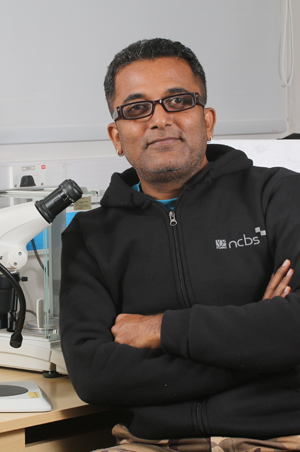
Dr. Varad Giri. Photo credit: Zeeshan Mirza.

According to co-author Dr. Varad B. Giri, a Post Doctoral Fellow at the National Centre for Biological Sciences in Bangalore, India, this paper would not have been possible without the Biodiversity Heritage Library.

Varad has been studying the taxonomy of Indian reptiles and amphibians since 2000. While exploring records in the Reptile Database, he discovered links to literature in BHL and was introduced to our open access digital library. The discovery had profound effects on his work.

“For a taxonomist like me, BHL is an amazing resource. One of the vital things of taxonomy is to understand the morphological characters of known species. With this knowledge, one can do a proper diagnosis of the species known or hitherto unknown to science. One way to do this is by referring to the type specimens, but most of the types of Indian amphibians and reptiles are in museums abroad and thus are difficult to access. The other way is to refer to the original descriptions, which were again inaccessible as they were published in old journals. BHL has made this latter thing possible by putting all of the historical literature online where one can access it with ease. I strongly feel that if BHL would not have been available, I would not have performed good taxonomic work with such ease due to a lack of historical literature. BHL has a big positive impact on my research.”

When he is working on a paper, Varad uses BHL several times a day. He usually downloads relevant papers using BHL’s custom PDF service, which allows him to select precisely the pages he wishes to save. This feature is one of his favorites on BHL. When appropriate, Varad will also download entire books as PDFs and, having now been exposed to the many illustrations available from BHL through his interaction with BHL staff, he also plans to download relevant images in the future.

While the ability to perform full-text search is a feature that Varad would like to see added to BHL, he notes that BHL’s general search is quite effective and has in fact exposed him to many relevant items that he was previously unaware of.

While BHL’s many value-add features make Varad’s experience with our library all the more positive, the most important thing that BHL provides him with is access to the literature that he needs to conduct his research. Research like the taxonomic placement of Brachysaura minor (or should we say Calotes minor?).

View Full Size Image
The original description of Calotes minor. This paper was downloaded using BHL! The Zoological Journal. v. 3 (1827-1828). http://biodiversitylibrary.org/page/27485744. Digitized by Smithsonian Libraries.

“BHL is doing a wonderful service for researchers like me, who work with limited resources in developing countries like India. For our recent paper dealing with a 180 year old taxonomic mystery, we needed to refer to many historical articles. Without the help of BHL, this would have taken more time or been very difficult. There are many such publications pertaining to Indian amphibians and reptiles where we will need BHL!”

We are certainly thrilled to hear about the lasting and ongoing impact that BHL will have on Varad’s research and his investigation into taxonomic mysteries. For, after all, as Varad told us, “To properly solve the mystery, one has to clearly understand the history.” We couldn’t have said it better ourselves!

Do you use BHL to support your work? Want to be featured on our blog? Write us at [email protected]!

February 11, 2016by michelle.underhill
Blog Reel, Featured Books

The First Comprehensive Description of Reptiles and Amphibians

View Full Size Image
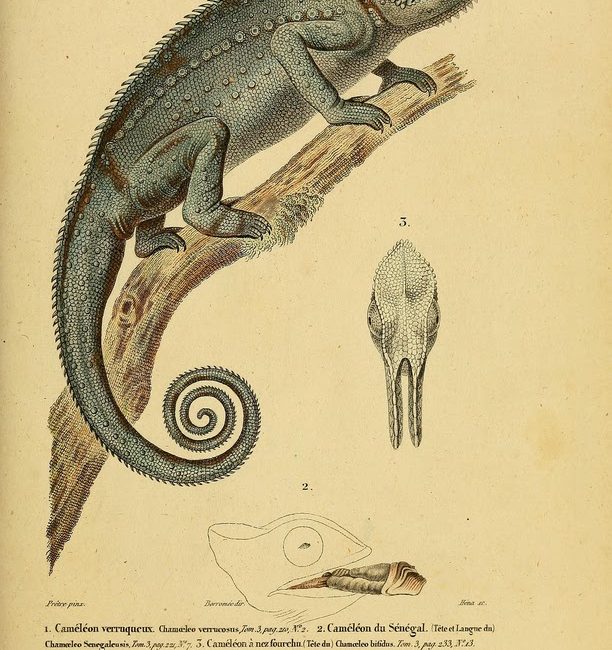
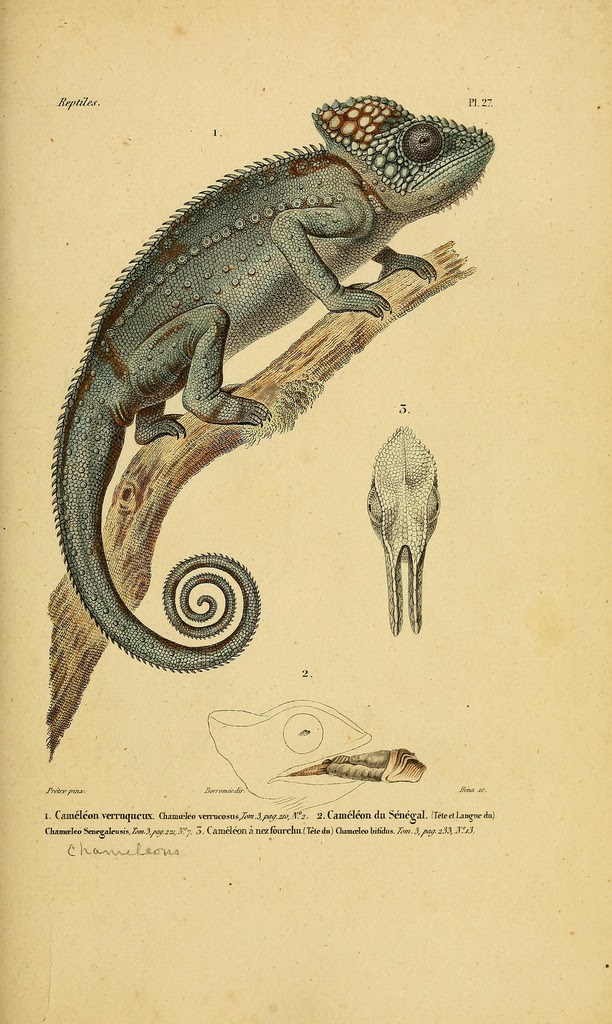
Fig 1: Furcifer verrucosus (Madagascar warty chameleon); Fig 2: Tongue of Chamaeleo senegalensis (Senegal chameleon); Fig 3: dorsal head view of Furcifer bifidus (Two-horned Madagascar chameleon). Duméril, André Marie Constant. Erpétologie générale ou Histoire naturelle complète des reptiles (1834-53). http://biodiversitylibrary.org/page/31895806.

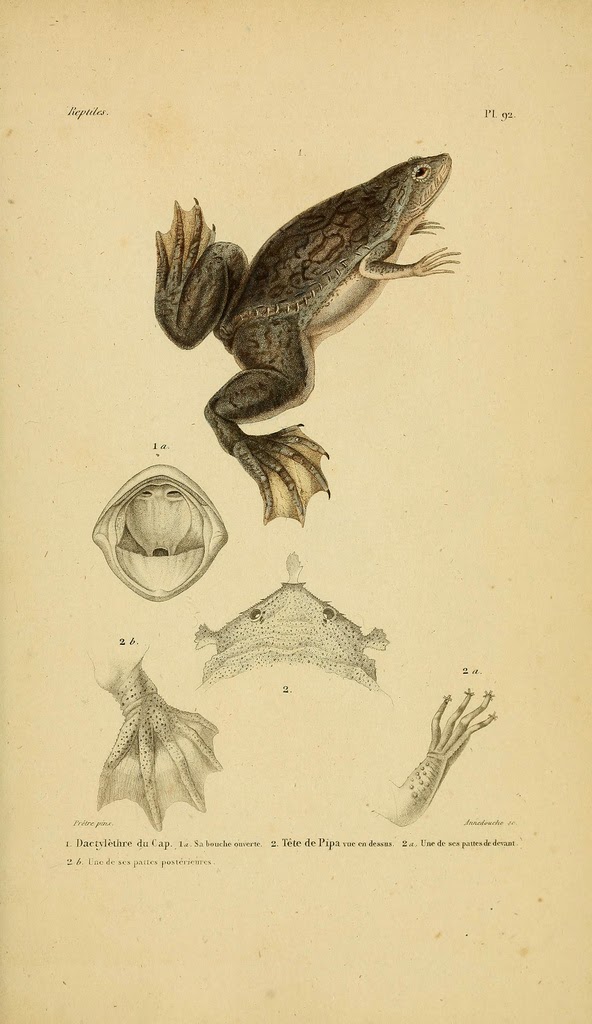
1834 was a landmark year in the field of herpetology – the study of amphibians and reptiles. It was the year that the first volume of André Marie Constant Duméril‘s monumental work Erpétologie générale ou Histoire naturelle complète des reptiles was published. Produced over a twenty year period, between 1834-54, this nine volume set (plus atlas) became the first comprehensive scientific account of the world’s known amphibians and reptiles.

View Full Size Image
Fig 1 and 1a: Xenopus laevis (African-clawed frog); Fig  2: Pipa pipa (Surinam toad). Duméril, André Marie Constant. Erpétologie générale ou Histoire naturelle complète des reptiles (1834-53). http://biodiversitylibrary.org/page/31895960.

Duméril began his career as a doctor and professor of anatomy, but, at the beginning of the nineteenth century, George Cuvier selected him as the head of ichthyology and herpetology at the Muséum national d’histoire naturelle in Paris, thus making Duméril the curator of the largest and most diverse herpetological collection in the world at the time. Duméril set out to develop a revised higher-level taxonomic organization for amphibians and reptiles and, together with his assistant Gabriel Bibron, examined and described much of the museum’s enormous collection between 1832-48.

View Full Size Image
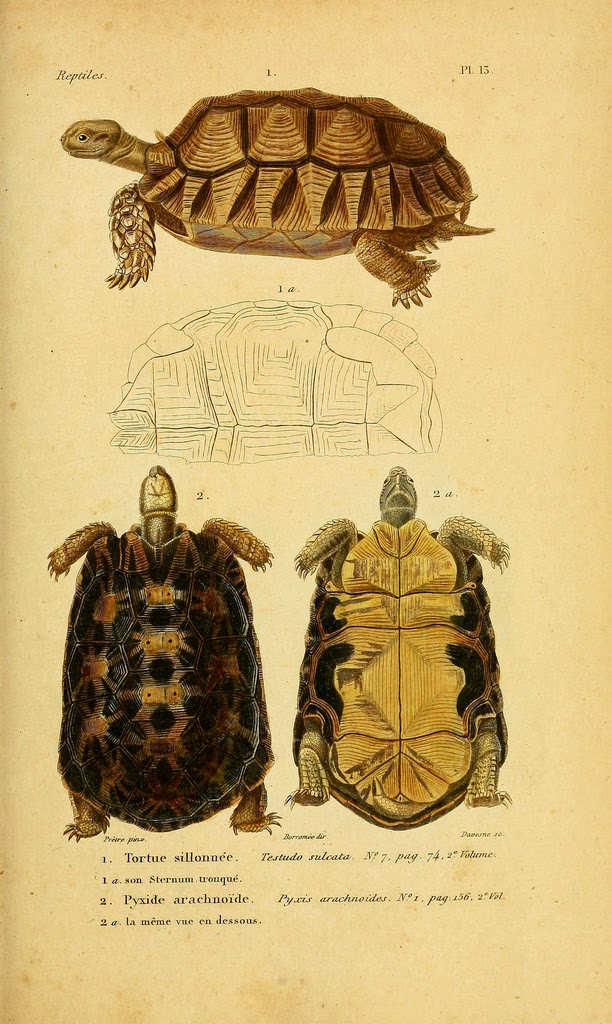
Fig 1: Geochelone sulcata (African spur-thighed tortoise); Fig 2: Pyxis arachnoides (Madagascar spider tortoise).  Duméril, André Marie Constant. Erpétologie générale ou Histoire naturelle complète des reptiles (1834-53). http://biodiversitylibrary.org/page/31895778.

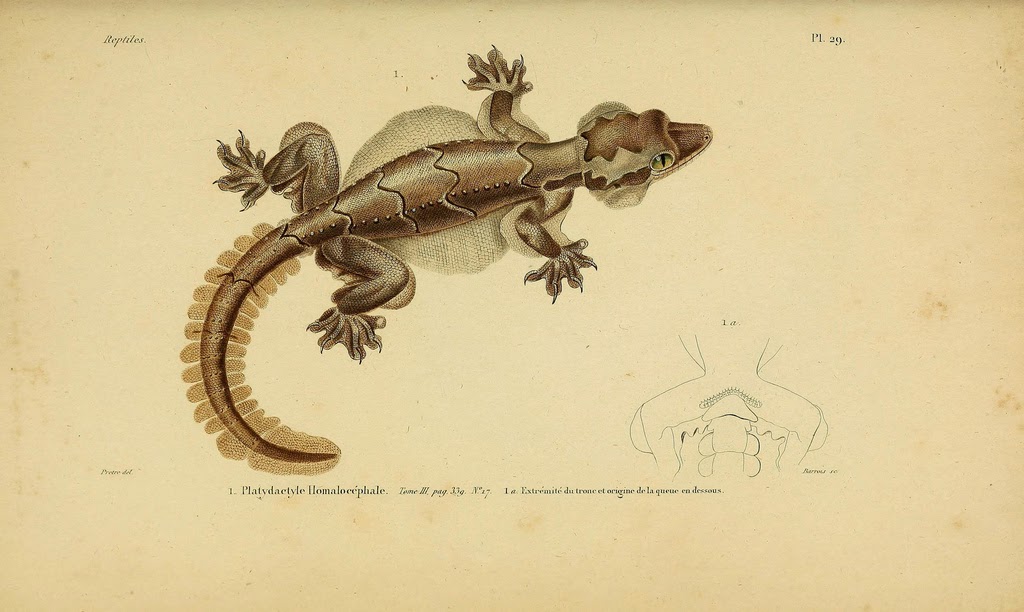
The revised taxonomy and detailed descriptions of the species in the Paris collection were presented within Erpétologie générale, which ultimately related 1,393 species and included 120 plates, many of which were hand-painted.

Bibron, sadly, died of tuberculosis in 1848, before the completion of the series. Duméril’s son, Auguste Henri André Duméril, then assisted his father in the completion of volumes 7, 9, and the atlas.

View Full Size Image
Ptychozoon kuhli (Flying gecko). Duméril, André Marie Constant. Erpétologie générale ou Histoire naturelle complète des reptiles (1834-53).  http://biodiversitylibrary.org/page/31895810.

Erpétologie générale was a ground-breaking work, setting the standard for herpetological reference with copies deposited in major scientific libraries of the nineteenth century. The accurate species descriptions and remarkable plates ensures that this work is still of vital research interest to today’s scientific community, regardless of the fact that the presented taxonomic revision itself is now considered obsolete (Duméril, for instance, considered amphibians as one of four orders within Reptilia, alongside turtles, snakes and lizards, the latter including crocodiles).

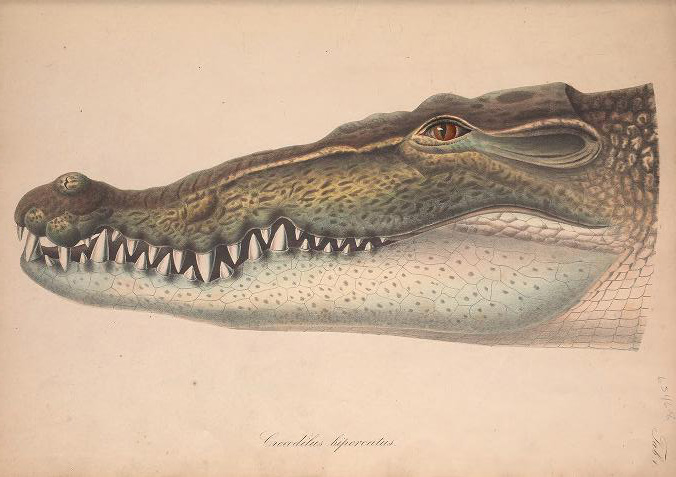
Today, Reptilia and Amphibia are two separate classes, and the living subgroups recognized within Reptilia include Crocodilia (crocodiles, gavials, caimans, and alligators), Sphenodontia (tuatara from New Zealand), Squamata (lizards, snakes, and worm lizards), and Testudines (turtles, terrapins and tortoises). All told, over 10,000 species of reptiles and approximately 7,000 species of amphibians are known today.

View Full Size Image
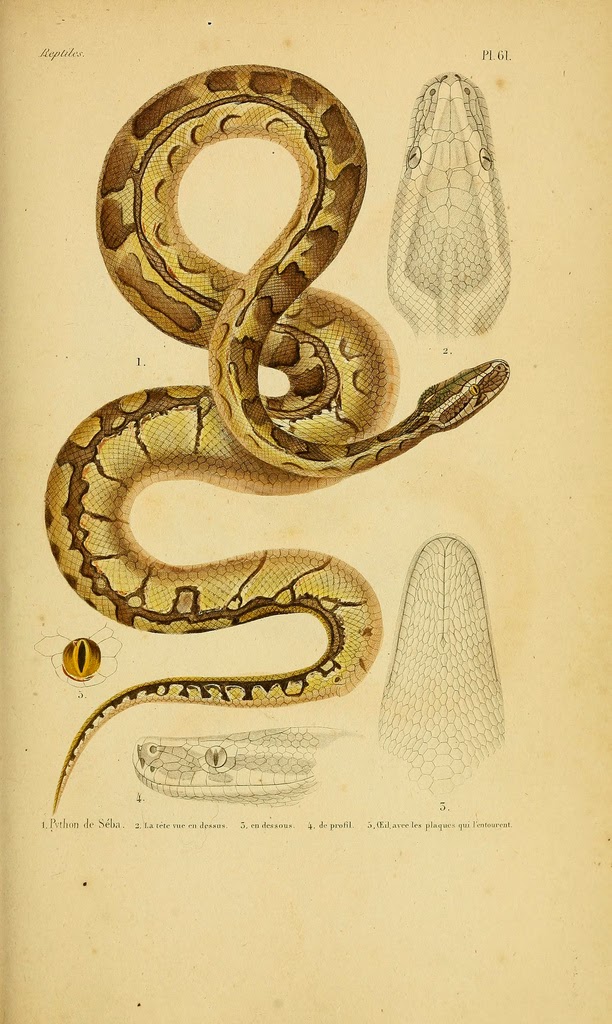
Pytho sebae (African rock python). Duméril, André Marie Constant. Erpétologie générale ou Histoire naturelle complète des reptiles (1834-53). http://biodiversitylibrary.org/page/31895878.

Duméril’s remarkable Erpétologie générale ou Histoire naturelle complète des reptiles is freely available within the Biodiversity Heritage Library, digitized by the Ernst Mayr Library of the Museum of Comparative Zoology at Harvard University and Smithsonian Libraries. Browse the complete work today and enjoy the stunning illustrations in Flickr.

The research for this post was obtained from “The First Comprehensive Description of the Amphibians and Reptiles of the World,” by Christopher J. Raxworthy. This essay can be found within Natural Histories (2012), an excellent resource on a selection of rare books found within the American Museum of Natural History Library, many of which are also freely available within BHL. 

May 7, 2015by ulib-libraryjobs
Blog Reel, User Stories

Using the Salamander Brain to Understand Human Behavior

What can a salamander brain tell us about human behavior?

A lot more than you might think, discovered Lou Morgan, an independent researcher who has been studying the physiological underpinnings of human behavior for 30 years.

View Full Size Image
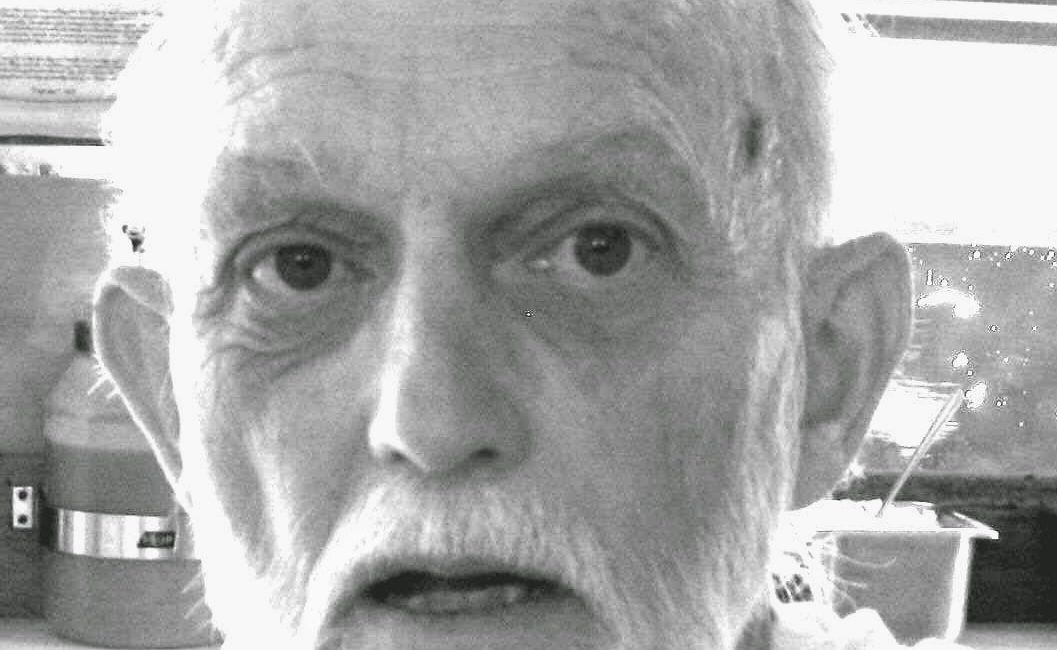
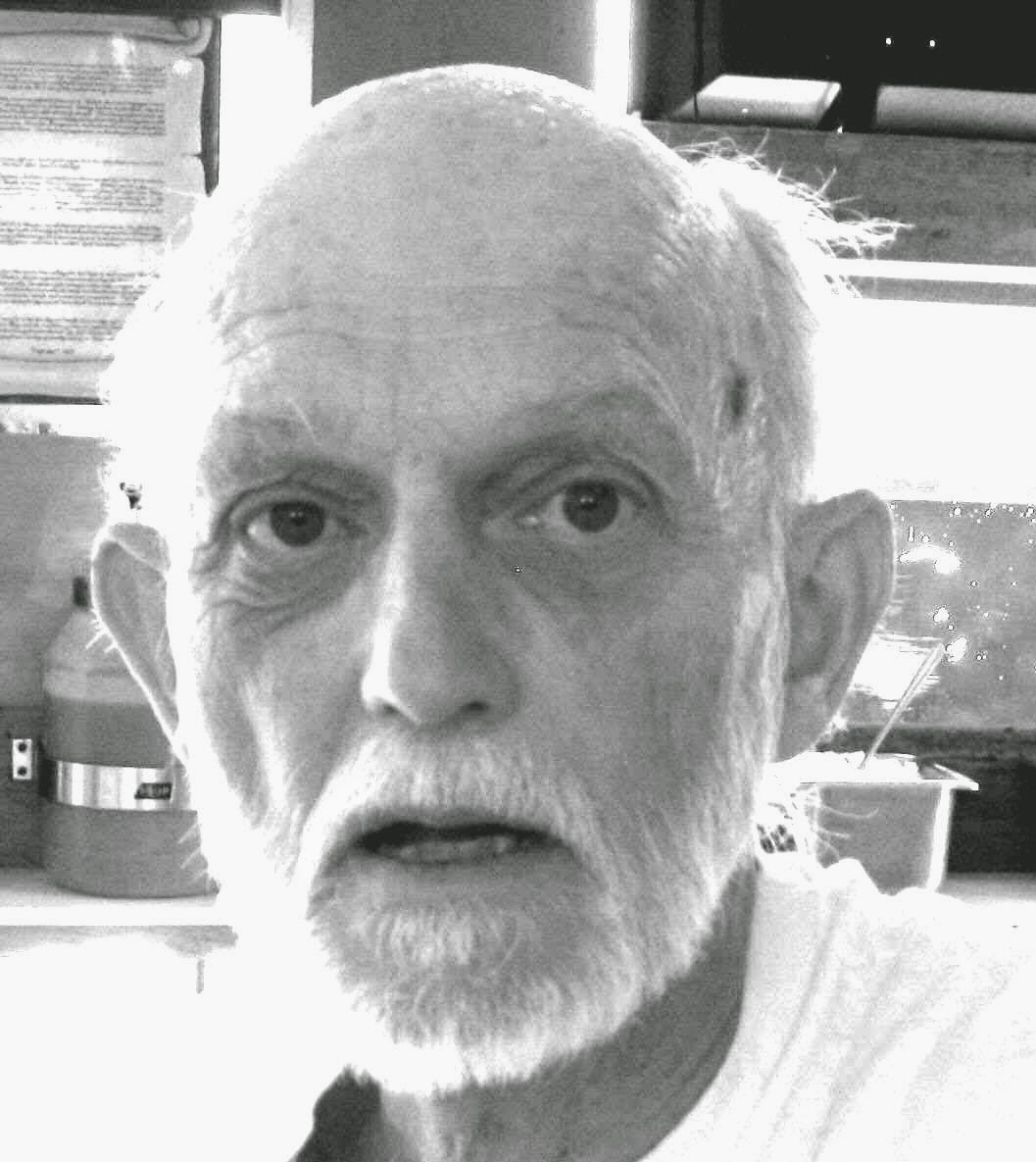
Lou Morgan

While Morgan’s undergraduate education focused on mathematics, a history of familial psychological problems fueled an interest in understanding the underlying mechanisms of human psychology.

In the 1950s, Morgan began taking the first of many college psychology courses. These courses, however, focused largely on human thought and behavior subsequent to their manifestation. Morgan wanted to know about the physiological structures that led to this behavior.

Drawing from his background in mathematics, Morgan decided to approach his investigation by breaking a complex system down into more simplistic elements. “The kind of math I liked best was the deduction of complex structures from a few simple axioms,” explains Morgan. “Think Euclid’s geometry. So I approached psychology looking for the basic principles which underlie our behavior.”

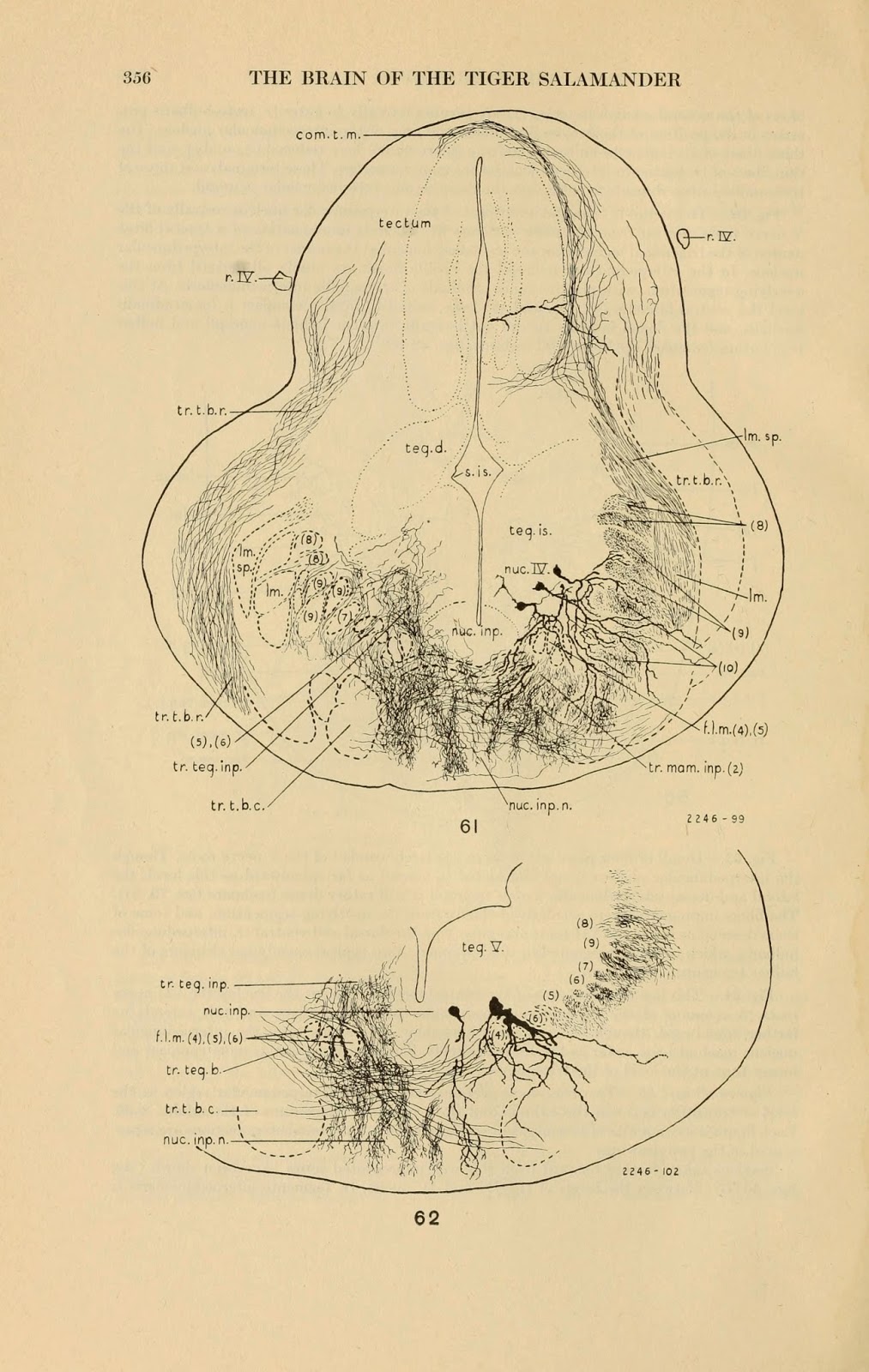
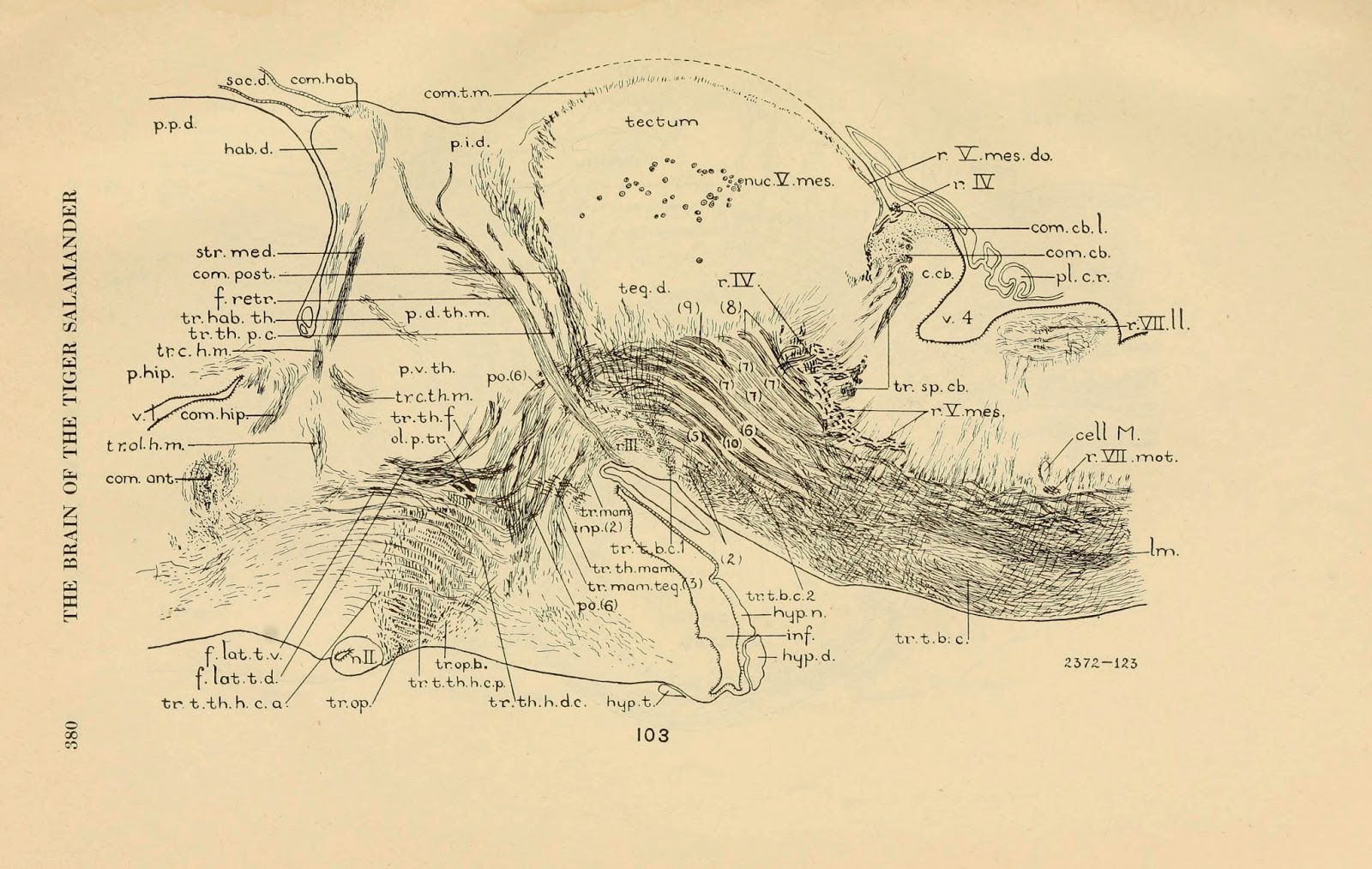
Morgan’s search led him to the study of neuroanatomy, which in turn led him to C. Judson Herrick’s book, The Brain of the Tiger Salamander (1948).

View Full Size Image
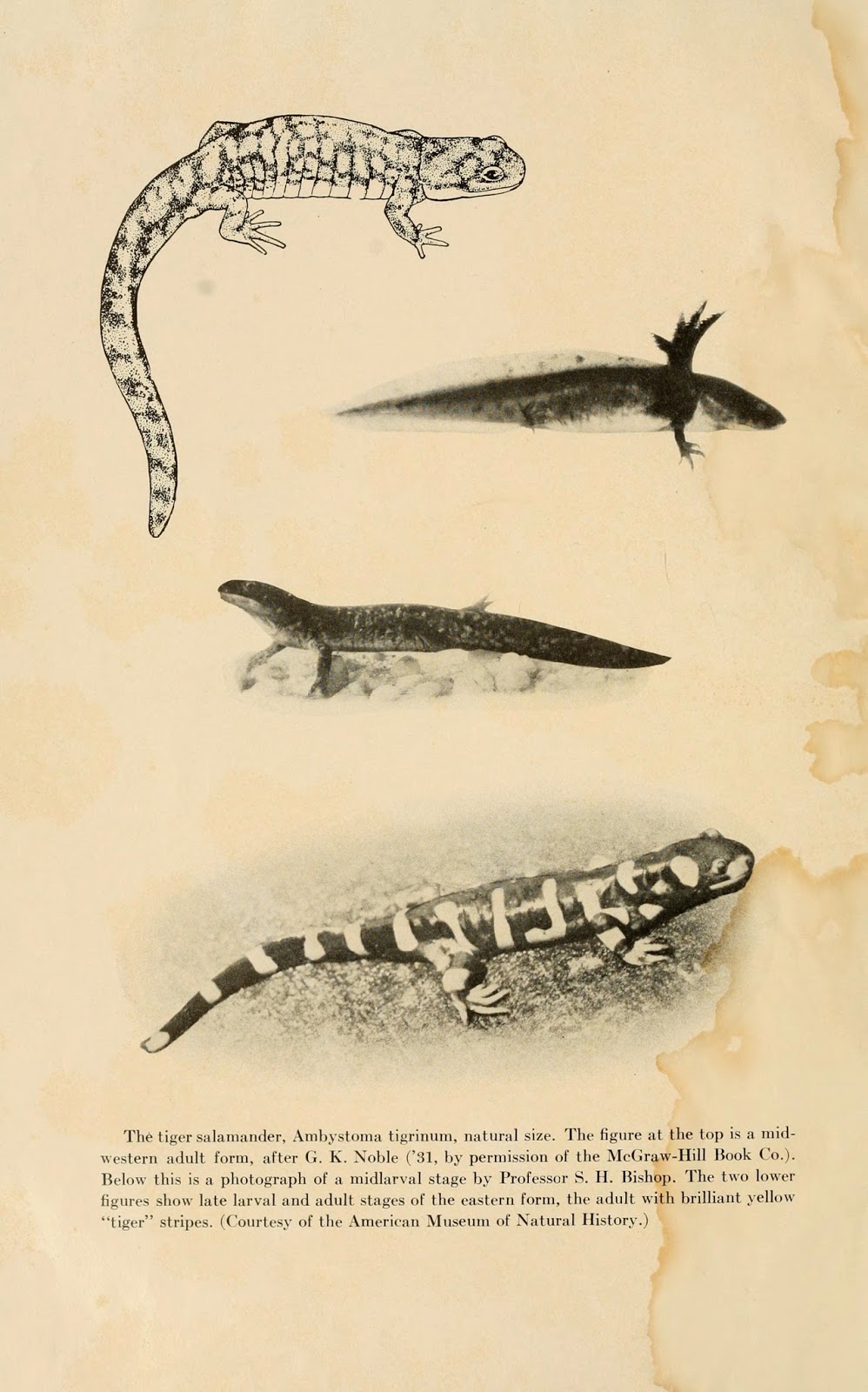
The Tiger Salamander. Herrick, C. Judson. The Brain of the Tiger Salamander (1948). http://biodiversitylibrary.org/page/5816541.

The Brain of the Tiger Salamander summarizes 50 years of Herrick’s published research on the vertebrate nervous system, “as revealed in generalized form in the amphibians.”

“Herrick’s book has become central to my attempt to understand human behavior because it contains an immense amount of data which has parallels in the subcortical portion of the human brain,” articulates Morgan. “Humans can be seen as salamanders with a cortex.”

In the 1960s, American physician and neuroscientist Paul D. MacLean proposed an evolutionary model for the vertebrate forebrain suggesting that humans have a “reptilian brain” at our core. Modern comparative evolution, however, has found this theory to be outdated, given the presence of a structure known as the dorsal ventricular ridge (DVR) in reptiles and birds.

The DVR receives ascending auditory and visual projections and is present in bird and reptile brains. Though absent in mammals, the DVR has been postulated to be homologous to parts of the mammalian isocortex. In humans, the isocortex (also called neocortex) is the largest part of the cerebral cortex, and directs such functions as sensory perception, generation of motor commands, spatial reasoning, conscious thought and language. Amphibians, like humans, do not have a DVR, making their brains, and not reptile brains, a more apt comparison for human neuroanatomy.

View Full Size Image
The Tiger Salamander Brain. Details about the structures depicted on Morgan’s website. Herrick, C. Judson. The Brain of the Tiger Salamander (1948). http://biodiversitylibrary.org/page/5816405.

In order to help others explore early research on neuroanatomy, and provide a platform through which to discuss modern theories from the field, Morgan created a website to host a downloaded (from BHL) and partially edited version of Herrick’s book. The website, also entitled Brain of the Tiger Salamander, links to several of Morgan’s other websites detailing subcortical function, human behavior, and the endocrine system.

“I think we humans understand ourselves very poorly, and part of the problem is that we concentrate our attention on the cortical, cognitive, aspects of our behavior,” muses Morgan. “Herrick’s book offers a window into the subcortical aspects of our lives.”

However, like all scientific pursuits, the field of neuroanatomy is still evolving, and while Herrick’s research provides a good foundation for understanding the basics of the vertebrate nervous system, it also has severe limitations.

“Herrick’s Brain of the Tiger Salamander is a marvelous piece of work, but it’s outdated. Most importantly, it does not give any consideration to neurotransmitters or the endocrine system,” Morgan points out. “Our knowledge of neurotransmitters is still evolving. The possibility of their very existence was discovered by Otto Loewi only in 1921. They were still a new concept during Herrick’s time. Similarly, modern endocrinology began with Arnold Berthold in 1849 and is still a very active field of research. I suppose Herrick was aware of the current research while he was working, but there is no mention of either neurotransmitters or hormones in The Brain of the Tiger Salamander. He probably had his hands full with his neuroanatomical research.”

View Full Size Image
The Tiger Salamander Brain. Details about the structures depicted on Morgan’s website. Herrick, C. Judson. The Brain of the Tiger Salamander (1948). http://biodiversitylibrary.org/page/5816438.

Morgan’s newest website, Herrick Update, attempts to “supplement Herrick’s presentation of salamander neuroanatomy with information which may be relevant to salamanders’ neurotransmitters and hormones,” which may in turn provide insight into human behavior.

In the future, Morgan plans to concentrate his study of human behavior around addiction, and the part of our nervous system most involved in that behavior: the Nucleus Accumbens Septi (NAcc). Interestingly, this research may relate quite strongly to Morgan’s salamander research. The NAcc may in fact be the most prominent and clearly defined part of the Lamprey Basal Ganglia. The Lamprey brain is very similar to that of the amphibian, and thus Morgan began his attempt to develop a model of subcortical function with an investigation of the lamprey nervous system.

As humans continue to progress in our understanding of neuroanatomy, and the underlying physical processes that drive our actions and behaviors, Morgan’s research into Herrick’s work demonstrates once again how intrinsically tied modern science is to past discoveries. Thanks to the Biodiversity Heritage Library, this historic knowledge is available to everyone, everywhere, fueling continued understanding of life on earth and what it means to be human.

See Herrick’s original work in BHL, digitized by the MBLWHOI Library. Explore a partially edited version of the work on Morgan’s website. Learn more about how neurotransmitters and hormones affect neuroanatomy and view a model of subcortical function in Morgan’s two recent websites.

December 11, 2014by michelle.underhill
Blog Reel, Featured Books

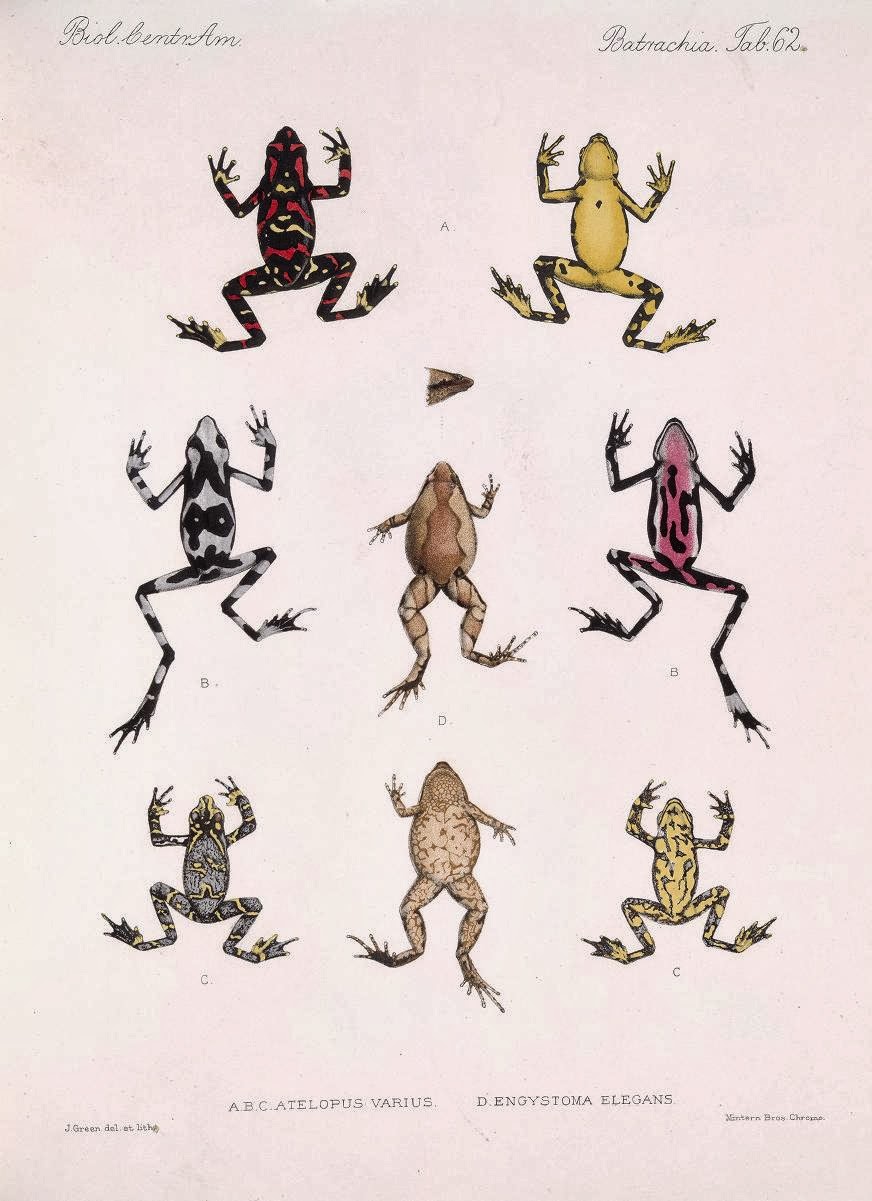
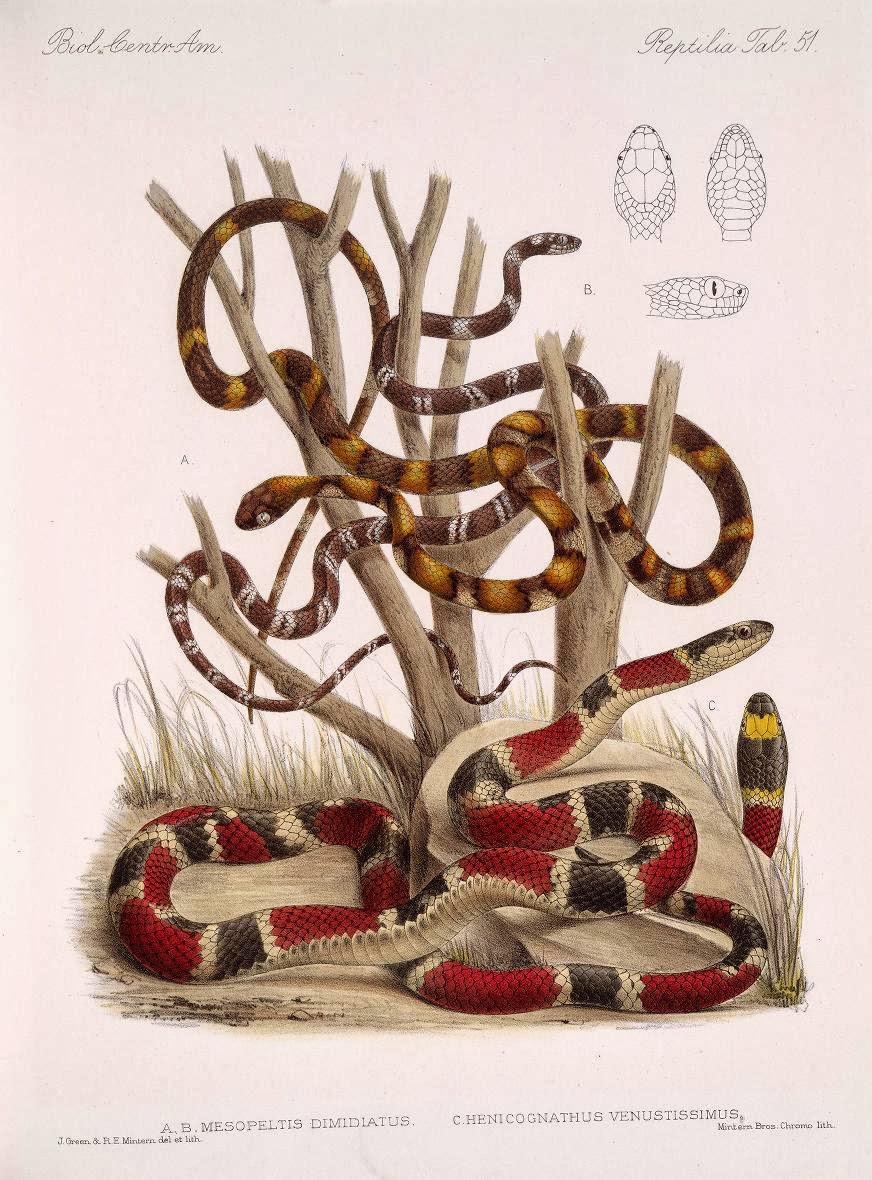
Book of the Week: Biologia Centrali-Americana : Reptilia and Batrachia

View Full Size Image
The total number of known amphibian
 species is approximately 7,000, 
of which nearly 90% are frogs. 
Image: Venture Galleries

My first encounter with an amphibian was the all but loveable Kermit the frog from Sesame Street. While reptiles and amphibians are not warm and cuddly like Kermit, these ectothermic vertebrates (cold-blooded) are incredibly interesting. Some of them breathe through their damp skin. They are incredible predators.  Most species have super sensitive hearing that can detect airborne or ground vibrations, and their tongues are super muscular.

Pop culture has embraced reptiles and amphibians portraying them in humorous roles and as villains including the vocal frogs from the commercial for Budweiser beer, Nagini from Harry Potter, Kaa from the Jungle Book, Jafar from Aladdin, Tic Tock from Peter Pan, and the Teenage Mutant Ninja Turtles.
View Full Size Image
The first reptiles are believed to have evolved 
around 320 million years ago.
Amphibians and reptiles are incredibly important to global biodiversity. Dramatic declines have been measured across the globe since the late 1980s and indicate critical threats. There are groups trying to do something about this including the Amphibian Specialist Group of the World Conservation Union, Amphibian Ark, Partners in Amphibian and Reptile Conservation PARC, and the Panama Amphibian Rescue and Conservation Project among others.

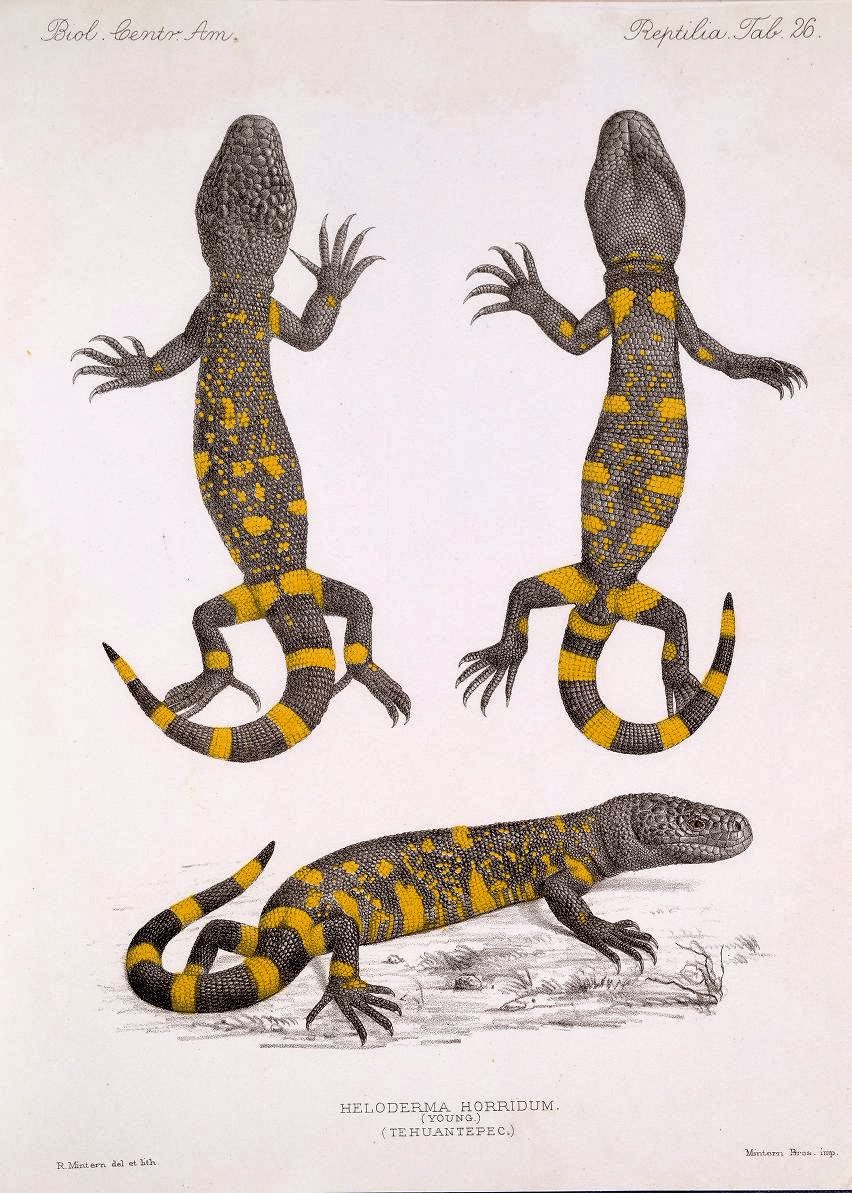
Pioneers in the documentation of these creatures were Frederick Godman and Osbert Salvin  the authors of Biologia Centrali-Americana : Reptilia and Batrachia, one volume in a 63 volume set called Biologia Centrali-Americana. Godman and Osbert set out to create the most comprehensive account of the flora and fauna of Mexico and Central America by hiring many local experts to collect specimens for study. They published the set over the course of 36 years.

View Full Size Image
Certain frogs can jump up to 20 times 
 their own body length in a single leap.

The entire set includes over 900 illustrations. Published between 1879-1915, Biologia Centrali-Americana : Reptilia and Batrachia, focuses on retiles and amphibians and is key to early discoveries in print of a variety of  species.

One critically endangered species, Godman and Osbert wrote about is the Costa Rican Variable Harlequin Toad (Atelopus varius), also known as the clown frog, is a neo-tropical true toad. They feed on small arthropods and their colorful appearance serves as a warning to potential predators of their toxicity of their skin, which contains a neurotoxin.

Micrurus nigrocinctus is also known as the Central American coral snake. This venomous snake lives between southern Mexico to northwestern Colombia. They can be recognized by their color pattern, which varies from two-colored to three-colored with black, yellow and red banding. They are non-aggressive Caecilians that feed on other snakes, small lizards, amphibians, and invertebrates. Their venom contains a strong neurotoxin, causing neuromuscular dysfunction.
View Full Size Image
Nearly all reptiles lay shelled eggs.


Browse through more of the illustrations from the book of the week in the BHL Flickr here.

Learn more about other reptiles and amphibians by reading the book. This set has been covered before in the BHL blog. Read more about it here.

References:
Amphibians of Panama. (n.d.). Atelopus varius. Encyclopedia of Life. Retrieved from  http://eol.org/pages/330754/overview
Amphibians of Panama. (n.d.). Atelopus varius Lichtenstein and von Martens 1856. Smithsonian Tropical Research Institute. Retrieved from http://biogeodb.stri.si.edu/amphibians/en/species/12/
Andrew, Elise. (14 September 2013). Untitled. I [Freaking] Love Science. Retrieved from https://www.facebook.com/IFeakingLoveScience

Unknown. (n.d.). Micrurus nigrocinctus black-banded Coral Snake. Encyclopedia of Life. Retrieved from http://eol.org/pages/1055826/details

Unknown. (n.d.). Fun Reptile Facts for Kids. Science Kids. Retrieved from http://www.sciencekids.co.nz/sciencefacts/animals/reptile.html 

October 24, 2013by gworthey
Blog Reel, User Stories

BHL and Our Users: EOL Rubenstein Fellow, Dr. Breda Zimkus

View Full Size Image

If you caught our blog post yesterday, then you know that this week we’re starting a mini-series within our larger BHL and Our Users series. This mini-series spotlights a few of the EOL Fellows – scientists who have been awarded a fellowship through the EOL Rubenstein Fellows Competition – and discusses not only their work but also how they use BHL to support it. For this, our first post, we feature Dr. Breda Zimkus, a Post-Doctoral Fellow and Genetics Resources Facility Project Manager at the Museum of Comparative Zoology at Harvard University.

Q: What are your research interests/field(s) of study & where do you do the bulk of your work (country)?

A: I am a biologist interested in phylogenetics, biogeography and conservation of amphibians and reptiles. My research integrates a broad range of techniques, including fieldwork, taxonomy and molecular systematics to interpret patterns of speciation and diversity. I am particularly interested in the phylogenetic diversification of African amphibians and use of molecular tools to define species boundaries. I have worked in many East African countries (Ethiopia, Malawi, Tanzania), and my most recent fieldwork in May/June 2011 was in the Central African country of Gabon where I completed a survey of amphibians of the Batéké Plateau National Park, which borders the Republic of Congo.

Q: In the program, Fellowships are expected to serve as a complimentary funding source to existing funding that supports your primary research activities. Please describe what you primary research activities are.

A: I am currently studying a number of frog groups that are distributed across sub-Saharan Africa, including puddle frogs (Phrynobatrachidae), rocket frogs (Ptychadenidae) and sand frogs (Pyxicephalidae: Tomopterna). I am using molecular systematics to identify cryptic species and investigating the complex diversification patterns of these lineages across the continent. In addition to being an Encyclopedia of Life Rubenstein Fellow this past year, I was also the recipient of a Ethel K. Allen, Sigma Delta Epsilon/Graduate Women In Science Fellowship, which funded my post-doctoral work on rocket frogs.

Q: Please describe how you use EOL to disseminate or support your primary research activities, or what your primary duties related to EOL are.

A: Africa still remains one of the most poorly understood areas for amphibians globally, with species rarely collected and basic data on their ecology and distribution incompletely understood. Consequently, conservation status is only adequately known for some species. This lack of knowledge is particularly worrying as concentrations of species are found in a number of sub-Saharan regions seriously threatened by environmental change. There is also a serious conservation risk to amphibians globally with the emerging prevalence of the fungal disease chytridiomycosis, possibly responsible for the extinction of many species. As an EOL fellow, I developed the African amphibian Lifedesk, so basic taxonomic data could be assembled to facilitate research. The website serves as a gateway for information regarding African amphibian species, where participants will write and edit species pages, upload images, and maintain bibliographic resources. In addition to serving as a stand-alone resource, this LifeDesk feeds content directly into the Encyclopedia of Life (EOL) and AmphibiaWeb.

Q: Who is your Mentor, what is their area of interest (research activities), and how have they supported you throughout your Fellowship?

A: I have two mentors for this project. My post-doctoral research, including my EOL work, is currently being conducted in the laboratory of Dr. James Hanken of Harvard University. The Hanken Lab studies the evolution of morphology, developmental biology, and systematics and serves as a community research facility for NSF’s AmphibiaTree project. Most work focuses on amphibians but otherwise addresses a wide range of topics, taxa and methodologies. I am conducting my EOL Fellowship work in collaboration with Dr. Simon Loader, Director of the Molecular Systematics Laboratory and Post-doctoral Researcher at the Institute of Biogeography, University of Basel. His research is specifically focused on the phylogenetic diversification of African amphibians, using an integrative approach to interpret patterns of diversity in Africa.

Q: How does BHL support your Fellows activities, as well as those research activities that fall outside of your duties as an EOL Fellow?

A: BHL has been integral to both my EOL Fellow work and my primary research on discovering African amphibians species because original species descriptions and taxonomic revisions are essential to those working on species identification. One of the major goals of the African amphibians Lifedesk is to make PDFs of all non-copyrighted material available to herpetologists around the world. Many of the most important African amphibian research was done in the early 20th century, and these manuscripts were published in rare journals. Thankfully, BHL has digitized many of these important works, so I was able to assemble PDFs online using the BHL website and upload them to the African amphibians Lifedesk.

Q: When did you first discover BHL?

A: I first heard about BHL from the librarians at the Ernst Mayr Library of the Museum of Comparative Zoology at Harvard University while conducting my PhD research. At that point I used BHL only if I was unable to find a reference in the Ernst Mayr library. When I began my EOL fellowship, I began to use BHL on a daily basis, compiling PDFs to upload to the African amphibians Lifedesk.

Q: What are your favorite features/services on BHL?

A: I am lucky to be at an institution with an amazing library system, but BHL makes biodiversity literature accessible to everyone with an internet connection. It also allows me to have electronic copies of papers on my computer, so I have them whenever I need them.

Q: If you could change one thing about BHL, or suggest one thing to be the next developmental priority for BHL, what would it be?

A: It does take time to assemble PDFs because you must locate the journal, find the issue, select each individual page of that specific issue and then have the document emailed to you. I would love to see a time when I can search for a title of a specific paper and find the PDF already assembled.

Q: Do you have a favorite book in BHL, or a book that has most supported your research activities or EOL responsibilities?

A: George Albert Boulenger (1858-1937) was a zoologist that described an incredible number of amphibians (556 species), reptiles (872 species) and fish (1,096 species). Many of Boulenger’s African amphibian descriptions were published in the Proceedings of the Zoological Society of London. I found his work published in 1900 entitled “A list of the batrachians and reptiles of the Gaboon (French Congo), with descriptions of new genera and species” to be very useful for my recent trip to Gabon.

Thank you, Dr. Zimkus, for all the valuable research you have conducted on amphibians and reptiles, and for your pioneering efforts on the African amphibians Lifedesk for EOL! We are so thrilled that BHL has been a part of the endeavor, particularly as the library at your home institution is one of the key members of BHL (Ernst Mayr Library, Harvard University)! As to your desire to eventually be able to find already-assembled PDF articles from BHL, we have been in the process of creating Citebank for some time now, with just that objective in mind. Citebank will act as an article repository, indexing and providing PDFs to articles found within larger journals and books in BHL. Though still in the developmental stage, Citebank is live on the web and already indexes and provides PDFs for a great deal of articles from BHL. We hope that this, and our other BHL efforts, will continue to play an important role in your vital research and conservation activities!

August 16, 2011by michelle.underhill
Page 1 of 212»

Help Support BHL

BHL's existence depends on the financial support of its patrons. Help us keep this free resource alive!

search

About BHL

The Biodiversity Heritage Library (BHL) is the world’s largest open access digital library for biodiversity literature and archives. BHL operates as a worldwide consortium of natural history, botanical, research, and national libraries working together to digitize the natural history literature held in their collections and make it freely available for open access as part of a global “biodiversity community.”

Join Our Mailing List

Sign up to receive the latest news, content highlights, and promotions.

Subscribe Now

Subscribe to Blog via Email

Enter your email address to subscribe to this blog and receive notifications of new posts by email.

Join 319 other subscribers

Subscribe to Blog Via RSS

Subscribe to the blog RSS feed to stay up-to-date on all the latest BHL posts.

Access RSS Feed

Inspiring Discovery through Free Access to Biodiversity Knowledge.

The Biodiversity Heritage Library makes it easier than ever for you to access the information you need to study and explore life on Earth…for free, anytime, anywhere.


64+ Million Pages of
Biodiversity Literature Online.

EXPLORE

Tools and Services
to Transform Research.

EXPLORE

300,000+
Illustrations on Flickr.

EXPLORE

ABOUT | HARMFUL CONTENT | PRIVACY | SITE MAP | TERMS OF USE