Biodiversity Heritage Library - Program news and collection highlights from BHL
  • Home
  • News
  • Featured Books
    • All Featured Books
    • Book of the Month Series
    • BHL at 20
  • User Stories
  • Campaigns
    • Fossil Stories
    • Garden Stories
    • Monsters Are Real
    • Page Frights
    • Her Natural History
    • Earth Optimism 2020
  • Tech Blog
  • Visit BHL
Home
News
Featured Books
    All Featured Books
    Book of the Month Series
    BHL at 20
User Stories
Campaigns
    Fossil Stories
    Garden Stories
    Monsters Are Real
    Page Frights
    Her Natural History
    Earth Optimism 2020
Tech Blog
Visit BHL
  • Home
  • News
  • Featured Books
    • All Featured Books
    • Book of the Month Series
    • BHL at 20
  • User Stories
  • Campaigns
    • Fossil Stories
    • Garden Stories
    • Monsters Are Real
    • Page Frights
    • Her Natural History
    • Earth Optimism 2020
  • Tech Blog
  • Visit BHL
Biodiversity Heritage Library - Program news and collection highlights from BHL
Blog Reel, User Stories

The Australian Lepidoptera Heritage

Have you ever stumbled across a caterpillar and wondered what kind of adult moth or butterfly it would metamorphose into?

Short of catching the caterpillar and actually observing what adult it becomes, this answer might be harder to come by than you might think. Most taxonomy and identification has been performed on the adults of various Lepidopteran species, and there are still many species whose caterpillar forms are not readily known.

This is particularly true for many Australian species whose early life stages remain a scientific mystery.

Dr. Don Herbison-Evans hopes to shed some light on these Australian larval mysteries through the website Australian Caterpillars and their Butterflies and Moths, which is hosted by the Coffs Harbour Butterfly House in New South Whales, Australia.

View Full Size Image
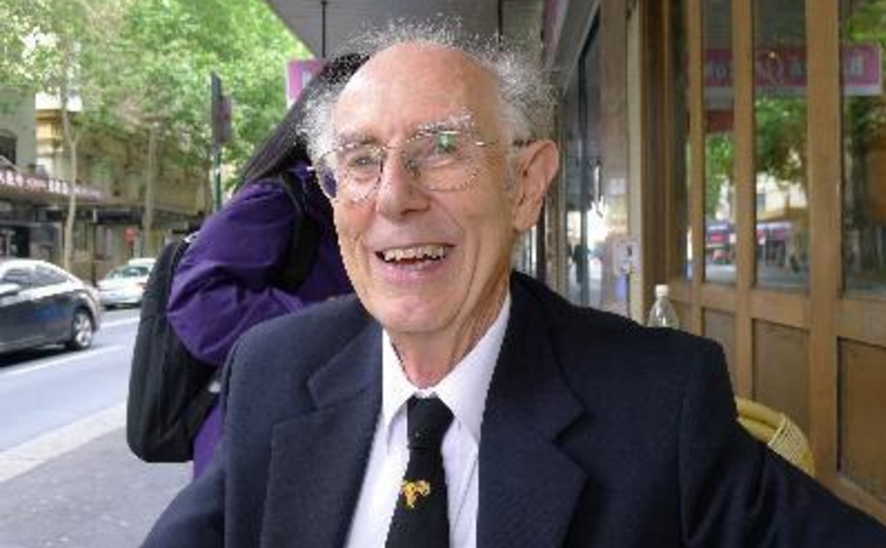
Dr. Don Herbison-Evans.

Dr. Herbison-Evans has professional experience in a variety of scientific disciplines, including information technology and computer science, astronomy, and chemistry. His interest in entomology, however, was sparked when he emigrated from the UK to Sydney to start his academic career in the 1960s. He and good friend Dr. Stella A. Crossley (who also emigrated from the UK to Melbourne around the same time to lecture in the Psychology Department at Monash University) were fascinated by the number of caterpillar species they found in their gardens.

“I remember taking one beastie to the enquiries desk at the Australian Museum, and asking what species it was,” recalled Don. “The lady there laughed, and then explained that most of the taxonomy of Australian Lepidoptera was done by entomologists at the British Museum on dried adult specimens sent back to the UK by Joseph Banks and other British explorers, so the entomologists had no idea what the early life stages, such as the caterpillars, were like.”

Thus, Don and Stella started photographing the caterpillars they found and rearing them into adults to discover their mature counterparts. In an effort to share what they discovered, they wrote a manuscript entitled 100 Common Australian Caterpillars, but unfortunately, publishers’ interest in caterpillars in the 1970s was virtually nonexistent. So Don and Stella shelved the manuscript.

And then, some twenty years later, along came the Internet.

“We were encouraged as univerisity staff to put potted biographies of ourselves on the web for students to know more about us, and of course we included a note in ours that we were interested in caterpillars,” explained Don. “We then got increasing numbers of people sending descriptions and photos of caterpillars asking what they were. So we said: ‘OK let’s just put our book on the web.'”

And so Australian Caterpillars and their Butterflies and Moths was born. The website contains webpages for over 3,600 Australian Lepidopteran species (having grown from an original 100). These webpages include descriptive information about the species as well as, where available, images of the adult and caterpillar forms. The pages are grouped according to family, and these pages are linked via a single page for moths and another for butterflies.
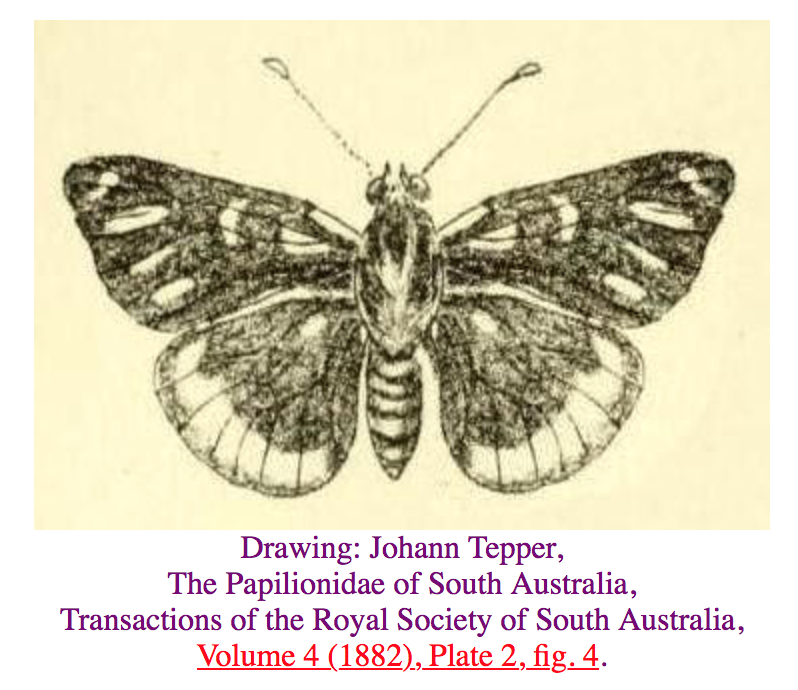
View Full Size Image
Example of BHL image in Australian Caterpillars and their Butterflies and Moths. Hesperilla bifasciata species page.

The Biodiversity Heritage Library serves as an excellent source of information for the website.

“BHL has enabled me to add historical richness to my popular descriptions of the biology of the Lepidoptera of Australia,” stated Don.

Using BHL everyday, Don searches for references to species of interest in BHL using our taxonomic name finding tool. If this does not yield results, he searches the OCR of likely journal issues for genus or species names. He then links these pages to relevant content in the website. Where illustrations are available in BHL, these are also uploaded to the corresponding species pages. These illustrations, which offer an interesting juxtaposition to modern photographs, are, in fact, Don’s favorite feature on BHL.
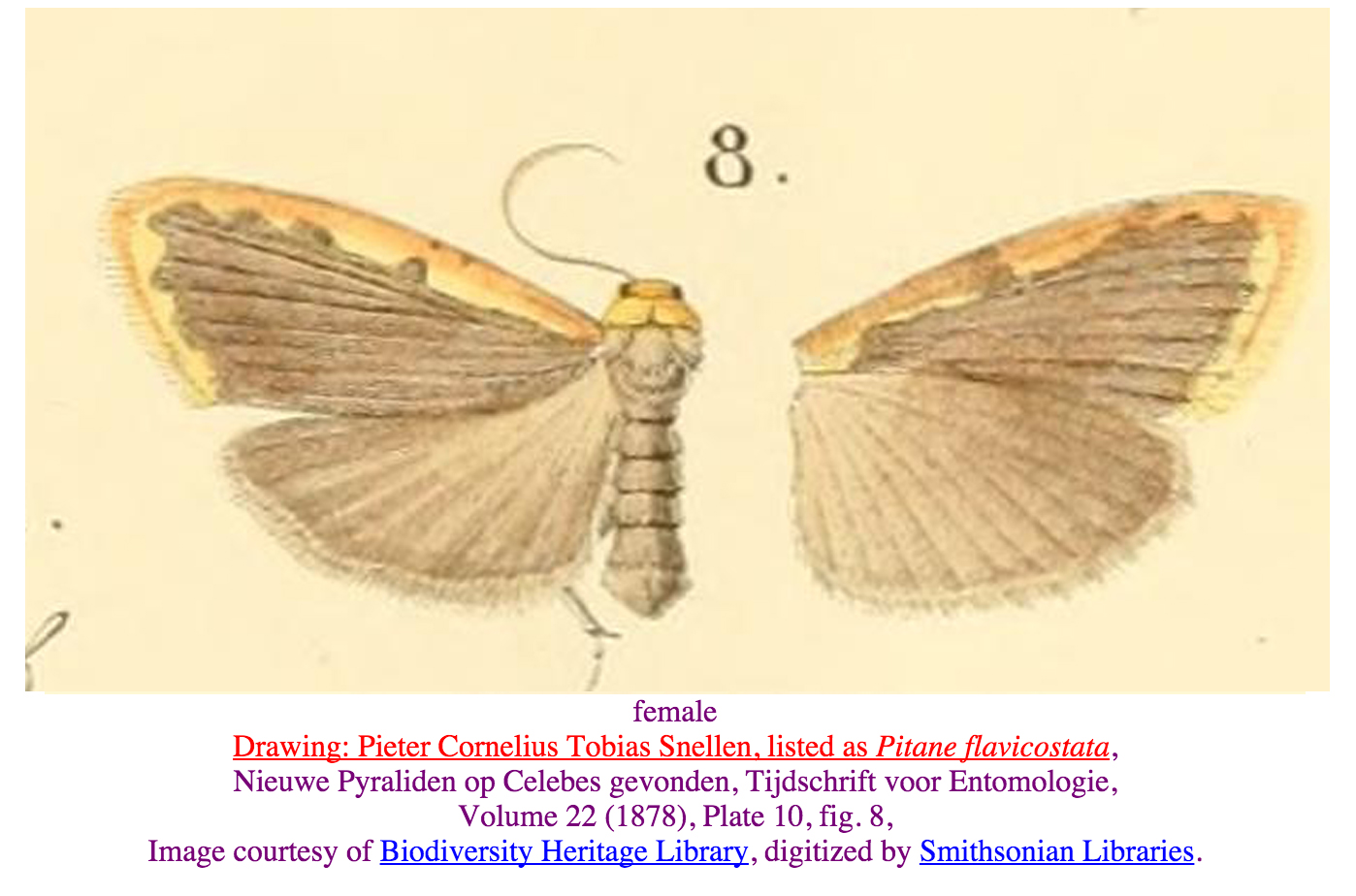
View Full Size Image
Example of BHL image in Australian Caterpillars and their Butterflies and Moths. Diduga flavicostata species page.

In addition to information about specific species, the website also provides some pretty incredible facts about caterpillars. For example, did you know that caterpillars have thousands of muscles, whereas humans only have about 500? Or that the female moths of the Australian species such as Teia anartoides have no wings, and the species disperses by the young caterpillars making an open gossamer sail out of silk, and sailing away on it in the wind?
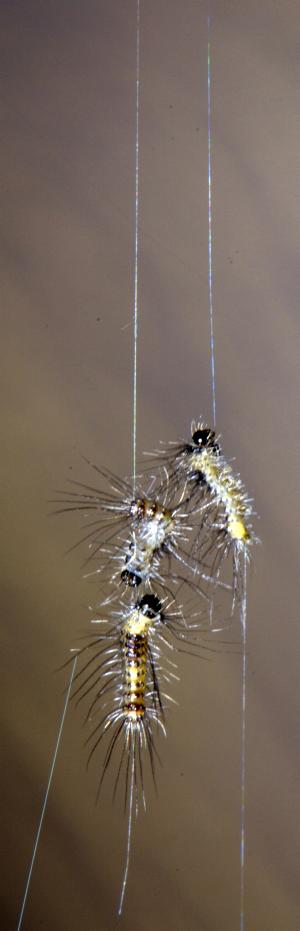
View Full Size Image
Teia anartoides young caterpillars ballooning (Photo: courtesy of Rudie Kuiter, Aquatic Photographics, Victoria). http://lepidoptera.butterflyhouse.com.au/lyma/anart.html.

The website has become an incredible resource for those interested in exploring Australian Lepidoptera. Don particularly hopes that it will help spark an interest in these insects among younger audiences.

“Our idea in the webpages is to help, particularly young Australian people, understand and value the unique entomological heritage to which they are heirs, and to foster an understanding of how to preserve that heritage for future generations,” Don explained. “The webpages try to be chatty and intriguing to, say, an intelligent 12 year old, but to include enough technical information to tempt them deeper into the ecology and taxonomy of Australian Lepidoptera. With the help of the Biodiversity Heritage Library and Wikipedia, we are able to link the current descriptions of the biology of the species to the original descriptions from two or more centuries ago and to biographies of their authors who can be seen to have been real people, who too were intensely interested in Australian fauna. I think this helps establish the idea in our readers that these organisms have perhaps as much right to live in Australia as they do, and that our living biological heritage can be preserved and maintained, just as [BHL] preserves our literary and scientific heritage.”

We think the website is well on its way to achieving this goal. After all, what young person wouldn’t want to learn more about a caterpillar that can fire fecal pellets from its anus?

Thanks very much to Dr. Herbison-Evans for sharing his work and use of BHL with us. Be sure to explore Australian Caterpillars and their Butterflies and Moths today.

Do you use BHL regularly for your work? Want to be featured on our blog? Send a message to [email protected].
November 12, 2015by ulib-libraryjobs
Blog Reel, Campaigns, Featured Books

World Oceans Day through Books: The Truth about Terra Australis

This post is the second in our series leading up to the celebration of World Oceans Day on June 8. This series explores publications that represent important milestones in the progress of marine bioscience research and ocean exploration.

The Quest for Terra Australis: The Expeditions of James Cook

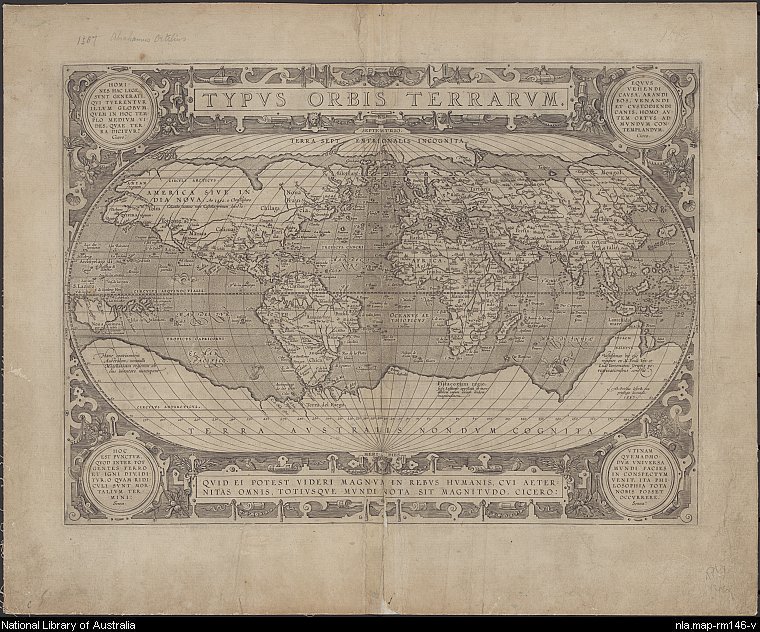
As far back as antiquity, Western scholars theorized the existence of a great southern continent that they called Terra Australis. While the continent found its way onto many early European maps, this presentation was not based on actual surveys but instead the hypothesis that landmasses in the Northern Hemisphere must be balanced by respective landmasses in the Southern. Depictions generally included a single landmass encompassing the South Pole and spreading far north to include Australia, New Zealand and, at its most extreme, even Tierra del Fuego.

View Full Size Image
Map showing imagined Terra Australis. Ortelius, Abraham, 1527-1598. Typus orbis terrarum. Quid ei potest videri magna in rebus cui alter nitas omnis, totiusque mundi nota sit mangitudo. Cicero [cartographic material] 1587. MAP RM 146. http://nla.gov.au/nla.map-rm146. National Library of Australia.

By the mid-18th century, some Europeans claimed to have seen this great southern continent, but details were scarce and verification virtually non-existent. The intrigue prompted the British Admiralty and Royal Society to direct Lieutenant James Cook, as part of a larger mission from 1768-71 to observe the transit of the planet Venus from Tahiti, to search for Terra Australis.

View Full Size Image
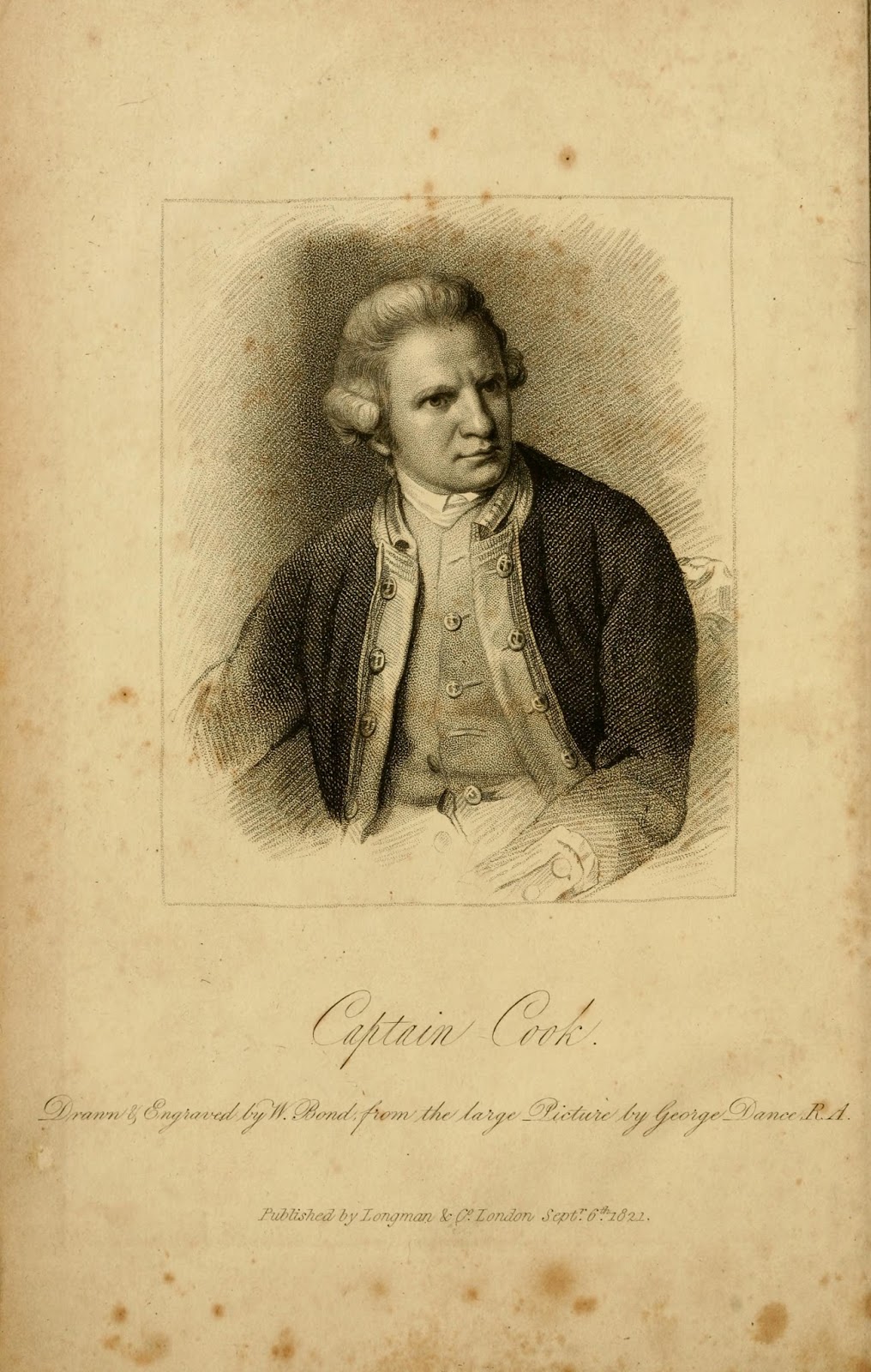
Portrait of James Cook. The three voyages of Captain James Cook round the world. v. 1. 1921. http://biodiversitylibrary.org/page/6227900.

In September 1769, Cook’s ship, the Endeavour, reached New Zealand, after which Cook spent six months circumnavigating the island to ultimately establish that it was not, as was commonly believed, part of the “southern continent.” From New Zealand, Cook and his crew sailed towards Australia, becoming the first recorded Europeans to reach the Australian east coast in April 1770. Sailing north, Cook charted over 5,000 miles of coastline and further demonstrated that Australia and New Guinea were not connected.

Cook went on to command two additional expeditions, the second of which (1772-75) brought Cook closer to the South Pole than any recorded previous navigator, finally disproved the existence of a large southern continent as expansive as the envisioned Terra Australis, demonstrated that chronometers were a practical means of determining longitude at sea, and laid the foundations for a modern map of the South Pacific, thus paving the way for future explorations in the area.

View Full Size Image
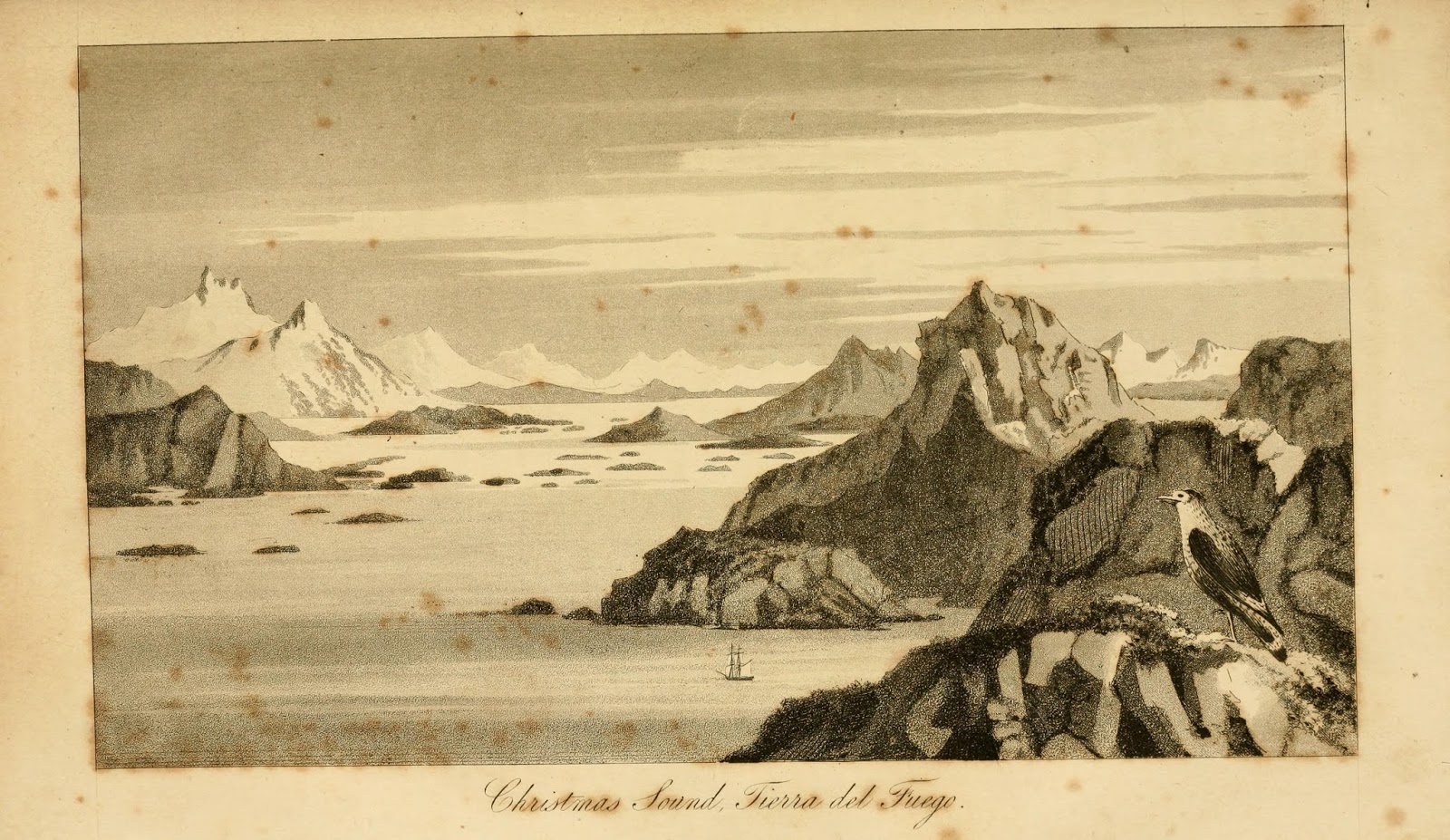
Cook, James. Christmas Sound, Tierra del Fuego. From Cook’s second voyage (1772-75). The three voyages of Captain James Cook round the world. v. 4. 1921. http://biodiversitylibrary.org/page/6258591.

Cook’s third and final voyage (1776-80) attempted to discover the elusive northwest passage. Although he was unsuccessful, he did become the first recorded European to visit the Hawaiian Islands and charted the coast of northwest America. Tragically, Cook was killed on the return voyage during a confrontation on the Hawaiian Islands on 14 February 1779.

View Full Size Image
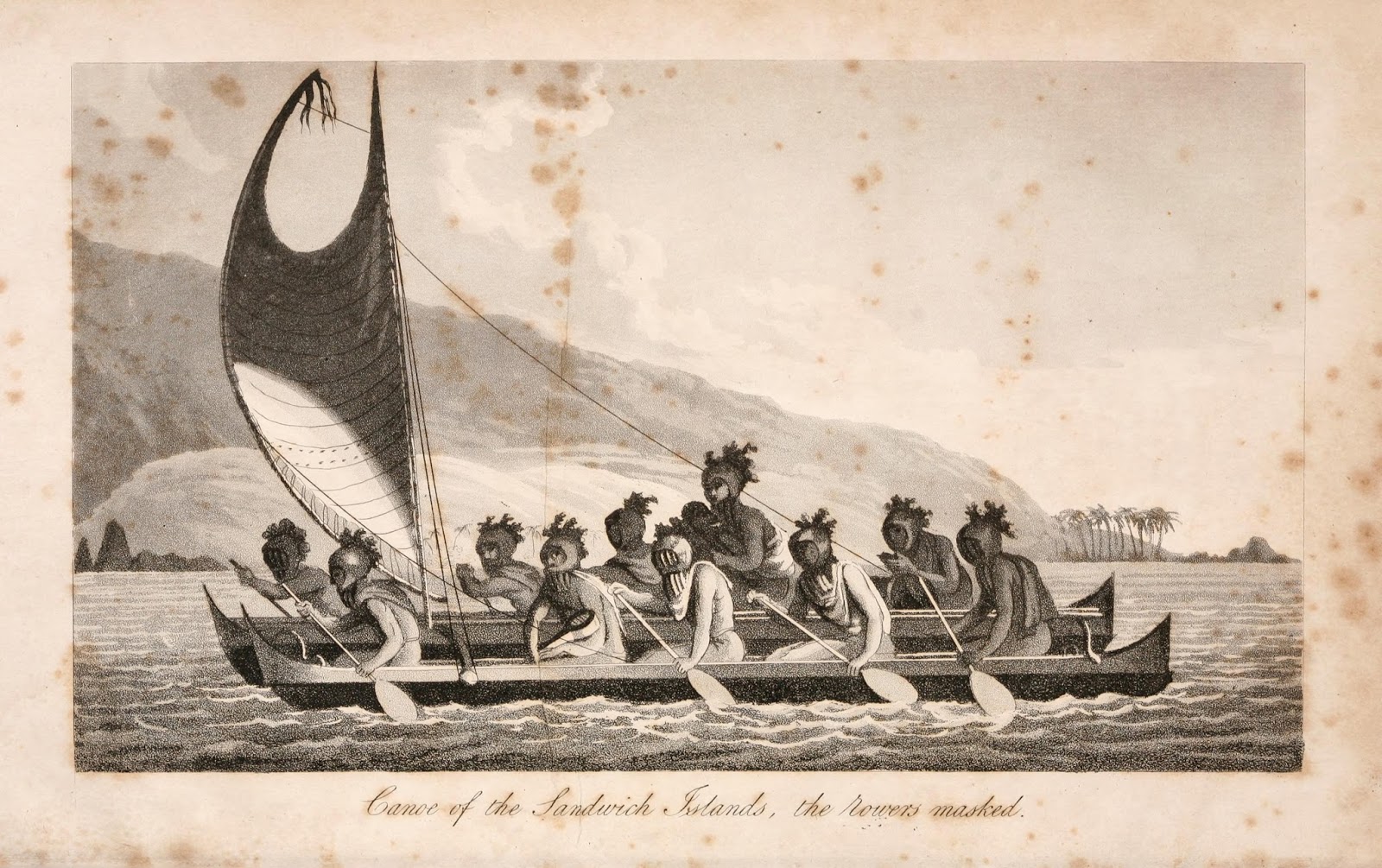
Canoe of the Sandwich (i.e. Hawaiian Islands). From Cook’s third voyage (1776-80). The three voyages of Captain James Cook round the world. v. 6. 1921. http://biodiversitylibrary.org/page/1803270.

Cook’s achievements did much to pave the way for future oceanic exploration, especially around Australia. He helped lift the veil of uncertainty surrounding “Terra Australis,” and helped to establish a viable method by which to more easily navigate the oceans (via a chronometer). Furthermore, by methodically enforcing cleanliness and ventilation on his ships and a balanced diet for his crew, he dramatically improved the living conditions and health of his crew and set new standards for future expeditions.

An account of Cook’s three voyages, taken in part from his journals, are available in the seven volumes of The Three Voyages of Captain James Cook around the World (1821).

Exploring Oceania: Voyage of the Astrolabe

Following Cook’s expedition, France and England vied intensely for southern possessions, resulting in many expeditions that expanded our knowledge of the oceans and marine life around Australia and New Zealand.

Early French expeditions to the region included the 1800-1804 cartographic survey of Australia’s coastline, under Nicolas Thomas Baudin, which resulted in the first published detailed chart of Australia, and the voyage of the Coquille from 1822-25, under the command of Louis Isidore Duperrey. Navigator Jules-Sébastien-César Dumont d’Urville served as second-in-command on the Coquille expedition, and just two months after its return, d’Urville requested a second voyage to the South Seas, this time with him in command.

View Full Size Image
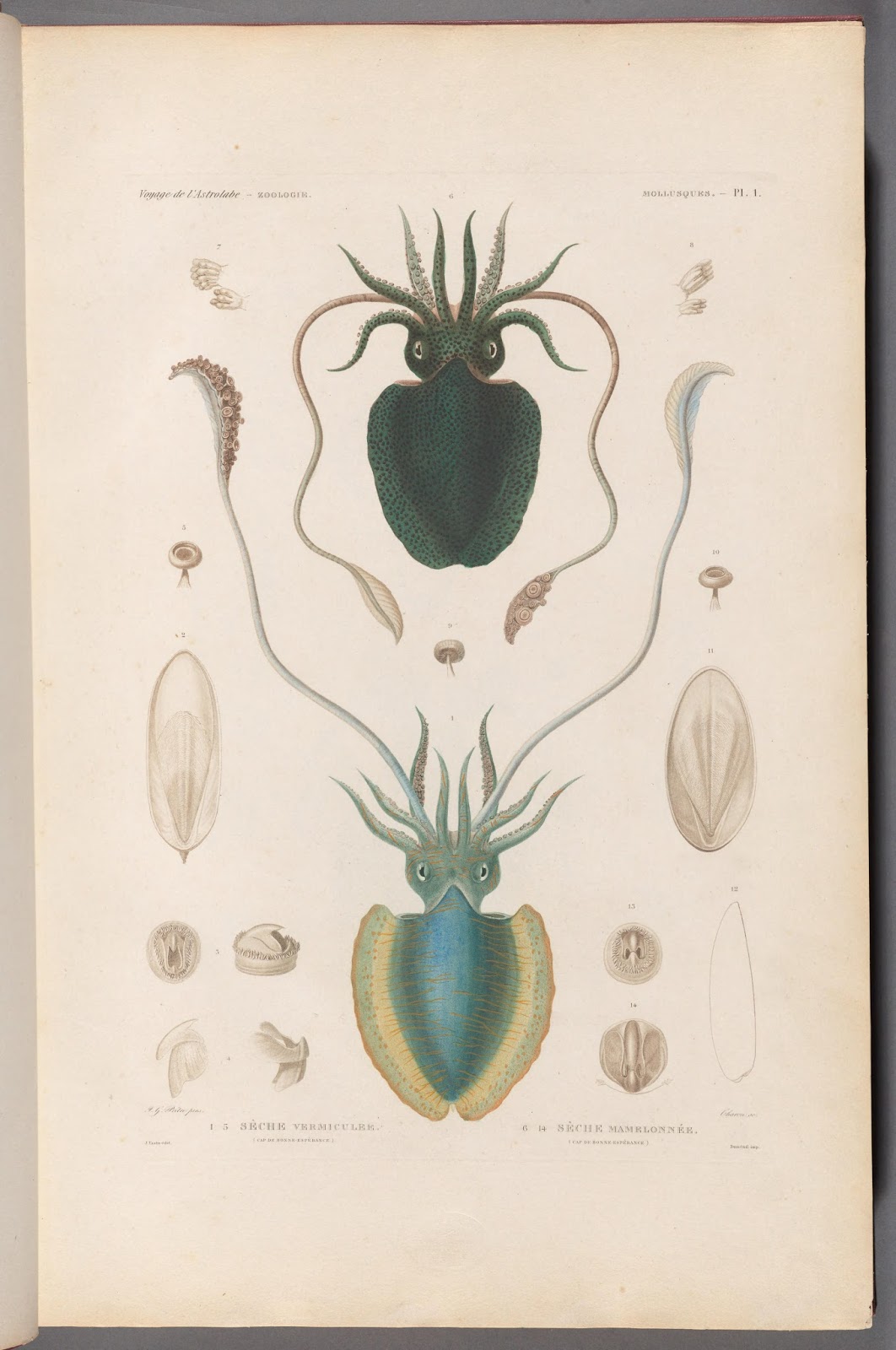
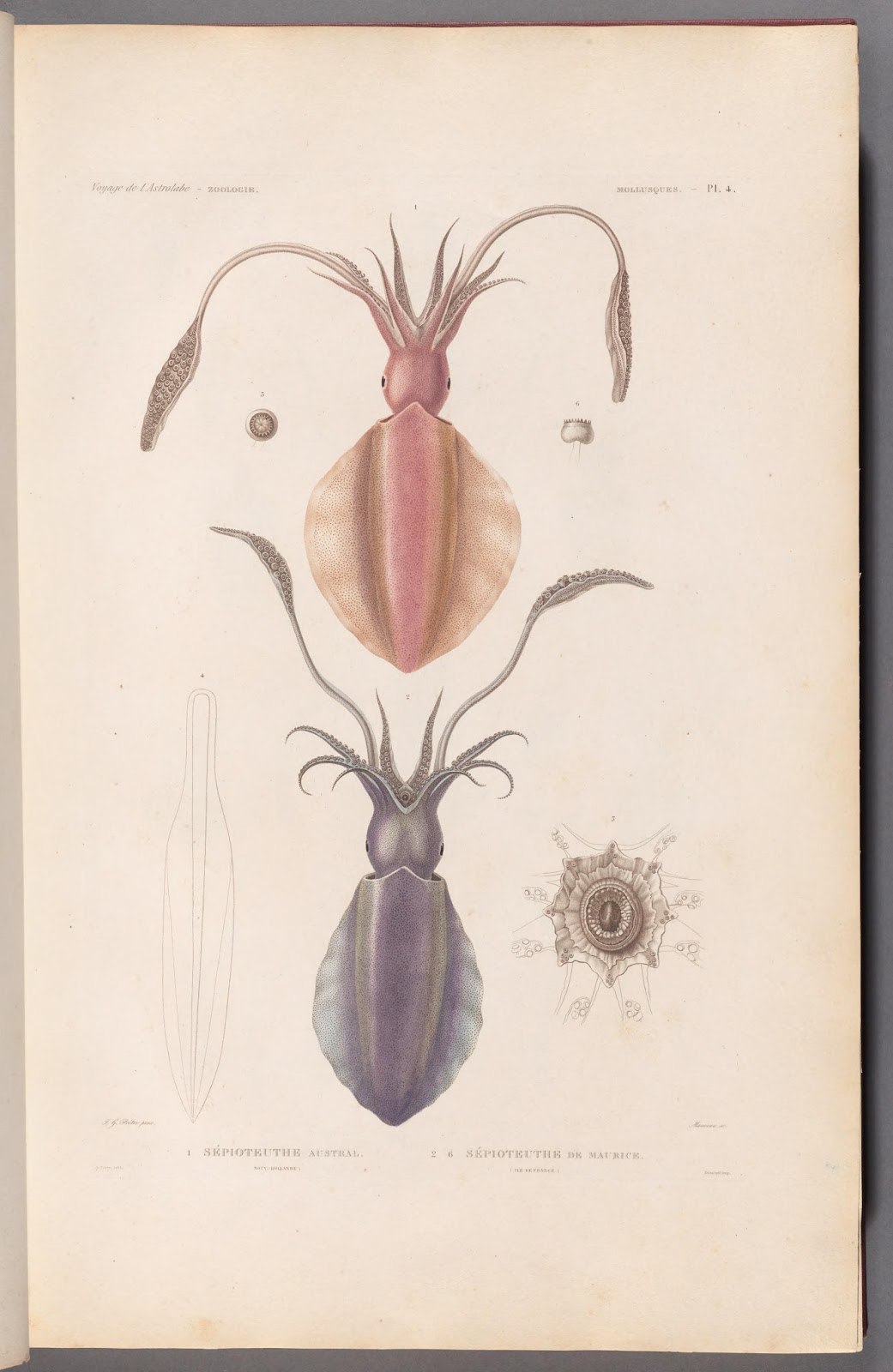
Cuttlefish. Dumont d’Urville, Jules-Sébastien-César. Voyage de la corvette l’Astrolabe : exécuté par ordre du roi, pendant les années 1826-1827-1828-1829. 1830-34. http://biodiversitylibrary.org/page/46298902.

In 1826, the Coquille, renamed the Astrolabe, set sail with a mission to chart the unknown regions of Oceania. This time, the expedition also included many worthy naturalists, including Pierre Adolphe Lesson, Jean René Constant Quoy, and Joseph Paul Gaimard. The expedition resulted in the discovery of many new-to-science species in Oceania, important ethnographic studies, and “the first tentative speculations as to how coral reefs and atolls could have formed in the middle of the deep tropical oceans” (Stiassny, 51). The expedition’s findings were published in a fourteen-volume series from 1830-34, entitled Voyage de la corvette l’Astrolabe.

View Full Size Image
Reef Squids. Dumont d’Urville, Jules-Sébastien-César. Voyage de la corvette l’Astrolabe : exécuté par ordre du roi, pendant les années 1826-1827-1828-1829. 1830-34. http://biodiversitylibrary.org/page/46298896.

More World Oceans Day Resources

  • Follow us on Twitter, Facebook, and this blog all this week as we explore marine biodiversity and awesome related publications in BHL.
  • Check out some monumental publications in historic and present-day marine bioscience research in our BHL collection.
  • Browse a selection of marine biodiversity illustrations in Flickr and Pinterst
June 2, 2015by michelle.underhill
BHL News, Blog Reel

BHL-Australia is back!

View Full Size Image
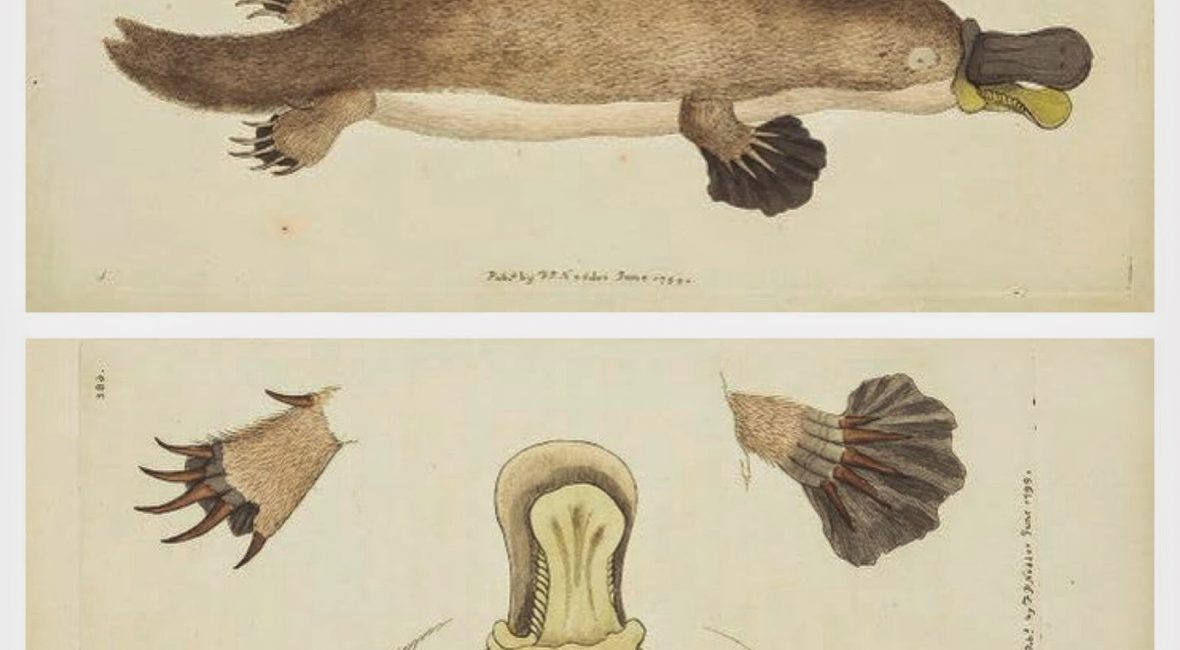
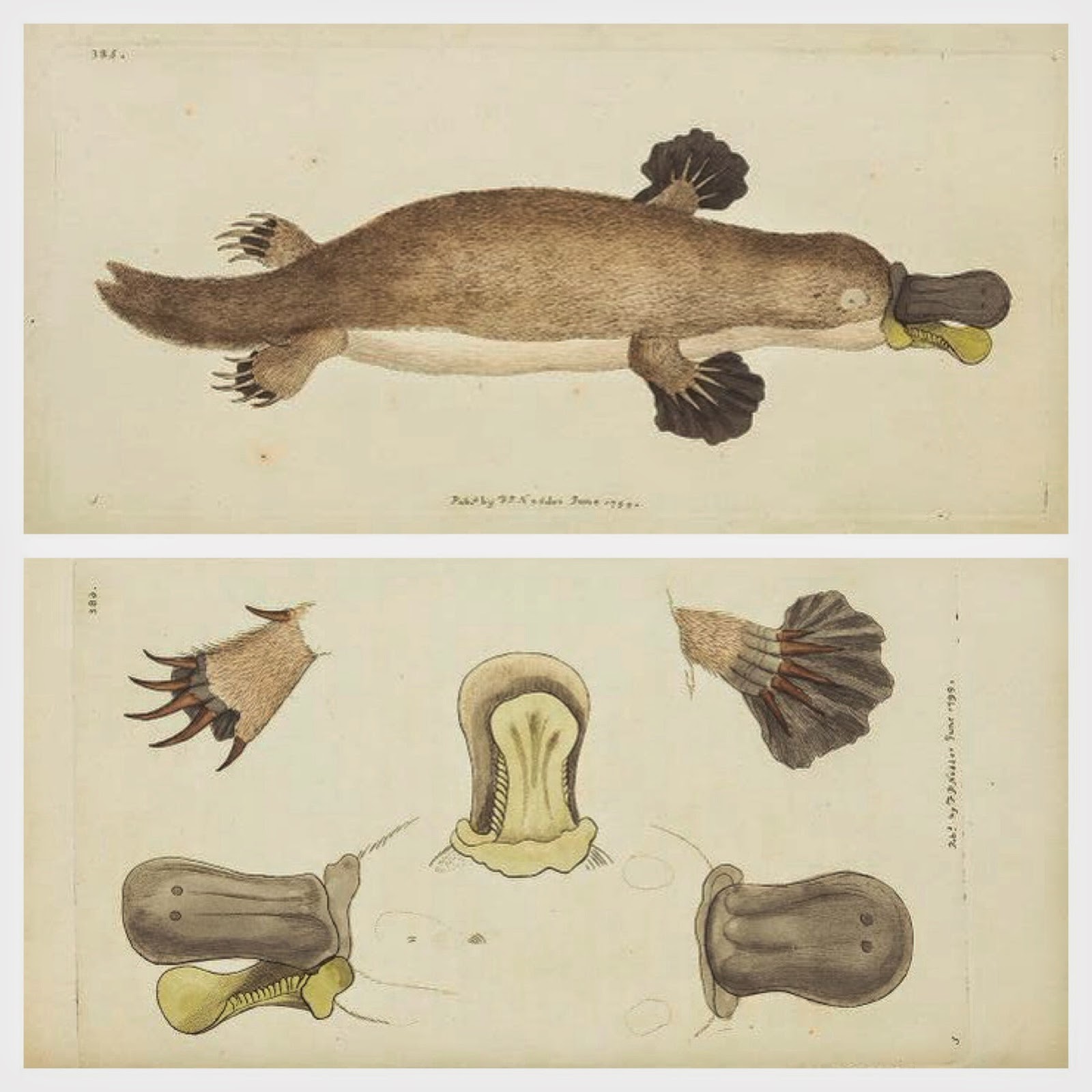
The first published illustration of the Duck-billed Platypus, from The Naturalist’s Miscellany, or Coloured figures of natural objects, Vol. 10, George Shaw, 1799. DOI: https://doi.org/10.5962/p.304567.

For the past year, BHL-Australia has been very quiet. So quiet, in fact, you would be forgiven for forgetting we exist (unless of course you read about our contribution to the new BHL website).

Why the silence? Because, in 2013, we ran out of funding.

Our digitisation work didn’t stop, however. Deep in the Museum Victoria library, six dedicated volunteers (supervised by equally dedicated library staff) continued to scan and process volumes from our collections and upload them into BHL.

We are now thrilled to announce that BHL-Au is back in full force. Still led by Museum Victoria, we have renewed funding from the Atlas of Living Australia and a new enthusiastic team. And we have grand plans for BHL-Au.

These include:

  • The digitisation of non-published works in our historical collection: Gold Registers, Exhibition Catalogues, Field Diaries and the unbound sections of the Prodromus of the Zoology of Victoria.
  • The continued digitisation of rare books, starting with those featured in our Art of Science exhibition.
  • The establishment and ongoing support of new BHL partners within museums and herbaria around Australia and in New Zealand.
  • The strengthening of our existing relationships within the global BHL community.

The books contributed by Museum Victoria can be viewed on our new Collection page on the BHL website.

View Full Size Image
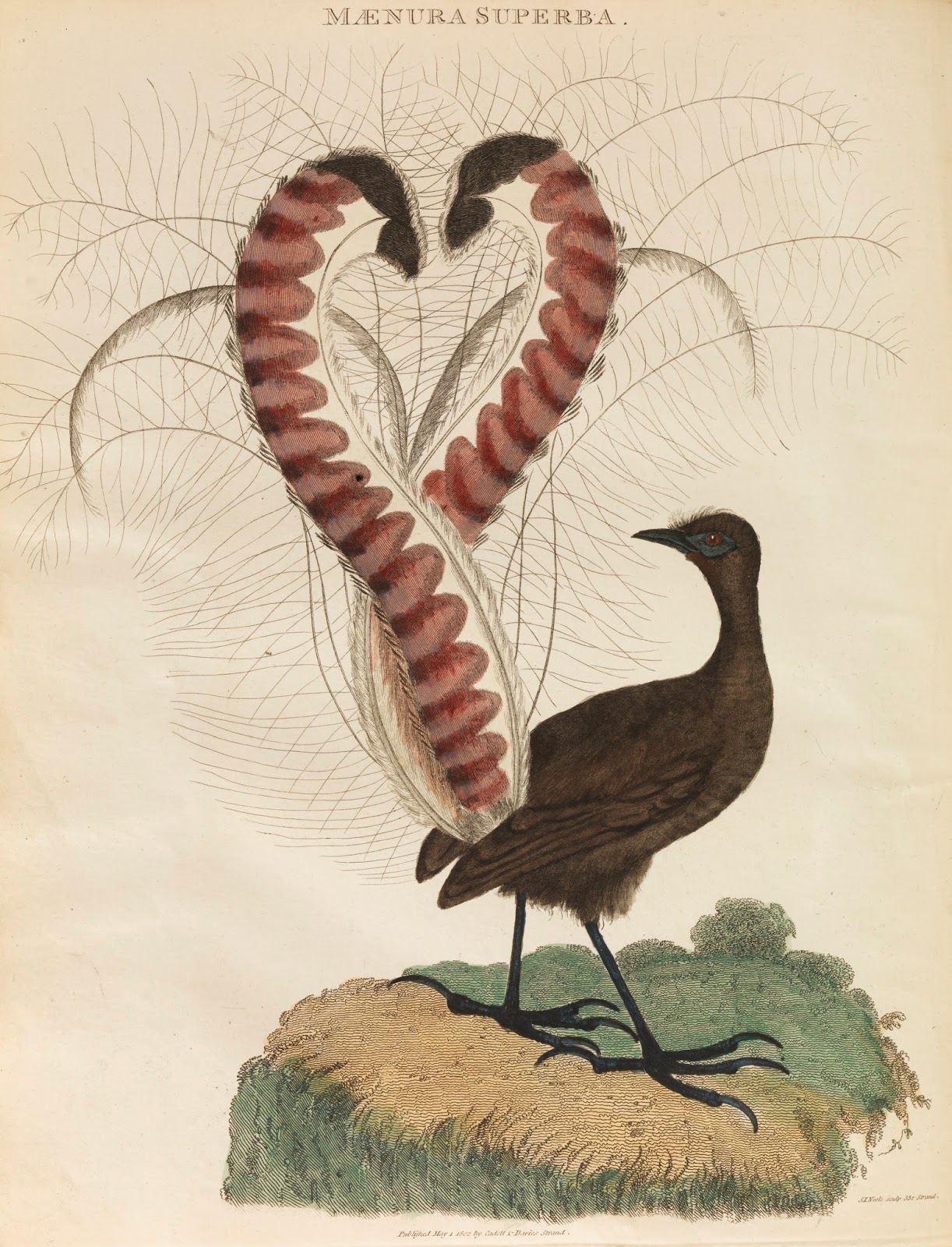
Coming soon to BHL via BHL-Au: Superb Lyrebird, from An account of the English colony in New South Wales, from its first settlement in January 1788 to August 1801, David Collins, 1804.

Who are BHL-Australia?

View Full Size Image
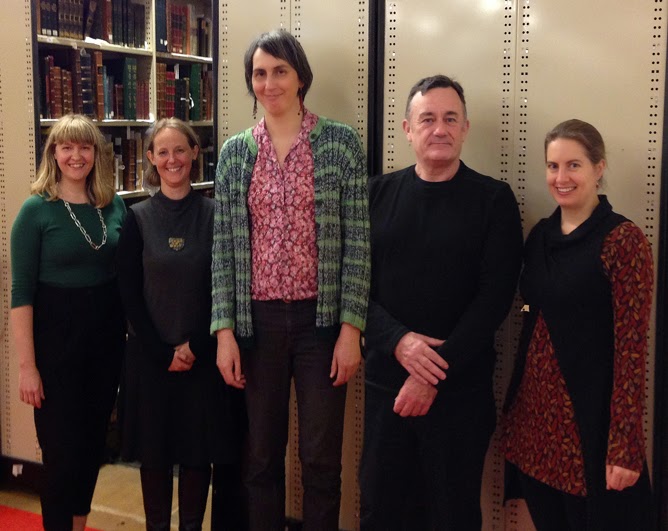
The BHL-Au Team: (from left) Hayley Webster, Ely Wallis, Cerise Howard, Jim Healey, Nicole Kearney. Credit: Simon Sherrin, Museum Victoria.

Ely Wallis is the Manager of Online Collections at Museum Victoria, the Chair of BHL-Global and the Project Lead for BHL-Australia. Ely is a zoologist by training but now spends her time publishing the museum’s encyclopedic collections onto websites, gallery interactives and to apps.

Nicole Kearney is the Project Coordinator of BHL-Au. She is a zoologist, science communicator and professional writer/editor. She has worked at Museum Victoria since 2003, most recently on a series of field guide apps. Her position with BHL combines her professional interests with her life-long love of books.

Cerise Howard is the Digitisation Coordinator for BHL-Au. Occupying various roles at Museum Victoria connected to online publishing over the last ten years, she is also the Artistic Director of the Czech and Slovak Film Festival of Australia (CaSFFA), a writer and broadcaster on film, and a musician with a theatrical bent.

Hayley Webster is the Manager of the Museum Victoria Library. She has been involved in BHL-Au since 2011, contributing books for digitisation, providing access to the library collection, arranging for books to be treated by our Conservation department, and working with our dedicated team of volunteers.

Jim Healey has worked for the past two years as a BHL Volunteer and now joins us as the project’s Technical Support Officer. He brings to BHL over 25 years of experience working in IT, as well as a passion for photography and electronics.

The team also includes five passionate and dedicated BHL Volunteers: Bob Griffith, Heidi Griffith, Sue Halliwell, Alan Nankervis and Tiziana Tizian. All five have been with BHL-Au since February 2012.

September 16, 2014by Kathryn Stine
BHL News, Blog Reel

BHL-Australia Celebrates 1st Year

View Full Size Image

Australia’s biodiversity is unlike any other in the world and in the two centuries since European contact with the continent, the documented observation of the flora and fauna has formed an understanding of the uniqueness of the environment. Last week, the Australian branch of the BHL celebrated one year of contributing to the global BHL project.   Beginning with the launch of our distinctly Australian flavoured website (http://bhl.ala.org.au), the Antipodean operation has been contributing digitised publications and technical skills since July 2011.

Based at Museum Victoria in Melbourne,  BHL-Au was set up as a project of the Atlas of Living Australia and has been concentrating on completing holdings of local science journals and digitising publications produced by Australia’s major collecting institutions. The project is overseen by Dr. Elycia Wallis, manager of Online Collections; Simon Sherrin, technical manager; and Joe Coleman, digitisation manager.

View Full Size Image
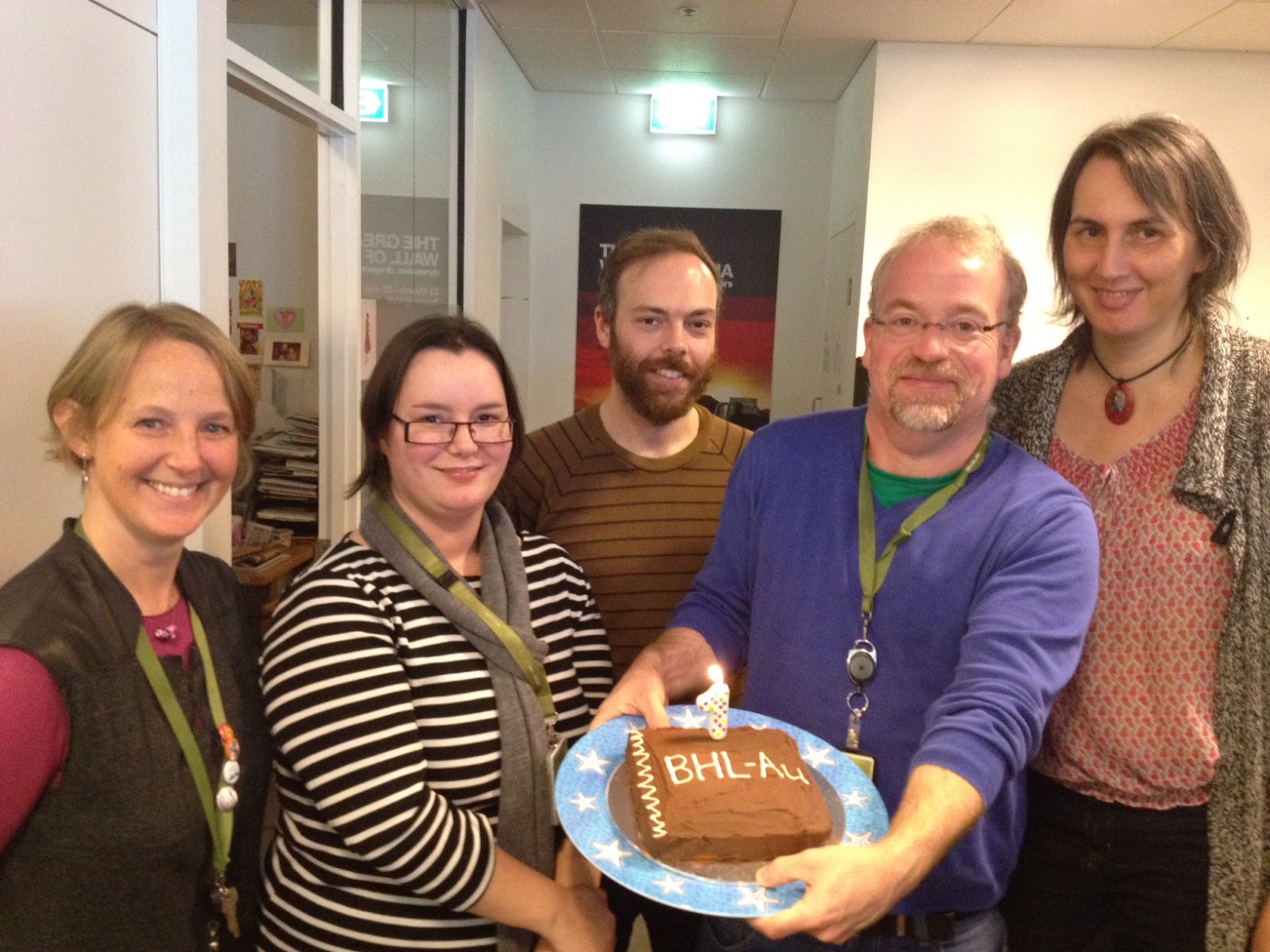
Left to Right: Ely Wallis, Simone Downey, Michael Mason, Simon Sherrin, Cerise Howard

To date, we have uploaded over 30,000 pages, comprising publications from two major natural history museums, naturalist societies and scientific research organisations. Much of our digitisation has been occurring at Museum Victoria and has been conducted by a team of six volunteers who have graciously given their time to capture and post process the images and enter metadata for each item we upload. Since we started, we have had very positive feedback from our users and contributors  which in turn has sparked interest from several other museums and herbaria who are keen to get their publications online.

Through a close relationship with our contribution partners, we have been able to tap into large amounts of material from around the country that has previously been digitised, saving a whole lot of time and double handling.

In addition to the digitisation effort, we have been developing our website to best suit our users, ensuring that our local database is closely synchronised with the global BHL catalogue. We have built a prioritised scanning list which lets our users nominate titles they would like to see included in the BHL and to cast a vote for the prioritisation of items in the scanning schedule.

One year on, we have made a small but significant step in bringing the wealth of Australian biodiversity literature to the fingertips of the science community. There is still a long way to go but we have put a lot of effort in to building the systems to help make this happen.

So thank you to our contributors, volunteers and staff and we look forward to a continuing contribution of biodiversity literature from Down Under.

July 23, 2012by ulib-libraryjobs
BHL News, Blog Reel

What’s in a Logo? Or Rather, What’s in Our Logo?

If you’ve visited our site in the past few days, or follow our blog, you know that BHL now has a new and improved logo! We have our friends at BHL-Australia to thank for this exciting new development, as our logo is a modified version of their own eye-catching design. Before the BHL-Au logo designer, Simon O’Shea, left the BHL-Au project for a new assignment with Lonely Planet, he contributed his creative talent to adapt his original design for our use. He also provided style guidelines that can help extend the use of the logo globally. For access to files of our new logo, or the guidelines surrounding its use, visit out Logo page on our Public Wiki.

Adopting a single image to represent the entirety of what the BHL is and stands for is no simple task. Our new logo deliberately moves away from the literal double helix, vine and butterfly we once used to evoke a broader sense of what the BHL is about in the abstract. That being said, we found that many of our colleagues saw a variety of different things in the simple lines of our new logo. This made us think that it’s time for a BHL inkblot test! We’ll tell you what several members of our team have seen in the logo, and then you tell us what you see. And don’t worry – we won’t be psychologically analyzing you based on what you see. Well, not that much, anyway…;-)

View Full Size Image

Inkblot Test 1: The Book
We’re starting off with the most obvious form: an open book with pages turning.

View Full Size Image

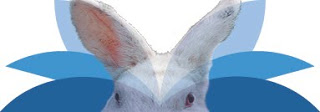
Inkblot Test 2: The Rabbit
Several of our colleagues thought that the logo looked like an open book with rabbit’s ears peaking up over the top.

View Full Size Image

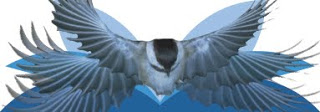
Inkblot Test 3: A Bird in Flight
For some of our Staff, the three overlapping symmetrical shapes in our logo looked like a motion-capture shot of a bird’s wings in flight.

View Full Size Image

Inkblot Test 4: Sydney Opera House
Some have even seen shapes reminiscent of the Sydney Opera House in the branching curves of our logo.

View Full Size Image

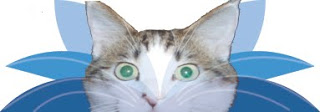
Inkblot Test 5: The Cat
The arched shapes of the logo also bring to mind a cat’s ears and whiskers for some staff members.

View Full Size Image

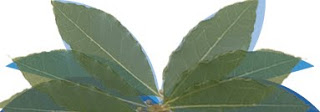
Inkblot Test 6: Leaves
 
Besides the “leaves” of a book, our new logo could also be construed as the leaves of a tree.
Now it’s your turn! What do you see in the shapes of our logo? Tell us by leaving a comment on this post, sending us feedback, sending us a Tweet, or Posting on our Wall. If we get enough response, we’ll do a follow-up post detailing the many other forms our users see in the blue depths of our logo.
September 6, 2011by ulib-libraryjobs
BHL News, Blog Reel

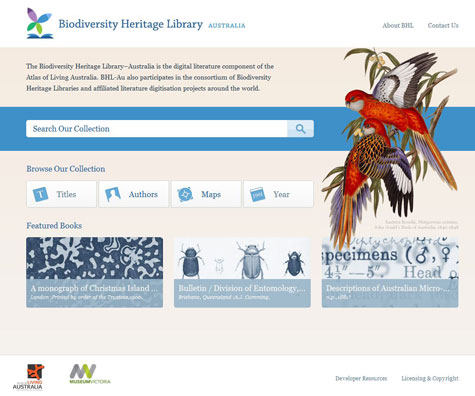
BHL goes live in Australia with launch of BHL-Australia site

View Full Size Image
BHL-Australia Screenshot

The newest addition to the BHL global family, BHL-Australia, has now launched. BHL in Australia is the digital literature component of the Atlas of Living Australia (ALA), a national project that aims to make biodiversity information more accessible and useable on line. It is a partnership between CSIRO, Australia’s national science agency, the Australian natural history collections community and the Australian Government.

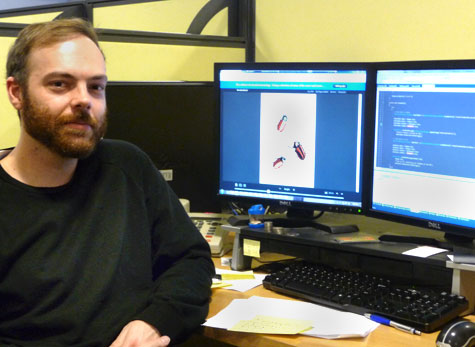
The Australian node project is being managed through Museum Victoria, based in Melbourne. Dr Elycia Wallis, the BHL Australia node team lead said “We are so pleased to have an Australian BHL node up and running. Now the fun part of developing new tools and functionality can start so that we can share these back to the global BHL community.” The Australian node has taken the core BHL code and reworked it with a redesigned user interface. Designer Simon O’Shea and developer Michael Mason at Museum Victoria wanted to concentrate on providing the core functionality of BHL as well as giving an Australian feel to the site design by using many beautiful images of Australian native species.

View Full Size Image
Online developer Michael Mason
Source: Museum Victoria

New Australian scanning operations are just getting underway but we expect that, with many thousands of references to Australian species already in BHL references, Australian scanning will be a targeted activity. Museum Victoria, with new book-scanning equipment, will be leading the development of new scanning projects starting with the complete archive of Memoirs of Museum Victoria containing the first scientific descriptions of many Victorian animal species.

Quick links:
  • BHL-Australia site
  • Follow the Atlas of Living Australia on Twitter
July 14, 2011by joelrichard
Page 3 of 3«123

Help Support BHL

BHL's existence depends on the financial support of its patrons. Help us keep this free resource alive!

search

About BHL

The Biodiversity Heritage Library (BHL) is the world’s largest open access digital library for biodiversity literature and archives. BHL operates as a worldwide consortium of natural history, botanical, research, and national libraries working together to digitize the natural history literature held in their collections and make it freely available for open access as part of a global “biodiversity community.”

Join Our Mailing List

Sign up to receive the latest news, content highlights, and promotions.

Subscribe Now

Subscribe to Blog via Email

Enter your email address to subscribe to this blog and receive notifications of new posts by email.

Join 319 other subscribers

Subscribe to Blog Via RSS

Subscribe to the blog RSS feed to stay up-to-date on all the latest BHL posts.

Access RSS Feed

Inspiring Discovery through Free Access to Biodiversity Knowledge.

The Biodiversity Heritage Library makes it easier than ever for you to access the information you need to study and explore life on Earth…for free, anytime, anywhere.


64+ Million Pages of
Biodiversity Literature Online.

EXPLORE

Tools and Services
to Transform Research.

EXPLORE

300,000+
Illustrations on Flickr.

EXPLORE

ABOUT | HARMFUL CONTENT | PRIVACY | SITE MAP | TERMS OF USE