Biodiversity Heritage Library - Program news and collection highlights from BHL
  • Home
  • News
  • Featured Books
    • All Featured Books
    • Book of the Month Series
    • BHL at 20
  • User Stories
  • Campaigns
    • Fossil Stories
    • Garden Stories
    • Monsters Are Real
    • Page Frights
    • Her Natural History
    • Earth Optimism 2020
  • Tech Blog
  • Visit BHL
Home
News
Featured Books
    All Featured Books
    Book of the Month Series
    BHL at 20
User Stories
Campaigns
    Fossil Stories
    Garden Stories
    Monsters Are Real
    Page Frights
    Her Natural History
    Earth Optimism 2020
Tech Blog
Visit BHL
  • Home
  • News
  • Featured Books
    • All Featured Books
    • Book of the Month Series
    • BHL at 20
  • User Stories
  • Campaigns
    • Fossil Stories
    • Garden Stories
    • Monsters Are Real
    • Page Frights
    • Her Natural History
    • Earth Optimism 2020
  • Tech Blog
  • Visit BHL
Biodiversity Heritage Library - Program news and collection highlights from BHL
BHL News, Blog Reel

Global BHL at TDWG 2012

Portrait version of the Biodiversity Heritage Library logo.

A great participation in Beijing, China.

View Full Size ImageNǐ hǎo! Last month, I attended the Annual Meeting of the Biodiversity Informatics Standards Organization (www.tdwg.org), one of my favorite meetings of the year because it provides a thorough view of the current advances in the field of Biodiversity Informatics.  TDWG 2012 was hosted by the Chinese Academy of Sciences in Beijing, China, on Oct. 22-27.

This meeting was particularly relevant for the Biodiversity Heritage Library because of its role: “Toward an International Infrastructure for Biodiversity Information“. Personally, this was my first time involved as Technical Director of BHL and therefore, I wanted to get as much as possible from the opportunity, sharing the technical work that all my BHL colleagues around the world have done this year and conveying the message of the new challenges that BHL will follow.

I arrived on Saturday and attended the TDWG Executive Committee Meeting all Sunday.  On Monday, Oct. 22nd, after the formal opening and introductions and a warm welcome by the hosts and TDWG officials, the Plenary speaker, Dr. Robert Robbins, presented on “How Diverse is the Biosphere? New Tools, Recent Discoveries, Huge Implications,” followed up by several paper presentations that addressed different topics on biodiversity information standards, organization of genomic data, aggregation efforts, regional initiatives and developing technologies.  I presented on the work done by our colleague Trish Rose-Sandler to define the functional requirements for a repository of citations as improvements to our existing infrastructure in The BHL and  bibliographic citations and commented on our plans in BHL towards new services in support of a Global Names Architecture.

View Full Size Image
Tom Garnett

Former BHL Director

On Tuesday morning, at the “Biodiversity database and journal interface in e-publication era” Symposium, we enjoyed a talk titled “From Taxonomic Literature to Cybertaxonomic Content” based on a paper that our former BHL Program Director, Tom Garnett and our former BHL Technical Director, Chris Freeland, co-authored in BMC Proceedings with several other colleagues from different institutions, including Dr. Cynthia Parr from Encyclopedia of Life (EOL).

Closing Tuesday morning, the JRS Biodiversity Foundation and the Belgian Cooperation for Development sponsored the African Biodiversity Information Symposium.  It was great to see there, among other presenters, two of our colleagues who participated last year in the JRS Africa Digitization Workshop in Chicago (previous to the Life and Literature Conference): Dr. Alex Asase, from the Department of Botany, University of Ghana was presenting on “Developing biodiversity informatics infrastructure to support conservation of plant diversity in Ghana” and Lucy W. Wauringi, from Africa Conservation Center in Kenya, presented on “Building Biodiversity Information Networks for the compilation of Kenya’s Natural Capital”.  Dr. Asase was also present at the BHL Africa Meeting earlier in June of this year at SANBI.

View Full Size Image
Dr. Hong Cui presenting at the Institute of Botany, CAS

Tuesday afternoon, I was invited to present at the Institute of Botany of the Chinese Academy of Sciences (CAS) on the latest Global BHL developments and learned about this year’s activities and future plans for the next two years with BHL-China and the National Specimen Information Infrastructure.  Dr. Hong Cui, Assistant Professor at the University of Arizona, was also invited to present on Semantic Annotation, Ontology Building, and Interactive Key Generation from Morphological Descriptions and she was also extremely kind to help out with the language barrier throughout all the meeting.

View Full Size Image
Art of Life at TDWG 2012 poster session

Wednesday morning started with personal recollections from the organizers and participants in honor of the late Dr. Frank Bisby.  Following the remembrance, the Plenary Speaker, Dr. Li-Qiang Ji from the Institute of Zoology, CAS, presented the Bisby Core – a Taxonomic Data Transfer Standard for the Multiple Taxonomy Environment.  The last hour and a half of Wednesday morning was dedicated to the poster session where I had the opportunity to represent my colleagues’ work on the Art of Life project.  Funded by NEH, this multi-institutional project involves participation from the Missouri Botanical Garden, the University of Colorado Boulder, the Indianapolis Museum of Art and other BHL partner institutions.  I was glad to see such great interest in improving access to millions of digital images demonstrated by several of the participants who approached the poster session.

View Full Size Image
Dr. Fenghong Liu at the Institute of Botany, CAS

On Wednesday afternoon, Jiří Frank, from the National Museum Prague, a member of BHL-Europe, lead the Workshop “Global dissemination of natural history content via Biodiversity Library Exhibition (BLE)” where I contributed with a small introduction to Global BHL and Dr. Fenghong Liu from the Institute of Botany of the Chinese Academy of Sciences, presented BHL China’s Latest Progress. Jiří gave an interesting Introduction to the BLE platform from the user perspective.

View Full Size Image
Dr. Xu Zheping attending TDWG 2012

Thursday morning, Dr. Zheping Xu introduced an interesting paper on the “Biodiversity Information Service in China: The Architecture and Techniques” and Cynthia Parr presented case studies from her experiences at EOL, with Katja Schulz and Jennifer Hammock, on “leveraging an international infrastructure“.  Later in the afternoon, I was invited to present at the Biodiversity for Cooperation and Development Interest Group session on BHL Africa, as a way to evaluate how to work together for a coordinated project on biodiversity literature digitization towards development of digital libraries.

Finally, during the Lighting Talks on Friday, Janna Hoffman, from the Museum für Naturkunde Berlin, a BHL-Europe member, presented on Open Up! paleontological multimedia data for the public.  I also took the opportunity to give a short talk reminding all attendees interested in contributing to the Art of Life Schema to please send us their feedback.
As the meeting came to an end, with a feeling of having attended a very fruitful and busy event, where Global BHL staff was definitely present and very active, we all said goodbye, hoping to meet again next year during TDWG 2013 in Florence, Italy.  By the way, next year’s Chair of the Program Committee will be our colleague of BHL-Europe, Heimo Rainer, from the Natural History Museum of Vienna!

And for those of you interested in reading more in depth about any of these topics, I invite you to look at the TDWG 2012 program in more detail and browse through the presentations linked here: http://www.tdwg.org/fileadmin/2012conference/slides/TDWG_2012_Presentations.pdf.

Until the next one, Xièxiè! Ciao!

View Full Size Image
The Great Wall of China
November 19, 2012by suzanne.chase
Blog Reel, User Stories

BHL and Our Users: Dr. Dieter Oschadleus

View Full Size Image
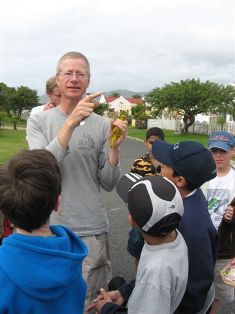
Dr. Oschadleus with a male Cape Weaver

In June, 2012, six BHL-US/UK staff members, representing three BHL member institutions, traveled to Cape Town, South Africa, to attend an organizational meeting for BHL-Africa. In addition to the U.S. participants, the meeting also brought together twenty African colleagues from six countries, all dedicated to participating in our newest global initiative. Many of these colleagues are librarians themselves, and share BHL daily with patrons at their own home libraries.

One such individual, whom we interviewed several months ago, is Margaret Koopman, a librarian at the ornithological department at the University of Cape Town. She suggested that we also interview one of her patrons, a frequent user of BHL: Dr. Dieter Oschadleus. Dr. Oschadleus was gracious enough to agree to the interview, which we are proud to present below.

What is your title, institutional affiliation (or alternative place of employment), and area of interest?

I am a Doctor in the Animal Demography Unit at the University of Cape Town. I am interested in all aspects of the weaver family Ploceidae.

How long have you been in your field of study?

About 2 decades.

When did you first discover BHL?

Several years ago.

What is your opinion of BHL and how has it impacted your research?

Brilliant! It has helped me to obtain many references quickly and easily and for free, particularly those with historical / early references to weavers.

How often do you use BHL?

A lot, but on an irregular basis – sometimes days or weeks may go by without using it, but sometimes I may spend hours searching or downloading references.

How do you usually use BHL (read the titles online/download whole PDFs/Selecting Pages to Download for a custom PDF/Downloading High Resolution Images/Generating Taxonomic Bibliographies/etc.)

Mostly download whole PDFs.

What are your favorite features/services on BHL?

I like the fixed web address for journals, eg www.biodiversitylibrary.org/bibliography/8115 for Ibis; The map function is great (recently discovered)!

If you could change one thing about BHL, what would it be, or what developmental aspect would you like the BHL team to focus on next?

Filling gaps where they sometimes exist in journal series (I realize that few copies may exist in some cases, but all the more reason to get them digitized!)

If you had to choose one title/item in BHL that has most impacted your research, or one item that you prefer above any other in BHL, what would it be and why?

There are many. To give one example: Die Vögel Afrikas, von Ant. Reichenow

As we continue to dedicate efforts to bringing BHL and its resources to all reaches of the globe, we’re excited to hear from our global users about the impact BHL has on their work. We send a sincere thanks to Dr. Oschadleus for his participation in this series. Thanks for tuning in to BHL and Our Users, as we strive to bring you more insight from our international users in the months to come!

View Full Size Image
An illustration of weaver birds (Ploceidae), Dr. Oschadleus’ speciality.

If you’re interested in being interviewed on our blog, leave a comment on this post, send us feedback, or email us as [email protected].

* Photo of Dr. Oschadleus by Lynne Roscoe

October 16, 2012by Grace Costantino
Blog Reel, User Stories

BHL and Our Users: Margaret Koopman

Portrait version of the Biodiversity Heritage Library logo.
View Full Size Image

This past June, BHL-Staff visited Cape Town, South Africa for a series of meetings aimed at developing a BHL for sub-Saharan Africa. The meeting brought together 20 African participants from six countries with a variety of backgrounds including Librarians, Researchers, and Information Technologists. One such individual was Margaret Koopman, a librarian at an ornithological institute in South Africa. Margaret uses BHL regularly to help her fulfill the needs of her patrons, and she graciously agreed to be interviewed about that usage for our blog.

What is your title, institutional affiliation (or alternative place of employment), and area of interest?

I am a librarian at the Niven Library of the Percy FitzPatrick Institute of African Ornithology.  My areas of interest include ornithology, biodiversity conservation and environmental history.

How long have you been in your field of study?

I have been a qualified librarian since 1983, working almost entirely in Life Sciences libraries.  My particular field of study is environmental history in which I have an MSc.

When did you first discover BHL?

In April 2009 I linked BHL to my online catalogue.  In June 2009 I was trying to track down a copy of A Monograph of the Hirundinidae by R.B. Sharpe & C.W. Wyatt for information on population crashes of swallows in southern Africa because of extreme weather events.  I found the book in BHL and went on to write up a small piece from this publication about a population crash which took place in 1891 in Maputo, Mozambique for the Cape Bird Club Newsletter, Promerops.  The URL for BHL was included to enable readers of the article to find the BHL treasures for themselves.

What is your opinion of BHL and how has it impacted your research?

Although the Niven Library has an exceptional collection of material on African ornithology, it is not comprehensive.  BHL has been a great help in linking African ornithological research to early material published in European and British publications.  I am now able to point other researchers to what is available at BHL instead of providing pdfs myself.

How often do you use BHL?

This depends on the demand of my library users, probably on average once a week.

How do you usually use BHL (read the titles online/download whole PDFs/Select Pages to Download for a custom PDF/Download High Resolution Images/Generate Taxonomic Bibliographies/etc.)

I generally download whole PDFs, select pages to download, or identify a PDF and forward the URL to a user.

What are your favorite features/services on BHL?

I find the BHL web presence attractive and inviting.  As my use is focused I appreciate the ease with which I can establish whether a publication is available or not and the speed with which I can download material.

If you could change one thing about BHL, what would it be, or what developmental aspect would you like the BHL team to focus on next?

I know that my user community would appreciate single article access.

If you had to choose one title/item in BHL that has most impacted your research, or one item that you prefer above any other in BHL, what would it be and why?

Anything to do with African ornithology!  Providing information in this field is my mission and BHL has enabled me to do this much more easily and comprehensively.

July 24, 2012by ulib-libraryjobs
BHL News, Blog Reel

Building a BHL Africa

Portrait version of the Biodiversity Heritage Library logo.
View Full Size Image
Participants at the BHL-Africa Meeting, June 14-15, 2012, Cape Town, South Africa.

The mission of the Biodiversity Heritage Library is to build an open access digital library of biodiversity literature for the world. For the past several years, the BHL has been building upon its global network of partners, and on June 14-15, 2012, over 25 librarians, scientists and information technology managers came together at Kirstenbosch National Botanical Garden to discuss the possibilities for developing a BHL node in Africa. This organization and planning meeting was generously funded by the JRS Biodiversity Foundation and was a direct follow up to the initial JRS funded meetings hosted by the Biodiversity Synthesis Center/Field Museum of Natural History in Chicago in November, 2011.

Six representatives from the BHL U.S./U.K. node were present to provide an introduction to the BHL, report on the current global environment and  lead important breakout discussions regarding various administrative and technical aspects of the BHL. As always, BHL staff actively promoted the project and generated the enthusiasm required to engage the participants. BHL Technical Director Chris Freeland (who unfortunately could not attend the meetings) created this excellent video to rally the meeting participants.

View Full Size Image
A working day at the BHL-Africa meeting.

The objectives for the two days of discussion included: the identification of the scope and magnitude of African biodiversity literature collections, the creation of a project plan for coordinated digitization, as well as identifying the local digitization capacity among the attendees’ institutions. The first day of discussion was focused upon learning more about the attendees’ backgrounds, the current digitization activities in their institutions and how the creation of a BHL Africa would impact their work or the work of others in their institutions. Grace Costantino, BHL Program Manager, Smithsonian Institution Libraries, and Christine Giannoni, Museum Librarian from the Field Museum, conducted several video interviews that you can view here.

View Full Size Image
Nancy Gwinn leading the Governance Breakout Group.

The second day of discussion was divided into the following four breakout groups: Governance, led by Nancy Gwinn, Director, Smithsonian Institution Libraries; Infrastructure, led by William Ulate, Global BHL Project Manager, Missouri Botanical Garden; Scanning, led by Martin Kalfatovic, BHL Program Director, Smithsonian Institution Libraries; and Collaboration, led by Anne-Lise Fourie, Assistant Director, SANBI Libraries. These sessions really got down to “brass tacks” and identified the needs, strengths and opportunities among the various institutions. While the need for stable technological infrastructure was a common concern, it was noted that this was on a positive trajectory in several countries. Participants felt that their institutions hold a tremendous amount of materials that have not been digitized, including: gray literature, materials published in Africa with low distribution, as well as unpublished literature.

Several key themes emerged from the two days of discussion:

  • the desire for open access to scientific literature.
  • with people across the continent embracing mobile technology, these digitized resources must be adapted for mobile technology.
  • the “BHL in a Box” concept was highly desired. This would entail creating interactive CDs of BHL content for distribution in areas where internet access is unreliable or unavailable.

The meetings concluded with a high level of excitement and several tasks for moving BHL Africa forward. The ultimate long-term goal is to provide open access biodiversity literature to African researchers as well as to establish a BHL Africa project organized by Africans and operated in Africa. A “Concept Document” created by the Governance breakout group is being used as a basis for a Memorandum of Understanding (MOU). Participants hope to regroup at Stellenbosch University (in conjunction with Berlin 10) in fall 2012 to finalize an MOU and officially launch BHL-Africa.

Pictures courtesy Martin Kalfatovic

July 16, 2012by ulib-libraryjobs
Blog Reel, Featured Books

Book of the Week: BHL on Safari

View Full Size Image
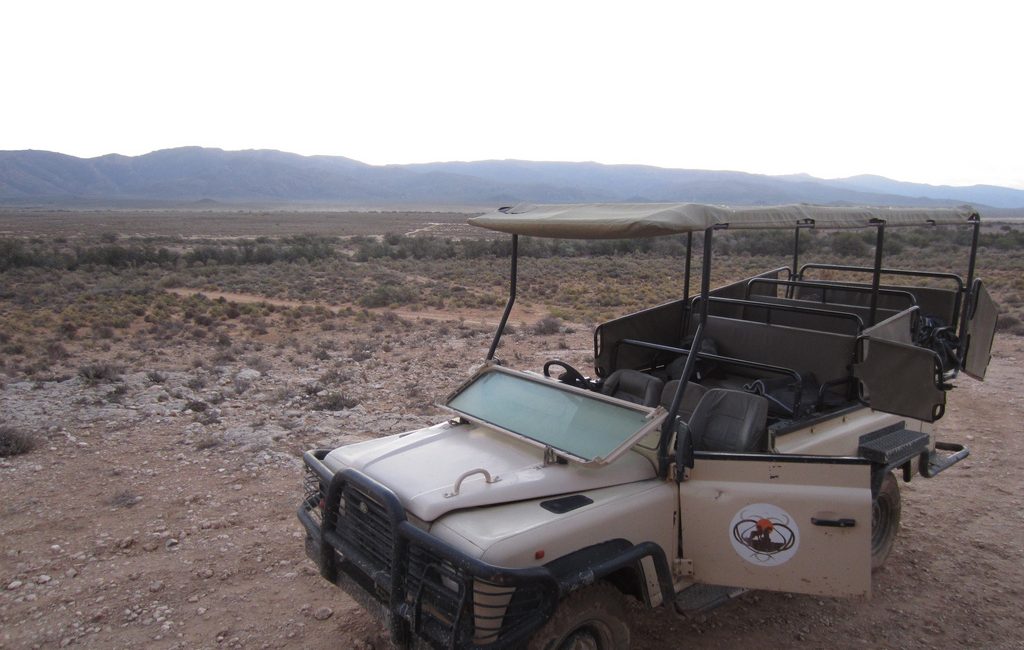
The safari car at Inverdoorn Game Reserve

Over the past few weeks, you’ve heard a lot about our recent meetings and world travels in Berlin, Germany and Cape Town, South Africa. The BHL-Europe, BHL-Global, and BHL-Africa meetings were incredibly productive, paving the way for the future development of both the existing global BHL network as well as the inception of a new BHL node in sub-Saharan Africa. As you can imagine, such meetings, though undeniably rewarding, also require quite a bit of work, so the final weekend of our escapades, we decided it was time to “play” and, in true BHL spirit, explore the country’s wildlife in person, through a safari at Inverdoorn Game Reserve and Safari Lodge.

As BHL employees, we naturally saw our experience through the lens of the biodiversity literature held in our digital collection and recognized many species immediately from illustrations we’d seen in BHL. On returning to our “regular” lives, we found that one book in particular served as a vivid reminder of our great adventure: Johnson’s Household Book of Nature (1880), edited by Hugh Craig.

Johnson’s Book of Nature is intended for the general public, presenting information not in technical scientific language but in everyday terms. It is the illustrations, however, that truly distinguish this work. The editor, Hugh Craig, eloquently wrote,

To the attractiveness of this work the numerous beautifully-colored plates with which it is illustrated contribute in no ordinary degree. The designs are original and have been prepared at unusual expense. They represent in a more vivid and striking way than mere words can depict, the shape, the habits and the habitations of the animals, as well as the colors with which Nature has adorned them and the attitudes which most distinctly characterize them.

There are innumerable ways to explore nature, from books and illustrations to photographs and, best of all, personal interaction. Our BHL group was lucky to experience Africa on a multitude of levels, and we’re thrilled to share that opportunity with you!

View Full Size Image
BHL Staff on Safari! Back Row, Left to Right: Martin Kalfatovic, Doug Holland, William Ulate. Front Row, Left to Right: Grace Costantino, Christine Giannoni


The Ungulates

Wildebeest and Common Eland

View Full Size Image
Wildebeest (Top) and Common Eland (Bottom)
Also known as a Gnu, the Wildebeest is a bizarre-looking creature, with the tail of a horse, the head of a Cape Buffalo, and the stripes of a zebra. Our tour guide, Alex, told us that in Africa, they say that when the creator was finished creating life, he had leftover pieces and combined them into one animal to create the wildebeest.
View Full Size Image
Wildebeest at Inverdoorn
The Common Eland is the second largest antelope species in the world (the largest is the Giant Eland). They display what is known as the Flehmen Response, during which a male will stick his head near fresh female urine in order to facilitate the transmission of pheromones to their Jacobson’s Organ, which helps them determine whether the female is in heat. We experienced this display with the male Cape Buffalo we encountered.
View Full Size Image
Common Eland at Inverdoorn

__________________________________________________

Zebra

View Full Size Image
Zebra (Top)

There are three recognized species of zebra, with many subspecies. We saw Plains Zebras on our safari. Though closely related to the horse, Alex told us that, as zebras lack significant stamina and have weak backs, they have never been truly domesticated.

View Full Size Image
Plains Zebra at Inverdoorn

__________________________________________________

Impala

The word impala comes from the Zulu language, meaning “gazelle.” Their populations are estimated to be near 2 million in Africa. It was the only ungulate we saw on our safari that is not pictured in Johnson’s Book of Nature, but it was so lovely that we couldn’t resist including its picture here.

View Full Size Image
Impala at Inverdoorn

__________________________________________________

Springbok

View Full Size Image
Springbok (Top Right)
The springbok is a skittish creature, literally “springing” away from anything it deems remotely threatening, including, apparently, safari groups. Hence, we only captured shots of these graceful animals sprinting away from us. Alex informed us that this species has an incredible jumping capability; when threatened, they will lock their legs and channel their momentum earthbound, creating incredible thrust that allows them to leap over enemies.
View Full Size Image

__________________________________________________

Cape Buffalo

View Full Size Image
Cape Buffalo (Top)

Cape Buffalo can reach lengths of 5-11 ft and weights of up to 2,000 lbs. Unpredictable, they can be dangerous to humans, but the group we saw on safari were clearly used to being observed and all but ignored us.


View Full Size Image
Cape Buffalo at Inverdoorn

__________________________________________________

Giraffe

View Full Size Image
Giraffe

The most surprising characteristic of the giraffes we encountered was the grace with which they run, despite their absurdly-long necks. The male giraffe pictured in this photograph was particularly dark due to high levels of testosterone.

View Full Size Image
Giraffe at Inverdoorn

__________________________________________________

Rhinoceros

View Full Size Image
White Rhinoceros (Top)

White Rhinoceros, also known as square-lipped rhinoceros, are endangered, being hunted maliciously for their horns, which are sold on the black market for use in Chinese medicine. The horns of the rhinoceros at Inverdoorn were all tagged and poisoned, making them unattractive to potential poachers. Inverdoorn has three rhinos: a male, female, and their calf. The female rhinoceros’ horn has been preemptively removed to save her from poaching, but the act has made her somewhat ill-tempered. Alex told us she has a history of charging vehicles. Fortunately for us, she seemed to be in a good mood during our visit.

View Full Size Image
Male White Rhinoceros at Inverdoorn

__________________________________________________

Hippopotamus

View Full Size Image
Hippopotamus

The name hippopotamus comes from the ancient Greek for “river horse.” It is the third-largest land mammal and is terribly aggressive, being considered one of the most dangerous animals in Africa. Near water sources with hippo populations, there are signs reading “No Boats: Hippos Present.”

View Full Size Image
Hippos at Inverdoorn

__________________________________________________

The Predators

Lion

View Full Size Image
African Lion (Top)
Lions are one of the most iconic predators on the planet, but sadly, they often find themselves prey to what is known as Cage Hunting. The illegal practice of Cage Hunting occurs when lions are bred to be sold to “hunters” that shoot them while they are imprisoned in cages. Though outlawed, the activity still occurs, and the lions at Inverdoorn were purchased by the park from just such an operation in order to save their lives. They are thus larger than the average lion, but will unfortunately never be allowed to breed, since neither the mother or the father would be able to teach the cubs how to survive in the wild.
View Full Size Image
Female Lion at Inverdoorn


View Full Size Image
Male Lion at Inverdoorn

__________________________________________________

Cheetah

View Full Size Image
Cheetah (Bottom Left)
The cheetah is the fastest land animal, reaching speeds of up to 70-75 mph. Inverdoorn runs a cheetah conservation program, and as part of our visit, the keepers demonstrated just how fast these cats really are. After luring a group of three young cheetahs to one end of a “runway,” they then attached meat to a lure and reeled it in, sending the cheetahs chasing after it at top speeds. It was truly incredible.
View Full Size Image
Cheetahs at Inverdoorn
Finally, since no BHL-Africa activity is complete without a movie, BHL Program Director Martin Kalfatovic created a short video about our epic adventure. Enjoy, and be sure to check out all of the images from Johnson’s Book of Nature in Flickr.

Pictures by Grace Costantino and Martin Kalfatovic

July 12, 2012by michelle.underhill
BHL News, Blog Reel

The BHL Button: A World Traveler

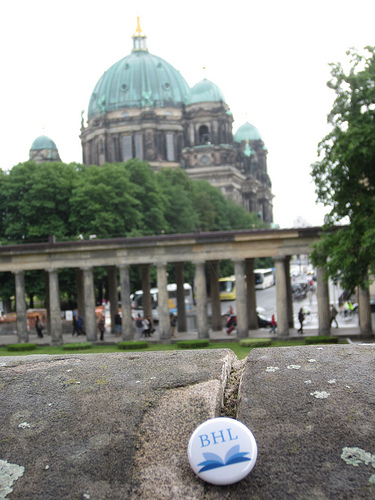
As we continue our blog posts regarding our recent Berlin and Africa trips (for the BHL-Europe, BHL-Global, and BHL-Africa meetings; stay tuned for upcoming posts on these events), we thought we’d have some fun and explore these trips from the perspective of our friend, the BHL button.

The BHL button is a global traveler, having been in three continents already since its inception in January, 2012. The button’s travels are an excellent representation of the growing global reach of our initiatives.

View Full Size Image
BHL Button and the Berlin Cathedral
View Full Size Image
BHL Button and the German History Museum
View Full Size Image
BHL Button and the Altes Museum
View Full Size Image
BHL Button on Egypt Air, flying from Berlin to Cairo
View Full Size Image
BHL Button with Rhino at the Pretoria Natural History Museum (South Africa)
View Full Size Image
BHL Button on British Airways from Johannesburg to Cape Town, South Africa
View Full Size Image
BHL Button at the Kirstenbosch Garden in South Africa
View Full Size Image
BHL Button at the Cape in South Africa
View Full Size Image
BHL Button flying home from Cape Town to Washington

The button also serves as a great way to introduce people to the project in spontaneous, casual ways. BHL staff shared the button (and business cards) with our safari travel guide and our marine biologist boat tour guide in South Africa. Both were extremely enthusiastic about the project, touting the importance of freely-available biodiversity literature for scientific research and conservation efforts.

View Full Size Image
BHL Program Manager, Grace Costantino, presenting business cards & buttons to safari tour guide, Alex
View Full Size Image
Alex with the button and business cards
View Full Size Image
Marine Biologist boat tour guide with BHL button

It’s amazing what a powerful tool such a small button can be, and we’re excited to venture to even more countries and continents with our pal in the months and years to come!

Special thanks to BHL Program Director, Martin Kalfatovic, for sharing these pictures!

July 3, 2012by ulib-libraryjobs
Page 3 of 3«123

Help Support BHL

BHL's existence depends on the financial support of its patrons. Help us keep this free resource alive!

search

About BHL

The Biodiversity Heritage Library (BHL) is the world’s largest open access digital library for biodiversity literature and archives. BHL operates as a worldwide consortium of natural history, botanical, research, and national libraries working together to digitize the natural history literature held in their collections and make it freely available for open access as part of a global “biodiversity community.”

Join Our Mailing List

Sign up to receive the latest news, content highlights, and promotions.

Subscribe Now

Subscribe to Blog via Email

Enter your email address to subscribe to this blog and receive notifications of new posts by email.

Join 319 other subscribers

Subscribe to Blog Via RSS

Subscribe to the blog RSS feed to stay up-to-date on all the latest BHL posts.

Access RSS Feed

Inspiring Discovery through Free Access to Biodiversity Knowledge.

The Biodiversity Heritage Library makes it easier than ever for you to access the information you need to study and explore life on Earth…for free, anytime, anywhere.


ABOUT | HARMFUL CONTENT | PRIVACY | SITE MAP | TERMS OF USE