Biodiversity Heritage Library - Program news and collection highlights from BHL
  • Home
  • News
  • Featured Books
    • All Featured Books
    • Book of the Month Series
    • BHL at 20
  • User Stories
  • Campaigns
    • Fossil Stories
    • Garden Stories
    • Monsters Are Real
    • Page Frights
    • Her Natural History
    • Earth Optimism 2020
  • Tech Blog
  • Visit BHL
Home
News
Featured Books
    All Featured Books
    Book of the Month Series
    BHL at 20
User Stories
Campaigns
    Fossil Stories
    Garden Stories
    Monsters Are Real
    Page Frights
    Her Natural History
    Earth Optimism 2020
Tech Blog
Visit BHL
  • Home
  • News
  • Featured Books
    • All Featured Books
    • Book of the Month Series
    • BHL at 20
  • User Stories
  • Campaigns
    • Fossil Stories
    • Garden Stories
    • Monsters Are Real
    • Page Frights
    • Her Natural History
    • Earth Optimism 2020
  • Tech Blog
  • Visit BHL
Biodiversity Heritage Library - Program news and collection highlights from BHL
BHL News, Blog Reel

BHL Africa Report from Internet Archive’s Global Director

View Full Size Image

Since it’s initial organization in 2012 and launch in 2013, BHL Africa has been hard at work developing a strategy, framework, and methodology for contributing the valuable biodiversity information held within the node’s participating institutions to BHL. Significant progress occurred in April and June, 2014, with the arrival and subsequent installation of Internet Archive scanning machines at the University of Pretoria in South Africa.

View Full Size Image
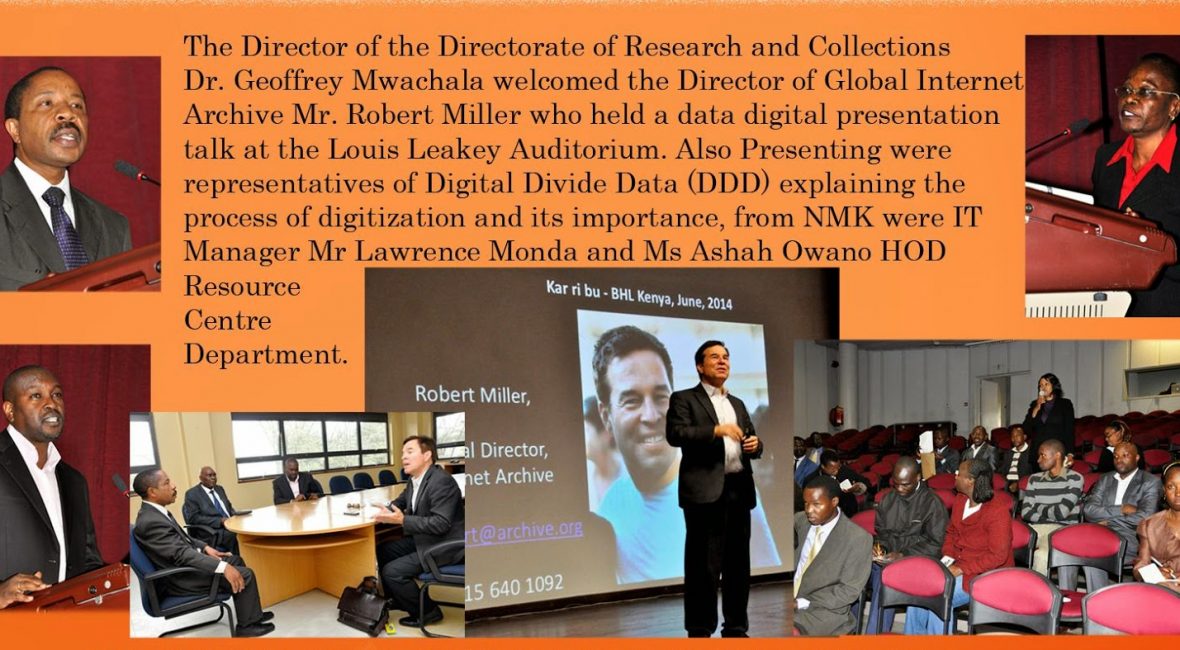
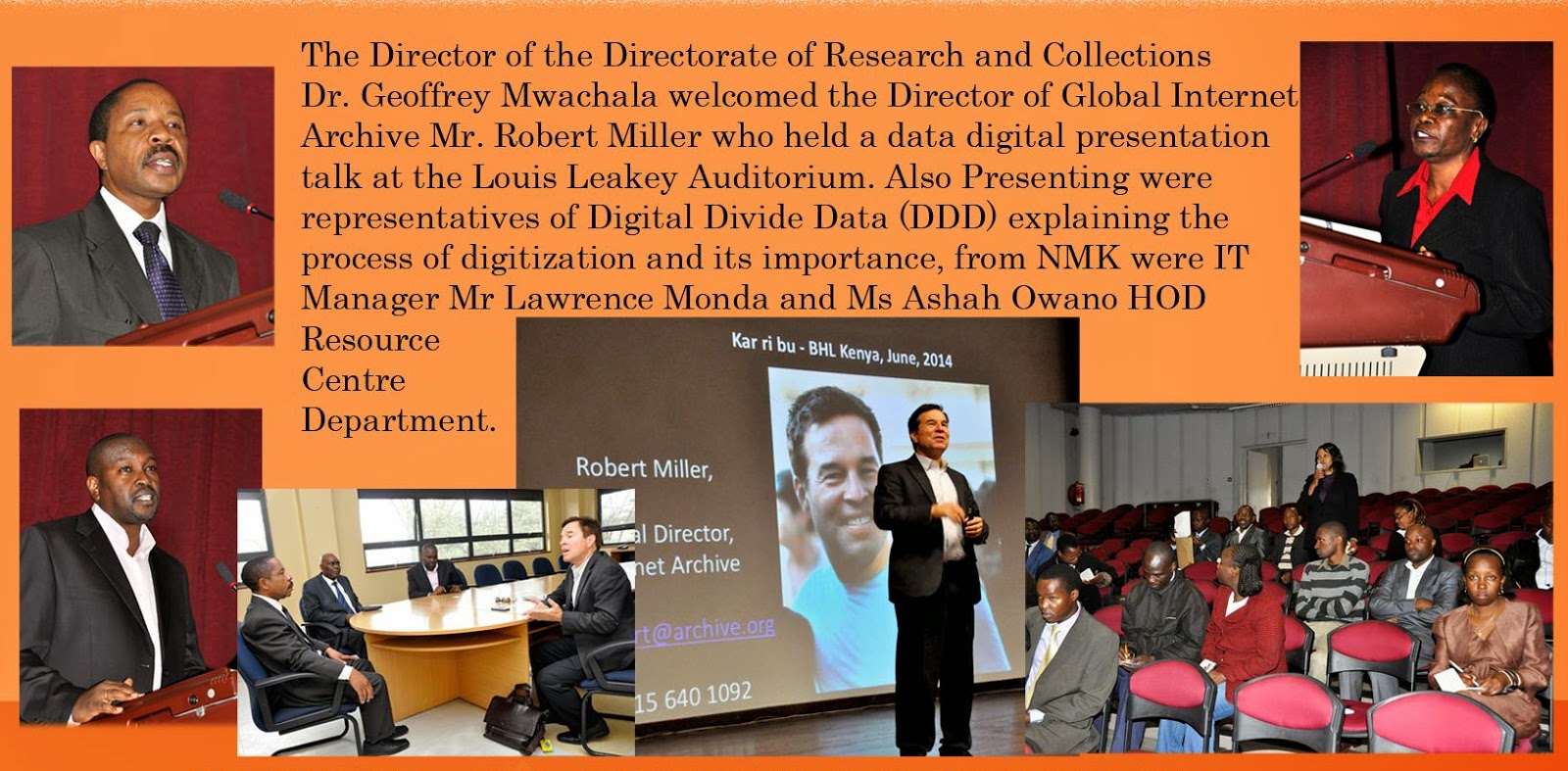
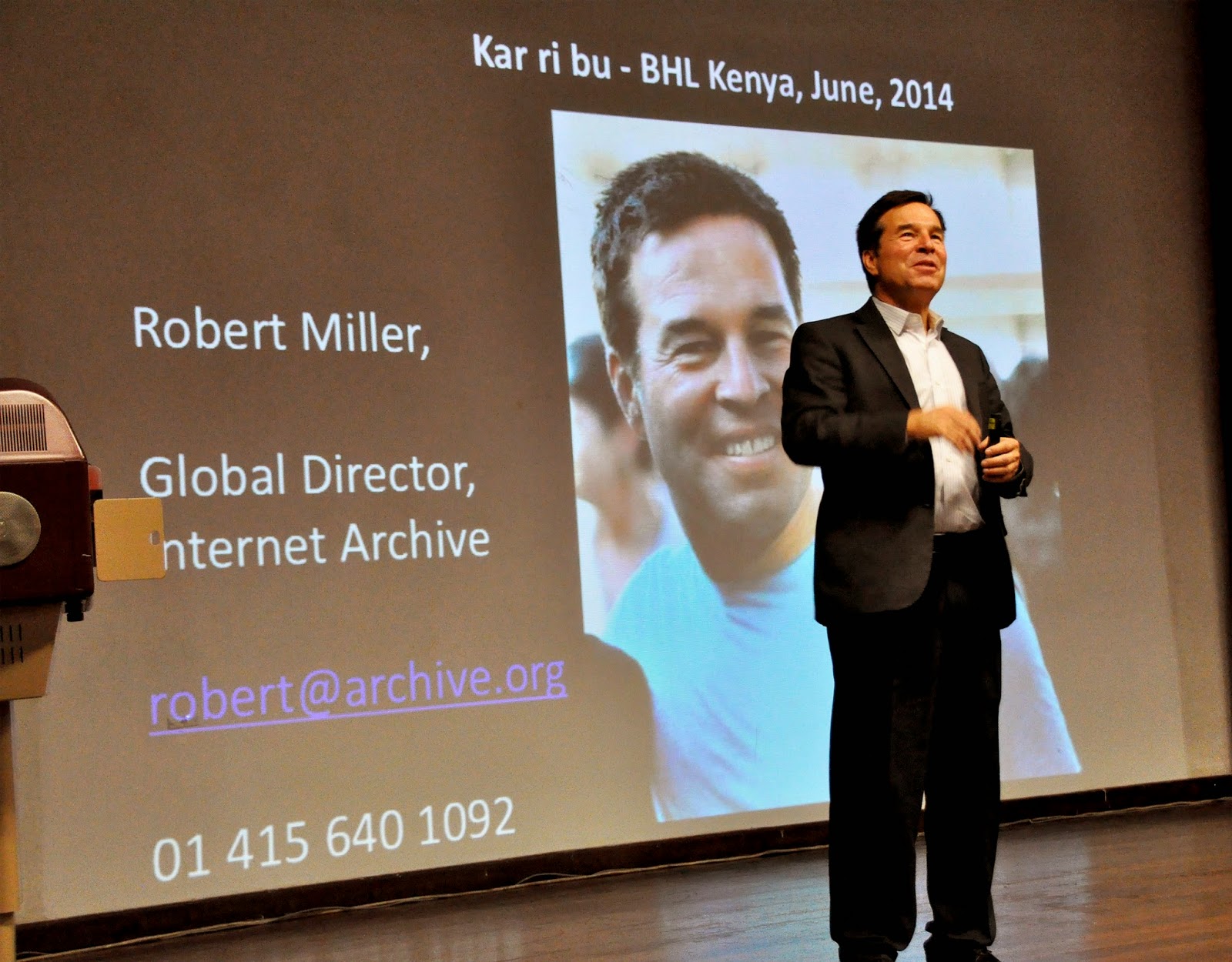
Robert Miller presenting at National Museums of Kenya

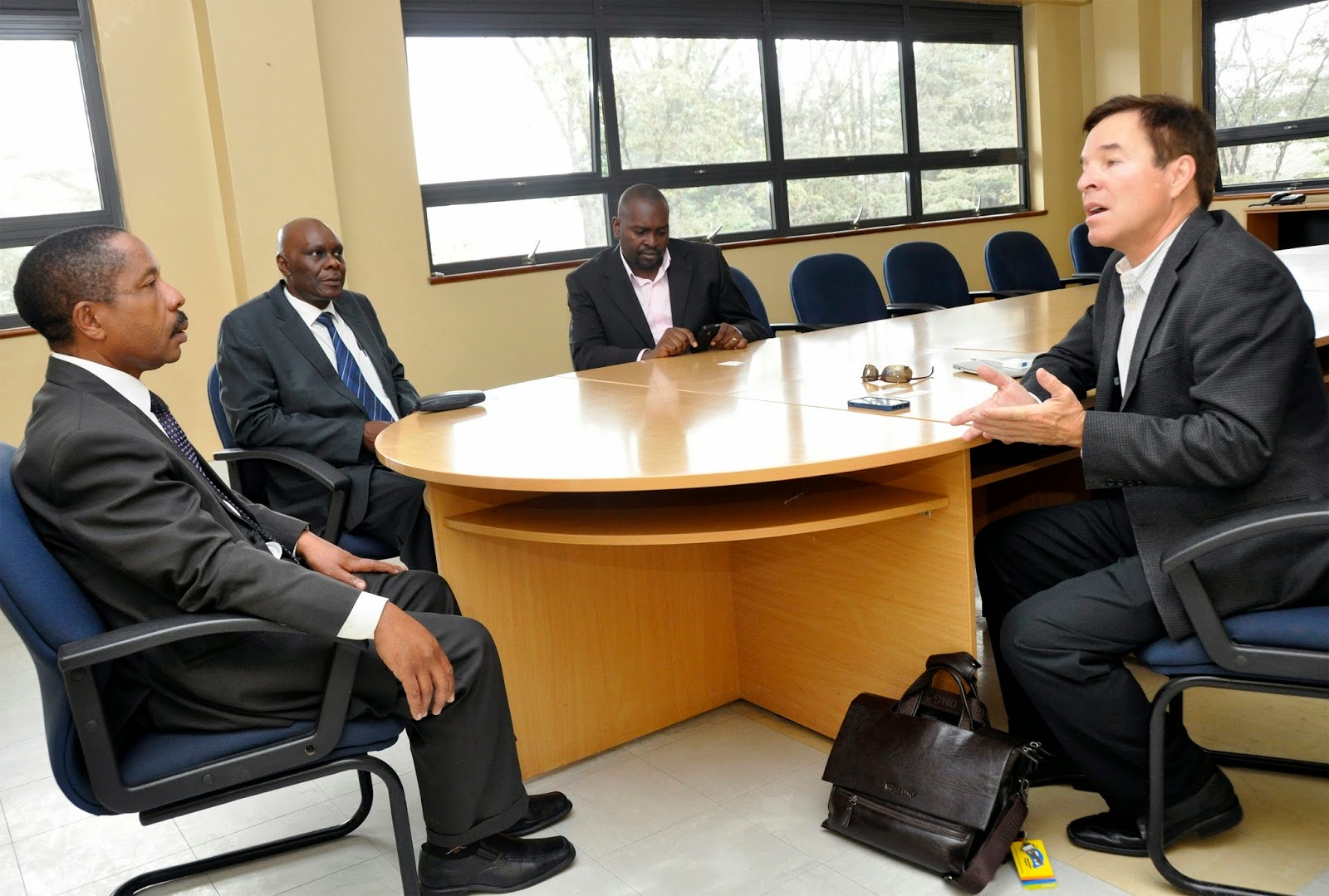
Robert Miller, Global Director of the Internet Archive, and his colleague Gemma Waterston (IA Satellite Coordinator) traveled to South Africa in June to provide installation support and operational training for the new machines. Following a successful instatement, Miller then traveled to the National Museums of Kenya (NMK) in Nairobi to discuss digitization and collaboration opportunities.

“Over many years,  I have had many wonderful opportunities to live (Asia, Europe and North America) and travel to many countries (45, in fact, prior to this trip),” commented Miller. “My trip to Kenya (country 46) was made all the more special by the warm welcome and hospitality I received by Ashah Owano [Resource Centre Manager, NMK] and Lawrence Monda [ICT Manager, NMK] and their staff at the National Museums of Kenya in Nairobi, Kenya. They arranged for me to present and talk with representatives of over 25 different institutions and present the work that the Internet Archive has done with the global BHL family.”

View Full Size Image
Robert Miller with representatives from NMK

Miller’s presentation highlighted Internet Archive’s work to bring books and media to people all over the world. Since its inception, BHL has partnered with IA for digitization and access support, contributing to IA’s current 19 petabytes of available data. Miller’s visit was a valuable opportunity for our Kenyan colleagues to better understand the services and options available to them and for Miller to form new global relationships.

“What will I remember?” pondered Miller in response to a request for information on his presentation and experiences in Kenya. “That a wonderful Museum system exists in Kenya, an amazing collection of content is found there and, most importantly, a great group of passionate people are working hard to share their world with the global community. I am so excited to build on this first meeting and hope to return soon.”

We’re excited to see where these newly-forged connections within a long-standing relationship between BHL and IA lead as well. One thing we know for sure: with the passion and determination of our African colleagues guiding an ambitious effort to provide open access to African biodiversity knowledge through BHL, our goal to become the “largest reliable, reputable, and responsive repository of biodiversity literature and archival materials” is now one step closer to becoming a full-fledged reality.

*All pictures courtesy Robert Miller

August 7, 2014by ulib-libraryjobs
BHL News, Blog Reel

Growing Globally: Digitization Developments in Africa

View Full Size Image
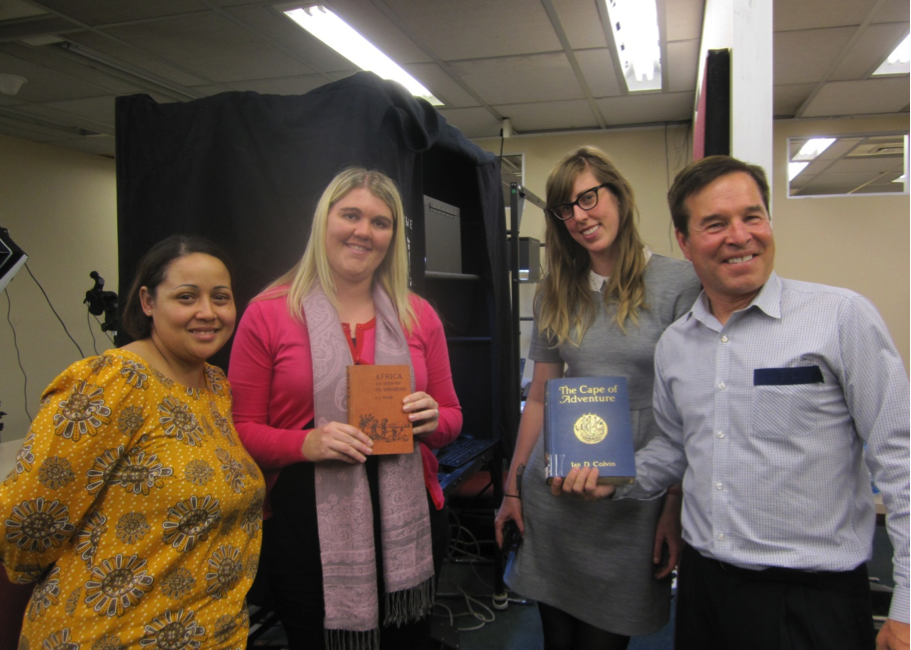
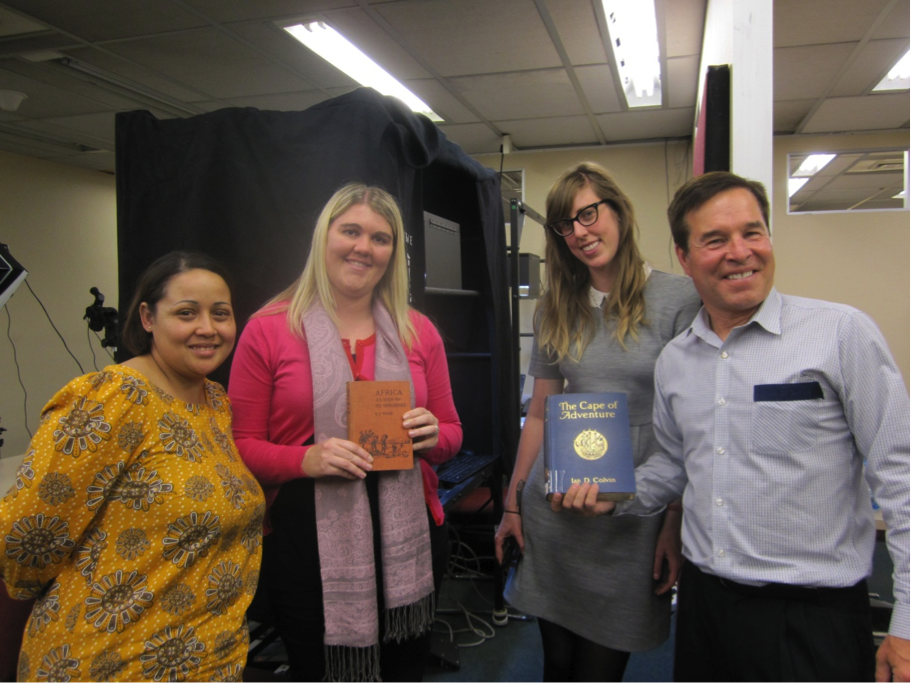
From left to right: Cindy-Lee Daniels  and Lidia Swart (staff at the Digitization Office, Library Services, University of Pretoria); Gemma Waterston (IA Satellite Coordinator) and Robert Miller (Director of Global IA)

On April 15, 2013, during a ceremony hosted at the South African National Biodiversity Institute (SANBI) at the Pretoria National Botanical Garden in Pretoria, South Africa, BHL-Africa officially launched as our sixth global node. Working within the BHL consortium, BHL-Africa aims to provide open access to the valuable information held in Africa’s biodiversity institutions. For the past two years, SANBI and the University of Pretoria in South Africa have been working with Internet Archive (IA) to contribute content to BHL through existing protocols and workflows.

In April, 2014, two Internet Archive scanning machines, called “scribes,” were shipped to the University of Pretoria to facilitate local digitization efforts. To help install the machines and provide operational training, Robert Miller (Director of Global IA) and Gemma Waterston (IA Satellite Coordinator) traveled to the University of Pretoria in June. The trip culminated in the successful scanning of the first BHL-Africa book digitized through an IA machine. Scanned in just 40 minutes, the 500-page book represents the first of many contributions soon to come. These contributions will be incorporated directly into the existing BHL corpus, expanding our extensive collection of over 43 million pages.

Following the South African trip, Miller journeyed to Nairobi, Kenya, where he presented to a coterie of our Kenyan colleagues vested in the BHL-Africa initiative. During a presentation at the Louis Leakey Auditorium, Miller highlighted collaborative opportunities for digitization that would allow Kenyan content to be incorporated into the BHL collection.

We are excited about these developments, and look forward to many more contributions from our colleagues in Africa! In celebration, enjoy this collection of BHL images highlighting African biodiversity.

Get the flash player here: http://www.adobe.com/flashplayer

var so = new SWFObject(“http://www.db798.com/pictobrowser.swf”, “PictoBrowser”, “500”, “500”, “8”, “#EEEEEE”); so.addVariable(“source”, “sets”); so.addVariable(“names”, “African Biodiversity Collection”); so.addVariable(“userName”, “BioDivLibrary”); so.addVariable(“userId”, “61021753@N02”); so.addVariable(“ids”, “72157633207738920”); so.addVariable(“titles”, “on”); so.addVariable(“displayNotes”, “on”); so.addVariable(“thumbAutoHide”, “off”); so.addVariable(“imageSize”, “medium”); so.addVariable(“vAlign”, “mid”); so.addVariable(“vertOffset”, “46”); so.addVariable(“colorHexVar”, “EEEEEE”); so.addVariable(“initialScale”, “off”); so.addVariable(“bgAlpha”, “32”); so.write(“PictoBrowser140716133303”);

July 17, 2014by ulib-libraryjobs
BHL News, Blog Reel

5th Global BHL Meeting, Lorne, Australia


View Full Size Image
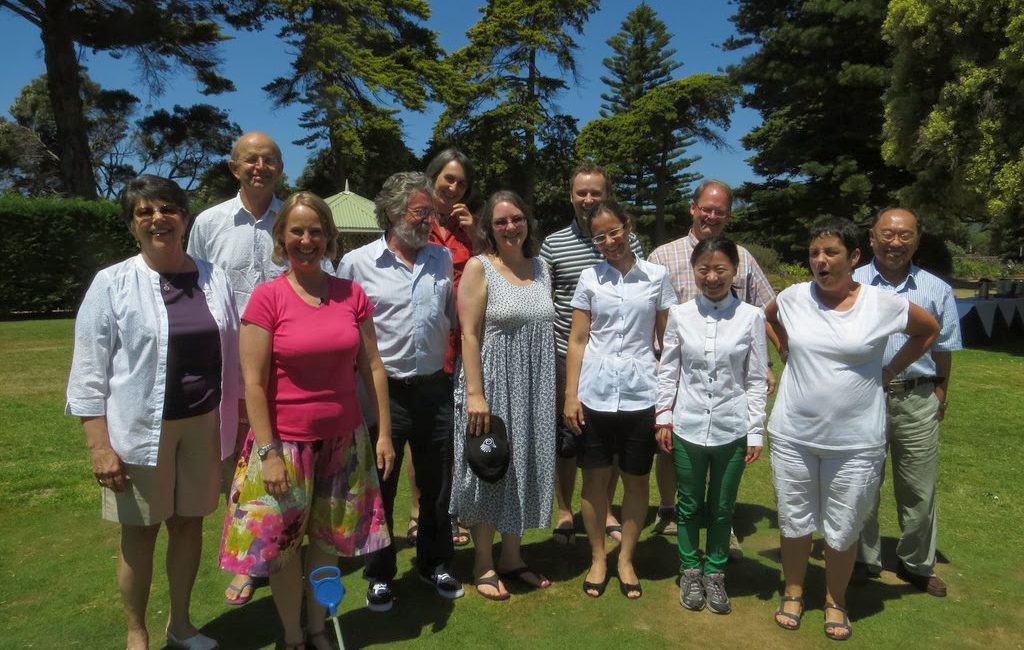
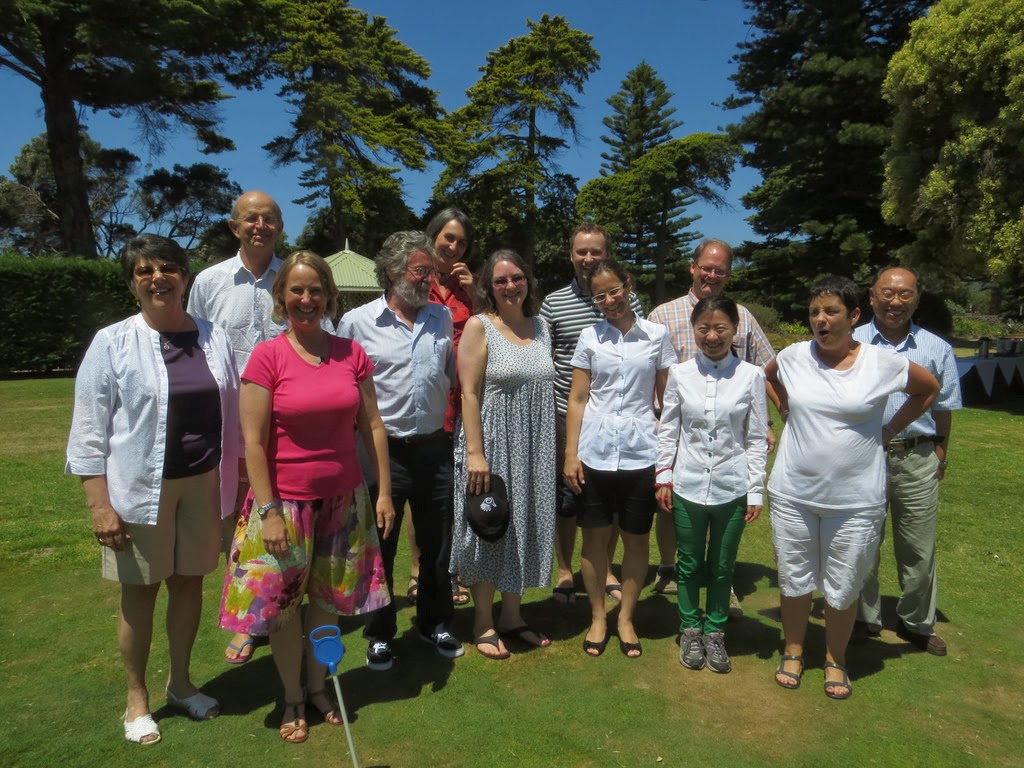
Representatives from BHL-Global nodes at the
5th Global BHL Meeting

The 5th Global Biodiversity Heritage Library Meeting was held in Lorne, Australia, February 1-2, 2014.   Representatives from each of BHL’s global nodes, with the exception of BHL Egypt, convened to discuss the status of current goals, the formation of new goals, and to work together in forming the overall direction of BHL Global.  The meeting consisted of reports from the global nodes, the election of officers, and discussion of bylaws, technical issues and goals.

The first day of the meeting consisted of presentations delivered by representatives from BHL Central and the Global Nodes.

BHL Central
Kicking off the presentations, Martin Kalfatovic, BHL Program Director, reported on BHL Central’s continued growth.  BHL Central is now comprised of 15 dues-paying member institutions, with a collection of over 42 million pages, and usage statistics that include over 3 million visitors since BHL launched in 2007.  In other news, the latest version of the Macaw software developed at the Smithsonian Libraries is now being tested at Harvard, New York Botanical Garden and the California Academy of Sciences with the University of Pretoria to also begin testing soon.  With this release, users can now upload to a cloud server, after which the files go to the Internet Archive and then the BHL portal.

BHL Africa
Anne-Lise Fourie, Principal Librarian at South African National Biodiversity Institute (SANBI), shared the good news that two more institutions in Kenya have joined BHL.  In South Africa, institutions are sending digitized content to the University of Pretoria for quality assurance.  To date, the Steering Committee has met twice with the possibility of more frequent meetings of the regional representatives to help build and maintain momentum.

Grants and Social Media 
Connie Rinaldo, Vice Chair of the BHL Executive Committee and Librarian of the Ernst Mayr Library, Harvard Museum of Comparative Zoology, reported on BHL’s grant-funded projects and on the status of BHL Central’s social media efforts.  BHL currently has four active grants, two of which are about to wrap up and two that just recently kicked off.  Connecting Content, an IMLS grant led by the California Academy of Sciences Library, is linking field notes, specimens, and published literature.  Connie demonstrated MCZ-Harvard’s contributions with the William Brewster collection.  Concurrently, the Art of Life is exploring automated ways of locating illustrations in natural history literature and providing metadata for them.  Led by the Missouri Botanical Garden, this NEH grant will broaden and engage the BHL audience by integrating tagging applications so users can edit descriptive metadata, and integrating that user-generated metadata to enhance access to illustrations.  The two new grants—Purposeful Gaming and the BHL and Digging Into Data—are both funded by IMLS and led by the Missouri Botanical Garden.  Purposeful Gaming and the BHL will develop a game to crowdsource OCR corrections for seed catalogs and transcriptions of field notes.  Digging Into Data will explore new methods for the explore integration of text mining, visualization, crowdsourcing and social media for enhancing use of BHL content.

Social media has been a strong component of the BHL outreach strategy and in 2013 over 36,000 visits to the BHL website came from social media platforms (out of a total of 1.4 million visits).  With recent staff departures, BHL’s social media presence is shifting to maintenance mode and we’ve seen a corresponding decrease in traffic.  A discussion ensued about how best to tailor outreach efforts for maximum impact with existing resources, including recent efforts in the education domain such as BHL Europe’s Historian app for teachers and BHL Africa’s push to teach younger students about the environment.

Encyclopedia of Life 
Nancy Gwinn, Chair of the BHL Executive Committee and Director, Smithsonian Libraries, presented on the recent EOL meetings in Canberra.  The meetings included demonstrations for new tool suites including the recently released Traitbank, which provides the capability to assemble similar traits from across species for comparisons.

Biodiversity Library Exhibitions 
Jiři Frank, Vice-Chair of BHL-Global, reported on the current status of the BHL-E exhibition software and the group discussed the idea of having a “Treasures of the Global BHL” online exhibition.  We’re very pleased that Connie Rinaldo and Jiři have both already graciously volunteered their time for coordination and training, respectively.

Following the presentations and going into the second day, attendees moved to setting the direction for Global BHL for the coming year.  Each of the Global BHL Officers–Ely Wallis, Jiři Frank and Nancy Gwinn–were re-elected to two year terms in the offices of Chair, Vice-Chair and Secretary, respectively.  One of the first tasks that the re-elected executive committee will be taking on is the review of the bylaws.

Action items for the global nodes were also identified and will help guide collection and technical development, outreach efforts, and overall growth for the BHL global nodes in 2014.  BHL Central will work with the global nodes on creating new collections of content for inclusion in the BHL Portal and on continued development of Macaw.  Based on their extensive experience and thanks to their existing resources, BHL Europe will develop a marketing plan for others to use as a model.  BHL Australia will coordinate the collection of input from API users to help inform new features and improvements.  Finally, all nodes have agreed to work together on recruiting new nodes to ensure representation of all continents.

All told, it was a very successful meeting with inspiring updates from all and some exciting new directions for BHL-Global.  We’re looking forward to working with our colleagues across the globe on completing the tasks we have set out to accomplish and working towards an ever-growing and adaptive BHL!

March 6, 2014by sayeedmd
BHL News, Blog Reel

Geoffrey Mwachala from the National Museum of Kenya visits BHL at Smithsonian Libraries

View Full Size Image
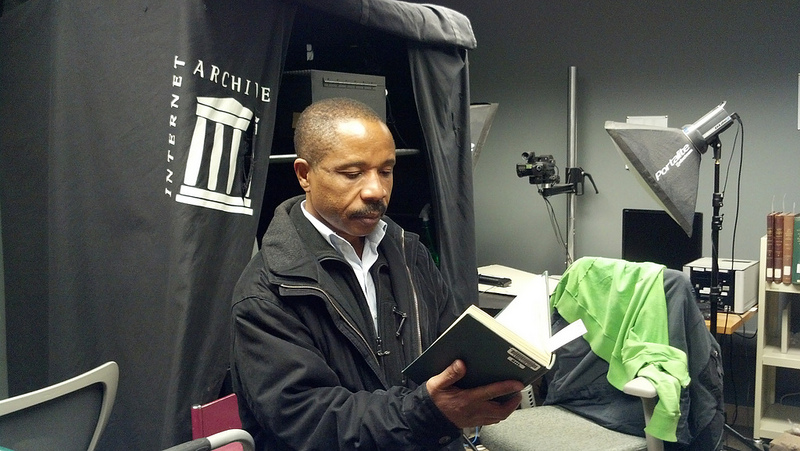
Dr. Geoffrey Mwachala
examining a copy of Victorian Naturalist

Dr. Geoffrey Mwachala, Director, Research and Collection at the National Museum of Kenya, stopped to visit Martin Kalfatovic and Nancy Gwinn while in Washington on other biodiversity and museum collections business at the Smithsonian.

While at Smithsonian Libraries, he was able to visit the scanning facility in the National Museum of Natural History and see some of the BHL digitization operations in action.

Dr. Mwachala is a strong supporter of BHL Africa and the expansion of biodiversity knowledge.

January 7, 2014by
BHL News, Blog Reel

Making the BHL-Africa a Reality: The BHL-Africa Launch and Workshop

Group photo on the stairs at the South African National Biodiversity Institute.
View Full Size Image
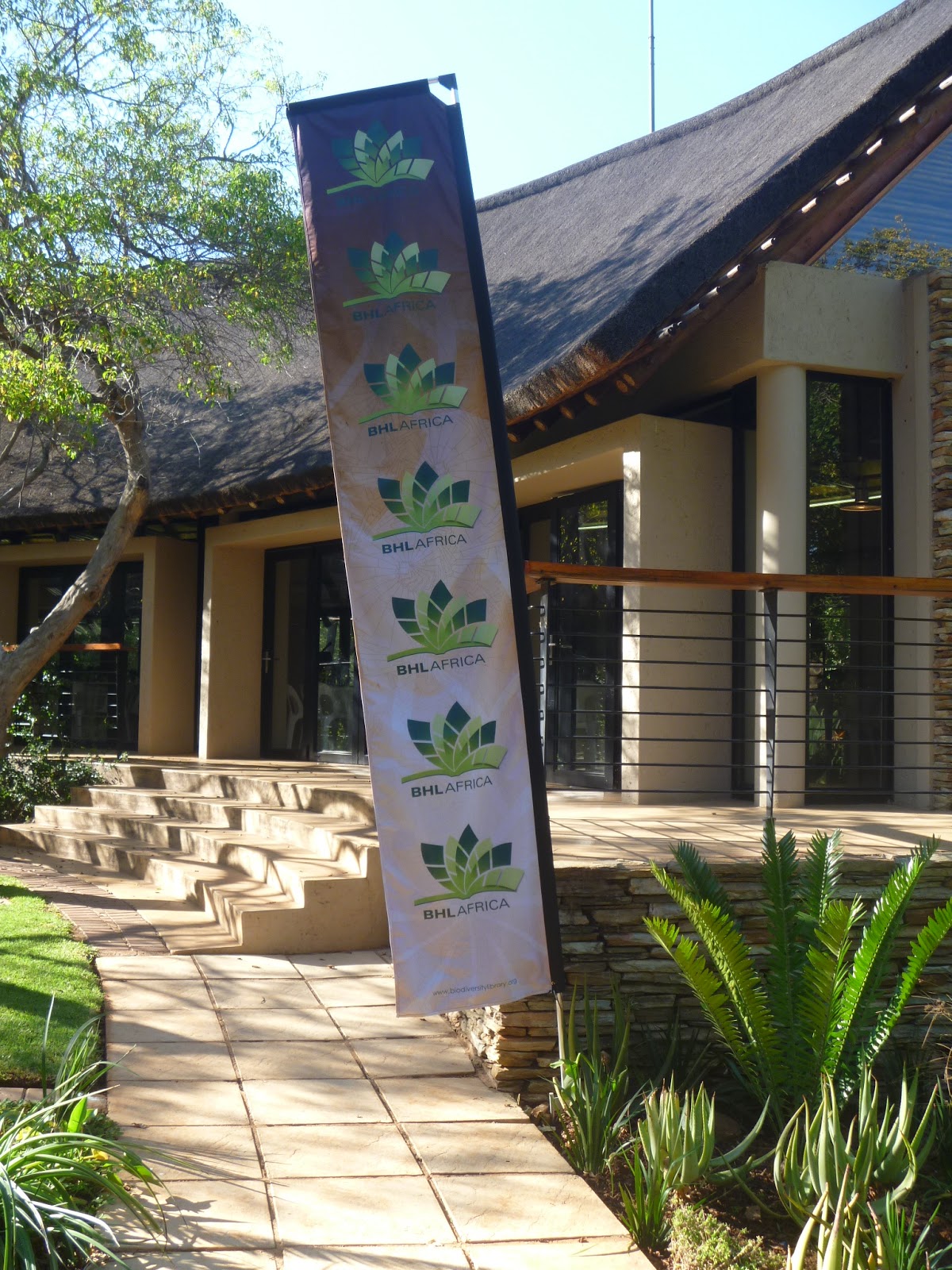
BHL-Africa logo at Pretoria National Botanical Garden

On April 15, 2013, BHL-Africa officially launched. BHL-Africa’s mission is to provide open access to the valuable biodiversity literature found within African libraries and institutions. The African consortium is hard at work identifying partners throughout the continent to sign an MOU and commit to working towards this noble objective.

The three-day BHL-Africa launch and workshop was hosted by the South African National Biodiversity Institute (SANBI) at the Pretoria National Botanical Garden in Pretoria, South Africa, from April 15-17, 2013. The meetings occurred simultaneously with the GBIF meetings also held at the botanical garden last week. Over two dozen representatives from institutions that have either signed or intend to sign the BHL-Africa MOU were present. Additionally, six colleagues from the BHL-US/UK program node were invited to attend: Nancy Gwinn (Director, Smithsonian Libraries, BHL Executive Committee Chair); Constance Rinaldo (Director, MCZ-Harvard Library, BHL Executive Committee Vice-Chair); Doug Holland (Director, Missouri Botanical Garden Library); William Ulate (Missouri Botanical Garden, BHL Technical Director); Bianca Crowley (Smithsonian Libraries, BHL Collections Coordinator); and Grace Costantino (Smithsonian Libraries, BHL Program Manager).

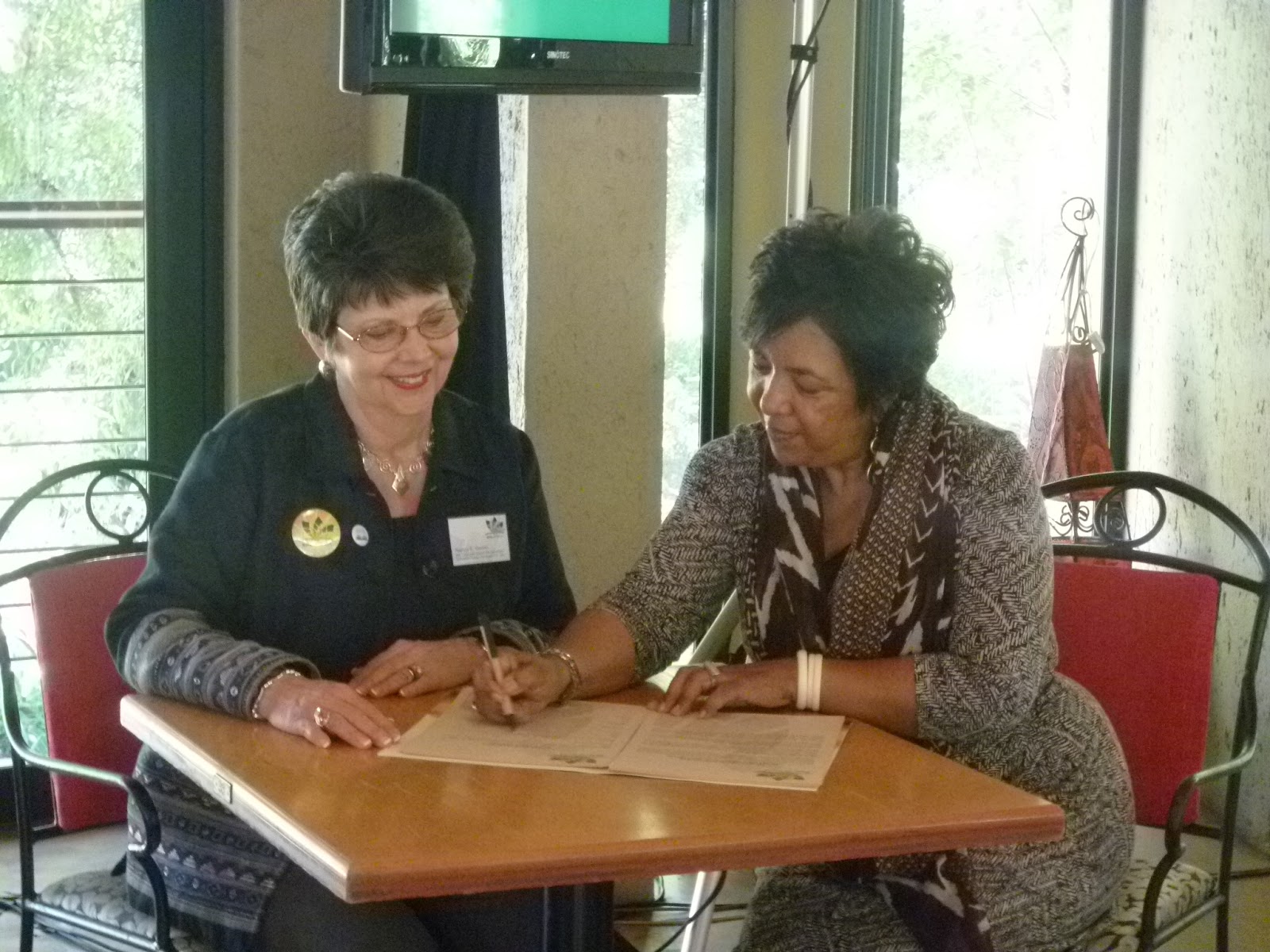
Monday, April 15, began with a launch ceremony, detailed in our blog post last week, during which the BHL MOU with SANBI was signed by Dr. Nancy Gwinn and Dr. Tanya Abrahamse (SANBI CEO). The real work began after the launch, with the start of the BHL-Africa workshop.
View Full Size Image
Dr. Nancy Gwinn and Dr. Tanya Abrahamse sign the BHL-Africa MOU

Day one of the workshop (Monday, April 15, afternoon) was devoted to addressing final MOU questions and outlining participants’ expectations for the meeting. Key expectations and areas in need of discussion included: Clarifying BHL’s open access policy and its implications for African participants; a concise description of the value of BHL for participating institutions in order to secure managerial buy-in; organization of clear fundraising strategies; the need for extensive training; identification of available resources and digitization capacity building; and the best way to collaborate and share resources amongst participating members. Overall meeting expectations were to elect a BHL-Africa Steering Committee and establish an outline for a two-year work plan.
View Full Size Image
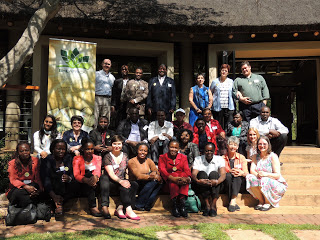
The BHL-Africa Group Photo!

Much of day two (Tuesday, April 16) was spent investigating workflow and organizational questions, including collections development, copyright, communication, and infrastructure. The primary reason for the presence of the BHL-US/UK team was to offer our African colleagues the expertise we have gained in these areas over the past six years, as well as to help define global expectations for our new members.

Towards this end, Nancy Gwinn began by identifying four main expectations for BHL-Africa: Content Creation; Audience Building; Content Identification; and Partnership Building. In short, these expectations translate to not only growing the BHL corpus by digitizing African collections, but also helping BHL identify content to scan, both within and outside of Africa. Furthermore, BHL Africa must work to both build the BHL audience by promoting the project throughout the continent, but also expand the BHL consortium by identifying institutions that can contribute to the initiative.

Constance Rinaldo then gave a presentation on copyright, defining public domain, open access, and the Creative Commons licenses employed by BHL-US/UK. She was quick to stress, however, that each BHL node and institution must follow the copyright laws of their own countries, and, as BHL is not a legal entity, it is ultimately each scanning institution that is legally responsible for the content they contribute to the collection.
View Full Size Image
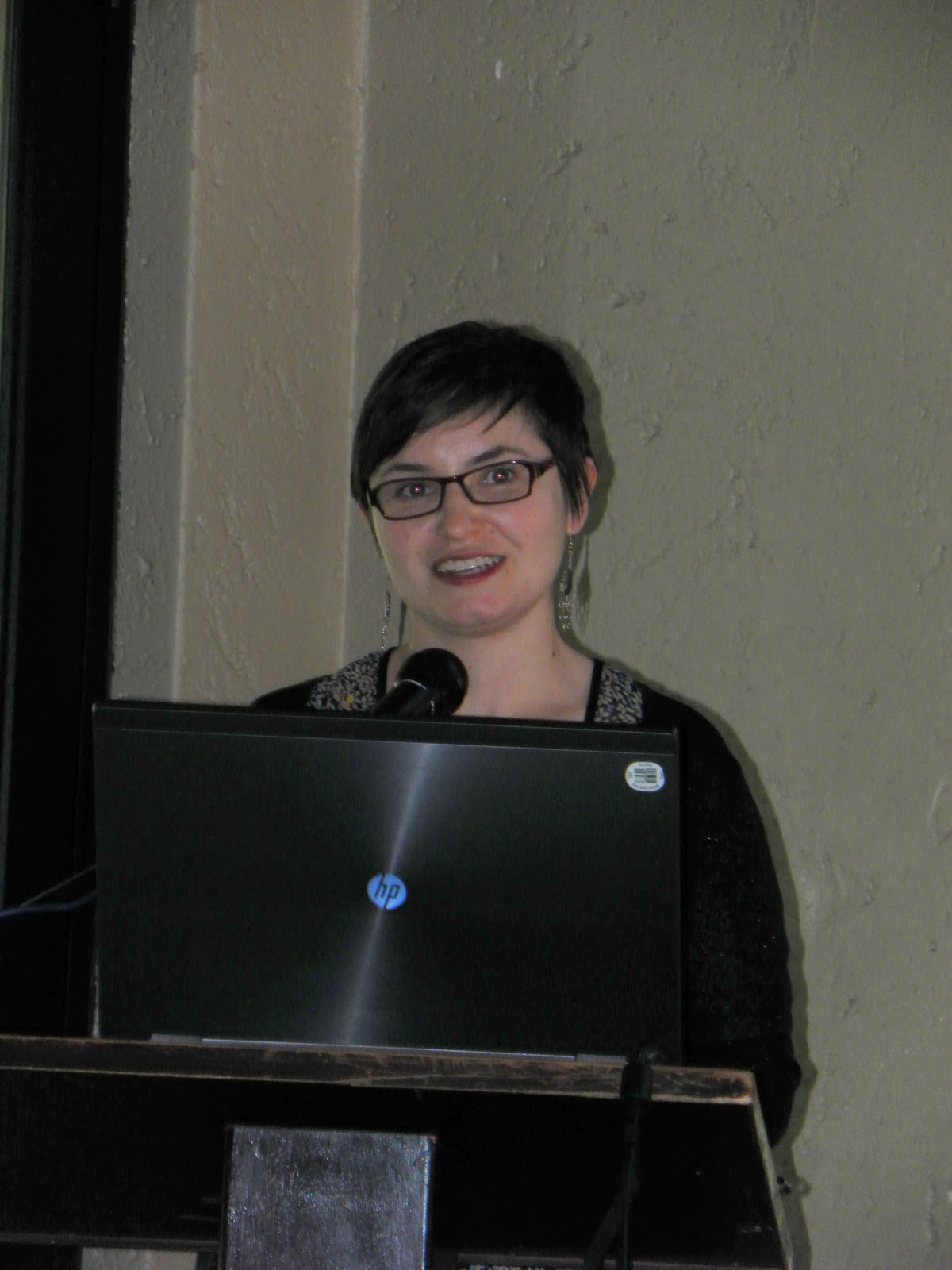
Bianca Crowley on BHL Collections Development

Bianca Crowley then gave our African colleagues some insight into the BHL-US/UK collection development process, outlining our selection and de-duplication process, digitization principles, metadata requirements, and content integration. Communication and collaboration methods were a key point of discussion, as they are critical for successful collections development.

Grace Costantino followed with a presentation on BHL-US/UK’s use of social media, which allows us to communicate project developments, provide context to the books in our collection, reach new audiences on new platforms, and uncover hidden gems in our collection. Following the presentation, an open discussion about each institution’s current use of social media, social media in the context of Africa, and how BHL-Africa might use social media occurred.

Finally, William Ulate detailed the BHL infrastructure, demoing the Macaw tool developed by Joel Richard at the Smithsonian Libraries, which is used to ingest books through Internet Archive into BHL. A remote installation of Macaw is running at the University of Pretoria and can be accessed via the web by any BHL-Africa participant to load digitized content into BHL.

BHL-African participants were also given a chance, on day two, to break out into two working groups, dedicated to Collections Development/Copyright and Outreach/Communication. These sessions allowed participants to apply the information given during the presentations to the realities of the BHL-Africa project.

The final day of the meeting (Wednesday, April 17) was spent identifying preliminary tasks for a two-year BHL-Africa workplan and electing a BHL-Africa Steering Committee. Workplan components include establishing a list of titles that each institution wishes to contribute to BHL; drafting documentation, based largely on existing files from gBHL, for workflow and collaboration guidance; and drafting a preliminary communication and outreach plan, which addresses not only external, but also internal, communication needs.
View Full Size Image
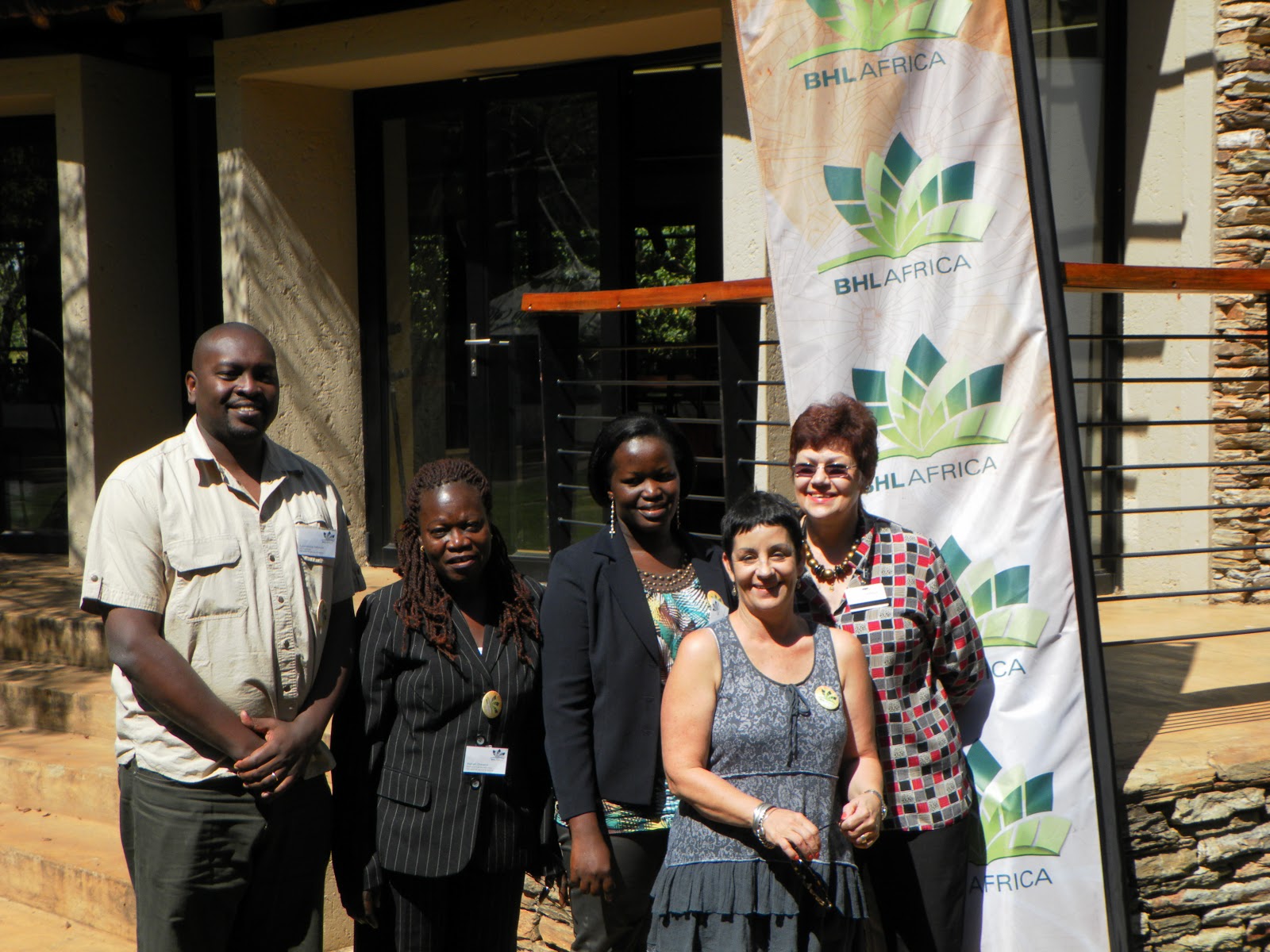
BHL-Africa Steering Committee (Left to Right): Lawrence Monda (Technical Advisor), Ashah Owano, Loi Namugenyi, Anne-Lise Fourie, Ria Groenewald

The BHL-Africa Steering Committee was also elected at the meeting. BHL-Africa has been divided into three regional nodes: North/Central; Eastern; Southern. Each regional node elects two representatives for the Steering Committee. Currently, there is no representation in North/Central Africa within the project, so only four members (two from Southern, two from Eastern) were elected at the meeting. Elected members include: Anne-Lise Fourie (SANBI, Southern); Ria Groenewald (University of Pretoria, Southern); Ashah Owano (National Museums of Kenya, Eastern); and Loi Namugenyi (Uganda National Council for Science and Technology, Eastern). Lawrence Monda (National Museums of Kenya) was elected as the BHL-Africa Technical Representative. Two additional members will be elected as North/Central institutions are added to the BHL fold. The Steering Committee will be responsible for providing strategic guidance, developing fundraising plans and approving budgets, and organizing pan-continental efforts.

The three-day BHL-Africa launch and workshop was an extremely successful event which resulted in the creation of an actionable plan for project development and the identification of notably capable leadership. Meeting attendees left feeling energized, with a clear sense of purpose. Just one and a half years ago, at the Life and Literature conference, the concept of BHL-Africa was born. Today, it is a reality. We congratulate our colleagues on the astounding progress they have made and look forward to seeing great things from BHL-Africa!

April 24, 2013by michelle.underhill
BHL News, Blog Reel

BHL Africa Officially Launches!

View Full Size Image

We’re so excited to announce that today, Monday, April 15, 2013, BHL-Africa has officially launched!

Today’s launch ceremony (hosted by the South African National Biodiversity Institute (SANBI) at the Pretoria National Botanical Garden in Pretoria, South Africa) began with a welcome by Dr. Tanya Abrahamse, SANBI CEO, after which she and Nancy Gwinn (Chair of the BHL Executive Committee) signed the BHL-Africa MOU (Memorandum of Understanding). Nancy Gwinn then gave a presentation detailing the history of BHL’s development, and Anne-Lise Fourie, Assistant Director for SANBI libraries, gave an overview of the BHL-Africa vision, mission, and benefits.

Working within the BHL consortium, BHL-Africa aims to provide open access to the valuable information held in Africa’s biodiversity institutions. Towards this end, the global BHL family works with the international taxonomic community, rights holders, and other interested parties to ensure that this biodiversity heritage is made available to a global audience through open access principles.

The next two days will consist of workshops aimed at outlining funding strategies, the responsibilities of BHL-African institutions, BHL-Africa’s role in the larger global BHL environment, and the contributions BHL-Africa will make to BHL. Check back on our blog for more detailed information about the launch and workshops, and follow the hashtag #bhlafrica on our Twitter (@BioDivLibrary) for real time news via live tweets!

Learn more about BHL-Africa in our past blog post and video. Take a break from your day job to enjoy an Africa safari!

And finally, enjoy images of Africa’s biodiversity from the African Biodiversity Flickr Collection.

April 15, 2013by ulib-libraryjobs
Blog Reel, User Stories

Bird Watching and Conservation with Michael Mills

View Full Size Image
Michael Mills

For many of us, leading bird watching expeditions throughout Africa would be a dream job. For Michael Mills, Angola Country Program Manager for the Percy FitzPatrick Institute of African Ornithology, The A. P. Leventis Ornithological Research Institute, and BirdLife South Africa, it’s all part of the job. It probably comes as no surprise, then, that BHL is an extremely useful resource for Michael, providing him with primary source material about and fantastic illustrations of the birds he works to conserve and share with bird watching participants. 

Michael has studied African birds for ten years, focusing on their natural history, identification and conservation, with particular interest in Angolan birds. He discovered BHL about four years ago, via the Internet Archive, our digitization partner, website. Since then, Michael says that BHL “has been a great help with accessing some of the older and more obscure literature, which is often important in the work I do.” Accessing BHL 3-4 times a month on average, Michael most often downloads PDFs of the content he seeks, building a personal, digital library of the often rare books that formerly had limited distribution outside of the physical library space, not to mention outside of the countries in which the material is housed. When asked what his favorite feature on BHL was, he simply replied, “Being able to access old literature.” 

View Full Size Image

His number one priority for the BHL project? “Make more texts available online.” We’re sure many of you can also second this request.

BHL has been making significant advances towards building a program node on the African continent beyond our current partners in Egypt at the Bibliotheca Alexandrina. Our colleagues in Africa have been hard at work establishing the initiative following our organizational meeting in Cape Town, South Africa, in June, 2012. We hope to officially announce the project in the coming year, which will significantly increase our reach throughout this magnificent continent and enhance our corpus with the invaluable literature held in our African partners’ collections. We have no doubt that such endeavors will help us fulfill Michael’s and others’ desire to see more digitized literature online, particularly in the realm of African Ornithology. 

Many of you are also familiar with our Flickr project, which is bringing unprecedented access to the thousands of incredible scientific illustrations held in the BHL collection. Now constituting over 50,000 images, freely available for browsing, download, and reuse, the BHL Flickr contains a treasure trove of illustrations of African birds. We’ve selected a few of our favorites from v. 2 of The Birds of Africa to present below.

Thanks to Michael for his dedication to the field of bird conservation and for helping others enjoy these marvelous creatures. Want to read a report of one of his bird watching expeditions? Well, you’re in luck.  We send our best wishes to Michael, and hope we can continue to build our collections to provide free, open access to the material he and other researchers need to protect our planet’s biodiversity into the future.

November 20, 2012by ulib-libraryjobs
Page 2 of 3«123»

Help Support BHL

BHL's existence depends on the financial support of its patrons. Help us keep this free resource alive!

search

About BHL

The Biodiversity Heritage Library (BHL) is the world’s largest open access digital library for biodiversity literature and archives. BHL operates as a worldwide consortium of natural history, botanical, research, and national libraries working together to digitize the natural history literature held in their collections and make it freely available for open access as part of a global “biodiversity community.”

Join Our Mailing List

Sign up to receive the latest news, content highlights, and promotions.

Subscribe Now

Subscribe to Blog via Email

Enter your email address to subscribe to this blog and receive notifications of new posts by email.

Join 319 other subscribers

Subscribe to Blog Via RSS

Subscribe to the blog RSS feed to stay up-to-date on all the latest BHL posts.

Access RSS Feed

Inspiring Discovery through Free Access to Biodiversity Knowledge.

The Biodiversity Heritage Library makes it easier than ever for you to access the information you need to study and explore life on Earth…for free, anytime, anywhere.


ABOUT | HARMFUL CONTENT | PRIVACY | SITE MAP | TERMS OF USE