Biodiversity Heritage Library - Program news and collection highlights from BHL
  • Home
  • News
  • Featured Books
    • All Featured Books
    • Book of the Month Series
    • BHL at 20
  • User Stories
  • Campaigns
    • Fossil Stories
    • Garden Stories
    • Monsters Are Real
    • Page Frights
    • Her Natural History
    • Earth Optimism 2020
  • Tech Blog
  • Visit BHL
Home
News
Featured Books
    All Featured Books
    Book of the Month Series
    BHL at 20
User Stories
Campaigns
    Fossil Stories
    Garden Stories
    Monsters Are Real
    Page Frights
    Her Natural History
    Earth Optimism 2020
Tech Blog
Visit BHL
  • Home
  • News
  • Featured Books
    • All Featured Books
    • Book of the Month Series
    • BHL at 20
  • User Stories
  • Campaigns
    • Fossil Stories
    • Garden Stories
    • Monsters Are Real
    • Page Frights
    • Her Natural History
    • Earth Optimism 2020
  • Tech Blog
  • Visit BHL
Biodiversity Heritage Library - Program news and collection highlights from BHL
BHL News, Blog Reel

BHL and WikiCite 2018

WikiCite conference in Berkeley, ca, 27-29 November 2018.

WikiCite conference in Berkeley, ca, 27-29 November 2018. Photo Credit: Diane Shaw. Graphic by Dario Taraborelli (CC-BY 4.0) with photo by Tehani Schroeder.

In November 2018, Diane Shaw, Katie Mika and Siobhan Leachman attended WikiCite 2018 in Berkeley, CA. WikiCite is a Wikimedia initiative that aims to develop a database of open citations and linked bibliographic data. Since sources are the foundation of Wikipedia’s claim to authority, WikiCite is working to build a repository of bibliographic data that is open, structured, and separable. WikiCite also draws from the academic community in which citation data (most often from peer-reviewed articles) is crucial for creating and linking knowledge. At the outset, WikiCite aimed to build this repository specifically for use in Wikipedia and other Wikimedia Foundation projects. Since the first meeting in 2016, this idea has grown into building a universal repository of sources to serve the sum of all human knowledge, leveraging Wikidata as its infrastructure.
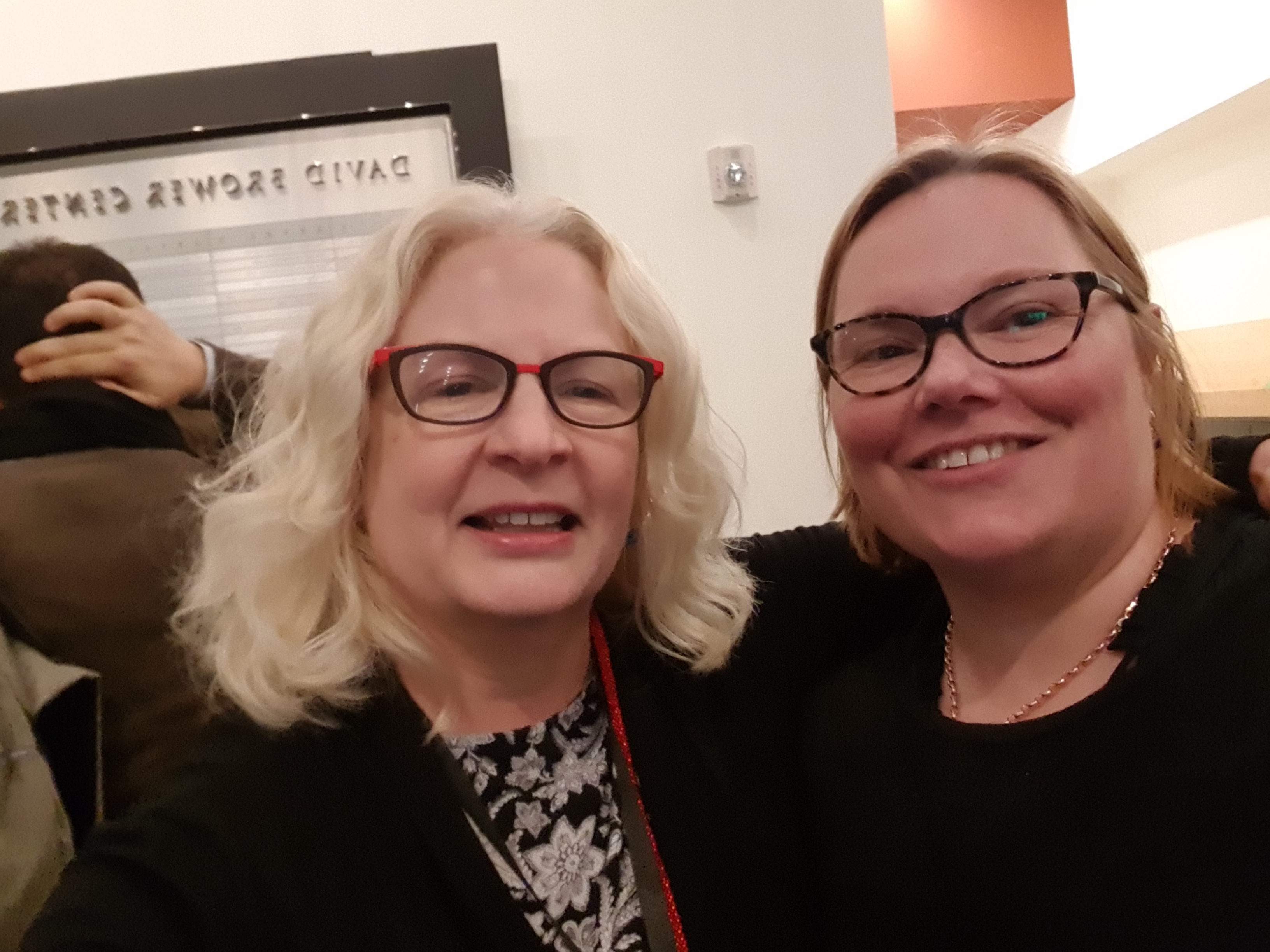
Diane Shaw (left) and Siobhan Leachman (right) at WikiCite 2018.

Diane Shaw (left) and Siobhan Leachman (right) at WikiCite 2018. Photo Credit: Siobhan Leachman.

Now in its third iteration, the conference included extended and short presentations, numerous lightning talks, strategy tracks, tutorials, data modelling, and a hack day (renamed a Do-athon Day to be more inclusive of those who aren’t computer science experts). The purpose of the conference, open primarily by invitation to a group of approximately 100 attendees from across the United States and abroad, was to work towards a “vision of creating an open repository of bibliographical data to support the citation and fact-checking needs of Wikimedia projects, and possibly, to serve as an open infrastructure for research, education, and information quality across the web.” Librarians were well-represented among the attendees, as were linked open data advocates, software engineers, data scientists, and active members of the Wikimedian community.

Unlike some of the other very popular Wikimedia Foundation products (Wikipedia in 303 languages; Wikimedia Commons hosting image, audio, and video files; Wikisource for full text transcriptions; and Wikidata for storing structured data, among others), WikiCite has no real online presence itself, but has grown as a community of practice dedicated to the support of a bibliographical metadata commons enabling reliable, verified linked open data connections both among Wikimedia projects and externally with many other online catalogs, databases and reference sources for a variety of libraries, galleries, archives, museums, scientific institutes, and other similar organizations, including OCLC, the Internet Archive and the Biodiversity Heritage Library. We are not exaggerating when we say it was awe-inspiring to be part of this dedicated group harnessing technical knowledge, bibliographical expertise, and lots of creativity and imagination in an effort to bring about a future of linked open data serving all kinds of scholarly information needs.

What WikiCite hopes to make possible goes beyond a simple structure for providing and sharing linked open data: attendees at the conference were also experimenting with new and improved ways to discuss, analyze, curate, vet and annotate sources online.
Dario Taraborelli, Director of Research at the Wikimedia Foundation, gave a terrific overview of WikiCite in his opening talk: Here Be Dragons: Uncharted regions of the bibliographic commons. Other talks and projects that would be of particular interest to libraries include presentations about projects at the National Library of Sweden and the National Library of Wales using structured linked open data for name and subject authority files and to help document the history of national book trade; Linked Data for Production (LD4P), a collaborative pilot project using BIBFRAME for creating structured linked data with connections to Wikidata, the Virtual International Authority File (VIAF) and WorldCat; initiatives to use Wikidata, VIVO and Scholia to generate scholarly profiles; and ways to incorporate Wikidata training into library education, including classes on Library Carpentry.
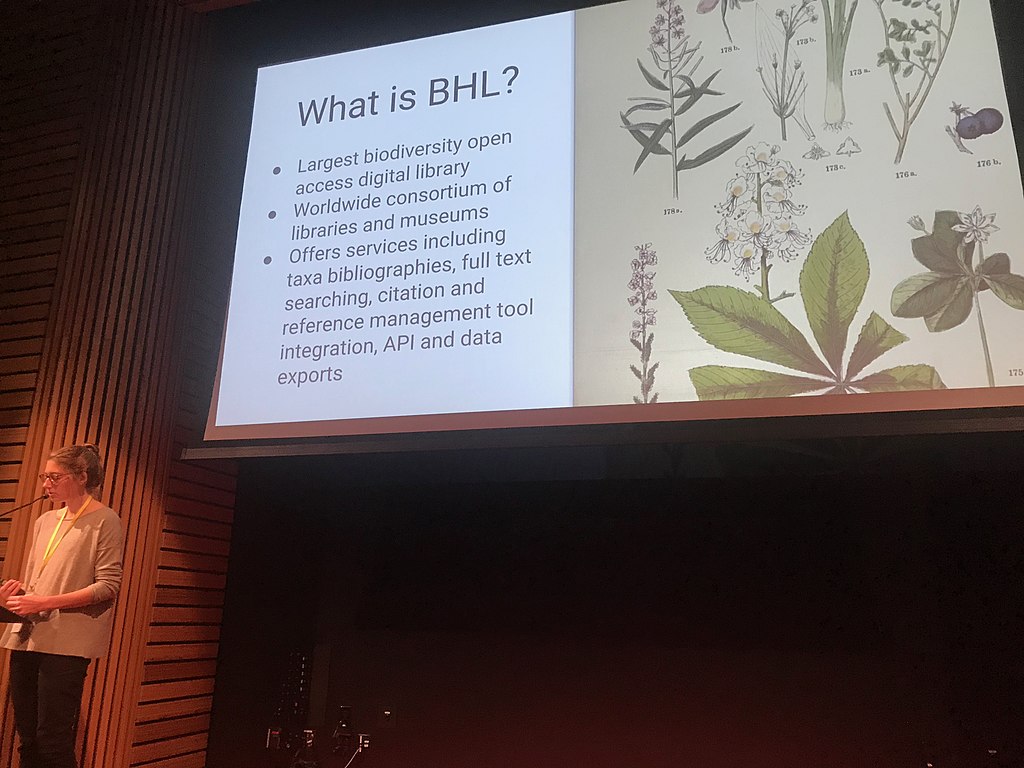
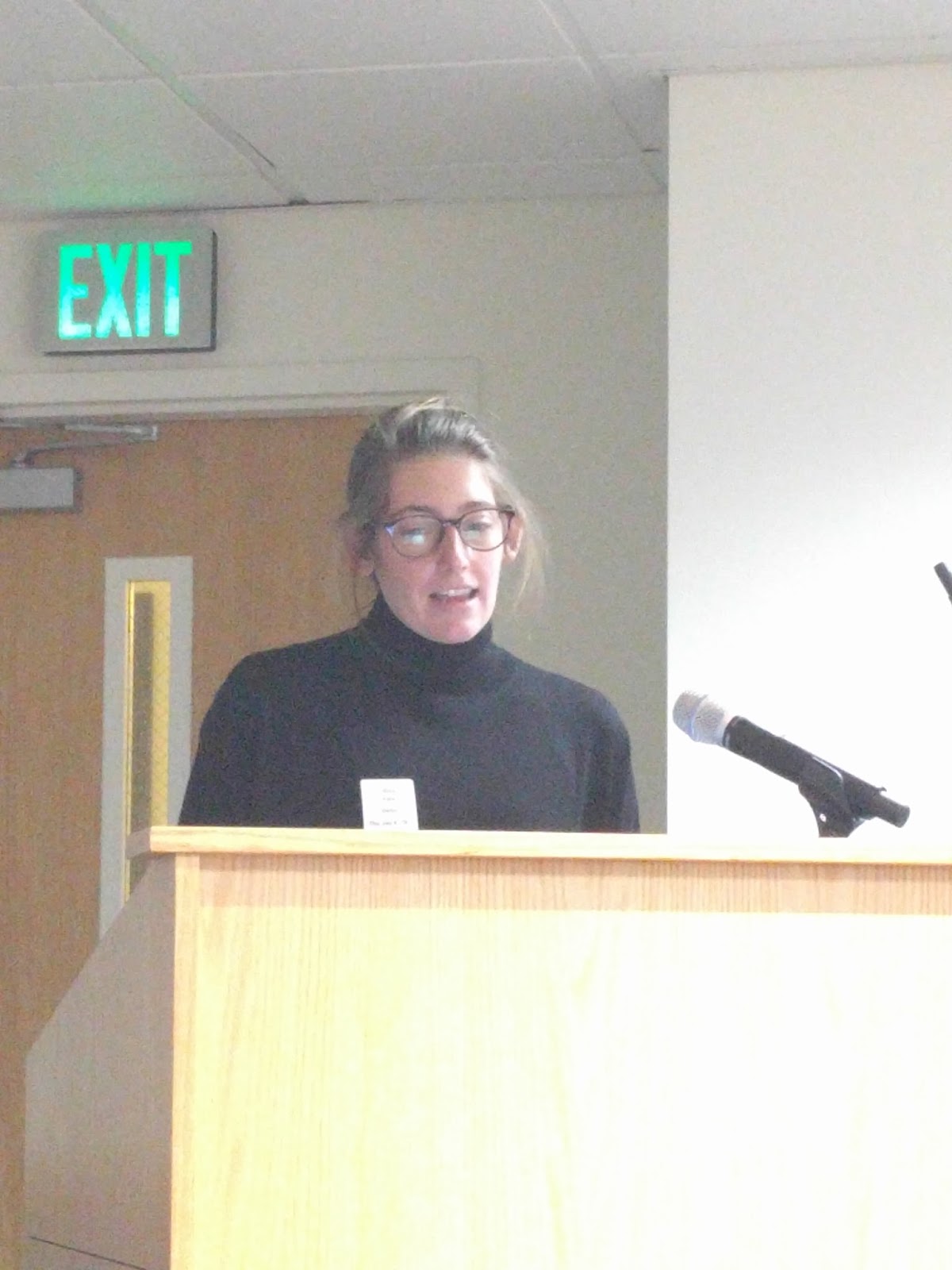
Katie Mika presenting as part of WikiCite and the Biodiversity Heritage Library at WikiCite 2018.

Katie Mika presenting as part of WikiCite and the Biodiversity Heritage Library at WikiCite 2018. Photo Credit: Diane Shaw.

Katie, a former BHL National Digital Stewardship Resident from Harvard’s Museum of Comparative Zoology, and Siobhan, a citizen scientist and linked open data champion from New Zealand who has been a devoted transcriber of natural history materials in the Smithsonian Transcription Center, gave a talk on WikiCite and the Biodiversity Heritage Library. They described some of the unique challenges for heritage literature and metadata, and demonstrated how open access citations, images, and details gleaned from BHL and other open natural history digital repositories are applied to Wikimedia Foundation projects to support essential documentation of scientists, literature, and rare and endemic species.

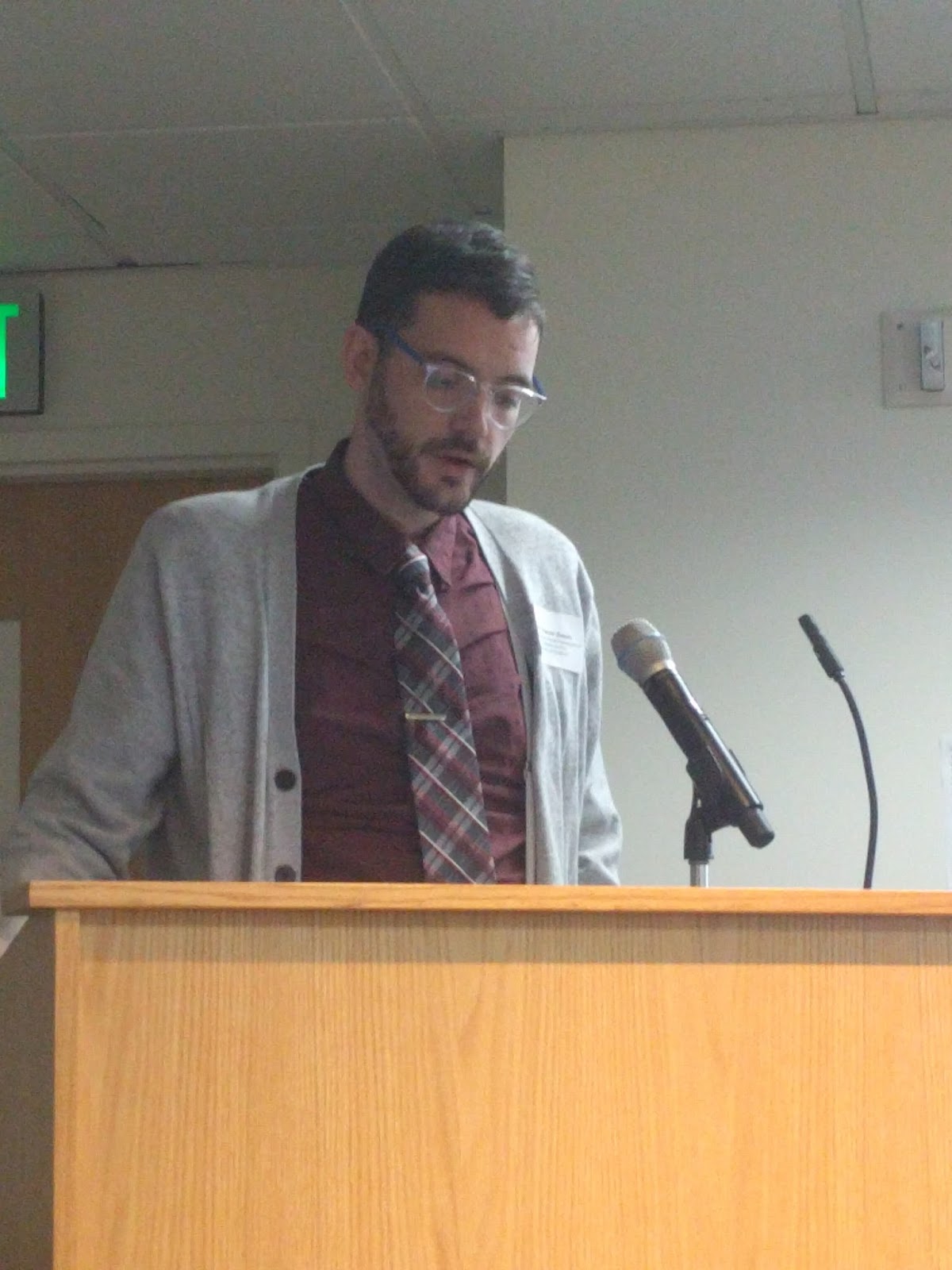
Unlike modern scientific literature, much historic literature does not have original digital identifiers (DOI’s) attached. These identifiers enable a particular publication to be identified and provide a persistent link to its location on the Internet.  Without these identifiers it is difficult to ingest historical bibliographic data into Wikidata in bulk. If historic bibliographic data is not able to be ingested or reused, scientists are unable to make use of this important resource. Siobhan expressed her frustration that much of the citation metadata of historic biodiversity literature is not currently found in Wikidata and urged the attendees to help resolve this problem.
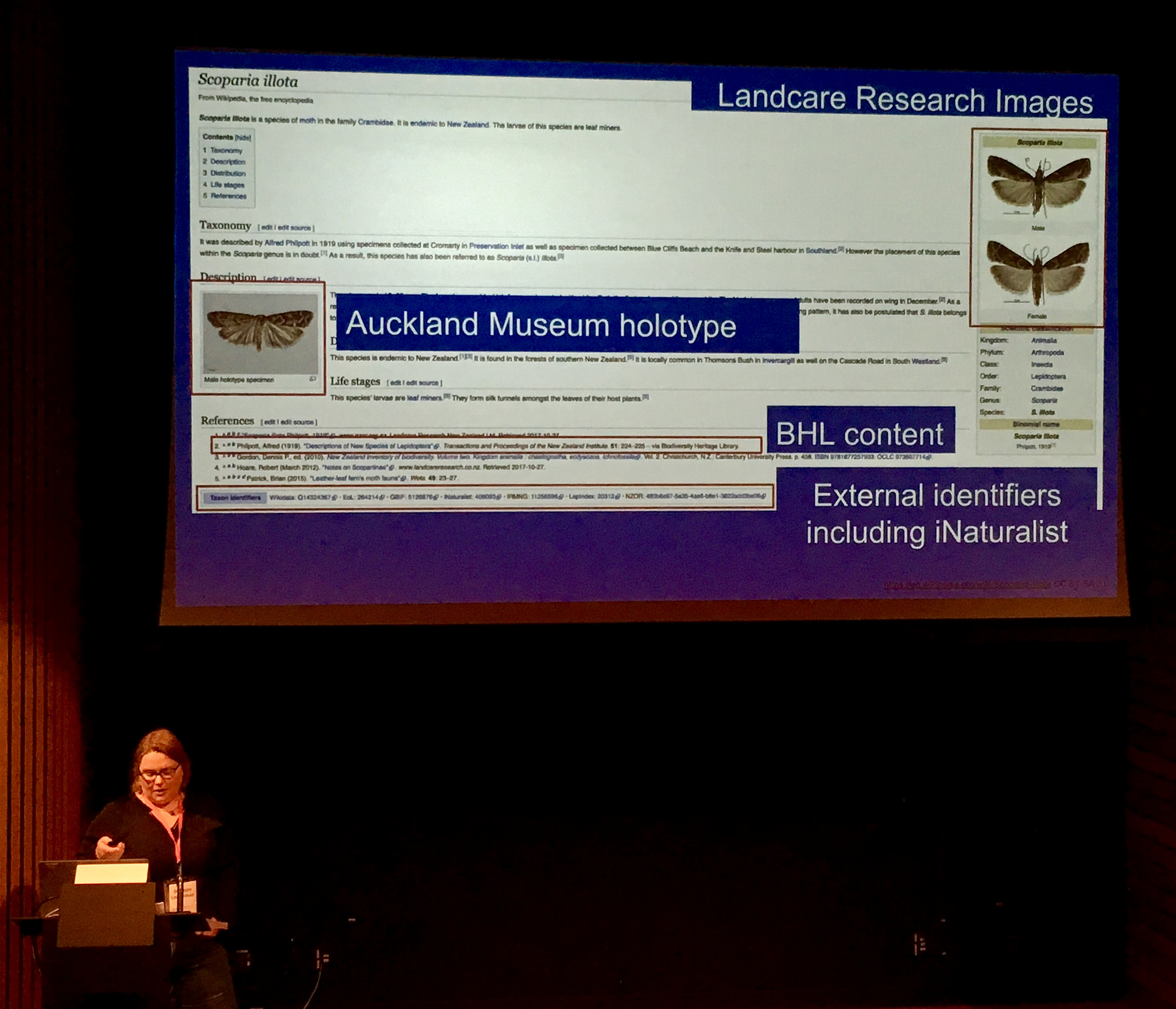
Siobhan Leachman presenting as part of WikiCite and the Biodiversity Heritage Library at WikiCite 2018.

Siobhan Leachman presenting as part of WikiCite and the Biodiversity Heritage Library at WikiCite 2018. Photo Credit: Diane Shaw.

Siobhan’s key takeaway from the conference was the various discussions on how to solve the difficulties of getting bibliographic information on historic biodiversity literature into Wikidata. Also of interest were the discussions on how book data is modelled in Wikidata (see https://www.wikidata.org/wiki/Wikidata:WikiProject_Books) and discovering a practical new tool to help disambiguate authors within wikidata: Author Disambiguator. Katie enjoyed the opportunity during the summit day’s events to discuss the potential for a bibliographic commons to support citations and information provenance across the web and in support of Open Science practices. On the Do-a-thon Day, Diane spent time discussing approaches for modelling the properties of holotypes on Wikidata with Siobhan, biophysicist and open scientist Daniel Mietchen, and Terry Catapano of Plazi and UC Berkeley’s Bancroft Library.

The opportunity presented by WikiCite for libraries and public knowledge creation cannot be overstated. As of November 2018, there are over 21 million publication items in Wikidata, which accounts for 40% of the entire database. More than 160 million Wikidata statements use the property “cites” (P2860) to connect items. Wikidata is open to contribute to, edit, reuse, and extend. Not only can we leverage Wikidata for metadata enrichment and linked data connections, but we can build bibliographic applications on top of this open database, track the provenance of citations, and study patterns of information reuse. Wikicite advocates for an open destination to more easily discuss, analyze, curate, annotate, and vet bibliographic resources used in Wikipedia and across the web. As connectors to information, libraries have staff who can offer a tremendous amount of expertise for modeling difficult kinds of data (like books), while ensuring equitable access to information.

The easiest way to get involved is to edit! Explore Wikidata using reasonator and SQID (“squid”). Head over to Youtube to watch talks and tutorials on Wikidata and SPARQL. Match some Wikidata items with their external identifiers using Mix ‘n Match. And join the wikicite-discuss mailing list to join conversations about adding bibliographic data to Wikidata and WikiCite program updates.
January 31, 2019by michelle.underhill
BHL News, Blog Reel

Capstone event for BHL NDSR program

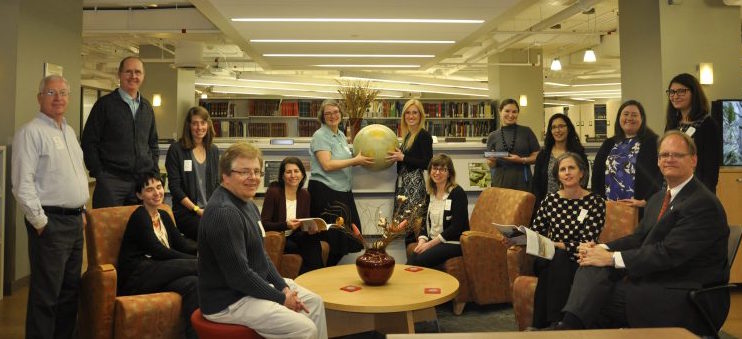
On January 4, 2018, in the midst of a memorable storm in the Northeastern US, approximately 30 intrepid travelers met to celebrate the successful completion of the BHL National Digital Stewardship Residencies developed for the IMLS, Laura Bush 21st Century Librarian grant submission: Foundations to Actions: Extending Innovations in Digital Libraries in Partnership with NDSR Learners.  The program plan included hiring five geographically-distributed residents, all graduates of LIS or related master’s programs, to work on collaborative projects to improve tools, curation, and content stewardship for BHL. This work supported BHL development plans for the next generation portal for the world’s largest open access digital library for biodiversity literature.

The Capstone event was beautifully hosted by the Smithsonian Libraries at the Natural History Museum in the room where the first DC planning meeting for BHL occurred. Martin Kalfatovic (BHL Program Director and Associate Director, Digital Program and Initiatives for the Smithsonian Libraries) and Dr. Nancy Gwinn (Director of the Smithsonian Libraries) welcomed the group.  Robin Dale (Deputy Director for Library Services at IMLS) described the NDSR program within the context of the IMLS goals for a national digital platform, mentoring digital library leaders and developing communities of practice.  Dr. Scott Miller (Deputy Undersecretary for Collections and Interdisciplinary Support at the Smithsonian Institution) congratulated BHL on its accomplishments in making biodiversity literature accessible but also suggested further work on linking content, mobile access and establishing standards.

Constance Rinaldo (Librarian of the Ernst Mayr Library of the Museum of Comparative Zoology, Harvard University and Chair of the BHL Members’ Council) gave an overview of the grant and process emphasizing the importance of ensuring the development of a strong cohort with leadership capacity among the geographically dispersed residents. Leora Siegel (Senior Director, Lenhardt Library of the Chicago Botanic Garden and a BHL NDSR Mentor) reflected on the past year and how rewarding it was to be a mentor to a recent graduate, wrestle with how to push the project forward, and connect with colleagues mentoring related projects with residents across the United States.  Mentors wished for more time, more opportunities to meet face to face with all participants and more professional meeting opportunities.

Katie Mika (BHL NDSR Resident at the Ernst Mayr Library) reflected on being a resident, struggling with the contrary thrusts of independence yet adherence to a partially defined project in a tight time frame.  Residents wished for more time, more structure and an in-depth technical introduction to BHL, yet all were successful in their work and learned more than they expected.

Trevor Owens (Head of Digital Content Management in Library Services at the Library of Congress) wrapped up the event with a keynote that focused on the push towards a National Digital Platform for digital data and his thoughts on digital preservation.

Although the final grant report looms large for the mentors, the Capstone event was an engaging send-off for the residents and we all look forward to following their future accomplishments.

Scott Miller presenting the
opening keynote
Katie Mika presenting the
BHL NDSR Resident Reflection
Trevor Owens presenting the
closing keynote

For specific information about the work of the residents, see their blog
and related BHL blog posts.

BHL NDSR Residents and Mentors

Alicia Esquivel, Resident at Chicago Botanic Garden, focused on Content Analysis.
Leora Siegel, Senior Director, Lenhardt Library

Marissa Kings, Resident at Natural History Museum, Los Angeles County, focused on Digital Library Best Practices.
Richard Hulser, Chief Librarian

Pamela McClanahan, Resident at Smithsonian Libraries, focused on User Needs and Usability.
Carolyn Sheffield, BHL Program Manager

Katie Mika, Resident at Ernst Mayr Library, Harvard University Museum of Comparative Zoology, focused on Crowdsourced Data Corrections and Enhancements.

Constance Rinaldo, Librarian, Ernst Mayr Library
and Program Director, BHL-NDSR Program
Joseph DeVeer, Project Manager and Museum Liaison, Ernst Mayr Library

Ariadne Rehbein, Resident at Missouri Botanical Garden, focused on Enhancing Image Discovery.
Doug Holland, Library Director, Peter H. Raven Library
Trish Rose-Sandler, Project Manager, Center for Biodiversity Informatics

Thank you to the speakers, external and internal to the grant project, for providing us with encouragement, support and reflections that we can take forward in our day to day work.  I want to especially thank Carolyn Sheffield (BHL Program Manager and Mentor to the Smithsonian Libraries resident) for managing the logistics of the Capstone event and ensuring its excellence.

January 17, 2018by Kathryn Stine
BHL News, Blog Reel

Series Two: BHL NDSR Webinars

In November, four of our BHL NDSR residents delivered webinars reporting on the results of their research and recommendations on how we might best improve the features and functionality of BHL to incorporate new technologies and evolving best practices for digital libraries and the larger biodiversity community.

You can view recordings of these past webinars:

  • Alicia Esquivel (Chicago Botanic Garden): BHL Collections Analysis
  • Katie Mika (Ernst Mayr Library, Museum of Comparative Zoology, Harvard University): Transcriptions, Crowdsourcing and Metadata for BHL
  • Pam McClanahan (Smithsonian Libraries): BHL User Studies
  • Marissa Kings (Natural History Museum of Los Angeles County): Best Practices for Digital Libraries


BHL NDSR Webinar Schedule: Series Two
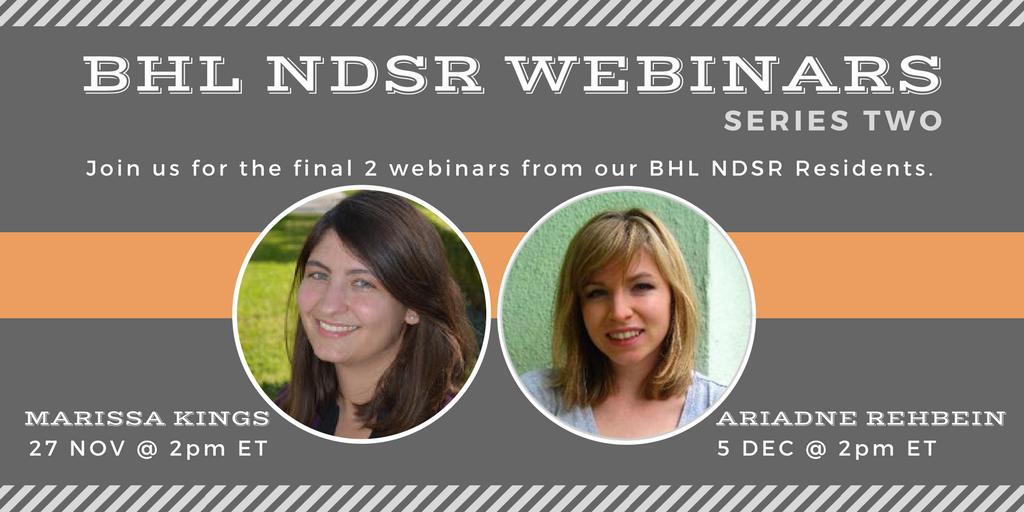
Please mark your calendars and join us for the final two webinars in our BHL NDSR series:

November 27, 2017 at 2:00pm ET
Marissa Kings, Natural History Museum of Los Angeles County
Biodiversity Heritage Library: Best Practices for Digital Libraries
Seminar Room: iDigBio Conference Room ( 500 )
URL: http://idigbio.adobeconnect.com/room/

December 5, 2017 at 2:00pm ET
Ariadne Rehbein, Missouri Botanical Garden
Biodiversity Heritage Library: Enabling Image Discovery
Seminar Room: iDigBio Conference Room ( 500 )
URL: http://idigbio.adobeconnect.com/room/

New to Adobe Connect? We recommend following the link to the webinar about 15-20 minutes before the start time to install any add-ins as needed and to run the Audio Wizard. Please note that sometimes after running the Audio Wizard, you may still need to click on the picture of the microphone to connect the microphone. Should you have any questions, we’ll also be monitoring the chat throughout. Hope you can join us!

November 20, 2017by michelle.underhill
BHL News, Blog Reel

Announcing Five Webinars from BHL’s NDSR Residents!

We are pleased to announce five webinars from BHL’s NDSR residents! Each resident has spent the past 10 months or so working hard on individual—yet inter-related—research projects to explore how we might best improve the features and functionality of BHL to incorporate new technologies and evolving best practices for digital libraries and the larger biodiversity community.

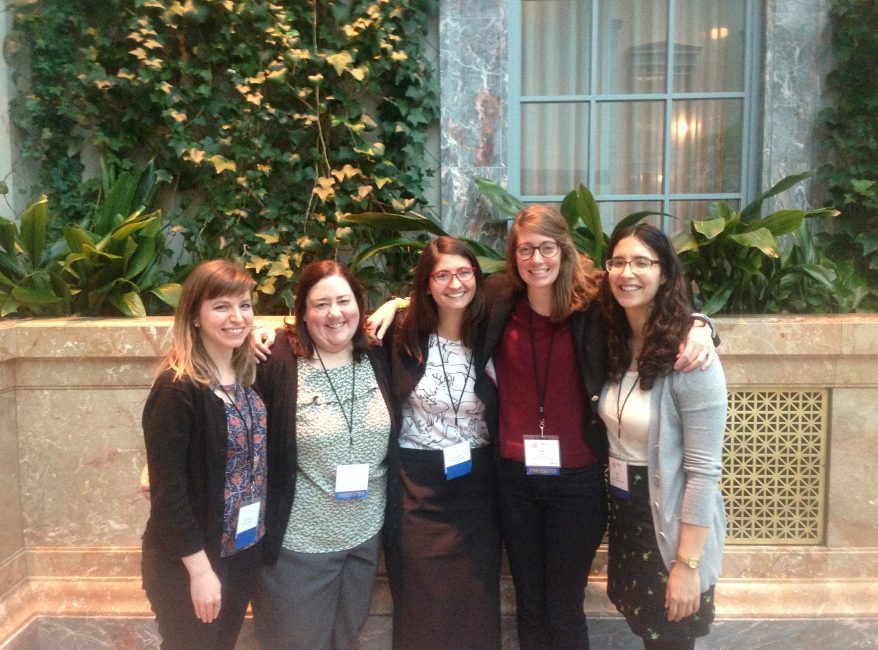
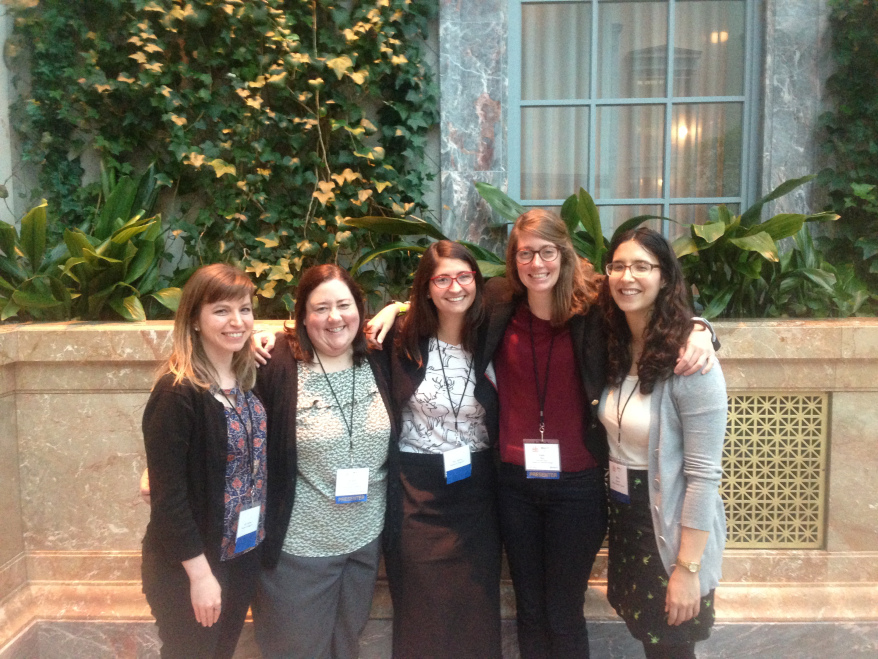
The BHL NDSR Cohort, from left to right: Ariadne Rehbein, Pam McClanahan, Marissa Kings, Katie Mika, and Alicia Esquivel.

Each resident will be delivering a webinar, reporting on the results of their research to date along with their recommendations for BHL. You can find details and links to recordings of all of the webinars below.

Special thanks goes to iDigBio for generously granting the BHL NDSR residents use of their AdobeConnect system! 

BHL NDSR Webinar Schedule: Series One

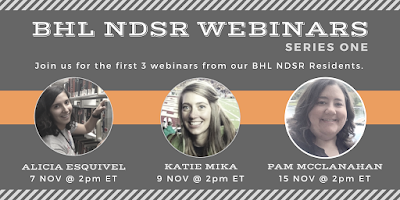
November 7, 2017 at 2:00pm ET
Alicia Esquivel, Chicago Botanic Garden
Biodiversity Heritage Library: NDSR Collections Analysis
Seminar Room: iDigBio Conference Room ( 500 )
Recording: http://idigbio.adobeconnect.com/pcb8q6y4yy16/

November 9, 2017 at 2:00pm ET
Katie Mika, Ernst Mayr Library, Museum of Comparative Zoology, Harvard University
Biodiversity Heritage Library: Transcriptions, Crowdsourcing and Metadata
Seminar Room: iDigBio Conference Room ( 500 )
Recording: http://idigbio.adobeconnect.com/pk7ctpfe00a4/

November 15 at 2:00pm ET
Pam McClanahan, Smithsonian Libraries
Biodiversity Heritage Library: User Studies
Seminar Room: iDigBio Conference Room ( 500 )
Recording: http://idigbio.adobeconnect.com/pd0piuxxvs2z/

BHL NDSR Webinar Schedule: Series Two


November 27, 2017 at 2:00pm ET 

Marissa Kings, Natural History Museum of Los Angeles County
Biodiversity Heritage Library: Best Practices for Digital Libraries
Seminar Room: iDigBio Conference Room ( 500 )
Recording: http://idigbio.adobeconnect.com/pri8c4khg5sz/

December 5, 2017 at 2:00pm ET
Ariadne Rehbein, Missouri Botanical Garden
Biodiversity Heritage Library: Enabling Image Discovery
Seminar Room: iDigBio Conference Room ( 500 )
Recording: http://idigbio.adobeconnect.com/pf9sm774sjd8/ 

New to Adobe Connect? We recommend following the link to the webinar about 15-20 minutes before the start time to install any add-ins as needed and to run the Audio Wizard. Please note that sometimes after running the Audio Wizard, you may still need to click on the picture of the microphone to connect the microphone. Should you have any questions, we’ll also be monitoring the chat throughout. Hope you can join us!

November 1, 2017by Kathryn Stine
BHL News, Blog Reel

NDSR Residents Update

View Full Size Image
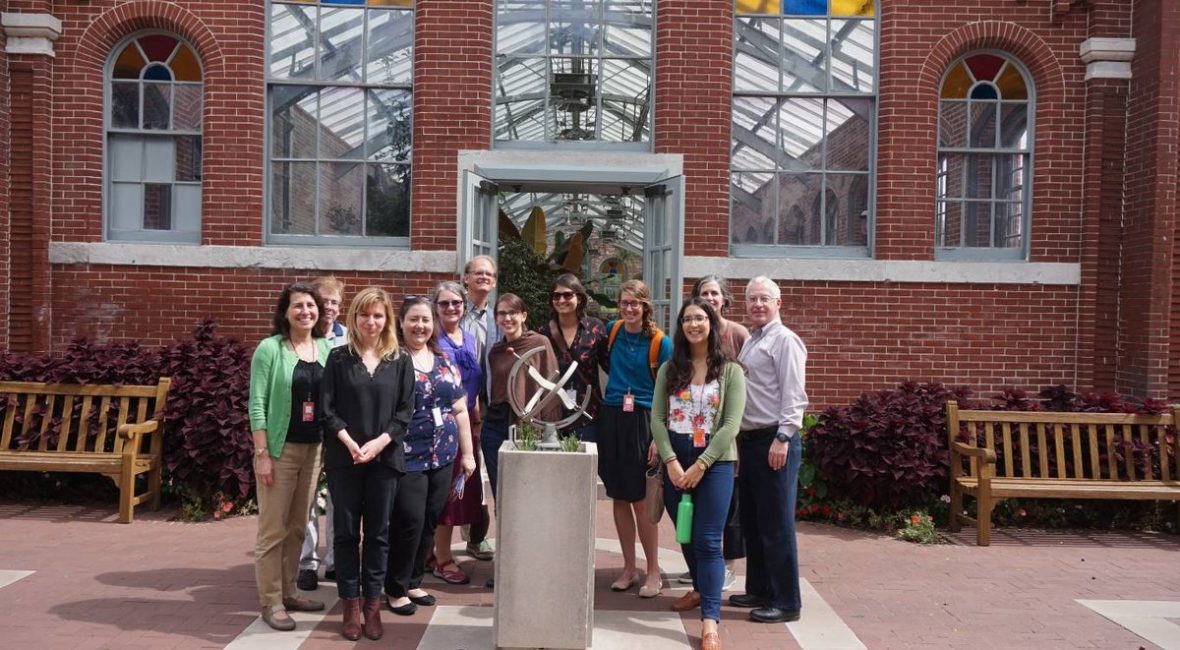
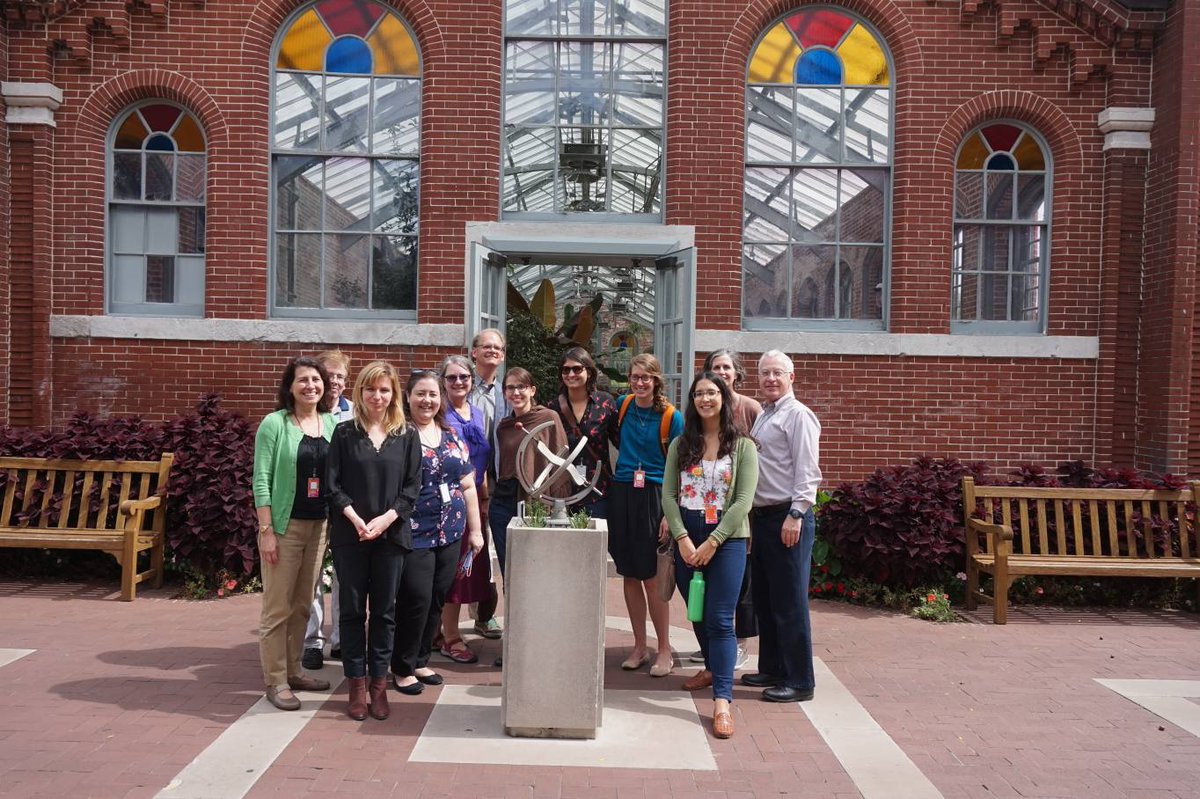
BHL NDSR Mentors and Residents at the Missouri Botanic Garden [Photo by Martin Kalfatovic]

Hello again from the NDSR Residents! Since our last update in July we’ve been focusing on transforming our research into recommendation outlines that we presented to the BHL Tech Team last week. As we head into the final quarter of our residencies, we’ll be focusing on tweaking these ideas, developing workflows and proof of concepts, and finalizing our recommendations in a Best Practices White Paper by December. For this update, we wanted to give a preview of what some of these recommendations will look like and invite some preliminary feedback from the BHL Blog-o-sphere that we can consider as we move into these final months.

Katie has been evaluating current and investigating long term crowdsourcing projects to enhance BHL data and metadata. This has mostly focused on manuscript transcriptions and OCR corrections, but has broadened to include data extraction, named entity recognition, and optimizing, cleaning, and disambiguating collections data for use in large scale computational research.

Her recommendations include the following:

  1. Develop a sustainable, long term transcriptions and corrections crowdsourcing platform in which users identify items to correct or transcribe, tag text with scientific and common names, locations, events, dates/times, and other valuable observation data, and enjoy immediate access to updated text;
  2. Since crowdsourcing is likely not going to scale up to meet the transcription and corrections needs of 52+ million pages in BHL, staff and partner institutions should continue to investigate automated data recognition and extraction methods. Crowdsourced data will likely prove to be valuable training data for future algorithms;
  3. Add already transcribed content to the portal as plain, not marked up text;
  4. Disambiguate and add authority control to bibliographic metadata; and
  5. Donate data to Wikidata to expose collections to the semantic web. A linked data knowledge based, Wikidata will allow users to connect content in BHL to related collections and information across data repositories. Focus on bibliographic metadata to ultimately enrich structured citations across Wikimedia Foundation projects including Wikipedia, Wikimedia Commons, WikiSpecies, and Wikisource; and BHL’s rich index of taxa that can improve the discovery of protologues and other heritage descriptions and treatments in BHL literature.

Alicia has been performing content analyses on the BHL corpus to determine how much of the world of biodiversity literature has been digitized by BHL thus far in order to focus future digitization efforts. These analyses have required her to dive into some data and text mining to create proof of concepts for analyzing the 50+ million pages of BHL.

Her recommendations include the following:

  1. Improving BHL data exports and documentation to encourage more users to manipulate BHL data and look at the “collection as data”;
  2. Adding BHL citations to Wikidata; and
  3. Exploring filtering scientific names into kingdoms for browsing BHL content and for targeting underrepresented taxa in BHL.

Ariadne has approached the goal of searching and browsing for illustrations in the BHL portal with a wide lens: Understanding its strategic context, conveying lessons about data production and engagement from BHL’s illustration crowdsourcing efforts, and investigating the role of illustrations in the scholarly research cycle and among the BHL portal’s taxonomic users. She is looking forward to trying her hand at the interface design process, developing proof of concepts, and continuing to work with collaborators and advisors towards well-rounded final recommendations.

Her preliminary recommendations include:

  1. Build upon scientists’ and the public’s mutual love of illustrations to further the cause of biodiversity (ex. Inviting scientists to share information about their work, species, and history of the field using illustrations as a touchpoint);
  2. Fulfill the desire of crowdsourcing volunteers to make information accessible according to personal or group interests, within constraints of limited management (ex. Pursuing connections with the Wikipedia community); and
  3. Pursue computer vision as a method of data production.

Pam has been distributing and analyzing user surveys to inform the next version of BHL. Over the summer, a survey was posted on the BHL website to capture the feedback of individual users coming to BHL for their research needs. Currently, two surveys are in progress – one gathering the feedback of those users affiliated with the consortium of BHL libraries, and the other seeking the input of organizations and individuals who use BHL at the system level.

Results are still preliminary at this time for the first survey, but her initial recommendations include:

  1. Performing usability studies to help inform the design process after seeing navigation and user interface issues appear in the survey comments;
  2. Conducting focus groups to delve further into user needs and priorities for requirement gathering of particular features and enhancements; and
  3. Focusing on top needs identified by users in the survey: -improving search and browse; -providing a more streamlined download experience; and -enhancing named entities, including author name, scientific name, and geographic name.

Marissa has been researching best practices in digital libraries to make recommendations for Version 2 of the BHL portal. Through examining Europeana, the Digital Public Library of America, Trove, and other large-scale digital libraries as case studies, she is researching which tools, services, and standards are being used to present their collections.

Her preliminary recommendations include:

  1. Utilizing BHL’s current APIs to improve website functions. APIs from other libraries have been used to improve access to content in many ways, including letting users search collections by item type, by creating Twitter bots to broadcast thematic or random items, and offering a Google Chrome extension to showcase high-res images, to name a few;
  2. Exploring data visualizations through tools including Kumu and Tableau. Visualizing BHL’s data would not only add another discovery layer to BHL but would also help BHL staff and members track statistics as well. In the coming months, Marissa will be working with Tableau to create visualizations; and
  3. Create a beta site when BHL Version 2 is in development. To ease users into a completely revamped website, having a beta site active before making the full transition over will help users get accustomed to new features.
September 19, 2017by UNTSpecialCollections
BHL News, Blog Reel

2016 BHL Annual Report

The 2016 BHL Annual Report is now available!

View Full Size Image


Find out how our collections grew and audiences engaged with our library in 2016, learn more about some exciting new projects, and explore impact stories from users across the globe. Read the report now!

You can also get the latest updates from BHL in our newsletters. Explore past newsletters here and subscribe to our mailing list here.

July 19, 2017by Grace Costantino
BHL News, Blog Reel

NDSR Residents Mid-Year Update

Portrait version of the Biodiversity Heritage Library logo.

We officially passed the halfway point in our residencies in June and have begun to work on compiling our research into a final report. We are excited to bring you some project updates and report on our conference presentations.

View Full Size Image

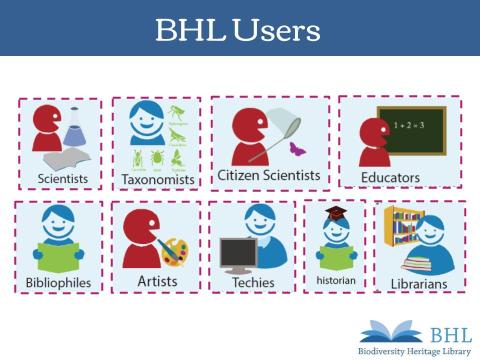
Pam’s individual user survey is now live and collecting responses to help BHL improve the user experience. Her last update describes the characteristics that make up the different BHL user groups:(1) Consortium Users; (2) System Users; and (3) Individual Users.

  1. Consortium Users:  A contributor to BHL including Members, Affiliates, Partners, staff, and volunteers

  2. System Users:  Organizations or individuals who interact with BHL for the purpose of enriching another system via APIs (Application Programming Interface) or manually

  3. Individual Users:  Anyone visiting the BHL website to search for information to answer their research needs such as, scientists, collection managers, librarians, etc.

View Full Size Image

For her NDSR project at Smithsonian Libraries, Pam will be gathering feedback from the users of BHL to help inform the next version of the digital library. She’s had the opportunity to meet with several partners of BHL and sit in on BHL Member, Collection, and Tech Team meetings. Through these interactions, she has been able to learn more about the BHL users and will be developing surveys and interviews to gather feedback directly from the users. Moving forward, BHL looks to enhance current features and implement new features that will enrich the user experience, providing additional insight into the world’s knowledge of biodiversity. Investigating user needs with BHL may also prove useful in identifying user behaviors and preferences that would be applicable for other digital libraries as well.

View Full Size Image
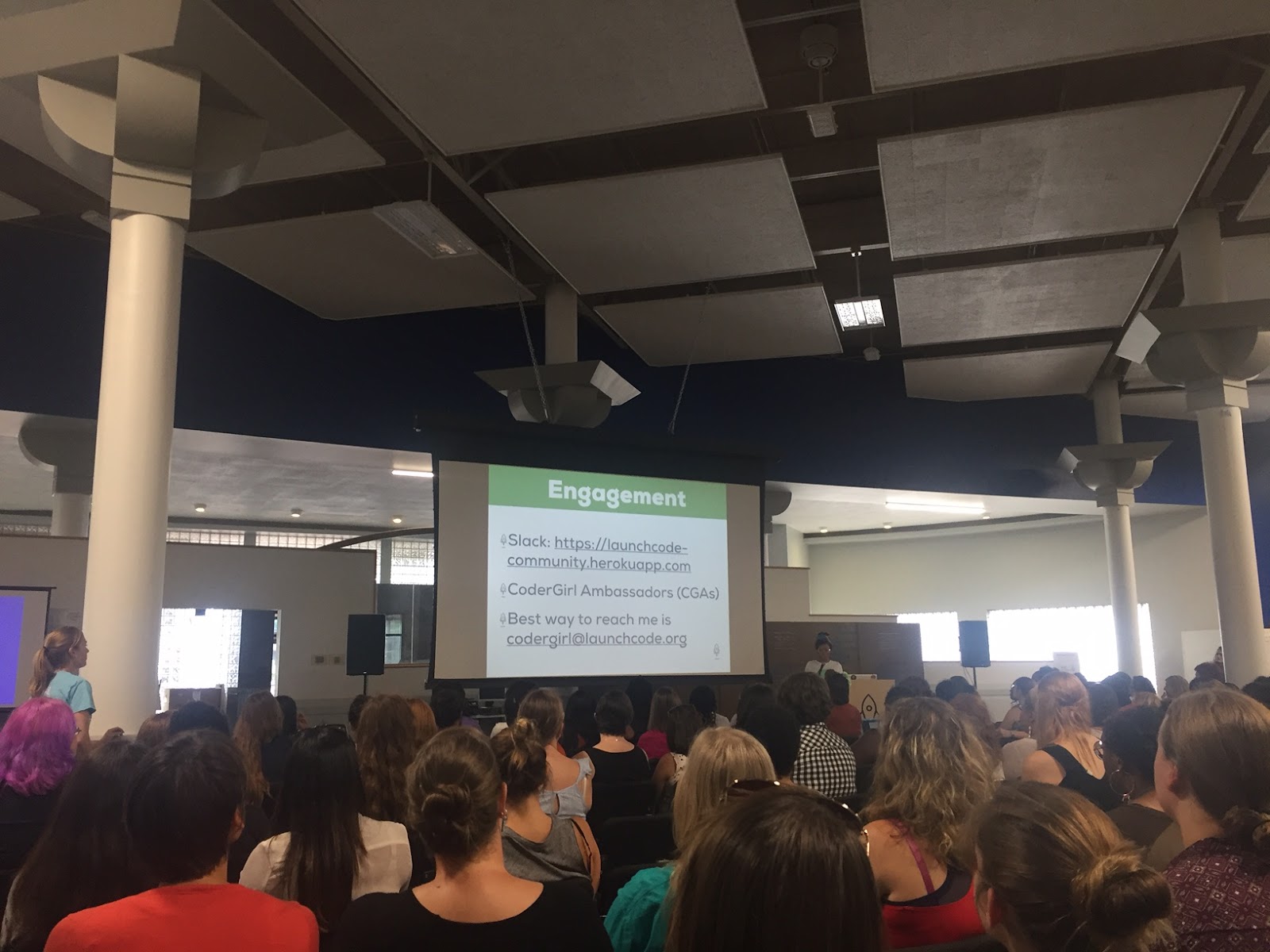
CoderGirl Program Director, Crystal Martin, welcomes Summer 2017 students on the first night of the program! About 100 students total are participating on various tracks.

Last week, Ariadne joined the CoderGirl UX (User Experience) Summer 2017 Cohort. CoderGirl is a technology training program and community for women in St. Louis that is part of the LaunchCode Education initiative. Participation is free; mentors working in the field offer their time to teach on a volunteer basis. The UX track is a 6 month program designed to grow skills in UX research and design in a supportive, creative, and diverse environment. The track centers around the development of a project that will serve as a UX portfolio.

Beyond this, Ariadne is focusing on interviewing BHL Flickr taggers and Science Gossip members to understand the successes and challenges of these programs and the motivations and backgrounds of participants. Most importantly, Ariadne hopes to convey their  perspectives as she makes recommendations for improving access to natural history illustrations and BHL’s future crowdsourcing/citizen science initiatives.

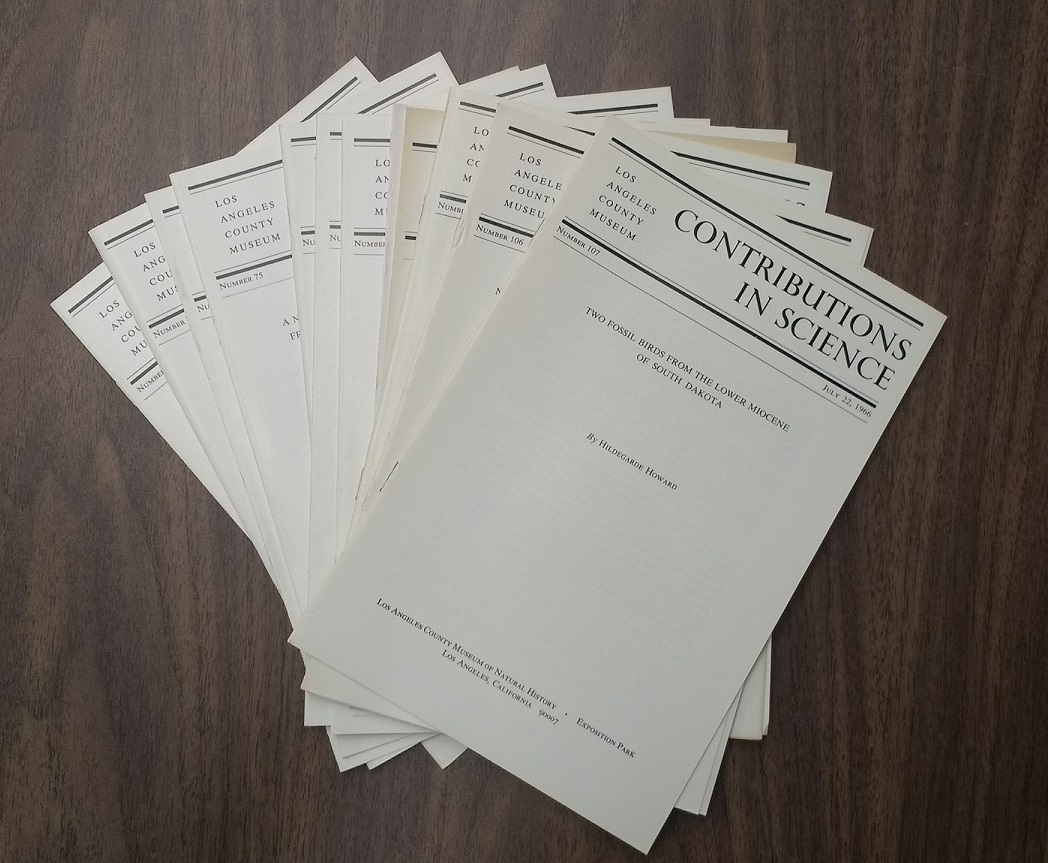
Marissa has been working with several summer interns at NHMLAC to create and edit metadata for the museum’s publication Contributions in Science. This process has involved much fine-tuning, but establishing a clear workflow is important as the museum hopes to contribute more of its in-house publications to BHL in the future!

This project is also timely as the museum’s invertebrate paleontology department is in the process of digitizing some of their thousands of specimens and specimen records, and Marissa has been in contact with them to see how we can possibly connect the digitized specimen information with their occurrences in biodiversity literature.

View Full Size Image
Contributions in Science articles in their natural habitat

In May, Katie participated in WikiCite 2017, a conference, summit, and hackathon event organized for members of the Wikimedia community to discuss ideas and projects surrounding the concept of adding structured bibliographic metadata to Wikidata to improve the quality of references in the Wikimedia universe. Generating Linked Open Data citations has the potential to connect objects and concepts with information resources to create context for more accurate and interesting digital representations of knowledge and cultural heritage. And more complete and complex graphs are better at supporting deeper investigations, queries, and visualizations of these data across repositories, collections, and knowledge bases.

One way that GLAMs can begin to integrate their catalog records with Wikidata (and therefore across Wikimedia projects and other repositories across the web that are connected to Wikidata), is by using its power for reconciling messy data. One of the biggest problems with BHL bibliographic metadata is that it comes from lots of different libraries and museums and is often as old and outdated as the content it describes.

For example: BHL attaches Creator IDs to Author names, which is useful for identification and connecting titles and items to their Authors, but they are assigned automatically according to the character strings imported from specific fields in a library catalog’s MARC record. Despite (and perhaps because of) the use of authority files to control Author name strings in catalog records, different libraries have contributed items by the same author whose names are are spelled, punctuated, and identified differently. The process of finding all of the different spellings of author names and colocating them under a single unique identifier is called “reconciling”, and BHL does not do it, choosing instead to focus on improving access to items based on content rather than metadata. Fortunately, there are several different ways to go about reconciling data, and one of them is crowdsourcing.

BHL can use Wikidata to tell its users that “Packard, Alpheus S” (Creator ID: 82636), “Packard, A” (Creator ID: 59850), “Packard, A S” (Creator ID: 48286), “Packard, A. S. (Alpheus Spring), 1839-1905” (Creator ID: 1592), and “Packard, Alpheus Spring” (Creator ID: 56087) are all the same person without editing spellings or legacy metadata from the catalog record. While some of the reconciling can be done computationally using (still more) authority files like VIAF, it often misidentifies strings and isn’t very helpful when an author is not in that particular database. These errors are best caught by humans, who Wikidata invites to directly edit mistakes and add identifiers.

BHL can use Wikidata by adding a property for a BHL Creator ID in Wikidata (P4081) and adding a table in BHL for Wikidata IDs that can be associated with those same Creator IDs. By adding BHL IDs to Wikidata, it becomes a more robust knowledge base that will improve the discoverability of BHL’s content by enriching its metadata externally and solving some metadata problems internally.

Subscribe to the BHL NDSR blog for an upcoming post that will describe this process in more detail.

Alicia attended the Inaugural Digital Data in Biodiversity Research Conference sponsored by iDigBio, the University of Michigan Museum of Zoology, the University of Michigan Herbarium, and the University of Michigan Museum of Paleontology in June. The conference brought together biodiversity researchers, data providers, data aggregators, collection managers, and librarians to talk about creating digital biodiversity data, sharing this data, and using it in research.

View Full Size Image

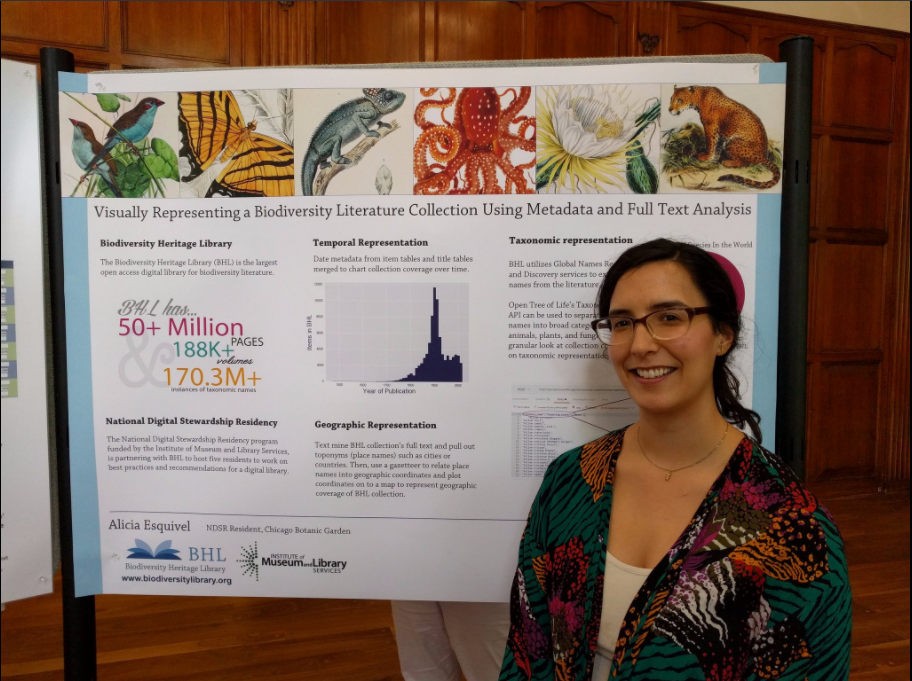
The presentations, posters, and workshops highlighted research trends in biodiversity and projects that have open access missions similar to BHL’s. She was able to give a talk about using statistical analysis to calculate the size of biodiversity literature (using capture-mark-recapture) and present a poster about visually representing the collection at BHL.

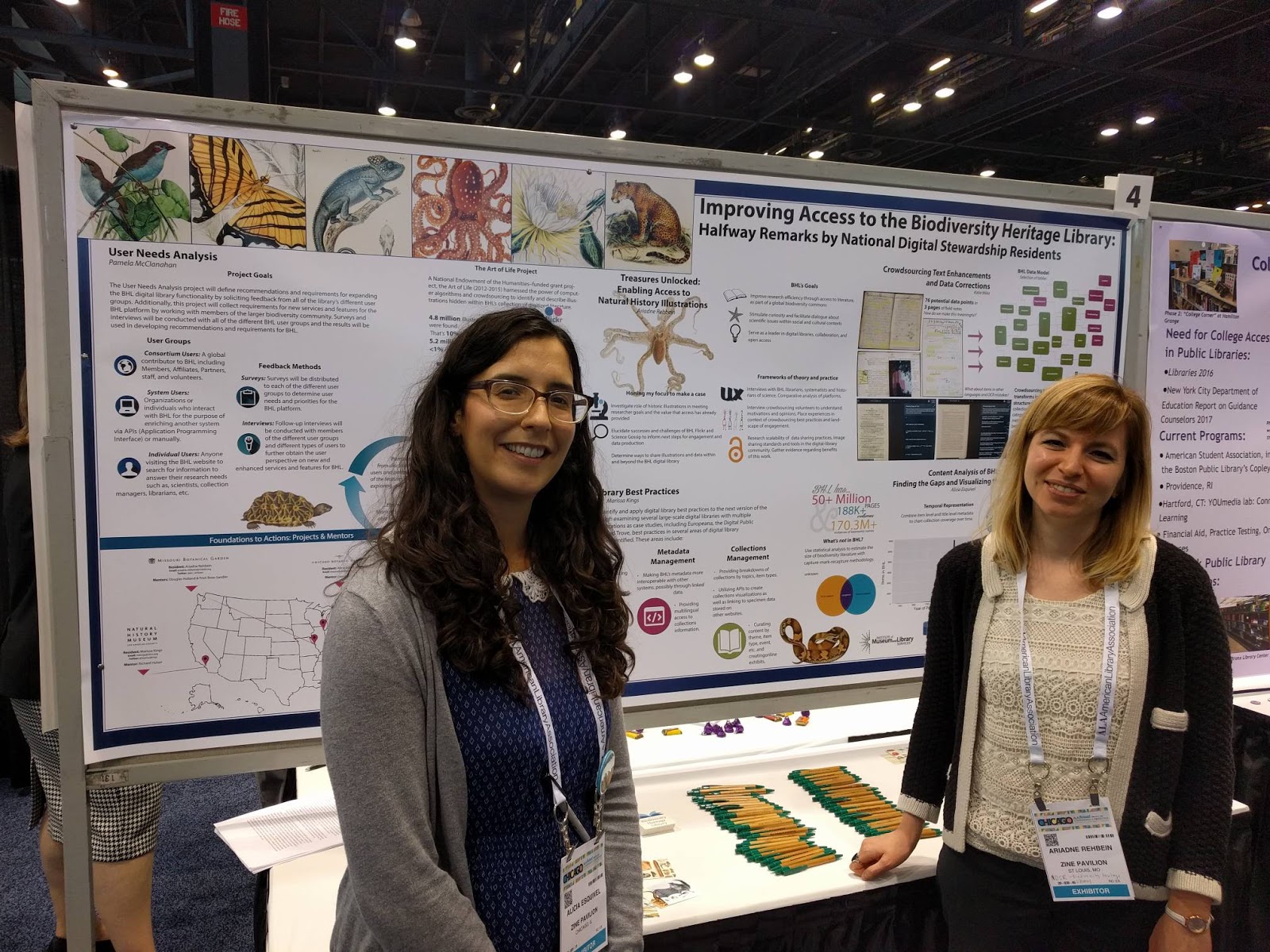
And in June, we represented BHL and NDSR at the ALA Annual Conference in Chicago. The conference, hosted by the American Library Association, was held to discuss, learn, and exchange ideas about libraries on the theme “Transforming Our Libraries, Ourselves.” With 25,000 attendees, masses of sessions and talks, and a mountain of freebies, ALA can be an overwhelming experience — we managed to find our way and learned about different library projects and trends from around the country.

One of our main goals was to present our “Halfway Remarks” poster on behalf of all of the BHL NDSR Residents. Alicia Esquivel of the Chicago Botanic Garden and Ariadne Rehbein of the Missouri Botanical Garden attended and presented.

View Full Size Image

All of us Residents are thankful for the opportunities we have had to attend and present at conferences during the first half of our residencies. Our next professional meeting will be the BHL tech meeting in September where all of the Residents and Mentors will join the BHL Technical Team in St. Louis to discuss our findings of best practices and recommendations for BHL.

July 18, 2017by Colleen Funkhouser
Page 1 of 212»

Help Support BHL

BHL's existence depends on the financial support of its patrons. Help us keep this free resource alive!

search

About BHL

The Biodiversity Heritage Library (BHL) is the world’s largest open access digital library for biodiversity literature and archives. BHL operates as a worldwide consortium of natural history, botanical, research, and national libraries working together to digitize the natural history literature held in their collections and make it freely available for open access as part of a global “biodiversity community.”

Join Our Mailing List

Sign up to receive the latest news, content highlights, and promotions.

Subscribe Now

Subscribe to Blog via Email

Enter your email address to subscribe to this blog and receive notifications of new posts by email.

Join 319 other subscribers

Subscribe to Blog Via RSS

Subscribe to the blog RSS feed to stay up-to-date on all the latest BHL posts.

Access RSS Feed

Inspiring Discovery through Free Access to Biodiversity Knowledge.

The Biodiversity Heritage Library makes it easier than ever for you to access the information you need to study and explore life on Earth…for free, anytime, anywhere.


64+ Million Pages of
Biodiversity Literature Online.

EXPLORE

Tools and Services
to Transform Research.

EXPLORE

300,000+
Illustrations on Flickr.

EXPLORE

ABOUT | HARMFUL CONTENT | PRIVACY | SITE MAP | TERMS OF USE