Biodiversity Heritage Library - Program news and collection highlights from BHL
  • Home
  • News
  • Featured Books
    • All Featured Books
    • Book of the Month Series
    • BHL at 20
  • User Stories
  • Campaigns
    • Fossil Stories
    • Garden Stories
    • Monsters Are Real
    • Page Frights
    • Her Natural History
    • Earth Optimism 2020
  • Tech Blog
  • Visit BHL
Home
News
Featured Books
    All Featured Books
    Book of the Month Series
    BHL at 20
User Stories
Campaigns
    Fossil Stories
    Garden Stories
    Monsters Are Real
    Page Frights
    Her Natural History
    Earth Optimism 2020
Tech Blog
Visit BHL
  • Home
  • News
  • Featured Books
    • All Featured Books
    • Book of the Month Series
    • BHL at 20
  • User Stories
  • Campaigns
    • Fossil Stories
    • Garden Stories
    • Monsters Are Real
    • Page Frights
    • Her Natural History
    • Earth Optimism 2020
  • Tech Blog
  • Visit BHL
Biodiversity Heritage Library - Program news and collection highlights from BHL
Blog Reel, Featured Books

Earth Day 2021: Exploring Earth’s Biodiversity through Books

background of yellow, white and red flowers with text "Happy Earth Day 2021"

Since its inaugural event on 22 April 1970, Earth Day has grown into an international annual celebration of the Earth and a movement to raise awareness about and support for environmental protection. This year’s theme, Restore Our Earth, emphasizes that, “As the world returns to normal, we can’t go back to business-as-usual.” As we face widespread climate change and unprecedented biodiversity declines—with one million species threatened with extinction—immediate, online access to essential literature is ever-more important, allowing scientists to conduct research more quickly and efficiently and improving our ability to respond to these crises. For fifteen years, the Biodiversity Heritage Library (BHL) has worked as a global consortium to provide this vital access, empower research, and make a real difference in our ability to improve the health of our planet for every species that calls it home.

This year, several of our global partners have selected a few titles from the BHL collection to commemorate Earth Day. From exploring Asia’s vast and unique biodiversity to inspiring conservation through a popular publication on birds, providing practical methods for conducting surveys and using the data to support conservation practices, and marveling at the extraordinary biodiversity of past ages, these titles highlight the richness of our planet’s biodiversity and remind us of the importance of protecting the wonderful, wild, and beautiful life on Earth.

Asian Biodiversity: An Essential Contributor to Our Beautiful Earth

By Zheping Xu, Xuejuan Chen, and Tian Jiang (National Science Library, Chinese Academy of Sciences)

Biodiversity is essentially everywhere, ubiquitous on Earth’s surface and in every drop of its bodies of water [1]. Biodiversity conservation makes great contributions to the restoration of the earth.

As a continent with the largest area and the most population, Asia holds vast biodiversity, from the equatorial region to the Arctic area, and from the coast of the western Pacific to the borders of Europe and Africa. Here, we introduce several books that review Asian biodiversity, from mammals and insects to some distinctive species from the continent.

Mammals of Eastern Asia (1947) is the first general work on mammals of eastern Asia [2]. The book’s carefully prepared chapters and fine original pen sketches are interesting, useful and invaluable to the amateur as well as the professional zoologist regarding the habitats, relationships, life histories and idiosyncrasies of the widely diversified faunas.
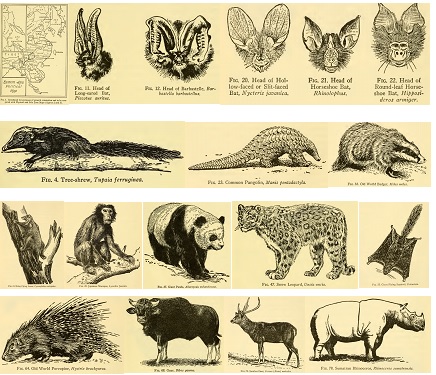
Map of Eastern Asia and pen sketches of some mammals.

Map of Eastern Asia and pen sketches of some mammals. Source: Tate, G. H. H. (George Henry Hamilton). Mammals of Eastern Asia. 1947. Contributed in BHL from MBLWHOI Library.

Cerambycidae of Northern Asia (1988) describes the morphology, geographic distribution, and biology of cerambycid beetles in Northern Asia of four sub­families (Prioninae, Disteniinae, Lepturinae, and Aseminae), comprising 124 species. Many cerambycid species are invasive pests of environmental concern, causing severe damage to forests and crops. Long-term field investigations were conducted on the composition and biology of cerambycids in different parts of northern Asia. Tens of thousands of larvae, pupae, and adult insects were raised in the laboratory for experiments. Keys to taxa of the family Cerambycidae based on different developmental stages are presented in this work for the first time. This book provides important information for informing broad theoretical principles and in resolving practical problems of pest infestation in forests.
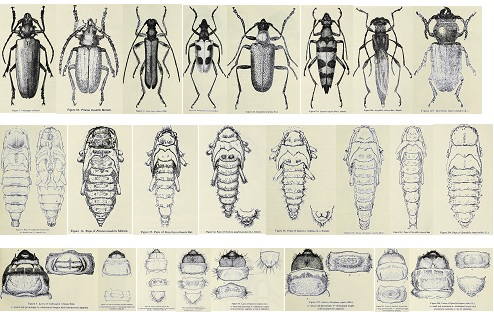
Cerambycidaes: adult insects with their larvas and pupas.

Cerambycidaes: adult insects with their larvas and pupas. Source: Cherepanov, A. I. (Aleksei Ignatevich). Cerambycidae of Northern Asia. 1988. Contributed in BHL from Smithsonian Libraries and Archives. CC-BY-NC-SA.

Asia is home to endemic and highly distinctive focal species. Tracking tigers (Published in 1998) gives a comprehensive overview of the wild status of the Tiger, Asian Elephant, Gaur and Banteng in Indochina. On this basis, it recommends future survey and management needs, and provides background discussion on issues to be addressed by national action plans. The Philippines’ fauna is characterized by large numbers of endemic and highly distinctive species. During the 1980s, the extent of rain-forest habitat destruction became apparent and underscored the need for extensive and detailed documentation of biological diversity to guide development and conservation for the benefit of both wildlife and the human population of the Philippines. The Mammals and birds of Camiguin Island, Philippines, a distinctive center of biodiversity (published in 2006) presents studies of Camiguin Island, a small island province in the Philippines and an ideal natural laboratory in which to investigate many aspects of the evolution and conservation of biological diversity.
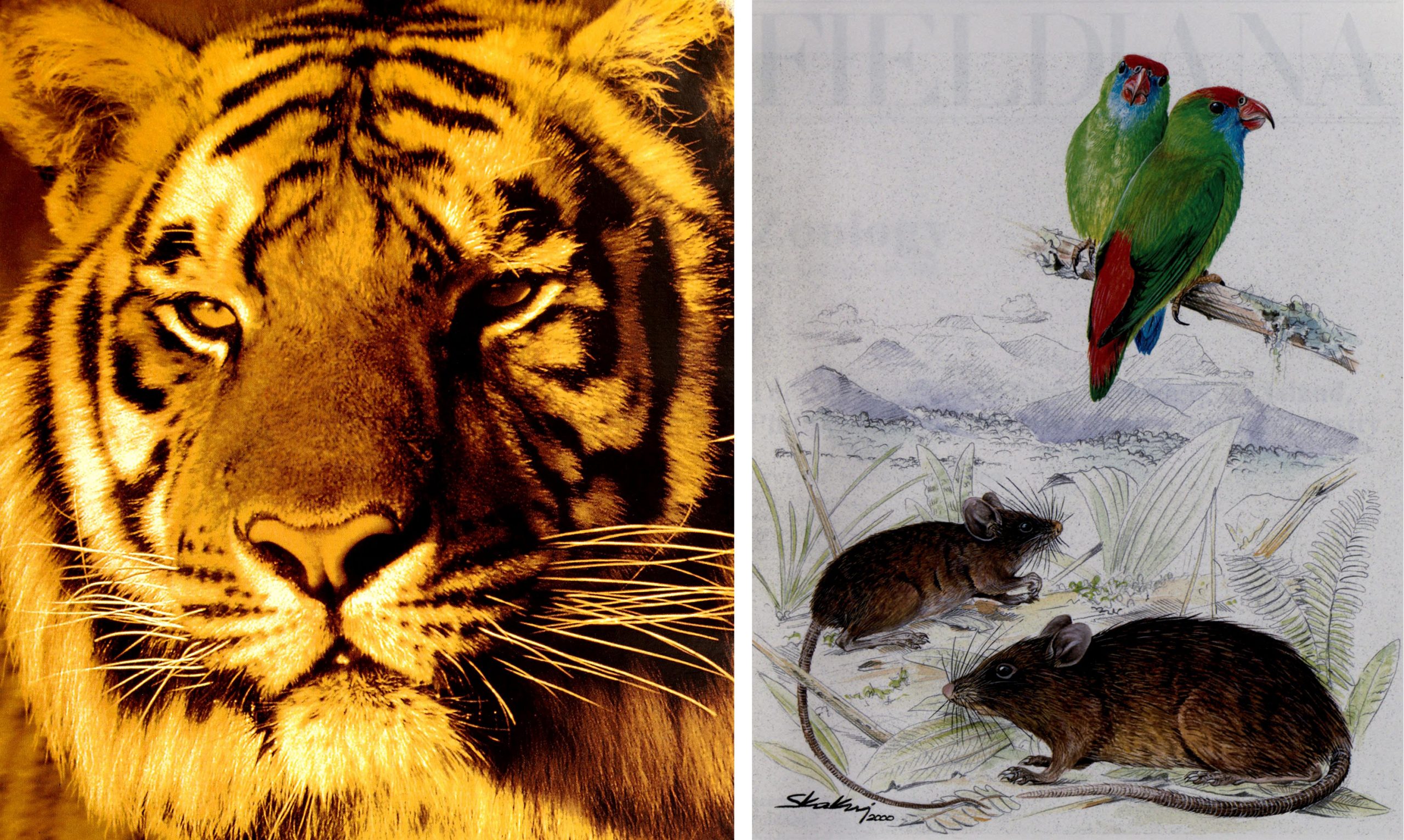
photo of a tiger and illustration of green and red birds and brown rodents

Left: The tiger in Indochina. Source: Duckworth, William and S. Hedges. Tracking tigers. 1998. Contributed in BHL from Smithsonian Libraries and Archives. CC-BY-NC. Right: “Two species of mammals and one species of bird live only on Camiguin Island: Apomys sp. ([…] center left), Bullimus gamay ([…] lower right), and Loriculus sp. ([…] upper center). The distinctive volcanic peaks of Camiguin form the background.” Source: Heaney, Lawrence R. The Mammals and birds of Camiguin Island, Philippines, a distinctive center of biodiversity. 2006. Contributed in BHL from University Library, University of Illinois Urbana Champaign. CC-BY-NC-SA.

Biological species in Asia are important components of Earth’s biodiversity. Biodiversity is closely related to human well-being, but human activities caused rapid changes in biodiversity over the past decades. To restore our Earth, we must identify and assess drivers of biodiversity loss, including habitat change, climate change, invasive alien species, overexploitation, and pollution [1].

[1] Duraiappah, A. K., Naeem, S., Agardy, T., Ash, N. J., Cooper, H. D., Diaz, S., Faith, D. P., Mace, G., McNeely, J. A., Mooney, H. A., Oteng-Yeboah, A. A., Pereira, H. M., Polasky, S., Prip, C., Reid, W. V., Samper, C., Schei, P. J., Scholes, R., Schutyser, F., & Van Jaarsveld, A. (2005). Ecosystems and human well-being: biodiversity synthesis; a report of the Millennium Ecosystem Assessment. World Resources Institute. http://www.millenniumassessment.org/documents/document.354.aspx.pdf.

[2] -S., T. Mammals of Eastern Asia. Nature 161, 188 (1948). https://doi.org/10.1038/161188e0.

Our Southern Birds and Emma Bell Miles: Inspiring Appreciation for and Protection of Birds

By Tomoko Y. Steen, Ph.D. and Alison Kelly, MLIS (Science, Technology & Business Division, Library of Congress)
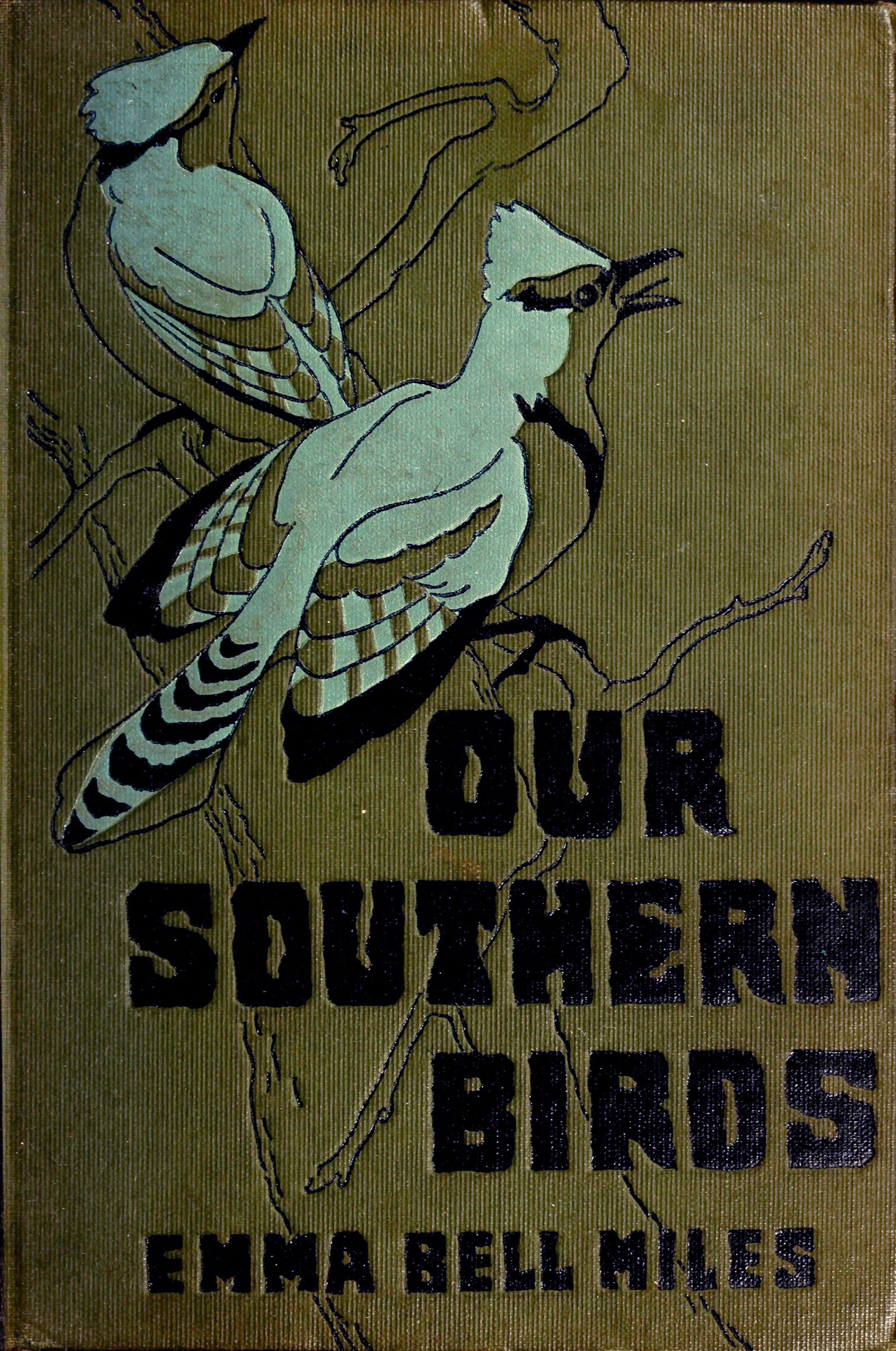
Illustrated book cover featuring two birds and title "Our Southern Birds"

Cover. Miles, Emma Bell. Our Southern Birds. Copyright 1919. Contributed in BHL from Library of Congress.

Emma Bell Miles (1879-1919) was a talented artist, writer and naturalist whose writings reflect her love of the Tennessee mountains where she spent most of her life. In Our Southern Birds, copyrighted in 1919, she recorded her detailed observations and knowledge of the birds of Appalachia, an area that had received little attention in the popular publications on birds until that time. Through this and her other works capturing the essence of natural life in the Southern mountains, Emma Bell Miles drew attention to the importance of preserving biodiversity and habitat.
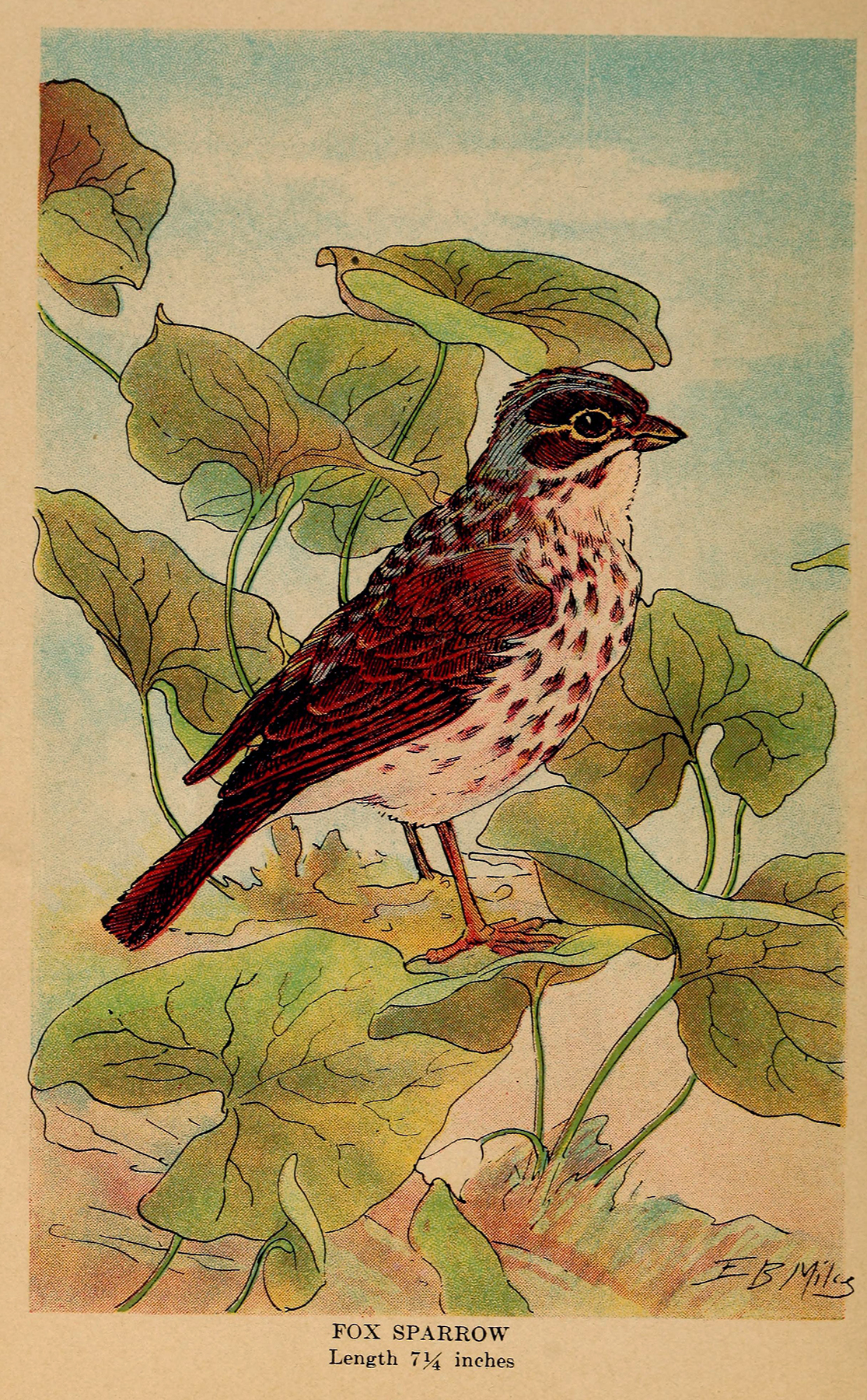
colored illustration of a bird, fox sparrow, brown with blue head and cream belly sitting on branch with green leaves

Fox sparrow. Miles, Emma Bell. Our Southern Birds. Copyright 1919. Art by Miles. Contributed in BHL from Library of Congress.

In the introduction to this, her last book, she stated:

…while the scientific study of birds is beyond most of us, yet an intimate understanding of them and their ways is within reach of everyone, and may enrich life with a new depth of interest… Go out alone in early morning, keep the sun at your back, be careful to do nothing that will startle these timid creatures, and see what you will see.

Our Southern Birds includes many beautiful illustrations by Miles, who, as a young woman, left her home in the mountains to study art in St. Louis. Plagued by homesickness for the mountains, she returned to Appalachia after two years and married a mountaineer. Their marriage was a difficult one, marked by poverty and illness, and she was often the sole supporter of the family by selling her writings, art and poetry.

Written for all levels of readers, this engaging book will appeal to anyone with an interest in birds. Part of the genius of Emma Bell Miles’ work is that she succeeds in presenting not only a careful description of over 100 birds and their habitats, but captures the individual personalities and demeanor of any given species through words and pictures. Her desire to recruit readers to active birdwatching is shown in the inclusion of blank pages for recording observations.
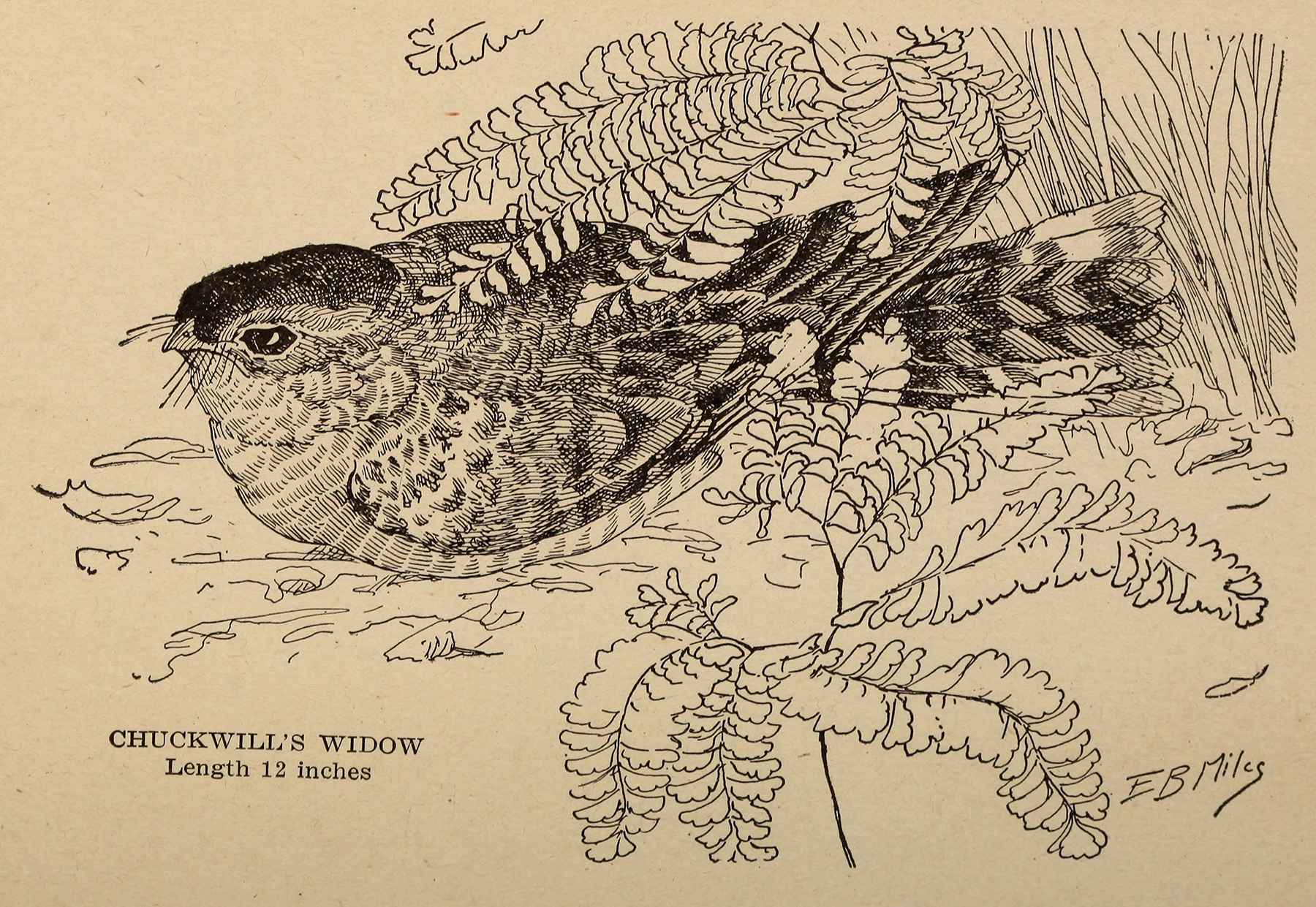
black and white illustration of a bird, chuckwill's widow, hiding within foliage

Chuckwill’s widow. Miles, Emma Bell. Our Southern Birds. Copyright 1919. Art by Miles. Contributed in BHL from Library of Congress.

“Shadows from the Past,” the final chapter of the book, mentions several species that are extinct or close to extinction. “Let the disappearance of these winged lives from their one-time haunts lead us to set a higher value on those that remain,” she writes. In poetic language she goes on to describe the tragic extinction of the passenger pigeon, concluding with an appeal that we can learn from the past: “…it is not too late to learn from the mistakes of our fathers, and though we have lost some valuable species, we may yet save others that are following these to extinction”.

In celebration of Earth Day we want to shine a light on Emma Bell Miles, whose skills in observing and recording the natural world around her will inspire readers to appreciate and preserve biodiversity in their own special place on Earth.

Environmental Evaluations Using Birds and Their Habitats

By Samantha Lindgren (University Library, University of Illinois Urbana-Champaign)
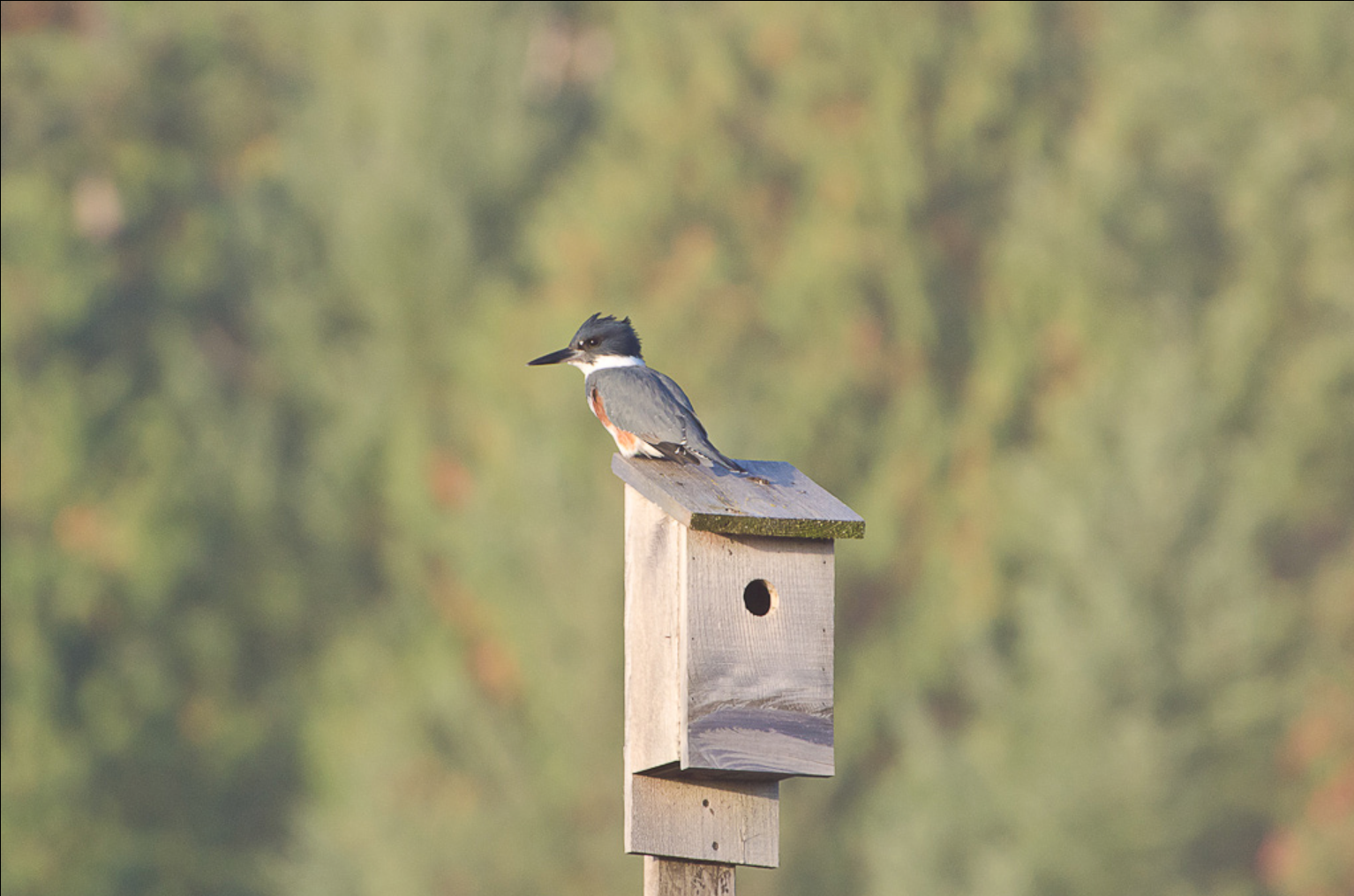
A blue and white bird sitting on a birdhouse roof with a background of trees.

A female Belted Kingfisher. Courtesy of Tyler Ingram, CC BY-NC-ND.

In their 1976 book, Environmental Evaluations Using Birds and Their Habitats, Jean and Richard Graber offer practical methods for surveying birds in Illinois with the purpose of curating data for environmental impact statements. Published as one of the Illinois Natural History Survey’s Biological Notes, the book details the data they have collected from these methods, including bird populations and habitat acreage. Throughout the book are also tables, graphs, and images supporting their methods and findings. While the book was published 45 years ago, it came at a time when concerns for environmental protection was just beginning to affect change, and it remains relevant in its advocacy for environmental conservation and restoration.

Earth Day 2021’s theme is Restore Our Earth. This theme resounds throughout the book in details of habitat surveying and restoration. As the authors posit, Illinois is a large state with diverse habitats and niches, some of which are difficult to redevelop once they are threatened. The authors discuss seven categories of gross habitats found throughout the state: forest, shrub, marsh, residential, grassland, small-grain fields, and row-crop fields. Some of these habitat types are more specific to regions of Illinois than others—such as natural marshes occurring most frequently in northeastern Illinois—however each mention comes with information on habitat replacement cost (the time required for restoration of a habitat or community), acreage data, and associated flora and fauna. Alongside this information, the authors also describe their experimental surveying methods. Through these factors, the authors garner concern for habitat conservation and restoration.
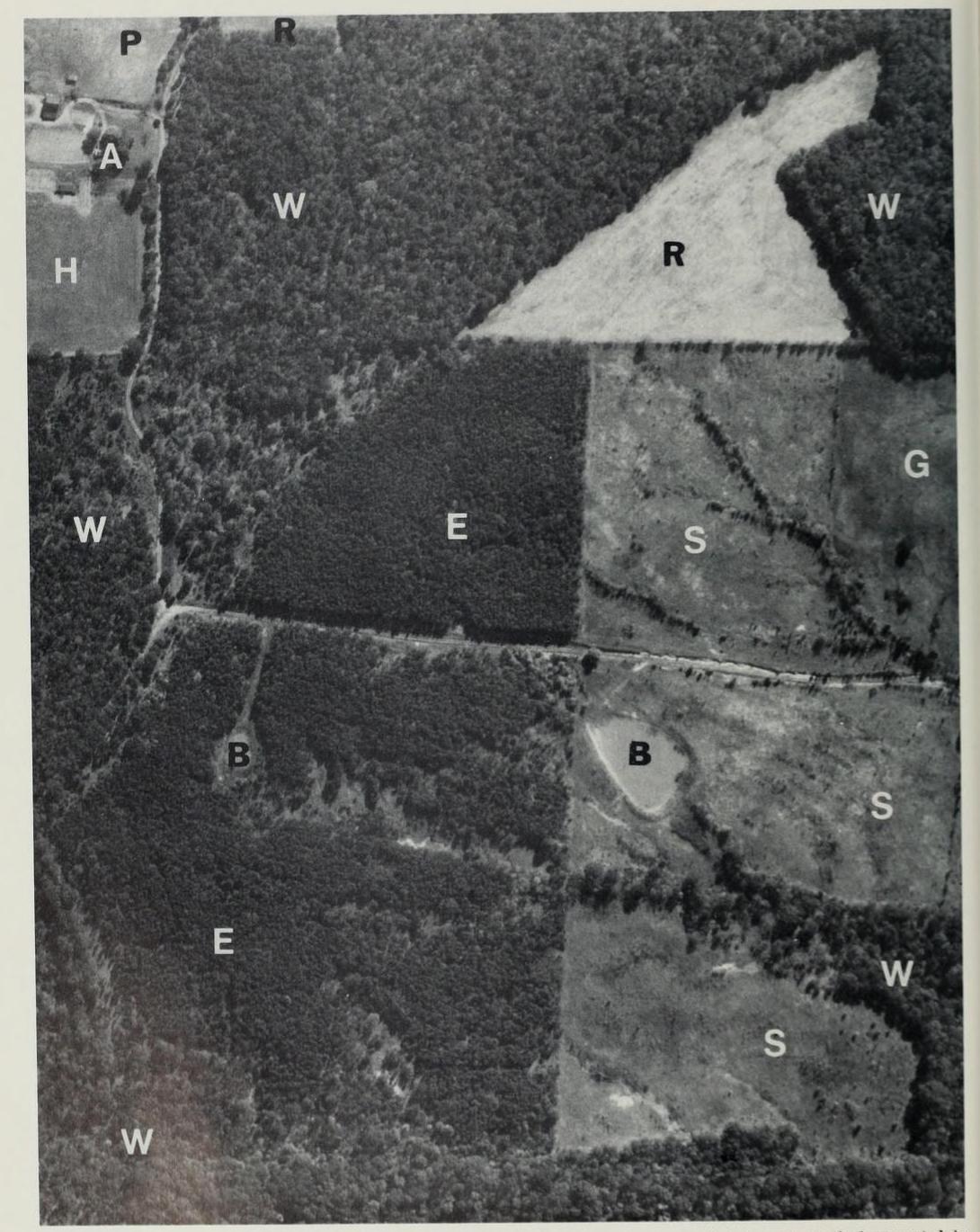
black and white aerial photo

“Fig. 8 – Aerial photograph showing a portion of the experimental impact area used to test the method presented in this paper.” Graber, Jean W. and Richard R. Environmental evaluations using birds and their habitats. 1976. Contributed in BHL from University Library, University of Illinois Urbana Champaign. CC BY-NC.

The methods discussed for collecting data on bird populations garner this concern as well. As the authors state, “…in the conservation of species we must be concerned for the welfare of all the populations that comprise the species” (11). In the context of this book, this means assigning a fair value to birds when applying an avifaunal index during surveying. However, this sentiment can be applied to Earth Day 2021 as well; in the restoration of our Earth, we must be concerned with the welfare of all aspects of Earth. Moreover, the authors supplement discussions of how and why to collect data on bird populations by speaking in-depth about the derivation of their models, and using them in practice. In this way, the authors are not only advocating for conservation and restoration, they are also providing tangible means to implement conservation and restoration practices.

Environmental Evaluations Using Birds and Their Habitats is a great representation of how to turn concern for Earth’s restoration into meaningful action, and should serve as an example that all levels of skills and fields of interest can be utilized to help Restore Our Earth.

Description of the Skeleton of an Extinct Gigantic Sloth

By Cat O’Carroll (Natural History Museum Library & Archives, London)
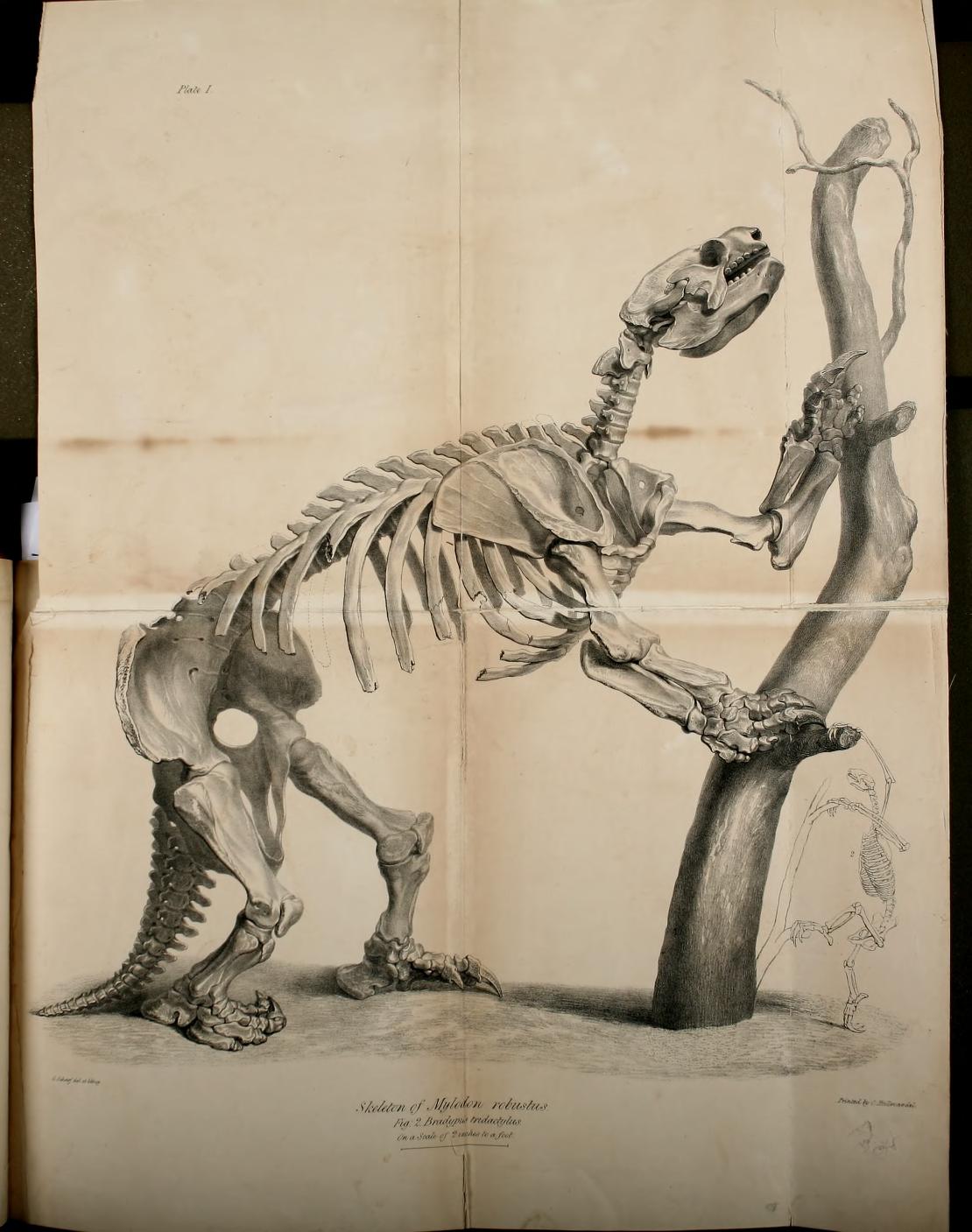
Side-view of the skeleton of the Mylodon robustus

Plate One. Side-view of the Mylodon robustus. Owen, Richard. Description of the skeleton of an extinct gigantic Sloth, Mylodon robustus, Owen, with observations on … Megatherioid quadrupeds in general. 1842. Contributed in BHL from the Natural History Museum Library & Archives.

In the year 1841, a discovery by M.Pedro de Angelis in Argentina unearthed the skeletal remains of a long extinct species……

Following on from the theme of Earth Day 2021 to Restore Our Earth, and raising issues of climate change, I’ve reflected on a title which highlighted a once extraordinary species which used to roam the earth, Description of the skeleton of an extinct gigantic Sloth, Mylodon robustus, Owen, with observations on … Megatherioid quadrupeds in general by Richard Owen (1842).

Owen, once curator at the Hunterian Museum, Royal College of Surgeons, was later in his career put in charge of the British Museum (Natural History) collections. As a result, he campaigned that a new building was needed to house the ever-expanding collections, which later built in 1881, became the Natural History Museum (NHM) in London as we know it today.

After exhuming the finds of the Mylodon robustus, it was then purchased by the Royal College of Surgeons and shipped over to London. In November 1841, it arrived in many pieces and fragile, in need of much restoring. Fossils discovered by Charles Darwin indicated several species of large quadrupeds had become extinct in South America. Owen compares descriptions of fossil remains of the Mammalia, which were collected by Charles Darwin during the voyage of the Beagle and accounted in The zoology of the voyage of H.M.S. Beagle … during the years 1832-1836.
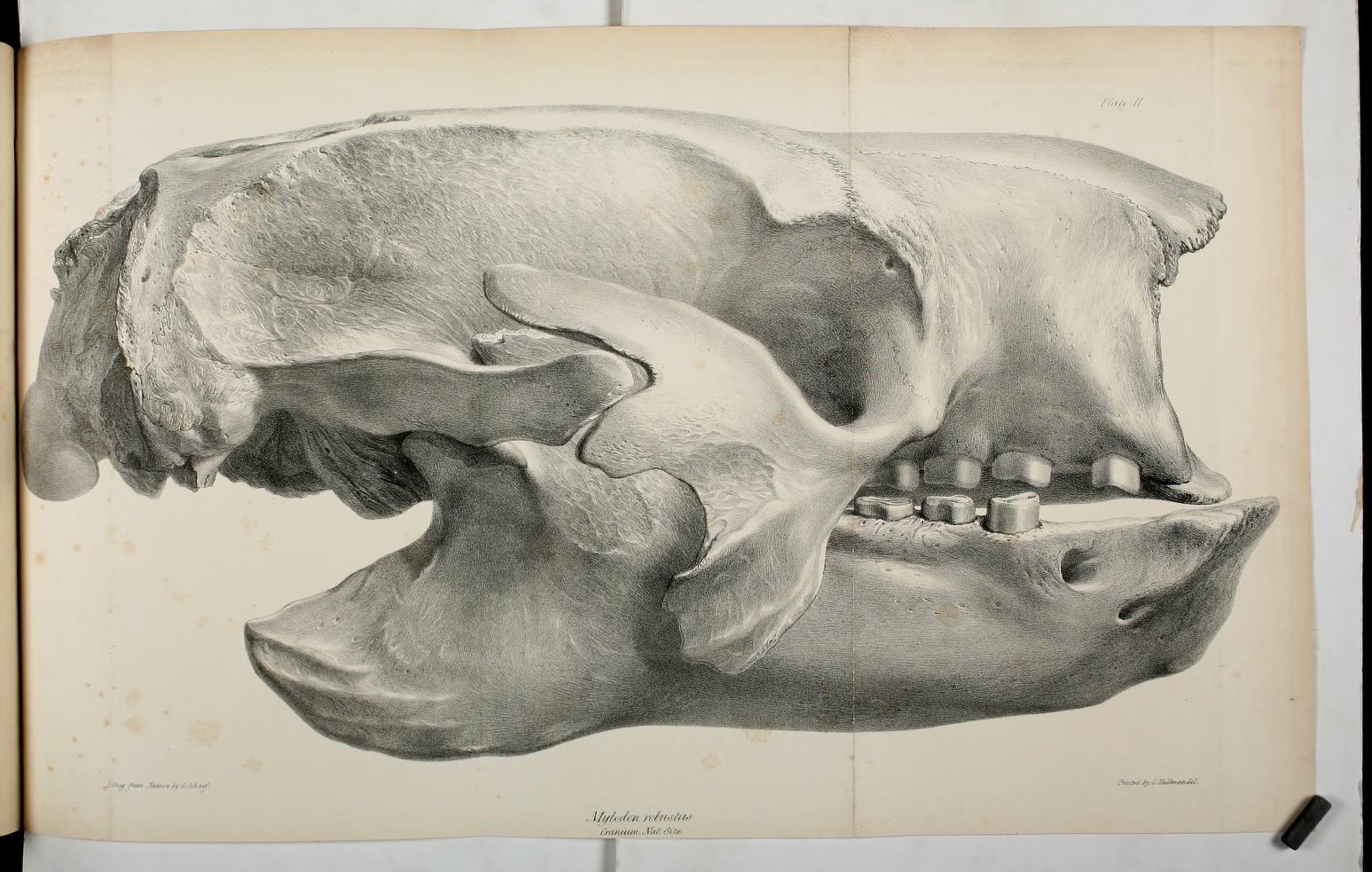
Side-view of the skull of the Mylodon robustus, natural size

Plate Two. Side-view of the skull of the Mylodon robustus, natural size. Owen, Richard. Description of the skeleton of an extinct gigantic Sloth, Mylodon robustus, Owen, with observations on … Megatherioid quadrupeds in general. 1842. Contributed in BHL from the Natural History Museum Library & Archives.

Megatherium (so named and described by Cuvier, 1795), discovered in the 18th century, was shipped to the Museo Nacional de Ciencias in Madrid. However, if you happen to walk down Fossil Way at the Natural History Museum today, you cannot miss the full Megatherium skeleton cast which stands on display. In terms of scale, Owen compares some of the bones of the Mylodon to that of Megatherium and a full-sized elephant.
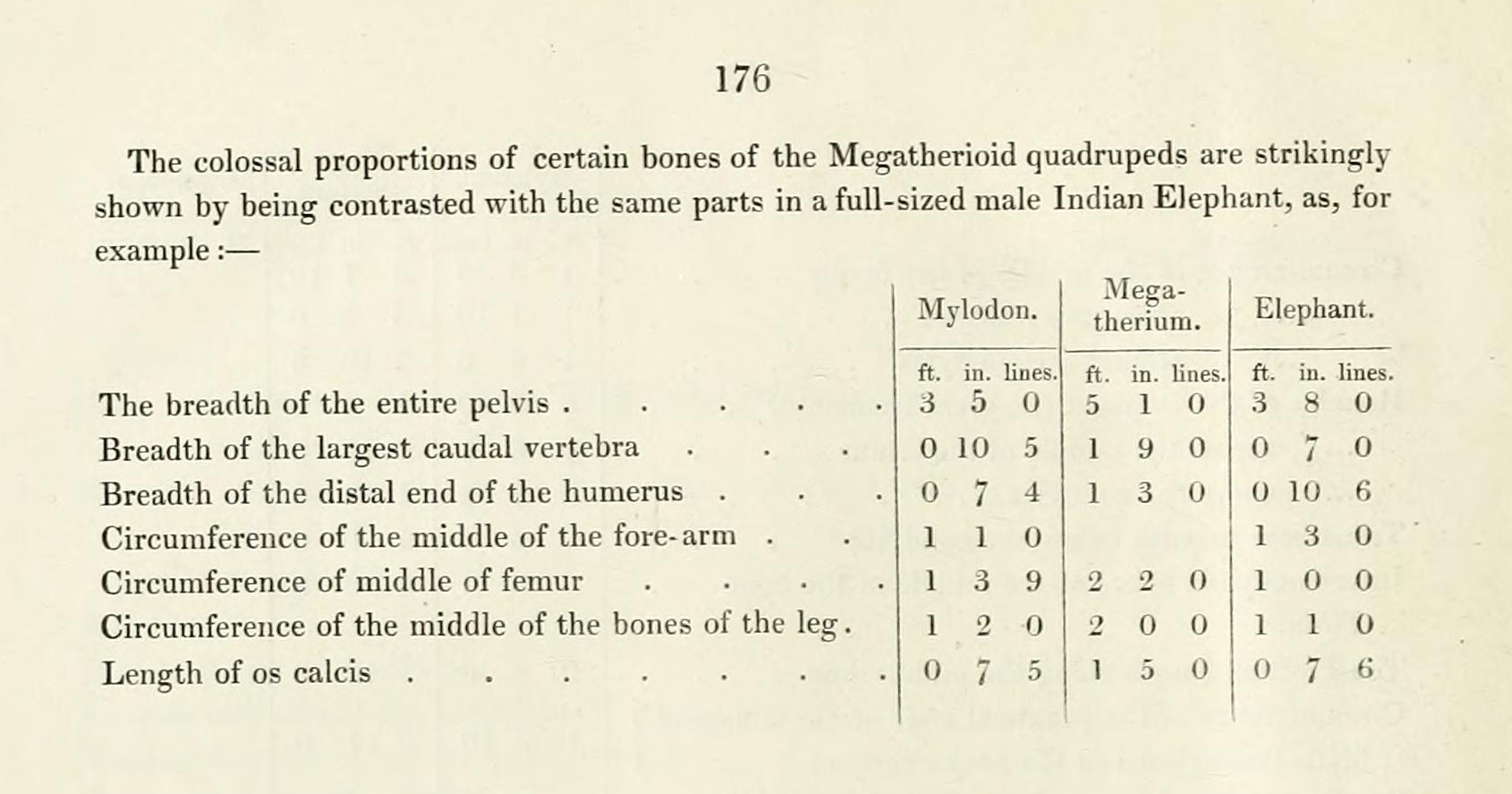
Comparison of certain bone size between Mylodon, Megatherium and an Indian Elephant

Comparison of certain bone size between Mylodon, Megatherium and an Indian Elephant, page 176. Owen, Richard. Description of the skeleton of an extinct gigantic Sloth, Mylodon robustus, Owen, with observations on … Megatherioid quadrupeds in general. 1842. Contributed in BHL from the Natural History Museum Library & Archives.

The Life of Richard Owen (1894), by his Grandson Rev. Richard Owen, summarizes how Owen was puzzled by the habits of these extinct creatures: “Their teeth showed, by their simple structure, that they lived on vegetable food, and probably on the leaves or tender twigs of trees”. It was hard to see how, like sloths today, they could possibly adapt to climbing trees given their sheer size and weight. Owen conjectured that they may have pulled the branches down from the trees instead of climbing them. Mylodon was also furnished with a “long tongue like a giraffe’s, which would help it to reach its leafy food”.
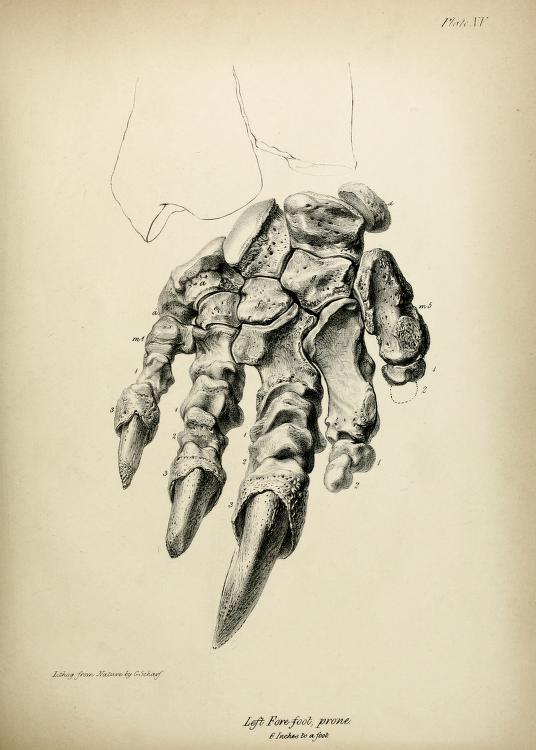
Upper, or anconal surface of the bones of the left fore-foot

Plate Fifteen. Upper, or anconal surface of the bones of the left fore-foot. Owen, Richard. Description of the skeleton of an extinct gigantic Sloth, Mylodon robustus, Owen, with observations on … Megatherioid quadrupeds in general. 1842. Contributed in BHL from the Natural History Museum Library & Archives.

The NHM Library & Archives holds a large collection of natural history drawings and original artworks amongst its collections. In November of 2019, the Images of Nature Gallery saw the installation of George Johann Scharf’s (1786-1860) watercolour drawing of a Megatherium on full display. Completed in 1842, this one drawing comprises of fourteen sheets approximately 2463 x 5745 mm which Scharf completed for Owen. A MEGA task in itself!
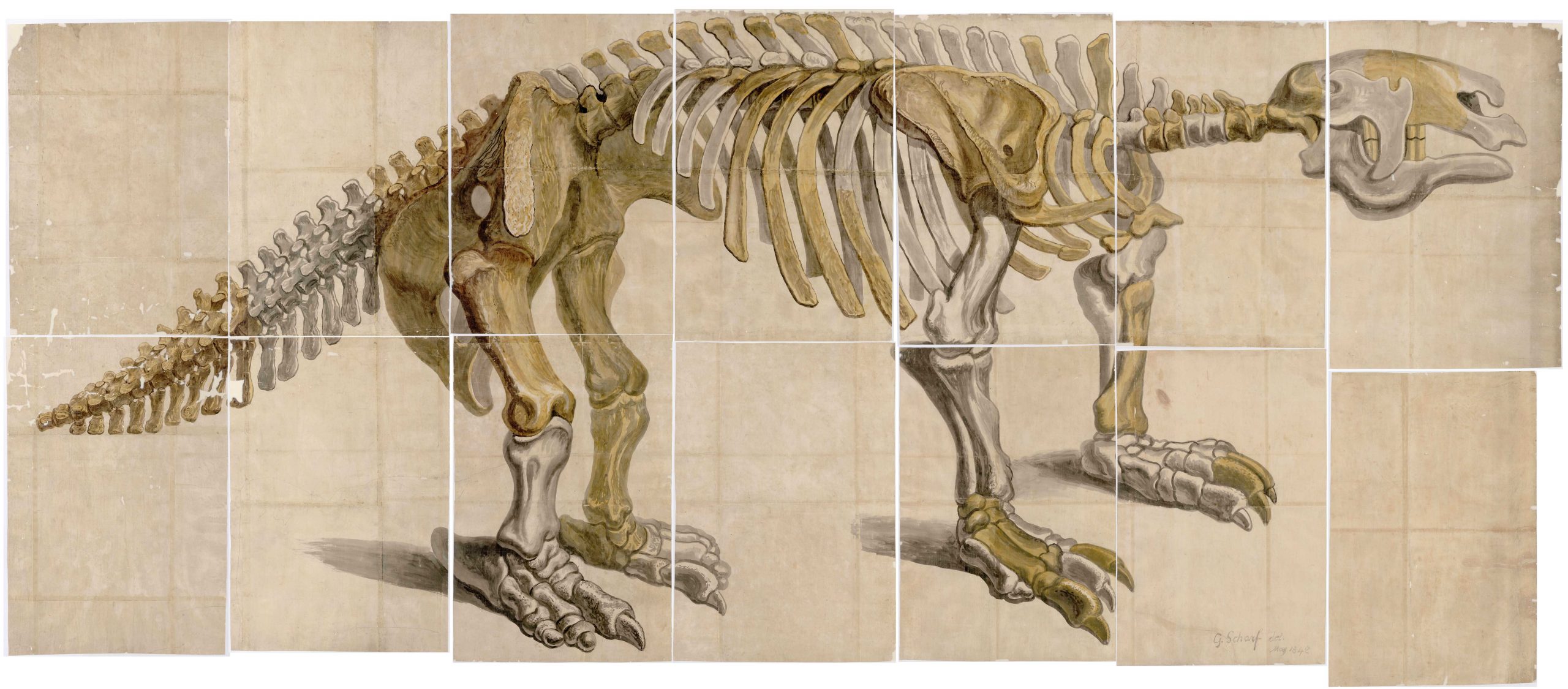
George Johann Scharf (1786-1860) Watercolour drawing of a Megatherium. N.p., 1842.

George Johann Scharf (1786-1860). Watercolour drawing of a Megatherium. N.p., 1842. Print. From the Library and Archives, Natural History Museum, London.
April 22, 2021by michelle.underhill
Blog Reel, User Stories

Insects in Amber: Empowering Research on Ancient — and Modern — Insects

photos of Cyrtinella flavinigra

Insects trapped in amber.

For anyone who has seen Jurassic Park, this description immediately conjures up familiar imagery. In the movie, such a fortuitously-preserved mosquito provided the means to bring dinosaurs back to life. While that may be the realm of science fiction, in the realm of science, such amber time capsules are still a valuable window into the past, allowing scientists today to examine ancient specimens and, sometimes, discover new species.

Take, for example, Cyrtinella flavinigra.

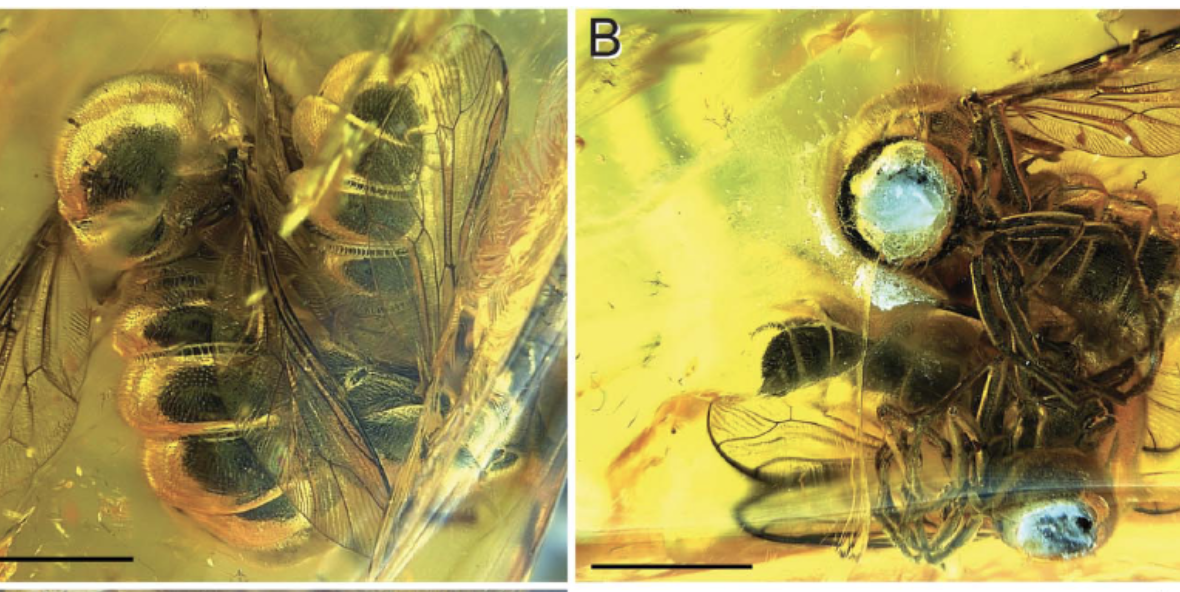
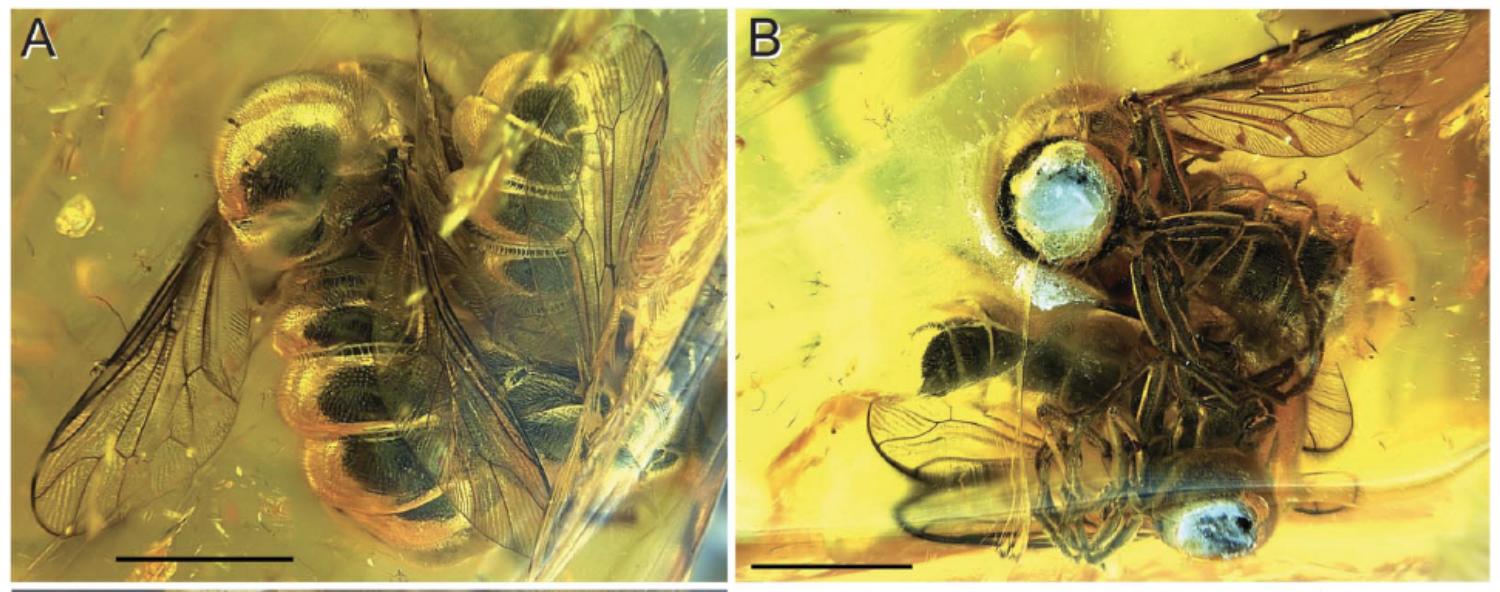
photos of Cyrtinella flavinigra

Cyrtinella flavinigra gen. et sp. nov. A, male (right) and female (left) paratypes (SMF Be 1267a and 1267b), dorsal view, photo: John Martin; B, male (bottom) and female (top) paratypes (SMF Be 1267a and 1267b), ventral view, photo: John Martin. Images from: Jessica P. Gillung & Shaun L. Winterton (2018) A review of fossil spider flies (Diptera: Acroceridae) with descriptions of new genera and species from Baltic Amber, Journal of Systematic Palaeontology, 16:4, 325-350, DOI: 10.1080/14772019.2017.1289566.

This species of spider fly lived during the Eocene Epoch, a major division of the geological timescale that lasted from 56 to 33.9 million years ago. Several specimens of this species were recovered from amber deposits in the Prussian Formation of the Baltic region.
These specimens were used by Drs. Jessica P. Gillung and Shaun L. Winterton to describe a new genus and species with the designation Cyrtinella flavinigra. This was one of three new species described by the duo from specimens preserved in Baltic amber within their review of fossil spider flies (Diptera: Acroceridae) published within the Journal of Systematic Palaeontology in 2017.

Cyrtinella flavinigra is also just one of 30 new insect species described by Gillung, a Postdoctoral Associate at the Danforth Lab at Cornell University. As an evolutionary biologist with a specialization in entomology, Gillung’s research focuses on biodiversity discovery and cataloging and the processes that originate and maintain biodiversity. A major aspect of her work is describing new species.

The Biodiversity Heritage Library (BHL) provides critical resources for this taxonomic work.

“For species discovery and cataloging, I need to be able to track down and understand the species that have already been described,” explains Gillung. “If it wasn’t for BHL, I would not have been able to access many original species descriptions and compare them to the specimens I had at hand. Through those comparisons, mainly, I was able to recognize a new species or identify a previously described one.”

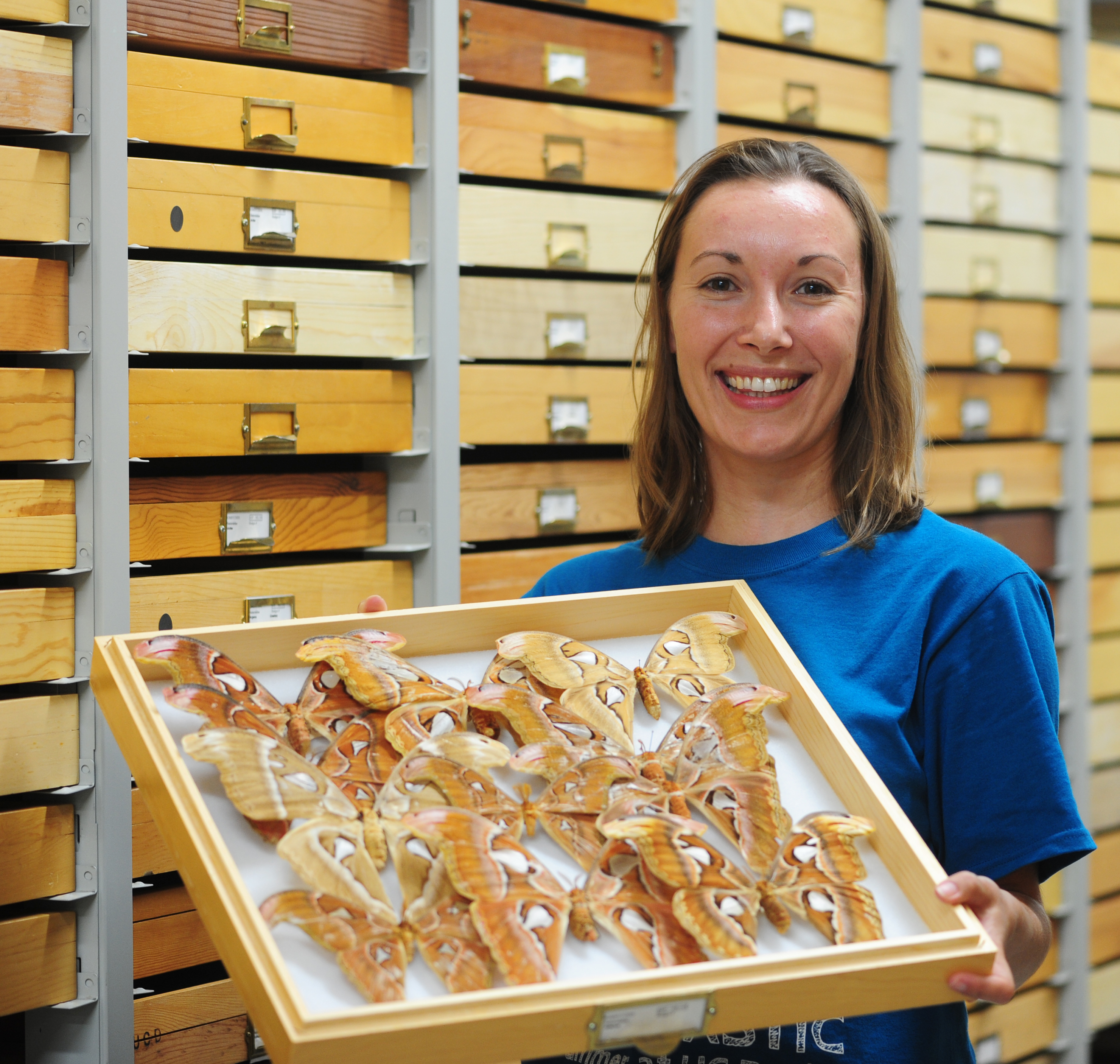
Photo of a woman holding a tray of moths

Jessica Gillung holding Atlas Moths at the Bohart Museum of Entomology. Photo courtesy: Kathy Garvey.

Gillung has been studying evolutionary biology since 2006. As a Master’s student in Brazil, her research focused on the family Acroceridae, or spider flies, which develop almost exclusively as endoparasitoids of spiders, their maggots living within a host spider while feeding on its internal fluids until they metamorphosize into adults, leaving a dead, dry host behind.

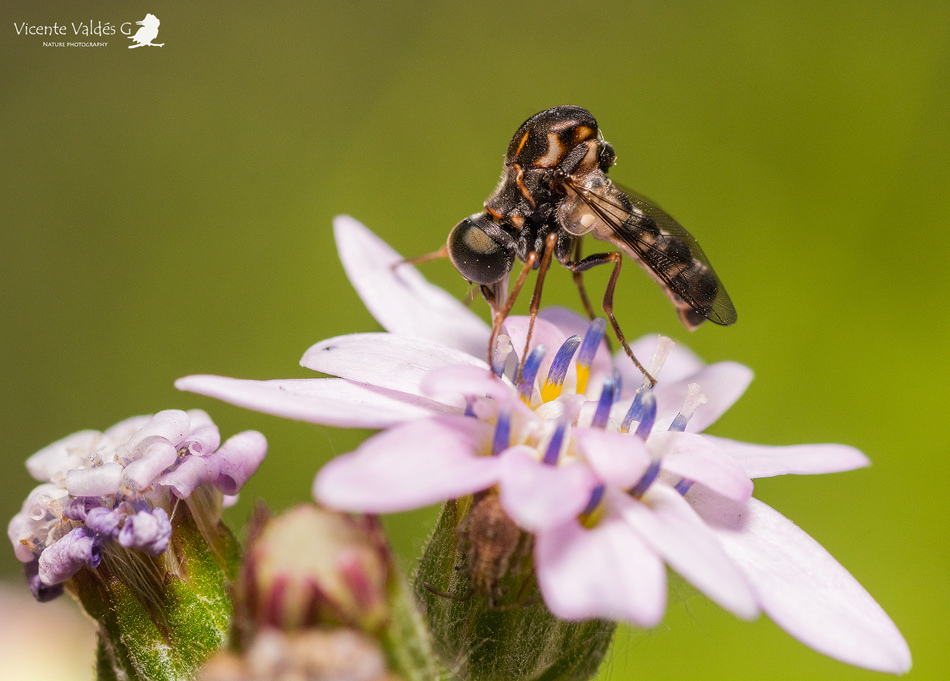
Photo of a spider fly on a flower.

A spider fly with a very hunchbacked appearance (species: Megalybus pictus). Photo courtesy: Vicente Valdés Guzmán.

It was during her time as a Master’s student ten years ago that Gillung first discovered BHL.
“I was looking for some ancient, specialized papers on spider flies, and a colleague sent me the link to the website. It changed my life! I was able to find pretty much EVERY single research paper I ever wanted, and I was able to study that literature very easily.”

Following the completion of her Master’s, Gillung moved to California to begin her PhD in the Department of Entomology & Nematology at University of California – Davis, where she also worked at the Bohart Museum of Entomology, one of the largest and most important natural history collections in the United States. She used BHL almost daily during this period, downloading whole and later custom PDFs of relevant publications and pages to her external hard drive, building a personal library of invaluable reference materials.

As she confided, “I downloaded pretty much EVERY work that has ever been published about the insect group I study.”

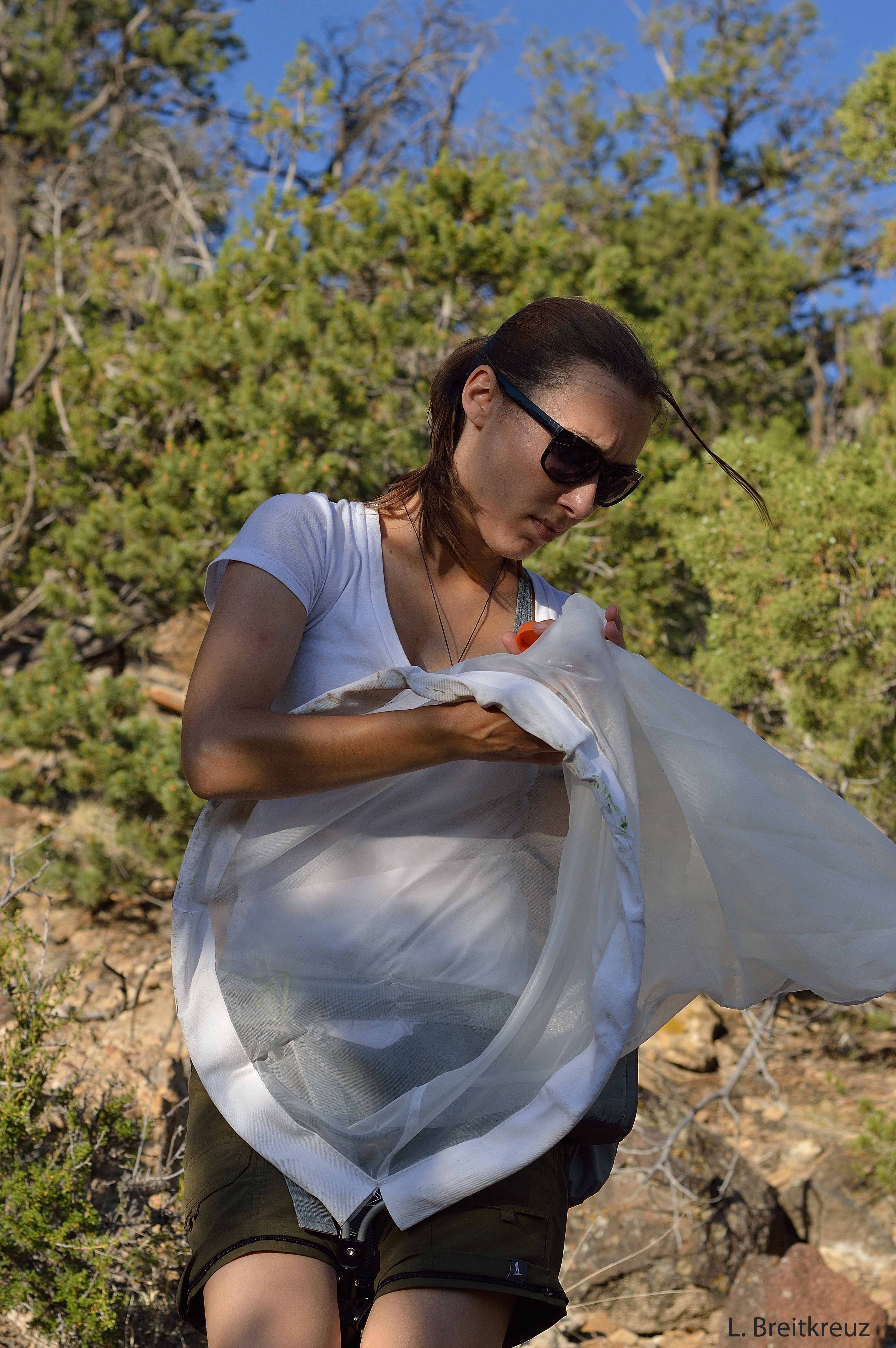
Photo of a woman collecting insects with a net.

Jessica Gillung collecting insects in the field. Photo courtesy: Laura Breitkreuz.

The ability to download PDFs from BHL has allowed Gillung to continue her research anytime, anywhere — even when Internet access is unavailable.

“I specifically remember one time I was stuck at the airport on my way to visit my family in Brazil,” recalls Gillung. “My flights were delayed, and I had long layovers. So, I started working on one of my scientific publications, and I was able to get plenty of work done because I had saved the PDFs beforehand. Had BHL not existed, that would not have been possible.”

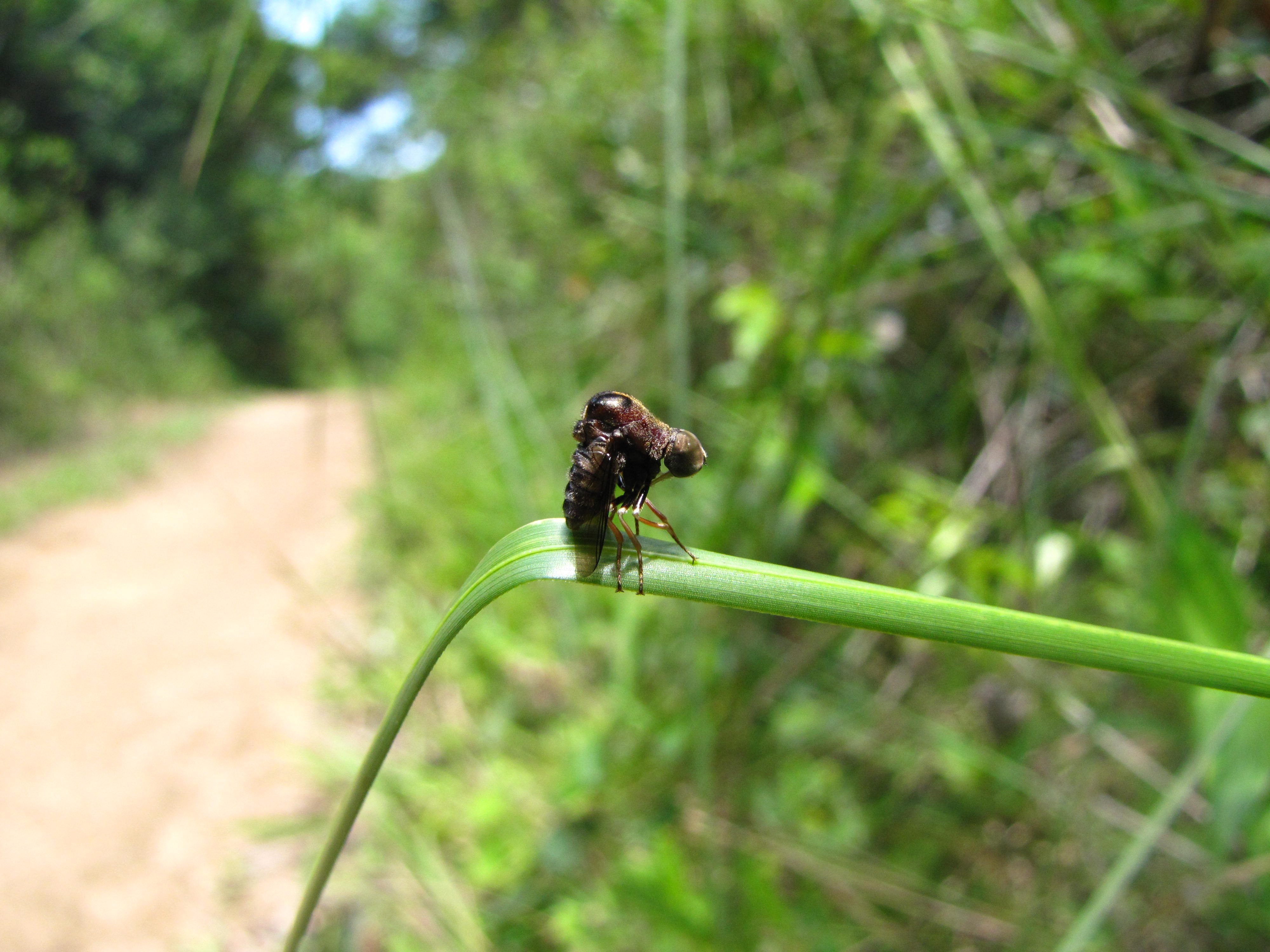
A photo of a spider fly on a blade of grass.

A specimen of Philopota tuberculata. Photo courtesy: Ricardo Kawada.

Of the over 240,000 volumes available in BHL, Gillung’s favorite is Wiedemann’s 1830 monograph on the “Flies from Outside of Europe” (Aussereuropäische Zweiflügelige Insekten). A German historian, physician, naturalist, and entomologist, Wiedemann described many new insect species, including the fly genus Philopota, which Gillung studied for her Master’s, during which she completed a revision of the genus. As part of the revision, Gillung re-described the known species, provided photographs and drawings for their identification, and described 13 new species from throughout Latin America.

“The library at my university did not have a copy of Wiedemann’s monograph,” recalls Gillung. “My progress was hindered until I was able to download the whole PDF from BHL. I fell in love with the website!”

Illustration of flies.

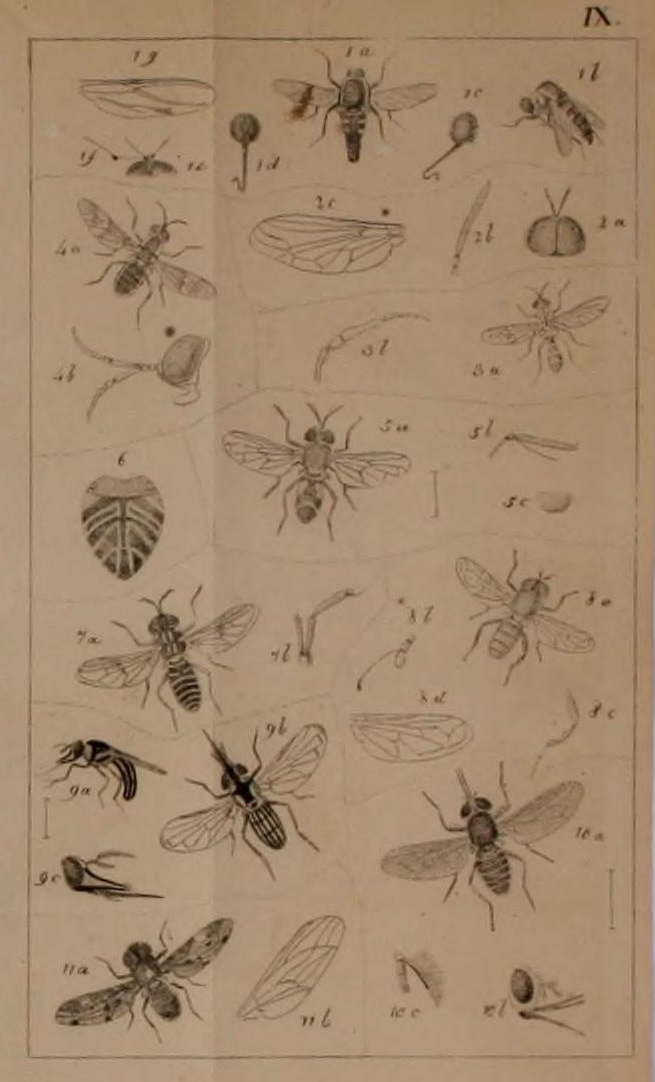
Illustration from Wiedemann’s Aussereuropäische Zweiflügelige Insekten v. 2 (1830). Contributed in BHL from Smithsonian Libraries.

By providing free and open access to critical biodiversity literature, the Biodiversity Heritage Library is empowering global research. From enabling the description of new species to providing access to beautiful scientific illustrations (Gillung confides that one of her favorite pastimes is exploring the plates in the PDFs she’s downloaded), BHL has become an invaluable resource for researchers around the world.

To quote Dr. Gillung: “BHL has made my research possible.”

May 9, 2019by michelle.underhill
Blog Reel, User Stories

How the BHL Makes Little Brown Beetle Species Discovery Easier

There are more described species of beetles (order Coleoptera) than any other group of organisms on the planet. With over 350,000 described extant and extinct species and subspecies, beetles represent about 40% of all described arthropods and about 25% of all described species [1,2].

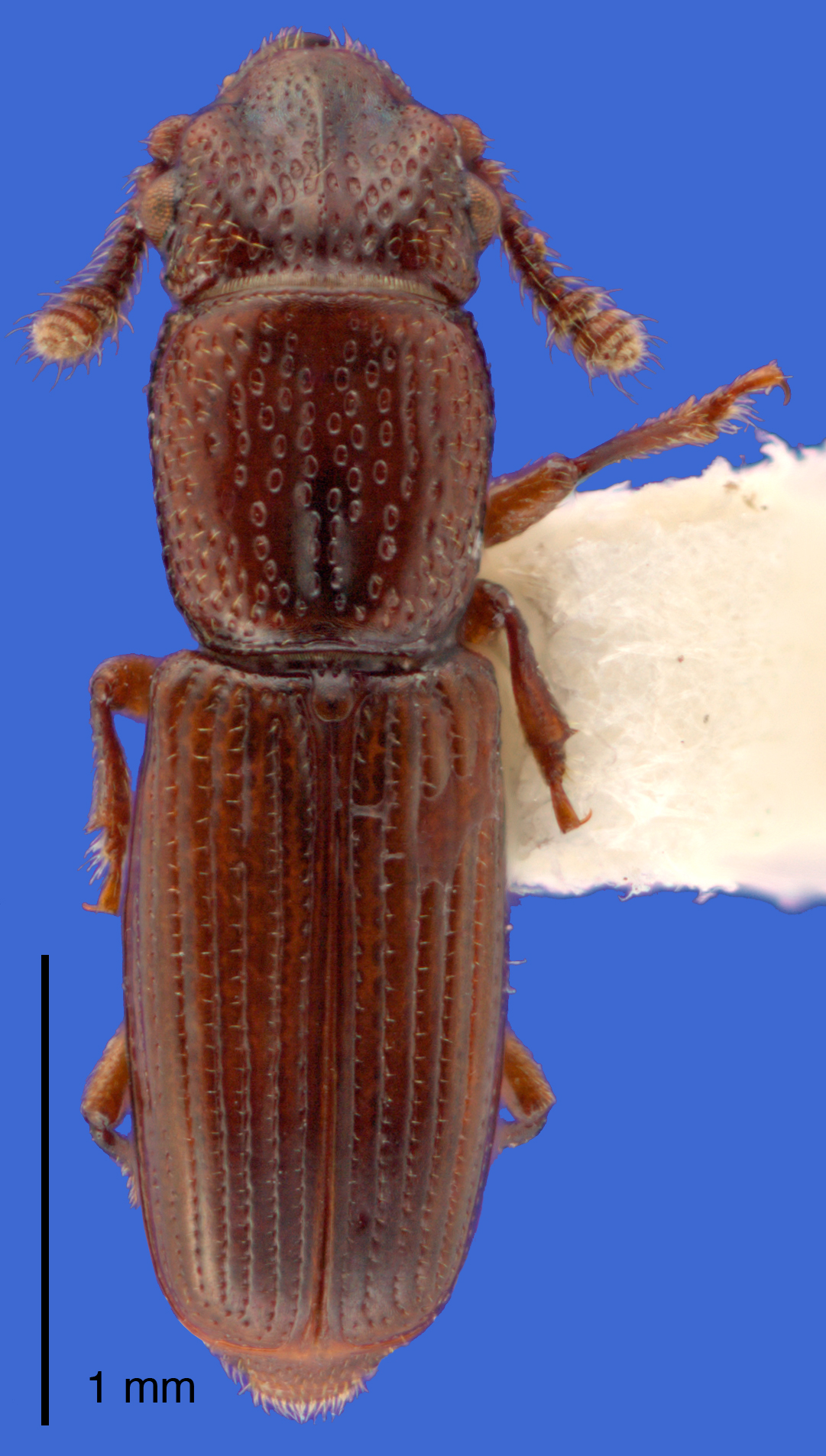
Europs frontalis (Grouvelle, 1896), a monotomid beetle from Chile described by Antoine Henri Grouvelle in the Annales de la Société entomologique de France. Photo by TC McElrath.

One of the myriad families of beetles is Monotomidae, with over 250 described species [3]. Commonly called minute clubbed beetles, the family includes such species as Europs frontalis (found only in south temperate forests of Argentina and Chile) and Pycnotomina cavicolle (found exclusively in forested regions of eastern North America).

Dr. Thomas McElrath, Insect Collections Manager at the Illinois Natural History Survey, has been studying the systematics of Coleoptera for nine years. He is currently working on compiling a worldwide checklist of the Monotomidae. The Biodiversity Heritage Library is a crucial resource for his research on this project.

“The BHL is an integral research tool for beetle systematists like me. I absolutely love it. It has saved me time, money, and resources,” lauds McElrath. “Most of the older, obscure literature I need to reference to study the taxonomy of beetles is now available from the BHL. Soon, I hope to have a worldwide checklist available for the Monotomidae, thanks, in part, to the resources available on the BHL.”

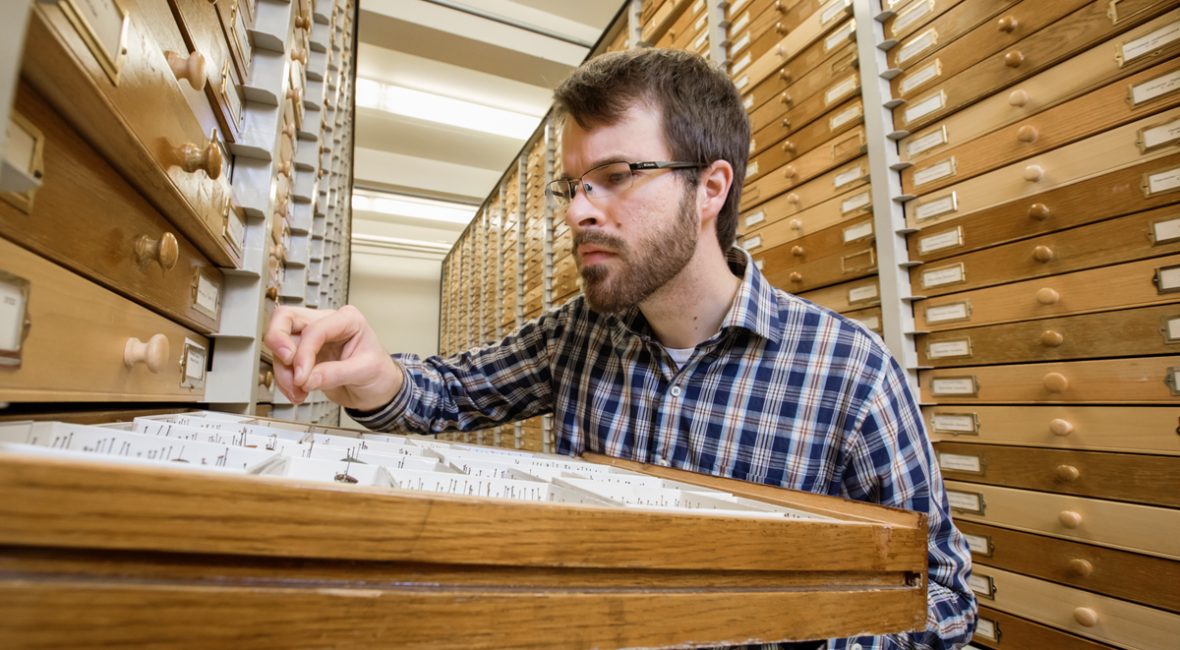
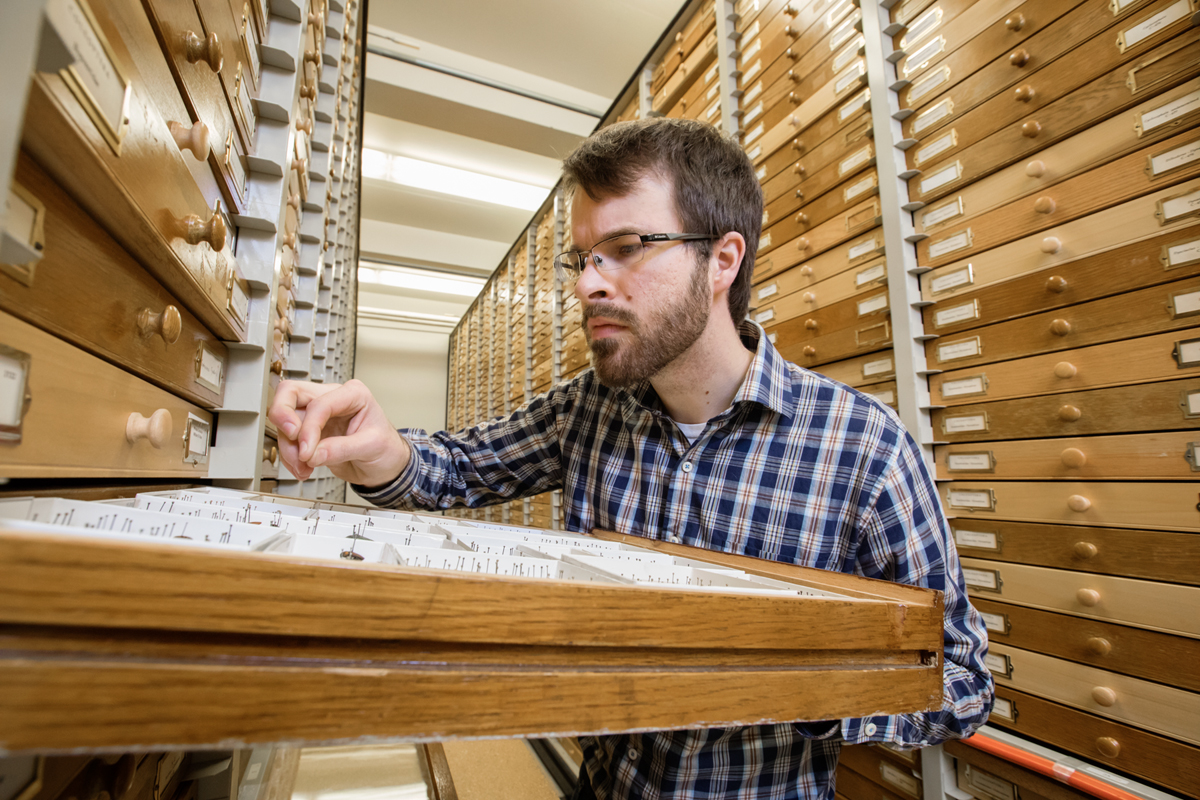
Dr. Thomas McElrath in the Illinois Natural History Survey Coleoptera Collection. Photo by L. Brian Stauffer.

McElrath first discovered BHL around 2011, and it soon became an essential research tool, particularly during his PhD, when it was not uncommon for him to use the Library multiple times a day in search of older publications and species descriptions.

“Without BHL, my PhD would have taken much longer, and I wouldn’t have been able to do as much as I did within the time period available to me,” explains McElrath. “It saved me hundreds of hours of library research, interlibrary loan requests, and scanning.”

Today, McElrath still uses BHL daily to weekly, typically downloading whole or custom PDFs to support his research on the Monotomidae. The Library allows him to access relevant materials in a variety of languages quickly and easily.

“Without BHL, finding all the the species descriptions in American, German, French, and Italian taxonomic journals would have been much harder,” affirms McElrath. “My advisor always told me I had it ‘too easy’ with BHL, and that in his day they would have to beg for reprints from colleagues all around the world, which sometimes took months to arrive. Now, I just log onto BHL and download a high quality scan for free. It’s really amazing.”

McElrath also views BHL as a great way for institutions to share collections-related information. To that end, the Illinois Natural History Survey (INHS), in collaboration with BHL Member the University of Illinois at Urbana-Champaign (UIUC), has started uploading accession logs related to collections in the INHS to BHL.

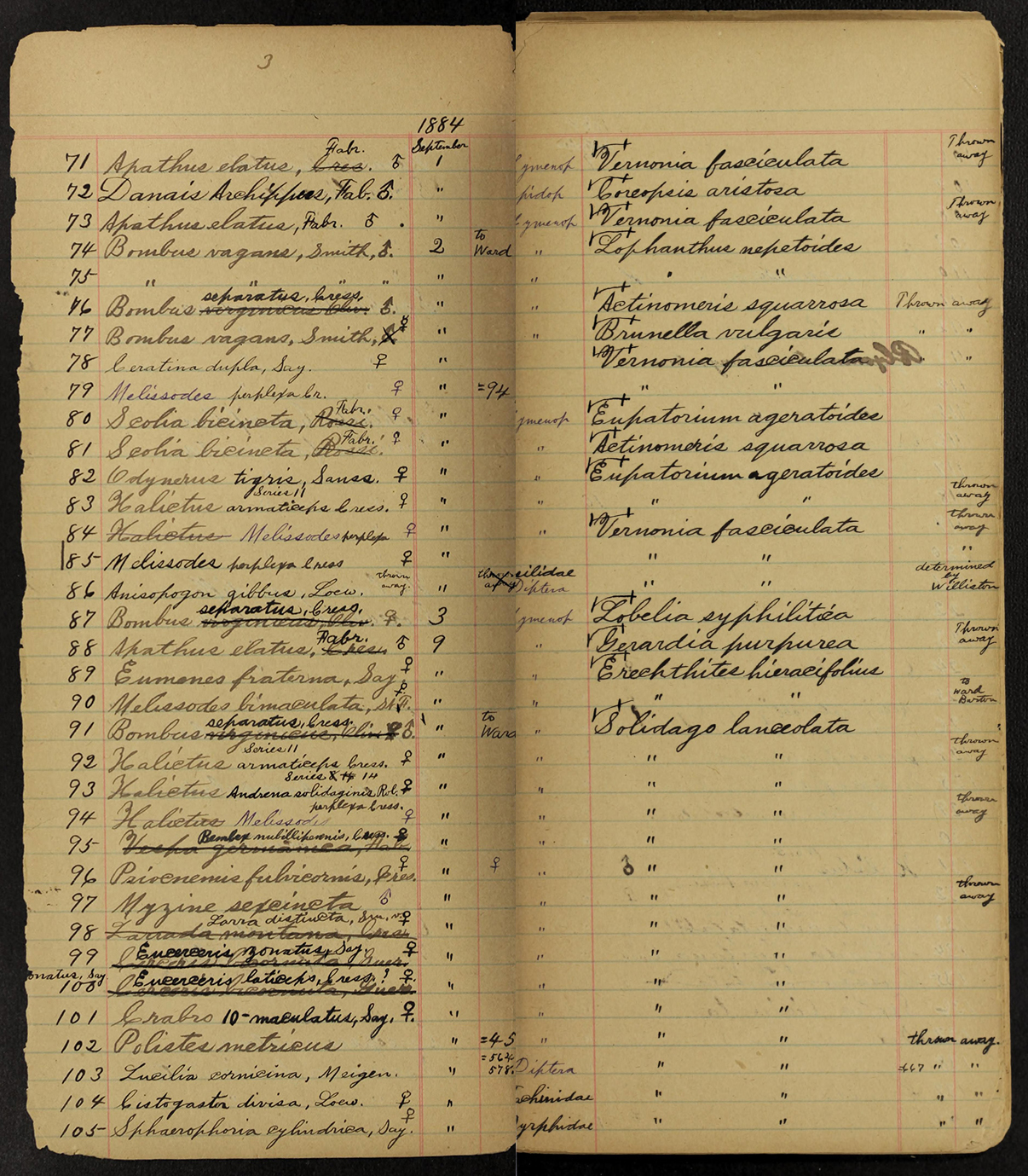
Page from Specimen Collection Logs of Charles Robertson. Contributed in BHL from University Library, University of Illinois Urbana Champaign.

For example, the Specimen Collection Logs of Charles Robertson document insect specimens collected by Robertson, providing information such as specimen number, scientific names, sex of specimen, date of collection, locality, insect order, host plant scientific name, and notes. The logs, now available on BHL, are held in the Archives of UIUC, while the corresponding specimens are held by INHS.

“My museum and institutional library have used BHL to host scans of our accession logs so that researchers can access them from around the world, alongside our already digitized specimens,” explains McElrath. “I would love to see more institutions and individuals put their field notes and accession logs on the BHL for others to access.”

Thanks to recent initiatives such as the BHL Field Notes Project and the Smithsonian Field Book Project, over 6,000 field notes, correspondence, and related archival materials have been made available in BHL, with more being added regularly. These materials serve as unique primary source documents and provide valuable context for and data around specimens, collecting events, and the activities, observations, and personal notes of individual researchers. Thanks to their availability on BHL, researchers across the globe can easily access this valuable information.

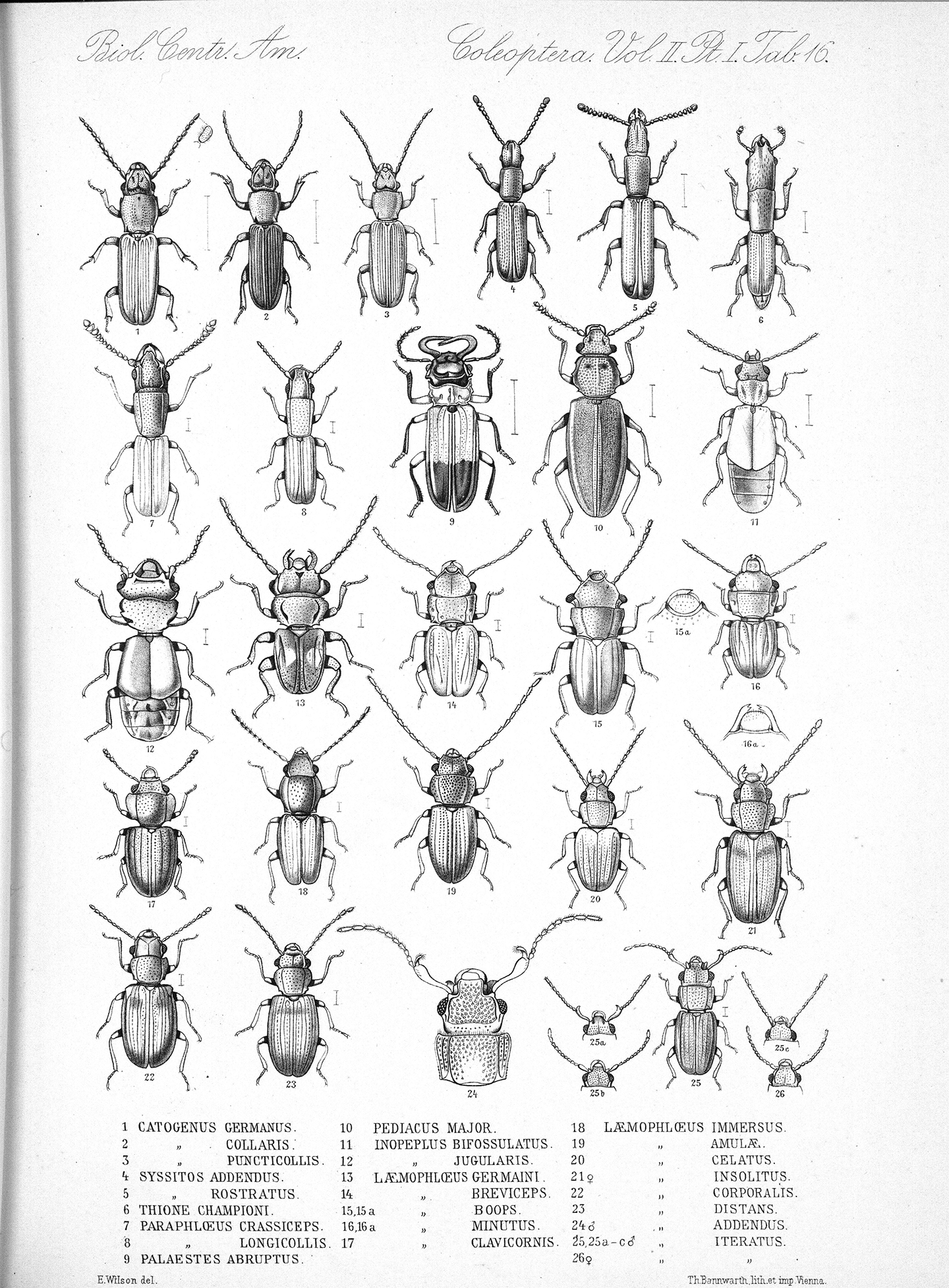
The Biologia Centrali-Americana was published around the turn of the century and describes several unique monotomids, including Thione championi, figured at top right of this page. Contributed in BHL from Smithsonian Libraries.

Beyond supporting research activities, McElrath also appreciates the wealth of illustrations available from BHL. Since 2011, BHL has been uploading the scientific illustrations found within the collection to Flickr, making it easier for anyone to explore and download these images, which are valuable both as scientific documents and works of art.

“My wife and I also download high resolution plates of cool biodiversity (insects, plants, etc.) from the BHL Flickr page and use them to make prints for decorating our house,” shares McElrath.

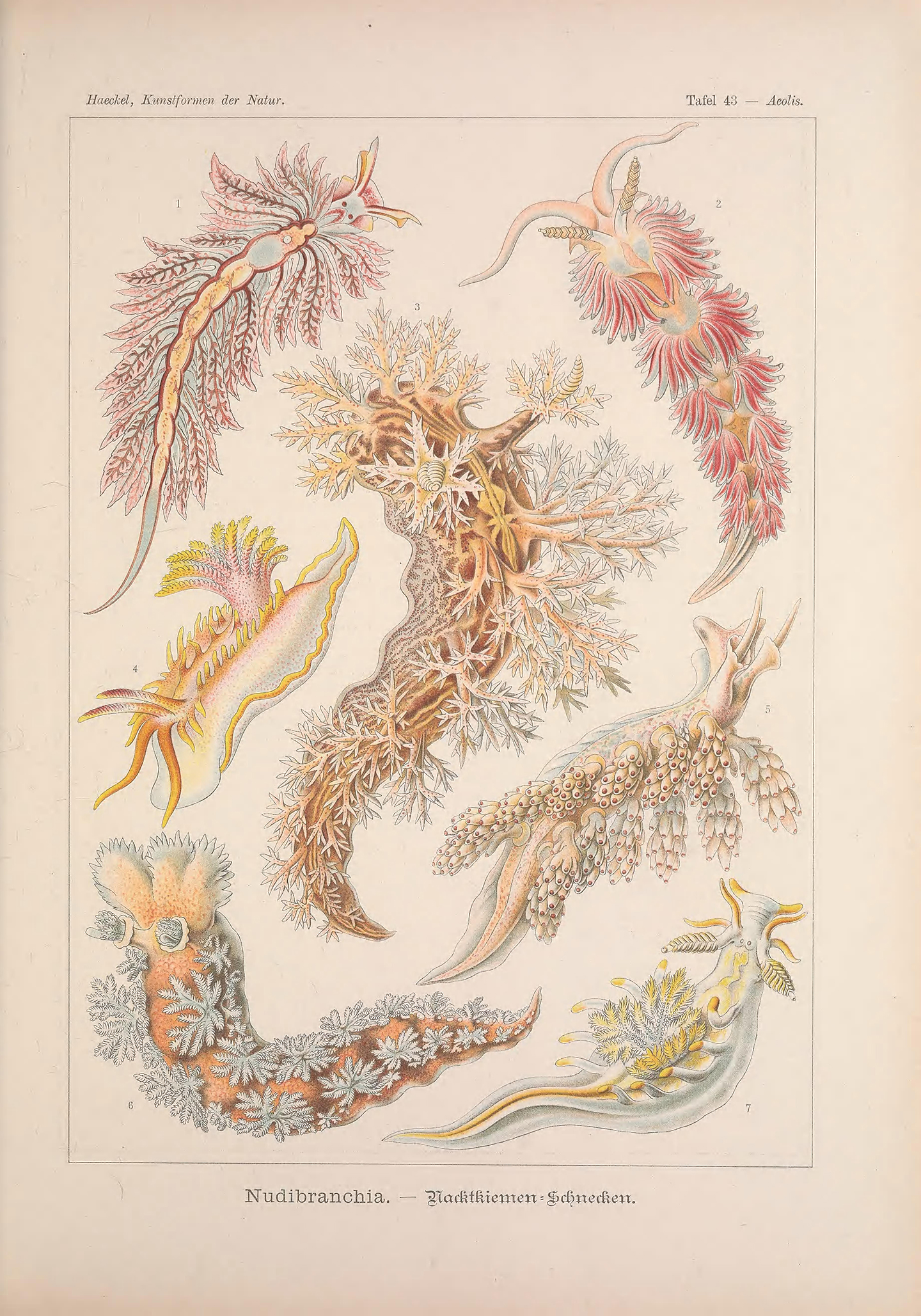
Nudibranchs by Ernst Haeckel, one of the images McElrath and his wife have printed for their “natural history wall” at home. Kunstformen der Natur. 1905. Contributed in BHL from Smithsonian Libraries.

Whether it be supporting research on clubbed beetles or as a source of beautiful home decor, the Biodiversity Heritage Library is making it easier for everyone to explore, study, and appreciate the natural world.

For McElrath, BHL has been a game-changer. In short: “Its existence is extraordinary.”

References

[1] Catalogue of Life. 2019. “Coleoptera.” Accessed 26 March 2019. http://www.catalogueoflife.org/col/browse/classification/kingdom/Animalia/phylum/Arthropoda/class/Insecta/order/Coleoptera/fossil/1/match/1.

[2] Stork, Nigel E, James McBroom, Claire Gely, and Andrew J. Hamilton. 2015. “New Approaches Narrow Global Species Estimates for Beetles, Insects, and Terrestrial Arthropods.” PNAS 112 (24) 7519-7523. Accessed 26 March 2019. https://www.pnas.org/content/112/24/7519.

[3] McElrath, Thomas, Olivia Boyd and Joseph V. McHugh. 2016. “Overview.” MonotomidGen. Accessed 26 March 2019. http://www.monotomidae.com/index.html.

April 11, 2019by michelle.underhill
Blog Reel, User Stories

Vanity and BHL: Examining Extinction and Rediscovery through Art

The “Anthropocene Defaunation” and the Lost Florida Zestos Skipper

We are experiencing a “biological annihilation.”

That’s how scientists are describing the biodiversity loss in what is being recognized as Earth’s sixth mass extinction event [1]. Not only are extinctions occurring at a rate 100 times higher than would occur naturally, but overall populations are also shrinking at alarming rates [1,2].

A 2014 Science report termed it the “Anthropocene defaunation”, reflecting humanity’s role in this biodiversity loss [3]. Among the casualties in this “Age of Humans” is one of “the few butterflies known to have become extinct in the United States” [4] — The Florida Zestos Skipper Butterfly Epargyreus zestos oberon (Worthington, 1881) [5]. This butterfly’s story draws forth science, taxonomy, history, and art from the Biodiversity Heritage Library (BHL) for a cutting edge representation of biodiversity in challenging times.

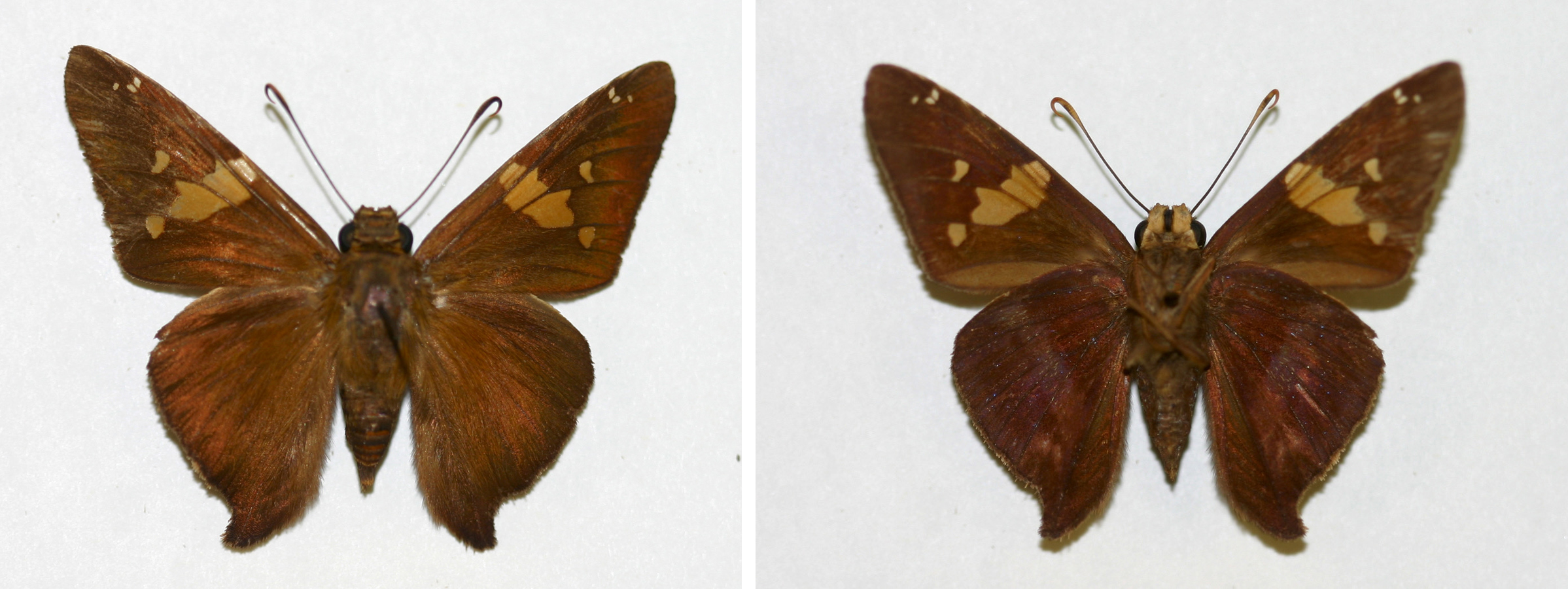
Florida Zestos Skipper Butterflies Epargyreus zestos oberon† (Worthington, 1881) – Male (Left: Upperside; Right: Underside). Collected in Monroe County; Everglades National Park, Bear Lake Trail, Florida in May 1973. The photos were taken in the Florida Department of Agriculture and Consumer Services, Florida State Collection of Arthropods. The specimens are now incorporated into the Florida Museum of Natural History/McGuire Center for Lepidoptera and Biodiversity. Photos copyright and courtesy of Marc C. Minno, PhD.

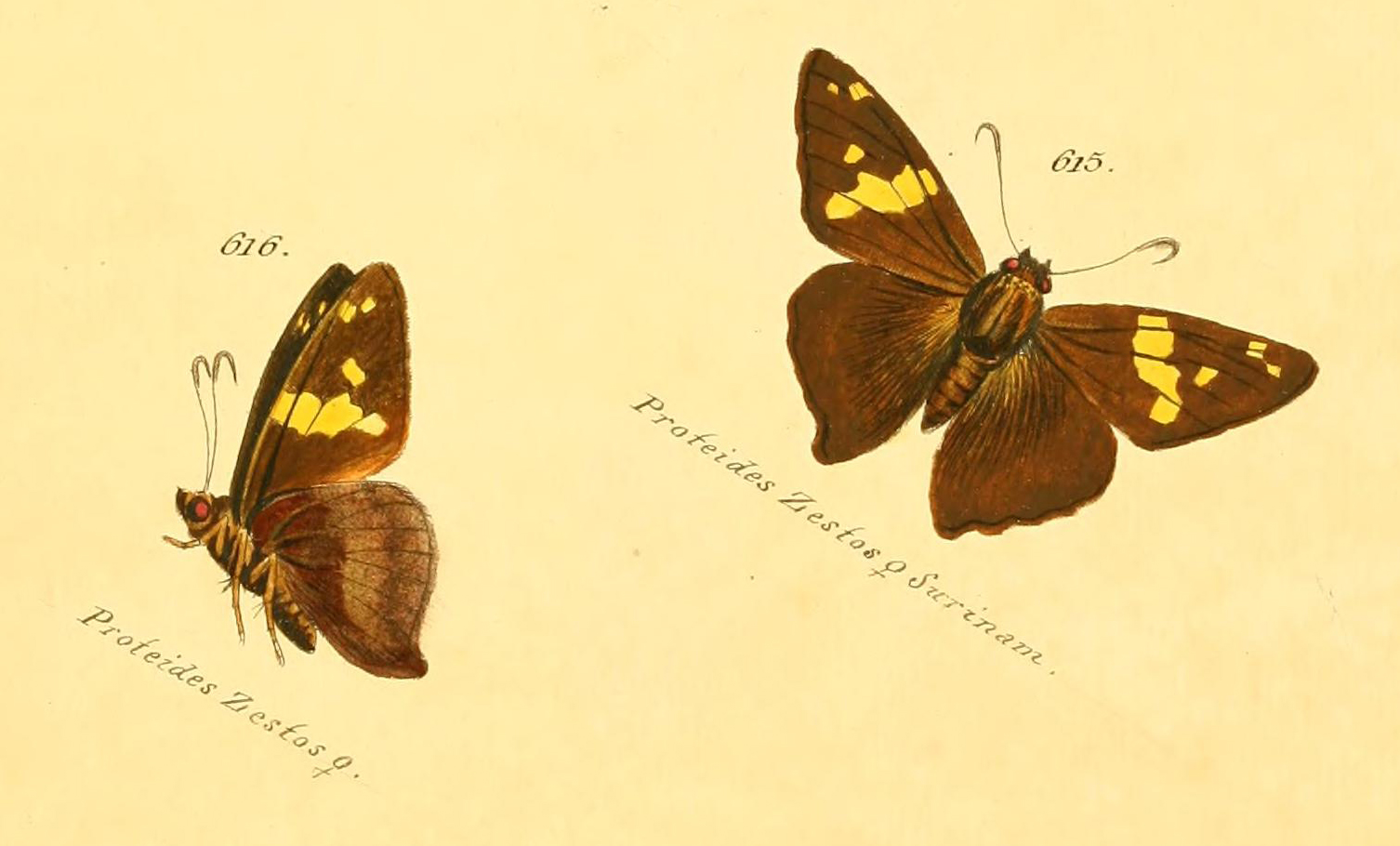
The recorded scientific history of the Zestos Skipper Butterfly extends back to the early nineteenth century. In the 1819 publication Verzeichniss bekannter Schmettlinge [sic], Jacob Hübner first listed the butterfly as Proteides zestos. Hübner later illustrated the P. zestos holotype (type locality “Surinam”, probably in error) via two figures of a female specimen in his Zuträge zur Sammlung exotischer Schmetterlinge (1826). However, as Hübner provided no description to accompany the name and illustration, it was not until 1832, after his death, that his assistant Carl Geyer officially described Proteides zestos as a new species.

Proteides zestos illustrated by Jacob Hübner in Zuträge zur Sammlung exotischer Schmetterlinge (1826). Contributed in BHL by Smithsonian Libraries.

Over the next 50 years, this rather unassuming reddish-brown Skipper, with a range from the Florida Keys to the Caribbean, was reclassified and redescribed by various authors. In Dublin, William F. Kirby (1871) assigned it to a new genus (Telegonus zestos) and in Chicago, Charles E. Worthington (1881), examining 31 specimens from Marco Island, Florida, described it as a new species (Endamus [sic] oberon), based on its resemblance to Eudamus tityrus. In 1884, Eugene M. Aaron, after evaluating over 160 specimens of tityrus and zestos, concluded that Proteides zestos, Telegonus zestos, and Eudamus oberon were in fact the same species.

Dr. Marc C. Minno (Insect Ecologist with Eco-Cognizant in Gainesville, FL) began searching for the Florida Zestos Skipper Butterfly in 2006. At his request, Skipper butterfly expert Dr. George T. Austin evaluated Zestos Skipper butterfly specimens in the Florida Museum of Natural History collection with type localities from Florida and the Caribbean. Before his death, Austin concluded that the Florida Zestos Skipper Butterfly actually represents a unique subspecies or sibling species [6]. Based on his own observations and Austin’s comments, Minno believes “oberon” to be the valid name of the Florida Zestos Skipper Butterfly population and has, until he can complete Austin’s study, designated it as Epargyreus zestos oberon (Worthington, 1881) [5].

Over the past 50 years, the Florida Zestos Skipper Butterfly population has been in decline. According to Minno, this butterfly, “once locally common in coastal areas of southern Florida”, had “disappeared from the mainland” by the mid-1980s. The last known sightings of Florida Zestos Skippers occurred in January 2004, at the Key West Tropical Forest and Botanical Garden in Stock Island, Florida [6].

In 2012, Minno et al., concluded a six-year survey looking for declining butterfly species in southern Florida [4]. Because the study failed to produce a single sighting of the Florida Zestos Skipper, in any stage of life, it was recommended that it be presumed extinct. Together with the Rockland Meske’s Skipper, these represent the “first [known] butterfly extinctions in Florida” [4].

The Florida Zestos Skipper exists now only in museums and the pages of historic literature, its memory preserved in natural history collections, libraries, and repositories like the Biodiversity Heritage Library.

Vanity: An Artist’s Story of Extinction and Rediscovery in the “Age of Humans”

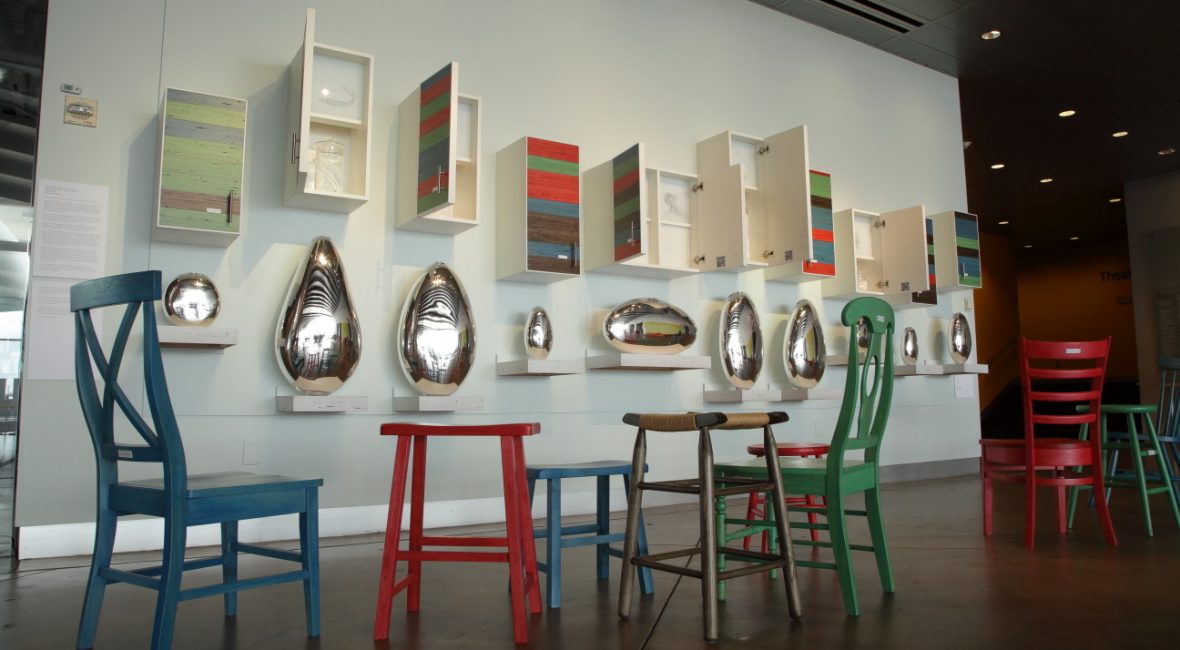
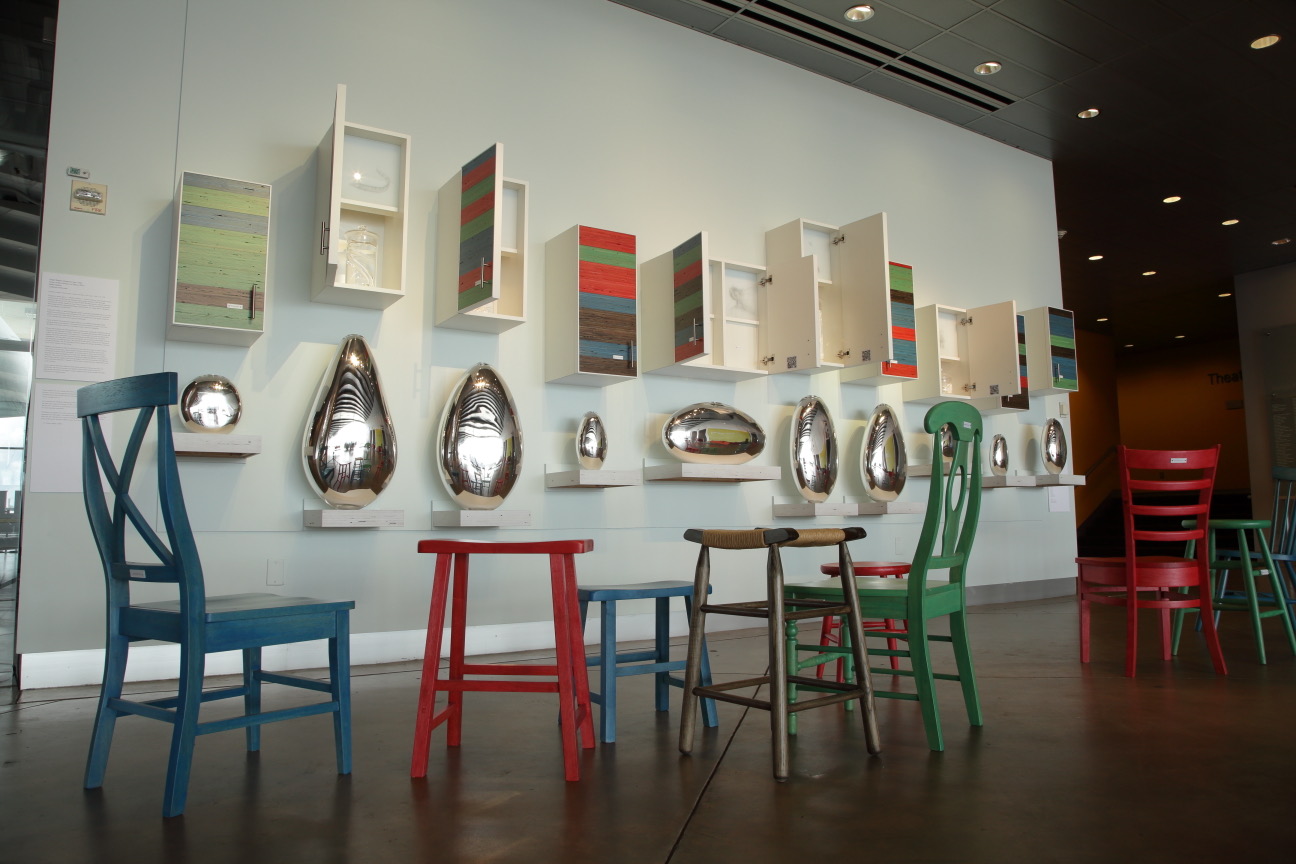
Joseph Gregory Rossano, Vanity (As installed at Museum of Glass, Tacoma, Washington, 2015); photo by C.B. Bell III, copyright and courtesy of Museum of Glass.

The Florida Zestos Skipper Butterfly is just one of the “biological specimens” featured in Vanity, an art installation by Joseph Gregory Rossano. Created for and with the support of the Museum of Glass (MOG) in Tacoma, Washington, Vanity was on display at MOG from March 3 – August 30, 2015. The exhibition tells the story of eleven species and subspecies, presumed extinct, presented through the lens of humanity’s role in their demise.

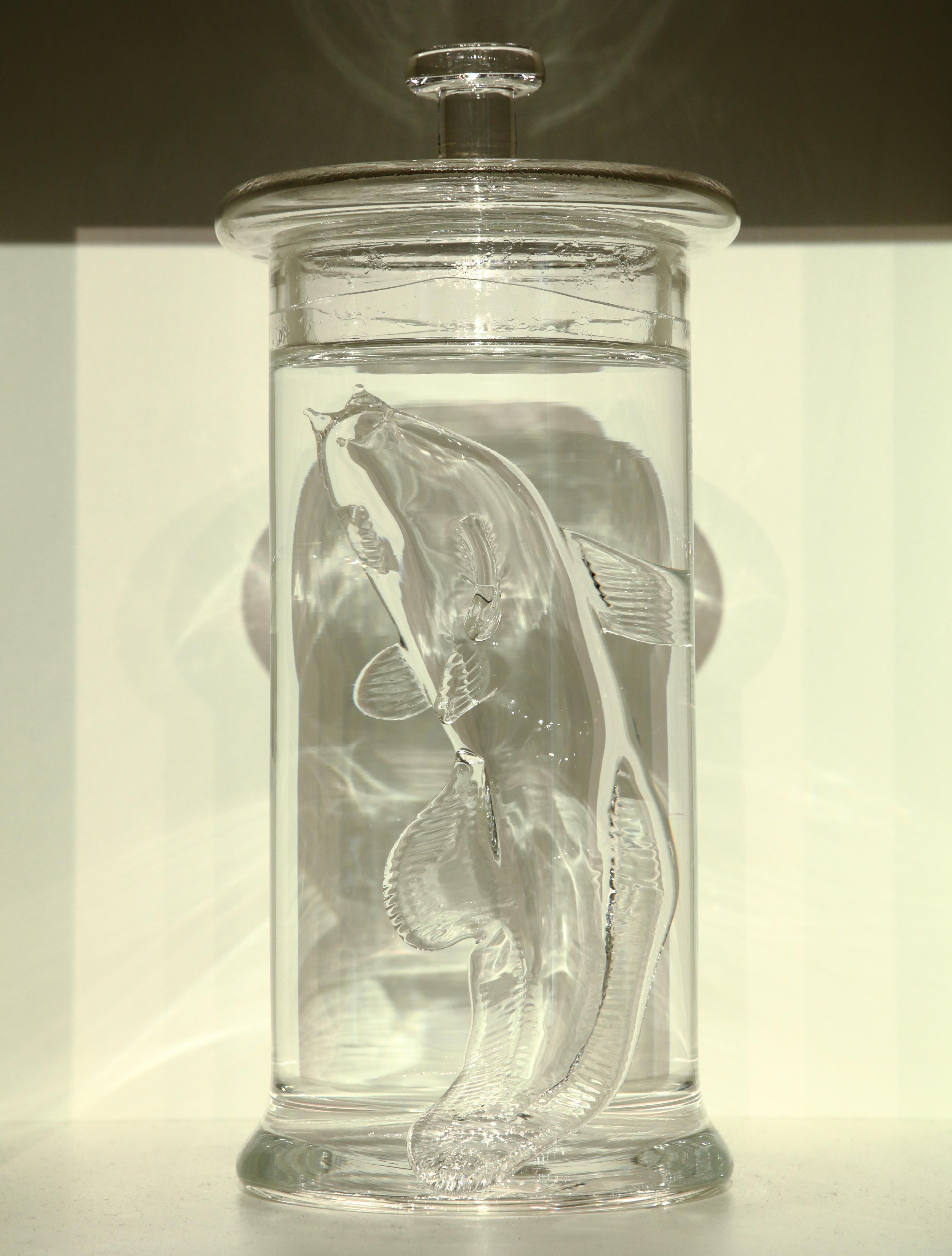
The installation includes eleven “vanity” cabinets. The cabinet doors, Rossano’s “portrait” of man, are composed of imperfect wood laminate adorned with visual representations of Homo sapiens’ DNA barcode. On the bottom corner of each door, a scientific label hints to the species’ or subspecies’ identity inside the cabinet, beneath these human “fingerprints”. Rossano depicts the species through “faded” pencil portraits and as transparent glass sculptures suspended in clear liquid, inside period specimen jars. The overall effect is of a species vanishing behind the portrait of humanity…just as it has in reality.

Beneath each cabinet are mirrored, almond-shaped glass sculptures and in front of each, a chair with a specimen label: Homo sapiens. These objects accentuate humanity’s role in the loss of each species, for, as Rossano articulates in the exhibition catalogue, “When viewing Vanity from a seated position, we see ourselves reflected in these forms that echo the divine. In our vanity we reflect generations of humans who saw themselves as divine, while the truly divine—our 11 innocent and bygone species, subspecies, and their stories—reflect the truth about us” [7].

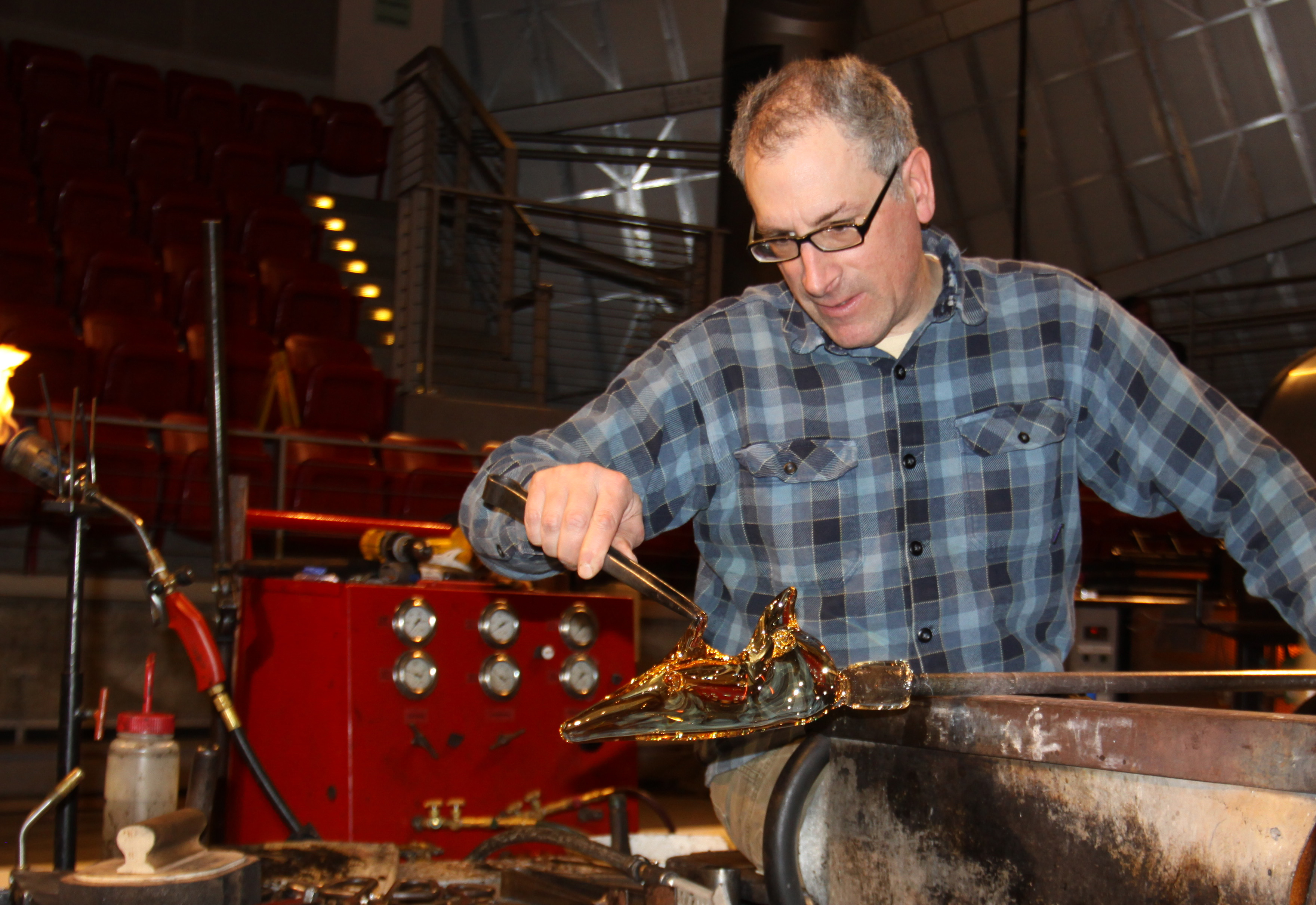
Rossano’s use of glass as a medium is equally deliberate: “like our environment, glass is transparent, fragile, and reflective — transparent in that it hides nothing, fragile in that once damaged it may never be repaired, and reflective of how we have impacted it” [8].

Joseph Gregory Rossano working on Vanity in the Museum of Glass Hot Shop, January 2014. Photo copyright and courtesy of Museum of Glass.

Each cabinet also offers a QR code leading to historical accounts of the enclosed species. These accounts summarize the species’ “discovery” (collection date, type locality, collector, scientific illustrations, etc.), humanity’s role in its extinction, and the year it was declared “Extinct”. To produce these species tales, Rossano collaborated with Sandra I. Berríos-Torres, MD. Berríos-Torres served as author of the 11 historical accounts and as Editorial Director of the exhibition catalogue, on behalf of Joseph Gregory Rossano.

The Biodiversity Heritage Library was a crucial resource for Berríos-Torres. Consulting dozens of publications in BHL while conducting research for Vanity, she ultimately cited 16 of them in the historical accounts that were incorporated into the exhibition and catalogue. The Florida Zestos Skipper Butterfly had the highest number of BHL citations in Vanity. Berríos-Torres used BHL to follow the butterfly’s taxonomic journey from its first listing by Hübner in 1819 to Aaron’s evaluation of the species in 1884.

“BHL resources were invaluable in my research for Vanity, in particular for accessing publications with the first collection, scientific description, and illustrations,” affirms Berríos-Torres. “The publications dated from 1819 to 2002, were published in English, German, Dutch, and French, and were contributed to BHL by 10 institutions, including university libraries, museums, government libraries, scientific research institutions, and botanical garden libraries across the USA, Canada, and England.”

From BOLD to Vanity

Berríos-Torres is an orthopaedic surgeon and a Centers for Disease Control and Prevention trained epidemiologist who has conducted laboratory and field research on infectious diseases and had a lead role in public health responses to national and international infectious disease outbreaks. Berríos-Torres was initially introduced to Rossano in the fall of 2009 at the opening of his BOLD exhibit, which examined species identity through art and incorporated Barcode of Life Data Systems‘ (BOLD) DNA barcodes into the installation’s sculptures.

BOLD was inspired by Rossano’s 2008 visit to the Área de Conservación Guanacaste (ACG) in northwestern Costa Rica at the invitation of Bradley Zlotnick, MD. At ACG, Rossano learned about DNA barcoding and met Zlotnick’s mentors, tropical ecologists Dr. Daniel H. Janzen and Dr. Winnie Hallwachs. Their 2004 landmark study on cryptic butterfly species, in collaboration with researchers at Smithsonian’s National Museum of Natural History (John M. Burns) and the University of Guelph, Canada (Paul D. N. Hebert, Erin H. Penton), “…illustrate(d) the value of DNA barcoding, especially when coupled with traditional taxonomic tools, in disclosing hidden diversity” [9]. Barcodes offered a “rediscovery” of biodiversity. Concurrently with BOLD, Rossano’s Whitewashed exhibition “…aimed at revealing our own species’ whitewashing of Man’s relationship with nature throughout time” [7].

In 2013, the art critic for the Seattle Stranger drew a parallel between Whitewashed and a blog post about eight animal species and three subspecies reported as “Extinct”, including the Eskimo Curlew, Numenius borealis (Forster, 1772), one of the species highlighted in Whitewashed and also featured in the blog. The post inspired Rossano to imagine a new installation on extinction, and Vanity was born.

Vanity and the Biodiversity Heritage Library

Berríos-Torres first discovered BHL in December 2014 while performing literature searches for the species’ historical accounts in Vanity. It quickly became a daily part of her research process.

“Between December 2014 and March 2015, in the three short months allotted to research and compose the historical accounts of the 11 animals depicted in the exhibition, I used BHL on a daily basis,” shares Berríos-Torres. “In the following months, as Editorial Director of the Vanity exhibition catalogue, I used BHL several times a week, in search of illustrations.”

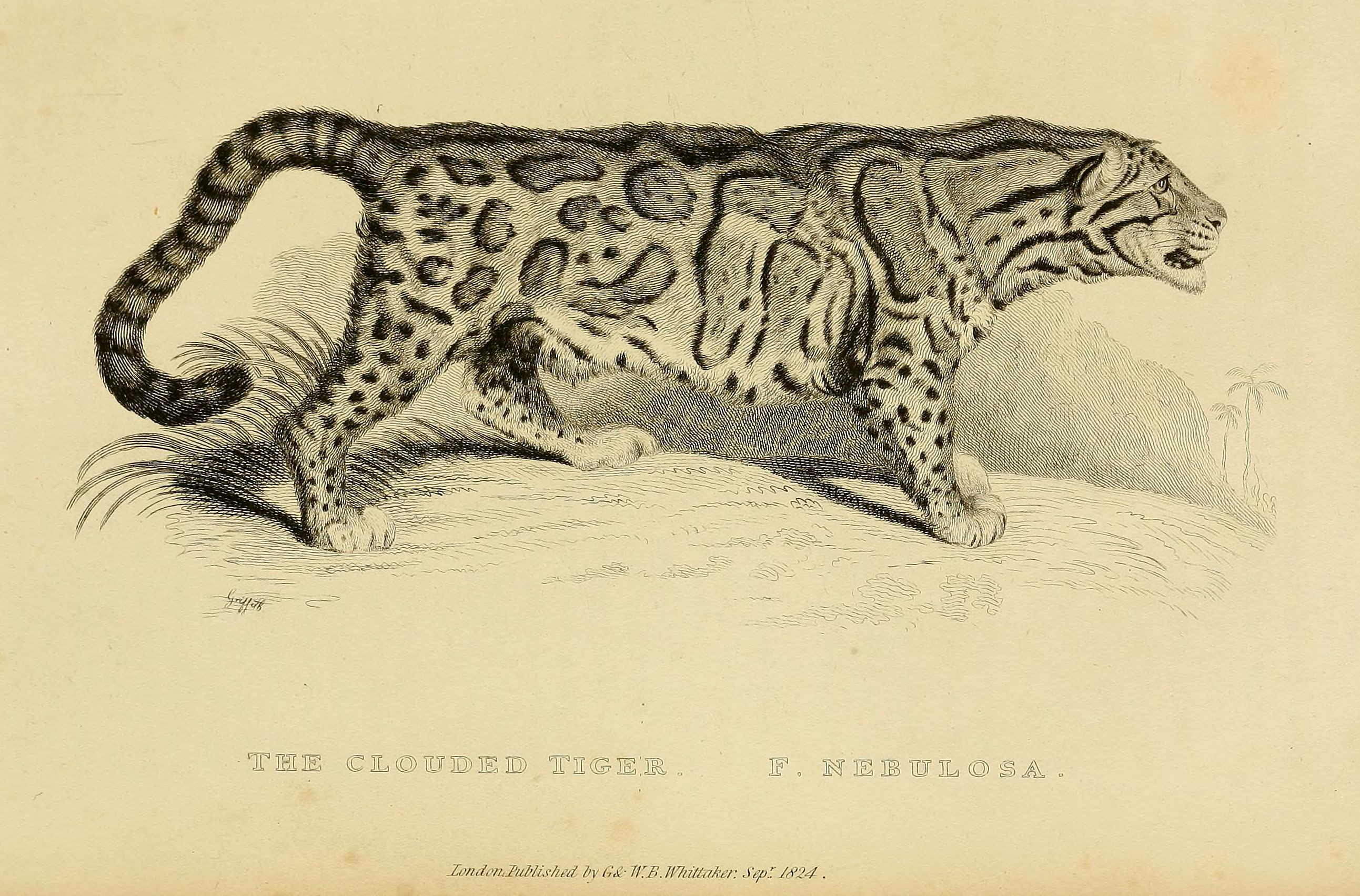
Illustration of the Clouded Leopard Neofelis nebulosa (Griffith, 1821) from Griffith’s The Animal Kingdom, v. 2 [Mammalia] (1827), contributed in BHL from Smithsonian Libraries. Retrieved from BHL and featured in the Vanity exhibition catalogue. In 2006, genetic testing revealed that the Clouded Leopard of Formosa (Taiwan) N. nebulosa brachyura, thought to be one of four subspecies of the mainland Clouded Leopard N. nebulosa (Griffith,1821), is actually genetically identical to the mainland N. nebulosa [10]. BHL houses Griffith’s first description from 1821, of what he called the Chinese or Tortoiseshell Tiger, Felis nebulosa, based solely on an illustration. In 2008, the International Union for Conservation (IUCN) listed N. nebulosa as “Regionally Extinct” in Taiwan [11].

Tracking down relevant publications required quite a bit of sleuthing. For this, BHL’s various advanced search options proved invaluable.

“In general, the most important aspect of the BHL resources lay in the ability to access first descriptions and early illustrations,” explains Berríos-Torres. “At the onset, the only information I had was the species’ or subspecies’ common and scientific names. A Google search on the scientific names yielded two additional pieces of information: the last name of the person who first described it in the scientific literature and the date of that description. Rarely could I readily find the full name of the person who described it or the original citation. The opportunity to employ varied advanced search strategies in BHL proved indispensable, particularly when starting with such limited information on the subject.”

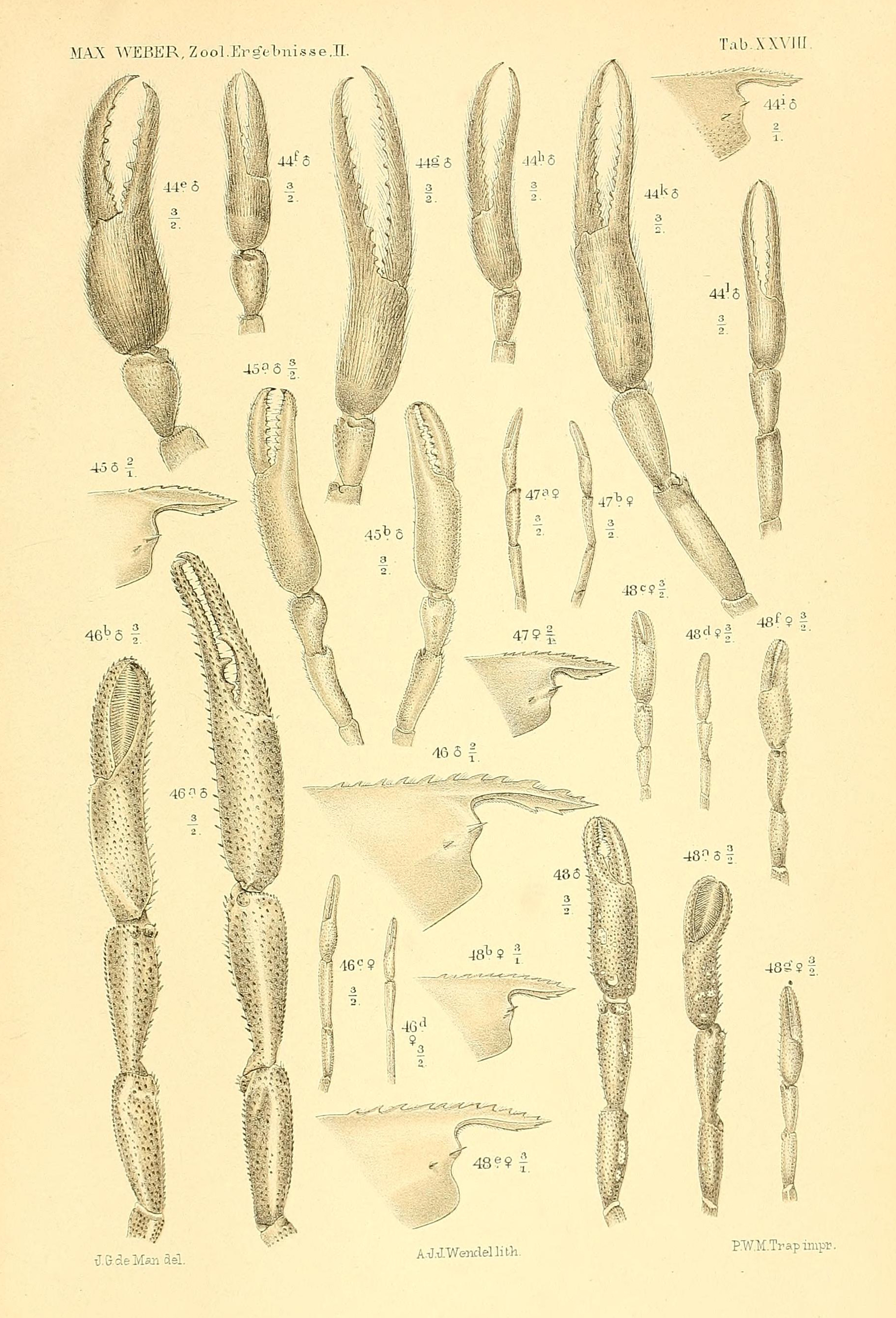
In 2015, de Grave et al., using IUCN Red List Criteria, concluded that the Freshwater Shrimp from Java Macrobrachium leptodactylus (de Man, 1879a) is one of two “Extinct” freshwater shrimp species [12]. This illustration depicts specimens collected in 1888 by Dutch-German zoologist Max Wilhelm Carl Weber — the only M. leptodactylus specimens ever collected [13]. It was published by Johannes Govertus de Man along with his description of Weber’s specimens as a new subspecies, Palaemon pilimanus, var: leptodactylus (1892). BHL also has de Man’s first description of the species as Palaemon pilimanus (1879). The illustration, retrieved from BHL, was contributed by Smithsonian Libraries and published in the Vanity catalogue.

In addition to the Zestos Skipper Butterfly, BHL provided valuable references for several other species featured in Vanity, including a freshwater shrimp from Java Macrobrachium leptodactylus (de Man, 1879a), the Clouded Leopard of Formosa (Taiwan) Neofelis nebulosa (Griffith, 1821), and the Scioto Madtom Catfish Noturus trautmani (Taylor, 1969).

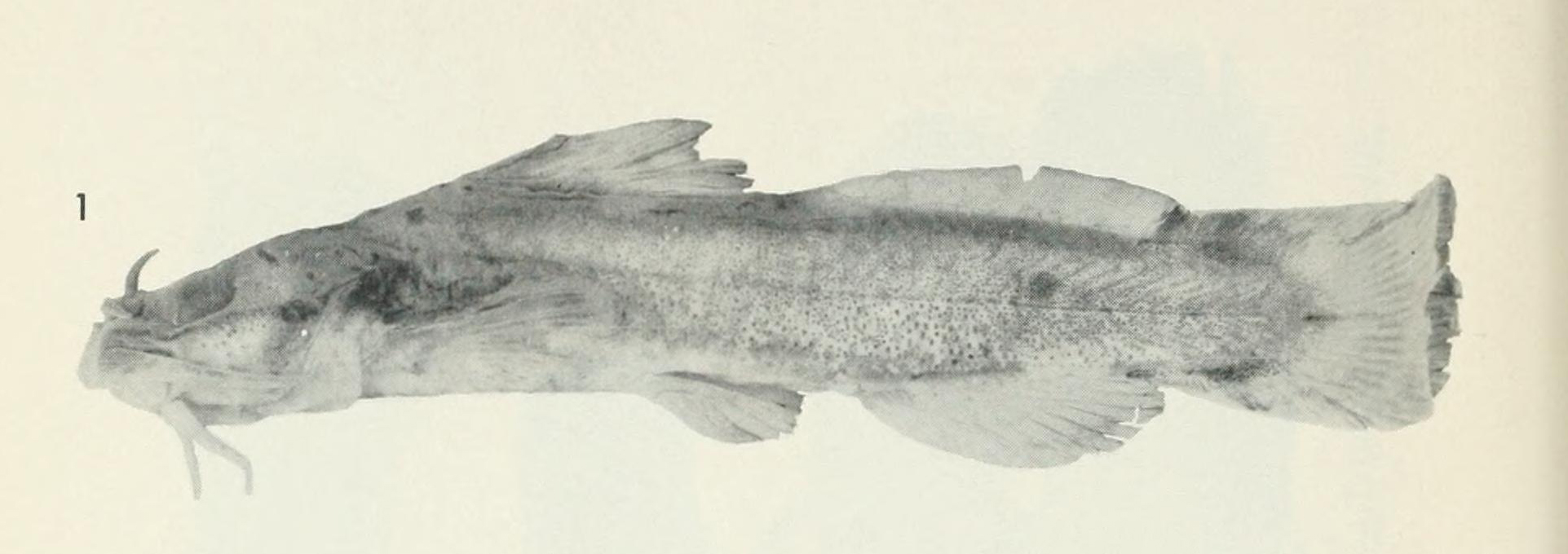
Photograph of the holotype (male) of the Scioto Madtom Catfish Noturus trautmani (Taylor, 1969), in the collections of the Smithsonian National Museum of Natural History. Bulletin – United States National Museum. No. 282 (1969). Contributed in BHL from Smithsonian Libraries.

The Scioto Madtom Catfish was first described by Smithsonian scientist Dr. William R. Taylor, former curator of fishes at the National Museum of Natural History, based on a “funny looking catfish” collected by Dr. Milton B. Trautman in 1943, from Big Darby Creek in Pickaway County, Ohio [14]. Using BHL, Berríos-Torres was able to retrieve Taylor’s original description and a photograph of the holotype, a male specimen housed in the Smithsonian collections. Scioto madtom has not been observed since Trautman’s last collected specimen in 1957 [15]. Habitat loss and competition from the Northern Madtom Noturus stigmosus (Taylor, 1969) may have contributed to Scioto Madtom’s extinction [15,16]. In 2013, the IUCN Red List declared Noturus trautmani “Extinct” [17].

Joseph Gregory Rossano, Vanity (Scioto Madtom Catfish, Noturus trautmani (Taylor, 1969) as installed at Museum of Glass, Tacoma, Washington, 2015); photo by C.B. Bell III, copyright and courtesy of Museum of Glass.

Beyond Vanity

The themes in BOLD and Vanity continue to evolve and converge. In 2017, Dr. Jacob J.D. Egge, scientific collaborator on the Vanity exhibition catalogue, championed bringing Vanity to The University Gallery at Pacific Lutheran University (PLU, Tacoma, Washington). There, Rossano expanded the installation to include select biological specimens from Washington state and housed in PLU’s Burton Ostenson Natural History Museum collection. The specimens were displayed atop multiple antique mirrored vanities across from the original installation and included a taxidermied woodpecker alongside Rossano’s clear glass sculpture of the same. Berríos-Torres compiled a supplement to the Vanity exhibition catalogue composed of natural history summaries of the PLU specimens, written by students in Egge’s Natural History of Vertebrates course. The students’ writings were incorporated into the expanded installation through QR codes on the wall, alongside the corresponding museum specimen. In 2018, Egge and Rossano presented on their Vanity collaboration at the University of Puget Sound’s Art|Sci: Art+Science salon.

The La Jolla Historical Society, inspired by Vanity, invited Rossano to create a work that reflected a part of San Diego’s biodiversity for the 2018 La Jolla Canyons: Place, Diversity, Connections exhibition (Wisteria Cottage, La Jolla, California). The Solitary Vireo cryptic species complex [18,19], revealed by DNA sequencing to be three distinct songbird species, includes Cassin’s vireo Vireo cassinii (Xántus, 1858), the only one of the three that migrates through San Diego County. Rossano displayed three morphologically indistinguishable clear glass vireo sculptures, blown in the likeness of museum collection specimens and identified solely through scientific tags or DNA barcodes (as in BOLD), atop an antique mirrored vanity (as in Vanity at PLU).

BHL: Discovery and Rediscovery for Bioliteracy

Vanity asks the viewer to face their own culpability in the loss of our biodiversity heritage. The question is, will we listen? Will we heed the warnings that the tales of species like the Zestos Skipper convey? Or will our own vanity get in the way? As this heritage continues to disappear, do we face a future where the historic literature and museum collections become the only places where we can explore and appreciate these “lost” species? As Dr. Minno wrote in his personal reflection on the Zestos Skipper Butterfly for the Vanity exhibition catalogue:

“[Vanity] gives us a chance to think about our role in this beautiful and vibrant world. The butterflies are telling us that something is wrong with the environment. We must learn to live modestly and to protect our planet if butterflies, as well as humans, are to survive” [20].

From historic literature and museum specimens, to traditional morphological taxonomy and modern DNA barcoding techniques, Vanity and BOLD convey and reflect more than just humanity’s role in this epoch’s loss of biodiversity. Rossano’s installations highlight the “renaissance of taxonomy” [21], the need for continued scientific exploration, and the opportunities that abound in gaining a better understanding Earth’s biodiversity. Mora et al., have predicted that, “In spite of 250 years of taxonomic classification and over 1.2 million species already catalogued in a central database…some 86% of existing species on Earth and 91% of species in the ocean still await description” [22].

As Berríos-Torres’ reflection on her research for Vanity demonstrates, access to historic literature, images, and other library materials are vital to cataloguing, understanding, and communicating Earth’s biological heritage.

“BHL is unparalleled and vital in providing worldwide access to a free, publicly available, digital biodiversity repository and reference library,” affirms Berríos-Torres. “For scientists and the public alike, BHL complements the DNA barcode taxonomy reference sequences to discover and rediscover biodiversity. Together they are rich wells of collaboration democratizing global bioliteracy.”

Joseph Gregory Rossano, Zestos Skipper Butterfly, 2014. Pencil on melamine, 18 X 18 inches (actual size before photographic reduction); photo by C.B. Bell III, copyright and courtesy of Joseph Gregory Rossano.


Acknowledgements

Berríos-Torres wishes to acknowledge Joseph Gregory Rossano, Museum of Glass, Bradley Zlotnick, MD, C.B. Bell III, and all Collaborating Scientists:

  • Franco Andreone, PhD, Museo Regionale di Scienze Naturali, Italy (Cape Verde Giant Skink)
  • Neil Burkhead, MS, (Retired) United States Geological Survey (USGS), Southeast Ecological Science Center, USA (Santa Cruz [Monkey Spring] Pupfish)
  • Po-Jen Chiang, PhD Formosan Wild Sound Conservation Science Center Co. Taiwan (Clouded Leopard of Formosa)
  • Neil Cumberlidge, PhD, Chair, IUCN Freshwater Crustacean Specialist Group, USA (Freshwater Shrimp from Java)
  • Jacob J. D. Egge, PhD, Pacific Lutheran University, USA (Scioto Madtom Catfish)
  • Robert E. Gill, Jr. MS, USGS, Alaska Science Center, USA (Eskimo Curlew)
  • Lonnie I. Grassman, PhD Texas A&M University, USA (Clouded Leopard of Formosa)
  • Marc C. Minno, PhD, Eco-Cognizant, Inc. USA (Rockland Meske’s Skipper & Florida Zestos Skipper Butterflies)
  • Rohan Pethiyagoda B.Sc., M.Phil, (Retired) Australian Museum, Australia (Sri Lanka Spiny Eel)
  • Edwin P. (Phil) Pister, MA – Desert Fishes Council, USA
  • Hubert Planton, DVM, Veterinarian and African Wildlife Consultant, France (Western Black Rhino)
  • Claudio Soto-Azat, MV, MSc, PhD, Universidad Andrés Bello, Chile (Northern Darwin Frog)
  • Raquel Vasconcelos, PhD, University of Porto, Portugal (Cape Verde Giant Skink)

References

[1] Ceballos G., Ehrlich P.R., Dirzo R. (2017). Biological Annihilation via the Ongoing Sixth Mass Extinction Signaled by Vertebrate Population Losses and Declines. Proceedings of the National Academy of Sciences Jul, 114 (30) E6089-E6096; DOI: 10.1073/pnas.1704949114.

[2] Ceballos G., Ehrlich P.R., Barnosky A.D., García A., Pringle R.M., and Palmer T.M. (2015). Accelerated Modern Human–Induced Species Losses: Entering the Sixth Mass Extinction. Science Advances 1(5). e1400253DOI: 10.1126/sciadv.1400253.

[3] Dirzo R., Young H.S., Galetti M., Ceballos G., Isaac N.J.B., Collen B. (2014). Defaunation in the Anthropocene. Science 345(6195): pp. 401-406. DOI: 10.1126/science.1251817.

[4] Minno M. C., Daniels J., Jue D. K. (2012). Statement on the Extinction, Decline, and Loss of Butterflies in South Florida. Available at http://www.bio.miami.edu/horvitz/Plant-animal%20interactions%202013/conservation/required%20readings/Statement%20on%20Species%20Loss%20June%202012%20MC%20Minno.pdf. Accessed on 6 December 2018.

[5] Schweitzer D. F., Minno M. C., and Wagner D. L. (2011). Rare, Declining, and P​oorly Known Butterflies and Moths (Lepidoptera) of Forests and Woodlands in the Eastern United States. U.S. Forest Service, Forest Health Technology Enterprise Team, FHTET-2011-01. USDA Forest Service, Morgantown, West Virginia. 517 pp.

[6] Minno M.C. (2010). Butterfly Extinctions in South Florida. American Butterflies 8(3):17. Available at: http://www.naba.org/pubs/ab183/ab183_extinctions.pdf. Accessed on 6 December 2018.

[7] Rossano, J.G. (2015). Preface. In S.I. Berríos-Torres (Ed.), Joseph Gregory Rossano: Vanity (pp.13-16). Tacoma, WA: Museum of Glass.

[8] Lawrimore S. (2015). Swan Song. In S.I. Berríos-Torres (Ed.), Joseph Gregory Rossano: Vanity (pp.21-26). Tacoma, WA: Museum of Glass.

[9] Hebert P.D.N., Penton E.H., Burns J.M., Janzen D.H., and Hallwachs W. (2004). Ten Species in One: DNA Barcoding Reveals Cryptic Species in the Neotropical Skipper Butterfly Astraptes Fulgerator. PNAS 101(41): 14812-14817. www.pnas.org/cgi/doi/10.1073/pnas.0406166101. Accessed on 6 December 2018.

[10] Buckley-Beason V.A. et al. (2006). Molecular Evidence for Species-Level Distinctions in Clouded Leopards. Current Biology 16(23):2371-2376. Available at: http://www.cloudedleopard.org/Documents/Val_CB_2006.pdf. Accessed on 6 December 2018.

[11] Grassman L., Lynam A., Mohamad S., Duckworth J.W., Bora J., Wilcox D., Ghimirey Y., Reza A. & Rahman H. (2016). Neofelis nebulosa. The IUCN Red List of Threatened Species 2016: e.T14519A97215090. http://dx.doi.org/10.2305/IUCN.UK.2016-1.RLTS.T14519A97215090.en. Accessed on 6 December 2018.

[12] De Grave S., Smith K.G., Adeler N.A., Allen D.J., Alvarez F., Anker A., et al. (2015). Dead Shrimp Blues: A Global Assessment of Extinction Risk in Freshwater Shrimps (Crustacea: Decapoda: Caridea). PLoS ONE 10(3): e0120198. doi:10.1371/ journal.pone.0120198. Accessed on 6 December 2018.

[13] Berríos-Torres S.I. (2015). Freshwater Shrimp from Java. Macrobrachium leptodactylus (de Man, 1879a). In S.I. Berríos-Torres (Ed.), Joseph Gregory Rossano: Vanity (pp.52-56). Tacoma, WA: Museum of Glass.

[14] U.S. Fish and Wildlife Service (USFWS). (1976). National Digital Library. Milton B. Trautman Oral History Transcript. Interview with Milton B. Trautman. Interviewer Michael Smith. “Audio Cassette Dub from Reel-to Reel”. July 1976. Available at: http://digitalmedia.fws.gov/cdm/ref/collection/document/id/1031. Accessed on 6 December 2018.

[15] Scioto madtom (Noturus trautmani) 5-Year Review: Summary and Evaluation. U.S. Fish and Wildlife Service, Midwest Region, Ohio Ecological Services Field Office, Columbus, Ohio. Available at: http://www.fws.gov/midwest/endangered/recovery/5yr_rev/pdf/scma5yr2009.pdf. Accessed on 6 December 2018.

[16] King C.C. (1981). Prairies of the Darbie Plains in West-Central Ohio. Stuckie & Reese. Ohio Biological Survey Biology Notes 15:108-127. Available at: http://images.library.wisc.edu/EcoNatRes/EFacs/NAPC/NAPC06/reference/econatres.napc06.cking.pdf. Accessed on 6 December 2018.

[17] NatureServe. Noturus trautmani. The IUCN Red List of Threatened Species 2013: e.T14908A19032932. http://dx.doi.org/10.2305/IUCN.UK.2013-1.RLTS.T14908A19032932.en. Accessed on 6 December 2018.

[18] Murray B. W., McGillivray W. B., Barlow J. C., Beech R. N., and Strobeck C. (1994). The Use of Cytochrome B Sequence Variation in Estimation of Phylogeny in the Vireonidae. The Condor 96:1037-1054. https://sora.unm.edu/sites/default/files/journals/condor/v096n04/p1037-p1054.pdf. Accessed on 17 December 2018.

[19] Johnson N.K. (1995). Speciation in Vireos. I. Macrogeographic Patterns of Allozymic Variation in the Vireo Solitarius Complex in the Contiguous United States. The Condor 97:903-919. https://sora.unm.edu/sites/default/files/journals/condor/v097n04/p0903-p0919.pdf. Accessed on 17 December 2018.

[20] Minno, M.C. (2015). Reflections on the Rockland Meske’s Skipper Butterfly and the Zestos Skipper Butterfly. In S.I. Berríos-Torres (Ed.), Joseph Gregory Rossano: Vanity (pp.52-56). Tacoma, WA: Museum of Glass.

[21] Miller S.E. (2007). DNA Barcoding and the Renaissance of Taxonomy. Proc Natl Acad Sci USA 104(12): pp. 4775-6. Epub 2007 Mar 15. https://www.pnas.org/content/104/12/4775. Accessed on 17 December 2018.

[22] Mora C, Tittensor DP, Adl S, Simpson AGB, Worm B. (2011). How Many Species Are There on Earth and in the Ocean? PLoS Biol 9(8): e1001127. doi:10.1371/journal.pbio.1001127. Accessed on 17 December 2018.

February 7, 2019by Grace Costantino
Blog Reel, User Stories

Mars Invaders: The Wonderful World of Microfungi

In 1897, a monumental work appeared in print for the first time. It was a story of invasion. It was a story of war. It was a story of Martians.

The story, of course, was The War of the Worlds, by H.G. Wells, which first appeared in serialized form in the UK’s Pearson’s Magazine and the US’s Cosmopolitan magazine in 1897. It was later first published in book form by William Heinemann of London in 1898. Written between 1895-97, it is one of the earliest stories centered around conflict between humans and extraterrestrials. An extremely influential work, it has never been out of print.

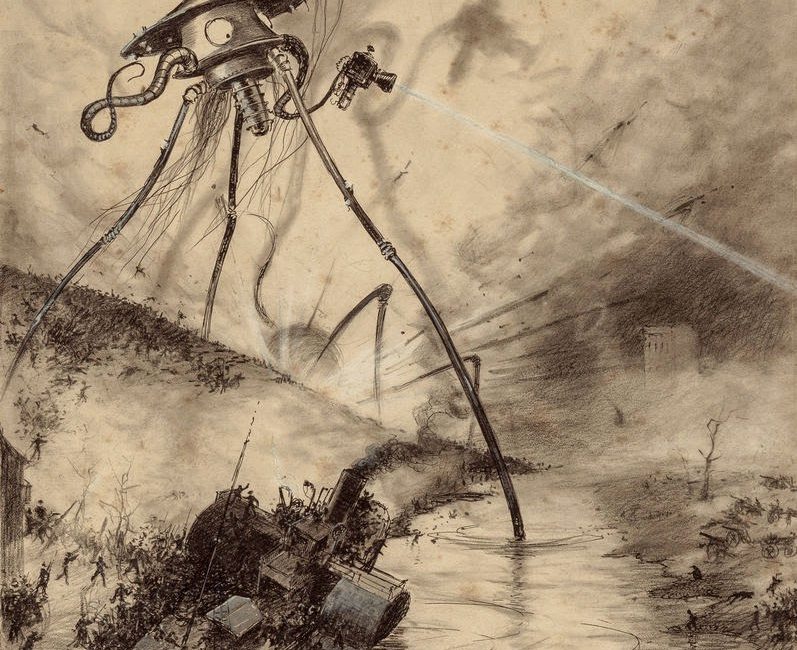
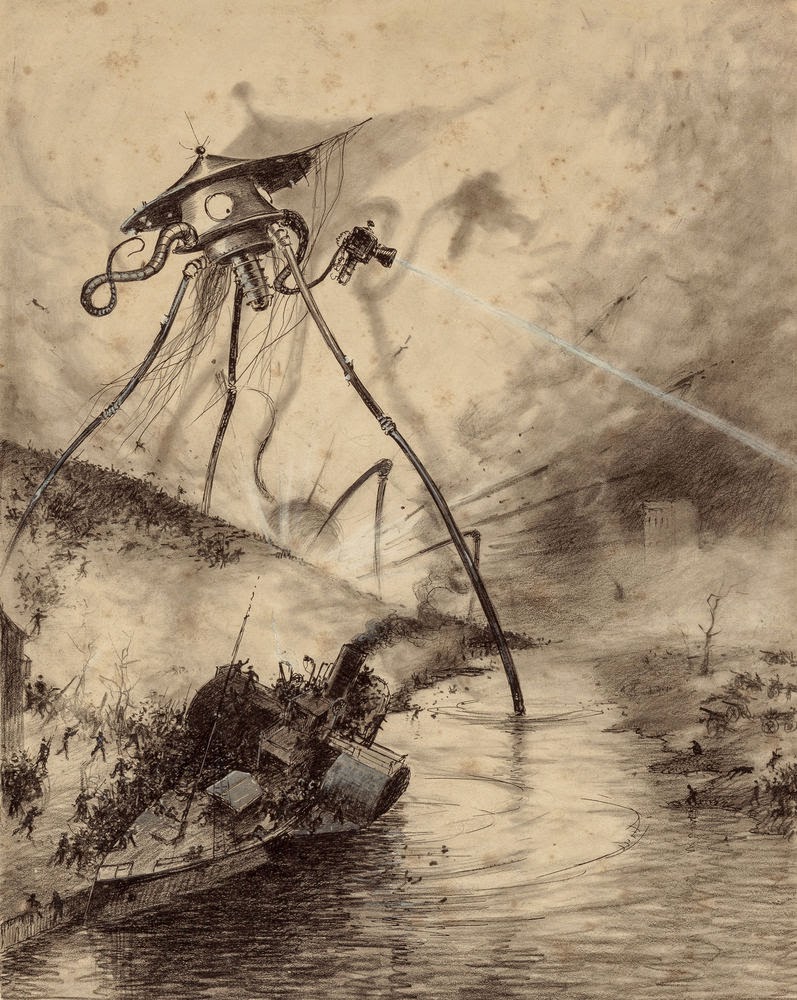
The 1906 Belgian edition of the book included drawings by Brazilian artist Henrique Alvim Corrêa. His original pencil and ink drawings, depicting Martians wreaking havoc on a devastated Earth, are in fact going up for auction today in Beverly Hills, California, and are expected to realize a sum of $500,000.

View Full Size Image
Martian Gas Cannon, from The War of the Worlds, Belgium edition, 1906. Pencil and Ink drawings by Henrique Alvim Corrêa. Image from Heritage Auctions. Image obtained from: http://www.huffingtonpost.com/2015/05/05/war-of-the-world-illustrations-auction_n_7214410.html.

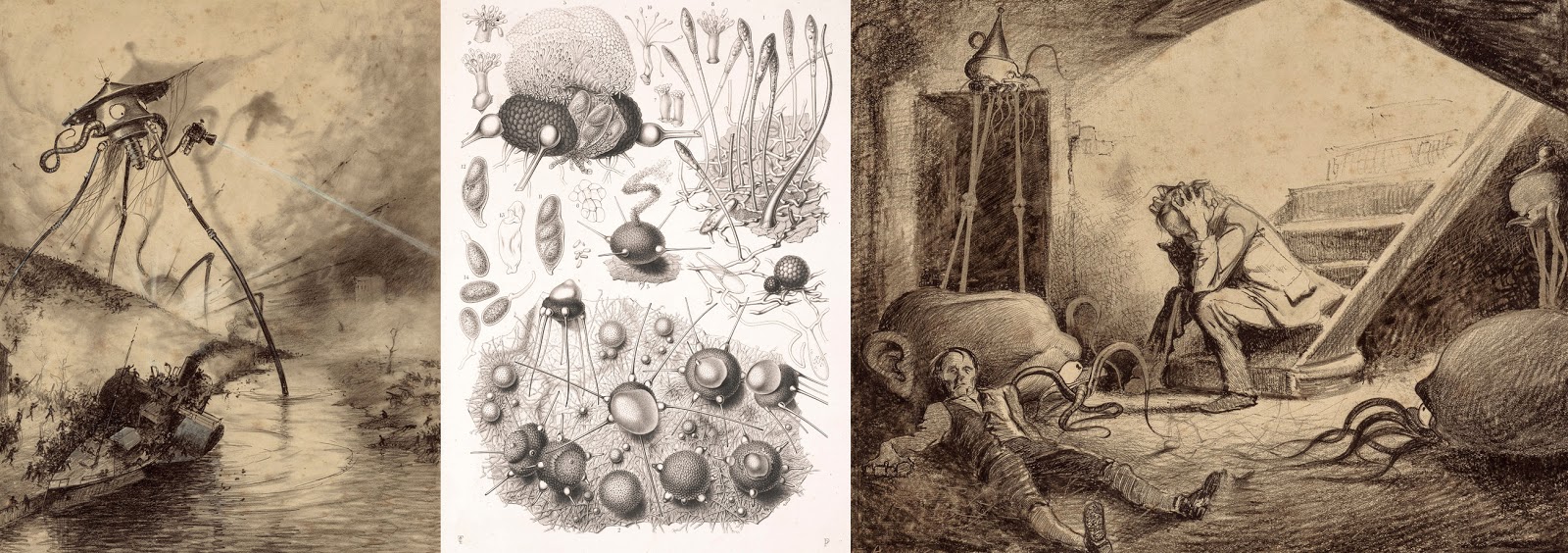
Corrêa’s Martians, although largely mechanical, still have a very organic feel to them. Indeed, to the eyes of a trained expert, they bare a striking resemblance to something altogether earthly – microfungi.

Microfungi are fungi such as molds, mildews and rusts that differ from macrofungi by the absence of a large, multicellular fruiting body. Present in all terrestrial and freshwater and marine environments, microfungi grow in plants, soil, water, insects, cattle rumens, hair, and skin. Often benign, some species are also harmful, causing diseases in plants, animals and humans.

View Full Size Image
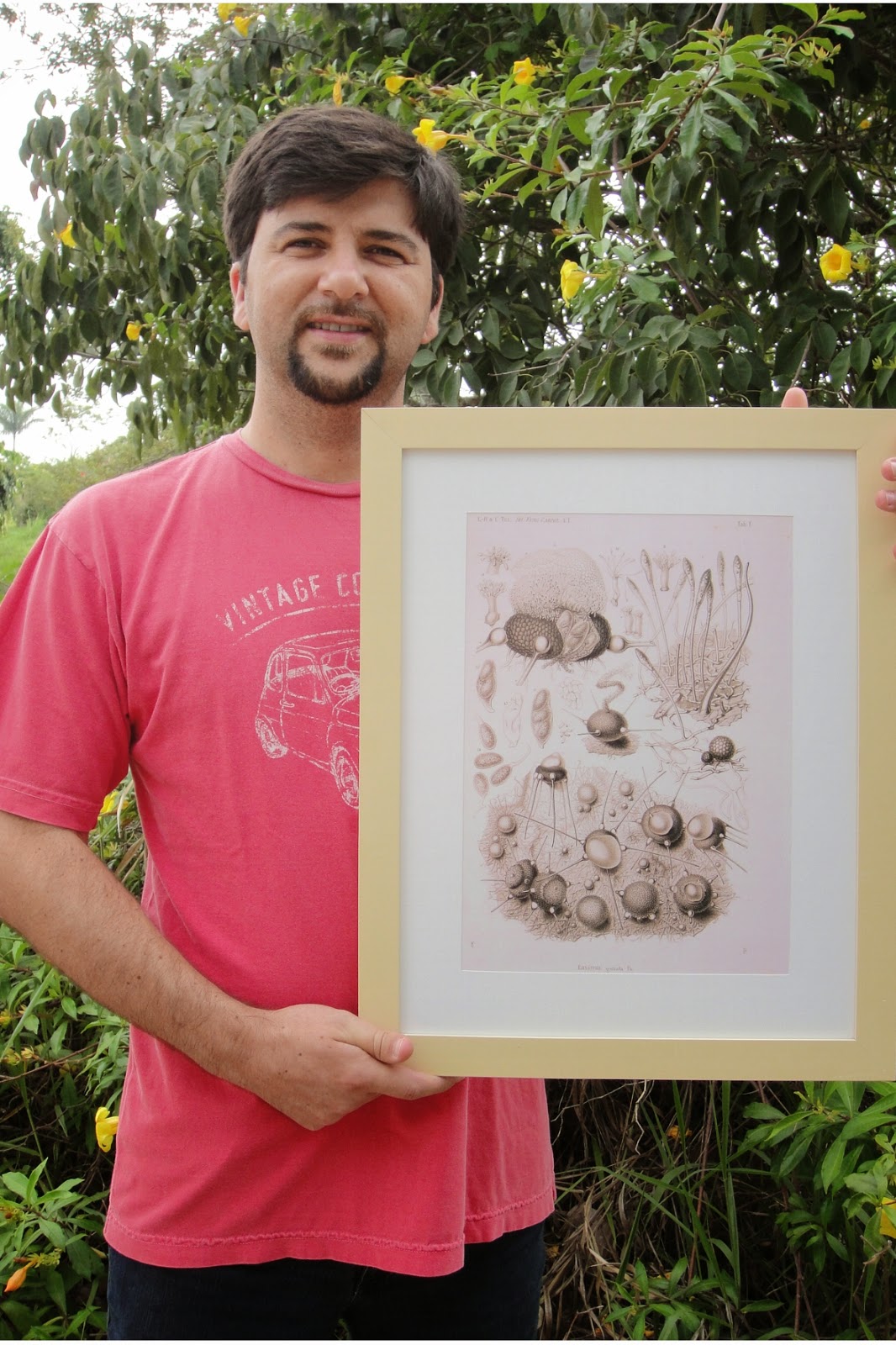
Fig. 1. Dr. Dartanhã J. Soares, plant pathologist researcher at the Brazilian Corporation for Agricultural Research (Embrapa), holding his new decoration piece which was downloaded through BHL from Tulane’s Brothers Selecta Fungorum Carpologia. Vol.1 http://biodiversitylibrary.org/page/3448217.

Dr. Dartanhã J. Soares has been studying plant pathology for twelve years. While his post graduate research focused on the taxonomy of plant pathogenic fungi, these days his work is focused on the management of fungal diseases on tropical crops at the Brazilian Agricultural Research Corporation (Embrapa). But while his current duties may deviate from an exclusive study of fungi, Dr. Soares’ true passion is still mycology.

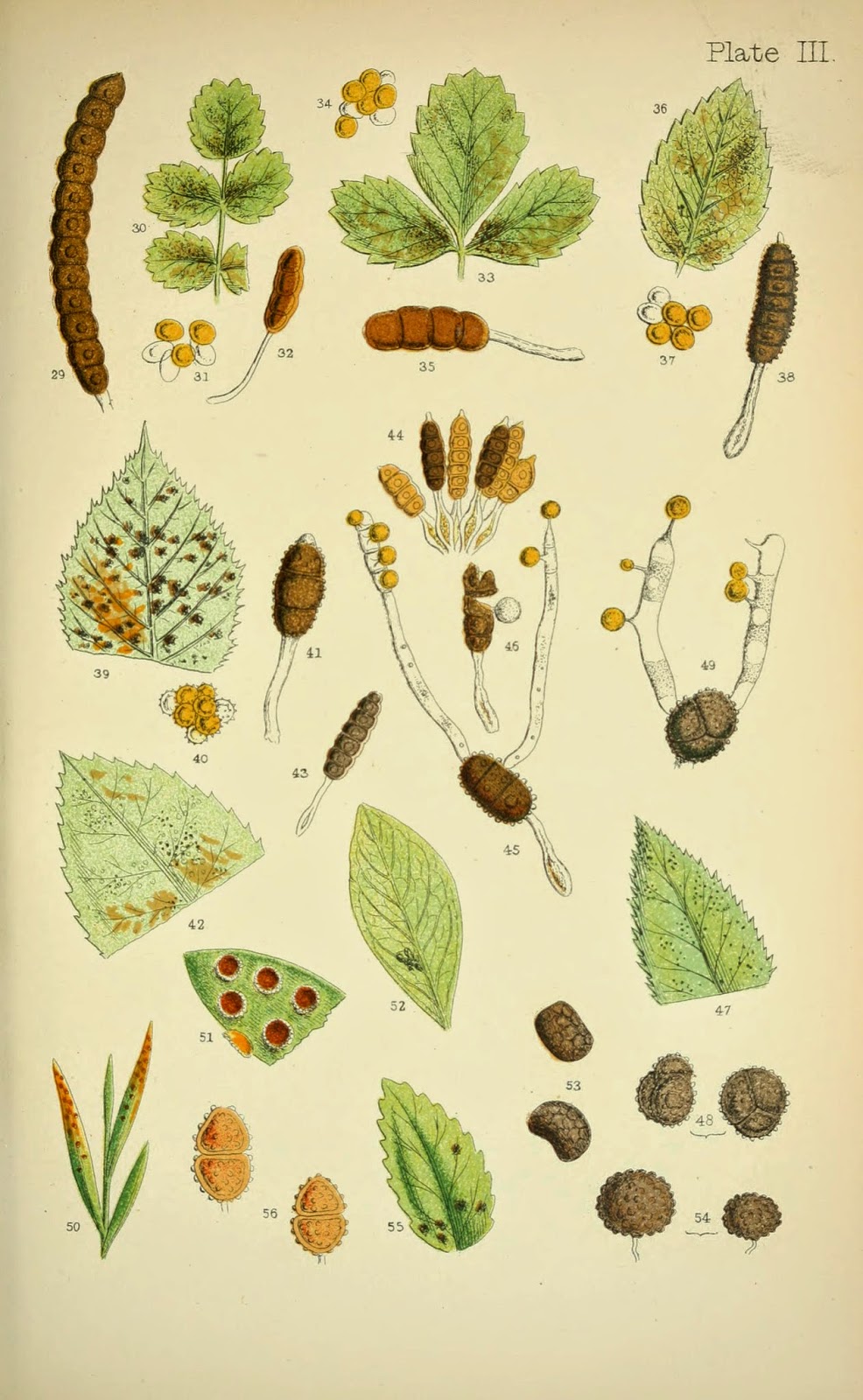
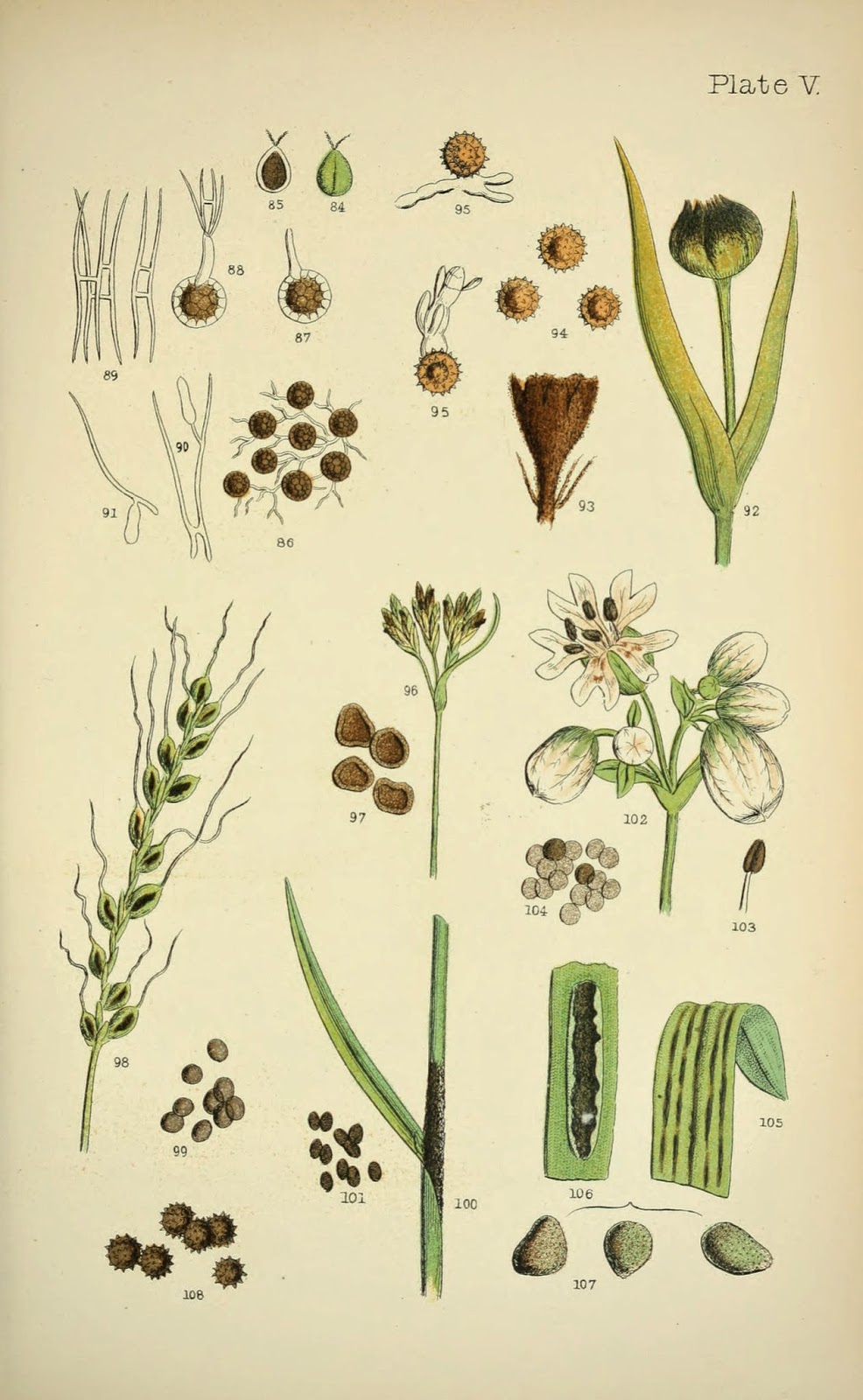
“I really love looking through the microscope and literally ‘discovering’ an amazing hidden world,” enthuses Soares. “But before that, I need to collect samples to be examined, and this is almost as exciting as looking through the microscope. I really like to go into the field and collect plant samples exhibiting the most variable range of fungal infection symptoms like those caused by rust and smut fungi. We can see some examples of symptoms and spore types in these drawings from the late nineteen century” (Figs. 2 and 3).

View Full Size Image
Fig. 2. Symptoms and spore diversity of rust fungi from Rust, smut, mildew and mould: an introduction to the study of microscopic fungi. By M.C. Cooke and illustrated by J.E. Sowerby. London, 1898. http://biodiversitylibrary.org/page/3275344.

Soares’ research on fungi, and discovery of amazing illustrations like those from Rust, smut, mildew and mould (Fig. 2 and 3), are what led him to the Biodiversity Heritage Library about seven years ago.

“I was trying to solve a puzzle about a superficial black fungus I found colonizing the leaves of Typha dominguensis,” recalls Soares. “At that time, I had just finished my Ph.D. thesis and had enough time to dig into the Internet looking for ‘obscure’ things. I eventually came across G. Arnaud’s thesis Les Astérinées, available in BHL. The book itself did not help me as much as I needed, not only because it was in French, but also because the information I was looking for was only partially mentioned. However, it revealed another hidden world which was the amazing possibility to access landmark works about fungi, of course, that I would never be able to access by any other way. However, it is important to note that I did not discover the full potential of BHL at that time. That happened later, when I ‘found’ Reginald Buller’s Researches on Fungi. At that time, [I realized], ‘Hey, I’ve already visited this website before. Maybe I can find other landmark works on it.’ And then I started to dig a little deeper into BHL.”

View Full Size Image
Fig. 3. Symptoms and spore diversity of smut fungi from Rust, smut, mildew and mould: an introduction to the study of microscopic fungi. By M.C. Cooke and illustrated by J.E. Sowerby. London, 1898. http://biodiversitylibrary.org/page/3275364.

Accessing BHL on average about once a month, Soares sees the true value of BHL through the ability to satisfy his curiosity about the natural world.

“BHL is a powerful tool and makes our lives easier,” explains Soares. “BHL is doing amazing work making such rare and wonderful ‘masterpieces’ available to everyone around the globe. Specific to my research field, BHL has a minor direct impact; sometimes it is necessary to check some old fungal description and in those cases I check BHL to see if the original work is available. However, indirectly BHL had a much bigger impact. BHL is providing me with a unique opportunity to improve my knowledge and mainly my curiosity about some classical works I had already heard about but never had the opportunity to read myself.”

While Soares most often uses BHL to download whole PDFs of books, one of his favorite features on the website is the multiple means through which he can access and download content and the breadth of materials available.

“BHL is very versatile in the ways it provides access to what I need,” lauds Soares. “Sometimes I read titles or parts of titles online, but more frequently I download the whole PDF to include the title in my personal digital library. More recently, I have also requested to download high resolution images because I was interested in having the picture framed. Additionally, at first I used BHL only for work or related topics, but now I see that there are a lot of interesting titles [outside of my direct field of study]. For example, some time ago I read the book The river of doubt: Theodore Roosevelt’s Darkest Journey by Candice Millard, and recently I saw that the book Through the Brazilian Wilderness, written by Theodore Roosevelt, is available at BHL. I have downloaded and started reading it.”

But while he loves the ability to download high resolution images from BHL, this feature also triggers a response from Soares on what he would like to see changed in BHL.

“The only thing I would change is the downloading process of high resolution images. It is a little tricky. It would be wonderful if we had the option to download high resolution images with one click, like: ‘click here to obtain this page in high resolution.'”

While we have recently released a tutorial better explaining how to download high resolution images from BHL, an easier way to provide access to these images is an item that we have added to our development wish list.

But what does all of this have to do with Martians and H.G. Wells? To understand, you have to consider Wells through the eyes of a fungi expert.

View Full Size Image
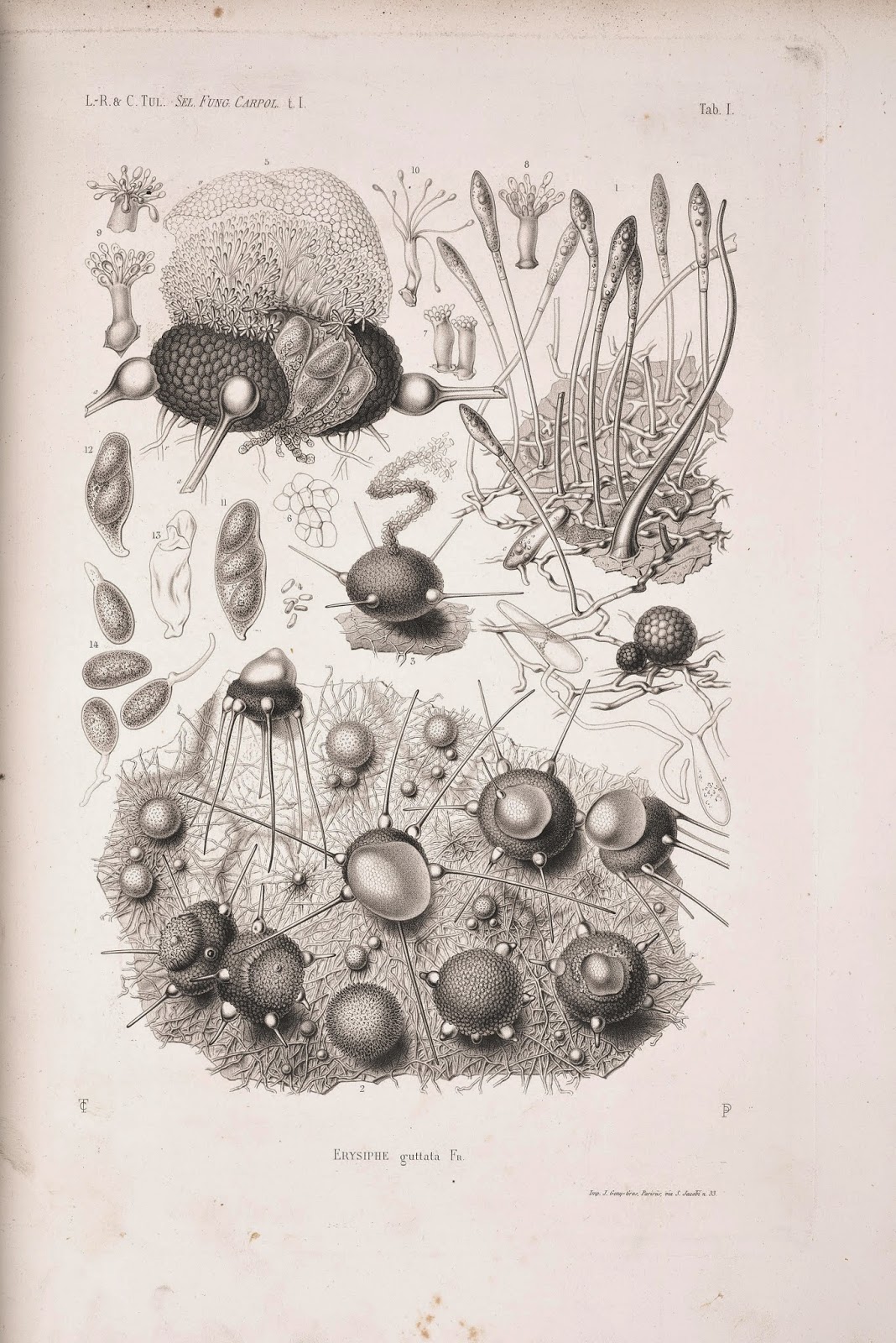
Fig. 4. Phylactinia guttata from Selecta Fungorum Carpologia. Vol.1, Tab.I, Tulasne, E.L.-R and C. 1861. http://biodiversitylibrary.org/page/34482177.

“My favorite title [in BHL] is Selecta fungorum carpologia from the Tulasne brothers,” begins Soares. “The line drawings are so amazing, so ‘real,’ and with such richness of detail that I constantly ask myself how they did that with such rudimental microscopes. If you have any doubt about this, look at Erysiphe guttata, which nowadays is called Phyllactinia guttata, in Selecta Fungorum Carpologia Vol 1, Tab.I (Fig. 4). The sexual stage, the globose bodies, of this fungus are smaller than a pin head, and even so can you see the richness of detail? Additionally, the Tulasne brothers established the pleomorphism – which is the capacity of a single organism to show distinct forms – of fungi and summarized their results in Selecta fungurom carpologia, which became a landmark [title] on fungi research. Well, at this point, you’re probably asking yourself, where are the Martians? Don’t you see them? Look more carefully at Fig. 4. Does the general aspect of the sexual bodies of P. guttata remind you of anything? No? Well, maybe you should take a second look at some of the images from The War of the Worlds. Ha-ha, probably now you are wondering if H.G. Wells got inspirations from P. guttata to describe the invading martians, aren’t you?”

View Full Size Image
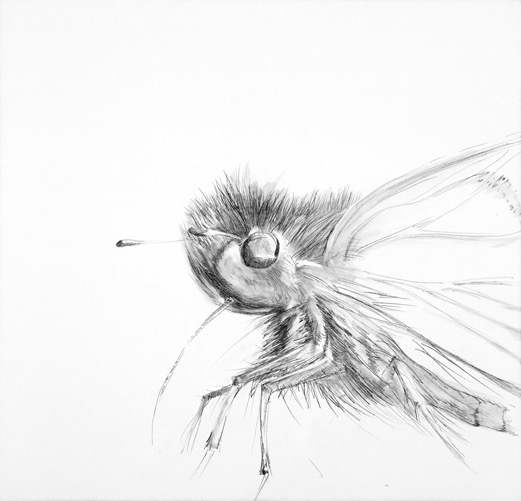
Comparing Corrêa’s Martians to Tulasnes’ fungi. Left: “Martian Gas Cannon.” Right: “Death of Curate.” Both from The War of the Worlds, Belgium edition, 1906. Pencil and Ink drawings by Henrique Alvim Corrêa. Images from Heritage Auctions. Images obtained from: http://www.huffingtonpost.com/2015/05/05/war-of-the-world-illustrations-auction_n_7214410.html. Center image: Phylactinia guttata from Selecta Fungorum Carpologia. Vol.1, Tab.I, Tulasne, E.L.-R and C. 1861. http://biodiversitylibrary.org/page/3448217.

Thank you, Dr. Soares, for taking the time to explore the wonderful world of fungi and Martians with us! Do you use BHL to support your work? Want to tell us about it? Send us a message at [email protected]. 

May 14, 2015by michelle.underhill
Blog Reel, User Stories

Just a Click Away: BHL Promotes Biodiversity Research and Taxonomy

The Biodiversity Heritage Library is dedicated to providing open access to the biodiversity resources in its collection. Open access not only ensures that users the world over can freely locate the information they need online, but it also enables other biodiversity initiatives to make use of the wealth of knowledge represented in our 45 million+ pages to support research and taxonomy. We’ve highlighted several projects over the past few months that have incorporated BHL content into their own databases, including ITIS, AGRIS, Avibase, and JournalMap through BioStor.

View Full Size Image
Dr. Andreas Kroh (NHM Vienna) on field work in the Azores.

Dr. Andreas Kroh, Researcher and Publisher in the Department of Geology and Paleontology at the Natural History Museum Vienna, recently shared two more examples of BHL data reuse: WoRMS, the World Register of Marine Species, and FreshGEN, a FWF-funded research project to elucidate the evolution of European Lake systems by studying their gastropod faunas.

Dr. Kroh has been studying evolution, systematics, taxonomy (particularly of fossil and extant Echinoids (Sea urchins)), and biogeography (focusing on European Neogene faunas) for sixteen years. Several years ago, he discovered BHL.

“I was searching for a specific volume of an old journal that was missing in our library, and I was excited when I found that the BHL site did provide full access to the content of that volume, saving me the time to travel more than 200 km to the next library that held the series,” recalls Dr. Kroh.

Since then, Dr. Kroh has used BHL extensively to inform his research and support his contributions to several biodiversity projects.

“BHL is an excellent research tool that has considerably sped up my work and those of many other scientists that rely on or need to refer to previously published data,” lauds Dr. Kroh. “Many of the projects I am involved in, namely my contribution to WoRMS and FreshGEN, would need much more time and effort without BHL, where many research papers are just a click of a finger away. This view is shared by many fellow editors of the WoRMS database, most of which make heavy use of BHL for rapid access to species descriptions and historical biodiversity data.”

View Full Size Image
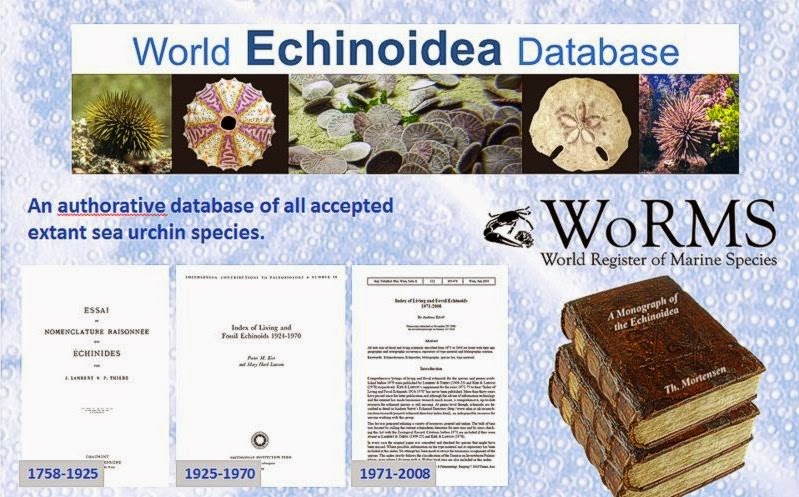
Creation of Global Species Databases (see http://www.marinespecies.org/about.php for an overview) involves tremendous amounts of library work – BHL has considerably sped up the process.

The World Register of Marine Species (WoRMS) aims to “provide an authoritative and comprehensive list of names of marine organisms, including information on synonymy.” Marinespecies.org serves as the web interface for the Flanders Marine Institute-developed “Aphia” database, which consolidates marine species registers from several projects. Information available through WoRMS, which is curated and maintained by taxonomic experts, includes valid species names, synonyms and vernacular names, higher classifications presenting scientific names within parent taxon contexts, biogeographical data, references to related external databases, and links to literature in BHL.

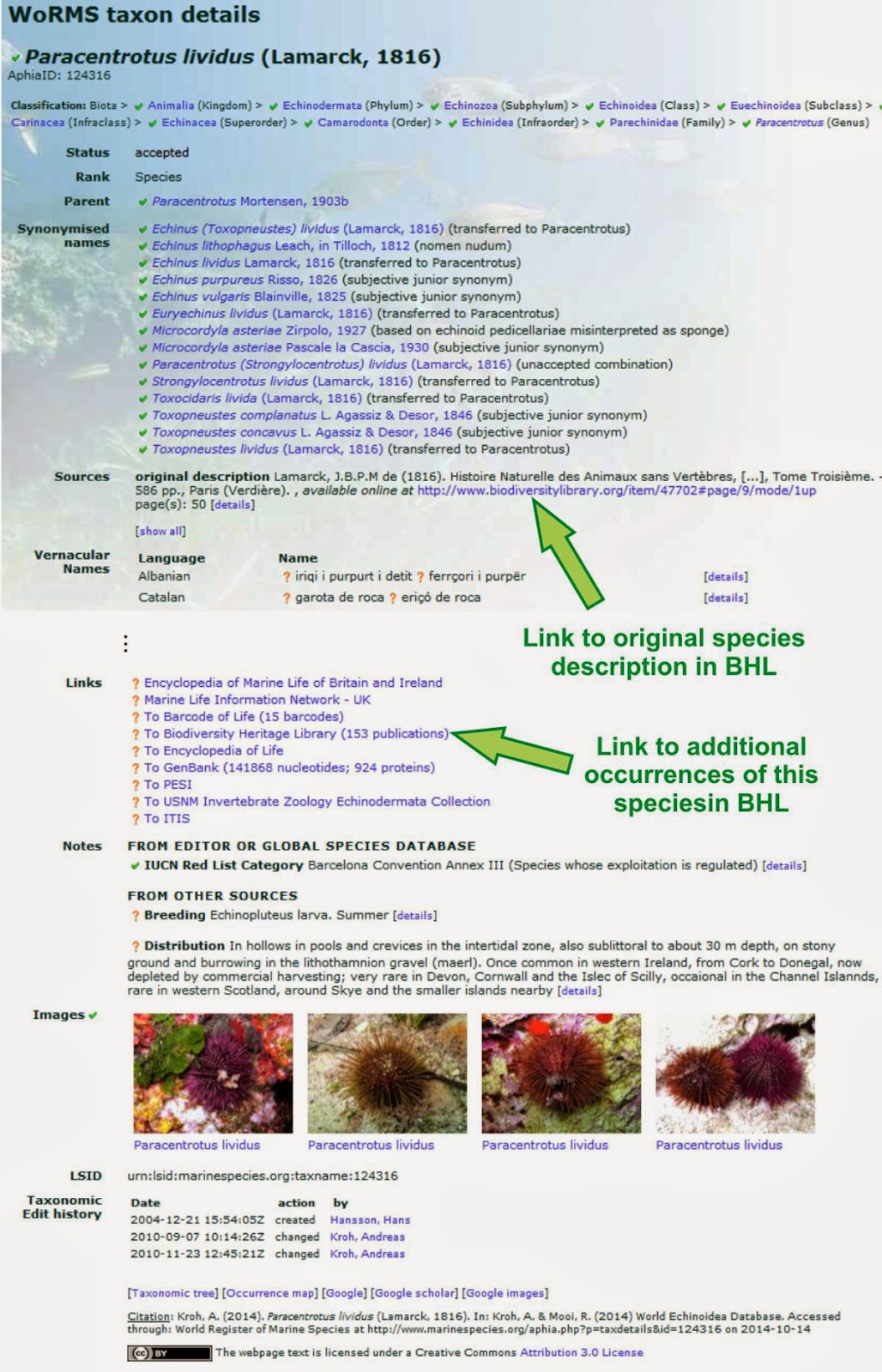
“In the World Register of Marine Species we are linking references on species pages directly to their respective title page in BHL, thereby making it easier for non-taxonomists to go back to the original sources of data, be it original descriptions, distribution data or other relevant information,” explains Dr. Kroh.

View Full Size Image
Species pages in the World Register of Marine Species (http://www.marinespecies.org) crosslink to BHL to ease access to the (often hidden) original species descriptions and additional published information.

Dr. Kroh’s other current research focus, the FreshGEN project, will “provide the first detailed assessment of the composition of European freshwater gastropods during the Neogene and Quaternary at species, genus and family levels, with emphasis on lake faunas.” By compiling and evaluating data, particularly relevant historic literature references like those at BHL, the project’s international expert team of paleontologists and limnologists will create the FreshGEN-database (Freshwater Gastropods of the European Neogene), which will allow researchers to compare diversity and inter-lake data, identify geographic gradients in species richness, define biodiversity hotspots in present and past lake systems, shed light on the origin of modern lake faunas, and “estimate the (future) anthropogenic impact on Holocene lake faunas.”

Dr. Kroh (and, he emphasizes, his colleagues) use BHL on almost a daily basis when working on these and similar taxonomic projects. For Dr. Kroh, that use is multi-faceted.

“When locating a title in BHL I mostly read the respective portion of paper that I am interested in online. Usually, however, I do also save the link to the respective title page in my literature database and download the whole volume as PDF for future reference – this has proven very useful for field work or research in museum collections which often are in the basements where web-access is not available.”

As with all of our users, Dr. Kroh has favourite services in BHL and functionality he would like to see improved.

“One of the most useful features of BHL is that it has a drop-down interface to jump to other volumes within a journal – other portals that offer scanned books often lack such a connection between volumes of a series and it can be difficult to find a particular volume, specifically if it is a journal that has many different series and changing titles.”

On the improvement side, Dr. Kroh identified missing volumes within journals runs, multiple listings of the same titles with disconnected volumes, and the compression used for whole-volume PDF downloads as areas for BHL to focus on.

BHL is actively working to identify and fill gaps in its collections (this is, in fact, a priority within our digitization efforts), and users are encouraged to notify us of missing volumes in serial runs. And while our systems try to automatically de-duplicate multiple records of the same title, varying cataloguing practices at our member institutions, who each submit their version of a title record for the volumes they scan, impedes perfect title merging. These merges are currently a manual process, and we again encourage our users to notify us of titles in need of this extra love. File size and storage limitations unfortunately necessitate PDF compression, but high resolution images can be downloaded through Internet Archive (linked from BHL) as an alternative.

View Full Size Image
Dr. Andreas Kroh (NHM Vienna) on a field course on reef organisms, showing a sea cucumber to students.

While improvements are always possible and necessary, access to the historic biodiversity knowledge provided through BHL is critical to modern scientific work.

“It’s really the sum of observations, present ones as well as past ones, that form our knowledge of nature,” emphasizes Dr. Kroh. “In alpha-level taxonomy errors have been perpetuated in the past since few researchers had the possibility or time to go back to the original species descriptions. With BHL everybody has that possibility, regardless of her or his profession or place of living. BHL opens up scientific literature for the widest audience possible and repatriates scientific knowledge.”

We extend a special thanks to Dr. Andreas Kroh for sharing his experiences with BHL for our blog. Do you use BHL to support your work? Want to tell us about it? Send us a message at [email protected].

February 19, 2015by michelle.underhill
Blog Reel, User Stories

Finding Agriculture among Biodiversity: Metadata in Practice

The Biodiversity Heritage Library is committed to providing free and open access to over 500 years of natural history literature from across the globe. Towards that goal, the Library currently contains over 45 million pages of biodiversity content, representing over 155,000 volumes and 90,000 titles.

However, hosting the content online is just part of our vision to “inspire discovery through free access to biodiversity knowledge.” Users must be able to identify content relevant to their work and interest from amongst this vast corpus. For this, metadata is all-important.

Metadata is “data that describes other data.” BHL’s metadata describes the digital resources in our collection, providing not only author, title, volume, publication year and place, and article information, but also keywords describing the topics discussed within each book. Eventually, full-text searching will also allow users to search across the actual text within a book to discover items relevant to their search parameters.

View Full Size Image
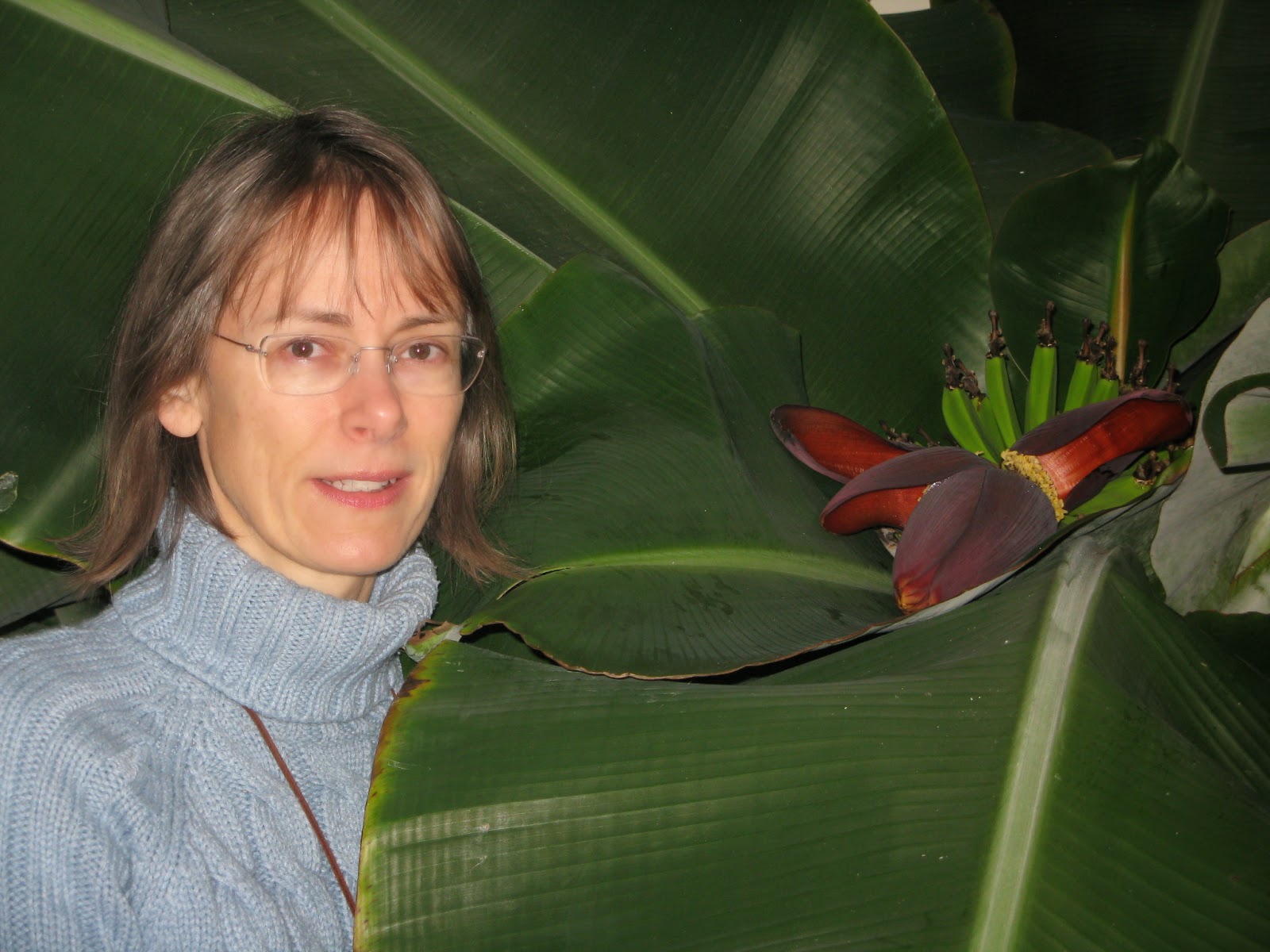
Dr. Jane Bromley, with her home-grown banana plant.

Dr. Jane Bromley knows the importance of metadata all too well. It is a critical component of her daily work.

Bromley is a research fellow at The Open University, where she has worked since 2012 as part of a subgroup of the Natural Language Processing group. Under the EU FP7 funded agINFRA project, which aims to promote data sharing in agricultural sciences, Bromley’s subgroup studies information extraction from legacy biodiversity literature. Specifically, they are seeking to enhance an existing specialist agricultural resource, AGRIS.

AGRIS is a collaborative network of more than 150 institutions providing free access to agricultural information in the form of more than 7 million bibliographic references on agricultural research and technology. This multilingual bibliographic database also contains links to related data resources on the Web.

BHL contains a vast amount of agricultural information. Searching the subject “agriculture” alone produces over 2,100 books and journals in BHL. Recognizing the potential of these resources, Bromley and her colleagues, including Dr. David King and Dr. David Morse, developed a process to enhance AGRIS with BHL content. They relied on BHL’s metadata to do this.

“BHL is a unique resource for agricultural researchers,” explains Bromley. “Its long-term view can prove invaluable in locating wild relatives of crops and understanding their relationship to local habitats and ecosystems. It is the only way to access this breadth of biodiversity literature electronically.”

To filter BHL for relevant agricultural content, Bromley and her team downloaded the “Title Table” file from BHL, which is a list of all titles available in BHL with the associated URL and Call Number. After also downloading the bibliographic information for each item in MODS format, Bromley used the Call Number field to discriminate agricultural material using the Library of Congress Classification LCC scheme. While Call Numbers are alphanumeric codes that identify the shelf location of an item in a library, the specific combination of letters and numbers used allows the library to arrange items according to subject, and thus also serves as an indication of the subject of the book itself.

“I selected items with code starting “S, SB, SD, SF, SH, SK” meaning class Agriculture or one of its subclasses,” articulates Bromley. “I then selected only those items whose bibliographic data said they were of genre: book, thesis, article or bibliography, as AGRIS only accepts: books, book chapters, thesis, journal articles, conference papers, and bibliography. BHL contains complete journals rather than journal articles, so these were not included. That meant that items such as Canadian Journal of Agricultural Science or Journal of Agricultural Research were omitted. For items that passed both of these matches I also scraped the item’s URL to recover the location of the PDF image of the item and the OCR text.”

Finally, Bromley wrote a new MODS file for each item matching her filtering criteria, resulting in 12,645 MODS files with the URLs to the associated PDF and OCR files appended. Each item’s MODS data was converted and included in AGRIS by the AGRIS team, and are available here.

View Full Size Image

Bromley’s experiments with filtering BHL are written up as a conference paper that she presented at the 8th Metadata and Semantics Research Conference in Karlsruhe as part of a special track Metadata and Semantics for Open Repositories, Research Information Systems and Data Infrastructures, jointly chaired by Imma Subirats (FAO) and by Nikos Houssos (Greek National Documentation Centre). You can download a copy of the paper here: http://oro.open.ac.uk/41117/

Bromley’s filtering strategy resulted in high precision but lower recall. Nearly all of the selected material was about agriculture, but many items that also contain agricultural information but are classified under different call numbers were omitted. To address this omission, Bromley would eventually like to download the OCR text for every item and mine it for agriculturally related terms.

David Livingstone’s Missionary Travels and Researches in South Africa is a fantastic example of materials that are missed when strictly Call Number strategies are employed.

“This was the document that proved to me that in order to find all the relevant agricultural material in BHL we need to mine the whole texts,” emphasizes Bromley. “It’s a seminal book in the British consciousness, which I never thought I’d get to read as part of my research. And, interestingly, it turns out to be a key document in my research. Despite containing information about: domestic animals, The Boers as Farmers, Discovery of grape-bearing vines, The sugar-cane, Coffee Estate, and Coffee Plantations amongst others (all listed in the table of contents), which are all relevant to agricultural research, there is no way to tell from the title or the Subjects that it contains these nuggets.”

View Full Size Image
“Bakalahari women filling their egg-shells and water-skins at a pool in the desert.” Livingstone, David. Missionary Travels and Researches in South Africa (1858). http://biodiversitylibrary.org/page/39590153.

BHL staff are constantly working to improve our Library’s metadata. Ongoing work to enhance pagination information, merge duplicate title and author entries, associate related titles through bibliographic hyperlinks, and generally correct any errors that exist is tackled by a team of librarians throughout our consortium. Furthermore, current projects such as Mining Biodiversity and Purposeful Gaming are supporting OCR correction that will eventually enable full-text searching. The NEH Art of Life project has not only allowed us to systematically identify and manually classify illustrations throughout the BHL corpus, but in the next few weeks we will be calling for volunteers to help us tag a set of images in Flickr with keywords that describe the illustrations’ content. These tags will eventually be ingested into BHL to further enhance our metadata.

You can help us improve our metadata! If you notice a problem or area for improvement, send us feedback! Real BHL librarians will not only answer your feedback but use it to help direct our metadata improvement efforts.

We are honored to present Dr. Bromley’s work using BHL and its metadata to enhance biodiversity databases, expanding the reach of our content to new audiences and supporting a wide range of research initiatives. Do you have an example of how you’ve used BHL to support your research? Tell us about it by sending an email to [email protected].

January 20, 2015by ulib-libraryjobs
Page 1 of 212»

Help Support BHL

BHL's existence depends on the financial support of its patrons. Help us keep this free resource alive!

search

About BHL

The Biodiversity Heritage Library (BHL) is the world’s largest open access digital library for biodiversity literature and archives. BHL operates as a worldwide consortium of natural history, botanical, research, and national libraries working together to digitize the natural history literature held in their collections and make it freely available for open access as part of a global “biodiversity community.”

Join Our Mailing List

Sign up to receive the latest news, content highlights, and promotions.

Subscribe Now

Subscribe to Blog via Email

Enter your email address to subscribe to this blog and receive notifications of new posts by email.

Join 319 other subscribers

Subscribe to Blog Via RSS

Subscribe to the blog RSS feed to stay up-to-date on all the latest BHL posts.

Access RSS Feed

Inspiring Discovery through Free Access to Biodiversity Knowledge.

The Biodiversity Heritage Library makes it easier than ever for you to access the information you need to study and explore life on Earth…for free, anytime, anywhere.


64+ Million Pages of
Biodiversity Literature Online.

EXPLORE

Tools and Services
to Transform Research.

EXPLORE

300,000+
Illustrations on Flickr.

EXPLORE

ABOUT | HARMFUL CONTENT | PRIVACY | SITE MAP | TERMS OF USE