Biodiversity Heritage Library - Program news and collection highlights from BHL
  • Home
  • News
  • Featured Books
    • All Featured Books
    • Book of the Month Series
    • BHL at 20
  • User Stories
  • Campaigns
    • Fossil Stories
    • Garden Stories
    • Monsters Are Real
    • Page Frights
    • Her Natural History
    • Earth Optimism 2020
  • Tech Blog
  • Visit BHL
Home
News
Featured Books
    All Featured Books
    Book of the Month Series
    BHL at 20
User Stories
Campaigns
    Fossil Stories
    Garden Stories
    Monsters Are Real
    Page Frights
    Her Natural History
    Earth Optimism 2020
Tech Blog
Visit BHL
  • Home
  • News
  • Featured Books
    • All Featured Books
    • Book of the Month Series
    • BHL at 20
  • User Stories
  • Campaigns
    • Fossil Stories
    • Garden Stories
    • Monsters Are Real
    • Page Frights
    • Her Natural History
    • Earth Optimism 2020
  • Tech Blog
  • Visit BHL
Biodiversity Heritage Library - Program news and collection highlights from BHL
Blog Reel, Featured Books

John Torrey’s Calendarium Florae for the Vicinity of New York (1818, 1819 & 1820)

View Full Size Image
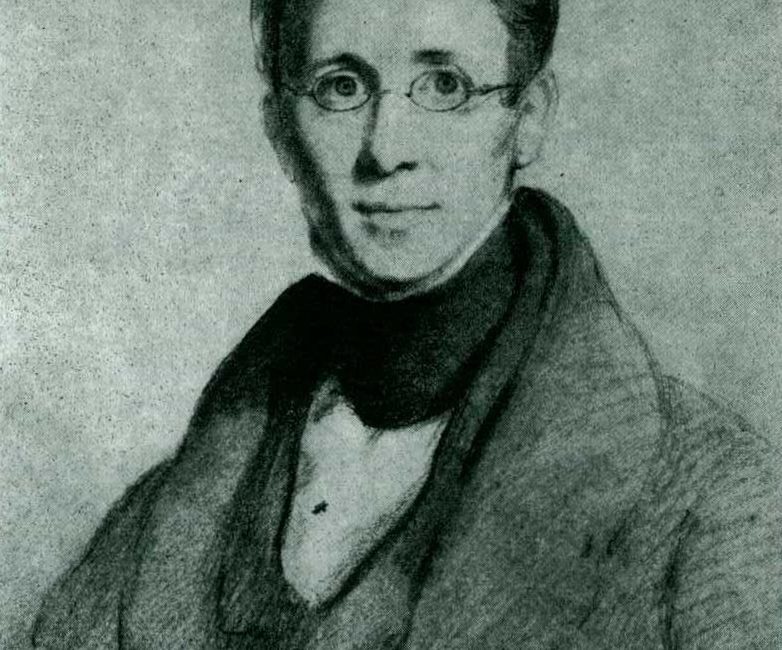
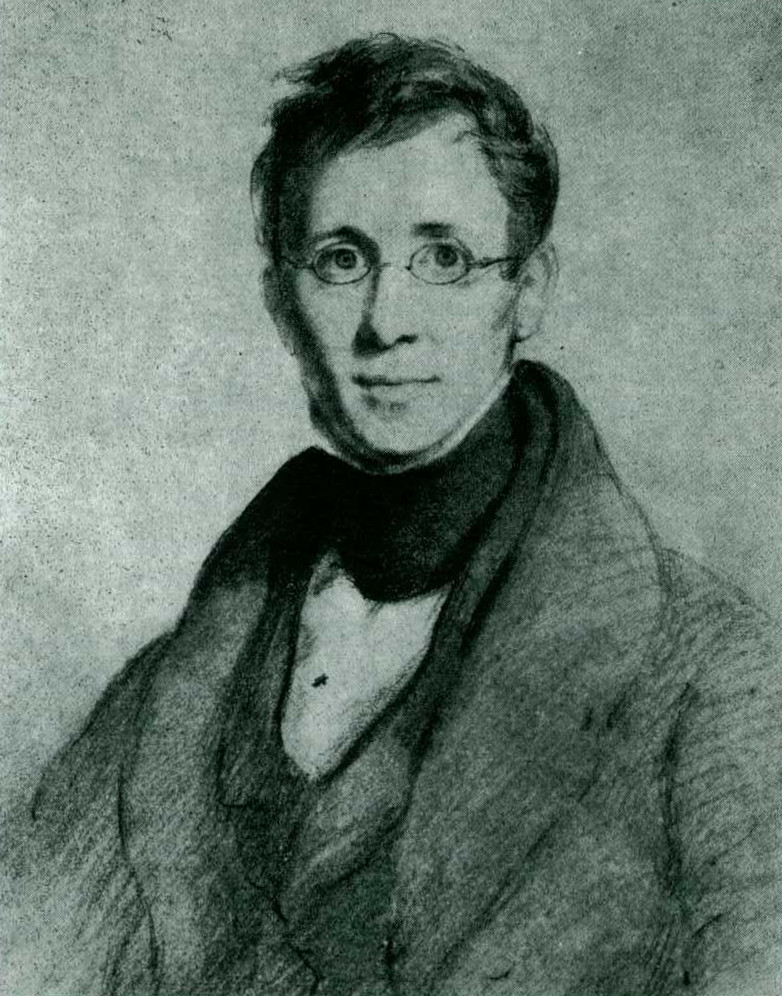
Crayon drawing of John Torrey by Sir Daniel Macnee. From the collection of Sir William Hooker, Royal Botanic Gardens at Kew, England.

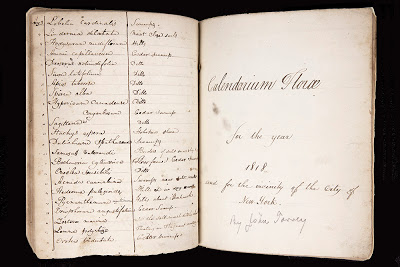
John Torrey (1796-1873) was a preeminent early American botanist. From 1818-1820, Torrey kept a careful record of the plants that he encountered in and around New York City and called his work Calendarium Florae for the Vicinity of New York. The Mertz Library at The New York Botanical Garden is the proud owner of this remarkable manuscript, which was recently digitized and added to the Biodiversity Heritage Library. The image below depicts a full page spread from the Calendarium, showing Torreys neatly written and methodically arranged list of plants.
View Full Size Image
Torrey, John. Calendarium Florae for the Vicinity of New York. Digitized by the LuEsther T. Mertz Library, New York Botanical Garden.

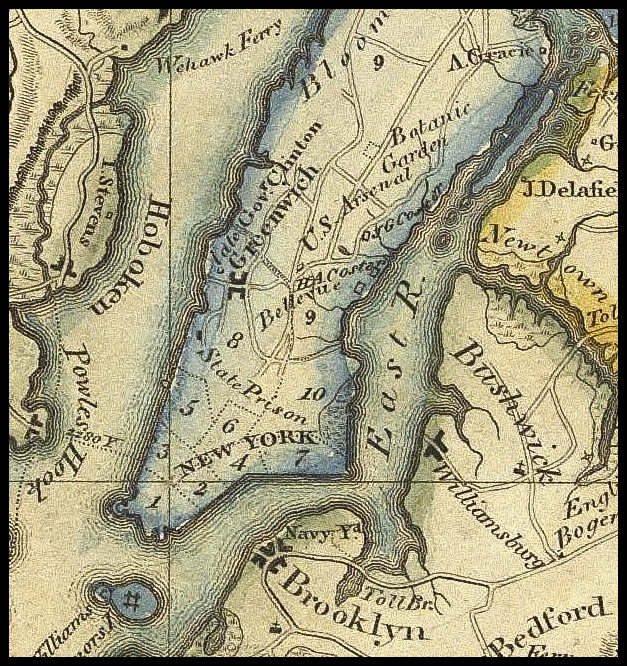
The map below shows many of the locations noted in the Calendarium, including Greenwich (now Greenwich Village), the Elgin Botanic Garden (now Rockefeller Center), Bloomingdale (now the Upper West Side of Manhattan), and Hoboken, New Jersey. The map dates from 1811, shortly before Torrey started work on the Calendarium, and helps us visualize the region where Torrey lived and conducted his early studies.
View Full Size Image
Eddy, John H. Map of the Country Thirty Miles Round the City of New York. David Rumsey Historical Map Collection. http://www.davidrumsey.com/luna/servlet/s/h1o9di.

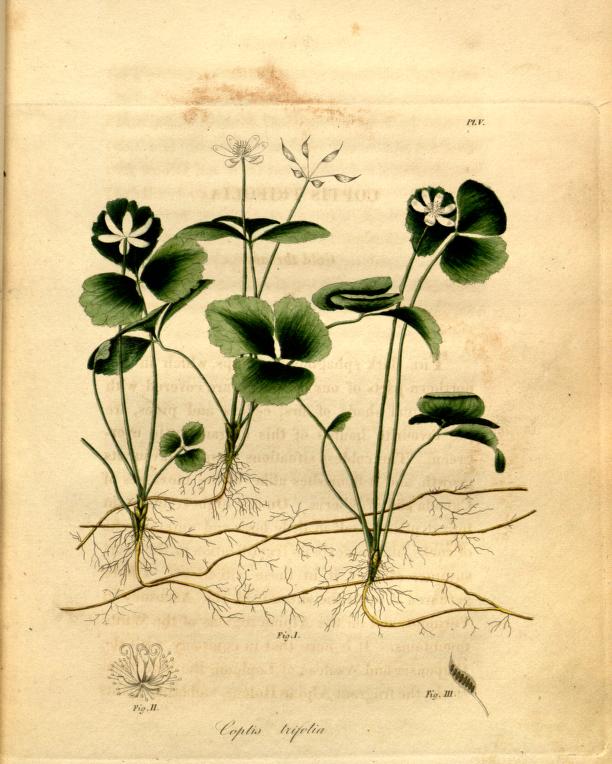
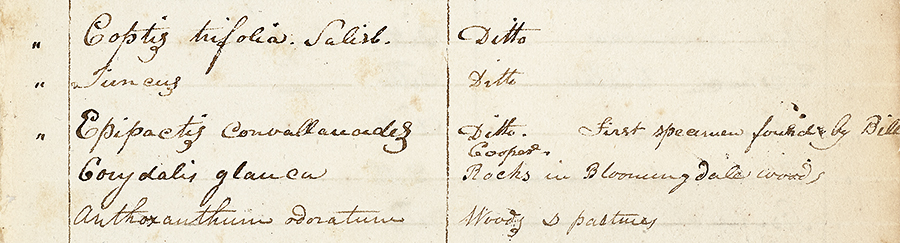
Torrey’s Calendarium is what today is called a phenological record; a document registering the name of an organism and the date of some biological phenomenon. Torrey’s Calendarium lists the plants by scientific name, date of first bloom, and the locations for several hundred species; in this case plants observed around the New York archipelago, from the salt marshes of Brooklyn to the cedar swamps of New Jersey. On his travels through the City, Torrey detailed the common plants of roads, gardens, and woodlots of lower Manhattan, including the stagnant waters around Greenwich, the swamp flora behind the Elgin Botanic Garden, and the wildflowers of Bloomingdale woods. Through his eyes and through his pen, we are witness to the last generation of Rock Harlequin, Tall Thimbleweed, Tuckahoe, Pinweed, Slender Rose Gentian, Smooth Yellow False Foxglove and many others plants soon to be extirpated from the island of Manhattan, as the hills were leveled and the rubble used to fill the swamps. Some species, like Sphagnum Moss, Sundew, and Three-leaf Goldthread (shown in the images below), were eradicated entirely from the boundaries of the City, and, due to a warming climate, are difficult to grow today even under cultivation.
View Full Size Image
Coptis trifolia or Three-leaf Goldenthread observed by John Torrey. Calendarium Florae for the Vicinity of New York by John Torrey. Digitized by The New York Botanical Garden.
View Full Size Image
Coptis trifolia or Three-leaf Goldenthread from American Medical Botany: Being a Collection of the Native Medicinal Plants of the United States by Jacob Bigelow. v.1. 1817. p.60. Digitized by Missouri Botanical Garden. http://biodiversitylibrary.org/page/2955644.

In the year 1818, the first year in which observations were recorded in the Calendarium, John Torrey, only 22 years of age, graduated with a degree in medicine from Columbia College of Physicians and Surgeons. During this time, he was also helping to found the Lyceum of Natural History in New York (the forerunner of the New York Academy of Sciences), and published several important articles in the first issue of the Lyceums Annals. Meanwhile he was also nearing completion of a Flora of the vicinity of New York, and he was laying the foundation for his lifelong ambition to publish a Flora of North America.

John Torrey was not the first to record the phenology of plants. Farmers, priests, philosophers, and scientists from the earliest days of agriculture and writing recorded the occurrences of biological phenomena to track seasons and planting cycles. Nor was Torrey the first American to keep such records. As in many areas of the arts and sciences in America, Thomas Jefferson (1743-1826) blazed the trail for record keeping, experimentation and advocacy for plant science. Jefferson’s Garden book (what he called a “Kalendar”), spans the years 1766 to 1824 and records not only planting dates and harvest times of garden vegetables, but includes the bloom cycles of woodland wildflowers of the Virginia Piedmont.

Plant records such as those kept by Thomas Jefferson, John Torrey, Henry David Thoreau (1817-1862), and many others since then, bridge a critical gap in phenological research, much as dendrochronolgists use tree rings from new archeological finds to complete a portrait of past climactic events. In addition to providing a window on the past, Torrey’s Calendarium is also a window on the future. Those studying climate change and its biological signals will find a wealth of new information. Torrey’s data are the holy grail of phenological recording due to his stature as the unrivaled taxonomic expert of his day. In addition, Torreys observations are confirmed by herbarium specimens, preserved to this day in the collections of the William and Lynda Steere Herbarium at The New York Botanical Garden. Completed at the dawn of the 19th Century, Torrey’s Calendarium is a scientifically rigorous phenological record for New York City. The Calendarium can be thought of as an early draft of his first major professional achievement, his Flora of New York City, Catalogue of Plants Growing Spontaneously within Thirty Miles of the City of New York, published in 1819.

With contributions by Susan Lynch, Vanessa Bezemer Sellers and Stephen Sinon of the LuEsther T. Mertz Library at The New York Botanical Garden.

Resources 

  • Eustis, Elizabeth S., and David Andrews. “Creating a North American Flora.” Flora Illustrata: Great Works from the LuEsther T. Mertz Library of The New York Botanical Garden. Edited by Susan M. Fraser and Vanessa Bezemer Sellers. New York: The New York Botanical Garden and New Haven: Yale University Press, 2014.
  • Robbins, Christine Chapman. John Torrey (1796-1873). His Life and Times. Bulletin of the Torrey Botanical Club, vol. 95, no. 6, 1968. 515-645. https://www.jstor.org/stable/2483657. Accessed 07 March 2017.
March 23, 2017by ulib-libraryjobs
Blog Reel, Featured Books

Orchidelirium: The Orchid Craze Takes Printed Form

View Full Size Image
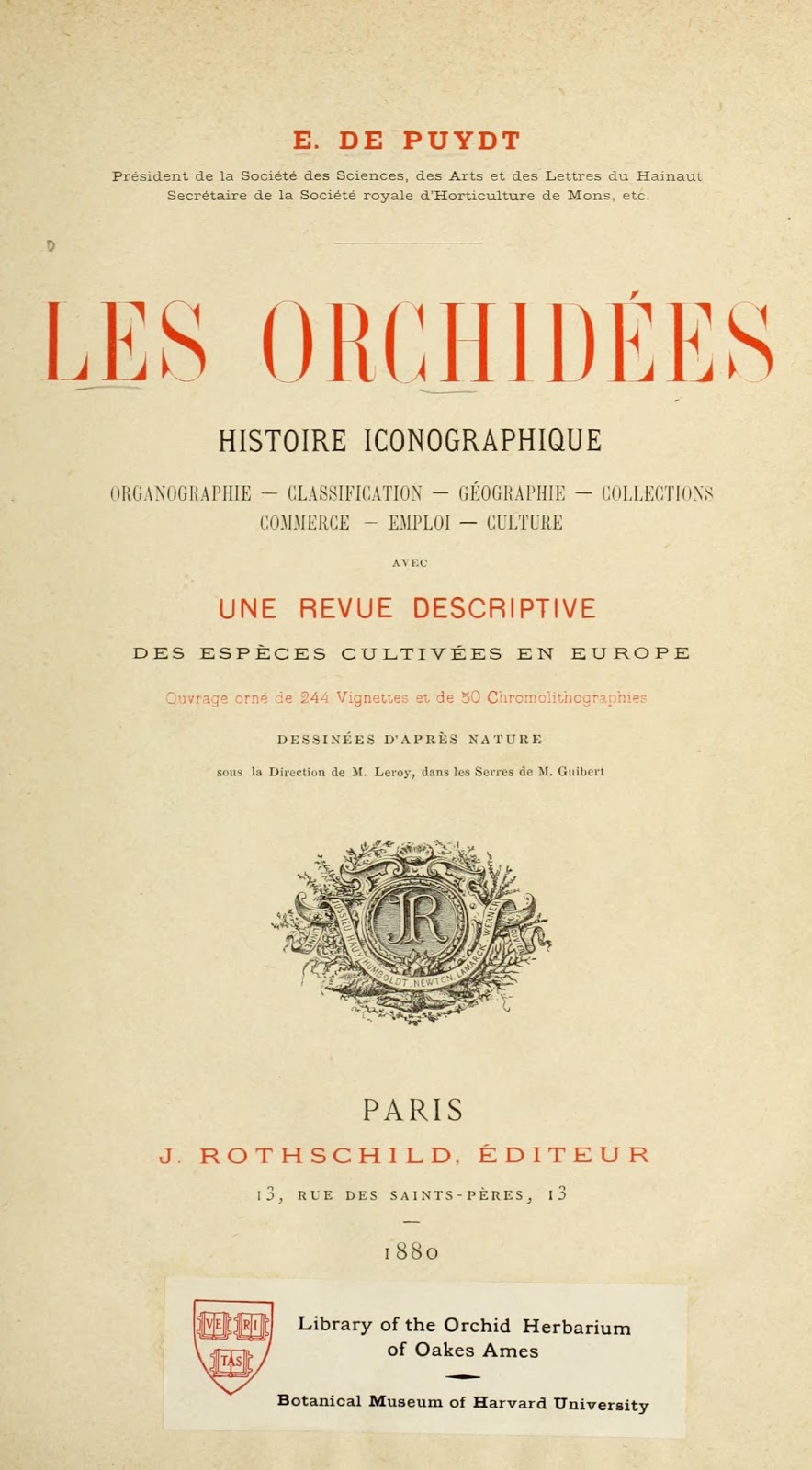
Puydt, Émile de. Les orchidées, histoire iconographique, organographie, classification, géographie, collections, commerce, emploi, culture, avec une revue descriptive des espèces cultivées en Europe. 1880. Digitized by Harvard University Botany Libraries. http://biodiversitylibrary.org/page/43644141.

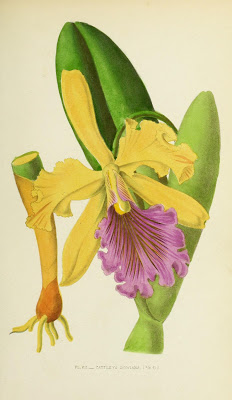
Walk into most any nursery or florist and you will see beautiful orchids of many colors and sizes, with “easy care” instructions attached right to the pot enabling even the brownest thumb success. Want to shake the winter doldrums? Attend an orchid show or meeting – there are over 500 local groups affiliated with the American Orchid Society alone. Orchids are as diverse as they are beautiful, with over 27,000 accepted species living in nearly every corner of the globe.

View Full Size Image
Puydt, Émile de. Les orchidées, histoire iconographique, organographie, classification, géographie, collections, commerce, emploi, culture, avec une revue descriptive des espèces cultivées en Europe. 1880. Digitized by Harvard University Botany Libraries. http://biodiversitylibrary.org/page/43644221.

We are not alone in our fascination with orchids. In the nineteenth century, Europe was gripped by what has been named “Orchidelirium.”  The collection of orchids from around the world was booming as the industrial revolution continued to change the economy and reach of Europe. Amateur and professional botanists were frantically developing methods to cultivate these exotic plants under glass.

Capitalizing on the orchid trend, a Belgian botanist named Émile de Puydt published a treatise on orchids in French in 1880, entitled Les orchidées, histoire iconographique, organographie, classification, géographie, collections, commerce, emploi, culture, avec une revue descriptive des espèces cultivées en Europe [Orchids, iconographic history, organography, classification, geography, collections, trade, employment, culture, with a descriptive review of the species cultivated in Europe (tr.)].

View Full Size Image
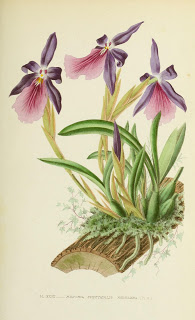
Puydt, Émile de. Les orchidées, histoire iconographique, organographie, classification, géographie, collections, commerce, emploi, culture, avec une revue descriptive des espèces cultivées en Europe. 1880. Digitized by Harvard University Botany Libraries. http://www.biodiversitylibrary.org/page/43643931.

Les orchidées was published on the tails of another French orchid book directed towards amateurs, entitled L’Orchidophile: traité théorique et pratique sur la culture des Orchidées [The Orchid, theoretical and practical treatise on growing orchids (tr.)] by François du Buysson. Both works contained detailed information regarding orchid culture. However, L’Orchidophile is a hefty book of over 500 pages, with dense text, equipment line drawings, and tables but not a single drawing of these magnificent plants. It appealed to the serious orchid cultivator, but lacked a “wow” factor to make it appeal to a more general French-speaking audience.

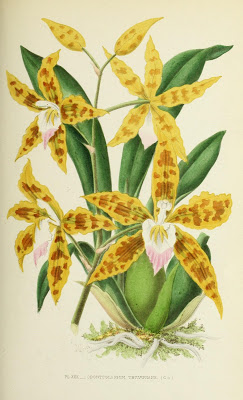
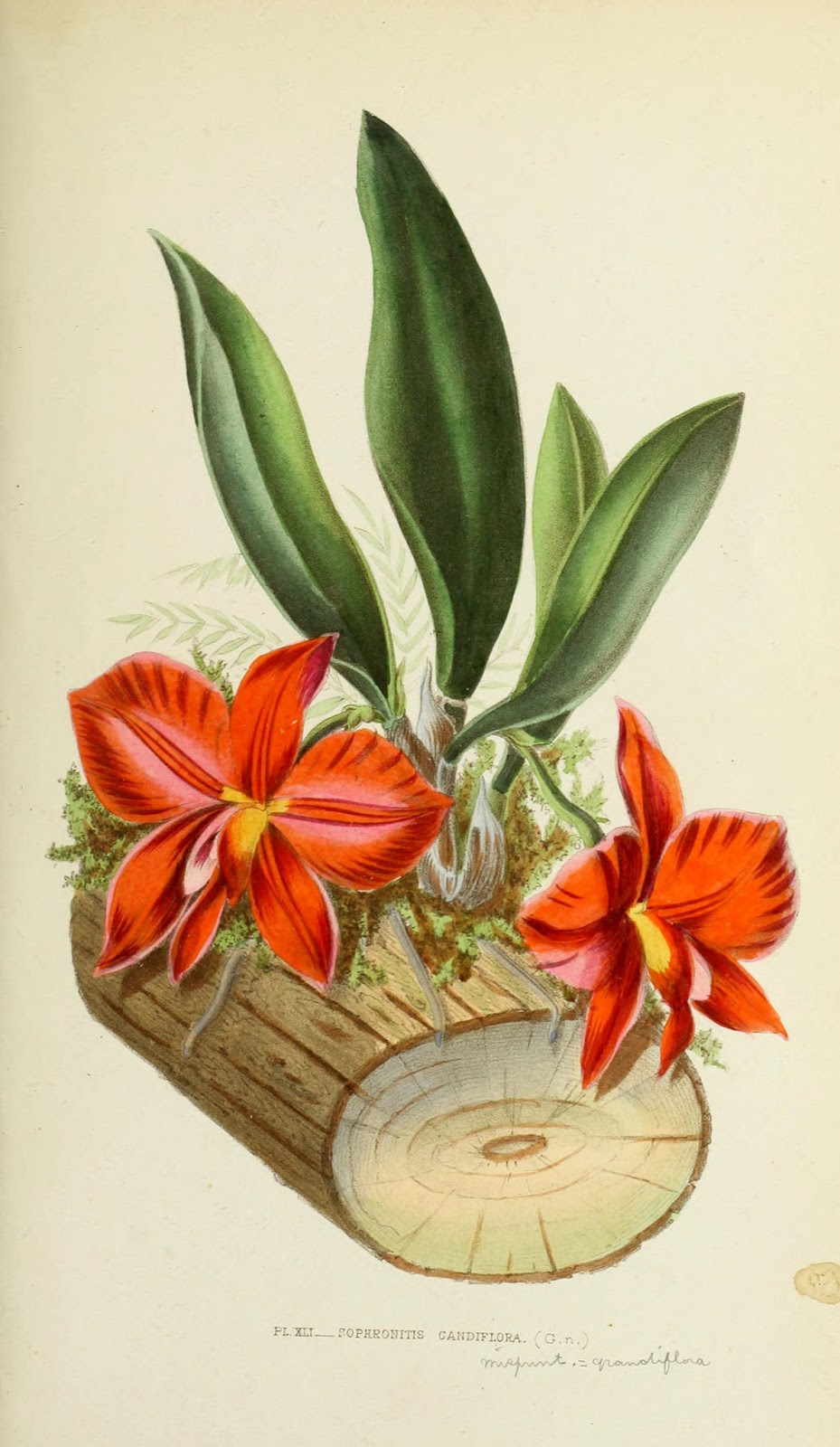
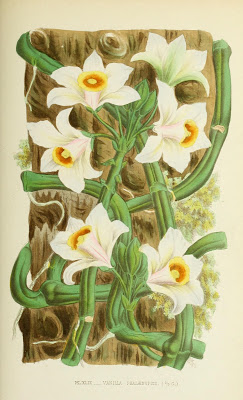
De Puydt’s book changed that. The more scholarly sections of Les orchidées are less than half the length of those in L’Orchidophile, yet they are filled with 237 black and white drawings of orchids, exotic locales, and greenhouses bursting with plants. The final section of Les orchidées contains fifty full-page chromolithographs (by M. Leroy and M. Guibert, of whom little is known) of cultured orchids accompanied by elegant descriptions of each species. De Puydt put his writing talents to great use, describing the orchid species as “beautiful (belle),” “magnificent (magnifique),” “pretty (jolie),” and “very splendid (plus slendide).” The book received awards from the Société d’Acclimatation de Paris and the Société centrale d’Horticulture de Paris.

View Full Size Image
Puydt, Émile de. Les orchidées, histoire iconographique, organographie, classification, géographie, collections, commerce, emploi, culture, avec une revue descriptive des espèces cultivées en Europe. 1880. Digitized by Harvard University Botany Libraries. http://biodiversitylibrary.org/page/43644233.

Following de Puydt’s book, another Belgian botanist specializing in orchids, Jean Jules Linden, began publication of Lindenia: iconograhie des orchidées in 1885. With lavish illustrations and short 1-2 page hints to growers, the work was quickly translated into English and published to reach an even more general audience of orchid-lovers. Linden highlighted orchids available through his business L’Horticulture Internationale as well as commonly cultivated species and new discoveries.

A modern review of Les orchidées, published in 1973, notes that the descriptions of the orchids in this work lack sufficient scientific and cultural details to be a good resource for modern growers. The review author also criticized the limitations of the drawings and considers the value of the book to be primarily for book collectors. While Les orchidées may not be as detailed as L’Orchidophile or as colorful as Lindenia, it is a well written and beautiful historical overview during the time of “Orchidelirium.”

View Full Size Image
Puydt, Émile de. Les orchidées, histoire iconographique, organographie, classification, géographie, collections, commerce, emploi, culture, avec une revue descriptive des espèces cultivées en Europe. 1880. Digitized by Harvard University Botany Libraries. http://biodiversitylibrary.org/page/43644277.

Paul Émile de Puydt (1810-1891) was born and died in Mons, a small city in western Belgium where his father served for four years as governor of Hainaut province. De Puydt founded the horticulture society of Mons and published many articles in scientific journals and newspapers on horticulture.

De Puydt did not confine his interests to botany. He was a writer, novelist, playwright, and political theorist. He coined the term “panarchy” or competitive government, where people choose the government in which they want to be a citizen. Different forms of government compete for citizens in an open market and more than one form of government can exist in the same locale. In modern times, the term panarchy also refers to a conceptual framework to understand stability and change of complex systems.

View Full Size Image
Puydt, Émile de. Les orchidées, histoire iconographique, organographie, classification, géographie, collections, commerce, emploi, culture, avec une revue descriptive des espèces cultivées en Europe. 1880. Digitized by Harvard University Botany Libraries. http://biodiversitylibrary.org/page/43644309.

Resources

  • De Puydt, Émile. Les orchidées, histoire iconographique, organographie, classification, géographie, collections, commerce, emploi, culture, avec une revue descriptive des espèces cultivées en Europe. http://dx.doi.org/10.5962/bhl.title.77404
  • du Buysson, François. L’Orchidophile: traité théorique et pratique sur la culture des Orchidées. http://dx.doi.org/10.5962/bhl.title.15493
  • Linden, Jean Jules. Lindenia: iconograhie des orchidées. http://dx.doi.org/10.5962/bhl.title.64391

Bibliography

  • American Orchid Society. http://www.aos.org/about-us/affiliated-societies.aspx. Accessed 1/11/2017.

  • Comte de Kerchove de Denterghem (1891). “P.E. de Puydt.” Revue d’lhorticultre belge et etrangere. Vol. 17, 147-151.
  •  De Puydt, Paul Emile. Wikipedia. https://en.wikipedia.org/wiki/Paul_%C3%89mile_de_Puydt. Accessed 1/11/2017.
  • Duveen, Denis I. (1973). “Les Orchidees: Histoire Iconographique by E. de Puydt.” Bulletin of the American Orchid Society. Vol. 42, No. 7, pgs. 627-629.
  • Linden, Lucien (1881). “Paul Émile de Puydt.” L’Illustration horticole. v. 28, pg. 105-107.
  • Orchidaceae. Encyclopedia of Life. http://www.eol.org/pages/8156/overview. Accessed 1/11/2017.
  • Sustainable Scale Project. http://www.sustainablescale.org/ConceptualFramework/UnderstandingScale/MeasuringScale/Panarchy.aspx. Accessed 1/11/2017.
  • Zhou, Li (2015). “Orchidelirium, an Obsession with Orchids, Has Lasted for Centuries.” Smithsonian Magazine. http://www.smithsonianmag.com/smithsonian-institution/orchidelirium-obsession-orchids-lasted-centuries-180954060/#kro3ZxCy1rSpeL5J.99. Accessed 1/13/2017.
January 26, 2017by ulib-libraryjobs
Blog Reel

BHL Welcomes the Arboretum Library at the LA County Arboretum and Botanic Garden

Portrait version of the Biodiversity Heritage Library logo.
View Full Size Image

This quarter, the Biodiversity Heritage Library was pleased to welcome The Arboretum Library at the Los Angeles County Arboretum and Botanic Garden as its newest Affiliate. The BHL consortium, which has grown substantially over the past year, now consists of 17 Members and 16 Affiliates.

The Arboretum Library holds an extensive collection of books, magazines, government documents, pamphlets, and audio-visual materials covering a wide range of topics, including gardening and garden design, plant lore, medical botany, botanical art, ethnobotany, California native plant life, and Mediterranean-climate botany.

Twenty-four magazine titles published by the Los Angeles County Arboretum and Botanic Garden are already available through BHL as a result of The Arboretum Library Good Family Foundation Digitization Project, a collaboration between the Arboretum, BHL, and the Missouri Botanical Garden. The publications, dating back to the 1950s, include information about the institution’s history, Los Angeles area horticulture, and research conducted by Arboretum staff. The articles have been indexed for author, title, date, and subjects (including people and plant names), all of which are searchable.

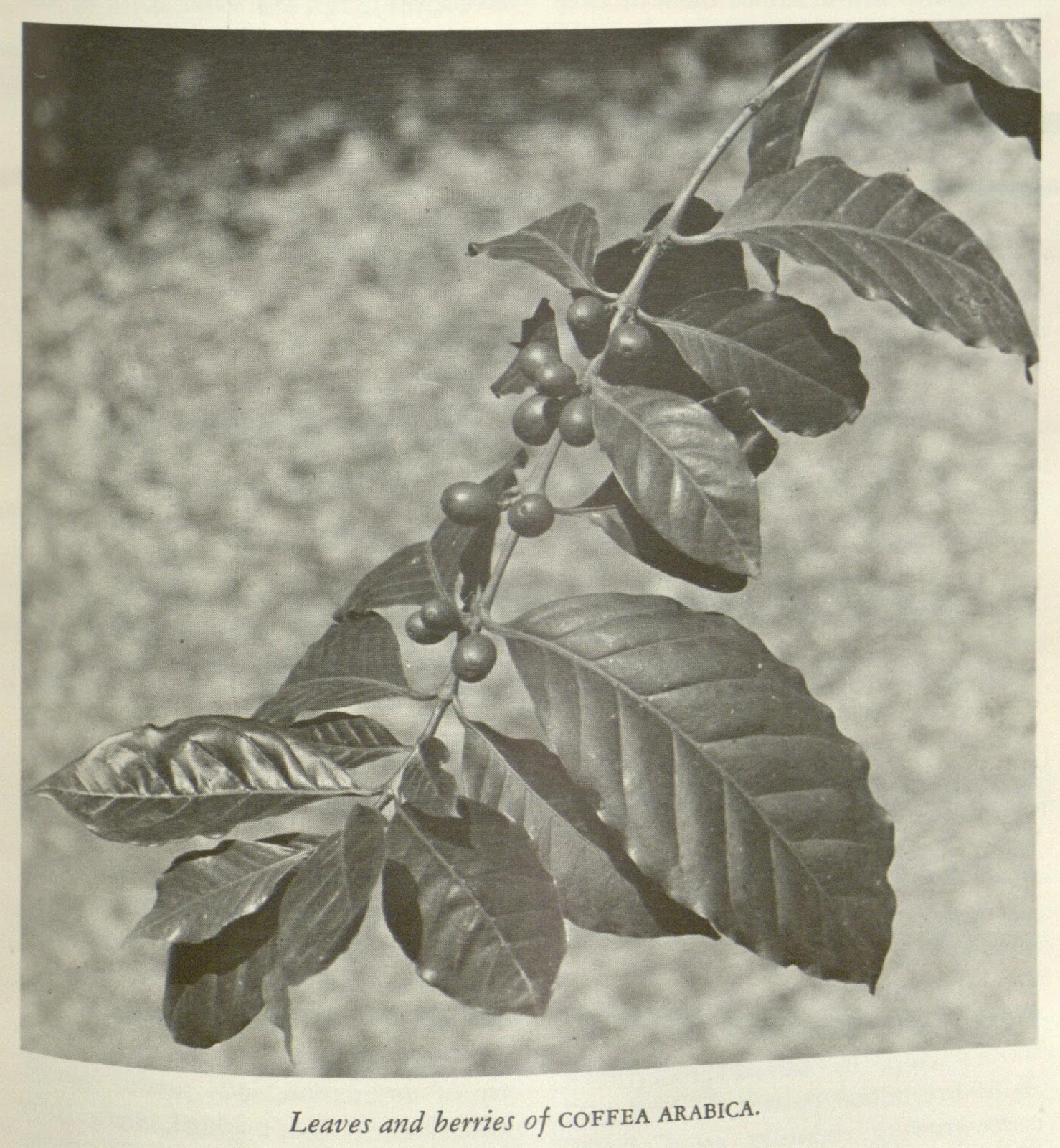
The articles in the Arboretum publications have both a scientific and popular appeal. For example, among the many interesting topics covered is the history of coffee, which Leonid Enari explores in the June 1976 issue of Lasca Leaves.

According to the article, coffee was used as food at least by 800 AD, but the “habit of coffee drinking seems to have started in Arabia in the 15th century” (Enari 1976). The first beverages created from the berries of the coffee plant were likely alcoholic, made from the pulp of the berries. It is unknown when the practice of roasting the seeds (beans) and using them to prepare today’s familiar coffee beverage was discovered, but its consumption in Europe was popularized through coffeehouses that were often regarded, particularly in England, by the church and state as “centers of political agitation.”

View Full Size Image
Leaves and berries of Coffea arabica. Enari, Leonid. “Coffee.” Lasca Leaves. v. 26 (1976). http://www.biodiversitylibrary.org/page/41846781. Digitized by the Missouri Botanical Garden. CC-BY-NC-SA.

The Arabian coffee tree (Coffea arabica) is used for the majority of the world’s commercial coffee production. The all-important coffee beans are the seeds of the coffee plant (found inside the plant’s fruit) which have been dried and roasted. After being roasted and ground, coffee will lose most of its aroma and flavor within 10 days. You can learn more about the history of coffee and its commercial production in the Lasca Leaves article.

The existing and future contributions from the Arboretum Library will provide valuable access to information about the history of botany and horticulture, botany in Southern California, and the Arboretum’s impact on these research areas. We look forward to working with our newest Affiliate to enhance BHL’s collections and expand our service to the global botanical, horticultural, and wider research communities.

January 11, 2017by michelle.underhill
Blog Reel, Featured Books

Michał Piotr Boym’s Flora sinensis, fructus floresque humillime [Flora of China, fruits and flowers].

View Full Size Image
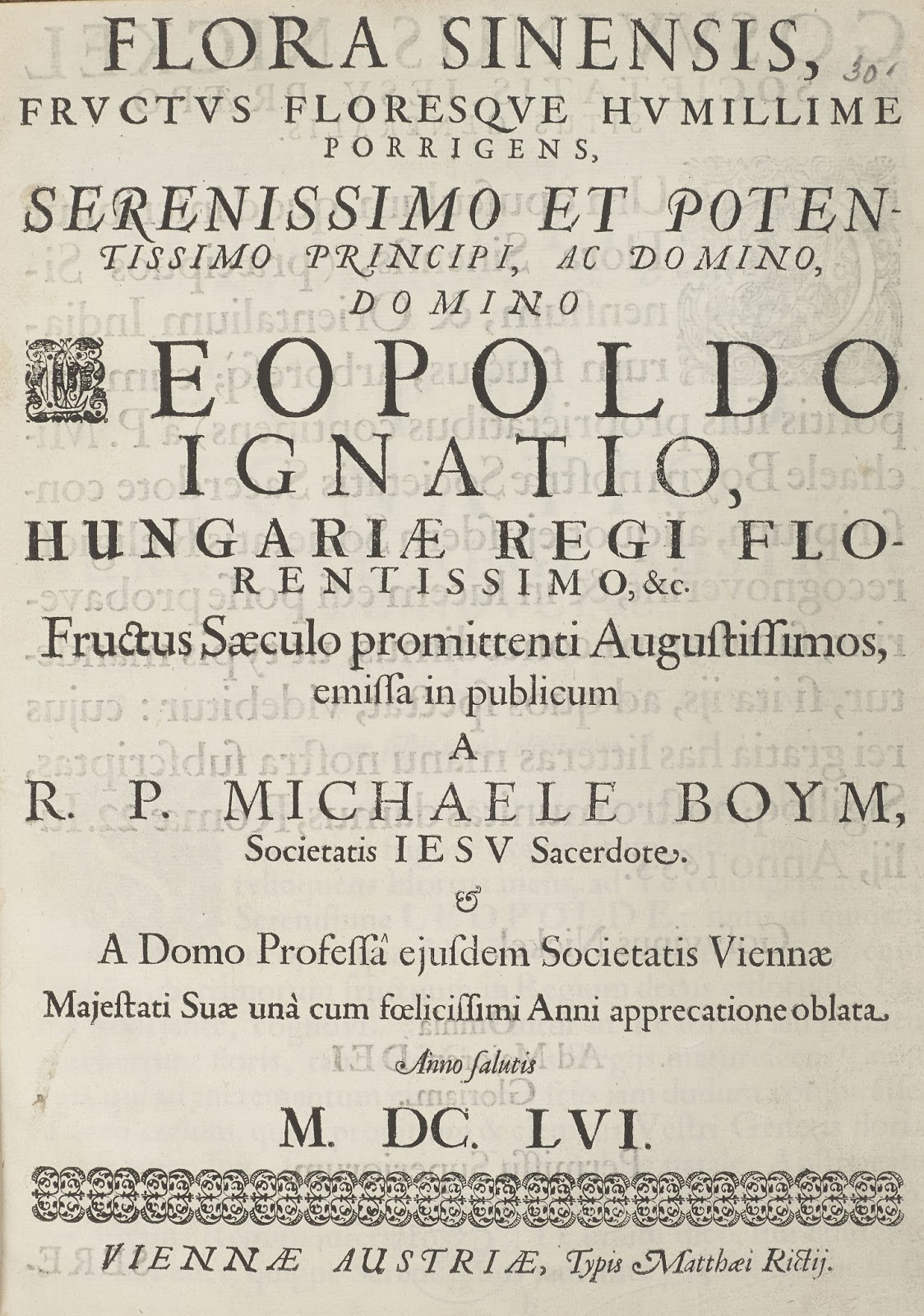
Fig. 1. Title Page. Boym, Michał Piotr. Flora sinensis. 1656. Digitized by Royal Botanic Gardens Kew, Library, Art & Archives. http://www.biodiversitylibrary.org/page/52239363.

Flora sinensis is one of the first natural history books on China by a European. Authored by Michał Piotr Boym, it was published in 1656 by Matthæi Rictii in Vienna. Boym dedicated it to Leopold I (1640-1705), Holy Roman Emperor, King of Hungary and Croatia, King of Bohemia and King of Serbia, and included a poem incorporating chronograms alluding to his coronation date, 1655.

View Full Size Image
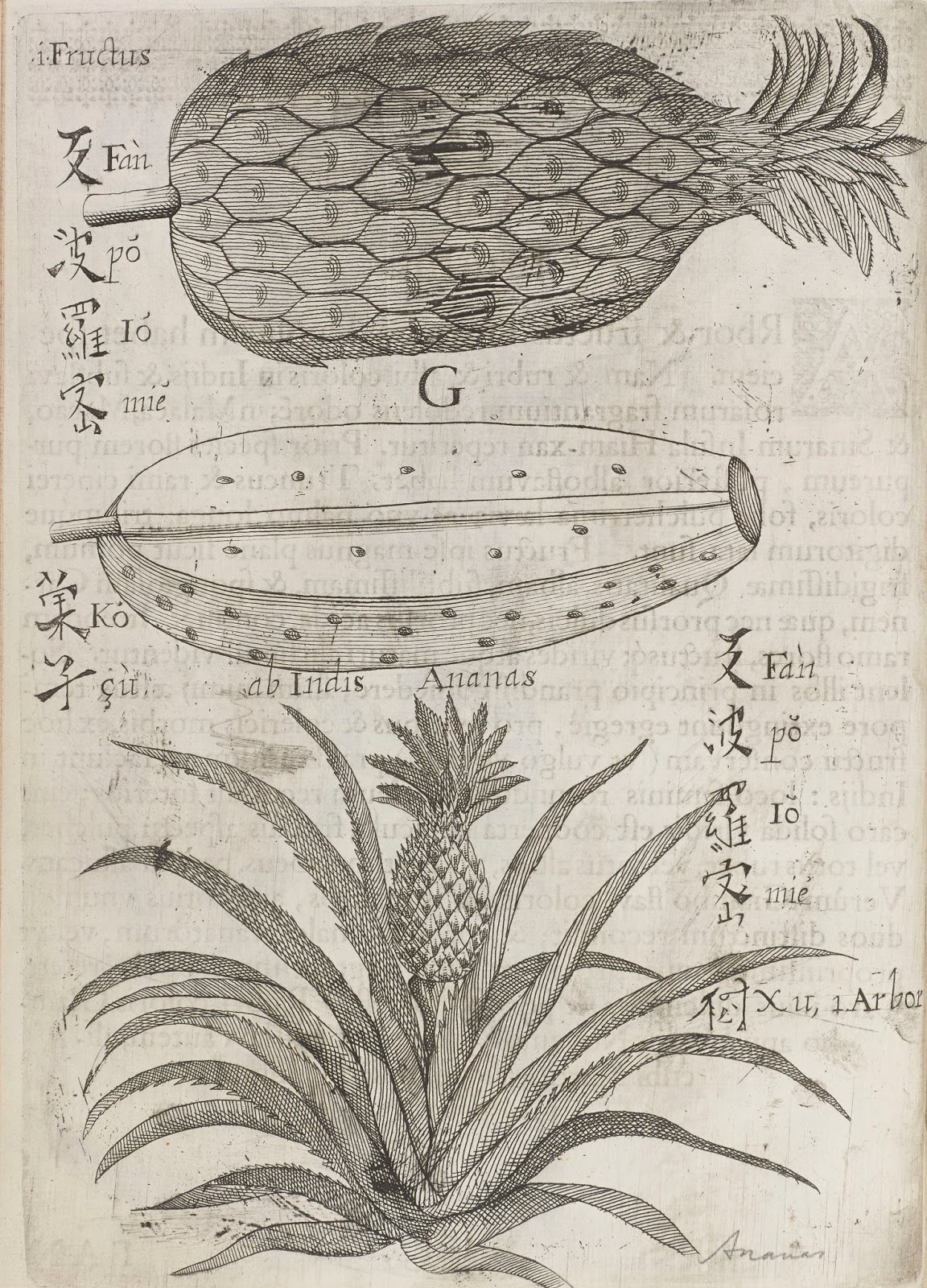
Fig. 2 Ananas (pineapple). Boym, Michał Piotr. Flora sinensis. 1656. Digitized by Royal Botanic Gardens Kew, Library, Art & Archives. http://www.biodiversitylibrary.org/page/52239334.

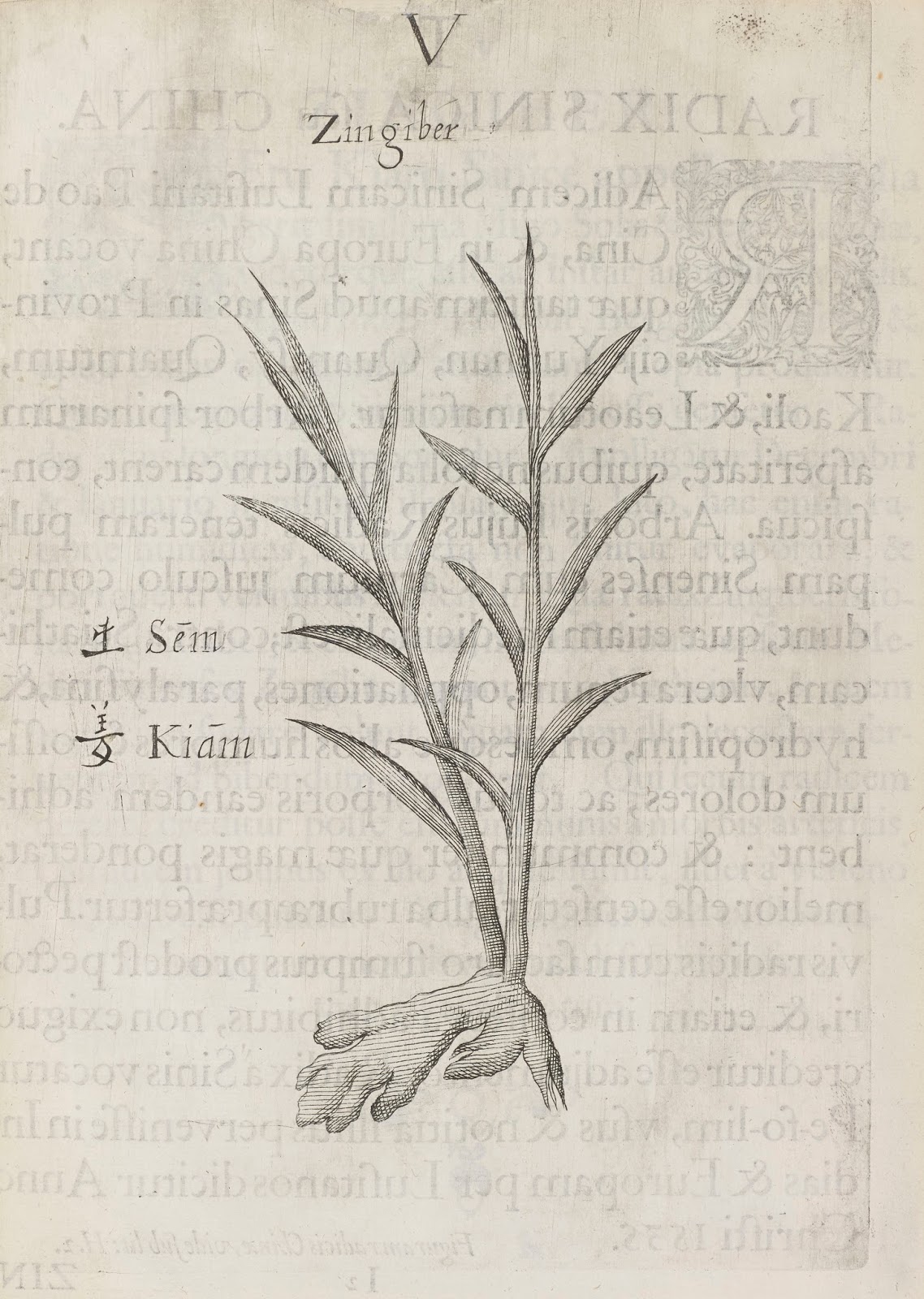
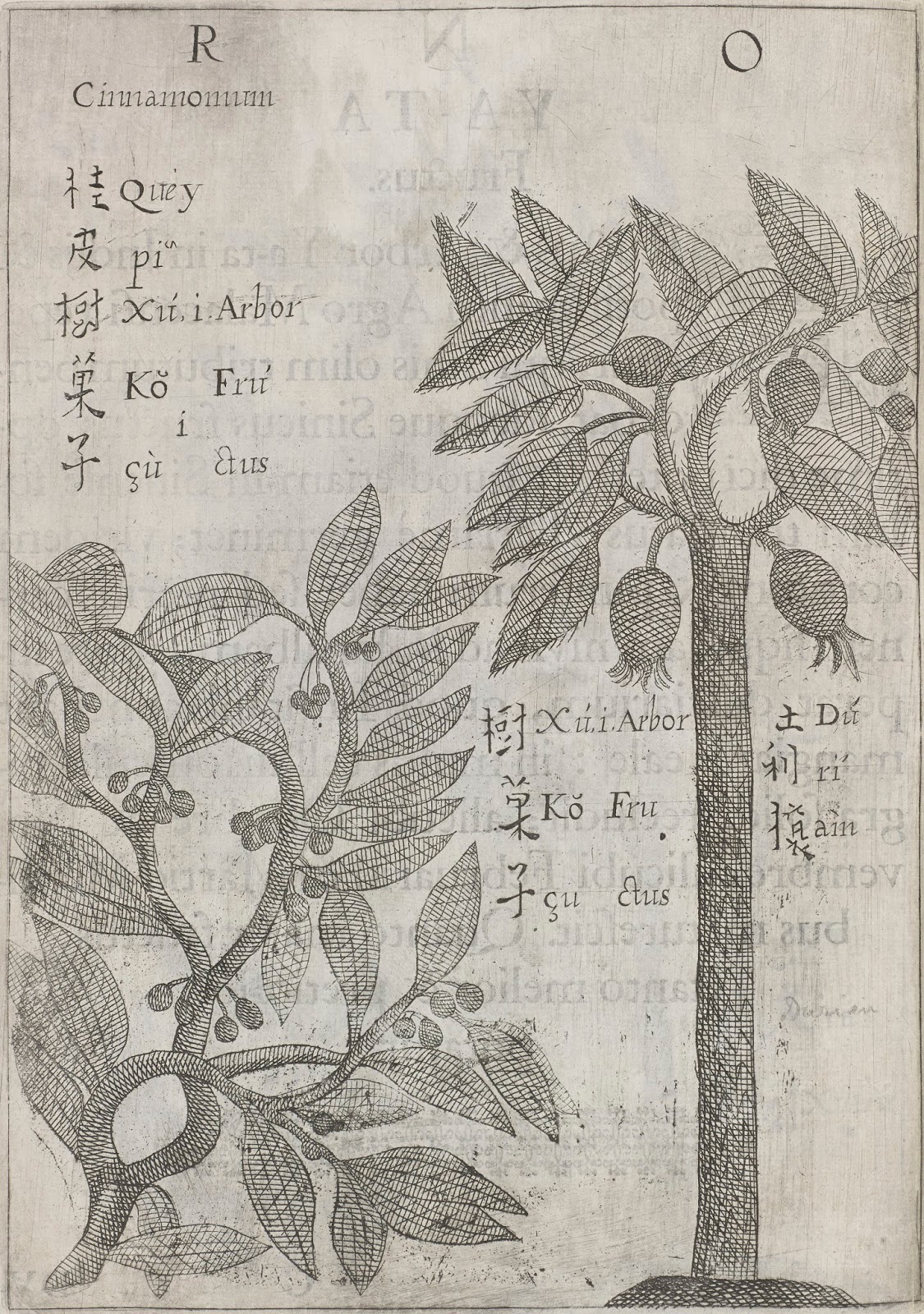
Augustin Pyramus, a Swiss Botanist, identified Boym as the first person to use ‘flora’ to define the plants of a particular region, habitat or geological period. Despite the title, it contains some animals, as well as a selection of choice plants, some of which are non-Chinese natives introduced from the Americas in the previous century, including guava (Psidium), papaya (Carica) and pineapple (Ananas) (fig. 2). Others, including cinnamon (Cinnamomum) (fig. 9), ginger (Zingiber) (fig. 3) and pepper (Piper), were important commodities of the spice trade.

View Full Size Image
Fig. 3. Zingiber (ginger). Boym, Michał Piotr. Flora sinensis. 1656. Digitized by Royal Botanic Gardens Kew, Library, Art & Archives. http://www.biodiversitylibrary.org/page/52239318.

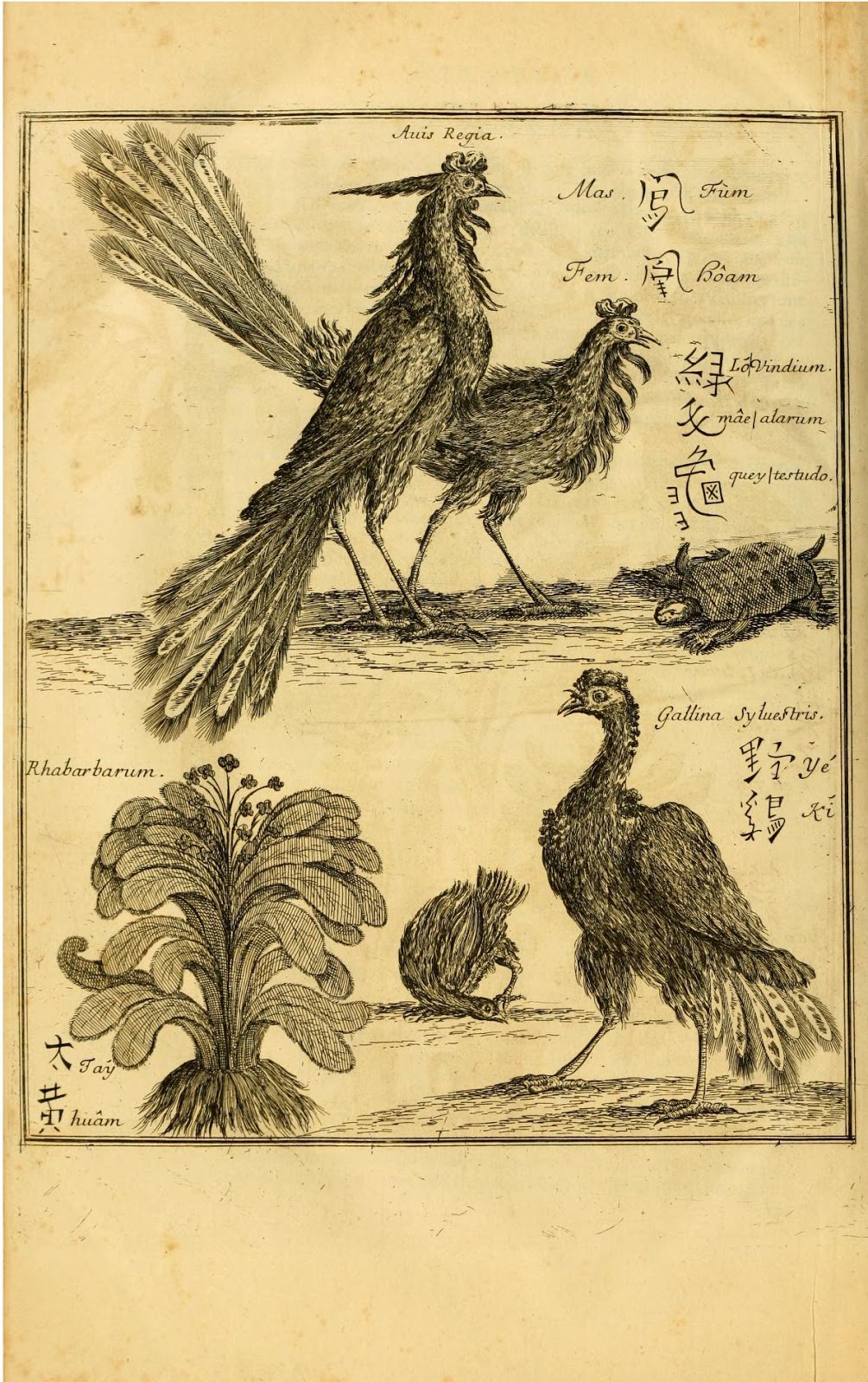
Flora sinensis contains 48 pages of text and 23 black and white woodcut illustrations, 17 of plants, five of animals and one of a Nestorian Stele. Boym describes each species, its physical characteristics, common names, geographical distribution and medicinal virtues. The plates have titles in Chinese, transliterated into Latin, and in the Kew Gardens copy most of the Latin plant names have also been added to genus level.

Whilst the book was originally published uncoloured, some rare hand-coloured copies exist, notably at the Natural History Museum in London, Université de Namur, and SLUB Dresden.

View Full Size Image
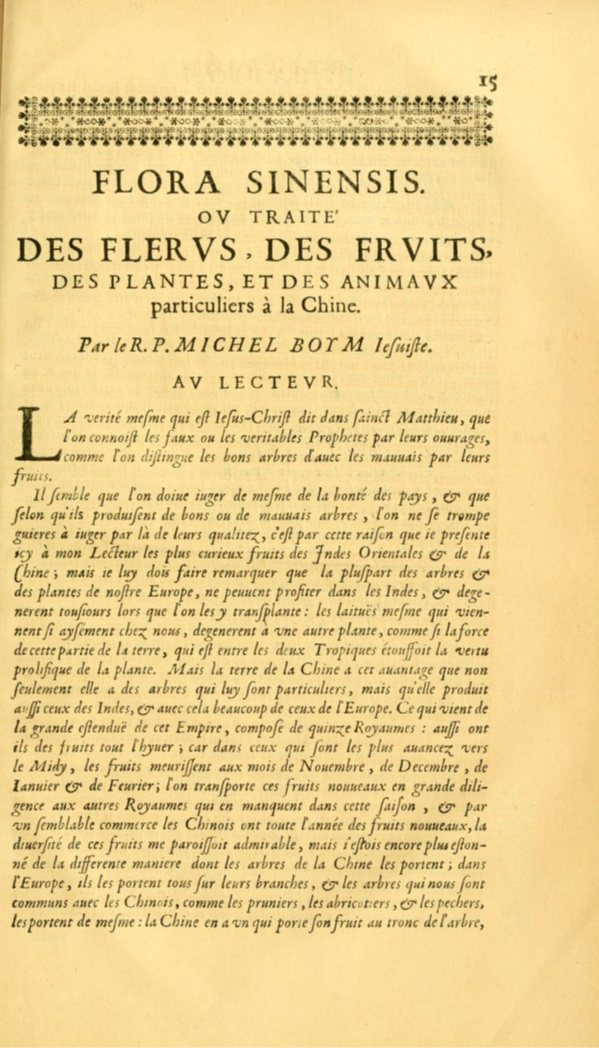
Fig. 4. Flora sinensis 1696, French edition title page. Digitized by Boston Public Library. http://www.biodiversitylibrary.org/page/25193368.

In 1664, Melchisédech Thévenot published a 15 page French translation, Flora Sinensis, ou traité des fleurs, des fruits, des plantes et des animaux particuliers à la Chine In: Relations de divers voyages curieux : qui n’ont point esté publiées, est qu’on a traduit or tiré des originaux des voyageurs françois, espagnols, allemands, portugais, anglois, hollandois, persans, arabes & autres orientaux, the 1696 edition of which is available on BHL.

View Full Size Image
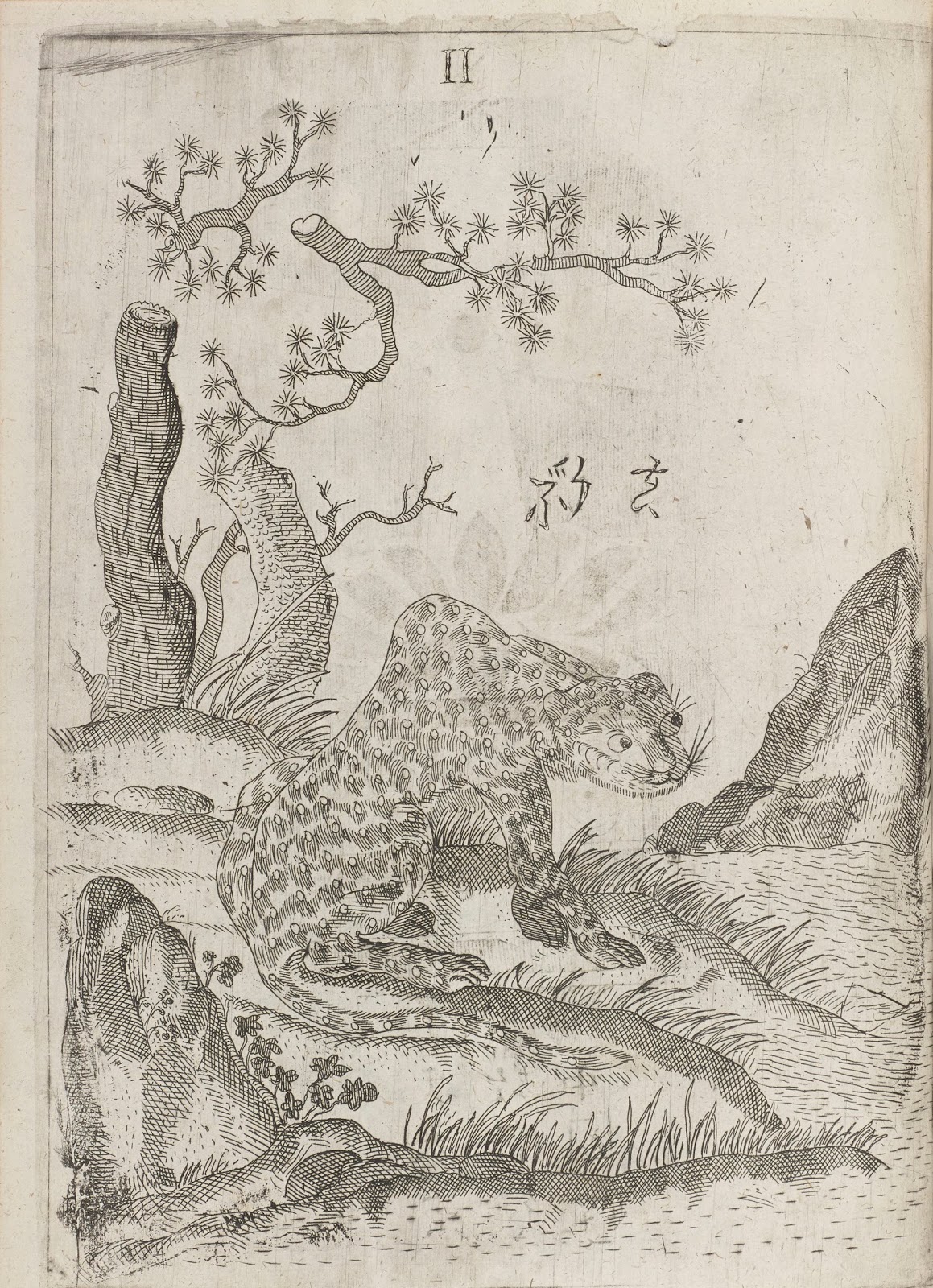
Fig. 5. Chinese leopard missing from the 1664 French edition. Boym, Michał Piotr. Flora sinensis. 1656. Digitized by Royal Botanic Gardens Kew, Library, Art & Archives. http://www.biodiversitylibrary.org/page/52239371.

Unfortunately the illustrations in this edition appear to be composites derived from the originals and some, notably the Chinese leopard (fig. 5), are not included. Flora sinensis was also the source for much of the natural history content of Athanasius Kircher’s China illustrata (1667).

View Full Size Image
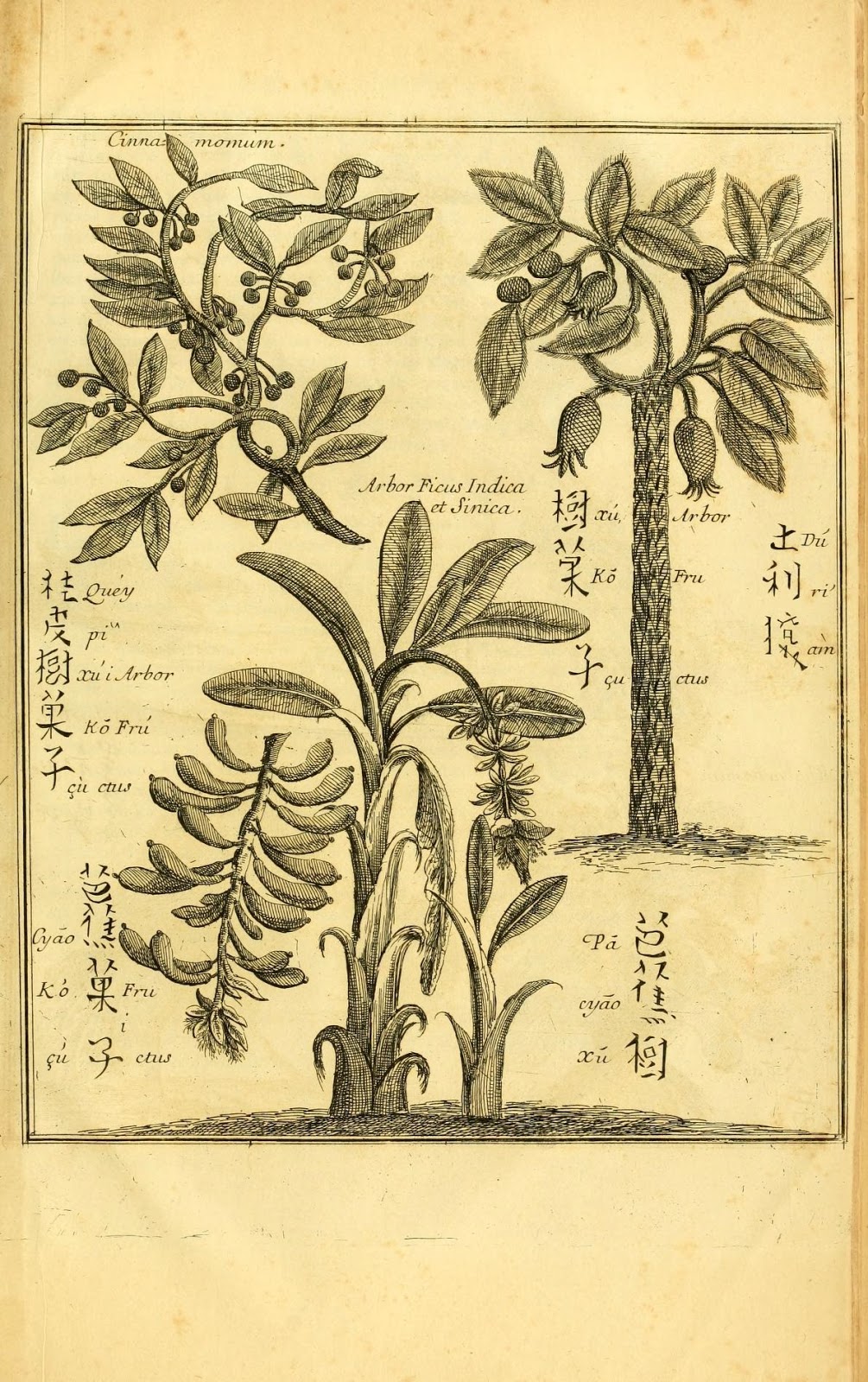
Fig. 6. Composite plate of Cinnamomum, Musa (bananas) and an un-named plant. Flora sinensis, 1696 French edition. Digitized by Boston Public Library. http://www.biodiversitylibrary.org/page/25193501.

Michał Piotr Boym was born the son of a wealthy merchant in Lwów, Poland in 1612. He joined the Jesuits in 1629 and was ordained in 1641. He sailed from Lisbon in 1643, reaching Macao, via Madeira, the Cape Verde Islands, Mozambique, the Bay of Bengal, Siam, and Goa, in 1647.

View Full Size Image
Fig. 7. Avis regia, Rhabarbarum (possibly rhubarb) and Gallina sylvestris. Flora sinensis, 1696 French edition. Digitized by Boston Public Library. http://www.biodiversitylibrary.org/page/25193697.

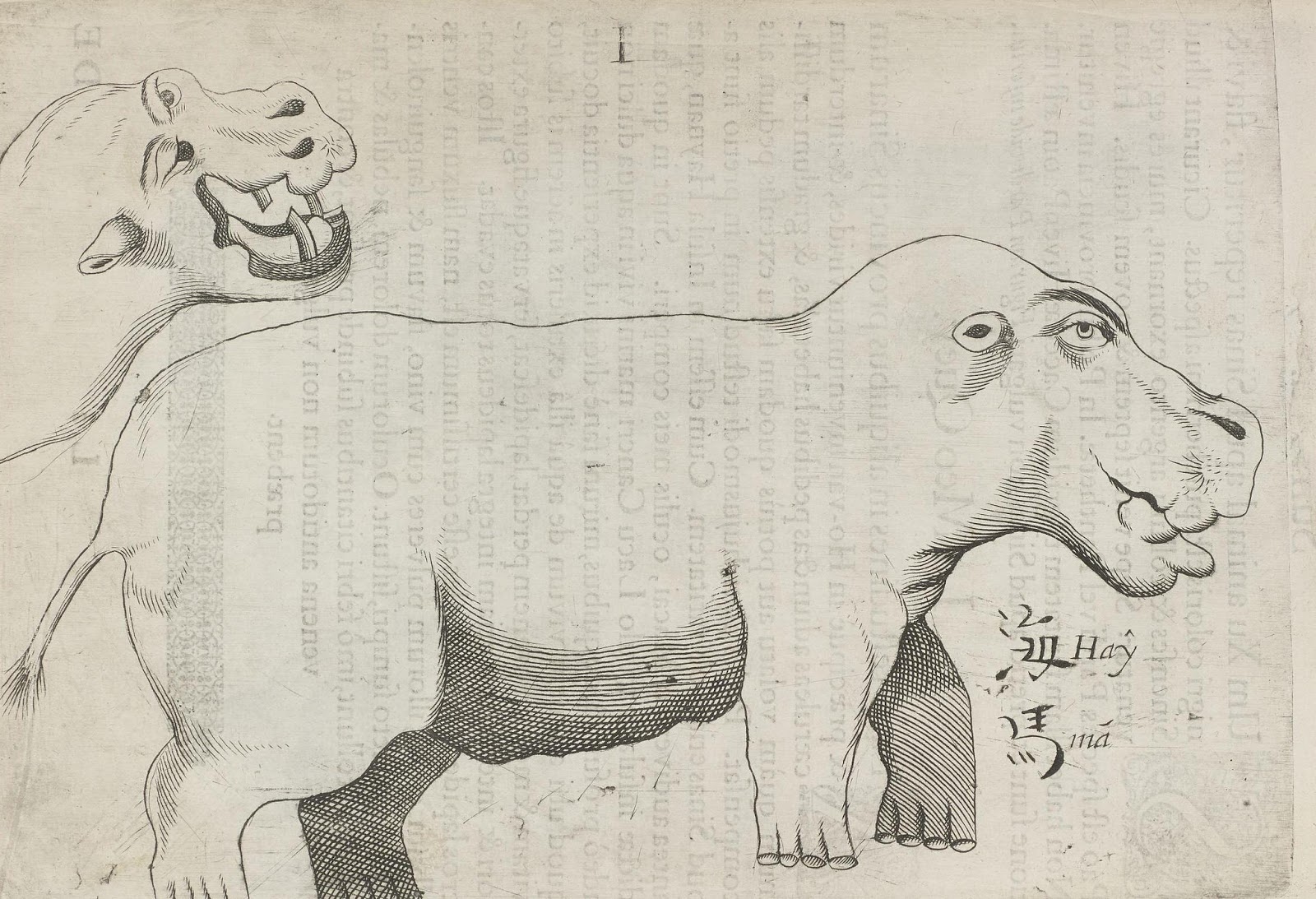
It was probably in Mozambique that he observed the hippopotamus, illustrated in Flora Sinensis (fig. 8), and wrote an account of the natural history of Mozambique, one of the oldest works on Africa in Polish (Cafraria: a P.M. Boym Polono Missa Mozambique 1644 Januario 11).

View Full Size Image
Fig. 8. Hippopotamus from the original 1656 edition. Boym, Michał Piotr. Flora sinensis. 1656. Digitized by Royal Botanic Gardens Kew, Library, Art & Archives. http://biodiversitylibrary.org/page/52239327.

Boym taught and studied Chinese in Macao and started to write on medicine, natural history and Chinese society after he moved to Hainan. It was there that he founded a mission, but had to flee to Tonkin when the Manchus invaded the island. He was then sent on a diplomatic mission to the court of the last Ming dynasty ruler, the Emperor Yongli, in Guangxi.

In 1650, Boym left Zhaoqing carrying letters from the court to Pope Innocent X, requesting support against the Manchus. He arrived in Venice in 1652, where he began work on various publications, including Flora sinensis and Fondo Borgia Cinese 531. (The latter unpublished collection of 18 maps is still in the Vatican Library, and includes the first European map to include Korea as a peninsula, not an island. It also features Chinese topography and Chinese and transliterated place names). He finally reached Rome in 1653, but it was not until 1655 that he was granted an audience with Pope Alexander VII.

In 1656, Boym set out again from Lisbon to China, but only four of the eight priests accompanying him survived as far as Goa and the news from the Chinese court was ominous. He persevered, arriving in Siam in 1658, but died on 22 June 1659 somewhere in the province of Guangxi before reaching the emperor’s court. He has no known grave.

View Full Size Image
Fig. 9. Cinnamomum (cinnamon) on left. Boym, Michał Piotr. Flora sinensis. 1656. Digitized by Royal Botanic Gardens Kew, Library, Art & Archives. http://www.biodiversitylibrary.org/page/52239309.

One of the plants described by Boym is a favourite Christmas spice. The rich spicy flavour of cinnamon (fig. 9) is a Christmas ingredient in recipes such as cakes, puddings, mince pies, Zimtsterne (Christmas stars), lebkuchen, mulled wine and glühwein. It was also used in medicine and as an ingredient of oils and perfumes.

Early trade in cinnamon to the Roman and Greek empires was controlled by Arab traders, who kept the source secret. It was thought, by both Herodotus and Theophrastus (4th and 5th century BC) to have come from Arabia, and locating the source was an ambition of 15th and 16th century European explorers.

In the 13th and 14th centuries, Venetian traders controlled the cinnamon trade in Europe until the Portuguese broke their monopoly when they arrived in Sri Lanka (then Ceylon) in the early 1500s, when cinnamon was one of the most highly prized and valuable spices in Europe. The Dutch expelled the Portuguese from the island in the mid 17th century, monopolising the trade and maintaining cinnamon’s rarity by refusing to allow commercial farming until the 1770s. The East India Company obtained control in 1796, when the Dutch were ousted, and retained it until 1833, when the cinnamon trade was opened to all.

Cinnamon is the prepared bark of Cinnamomum verum (synonym C. zeylanicum Bl., Laurus cinnamomum) in the family Lauraceae. It is indigenous to Sri Lanka and south India and widely cultivated in Sri Lanka (approximately 80% of total output), Indonesia, Java, Seychelles, Madagascar, South West Indies, Brazil, Martinique, and Jamaica.

Other items written by Boym include:

  • The first Chinese-Latin and Chinese-French dictionaries (1667).
  • Clavis medica ad Chinarum doctrinam de pulsibus. Nuremberg: Wolfgang Moritz Endter, 1686.
  • Specimen Medicinæ Sinicæ sive Opuscula Medica ad Mentem Sinensium Continens. A. Cleyer, ed. Francofvrti: Sumptibus Joannis Petri Zubrodt, 1682.

Bibliography:

  • Lehner, M. & Lehner, G. (2016) M.Boym: Flora Sinesis [online]. Bibliotheca Sinica 2.0. [Accessed 12 December 2016].
  • Davidson, A. (2006). The Oxford companion to food. 2nd ed. Oxford: Oxford University Press, p.186-187.
  • Hart, A. (2015). Michał Piotr Boym: Flora Sinensis In: J. Magee, ed., Rare treasures from the Library of the Natural History Museum. 1st ed. London: NHM, p. 38-45.
  • Jeong, S. (2016). The Silk Road Encyclopedia. Irvine, California: Seoul Selection. [Accessed 12 December 2016].
  • Rema, J. &. (2008). Cinnamon and cassia. In: V. P. Parthasarathy ed., Spice crops, Volume 2, tree spices. New Delhi: Today & Tomorrow’s, p. 29-75.
  • Van Wyk, B. E. (2013). Culinary herbs and spices of the world. Kew: Royal Botanic Gardens, Kew, p. 104.
December 22, 2016by ulib-libraryjobs
Blog Reel, User Stories

Poetic Botany: A Digital Exhibition Celebrating the History of Botany

View Full Size Image
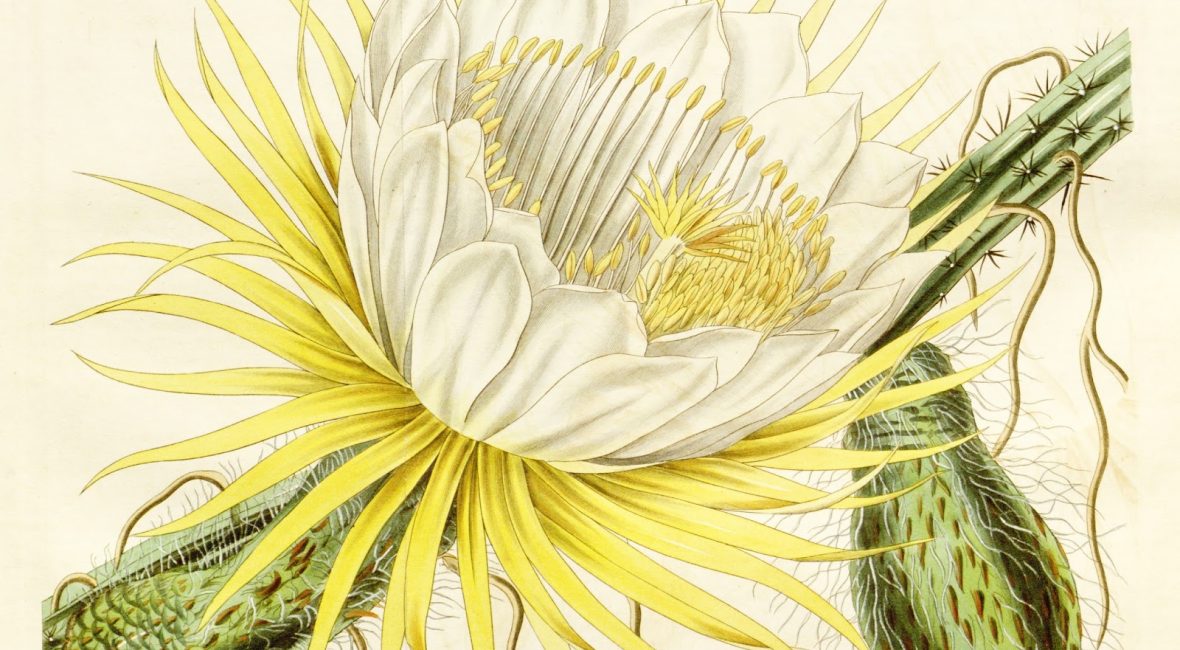
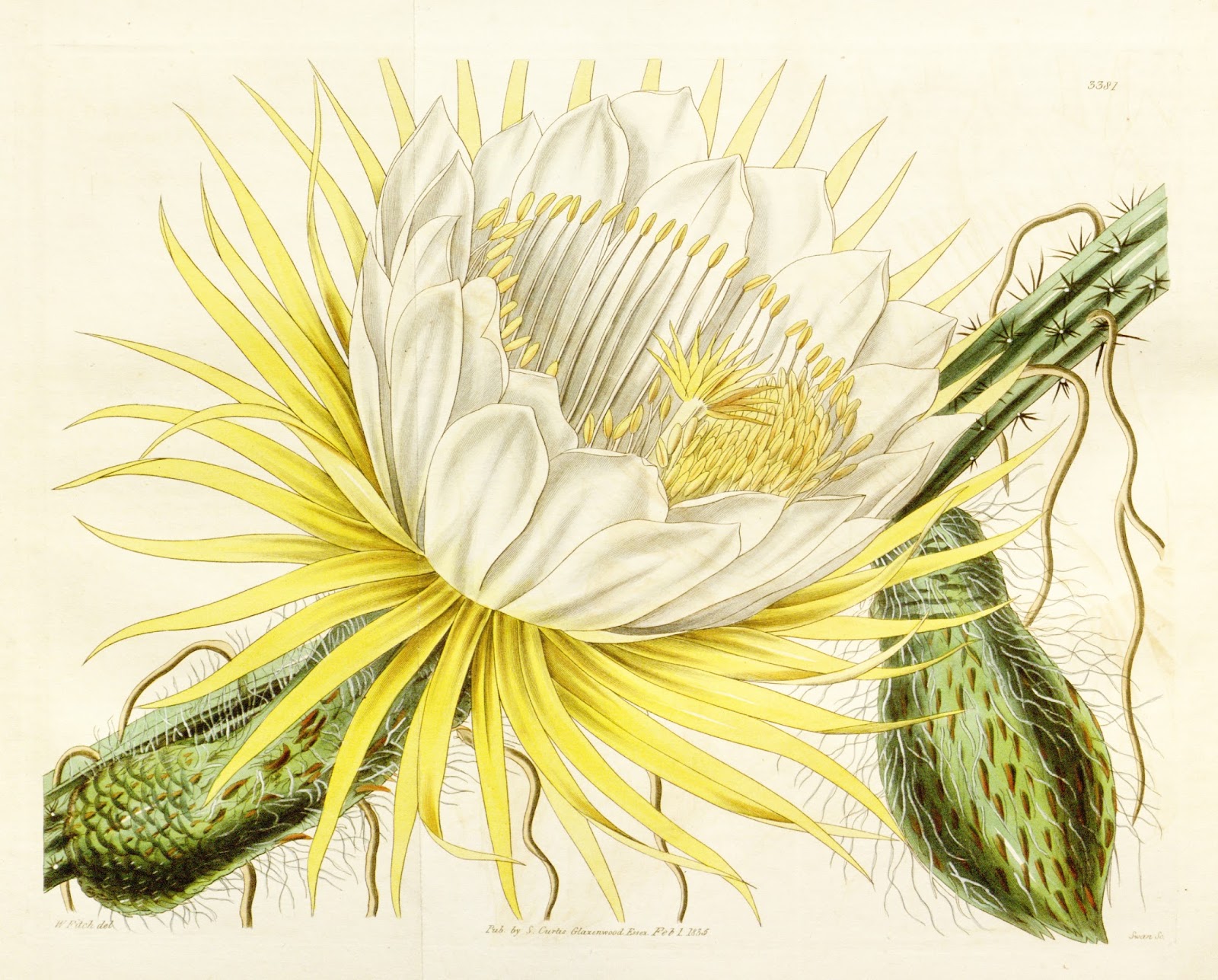
Night-blowing (Blooming) Cereus (Selenicereus grandiflorus). Curtis’s Botanical Magazine. v. 62 (1835). http://www.biodiversitylibrary.org/page/465887. Digitized by the Missouri Botanical Garden, Peter H. Raven Library.

‘Queen of the dark, whose tender glories fade
In the gay radiance of the noon-tide hours.’

‘That flower, supreme in loveliness, and pure
As the pale Cynthia’s beams, through which unveiled
It blooms, as if unwilling to endure
The gaze, by which such beauties are assailed.’

These elegant lines are quoted in Curtis’s Botanical Magazine (v. 62, 1835) as part of the description for the Night-blowing (Blooming) Cereus (Selenicereus grandiflorus) and serve as an artful conveyance of the species’ nocturnal blooming. But these lines represent more than just a whimsical representation of plant behavior. They are a reflection of the eighteenth century Poetic Botany movement that saw botany become the subject of poetry.

The Poetic Botany movement began with Erasmus Darwin, grandfather of Charles Darwin, who, in 1789, published The Loves of the Plants, a poem that in essence was a versification of Linnaean botany, where each plant in the garden is personified as a Greek god or goddess whose characteristics and interactions are meant to elucidate the Linnaean sexual system of plant classification. This highly successful poem was eventually republished along with a second poem by E. Darwin, The Economy of Vegetation, in 1791 as The Botanic Garden, A Poem in Two Parts, thus launching a movement that was proliferated by such authors as Frances Arabella Rowden, Charlotte Smith, and Robert John Thornton.

View Full Size Image
Frontispiece for the Digital Exhibition Poetic Botany: Art and Science of the Eighteenth-Century Vegetable World (2016). Credit: Ryan Feigenbaum.

Selenicereus grandiflorus is one of nine species featured in the online exhibition Poetic Botany. Using these plants as a lens through which to highlight the Poetic Botany movement, the exhibition introduces the botanists and works that constituted this period. These botanists were concerned with not just the art of their verse but also with the scientific study of their plant subjects, and thus the Poetic Botany movement reflects a beautiful union of art and science.

View Full Size Image
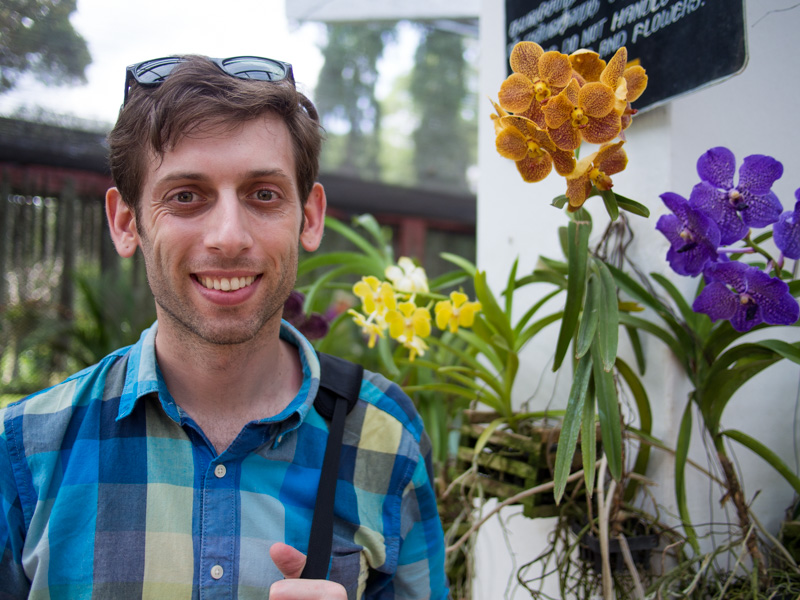
Ryan Feigenbaum at the Royal Botanical Gardens in Peradeniya, Sri Lanka. Credit: Madeline Chera, 2016.

The Poetic Botany exhibition was created by Ryan Feigenbaum as part of a 2015-2016 Andrew W. Mellon Fellowship at the Humanities Institute of the LuEsther T. Mertz Library of The New York Botanical Garden. NYBG, a founding BHL Member who has contributed over 3.9 million pages to the BHL collection, hosts the exhibit.

Feigenbaum, who has a BA in philosophy from DePaul University in Chicago, an MA in philosophy from Villanova University, and is currently completing a PhD in philosophy at Villanova University, researches the history and philosophy of biology. As evidenced through Poetic Botany, this research eventually led him down a botanical path.

“My dissertation, ‘The Epistemic Foundations of German Biology, 1790–1802,’ analyzes the emergence of biology as a science by tracing the genealogy of the organism concept,” explains Feigenbaum. “I came to the history of botany as an offshoot of this project; specifically, I was interested in the eighteenth-century opinion of plants, i.e., their ontological status. Whereas plants had long been regarded as devoid of intelligence, sensitivity, and locomotion, naturalists like Erasmus Darwin began to challenge these views, spurred on by the ‘discovery’ of plants like the Drosera and Mimosa pudica that challenged longstanding prejudices.”

Feigenbaum’s interest in the “life sciences” and the history of botany grew naturally out of his research on philosophy, for these two subjects have historically been intimately connected.

“The separation of philosophy and science is a relatively recent phenomenon,” affirms Feigenbaum. “Descartes, for instance, contributed to mathematics and physics beyond his cogito ergo sum, and much of Aristotle’s corpus focuses not on metaphysics or ethics but natural science. In this vein, I’ve been committed to studying not only eighteenth-century philosophy, but also its life science for the past five years or so. I say ‘life science’ because biology did not yet exist; the word ‘biology,’ in fact, was not used in its modern meaning until 1802. The how and why of biology’s emergence at this time is one focus of my dissertation.”

It was this extension into the ‘life sciences’ that eventually brought Feigenbaum to BHL.

“As my study of the history of philosophy incorporated more and more of the study of the history of science, BHL became a resource I relied on time and again,” asserts Feigenbaum. “At first I would search via Google for a particular eighteenth-century text, but I found it so often on BHL that I ended up using its website portal directly, sparing me the trouble of having to sift through Google results.”

BHL played an important role in the development of Poetic Botany, allowing Feigenbaum to discover and access relevant texts, many of which are linked from the exhibit.

“BHL provides smart access to knowledge that wouldn’t be otherwise available,” lauds Feigenbaum. “My favorite feature is the ability search by species. Since the digital exhibition is organized around species, this ability revealed new sources of which I’d been unaware. It is quite amazing that you can instantly see in which texts a species like Canna indica appeared according to date and then be taken to the exact pages of the reference. Without this resource, my workflow would have been much slower; it would’ve required me to visit multiple archives and search through texts one by one. While such an approach isn’t without its benefits, it inevitably limits what the researcher can do and extends the time required to do it.”

View Full Size Image
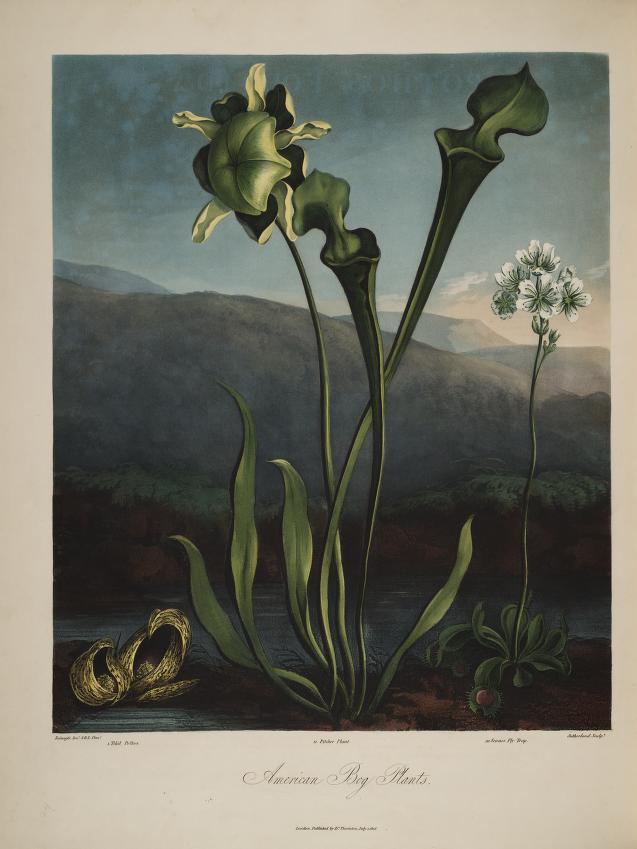
American bog plants: eastern skunk cabbage (Symplocarpus foetidus), yellow pitcherplant (Sarracenia flava), and Venus flytrap (Dionaea muscipula). Thornton, Robert John. New illustration of the sexual system of Carolus von Linnaeus. (1807) http://biodiversitylibrary.org/page/307056. Digitized by the Missouri Botanical Garden, Peter H. Raven Library.

While there are many texts featured in Poetic Botany, one of Feigenbaum’s favorites is John Thornton’s New Illustration of the Sexual System. According to Feigenbaum,

“This perennial favorite is often acclaimed for its indisputably beautiful illustrations, perhaps some of the most iconic in existence. However, the accompanying text is also marvelous, giving the reader insights into eighteenth-century botany, snippets of poetry, and whole disquisitions on culture, religion, and other topics.”

This title is also consistently a favorite among BHL’s online audiences. Thanks to the citizen science efforts of Michelle Marshall, this entire work has also been taxon tagged in Flickr, making it easy for you to identify and search for the species contained within it.

We encourage you to take some time to explore Poetic Botany and marvel at the elegant and profound union of art and science represented in the exhibit and texts. Who would have thought that poetry and science could fit together so naturally?

______________________________________

This post may contain the personal opinions of BHL users or affiliated staff and does not necessarily represent the official Biodiversity Heritage Library (BHL) position on these matters.

December 8, 2016by michelle.underhill
Blog Reel, Featured Books

Notes accompanying collection of useful plants made by W. J. Fisher at [Kodiak] in 1899

In honor of Native American Heritage Month, we would like to highlight a field book that documents Native American knowledge of natural resources. The field book was created by William J. Fisher, who lived in southern Alaska from 1879 until his death in 1903.

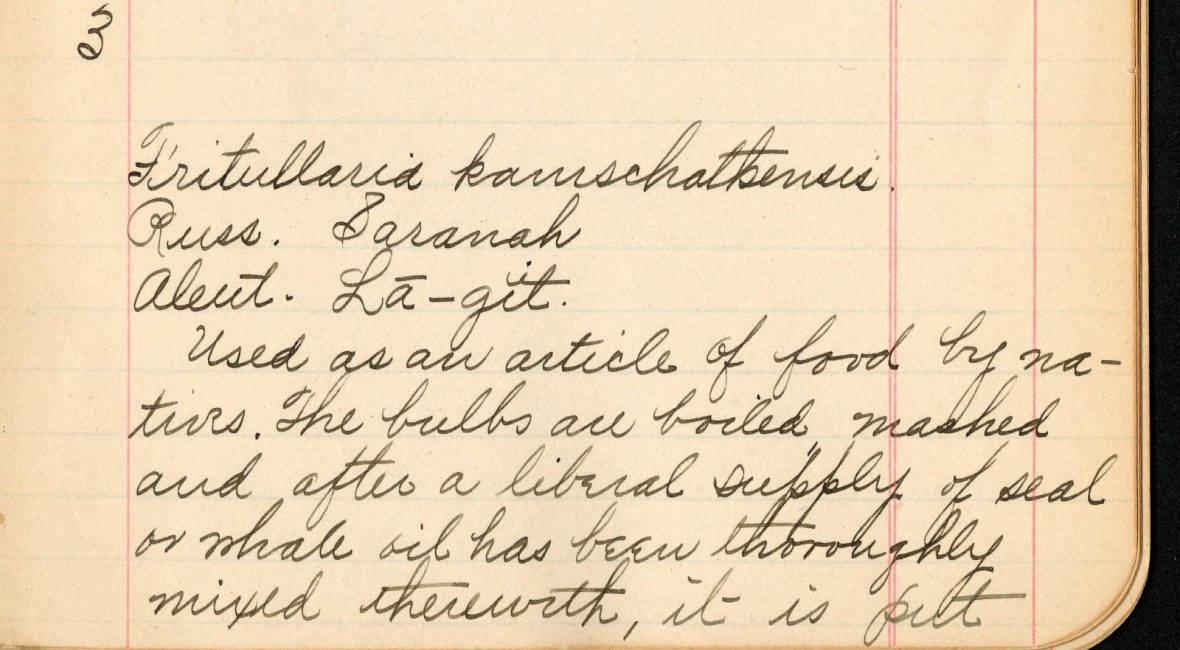
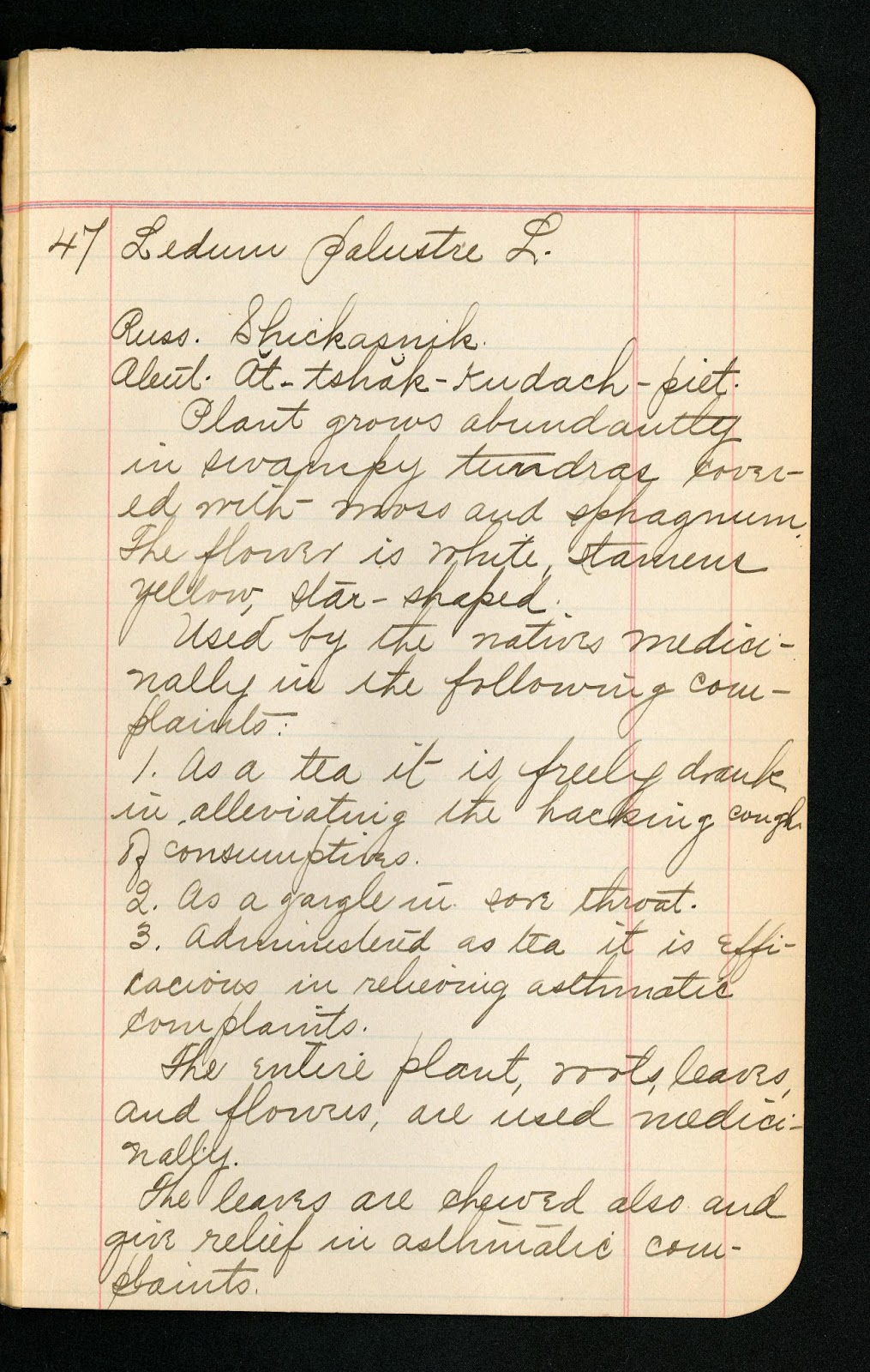
Fisher’s notebook documents his final years collecting and looks at the relationship between the Alutiiq (Aleut) and their plants by recording medicinal and food uses for 48 specimens. Only a handful of the specimen entries include the taxonomic names of plants; instead, entries focus on recording the Russian and Sugpiat/Alutiiq names of plants, how the plants were used, and plant distribution. Detail varies, as seen below in entries three and forty-seven.

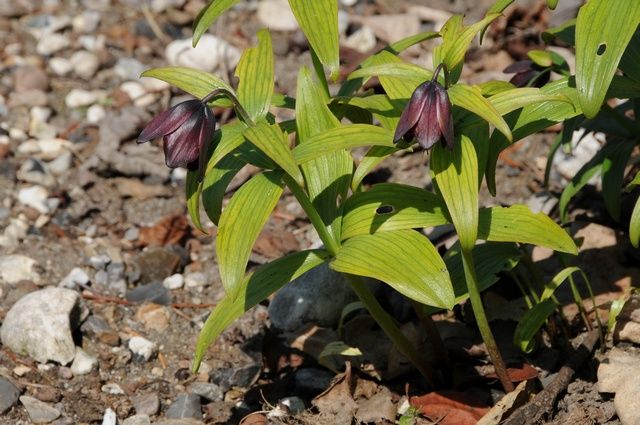
Entry three describes Fritullaria kamschathensis [Fritillaria camschatcensis], also known as the Kamchatka Fritillary, and lists general use and preparation: “Used as an article of food by natives. The bulbs are boiled mashed and after a liberal supply of seal or whale oil has been thoroughly mixed therewith, it is put away for winter’s use.”

View Full Size Image
Specimen entry three from “Notes accompanying collection of useful plants made by W. J. Fisher at [Kodiak] in 1899,” Smithsonian Institution Archives, SIA Acc. 12-038. http://www.biodiversitylibrary.org/page/46428854. Digitized by Smithsonian Institution Archives.
View Full Size Image
Image of Fritillaria camschatcensis from Encyclopedia of Life, provided by Biopix. http://eol.org/data_objects/19162439.

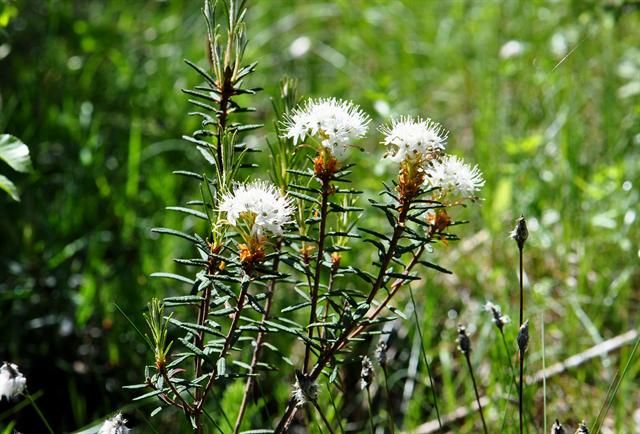
Entry forty-seven for Ledum palustre [Rhododendron tomentosum], also known as Northern Labrador Tea (also pictured below), takes up an entire page describing the plant’s habitat, the appearance of its flowers, and multiple local medicinal applications: “(1) As a tea it is freely drunk in alleviating the hacking cough of consumptives. (2) As a gargle in sore throat. (3) Administered as tea it is efficacious in relieving asthmatic complaints.”

View Full Size Image
Specimen entry forty-seven, from “Notes accompanying collection of useful plants made by W. J. Fisher at [Kodiak] in 1899,” Smithsonian Institution Archives, SIA Acc. 12-038. http://www.biodiversitylibrary.org/page/46428831. Digitized by Smithsonian Institution Archives.
View Full Size Image
Image of Rhododendron tomentosum (Northern Labrador Tea), from Encyclopedia of Life. Image by Biopix. http://eol.org/data_objects/19183248.

Fisher’s ethnographic focus while collecting plants is clear. The field book provides detailed information regarding local names and knowledge, but leaves out basic information often found in botany field books like date and detailed locality information. This lack of information may relate to a note Fisher wrote on the title page: “dried plants with Mr. Kearney, alcoholics in seed collection.” “Mr. Kearney” was Thomas Henry Kearney (1874-1956), a botanist with the Bureau of Plant Industry at the US Department of Agriculture (USDA). Kearney was in Alaska to work with Frederick Coville from April 1898 – August 1899, and along the Northwest Coast from Puget Sound to the Bering Strait in 1899. He then served as a member of the Harriman Alaska Expedition of 1899.

It is unclear how the two men became acquainted. Fisher had a relationship with the Smithsonian Institution; Coville as a USDA employee worked with Smithsonian, and perhaps he introduced the two. Whatever the reason, Kearney’s field notes for his work in Alaska are also available on BHL through the Smithsonian Field Book Project, and they provide a tantalizing overlap in content and geographical coverage.

A field book at the end of a collecting career

Fisher’s field book is also interesting because it document’s his collecting focus and interests as they evolved over a lifetime. Fisher’s initial scientific interest was in marine biology. During the 1870’s he was a curator of conchology at the California Academy of Sciences and served as a marine biologist for the U.S. Fish Commission on several cruises in the Pacific headed by William Healey Dall.

In 1879, Fisher accepted a position as tidal recorder in St. Paul, now known as the city of Kodiak, Alaska. After accepting the position, he wrote to Dall, who was affiliated with the Smithsonian Institution, and offered to collect natural history specimens. The offer was accepted, and Fisher was instructed that the museum was also interested in ethnographic artifacts from the region.

The town of St. Paul where Fisher settled was originally established by the Russians as a center for fur trading. By the time Fisher arrived, it was a town of approximately 500 residents, primarily of Russian and Native Alaskan heritage. According to an article in Arctic Anthropology (no. 1, 1992) the community was still significantly mixed regarding the adoption of European culture in terms of religion, language, and beliefs.

Fisher initially focused on collecting natural history specimens, but as he began to correspond with Smithsonian’s Secretary Spencer Baird, his interest and collecting shifted to ethnography. He even began to commission works by Native Alaskans. Fisher’s main source of income was his position as tidal recorder; Smithsonian was frequently unable to finance his work. This lack of funding apparently did not dim Fisher’s enthusiasm, but it did lead to financial hardship. During an extended collecting trip to Bristol Bay in the summer of 1885, his assistant successfully petitioned for Fisher’s job. Fisher’s collecting came to an end by the 1890’s; the ethnobotany field notes document the end of his work with the Smithsonian Institution.

Interested in learning more? We encourage you to learn about the William J. Fisher collection at the National Museum of Natural History, which was highlighted as part of a book Looking Both Ways: Heritage and Identity of the Alutiiq People, in the online exhibit featuring artifacts created by the Alutiiq people and collected by Fisher during his years in Alaska.

Other resources include:

Aron L. Crowell, 1992, Postcontact Koniag Ceremonialism on Kodiak Island and the Alaska Peninsula: Evidence from the Fisher Collection. Arctic Anthropology 29(1):18-37. Retrieved on November 16, 2016 from https://www.jstor.org/stable/40316240?seq=3#page_scan_tab_contents

Highlights of the William J. Fisher collection at the National Museum of Natural History: http://naturalhistory.si.edu/arctic/features/fisher/collect.html

The field books of William Healey Dall, available on Biodiversity Heritage Library: http://www.biodiversitylibrary.org/search?searchTerm=Dall+%22field+notes%22#/titles

Field Book Project blog post by Sonoe Nakasone: http://nmnh.typepad.com/fieldbooks/2012/02/sharing-culture-through-plants.html

November 22, 2016by ulib-libraryjobs
Blog Reel, Featured Books

A Local Focus: The Native Plant Societies of the U.S.

All over North America, there are organizations that study, preserve, and promote local flora. Called by various names, these organizations fall under the umbrella term “native plant societies.” While they are independent from one state or province to the next, and while some may have a particular focus, such as wildflowers, they have many similarities: their membership is comprised of professional botanists and amateur enthusiasts; they conduct surveys and field research focusing on a specific geographic region; they are actively involved in conservation; and they usually publish a newsletter to keep members apprised of society activities.

View Full Size Image
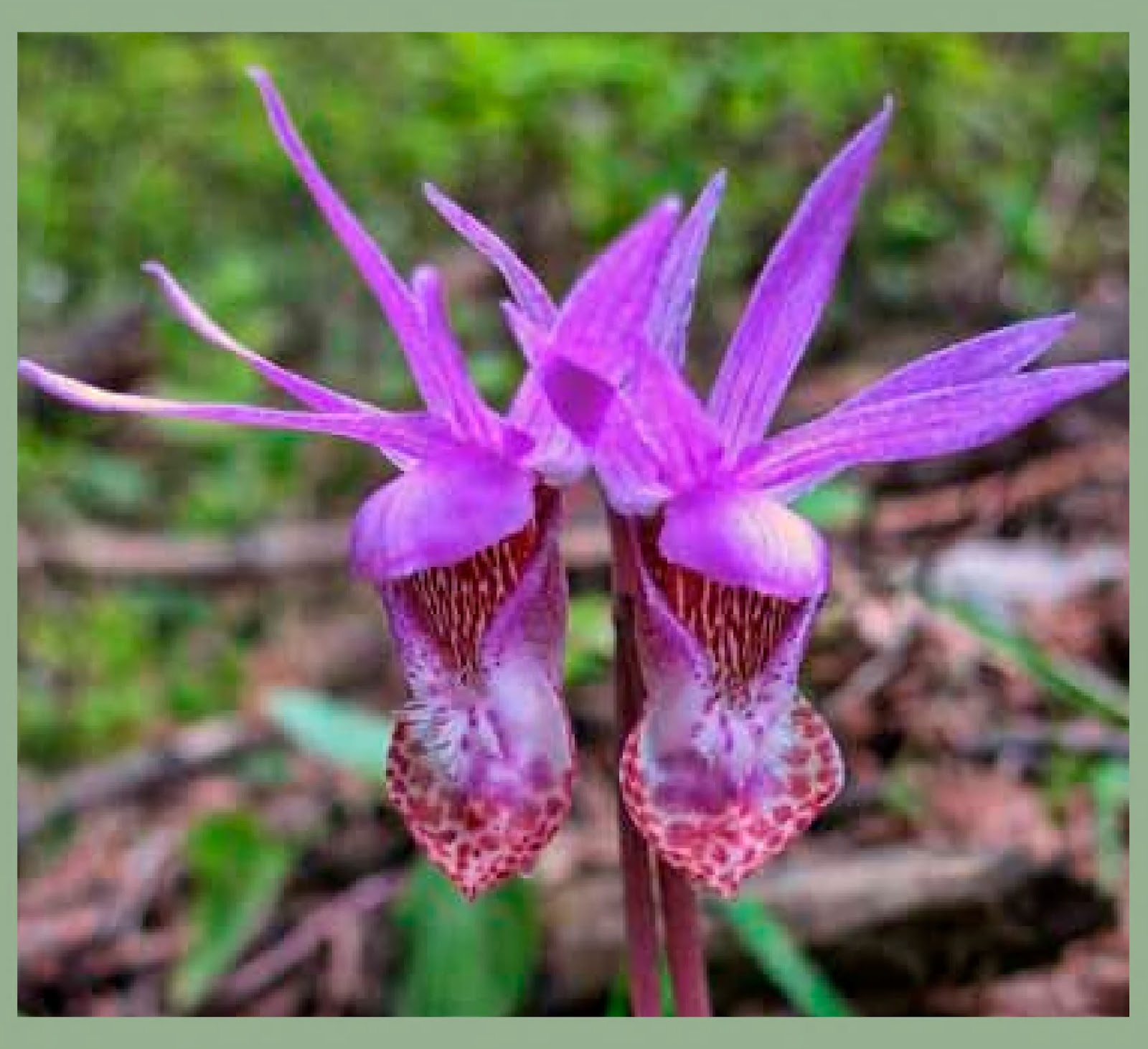
Calypso Orchid, Calypso bulbosa. Photo by Gerry Queener.
Sage Notes, v.34, no.3 (2012)

Through the Expanding Access to Biodiversity Literature project, BHL has received permission for the newsletters of several native plant societies and chapters:

  • The Arkansas Native Plant Society
    • Claytonia
  • The California Native Plant Society
    • East Bay Chapter
      • The Bay Leaf
    • Kern Chapter
      • Mimulus Memo
    • Mt. Lassen Chapter
      • The Pipevine
  • The Colorado Native Plant Society
    • Aquilegia
  • The Delaware Native Plant Society
    • The Turk’s Cap
  • The Idaho Native Plant Society
    • Sage Notes
  • The Illinois Native Plant Society
    • The Harbinger
  • The Wyoming Native Plant Society
    • Castilleja

Just as native plant societies share many similarities, so do their newsletters. They typically contain updates about society-sponsored events and meetings, brief features on a particular plant group or biodiverse area, and occasionally tips for identification and cultivation. They also contain pertinent information about conservation initiatives and the kinds of administrative information common to all organizational newsletters. But the most valuable portion of each newsletter, from a biodiversity perspective, is surely the field trip summary. Field trips are a central activity of all native plant societies.

View Full Size Image
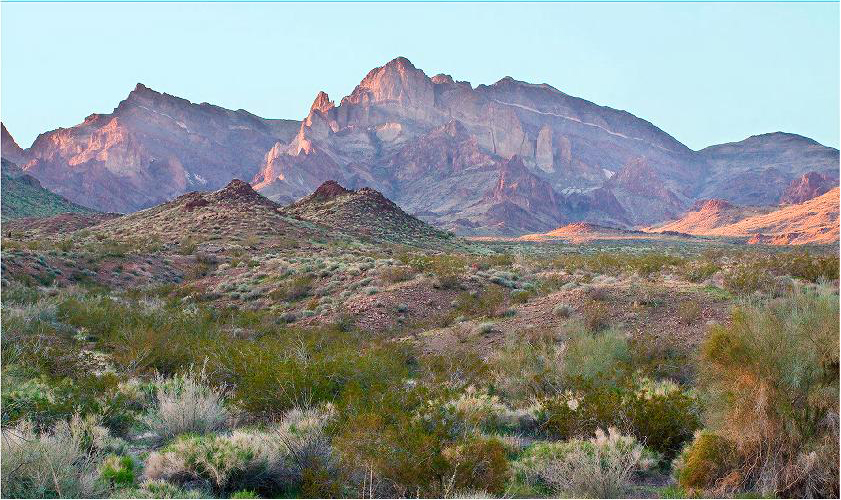
Turtle Mountains, Mojave Desert. Photo by John Game.
The Bay Leaf, January 2016

While original botanical research is typically associated with books and peer-reviewed journals (and some societies do publish their own journals), these newsletters are a goldmine of information about rare plants and the ecologically sensitive areas where they’re found; over the years, repeated field trips to these areas reveal trends in the health and abundance of plants, in the same way that Christmas bird counts document changes in avian populations.

View Full Size Image
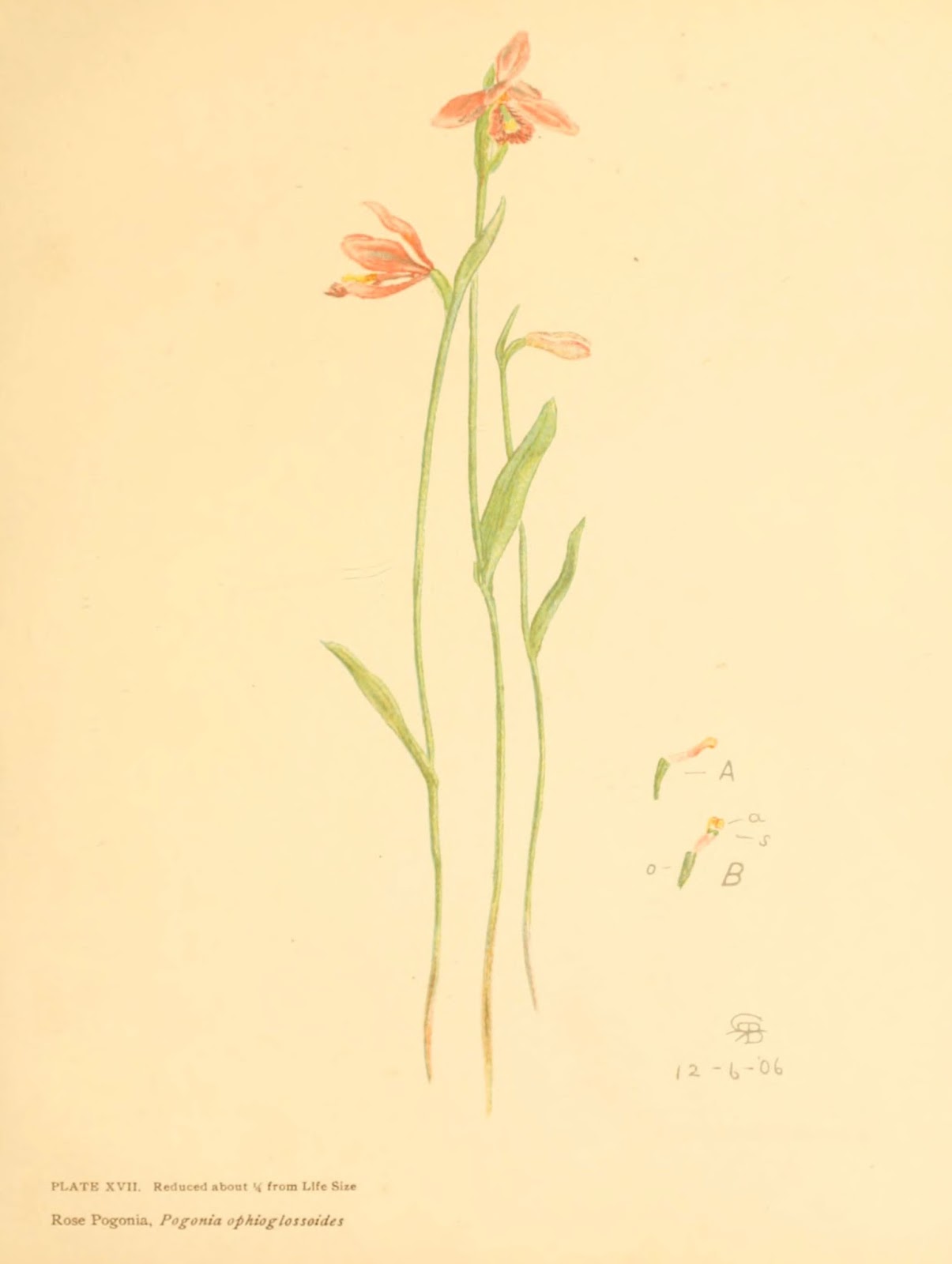
Pogonia ophioglossoides from Rosina Cox Boardman’s
Lilies and Orchids (1906), Pl. XVII

For example, the Fall 1981 issue of Claytonia documents the discovery of several rare plants that hadn’t been seen in Arkansas in over 30 years, including the Rose Pogonia orchid, Pogonia ophioglossoides.

Another example: The Harbinger v.30, no.3, contains an account of how a glacial prairie came into possession of the local township after its owner–a farmer who had used the land to graze cattle–passed away. Plans for a baseball field and parking lot were scrapped when the land was found to contain rare plants like Hill’s Thistle (Circium hillii) and Prairie Buttercup (Ranunculus rhomboideus). The article describes efforts by Illinois Native Plant Society members to preserve the land and protect the plants by removing invasives and doing hydrological restoration.

We are grateful to the native plant societies who have generously shared their local expertise by making their newsletters available to researchers through BHL. In addition to the biodiversity information they contain, these publications are a wonderful snapshot of the small, dedicated groups of people working all over the U.S. to document and preserve our native plants.

Are you interested in getting involved in a native plant society near you? If you live in the U.S. or Canada, check this list compiled by the North American Native Plant Society to locate the closest organization.

October 20, 2016by eomeara
Page 9 of 15« First...«891011»...Last »

Help Support BHL

BHL's existence depends on the financial support of its patrons. Help us keep this free resource alive!

search

About BHL

The Biodiversity Heritage Library (BHL) is the world’s largest open access digital library for biodiversity literature and archives. BHL operates as a worldwide consortium of natural history, botanical, research, and national libraries working together to digitize the natural history literature held in their collections and make it freely available for open access as part of a global “biodiversity community.”

Join Our Mailing List

Sign up to receive the latest news, content highlights, and promotions.

Subscribe Now

Subscribe to Blog via Email

Enter your email address to subscribe to this blog and receive notifications of new posts by email.

Join 319 other subscribers

Subscribe to Blog Via RSS

Subscribe to the blog RSS feed to stay up-to-date on all the latest BHL posts.

Access RSS Feed

Inspiring Discovery through Free Access to Biodiversity Knowledge.

The Biodiversity Heritage Library makes it easier than ever for you to access the information you need to study and explore life on Earth…for free, anytime, anywhere.


64+ Million Pages of
Biodiversity Literature Online.

EXPLORE

Tools and Services
to Transform Research.

EXPLORE

300,000+
Illustrations on Flickr.

EXPLORE

ABOUT | HARMFUL CONTENT | PRIVACY | SITE MAP | TERMS OF USE