Biodiversity Heritage Library - Program news and collection highlights from BHL
  • Home
  • News
  • Featured Books
    • All Featured Books
    • Book of the Month Series
    • BHL at 20
  • User Stories
  • Campaigns
    • Fossil Stories
    • Garden Stories
    • Monsters Are Real
    • Page Frights
    • Her Natural History
    • Earth Optimism 2020
  • Tech Blog
  • Visit BHL
Home
News
Featured Books
    All Featured Books
    Book of the Month Series
    BHL at 20
User Stories
Campaigns
    Fossil Stories
    Garden Stories
    Monsters Are Real
    Page Frights
    Her Natural History
    Earth Optimism 2020
Tech Blog
Visit BHL
  • Home
  • News
  • Featured Books
    • All Featured Books
    • Book of the Month Series
    • BHL at 20
  • User Stories
  • Campaigns
    • Fossil Stories
    • Garden Stories
    • Monsters Are Real
    • Page Frights
    • Her Natural History
    • Earth Optimism 2020
  • Tech Blog
  • Visit BHL
Biodiversity Heritage Library - Program news and collection highlights from BHL
Blog Reel, Featured Books

Tired of Poinsettias? Bah, Humbug! Then into the Smithsonian Libraries

This post originally published on the Smithsonian Collections Blog. View the original post here.
View Full Size Image
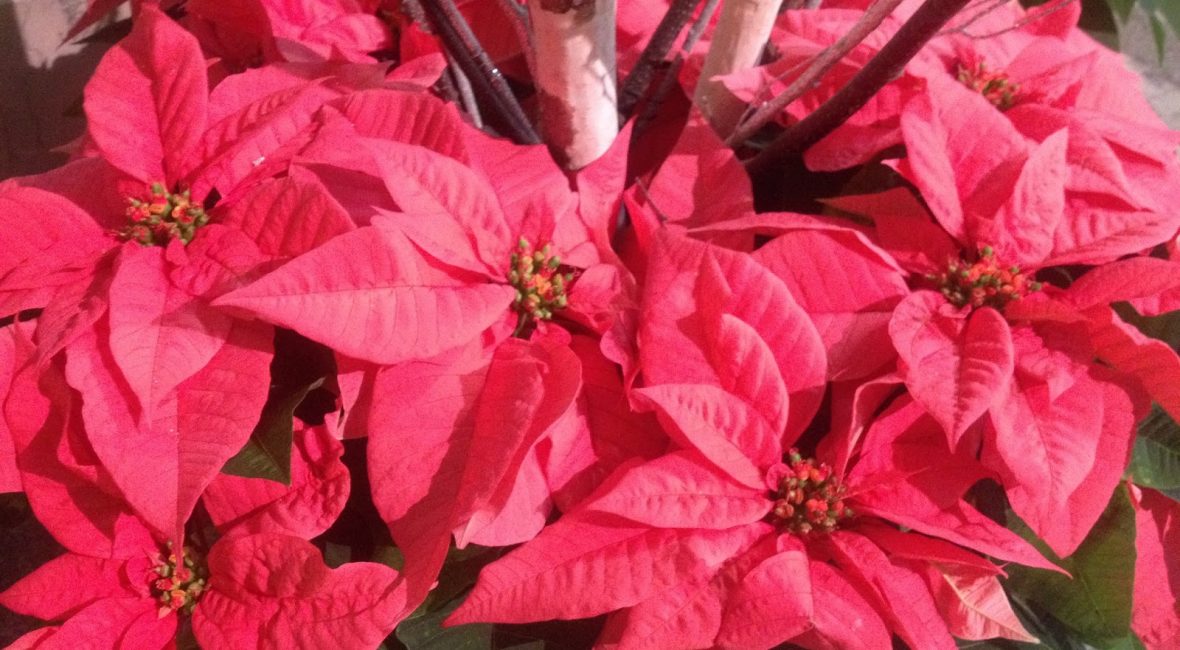
Blooms in the Rotunda of the National Museum of Natural History.

Tired of poinsettias?

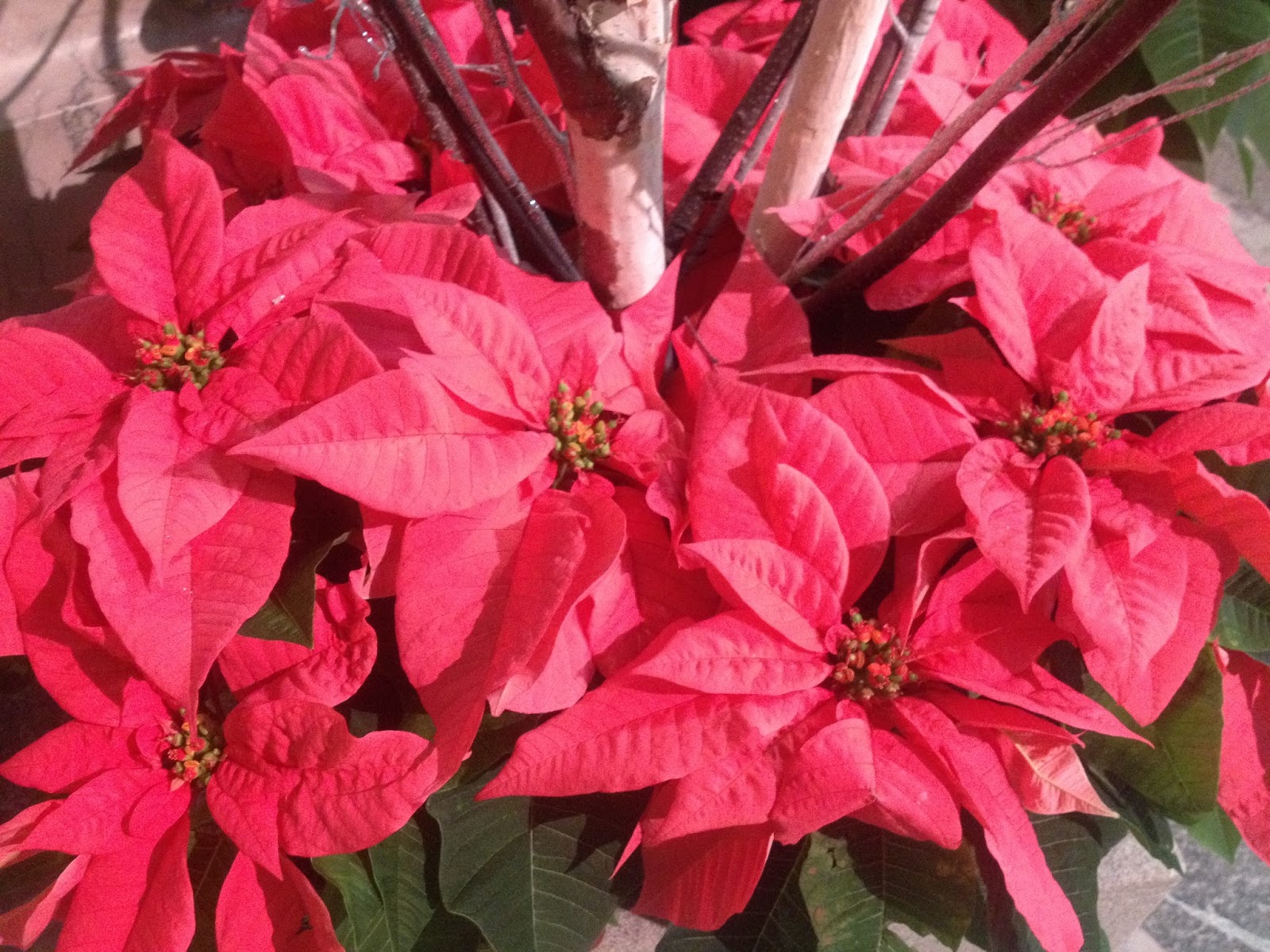
Last year, we at BHL asked this question in social media and offered up vibrant, joyful portraits of the amaryllis instead. But one commentator declared “Poinsettias rule!” And indeed poinsettias do reign as an economic powerhouse of the nursery industry, cultivated all over the world. The public areas of the various Smithsonian museums and the neighboring Botanic Gardens on the Mall in Washington now have abundant, seasonal displays of poinsettias, beautiful specimens propagated by the talented horticulturists of the Federal greenhouses. The palette of colors and shapes are wonderful, never a dull sight this time of year.
View Full Size Image
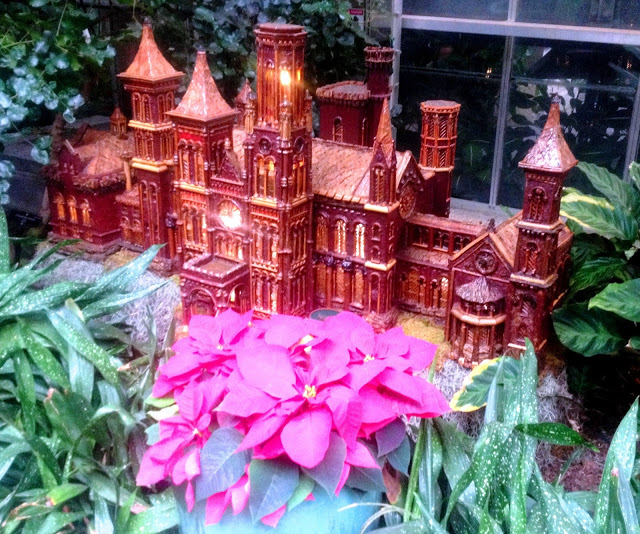
The Smithsonian Castle (made up entirely of plant materials) nestled in the display of poinsettias in the Garden Court of the United States Botanic Garden.

Potted plants in the Smithsonian Libraries’ collection areas are generally discouraged because of the insects they may harbor, potentially harmful to the books on the shelves. Consequently, there are no seasonal flowers welcoming researchers to the reading rooms. However, anyone can find holiday blossoms in the Libraries by going on a virtual plant hunt. The range of holdings in the Smithsonian Libraries provides both images and a full portrayal of the poinsettias’ history (some of it mythic) and, a renewed appreciation for this remarkable plant. There is still a fuller story yet to be told, to separate oft-repeated lore from actual evidence, waiting to be fully investigated in the Libraries’ resources.

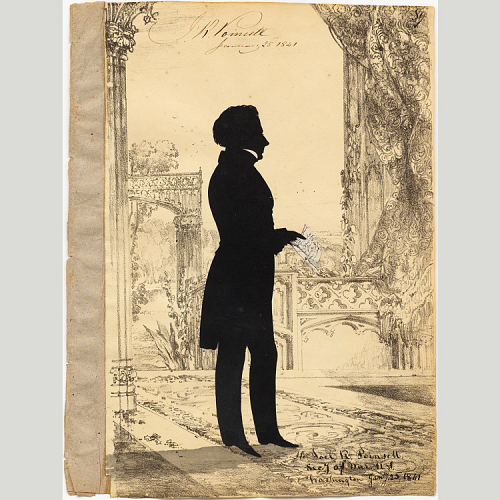
It is commonly known that the poinsettia was named to honor physician, politician, diplomat, and amateur botanist, Joel Roberts Poinsett (1779-1851). He was a special envoy, then first Minister, representing the United States in Mexico from 1822 to 1830. Perhaps not as well-known is that the flower (the showy part is actually leaves or bracts) had an association with Christmas long before it was promoted by American and European nurseries. Further, the relationship between the plant and Poinsett is not as straightforward as often portrayed.
View Full Size Image
Lithograph and cut paper on paper portrait of Joel Roberts Poinsett (1841, National Portrait Gallery, Smithsonian Institution; gift of Robert L. McNeil, Jr.).

The Aztecs of the principal city of Tenochtitlan (now Mexico City) imported the plant from southern Mexico to northern Guatemala, where it thrives in the landscape of lower altitudes and warmer climate. In the ancient Nahuatl language it is called cuetlaxochitl – xochitl meaning ornamental flower. The winter-blooming plant was used for medicinal purposes (from its sap) and as a source of red dye (from the bracts). There is also evidence that cuetlaxochitl was used in religious ceremonies, its brilliant color representing purity. Ancient Aztec herbals, the few surviving from the Pre-Columbian period, may have references and illustrations to both the health properties and ritual uses of the plant. There are facsimile copies of these rare works in both the Smithsonian Libraries’ Anthropology, National Museum of American Indian and Special Collections Libraries.

As with other pagan rituals and symbols – think of winter greenery (pine, holly, mistletoe), of wreaths and trees brought indoors and the yule log – the star-shaped flower was incorporated into Christmas celebrations. In particular, it had a role in the nativity procession of the Fiesta of Santa Pesebre. After the Conquest, with Spanish missionaries in Mexico, the plant became known as “Flore de Noche Buena” or “Flower of the Holy Night” (Christmas Eve).

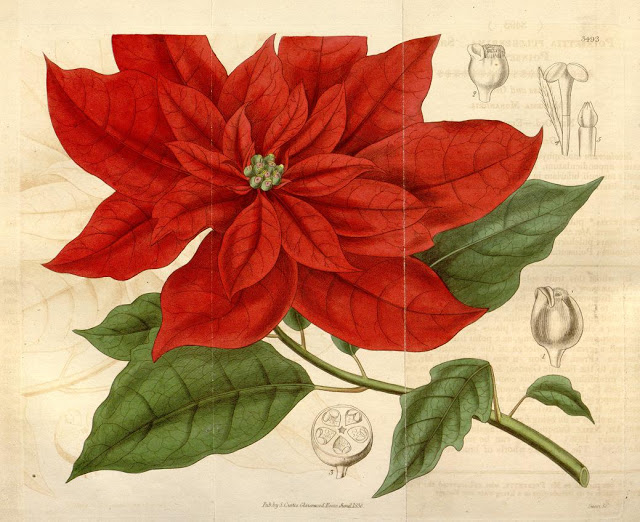
In a 2011 article by the Agricultural School of Purdue University, many of the myths of the poinsettia were investigated and debunked. There is no evidence, only legend, that it was Poinsett who introduced the plant to the United States, first to his native South Carolina. As a learned gentleman, he may have had a role in sending seeds to colleagues in Philadelphia where poinsettias were displayed in 1828. From that city, Scottish nurseryman Robert Buist brought cuttings to James McNab in Edinburgh. A German botanist, Karl Willdenow, provided the botanical name, Euphorbia pulcherrima, first published in 1834, by Johann Friedrich Klotzsch. Back in Edinburgh, another botanist, Robert Graham, changed the name in 1836 to Poinsettia pucherrima, although that version never did take officially. Another story is that William Hickling Prescott, the author of The History of the Conquest of Mexico (1843) gave the name to honor his friend in that publication. There are many copies of this title in the Smithsonian Libraries. As early as 1836 Curtis’s Botanical Magazine (London, volume 63) published a stunning illustration entitled Poinsettia pulcherrima (Showy Poinsettia).
View Full Size Image
Hand-colored engraving by Samuel Curtis. Curtis’s Botanical magazine. Digitized image from the Biodiversity Heritage Library, copy supplied by the Peter H. Raven Library of the Missouri Botanical Garden.

There is research, appropriately enough published by The Botanic Garden and Botanical Museum Berlin in the journal Willdenowia, finding that earlier botanical expeditions to Mexico predating Poinsett had sent the first cuttings back to Europe. The Royal Botanical Expedition to New Spain, led by Martín de Sessé y Lacasta (1751-1808) and José Mariano Mociño (1757–1820) is the first contender. Following that were the explorations of Alexander Freiherr von Humboldt (1769-1859) and Aimé Bonpland (1773-1858) and, after the independence of Mexico in 1821, the collectors for the Natural History Museum in Berlin, Christian Julius Wilhelm Schiede (1798-1838) and Ferdinand Deppe (1798-1836).

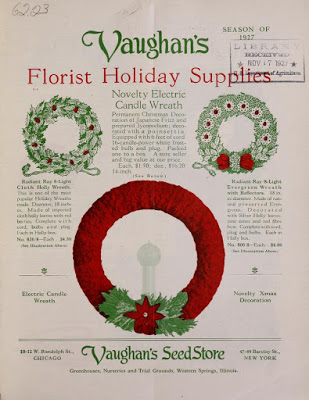
Poinsettias were prized in Europe and America from the mid-19th century, although still a luxury grown in greenhouses. The Ecke family nursery, founded by German immigrants setting in Hollywood, California, was the great popularizer of poinsettias. The Eckes focused their floriculture business exclusively on poinsettias from 1909. Talented in their cultivation of exotics and clever in marketing, the nursery made the plant widely available. Their promotion of the plant can be seen in nursery catalogs digitized in BHL. The Ecke poinsettia nurseries were taken over by the Dutch conglomerate Agribo in 2012, now owned by a private equity group comprising the third-largest horticultural business in the world.
View Full Size Image
The growth in the commercial trade of the poinsettia can be traced in nursery catalogs. There are a great number in the trade literature collection of the National Museum of American History Library. This title page is courtesy of the Biodiversity Heritage Library, digitized from a copy in the National Agricultural Library.

In our search for a fuller history of the plant as preserved in the Smithsonian Libraries, it should be pointed out that Joel Roberts Poinsett is also a figure in the pre-history of the Smithsonian, as a co-founder of the National Institute for the Promotion of Science and the Useful Arts. This organization was made up of prominent figures advocating a vision for the use of James Smithson’s unexpected bequest to the United States. There are several works either written by Poinsett or associated with the National Institute in the Smithsonian Libraries’ Special Collections.

Poinsett’s death date, December 12th, is now National Poinsettia Day in the United States. Pause and admire living blooms you pass by and ponder the plant’s rich, if not entirely, settled history. Then consider exploring the wide-range holdings of the Smithsonian Libraries – from the art, natural and American histories, botanical, horticultural, anthropology, rare books, digital resources, and trade literature collections – to find new discoveries of the story of the poinsettia.
View Full Size Image
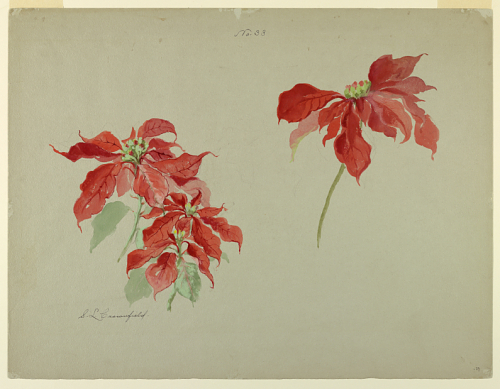
Studies of Poinsettias, Sophia L. Crownfield, drawing, early 20th century (Cooper Hewitt, Smithsonian Design Museum Collection; gift of Starling W. Childs and Ward Cheney).
December 22, 2015by ulib-libraryjobs
Blog Reel, Campaigns, Featured Books, Fossil Stories, User Stories

From the Experts: Recommended Fossil Books!

We hope you’ve been enjoying the fossil-mania this week with Fossil Stories! We’ve been exploring the fascinating history of paleontology, learning some great fossil facts, and hearing from experts (via a series of live webcasts) about current fossil research.

Our posts have demonstrated the important role that natural history publications have played in the history of paleontology. These works disseminated new research and ideas, documented the evolution of human knowledge about fossils and their origins, and recorded the first scientific descriptions of many ancient creatures.

But this literature is important not just for the historical information it provides. It is also highly relevant to modern paleontological research.

“Traditional ways of knowing about the fossil record are still relevant for modern questions in paleontology because specimens matter,” explains Dr. Nicholas D. Pyenson, Curator of Fossil Marine Mammals at the Smithsonian National Museum of Natural History. “Many important fossils were intially described and published in monographic, folio formats, and in many cases, those descriptions can be still be used 100-150 years later. I use them all the time.”

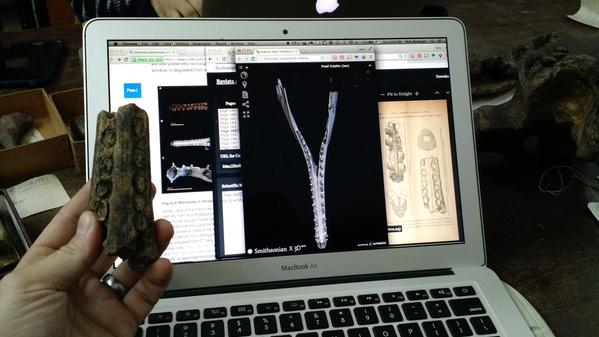
And indeed he does. During a recent trip to Argentina, Dr. Pyenson was able to compare specimens in the Museo Argentino de Ciencias Naturales with illustrations of those specimens in BHL alongside 3D scans of the related cetacean.

View Full Size Image
Comparing specimens to digitized literature and 3D scans. Dr. Nicholas D. Pyenson conducting research at the Museo Argentino de Ciencias Naturales. Photo by Nicholas D. Pyenson, via Twitter: https://twitter.com/PyensonLab/status/647111438222389248.

The importance of historic literature to modern fossil research is echoed by those in the field of paleobotany as well.

“Just as in research on living plant and animal biodiversity, research on the fossil record of plants and animals depends crucially on the published literature,” emphasizes Dr. Patrick Herendeen, Director of Systematics and Evolutionary Biology at the Chicago Botanic Garden. “Plant systematics literature goes back hundreds of years, and having access to this literature is essential for ongoing research in plant taxonomy and systematics. This is equally true for paleobotany.”

Knowing that historic literature is so important to modern paleontological work, we asked paleontologists at several BHL partner institutions to share some of their favorite historic publications with us. We think the results constitute a pretty awesome Recommended Reading List for Paleontology Enthusiasts!

Dr. Hans-Dieter Sues 
Chair, Department of Paleobiology. Curator of Fossil Vertebrates.
Smithsonian National Museum of Natural History

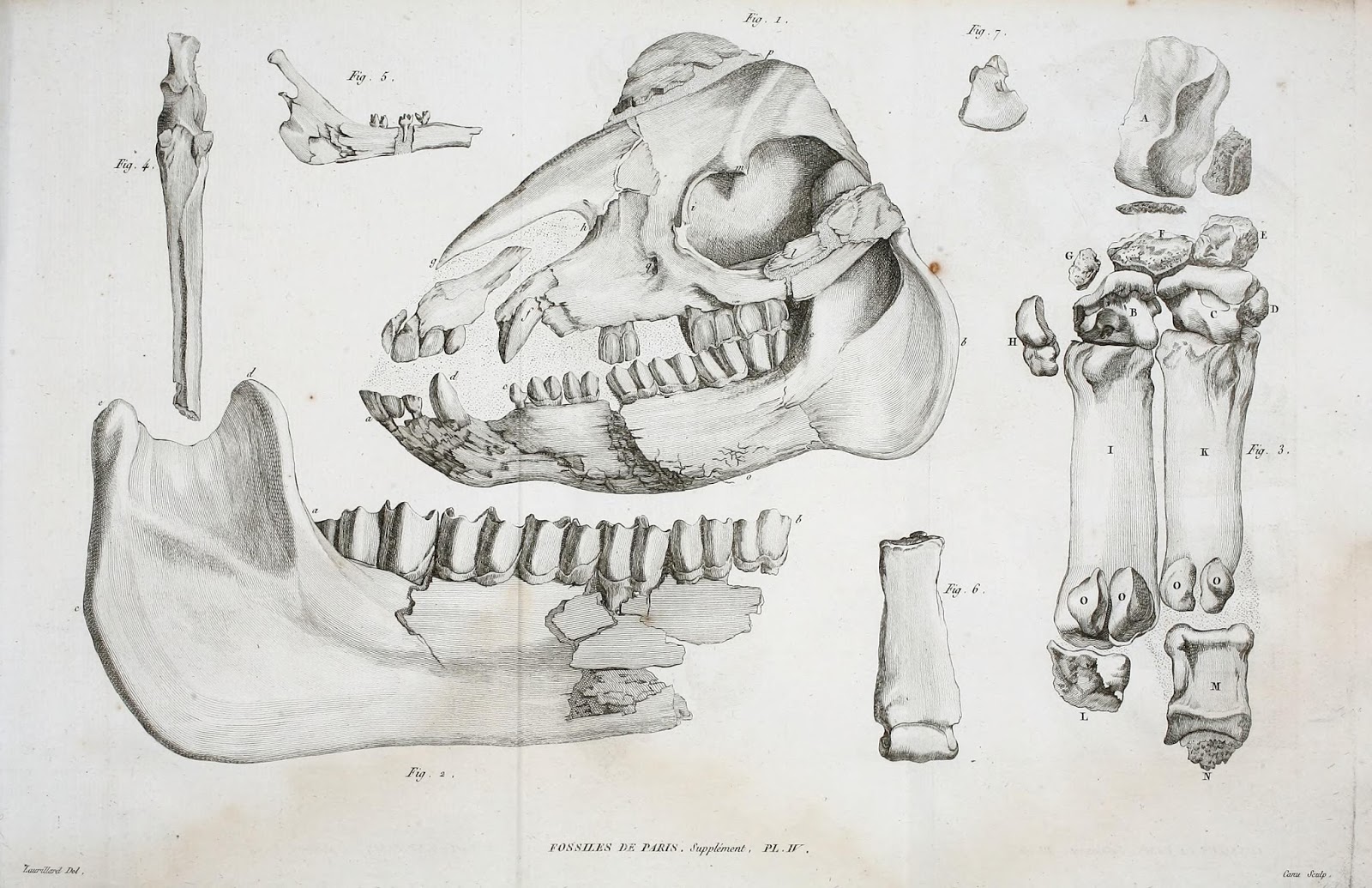
“Not surprisingly, my favorite early book on paleontology is Recherches sur les ossemens fossiles de quadrupèdes by G. Cuvier (first published in 1812, with three later editions). Not only did it found the scientific study of fossil vertebrates but it is written in a clear yet elegant style but that makes it a pleasure to read. Cuvier did not just describe fossils but tried to interpret their anatomy in functional terms. As a foundational work in the field, it will always be relevant to researchers interested in the fossil record of backboned animals.”

View Full Size Image
Cuvier, Georges. Recherches sur les ossemens fossiles de quadrupèdes. v. 3 (1812). http://biodiversitylibrary.org/page/40078532. Digitized by Smithsonian Libraries.

Dr. Maria A. Gandolfo 
Senior Researcher, L.H. Bailey Hortorium, Plant Biology Section 
School of Integrative Plant Science, Cornell University

Dr. Gandolfo’s favorite early paleobotany book is Ancient Plants, written by Mary C. Stopes in 1910. When asked why it is her favorite, Dr. Gandolfo referred to a quote from the book: “The lore of the plants which have successively clothed this ancient earth during the thousands of centuries before men appeared is generally ignored or tossed on one side with a contemptuous comment on the dullness and ‘dryness’ of fossil botany.” According to Dr. Gandolfo, “This book was written in 1910 and even after 105 years of incredible advances in the field of Paleobotany, this sentence still reflects what people feels about Paleobotany.”

Dr. Peter J. Makovicky
Department Chair and Associate Curator, Department of Geology
The Field Museum

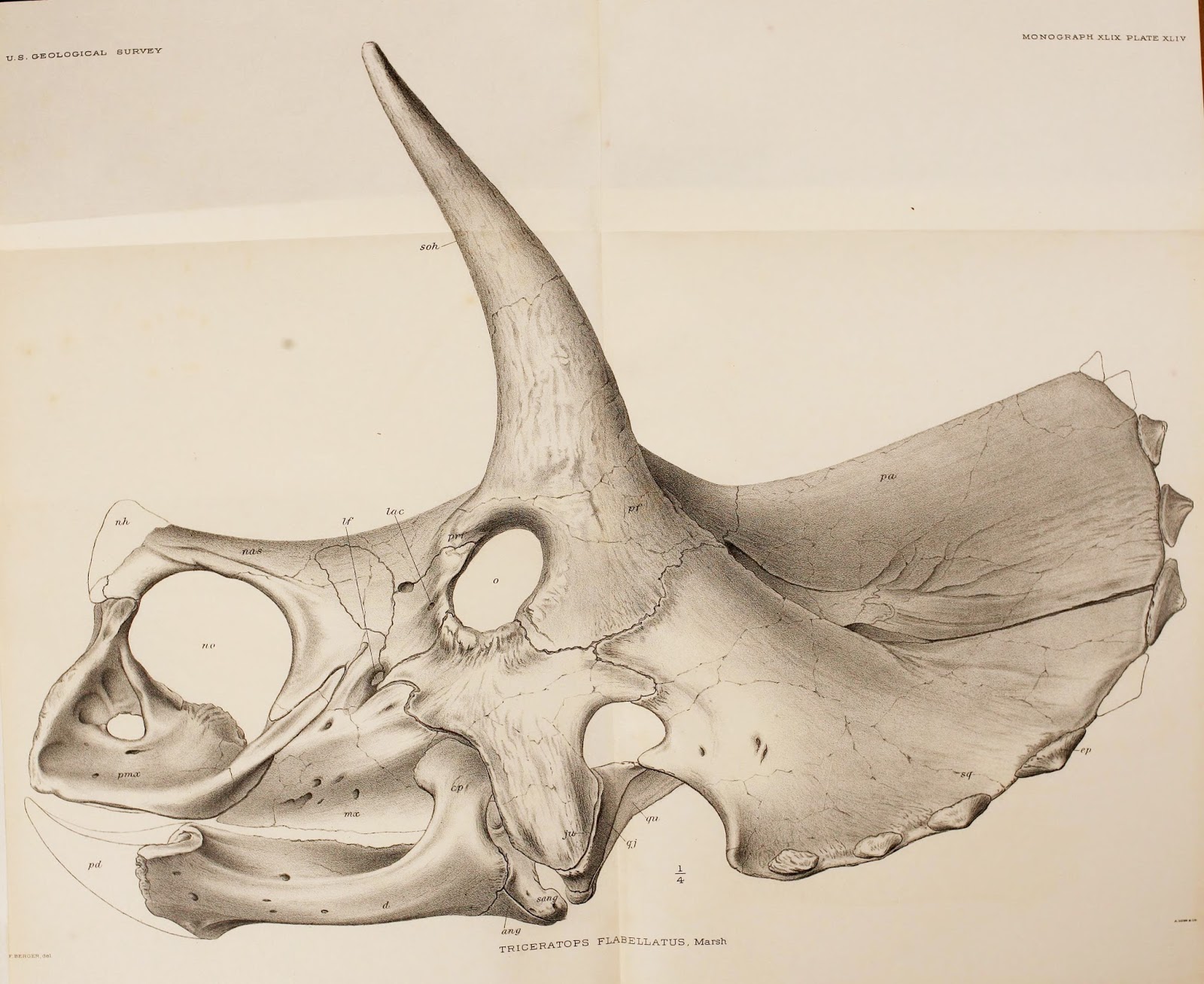
The Ceratopsia are a group of herbivorous, beaked dinosaurs that thrived during the Cretaceous Period. They include such iconic genera as Triceratops and Montanoceratops. The name Ceratopsia was coined by Othniel Charles Marsh in 1890, and in 1907 he, along with John B. Hatcher and Richard S. Lull, published a monograph on the group, entitled The Ceratopsia. According to Dr. Makovicky, this work is one of his favorites and a classic amongst the pre-1923 published materials.

View Full Size Image
The Ceratopsia. 1907. http://biodiversitylibrary.org/page/39875988. Digitized by Smithsonian Libraries.

Dr. William A. DiMichele 
Research Paleontologist and Curator 
Smithsonian National Museum of Natural History

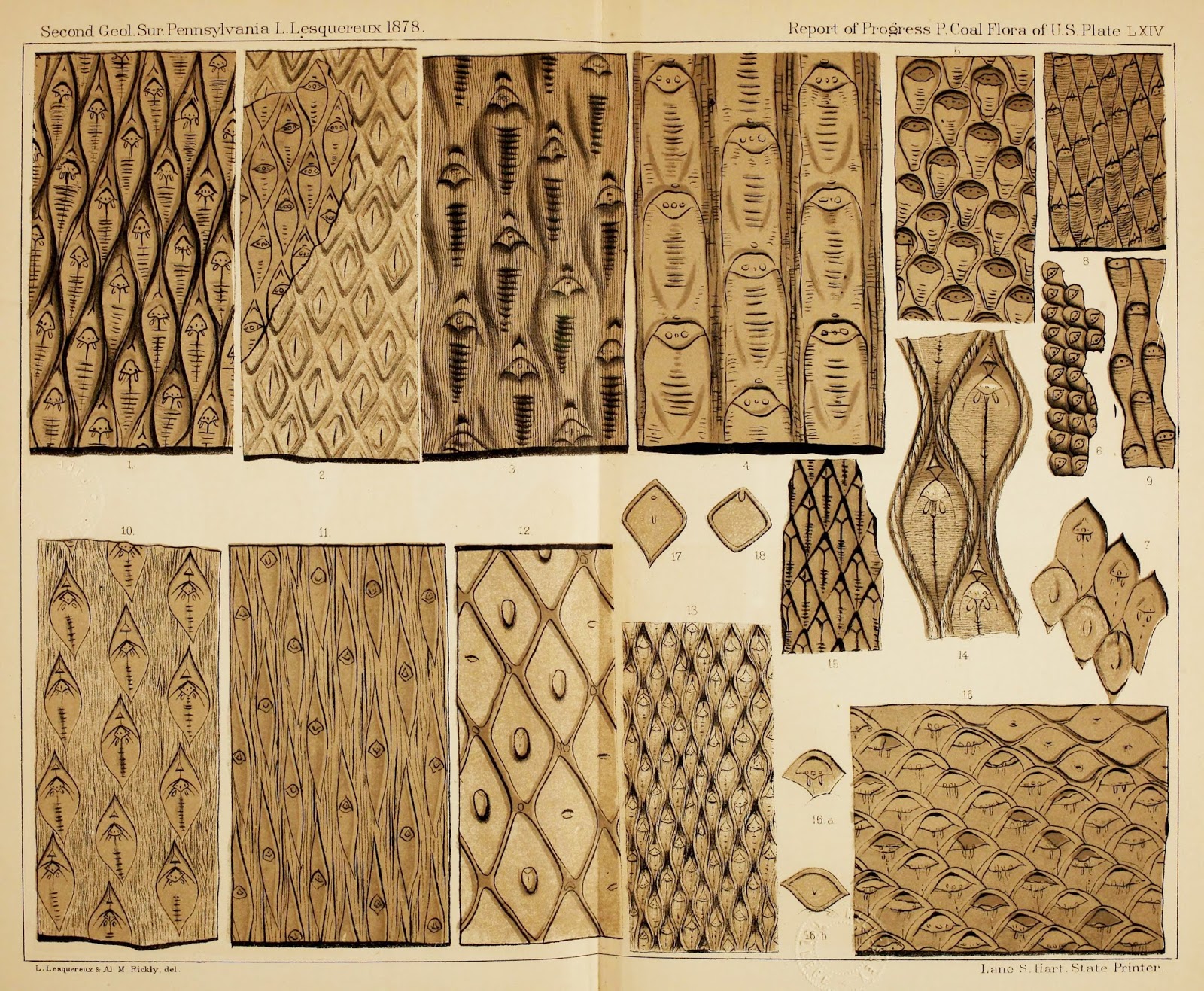
Dr. DiMichele’s favorite historic paleontology work is Description of the Coal Flora of the Carboniferous Formation in Pennsylvania and Throughout the United States, by Leo Lesquereux (1879-80). According to Dr. DiMichele, “This is the foundational book/atlas on American Carboniferous (coal age) floras and contains detailed descriptions and illustrations of many of the species that occur commonly in coal fields of the eastern and midwestern US. Many of the species that occur in the rocks I study were first described in this set of volumes, so the books remain a primary source of information to which I turn regularly.”

View Full Size Image
Lesquereux, Leo. Description of the coal flora of the Carboniferous formation in Pennsylvania and throughout the United States. Atlas (1879). http://biodiversitylibrary.org/page/46854192. Digitized by Wellesley College Library.

Dr. Karl J. Niklas 
The Liberty Hyde Bailey Professor of Plant Biology 
Cornell University

Dr. Niklas’ favorite historic paleontological work is The Origin of a Land Flora (1908) written by F. O. Bower. According to Dr. Niklas, “This book presents the first conceptualization of the evolution of ‘The Alternation of Generations’ in the land plants. I have worked on the evolution of plant body plans and the evolution of plant life cycles,” thus making this work particularly relevant to Dr. Niklas’ research.

View Full Size Image
Bower, F.O. The Origin of Land Flora. (1908). http://biodiversitylibrary.org/page/1312200. Digitized by the MBLWHOI Library.

Dr. Nicholas D. Pyenson
Curator of Fossil Marine Mammals
Smithsonian National Museum of Natural History

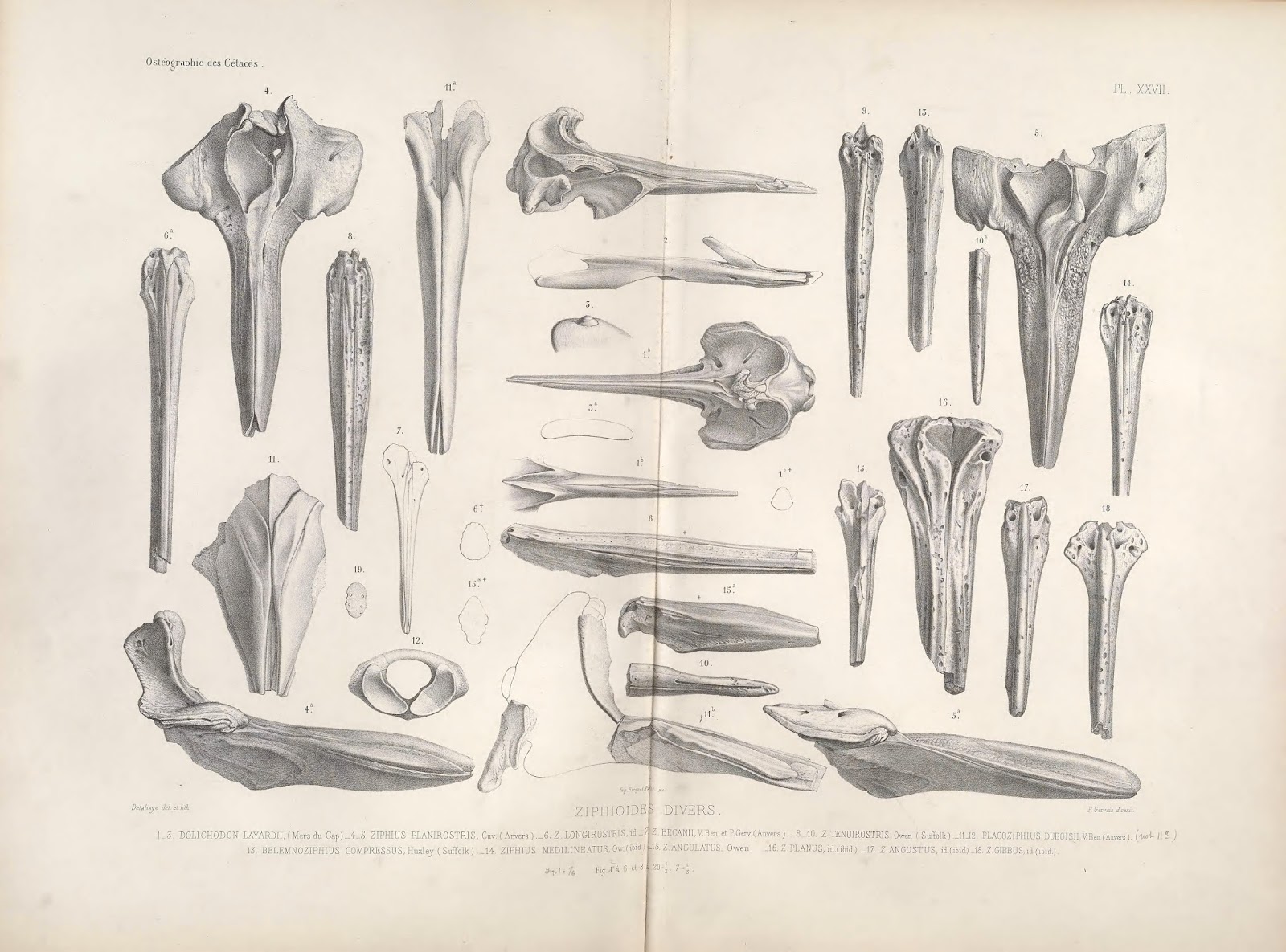
Dr. Pyenson’s favorite historic paleontology book is Ostéographie des cétacés vivants et fossiles (1868-79), by Pierre Joseph Beneden and Paul Gervais. “This work showcased specimens and species that no one had really seen outside of the areas where the specimens were collected,” explains Dr. Pyenson. “It’s a catalog of the world’s whales, and the authors didn’t discriminate between fossil and modern species. It’s cool that these were integrated together into one work this early on, before it was fashionable to do so.”

View Full Size Image
Modern whale skulls alongside fossil skulls. “You can tell which are the fossil skulls by the condition of the specimens,” explains Dr. Pyenson. Ostéographie des cétacés vivants et fossiles. (1869-79). http://biodiversitylibrary.org/page/41066967. Digitized by Smithsonian Libraries.

Thanks to all of our experts for sharing their favorite historic publications with us! We hope you’ve enjoyed our series of blog posts this week highlighting key works in the history of paleontology. Can’t get enough of the fossil publications? Then check out other great works in the BHL Fossil Stories digital book collection.

October 16, 2015by michelle.underhill
Blog Reel, Campaigns, Featured Books, Fossil Stories

Illustrating Fossil Plants: The Enigmatic Artis

Phytology is an historic term, not widely used today, for the study of plants. Antediluvian was a term much used by early paleontologists to describe the “time before the great Biblical flood.” These two terms are necessary to understand the title of an important work in paleobotany: Antediluvian Phytology (1838), by Edmund Tyrell Artis.

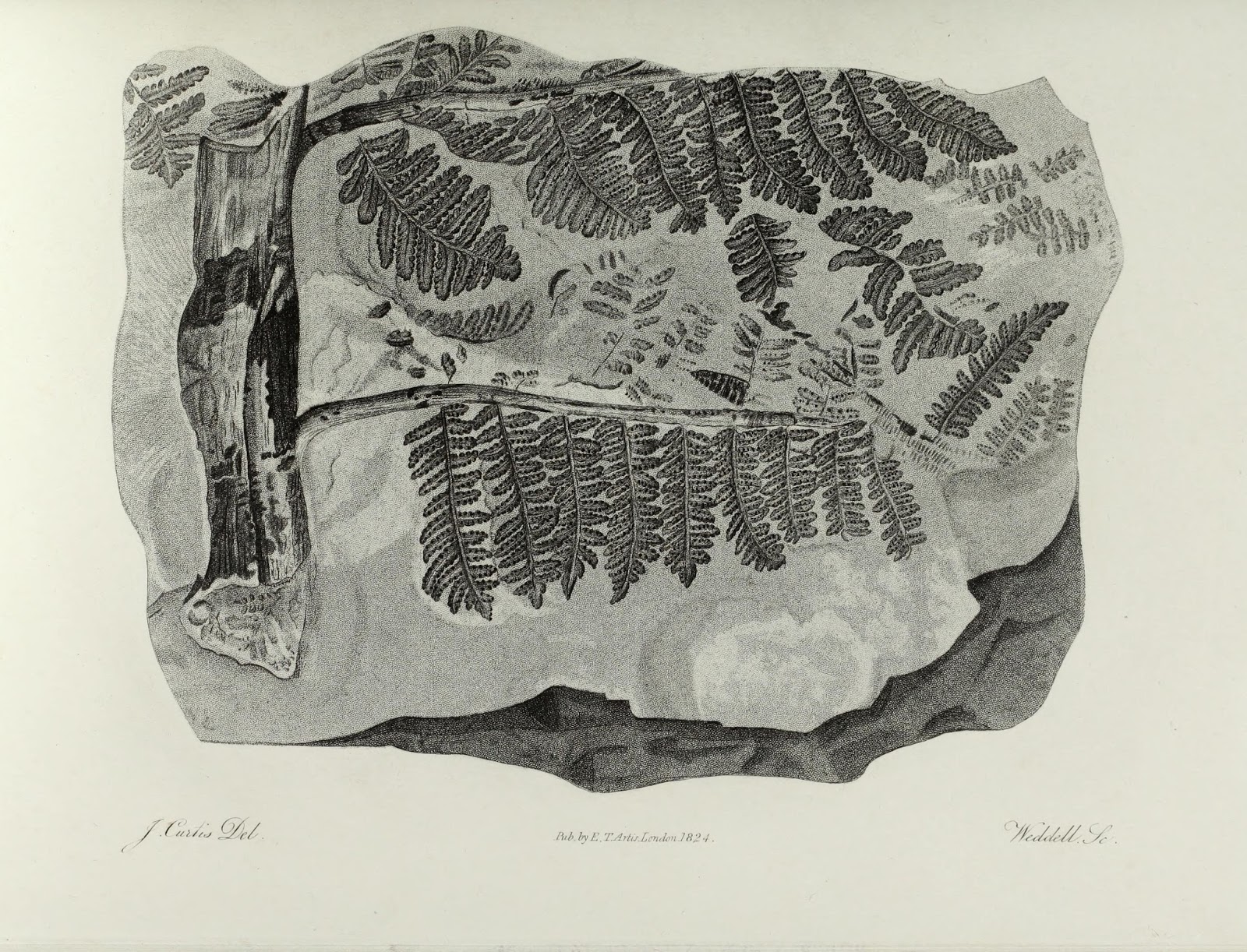
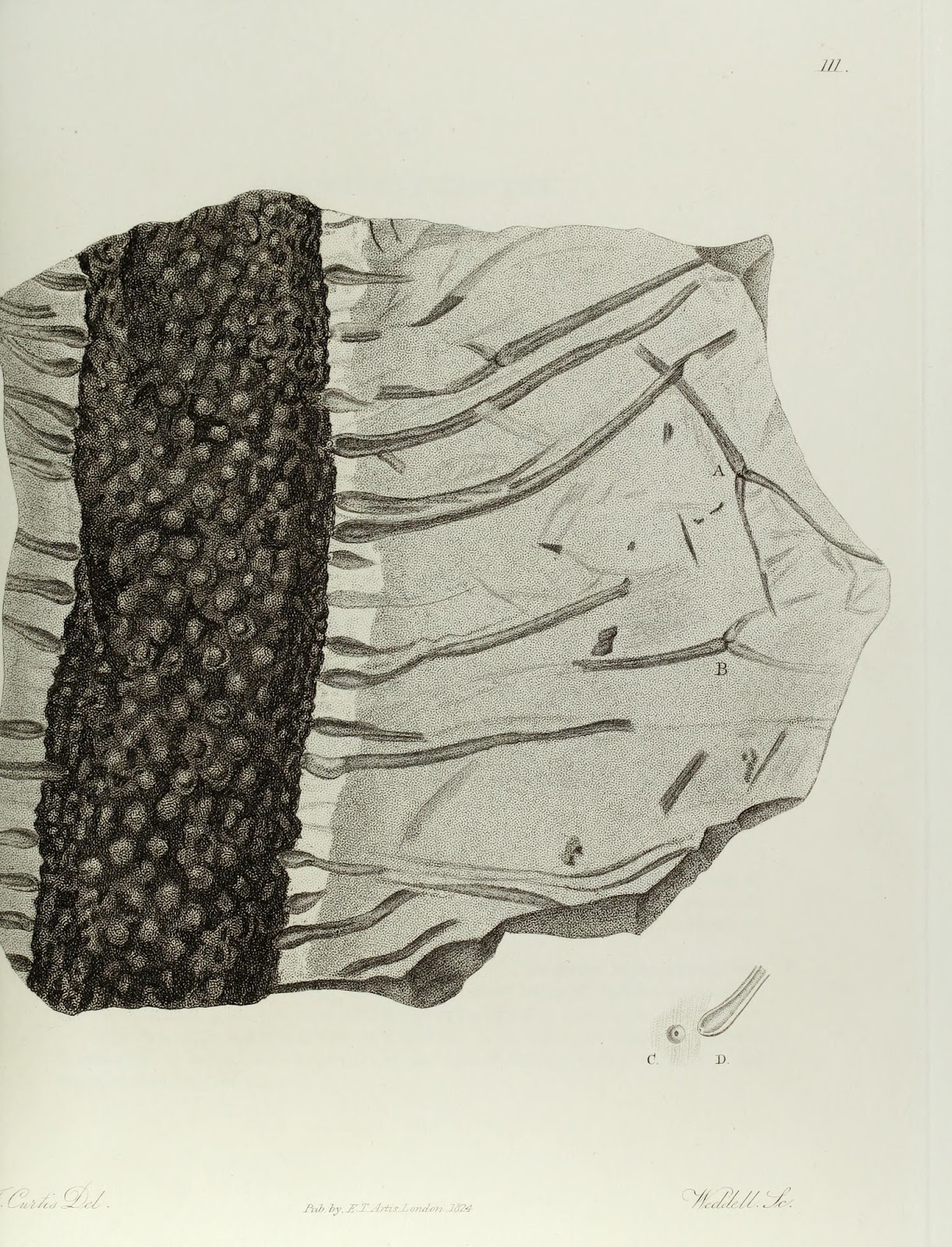
The formal study of paleobotany has roots in 1828, when Adolphe-Théodore Brongniart, known as the Father of Paleobotany, published Histoire des végétaux fossiles. A decade after this publication, Artis’ work was published. It was remarkable for including some the best paleobotanical illustrations published up to that time, describing many new-to-science species, and interpreting fossils through the lens of the individual that actually collected the fossils: Artis himself. At the time, many paleontologists obtained fossils from collectors, but did not collect themselves. Understanding the context in which a fossil is found, and the surrounding environment, can have important implications in the analysis and interpretation of the specimen.

View Full Size Image
Artis, Edmund Tyrell. Antediluvian Phytology. 1838. http://biodiversitylibrary.org/page/39307886. Digitized by the California Academy of Sciences.

These accomplishments are even more remarkable considering the humble origins of Artis himself, which also contributes to much of the mystery surrounding him and his work.

Artis was the son of a carpenter, born in 1789 in the small village of Sweffling in Suffolk, England. After moving to London to work in the wine trade with his uncle, he opened a confectionary shop, where his work caught the eye of the Earl Fitzwilliam, who asked Milton to join his staff at Milton Hall near Castor. Artis proved very adept, and was promoted to House Steward within three years.

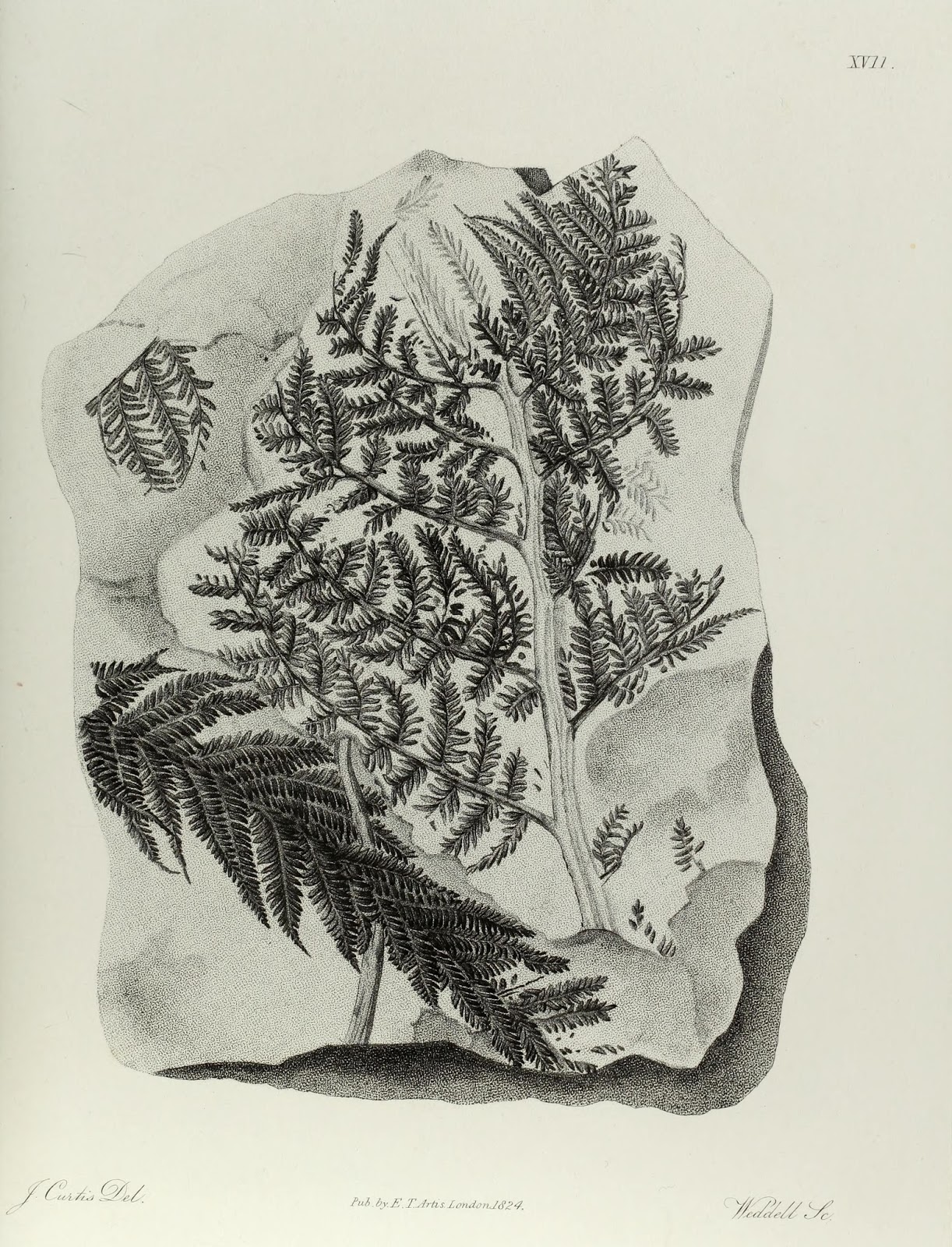
Artis often accompanied the Fitzwilliams on their visits to the other family property, Wentworth Woodhouse in south Yorkshire. The region boasted some of the most important coal mines in England, and Artis soon began collecting plant fossils from the area. He amassed a collection of between 1,000-1,500 plant fossils, some of which he described in his only publication, Antediluvian Phytology. The work included 24 illustrations, some based on his own paintings and the rest the work of leading natural history illustrator John Curtis.

View Full Size Image
Artis, Edmund Tyrell. Antediluvian Phytology. 1838. http://biodiversitylibrary.org/page/39307868. Digitized by the California Academy of Sciences.

Artis and his publication are something of a mystery. For instance, it’s unclear who paid for the publication of his work. There’s no evidence of pre-subscriptions that could have funded the work, or that Fitzwilliam contributed funds to it. Artis himself is not likely to have been able to afford such a venture. Furthermore, Artis was evidently familiar with the relevant natural history literature of the day, but how he gained access to it is alsoa mystery. Artis also apparently had influential friends. He claimed to have met Georges Cuvier, and William Buckland sponsored Artis to become a Fellow of the Geological Society in 1824. How he met Buckland, or when he would have had occasion to meet Cuvier, are unknown.

Artis would later find an interest in archeology, becoming famous for his excavations of the Roman remains near Milton Hall. In 1847, he fell ill, possibly due to exposure to a harsh winter while excavating ruins in Northamptonshire. He died on Christmas Eve, 1847.

View Full Size Image
Artis, Edmund Tyrell. Antediluvian Phytology. 1838. http://biodiversitylibrary.org/page/39307762. Digitized by the California Academy of Sciences.

Although much mystery still surrounds this enigmatic man, his contributions to the field of paleobotany are forever immortalized through his Antediluvian Phytology.

Fossil Stories

Stay tuned all week for more great fossil fun with our #FossilStories campaign, including:

  • Tweets and Facebook Posts
  • Blog Posts highlighting milestones and key publications in the history of fossil research
  • A Flickr Collection with hundreds of historic fossil illustrations
  • A Pinterest Collection featuring a selection of our favorite fossil illustrations
  • A BHL Collection containing seminal publications in the history of paleontology
  • A series of live webcasts at BHL partner institutions
  • A citizen science challenge in collaboration with The Field Book Project, the Smithsonian Transcription Center, and Smithsonian Institution Archives
Follow #FossilStories on Twitter and Facebook to learn more.
October 16, 2015by michelle.underhill
Blog Reel, Campaigns, Featured Books, Fossil Stories

The Roots of Paleobotany: Brongniart and Fossil Plants

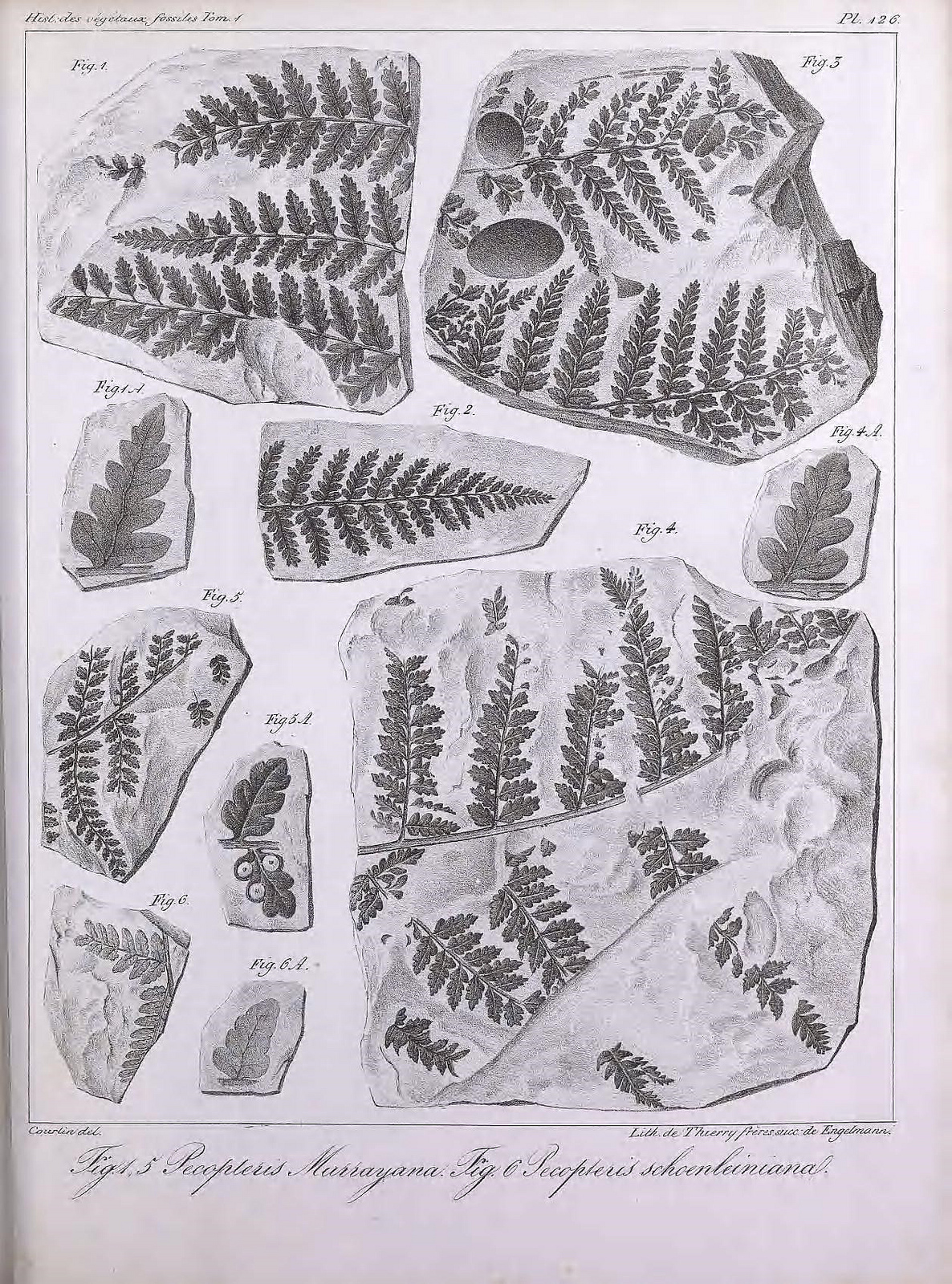
French botanist Adolphe-Théodore Brongniart is known as the Father of Paleobotany. Active in many branches of botany, Brongniart is most-remembered for his pioneering work on the relationship between extinct and living plants. In 1822, he published a paper on the classification and distribution of fossil plants, which he subsequently followed-up with his masterpiece Histoire des vegetaux fossiles (“History of fossil plants”) in 1828. This work was instrumental in the development of the field of paleobotany.

In 1828, Brongniart, son of the geologist Alexandre Brongniart (who worked with Georges Cuvier on geological studies in France), first published an introduction to his history of fossil plants, entitled Prodrome d’une histoire des végétaux fossiles. He then followed the introduction with his two-volume magnum opus, Histoire des végétaux fossiles.

View Full Size Image
Brongniart, Alexandre. Histoire des végétaux fossiles. (1828-37). http://biodiversitylibrary.org/page/40155235. Digitized by: Smithsonian Libraries.

Within Histoire, Brongniart asserted that the history of plants could be divided into four periods. Mirroring findings from the animal kingdom, Brongniart found that, with each successive period, the represented plants became more diverse and complex. The first period was dominated by cryptogams; the first conifers emerged in the second period and then cycads in the third. Finally, in the fourth period, flowering plants made their debut. Though there were sharp floral discontinuities during the transitions between these four periods, during each period there were gradual changes within the characteristic groups.

View Full Size Image
Brongniart, Alexandre. Histoire des végétaux fossiles. (1828-37). http://biodiversitylibrary.org/page/40155265. Digitized by: Smithsonian Libraries.

Brongniart’s work is important not only because of its impact on the field of paleobotany, but also because it further demonstrated the long, progressive history of life on Earth and the emergence of new, increasingly complex forms of life over time. His work also supported the theory that Earth’s climate changed over time, as Brongniart concluded that the fossil record indicated that northern Europe had once had a tropical climate. Furthermore, Brongniart suggested that there was a correlation between the profusion of plants and the emergence of terrestrial vertebrates. As plants increased and diversified, they locked up more and more carbon dioxide from the atmosphere and produced more and more oxygen, thus fueling the environment necessary to support first air-breathing reptiles and later mammals. His theories show striking similarities to modern theories about the evolution of Earth’s atmosphere.

Fossil Stories

Stay tuned all week for more great fossil fun with our #FossilStories campaign, including:

  • Tweets and Facebook Posts
  • Blog Posts highlighting milestones and key publications in the history of fossil research
  • A Flickr Collection with hundreds of historic fossil illustrations
  • A Pinterest Collection featuring a selection of our favorite fossil illustrations
  • A BHL Collection containing seminal publications in the history of paleontology
  • A series of live webcasts at BHL partner institutions
  • A citizen science challenge in collaboration with The Field Book Project, the Smithsonian Transcription Center, and Smithsonian Institution Archives
Follow #FossilStories on Twitter and Facebook to learn more.
October 14, 2015by ulib-libraryjobs
Blog Reel, Featured Books

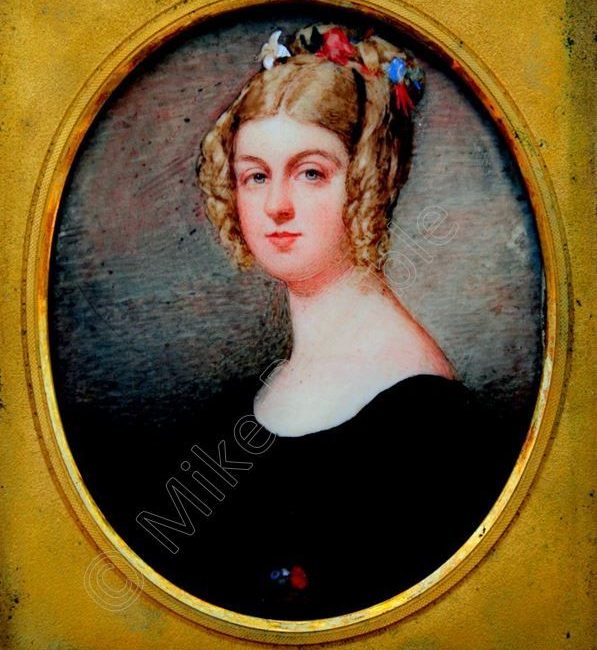
Georgiana Molloy (1805-1843) Botanist, Western Australia

View Full Size Image
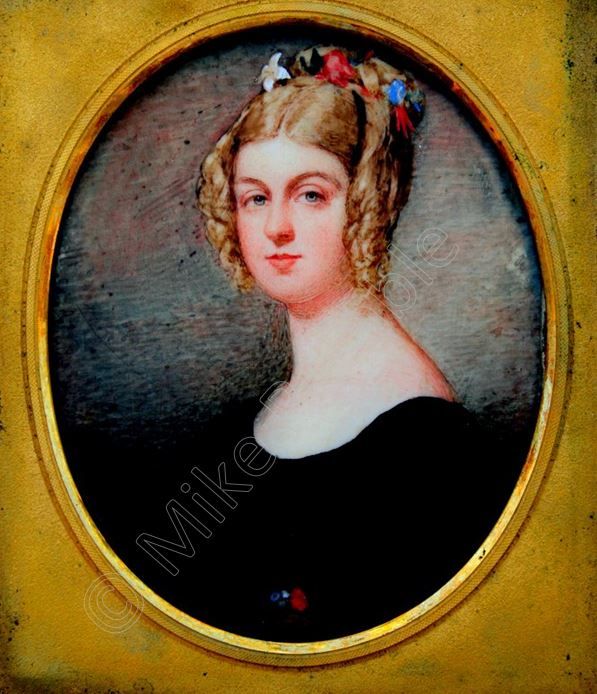
Georgiana Molloy, 1829 © Mike Rumble. With permission of Mrs Dorothy Margaret Blaasch née Richardson-Bunbury.

Georgiana Molloy arrived in the Swan River Colony (now Perth, Western Australia) in 1830 and was among the small group of British colonists who founded the settlement of Augusta in the far southwest. Today, she’s remembered as the first internationally successful female botanist in Western Australia.

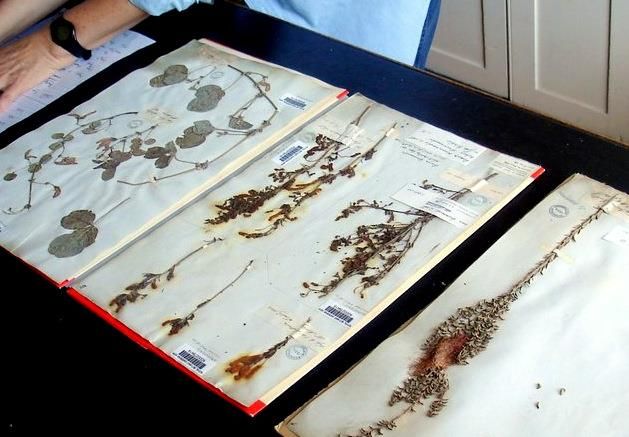
Specimens from two of her collections, including Type specimens, are archived in Kew Herbarium and Cambridge University Herbarium. Some of her letters and some diaries have also survived, held at the Cumbria Archive Centre in Carlisle UK and the JS Battye Library in Perth WA.

View Full Size Image
Georgiana Molloy specimens, Kew Herbarium © Mike Rumble.

Researchers unable to access these documents first-hand have been able to view some sources online for several years but things are changing. Libraries, herbaria and museums are increasingly digitizing new material as they acquire it. Other archives like the Biodiversity Heritage Library are making digital images of sources previously only available as microfilm or hard copy. Not only are many new items available now on a computer screen anywhere in the world, allowing you to look closely at a picture or photograph and transcribe from an original document, but also the sources are searchable. You don’t just have to search the Web for something you’re looking for in particular; using careful search techniques, you can find new sources you didn’t even know about.

The botanical work of Georgiana Molloy comes to life vividly through the images that are now available. Combining the content of her diaries/letters with online sources makes it possible to trace some of her specimens from the day she collected them in the bush, through their journey from collector to collector, and on to their current resting place in a herbarium.

Georgiana grew up in the north of England near the Scottish border, and like other girls in her social circle, she collected dried flowers and enjoyed gardening. In 1838, her amateur involvement, already remarkably accomplished, was recognized when collector Captain James Mangles RN asked her to send him specimens of Western Australian indigenous plants. She was only collecting for Mangles for the last six years of her life and taught herself the necessary skills from books – and trial and error – but the specimens she sent to England were of superior quality to those of experienced male collectors doing the same, including James Drummond who was ‘government naturalist’ in Perth until 1832. Her expertise was recognized by the most eminent botanists and growers of the time.

Mangles sent Georgiana’s specimens to (among others) Dr. John Lindley, Professor of Botany at University College, London, Joseph Paxton, head gardener of the Duke of Devonshire at Chatsworth House, the Royal Horticultural Society and the Baumann brothers of Bollwiller in France. He also sent her seeds to successful nurserymen including George Loddiges, known for the orchids he grew in a huge hothouse.

Lindley was fascinated by the flora of Australia and the orchids in particular. In 1838 he was about to write a new article on the topic and was looking for perfect specimens. The selection Mangles sent from Mrs. Molloy didn’t disappoint.

‘Your friend Mrs. Molloy is really the most charming personage in all South Australia & you the most fortunate man to have such a correspondent.

That many of her plants are beautiful you can see for yourself & I am delighted to add that many of the best are quite new. I have marked many with a X.’ i

Paxton’s opinion was the same. He said her collection was ‘collectively, the best and contains more good things than I have before received from that interesting part of the world’ and described her ‘important collection of seeds’ as ‘far superior to any we have received at Chatsworth,’ with many new and ‘splendid things in the hortus siccus.’ ii

View Full Size Image
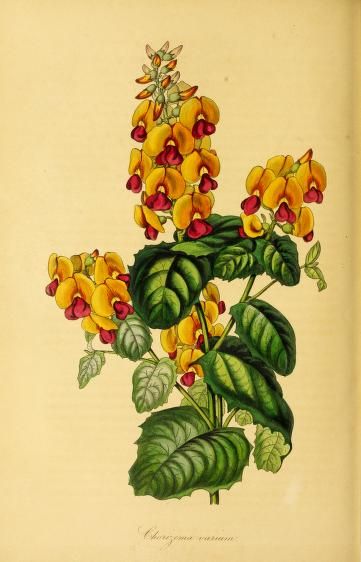
Chorizema varium. Paxton’s Magazine of botany and register of flowering plants. V. 6, (1840). http://biodiversitylibrary.org/page/48267230.

Georgiana’s life as a settler was one of hardship and tragedy, and for most of her 13 years in the colony she was nursing a baby. Her days were filled with farm work and domestic jobs from before dawn until late into the night, and yet she always found time for her botanical passion. A medical condition meant that she risked her life with the birth of each baby and soon after her seventh child was born she died, still desperately longing to successfully collect and send the seeds of Nuytsia floribunda and Kingia australis to Mangles. She was thirty-seven.

View Full Size Image
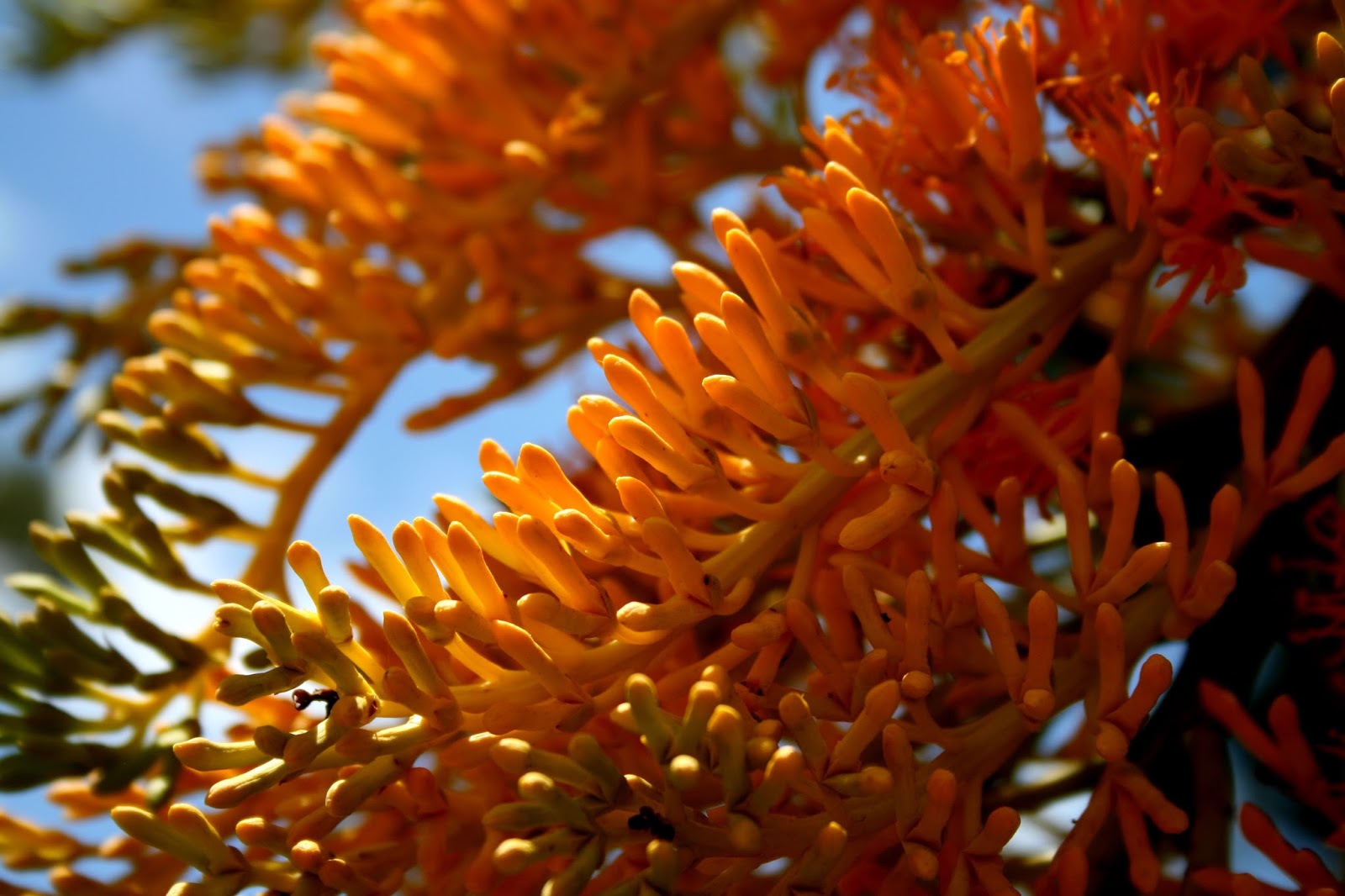
Nuytsia floribunda, Busselton WA © Mike Rumble.


View Full Size Image
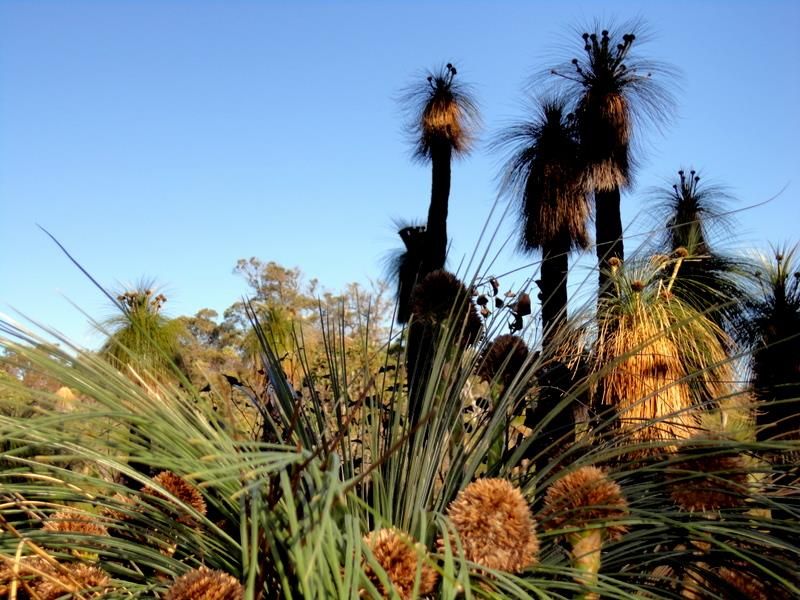
Kingia Australis, Molloy Island, WA © Mike Rumble.


View Full Size Image
Nuytsia floribunda. Appendix to the first twenty-three volumes of Edwards’s botanical register. (1839). http://biodiversitylibrary.org/page/6014085.

In her last years, she was referred to in several botanical and horticultural publications, including three mentions in the ‘Notices of new plants’ in Lindley’s very successful Sketch of the Vegetation of the Swan River Colony.

Appendix to the first twenty-three volumes of Edwards’s botanical register : consisting of a completealphabetical and systematical index of names, synomymes and matter, adjusted to thepresent stateof systematical botany, together with a sketch of the vegetation of the Swan River colony … / 

He wrote that Mrs. Molloy was ‘a lady enthusiastically attached to the Botany of this remote region,’ collector of Pultanaea brachytropis, a ‘pretty little greenhouse shrub from Port Augusta,’ Euthales macrophylla, ‘a greenhouse perennial of the easiest culture,’ and Eucalyptus calophylla, ‘a beautiful plant.’ Even though the professor wrote that her ‘zeal in the pursuit of Botany has brought us acquainted with many of the plants of that little known part of the world,’ her name was not included in his list of acknowledgements.

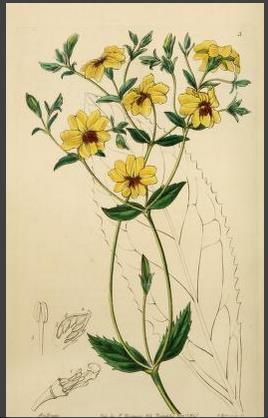
Mangles received recognition for Georgiana’s Pentandria monogynia in the Floricultural Cabinet and Florists’ Magazine 1841 but she was referred to as just ‘a lady.’

View Full Size Image
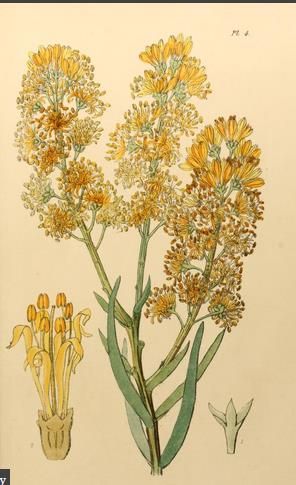
Euthales macrophylla. Edwards’s botanical register. v. 27 (1841). http://biodiversitylibrary.org/page/6580583.

The botanist George Bentham later acquired Georgiana’s collection from Lindley and deposited it with Kew when he took up office in 1854. His Flora australiensis was extremely successful, with thanks to Lindley (page 9) and Drummond (Page 10) but not Georgiana Molloy.

The online catalogues at Kew and Cambridge can be searched for ‘Molloy’ as ‘collector’ for digital photographs that reveal her skill and artistry. The most recently acquired Molloy journals at the JS Battye Library, partly written by Georgiana, are available online as images.

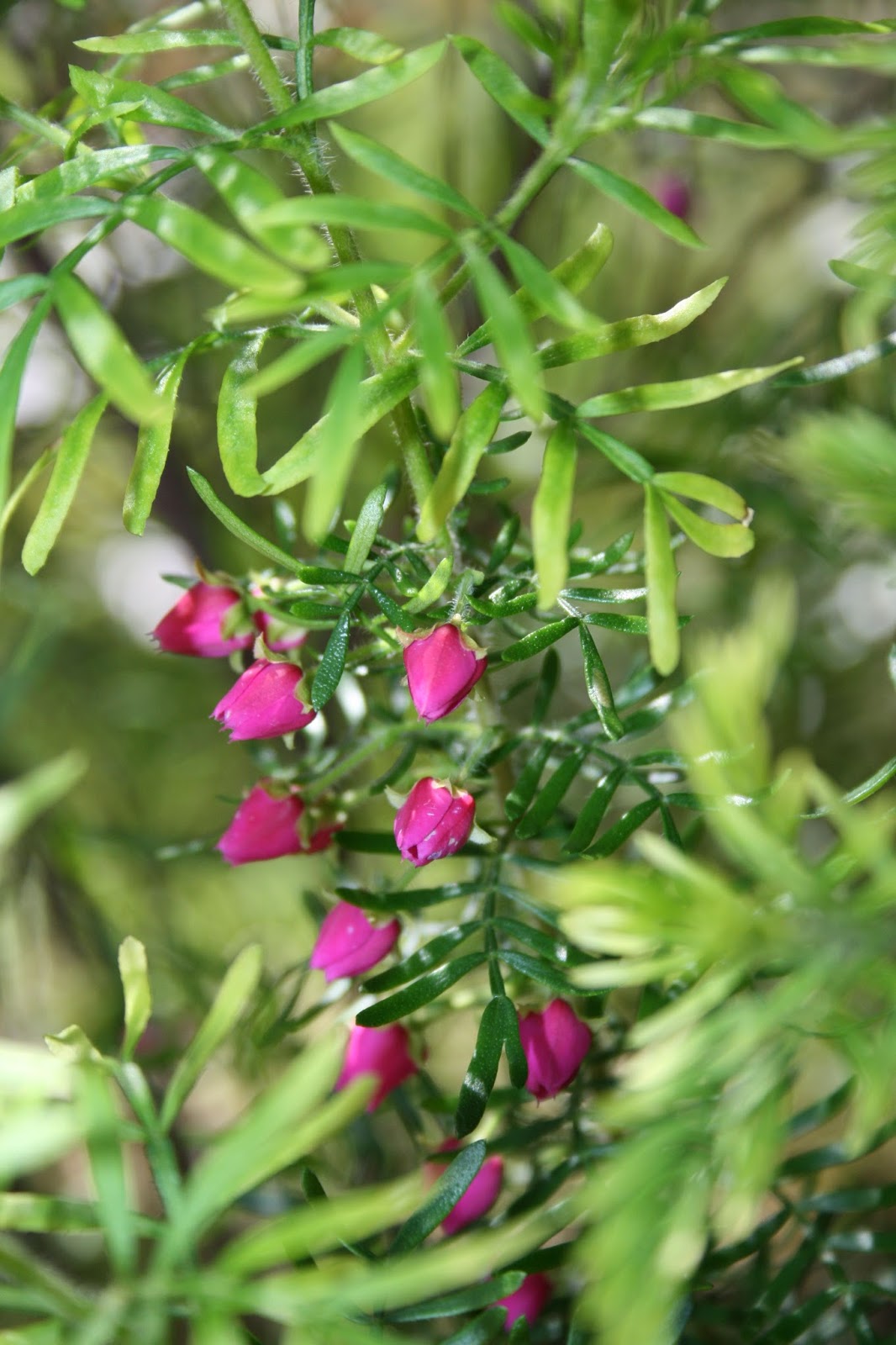
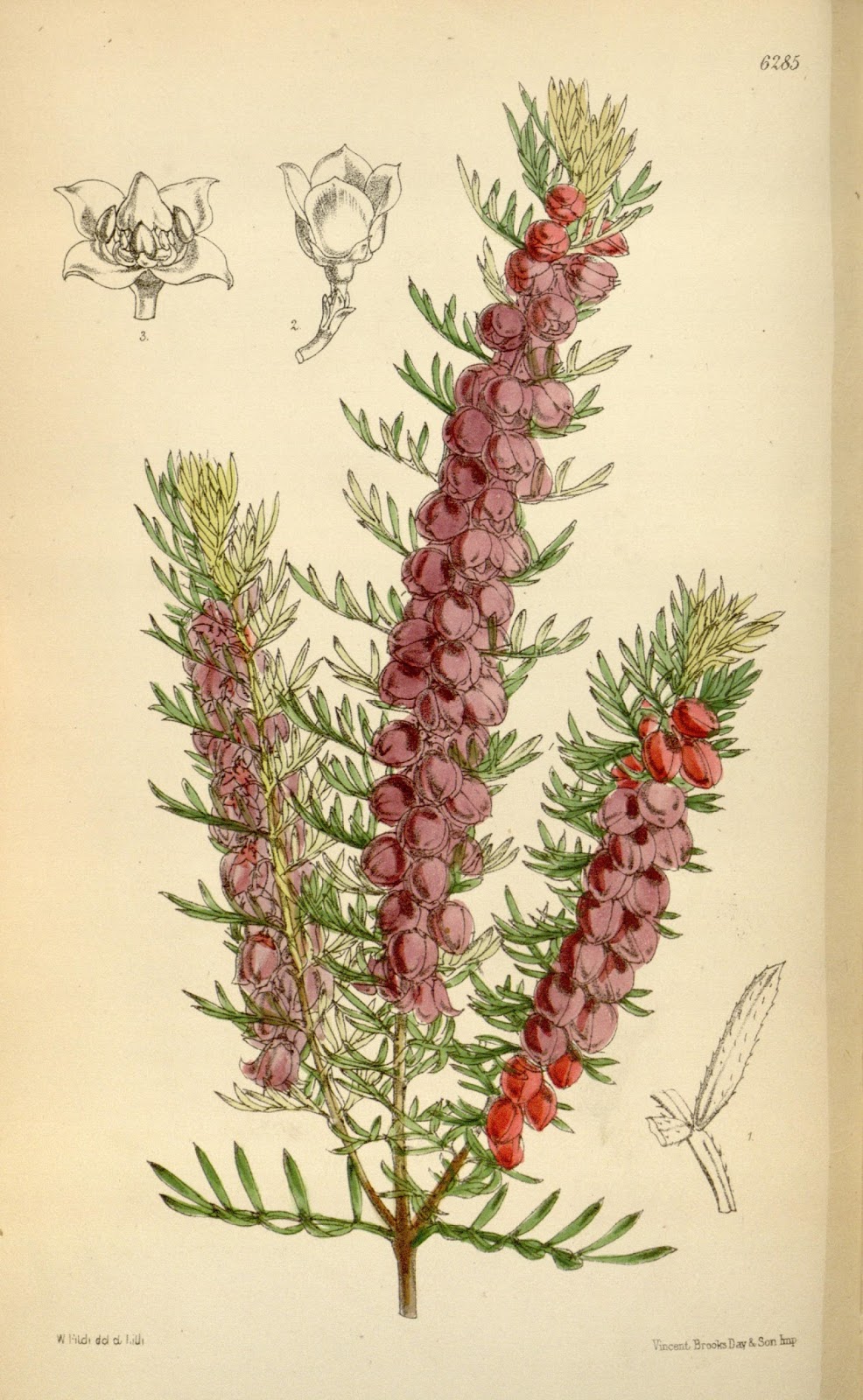
Although there were requests for plants to be named for her before and just after she died, she did not receive formal recognition as a botanist. The graceful, pink Boronia molloyae now bears her name.

View Full Size Image
Boronia molloyae © Mike Rumble.
View Full Size Image
Boronia molloyae. Curtis’s botanical magazine. v. 103 (1877). http://biodiversitylibrary.org/page/464860.

You can learn more about Georgiana Molloy on these resources from Bernice Barry:

  • Website: www.georgianamolloy.com
  • Facebook Page: https://www.facebook.com/GeorgianaMolloy1805

i.  Letter books of James Mangles. 1839. JS Battye Library ACC 479A
ii.  Ibid.

September 24, 2015by ulib-libraryjobs
BHL News, Blog Reel

NYBG’s Flora Illustrata Wins Two Prestigious Awards

Portrait version of the Biodiversity Heritage Library logo.

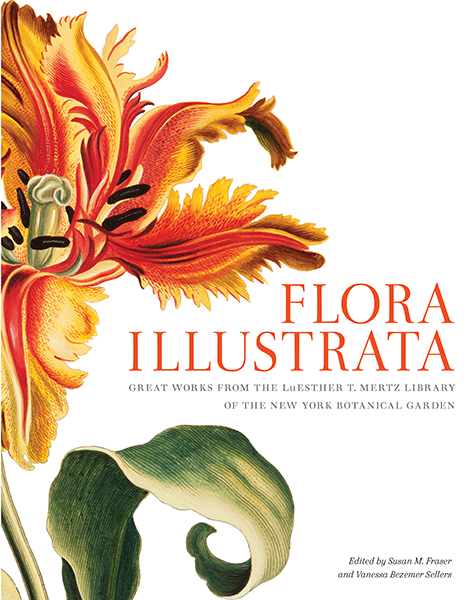
Flora Illustrata: Great works from the LuEsther T. Mertz Library of The New York Botanical Garden, edited by Susan M. Fraser and Vanessa Bezemer Sellers and published by The New York Botanical Garden (NYBG) – a founding BHL Member – and Yale University Press, has been honored with two prestigious awards: the 2015 American Horticultural Society Book Award and the CBHL 2015 Annual Literature Award.

On 4 June, 2015, the American Horticultural Society named Flora Illustrata as one of its 2015 AHS Book Award Winners during the Great American Gardeners Awards Ceremony and Banquet in Alexandria, Virginia. The AHS Book Award, established in 1997, honors outstanding garden-related books published in North America. Candidates are judged on writing style, authority, originality, accuracy, and design quality. According to Rita Hassert, a botanical librarian at the Morton Arboretum in Lisle, Illinois, and one of the 2015 AHS Book Award Committee Members, “[Flora Illustrata] adeptly captures horticultural history through thoughtful, easy-to-understand discussions of the botanical and cultural significance of each piece.”

On 18 June, 2015, the Council on Botanical and Horticultural Libraries, Inc. (CBHL) presented Flora Illustrata with the 2015 Annual Literature Award as part of the Council’s 47th Annual Meeting in Decorah, Iowa. The award, in its sixteenth year, recognizes significant contributions to the literature of botany and horticulture. According to the CBHL press release about the 2015 award, “This work celebrates one of the nation’s most important botanical literature collections and was edited by a long time CBHL member Susan Fraser,” Director of the LuEsther T. Mertz Library.

View Full Size Image

Flora Illustrata celebrates key works from the collections of the LuEsther T. Mertz Library of The New York Botanical Garden. The Library is one of the most comprehensive resources about plants anywhere in the world, holding over one million cataloged items on horticulture, floriculture, botanical illustration, garden design and history, the exploration of the New World, and land management. Through a series of essays, each written by a leading authority, and a plethora of stunning illustrations, Flora Illustrata highlights selections spanning more than eight centuries, such as rare manuscripts and iconic books including Renaissance herbals, precious botanical drawings, explorers’ notebooks, and more, and presents the library’s collection within the context of larger cultural and historical events throughout the ages.

“The contributors and editors not only describe the contents within the books but their importance as physical objects, noting the significance of the paper used, typefaces and bindings,” states the CBHL 2015 Annual Literature Award press release. “The essays tell the stories of how some books came to be written, illustrated, and their social, cultural and scientific significance when first published as well as their present day influence and importance. Anyone who loves history, art, plants and gardens will enjoy this book.”

Key themes throughout the book include the roles played by preeminent explorers, scientists, publishers, artists, and printmakers across the centuries, the development of bookmaking and graphic arts, and the scientific progress that led to improved identification and representation of plants. The first and final chapters also detail the history, development, and purpose of the LuEsther T. Mertz Library.

“The LuEsther T. Metz Library is unquestionably one of the great treasures of the world,” praised Thomas E. Lovejoy, Senior Fellow at the United Nations Foundation and University Professor in the Environmental Science and Policy department at George Mason University. “Flora Illustrata reveals with stunning scholarship the deeply intertwined history of plants, science, and humanity. Rich and fascinating beyond imagination and now accessible to anyone. A triumph of a book.”

The LuEsther T. Mertz Library of The New York Botanical Garden is one of the founding institutions of the Biodiversity Heritage Library. Susan M. Fraser, co-editor of Flora Illustrata and Director of the Mertz Library, is the NYBG representative to BHL and former BHL Executive Committee Secretary. NYBG has contributed over 3.8 million pages to BHL to date. Explore NYBG’s collection in BHL today.

July 28, 2015by ulib-libraryjobs
BHL News, Blog Reel

Newest In-Copyright Additions to our Collection

Did you know that there is modern literature in our collection?

We have permission with over 165 licensors to provide nearly 400 in-copyright titles for free and open access under a Creative Commons BY-NC-SA 4.0 license. In other words, we have contemporary titles in our collection that you are free to use so long as you attribute the content to the copyright holder, use the content for educational or personal use only (commercial use is NOT allowed) and share the content under the same license (CC-BY-NC-SA 4.0). You can even create derivatives of the content for reuse so long as you adhere to the terms of the license.

BHL is pleased to announce the recent acquisition of 4 new in-copyright titles that we are in the process of adding to our collection:

View Full Size Image

The San Diego Shell Club [http://www.sandiegoshellclub.com/]
Since 1961, the San Diego Shell Club has been promoting research and appreciation of Mollusca through “lectures, club meetings and field trips,” as well as through their peer-reviewed publication, The Festivus. The Club has relationships with natural history museums in southern California including the San Diego Natural History Museum, Natural History Museum of Los Angeles and the Santa Barbara Museum of Natural History.

  • BHL is looking forward to providing back-issues of The Festivus through 2013 in our collection soon. Please monitor our recent additions page to track its progress. The San Diego Shell Club offers copies of their current volume for a very affordable fee via their website.
View Full Size Image

California Botanical Society [http://calbotsoc.org/madrono/]
Dedicated to the advancement of Western American botany, the California Botanical Society has been operating since 1913. Through its peer-reviewed publication, annual banquet, research support, graduate student support and community outreach it continues to play a major role in promoting scientific study and raising awareness about this important niche area of botany.

  • Digitization of Madroño; a West American journal of botany is actively in progress with over 50 volumes and counting. The California Botanical Society agreed to provide in-copyright volumes for the BHL collection under a 3 year “moving wall” or embargo meaning that for 2015 we will complete digitization up through the 2012 volume. Every year thereafter, we will digitize one more volume such that the 2013 volume will be available in 2016 and so on.

Work in progress…and if you are wondering why the current series of volumes for this title is out of sequence, it is because we are still in the process of digitizing the title, modifying the metadata, and ensuring we have all volumes present and accounted for. Sequencing volumes in their proper order takes manual curation of the items in our collection. Thanks, in advance, for your patience. Notice other titles with volumes out of order? Please let us know and thanks! We’ll get to it when we can.

The Royal Society of Queensland [http://www.royalsocietyqld.org/index.htm] began with the publication of its first Proceedings in 1884 as a successor to the Philosophical Society of Queensland. Over 150 years later, the Society is not only the oldest scientific institution in Queensland but is still producing its Proceedings on an annual basis. Entirely run by volunteers, the Society “seeks to increase awareness of the sciences in Queensland” by promoting “original research and the application of scientific method and knowledge to policy-making and decision-making.”

  • Proceedings of the Royal Society of Queensland. BHL digitized early volumes of the Society’s publication in 2009 and is in the process of digitizing through 1955. Please stay tuned for more volumes to appear in the coming weeks.
  • The earliest volumes of the Society were published as the Transactions of the Philosophical Society of Queensland vol.1 (1859) to vol.3 (1872) and will be digitized to BHL as well. These early volumes are proving tricky to track down within our BHL consortium partner holdings but where there’s a will, there’s a way…

Would you like to contribute any in-copyright content to the BHL? If we hold the content in one of our partner libraries we would be happy to digitize it under a CC-BY-NC-SA 4.0 license and make it available via our website. Please see our Permissions page for more information and contact us [http://biodiversitylibrary.org/contact].

July 16, 2015by [email protected]
Page 11 of 15« First...«10111213»...Last »

Help Support BHL

BHL's existence depends on the financial support of its patrons. Help us keep this free resource alive!

search

About BHL

The Biodiversity Heritage Library (BHL) is the world’s largest open access digital library for biodiversity literature and archives. BHL operates as a worldwide consortium of natural history, botanical, research, and national libraries working together to digitize the natural history literature held in their collections and make it freely available for open access as part of a global “biodiversity community.”

Join Our Mailing List

Sign up to receive the latest news, content highlights, and promotions.

Subscribe Now

Subscribe to Blog via Email

Enter your email address to subscribe to this blog and receive notifications of new posts by email.

Join 319 other subscribers

Subscribe to Blog Via RSS

Subscribe to the blog RSS feed to stay up-to-date on all the latest BHL posts.

Access RSS Feed

Inspiring Discovery through Free Access to Biodiversity Knowledge.

The Biodiversity Heritage Library makes it easier than ever for you to access the information you need to study and explore life on Earth…for free, anytime, anywhere.


64+ Million Pages of
Biodiversity Literature Online.

EXPLORE

Tools and Services
to Transform Research.

EXPLORE

300,000+
Illustrations on Flickr.

EXPLORE

ABOUT | HARMFUL CONTENT | PRIVACY | SITE MAP | TERMS OF USE